

Pangolins! Elephants! SO MANY rare and endangered animals could be EXTINCT IN OUR LIFETIMES!
Our planet is in crisis and our irreplaceable wildlife is in terrible danger all over the world. ASI provides direct action to help animals in the most immediate peril – animals who would die without our help. At ASI, we see firsthand the devastating consequences of climate change, habitat destruction and the merciless illegal wildlife trade. What is truly frightening is that it is getting worse. There can no longer be any doubt that without immediate and determined action, we will see more and more wild animals becoming extinct. We are a dedicated team, working with our partners on the ground wherever we are needed, whenever we can. It is your vital donations that keep us in the field. There is hope! Honestly, the animals would be lost without your generosity. Your donations allow us to be there for animals who would otherwise have a slim chance of survival. Take pangolins, for example… Driven by human ignorance and greed, these shy and gentle creatures are the most trafficked mammals in the world and dangerously close to being wiped out. Pangolin meat is prized as a delicacy in several parts of Asia, and their scales are used for useless ‘traditional medicines’. Tragically, this means huge numbers of pangolins are brutally slaughtered each year. Often, they are boiled alive. Africa is seeing a pangolin poaching onslaught, and we are on the frontlines of the battle. In 2022, in Nigeria and South Africa, we aided emergency pangolin rescue operations, covered medical costs and provided high-tech equipment so rescued-and-released pangolins could be monitored and protected. We also helped equip two rehabilitation facilities that are a godsend for rescued pangolins in need of specialized, life-saving care. The insatiable illegal wildlife trade is taking a terrible toll on pangolins, which means the pangolins you help are vitally important if the species is to breed and survive. Will you continue to stand with us? Please, donate to ASI today. On the other end of the size spectrum, we urgently intervened for elephants beset by poaching, climate change-induced drought, and habitat loss… Thanks to the generosity of our supporters, we provided the Addo Elephant National Park in South Africa with high-tech anti-poaching drones, boreholes and solar-powered water pumps to ensure that life-giving water is kept flowing for desperately thirsty elephants and other wildlife caught in the worst drought for 100 years. A happy note: the drought has broken! Drought is still ravaging the African nation of Kenya, so we provided emergency water supplies. Your donations helped us prevent countless elephants, giraffes, buffaloes and antelope from dying of thirst. In 2023, as global temperatures rise at an alarming and unprecedented rate, our crucial drought mitigation efforts will be needed more than ever. So please, if you possibly can, donate right now. Reforestation: We work with partners on the ground in Kenya and South Africa helping to provide a long-term solution to forest loss by planting thousands of trees, thus creating more animal habitats and reducing carbon in the atmosphere. Habitat destruction caused by illegal logging and agriculture means that elephant ranges are shrinking, forcing them to move closer to human settlements in search of food and water. This is deadly dangerous for the elephants because there is a high risk of them being killed as a result of human-wildlife conflict. Tragically, the animals always lose. Tree planting is one of the cheapest and most cost-effective ways to provide elephants and other wild animals with forests they can retreat to – away from humans. We aim to help plant up to 500,000 trees this decade. If we achieve it, we will have provided a slice of hope to future wildlife generations. We cannot do this alone. Please, will you help us? We focus much of our attention on immediate and direct action… In crises, we pride ourselves on being among the first to respond. Our teams are always ready, but our vital work could not happen without you. Your donations are essential and make a world of difference for animals in need when catastrophe strikes… Lastly, but so importantly, we began the fight to free Ljubo – a bear in despair – kept in intolerable conditions in the Balkan nation of Montenegro. Ljubo is caged and so stressed he self-mutilates. We are working to persuade the Montenegrin government to act to improve his living conditions immediately and join us in finding him a home in a bear sanctuary. It is your donations that will give hope to this bear in despair. Read more… Some of our other projects in 2022 are: We provided medical care for critically endangered radiated tortoises, and funded protection units for indri lemurs in Madagascar. In South Africa’s Eastern Cape, we provided tracking collars for a genetically vital breeding pair of cheetahs and supported a hungry and tick-infested giraffe family. We financed anti-poaching and anti-snaring activities in Zimbabwe. Foxes, bats, badgers and vultures all benefit from your compassion and generosity. Sea creatures that benefitted from your donations include critically endangered vaquitas, sea turtles, endangered African penguins and whales caught in life-threatening fishing nets. You can see from reading this how wide-ranging our work is and how important it is. ASI works around the clock and around the globe to protect and preserve wildlife and the environments they depend on. Our successes this year were only made possible by YOU. Our planet is in crisis – please stand with us and fight for wild animals. Please support us as we take action against the threats that endanger the survival of invaluable wildlife by donating right now.
Climate Crisis To Wipe Out Puffin Nesting Sites in Western Europe by the End of This Century
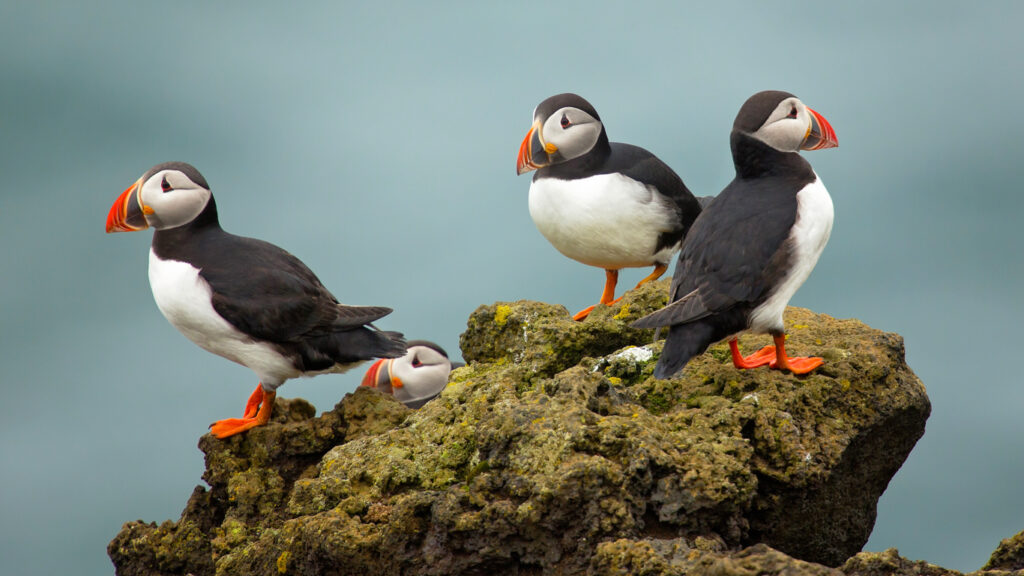
Most of Western Europe’s nesting sites for puffins are likely to be lost by the end of this century as a result of climate breakdown, warned a report this week. According to The Guardian, the report said that other seabirds would also be affected, including razorbills and arctic terns, unless immediate and urgent action was taken to reduce global heating. Up to 87% of these species’ breeding grounds are expected to be lost due to reduced food accessibility and lengthy periods of stormy weather. Puffins live at sea most of their lives and are part of the alcid (or auk) species. They are listed as Vulnerable on the IUCN (The International Union for Conservation of Nature) Red List and are on the Red List of UK Birds of Conservation Concern. Researchers from the Zoological Society of London (ZSL) and the University of Cambridge have put together a guide to protecting the birds from worsening climate conditions, with the help of 80 conservationists and policymakers from 15 European countries. The guide – a first of its kind – offers tips on protecting 47 species that breed along the Atlantic coastline. It analyses species-specific needs and the actions required to preserve each one. It explains how birds could be moved to safer locations as climate change causes heatwaves and rapidly diminishing fish populations. For example, puffins can be successfully encouraged into new breeding sites by placing model birds there, and gulls can be drawn to artificially created nesting platforms. “It is unthinkable that the Atlantic puffin, one of Europe’s most treasured seabirds, could disappear from our shores by the end of the century alongside other important marine bird species,” said Henry Häkkinen, a ZSL Institute of Zoology postdoctoral fellow, who led the production of the guide. “These birds face double the challenges as they breed on land but rely on the sea for survival; by living across these two worlds, they are essential to both ecosystems and give us a glimpse into the health of wildlife in otherwise hard to monitor areas of the ocean, meaning their loss would impact countless other species and their conservation.” Project leader and senior research fellow at ZSL, Dr Nathalie Pettorelli, added, “These seabird conservation guidelines – and the process behind them – provide a vital and transferable framework that can help align efforts to prioritise and implement evidence-based climate change adaptation practices to safeguard a future for the species most at risk. The time to act is now if we are to buffer species from the impacts of climate change.” “Puffins are the latest species to be added to a long list of wildlife in rapid decline as a result of global warming – a crisis escalating so fast it cannot be ignored,” says Animal Survival International (ASI)’s David Barritt. “Imagine losing a species as iconic as the puffin due to the complacency of those who refuse to take action against the climate crisis? Ignoring it will not only be catastrophic to countless species affected by warming oceans and worsening weather conditions, but the human race as a whole. If we do not act now, our planet faces a very bleak future – or no future at all.”
How the African Rainforest Is Helping Fight Climate Change
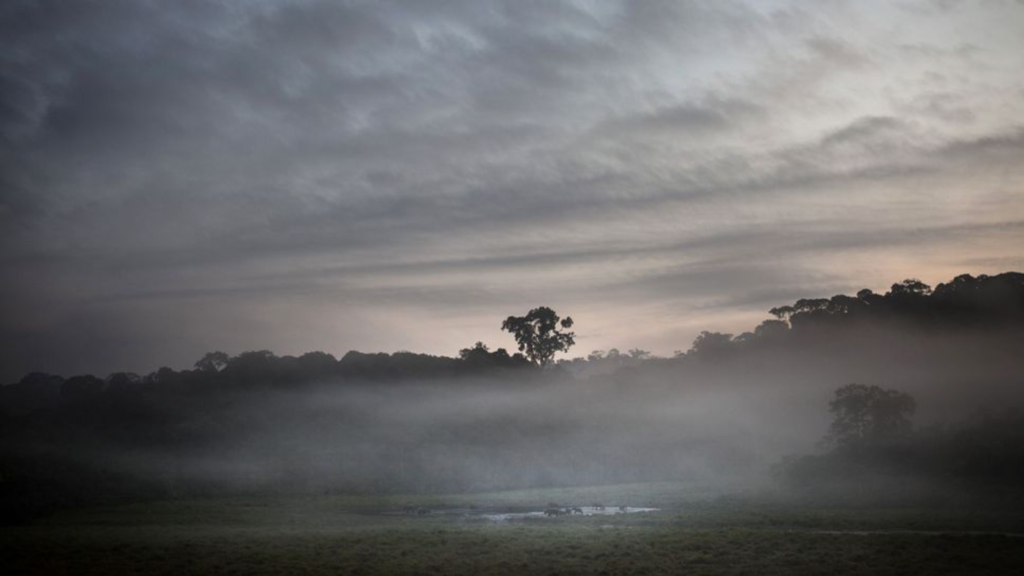
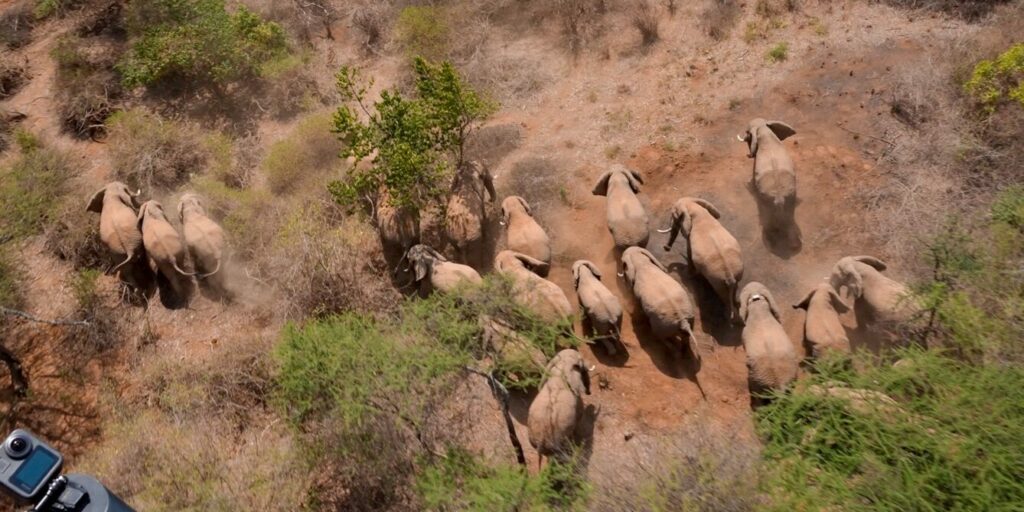
Article written by Isabelle Gerretsen Originally published by BBC (Tuesday, April 19, 2022) In the midst of the African rainforest, one elusive animal wreaks havoc on vegetation – and in doing so, offers a big favour for the climate. As it trudges through the dense rainforests of West and Central Africa, the forest elephant creates a maze of green corridors by grazing and trampling on small trees in its path. Standing at 3m (almost 10ft), this gentle giant is smaller than its better-known counterpart, the savannah elephant, and remains an elusive, solitary creature. The forest elephant causes mayhem amid the rainforest’s lush vegetation as it strips bark from saplings, digs for roots in the soil and munches on leaves and berries. But this destruction does more good than harm to the forest: it helps forests to store more carbon in their trees and preserves one of the planet’s most vital ecosystems. Companies and governments around the world are racing to slash their emissions and develop innovative technology to capture carbon. But the African forest elephant is remarkably efficient at storing carbon with no technological aid at all. African forest elephants are known as “mega-gardeners of the forest”, because of their ability to boost carbon stocks and disperse vital nutrients. A 2019 study found that the elephant’s destructive habits help boost the overall amount of carbon stored in the central African rainforest. Each forest elephant can stimulate a net increase in carbon capture of these rainforests of 9,500 metric tonnes of CO2 per sq km. This is equivalent to emissions from driving 2,047 petrol cars for one year. Scientists initially carried out fieldwork at two sites in the Congo Basin, one where elephants were active and one where they had disappeared, and recorded the differences in tree cover and wood density. They then built a model that tracked the dynamics of the forest, such as biomass, tree height and carbon stocks, and simulated elephant disturbance by increasing the mortality of smaller plants. A living elephant provides services worth millions, it is helping us fight climate change and is worth much more alive than dead – Ralph Chami The model showed that the forest elephants reduced the density of stems in the forest, but increased the average tree diameter and the total biomass above ground. The reason is that the elephants graze and trample on trees smaller than 30cm (1ft) in diameter, which compete with bigger trees for light, water and space. By taking out the competition, the larger trees flourished. As a result, the larger trees grew even taller thanks to the elephants’ habits, says lead author Fabio Berzaghi, a researcher at the Laboratory of Climate and Environment Sciences in Gif-sur-Yvette, France. The smaller trees, which elephants prefer to eat, have lower wood density, which is linked to a faster growth rate and higher mortality. The elephants’ behaviour promotes the growth of slower growing trees that store more carbon in their trunks, says Berzaghi. The carbon storage capacity of trees mainly depends on their volume and wood density, although denser wood takes more resources and time to build, he adds. “You can think of the elephants as forest managers,” he says. They are a “keystone species”, meaning that they play a vital role in maintaining the biodiversity of their habitat. We’re losing our natural capital and its biodiversity. If we lose that fight, we die too. But if we invest in nature, it will boomerang back to all of us by sequestering carbon – Ralph Chami Besides eliminating competition, the elephants also disperse seeds and nutrients as they brush past vegetation and distribute poo around the forest, helping trees grow faster, says Berzaghi. “Elephants help disperse trees, which other animals rely on. The trees promoted by elephants support primates and many other animals.” The extinction of forest elephants would result in a 7% loss of carbon stores, 3 billion tonnes in total, in the central African rainforest, according to the study. That is equivalent to emissions generated by more than 2 billion petrol-powered cars over the course of a year. “It sends a pretty strong message for the conservation of forest elephants,” says Berzaghi. There is a very high risk of African forest elephants going extinct. They are critically endangered, with populations shrinking rapidly due to poaching and deforestation. In the 1970s, there were 1.2 million elephants roaming across huge swathes of Africa, but they have been driven to the brink of extinction by poachers and habitat loss. Today just 100,000 remain, according to a 2013 study. “At least a couple of hundred thousand forest elephants were lost between 2002-2013 to the tune of at least 60 a day, or one every 20 minutes, day and night,” Fiona Maisels, co-author of the study and a scientist at the Wildlife Conservation Society, said at the time. “By the time you eat breakfast, another elephant has been slaughtered to produce trinkets for the ivory market,” she said. “We have lost a large number of forest elephants in the past two decades,” says Thomas Breuer, African forest elephants coordinator at the World Wide Fund for Nature (WWF). “Forest elephants have a much slower reproductive pattern [than savannah elephants], and therefore it takes much longer for populations to recover.” “Their behaviour has been disturbed by poaching. Many don’t have mothers and can’t learn the individual movement patterns that they normally inherit from the matriarch,” he says. As their habitat shrinks, elephants are also coming into much closer contact with humans, which has led to an increase in retaliatory killings of elephants, he says. Climate change is also leading to a decline in fruiting events in African rainforests, leaving elephants highly vulnerable to a reduction in their food supply, according to a 2020 study by Emma Bush from the University of Stirling in Scotland. Valuing nature If the herd of African forest elephants returned to its former size and recovered their range of 2.2 million sq km (0.85 million sq miles), they could increase carbon
Elephant Death Toll Rises to 250 As Kenyan Drought Wears On
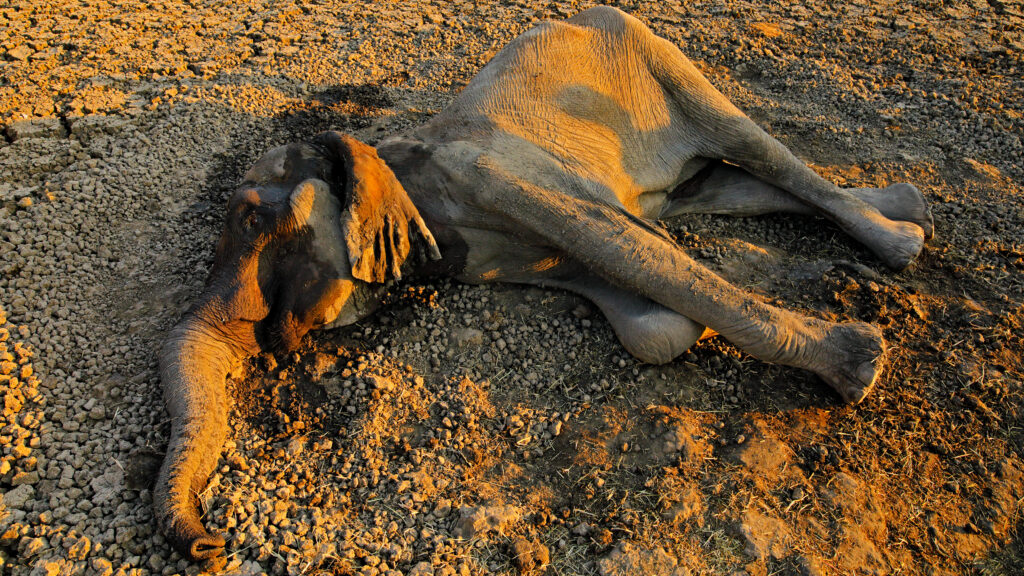
Kenya’s worst drought in 40 years killed 250 elephants and hundreds of other wild animals between February and October this year, according to Kenyan tourism minister Peninah Malonza. Reuters reports that while sporadic rainfall has finally begun in the region, Kenya’s Meteorological Department is predicting below-average rainfall for much of the country over the coming months, which means the threat to wildlife is far from over. “The drought has caused mortality of wildlife… because of the depletion of food resources as well as water shortages,” Malonza said at a news conference. She said 14 species had been affected by the drought aside from the elephants, including 512 wildebeest, 381 zebra, 12 giraffe and 51 buffalo, all of whom succumbed to its effects. Alarmingly, 49 rare Grevy’s zebra have also died. The ministry warned that these figures were far from comprehensive, saying that some carcasses may have been devoured by carnivores and thus mortality figures could be much higher. Northern and Southern Kenya are most affected by the drought and are also home to the majority of the country’s elephant population. It was reported in October that a well-known elephant calf, famous for being a twin – a rare occurrence in elephant populations – died as a result of the drought. The ministry has recommended providing vulnerable animals with water, food and salt licks, and to increase monitoring and data collection. “Animal Survival International has been working to get water to the thirsty elephants and other wildlife of Kenya since 2021,” says ASI executive director, David Barritt. “Last year, we trucked in water and repaired broken boreholes, and this year, we have redoubled our fundraising efforts in order to dig more boreholes and deliver more water with a matter of urgency.” Barritt said that his organization was deeply concerned about the enduring drought, and that it would continue to work closely with local partners to get deliver urgent water supplies to where they were needed most.
“Rapid Transformation of Societies” Is the Only Way To Limit the Worsening Climate Crisis
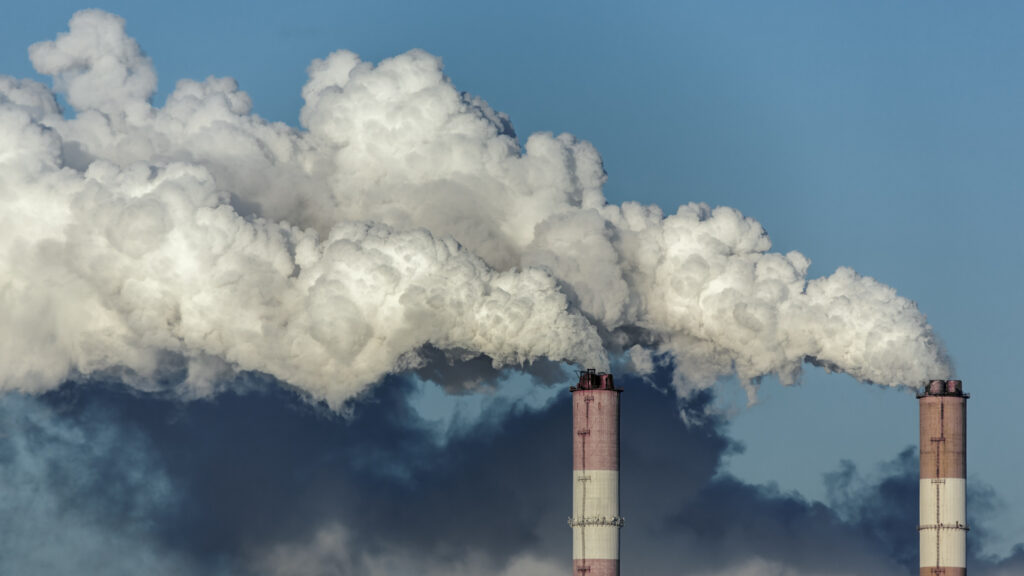
The United Nation’s environmental agency this week said there is “no credible pathway to 34.7°F (1.5°C) in place”, according to The Guardian. It added that due to countries’ failure to adequately reduce carbon emissions, the only way to mitigate the worst impacts of the climate crisis would be through a “rapid transformation of societies”. The statement comes after a UN environmental report which analyzed the disparity between the CO₂ cuts pledged by various countries and the cuts needed to limit rises in global temperature to 34.7°F (1.5°C) – the internationally agreed target. The report said progress had been highly inadequate. If current pledges for action by 2030 were delivered in full, it would result in a rise of global heating of roughly 36.5°F (2.5°C) and extreme, catastrophic weather events around the world. The current rise to date of 33.8°F (1°C) has already caused severe weather disruptions and natural disasters in several countries around the world. Even if long-term net zero emissions were met by 2050 by the countries who have made this pledge, global temperatures would still rise by 35.24°F (1.8°C) – but even this temperature limit was not likely given the lackadaisical approach to action. At last year’s COP26 climate summit, countries agreed to increase their pledges, but only some have done so and the new pledges would reduce emissions by a paltry 1% in 2030. Global emissions need to be slashed by almost 50% by then in order to reach the 34.7°F (1.5°C) target. “This report tells us in cold scientific terms what nature has been telling us all year through deadly floods, storms and raging fires: we have to stop filling our atmosphere with greenhouse gases and stop doing it fast,” said the executive director of the UN Environment Programme (UNEP), Inger Andersen. “We had our chance to make incremental changes, but that time is over. Only a root-and-branch transformation of our economies and societies can save us from accelerating climate disasters. It is a tall, and some would say impossible, order to reform the global economy and almost halve greenhouse gas emissions by 2030, but we must try,” Andersen said. “Every fraction of a degree matters: to vulnerable communities, to ecosystems, and to every one of us.” Andersen added that taking action would also result in cleaner air, green jobs and electricity access for millions of people. UN secretary general António Guterres echoed Andersen’s warning, saying, “Emissions remain at dangerous and record highs and are still rising. We must close the emissions gap before climate catastrophe closes in on us all.” And former UK chief scientific adviser, Prof David King, minced no words, stating, “The report is a dire warning to all countries – none of whom are doing anywhere near enough to manage the climate emergency.” The report found that existing carbon-cutting policies would result in 37.04°F (2.8°C) of warming, and pledged policies cut this only marginally, to 36.68°F (2.6°C). Further pledges, which rely on funding from richer to poorer countries, cut this to 36.32°F (2.4°C). Meanwhile, new reports from the International Energy Agency and the UN’s climate body substantiated these findings, concluding that the national pledges barely reduced projected emissions in 2030, compared with 2019 levels. The UN Environmental Program (UNEP) report said the societal transformation needed could be achieved through government action, including on regulation and taxes, redirecting the international financial system, and changes to consumer behavior. It said the transition to green electricity, transport and buildings were underway, but needed to happen faster. All sectors had to avoid locking in new fossil fuel infrastructure, contrary to plans in many countries, including the UK, to develop new oil and gas fields. A study published this week found a “large consensus” across all published research that new oil and gas fields are “incompatible” with the 1.5°C target. The UNEP report said that roughly one-third of climate-heating emissions came from the global food system and that these were set to double by 2050. But the sector could be transformed if governments changed farm subsidies – incredibly harmful to the environment – and food taxes, reduced food waste and helped develop new low-carbon foods. The report added that on an individual level, citizens should adopt healthier, greener diets. The report also said it was also critical to redirect global financial streams to green investments, though a transformation to a low-emissions economy was expected to require at least $4tn-6tn (£3,4tn – £5,2tn) a year in investment – roughly 2% of global financial assets. Andersen concluded that she wanted to see countries taking ambitious steps to achieve these goals, but remained doubtful that the necessary emission cuts could be made by 2030.
Australia Targets Zero Extinction to Protect Threatened Species
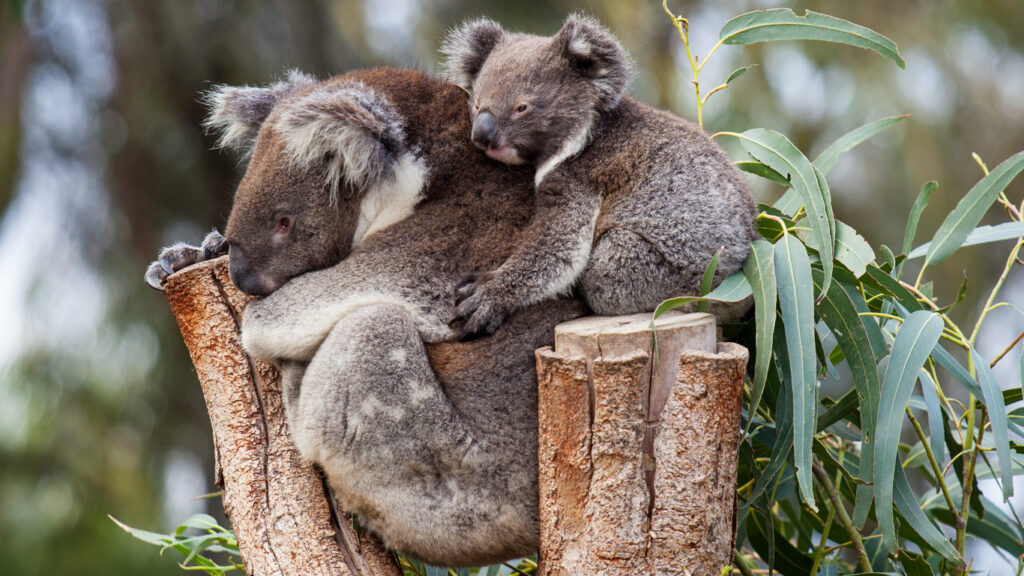
Australia has announced a zero-extinction target for its unique plants and animals in the wake of the country’s rapidly deteriorating environment. The goal forms part of a 10-year plan that prioritizes the conservation of 110 threatened species and commits to ensuring that 30% of both land and sea areas are in protected reserves by 2030. The 2021 State of the Environment report (SoE 2021) revealed that Australia has lost more mammal species than any other continent. Bushfires that tore across southeastern Australia from 2019 to 2020 increased the extinction risk for several species. The koala, for example, was declared an endangered species earlier this year. According to estimates from the World Wide Fund for Nature (WWF), the fires killed or displaced nearly three billion animals. In revealing the Threatened Species Action Plan: Towards Zero Extinctions last Tuesday, Australia’s Minister for the Environment and Water, Tanya Pilbersek, said, “The need for action has never been greater. I will not shy away from difficult problems or accept environmental decline and extinction as inevitable.” Guided by scientists, Pilbersek identified 110 species and 20 places for priority support based on their uniqueness and risk of extinction. Among the animals selected are a bird known as the King Island scrubtit, the brush-tailed rock wallaby and the growling grass frog. The priority represents a broad range of landscapes and ecosystems, including the forests of Far North Queensland, Kakadu National Park in the Northern Territory and Kangaroo Island in South Australia. While the announcement has generally been well received, conservation groups believe that more can be done. The Australian Conservation Foundation says deforestation and land clearing needs to be brought to an end, and the government should also stop approving damaging fossil fuel projects.
URGENT! DROUGHT IMPACTS INTENSIFYING! ELEPHANTS and other wildlife dropping DEAD! Landscape strewn with carcasses.
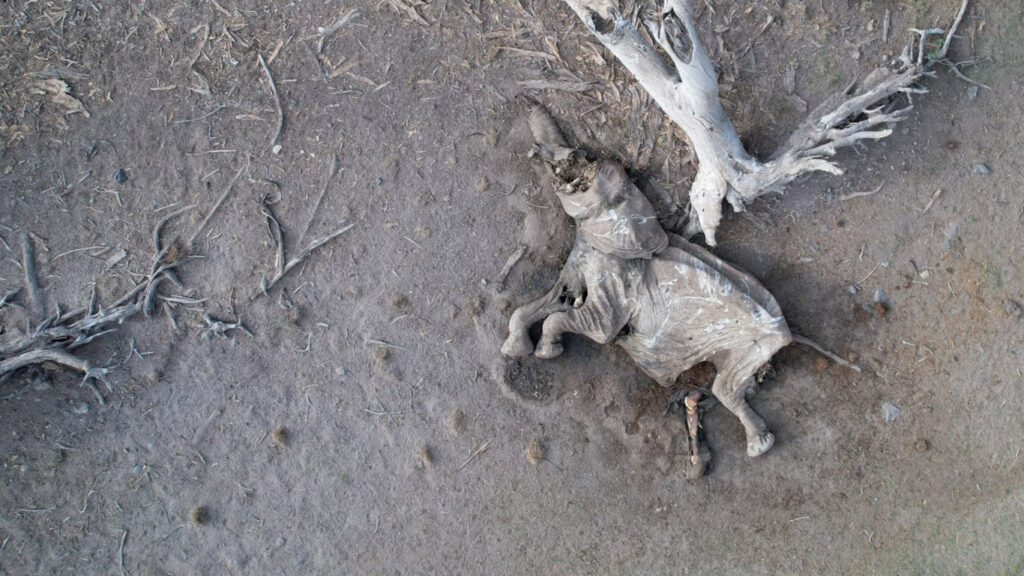
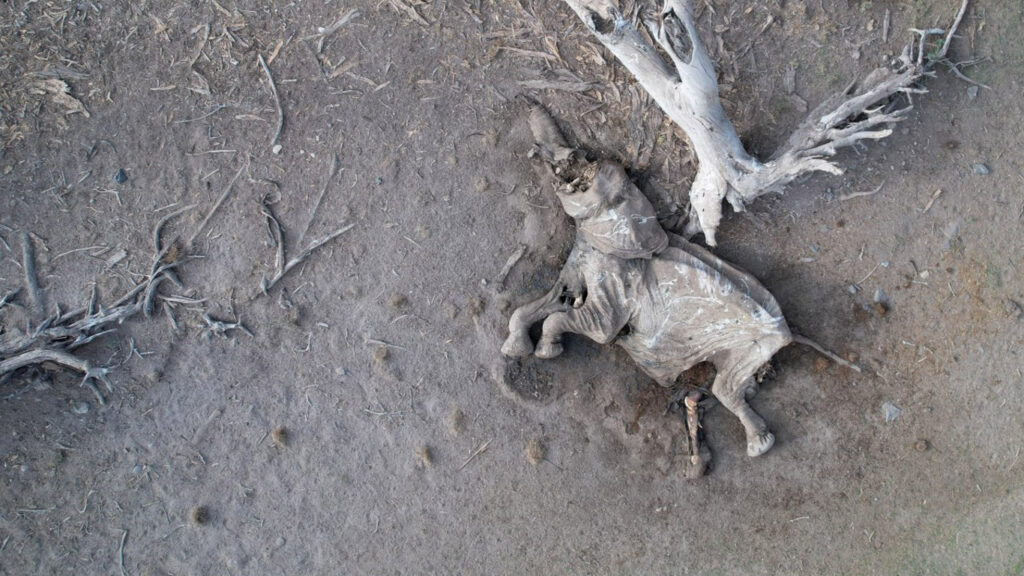
One of the worst droughts to ever hit East Africa is wiping out Kenya’s elephants at a staggering rate. The cracked and parched landscape is barren, but for the decomposing carcasses of these once-magnificent animals. They dropped dead after searching in vain for water sources that no longer exist. Dehydrated and depleted, elephants die, utterly exhausted – further devastating a species already beset by habitat loss, poaching and human interference. The drought in Kenya has killed hundreds of elephants, along with buffaloes, zebras, giraffes, and other animals. We provided temporary waterholes last year, but because of the increasing severity of the drought and the vast areas involved… …we MUST get more water to the elephants of Kenya and do so FAST! Please, will you help us? Kenyan elephant populations face severe and mounting threats. Throughout the country, charcoal burners are destroying forests and, in the process, elephants’ habitats. Then elephants wander into human-occupied spaces to find food and, as a result, are often injured or killed. The drought is the worst in the region in more than 40 years and shows no signs of abating. With each passing day, more parched animals are dropping dead, like the sad story of Monsoon, the matriarch elephant… “Monsoon,” the miracle elephant, survived being shot FIVE times by poachers and even managed to give birth after her ordeal. A drought in northern Kenya killed her last month. Animals like Monsoon are dropping dead beside dried-up water pans and nonexistent pastures. We cannot afford to lose wildlife in these staggering numbers. We have a plan to help, but we need YOUR support right now. Young calves and elderly elephants are the first to die, their bodies unable to withstand long periods of dehydration. If herds lose their calves, elephant numbers will begin to diminish – along with our hopes for the species. We MUST get water to the parched plains of Kenya, and we must do it FAST. We promise with your support to bring life-saving water to the region’s elephants and other battered wildlife. With your support today, we will be able to send in trucks of water to meet the animals’ immediate and urgent need for water and drill boreholes to help reach vital water sources beneath the ground. Catastrophic drought is claiming elephant lives in alarming numbers. We must rush water to elephants dying of thirst. If we can raise $20,000 (£18,074), we can construct live-saving water troughs and repair and install new boreholes for the wildlife of Kenya. We are ready to build – but we need your support today. Please, can we count on you?
UNBELIEVABLE, BUT TRUE – the process of obtaining charcoal for your barbeque grill is KILLING ANIMALS!
In Kenya, a tragedy is unfolding that is both sad and frightening as charcoal burners destroy forests to make charcoal for barbecue cookouts around the world. It is hard to believe, but the glowing coals that fuel barbecues have TERRIBLE IMPLICATIONS for ANIMALS. Kenya’s forests provide food and habitats for countless animals, and they are being destroyed at a dizzying rate. Forests once covered 30% of Kenya – the figure is now just 8.3% and dropping fast. Illegal charcoal burning destroyed a forest. In protected areas reserved for animals, farmers illegally chop down forest trees and burn them for charcoal, leaving behind a destroyed habitat, resulting in hunger and death for all kinds of animals from small antelopes to elephants. The scale of the problem is immense! But there is a plan underway to begin to address it – called OPERATION SEEDBALLS. Your support today will truly make a difference – and SAVE LIVES! Throughout Kenya, the landscape looks as if it is being ravaged by a dreadful disease that is leaving millions of black patches in the wilderness. The patches are the result of charcoal burning, burnt-out areas, smoking, active burns and smoldering burns stacked with packaged charcoal ready for transportation. This process is wildly illegal, but there is so much burning that rangers can’t control it, plus charcoal burners are so aggressive that rangers put their lives on the line when they try to arrest them. The effect on elephants is particularly disturbing because once the forests have gone, and their food with it, the elephants go closer to human settlements, eat their crops and sometimes injure people in their hunt for food. Then the villagers kill them and steal their tusks to sell on the illegal ivory market. Teddy Kinyanjui, Marc Goss of the MARA Elephant Project, and ASI’s David Barritt preparing to seed a new forest. The charcoal burning business is huge and difficult to control, and animal lovers must fight it as hard as we can. Teddy Kinyanjui from Nairobi’s Tamfeeds has a solution… So much charcoal has been burned in Kenya that huge piles of charcoal dust have built up, creating yet another toxic threat. Teddy’s company takes that dust and, using a special process that makes the dust a sticky ball, wraps tree seeds in it, making seedballs. The seed is the nucleus, and the dust forms a protective coating around it that prevents birds and animals from eating it. When it rains, the dust dissolves, freeing the seed and, hopefully, a tree grows. Teddy teamed up with Marc Goss, who runs the Mara Elephant Project in Kenya, an organization which protects elephants and helps preserve their habitat, and together they are starting to recreate forests in OPERATION SEEDBALLS. The forests Operation Seedballs hopes to recreate will support a variety of wildlife. Marc takes a helicopter to deforested areas in protected zones, flies low over the ground and drops thousands of seedballs from the air, mimicking the way trees naturally spread in Kenya when seeds are dropped by birds or animal droppings. Millions have been sown across Kenya in the last few years – it’s cheap, and it works. You can see new trees springing up where seeds have been sown. Because charcoal burners keep destroying trees even in protected areas, to be really effective, policing must be increased and many more seedballs must be distributed. We promised to ask our supporters to help – $50 (£44) buys 10,000 seedballs – if even 1% of the seeds grow, that’s 100 new trees! Marc took our team by helicopter to see the scale of the problem and sow some seedballs. Within the first few minutes of the flight, we lost count of how many rectangular charcoal-burning areas there are, dotted all over the protected Mount Sizwa area not far from Nairobi. Everywhere you looked, there were hundreds upon hundreds of burned areas where forests once stood. And this dreadful picture is repeated all over Kenya. Operation Seedball uses the charcoal dust left behind by illegal charcoal burning to create a protective layer around a seed nucleus. These seedballs are then distributed by helicopter to deforested areas. Marc landed the helicopter in a place where all that was left of a forest were tree stumps, while in the near distance, smoke poured into the sky as charcoal burners worked their way through the next patch of trees. When we took off and followed the smoke, we saw a herd of confused elephants right next to several charcoal burns. The elephants were seeing their food disappear before their eyes, and there was nothing they could do about it. There are so many threats to animals… but what we saw that day frightened us. This vast, protected area is home to animals great and small and it was being destroyed in front of us. Concern turned to horror when Marc showed us pictures of an elephant who had been speared and killed when, seeking food, it got too close to humans – horrible pictures of a beautiful and noble creature lying dead with gaping wounds where his tusks once were. One fewer elephant in a world where every elephant counts in the fight against extinction – their numbers are plummeting. An estimated 55 elephants are killed every single day, 365 days of the year. This poor elephant was speared by villagers because charcoal burning destroyed its natural habitat and drove it towards human habitation. We must support OPERATION SEEDBALLS. Seedballs work. New trees will grow and provide new homes and food for threatened and endangered animals. Please help us seed a better future for animals by making a generous donation right now. We must stop poaching and charcoal burning, which is going to take time. Reseeding forest areas is something we can do today!
Melting “Doomsday” Glacier in Antarctica – “holding on by fingernails” – Could Raise Sea Levels By Up to 10 Feet
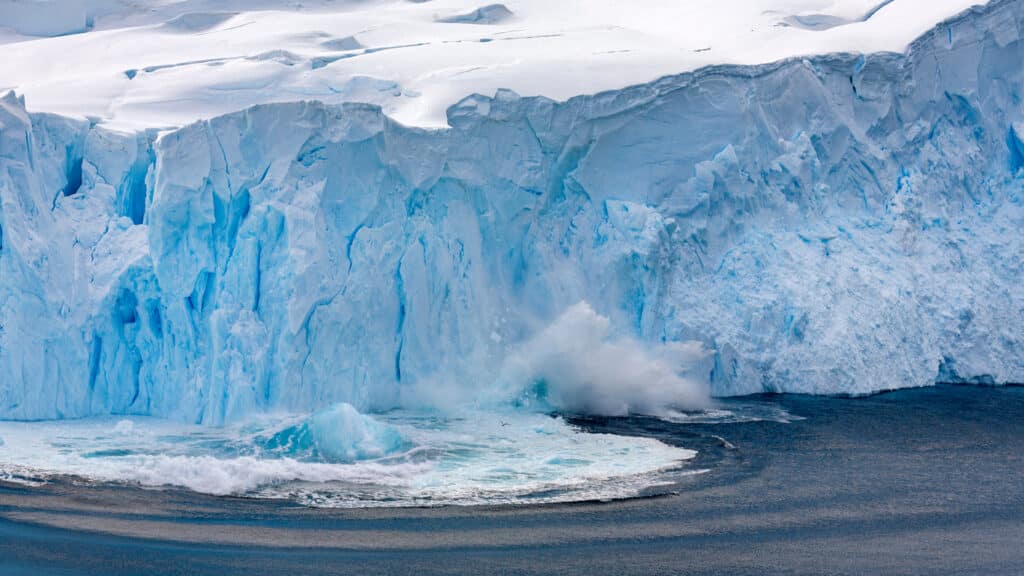
A study published this week has revealed that the so-called ‘Doomsday’ glacier – an Antarctic glacier that buffers warming seas from the large Antarctic ice sheet – could melt much faster than predicted, Business Insider reports. Officially called the Thwaites Glacier, it is monitored closely by researchers. But a new undersea survey has shown that it has melted much faster than previously – and if the trend continues, it could be catastrophic for the planet. Should the Thwaites Glacier and its surrounding ice basins melt, it could raise sea levels by anywhere between three and 10 feet. This, combined with the Florida-sized glacier’s buffering role in the ocean, has given it its apocalyptic nickname. According to Climate Central, a 10-foot rise in sea levels would result in the loss of 28,800 square miles (74,592 square kilometers) of US land, displacing as many as 12,3 million people. At the time these figures were reported, a 200-year timeframe was given for such a rise. However, the new drone-based study, led by the University of South Florida (USF), found that the Thwaites glacier has melted far faster in past centuries than has been observed in recent years – which indicates that a similar quickened pace of retreat could happen in future. Underwater drones mapped the sea floor beneath the glacier for the first time, revealing ridges ‘like a footprint’ showing where the base of the glacier previously sat. The mapping revealed that at some point in the last 200 years, the glacier had contracted twice as fast as has been observed in more recent years. “Thwaites is really holding on today by its fingernails, and we should expect to see big changes over small timescales in the future – even from one year to the next – once the glacier retreats beyond a shallow ridge in its bed,” said marine geophysicist from the British Antarctic Survey, Dr Robert Larter, who authored the study. “Just a small kick to Thwaites could lead to a big response,” added USF marine geophysicist leading the study, Alastair Graham. Thwaites’ melting rate was previously monitored using satellite images. In 2020, a study of those images found that Thwaites and its neighbor, the Pine Island Glacier, were breaking apart faster than previously believed even at that time, according to Insider. Thwaites has been protected in part by an ice shelf that scientists have observed rapidly deteriorate in recent years. In December last year, scientists predicted that that shelf is on track to melt within five years. “Climate change can be neither debated nor ignored,” said David Barritt, executive director of Animal Survival International (ASI). “A mounting body of research shows that we risk losing critical habitats, placing the survival of not only animals, but humans, in severe peril. Without urgent action at both an individual and global level, the future looks dismal for our planet.”
IMAGINE being a tortoise (or a badger or hedgehog) and trying to outrun a wildfire!
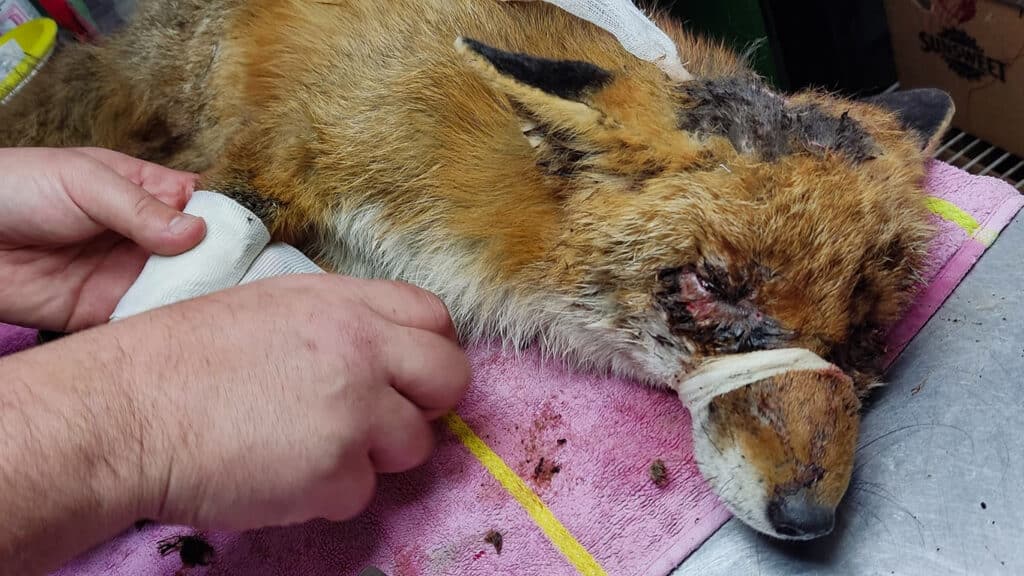
Every year, thousands of wild animals are found hurt and in need of urgent help in the bustling city of Athens in Greece. Tortoises, foxes, bats, vultures, badgers and hedgehogs all find themselves injured or displaced because of animal trafficking, natural disasters, and encroachment on their habitats. Last year, Greece experienced the country’s worst heatwave in 30 years, and wildfires ravaged about 300,000 acres (121,000 hectares) of forest and bushland across the country. These natural disasters are often lethal for animals who burn to death or die of thirst. The Wildlife Rehabilitation Association (ANIMA) rescues a minimum of 5,000 wounded, sick or orphaned animals every year – but often, it’s much more than this. ANIMA is a non-profit association established in 2005 and is made up of 10 staff members, including an on-site vet. ANIMA is the only organization helping wildlife rescue and rehabilitation in Athens, and without its help, virtually all these animals would die. As our climate crisis worsens, extreme weather conditions and fires raging out of control are increasing problems. As concerned citizens of this planet and people who care deeply about the wildlife inhabiting it, we MUST do whatever we possibly can to protect vital species from being obliterated – in the most excruciating ways – by natural and human-induced disasters. With your contribution, we will help ensure that ANIMA has the essential resources and tools it needs to assist helpless wild animals when disaster strikes. This year, ANIMA has experienced a 30% increase in the number of displaced animals coming into its care. Severe recent wildfires have swept through north, south, and east Greece, putting further pressure on animals and ANIMA. And, in 2021, ANIMA treated over 10,000 animals compared to “only” 6,300 the year before. The recent wildfires, exacerbated by heatwaves, strong winds and dry weather, destroyed more than 13,000 hectares of forest and woodland. ANIMA is caring for many animals severely affected by these fires, including numerous charred tortoises who are generally too slow to outrun out-of-control blazes. In July 2022, ANIMA cared for more than 1,500 animals, treated 50 fire victims, and provided on-the-ground care for burn victims on site. There are currently around 500 animals in its care. Because of this crisis, ANIMA’s costs have risen by an estimated $10,000 (£8,600), mostly because of the increased need for vital emergency supplies. As a non-profit organization (NPO), ANIMA relies on private institutions and public donations for the majority of its funding. Please help us do what must be done to help these devastated animals. Raising $5,000 (£4,300) will go a long way towards helping achieve this. With your support right now, we will be able to keep funding the critically important work of ANIMA in Athens – the only haven for some of the city’s smallest, most helpless victims of disaster. Please, donate right now for the bats, badgers, foxes, hedgehogs and numerous other animals desperate for help.
Scientists say all rainwater globally now unsafe to drink
New research has revealed that atmospheric levels of ‘forever chemicals’ – toxic pollutants that break down very slowly over time – are now so high that rainwater everywhere is considered unsafe for long-term human consumption. These pollutants, known as perfluoroalkyl and polyfluoroalkyl substances (PFAS), have even been found in remote areas of Tibet and Antarctica. Scientists have discovered that they are present at such elevated levels in environments around the world that they believe the extent of the contamination has ‘exceeded a safe planetary boundary’. PFAS are found everywhere: in our air, our rainwater and even in our blood. According to CNN Health, “A growing body of science has found that there are potential adverse health impacts associated with PFAS exposure, including liver damage, thyroid disease, decreased fertility, high cholesterol, obesity, hormone suppression and cancer.” Scientists led by Ian Cousins of Stockholm University published their findings on PFAS in Environmental Science & Technology, where they state, “even in these remote and sparsely populated regions, such as Antarctica and the Tibetan plateau, the most stringent PFAs guidelines are exceeded.” One reason for the findings is linked to the guidelines around PFAS levels. These have declined sharply in many countries as their harmful effects have become clear. An example is a new drinking water guideline value from the U.S. Environmental Protection Agency (EPA) for one cancer-causing PFA. The new guideline value is 37.5 million smaller than previously imposed. “Initially, we thought that areas where people live would be contaminated so that guidelines couldn’t be achieved there,” Cousins has stated. “We were surprised by how low the new US EPA lifetime health advisories were for PFOS and PFOA In drinking water. They were published while we were finalizing our manuscript.” He added that it was “a big surprise” to find that “rain everywhere in the world would be contaminated above these guidelines.” Researchers thus concluded that PFAS contamination has crossed a ‘planetary boundary’ – that is, “a safe operating space for humanity with respect to the functioning of the Earth System”. Boundaries are breached when pollutants created by human activity threaten irreversible damage to Earth’s ecosystems and our own well-being as humans. PFAS were first manufactured in the 1940s for use in everyday products like nonstick cookware, stain-resistant fabrics and waterproof clothing. The dangers of PFAS have been known for decades as they have polluted the global water cycle, and most nations have stopped producing them – but not China. However, because of their longevity, there has not been a substantial decrease in PFAS. Costly cleanup technologies do exist; however, even these would not reduce PFAS to acceptable levels of safety. “These technologies can be used to clean drinking water, wastewater or contaminated soils, but not to my knowledge to such low levels as in the U.S. EPA guidelines,” Cousins said. “Those levels are also nearly impossible to measure.” Apart from pressuring China to stop producing and consuming the four PFAs in the study, Cousins said not much can be done, except to wait for many decades for levels to decline. “They will slowly dilute into the deep oceans,” he concluded – a horrifying thought for the marine life bound to be impacted by these toxins. “There seems to be little end in sight to the constant onslaught of human activities on the health of our planet,” said David Barritt, executive director of Animal Survival International. “We may be shocked at the thought that our rainwater is now unsafe to drink, but the larger impact of this is that our ecosystems and marine life bear the impact of these toxins. It is not just our rainwater, but the air we breathe, the food we eat, the oceans we rely on to give us life. The world must continue to put pressure on China to end harmful manufacturing processes and we as concerned global citizens must seek safer, more sustainable alternatives in our everyday lives.”
Starving Polar Bears Resort to Feeding on Garbage as Their Habitats Erode
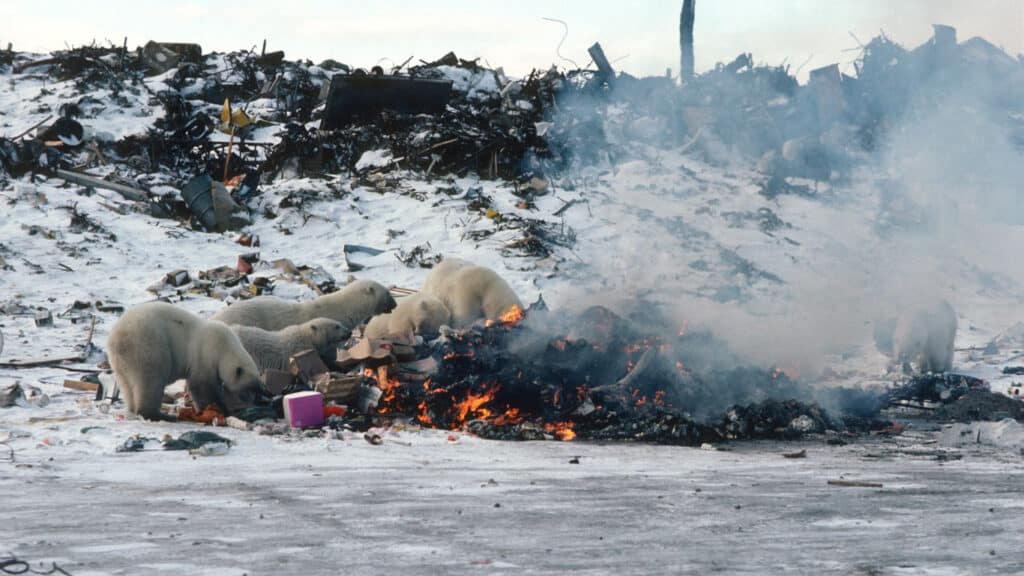
As climate change causes temperatures to rise, icy habitats rapidly melt away and refreeze more slowly, leaving polar bears helplessly stranded ashore for extended periods. With little to no ice available for the animals to hunt in deep water and feed on their usual, nutrient-rich food sources, hungry polar bears are now feasting on humans’ trash instead of seals, according to a recent study published online by Cambridge University Press on behalf of Fauna and Flora International. Polar bears are considered vulnerable by the International Union for Conservation Nature (IUCN) Red List. This is yet another critical threat to the survival of the species and could lead to increased instances of human-wildlife conflict as polar bears scour populated Arctic communities in desperate search of sustenance. In February 2019, 52 polar bears were spotted feeding in an open dump in Belushya Guba, Novaya Zemlya, Russia. The bears even attempted to enter local buildings. Similarly, another 60 emaciated polar bears were seen scavenging rubbish near Ryrkaypiy, Chukotka, Russia in December 2019. The animals occupied the 600-person village until the sea ice refroze in the fall. “Bears don’t know all the negatives that come with plastic ingestion and the diseases and toxins they’re likely exposed to in a (landfill) setting,” says Geoff York, study co-author and conservation director at Polar Bears International. But adopting a trash diet is not the only issue. Being in such close proximity to humans puts polar bears at grave risk of being killed by people who are afraid of them. In Ryrkaypiy in 2019, locals shot rubber bullets at the apex Arctic predators prowling their village. Things that can help in future include education, the introduction of polar bear-proof waste storage and adequate law enforcement. “Polar bears turning to garbage as a supplementary source of food is an alarming consequence of the accelerating climate crisis,” says David Barritt, Executive Director of Animal Survival International (ASI). “This problem will worsen as global temperatures continue to rise and human populations encroach farther into the Arctic. Polar bears are vital to the Arctic marine ecosystem, and we must continue to fight for the survival of this vulnerable species.” Banner: DanGuravich_Polar Bears International
Addo Elephant National Park Update: You Helped Us Bring Critical Water Supplies to Elephants and Other Wildlife in South Africa
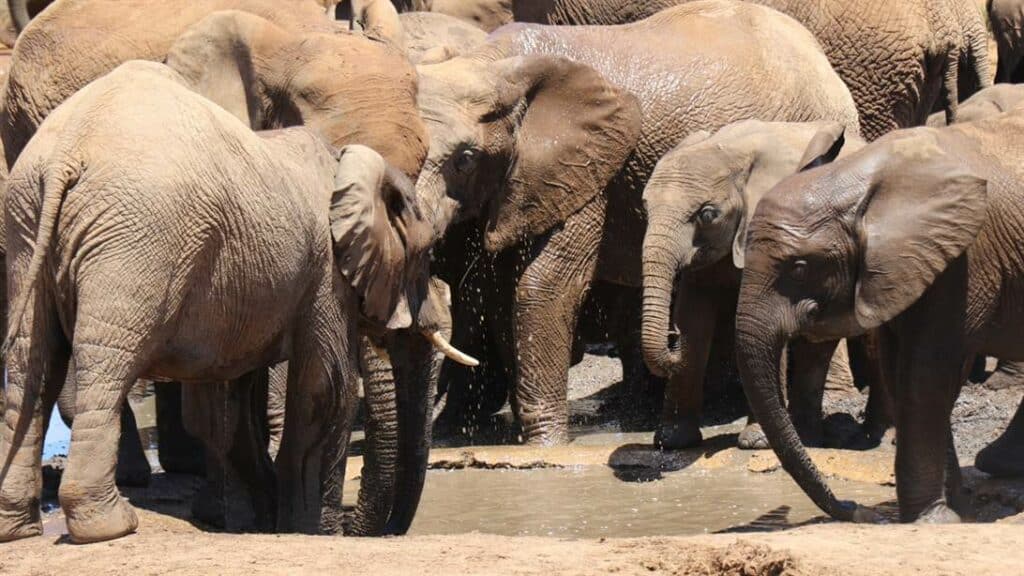
Through your support, Animal Survival International (ASI) has managed to provide elephants and other wildlife roaming the Addo Elephant National Park with their most urgent need: water. Addo is situated in South Africa’s Eastern Cape province, which is battling its worst drought in 100 years. Facing a particularly severe lack of water in Darlington, the northern-most part of the park, elephants were seen desperately scouring the area for water, only to stumble upon empty waterholes and bone-dry riverbeds when they attempted to dig. We rushed a team to the region to investigate and find urgent solutions. Fortunately, we found that there was an immense water reservoir lying deep beneath the surface. Drilling down 115 feet (35 meters) meant that we could provide Addo’s animals with as much as 1,320 gallons (5,000 liters) of water an hour. But we needed to obtain costly state-of-the-art equipment in order to access this water… With your help, we were able to rush emergency funding to Addo so that they could purchase two solar-powered water pumps. The pumps have now been installed, and as you read these words, life-saving water is flowing once more. With two of the area’s waterholes now filled to the brim, we have received word from Addo that Darlington’s wildlife is taking full advantage of the flowing water now at their disposal. The success of this project is of particular importance to us given our – and YOUR – direct involvement in the 2018 relocation of the 28-strong elephant family who now reside in Darlington. The family was named the “Davies herd” after our founders, Brian and Gloria Davies. African savanna elephant populations have dwindled by at least 60% over the last 50 years. They are now listed as endangered by the International Union for Conservation of Nature’s (IUCN) Red List of Threatened Species. ASI is committed to doing everything in our power to protect and preserve these precious creatures, and we thank you for standing with us on our latest campaign for their survival.
Animals are suffering in one of the WORST HEAT WAVES ever recorded – burning alive in forest fires, starving to death from lack of food and losing their homes to fire.
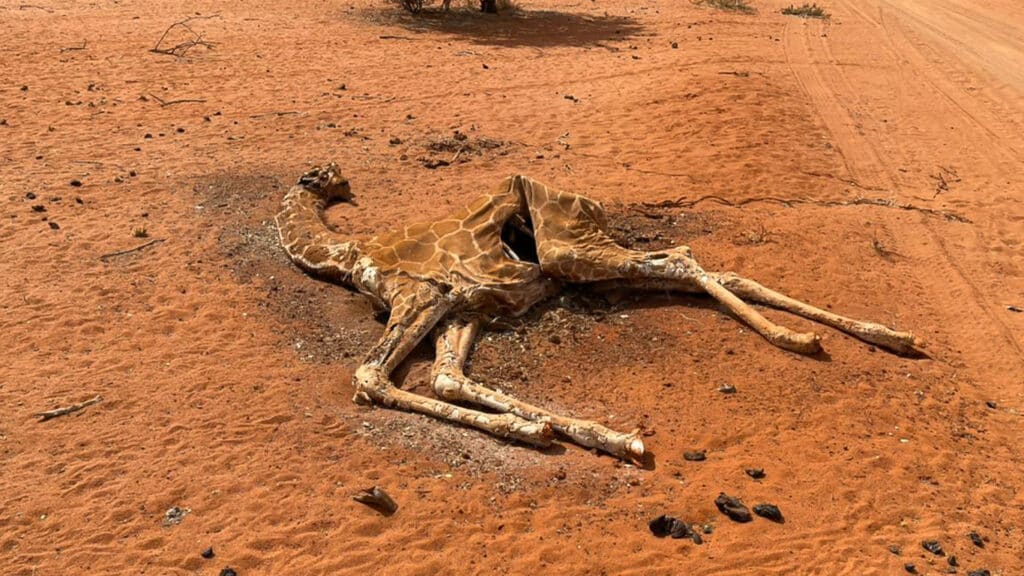
Right now, the northern hemisphere is scorching as fires rage through Europe while temperatures in the United States and China soar. Animals are suffering – burning alive in forest fires, starving to death from lack of food, and losing their homes to fire. For decades, governments ignored the scientific evidence that climate change was real and disaster after disaster would befall us. Now it is almost too late – environmental disasters are escalating as greenhouse gases blanket the earth. Food scarcity, drought, flooding, heat waves, wildfires and disease are significant concerns threatening all life on earth. We must act now! Trees and other vegetation remove carbon dioxide from the environment while at the same time creating habitats for wildlife. The science is well established on which trees to plant and where to create woods and forests. We know how to provide forest havens for animals, and we know that trees mitigate climate change. With your help, we can battle climate change by planting trees that absorb carbon dioxide, provide homes for animals and help preserve species. Environmental experts estimate that we need to plant trees on least a billion hectares (almost 3.9 million square miles or 10 million square kilometers) by 2050 to curb global warming and other effects of deforestation. Through collaboration with partners in multiple countries, we aim to plant 500,000 trees by this decade. This will capture approximately 81 million pounds (37 million kilograms) of carbon! We have already identified organizations in South Africa and Kenya to join forces with and make this a reality. It must be done! Scientists say temperatures on multiple continents have reached unprecedented levels as a direct consequence of global warming, with greenhouse gas emissions increasing their intensity, duration and frequency. For the first time in history, Britain recorded its highest ever temperature of 40C (104F). It is so serious that the United Kingdom authorities issued a level 4 alert, the highest level, corresponding to a national emergency. Climate change is caused by greenhouse gas emissions, which trap heat inside the planet’s atmosphere. CO2 produced by human activities is the largest contributor to global warming. By 2020, its concentration in the atmosphere had risen to 48% above its pre-industrial level (before 1750). The burning of fossil fuels, deforestation and the increase of livestock farming are just a few examples of human-driven activities that are influencing the climate and destroying natural carbon capture systems, which keep our planet cool. Forests are the planet’s air-conditioning systems and are vital for sustaining life. We must start restoring them and fast! Please, will you help? Roughly 15 billion trees are cut down each year! We must plant as many trees as we can if we are to save animals and the planet. There is no time to waste. Just $8 (£7) is all it takes to plant one tree. Please donate today to help remove carbon dioxide from our planet and save the homes and lives of millions of animals.
RECORD-BREAKING DROUGHT (worst in 100 years!). ELEPHANTS and other wildlife in dire peril in South Africa. We’re on the ground providing LIFE-SAVING WATER!
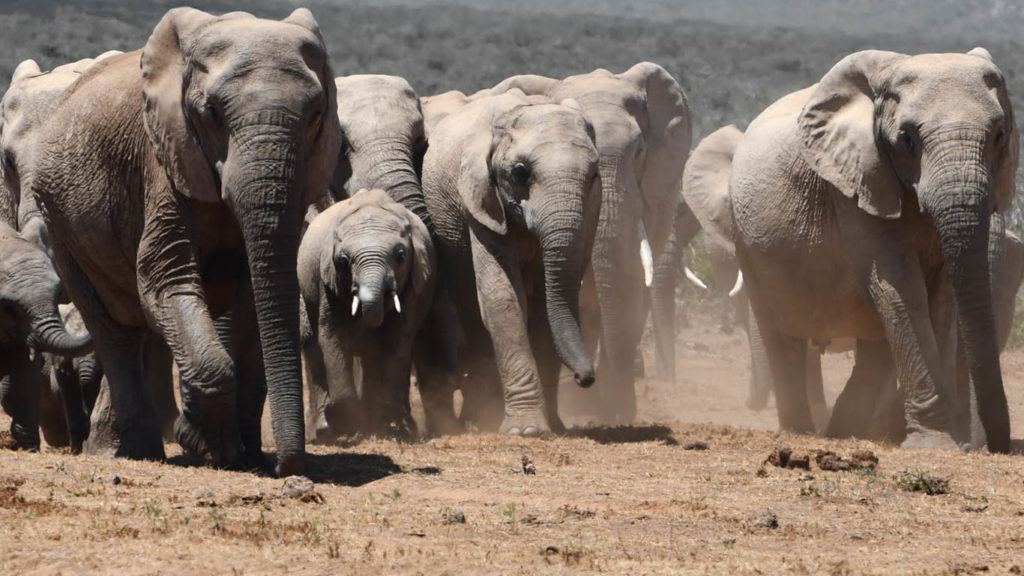
Recently, we told you about a deadly drought which is devastating the wildlife of the Addo Elephant National Park in South Africa. To help the animals survive, we have been installing waterhole pumps across Addo’s vast terrain (633 square miles or 1,640 square kilometers) to provide water, helping to ensure the survival of many species. In 2021, your donations helped us install state-of-the-art solar-powered water pumps to keep Addo’s main camp waterholes full (with great success!). Experiencing a severe lack of water in Darlington, the northern-most part of the park, Addo turned to us again to help provide elephants and other wildlife in the region with their most URGENT need… WATER. We acted immediately, rushing a team to the region. Fortunately, our investigation showed an immense water reservoir lying deep beneath the surface. “We discovered that if we drill down 115 feet (35 meters), we can provide 1,320 gallons (5,000 liters) of water an hour – an enormous boon for the animals that could be the difference between life and death,” says campaign director, Luke Barritt. ASI knew that we needed to act FAST to ensure that sufficient water flowed once more for the desperately thirsty animals of Darlington. But we needed to obtain costly equipment in order to access this water… Through your support, we have managed to rush emergency funds to Addo so that they can install the area’s boreholes with life-giving solar-powered water pumps. Until recently, diesel-powered water pumps would have been used, but in these days of climate change, we must provide a cleaner solution – solar-powered water pumps, because they are non-polluting. These pumps are also quieter, an important factor because wild animals get easily stressed by noise. This project is a success, but our work in Addo is FAR from over. The park is situated in South Africa’s Eastern Cape province, which because of climate change is battling its worst drought in 100 years… If we can raise more funds for additional solar-powered pumps, we can give Addo’s Darlington elephants and other wildlife even more water for them to be able to drink and bathe to their heart’s content. Please, will you help us make our long-term solution for Addo’s wildlife a reality? The speed at which global temperatures are rising is terrifying, and water is becoming increasingly scarce as droughts become more frequent, intense, and longer-lasting. We work with this issue every day, and every day, we become more alarmed by how serious water shortages are for animal survival. Prolonged dry spells pose life-threatening consequences to African elephants, the largest land mammals on the planet, who can drink up to 200 liters (around 50 gallons) of water daily. Water is also crucial for them to stay calm and do what elephants love to do – wallow in mud. Friend, the water shortage in Addo is especially poignant for us. In 2018, our supporters financed the successful relocation of a 28-strong elephant family to Darlington to ease pressure on the park’s central region. Before the relocation, no elephants had lived in Darlington for over 150 years, after being hunted to extinction. We named the family the “Davies herd” after our founders, Brian and Gloria Davies, who are passionate about these magnificent creatures. We could not turn a blind eye as the elephants desperately searched for their most critical life source, only to find empty waterholes and bone-dry riverbeds. African savanna elephant populations have dwindled by at least 60% over the last 50 years. They are now listed as endangered by the International Union for Conservation of Nature’s (IUCN) Red List of Threatened Species. The biggest threats faced by these giants are habitat loss, human-wildlife conflict and wildlife crime – primarily, poaching for the illegal ivory trade. Despite anti-poaching efforts, the animals remain at greater risk of extinction than ever before… There are only about 415,000 elephants left across the continent of Africa. Just under 100 years ago, there were more than 10 million. About 600 elephants roam Addo. We must do everything in our power to protect and preserve these wonderful creatures by providing them with water, their most fundamental need. Will you stand with us as we continue to fight for the survival of Addo’s precious wildlife? Please, donate today.
No end in sight to WORST DROUGHT IN A CENTURY in South Africa – majestic elephants and their babies, and countless other animals, are DYING!
A crippling drought is devastating the wildlife of the Addo Elephant National Park in South Africa. To help the animals survive, we have been installing waterhole pumps across Addo’s vast terrain (633 square miles or 1,640 square kilometers) to provide water, helping to ensure the survival of many species. In 2021, your donations helped us install six state-of-the-art solar-powered water pumps to keep Addo’s main camp waterholes full (with great success!). Now, a severe lack of water in Darlington, the northern-most part of the park, needs our URGENT attention. Addo is situated in South Africa’s Eastern Cape province, which because of climate change is battling its worst drought in 100 years. Addo reached out to us asking for help to provide water for elephants. Obviously, it is vitally important to ensure sufficient water flows once more for these parched elephants and other wildlife. We acted immediately, rushing a team to the region. The good news is that our investigation showed an immense water reservoir lying deep beneath the surface. “We discovered that if we can drill down 115 feet (35 meters), we can provide 1,320 gallons (5,000 liters) of water an hour – an enormous boon for the animals that could be the difference between life and death,” says campaign director, Luke Barritt. Until recently, diesel-powered water pumps would have been used, but in these days of climate change, we must provide a cleaner solution – solar-powered water pumps, because they are non-polluting. These pumps are also quieter, an important factor because wild animals get easily stressed by noise. If we can raise $8,000 (£6,500), we can give Addo’s Darlington elephants and other wildlife enough water for them to be able to drink and bathe to their heart’s content. Please, will you help us dig deep for water and install two new solar-powered pumps for waterholes? The speed at which global temperatures are rising is terrifying, and water is becoming increasingly scarce as droughts become more frequent, intense, and longer-lasting. We work with this issue every day, and every day, we become more alarmed by how serious water shortages are for animal survival. Prolonged dry spells pose life-threatening consequences to African elephants, the largest land mammals on the planet, who can drink up to 200 liters (around 50 gallons) of water daily. Water is also crucial for them to stay calm and do what elephants love to do – wallow in mud. The water shortage in Addo is especially poignant to us. In 2018, our supporters financed the successful relocation of a 28-strong elephant family to Darlington to ease pressure on the park’s central region. Before the relocation, no elephants had lived in Darlington for over 150 years, after being hunted to extinction. We named the family the “Davies herd” after our founders, Brian and Gloria Davies, who are passionate about these magnificent creatures. Now, the elephants are desperately searching for their most critical life source, only to find empty waterholes and bone-dry riverbeds. African savanna elephant populations have dwindled by at least 60% over the last 50 years. They are now listed as endangered by the International Union for Conservation of Nature’s (IUCN) Red List of Threatened Species. The biggest threats faced by these giants are habitat loss, human-wildlife conflict and wildlife crime – primarily, poaching for the illegal ivory trade. Despite anti-poaching efforts, the animals remain at greater risk of extinction than ever before… There are only about 415,000 elephants left across the continent of Africa. Just under 100 years ago, there were more than 10 million. About 600 elephants roam Addo. We must do everything in our power to protect and preserve these remaining few by providing them with their most fundamental and urgent needs. Please donate right now to get life-sustaining water pumped and flowing for desperately thirsty elephants.
Breaking News: Polar Bear Shot Dead in Canada, Where Only 16,000 Remain
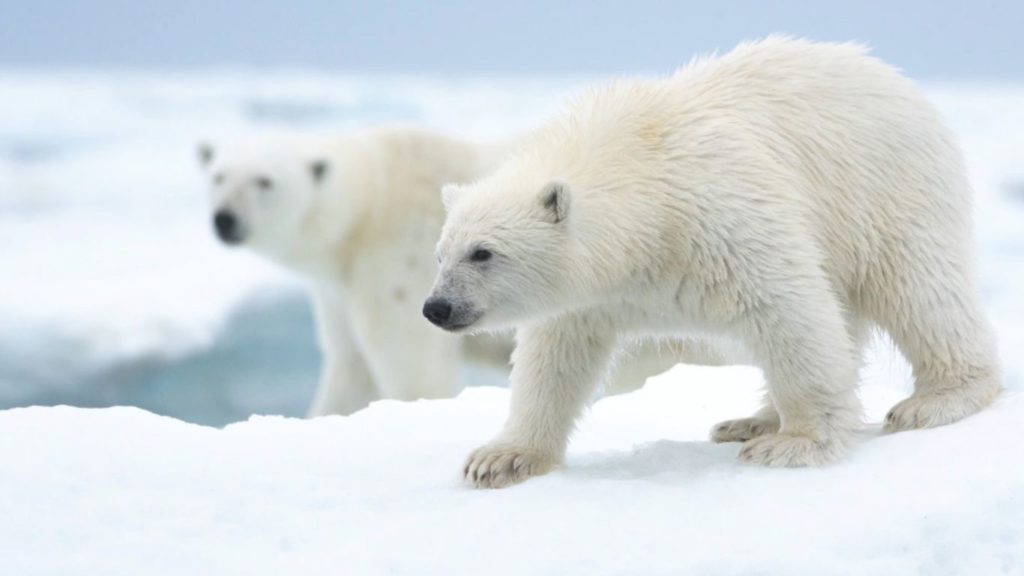
A polar bear was fatally shot last week by Canadian authorities after it was spotted wondering near the town of Madeleine-Centre in Quebec. This is the first time the apex Arctic predator has strayed so far south from its natural habitat. Quebec’s wildlife protection agency was ill-equipped to deal with the 650-pound (295-kilo) mammal and, lacking the skills to capture and relocate the creature, they simply shot it. The majority of the world’s last remaining polar bears reside in Canada. Polar Bears in Canada estimates that there are just 16,000 left in the country, which represents almost two-thirds of the species’ global population of 26,000. Authorities say they had “no choice” because their priority was protecting the local human community. “This tragic incident is yet another indicator of climate change’s devastating impact on our planet’s biodiversity,” says Tayla Lance of Animal Survival International. “Polar bears are critical to the Arctic marine ecosystem, but with the current rate of melting polar ice caps, this likely won’t be the last displaced polar bear at risk of being killed. Their homes are vanishing and they increasingly wind up in areas where they do not belong. We have a responsibility to do everything in our power to protect and conserve these vulnerable animals by taking steps to reverse the detrimental influence of climate change. Killing displaced animals because their habitat is being destroyed is not acceptable and goes against everything ASI stands for.” Banner image credit: SWNS
WICKED WEATHER EMERGENCY! Tiny PENGUIN CHICKS will DIE unless we AIRLIFT them to safety!
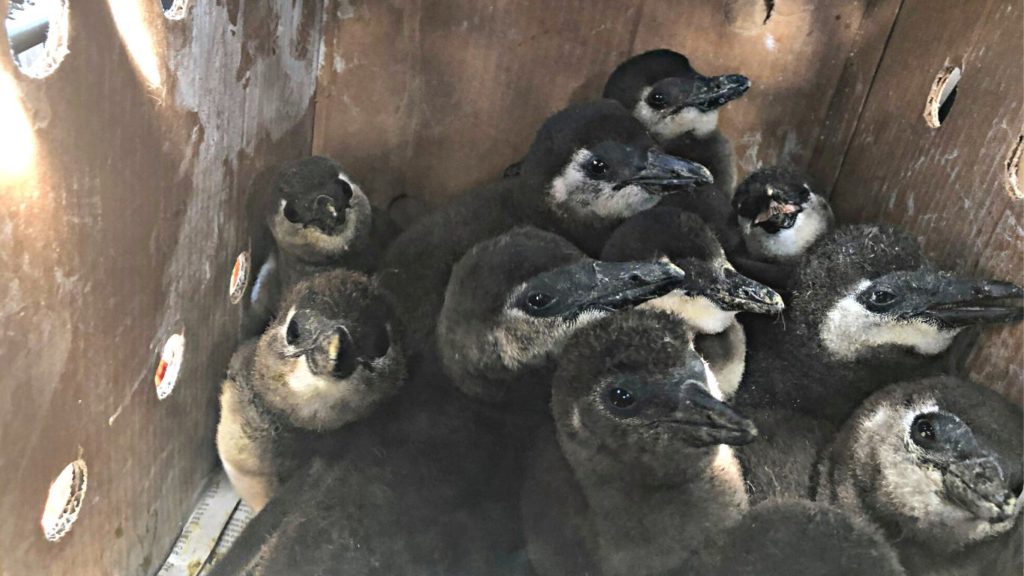
The population of wild African penguins has plummeted from 1 million breeding pairs worldwide to just 23,000 in 2016 – a horrifying 98% decline. Only 2% of the world’s African penguins remain, and just under half this number (10,000) is found in South Africa. Bird Island, part of the Addo National Park, your support helps fund, is a critical penguin breeding ground and a major hope for their survival. Deadly cold, wet and windy conditions have been battering the island since March. The survival of penguin chicks who are born in winter is severely threatened. Some have already died. The situation is severe with endangered penguin chicks abandoned by their parents because of extreme food scarcity and harsh weather conditions. African penguins mate for life and are good parents who do their utmost to feed, protect and care for their offspring, but in the extreme weather self-preservation kicks in and parents abandon their chicks to fend for themselves. Addo’s team discovered emaciated penguin chicks so desperate for food, they were eating grass. Penguins eat fish, grass and plants cannot sustain them but merely keeps their hunger pangs at bay, and in fact, makes them ill. When the abandoned chicks were rescued, they began retching mounds of thick, green gunk. The area around Bird Island is notorious for fierce winter storms and wild seas. From now until the weather improves in September, a series of emergency penguin rescues must take place if they are going to have any chance of survival. The weather gets so bad that boats are unsafe; helicopter rescues are the only answer. While adult penguins can survive up to three weeks without food, vulnerable chicks will die within 24 hours in these conditions. Transporting the chicks by helicopter is safe, effective and fast, and the penguins are taken to a well-established rehabilitation center. We have already sponsored two emergency helicopter evacuation missions and rescued 59 chicks. As more chicks are born, more rescue missions are vital, without them the future is bleak.Rescue missions are vitally important for the species to survive. We need your support to help save these penguins and give an endangered species hope for the future. Please help us to save as many African penguin chicks as possible. Because of climate change, extreme weather is becoming more frequent every year – at a time when African penguins’ main food source (sardines and anchovies) are diminishing because of overfishing. A single rescue mission costs roughly $620 (£500) – and that saves the lives of 30 chicks! The more we can raise, the more missions we can complete, and the more chicks we can save. Your donations will help fund vitally needed helicopter missions. Once these chicks regain their strength and are successfully rehabilitated, they will be taken back to the island, where as adults, they will be strong enough to survive the harsh conditions. Please donate generously so that we can rescue endangered penguin chicks in Africa.
Forests Provide Critical Climate Benefits Beyond Carbon Storage
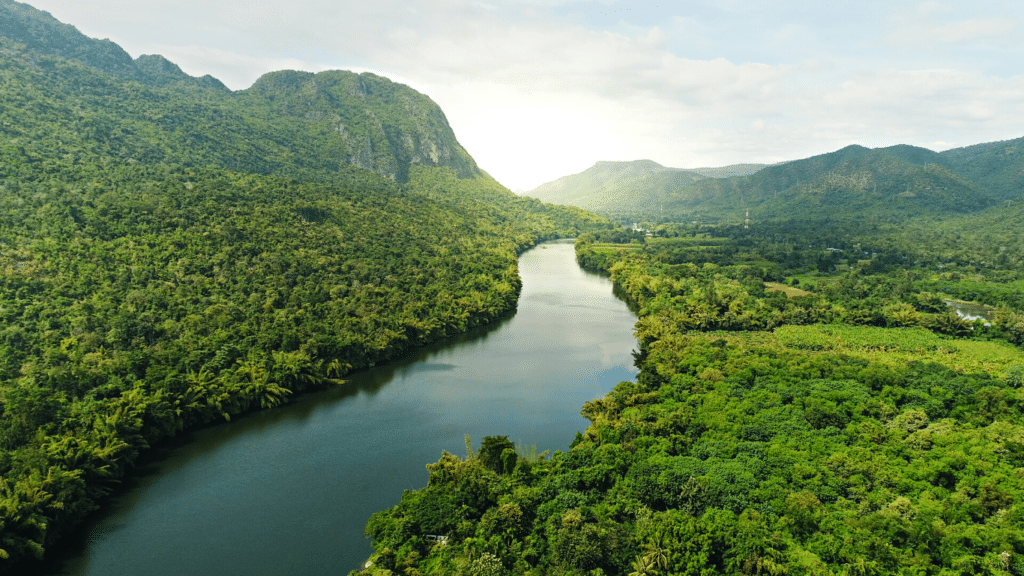
We already know that the world’s forests play a vital role in extracting and storing carbon dioxide from the atmosphere. But new research reveals that these natural carbon captors play an even more critical role when it comes to tackling the planet’s climate crisis. A recent study by researchers from the US and Colombia, The Unseen Effects of Deforestation: Biophysical Effects on Climate, found that forests help keep the planet at least half-a-degree Celsius cooler when particular biophysical effects are combined with carbon dioxide. Tropical forests situated in countries like Brazil, Guatemala, Chad, Cameroon and Indonesia are especially significant in sustaining a stable climate, given that their cooling effect is more than one degree Celsius. Forest cooling is due to a range of biophysical effects. Forests emit organic compounds which create vapors that reflect incoming energy and form clouds – both are cooling effects. This allows trees to divert heat and moisture away from the Earth’s surface, which directly cools the local area and influences cloud formation and rainfall. In the tropics, where carbon storage rates are highest, the biophysical effects of forests amplify the benefits of capturing and storing atmospheric carbon dioxide. Less carbon in the atmosphere reduces the greenhouse gas effect, thus diminishing the impacts of climate change. Tropical deforestation, therefore, means that there is an immediate rise in dangerously high temperatures and a decrease in regional and local rainfall. “The current tropical deforestation rates have catastrophic consequences for our climate,” says Tayla Lance of Animal Survival International. “Forest cooling helps to protect us from droughts, extreme heat and floods caused by global warming. It is imperative that we preserve and expand forest cover if we are to reverse the effects of deforestation.”
EXTREMELY URGENT! A deadly drought is killing countless wild animals in Africa; one last push and we can provide life-saving water!
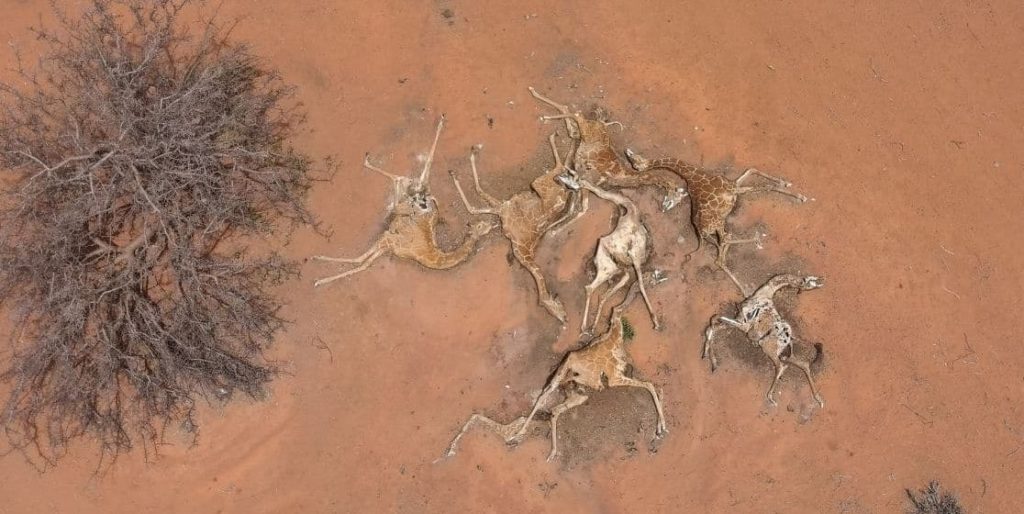
Recently, we told you about the catastrophic drought ravaging the African country of Kenya and our plan to prevent countless animals from dying of thirst. During the past two months alone, over 200 endangered reticulated giraffes have died because of drought. In a population estimated to number just 6,000, these rare animals could be extinct within two years. We asked for your help to help us reach our goal of $10,000 to construct watering holes. We have not yet reached that goal – but we are close and the clock is ticking. You can make a difference today – you can put us over the top by donating towards a permanent solution, but we need to ACT NOW. Last week, we shared an important update from our team in the field: with your help, we have already managed to buy the animals precious time by sending water trucks to the region. You enabled us to save many wild animals who would have otherwise died of thirst. But the animals are still in danger. We URGENTLY need to raise just a little more. Here’s why… and here is how, with your support, we can save many more animals. The ASI team delivered water to the worst affected areas as quickly as possible – but tragically, our help was too late for some. Wildlife carcasses littered the landscape, turning it into a sad, arid graveyard – bringing home to us just how real and deadly climate change is. Some animals had traveled long distances in search of water, only to arrive at a completely dried-up water hole. There was not a drop of water for these near-dead animals to drink. Desperate for hydration and having used up every last reserve of energy, they collapsed from exhaustion. Frantically, people tried to save giraffes, oryx, and other wildlife by giving them water by hand. It broke our hearts to see some animals take their final sips, the water coming just moments too late. But all is not lost! Our water truck bought some valuable time for some animals… and literally SAVED THE LIVES of many others! Now, we MUST raise a little more money to begin our vital, life-saving operation. As I’ve already said – we are close to our fundraising goal, but not quite there. Lives depend on reaching it as quickly as possible! If we can raise another $2,000 (£1,500) – yes, we are that close – we can build FIVE much-needed water troughs which will provide easy access to water for wildlife in dire need. Instead of dragging their exhausted bodies to dried-up watering holes where they subsequently collapse and die from dehydration, they’ll be able to find water when they arrive. We are desperate to provide this life-saving solution for the animals, but we need your help to do it. Please, donate now so that we can continue our critical, life-saving work in Kenya. With your help, we have already had a positive impact on the rapidly dwindling numbers of wildlife in the region, but much more still needs to be done. Animals continue to die, and we must be there for them. The more we do, the more we can save – but we can only continue our work with your generous support. Please be as generous as you can so we can create water troughs for animals dying of thirst. Our team is ready to begin building – we simply need to raise enough money to do so. Respond right away – the giraffes, kudu and lions of Kenya need your support and we are so close to meeting our goal to implement Phase II of our life-saving plan.
EMERGENCY! Endangered animals are DYING OF THIRST in DROUGHT-STRICKEN Kenya!
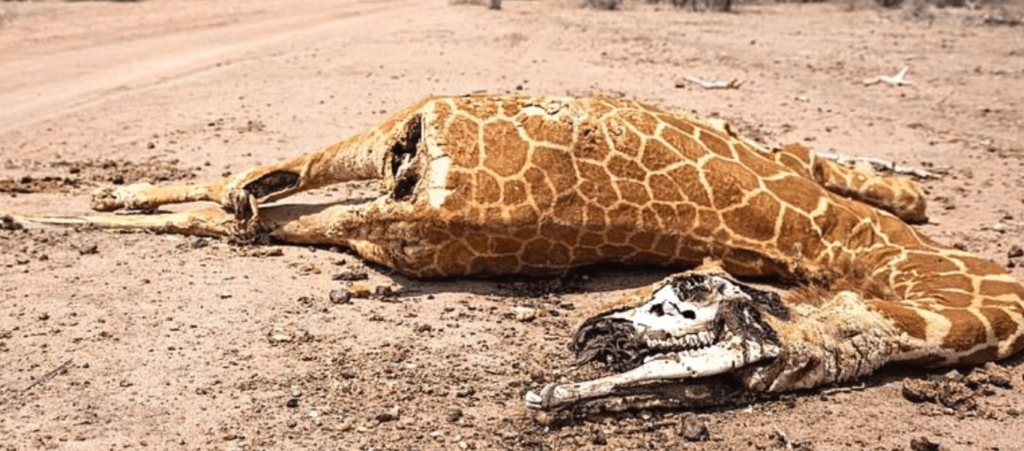
A terrible drought is ravaging the African country of Kenya! Shocking scenes show an arid and hopeless wasteland scattered with the carcasses of dead animals. Elephant, buffalo and antelopes will all soon die without your help. Critically endangered species including hirolas, gerenuk (rare long-necked antelopes) and Nubian giraffes (just 625 left) will soon be no more. Countless animals have already died of thirst – or from exhaustion as they dragged themselves further and further to find water that simply doesn’t exist. We must rush the animals life-giving water right now. Every second counts. Please, donate to help save their lives! The drought, probably driven by climate change, is so bad that states of disaster have been declared in 10 counties. It is an unmitigated disaster for the animals! No rain means no food. As a result, animals are forced to travel greater distances in the vain hope of finding sustenance. Nursing mothers, unable to provide for their young, are abandoning their babies to fend for themselves. Death is inevitable and could mean the end for many endangered species. We have a two-fold life-saving plan to SAVE LIVES: truck water to fill waterholes, repair broken boreholes that once supplied water to the animals. We must urgently – and we mean URGENTLY – raise $8,000 (£5,800) to provide water for the wildlife of Kenya! Your donation will help our team save lives. Your support RIGHT NOW is critical to the survival of countless animals. Endangered animal species are in mortal danger because of Kenya’s drought. We CANNOT afford to lose more wild animals! Countless wild animals with absolutely no access to food or water have already fallen victim to a devastating drought, forecast to continue well into 2022. You can HELP SAVE LIVES – we desperately need your support now! To a thirsty person, even a single glass of water is a Godsend. Imagine the relief of a giraffe, buffalo, elephant or antelope dying of thirst when water splashes into their waterhole! Together, we can MAKE THIS HAPPEN! Please, be as generous as you are able so we can get the animals water right now!
The Guardian: German Climate Minister Says Speed of Carbon Cuts Needs to Be Trebled

Adapted from article written by Kate Connolly Originally published by The Guardian (Tuesday, January 11, 2022) Robert Habeck has called for Germany to act to realize ‘gigantic task’ of creating climate neutral country Germany’s new economy and climate protection minister has called for the nation to pull together to realize the “gigantic task” of creating a climate-neutral country, saying it posed a considerable social and financial challenge as well as a big opportunity. Introducing a broad outline of his ambitious plans to the public for the first time since entering government as part of a three-way coalition last month, the Green party’s Robert Habeck called for a threefold increase in the speed with which carbon dioxide emissions are reduced, arguing Germany faced a race against time and required a “massive national debate” to achieve the goals set out by his ministry. He said the government faced an uphill task to win many people over to the idea of a transition. “It is a large political task, but one that of course also offers an enormous chance,” he said, adding that it was “mightily ambitious” and would require the entire country to engage in “fresh thinking”. Asked if he believed he could succeed and whether he was in danger of destroying the reputation of the Greens if he failed, Habeck, who has a reputation for turning to literature for inspiration, quoted the German poet Friedrich Hölderlin, stating: “Where there is danger so the power to save grows accordingly.” Habeck warned Germany was currently “dramatically behind” in its aim to achieve a goal for 80% of energy to come from renewable sources by 2030, as well as for a 65% reduction in greenhouse gases compared with 1990 levels, and to become climate neutral by 2045. Currently, about 42% of energy in Germany comes from renewables. Habeck said a radical overhaul of planning and building processes would be required as well as changes to industry and a slimming down of bureaucracy. Announcing a mandate for solar panels to be put on all new builds, he repeated his party’s pre-election manifesto that 2% of the entire surface of the country should make way for the mechanisms required for renewable energy, such as wind farms, solar panels and hydrogen technology. He urged people to embrace the technology and said this would help free Germany from dependence on unstable global markets. So far only two out of 16 states, Schleswig-Holstein and Hesse, are anywhere near the 2% target. A more relaxed and flexible approach towards rules governing the building of turbines was required, he said, expressing his frustration over a recent ruling in the southern state of Bavaria, according to which turbines cannot be erected closer to homes than a distance equivalent to 10 times their height. Habeck said he was planning to announce a first tranche of climate protection measures by Easter, and a second by the end of the summer, to come into force by 2023. The government’s plans have been fiercely criticized by Fridays for Future climate activists, who say they are too little, too late and are a betrayal of the Greens’ own principles. “We can no longer follow the policy of ‘we’ll do what we can’, rather we must have a policy according to the principle of ‘we’ll do what is necessary right now’. That is unfortunately not the case right now,” Hannah Pirot of Fridays for Future Berlin told the broadcaster InfoRadio. Habeck rejected the claims. He said: “I don’t recognize the charge of betrayal.” He added the goals of his government had to remain realistic and the effort had to be a collective one. Habeck said large-scale immigration would be necessary to realize the energy transition, which would require a considerable number of engineers, craftspeople and carers. “We have 300,000 job openings today and we expect that to rise to a million and more. If we don’t close that gap, we will face real productivity problems,” he said. He said while the pandemic had led to a reduction in CO2 emissions, these had risen again last year. “The trend is going in the wrong direction and that is of concern,” he said. Caution towards his plans came from within the government itself, with the pro-business FDP’s Reinhard Houben welcoming them, but urging Habeck to “not lose sight” of issues such as affordable energy and concerns over energy security. The government has said it will provide subsidies to enable lower-income families to better shoulder increases in energy costs. The chair of the German Association of Towns and Municipalities, Gerd Landsberg, warned of the contradiction Habeck would face between people expressing their support for a rollout of renewable energy at the same time as resisting anything that might be built close to their own homes. “People are in favor of alternative energy as long as they don’t have to see or hear the facilities behind them,” he told German television.
The Guardian: Climate Crisis: Last Seven Years the Hottest on Record, 2021 Data Shows
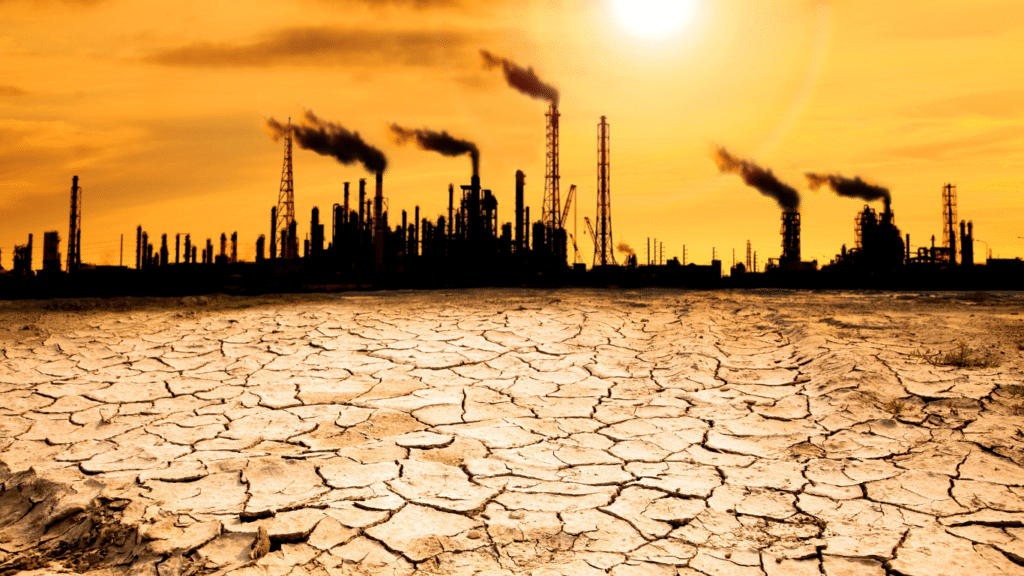
Adapted from article written by Damian Carrington Originally published by The Guardian (Monday, January 10, 2022) Global Heating Continued Unabated With Extreme Weather Rife and Greenhouse Gases Hitting New Highs The last seven years were the world’s hottest on record, with the first analysis of global temperature in 2021 showing it was 1.2C above pre-industrial levels. The assessment of the year, by the European climate agency Copernicus, also found carbon dioxide in the atmosphere reached record levels and that the potent greenhouse gas methane surged “very substantially”, also to a new record. The rise in greenhouse gas concentration means more heat is being trapped than ever before but 2021 ranked as the fifth hottest year on record. This is because a natural and cyclic climate phenomenon called La Niña exerted a cooling influence by bringing cold Pacific waters to the surface. The climate crisis continued unabated with extreme weather striking across the world. Europe suffered its hottest summer on record and broke its maximum temperature record in Sicily with 48.8C, while intense wildfires raged in Italy, Greece and Turkey. Severe floods made up to nine times more likely by global heating also wreaked havoc in Germany and Belgium Extreme heat also caused the “mother of all heatwaves” in the west of the US and Canada. Temperature records were smashed by 5C and scientists calculated the event was made at least 150 times more likely by global heating. In California, the Dixie wildfire was the second largest in history. China’s meteorological agency recently announced that 2021 was the country’s hottest year on record and that its northern region had its wettest year, with extreme weather widespread. Floods in July in Henan province caused hundreds of deaths. Mauro Facchini, the head of Earth observation for the European Commission, said: “The 2021 analysis is a reminder of the continued increase in global temperatures and the urgent necessity to act.” The Copernicus data shows 21 of the 22 hottest years have come since the year 2000. “The [extreme weather] events in 2021 are a stark reminder of the need to change our ways, take decisive and effective steps toward a sustainable society,” said Carlo Buontempo, director of the Copernicus climate service. The average CO2 levels in 2021 reached a new record of 414 parts per million in 2021 – before the Industrial Revolution and large-scale burning of fossil fuels the level was 280ppm. The rate of CO2 rise remained the same as it had since 2010, despite Covid-related lockdowns. Methane levels are accelerating with the growth rate in 2021 approximately three times the rate of a decade ago. Methane is emitted through fossil fuel exploitation, cattle and other livestock, and natural wetland processes and scientists are uncertain about the cause of the rapid rises. Vincent-Henri Peuch, at Copernicus, said: “CO2 and methane concentrations are continuing to increase year-on-year and without signs of slowing down.” Prof Rowan Sutton, at the University of Reading, UK, said: “At a global level the warming may appear gradual but it is the impact on extreme events in many different parts of the world that is dramatic. We should see the record-breaking 2021 events, such as the heatwave in Canada and floods in Germany, as a punch in the face to make politicians and public alike wake up to the urgency of the climate emergency.” Other temperature datasets for 2021 will be published in the coming weeks by the UK and Japanese Met Offices and Nasa and Noaa in the US, with similar results expected. “As the planet continues to warm, far-reaching effects are forming at a drastic rate all over the world and we are rapidly heading towards a chaotic and unstable future,” says Tayla Lance, campaigner for Animal Survival International. “It has now become our most important challenge – to prevent further destruction of the natural environment.”
It is not too late to SAVE COUNTLESS ANIMALS FROM EXTINCTION!
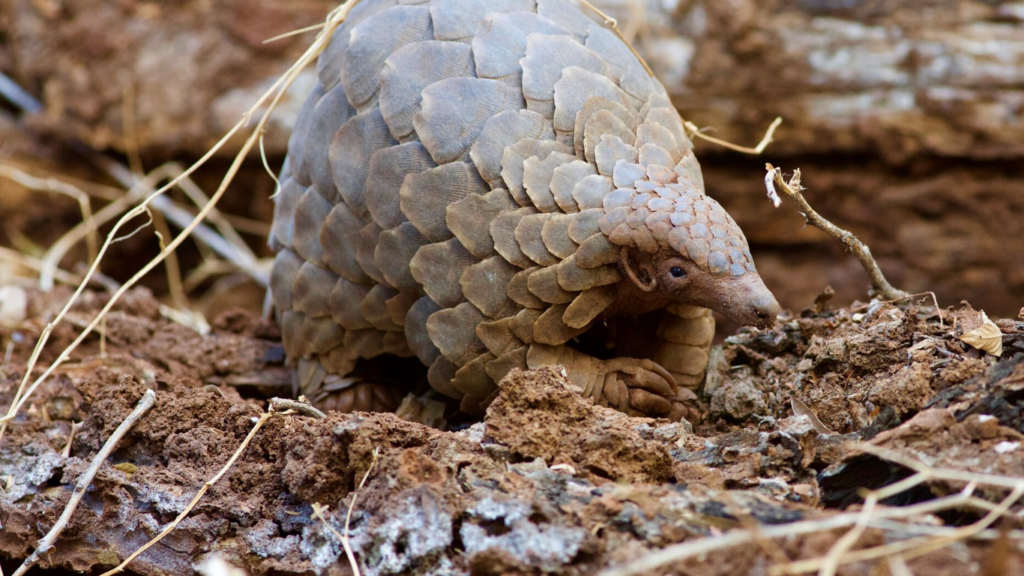
These are frightening times for animals and the planet! Climate change, the relentless destruction of forests, coral reefs and wilderness areas and the illegal trafficking of creatures large and small, powered by greedy humans, are sending animals and marine creatures hurtling towards extinction. Without determined action, we could lose the wild and its creatures soon and forever. That’s the grim, but true, situation as we enter 2022. But there is good news too! As you know, ASI fights every day to save animals and protect the wilderness. We also raise awareness about the situation, because truly, most people don’t realize how bad it is for animals. Elephants are a good example… Can you imagine a world without elephants? Elephant numbers are plummeting, and climate change is making a bad situation even worse. This year alone, we provided water systems and waterholes for elephants in South Africa and Namibia. At the Addo Elephant National Park, the systems we provided are giving water 24 hours a day to hundreds of elephants and thousands of other animals in the worst drought in 93 years. We were there to help and will be in 2022, thanks solely to our supporters who value our animals and the planet as much as we do. At the other end of the size scale, the world is on the way to losing pangolins, the gentle, shy, solitary and nocturnal scaly anteaters, who pose no threat to anyone. Yet they are the most illegally trafficked animal in the world. Once captured, their scales are ripped from their bodies to be used as hangover ‘cures’ in Vietnam and traditional ‘medicines’ in China. Often pangolins are kept alive, long enough to be boiled alive and sold in Asian restaurants as menu items. With the help of our supporters, we support rescue operations and pangolin rehabilitation programs in Nigeria and South Africa. So threatened are pangolins that rescued creatures have to be kept in guarded secret locations. Thanks to our supporters, we are at the forefront of the fight to save them. Our work never stops, and we need to do so much more. Make no mistake, the world and its animals are in peril, and we need your help to fight it. We get no help from governments – our support comes from caring, thoughtful people who are as concerned as we are. It’s donations from people like you that allow us to help animals – so please, if you can, make a donation to help ASI fight for animals and the planet. In 2021, we helped endangered tortoises in Madagascar, frogs in Turkey and hyenas and toads in South Africa. We financed anti-poaching and anti-snaring activities in Zimbabwe. Zebras, aardwolves and aardvarks, badgers, barn owls, giraffes, wildebeests, rhinos, monkeys and birds of prey have all benefited from the work our supporters allow us to do. Sea creatures who benefited from your donations include seals and turtles. We focus much of our attention on direct action to save wild creatures, but we also finance scientific research to learn more about animal populations in the wild. This work is vitally important to help maximize the chances of animal survival in an ever-diminishing wilderness. None of what we do can be done without people who care enough and realize how bad the situation is. Wild animals need your help – the planet needs your help. Please donate generously to Animal Survival International right now. Your donation is important. ASI works internationally – we go where we are needed but we can only do so with the help of caring people like you. We live and breathe these issues every day, and each day, we become more alarmed at the seriousness of the situation: animals are headed for extinction and extinction is forever. The need for urgent action is vital. For 2022, ASI has pledged to expand our help to wild creatures and to increase our efforts to protect the environment. The work we do is critical for animals and the world we live in – don’t doubt for a moment that your donation really makes a difference – even a small amount is a godsend for animals. There is so much good work to be done. Animals need you – please do your best to help. Orphaned baby animals URGENTLY need a clinic! Let us end 2021 by telling you about our plans to help create a wildlife emergency veterinary clinic at the Umoya Khulula Wildlife Centre in a remote bush region of South Africa. Umoya Khulula is a volunteer organization that rehabilitates baby animals rescued from traffickers or whose mothers were poached. At the moment, if an animal needs emergency care, the nearest clinic involves a 114-mile (284 kilometer) round trip. Many animals die during the journey. It would be so wonderful if you could make a small donation to help animals there. The list of needs is long, but there is hope. ASI helps improve animal lives and protects the wilderness. Please join us in this crusade for the animals and the planet we live in by making a donation right now.
Found alone, motionless and barely breathing… it’s a miracle Modjadji the newborn zebra was ALIVE.
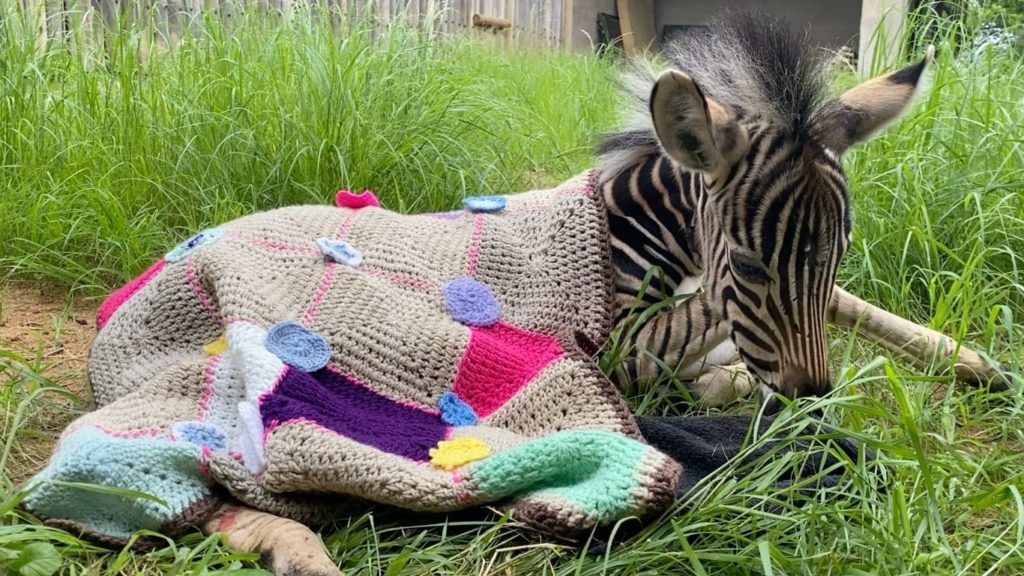
In South Africa’s Mpumalanga region, a newborn has been found on the brink of death! Discovered alone, motionless and barely breathing by an anti-poaching team, the desperately ill foal was rushed to our partner, the Care for Wild Sanctuary’s (CFW) intensive care unit for emergency treatment. Their worst fears were confirmed when blood tests revealed septicemia and severe anemia. CFW reached out to Animal Survival International for help and… …we RUSHED EMERGENCY FUNDS for an urgent blood transfusion for the baby zebra! The baby (She was given the name ‘Modjadji’ after the queen of the rain and ruler of the day.) was only a few days old and in terrible condition and to make things even worse, she was completely covered in ticks. The team feared she wouldn’t survive the night. Thankfully, the additional blood plasma and red blood cells we provided gave Modjadji’s immune system a much-needed boost and helped to combat the anemia. She fought bravely but her condition is pitiful. Injured, weak and frightened, she needs long-term intensive care and rehabilitation to recover. We have promised to send more help, but we need your support. Please help us raise the $2,800 (£2,115) needed for her care. Separated from her mother just days after birth, it’s miraculous she survived! For two weeks, relentless storms, likely driven by climate change, battered the Mpumalanga region of South Africa causing the ground to turn into mud and become flooded by pools of water. With the rain pouring down and the mud making it difficult for animals to walk or run, rangers suspect the baby zebra struggled to keep up with the herd and was left behind when she could no longer stand. Modjadji is not out of the woods yet! Her white blood cell count is still very high, showing that infection persists. She has wounds all over her body from when she tried to drag herself through rough dirt, looking for a safe place to hide before she was rescued. Zebras live in herds made of multiple small families – one stallion, multiple mares, and their young. Modjadji has been left orphaned and without a family to care for her. After she fought so bravely, she deserves to live and with your help, we will give her everything she needs to survive and be released safely back into the wild. It is imperative that the rehabilitation team constantly monitor Modjadji’s urine, blood glucose levels, temperature, feces and breathing. She needs daily wound and skincare, eye and ear washes and our team must ensure that she is comfortable and manage her trauma and emotional state. Modjadji is under 24-hour supervision and fed milk every two hours by the devoted CFW team. Being just a few days old in the wild, she would normally be cared for by her mother and protected by her herd. Now, we are her herd! And we need you to join the herd too! Gentle Modjadji is in desperate need of our help. Even at a very young age, she should already be eating solid food, but her jaw muscles are still too weak to chew even the smallest of carrots. We have pledged to provide aid but need your support to help make this possible. Please help us raise the $2,800 (£2,115) so urgently needed. Your donation will be put to immediate use for continued around-the-clock care. Please, help us secure little Modjadji’s survival! Modjadji has a long road to recovery ahead of her, and our team must work extremely hard to help her regain her strength so she can be released back into the wild. We need your help to make sure that this story has a happy ending. Please donate as generously as you are able, today!
Good News! Water Flows for the Baby Animals of South Africa’s Addo National Park
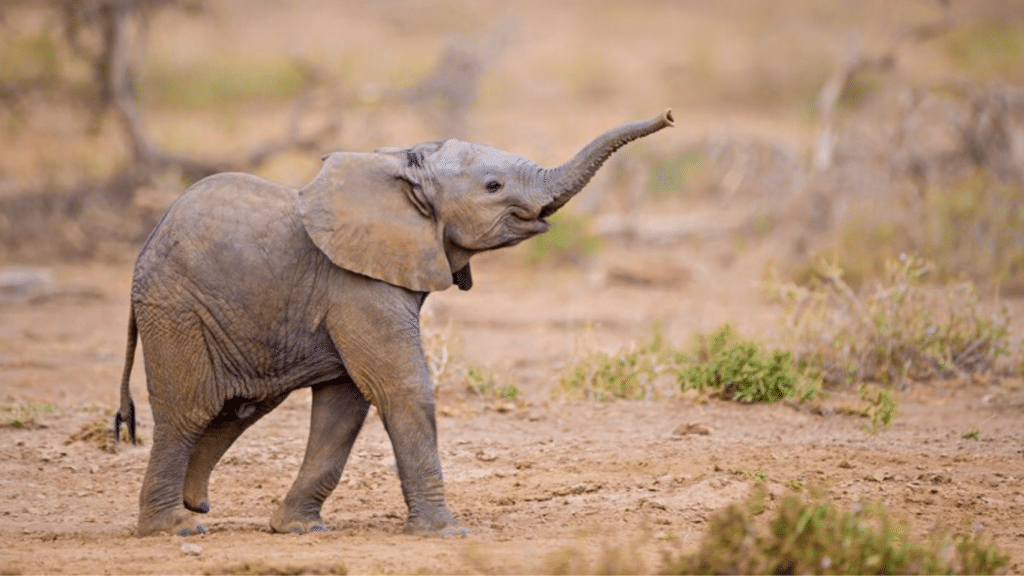
A few weeks ago, we told you about the terrible drought that continues to plague the animals of Addo National Park in South Africa. The situation was becoming critical, with baby season arriving and not enough water available for the hundreds of calves and foals that will be born. Animal Survival International (ASI) has already installed four state-of-the-art solar-powered water pumps in strategic points of the park to help the animals survive. But as summer temperatures begin to soar, these waterholes have become overcrowded. The biggest, strongest animals dominate, leaving baby animals no chance to access the life-giving water. To remedy this, the animals urgently needed even more water. We reached out to our supporters and you responded generously! Thanks to you, we were able to rush funds for the purchase and installation of two additional solar systems and water pumps to bring life-giving water to the animals. The ASI team was on the ground in Addo National Park for the installation and watched as cool, fresh, clean water flowed into two waterholes for the first time in years. Now, mother elephants, zebras, warthogs and more will have enough water to produce milk for their babies. We are still hopeful that the terrible drought will come to an end soon, but for now, the animals are safe from the threat of dying of thirst.
EMERGENCY! UNPRECEDENTED DROUGHT CONTINUES! Elephants and other wildlife DYING FROM THIRST!
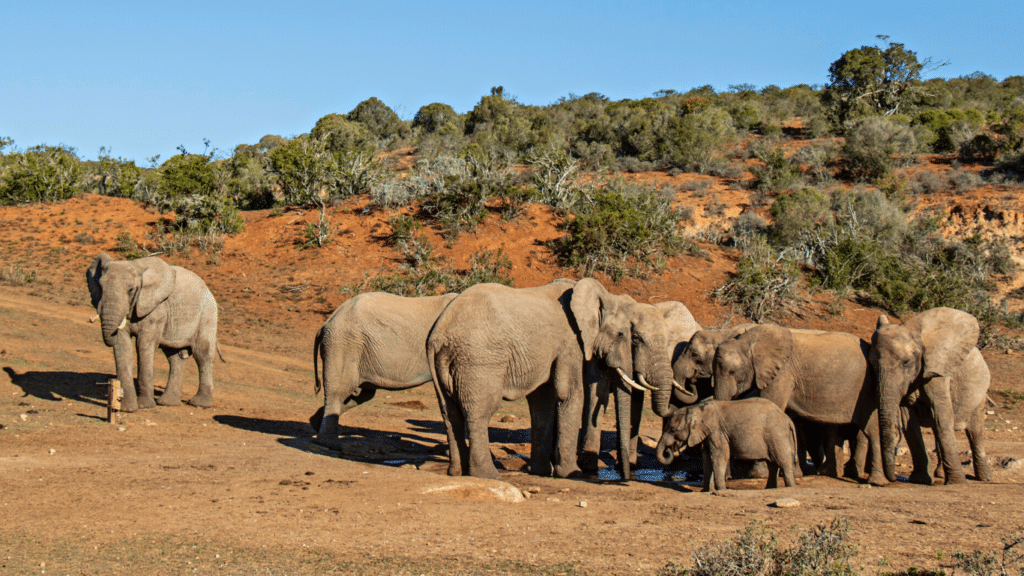
We’ve told you before about the frightening situation in South Africa’s Addo National Park, where the worst drought in 100 years is threatening the lives of thousands of animals. Only because of your donations have many of these animals survived this long. Your contributions allowed us to provide life-sustaining water in their dry waterholes. An awful situation is about to get worse because now is the time of year that animals start to give birth, as the summer rainy season should be setting in and breathing new life into the dry ground. But there is still no rain in sight – and already, hundreds of newborn animals are in need of water! We have promised to do everything we can to help. Please help us raise $8,000 (£5,800) to install two more state-of-the-art solar-powered water pumps to bring life-saving water to these animals in need. Without enough water, mother elephants won’t be able to feed their babies! An adult elephant drinks up to 53 gallons (200 liters) of water every day! With so many new baby elephants about to be born, it is critical that the mothers have enough water to drink for them to produce milk to feed their babies. Every baby elephant life lost is a crippling blow to elephants’ survival. Elephants are deeply emotional and social creatures; they mourn the loss of their loved ones, even visiting the site where they died many years later. We have seen dead baby elephants, and it is something we hope never to see again. Please, help us bring more water to the animals of Addo and help them survive until the rains finally come! Summer temperatures are beginning to soar, and the struggle for water gets worse with the biggest, strongest animals dominating waterholes. Summer temperatures in Addo National Park can reach 115 degrees Fahrenheit (46 degrees Celsius). No animal can survive these temperatures for long without enough water. The waterholes your support enabled us to fill are already crowded with thirsty animals traveling long distances to get a drop to drink. Sadly, baby animals stand little chance of fighting their way to the water’s edge to drink because the bigger, stronger animals drive them away. With your help, we can bring thousands more gallons of water every day to the animals in dire distress. Two additional waterholes will allow countless animals to survive until the rain does fall and the life-saving liquid flows again. Please, donate today so we can rush aid to these animals – help us raise the $8,000 (£5,800) we need to provide them with relief! Waterholes are drying up – and competition for a drink of water is fierce! The ASI team was on the ground in Addo just days ago and we saw the panic of thirst starting to set in. Skittish zebras and warthogs, which are not usually aggressive animals, are violently competing for the last drops of muddy water. We saw how a small herd of thirsty elephant mothers and their babies quickly drained a trough of water we filled, down to the last drop and searched for more. It is critical that we get these animals water. Please donate now so that we can ensure these baby animals survive!
An IMPORTANT MESSAGE from ASI’s Chief Financial Officer: “I am worried for my children, and yours – and the animals!”
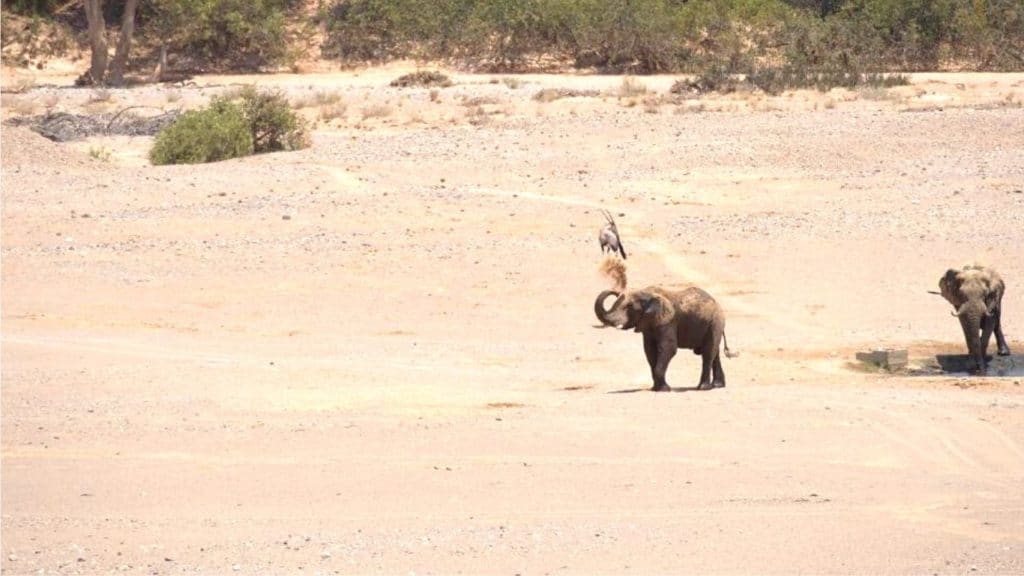
My job at Animal Survival International (ASI) is a financial one and I am not used to talking to our supporters, but while working at ASI I have learned so much about the danger the world is in from climate change that, as the mother of two young children, I have to speak. The pace of climate change is so fast and so potentially deadly that I truly fear for all the world’s children who face what is coming. Climate change is causing disaster after disaster around the globe. As a mother and wife, I speak to all families out there and urge them – urge you – to ACT NOW to stop climate change before it is too late. Please, will you help us today? Let me give you just one example… A devastating drought in South Africa is threatening the lives of thousands of wild animals in the Addo National Park. It is not a routine drought – it is a catastrophe and should not be happening. The WORST DROUGHT IN A CENTURY has put the lives of hundreds of elephants and their babies at imminent risk! Waterholes are drying up with terrifying speed. Just this year ASI provided four waterholes with solar-powered pumps, and I am trying to find the funds for two more. Without this help, the 650 elephants and thousands of zebras, buffalo, lions, antelope and other animals that call Addo National Park home would not have enough to drink. This means that mother elephants will struggle to produce enough milk for their babies – and as a mother, I can barely imagine the anguish of any mother whose baby is suckling and finding no nourishment, ever-weakening until the end comes. I can’t help but think about my girls and how I would feel in the same situation. It gets even worse because even if the rains finally come, the vegetation will take years to recover. Bad news for elephants. This is a story that is sadly repeated throughout Africa. In the northeast of Namibia too, the last of the iconic desert elephants and the last desert lions are on the verge of extinction because of an intense drought that has lasted five years. The time for talk is over. World leaders must ACT on climate change NOW! ASI does all it can to ensure that beleaguered animals survive (the waterholes we have funded – and more, if you will donate today – ARE SAVING LIVES!), but this problem is bigger than any one organization can effectively tackle. It’s time for the world’s governments to do more than pay lip service to climate change. Our world – our children’s world is in peril, and it’s plain to see. There is no denying the situation when you see the elephants of South Africa’s Addo National Park or the lions of north-eastern Namibia dying of thirst and the desert slowly creeping over farmland. Please, join us in our fight – for the animals and for our children. There is much to be done, but ASI will not give up! Can we count on your help today? We have also provided water to help one of the last free-ranging elephant herds of Namibia survive. Without us, elephants in Addo would be thirsty. At ASI, we know we are doing the absolute best we can to help, but so much more needs to be done. Saving animals and the planet, Chief Financial Officer Animal Survival International
Elephant Appreciation Day
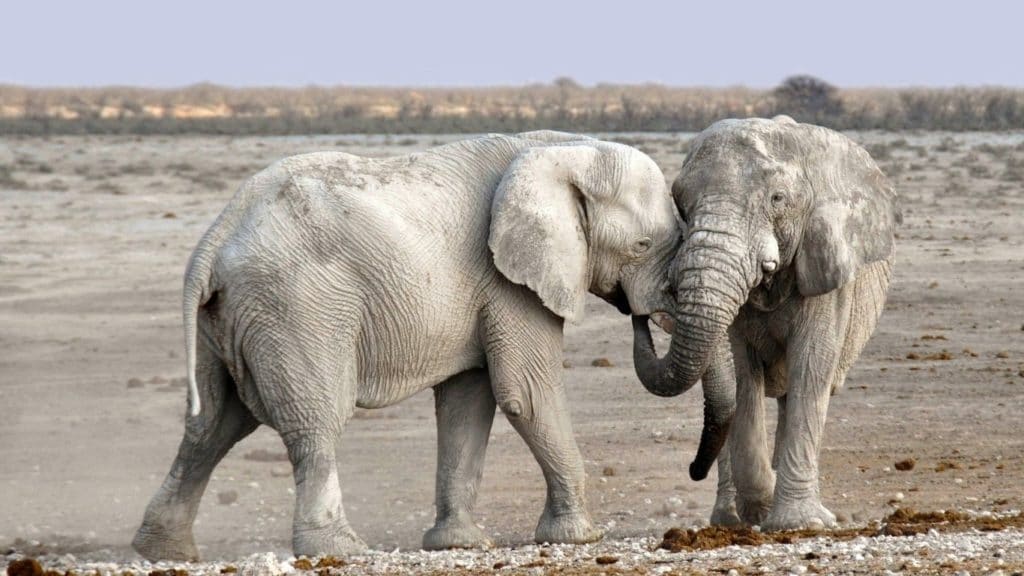
Today is Elephant Appreciation Day – a day to reflect on these great, grey, gentle giants which never cease to evoke a sense of awe in humankind. The more we learn about them, the more we marvel at their social structures, their caring family lives and the sheer wonder of their being. Yet, we are destroying our elephants, pushing them to the brink of extinction through trophy hunting, ivory poaching and habitat destruction. Greed and corruption beset elephants at every turn. Even CITES (The Convention on International Trade in Endangered Species of Wild Fauna and Flora), the international body tasked with protecting elephants from exploitation, has blatantly justified Namibia selling its wild elephants into captivity. Read more… At Animal Survival International (ASI), we strive to protect African elephants in every way we possibly can. At Addo Elephant National Park in South Africa, ASI is providing water for more than 600 elephants as the worst drought in a hundred years takes its toll. In Zimbabwe, we financially support anti-poaching efforts to help save the last of Kariba’s famous Lake Elephants, the targets of ongoing ivory poachers. Just this week, we provided emergency funding to prevent a baby elephant from losing his leg to a deadly snare in Zimbabwe. In Namibia, we provided water for some of the last free-roaming elephants in the country, so that they would stay in safe areas and not be shot at by farmers and hunters. But the efforts we have made are being undermined by the Namibian government which has announced it intends to sell 57 wild elephants, many of which will almost certainly end up in zoos. Sometimes it seems that we are fighting a losing battle as with every elephant life we save, another is lost. More than 50 elephants die every day at the hands of ivory poachers. The situation has become so serious that if humanity doesn’t change the way it exploits elephants, they will soon be gone forever. To prevent this from happening, we need to act now. We at ASI promise that with the commitment of our supporters, we will be at the forefront of the fight to save elephants. Please don’t let today be the only day you think about these majestic creatures. Be part of the daily effort to save elephants. Become a supporter of Animal Survival International, and we promise to do whatever it takes to protect elephants across Africa.
Climate Change-Induced Conflict With Animals Is Now Our Most Important Challenge
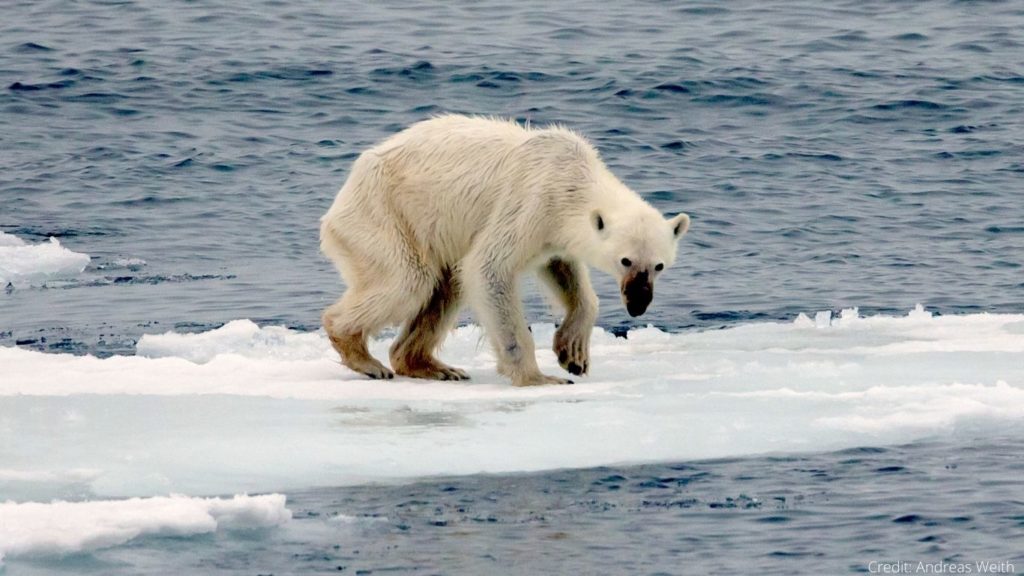
Words: Melissa Reitz The link between human-wildlife conflict and climate change is a conversation we can no longer ignore. Over the past decade, this conflict has become as pressing a threat to wild populations as poaching, trafficking and habitat loss. With scientific evidence confirming our worst fears – that human-induced weather changes are here to stay and become more severe – rapidly diminishing space and resources is intensifying the fight between people and animals in ways never before seen. According to the United Nations latest Climate Report: “Climate change is already affecting every inhabited region across the globe with human influence contributing to many observed changes in weather and climate extremes.” As we see climate change rapidly exacerbating resource scarcity and forcing people and wildlife to share increasingly overpopulated spaces, human-wildlife conflict is becoming a much broader and complex set of dynamics between people, animals and policy makers. Weather changes such as heatwaves, floods, droughts, and tropical cyclones are becoming the norm and these conditions have a direct impact on the resources on which people and animals both rely. Yet as humans and wildlife battle it out for survival, policy makers continue to either ignore the severe ramifications or seek out short term, knee-jerk solutions. In Brazil, the world’s largest tropical wetland, the Pantanal, is on fire – again. Prolonged drought, searing temperatures and strong winds have made the region highly susceptible to fires. But more than ninety percent of the fires caused in the Pantanal annually have been traced back to human activity, which increases each year. Cattle ranchers set degraded pasture areas alight to renew grazing, while traditional communities use fire to clear land for subsistence farming. In already unfavorable conditions these fires quickly run out of control. As a result, millions of endangered mammals and reptiles and hundreds of thousands of hectares of pristine vegetation have been destroyed with increasing devastation every year since 2019. But Brazil’s government has been criticized for not taking proper action in preventing these fires. Despite a 120-day prohibition in 2020 on fires in the Pantanal and Amazon rain forest, there has been a stark lack of support from officials in helping fight the fires and save animals, say on-the-ground non-profit organizations. In Southern Africa, elephants too are suffering from the impact of changing weather patterns. The struggle for space, food and water is fast becoming a bigger challenge for the species than ivory poaching, as human encroachment takes hold. Prolonged and devastating droughts have intensified human elephant conflict in many regions as elephants encroach human settlements in search of water. In desperation, communities turn to their governments for a solution. Despite other options being available, in many cases governments seek a financial solution and either increase trophy hunting permits or sell elephants to countries abroad where they end up in zoos. But it’s not only African elephants or South American wetlands suffering from human response to climate induced challenges. A recent report has highlighted the significant challenges that both human and animal populations are experiencing in all parts of the globe as their territories begin to cross over with the impacts of climate change. In the Arctic, rapidly melting sea ice is pushing polar bears closer to human settlements in search of food, increasing tension with people and fueling more bear attacks than ever before recorded. In Kenya, torrential rains have pushed hippos out of their usual grazing grounds leading to a spike in fishermen being killed. In the ocean, marine experts have found that shark attacks are on the rise as climate change affects migration patterns of sharks, leading to more human encounters. And in California a heat wave-induced toxic algal bloom delayed the opening of the Dungeness crab fishing season, leading to an increase in whale entanglement with crab fishing gear. The list goes on. When we consider the science that says: “The scale of recent changes across the climate system as a whole and the present state of many aspects of the climate system are unprecedented over many centuries to many thousands of years,” it is clear we have to adapt the way we co-inhabit with animals on the planet. Completely eradicating human-wildlife conflict is not possible, but we can implement well-planned, integrated approaches to managing ways of coexistence between people and animals. These would include on-the-ground research, prevention and monitoring, as well as strong policy and enforcement by governments. “As climate change and habitat loss drive people and wildlife closer together, world leaders need to put effective management of human-wildlife coexistence at the very center of their plans to halt the destruction of nature,” says Adrienne West of Animal Survival International. “This is a challenge that is here to stay and one for which humanity needs to take responsibility.”
Millions of rare and endangered animals, including jaguars and giant anteaters, are caught in a RAGING INFERNO!
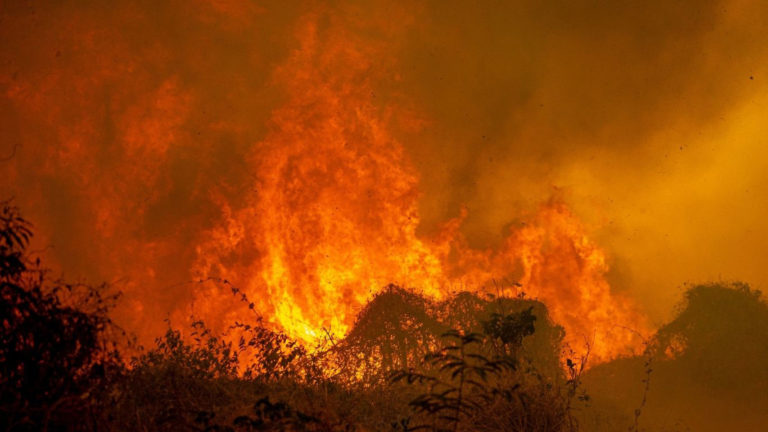
The world’s largest tropical wetland, the Pantanal in Brazil, is burning – again! Millions of rare and endangered animals including jaguars, giant anteaters and maned wolves, face death if we don’t act now to contain the blaze and save every animal we can. Please help us raise funds to provide emergency fire fighting equipment and rescue and treat animals injured by the fire. 17 MILLION animals DIED in the 2020 Pantanal fires! We cannot let this happen again! The Pantanal is one of the most biodiverse and unspoiled places left in the world. Almost 5,000 species rely on this ecosystem for survival. It is home to the world’s largest concentration of jaguars, who have already lost nearly half their native range worldwide. Last year, unprecedented wildfires, driven by the worst drought in half a century, destroyed 38% of the Pantanal, killing an estimated 17 million animals in a matter of weeks! We cannot allow this to happen again! The fires have now spread into the protected areas! Thousands of endangered animals face death if we don’t act now! More than 1,000 wildfires are already destroying the critically sensitive Pantanal and the number is growing by the hour. In just five days, 17,000 hectares (42,000 acres) and untold numbers of animals have already been lost. We have promised to rush emergency funding to the Pantanal Relief Fund, but we need your help. Please, donate now to save the animals of the Pantanal. An emergency animal treatment center is being set up, and volunteer veterinarians are standing by to rescue as many animals as they can. But, without funds for critical supplies and fuel, their work will be limited, and many lives will be lost. If these fires are left to burn, the Pantanal may never recover! It is vital that fire breaks are created to save as much of this habitat as we can. Tens of millions of animals rely on this ecosystem, but if we cannot save critical conservation areas, these animals could be lost forever. The Pantanal’s rainy season should start in October, but the worst drought in over 50 years means that rainfall could come as late as December. Critical zones that need to support the surviving animals until the rains come are already burning. The Pantanal Relief Fund need our support immediately if they are to have any chance of success! This could become the worst ecological disaster of our lifetime! We must do everything within our power to bring it to an end before it is too late! The Pantanal is one of the world’s most effective carbon sinks, helping to fight climate change and providing a refuge for thousands of endangered animals. Larger than England, the loss of this utopia could speed up global warming and the extinctions of hundreds of threatened species. Animal Survival International was created to prevent exactly this and we will do everything we can, but we desperately need your help. Please donate towards the emergency relief efforts today.
Aardvark isn’t just the first word in the dictionary – it’s a fascinating creature UNDER THREAT!
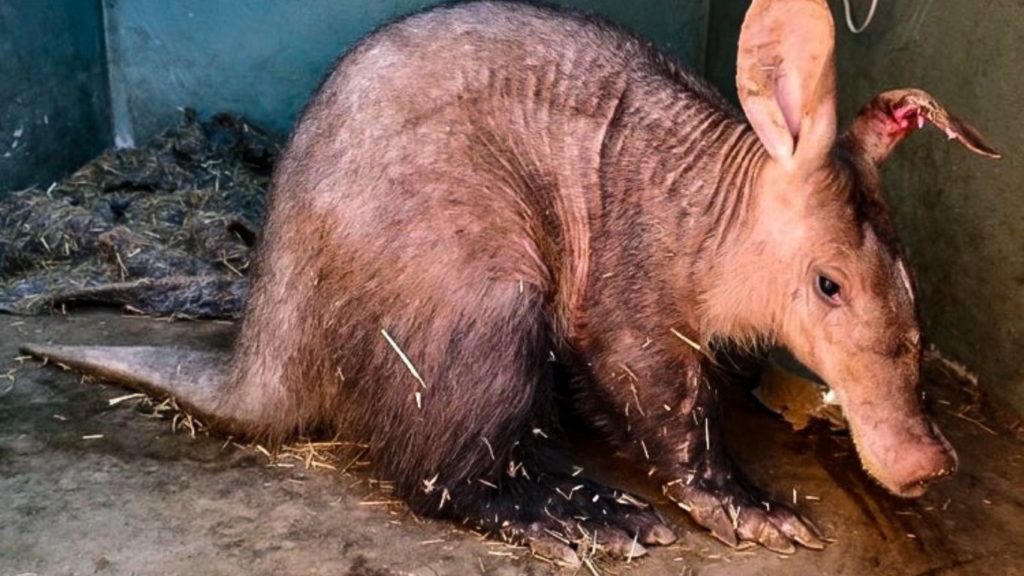
Aardvarks are shy animals that very little is known about. We don’t even know how many aardvarks exist in Africa. What we do know is that one is in desperate need of medical care. In South Africa’s Lowveld region, an aardvark, who has earned the nickname Venus, is fighting for her life. After being hit by a car and enduring life-threatening injuries, she faces a long and uncertain journey. She needs our help if she is to have a chance at recovery and a return to life in the wild. We must urgently raise $6,000 (£4,400) for specialized recovery food, medication and medical treatment. We have promised to provide support, but we cannot do it without you. Please help us by making a donation now. Every single aardvark saved is important to the species. Few people ever get the opportunity to see one of these elusive creatures. Researchers struggle to learn anything about their secretive behavior, partly because their wide necks and slim heads make it impossible to attach a research collar. We have promised to do everything we can to help Venus, who is recovering at the Umoya Khulula Wildlife Rehabilitation Centre near the town of Tzaneen. But saving Venus could yield invaluable insights into aardvark behavior and how best to protect them. Climate change could spell the end for aardvarks and many of the animals that rely on them – before we even learn how many exist. We have no idea how many of these creatures are left on the African continent, but we do know that threats to their survival are growing. With climate change affecting weather patterns and temperatures, ant and termite colonies are forced to move deeper and deeper underground to maintain the temperatures they need to survive. But as they move deeper, they become harder for aardvarks to smell, hear and reach. The interconnectedness of nature never ceases to amaze us, because should aardvarks disappear in an area, it will have negative consequences for many other creatures. Aardvarks will dig 20 or more dens throughout their territory. These dens are used by multiple other creatures once an aardvark has moved on. Porcupines, meerkats, mongooses, bat-eared foxes, warthogs, hyenas, lizards, birds and even some species of bats and snakes rely on aardvarks as the landscape architects who create safe places for them to sleep and raise their young. Without aardvarks, many of these animals will begin to disappear too. We must do our utmost to ensure the survival of every possible aardvark. With civil unrest in South Africa disrupting supply, it is critical that we act immediately to import the specialized food she needs to survive! It is estimated that an adult aardvark in the wild needs to eat roughly 50,000 ants per day! While Venus is recovering, her immune system is dangerously weak, and she needs costly, highly specialized food in addition to antibiotics, anti-inflammatory and pain medication, probiotics and antiseptic wound treatment supplies. With South Africa currently in the throes of devastating civil unrest, the supply of goods into the country, including the specialized prescription food this aardvark needs to survive has been interrupted – and Umoya Khulula’s reserves are running critically low. We must urgently import the specialized food she needs for her recovery. The risk of deadly infection still looms. Time is of the essence! It is truly miraculous that Venus survived long enough to be rescued, and that both her eye and vision could be saved. But there is a long road ahead, So please make a donation right now so we can do everything we can to ensure Venus makes it back into the wild.
With your help, we will give the animals thousands of liters of life-giving water every day!
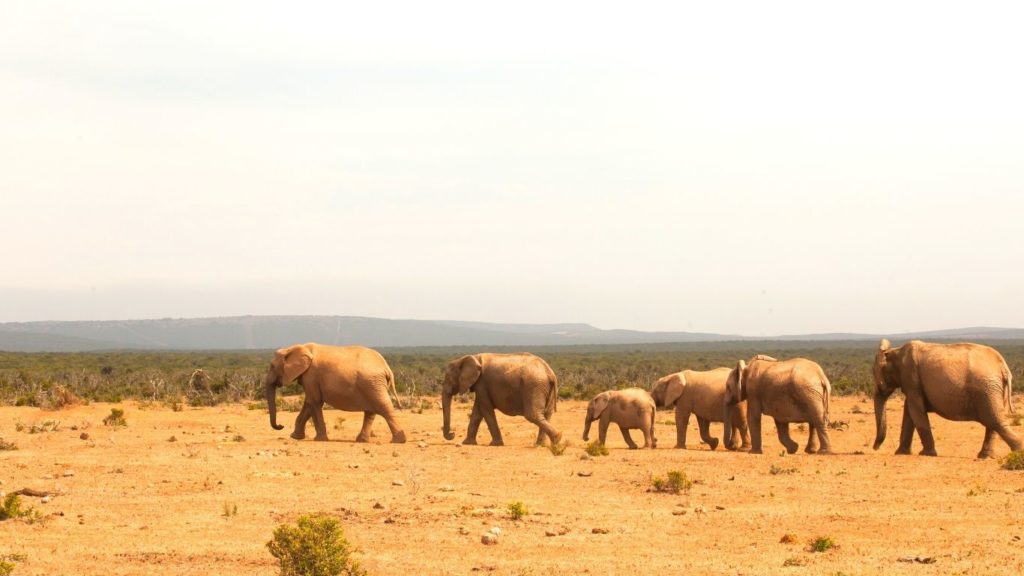
We are half-way to our goal! With your help, we can provide life-giving water to thousands more animals who risk death from dehydration! Earlier this year, we asked you to help us provide two state-of-the-art, solar-powered water pumps to bring water to thirsty elephants. The elephants live in the Addo National Park in South Africa, where a terrible drought is raging – the worst in 100 years. Thanks to your help, we were successful and managed to supply the elephants and other wildlife, including lions and zebras, in one area of the park with a consistent water supply. Unfortunately, it’s still not enough. The drought is showing no sign of letting up. To make matters worse, Addo’s rainy season is over and even drier months are expected until October – best-case scenario. We must help hundreds of elephants, and thousands more other animals in the park survive until then. Time is ticking, and already, antelope (such as kudu) and warthogs are dying of thirst. If we don’t secure enough water, Addo’s animals face an unprecedented catastrophe when hundreds more start dying of dehydration. Please donate now and help provide life-giving water to the thirsty animals in Addo. If we can provide two more waterholes, we will be saving so many more animals. Wildlife travels from all corners of the park to the waterholes we have already secured, but there is fierce competition to access the life-giving water. Just one elephant drinks more than 50 gallons (200 liters) every day. Smaller animals simply don’t stand a chance. And, with Addo now entering its driest winter months, even our new waterholes are under increasing pressure. We need to URGENTLY provide more waterholes around the park to safeguard one of Africa’s most precious elephant populations and thousands of other animals. We have raised enough to provide one solar pump; please donate so that we can purchase and install two, and provide enough water for the upcoming dry months. We still need $4,500 (£3,170). This drought’s devastation will last for generations if we cannot act now. Lack of water has devastating consequences on elephants and their future generations. Insufficient water severely slows down elephant reproduction rates, and the risk of calves dying increases drastically because mothers cannot produce enough milk for their babies. Already, elephants across Africa are in a critical state with ivory poaching and habitat encroachment pushing them closer and closer to extinction each year. In the last century, elephant numbers have dramatically decreased from about 12 million to just over 400,000. The Addo National Park is one of the most important conservation areas for protecting Africa’s beleaguered savanna elephants. 90 years ago, only 11 elephants remained in the area after hunters had almost completely wiped them out. Now, thanks to the protection the park provides, more than 600 of these extraordinary creatures exist here. We can’t lose Addo’s elephants again! Climate change is causing droughts to become more intense and more frequent. Weather experts say that the annual rainfall in the Addo area is dropping with each passing year. But with your help, we can lessen the impact this has on Addo’s wild animals. Thankfully, underground water is still available in the park and pumping it into waterholes is a solution that will buy the animals time. At Animal Survival International, we are committed to doing whatever we can to save animals from the impacts of climate change. Please help us save Addo’s wildlife by providing water to see them through this horrific drought. Two more solar pumps will provide two more vital waterholes to help sustain elephants and all the animals in the park.
How we are helping RIGHT NOW: May 2021
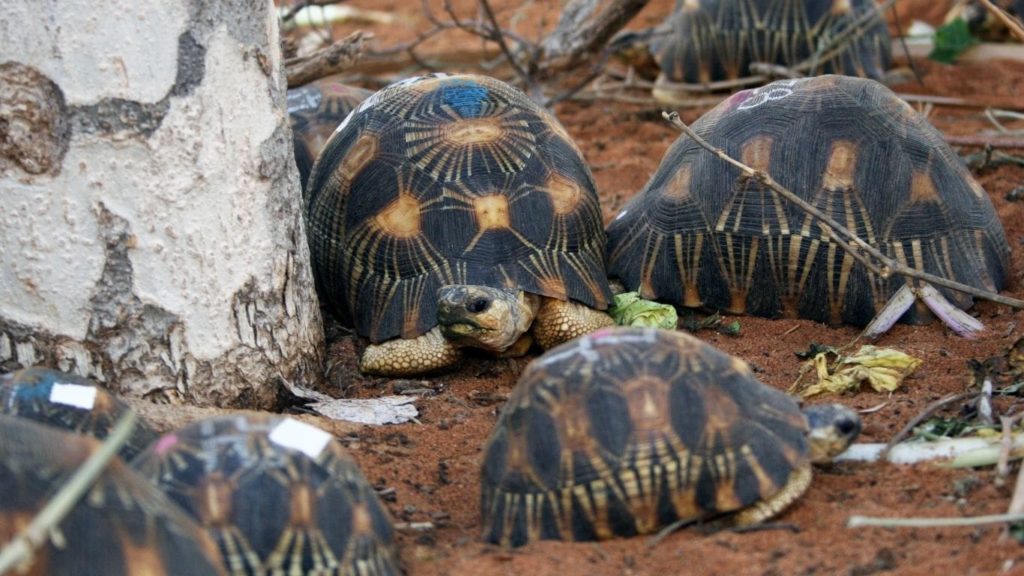
The Political Animal Lobby (PAL) exists to be a voice for animals and the planet. We tackle pressing issues threatening animals around the world. Over the past month, PAL has provided water to drought-stricken elephants in Namibia; kept up the fight to ban snares in the UK; helped a legal battle to save toads in South Africa; given emergency aid to critically endangered tortoises in Madagascar and supported an anti-poaching team fighting ivory poachers in Zimbabwe. But we couldn’t have done it without our supporters. We are deeply grateful to all our donors who make this work possible. Take a look at how your donations are making a difference to animals worldwide right now. United Kingdom Supporting a total ban on the use of wire snares In the United Kingdom (UK), snaring is still legal! We told you last month how this causes shocking suffering and kills up to 1.7 million animals every single year. Incredibly, it is still encouraged by the UK government’s Department for Environment, Food and Rural Affairs (DEFRA) and supported by the British Veterinary Association (BVA)! Millions of innocent animals are left in such horrific pain that they resort to gnawing off their limbs to free themselves. PAL plans to continue fighting against this until it is stopped. Thanks to your donations, we are supporting the National Anti Snaring Campaign (NASC) in convincing the UK government to ban the use of snares outright. We’ll keep you updated on NASC’s progress. South Africa Court action to fight for the survival of western leopard toads In Cape Town, the beautiful and endangered western leopard toad is under severe threat, thanks to plans to build a road through one of its last remaining breeding grounds. These endangered toads are clinging to survival in just a few small areas of South Africa’s Western Cape and only an estimated 320 are left. But their habitat is under serious threat. We support the Noordhoek Environmental Action Group (NEAG) which is taking the toad’s fight to court, seeking to prevent the City of Cape Town from moving forward with the road development. NEAG’s lawyers say the toads stand a good chance of winning. We will keep you posted on the outcomes. Namibia Providing water for one of the last remaining free-roaming elephant herds We’ve secured water for one of the last free-roaming elephant herds in Namibia! Ongoing drought put these vulnerable elephants at risk, forcing them to wander from the safety of a 20,000-acre (8,000-hectare) preservation area in search of water, into places where they are shot at. But now, thanks to our supporters’ help, we’ve managed to drill and strike underground water, which tested safe for elephant consumption. We’ve also erected two water tanks to store the water which is then pumped into a waterhole made easily accessible for the elephants and their babies. Our partners in Namibia have been sending us regular reports that the elephants are visiting the waterhole, which means they are safe and now have a chance of surviving this drought. Madagascar Saving endangered radiated tortoises In Madagascar, radiated tortoises are racing towards extinction. These beautiful tortoises with unique star-patterned shells are highly sought after for the illegal pet trade. Our partner, Turtle Survival Alliance Madagascar (TSA Madagascar), called on us for help when they discovered 800 radiated tortoises being smuggled in shocking conditions and destined for the illegal pet market. These helpless creatures were on the brink of death when the TSA Madagascar team discovered them. But thanks to the help of our supporters, TSA Madagascar will be able to give them the emergency treatment they need to survive. It will take a few months of rehabilitation before these precious tortoises can be released back into the wild and breed. But we are confident that, with your donations, TSA Madagascar will be able to keep them alive until they are ready. With so few left in the wild, saving these 800 radiated tortoises will give the entire species new hope. Zimbabwe Helping an anti-poaching team protect the rare Lake Elephants Zimbabwe’s iconic lake elephants in the Sebungwe region are falling victim to a poaching epidemic. Up to 11,000 of these elephants have been brutally killed for their ivory in the last 15 years. Only 3,500 remain, living in a 580 square mile (1,500 square kilometer) area surrounded by the vast Lake Kariba and hunting areas, both offering ample opportunity for poachers to move in and out. A small anti-poaching team, the Bumi Hills Anti-Poaching Unit (BHAPU), is desperately trying to protect them, but they are running dangerously low on critical supplies and equipment. We visited the area and were shocked by how vulnerable these elephants have become. We asked our supporters to help us raise funds for essential supplies like fuel for their patrol vehicle and boat, rations, and equipment like boots and radios, so that BHAPU can keep fighting for the elephants. Thanks to your generosity, BHAPU will be able to buy critical equipment and supplies and continue its vital work to protect these majestic creatures. Once again, we are deeply grateful for your generous donations and support in raising awareness of these critical issues. You make it possible for us to make a difference, protecting wildlife and wild spaces across the globe.
Endangered elephants in Namibia now have water thanks to our supporters
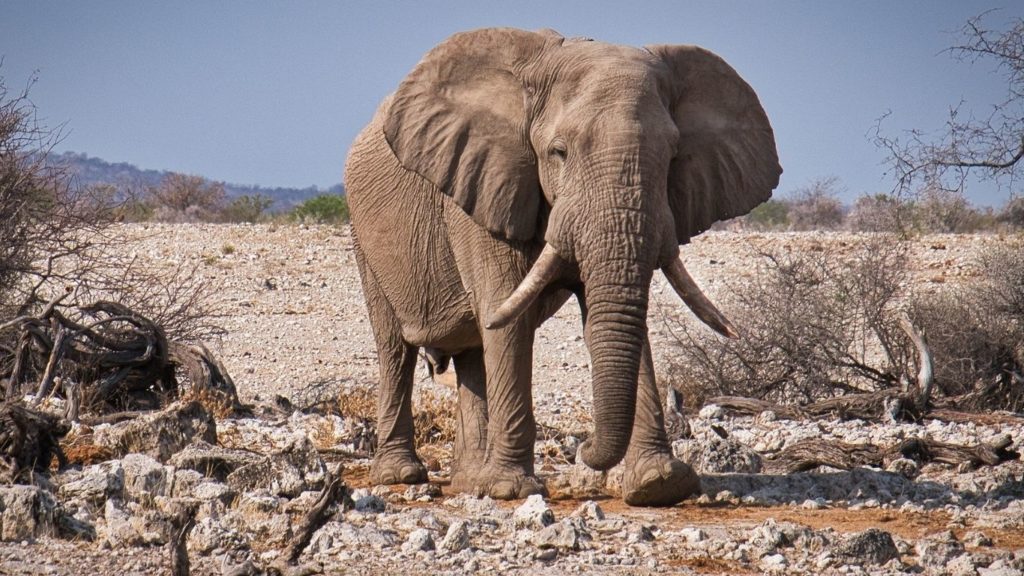
Thanks to our supporters and our dedicated team in Namibia, we’ve managed to secure water for one of the last free-roaming elephant herds in the country. In an area surrounded by hunting areas, these vulnerable elephants have taken refuge on a 20,000-acre (8,000-hectare) wildlife preservation area, where they are safe. But water was running dangerously low in the preservation area, and the waterholes had just about run dry. That’s when the Animal Survival International stepped in. With your help, we hired a drilling company to search for underground water for the elephants. In the harsh, dry African terrain, finding water is no easy task. But, eventually, after a few attempts and setbacks that we told you about in our previous update, we struck water. Our next step was to have the water tested to make sure it’s fit for elephant consumption – historical farming practices in Namibia have led to contamination of some water tables and we can’t take risks with elephant lives. With our hearts in our throats, we waited for two long weeks to get the results back. Fortunately, while we were waiting, there was finally some rainfall in the area. Not a lot, but enough to buy us, and the elephants, some valuable time. And good news! The water tested safe for elephants and other animal consumption. As soon as we received the positive results, we went ahead with installing the pump. We’ve also erected two water tanks instead of fixing the broken dam, because it was recommended as a better solution than fixing old cement walls. Now, the water can be pumped into a smaller waterhole that is more easily accessible for the baby elephants, and less water will be lost to evaporation. We are receiving reports from our partners in Namibia almost daily that the elephants have been visiting the waterhole. Knowing this, and that these elephants are in a safe place, makes the work we do so worthwhile. But we could not have done it without the help of our supporters. Once again, we are deeply grateful to our caring supporters who have helped us save these elephants from a life of threat and fear. Africa’s elephants are racing towards extinction. According to the IUCN (International Union for Conservation of Nature), African forest elephant numbers have dropped by more than 86% in 30 years and African savanna elephants by 60% over the last 50 years. We need to act fast whenever we can to protect this precious species. Thank you to each and every one of you who donated to make saving these elephants possible.
How we are helping RIGHT NOW: April 2021
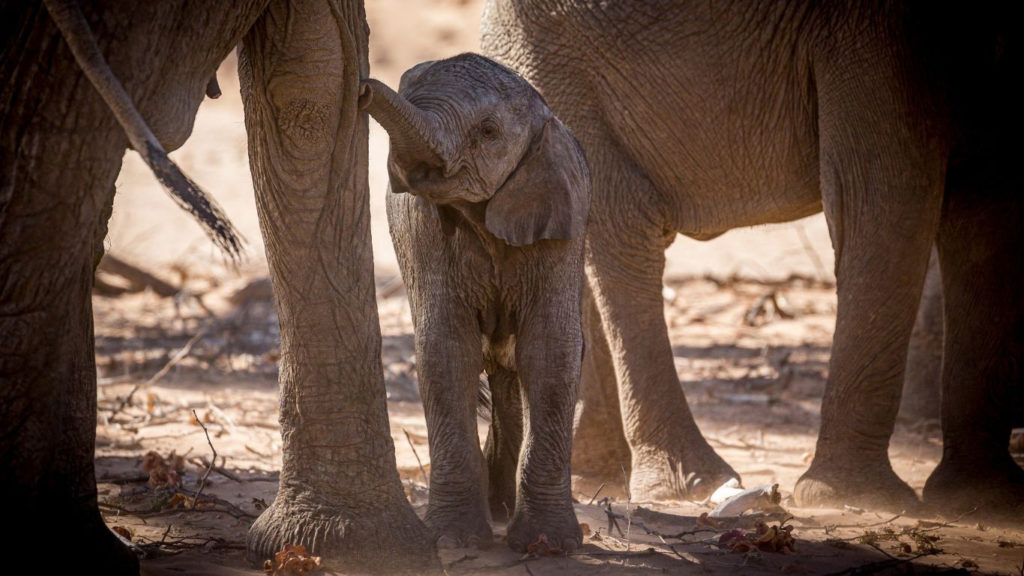
Animals around the globe are in extraordinary peril. From the rampant illegal trade in wildlife, poaching, habitat loss and poor enforcement of wildlife legislation, thousands of species are becoming critically endangered. We need to take heed before it’s too late. If we continue to destroy biodiversity, no life on Earth can survive. The Animal Survival International exists to be a voice for animals and the planet. We tackle pressing issues threatening animals. We are deeply grateful to our supporters who make our work possible. Take a look at our most recent projects and how your donations are making a difference to animals worldwide. Namibia Securing water for one of the last remaining free-roaming elephant herds A family of elephants is at risk from the ongoing drought in the northwest of Namibia. If these 20 elephants and their babies wander from their home range on a 20,000-acre (8,000-hectare) preservation area in search of water, they face being shot at. All the other land in the area is used by hunters and the elephants would be at risk of death or injury. Thanks to our supporters’ swift response to donate funds, we were able to act quickly. ASI is paying for new waterholes to be established by drilling to reach deep underground water sources. After two attempts, we struck water. We are now waiting for test results to make sure that the water is safe for the elephants to drink. If it proves to be contaminated, we have a drilling team standing by to redrill. We will not give up on these elephants. Stay tuned! United Kingdom Supporting a total ban on the use of wire snares Up to 1.7 million animals are brutally killed by snares every year in the UK. Animals endure untold anguish and pain when they are caught in snares. Usually set to catch foxes and rabbits, other wild animals are also caught, including wild cats, hedgehogs, badgers and red squirrels. In some horrific cases, animals have gnawed off their own limbs to free themselves. But despite this horror, the UK’s Department for Environment, Food and Rural Affairs (DEFRA) and the British Veterinary Association (BVA) condone and support snaring! – even though there are more humane and effective solutions available to keep livestock and crops safe from rabbits and foxes. The National Anti Snaring Campaign (NASC) in the UK is fighting to have snaring completely banned. They called on ASI to help them to secure a total ban on the sale and use of snares. Your generous donations allowed us to give NASC £2,500 ($3,500) to continue their fight to bring about an outright ban on wire snares. South Africa Court action to fight for the survival of western leopard toads A plan to build a road through one of their last remaining breeding grounds is threatening the survival of the beautiful endangered western leopard toad in Cape Town. There could be as few as 360 toads left! The Noordhoek Environmental Action Group (NEAG) called on ASI to help its legal battle to prevent Cape Town authorities from building the road. And thanks to our supporters, NEAG may just win a rare, but critical, victory for the animals. Zimbabwe Saving painted dogs in Hwange National Park In Hwange National Park in Zimbabwe, some of the world’s last remaining painted dogs are facing a new threat. With COVID-19 taking its toll on already poor communities, thousands of illegal snares set to catch antelope for food, are being scattered around the park. Each snare means horrific injury and potential death to the beautiful painted dogs. With only 6,500 left in the wild and 160 living in Hwange, we cannot let this continue. Every day, rangers patrol the park on the lookout for snared painted dogs. When they find them, it’s a race to get the suffering animal to help. We partnered with the Painted Dog Conservation (PDC) and asked ASI supporters to donate towards medication essential to transport and treat the wounded animals, and to help them return to their pack in the wild. Thanks to your generosity, we were able to help PDC continue with their vital work of treating and releasing painted dogs back into the wild, as well as teaching villagers about conservation and snare removal. Once again, thank you for your generous donations and your support in raising awareness of these issues. You make it possible for us to make a difference, protecting wildlife and wild spaces across the globe.
Two drilling attempts failed, but we didn’t give up!
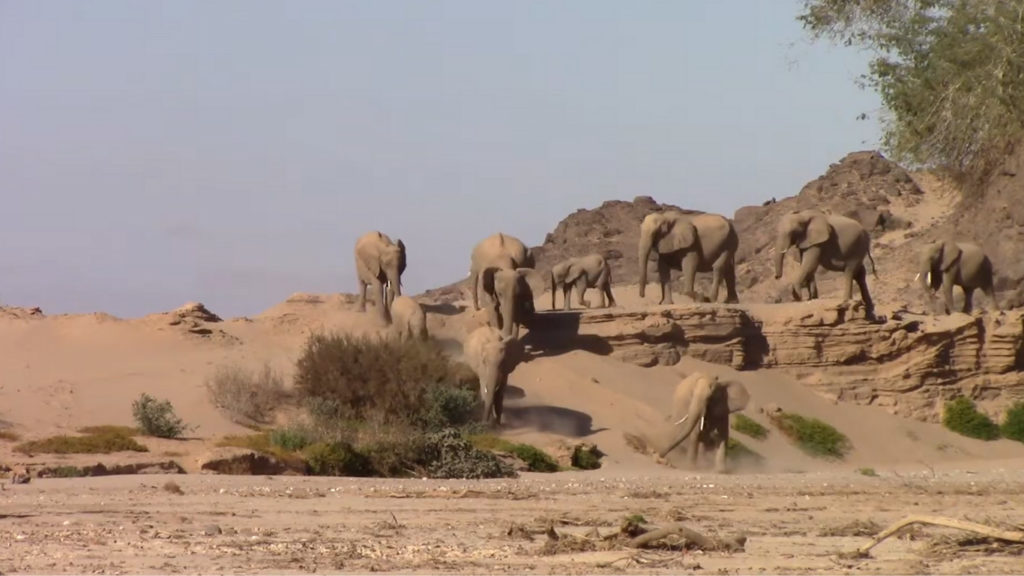
Drought is putting one of Namibia’s last free-roaming elephant herds at risk of death. If they wander from their home on a 20,000-acre (8,000-hectare) farm, a family of 20 elephants with calves will face being shot at. Yet the elephants are caught between a rock and a hard place because the drought means that their water is almost gone. They have just over a week’s supply left. Once that is finished, their freedom and survival are in question. We had to act immediately, or this vulnerable family of elephants would be forced to search for water in areas away from the farm where they are not safe. Their present home is the only farm in the area that does not permit hunting – so the elephants would be in mortal danger. We called on you and other animal lovers like you for help. Your swift response allowed us to hire a borehole drilling company and rush them to the remote site to start drilling. At first, the team struggled to find water. Tension grew after they drilled down 230-feet (70-meters) and found nothing but hard, dry granite. Quickly they found a new site and tried again. Still, no luck. But, they said, if we were prepared to pay, they would risk going to 425-feet (130-meters). We took a deep breath and raided our emergency piggy bank to pay for deeper drilling. Drilling started again. Then catastrophe struck. At 331-feet (101-meters), the drill bit broke. Operations had to be suspended and it will take two weeks to recover it. We ended the day in despair. The next morning there was better news. Overnight, water had risen from the lowest point drilled. Then that water dried up and we are back to square one. Right now, we are investigating the possibility of bringing water in by truck as a temporary measure. We don’t yet know how much that will cost, but we do know that, now more than ever, your donation is urgently needed as we fight to save these elephants. Your donations also helped us buy materials to rebuild a farm dam the elephants had damaged in a quest for a few drops of the life giving liquid. Work is nearly complete. Hopefully soon, the dam will be filled with cool, fresh borehole water which the elephants can drink to their heart’s content. Wish us, and the elephants, luck because this is a watershed moment for one of Namibia’s most vulnerable elephant herds. We must get this right for them. Again, we are deeply grateful to our caring supporters who have already donated. Not many people can boast that they helped save an elephant family! The elephants are not safe yet, and if you can donate today, please do because these creatures need every little bit of help we can give. Over past decades, not only drought but hunting, ivory poaching and habitat loss have been rapidly pushing elephant species towards extinction. If the water flows – and we believe it will – there is one entire elephant family that will live to breed another day. Please, if you possibly can, make a generous donation we need to save these elephants.
Two drilling attempts failed, but we didn’t give up!
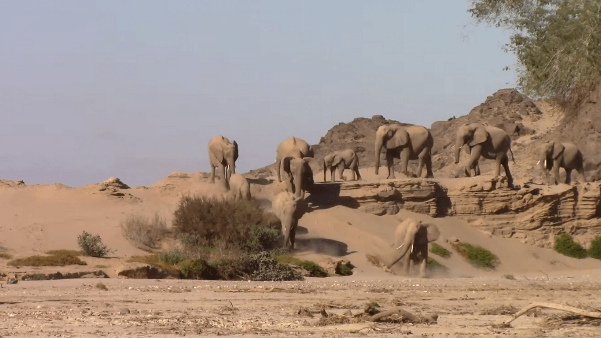
One of Namibia’s last remaining free-roaming elephant herds is in desperate trouble. Drought is forcing them to move from a safe haven to areas where they risk being shot. 20 elephants, who have taken refuge on a 20,000-acre (8,000-hectare) family farm, are living on borrowed time. This elephant family needs your help! ASI received an anguished call from animal lovers, in the remote Kunene region of Namibia where the elephants live. Their home, a huge farm, is the only one in the area that does not permit hunting. As long as the elephants stay on the farm, they are safe – but if they move, they risk death. The elephants have lived on the farm for 20 years and have learned that if they wander too far, death awaits, so they stay. Until recently, they have been thriving, and several babies have recently been born. Now, disaster has struck. A severe drought has dried up waterholes and farm dams; there is virtually no water left. This means that the elephants must either die of thirst or risk being killed if they go elsewhere to seek water. A little bit of money will save 20 elephant lives! With your help, we have promised to provide emergency aid to drill a borehole and repair the dam on the farm that will provide water for the elephant family and save their lives. But time is running out – we must act quickly as only one week’s worth of water remains. Namibia is a hot, dry country, and elephants need to drink large quantities of water every day. Can you imagine their desperation as they wander into dangerous areas, anxious to protect their calves and quench their thirst? ASI is the only organization fighting for the survival of this elephant family so your help is crucial. We are close to our goal of raising $7,000 (£5,000) for a borehole and dam that will provide water for the elephants. Your donation today will provide a thirsty elephant with water tomorrow and help save an entire elephant family. If we don’t act right now, this fragile elephant family faces disaster and death! Elephants are intelligent, social creatures who depend on tight-knit family bonds. If one dies, or the herd is split up or relocated, it results in massive torment and suffering for each elephant. This has disastrous long-term impacts on the wellbeing and survival of each elephant. Namibia’s elephants are so severely under pressure that we cannot miss a chance to give a family of 20 of these amazing creatures the chance of continuing to live in the wild without being shot. Africa has already lost 60% of its elephants to ivory poaching, and numbers are continuing to crash. If we don’t act now to save wild elephant populations, there will soon be none left.
How we are helping RIGHT NOW: March 2021
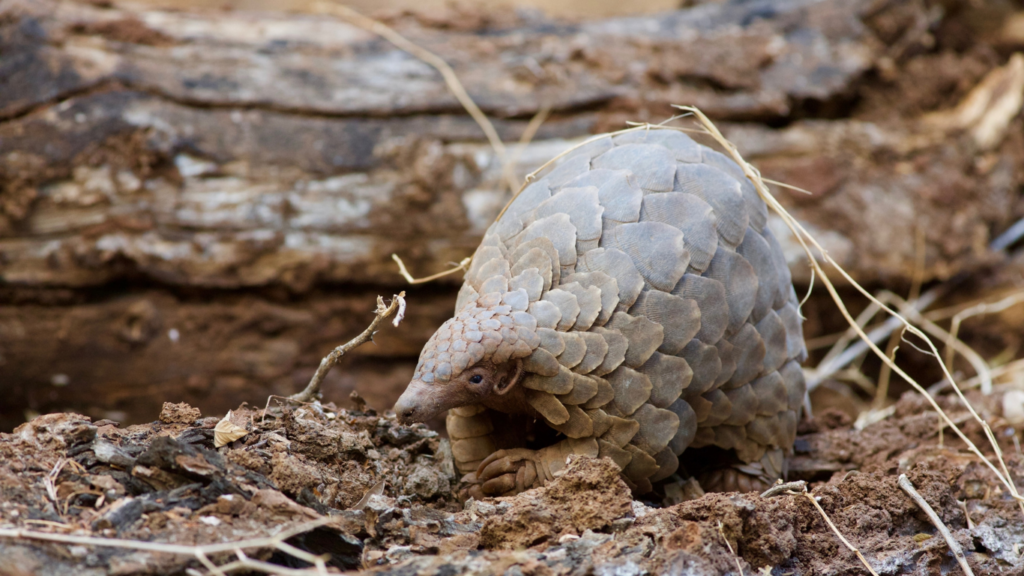
The future of the animals in the natural world has never been more in danger. Climate change, habitat destruction and poor enforcement of international wildlife laws have already pushed numerous species to extinction and will continue to do so if we don’t act now! The Animal Survival International (formerly Political Animal Lobby) exists to be a voice for animals, and we will do everything within our power to fight for their future. Right now, we are hard at work to support the protection of African pangolins, the most trafficked mammal on earth. We can’t share details yet, but keep an eye on your inbox in the coming weeks to learn more. We are incredibly grateful to our supporters who help make the work we do possible. Here’s what ASI is doing now and how your donations are making a difference to animals worldwide: Taking on a City for the future of endangered toads in South Africa Another species is on the brink of extinction because authorities do not care about their survival. This time, it’s the endangered Western Leopard Toads in Cape Town’s Noordhoek valley. The City of Cape Town in South Africa plans to bulldoze a road right through one of their last breeding ponds, even though residents don’t want it. Local organizations, ToadNUTS, and the Noordhoek Environmental Action Group (NEAG) are the toad’s only hope for a future. They are taking the City to court – and the lawyers think they can win. NEAG and ToadNUTS do not have enough funds to fight the big legal teams and carry out their critical day-to-day work. They turned to ASI for aid. With your help, we’re going to do everything we can to help them. A fighting chance for Cape Town’s last Caracal cats in South Africa In the fragmented wild areas of Cape Town, South Africa, as few as 50 caracals cling to survival. Caracals – secretive and nocturnal – are famous for their golden fur and long, elegant ears. They are exquisitely beautiful… and seriously endangered. Caracals are nocturnal, and poorly lit roads crisscross the area where they live. Speeding and negligent drivers have killed 83 of these cats in the past five years. If we act now, we can save many of them from this tragedy. We want to provide a simple and effective solution. The first step is putting up warning signs on the roads, alerting drivers to their presence. The long-term goal is to build tunnels for the caracals to cross safely. The caracals need help now, and that’s why ASI is stepping in; ensuring that effective warning signs are erected in high incident areas while working on a longer-term plan. Bridges for Survival in Kenya Just 5,000 rare Angolan Black and White Colobus Monkeys remain in the entire country of Kenya. Once a stronghold for these gentle creatures, deforestation and illegal bushmeat hunting has destroyed their populations. Naturally living in the treetops, they must now risk their lives crossing dangerous roads to travel between the forest patches that remain. Many try to cross the road using the overhead powerlines, where they are often electrocuted to death. Luckily, there is a simple and effective solution. ‘Colobridges,’ ladder-like structures that provide safe passage across roads, have been tested and have shown to be effective by a local organization, Colobus Conservation. With ASI’s help, the remaining monkey populations will be provided with a network of bridges to keep them safe in their tree canopy sanctuaries. Good News! Life-giving water flows again in South Africa’s Addo Elephant National Park. The ASI team returned to Addo Elephant National Park in South Africa to install state-of-the-art solar-powered pumping equipment that our generous donors helped us purchase. The situation was dire when we arrived, with temperatures soaring and thousands of animals desperate for water. We turned on the tap and animals flocked from miles around for a share of the cool, clean water that will now run every day. Once again, thank you for your generous donations and your support in raising awareness of these issues. You make it possible for us to make a difference, supporting wildlife across the globe.
Addo Drought Still Raging! Here’s How We’re Helping.
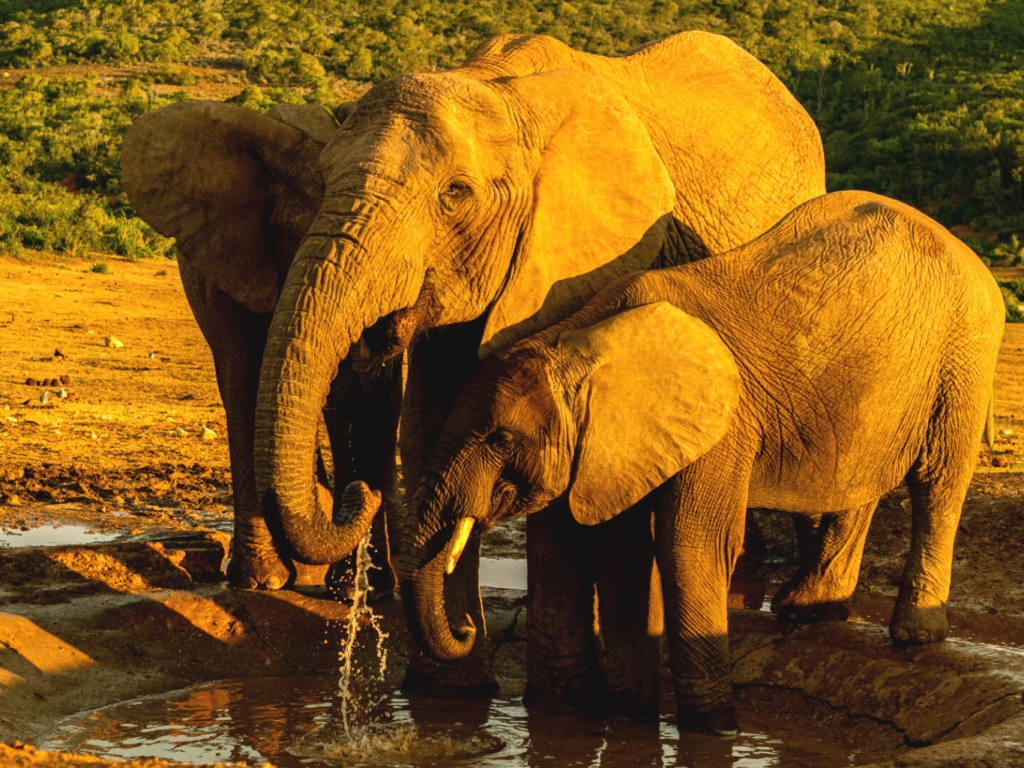
The most severe drought in 100 years is having a devastating effect on animals at Addo Elephant National Park, in South Africa. Hundreds of elephants and countless other animals are struggling to survive as the lack of rain takes its toll. That’s why we stepped in. Critical waterholes had dried up. Thanks to your support, we’ve managed to raise enough funds to buy two state-of-the-art solar-powered water pumps to keep two important waterholes full. Because of our ASI supporters, the animals will now have access to fresh water – day and night! Because of our ASI supporters, the animals will now have access to fresh water – day and night! When we first visited the drought area, a terrible scene unfolded before our eyes. Animals were fighting, kicking and even gravely injuring each other, to get a drop of water. Addo’s old water pumps could not keep up with the animals’ need. A single elephant drinks over 50 gallons (200 liters) of water every day. And not only that, they need even more to stay cool and do what elephants do – wallow in the mud. The need was urgent, and we and SANParks (the South African organization that runs Addo) acted immediately. Pumps were installed within a few days. With temperatures soaring to well over 38.5 degrees Celsius (100°F), we journeyed back into the Park to witness the installation of the first pump at the Peasland waterhole. The relief was almost ASIpable as fresh water gushed out, filling the once bone-dry waterhole with cool, clean water. Within moments, animals began to emerge from the dry thicket and headed straight for the water – hesitantly at first, almost disbelieving. We watched, with joy, as dozens of animals, family by family, youngsters and adults, took their place at the waterhole to drink to their hearts’ content. Animals even started to run towards the water, unable to contain the urge to quench their long-endured thirst. Addo’s Park Manager, Nick de Goede, says the relief of having consistent water means the animals will no longer be stressed. Instead of standing for hours in the baking heat, hoping for a drop of water, they can now resume normal healthy behavior of feeding and drinking. Our second solar pump is now being installed at one of the elephants’ favorite watering spots, the Marion Baree waterhole. And once again there will be enough water for these elephants to drink, wallow and bathe as they need to. Again, we are ever so grateful to you, our supporters, for your invaluable generosity to help us save these animals. The drought shows no sign of breaking, and so we have no doubt that any day now we will be asked to step in again. If you can possibly donate to give thirsty animals a drink of water, they would surely be very thankful. After all, for them it’s a matter of life or death.
In the Race to Save Humanity, the World’s Nations Fail to Meet Co₂ Goals
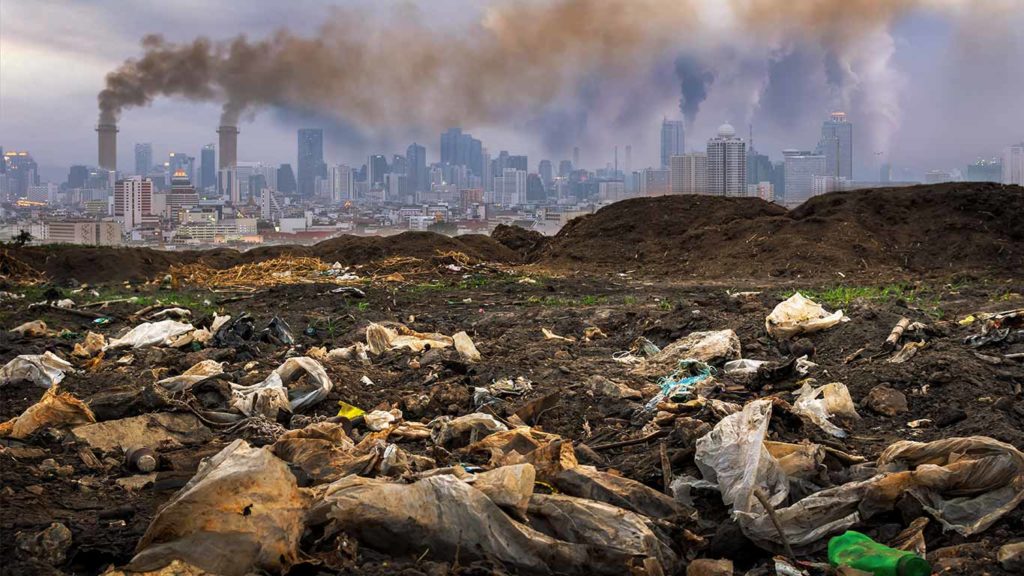
By Melissa Reitz More than half of the world’s nations are failing in efforts to cut greenhouse gas emissions to prevent a climate catastrophe, according to a recent United Nations (UN) assessment.In the run up to the Cop26 Climate Summit in November this year, signatories to the Paris Agreement, the international treaty on climate change, were required to submit their carbon emission goals, known as an NDC, by December 2020. But of 197 countries, only 71 have submitted their national action plans on time. The USA and China, the planet’s largest carbon emitters, are amongst those that have not yet announced their carbon reduction goals. In addition, the countries which have submitted pledges have not done enough, says the UN, and even if their national pledges are fulfilled, global emissions will only be reduced by 1% by 2030. According to the goals set out in the Paris Agreement, nations pledged to keep global heating below 35.6°F (2°C) above pre-industrial levels, with a goal of a 34.7°F (1.5°C) limit over the next ten years. Scientists have repeatedly warned that global warming above (34.7°F) 1.5°C will create irreversible and devastating consequences for the planet and humanity. To prevent this happening, we now need a 45% reduction over the next decade. But unless every nation in the world commits to reducing carbon emissions this will not be possible. According to UN secretary general, António Guterres, 2021 is a “make-or-break” year to confront the global climate emergency. He says major emitters need to make radically more ambitious reduction targets for 2030. The UN Framework Convention on Climate Change (UNFCCC) has condemned nations for their “business as usual” approach in the face of the biggest crisis mankind has ever been met with. Other major emitters that have not come forward with new plans include Indonesia, India, Iran, Canada, Saudi Arabia and South Africa. These six nations collectively contribute nearly 17% of global emissions. The EU, Russia, Brazil, Australia, Japan, South Korea, Argentina, Mexico, Zambia and the UK are the only economies each contributing roughly 1% or more of global emissions that have submitted their targets. “The writing is on the wall, and it has been for a long time. If governments and large corporations do not put every effort into reducing their greenhouse emissions, the planet will no longer be able to sustain us,” says Adrienne West of the Animal Survival International (formerly Political Animal Lobby). “There is simply no more time to lose. We demand that the world’s leaders do what needs to be done.”
Today Is World Wildlife Day – But for Millions of Animals Around the World, Today Is Not a Day of Celebration!
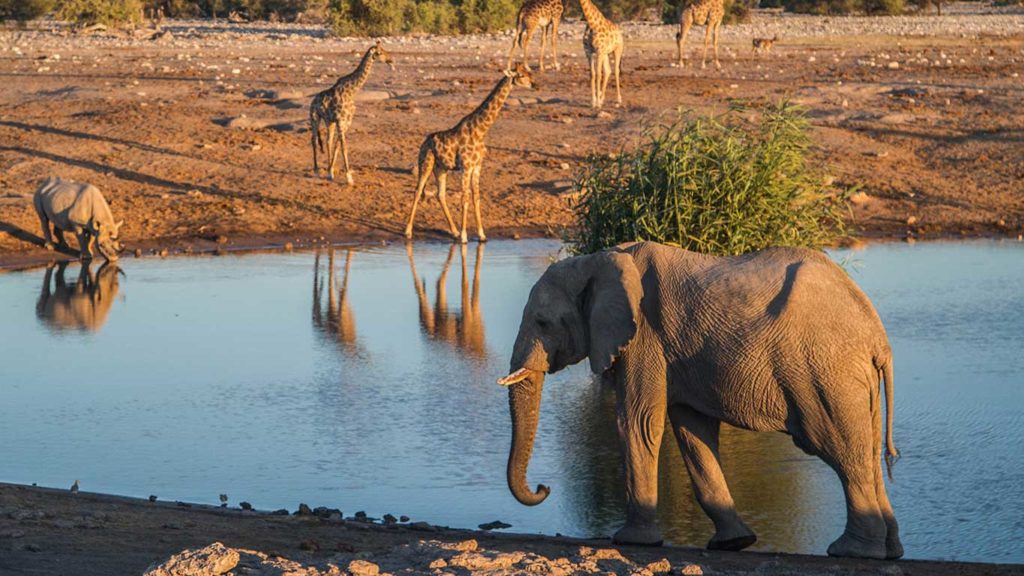
Today is World Wildlife Day. For millions of animals around the world, today is not a day of celebration. Our world’s wildlife is being wiped out. According to a 2019 UN report, one million species are threatened with extinction – some within a matter of years. As many as 30 to 50 percent of all species could be extinct by 2050. It’s worth pointing out that this information is two years old already, and the situation will undoubtedly have gotten worse since then. Although every day there is more gloomy news in the media warning of the rapid onset of extinction, the truth is that’s humanity has not yet fully realized the extent of the catastrophe that is about to take place on our planet. A catastrophe that would have devastating consequences for animals and humans. In coming years, we could say goodbye to pangolins (two species critically endangered), rhinos, (three species of black rhino are critically endangered and the northern white rhino is functionally extinct), mountain gorillas (critically endangered), vultures (eight species critically endangered) and painted dogs (critically endangered). Gone, never to return. And those are just the tip of our melting iceberg. Habitat loss is the biggest culprit, but climate change is also a major contributing factor. As is the poor enforcement of rules governing the international trade of animals. All of this is our fault and our responsibility to fix. Unwittingly, in some cases but deliberately in others, human actions have made the world a deadly place for animals. The Animal Survival International exists to fight for animals affected by these problems and to try and stem the tsunami of destruction that is affecting mammals, birds, marine life, reptiles, insects, amphibians… In fact, nearly every category you can think of is under pressure. We finance scientific research to find practical solutions to a wealth of problems – from Anatolian water frogs, who die by the thousands to be served as culinary delicacies to tracking the movement of elephants and lions across our last remaining wildernesses. We also provide medical supplies and fund treatment for injured, sick and rescued wild animals, and we work to raise public awareness of the calamity that will befall us all unless we fight to stabilize the natural world. You can help our crusade by donating today.
How we are helping RIGHT NOW: February 2021
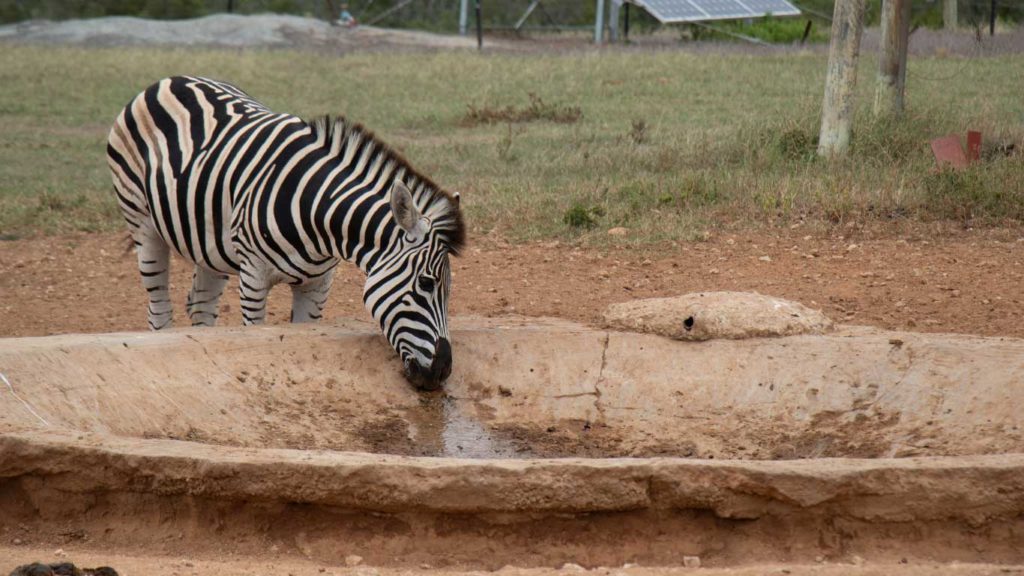
The future of animals and the wilderness they live in has never been more at risk. Climate change, habitat destruction and poor enforcement of international wildlife laws is driving species after species to extinction. We cannot be silent or sit idly by and watch this happen. The Animal Survival International (formerly Political Animal Lobby) exists to be a voice for animals and to do everything within its power to ensure animals survive internationally. We are incredibly grateful to our passionate supporters who make the work we do possible. In case you missed it, here’s what ASI is doing right now and how your donations are making a difference to animals across the globe: Life-Giving Water in the Midst of the Worst Drought in 100 Years In South Africa’s Addo Elephant National Park, hundreds of elephants and countless other animals risk dying of thirst because of the worst drought in 100 years. Water holes are drying up and thousands of animals are suffering – not only from thirst but also injury as they fight one another over the last few drops. Our team watched in horror as zebras kicked and bit each other, desperate for their share. Smaller animals like warthogs stood no chance of getting near the rapidly-drying waterholes. To help this dire situation, we have pledged to fund the installation of state-of-the-art solar-powered water pumps to draw more water from the available boreholes. Thanks to your generous donations, we have raised enough to save one waterhole with new equipment and are nearing our goal of saving a second one. Now we are counting the days until the pumps can be installed. Ending the Cruel Trade of Live Frogs from Turkey Millions of frogs are tortured, maimed and killed so they can be served up as a ‘delicacy’ in restaurants. Every day, thousands of Anatolian water frogs are cruelly harvested in Turkey before being sent across Europe. Hunted with hooks and squashed into bags by the hundreds, these helpless frogs are transported alive. Many die along the way. Those who don’t are often served up alive! Not only is this an example of shocking cruelty, but if we don’t act now, Turkey’s Anatolian frogs will be gone forever, and environmental disaster could ensue. We have pledged to help stop this carnage through the only available avenue – presenting compelling evidence to the authorities. By supporting scientists at Ege University in Turkey in conducting vital research, we will be able to demonstrate the true enormity of the plight of the frogs to the Turkish government and hopefully end this trade forever. A Second Chance for Persecuted and Poisoned Birds of Prey Birds of prey are severely threatened across Africa. Habitat loss, poisoning, local superstitions and climate change are pushing hundreds of raptor species to extinction. The Owl Orphanage in St. Helena Bay, South Africa has made it their mission to rescue and rehabilitate as many poisoned and injured birds as possible. The Owl Orphanage is inundated with birds in desperate need of help. Sometimes they rescue five a day, but they simply do not have enough space to home them all while they recover. Your generous donations helped expand their aviary, meaning that more birds of prey will now get a second chance. Celebrating World Pangolin Day – but for How Much Longer? This month we celebrated the 10th annual World Pangolin Day. On this day we were again reminded of the horrific plight of pangolins, both across Africa and the Far East. As the most trafficked mammal in the world, pangolins are hurtling towards extinction; an estimated 200,000 pangolins are killed every year! Smuggled across borders to Asia, pangolins are hacked to death to be used in traditional Chinese “medicine” or eaten as a delicacy. If we don’t put an end to the rampant slaughter of these quiet, solitary creatures, very soon we won’t be celebrating World Pangolin Day anymore because there won’t be any left. ASI is committed to spreading awareness and offering support wherever needed to help prevent such impending disasters. Thank you for standing with us in this fight. Once again, thank you for your generous donations and your support in raising awareness of these issues. You make it possible for us to make a difference, supporting wildlife across the globe.
A Major Climate Mystery Is Solved, Confirming the Planet Is the Hottest It’s Ever Been in Human Existence
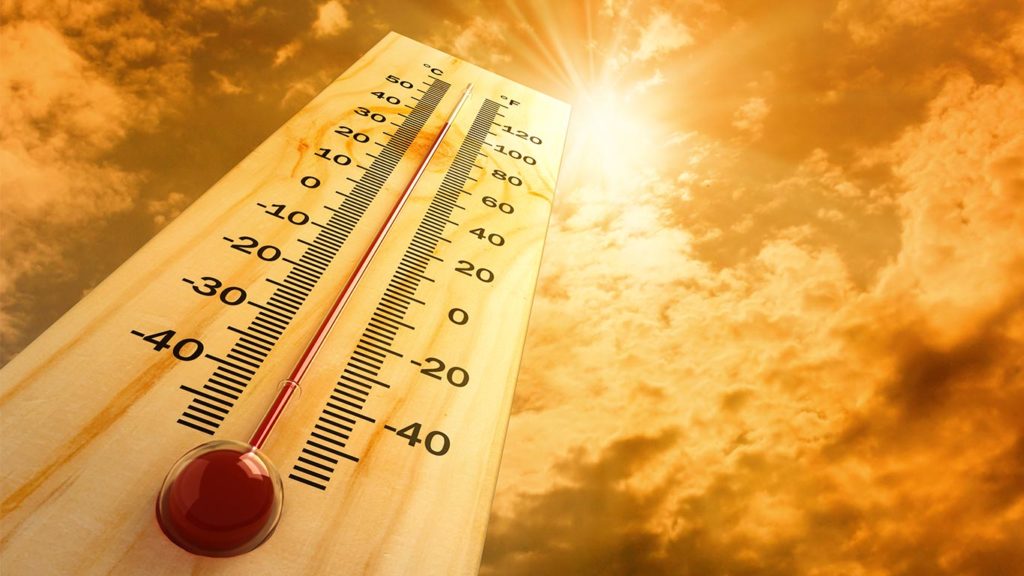
By Melissa Reitz Temperatures on Earth are higher now than they have been for 12,000 years – the entire period spanning the development of human civilization, new research has found. According to scientists, this information means that the modern human-caused global warming period is accelerating a long-term increase in global temperatures, and that we are now in “unchartered territory”. Furthermore, data suggests that the planet may be at its warmest in 128,000 years, say the research team. These findings are a game changer; solving the longstanding mystery known as the “Holocene temperature conundrum,” a debate over how temperatures have changed during the Holocene, our current geological epoch. While it was previously thought that average Holocene temperatures peaked between 6,000 and 10,000 years ago after which the planet cooled, climate models now show that global temperatures have in fact risen over the past 12,000 years. According to scientists at Rutgers University in the US, this new research, “changes the baseline and emphasizes just how critical it is to take our situation seriously.” The study, they say, “eliminates any doubts about the key role of carbon dioxide in global warming.” Previously published information on fossils of single-celled organisms which lived on the ocean surface and other biomarkers from marine algae, allowed the research team to develop a system to reconstruct temperatures through history and arrive at annual averages. This showed them that post-industrial increases in global temperature have steadily risen over past millennia. “This is ground-breaking information that we hope will serve to apply more pressure on international governments to reset policies and clamp down on CO₂ emissions,” says Adrienne West, Chief Campaigner at Animal Survival International (formerly Political Animal Lobby). 2020 was captured as the warmest year on record by the U.S. National Oceanic and Atmospheric Administration (NOAA) and therefore possibly the hottest in the last 128,000 years.
The Rapid Disappearance of Glaciers Threatens Alpine Flowers With Extinction, New Research Finds
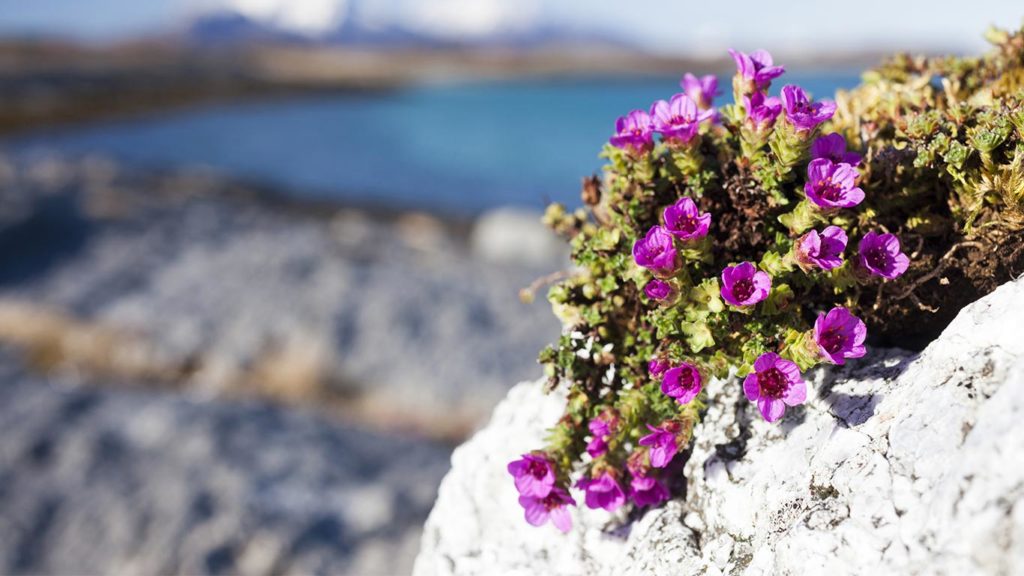
By Melissa Reitz Glaciers are retreating at unprecedented rates, causing a rapid decline in alpine plant species as their remaining habitat disappears. Despite warmer temperatures exposing new land for plant growth, the benefit for pioneer alpine species is short-lived. These plants are instead becoming ever more threatened as aggressive species take over, pushing them out of their remaining habitat and diminishing overall biodiversity. According to a newly published paper, researchers have found that up to 22% of the species studied across four glaciers in the Italian Alps would disappear if the glaciers vanish. Endemic plants such as mossy saxifrage, purple mountain saxifrage and mignonette-leaved bitter-cress could become extinct as a result. Proglacial environments are extremely sensitive to global warming. As the climate warms, mountain species are forced to move to higher-altitude habitats. But there is little space left for them to do this. Alpine plants play a key role in fragile mountain ecosystems which means their disappearance could also lead to the extinctions of certain animal and insect species. Earlier research by the University of Zurich has also shown that alpine plants are not adapting well to climate change, and invasive species are quickly colonizing mountain tops. In the Scottish Highlands, botanists have found Britain’s rarest mountain plants are retreating higher and being replaced by grasses normally found at lower altitudes. “Although deeply concerning, this is valuable information for better understanding the lesser-known effects global warming is having on biodiversity in glacial areas. Again, our attention needs to be focused on mitigating these effects at all costs,” says Adrienne West of the Animal Survival International (formerly Political Animal Lobby).
Worst drought in 100 years still raging. We must act now!
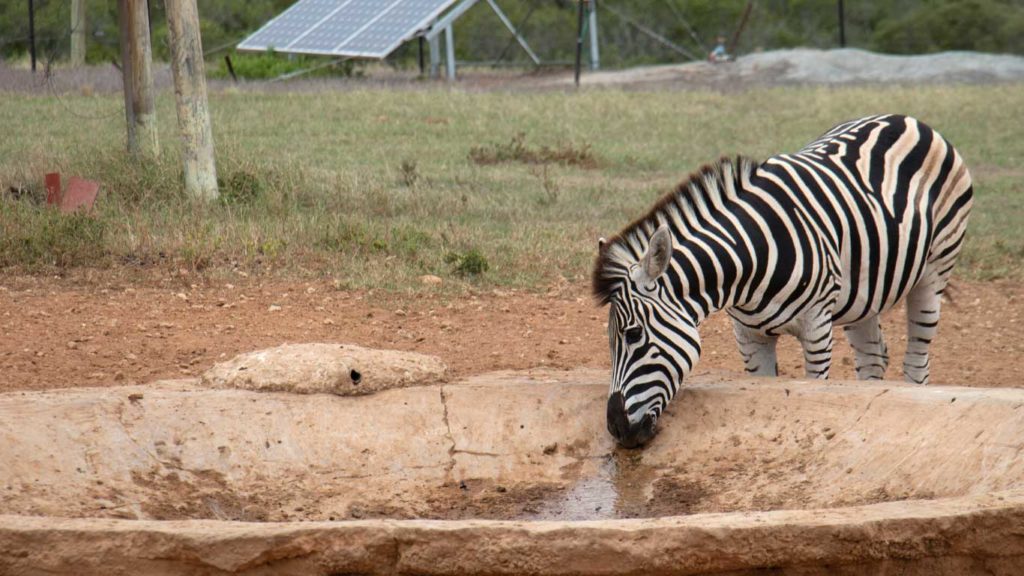
Today we share with you a simple but vitally urgent message: thousands of elephants and other wild animals face dying of thirst in South Africa because of the worst drought in 100 years at the Addo Elephant National Park in South Africa. Water holes are drying up and thousands of animals face death. On a recent emergency visit and as temperatures skyrocketed, our team watched in dismay as animals fought each other over the last few drops of once-plentiful water. Zebra fought among themselves, kicking and biting, warthog families were driven from the life-giving water and baby elephants tried to make an inch of water into a mud bath. With your help, we can save these wild creatures from a slow and agonizing death. The good news is we have a plan. We promised to buy state-of-the-art solar-powered water pumps to provide a reliable source of ground water and, thanks to our supporters, we are nearly there. We just need to raise another $4,000.00 (£2,900.00) to provide two critical waterholes with life-giving water. In the meantime, we are trucking in water from distant reservoirs to help animals survive in the short-term. South African National Parks (SANParks), which manages Addo, is doing everything it can to help and so far no animals have died – but without water, it’s just a matter of time. Donate today, and together we can make sure that these animals get thousands of liters/gallons of life-giving water every day! We have the opportunity – and we must not let it pass – to save elephants, antelope, warthogs, zebra and so many other animals. They cannot survive this drought much longer. As you read these words, water trucks are already at work (we were there to help pumping ourselves). The stress of thirst is driving animals to fight each other for a share of the meager water supply. Worse still – baby animals don’t stand a chance to access the prized remaining inches of muddy water. Zebra are trying frantically to suck water from dry pipes as temperatures soar and dehydration sets in! We witnessed the harsh realities of this drought firsthand. Thirst and panic are making wild animals behave unnaturally. By spending all day lining up, pushing and fighting for water, they don’t have enough time to browse for food or rest. There is no time to waste. We need your support now to respond to this emergency – and save lives! We are on the brink of a massive conservation disaster in Addo National Park. It could be years before this devastating drought ends. Just one elephant drinks 200 liters (over 50 gallons) of water every day. This means that, under current circumstances, an entire day’s dwindling water supply can only sustain a single small family of elephants. It is no understatement that the competition for evaporating water could wipe out whole wildlife populations within the Park. While we have begun to act, we must continue to act! With your help, we WILL save lives! Together, we can save thousands of animals from a horrific fate and protect vital wildlife populations for years to come. Please help us by donating what you can today – every gift is vital.
Scientists Find That Climate Change Is Affecting Humpback Whale Reproduction
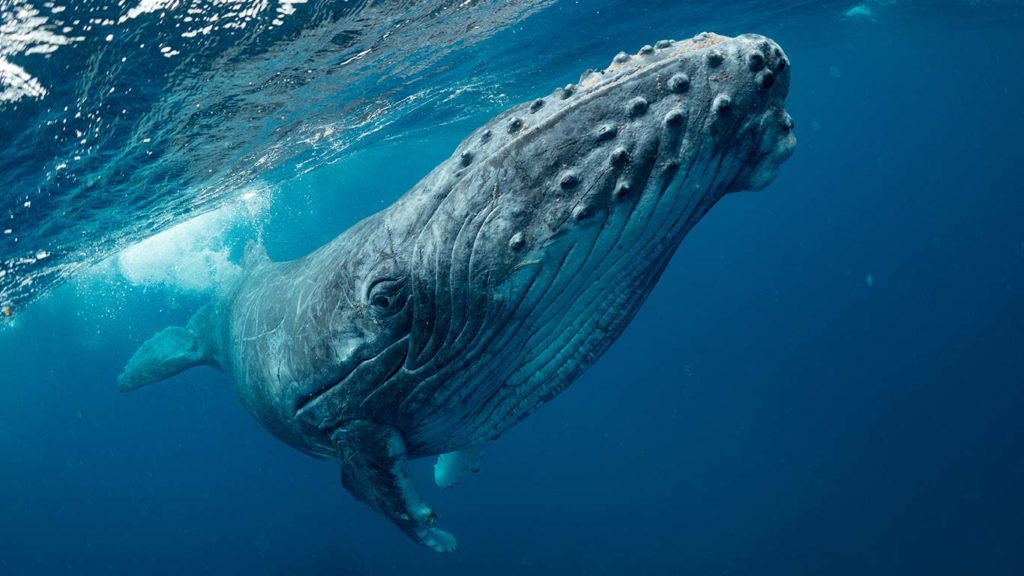
By Melissa Reitz Recent studies in the Gulf of St Lawrence, Canada, show an alarming drop in the number of calves born to humpback whales over the past 15 years. Scientists say the climate crisis is to blame. Each summer, humpbacks return to the north Atlantic, an important feeding ground for whales. But, according to researchers, a rapid rise in sea temperatures and sea levels is affecting ecosystems and causing a decrease in herring numbers, a vital food source for humpbacks. To ascertain the effects and confirm suspicions of dwindling birth-rates, scientists used blubber samples from female humpbacks to determine whether the whales were pregnant. By identifying markers on individuals, they could confirm whether the whales returned to the Gulf of St Lawrence with calves or not. It was found that 39% of the pregnancies were unsuccessful and the annual calving rate had dropped drastically from 2004 to 2018. According to a published report, the findings suggest the decline in reproduction is due to a lack of prey species which is an effect of disrupted ecosystems. This has resulted in females being unable to accumulate the energy reserves needed to maintain pregnancy and meet the demands of lactation. It was previously thought that baleen whales, a group to which humpbacks belong, were potentially resistant to the effects of climate change, by changing migratory patterns and switching prey species if abundance levels dipped. But the decline in calving rates in the north Atlantic over a period of major environmental change suggests a “limited resilience” to these ecosystem changes. “Unless we take radical action to slow down the effects of global warming, we risk losing some of our most important keystone species, such as the humpback whale, which are essential in keeping ecosystems in balance,” says Adrienne West, Chief Campaigner at Animal Survival International (formerly Political Animal Lobby). Whales play a vital role in helping combat climate change by circulating nutrients in the water as they dive and surface. This action, known as the “whale pump”, encourages the growth of phytoplankton, which, through photosynthesis, absorb 40% of carbon from the atmosphere. This is equivalent to the work of four Amazon rainforests. Over the long-term, a lack of healthy reproduction in baleen whales will have a knock-on effect on other essential climate regulators.
Top Scientists Say Humanity Is in Serious Trouble if We Do Not Recognize the Extent of the Climate Crisis
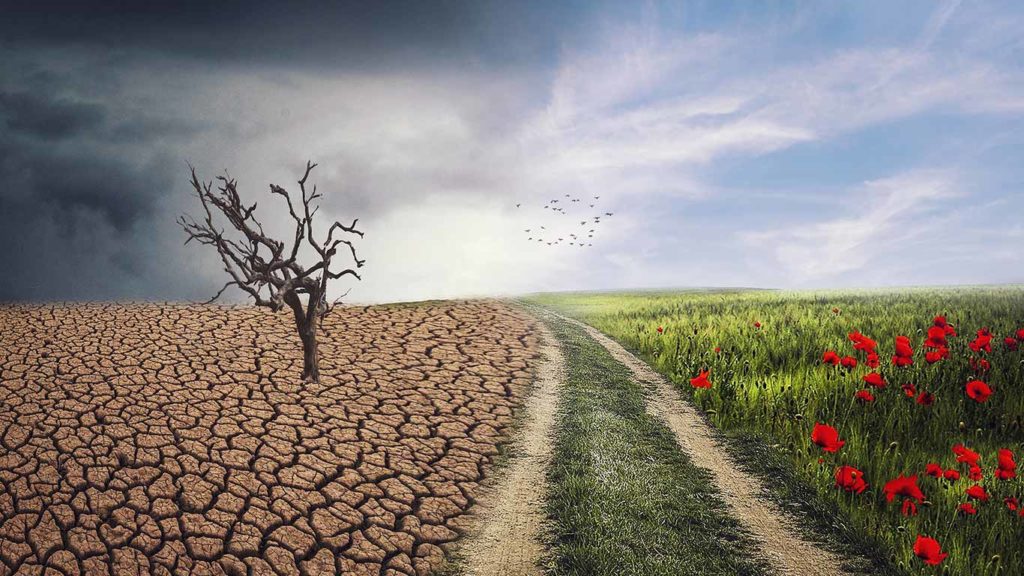
In a shocking new report, the world’s top climate scientists have warned that humanity is failing to grasp the severity of the climate crisis and that the planet is in a far worse state than most perceive. The 17 international experts say ignorance and inaction is leading to a “ghastly future of mass extinction, declining health and climate-disruption upheavals” that poses a very real threat to the survival of humanity. This comes after recent confirmation that world leaders have failed to meet any of the 2010 Aichi targets set out to protect Earth’s vulnerable wildlife and ecosystems, as well as the sobering UN paper indicating that an estimated one million species are currently at risk of extinction. Referencing over 150 major environmental studies, the report points to the delay between the destruction of biodiversity and the impact of these actions being felt resulting in most not realising the true magnitude of the crisis. The authors warn that mass migrations, pandemics and conflict over resources is inevitable if urgent action is not taken. To halt this catastrophe requires far-reaching reforms, say the researchers. The report says this would include ending the notion of perpetual economic growth and stopping the use of fossil fuels, amongst other measures. According to Professor Paul Ehrlich from Stanford University in the USA, who contributed to the report, human population growth and high levels of demand by wealthy nations is driving the destruction. The continuous growth of human populations is fuelling soil degradation and biodiversity loss, says the paper. “If the world does not wake up to the crisis we are in and we begin to drastically change our ways by creating sustainable ways of living, we will be facing a devastating catastrophe. What many still fail to understand is that without a fundamental shift in attitude towards the climate crisis, pandemics, large-scale disaster events and extinctions are here to stay and will get dramatically worse,” says Adrienne West of the Animal Survival International (formerly Political Animal Lobby). At the recent One Planet Summit in Paris, France, the High Ambition Coalition (HAC) for Nature and People, a coalition of more than 50 countries pledged to protect 30% of the planet’s land and oceans. The countries include the United Kingdom and countries from six continents. At the summit, UN Secretary-General, António Guterres, said the process of recovery from the coronavirus pandemic could provide the world a chance to change course and put humanity on a path that is not in conflict with nature.
Good News for Polar Bears, as Trump Fails
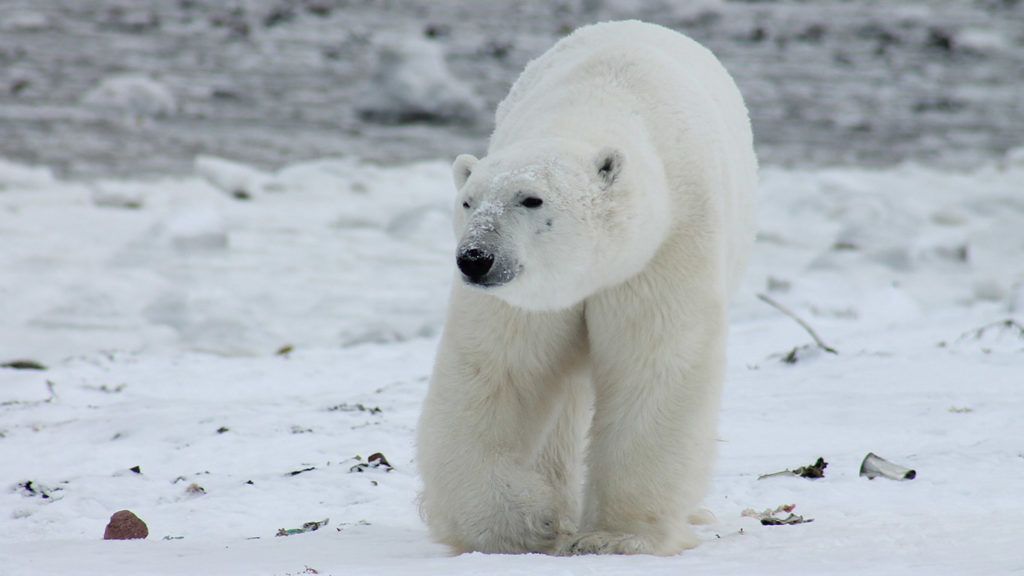
Heeding the warnings of the Animal Survival International (formerly Political Animal Lobby), other environmentalists, watchdog groups, and native Alaskans alike, major oil companies steered clear of fossil fuel leases in the vulnerable Arctic National Wildlife Refuge (ANWR). The refuge is a breeding ground for endangered polar bears. Bears give birth in dens they create in the ice, leaving their cubs alone when they leave to seek for food. Bulldozers have no way of knowing where the dens are; countless polar bear cubs would have been crushed to death. The Trump administration made a reckless last-minute stab to encourage Big Oil to drill in the reserve by offering long-term leases. It would have annihilated the long-protected refuge home to denning polar bears, foxes, migrating birds, and Porcupine caribou herds just days before the end of the administration was a dismal fail. Thankfully, on this occasion, Big Oil did not bite. However, given President-elect Joe Biden’s vow to permanently protect the refuge, massive oil companies steered clear. Although Biden has little authority to withdraw leases once they are issued, the incoming administration has greater discretion to block permits necessary for any activity to be mounted on the tracts. “Any attempt to disrupt the breeding grounds of iconic endangered animals like polar bears is an absolute outrage, and we and all animal lovers will be delighted that the Trump administration failed in a bid that would have caused unbelievable hardship and damage to polar bears,” says Nicolette Peters of ASI.
It is not too late to SAVE ANIMALS FROM EXTINCTION! But we URGENTLY need your help now!
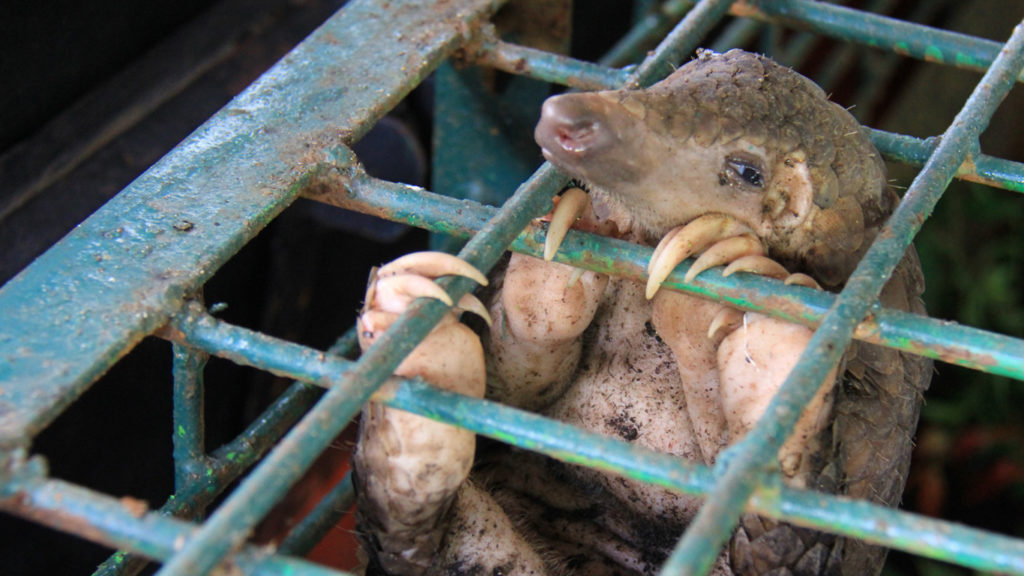
The harsh news we bring you is that extinction for many animals is not around the corner… … it’s now. According to the United Nations, 6,523 species are critically endangered and headed for extinction as we approach 2021. That’s why we at ASI will do everything in our power to fight harder for animals in the New Year. And why we need your help before 2020 is over to make sure we have the resources to continue our vital work. In 2020, we fought for animals, with projects around the world to fight back against climate change, rapacious greed, cruelty and contemptuously poor law enforcement. Animals are being WIPED OUT all over the world! Polar bears have become the victims of climate change and the disastrous onslaught of those who only care about the oil and gas in their “Arctic Refuge”. The once teeming herds of African wildlife risk becoming petting zoo curiosities. Species after species are grabbed for the cooking pot or for phony Asian potions, in their millions. Rhinos, frogs, giraffes, gorillas, orangutans, parrots… vultures, badgers, pangolins, sharks, turtles, and more… The list just keeps getting longer… and sadder… We fight daily on multiple fronts (some of this year’s accomplishments are noted below), but the need to prevent animal extinction is DESPERATE and URGENT. But there’s SO much to do and all we do depends on the support of friends like you. A good example is that the South African government proposes new laws that rank wild animals alongside domestic animals as suitable for human consumption and plans to encourage South Africans to eat more wild animals. We and other NGO’s managed to get lions excluded from the new rules. However, other wild animals will be badly affected. The pangolin is the most trafficked animal in the world. Thousands of pangolins are captured for their scales which are scraped from their bodies while the animal is still alive, to be used in phony Asian cosmetic potions. In Asia, an estimated 200,000 pangolins are killed each year, mostly for the Chinese trade. We are working with a secretly located pangolin rehabilitation center in South Africa and Pangolin(Dot)Africa, to rescue and rehabilitate sick and injured pangolins rescued from poachers. We have also provided funding for vital satellite tracking devices to monitor pangolins released back into the wild. More than 11,000 people signed our petition asking the major veterinary association in the UK, the British Veterinary Association (BVA), to change its policy of supporting the badger cull. Anatolian water frogs are being wiped out because they are the largest edible frog in Turkey, and demand for their legs as ‘delicacies’ is strong in parts of Europe. 17-million Anatolian water frogs are captured for the dinner table each year. Very little research has been conducted to determine how much longer the species has before extinction. We are working with the Department of Biology at Ege University in Izmir to find out. We are working with the Painted Dogs Conservation (PDC) in Zimbabwe, funding its program to dart and rescue snared painted dogs. There are only 200 in the area around Hwange, where they work, and 3,000 snares laid by hungry local people. African Grey parrots are being wiped out because of the international, and now illegal, pet trade. We are financing the construction of a free-flight aviary at Birds of Eden in South Africa. Because of poisoning and habitat destruction, vultures are increasingly endangered. In 2020, we financed an aerial survey of vultures in the Kruger National Park and are hoping to raise funds for the construction of a specially designed vulture rescue vehicle to use in cases of poisoning. We are fighting for the very survival of so many animals… But we promise to do more in 2021, and your end-of year-donations will make sure we do not let the animals down – so we can work to preserve animals anywhere in the world where they need us. The doomsday clock is ticking ever closer towards extinction for countless creatures, but with your help, we will fight for the survival of every animal we can. Please help the animals which can’t help themselves by donating generously to ASI today.