

Efforts to Pass Global Ocean Protection Agreement Fail
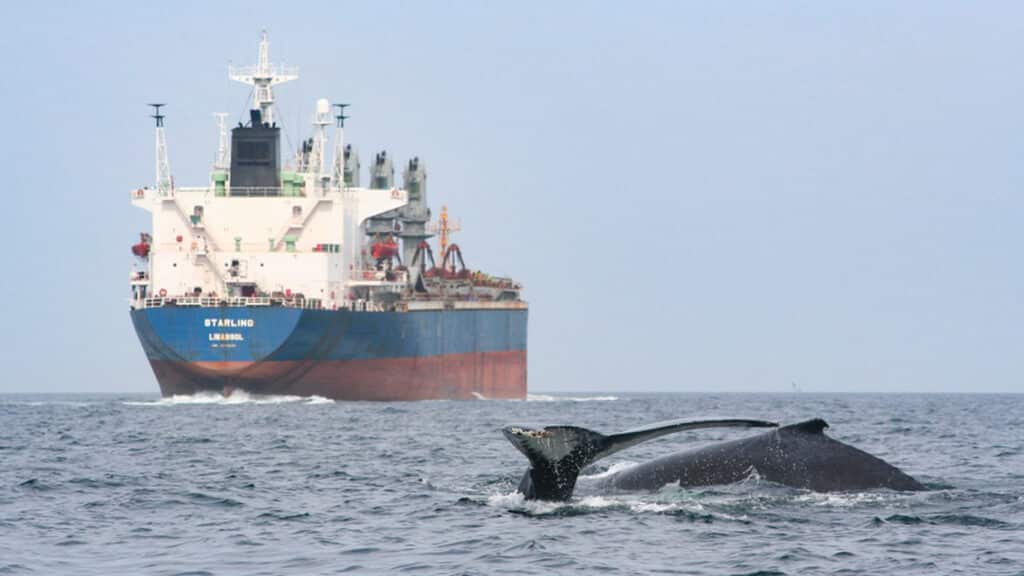
A fifth attempt to pass a global treaty to safeguard the world’s oceans and marine life has failed, according to BBC.com. Discussions to pass the UN High Seas Treaty continued for two weeks in New York, without governments able to come to agreement on the terms. Only 1.2% of international waters are protected, said the BBC, despite the fact that international waters represent almost two-thirds of the world’s oceans. Marine life living outside this small protected area is at risk of harm by overfishing, shipping traffic and climate change. The UN Convention on the Law of the Sea was the last international agreement on ocean protection, signed 40 years ago in 1982. This agreement defined international waters, called the high seas, where all countries had the right to fish, ship and conduct research. “The high seas are the vital blue heart of the planet,” said senior high seas advisor at the International Union for the Conservation of Nature (IUCN), Kristina Gjerde. The IUCN documents the status of the world’ biodiversity. “What happens on the high seas affects our coastal communities, affects our fisheries, affects our biodiversity – things we all care so much about,” she told the BBC. Over two weeks, 168 members of the original treaty came together to try and make a new agreement. Prior to the meeting, over 70 countries had already agreed to put 30% of the world’s oceans into protected areas. This would regulate the amount of fishing that could take place, exploration activities like deep-sea mining, and routes of shipping lanes. However, countries failed to reach agreement on key issues of fishing rights, as well as funding and support for developing countries. There are concerns around the safety of marine life in light of the fact that activities such as deep-sea mining have a potentially toxic impact on marine life – and also that some species, without protection, will become extinct before they are even discovered. According to research published earlier this year funded by the National Oceanic and Atmospheric Administration, around 10% to 15% of marine species currently risk extinction. Sharks and rays are among those expected to be greatest hit by the failure to pass the treaty. According to the IUCN, they face a global extinction crisis and are among the most threatened species in the world. Not only are sharks and rays overfished – leading to rapid population declines – but they, along with other migratory species like turtles and whales, come into close contact with human activities, which can cause severe injuries and death. “Threats to global marine life are severe and worsening every day,” said executive director of Animal Survival International, David Barritt. “This treaty is absolutely critical to the survival of countless marine species, upon which entire ecosystems rely. The oceans are the lifeblood of our world, and failing to protect them is failing to secure the very future of our planet.” Banner: Image: Whale Center of New England
The Guardian: Major sea-level rise caused by melting of Greenland ice cap is ‘now inevitable’
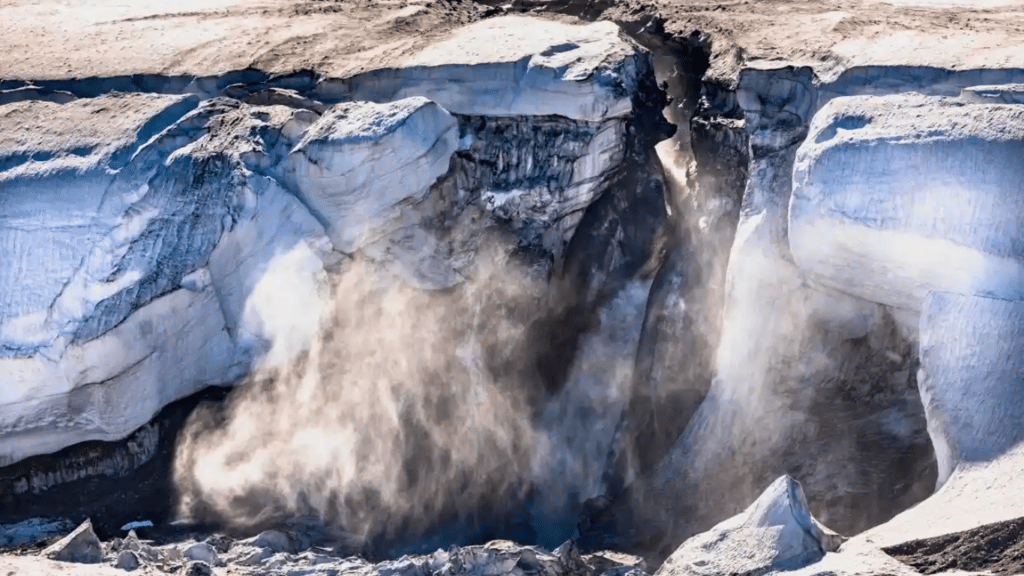
Article written by Damian Carrington, Environment editor Originally published by The Guardian (Monday, August 29, 2022) Loss will contribute a minimum rise of 27cm regardless of what climate action is taken, scientists discover Major sea-level rise from the melting of the Greenland ice cap is now inevitable, scientists have found, even if the fossil fuel burning that is driving the climate crisis were to end overnight. The research shows the global heating to date will cause an absolute minimum sea-level rise of 27cm (10.6in) from Greenland alone as 110tn tonnes of ice melt. With continued carbon emissions, the melting of other ice caps and thermal expansion of the ocean, a multi-metre sea-level rise appears likely. Billions of people live in coastal regions, making flooding due to rising sea levels one of the greatest long-term impacts of the climate crisis. If Greenland’s record melt year of 2012 becomes a routine occurrence later this century, as is possible, then the ice cap will deliver a “staggering” 78cm of sea-level rise, the scientists said. Previous studies have used computer models of ice cap behaviour to estimate future losses, but the physical processes are complex and this leads to significant uncertainties in the results. In contrast, the study published in the journal Nature Climate Change used satellite measurements of ice losses from Greenland and the shape of the ice cap from 2000-19. This data enabled the scientists to calculate how far global heating to date has pushed the ice sheet from an equilibrium where snowfall matches the ice lost. This allowed the calculation of how much more ice must be lost in order to regain stability. “It is a very conservative rock-bottom minimum,” said Prof Jason Box from the National Geological Survey of Denmark and Greenland (Geus), who led the research. “Realistically, we will see this figure more than double within this century.” The 27cm estimate is a minimum because it only accounts for global heating so far and because some ways in which glacier ice is lost at the margins of the ice sheet are not included. The advantage of this study is that it provides a solid estimate of inevitable sea-level rise but the method used does not give a timescale over which the ice will be lost. Nonetheless, based on scientists’ overall understanding of how sheets such as Greenland lose ice into the ocean, the researchers said most of the rise would occur relatively soon. In 2021, other scientists warned that a significant part of the Greenland ice sheet was on the brink of a tipping point. “The minimum of 27cm is the sea-level rise deficit that we have accrued to date and it’s going to get paid out, no matter what we do going forward,” said Dr William Colgan, also at Geus. “Whether it’s coming in 100 years or 150 years, it’s coming. And the sea-level rise we are committed to is growing at present, because of the climate trajectory we’re on.” Colgan said: “If [2012] becomes a normal year, then the committed loss grows to 78cm, which is staggering, and the fact that we’re already flickering into that range [of ice loss] is shocking. But the difference between 78cm and 27cm highlights the [difference] that can be made through implementing the Paris agreement. There is still a lot of room to minimise the damage.” Mountain glaciers in the Himalayas and the Alps are already on course to lose a third and half of their ice respectively, while the west Antarctic ice sheet is also thought by some scientists to be past the point at which major losses are inevitable. Warming oceans also expand, adding to sea-level rise. “There is growing support in the scientific literature for multi-metre levels of rise within the next 100 to 200 years,” said Colgan. A collapse of the colossal east Antarctic ice sheet, which would lead to a 52-metre rise in sea levels if it all melted, could be averted if rapid climate action is taken. Prof Gail Whiteman, at the University of Exeter, who was not part of the study team, said: “The results of this new study are hard to ignore for all business leaders and politicians concerned about the future of humanity. It is bad news for the nearly 600 million people that live in coastal zones worldwide. As sea levels rise, they will be increasingly vulnerable, and it threatens approximately $1tn of global wealth.” She said political leaders must rapidly scale up funding for climate adaptation and damage. Image: Kerem Yücel/AFP/Getty Images
Freya the Beloved Walrus Euthanized by Authorities Following Public’s Failure to Stay Away
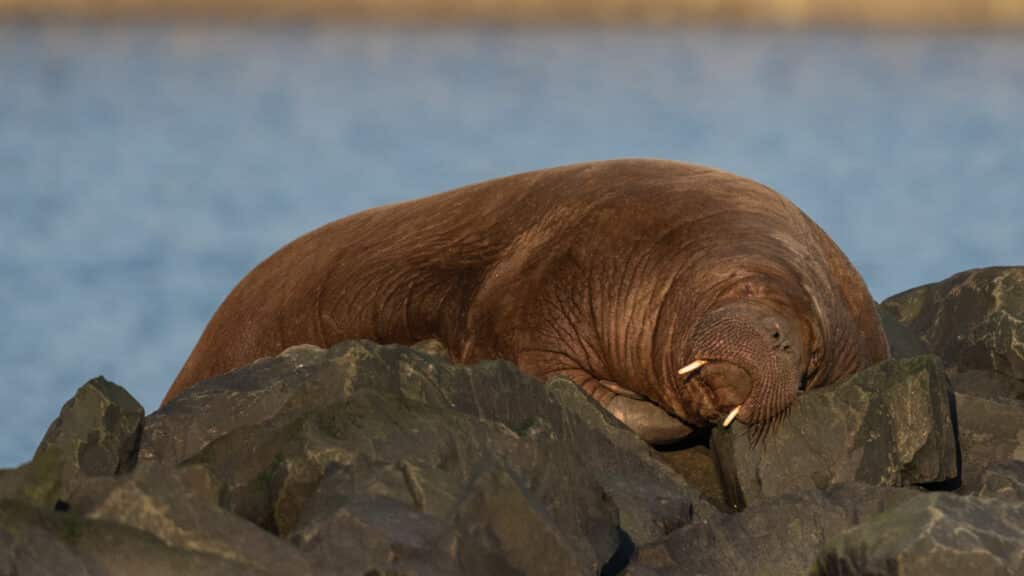
Freya, the young 600kg (1,300lb) walrus who drew crowds of curious onlookers at the Oslo fjord, has been euthanized. The announcement was made by the head of Norway’s fisheries directorate, Frank Bakke-Jensen, who said that the decision to kill her had been taken “on the basis of a global evaluation of the persistent threat to human security”, according to The Guardian. Crowd-favorite Freya had been sighted in the UK, Netherlands, Denmark and Sweden, and had chosen to spend part of the summer in Norway. She was initially spotted lounging on pleasure boats in July, and initial fears were that her bulk could damage them. Later, authorities repeatedly warned the public to keep their distance as they disturbed her while she slept. “The public’s reckless behavior and failure to follow authorities’ recommendations could put lives in danger,” a spokesperson for the fisheries agency said at the time. “We are now exploring other measures, and euthanasia may be a real alternative.”
Up to 150 Southern Fin Whales Spotted Feeding in Antarctica, Bringing Renewed Hope for Whales
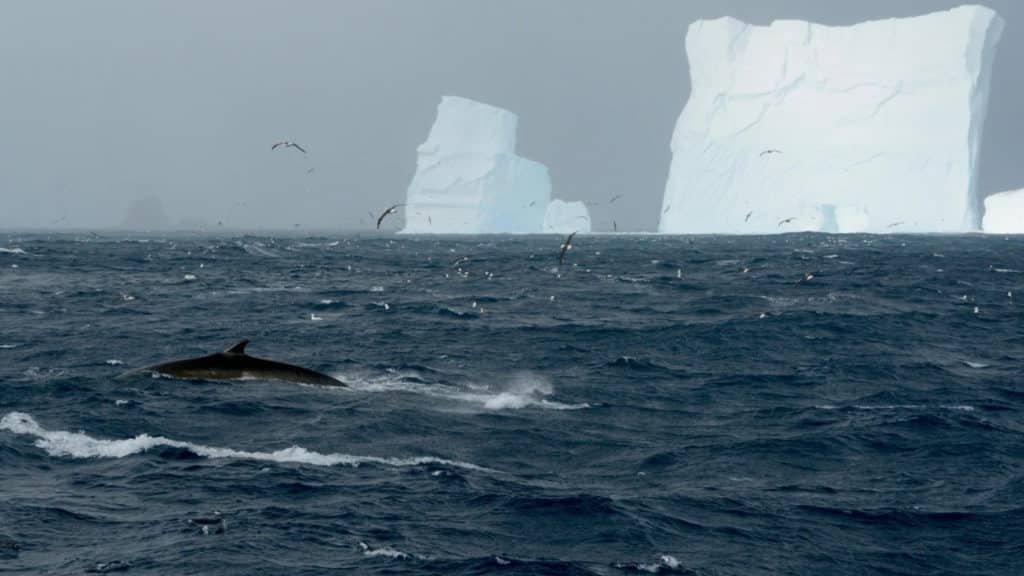
A pod of up to 150 southern fin whales has been spotted feeding together in Antarctica, in what has been called a ‘thrilling’ spectacle, according to The Guardian. Scientists say it offers renewed hope for a species hunted to near-extinction during catastrophic industrial whaling that took place in the 20th century. Southern fin whales are the world’s second-largest animals after blue whales, but their size could not protect them from the horrors of whaling, which decimated their populations across the planet. The practice was banned in 1976, and while their numbers have slowly begun to recover, the species is seldom sighted in their ancestral feeding areas. “They were reduced to 1 or 2% of their original population size,” Helena Herr of the University of Hamburg was quoted as saying. Herr is the lead author of research published in the journal Scientific Reports. “We’re talking about a couple of thousand animals left for the whole southern hemisphere area.” Herr describes the sighting, which took place just a few days ago near Elephant Island in the Antarctic, as “one of nature’s greatest events”. Researchers and videographers were able to capture the scenes on camera, and in drone footage shot by the BBC, the giant creatures can be seen surging and swooping through the water. The sighting is particularly extraordinary as previously recorded feeding groups comprised, at most, around a dozen of the mammals. When left undisturbed, southern fin whales can live up to eighty years. But because they give birth to only one calf at a time, population regeneration can take a long time – especially as marine creatures face continued and mounting threats to their survival, including being struck by boats. Fin whales are listed as ‘vulnerable’ by the International Union for Conservation of Nature (IUCN), with an estimated global population of around 100,000. Researchers estimate that as many as 700,000 or more were wiped out by whaling. The potential recovery of the species has the potential to improve their region’s marine ecosystem, say researchers, as fin whales eat and excrete krill and other types of plankton. Whale excrement is high in nutrients, and in particular nitrogen. When nitrogen reaches the surface of the water, it feeds phytoplankton – an important source of food for many fish and other marine species, according to a study by the University of Vermont. “We are delighted by this rare and momentous sighting – a small victory as we battle a near never-ending onslaught on our planet’s marine life,” said David Barritt of Animal Survival International. “The world’s oceans have been destroyed by the scourge of whaling, and it is high time it is outlawed for good in every part of the world.” Banner: DanBeecham_NBCNews
Gizmodo: Hundreds of Little Blue Penguins Are Washing Up Dead in New Zealand Amid an Ocean Heatwave
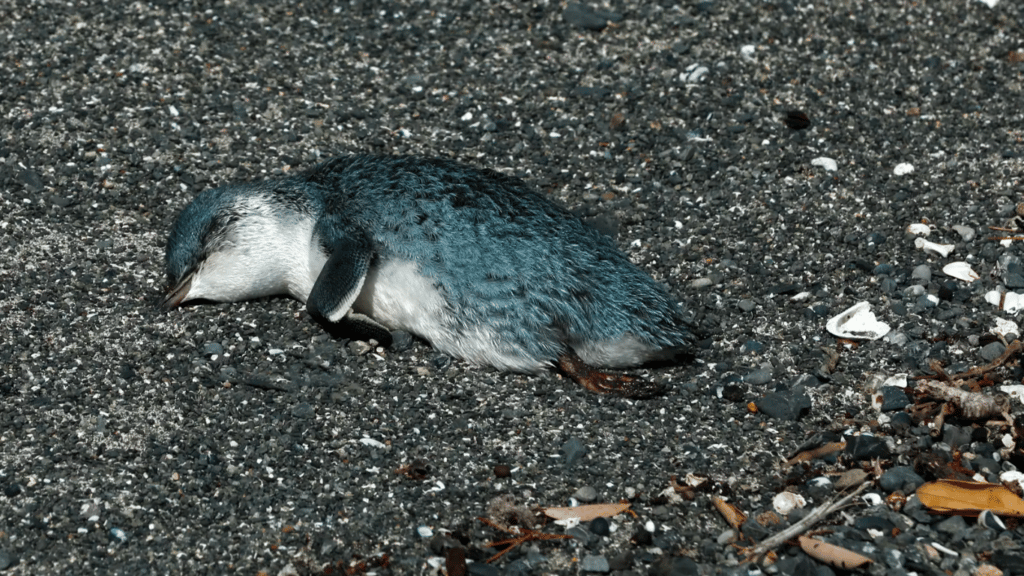
Article written by Lauren Leffer Originally published by Gizmodo (Tuesday, June 14, 2022) The birds are members of the smallest penguin species in the world. Their numbers have been declining in recent years. On a peninsula toward the northernmost tip of New Zealand’s North Island lies Ninety Mile Beach. Usually, the (actually 55-mile) expanse of sand and surf is a popular site for fishing, tourists, and recreation. In recent weeks, however, the beach has become a site of tragedy. Hikers and beach visitors have spotted hundreds of dead penguins, called little blue penguins or kororā (their Māori name), washed up on the western shore, according to a report from Radio New Zealand. The sightings are indicative of a larger bird die-off, triggered by warm ocean temperatures, according to local conservation authorities. At the end of May, one man walking the Te Araroa Trail noticed the dead birds and counted more than 200 of them over the course of just three days. RNZ quoted the hiker’s observations as follows: “There were quite a few which seemed odd, so I thought I’d start counting them to see how many there were.” For three days he counted penguins. “On the first day 75 dead penguins over a distance of 10 kilometres and then day two, walking north, counted them again, that morning I counted 71. The third day, I counted about 59 dead birds.” Turner estimated there would have been more than 200 each day over the 30-kilometre walk. “Some of them are up in the dune toe, or up in the dunes. It was well above the high tide marks, they’ve probably been there a while. A few looked like they’ve been predated on but many of the birds I found were at or below high tide, so they, I assume were fairly fresh.” RNZ additionally reported that another person found 183 deceased kororā in a single visit to Ninety Mile Beach. And it hasn’t just been penguins; among the dead are other seabird species like shearwaters and petrels. Further, the observations extend beyond Ninety Mile to other beaches in northern New Zealand. On the eastern side of the island, local residents counted 40 dead kororā at Tokerau Beach over the course of a week in May. New Zealand Department of Conservation post-mortem examinations revealed many of the birds were particularly vulnerable juveniles. The young penguins died of starvation and hypothermia, with no fat to help them hold onto heat in the water. Counterintuitively, seabirds dying of cold corresponds with hotter ocean temperatures caused by both climate change and the weather phenomenon La Niña, a Depart of Conservation representative, Graeme Taylor, told RNZ. The kororā “prefer to find their food in cold water,” explained Taylor in May. “But when you have got La Niña conditions like we’ve had this summer with the constant northeasterly winds coming in from the subtropics you’ll get the sea temperatures raised above normal, and the food supply for the penguins diminishes with those warm conditions.” With so little food, the penguins aren’t able to build up the body fat they need for insulation. Little blue penguins are the smallest type of penguin in the world, measuring an average of less than 10 inches long and weighing only about 2 pounds. They have historically been an abundant species, but in recent decades their numbers have been declining. Although La Niña is a naturally occurring phenomenon, human-caused climate change amplifies the most extreme effects of the weather oscillation and may be contributing to more frequent and stronger El Niño and La Niña events. In other words: Oceans are already hotter worldwide because of climate change. That warmer baseline magnifies La Niña’s thermal impact in the South Pacific. Mass mortality events like the ongoing little blue penguin die-off have historically been once-in-a-decade events, but warmer years in New Zealand’s oceans are becoming more common, reported RNZ. “In the past, you might have had a lot of good years followed by one bad year where a lot of birds die, but then [the populations] rebound in those good years,” said Taylor. “But if we start to see the balance tipping towards more bad years versus good years, then they’re just not going to be able to recover.” From the littlest penguins to the largest, climate change is causing problems. In 2019, high temperatures on land killed hundreds of Magellanic penguins at a breeding colony in Argentina. And recent research warned that emperor penguins, the biggest species at about 4 feet tall, are at risk of extinction within just a few decades because of melting Antarctic sea ice. Our best chance to keep penguins swimming and waddling around on Earth is to mitigate climate change by drastically reducing our fossil fuel consumption. Image credits: Banner image: Andrea Geiss (Shutterstock); Image 1: MARTY MELVILLE / Stringer (Getty Images)
‘Bulldozing’ of Seabeds in the UK Continues, Despite Government “Efforts”
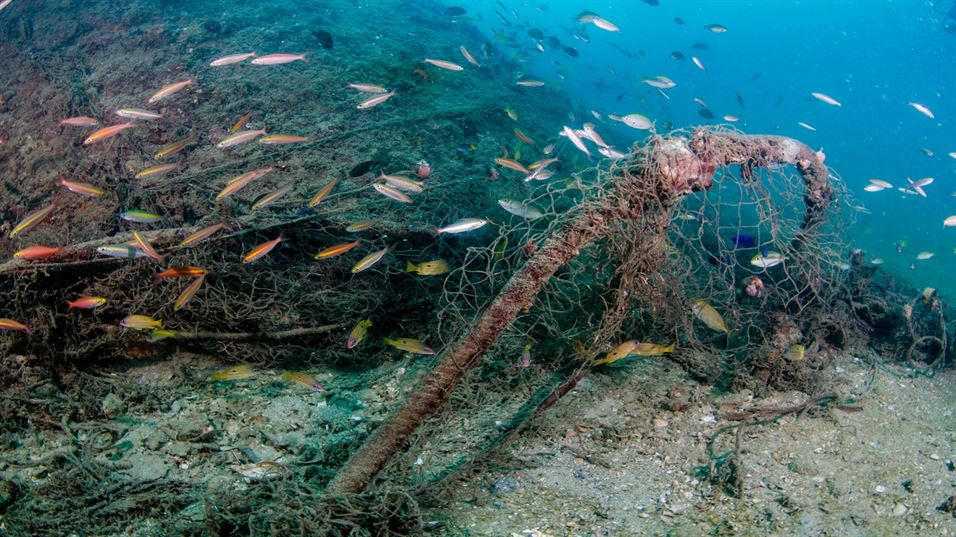
Environmental NGOs have criticized the UK government on its “unambitious,” plans to prevent bottom-trawling in marine protected areas (MPAs), with many insisting that banning commercial fishing would allow for better and faster protection. Such bans could have – and should have – come into immediate effect post-Brexit via the 2020 Fisheries Act, but more than 90% of offshore MPAs are still seeing detrimental degrees of dragging and dredging. At this rate, the British government is unlikely to deliver on its 2030 target to safeguard at least 30% of the ocean. “It’s taken two years for the government to introduce trawling bans on four marine protected areas (MPAs). The whole thing is taking too long and at the end, you have a ban on a single gear type – bottom-towed gear. But, in theory, a super trawler could go straight through it,” says Greenpeace’s Will McCallum. When vessels bottom trawl their gear in marine parks, an ecosystem’s chance of recovery is hindered. These ecosystems, having been ravaged due to decades of exploitation, are further limited in their ability to store carbon and combat the effects of the climate crisis. Greenpeace has described this type of fishing in MPAs as akin to “bulldozing national parks.” Dogger Bank, for example, is a critical breeding ground for several commercial species such as cod, witing and sand eels – which are eaten by kittiwakes, puffins and porpoises. The MPA is also a key site for blue carbon, the CO2 sequestered and stored in coastal and marine ecosystems. “Bottom trawling is an indiscriminate technique of fishing that severely destabilizes the natural state of the ocean’s seabed,” says Tayla Lance of Animal Survival International. “Currently, fishery policies are aggravating the problem by allowing methods that are destroying fragile ecosystems. It is imperative that Defra takes drastic action against this unsustainable practice.”
URGENT! Illegally caught and drowned in fishermen’s nets, less than a dozen rare vaquitas (small porpoises) still swim free today. THERE IS A CHANCE TO SAVE THEM!
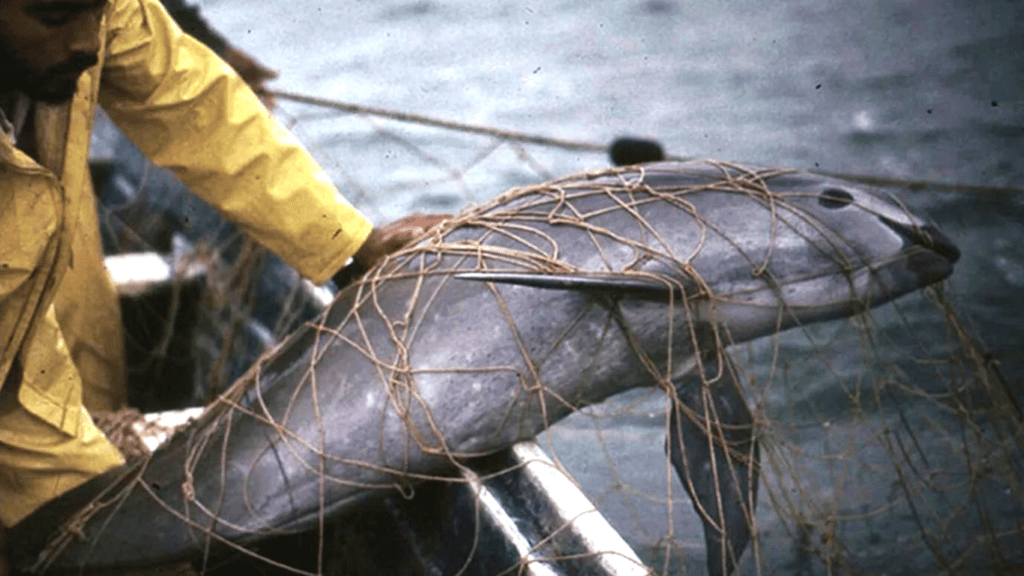
The vaquita is the most endangered marine mammal on the planet. Right now, there are only about 10 of these small porpoises left in the entire world – we are perilously close to losing them forever. Vaquitas live only in the Sea of Cortez in Mexico where imminent extinction beckons because they become entangled in illegal fishing nets and die. It’s that stark and that simple and without our help, another unique creature will be lost because of mankind destroying the oceans. Vaquitas could be extinct within the next few years. These rare creatures are in grave danger of disappearing within our lifetime. Please help us protect the last remaining vaquitas before it’s too late. Vaquitas have striking dark-ringed facial features that are often compared to a smiling panda. They are shy and reclusive – steering clear of boats when approached. Unfortunately, they can’t always propel themselves away from potential threats fast enough. Unlawful totoaba fishing has been killing vaquitas since 1976. Over the last decade, the vaquita population has plunged from 576 to less than 10 individuals. Human greed and selfishness is the cause. Vaquitas are routinely caught by fishermen using gillnets, long walls of netting that hang in the water trapping fish. Gillnets are illegal, but commonly used by poachers seeking the much sought-after totoaba – another endangered species of fish that shares the vaquita’s habitat. Once vaquitas become entangled in the nets they are unable to surface for air and drown within minutes. Those who do manage to escape often suffer severe injuries and do not survive the trauma. Earth League International (ELI) is an innovative, hands-on NGO that fights wildlife crime through undercover operations. In response to the catastrophic consequences being faced by vaquitas due to the illicit totoaba trade, ELI conducted “Operation Fake Gold.” The team identified Asian and Mexican totoaba cartels and black markets in Mexico. Here, totoabas are poached and smuggled into China, where there is a high demand for their “maws” or swim bladders. This is because of their supposed medicinal properties. Scientific research, however, shows that the organ has no health benefits whatsoever. Nevertheless, totoaba swim bladders go for $46 (£37) per gram on the Chinese black market. To put this into perspective – gold goes for $40 (£32). Can you believe that totoaba is considered more precious than gold? These fish are often labelled “aquatic cocaine.” In an attempt to protect vaquitas, the Mexican government banned gillnet fishing in 2017. But enforcement efforts are feeble, and vaquitas continue to be obliterated. The only way to put an end to the illicit totoaba trade is through urgent, covert intervention on the ground. Not all hope is lost – the impending extinction of vaquitas CAN be prevented. But if these animals are to have any chance at survival, it is critical that the authorities step up enforcement measures to terminate illegal fishing operations FOR GOOD. And we have a plan to help. ASI will work alongside Earth League International (ELI), at considerable risk to themselves, they intercept planned poaching operations before they start fishing. Law enforcement officials and local government officials are presented with such strong evidence that they have no choice but to act. This they can easily do because their job has been done for them. It’s an approach that works and one that with your help, will make their species stronger – please, will you help us today?
Is the Russia-Ukraine War Leading to a Rise in Dolphin Deaths?
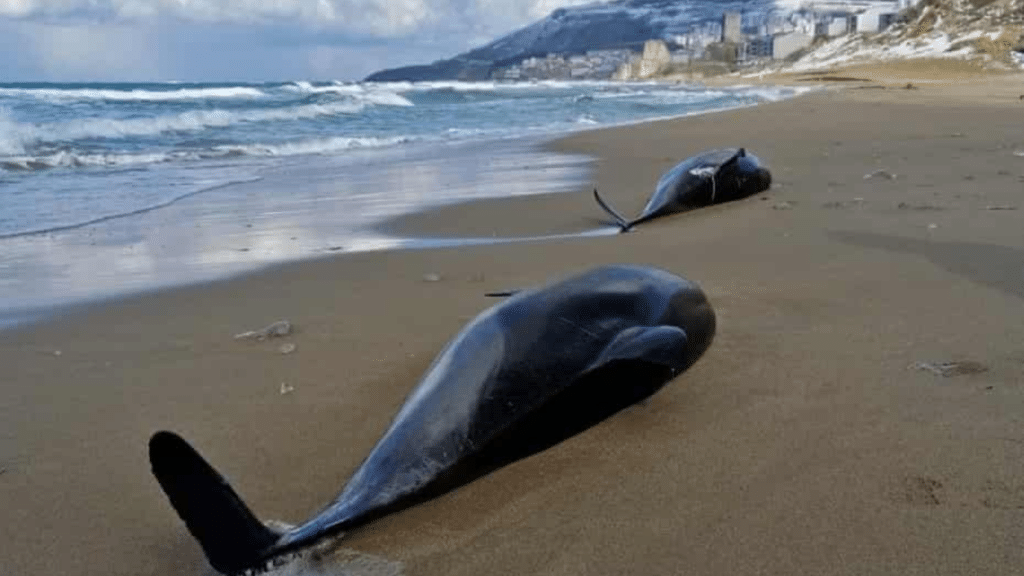
Since the start of Russia’s invasion of Ukraine, the Turkish Marine Research Foundation (Tudav) has recorded an “extraordinary increase” in the stranding of common dolphins (Delphinus delphis). More than 80 have been found dead across Turkey’s western Black Sea coast. A similar trend can be seen in Bulgarian waters, especially among harbor porpoises (Phocoena phocoena relicta). Scientists speculate that amplified noise pollution in the northern Black Sea caused by 20 Russian navy vessels and prolonged military activity is driving cetaceans further south to Turkish and Bulgarian shores. Once there, marine mammals become entangled in fishing nets or stranded in high numbers. While underwater noise may not directly kill them, it can still severely disturb and harm them as they flee to unknown waters to ease their discomfort. Marine mammals rely on sound to communicate, find food and orientate themselves. “An increase in noise associated with greater shipping traffic, military sonar and explosives could indeed impact these animals,” says Dr. Tess Gridley, Director of Sea Search Research & Conservation. “It is conceivable and interesting that this rise in strandings is an unexpected effect of the war in Ukraine,” she said. “Further investigation will determine the underlying causes and the magnitude of impact on all Black Sea marine life, including the endangered harbor porpoise and threatened common dolphin.” Image credit: The Guardian/Tudav
New York Times: Trying to Keep 10 Porpoises From Shrinking Down to Zero
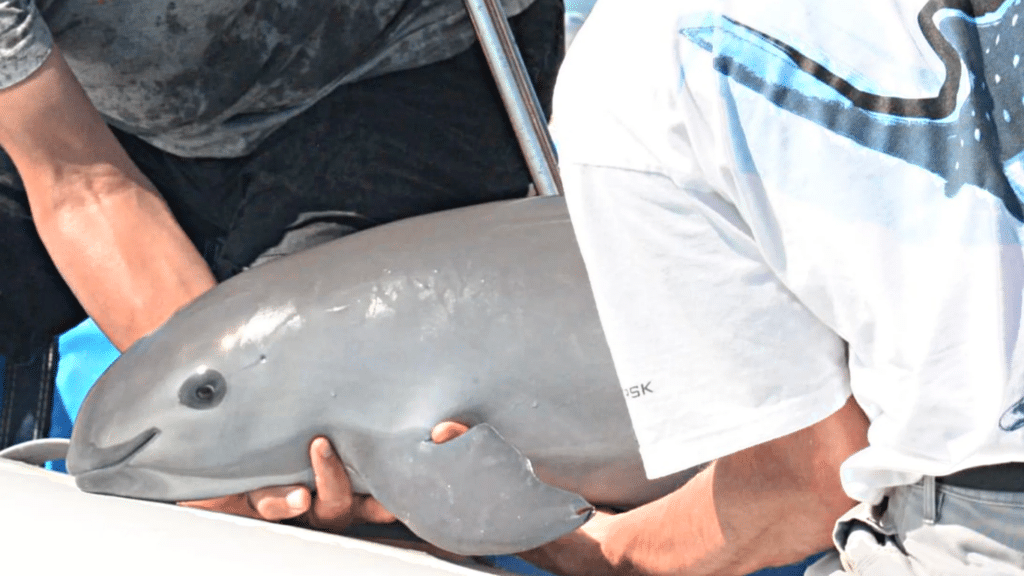
Article written by Catrin Einhorn Originally published by New York Times (Wednesday, May 10, 2022) For a Shy Porpoise, Rare Good News The vaquita, a porpoise from Mexico with pandalike eyes, is one of the world’s most endangered animals. Only about 10 remain. But now there’s some good news about their chances for survival. When a species dwindles, scientists worry that inbreeding can doom it to extinction. But that’s not true for vaquitas, according to research published in the journal Science. Their DNA, it turns out, has a surprising advantage. By sequencing the genomes of 20 animals across about three generations, researchers found their genes to be surprisingly free of mutations that would threaten the vaquita through inbreeding. “Despite the small numbers, the species could recover if we stopped killing them,” said Lorenzo Rojas-Bracho, one of the study’s authors. What’s killing vaquitas? A kind of fishing gear, called gill nets, that accidentally traps and drowns them. The nets are prohibited in much of the vaquita’s habitat, but Mexican authorities haven’t enforced the ban. To predict extinction, researchers used computer models that combined the genetic findings with other factors, such as birthrates. The results were clear: Vaquitas are very likely to survive if fishing deaths are stopped – but only if stopped entirely. Even reducing the fishing deaths by as much as 80 percent would still lead to a 62 percent chance of extinction. Banner image: VaquitaCPR
IMAGINE being caught in a fisherman’s net, unable to breathe, destined to SUFFOCATE and DROWN! IMAGINE being a sea turtle!
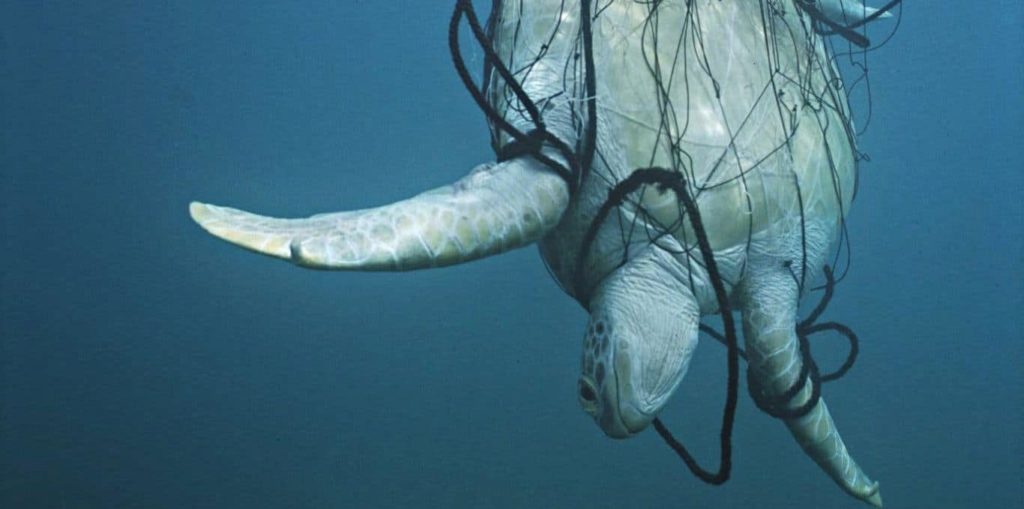
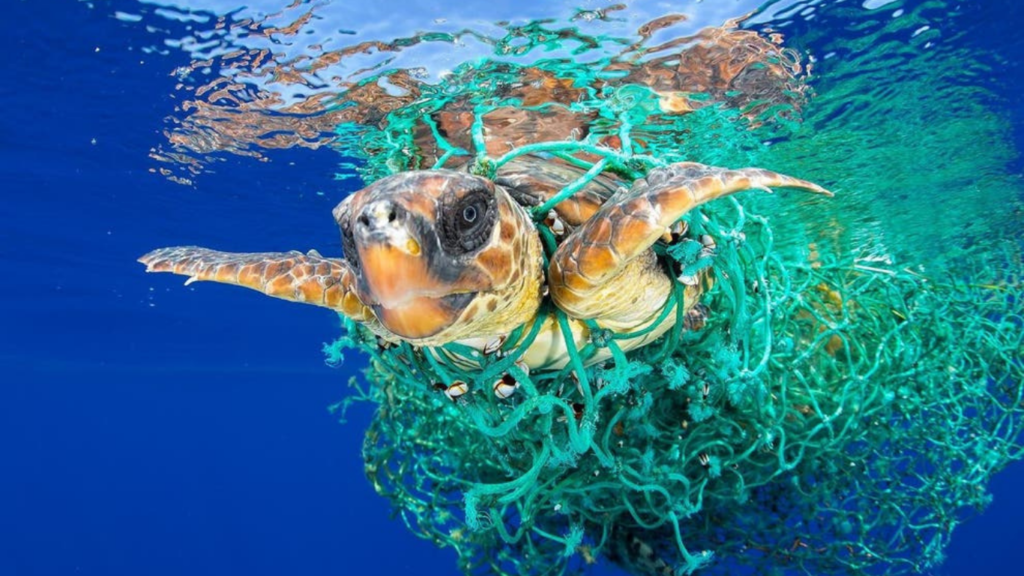
On the coast of Kenya, sea turtles are accidentally being caught in fishermen’s nets. Tragically, many become completely entangled and die, but with our help, they now have a chance of being rescued and released back into the ocean. Entanglement is a major cause of death in sea turtles around the world. We have the ability to do something about it. Many of the entangled turtles are endangered, including leatherback, green and loggerhead turtles. And the threat is constantly growing – as fishing activity increases, so do the instances of helpless sea turtles being caught in fishing gear. 30% of sea turtles in Kenya fall victim to entanglement, and most of them die. If you have ever been lucky enough to watch a sea turtle swim in the ocean, then you know how special they are and that we cannot stand by without trying to help them. When turtles are caught in nets, they are unable to surface to breathe – they suffocate and drown. Disentanglement rescue operations save sea turtles. Will you help us in the fight for sea turtle survival? Our team was on the ground in Kenya when a call came in alerting us to an entanglement case. An endangered green turtle had been caught in a fishing net and was about to die. We rushed to its aid. It takes a lot of effort to rescue a single turtle. Each one needs a thorough health assessment, the removal of parasites, tagging and release into a safe area where it is less likely to become entangled again. To keep the turtle rescue team saving lives is not easy – its boats need fuel and (as any sailor knows) boats need constant maintenance. Plus a rescued turtle needs a lot of care before being sent on its sea journey. We need your help to raise as much as we possibly can to keep rescuers in the water, saving vulnerable turtles. Our immediate goal is $10, 000 (£7,500), but every cent helps. Your donation will make a difference. We are working with Local Ocean Conservation (LOC), an organization in Watamu, Kenya, committed to protecting the marine environment. If you choose to donate – and I hope you will – we can ensure that hundreds of turtles are saved from slow deaths in fishermen’s nets. Your donations will keep the LOC team on the ground – or in the water – patrolling for turtles in distress and rescuing and releasing these endangered creatures to safe locations. They stand so little chance without our help. There is immediate work to be done and long-term work as well, because it is so important to educate fishermen that the days are gone when eating turtles was okay; today, turtles are so endangered that every turtle saved is a small victory against their extinction. Your donation will help now and in the future.
Whaling in Iceland May Finally Be Banned by 2024
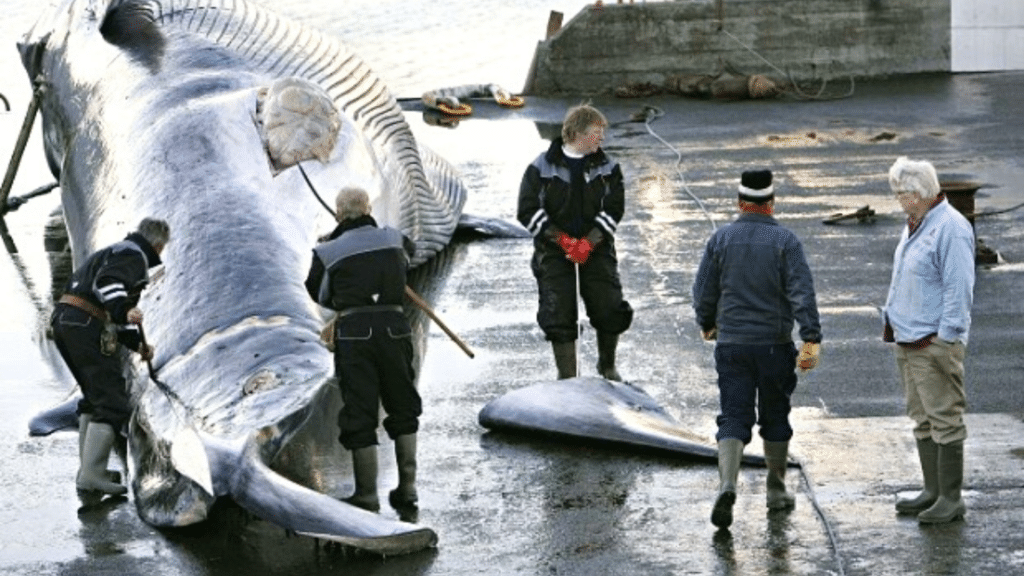
Commercial whaling could soon be banned in Iceland after demand for its whale meat dramatically declined in recent years. According to the British Broadcasting Company (BBC), the country’s fisheries minister, Svandis Svavarsdottir, said the practice – banned in almost every other part of the world – was no longer profitable since Japan had resumed whaling in 2019. Currently, Iceland’s annual whaling quotas allow for the hunting of 209 endangered fin whales and 217 minke whales, one of the smallest species of the marine mammal. But according to Svavarsdottir, only one whale had been killed in the past three years, showing the practice offered little economic benefit to the country. This, she said, would be a key determining factor in deciding whether to allow whaling to continue beyond 2023. The decline in demand for Iceland’s whale exports followed Japan’s return to commercial whaling in 2019 after a 30-year hiatus. Other factors affecting the profitability of the practice included social distancing rules, which reportedly made meat processing plants less efficient, and the extension of a no-fishing coastal zone that increased the cost of whale hunting. The contentious practice has had other negative, knock-on effects on the economy. US-based supermarket chain Whole Foods ceased to market any products from Iceland after the county resumed whaling in 2006. Svavarsdottir’s announcement has been gladly received by conservationists and campaigners, who have for years been calling for an end to the practice. “Animal Survival International (ASI) supports Iceland’s move towards ending this needless and environmentally harmful trade and looks forward to the day that it is banned for good,” said Tayla Lance, ASI campaigner. Globally, Iceland, Norway and Japan are the only countries that still participate in commercial whale hunting. Even after many decades of protection, six out of the 13 existing whale species continue to be classified as endangered or vulnerable. Tellingly, eco-friendly whale-related activities are now more successful in Iceland. In 2019, hundreds of thousands of tourists flocked to the island in the hopes of spotting these large marine mammals. Banner image: Vilhelm_Iceland Magazine
BREAKING: Shell Ordered to Halt Seismic Blasting on SA’s Wild Coast
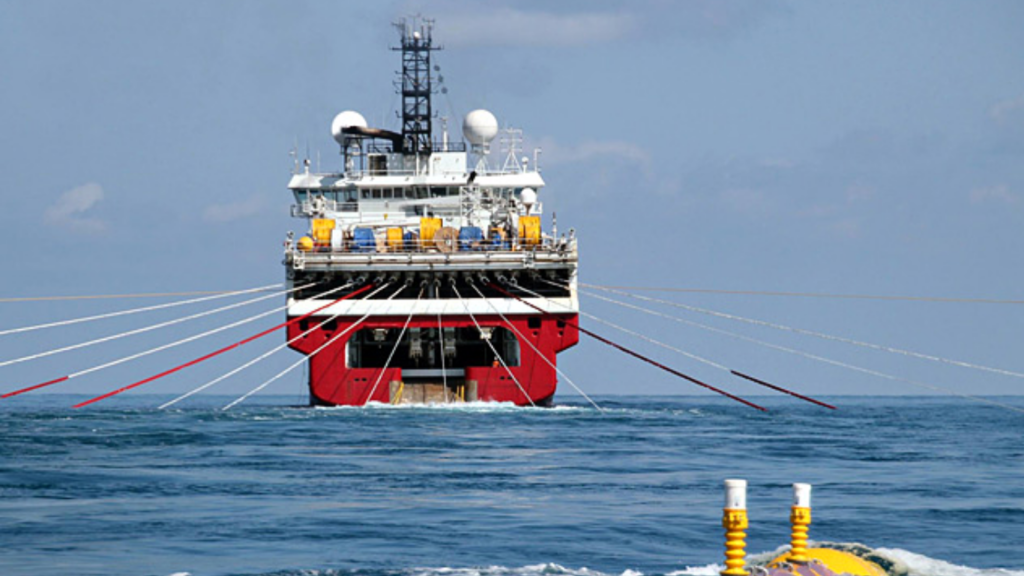
The Grahamstown High Court in South Africa has ordered petroleum giant Shell to immediately halt its seismic survey activities along the ecologically sensitive coastline of South Africa’s Wild Coast. The decision has been welcomed by local and international environmentalists and the Animal Survival International (ASI) team alike, all of whom have strongly opposed the operation since the outset and have warned of its potentially disastrous impact on the region’s marine life. The controversial oil and gas survey, which began on December 2 before being halted yesterday, intended to acquire information on oil and gas deposits deep beneath the ocean floor. In order to do this, it would use a 126-long vessel to drag 48 air guns across cross more than 2,300 square miles (6,000 square kilometers) of ocean, firing powerful shockwaves every ten seconds, day and night, for a period of five months, in order to produce images of any deposits. The effects of this continuous blasting on the delicate marine life of the region could be devastating and far-reaching, as our article about the Shell seismic survey explains here. Yesterday, the Court found that Shell had failed to meaningfully engage with local communities and individuals who would be affected by the survey and was interdicted from continuing. Moving forward, the Court will need to decide whether the oil and gas giant requires environmental authorization acquired under the National Environmental Management Act (NEMA) in order to continue. However, these exploration rights may too be challenged as a result of the failed consultations. “We are thrilled with the outcome of yesterday’s court proceedings,” says ASI campaigner Tayla Lance. “While the fight to protect the Wild Coast is not yet over, it is a huge step in the right direction. We continue to campaign for a permanent ban on Shell’s damaging and invasive operations, which have shown a callous disregard for the critical and endangered marine life of the region.” The Court ordered Shell and South Africa’s mineral resources and energy minister Gwede Mantashe to pay the legal costs of the application. During legal arguments, Shell said that it may need to abandon the entire operation if the interim interdict was granted. Image: To Hell with Shell/Facebook
It is not too late to SAVE COUNTLESS ANIMALS FROM EXTINCTION!
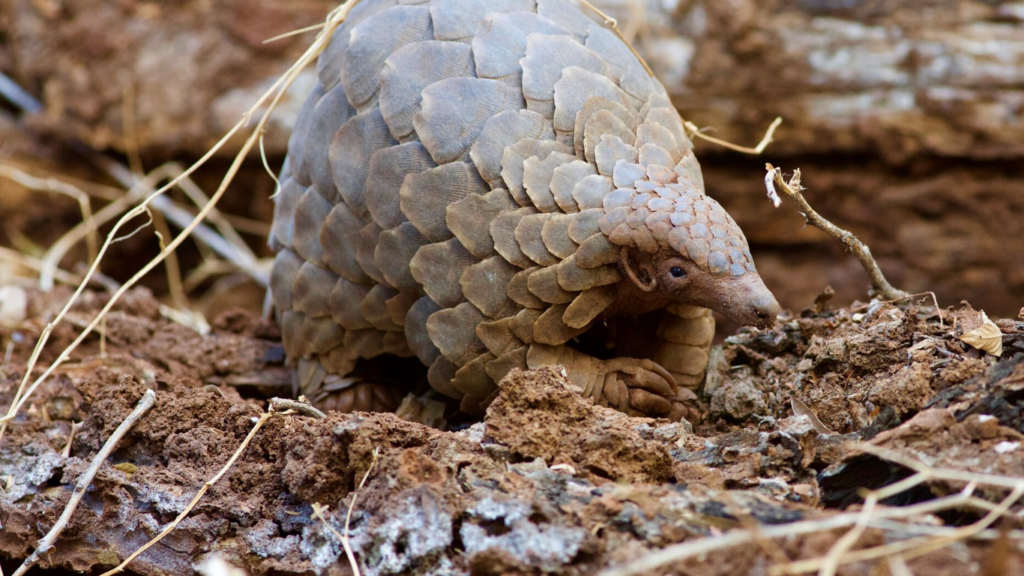
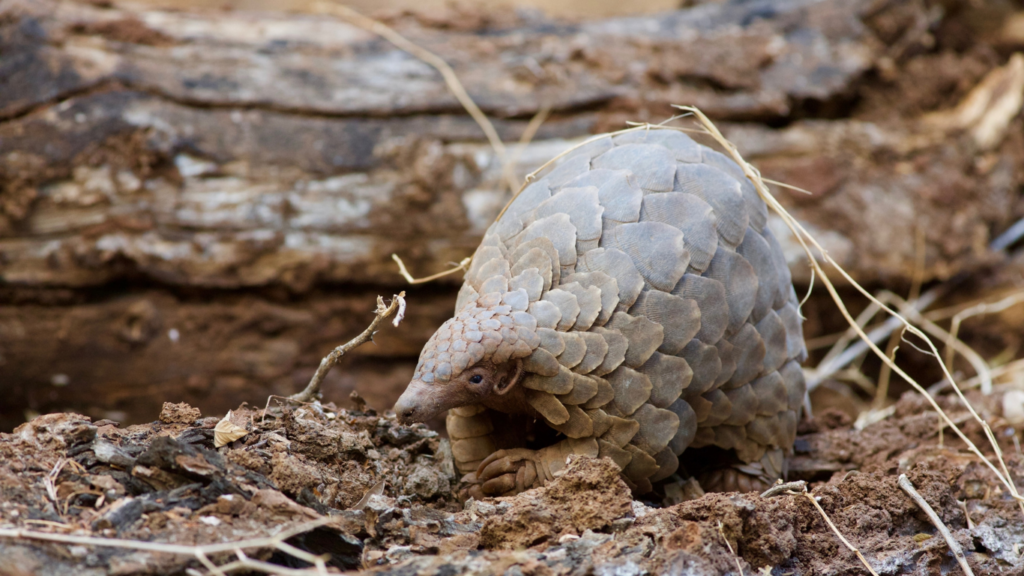
These are frightening times for animals and the planet! Climate change, the relentless destruction of forests, coral reefs and wilderness areas and the illegal trafficking of creatures large and small, powered by greedy humans, are sending animals and marine creatures hurtling towards extinction. Without determined action, we could lose the wild and its creatures soon and forever. That’s the grim, but true, situation as we enter 2022. But there is good news too! As you know, ASI fights every day to save animals and protect the wilderness. We also raise awareness about the situation, because truly, most people don’t realize how bad it is for animals. Elephants are a good example… Can you imagine a world without elephants? Elephant numbers are plummeting, and climate change is making a bad situation even worse. This year alone, we provided water systems and waterholes for elephants in South Africa and Namibia. At the Addo Elephant National Park, the systems we provided are giving water 24 hours a day to hundreds of elephants and thousands of other animals in the worst drought in 93 years. We were there to help and will be in 2022, thanks solely to our supporters who value our animals and the planet as much as we do. At the other end of the size scale, the world is on the way to losing pangolins, the gentle, shy, solitary and nocturnal scaly anteaters, who pose no threat to anyone. Yet they are the most illegally trafficked animal in the world. Once captured, their scales are ripped from their bodies to be used as hangover ‘cures’ in Vietnam and traditional ‘medicines’ in China. Often pangolins are kept alive, long enough to be boiled alive and sold in Asian restaurants as menu items. With the help of our supporters, we support rescue operations and pangolin rehabilitation programs in Nigeria and South Africa. So threatened are pangolins that rescued creatures have to be kept in guarded secret locations. Thanks to our supporters, we are at the forefront of the fight to save them. Our work never stops, and we need to do so much more. Make no mistake, the world and its animals are in peril, and we need your help to fight it. We get no help from governments – our support comes from caring, thoughtful people who are as concerned as we are. It’s donations from people like you that allow us to help animals – so please, if you can, make a donation to help ASI fight for animals and the planet. In 2021, we helped endangered tortoises in Madagascar, frogs in Turkey and hyenas and toads in South Africa. We financed anti-poaching and anti-snaring activities in Zimbabwe. Zebras, aardwolves and aardvarks, badgers, barn owls, giraffes, wildebeests, rhinos, monkeys and birds of prey have all benefited from the work our supporters allow us to do. Sea creatures who benefited from your donations include seals and turtles. We focus much of our attention on direct action to save wild creatures, but we also finance scientific research to learn more about animal populations in the wild. This work is vitally important to help maximize the chances of animal survival in an ever-diminishing wilderness. None of what we do can be done without people who care enough and realize how bad the situation is. Wild animals need your help – the planet needs your help. Please donate generously to Animal Survival International right now. Your donation is important. ASI works internationally – we go where we are needed but we can only do so with the help of caring people like you. We live and breathe these issues every day, and each day, we become more alarmed at the seriousness of the situation: animals are headed for extinction and extinction is forever. The need for urgent action is vital. For 2022, ASI has pledged to expand our help to wild creatures and to increase our efforts to protect the environment. The work we do is critical for animals and the world we live in – don’t doubt for a moment that your donation really makes a difference – even a small amount is a godsend for animals. There is so much good work to be done. Animals need you – please do your best to help. Orphaned baby animals URGENTLY need a clinic! Let us end 2021 by telling you about our plans to help create a wildlife emergency veterinary clinic at the Umoya Khulula Wildlife Centre in a remote bush region of South Africa. Umoya Khulula is a volunteer organization that rehabilitates baby animals rescued from traffickers or whose mothers were poached. At the moment, if an animal needs emergency care, the nearest clinic involves a 114-mile (284 kilometer) round trip. Many animals die during the journey. It would be so wonderful if you could make a small donation to help animals there. The list of needs is long, but there is hope. ASI helps improve animal lives and protects the wilderness. Please join us in this crusade for the animals and the planet we live in by making a donation right now.
EMERGENCY! In search of oil and gas, oil giant Shell plans to fire seismic blasts into a huge expanse of ocean. COUNTLESS MARINE CREATURES COULD DIE!
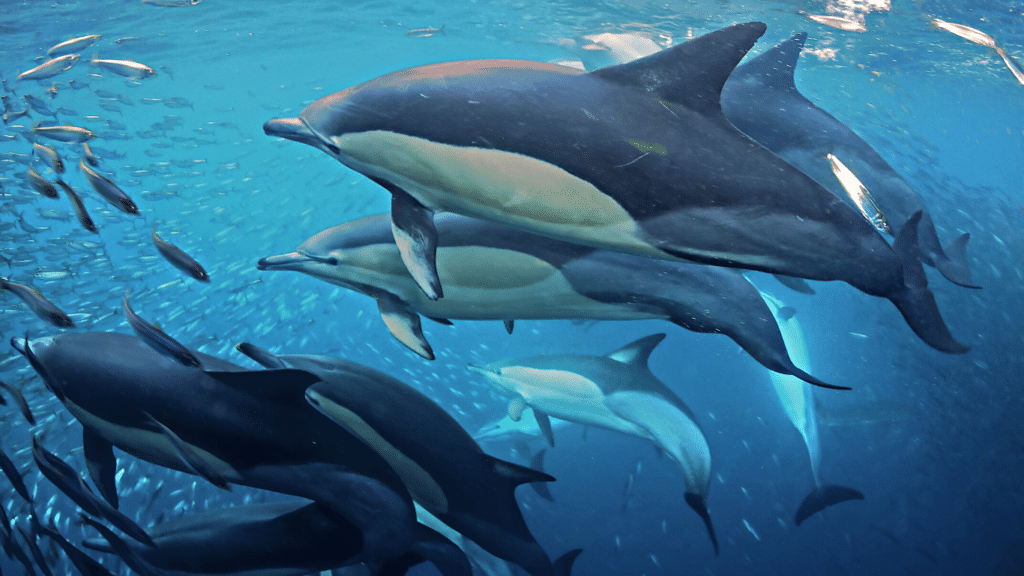
South Africa’s Wild Coast is vitally important to whales, dolphins and countless other marine life, and it’s under threat! Oil and gas giant Shell is about to start oil and gas exploration in the area – with potentially disastrous effects on the region’s marine life. Sea creatures face injury and possible death if we do not stop it. Please, help us take emergency court action and protect the Wild Coast! Shell is looking for oil and gas deposits deep beneath the ocean floor. A seismic vessel will drag a massive array of 48 air guns across more than 2,300 square miles (6,000 square kilometers) of ocean, firing powerful shockwaves every ten seconds, day and night, for FIVE MONTHS to produce images of any deposits. The impact on marine life will be devastating. We cannot allow this survey to go ahead! Seismic blasts can cause tissue damage, embolisms, hearing loss and even death! An enormous number of marine creatures depend on sound for their survival. Communicating, locating prey, social bonding, breeding, navigating and avoiding predators all depend on sound. But seismic booms reach over 200 decibels, which is louder than a rocket launch and could cause stress, injury and death in whales, dolphins, seals, fish and even small crabs and shellfish on the ocean floor. Distressed by the intense, ongoing noise, dolphin and whale calves can become separated from their mothers and starve to death. The noise from these blasts can travel over 2,500 miles (4,000 kilometers) and will happen every ten seconds for five months. The scale and intensity of the auditory onslaught is almost inconceivable. We cannot allow this to be the future of our oceans. Death, pollution and destruction in the pursuit of fossil fuels when we are in the age of renewable energy is unacceptable! We must do everything we can to stop this from happening! Please donate generously today. This could spell the end for large populations of ocean predators and mammals! Blasts from the air guns can kill massive clouds of zooplankton and krill – the building blocks of the ocean’s food chains. They have been recorded dying almost a mile away from air gun operations, and researchers have recorded their abundance dropping by two-thirds in seismic study areas! These are the primary food source of whales and many species of fish! If this continues, large populations of these creatures will simply no longer be viable. Studies have shown that some whales are so sensitive to noise that in frantic efforts to escape these air gun blasts, they surface too quickly and die of decompression sickness. We will do everything in our power to stop this from happening, but we can’t do it without you. Please, donate today.
Shell Oil Set to Cause Massive Marine Disaster in South Africa
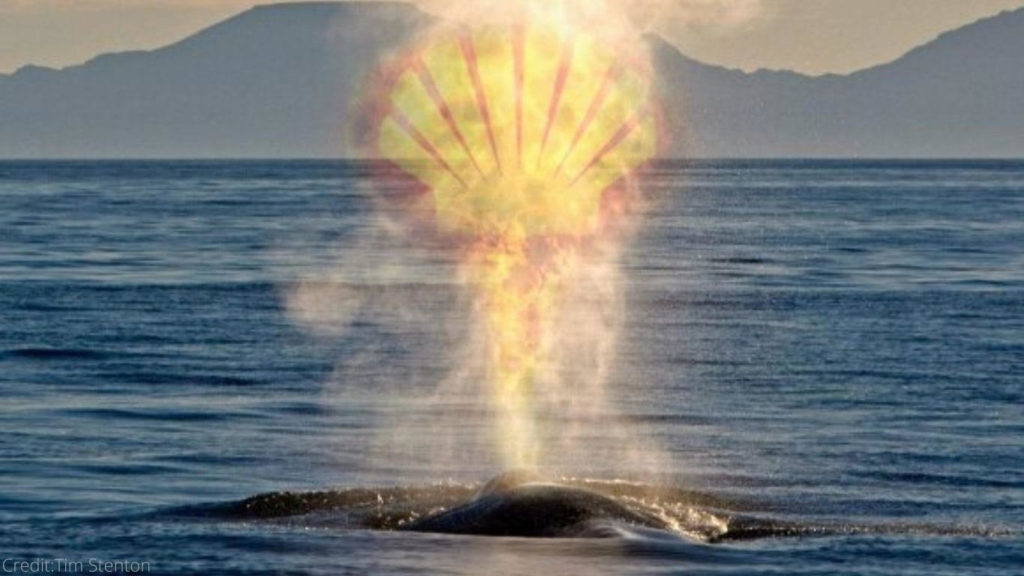
The Wild Coast in South Africa is set to face a massive assault on its entire marine ecosystem because Shell Oil, a subsidiary of the Royal Dutch Company, is about to conduct a five-month seismic survey that will have a devastating effect on millions of sea animals. A major concern for marine biologists is that this will take place during the annual migration of the whales in the area. The high noise levels are likely to cause whale calves to become separated from their mothers because they rely on sound waves for communication. There is no doubt of the catastrophic consequences of this action and it is causing outrage in South Africa, but Shell says it is following the letter of the law and that is that. The search will take place over the next five months. An area of 6,011 kilometers (3,735 miles) squared will be affected from Port St Johns to Morgans Bay. Extremely loud sound waves will be fired by 48 air-guns, towed by the Amazon Warrior, in the direction of the seabed, penetrating through 3 kilometers (1.86 miles) of water and 40 kilometers (24.85 miles) of the Earth’s crust. Seismic surveys are carried out to investigate sub-sea geological formations in the hope of detecting crude oil or gas. Each blast sent out by the air-guns measures over 200 decibels. These blasts emitted by the guns will be fired continuously every ten seconds, 24 hours a day, seven days a week, for five months. Kevin Cole, a natural scientist, said that it will cause tissue damage, temporary or permanent hearing loss, affect their growth and reproduction and often even causes immediate death. Adrienne West, chief campaigner of environmental charity Animal Survival International said that the horrendous consequences of the oil exploration have only just begun to sink into South Africans. “Shell has the blessing of the South Africa government for this exploration. It is almost beyond belief that any government could countenance the devastation this exploration will cause.” West called for an immediate ban on the exploration. Footage: Adapted from original video made by Mark Roach Image: Tom Stenton
They ATE PLASTIC GARBAGE – now, 47 baby turtles are in LIFE-OR-DEATH struggle!
Right now, 47 rescued baby turtles in Cape Town, South Africa, urgently need help. After eating more than 500 pieces of plastic between them, mistaking the tiny pieces for food, plus suffering other injuries, expensive and long-term care is needed to ensure they survive. It’s vital that these hatchlings get the treatment they need – turtles are endangered and every life lost will push the species closer to extinction. We need to urgently raise $3,500 (£2,600) to give them this chance. Please, will you donate today to help these fragile baby turtles, so they can live to become the sea ambassadors that they are? From day one, the endangered loggerhead and leatherback turtle hatchlings, born on the northern coast of South Africa, have the odds stacked against them. Only two in every thousand will survive the arduous journey as they are swept down the coastline to the chilly waters of the southern coast. Here, many are washed ashore, suffering from dehydration and hypothermia. But now, the lives of these fragile babies are even more at risk because of the amount of plastic they swallow along the way. Recent estimates show that there are 6.5 million sea turtles left in the world. But plastic waste in the ocean is threatening their survival. There is an estimated 12.7 million tons of plastic in the ocean – most of it broken down into tiny bits of plastics, known as microplastics. These float on the water surface, which baby turtles mistake as food. When too many of these microplastics are ingested, it causes blockages, exhaustion, infections and death. One baby turtle died after ingesting 121 pieces of plastic in its short life. We have a chance to save the rest! Our partner, the Two Oceans Aquarium Education Foundation in Cape Town, works on the ground to rescue stranded turtle hatchlings and nurse them to health until they can be released back into the ocean. ASI has pledged to help them, but we need your support. Already, the Two Oceans Foundation has rescued 60 stranded hatchlings this year, of which 70% had plastic inside of them. In one turtle hatchling, the team discovered 121 pieces of plastic! Of course, he had no chance of survival and died shortly after being rescued. Sadly, 13 of the rescued turtle hatchlings could not be saved, but the remaining 47 have a chance of recovering and being released back into the ocean where they can live for up to 80 years! We have promised to provide support, but we need your help to do so. Please donate generously today. It costs just $2 (£1.50) a day to raise and rehabilitate one baby turtle, and it can take up to a year before the turtle is ready to be released into the wild. That is $730 (£527) per turtle. With only two in every 1,000 turtle hatchlings surviving to maturity, each one of these saved hatchlings is vital to their species. Right now, the 47 rescued hatchlings are being cared for at the Foundation’s rehabilitation center. Each one needs constant care, food and monitoring in a high-tech saltwater life-support system if they are to survive long enough to be released back into the ocean. Will you be a part of ensuring their recovery? Please help us to save this fragile species, by donating right now.
LIFE or DEATH struggle for 47 endangered sea turtle BABIES who ate plastic they thought was food!
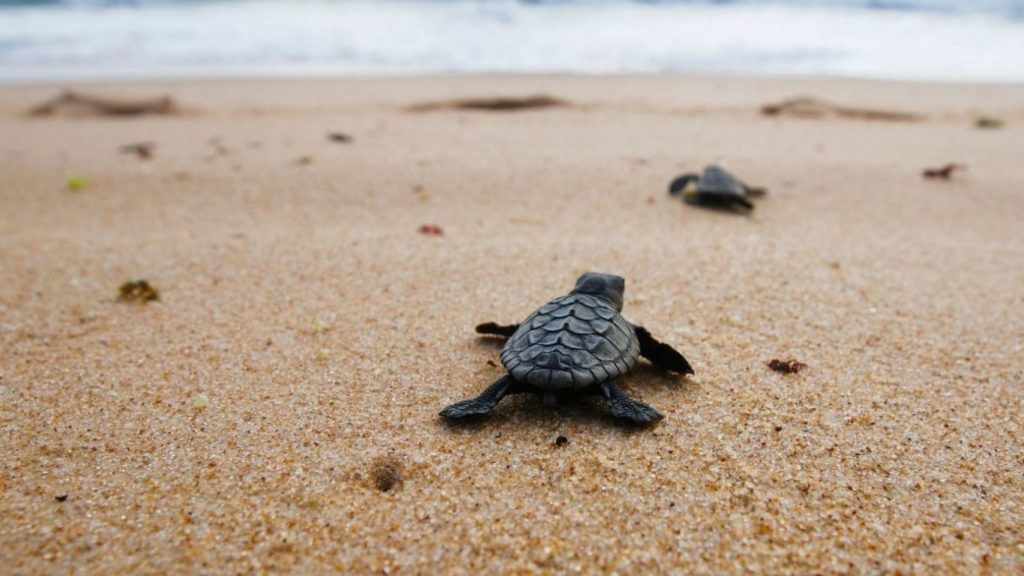
Our oceans have become garbage dumps! There is an estimated 12.7 million tons of plastic in the ocean – that’s the equivalent of 310,000 jumbo jets! Mistaking it for food, marine animals, including endangered sea turtles, eat this plastic which causes internal blockages, infections and eventually death. Right now, 47 rescued turtle hatchlings in Cape Town, South Africa, need intense and expensive rehabilitation after ingesting more than 500 pieces of plastic between them. These creatures have a chance of recovering and being released back into the ocean, but we need your help. Please, will you donate today to help us heal these fragile baby turtles? Recent estimates have shown us that there are 6.5 million sea turtles left in the world… but, plastic waste in the ocean is threatening their survival across the globe. From day one, the endangered loggerhead and leatherback turtle hatchlings, born on the northern coast of South Africa, have the odds stacked against them. Only two in every thousand will survive the arduous journey as they are swept down the coastline to the chilly waters of the southern coast, where many are washed ashore suffering from dehydration and hypothermia. But now, the lives of these fragile babies are even more at risk because of the amount of plastic they swallow along the way. Tiny bits of plastics, known as microplastics, which float on the water surface, are mistaken by baby turtles as food. When too many of these microplastics are ingested, it causes blockages, exhaustion, infections and death. One baby turtle died after ingesting 121 pieces of plastic in its short life. We have a chance to save the rest! Our partner, the Two Oceans Aquarium Education Foundation in Cape Town, works on the ground to rescue stranded turtle hatchlings and nurse them to health until they are ready to be released back into the ocean. ASI has pledged to help them. Already, the Two Oceans Foundation has rescued 60 stranded hatchlings this year, of which 70% had plastic inside of them. In one turtle hatchling, the team discovered 121 pieces of plastic! Of course, he had no chance of survival and died shortly after being rescued. Sadly, 13 of the rescued turtle hatchlings could not be saved, but the remaining 47 have a chance. We have promised to provide support, but we need your help to do so. Please donate generously today. To set an example and raise awareness last month, we called on our supporters to help us clean Sunset Beach in Cape Town – a well-known hotspot for stranded turtle hatchlings. Thanks to your help, we were able to team up with The Beach Co-op and the Two Oceans Foundation to organize an intensive beach clean-up that removed thousands of pieces of plastic, mainly microplastics, in just a few hours! Every piece of plastic picked up is one less in the stomach of a baby turtle! It costs just $2 (£1.50) a day to raise and rehabilitate one baby turtle, and it can take up to a year before the turtle is ready to be released into the wild. That is $730 (£527) per turtle. With only two in every 1,000 turtle hatchlings surviving to maturity, each one of these saved hatchlings is vital to their species. That’s why we need to raise as much as we can to help as many baby turtles survive as possible. Right now, the 47 rescued hatchlings are being cared for at the Foundation’s rehabilitation center. Each one needs constant care, food and monitoring in a high-tech saltwater life-support system if they are to survive long enough to be released back into the ocean. Will you be a part of ensuring their recovery? Please help us to save this fragile species, by donating right now.
Marine Life Suffers From Deadly Plastic ‘Nurdle’ Spill in Sri Lanka
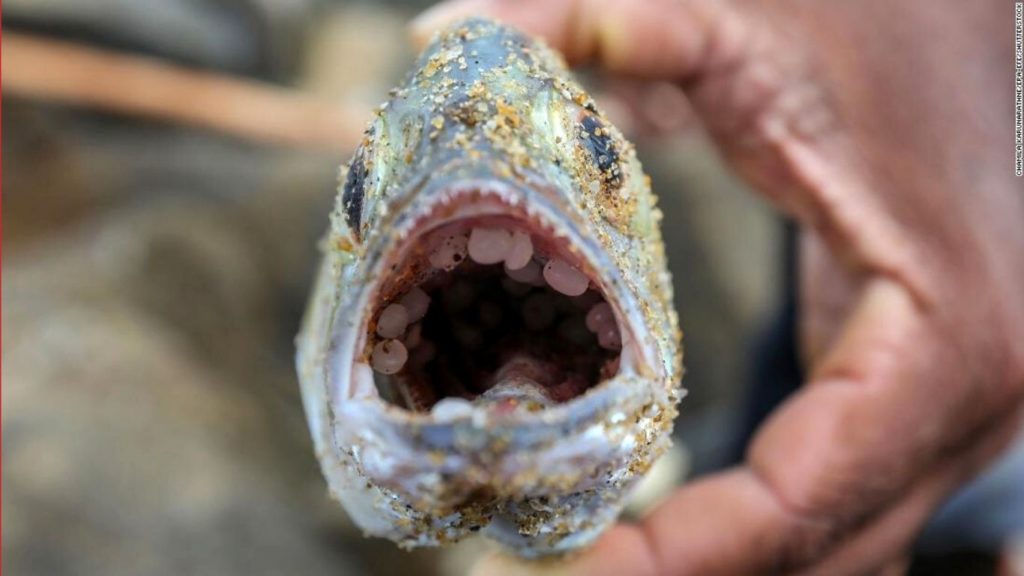
By Melissa Reitz More than two months since the Singaporean container ship, the X-Press Pearl, caught fire off the western coast of Sri Lanka, the catastrophic evidence of environmental and marine impact is mounting. Not only was a cocktail of hazardous chemicals released into the sea and air, but 72 tonnes of deadly plastic pellets, used to make plastic products, spilled into the ocean. Now billions of these “nurdles” are blanketing beaches across the island. With the nature of monsoon currents in the northern Indian Ocean, these nurdles will make landfall in Indonesia, India, the Maldives, and as far as Somalia. Since the disaster on May 20, hundreds of fish, turtles, and even dolphins, are washing up dead on the shores of Sri Lanka’s beaches. Locals say they are seeing up to 40 cases a day. Sri Lanka is home to many endangered turtle species including, leatherbacks, green turtles, loggerheads, hawksbill and the small Olive Ridley turtle – all of which are being severely affected by the toxic spill and from swallowing nurdles. Juvenile turtles are especially at risk of ingesting nurdles, which they mistake for food. Dead fish have also been found literally choked and suffocated by the amount of plastic pellets in their mouths and gills. Despite the toxic spill of 350,000 kilograms of oil and 81 containers of “dangerous goods”, including nitric acid, being released by the X- Pearl’s inferno, experts say the pellets are by far the most concerning pollutant. While the chemicals eventually dilute, the pellets remain in the ocean for years. An estimated 230,000 tonnes of nurdles enter the environment every year from accidental spills from production, transportation, and manufacturing. In a similar disaster in Durban, South Africa, in 2018, 40 tonnes of nurdles spilled into the sea. A year later, pellets were found 2,400 miles (4,000 kilometers) away on the Atlantic Ocean Island of St. Helena, and two years after that on the shores of Western Australia, nearly 5,000 miles (8,000 kilometers) away. Since then, another spill occurred off South Africa in 2020. By June this year, over 30 tonnes of nurdles had been collected on beaches along the South African coastline by the public and environmental hazard clean-up organizations. “We cannot ignore the potential environmental and marine disaster when it comes to transporting raw plastics. The consequences of a nurdle spill is as catastrophic as oil and chemical spills,” says Adrienne West of Animal Survival International. “It’s a matter of urgency that nurdles be classified as hazardous by international shipping laws so that they are transported accordingly.”
Discarded plastic is killing turtles, including BABIES!
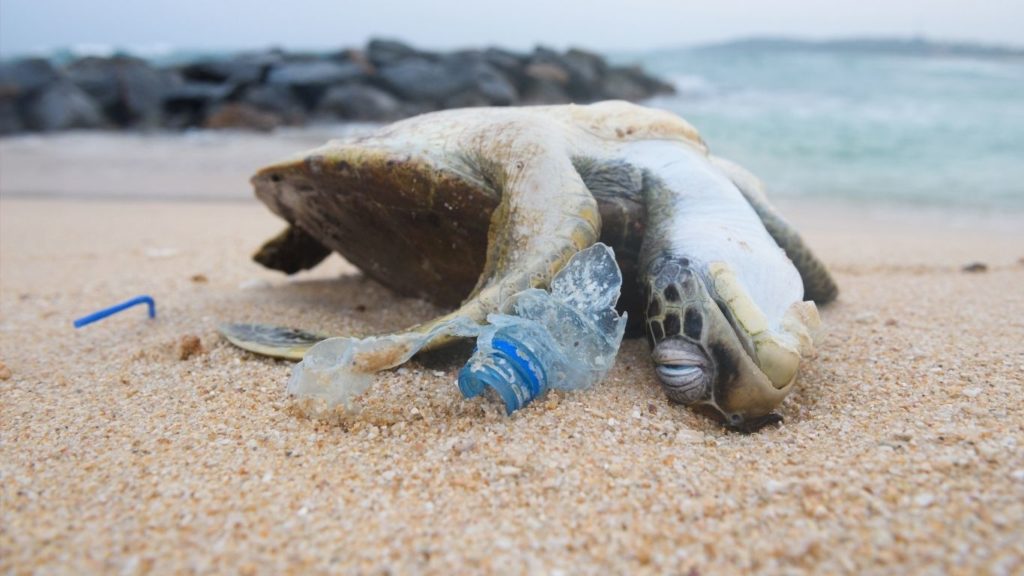
We’ve told you before that we are committed to taking back the sea for sea creatures, one beach at a time. And we intend to keep our promise, by cleaning up plastic pollution on beaches around the world. But we need your help. This time we’re focusing on beaches in Cape Town, South Africa, where plastic pollution is having a devastating effect on endangered sea turtle hatchlings. Seventy-five percent of all plastic ever produced becomes waste, most of it ending up in our oceans. Shockingly, there is an estimated 5 TRILLION (that’s 5,000,000,000,000!) pieces of plastic in the ocean, and this figure is growing! Sea turtles are literally choking under all the garbage! More than half of the world’s turtles have ingested plastic. The South African coastline is an important nesting area for endangered loggerhead and leatherback turtles. In the winter months, juvenile turtles are swept down from the northern coast of KwaZulu-Natal by the mighty Agulhas current to the southern coast where the stormy seas wash them ashore. Most of these stranded hatchlings are suffering from dehydration, hypothermia and injury, which is a natural phenomenon – only one or two hatchlings in every thousand survive to maturity. But what is not natural is that their survival is now even more compromised by the amount of plastic the hatchlings have already ingested in their short lives. Our partner, the Two Oceans Aquarium Education Foundation, which rescues, rehabilitates and releases stranded and distressed sea turtles, explained that more than 70% of the turtles they rescue have plastic inside of them. A total of 514 pieces of plastic were passed by the 47 hatchlings currently in the Foundation’s care. Sometimes there is so much plastic inside these baby turtles that they cannot be saved. In one turtle hatchling, they discovered 121 pieces of plastic! Of course, he had no chance of survival and died shortly after being rescued. Plastic waste comes in all forms, but often the deadliest are microplastics; tiny bits of plastic that turtles mistake for food. When too many microplastics are ingested, it causes internal infections, blockages and eventually death. With your help, we can save many of these animals from this terrible fate. Please donate generously today. Bob and Harry are two adult green turtles undergoing rehabilitation at the Foundation… Bob has been there for seven years recovering from a complicated brain injury. In the first months of Bob’s rehabilitation, he passed substantial amounts of plastic, including a balloon with a string! While Harry passed a large clear piece of plastic, which could have been mistaken for a jellyfish. But it’s not only plastic waste that is affecting turtles. Discarded fishing gear and ghost nets are also lethal for larger turtles, as the creatures become entangled, injured and weighed down by the ropes and lines. Unless we step in, these turtles have little hope for their survival. Their two best chances both depend on us. One, we need to clean up the plastic pollution in our seas and on our beaches. And two, we need to help rescue, rehabilitate and release these special creatures back into the ocean. That is why we have teamed up with two important organizations; the Two Oceans Aquarium Education Foundation and The Beach Co-op, whose mission is to clean up South Africa’s beaches. There is strength in numbers, which is why we have banded with these organizations to have a greater positive impact on this issue. Every piece of plastic removed from the ocean could be another turtle saved! Together with The Beach Co-op, we are planning a massive beach clean-up at one of Cape Town’s turtle hotspots, Sunset Beach. Here, the Two Oceans Foundation team collects and rescues hundreds of hatchlings every year. Already, this year, 60 turtles have been rescued by the Foundation. To help reduce the effects of plastic ingestion and to give future rescued turtles a better chance of survival, we are calling on all our supporters to help us and The Beach Co-op clean up Sunset Beach. But this isn’t any beach clean-up. As well as removing the bigger pieces of rubbish, we will also be focusing on sifting the sand and picking up every bit of deadly microplastic we can find. But reducing plastic on the beach is only half the job. The next step is rescuing and rehabilitating each turtle that is found in distress. To do this we need to raise funds to help the Foundation provide critical medical and rehabilitation care for rescued hatchlings. It costs just $2 (£1.50) a day to raise and rehabilitate one baby turtle, and it can take up to a year before the turtle is ready to be released into the wild. That is $730 (£527) per turtle. But, with only one in every 1,000 turtle hatchlings surviving to maturity, each one of these rescued hatchlings is worth it. Right now, 47 stranded hatchlings are being cared for at the Foundation’s rehab center. Each one needs constant care, food and monitoring in a high-tech saltwater life-support system if it’s to survive long enough to be released back into the ocean. It is easy at this point to feel despondent and hopeless at the state of our oceans and the harm that is being caused to these incredible creatures. But there is hope. Turtles are resilient; they are strong, and they are fighters. Please donate generously to these ocean ambassadors today.
“Sea Snot”: An Environmental Catastrophe in Turkey
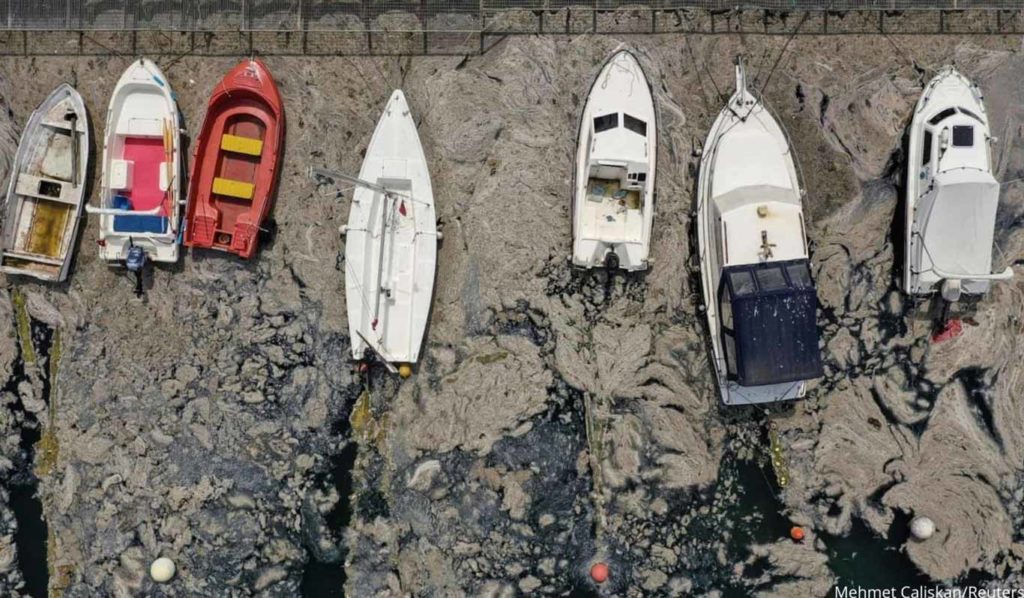
By Melissa Reitz Turkey’s Marmara Sea is choking under a thick blanket of sludge, which scientists say is a direct result of pollution and global warming. Decades of pollution from wastewater, pesticides, and sewage, coupled with biodiversity loss and rising water temperatures, have led to an environmental disaster, which researchers say has reached unprecedented levels. Dubbed as “sea snot”, the marine mucilage is a result of algae that has bloomed out of control to produce a sticky mucus-like substance spanning many square kilometers through the sea south of Istanbul. In some areas, the mucilage has sunk down to 30 feet (80 to 100 meters) below the water, smothering the seabed and destroying fragile ecosystems. The Marmara Sea, an important waterway between the Aegean and the Black Sea, is home to diverse marine life, including approximately 230 species of fish and a variety of mollusks such as mussels and clams. But with the algae bloom absorbing much-needed oxygen from the water, the sea’s marine life is under severe threat. Turkey’s government has responded to the crisis by launching a fleet of 25 emergency surface cleaning boats to clean up the mucilage using scientific methods. The Environment Ministry has also announced it plans to designate the entire sea as a protected area by the end of the year. According to scientists, to help reverse the cause of the mucilage, nitrogen levels in the water need to be reduced by 40%. To do this, all the provinces in the Marmara region must convert their wastewater treatment plants to a more sustainable waste management system. If measures are introduced quickly enough, oxygen levels will begin to rise, and the situation could start improving within months. But they warn that the sea will never recover to its original pristine state. “This is an environmental catastrophe that should not go unnoticed by the rest of the world,” says Adrienne West of the Animal Survival International (ASI). “More and more of this kind of outright coastal decimation will start happening if we don’t stop using our oceans as pollution dumping grounds.” Increasing temperatures and pollution levels are contributing to a surge in the frequency and scale of algal blooms around the world. Studies have found that oxygen levels have dropped in hundreds of lakes across Europe and the US in the past 40 years, because of warming temperatures and increased human activity — leading to more fish deaths, algal blooms and methane emissions.
Endangered Mediterranean monk seals’ last haven UNDER THREAT!
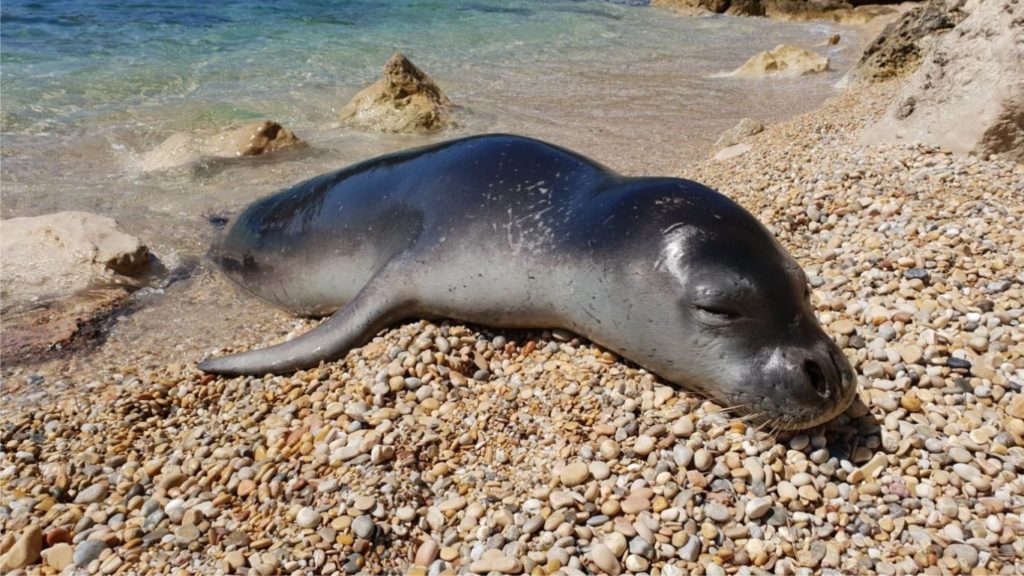
Plastic waste is destroying marine life on a massive scale with devastating consequences for the entire world. The scale of the problem is huge. In one area of the Pacific Ocean alone there is a great wadge of plastic measuring an astounding 1,000 square miles (1.6-million square kilometers). Just imagine: that’s a floating pile of trash almost twice as large as Los Angeles or London! And, the problem is getting worse every day. We must do everything we can to protect our oceans and the marine creatures, large and small that are being destroyed by pollution! Henry Ford is famous for saying that nothing is particularly hard if you divide it into small jobs. Well, we listened to Henry and we want to bring you both good and bad news. No single organization can tackle an area of a thousand square miles, but we can tackle smaller areas and choose those where our endeavours will make a real difference. The good news is that we have already begun – but we could sure use your support! Our starting point is the beaches and sea around the Greek island of Kefalonia. These waters are home to Mediterranean monk seals, one of the world’s most endangered mammals. There are only some 450 of these seals left and between 200 and 250 of them live in waters around Kefalonia and nearby islands. Not that long ago, the seals were commonly seen sunning themselves on beaches and coves in the north of Kefalonia; today that is a very rare sight. Plastic debris is one of the reasons. Plastic is choking the beaches and polluting the sea, destroying the habitat of all marine life. It’s not just seals and dolphins who are victims, all marine life is suffering. Even coral reefs are dying and all over the globe, decaying plastic is leaking toxins into the water. In Kefalonia, local conservationists say that over the past five years, even the humble sea cucumber has seen a dramatic drop in numbers, along with sea anemones and starfish. In a crisis like this you can either stand to one side and hope someone else sorts out the mess before the oceans die, or you can get involved and help solve the problem. We know what our supporters would want us to do and so we decided to start a clean-up of the sea and isolated beaches where seals might go. Because these beaches are only accessible from the sea, it was not an easy task. Our team consisted of divers and boats and a lot of dedicated volunteers. Now for the bad news. In one day, our team cleaned 1,000 pounds of mostly plastic rubbish from three beaches and underwater locations and the task is not over yet. 1,000 POUNDS OF DECAYING PLASTIC IN ONE DAY! Can you imagine the harm being done to everything from crabs to dolphins and seals because of this dreadful pollution! The enormity of the problem becomes even clearer if you factor in that much of the plastic was Styrofoam or polystyrene, which is very light and breaks down to smaller and smaller pieces that eventually end up inside a fish which gets eaten by a bigger fish, which gets eaten by humans. It almost goes without saying that scientists are discovering that for human beings to consume micro pieces of plastic can have very serious health consequences. Marine life needs us to continue with this clean-up campaign and expand it if possible. But we need your help. Cleaning above and below the water line is important ALL OVER THE WORLD if sea creatures are to have a chance. We have pledged to continue this work in Greece and if our supporters allow us to do so, we will expand the program to other places where our efforts are most needed. Our team needs to rent boats, buy fuel and safely dispose of mountains of plastic. It’s such an important task and we can’t do it without the help of concerned people like you. If you possibly can, please donate generously right now. Scoffers might say that the problem is too big… We say we’ll take back the sea for sea creatures, one beach at a time and with your help, we won’t stop. Your donation will make a real difference.
How we are helping RIGHT NOW: May 2021
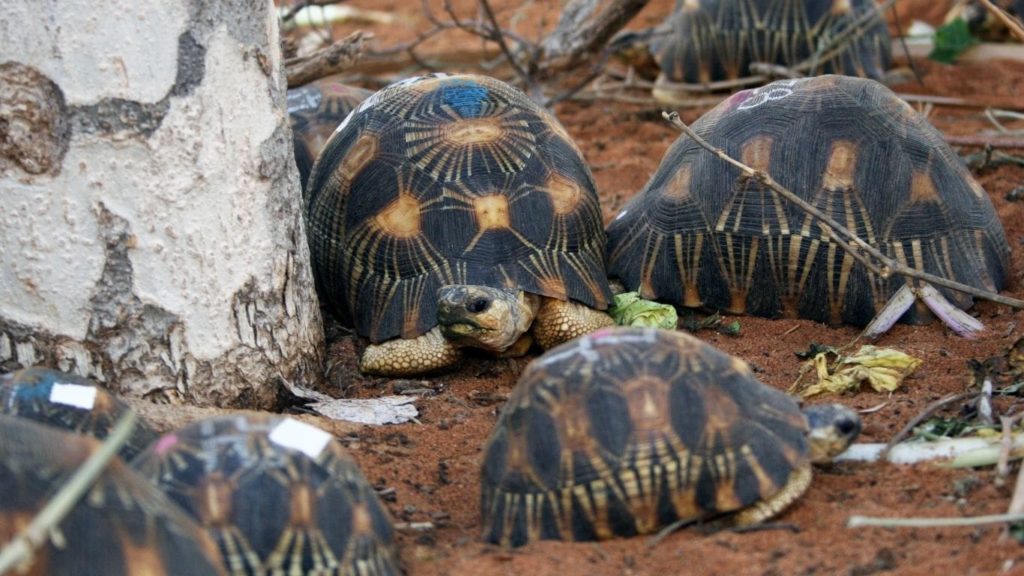
The Political Animal Lobby (PAL) exists to be a voice for animals and the planet. We tackle pressing issues threatening animals around the world. Over the past month, PAL has provided water to drought-stricken elephants in Namibia; kept up the fight to ban snares in the UK; helped a legal battle to save toads in South Africa; given emergency aid to critically endangered tortoises in Madagascar and supported an anti-poaching team fighting ivory poachers in Zimbabwe. But we couldn’t have done it without our supporters. We are deeply grateful to all our donors who make this work possible. Take a look at how your donations are making a difference to animals worldwide right now. United Kingdom Supporting a total ban on the use of wire snares In the United Kingdom (UK), snaring is still legal! We told you last month how this causes shocking suffering and kills up to 1.7 million animals every single year. Incredibly, it is still encouraged by the UK government’s Department for Environment, Food and Rural Affairs (DEFRA) and supported by the British Veterinary Association (BVA)! Millions of innocent animals are left in such horrific pain that they resort to gnawing off their limbs to free themselves. PAL plans to continue fighting against this until it is stopped. Thanks to your donations, we are supporting the National Anti Snaring Campaign (NASC) in convincing the UK government to ban the use of snares outright. We’ll keep you updated on NASC’s progress. South Africa Court action to fight for the survival of western leopard toads In Cape Town, the beautiful and endangered western leopard toad is under severe threat, thanks to plans to build a road through one of its last remaining breeding grounds. These endangered toads are clinging to survival in just a few small areas of South Africa’s Western Cape and only an estimated 320 are left. But their habitat is under serious threat. We support the Noordhoek Environmental Action Group (NEAG) which is taking the toad’s fight to court, seeking to prevent the City of Cape Town from moving forward with the road development. NEAG’s lawyers say the toads stand a good chance of winning. We will keep you posted on the outcomes. Namibia Providing water for one of the last remaining free-roaming elephant herds We’ve secured water for one of the last free-roaming elephant herds in Namibia! Ongoing drought put these vulnerable elephants at risk, forcing them to wander from the safety of a 20,000-acre (8,000-hectare) preservation area in search of water, into places where they are shot at. But now, thanks to our supporters’ help, we’ve managed to drill and strike underground water, which tested safe for elephant consumption. We’ve also erected two water tanks to store the water which is then pumped into a waterhole made easily accessible for the elephants and their babies. Our partners in Namibia have been sending us regular reports that the elephants are visiting the waterhole, which means they are safe and now have a chance of surviving this drought. Madagascar Saving endangered radiated tortoises In Madagascar, radiated tortoises are racing towards extinction. These beautiful tortoises with unique star-patterned shells are highly sought after for the illegal pet trade. Our partner, Turtle Survival Alliance Madagascar (TSA Madagascar), called on us for help when they discovered 800 radiated tortoises being smuggled in shocking conditions and destined for the illegal pet market. These helpless creatures were on the brink of death when the TSA Madagascar team discovered them. But thanks to the help of our supporters, TSA Madagascar will be able to give them the emergency treatment they need to survive. It will take a few months of rehabilitation before these precious tortoises can be released back into the wild and breed. But we are confident that, with your donations, TSA Madagascar will be able to keep them alive until they are ready. With so few left in the wild, saving these 800 radiated tortoises will give the entire species new hope. Zimbabwe Helping an anti-poaching team protect the rare Lake Elephants Zimbabwe’s iconic lake elephants in the Sebungwe region are falling victim to a poaching epidemic. Up to 11,000 of these elephants have been brutally killed for their ivory in the last 15 years. Only 3,500 remain, living in a 580 square mile (1,500 square kilometer) area surrounded by the vast Lake Kariba and hunting areas, both offering ample opportunity for poachers to move in and out. A small anti-poaching team, the Bumi Hills Anti-Poaching Unit (BHAPU), is desperately trying to protect them, but they are running dangerously low on critical supplies and equipment. We visited the area and were shocked by how vulnerable these elephants have become. We asked our supporters to help us raise funds for essential supplies like fuel for their patrol vehicle and boat, rations, and equipment like boots and radios, so that BHAPU can keep fighting for the elephants. Thanks to your generosity, BHAPU will be able to buy critical equipment and supplies and continue its vital work to protect these majestic creatures. Once again, we are deeply grateful for your generous donations and support in raising awareness of these critical issues. You make it possible for us to make a difference, protecting wildlife and wild spaces across the globe.
How we are helping RIGHT NOW: April 2021
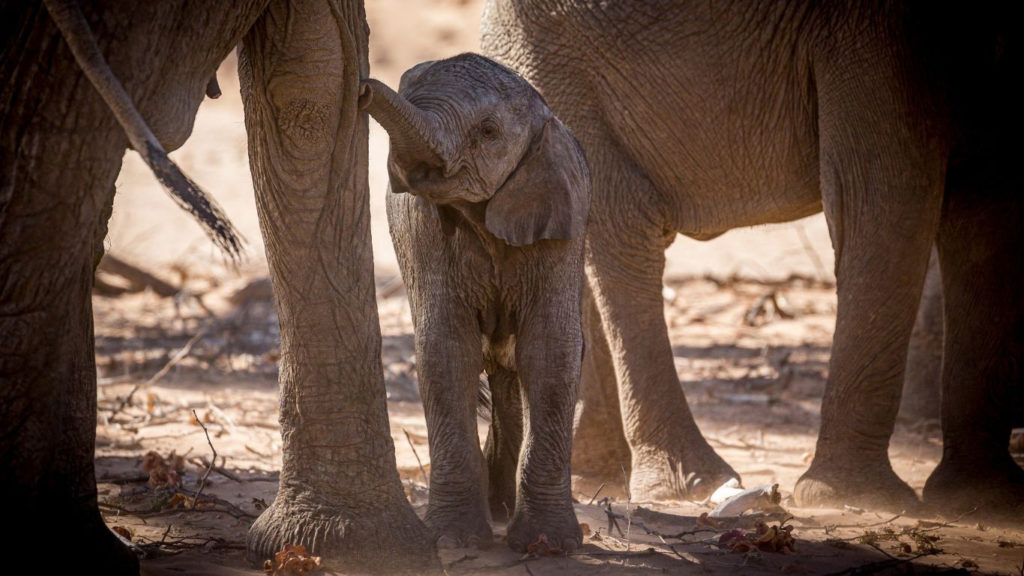
Animals around the globe are in extraordinary peril. From the rampant illegal trade in wildlife, poaching, habitat loss and poor enforcement of wildlife legislation, thousands of species are becoming critically endangered. We need to take heed before it’s too late. If we continue to destroy biodiversity, no life on Earth can survive. The Animal Survival International exists to be a voice for animals and the planet. We tackle pressing issues threatening animals. We are deeply grateful to our supporters who make our work possible. Take a look at our most recent projects and how your donations are making a difference to animals worldwide. Namibia Securing water for one of the last remaining free-roaming elephant herds A family of elephants is at risk from the ongoing drought in the northwest of Namibia. If these 20 elephants and their babies wander from their home range on a 20,000-acre (8,000-hectare) preservation area in search of water, they face being shot at. All the other land in the area is used by hunters and the elephants would be at risk of death or injury. Thanks to our supporters’ swift response to donate funds, we were able to act quickly. ASI is paying for new waterholes to be established by drilling to reach deep underground water sources. After two attempts, we struck water. We are now waiting for test results to make sure that the water is safe for the elephants to drink. If it proves to be contaminated, we have a drilling team standing by to redrill. We will not give up on these elephants. Stay tuned! United Kingdom Supporting a total ban on the use of wire snares Up to 1.7 million animals are brutally killed by snares every year in the UK. Animals endure untold anguish and pain when they are caught in snares. Usually set to catch foxes and rabbits, other wild animals are also caught, including wild cats, hedgehogs, badgers and red squirrels. In some horrific cases, animals have gnawed off their own limbs to free themselves. But despite this horror, the UK’s Department for Environment, Food and Rural Affairs (DEFRA) and the British Veterinary Association (BVA) condone and support snaring! – even though there are more humane and effective solutions available to keep livestock and crops safe from rabbits and foxes. The National Anti Snaring Campaign (NASC) in the UK is fighting to have snaring completely banned. They called on ASI to help them to secure a total ban on the sale and use of snares. Your generous donations allowed us to give NASC £2,500 ($3,500) to continue their fight to bring about an outright ban on wire snares. South Africa Court action to fight for the survival of western leopard toads A plan to build a road through one of their last remaining breeding grounds is threatening the survival of the beautiful endangered western leopard toad in Cape Town. There could be as few as 360 toads left! The Noordhoek Environmental Action Group (NEAG) called on ASI to help its legal battle to prevent Cape Town authorities from building the road. And thanks to our supporters, NEAG may just win a rare, but critical, victory for the animals. Zimbabwe Saving painted dogs in Hwange National Park In Hwange National Park in Zimbabwe, some of the world’s last remaining painted dogs are facing a new threat. With COVID-19 taking its toll on already poor communities, thousands of illegal snares set to catch antelope for food, are being scattered around the park. Each snare means horrific injury and potential death to the beautiful painted dogs. With only 6,500 left in the wild and 160 living in Hwange, we cannot let this continue. Every day, rangers patrol the park on the lookout for snared painted dogs. When they find them, it’s a race to get the suffering animal to help. We partnered with the Painted Dog Conservation (PDC) and asked ASI supporters to donate towards medication essential to transport and treat the wounded animals, and to help them return to their pack in the wild. Thanks to your generosity, we were able to help PDC continue with their vital work of treating and releasing painted dogs back into the wild, as well as teaching villagers about conservation and snare removal. Once again, thank you for your generous donations and your support in raising awareness of these issues. You make it possible for us to make a difference, protecting wildlife and wild spaces across the globe.
How we are helping RIGHT NOW: March 2021
The future of the animals in the natural world has never been more in danger. Climate change, habitat destruction and poor enforcement of international wildlife laws have already pushed numerous species to extinction and will continue to do so if we don’t act now! The Animal Survival International (formerly Political Animal Lobby) exists to be a voice for animals, and we will do everything within our power to fight for their future. Right now, we are hard at work to support the protection of African pangolins, the most trafficked mammal on earth. We can’t share details yet, but keep an eye on your inbox in the coming weeks to learn more. We are incredibly grateful to our supporters who help make the work we do possible. Here’s what ASI is doing now and how your donations are making a difference to animals worldwide: Taking on a City for the future of endangered toads in South Africa Another species is on the brink of extinction because authorities do not care about their survival. This time, it’s the endangered Western Leopard Toads in Cape Town’s Noordhoek valley. The City of Cape Town in South Africa plans to bulldoze a road right through one of their last breeding ponds, even though residents don’t want it. Local organizations, ToadNUTS, and the Noordhoek Environmental Action Group (NEAG) are the toad’s only hope for a future. They are taking the City to court – and the lawyers think they can win. NEAG and ToadNUTS do not have enough funds to fight the big legal teams and carry out their critical day-to-day work. They turned to ASI for aid. With your help, we’re going to do everything we can to help them. A fighting chance for Cape Town’s last Caracal cats in South Africa In the fragmented wild areas of Cape Town, South Africa, as few as 50 caracals cling to survival. Caracals – secretive and nocturnal – are famous for their golden fur and long, elegant ears. They are exquisitely beautiful… and seriously endangered. Caracals are nocturnal, and poorly lit roads crisscross the area where they live. Speeding and negligent drivers have killed 83 of these cats in the past five years. If we act now, we can save many of them from this tragedy. We want to provide a simple and effective solution. The first step is putting up warning signs on the roads, alerting drivers to their presence. The long-term goal is to build tunnels for the caracals to cross safely. The caracals need help now, and that’s why ASI is stepping in; ensuring that effective warning signs are erected in high incident areas while working on a longer-term plan. Bridges for Survival in Kenya Just 5,000 rare Angolan Black and White Colobus Monkeys remain in the entire country of Kenya. Once a stronghold for these gentle creatures, deforestation and illegal bushmeat hunting has destroyed their populations. Naturally living in the treetops, they must now risk their lives crossing dangerous roads to travel between the forest patches that remain. Many try to cross the road using the overhead powerlines, where they are often electrocuted to death. Luckily, there is a simple and effective solution. ‘Colobridges,’ ladder-like structures that provide safe passage across roads, have been tested and have shown to be effective by a local organization, Colobus Conservation. With ASI’s help, the remaining monkey populations will be provided with a network of bridges to keep them safe in their tree canopy sanctuaries. Good News! Life-giving water flows again in South Africa’s Addo Elephant National Park. The ASI team returned to Addo Elephant National Park in South Africa to install state-of-the-art solar-powered pumping equipment that our generous donors helped us purchase. The situation was dire when we arrived, with temperatures soaring and thousands of animals desperate for water. We turned on the tap and animals flocked from miles around for a share of the cool, clean water that will now run every day. Once again, thank you for your generous donations and your support in raising awareness of these issues. You make it possible for us to make a difference, supporting wildlife across the globe.
Urgent Action Is Needed to Restrict Harmful Fishing Methods in the Indian Ocean, Say International NGOs
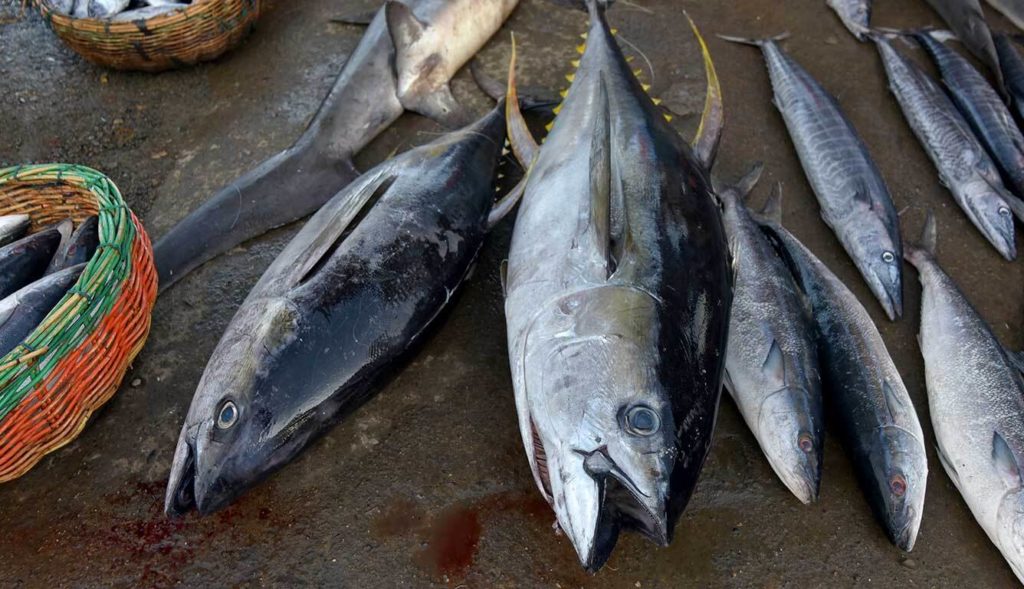
By Melissa Reitz The commercial fishing tactic of using FADs (fish aggregating devices) is drastically diminishing global fish populations. FADs are floating devices, buoys or floats tethered to the ocean floor with concrete blocks, that cast shadows, creating a visual stimulus which attracts juvenile fish and in turn larger predator fish. By casting nets near FADs, boats increase their catch, but the technique also leads to other fish being caught including juvenile tuna that have not had a chance to reproduce. As a result, the Indian Ocean Tuna Commission (IOTC) is being urged to restrict FADs by more than 100 NGOs, small-scale fisheries and retailers – including UK giants Sainsbury’s and Woolworths. The proposal is to ban their use for three months this year and reduce the number of FADs for each vessel from 300 to 150. What makes it even worse is that according to the International Pole and Line Foundation, ecological damage caused by drifting FADs continues long after they’ve been lost, abandoned or discarded. Responsible retailers have warned consumers that FADs pose a serious threat to ecosystems and the recovery of overfished yellowfin tuna in the Indian Ocean. FAD-free tuna has already been on offer to consumers since 2018 by some UK retailers – in addition to pole- and line-caught tuna. “It’s imperative that global legislation tighten restrictions around fishing methods,” says Adrienne West of the Animal Survival International (formerly Political Animal Lobby). “With overfishing being a real threat to the survival of fish populations, we can no longer afford to turn a blind eye on unsustainable fishing techniques.”
Asia Turns to Africa’s Coastline to Satisfy Its Taste for Marine Delicacies, in a Free-for-All Unpoliced Environment of Trade
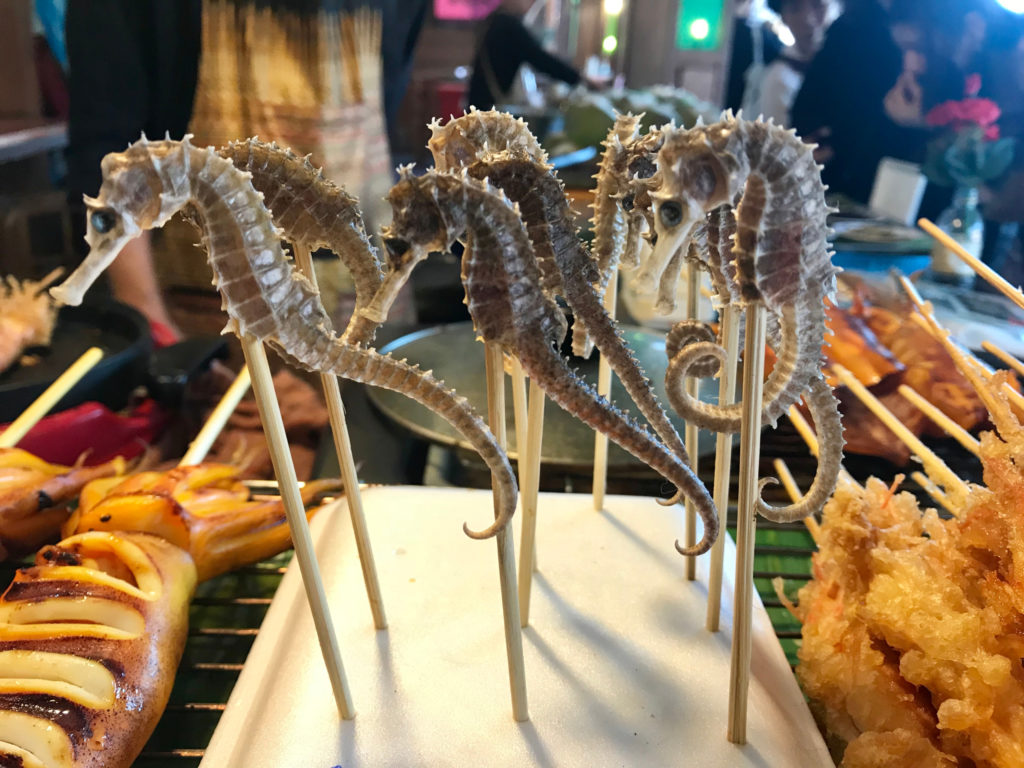
By Melissa Reitz Africa’s coastal waters have been hard hit by Asia’s surging demand for marine delicacies, putting immense pressure on delicate ocean ecosystems. A recent report by Traffic, the wildlife trade monitoring network, focusing on the trade in high-value marine products from Africa to Asia, has found that sea horses, fish maw (dried fish bladders) and sea cucumbers are being harvested and traded in massive volumes with little to no monitoring. More than 80% of African coastal states are exporting fish maw to Asia. Together with shark fins and abalone, sea cucumbers and fish maws are considered delicacies in East Asia. Highly prized and sold at top prices, these luxury seafood products are consumed as symbols of status or wealth. They are also used in traditional Asian medicines. With no effective legislation in place to monitor trade, populations are declining rapidly under this rampant and mostly illicit trade. The mass harvesting of sea cucumbers, fish maws and seahorses is threatening their long-term survival and the health of fragile ecosystems. Traffic says it has seen major discrepancies in the reported imports and exports of these marine products, indicating significant levels of unsustainable harvesting and illegal trade. With a rise in market price for dried cucumbers, fishing has increased in poorly managed fisheries across Africa. As a result, the East African coastline has seen up to a 70% decline in sea cucumber populations from Madagascar, Tanzania, Kenya and the Seychelles. According to Traffic, Madagascar, Kenya, Tanzania, and South Africa show the highest occurrence of under-reported and illegal trade and harvesting. This stimulates smuggling networks to exploit poor legislation and move illegally harvested sea cucumbers for transit into international supply chains. “This unpoliced harvesting and trade of marine products is putting Africa’s marine ecosystems under immense pressure,” says Adrienne West of the Animal Survival International (formerly Political Animal Lobby). “Not only that, but it is yet another avenue of illicit trade that is threatening state security across Africa and impoverishing communities.” The number of African countries involved in trade of sea cucumber products has increased from 18 countries in 2012 to 33 at the end of 2019. Yet only six of these countries have reported trade in the last 10 years.
Today Is World Wildlife Day – But for Millions of Animals Around the World, Today Is Not a Day of Celebration!
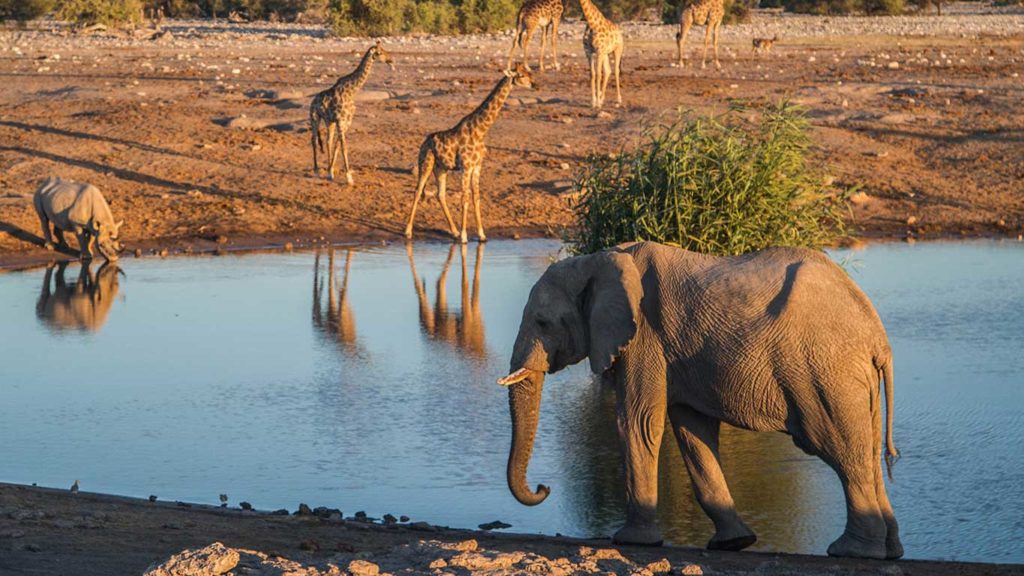
Today is World Wildlife Day. For millions of animals around the world, today is not a day of celebration. Our world’s wildlife is being wiped out. According to a 2019 UN report, one million species are threatened with extinction – some within a matter of years. As many as 30 to 50 percent of all species could be extinct by 2050. It’s worth pointing out that this information is two years old already, and the situation will undoubtedly have gotten worse since then. Although every day there is more gloomy news in the media warning of the rapid onset of extinction, the truth is that’s humanity has not yet fully realized the extent of the catastrophe that is about to take place on our planet. A catastrophe that would have devastating consequences for animals and humans. In coming years, we could say goodbye to pangolins (two species critically endangered), rhinos, (three species of black rhino are critically endangered and the northern white rhino is functionally extinct), mountain gorillas (critically endangered), vultures (eight species critically endangered) and painted dogs (critically endangered). Gone, never to return. And those are just the tip of our melting iceberg. Habitat loss is the biggest culprit, but climate change is also a major contributing factor. As is the poor enforcement of rules governing the international trade of animals. All of this is our fault and our responsibility to fix. Unwittingly, in some cases but deliberately in others, human actions have made the world a deadly place for animals. The Animal Survival International exists to fight for animals affected by these problems and to try and stem the tsunami of destruction that is affecting mammals, birds, marine life, reptiles, insects, amphibians… In fact, nearly every category you can think of is under pressure. We finance scientific research to find practical solutions to a wealth of problems – from Anatolian water frogs, who die by the thousands to be served as culinary delicacies to tracking the movement of elephants and lions across our last remaining wildernesses. We also provide medical supplies and fund treatment for injured, sick and rescued wild animals, and we work to raise public awareness of the calamity that will befall us all unless we fight to stabilize the natural world. You can help our crusade by donating today.
How we are helping RIGHT NOW: February 2021
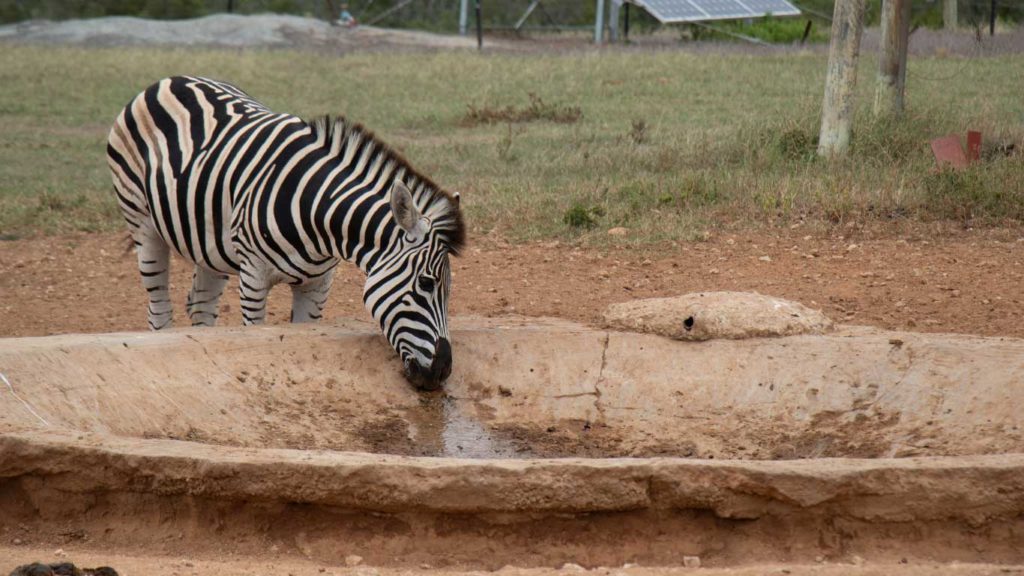
The future of animals and the wilderness they live in has never been more at risk. Climate change, habitat destruction and poor enforcement of international wildlife laws is driving species after species to extinction. We cannot be silent or sit idly by and watch this happen. The Animal Survival International (formerly Political Animal Lobby) exists to be a voice for animals and to do everything within its power to ensure animals survive internationally. We are incredibly grateful to our passionate supporters who make the work we do possible. In case you missed it, here’s what ASI is doing right now and how your donations are making a difference to animals across the globe: Life-Giving Water in the Midst of the Worst Drought in 100 Years In South Africa’s Addo Elephant National Park, hundreds of elephants and countless other animals risk dying of thirst because of the worst drought in 100 years. Water holes are drying up and thousands of animals are suffering – not only from thirst but also injury as they fight one another over the last few drops. Our team watched in horror as zebras kicked and bit each other, desperate for their share. Smaller animals like warthogs stood no chance of getting near the rapidly-drying waterholes. To help this dire situation, we have pledged to fund the installation of state-of-the-art solar-powered water pumps to draw more water from the available boreholes. Thanks to your generous donations, we have raised enough to save one waterhole with new equipment and are nearing our goal of saving a second one. Now we are counting the days until the pumps can be installed. Ending the Cruel Trade of Live Frogs from Turkey Millions of frogs are tortured, maimed and killed so they can be served up as a ‘delicacy’ in restaurants. Every day, thousands of Anatolian water frogs are cruelly harvested in Turkey before being sent across Europe. Hunted with hooks and squashed into bags by the hundreds, these helpless frogs are transported alive. Many die along the way. Those who don’t are often served up alive! Not only is this an example of shocking cruelty, but if we don’t act now, Turkey’s Anatolian frogs will be gone forever, and environmental disaster could ensue. We have pledged to help stop this carnage through the only available avenue – presenting compelling evidence to the authorities. By supporting scientists at Ege University in Turkey in conducting vital research, we will be able to demonstrate the true enormity of the plight of the frogs to the Turkish government and hopefully end this trade forever. A Second Chance for Persecuted and Poisoned Birds of Prey Birds of prey are severely threatened across Africa. Habitat loss, poisoning, local superstitions and climate change are pushing hundreds of raptor species to extinction. The Owl Orphanage in St. Helena Bay, South Africa has made it their mission to rescue and rehabilitate as many poisoned and injured birds as possible. The Owl Orphanage is inundated with birds in desperate need of help. Sometimes they rescue five a day, but they simply do not have enough space to home them all while they recover. Your generous donations helped expand their aviary, meaning that more birds of prey will now get a second chance. Celebrating World Pangolin Day – but for How Much Longer? This month we celebrated the 10th annual World Pangolin Day. On this day we were again reminded of the horrific plight of pangolins, both across Africa and the Far East. As the most trafficked mammal in the world, pangolins are hurtling towards extinction; an estimated 200,000 pangolins are killed every year! Smuggled across borders to Asia, pangolins are hacked to death to be used in traditional Chinese “medicine” or eaten as a delicacy. If we don’t put an end to the rampant slaughter of these quiet, solitary creatures, very soon we won’t be celebrating World Pangolin Day anymore because there won’t be any left. ASI is committed to spreading awareness and offering support wherever needed to help prevent such impending disasters. Thank you for standing with us in this fight. Once again, thank you for your generous donations and your support in raising awareness of these issues. You make it possible for us to make a difference, supporting wildlife across the globe.
There Is a Way to Help Save Marine Life. Stop All the Noise!
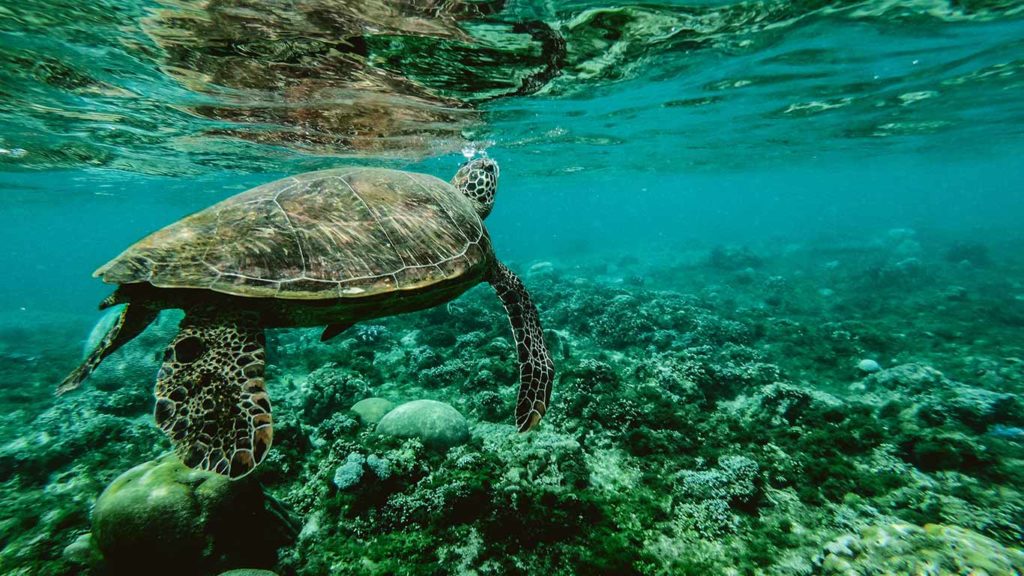
By Melissa Reitz A first-ever scientific assessment on ocean soundscapes has found that the noise made from human activity is killing our oceans. Marine life, from whales to the smallest organisms such as invertebrates, rely on sound for their survival. But an ever-increasing cacophony of human-related noise is drowning out the natural din on which they depend to navigate, reproduce, eat and defend themselves. As a result, marine creatures are dying. Adding to this, carbon dioxide emissions from fossil fuels are creating more acidic oceans, which, the research team found, makes sound travel further in the water, leading to an even noisier ocean. Scientists say that the impact noise has on ocean survival is being dangerously overlooked. They say it is as harmful as overfishing, pollution and climate change. But there are solutions, and the problem can be solved quickly and without long-term effects. When ocean traffic slowed down during COVID-19 lockdowns, scientists noticed that marine animals and sharks began returning to previously noisy shipping routes, proving that marine life recovers swiftly from noise pollution. According to review which was carried out by University of Exeter in England, “the tiniest plankton up to sharks sense their acoustic environment.” In the assessment which contained over 500 studies on the effects of noise on sea life, 90% found substantial harm to marine mammals, such as whales, seals and dolphins, and 80% found impacts on fish and invertebrates. “Sound is a fundamental component of ecosystems, [and noise] impacts are pervasive, affecting animals at all levels,” says the review. Increased shipping over the past 50 years, has significantly raised low-frequency noise on major routes. Bottom trawlers create noise and fishing vessels use sonar to find shoals of fish. Oil rig construction and operation and offshore windfarms also contaminate the sea with noise, as does the detonation of bombs. This level of noise causes stress for marine creatures, say researchers, hindering their homing sense, as well as their ability to communicate and to safeguard themselves from predation. But there are solutions. New propeller designs used by shipping giant Maersk, have shown to reduce noise and increase fuel efficiency. Also, electric motors are quieter, as are reductions in speed. By cutting speed by just 1.8 knots, noise by vessels in Mediterranean has been halved. Seismic surveys can also be carried out using seabed vibrators, rather than sending noise waves through the water. “These small changes can go a long way to saving marine life,” says Adrienne West of the Animal Survival International (formerly Political Animal Lobby). “Climate change and pollution are much bigger issues to conquer and are going to take time. But these adaptions to reduce noise pollution in our oceans are within our immediate capacity and we need to take action now.” Feature image credited to: Belle Co from Pexels
It is not too late to SAVE ANIMALS FROM EXTINCTION! But we URGENTLY need your help now!
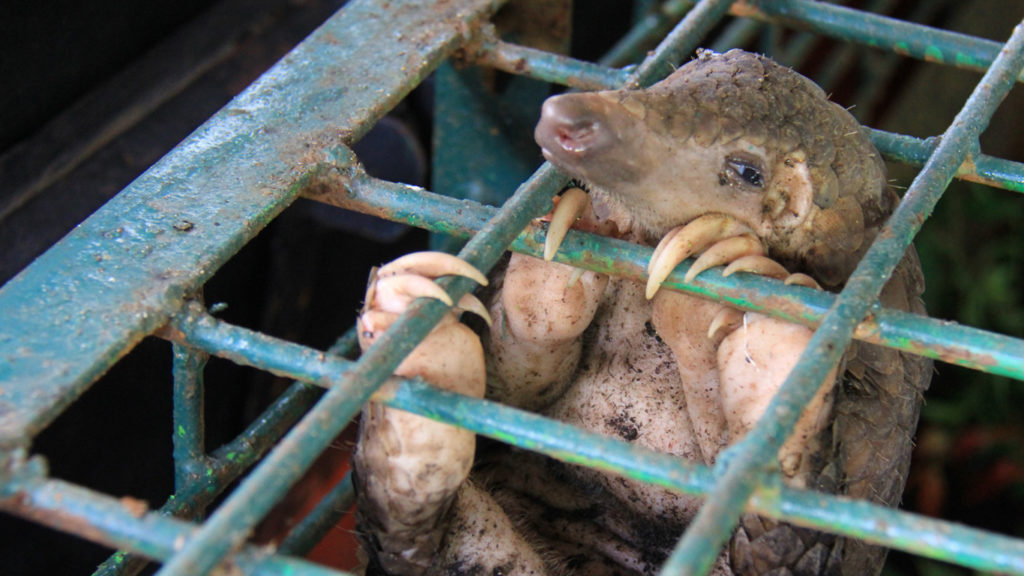
The harsh news we bring you is that extinction for many animals is not around the corner… … it’s now. According to the United Nations, 6,523 species are critically endangered and headed for extinction as we approach 2021. That’s why we at ASI will do everything in our power to fight harder for animals in the New Year. And why we need your help before 2020 is over to make sure we have the resources to continue our vital work. In 2020, we fought for animals, with projects around the world to fight back against climate change, rapacious greed, cruelty and contemptuously poor law enforcement. Animals are being WIPED OUT all over the world! Polar bears have become the victims of climate change and the disastrous onslaught of those who only care about the oil and gas in their “Arctic Refuge”. The once teeming herds of African wildlife risk becoming petting zoo curiosities. Species after species are grabbed for the cooking pot or for phony Asian potions, in their millions. Rhinos, frogs, giraffes, gorillas, orangutans, parrots… vultures, badgers, pangolins, sharks, turtles, and more… The list just keeps getting longer… and sadder… We fight daily on multiple fronts (some of this year’s accomplishments are noted below), but the need to prevent animal extinction is DESPERATE and URGENT. But there’s SO much to do and all we do depends on the support of friends like you. A good example is that the South African government proposes new laws that rank wild animals alongside domestic animals as suitable for human consumption and plans to encourage South Africans to eat more wild animals. We and other NGO’s managed to get lions excluded from the new rules. However, other wild animals will be badly affected. The pangolin is the most trafficked animal in the world. Thousands of pangolins are captured for their scales which are scraped from their bodies while the animal is still alive, to be used in phony Asian cosmetic potions. In Asia, an estimated 200,000 pangolins are killed each year, mostly for the Chinese trade. We are working with a secretly located pangolin rehabilitation center in South Africa and Pangolin(Dot)Africa, to rescue and rehabilitate sick and injured pangolins rescued from poachers. We have also provided funding for vital satellite tracking devices to monitor pangolins released back into the wild. More than 11,000 people signed our petition asking the major veterinary association in the UK, the British Veterinary Association (BVA), to change its policy of supporting the badger cull. Anatolian water frogs are being wiped out because they are the largest edible frog in Turkey, and demand for their legs as ‘delicacies’ is strong in parts of Europe. 17-million Anatolian water frogs are captured for the dinner table each year. Very little research has been conducted to determine how much longer the species has before extinction. We are working with the Department of Biology at Ege University in Izmir to find out. We are working with the Painted Dogs Conservation (PDC) in Zimbabwe, funding its program to dart and rescue snared painted dogs. There are only 200 in the area around Hwange, where they work, and 3,000 snares laid by hungry local people. African Grey parrots are being wiped out because of the international, and now illegal, pet trade. We are financing the construction of a free-flight aviary at Birds of Eden in South Africa. Because of poisoning and habitat destruction, vultures are increasingly endangered. In 2020, we financed an aerial survey of vultures in the Kruger National Park and are hoping to raise funds for the construction of a specially designed vulture rescue vehicle to use in cases of poisoning. We are fighting for the very survival of so many animals… But we promise to do more in 2021, and your end-of year-donations will make sure we do not let the animals down – so we can work to preserve animals anywhere in the world where they need us. The doomsday clock is ticking ever closer towards extinction for countless creatures, but with your help, we will fight for the survival of every animal we can. Please help the animals which can’t help themselves by donating generously to ASI today.
Organized Crime in the Fisheries Sector Threatens a Sustainable Ocean Economy
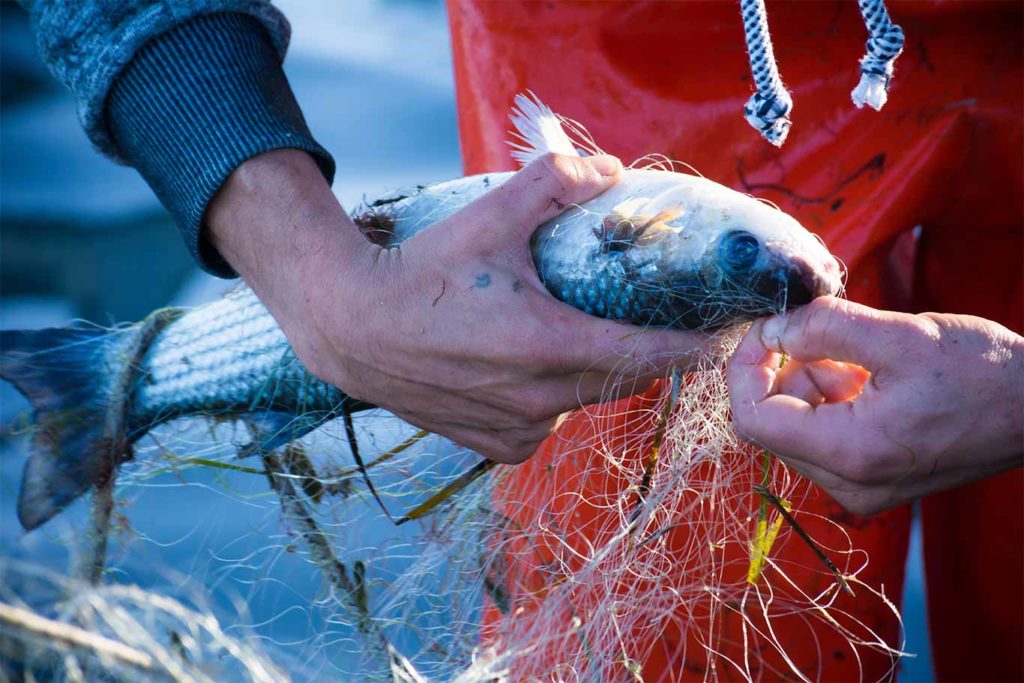
Maritime and fishing communities worldwide are particularly vulnerable to organized crime, says a new report published in Nature’s scientific journal. The study brings to light the perfect storm of illegal activities in this sector, including tax crimes, money laundering, corruption, document fraud, and trafficking in persons, drugs, and arms. Despite the name, organized crime in fisheries is not only about the pillaging of marine life. While illegal fishing is a massive problem across all corners of the globe, the net of organized crime in the fisheries sector casts much farther than the abuse of fish stock alone. In 2008, the United Nations General Assembly asked policy-makers, researchers, and civil society members what they believed the role of organized crime within maritime and fishing communities was. The results revealed many disturbing facades of organized crime within this sector. The findings included the following: Food hygiene regulations are compromised due to false customs and health documentation to disguise the origin of the catch or the vessel’s flag. Fish and fish products are also falsely labeled to avoid paying higher customs duty on high-value species. Organized criminal networks engage in money laundering in the fisheries sector to integrate the proceeds of crimes committed along the fisheries value chain or illicit activities outside the industry into the legitimate economy. Political figures or senior government bodies use their positions to influence the allocation of fishing licenses to companies with a personal business interest. Boats, ships, and other fishing vessels are ideal modes of transport for drugs, given their legitimate presence at sea, the lack of transparency around their movement, identity and ownership, and their ability to tranship and access small harbors. Criminal networks in fisheries use forced labor to cut costs and increase profit margins. In addition to the implications for human rights, this leads to unfair competition with legal operators, which, in turn, can influence legitimate fishing companies to breach domestic crewing regulations in an attempt to remain competitive. The fishing industry provides ideal concealment for smuggling of otherwise legal goods from one jurisdiction to another in violation of the law. Fuel, for instance, is often smuggled alongside illicit goods, like drugs, illegal weapons, and illegally harvested fish, as well as people. Violence that may arise from illegal fishing and conflict between fishermen are recognized as a potential threat to maritime security and livelihoods. “While many jurisdictions criminalize fisheries offenses and have harsh deterrent penalties, this study shows that there is still room for much improvement,” said Nicolette Peters of the Animal Survival International (formerly Political Animal Lobby). “Organized crime within the fisheries sector occurs globally throughout the entire value chain, taking a massive toll on human populations and resulting in potentially dire implications. Building momentum to tackle these crimes is critical to protect those who are at risk today and build a more sustainable future.”
France Finally Bans the Use of Wild Animals in Circuses and Marine Parks
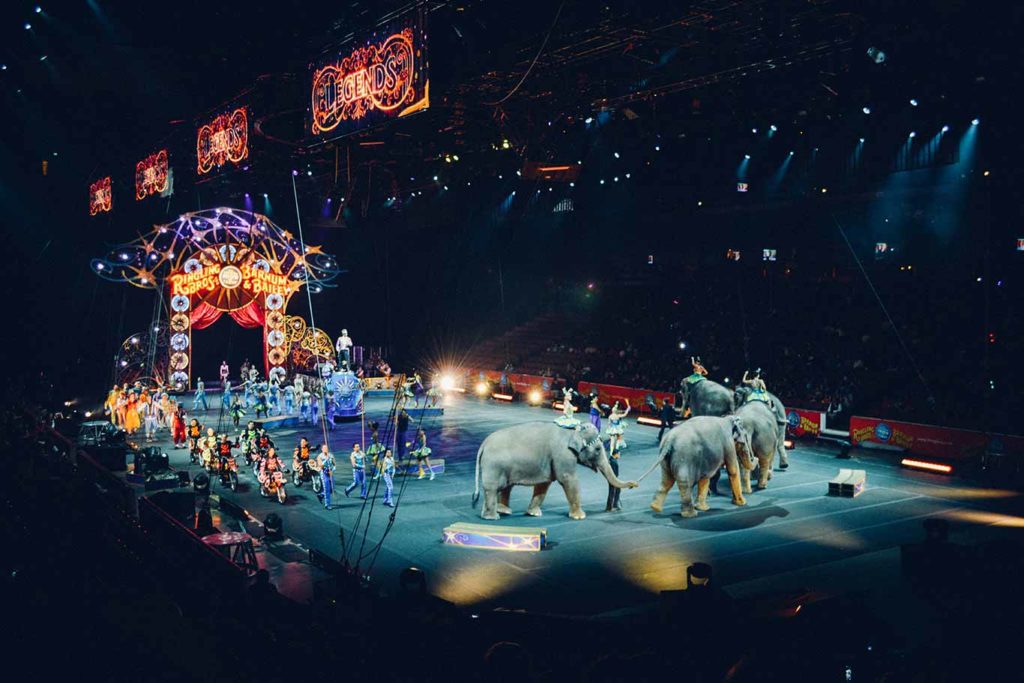
France is finally following a growing global movement to stop wild animals being exploited in the name of entertainment at circuses and marine parks. In what has been hailed as a breakthrough for animal rights across the world, the country passed laws in September 2020 that will protect animals in the following three ways: the use of wild animals in circuses will be phased out marine parks will, with immediate effect, cease breeding and bringing in killer whales and dolphins killer whales will be banned from being used in shows by 2022 and dolphins by 2027 mink farming will be phased out over the next five years Because of the potential economic impact on those who own circuses, dolphinariums (France has three) and marine parks (there are four killer whales in captivity in France), the minister said the government would set aside €8 million (£7.3m; $9.3m) to re-invent their businesses without the use of wild animals. Ms Pompili told the French newspaper Le Monde that there are currently around 500 wild animals in French circuses and that the new rules will bring France in line with over 20 other EU countries that have already limited or banned animals in travelling circuses. They would also consider creating sanctuaries for these animals as circuses adapt to the new laws. WILD ANIMALS AS ENTERTAINERS HAS RUN ITS COURSE Wild animals that work in circuses are bred in captivity and trained from a young age to perform in front of crowds. They will never be able to fend for themselves in the wild. Historically, circuses were a way to show wild animals to the public, but today the public can travel to game reserves to see animals in their natural habitat. Ms Pompili said it was “time that our ancestral fascination with these animals no longer translates into situations where we favor their captivity over their well-being”. She also cited studies that showed killer whales and dolphins had emotional intelligence and are aware of being in captivity. This causes immense stress and has a negative impact on their overall health and well-being. “It is in these animals’ nature to create social bonds and hunt with their family groups – something they cannot do in confined marine parks and dolphinariums,” said Nicolette Peters of the Animal Survival International (ASI). “While we would have liked clarity on the timeline for the roll-out of these measures, we do applaud France for taking this decision. We are hopeful that the remaining countries that still allow wild animals to be used for entertainment will follow suit and implement similar bans.” COUNTRIES THAT HAVE BANNED WILD ANIMALS IN CIRCUSES New Jersey and Hawaii were the first US states to ban exotic animals in circuses. In 2016, California banned the use of bullhooks on elephants in circuses and then banned the use of most exotic animals altogether. The Czech Republic, Denmark, Finland, Portugal, Sweden, and India have all implemented nationwide bans on the use of certain species in circuses, while other countries such as Bolivia and Greece are making some progress. In 2012, the UK Government pledged to ban the use of wild animals in circuses, but it wasn’t until January 2020 that this actually happened (as bills were repeatedly blocked by individual Conservative MPs). Despite the setbacks, it is still a move in the right direction. It is important to note that while most countries in the EU have some form of a restriction or ban on using wildlife in circuses, the absence of EU-wide legislation allows circuses to exploit regional and national differences when it comes to the enforcement of these laws. That is why you would still see exotic and wild animals in circuses across these regions and specifically in countries such as Lithuania and Spain. Over a decade ago, Hungary implemented a nationwide ban on the use of newly captured wild animals in circuses, banned the purchasing and training of elephants and primates, and the purchase, training and use of CITES listed species caught after 2010 in circuses. In a twist of fate, the country’s COVID-19 lockdown saw the Hungary National Circus, which is still home to 100 performing animals including elephants, giraffes, camels and ‘zonkeys’ (a cross between a donkey and a zebra), transform itself into a five-acre safari park to stay afloat. ASI believes the pandemic offers a unique opportunity for circuses to transition away from using animals in shows to allowing them to retire in a more natural environment. ASI remains committed to ending the use of wild animals in circuses, marine parks, and zoos and is determined to get every single animal out of the entertainment business. “Wild animals should never be held in captivity so we can gawk at them in tanks, cages, or tents. Least of all should they be held in captivity so they can perform tricks or act like clowns. It is never okay to exploit animals. We don’t condone bear-baiting, cockfighting, or fighting pitbulls to the death, so why do we still condone circuses, marine parks, and zoos? In all these incidences, animals suffer. It has to stop,” concluded Peters. READ MORE Animal populations crash as our planet becomes a playground for human destruction Iconic Wildlife Become Casualties of Human Conflict in War-torn Burkina Faso Animal cruelty caused Coronavirus, now is the time to stop China’s live market trade forever *Feature image: Elephants in the ring at Ringling Bros. and Barnum & Bailey Circus, an American traveling circus company billed as The Greatest Show on Earth. The show closed permanently in May 2017. Photo by Becky Phan on Unsplash
National Wildlife Day – September 4: Wildlife Is Mother Nature’s Greatest Treasure; We Protect To Protect It!
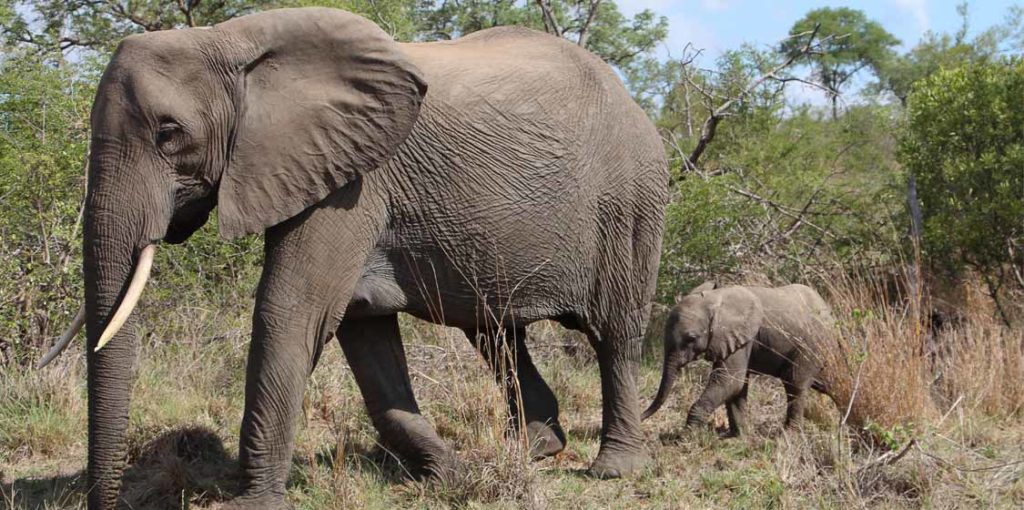
Today is National Wildlife Day. A day we give voice to the voiceless and raise awareness for animal welfare. While the world’s 7.6 billion people represent just 0.01% of all living things, we are behind the loss of 83% of all wild mammals. Researchers talk of ‘biological annihilation’ as studies reveal billions of wildlife populations have been lost in recent decades. Wildlife is dying because of habitat destruction, the international wildlife trade, hunting, pollution and climate change. The International Union for Conservation of Nature (IUCN) estimates that 27,000 species are at risk for extinction. “Today – and every other day to come – is a chance to change the future. It’s a chance for all of us to step back, take a deep breath, and appreciate everything around us. Then do something to make sure we never lose it,” said Nicolette Peters of ASI. Today is also a reminder of the urgent need to step up the fight against wildlife crime. The illegal trade in wildlife is estimated to be worth $20-billion (£15-billion) per year! Poaching and illegal harvesting, particularly in Africa, is shattering wildlife populations The unprecedented spike in illegal wildlife trade poses a growing threat not only to wildlife but to all of us. It is becoming more and more common for diseases to spread from animals to man as the wild trade increases. For example, the Coved plague came from bats and pangolins. ASI disrupts and dismantling networks involved in the illegal wildlife trade and works towards the enforcement of international wildlife laws and treaties. “The work we do is demanding, sometimes dangerous but always important,” said Peters. “The world’s wildlife is in trouble, we are trying to do something about it.”
ASI Calls on an Infinite Ban on the Fur Trade as the Coronavirus Rips Through Mink Farms
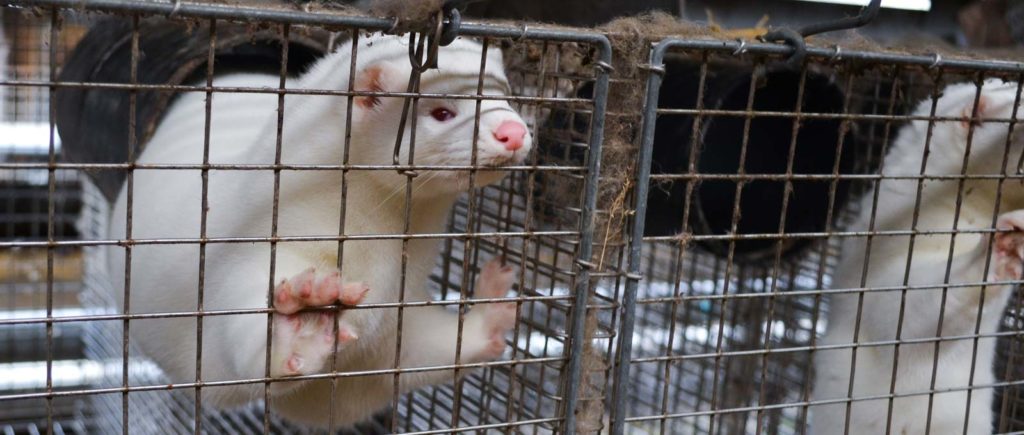
One million innocent creatures slaughtered in a matter of a few weeks. Yes, you read that right – ONE MILLION. Brutally butchered because humans decided fur coats were important during a global pandemic that ironically manifested from animal cruelty. Wake up! It’s 2020… you don’t need to skin an animal for a jacket. Fur farms are ghastly places of torture. They perpetuate horrifically cruel practices and harbor methods of raising and handling animals that are completely barbaric. In a time where the world is grappling with a deadly pandemic, the Animal Survival International (formerly Political Animal Lobby) calls on an urgent and desperate move towards a more compassionate world. Shut down all fur farms – for good! “Coronavirus is ripping through mink farms and instead of implementing a total and infinite ban on fur, countries are simply covering up the mess they’ve made, at the expense of animals,” said Sarah Morris of ASI. “While decades ago, fur garments – especially mink – represented the ultimate symbol of status, elegance, and femininity. Today, all they represent is blatant animal cruelty. Today we know better. Or, perhaps, I should say, we should know better.” In breaking news, Spain has ordered the culling of 100,000 mink on a farm and an estimated one million mink have already been culled on Dutch fur farms, as Covid-19 wreaks havoc in the European fur farming industry. Joaquin Olona, agriculture minister for the north-eastern Aragon region, said the cull “to avoid the risk of human transmission” would involve the slaughter of 92,700 mink which are prized for their pelts. This, after the coronavirus, reached the farm through a worker who passed it onto the animals. Coronavirus infections are now reported to have spread to 24 Dutch fur farms. A further outbreak reported last week, brings the number to 25 and climbing. “Mink are culled in the same way they are killed for fur, using carbon monoxide and dioxide gas. Culled fur does not enter the retail chain,” said HSI Europe’s public affairs director, Joanna Swabe. “Gassing is a particularly cruel way to kill mink because they are semi-aquatic animals able to hold their breath for long periods. Recent Dutch video footage appears to show a mink that survived gassing being fished out of a container to be gassed again.” Although mink is the most popular animal farmed for fur, foxes and raccoon dogs are also raised in captivity for the fur trade. Killing methods of these animals are equally gruesome. Because fur farmers care only about preserving the quality of the fur, they use slaughter methods that keep the pelts intact but that can result in extreme suffering for the animals. According to various reports and live footage captured on these fur farms, “small animals are sometimes crammed into boxes and poisoned with engine exhaust from a truck. Engine exhaust is not always lethal, and some animals wake up while they are being skinned.” Larger animals have “clamps attached to their mouths and rods are forced into their anuses, and they are painfully electrocuted.” Other animals are “poisoned with strychnine, which suffocates them by paralyzing their muscles with painful, rigid cramps.” Gassing, decompression chambers, and neck-breaking are other common slaughter methods on fur factory farms. In addition to animal cruelty, fur farms act as reservoirs for coronaviruses, incubating pathogens transmissible to humans. Both foxes and raccoon dogs are known to be able to become infected with SARS-CoV-related viruses, with the potential to act as intermediate hosts to pass viruses to humans. Raccoon dogs and foxes in wildlife markets in China were both found to have been infected with SARS-CoV. “Covid-19 had its origins in the animal kingdom. There are now many opportunities for animals to be exposed through contact with humans carrying the virus,” said Morris. “The Dutch government, and all fur-producing countries like Denmark, Poland, France, Italy, China, Finland, Spain, and the United States, should commit to ending this inhumane practice and not only protect public health but prevent more animals from suffering. Fur is not essential to human health or well-being. In the modern world, we don’t need to still be wearing fur. Every single fur coat, every single fur lining, every single fur trim represents the intense suffering of an animal. This cruelty will only end if the world refuses to buy or wear fur. Wearing a dead animal and encouraging animal cruelty is never fashionable.” Dr. Joanna Swabe, senior director of public affairs for Humane Society International/Europe, agreed. “The death toll from the Dutch mink fur farm culls has now reached 1 million mink. The risk from failing to eliminate this virus reservoir is clear and yet still the Dutch government is not acting decisively by fast-tracking the early closure of this cruel and dangerous industry. The Dutch Parliament has already adopted a motion calling for the mink industry to shut down before the existing 2024 deadline. In addition to fur factory farming being inherently cruel, the potential for zoonotic disease spread, and mink fur farms, in particular, to act as reservoirs for coronaviruses, incubating pathogens transmissible to humans, is an unavoidably compelling reason for the world to call time on fur farming.” Mink fur farms and COVID-19 timeline 26 April: SARS-CoV-2 is identified on two mink farms in the Netherlands. 9 May: SARS-CoV-2 is discovered on two more mink farms in Noord Brabant as well as in dust particles in the enclosures in which the mink are kept in. 15 May: SARS-CoV-2 is diagnosed in three cats living at a mink farm where the presence of the virus was detected. 19 May: The first farm worker is reported to have contracted COVID-19. The Minister confirms compulsory screening is extended to all mink farms in the Netherlands. 20 May: Dutch Agriculture Minister Carola Schouten tells MPs it is likely that mink infected with SARS-CoV-2 passed the virus to a worker. 22 May 2020: Seven out of 14 employees of a mink farm in La Puebla de Valverde (Spain) test positive for SARS-CoV-2.
ASI Calls on China To Protect the Bounty of Our Oceans or Nations Will Flounder
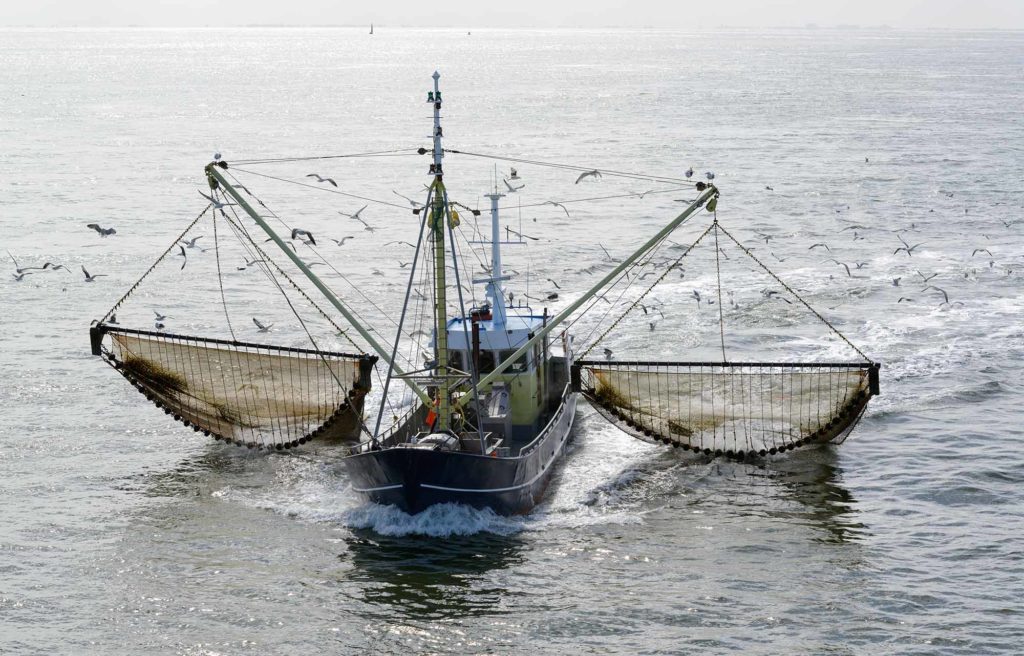
Once upon a time, our oceans contained an abundance of sea life, with enough fish to sustainably feed future generations. Today, we are on the verge of an environmental and humanitarian catastrophe because of overfishing. According to a report by the United Kingdom’s Overseas Development Institute (ODI), a staggering two-thirds of the world’s commercial stocks are being overfished or fished to the limit. China is the main culprit. What are the Chinese authorities doing to break the cycle of overfishing and promote sustainability in the sector? Disappointingly, very little. “China’s exploitation of the world’s fish stocks is far greater than previously thought, with research showing the country has more than 12,000 vessels fishing beyond its waters, three times more than previous estimates,” says the report. “The Chinese fleet is the biggest contributor to the global fisheries crisis. China consumes more than a third of fish caught globally and is targeting the high seas or waters belonging to other countries after depleting its own stocks. At least 183 of the Chinese distant water vessels – those that fish outside national waters – are involved in illegal, unreported, and unregulated fishing.” The study identified 1,821 of the Chinese vessels as trawlers, many of which are suspected of carrying out bottom trawling – a particularly destructive fishing technique. Global catch from bottom trawling is estimated at over 30 million tonnes per year, an amount larger than any other fishing method. Bottom trawls cause mass devastation to the marine environment by catching juvenile fish, sharks, sea turtles, harming coral reefs and damaging the seafloor. Almost 1,000 of the vessels were found to be registered overseas, with 518 flying the flags of African nations. The report suggests that China is taking advantage of poor governance in developing countries by getting them to sign fisheries agreements that allow unsustainable levels of fishing in its waters. “Our ocean life is already at a breaking point,” said Nicolette Peters of the Animal Survival International (formerly Political Animal Lobby). Crunching the figures revealed by ODI, we’re heading for a disaster that we may well mean less fish for everyone. “ “Among the very disturbing key findings the report revealed, it is clear that the sustainability of global fisheries hangs in the balance. With 16,966 vessels, China’s distant-water fishing (DWF) fleet is five to eight times larger than previous estimates. Almost 1,000 Chinese DWF vessels are registered in other countries, with at least 183 in China’s DWF fleet suspected of involvement in unreported and unregulated fishing.” It is also unclear whether China’s government has a comprehensive overview of China’s DWF fleet. Vessel ownership is highly fragmented among many small companies and the fleet includes vessels registered in other jurisdictions. “The Government of China needs to take urgent and effective steps to demonstrate global leadership on the governance of DWF, sustainability of global fisheries, and combating IUU,” added Peters. “ASI is calling on China to immediately improve the registration and transparency of DWF vessels, as well as owning and operating companies. It’s imperative that the country adopts higher standards.” “Humans are such efficient killing machines that we’re capable of removing entire species from our planet in less than a century,” warned marine ecologist Enric Sala. “In the long term, there is no prosperity without sustainable use of natural resources. A blue economy is a smarter economy than the current one of overexploiting one resource and then simply going on to the next.”
Cartoon Illustrated by Matt Pritchett – Telegraph Cartoonist

Matt Pritchett’s cartoons delight readers each day. Matt is a Telegraph institution, and his witty sketches are a vital part of the newspaper. In his newsletter, the enormously popular cartoonist explains just what inspires him each day, and shares an extra, unseen cartoon, which will not have been published anywhere else. For more cartoons from Mat you can subscribe to The Telegraph
Japan to Defy the World-Wide Whaling Ban and Start Killing Whales
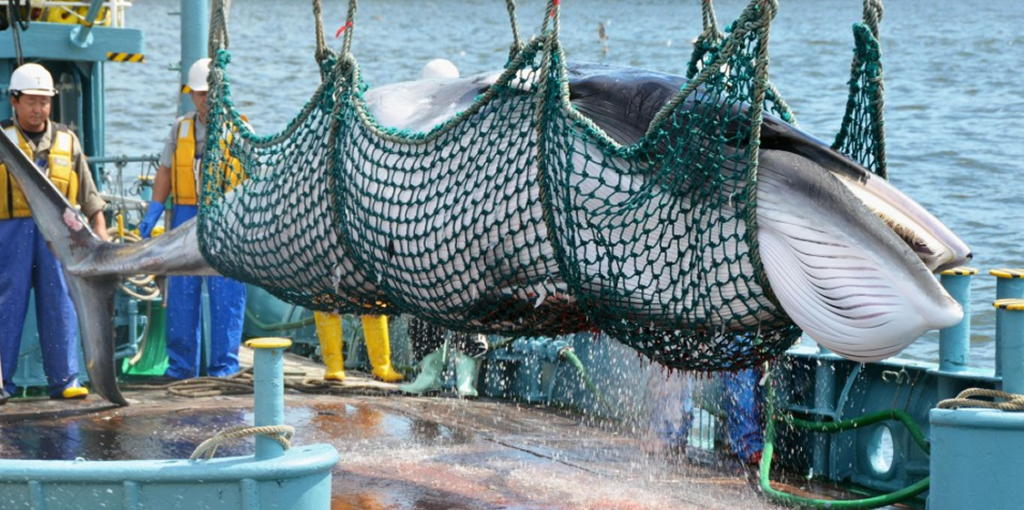
A massive battle is underway to protect whales and allow their stocks to recover before they are lost forever. The situation is so serious that a world-wide ban on commercial whaling has been in place since 1986.
New Hope for Fin Whales and Mountain Gorillas

The IUCN Red List now includes 96,951 species of which 26,840 are threatened with extinction.
ASI and NFA Honor Daphne Sheldrick
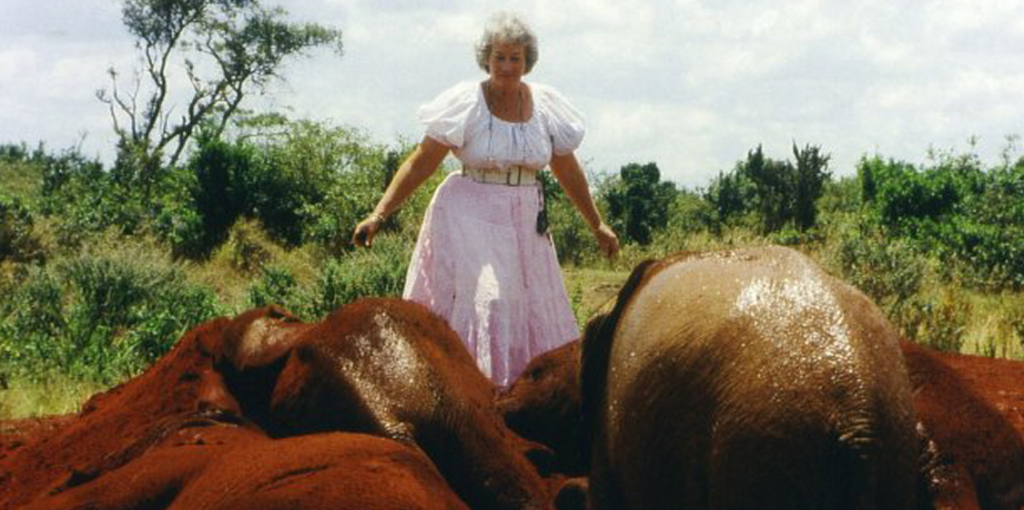
“Daphne was a giant among animal lovers,” said David Barritt, NFA campaign director and a spokesperson for ASI. “We honour her life’s work and we pledge to continue doing everything in our power to protect the wild animals and wild places of Africa.”