

Two endangered black-footed ferrets cloned from frozen tissue samples

Article written by Gloria Oladipo Originally published by The Guardian (Apr 18, 2024) Noreen and Antonia, born last May, are among first cloned offspring of a native endangered species in North America Two more black-footed ferrets have been successfully cloned in an attempt to save the endangered species, the US Fish and Wildlife Service (USFWS) announced. The national agency shared news about the births of ferrets Noreen and Antonia, who were both born last May. Both ferrets were cloned using tissue samples collected in 1988 from a female ferret named Willa. The 2020 birth of a black-footed ferret – using the same genetic material that produced Noreen and Antonia – signified the first cloning of a native endangered species, the USFWS reported. The cloning of black-footed ferrets represents a significant milestone in the continued fight to save the gravely endangered species. The black-footed ferret – known for the black markings on its tail, feet and eyes – has been categorized as endangered since the 1960s, according to the USFWS. Agricultural expansion, the prairie dog and other factors led to a sharp decline in the ferret’s population, which was anywhere from 500,000 to 1 million in the 1800s. The species was presumed extinct in 1979, when the last black-footed ferret died in captivity. But a small population of ferrets was discovered in 1981 by a Wyoming cattle rancher. Conservationists quickly captured the wild ferrets and launched the Black-Footed Ferret Recovery Program, breeding the rare mammal in captivity to increase its population. Willa was among the few ferrets who were initially captured. Unfortunately, the female ferret did not have any living descendants. But scientists collected her genes and tissue samples – freezing the precious cells at the Frozen Zoo in San Diego, California. The cryobank hosts more than 10,000 “living cell cultures, oocytes, sperm, and embryos” from nearly 1,000 species, according to the zoo’s website. Elizabeth Ann, a female ferret born in 2020, was the first clone using Willa’s genes. But Elizabeth Ann, who lives at the National Black-Footed Ferret Conservation Center in northern Colorado, also did not have descendants. Handlers working with Elizabeth Ann said the female ferret was not interested in any potential mates. “She didn’t like the males, and she didn’t even let them into her tunnel,” Ben Novak, lead scientist with the conservation non-profit Revive & Restore, said to the Washington Post. “She bit one of them on the nose.” Scientists are also unable to breed Elizabeth Ann due to an issue with her reproductive organs not caused by her initial cloning, CBS News reported. Therefore, the latest ferrets were cloned after scientists inseminated a domestic ferret, the Post reported. Noreen was born and also resides at the National Black-Footed Ferret Conservation Center. Antonia lives at the Smithsonian’s National Zoo and Conservation Biology Institute in Virginia. The national agency confirmed that Noreen and Antonia are both “healthy and continue to reach expected developmental and behavioral milestones”. Both ferrets will be used for breeding when they reach reproductive age.
Give today, and we will MATCH your donation.
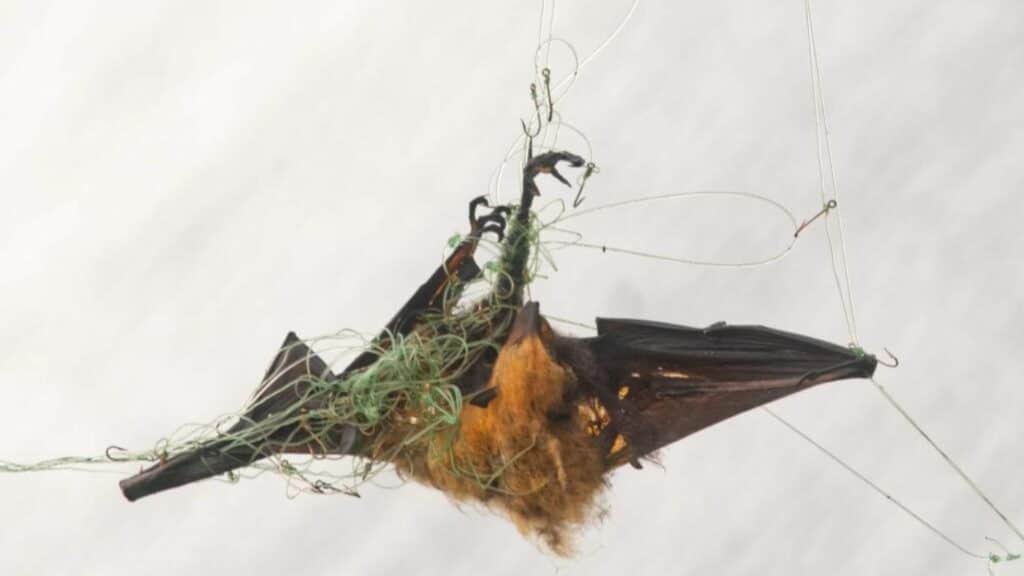
Today, we are imploring you to consider the plight of fragile, helpless flying foxes in Seychelles – animals with bodies barely bigger than your palm – who are maligned, hunted, ripped from their families, and needlessly slaughtered for gruesome “traditional” foods. Flying foxes need YOU today – and if you help right away, your gift will be DOUBLED. Read on… Widely misunderstood and ruthlessly hunted for their flesh, flying foxes are in deep peril. Right now, they are dying in their droves across the island of Mahé in the Seychelles. Credit: Protect Paradise Seychelles They are desperate for YOUR help. Using the poor excuse of “tradition,” flying foxes are caught and killed for “bat curry,” a dish with no place in a society with an abundance of ethical food sources. Hunters string crude fishing lines and hooks high up in trees, and when the unsuspecting flying creatures forage for fruit, they get trapped in these barbaric contraptions. Helpless babies die still clinging to their mothers or fall from their mothers’ bodies to die slowly on the ground. Animals not killed outright by the nets are butchered with knives. Those who don’t partake in this culinary catastrophe are often disinterested in halting this brutal practice, as the animals are seen as little better than pests. Credit: Anna Buckley To make matters exponentially worse, this is far from the only threat facing the species on Mahé. A growing human population means fewer food sources and increasing environmental threats. Their habitats are destroyed, fruit trees are replaced by urban blight or harvested for human consumption, and bright city lights leave them disorientated, lost and prone to accidents. Frequently, they fly into power lines, killing them or leaving them fatally injured.The rampant killing of helpless flying foxes is heartbreaking. Please show these gentle, sweet flying foxes that YOU care! Also known as fruit bats, flying foxes are intelligent, social creatures who often live in family groups. Pups are totally reliant on their mothers as infants when they weigh less than a small apple and stay with their mothers for up to one year. There is a glimmer of hope for these mammals: your matched donation today, and our dedicated partner on the ground, Protect Paradise Seychelles (PPS). This hardworking organization rescues orphaned, injured and displaced flying foxes, among many other species, and helps to save as many lives as they can. They need extra support NOW, because it is “orphan season.” Credit: Protect Paradise Seychelles A very kind donor has pledged to MATCH your donation to flying foxes today, empowering you to make EVEN MORE of a difference! A generous-hearted ASI donor with a special interest in flying foxes has pledged to MATCH every donation made towards these special mammals, up to a total of $4,000 (roughly £3,160). That means whatever you donate will effectively be DOUBLED, so your contribution will go twice as far! As PPS’ rehabilitation center fills with injured, orphaned souls needing help during the species’ birthing season, this compassionate pledge – combined with your donations – has the power to help save so many more lives! Credit: Protect Paradise Seychelles PPS desperately needs an X-ray machine to accurately diagnose and treat injuries. It will make a LIFE-SAVING DIFFERENCE to flying foxes, and your MATCHED DONATION will help us provide it! Failing to protect flying foxes could have devastating consequences for life on Earth. These winged mammals disperse seeds and pollinate flowers to sustain forests and promote healthy growth. In turn, forests support thousands of species of fauna and flora, and are crucial in combating climate change by removing carbon dioxide from the air. Without forests, the impact of dramatically changing weather events would become even more severe, turning rains into floods and dry spells into droughts. Our very life on Earth depends on healthy forests – and forests depend on creatures like flying foxes. We know you care about our beautiful planet and every wild animal that calls it home. We know that you won’t let these helpless little creatures down! Please donate as much as you can now. Every donation up to $4,000 (roughly £3,160) will be MATCHED! That means the time to give is right now.
GOOD NEWS UPDATE: Giraffe relocation success!

Article written by Shannon Edwards Remember the four giraffes living in unsuitable conditions on a small piece of land in South Africa’s Eastern Cape province? We have an update you’ve been waiting for! Last week, little calf Mallow was successfully relocated to a beautiful private game reserve nearby. Thanks to your generosity, we covered the full cost of her capture and move. Our wildlife veterinarian and game capture specialist on the ground orchestrated Mallow’s relocation with expert precision and meticulous care. Now, the little calf has enough food and space to roam freely and is thriving with her new herd – all thanks to your support. While the three adult giraffes unfortunately cannot be moved due to the significant risk of injury or death, the compassionate couple who owns the original property has opened their hearts to the animals, and is prepared to allow them to live out the rest of their days there. We will continue to support their care, providing supplementary feed and implementing a tick management program. Our wildlife vet will also ensure the giraffe bull receives regular contraception to prevent more calves from being born into unsuitable conditions. It is disappointing that we could not relocate the giraffes as a family, but our priority is ALWAYS the animals’ safety. The good news is that you have given Mallow a chance at a long and happy life. Thank you for making this possible.
Hedgehogs are in terrible trouble.
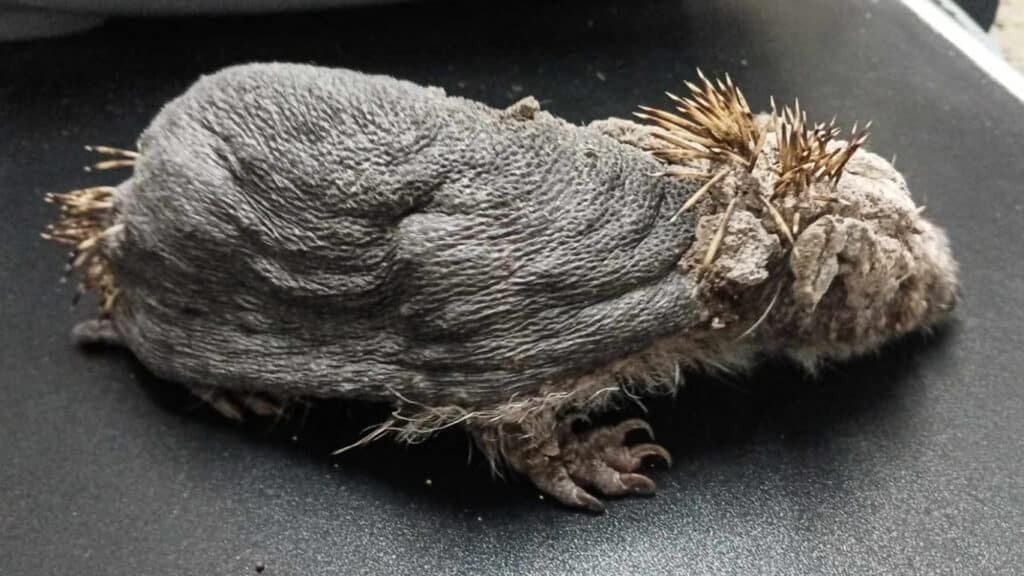
With fewer and fewer safe spaces for hedgehogs in Attica, Greece, their habitats are disappearing before their eyes. They are in terrible and increasing danger. These small, helpless creatures, weighing no more than 2.2 pounds (one kilogram), are battling in rural and urban areas outside Athens. They cannot withstand the effects of climate change, rampant habitat loss, pesticides, and an increasing human population – not without YOUR help. Credit: ANIMA Adorable baby hedgehogs and pregnant mothers caught in garden fencing, poisoned by pesticides, and dying from mange – please help us save these fragile creatures! Image for illustrative purposes only. Credit: Pam Clutterbuck Recently, our partner in Greece, ANIMA (Wildlife Rehabilitation Association), was called to the aid of a pregnant hedgehog caught in garden fencing in a suburban area. ANIMA managed to rescue her, but the stress of her ordeal caused her to have a miscarriage. There are many more tragic cases. Of five hedgehogs they received one weekend, four struggling with mange, all sadly died. Quasimodo, meanwhile, has neurological issues which he may have been born with and which cause him to have fits. He requires dedicated medical care and sleeps on heating pads. Fragile Quasimodo has neurological challenges and requires ongoing veterinary care. Credit: ANIMA Armadillo was discovered by kind people in a rural part of Attica. Due to mange, he had lost all his quills and was completely naked. He is treated with baby oil and kept on heating pads to aid his slow recovery. This may look like an avocado but, horrifically, it is Armadillo the hedgehog, with severe mange. Credit: ANIMA Helpless hedgehogs are mowed down by vehicles, die stuck in fencing, or get killed when they inadvertently ingest pesticides or chemicals. Please, help us save these defenseless creatures. ANIMA rescues and cares for around 300 hedgehogs every year of the northern white-breasted variety. This is a high number of hedgehogs by Greek standards, and the figures are only increasing as the effects of climate change and human activity worsen. Image for illustrative purposes only. Climate change and human activity have destroyed hedgehogs’ ecosystems and homes. Without our help today, countless more will die helpless and alone. Please, help now! Credit: ANIMA It costs around $120 (£95) per month to treat, feed, care for and shelter a rescued hedgehog. These fragile little animals require heating in winter and specialized care when they are affected by mange. Once healthy, hedgehogs are released into ANIMA’s protected areas outside the city, usually southwest of Attica, where the habitat is better suited to their survival. For every $120 (roughly £95) you donate, you can support a hedgehog’s treatment and care for a month. Can hedgehogs count on you today? At ASI, we believe every animal deserves to live and thrive – and as a concerned custodian of our planet, we know you agree. Please, help us support these little creatures in big trouble right now. Donate to Animal Survival International today.
Woman who welcomed eight foxes into her home now uses them as therapy animals to help domestic abuse survivors
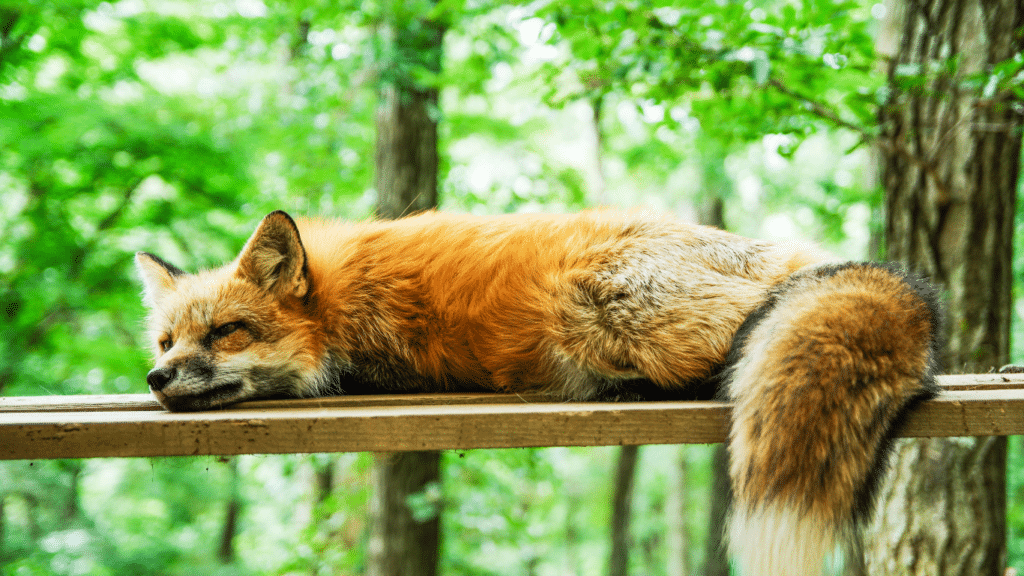
Article written by Molly Powell Originally published by Independent UK (Feb 5, 2024) At the end of 2022, Nicole began using her foxes as therapy foxes. A woman who rescued eight foxes from fur farms that now sleep in a twin-size bed in her home now uses them as therapy foxes in women’s shelters and youth rehabilitation programmes and claims many “resonate” with the foxes’ “story of survival”. Nicole Navarro, 43, who works part-time on a tourist boat and lives in Key Largo, Florida, with her eight foxes, Libby, Louie, Reef, Kai, Coral, Jasper, Ridley and Penny, began rescuing the animals in 2020 after she got laid off in the pandemic. Nicole says all of her foxes were “deemed undesirable” by fur farmers, as they had “some sort of physical defect”, such as missing tails or toes, but claims this is what “ended up saving their lives”. Nicole’s foxes have 24/7 access to a room in her house, with luxuries such as air conditioning and a bed, as well as a huge enclosure outside with “enrichment activities”, and Nicole spends most of her days off playing with them, and feeding them their diet of chicken, duck, rabbit and turkey, which costs 800 dollars (£625) a month. At the end of 2022, Nicole began using them as therapy foxes, where she puts them in a harness, allows people to stroke them and tells the foxes’ stories of going from being bred to kill to living a happy life, which she finds “extremely rewarding” as she has “experienced intense trauma” in her past. Credit: Collect/PA Real Life Nicole said: “When I take the foxes to the sessions, I find that the people really resonate with the foxes’ story of survival. “Often these people are victims of domestic abuse and in a way, have been in a similar position.” Nicole first fell in love with foxes in 2018 when she was volunteering at the Monroe County Sheriff’s Office in Key West, Florida, which had an animal farm. She explained: “In 2018, two foxes were surrendered and even though I had a lot of experience with different species of animals throughout my life, I grew up on a very large horse farm in western Pennsylvania, I had never had up close personal experience with foxes. “And I just sort of became completely infatuated with the species and then started learning more about their backgrounds – most foxes here in the United States can be traced back to fur farming and it’s illegal to capture, obviously, wild animals out of the wild and turn them into pets.” From then on, Nicole started contacting fox rescue centres throughout America about potentially rescuing them in the future, and in March 2020, one of her contacts asked her if she was ready to take some foxes that were being surrendered from a fur farm. Nicole thinks her foxes have improved her mental health. Credit: Collect/PA Real Life She said: “I quickly scrambled to raise money because at that time, the Florida Keys completely shut down since we’re tourism based so I got laid off, and it became a bit of a lockdown project.” Two months later, she welcomed Louie and Libby, foxes from a fur farm, into her home and since then, she has adopted another six foxes. She said: “All of the foxes were deemed undesirable meaning the fur farmer would not have been able to kill them and sell them because they had some sort of physical defect. “So some of the foxes I have don’t have tails, some of them are harmed by their mother at a very young age so they’re missing parts of their tail and Reef is even missing some toes. “So all the foxes I have here have some sort of thing that was deemed imperfect by the farmer, but it’s actually what ended up saving their lives.” Nicole keeps them all in two large enclosures outside and they even have 24/7 access to a room in her house. Nicole first encountered foxes when she was volunteering at an animal farm. Credit: Collect/PA Real Life She said: “They have a twin-size bed that they sleep on and there’s no electrical wires or anything they can chew on or harm themselves with. “It gets pretty warm here so the room is air conditioned… and they all have outdoor enclosures with ramps and platforms and enrichment activities, toys and tunnels. “So they are really given everything they need to use the natural instincts they have – they’re not domestic in any way, shape or form.” Nicole explained her daily-routine to look after her furry friends, saying: “I get up fairly early and I do a spot clean of the enclosures. “I feed them a little breakfast – they eat rabbit, duck, chicken, turkey, I do offer them fruits and vegetables, but they rarely go for it. “I sit back there with them, I interact with them, I play with them.” At the end of 2022, Nicole began using her foxes as therapy foxes. Nicole started rescuing her foxes in lockdown. Credit: Collect/PA Real Life She said: “I reached out to a women’s holistic trauma recovery programme and just sort of proposed the idea of bringing a fox to meet the women and sharing the foxes’ stories of survival – going from certain deaths to living on an island in Florida. “When I take one of my foxes into the sessions, I put him in a harness and a little leash, but I don’t train him on a leash. “I tell his story and then welcome people to pet him or play with him, but it’s amazing, as soon as I put the harness on him his personality changes – he’s so calm and relaxed and we’ve never had any issues with him.” From there, Nicole has expanded her sessions. She said: “The Florida Keys Children’s Shelter saw what we were doing with the women and asked if they could start bringing children here to meet the
Developers in England will be forced to create habitats for wildlife—here’s how it works
Article written by Natalie Duffus and Sophus zu Ermgassen Originally published by Phys.org (Feb 16, 2024) England’s new environmental policy, biodiversity net gain, went live on February 12. Most new developments—everything from a few houses to large solar farms or new roads and railways—will now have to provide a 10% net gain in biodiversity, maintained for at least 30 years. The idea is that, instead of driving a loss of habitats for wildlife, developments will now contribute to a recovery. The new policy will be rolled out to small sites in April 2024 and nationally significant infrastructure projects in 2025. Scotland and Wales are considering adopting similar policies. It’s an exciting moment—we are academics who assess policies like these, and we recognize that this is one of the world’s most ambitious ecological compensation policies. But our research has nonetheless identified flaws and loopholes. It will be important to get the nuts and bolts right to ensure the policy delivers real benefits, and that gains are not just made on paper. What does a ‘biodiversity net gain’ actually mean? The policy is designed so that the improvement is measurable using the statutory biodiversity metric. This is a calculation tool which assigns numerical values (“units”) to habitats based on their size, type and ecological condition. A small lawn might be one unit, while a small patch of woodland could be 16 units. Before the bulldozers arrive, developers will need to take stock of the units provided by their on-site habitats. When the work is completed, there will need to be at least 10% more units than there were to begin with. This should be achieved, firstly, by avoiding damage to the existing habitats as much as possible. But some harms are inevitable, and these will need to be compensated for—both by improving the quality of the remaining habitats, and by creating new habitats. Habitats created in the same local authority as the damaged sites are awarded more units, reflecting a preference for keeping biodiversity local to the habitats and people affected by the development. In practice, this means the net gain rules generally promote more grassland, ponds, hedgerows and other natural habitats within developments. When on-site habitats are not enough to meet the 10% requirement, then off-site gains (“offsets”) can be purchased. It is hoped that the developers’ demand for offsets will drive investment into landowners and habitat banks to do large nature recovery projects. This could allow, for example, the creation of wildflower meadows to offset the environmental harm caused by a new housing development. Researchers have learned a lot about the outcomes of biodiversity net gain from studying councils such as West Oxfordshire and Cornwall, where equivalent commitments were adopted early. But based on this experience, academics and ecologists are still concerned about several key gaps in the policy. Is it delivering for wildlife? A key concern is that the metric used to score biodiversity may not work in the best interests of wildlife—particularly insects. The metric is intended to be a practical proxy for biodiversity, by assessing and scoring different habitat features. However, it assigns a low score to grasslands with nettles, ragwort, thistles and diverse mosaics of scrub and bare earth, which support a wealth of insect species. Under the net gain policy, these habitats are penalized in favor of tidy grasslands that may have plenty of flowers but lack the other components necessary to sustain flourishing insect populations. Not only will habitats potentially be worse for wildlife, but they will also be smaller, as our team’s recent research found that biodiversity net gain was associated with a reduction in the area of open greenspace. This is because the metric allows large “poor” quality habitats to be traded for small “good” ones. We also found the metric is so flexible that most large developments can meet their entire 10% commitment within the development footprint. This reduces the demand for offsets, and hence the private investment that could be going into large nature recovery projects. How will it be enforced? Biodiversity net gain also allows developers to effectively trade existing habitats for promised future habitats. This is a big risk. For this trading system to work, it needs to be well monitored and governed, or else developers will have little incentive to actually create those new habitats. Habitats promised on site—new ponds, lawns and so on—are at particular risk, as there are limited mechanisms to tackle non-compliance. Our team has previously estimated that a quarter of habitat units promised under net gain regulations could be unmonitored and effectively unenforced. In response to these challenges, the government has increased funding and powers for local planning authorities. However, there are still concerns that this won’t be enough to monitor habitats for 30 years and act against noncompliance. There are also challenges with ensuring that habitats in the built environment have benefits for wildlife. This includes residential gardens and public-use grasslands which count towards the net gain requirement. Both will be well used by people and pets, reducing their wildlife value. For gardens, it is not yet clear how their wildlife value will be maintained and not lost to artificial grass, decking or concrete slabs. As developers and planners get used to biodiversity net gain, we hope to see these gaps addressed in further policy tweaks. Biodiversity net gain is an exciting, ambitious policy, and we want it to achieve its full potential.
Greenland losing 30m tonnes of ice an hour, study reveals
Article written by Damian Carrington Originally published by The Guardian (Thu, Jan 17, 2024) Total is 20% higher than thought and may have implications for collapse of globally important north Atlantic ocean currents The Greenland ice cap is losing an average of 30m tonnes of ice an hour due to the climate crisis, a study has revealed, which is 20% more than was previously thought. Some scientists are concerned that this additional source of freshwater pouring into the north Atlantic might mean a collapse of the ocean currents called the Atlantic meridional overturning circulation (Amoc) is closer to being triggered, with severe consequences for humanity. Major ice loss from Greenland as a result of global heating has been recorded for decades. The techniques employed to date, such as measuring the height of the ice sheet or its weight via gravity data, are good at determining the losses that end up in the ocean and drive up sea level. However, they cannot account for the retreat of glaciers that already lie mostly below sea level in the narrow fjords around the island. In the study, satellite photos were analysed by scientists to determine the end position of Greenland’s many glaciers every month from 1985 to 2022. This showed large and widespread shortening and in total amounted to a trillion tonnes of lost ice. Greenland has lost a trillion tonnes of ice since 1985 from glacier retreat alone Mass of Greeland ice sheet relative to mass in 2022, billion tonnes “The changes around Greenland are tremendous and they’re happening everywhere – almost every glacier has retreated over the past few decades,” said Dr Chad Greene, at Nasa’s Jet Propulsion Laboratory in the US, who led the research. “It makes sense that if you dump freshwater on to the north Atlantic Ocean, then you certainly get a weakening of the Amoc, though I don’t have an intuition for how much weakening.” The Amoc was already known to be at its weakest in 1,600 years and in 2021 researchers spotted warning signs of a tipping point. A recent study suggested the collapse could happen as soon as 2025 in the worst-case scenario. A significant part of the Greenland ice sheet itself is also thought by scientists to be close to a tipping point of irreversible melting, with ice equivalent to 1-2 metres of sea level rise probably already expected. The study, published in the journal Nature, used artificial intelligence techniques to map more than 235,000 glacier end positions over the 38-year period, at a resolution of 120 metres. This showed the Greenland ice sheet had lost an area of about 5,000 sq km of ice at its margins since 1985, equivalent to a trillion tonnes of ice. The most recent update from a project that collates all the other measurements of Greenland’s ice found that 221bn tonnes of ice had been lost every year since 2003. The new study adds another 43bn tonnes a year, making the total loss about 30m tonnes an hour on average. The scientists said: “There is some concern that any small source of freshwater may serve as a ‘tipping point’ that could trigger a full-scale collapse of the Amoc, disrupting global weather patterns, ecosystems and global food security. Yet freshwater from the glacier retreat of Greenland is not included in oceanographic models at present.” The influx of less dense freshwater into the sea slows the usual process of heavier salty water sinking in the polar region and driving the Amoc. Prof Tim Lenton, at the University of Exeter, UK, and not part of the study, said: “This additional freshwater input to the north Atlantic is a concern, particularly for the formation of deep water in the Labrador and Irminger Seas within the subpolar gyre, as other evidence suggests these are the regions most prone to being tipped into an ‘off’, or collapsed state.” “That would be like a partial Amoc collapse, but unfolding faster and having profound impacts on the UK, western Europe, parts of North America, and the Sahel region, where the west African monsoon could be severely disrupted,” he said. “Whether this previously unaccounted source is enough freshwater to make a difference depends on how close we are to that subpolar gyre tipping point. Recent models suggest it could be close already at the present level of global warming.” However, Prof Andrew Shepherd, at the University of Northumbria, UK, said: “Although there was a step-change in glacier retreat at the turn of the century, it’s reassuring to see that the pace of ice loss has been steady since then and is still well below the levels needed to disturb the Amoc.” The discovery of the extra ice loss is also important for calculating the Earth’s energy imbalance, ie how much extra solar heat the Earth is trapping due to human-caused greenhouse gas emissions, said Greene. “It takes a lot of energy to melt 1tn tonnes of ice. So if we want very precise energy balanced models for the Earth, this has to be accounted for.” The glaciers analysed in the study were mostly below sea level already, so the lost ice was replaced by sea water and did not affect sea level directly. But Greene said: “It almost certainly has an indirect effect, by allowing glaciers to speed up. These narrow fjords are the bottleneck, so if you start carving away at the edges of the ice, it’s like removing the plug in the drain.” Greene and colleagues also analysed the extent of Antarctic ice shelves over time in a study published in 2022. It found that the total lost from the ice shelves since 1997 was doubled to about 12tn tonnes when the shrinking areal extent of the shelves was accounted for and added to the thinning of the shelves.
‘Astounding’ ocean temperatures in 2023 intensified extreme weather, data shows
Adapted from article written by Damian Carrington Originally published by The Guardian (Thu, Jan 11, 2024) Record levels of heat were absorbed last year by Earth’s seas, which have been warming year-on-year for the past decade “Astounding” ocean temperatures in 2023 supercharged “freak” weather around the world as the climate crisis continued to intensify, new data has revealed. The oceans absorb 90% of the heat trapped by the carbon emissions from the burning of fossil fuels, making it the clearest indicator of global heating. Record levels of heat were taken up by the oceans in 2023, scientists said, and the data showed that for the past decade the oceans have been hotter every year than the year before. The heat also led to record levels of stratification in the oceans, where warm water ponding on the surface reduces the mixing with deeper waters. This cuts the amount of oxygen in the oceans, threatening marine life, and also reduces the amount of carbon dioxide and heat the seas can take up in the future. “We’re already facing the consequences and they will get far worse if we don’t take action,” said Prof John Abraham, at the University of St Thomas in Minnesota. “But we can solve this problem today with wind, solar, hydro and energy conservation. Once people realise that, it’s very empowering.” Credit: Thoko Chikondi/AP In 2023, an additional 15 zettajoules of heat was taken up by the oceans, compared with 2022. By comparison, humanity uses about half a zettajoule of energy a year to fuel the entire global economy. In total, the oceans absorbed 287 zettajoules in 2023. These figures are based on data from the Institute of Atmospheric Physics at the Chinese Academy of Sciences. A separate dataset from the US National Oceanic and Atmospheric Administration found a similar increase and identical trend over time. The ocean surface temperatures in 2023 were “off the charts”, the researchers said. The primary cause was another year of record carbon emissions, assisted by El Niño. Over the whole year, the average temperature was 0.1C above 2022, but in the second half of 2023 the temperature was an “astounding” 0.3C higher. The scientists said the record level of stratification and reduced oxygen in the ocean would have “severe consequences” for ocean plant and animal life. Marine heatwaves struck across the oceans in 2023. A separate report, by the consortium Global Water Monitor (GWM), found some of the worst disasters of 2023 were due to unusually strong cyclones bringing extreme rainfall to Mozambique and Malawi, Myanmar, Greece, Libya, New Zealand and Australia. Prof Albert Van Dijk of GWM said: “We saw cyclones behave in unexpected and deadly ways. The longest-lived cyclone ever recorded battered south-eastern Africa for weeks. Warmer sea temperatures fuelled those freak behaviours, and we can expect to see more of these extreme events going forward.” Abraham said a rapid end to the burning of coal, oil and gas was needed: “If we don’t bend the trajectory of climate change downwards, then we are going to experience more extreme weather, more climate disruption, more climate refugees, more loss of agricultural productivity. We’re going to have costs in dollars and lives from a problem that we could have avoided. And, generally, those least responsible are going to suffer the most, which is a tremendous injustice.”
Digitized records from wildlife centers show the most common ways that humans harm wild animals
Article written by Tara K. Miller and Richard B. Primack Originally published by The Conversation (Wed, Nov 22, 2023) At hundreds of wildlife rehabilitation centers across the U.S., people can learn about wild animals and birds at close range. These sites, which may be run by nonprofits or universities, often feature engaging exhibits, including “ambassador” animals that can’t be released – an owl with a damaged wing, for example, or a fox that was found as a kit and became accustomed to being fed by humans. What’s less visible are the patients – sick and injured wild animals that have been admitted for treatment. Each year, people bring hundreds of thousands of sick and injured wild animals to wildlife rehab centers. Someone may find an injured squirrel on the side of the road or notice a robin in their backyard that can’t fly, and then call the center to pick up an animal in distress. We study ecology and biology, and recently used newly digitized records from wildlife rehabilitation centers to identify the human activities that are most harmful to wildlife. In the largest study of its kind, we reviewed 674,320 records, mostly from 2011 to 2019, from 94 centers to paint a comprehensive picture of threats affecting over 1,000 species across much of the U.S. and Canada. Our findings, published in the journal Biological Conservation, point to some strategies for reducing harm to wildlife, especially injuries caused by cars. Tracking the toll Humans are responsible for the deaths and injuries of billions of animals every year. Bats and birds fly into buildings, power lines and wind turbines. Domestic cats and dogs kill backyard birds and animals. Development, farming and industry alter or destroy wild animals’ habitats and expose wildlife to toxic substances like lead and pesticides. Extreme weather events linked to climate change, such as flooding and wildfires, can be devastating for wildlife. Most Americans support protecting threatened and endangered species, and recognize that human activities can harm wildlife. But it is surprisingly difficult to determine which activities are most harmful to wildlife and identify effective solutions. Information from wildlife rehab centers across the U.S. can help fill in that picture. When an animal is brought into one of these centers, a rehabilitator assesses its condition, documents the cause of injury or illness if it can be determined, and then prepares a treatment plan. Wildlife rehabbers may be veterinarians, veterinary technicians or other staff or volunteers who are certified by state agencies to treat wildlife. They follow professional codes and standards, and sometimes publish research in peer-reviewed journals. A growing data pool Until recently, most wildlife rehab records existed only in binders and file cabinets. As a result, studies drawing on these records typically used materials from a single location or focused on a particular species, such as bald eagles or foxes. Recently, though, rehab centers have digitized hundreds of thousands of case records. Shareable digital records can improve wildlife conservation and public health. For example, the Wildlife Center of Virginia has worked with government agencies and other rehab centers to establish the WILD-ONe database as a tool for assessing trends in wildlife health. This will be an exciting area of research as more records are digitized and shared. Threats vary by species Using this trove of data, we have been exploring patterns of wildlife health across North America. In our study, we identified key threats affecting wildlife by region and for iconic and endangered species. Overall, 12% of the animals brought to rehab centers during this period were harmed by vehicle collisions – the single largest cause of injury. For great horned owls, which are common across the U.S., cars were the most common cause of admission – possibly because the owls commonly forage at the same height as vehicles, and may feed on road kill. Other threats reflect various animals’ habitats and life patterns. Window collisions were the most common injury for the big brown bat, another species found in many habitats across the U.S. Fishing incidents were the main reason for admission of endangered Kemp’s ridley sea turtles, which are found in the Gulf of Mexico and along the Atlantic coast. Toxic substances and infectious diseases represented just 3.4% of cases, but were important for some species. Bald eagles, for example, were the species most commonly brought to centers with lead poisoning. Eagles and other raptors consume lead ammunition inadvertently when they feed on carcasses left in the wild by hunters. In southern Florida, hurricanes and floods resulted in spikes in the numbers of animals brought to rehab centers, reflecting the impact of climate-driven extreme weather events on wildlife health. About one-third of animals in the cases we reviewed were successfully released back to the wild, though this varied greatly among species. For example, 68% of brown pelicans were released, but only 20% of bald eagles. Unfortunately, some 60% of the animals died from their injuries or illnesses, or had to be humanely euthanized because they were unable to recover. Spotlighting solutions Our results spotlight steps that can help conserve wildlife in the face of these threats. For example, transportation departments can build more road crossings for wildlife, such as bridges and underpasses, to help animals avoid being hit by cars. Wildlife management agencies can ban or limit use of ammunition and fishing gear that contain lead to reduce lead poisoning. And governments can incorporate wildlife into disaster management plans to account for surges in wildlife rescues after extreme weather events. People can also make changes on their own. They can drive more slowly and pay closer attention to wildlife crossing roads, switch their fishing and hunting gear to nonlead alternatives, and put decals or other visual indicators on windows to reduce bat and bird collisions with the glass. To learn more about animals in your area and ways to protect them, you can visit or call your local wildlife rehab center. You can also donate to these centers, which we believe do great work, and are often underfunded. The scale of threats facing wild animals can seem overwhelming, but wildlife rehabbers show that helping one injured animal at a time can
Brazilian semi-arid biome could lose over 90% of mammal species by 2060
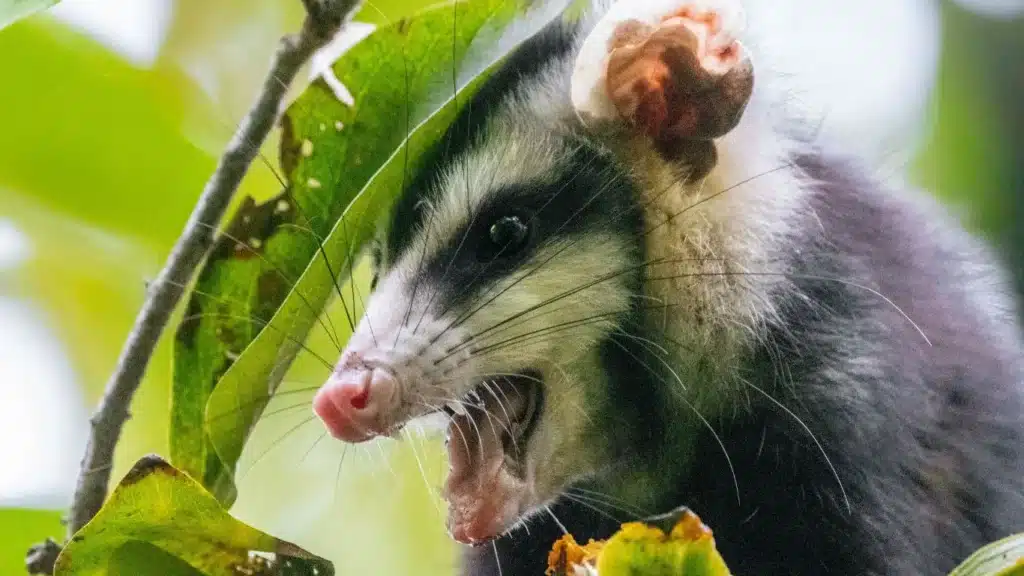
Article written by André Julião Originally published by Phys.org (Thu, Jan 11, 2023) The foreseeable effects of climate change on the Caatinga, the semi-arid shrubland and thorn forest biome in Brazil’s Northeast region, will be catastrophic for most terrestrial mammal species that live there. A study reported in the journal Global Change Biology by researchers in Brazil affiliated with the State University of Campinas (UNICAMP), the Federal University of (UFPB) and the Federal University of Minas Gerais (UFMG) forecasts species loss for 91.6% of species assemblages in the Caatinga and habitat loss for 87% by 2060. “This is the best-case scenario, which assumes humanity keeps the promises made in the Paris Agreement, cuts greenhouse gas emissions, and slows the pace of global warming forecasted for the decades ahead,” said Mário Ribeiro de Moura, corresponding author of the article and coordinator of the study. The researchers cross-tabulated data from the latest projections of future temperatures published by the Intergovernmental Panel on Climate Change (IPCC) with occurrence data for terrestrial mammals in the Caatinga. They used several statistical models to capture the species’ physiological tolerance to the existing climate and future climate change scenarios. According to IPCC, the average temperature in South American drylands will rise up to 2.7 °C by 2060, and the dry season will lengthen by as much as 21 consecutive dry days. Given that animals take thousands or millions of years to adapt to such drastic changes, the models suggest only a few species will find areas with a suitable climate in the future, including armadillos, agoutis, and deer, all of which are large mammals. Primates will lose habitats, on the other hand. Small species whose adults weigh less than 1 kg, comprising 54% of the Caatinga’s mammals, will lose most. Twelve species, or 12.8% of the total, will lose their habitats completely by 2060 under the best-case scenario and 28 (30%) by 2100 under the worst-case scenario. The hardest-hit rodents and marsupials will include the Agile gracile opossum (Gracilinanus agilis), the Long-tailed climbing mouse (Rhipidomys mastacalis), and the White-spined Atlantic spiny rat (Trinomys albispinus). “Biotic homogenization [in which previously distinct plant communities become progressively more similar] will occur in 70% of mammal assemblages, with a few generalist species surviving while rarer specialists will lose suitable areas and become locally extinct. This will result in a loss of ecological functions such as seed dispersal, and the ecosystem as a whole will become less resilient,” Moura said. A previous study by Moura and colleagues also used statistical models and databases to forecast how plants in the Caatinga will be affected by climate change. The findings include homogenization of 40% of plant assemblages, with shrubs and grasses surviving better than trees and other woody species. Transition zone Although mammals can change their behavior to escape higher temperatures, cooler times of day may be used by many species at the same time, leading to more competition for resources, and this will also affect their chances of survival, Moura explained. The eastern portion of the Caatinga, which contains the transition zone to the Atlantic Rainforest biome, will be affected most under all scenarios. More species live there thanks to the higher levels of humidity from the ocean and forest evapotranspiration. “This is also the part of the Caatinga with the largest cities. Deforestation, poaching and other longstanding practices help make the situation there even more complicated, potentially amplifying the effects of climate change,” Moura said. In light of all these factors, the article stresses the importance of taking biodiversity forecasts into account in long-term socio-environmental policy and conservation planning. Brazilian semi-arid biome could lose over 90% of mammal species by 2060
Birds of prey in Africa experiencing population collapse, study finds
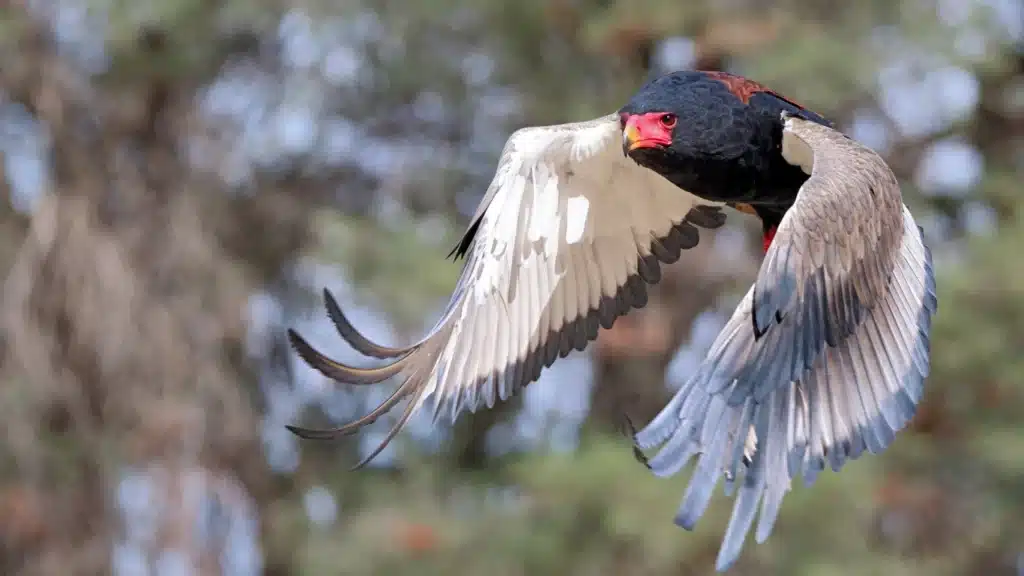
Article written by Patrick Greenfield Originally published by The Guardian (Thu, Jan 04, 2024) Several species have vanished across swathes of the continent – and scientists say their disappearance holds unknown risks for humans Africa’s birds of prey have experienced a widespread population collapse that risks unforeseen consequences for humans, according to a new study. Tropical raptor species including the martial eagle, the bateleur and the dark chanting goshawk have vanished from swathes of the African continent over the past 40 years, new analysis shows, as many wild areas were converted to farmland. Several African birds of prey are on track to become locally extinct in many countries this century. Published in the journal, Nature Ecology and Evolution, the new research used road surveys to find that nearly 90% of the 42 raptor species studied had experienced declines, with more than two-thirds showing evidence of being globally threatened. Dr Phil Shaw, the study’s author at the University of St Andrews, said the disappearance of apex raptor species could have unintended consequences for humans, citing the example of the decline in Indian vultures that led to a rise in rabies cases in humans in the early 1990s. The study found that the African birds of prey, many of which are big enough to hunt jackals and antelopes as well as snakes, rodents and smaller birds, were becoming increasingly dependent on protected areas such as national parks and reserves. While many populations of raptors also declined in protected areas, the fall was often significantly slower. The researchers cited the importance of a UN target to protect 30% of the Earth by the end of this decade for nature. “We find that [while] protected areas do provide a good measure of protection, it’s still the case that raptors are declining within protected areas – quite steeply in some cases,” Shaw said. “In fact, we found 40% of those 42 species were declining inside of protected areas at rates that would classify them as being endangered. In effect, they have nowhere else to run.” Shaw said a 2015 study of African vultures, which found many were critically endangered due to poisoning and persecution, was the inspiration for the wider research. “We’ve looked at 42 species of raptors that also include the vulture species. We find that surprisingly, many of the larger raptors have been declining at an equally fast rate as the vultures,” he said. The declines were most prominent in west Africa, according to the study, which they said was consistent with agricultural expansion and under-resourcing of protected areas. Shaw said there could be unforeseen consequences for places where raptors disappeared. “In the case of the vultures, it’s fairly clear cut that they provide an ecosystem service by removing carcasses. We’ve seen what happened in India when they had a similar population crash for different reasons. It led to an increase in the number of feral dogs, particularly in built-up areas… That led to a huge increase among the human population of rabies, passed on by bites from the dogs,” he said.
Wildfire emergency for animals in Australia!
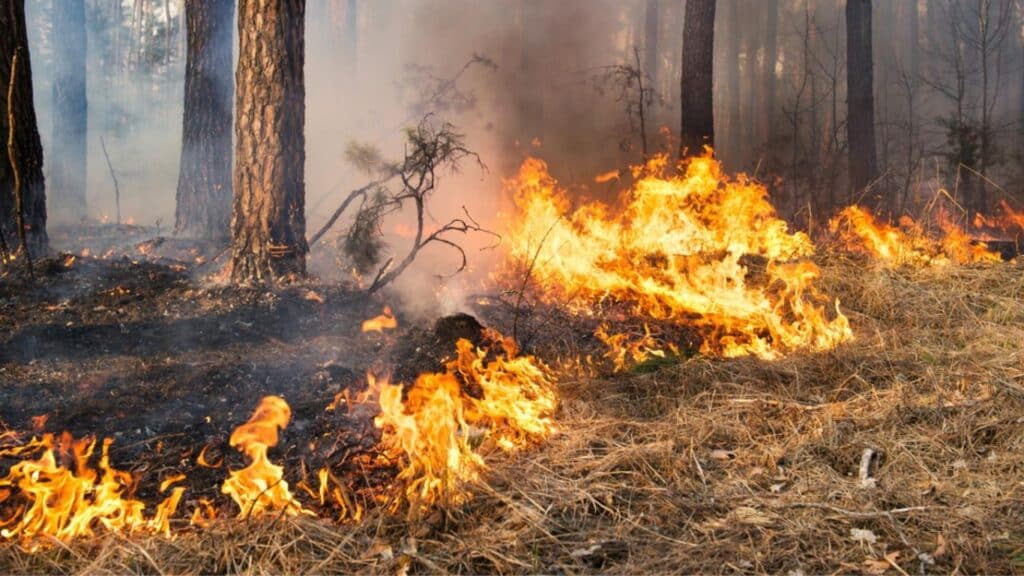
Matty, a joey of just a few months old, has lost his entire family in horrendous wildfires sweeping parts of Australia. Credit: Express Animal Rescue and Rehab His feet, hands, and belly were badly burnt. He is the sole survivor of a troop of roughly 80 kangaroos who were trapped and burnt to death in the blazes currently obliterating parts of the country. Matty is just one example of the thousands of wild animals left injured, homeless, and traumatized as Australia’s fire season has begun, fuelled by the warmest winter on record and an unseasonably warm, dry spring. Fires have destroyed thousands of acres of land and homes along the west and east coasts of the country, people have been evacuated, and thousands of wild animals have had their homes destroyed. Orphaned, injured and alone, these animals are counting on you today… Thousands of kangaroos, joeys, owls, magpies, and reptiles like bobtail lizards are injured and in need of critical life-saving treatment. Please help them now! Firefighters and law enforcement officials have their hands full trying to evacuate people to safety. Kind policemen saved Matty from the flames, but as you can imagine, animals are often not the priority when human lives are at stake. Credit: DFES “The damage out here is shocking. So much lost. The heat is mad without the temperature [of] the day on top. Think of the people that [sic] have lost everything. The animals that have lost [their] lives and the animals still out there in pain.” – Express Wildlife Rescue and Rehab Our partner is on the ground right now, and providing critical treatment to animals burnt, injured, and displaced by Australia’s devastating wildfires. They desperately need YOUR support. Tragically, helpless wild animals, including infants, have been terribly injured and traumatized in the disaster. Some have been horrifically burnt after becoming trapped amid the blaze; others have been severely damaged through smoke inhalation. We are working with a courageous organization on the ground in Western Australia called Express Wildlife Rescue and Rehab based in Henley Brook. They are critically low on supplies as the number of animals in need continues to soar, and right now, are in urgent need of essential veterinary supplies and equipment, which you have the power to help us provide. Australia’s fires are a tragedy for animals who cannot flee like people can and who, in times of disaster, are often overlooked. Only with your support right now can we race to the aid of Australia’s trapped, injured, burnt animals. Please help NOW! As a loyal supporter of our work, you know that we are ALWAYS there for animals in their darkest hour… … You also know that it is ONLY with your generous support that we can rush emergency aid to them. Animal rescue teams are supporting as many helpless wild animals as they can. They are desperate for food for the animals, transport crates, and funds for crucial veterinary care. The number of animals in need continues to climb, and our partners cannot rescue more without the resources to do so. The survivors, covered with burns or with severe respiratory complications due to smoke inhalation, need emergency veterinary care and long-term rehabilitation. These animals have fought relentlessly to survive… we must honor their battles and will to live by doing everything we possibly can to support their recovery… Credit: Express Animal Rescue and Rehab Your donation will be used to purchase food, transport crates, and life-saving veterinary supplies. Many animal victims are hanging by a thread right now. Your donation will quite literally be helping to save animal lives – animals like little orphaned Matty and other burnt kangaroos and exhausted, singed birds and reptiles. Please, we cannot save these precious lives without your support now – so please donate anything you possibly can right away. Your decision to donate is the decision to save animal lives!
More than a quarter of newly approved oil and gas blocks fall in marine protected areas
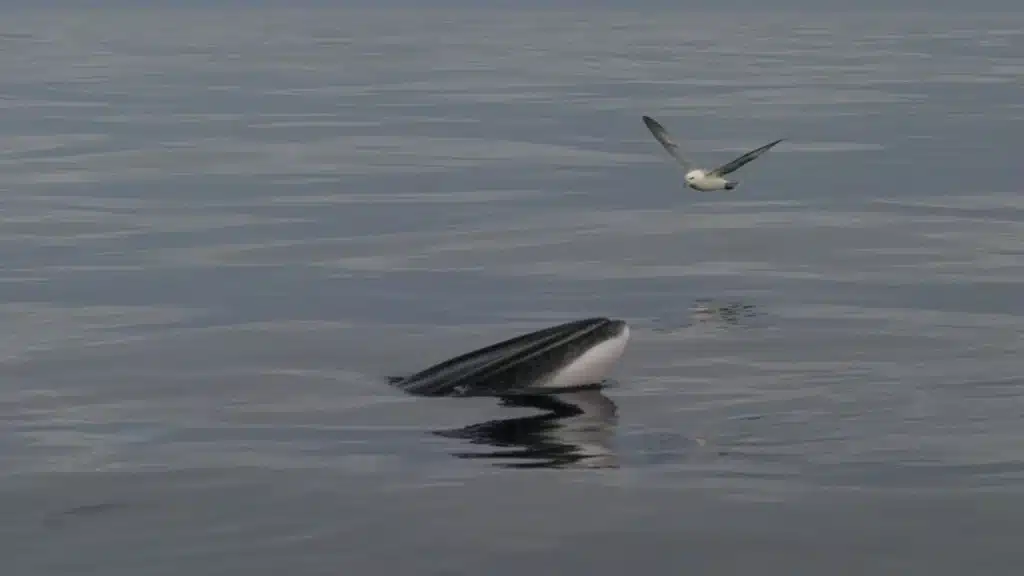
Adapted from the article written by Richa Syal and Ellie O’Donnell Originally published by Unearthed (Mon, 20 Nov, 2023) New UK offshore licences for the multinational oil giants Shell and Eni are among those sitting within sensitive conservation sites More than a quarter of the offshore oil and gas sites licensed by the UK government last month sit within marine protected areas (MPAs) prized for their rare habitats and species, an Unearthed analysis has revealed. Granting new oil and gas licences in our marine protected areas makes a mockery of our climate pledges – Hugo Tagholm, director of Oceana UK At the end of last month, the North Sea Transition Authority (NSTA), a regulatory body responsible for overseeing oil and gas operations in the UK, awarded companies licences to develop or explore for oil and gas resources in 64 offshore sites, known as ‘blocks’, in UK waters. An Unearthed analysis has found that 17 of these blocks (27%) sit wholly or partly within an MPA. The new licences were hailed as “common sense” by the government, which later unveiled plans to bring in mandatory annual licensing rounds, as part of prime minister Rishi Sunak’s promise to ‘max out’ North Sea oil and gas reserves. But ocean conservation groups warned that new oil and gas activity in protected conservation areas had the potential to cause “devastation” to “wildlife and habitats that are vital to ocean health.” While an exploration licence doesn’t always lead to a production field, the NSTA says that the new licences were “prioritised because they have the potential to go into production more quickly than others.” About half of the 27 licences will start development in known reserves, while the others will begin exploration. A NSTA spokesperson said: “Vulnerable and protected habitats and species are considered throughout the licensing and permitting process and licences are only awarded when the NSTA has received permission from OPRED that their environmental assessment requirements are met.” The NSTA has emphasised that, even after a licence is granted, the licensee will still need to get further consents from the authority before they can conduct seismic surveys, drill exploration wells or progress towards full production. More than half of the blocks awarded last month (11 out of 17) that sit within or overlap MPAs went to the oil giant Shell UK. A further three went to a subsidiary of the Italian oil company Eni, and three to Athena Exploration. Shell declined to comment for this story. A spokesperson for Eni told Unearthed that while the company’s licence area “partially overlaps” with a marine conservation zone, “no activity of any kind has ever been foreseen in the area that falls within the marine protected area”. The MPA most-affected by the new tranche of licences is the the North-east Faroe-Shetland channel, which is believed to be a migration route for marine mammals, including fin whales and sperm whales. In total 11 of the blocks approved sit wholly or partly within this conservation area, including eight of the Shell blocks. “MPAs are key habitats that support the UK’s rich marine life, including whales and dolphins, and entire ecosystems will be negatively impacted by destructive oil and gas exploration,” said Anna Moscrop, policy manager at Whale and Dolphin Conservation. She told Unearthed that the Faroe-Shetland channel is “one of the largest designated nature conservation MPAs.” “It is a vital corridor for migrating whales moving between high latitude feeding grounds and breeding areas to the south, and for deep diving species such as sperm and beaked whales which feed in deep waters,” she added. “Fragile and vulnerable deep sea sponges and cold water corals are also found here.” Earlier this year, the government announced plans to issue hundreds of new licences for North Sea oil and gas. The licences awarded last months are just the first batch of blocks to be approved in the current licensing round. The NSTA says that more blocks will be offered in this round, subject to additional environmental checks. The new blocks were granted a month after the approval of the controversial Rosebank project, the UK’s largest untapped oil field off the coast of Scotland, which according to Equinor’s environmental statement will involve building a new pipeline that cuts through the Faroe-Shetland Sponge Belt MPA.
Thousands of threatened pangolins dying on electric fences, meant to protect animals!
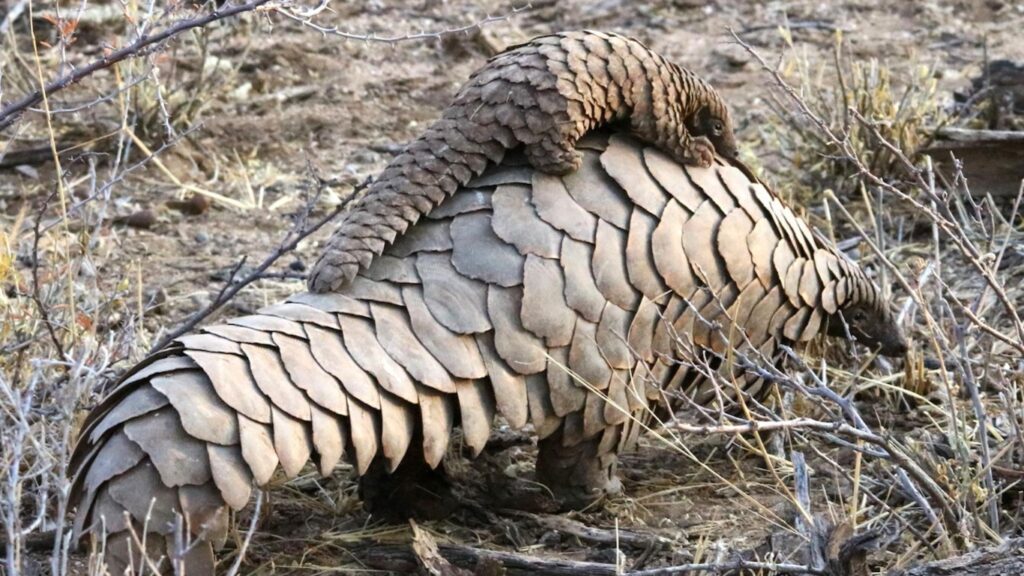
Deadly electric fences erected through pangolins’ natural habitats in South Africa claim up to 2,000 pangolin lives every year. Credit: Wes Kus On The Line Pangolins are already hurtling toward extinction. There is a simple and effective solution, and we need your help today to implement it. Pangolins in South Africa are unwittingly colliding with electrified wire fences by the thousands every year – resulting in horrendous burn injuries and death. Credit: Sabi Sands Nature Reserve With YOUR help right now, we are eliminating this agonizing and deadly threat! Read on… Did you know that in the past 10 years, more than one million pangolins have been poached from the wild and slaughtered for their meat and scales? That means every five minutes, a pangolin is ripped from its habitat, killed or strung up alive in a bushmeat market, and sold for its skin and scales. Credit: The Star It also means that another pangolin will die as you to read this. Every life counts in the fight against pangolin extinction. No one knows how many are left in the wild, so we must save EVERY life we can. For South Africa’s only indigenous pangolin species, the Temminck’s ground pangolin, life is fraught. When these shy, nocturnal creatures are not dodging criminals intent on stealing and killing them, they are accidentally colliding with electrified wire fences on farms and private reserves across South Africa. Credit: Sabi Sands Nature Reserve Although pangolins have protective armor and scales on the outside of their bodies, their bellies do not. This means when they walk across the landscape – which they do on their back legs, with their bellies exposed and unprotected – they are at risk of colliding with the lowest strand of electrified wire fences. Electrified fencing is necessary in South Africa. It safeguards animals from human interference and poaching and helps to reduce human/wildlife conflict. It also serves as a critical barrier between animals, helping reduce the spread of disease. But these fences pose a life-threatening risk to pangolins, who inadvertently end up walking into them and electrocuting themselves. Death may be instant or excruciatingly slow as the animal gradually succumbs to its injuries in the wild. When a pangolin touches an electrified fence, it instinctively rolls into a ball, often around the lowest electrified strand. You can only imagine the agony the animal experiences as shock after shock wracks its body. The continuous shocks force the pangolin to roll tighter, and it is unable to release its grip, usually leading to death by being virtually cooked alive. This is precisely what happened to Electra, a young Temminck’s ground pangolin we told you about months ago. She survived, but not without terrible suffering. Most do not. Credit: ASI/Taryn Slabbert Here is the solution. A large concentration of electrified fences is found in a protected reserve in Mpumalanga. By erecting a simple but effective ‘buffer fence’ in front of the electrified fence, pangolins and other wildlife cannot come into contact with the live wires. To date, our partner Conserv Earth has erected 12.5 miles (roughly 20 kilometers) of this buffer fencing, but they must URGENTLY complete the project. It has already proven to be successful: not one pangolin or other animal has been electrocuted in the area where the buffer fencing has been erected. With your support right now, we will help complete the remaining 43.5 miles (roughly 70 kilometers) of fencing so that we can help ensure that not just some but all the pangolins within the reserve can be protected from devastating electrified wire collisions. If we can raise $44,000 (around £36,000), we can complete the entire fencing program and protect the lives of thousands of pangolins. We know this is not a small amount, but we also know we must protect pangolins at any cost. Can they count on you today? Please donate as much as you possibly can right away.
Number of species at risk of extinction doubles to 2 million, says study
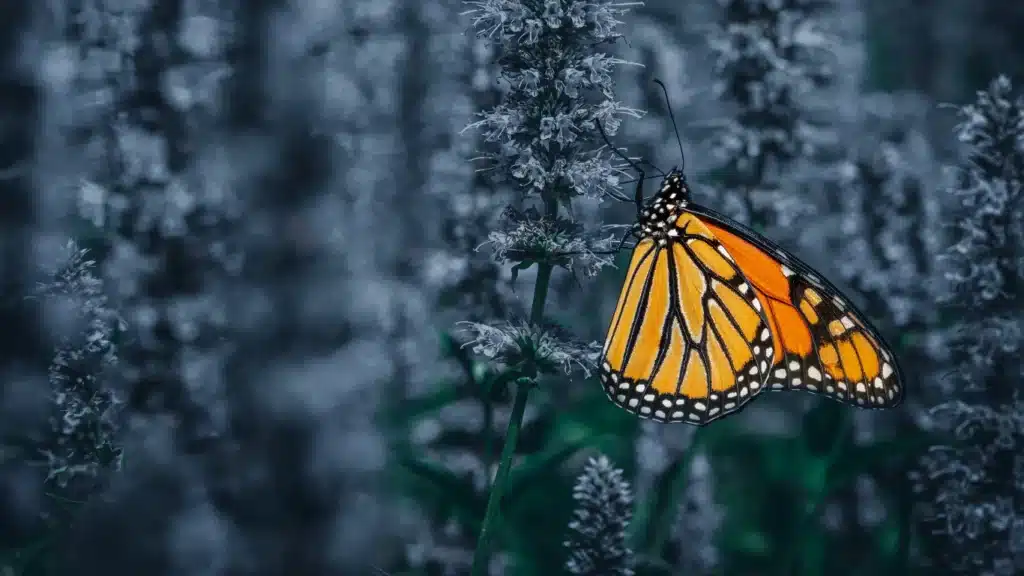
Adapted from the article written by Phoebe Weston Originally published by The Guardian (Wed, 8 Nov, 2023) New research on insects – without which the planet would not survive – shows a higher proportion are at risk of disappearing Two million species are at risk of extinction, a figure that is double previous UN estimates, new analysis has found. While scientists have long documented the decline of species of plants and vertebrates, there has always been significant uncertainty over insects, with the UN making a “tentative estimate” of 10% threatened with extinction in 2019. Since then, more data has been collected on insects, showing the proportion at risk of extinction is much higher than previously estimated. Because there are so many insect species, this doubles the global number of species at risk, according to the paper, published in Plos One on Wednesday. Lead researcher, Axel Hochkirch, from the Musée National d’Histoire Naturelle in Luxembourg, said: “What our study does is really highlight that insects are as threatened as other taxa. And because they are the most species-rich group of animals on our planet, this is really something which should be addressed.” Understanding what is happening to global insect populations has been challenging because of the lack of data – but 97% of all animals are invertebrates. Of that group, about 90% are classified as insects. They provide vital ecosystem services: pollinating crops, recycling nutrients into soils, and decomposing waste. “Without insects, our planet will not be able to survive,” Hochkirch said. The team looked at all European species on the International Union for Conservation of Nature’s red list of threatened species. This is considered the most comprehensive source of information on species at risk. They found a fifth of European species were at risk of extinction, with 24% of invertebrates at risk, as well as 27% of all plants and 18% of vertebrates. These numbers were then extrapolated to make a global estimate of total species at risk of extinction. Apart from insects, estimates remained more or less the same as those made by the UN’s Intergovernmental Science-Policy Platform on Biodiversity and Ecosystem Services (Ipbes) in 2019. “This comprehensive analysis of 14,669 continental red list assessments for European animal and plant species suggests that 2 million plant and animal species are threatened with extinction,” researchers said. UN representatives declined to comment on the study itself. Anne Larigauderie, executive secretary of Ipbes, said the second Ipbes Global Assessment Report is due in 2028, and it was “likely that the estimates and messages from the first Global Assessment Report will be updated and augmented”. “It is perhaps most important to remember that whether the figure being used by policy- and decision-makers is 1 million or even more – the urgency and priority of the global biodiversity crisis remains,” Larigauderie said. “We are losing biodiversity and nature’s contributions to people at rates never before seen in human history.” The causes of these declines are well documented, and are driven by human activity: the expansion of agriculture resulting in the loss of natural habitats is the most significant driver, followed by overexploitation of natural resources, pollution, and residential and commercial development. The paper said: “The finding of agricultural land-use change as a major threat to biodiversity has often been reported. However, our analysis is the most comprehensive and unequivocal to date reaffirming the magnitude of the impact of this threat at a continental scale.” Hochkirch said: “This study shows we have a very high proportion of species which are threatened with extinction, but we can do something about it.” He highlighted the effectiveness of conservation efforts, particularly the increase in large predators across Europe, such as wolves, lynx, bears and white-tailed eagles. He added: “We see whenever conservation action is taking place, these improvements happen.”
Kenyans get tree-planting holiday to plant 100 million seedlings
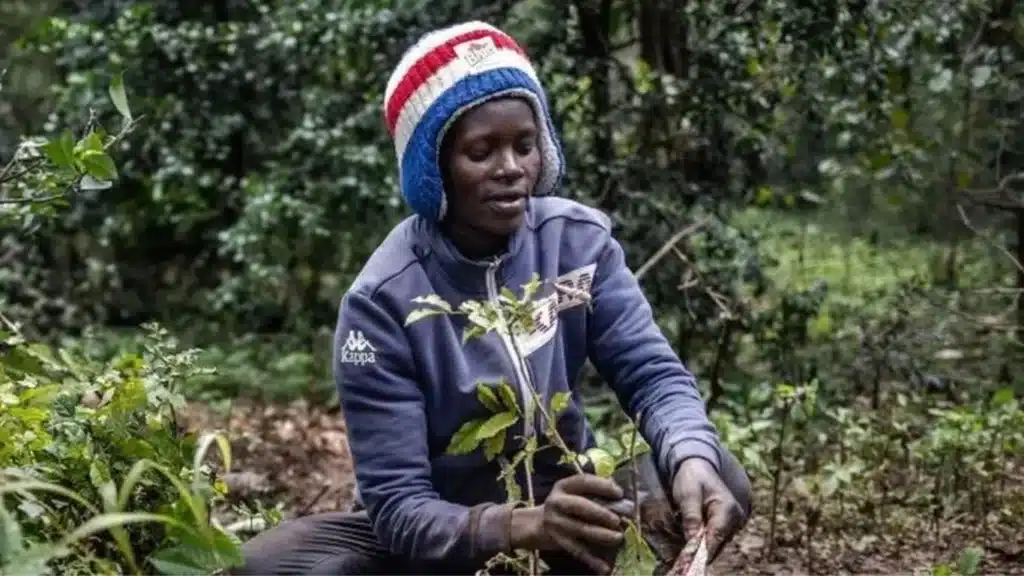
Adapted from the article written by Basillioh Rukanga Originally published by bbc.com (Mon, 13 Nov, 2023) Kenyans have been given a special holiday to plant 100 million trees as part of the government’s goal to plant 15 billion trees in 10 years. The holiday allows “each and every Kenyan to own the initiative”, according to Environment Minister Soipan Tuya. Each Kenyan is being encouraged to plant at least two seedlings, leading to the 100-million target. The initiative is intended to help fight climate change. Trees help tackle global warming by absorbing carbon dioxide from the air while releasing oxygen into the atmosphere. The government is making available about 150 million seedlings in public nurseries. It is providing the seedlings for free at its forest agency centres for Kenyans to plant in designated public areas. But it has also encouraged Kenyans to buy at least two seedlings to plant on their own land. President William Ruto led the exercise in Makueni in the east of the country. Cabinet ministers were sent to other regions to lead the process alongside county governors and other officials. At one site near the source of Kenya’s second-longest river, Athi, there were dozens of people, including soldiers and residents, some with their families. “I have come together with my colleagues, I’m happy to be here to show my love for the environment,” student Wycliffe Kamau told the BBC. “I have come to plant trees here, because our water levels have been diminishing. Even here at the river source, the levels are very low, trees have been cleared,” said local resident Stephen Chelulei. “We need to reverse climate change so that our children can have a place to live when we are no longer there.” However, many people, especially in the cities, are unlikely to take part and will just take advantage of the extra holiday. The tree planting will be monitored through an internet app, which monitors the exercise by allowing individuals and organisations to record activities, including the plant species, number and date planted. The Jaza Miti app will also help people plant the appropriate seedlings by matching the site with the appropriate species, according to the environment ministry. Ms Tuya told local Citizen TV on Sunday night that the response had been “amazing” and there had already been two million registrations on the app by Sunday. She however said the planting would not happen in the north-eastern region, where there have been floods. The country is currently grappling with heavy El Niño rains that have killed dozens of people, displaced thousands and damaged infrastructure – with the northern region most affected. Kenyans have broadly welcomed the tree-planting initiative while also noting some challenges. Environmentalist Teresa Muthoni told the BBC that the initiative was a “very good idea”, but that the exercise was not organised in a way that would ensure everyone was planting trees. She said “many people have to continue with their work to put food on the table… it is coming at a time when our economy is not doing well so a lot of people are struggling financially”. She also noted that “a lot of the 150 million trees available” in public nurseries were exotic. “It is very important to plant the right trees in the right place,” she said. The government has also been criticised for championing tree planting while failing to tame illegal logging in public forests – it recently lifted a ban on logging. But on Sunday, the minister defended the decision, saying only forests designed for commercial purposes were affected – about 5% of the total. She said this was necessary to feed the local demand for local and create jobs, adding that the government was taking action against illegal loggers in other forests. Ms Tuya said the exercise will continue beyond the special holiday and expects that 500 million trees will have been planted by the end of the rainy season in December. Banner credit: AFP
City of Cape Town taken to court over proposed road that threatens endangered toads
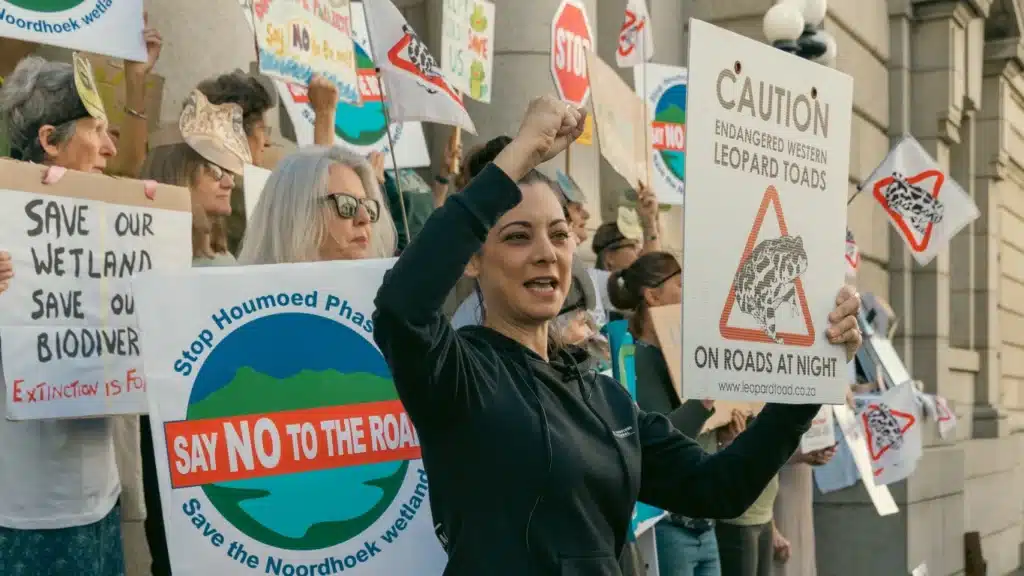
Adapted from the article written by Kristin Engel Originally published by Daily Maverick (Thu, 9 Nov, 2023) Shouts of ‘Don’t turn our wetland into a wasteland!’ were heard outside the high court in Cape Town on Wednesday ahead of a court action that spotlights the difficulties of balancing urban wildlife conservation with mobility and housing developments for a massively growing population. The City of Cape Town and the MEC for local government, environmental affairs and development planning in the Western Cape, Anton Bredell, were taken to court on Wednesday by a small NPO, the Noordhoek Environmental Action Group (NEAG), over the proposed Phase 1 extension of Houmoed Avenue through the Noordhoek Wetlands. The proposed road will join the existing Houmoed Avenue with Lekkerwater Road in Masiphumelele and is expected to alleviate the hours-long congestion of traffic on Kommetjie Road while making it easier for Masiphumelele residents to commute. However, the road cuts through breeding ponds of the western leopard toad, categorised as “endangered in the wild” on the IUCN Red List, which affords this species significant protection. The matter has been a hot topic in the southern suburb of Noordhoek since it was brought up in 2003, with the last application for the road being made in 2017, which NEAG and the environmental group ToadNUTs have been fighting, with Animal Survival International. These groups believe that the proposed link road from Lekkerwater Road through to Noordhoek Main Road (referred to as Houmoed Avenue), in no way takes into account the preservation of western leopard toads. “The road has been placed straight through the core buffer zone, inner buffer zone and breeding pond — where breeding toads spend the majority of their time during the breeding cycle. The placement of this road in the proposed location will eventually result in the local extinction of the [western leopard toad] and potentially other species. For this reason, ToadNUTS is extremely opposed to the road in its current location,” ToadNUTS said in a report. Ahead of the court action on Wednesday, protesters gathered outside the Western Cape High Court in support of NEAG, calling out “Yes to the toad, no to the road!”, “Don’t turn our wetland into a wasteland!”, and “Find another way, the wetland has to stay!” while a cardboard cutout of Cape Town Mayor Geordin Hill-Lewis’ face atop a cardboard excavator was moved through the crowd. Noordhoek resident Laina Jordan said, “There is more to this than just a road; our wetlands stand to be devastated. This wetland acts as a sponge for the entire valley and losing that sponge puts us at risk of flooding. We are calling on the City of Cape Town to consider long-term thinking patterns. We need solutions that are going to work for the city and the wetlands.” NEAG first appealed against the granting of the environmental authorisation to build the road, but the appeal was refused by Bredell. On Wednesday, NEAG’s attorney Murray Bridgman sought to review and set aside the appeal decision and the granting of the environmental authorisation. ‘Many irregularities’ Alison Faraday, the co-founder of ToadNUTS, said there were many irregularities during the public participation process and that the City of Cape Town had not carried out its due diligence. “These are the irregularities in the public participation process: the EIA [environmental impact assessment] was withdrawn in 2018 and then reinstated in 2019 for reasons unknown; not all objections and interested and affected parties were carried through to the new application, causing objectors to fall away; the road has been approved based on unproven mitigations for an endangered species, which means that the ‘precautionary principle’ was not applied; no amphibian study or complete faunal study was conducted despite the presence of IUCN Red List species (western leopard toad and Cape platanna),” Faraday said. “The City of Cape Town regularly flies the flag of conservation, while proposing a road through [an area] which is already under strain — it appears that the city may be suffering from a case of severe environmental confusion.” In addition, the city had not employed an anuran expert to conduct a complete amphibian study. The city’s mayoral committee member for urban mobility, Rob Quintas, said the city’s application regarding the proposed Houmoed Avenue construction in Noordhoek had been approved on appeal by Bredell after he gave “careful consideration to all the factors”. It is that decision which NEAG challenged in court on Wednesday, with advocate Achmat Toefy defending Bredell’s decision on the appeal, which allows the City of Cape Town to construct the road under certain terms and conditions. These terms and conditions include: Mitigations relating to the rehabilitation of the wetlands and the planting and rehabilitation of the road verges with indigenous species. Detailed design of the road to avoid small animals and amphibians crossing the road surface and to guide them to safe passage under the road by means of catch fences and culverts. Implementation of a management plan. Ongoing specialist monitoring of the efficacy of the mitigations. Quintas said, “The city is of the view that these proposed road extensions are necessary and reasonable, especially for the safety and convenience of residents of Masiphumelele and for the purposes of alleviating chronic congestion in the area, and that environmental mitigation measures can and will ensure a reasonable balance is achieved between the interests of residents in the area, and in particular the residents of Masiphumelele who will most benefit from this road extension and the affected natural environment, including the indigenous toad species.” The court heard arguments on the matter for five hours on Wednesday and Judge Karrisha Pillay reserved judgment for a date yet to be announced. Loss of wildlife habitat is a major issue in urban areas The court case brings to the fore the challenge of balancing conservation needs with that of SA’s rapidly expanding population and the resulting urban housing, mobility, water and sanitation developments to accommodate this expansion. Urbanisation and wildlife expert Gabriella Leighton from the Urban Caracal Project told Daily Maverick the
Saving elephants one jumbo at a time.
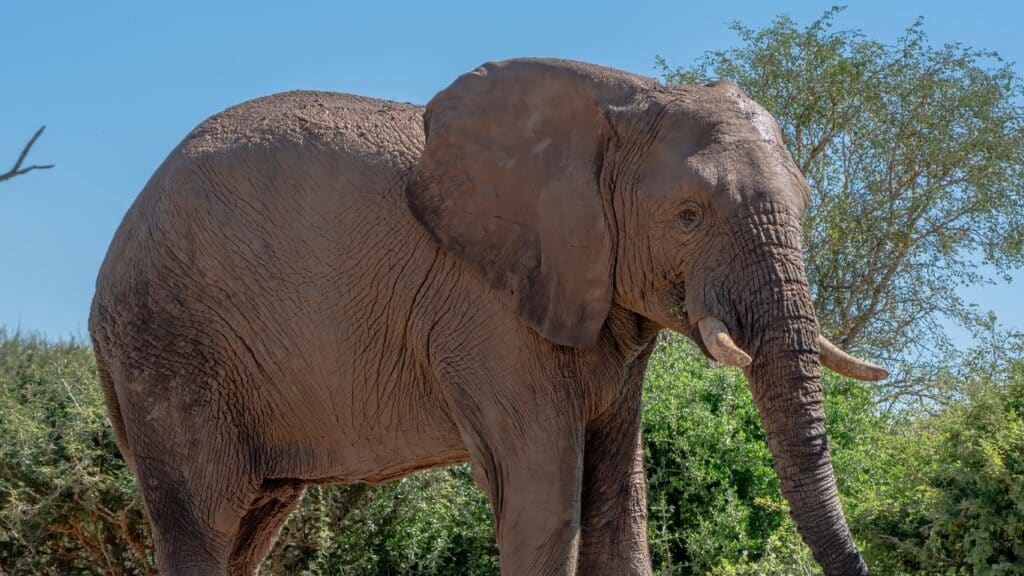
Fishan, an African elephant bull, has survived unimaginable horror and hardship in his 35-year life – and now, a terrible fracture threatens it all… Credit: HERD Fishan has defied all odds to survive 35 years through violent human conflict and poaching that killed his mother. We CANNOT let a leg fracture be the end of him – please, help! Fishan was rescued from Zimbabwe in 2002 by our South African partner, Hoedspruit Elephant Rehabilitation and Development (HERD), when violent land grabs took place. He and his herd were saved in the nick of time. Most of the other elephants there died, and up to an estimated 60% of wildlife on private game reserves and conservancies were brutally slaughtered. The herd escaped with their lives and were taken to safety at HERD’s headquarters, the Kapama Private Game Reserve. Credit: HERD Orphaned and castrated as a calf due to an infection AND forced out of his home in Zimbabwe, Fishan has a deeply traumatic history. Tragically, his struggle to survive has not ended there. Fishan has severely fractured his leg after stepping into a deep hole hidden by water. Elephants cannot easily survive broken legs because of the massive weight they place on their limbs. Heartbreakingly, the fate that awaits elephants suffering from injuries like these is often euthanasia… Credit: HERD But our team was determined to give Fishan a chance at recovery after all he had been through. It took 36 hours to get the four-ton animal onto his feet, followed by months of extensive medical treatment, including X-rays, casts, and pain relievers. Fishan has slowly started to adapt to his bent leg and limp and what must been extremely painful swelling and pressure wounds. The immediate danger is over, now we have to nurse him for the rest of his hopefully long life. Fishan’s pain relief and full recovery depend on YOUR support today. We cannot let him suffer any longer. Please, DONATE NOW. Credit: HERD Fishan’s journey is one of strength and determination, and his ongoing needs are extensive and costly. Forced to rest on his weaker side so that he can use his stronger side to lift himself up, Fishan suffers from severe pressure wounds that require regular cleaning and care to prevent infection. In the colder months, his joints become stiff, swollen and more prone to pain, necessitating expensive anti-inflammatory medication and pain relievers. We know you will agree it is worth it for a wild animal who deserves a pain-free life. Fishan will always need support if he is to survive in the wild. HERD gives Fishan the daily care he needs to alleviate his suffering as much as possible – but he is not the only elephant in their care. Credit: HERD If we can raise $7,000 (around £5,750), we can help cover the cost of Fishan’s anti-inflammatory medication, pain relievers and expert veterinary care for the next SIX MONTHS. Please, please show compassion for an injured elephant so he can stay in the wild. Credit: HERD Fishan’s role in his herd – the Jabulani Herd – is invaluable. He is renowned for being a protective and sensitive soul, helping matriarch Tokwe to look after the calves and maintaining order among the young bulls. Rare albino elephant calf Khanysia sees Fishan as a father figure, and many others look up to him for strength and guidance. Matriarch Tokwe never leaves Fishan’s side – when the herd is walking together in the bush, Fishan is slower and limps, but Tokwe holds back to keep him company. This herd is not just a group of elephants. They are a family and Fishan plays a crucial role in caring for his herd, and they have stood by him at his weakest. Today, we need you to stand with Fishan too. Be his “human herd” and help us give him the love, care, and medical attention he desperately needs to live and thrive, pain-free, with his family. Please donate generously to Animal Survival International today.
World Lemur Day highlights the plight of Madagascar’s critically endangered primates
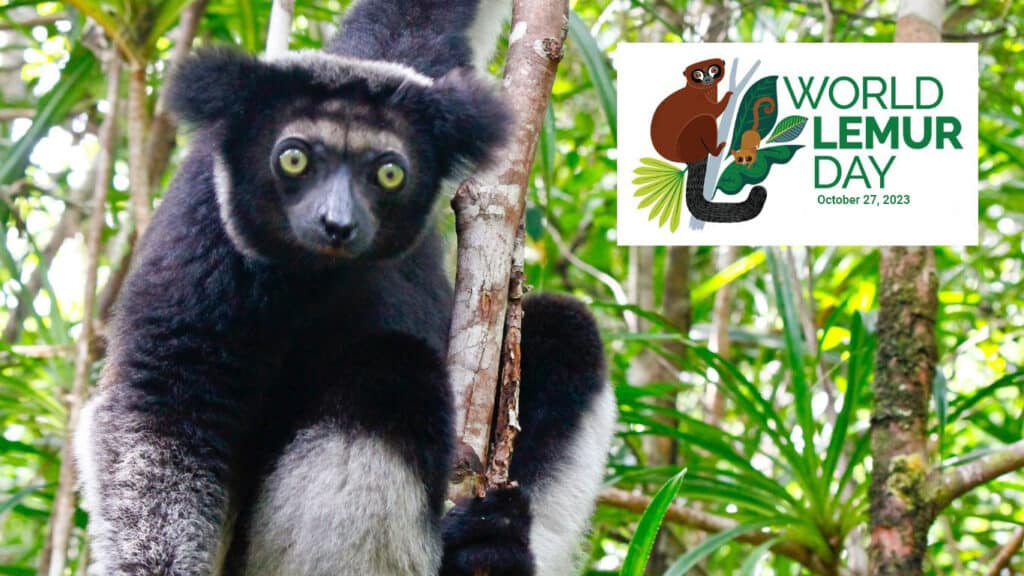
Today is World Lemur Day but tragically, there is little to celebrate. Lemurs – endemic to Madagascar and some of the world’s oldest living primates – are under terrible and constant threat. Climate change, habitat destruction and the illegal trade in bushmeat and exotic pets is rapidly driving their populations to extinction. Madagascar is home to 70 species of lemurs found nowhere else on earth, except for small neighbouring islands. DNA-based evidence suggests that lemurs first appeared on the island 40 to 50 million years ago, and flourished until human activity burgeoned just 2,000 years ago. Coal mining, illegal logging and slash-and-burn agriculture have led to major deforestation and habitat loss, leaving lemurs confined to just 10% of the land they once roamed. The critically endangered indri lemur, famed for communicating through song, has been of particular concern to us. We are working to help ensure that these beautiful creatures can continue to leap through canopy treetops and sing their songs in a safe and protected environment. Our partner L’homme et l’Environment, a French non-governmental organization that works on lemur conservation and long-term reforestation, recently rescued a breeding pair of indri lemurs whose previous habitat had been destroyed by slash-and-burn agriculture. The pair were relocated to the Vohimana forest where they (and their future offspring) will be carefully monitored by dedicated forest guards who, through your support, we armed with vital GPS trackers and communication devices. Scientists estimate that the probability of extinction for critically endangered species will be more than 50% over the next 50 years. While the exploitation of lemurs is punishable by law, the animals remain in grave danger of becoming extinct, with 31% of all lemur species now critically endangered according to the International Union for Conservation of Nature (IUCN). Working with our partners on the ground, we aim not only to support lemurs through protective and reforestation efforts, but also to help prevent hunting by educating local communities about the crucial role the species plays in maintaining Madagascar’s ecosystems. Considered ‘creators of the forest,’ lemurs spread seeds through their droppings, which grow into trees and offer shade and shelter for a wide range of animals. On this World Lemur Day, please join us in fighting for the survival of our planet’s precious remaining lemurs by donating to ASI now, and supporting our efforts to preserve this important species.
Flame retardant pollution threatens wildlife on all continents, research finds
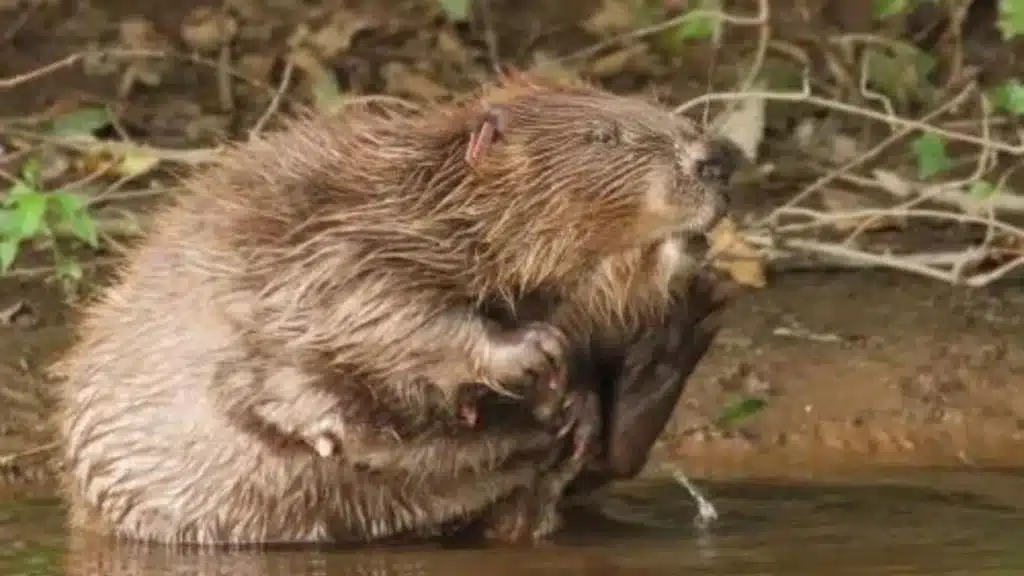
Article written by Tom Perkins Originally published by The Guardian (Wed, 18 Oct, 2023) More than 100 species, from frogs to killer whales, contaminated with long-lasting chemicals with serious health effects More than a hundred species of wildlife found across every continent are contaminated with highly toxic flame retardants, and the pollution is probably responsible for population declines in some species, a new analysis of published research shows. The dangerous chemicals have been detected in everything from sea urchins to bobcats to Arctic foxes, and at alarming levels in endangered species such as red pandas, chimpanzees and killer whales. The analysis examined about 20 years of flame retardant research and includes an interactive map showing the location and type of animal found to be contaminated. It brings into sharp focus the breadth of flame retardant pollution and dangers it poses. The paper’s lead author, Lydia Jahl, said she expected to find widespread contamination, but was “still blown away by the sheer number of studies finding harmful levels of all sorts of flame retardants everywhere”. “It’s heartbreaking that human advancement doesn’t take health impacts into account for ourselves and for wildlife,” she said. “The people who pollute are not the most impacted – it’s fenceline communities, turtles, dolphins, foxes and butterflies.” Several chemical classes are utilized as flame retardants and in an effort to help reduce fire risks are added to thousands of consumer products from furniture to electronics to auto interiors. The paper found high levels of phased-out flame retardants like PCBs and PBDEs, as well as allegedly safe, newer replacements chemicals, such as chlorinated paraffins and organophosphates, across the globe. All are thought to be toxic and various compounds are linked to liver, thyroid and kidney cancers, while others harm IQ, attention and memory in children. Many of the same health problems found in humans also affect animals, Jahl said. “This is a really unfortunate side-effect from something that is supposed to protect us from fires,” she added. Most flame retardants are highly persistent in the environment and can take decades to degrade. Because of their resilience, they can accumulate in animals, and as larger predators eat smaller organisms, the chemicals accumulate in higher quantities further up the food chain. The highest levels have been found in large marine mammals and birds of prey, and the chemicals are suspected of decimating killer whales’ population because they do so much harm to the species’ calves and immune systems. Some research predicts the chemicals could wipe out half the world’s killer whale population. The chemicals were found at extremely high levels in black-spotted frogs living near electronic-waste facilities in China, and appear to be shrinking the animals’ livers and harming their eggs. Flame retardants are also highly mobile and travel long distances through water and air. Research found high levels in chimpanzees in a protected Ugandan national park deep in Africa’s interior, far from a flame retardant production or disposal site. The issue is all the more frustrating to environmental health advocates because flame retardants have generally been found to be ineffective in most applications, and are based on 1970s standards. There was little data on the chemicals’ effectiveness and toxicity at the time, Jahl said, and the requirements were put in place when more flammable materials were used, and more people smoked. Some states and countries have started eliminating or revising flammability standards, and ending unnecessary uses of flame retardants. Once in the environment, the chemicals are extremely difficult to clean up because they are widespread in the soil, air, water and most human and animal blood. Though the standards “may seem protective at first glance, many cause widespread and lasting harm for no real benefit”, Jahl said. “In general these are outdated standards that don’t have data behind them, but lead to pervasive flame retardant usage, and that’s how it gets into animals worldwide,” she added.
21 species removed from US Endangered Species Act after going extinct
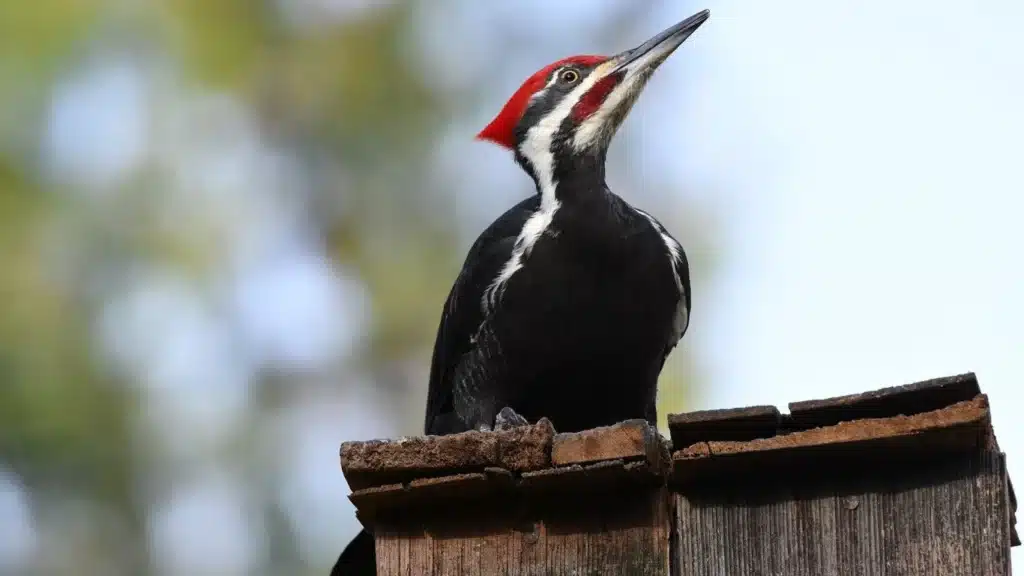
Article written by Gloria Oladipo Originally published by The Guardian (Tue, 17 Oct, 2023) Wildlife advocacy groups stress ‘permanent’ consequences of failing to address biodiversity and climate About 21 species have been removed from the US Endangered Species Act (ESA) after going extinct in a move conservationists are calling a wake-up call. The US Fish and Wildlife Service removed the species – a mix of animals and plants – after determining that they had gone extinct, according to a press release. Among the species that were delisted include the Bachman’s warbler, a bright yellow bird once common in Florida, South Carolina, and other southern states; eight types of southeastern mussels; and the Little Mariana fruit bat, a small fruit bat found in Guam. Some species initially set for delisting have been spared. A Hawaiian herb known as Phyllostegia glabra var lanaiensis will remain after new surveying shows that new habitats may be suitable for the plant. The ivory-billed woodpecker, once set for delisting, was also kept amid debate of its extinction status. The move to delist the extinct species began in September 2021. The US secretary of the interior, Deb Haaland, emphasized the importance of wildlife conservation in a 2021 statement, when the initial delisting process was proposed. “With climate change and natural area loss pushing more and more species to the brink, now is the time to lift up proactive, collaborative and innovative efforts to save America’s wildlife,” Haaland said, highlighting the importance of the ESA. Image Credit: Michael Doolittle A majority of the species listed were included on the ESA in the 1970s and 1980s. Many species featured were already at extremely low numbers at the time of their listing – or possibly extinct entirely. The latest news has raised concern with several wildlife advocacy groups. Lindsay Rosa, vice-president of conservation research and innovation at Defenders of Wildlife, stressed the “permanent” consequences of failing to address issues around biodiversity and climate changes, in a statement shared with the Guardian. “Extinction is a very real and permanent consequence of leaving the joint biodiversity and climate crises unhindered,” Rosa said. Rosa added that the delisting announcement emphasizes the importance of using the ESA to benefit endangered species before it is too late. In a press release, the Center for Biological Diversity lamented the loss of species that “can never be brought back”. “My heart breaks over the loss of these 21 species,” said Noah Greenwald, endangered species director for the non-profit. “Few people realize the extent to which the crises of extinction and climate change are deeply intertwined,” Greenwald added. “Both threaten to undo our very way of life, leaving our children with a considerably poorer planet.”
Critical pangolin sanctuary UNDER WATER.
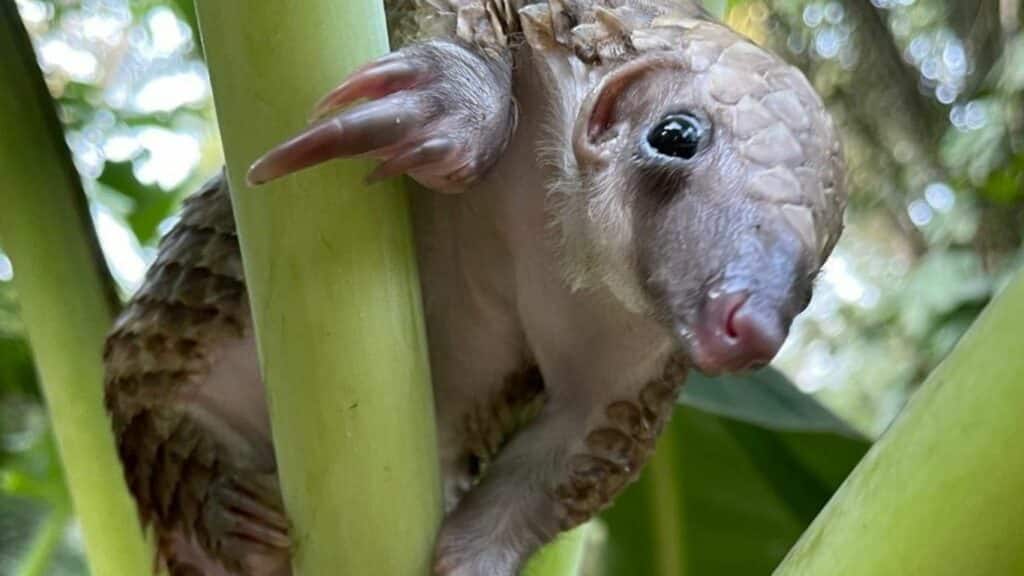
This is an URGENT PLEA FOR HELP for pangolins! Last week, our partner in Lagos, Nigeria, was flooded by freak torrential rains that swept through the sanctuary, completely wrecking it. We have been appealing for your help in rebuilding this sanctuary for critically endangered and vulnerable animals, including infant pangolins and their mothers rescued from the brutalities of the country’s meat trade. Please, these animals could really use your help right now. Credit: GWCI We MUST rebuild, for all the wild animals in desperate need. PLEASE HELP NOW! We are heartbroken to tell you that not all the animals at the sanctuary survived the flooding, which also swept through major parts of the city and is expected to continue for several more days. Parts of Lagos are submerged, and countless properties have been destroyed. Birds, hedgehogs and tortoises are among the helpless victims of the tragedy. Fragile, critically endangered pangolins have lost their shelter – animals who depend on it for their survival, and for whom any little amount of stress can be lethal to their recovery. Extreme and unexpected weather conditions have battered countries around the world this year, and Nigeria is the latest to experience deadly weather. Our partner, Greenfingers Wildlife Conservation Initiative (GWCI), was not prepared for this freak flood, its shelters not strong enough to withstand the scale of the disaster. Credit: GWCI Animals affected by the flood need your help to get emergency provisions as fast as possible – food, clean drinking water and temporary shelter – as well as supplies for repairing and rebuilding the sanctuary. The rebuild will use stronger, reinforced materials installed by experts so that a disaster of this kind cannot happen again. Saved from abuse, torture and agony, Nigeria’s rescued wild animals NEED YOU NOW. Help give them back their SAFE home. Most of the animals at the GWCI sanctuary have survived unthinkable brutality and misery in their lives. They are subjected to horrific violence, right from the time they are stolen from the wild as pregnant mothers or infants, and then strung up (often alive) in meat markets, killed for their body parts, or traded as pets. Credit: GWCI Those who miraculously survive and are rescued by our partner usually require lengthy veterinary care and rehabilitation. Many will never live normal lives again and the GWCI is the only home they will ever have. We MUST send emergency supplies to the displaced wild animals and rebuild the sanctuary as FAST as possible! Please donate right away. The full extent of the damage can only be properly assessed once the water levels begin to drop. Right now, it is as deep as 24 inches (61 cm) in some places. But we already know that we MUST rebuild – and rebuild we will. Credit: AP The animals need our help RIGHT AWAY, so please, donate as generously as you can right now. If we can raise $10,000 (£8,000), we can rush funds to cover rebuilding and repair efforts, as well as emergency supplies for the hungry, scared and displaced wild animals in GWCI’s care. PLEASE make an impact NOW. Please HELP by donating as much as possible right now. Your support will be a lifeline to so many animals who have nothing and no one else.
Wild animals decimated as GREECE BURNS AGAIN!
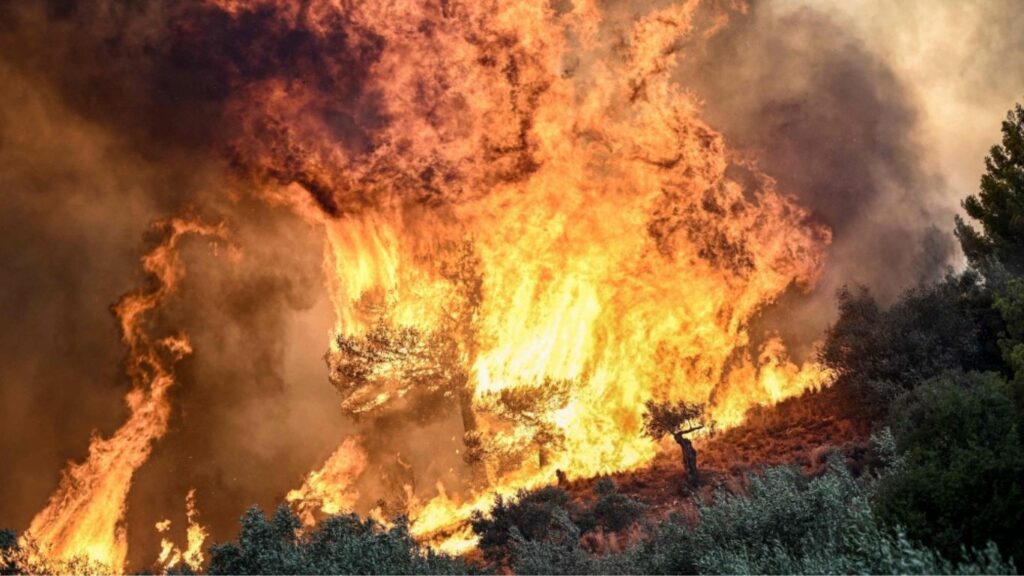
Firefighters in Greece continue to battle blazes that “cannot be contained” as the country burns into a fresh week. Fire is devouring vast swathes of the country fuelled by gale-force winds and dry summer conditions. Credit: AngelosTzortzinis_AFP Animals continue to be in danger of burning to death right now. The fire has destroyed 77,000 hectares (190,000 acres) of land and is, as you read this, eating into Mount Parnitha’s crucial green-belt national park. Untold numbers of animals have been killed by the unstoppable flames but our team continues to be on the ground, racing to the aid of those trapped, terrified, and burnt. Please keep supporting our emergency rescue teams! MORE ANIMALS ARE IN PERIL and without your continued support, they stand no chance against unstoppable flames. Credit: Dejan Radic A few weeks ago, you helped us rush aid to trapped, terrified, and injured animals, and today, we are asking you to once again open your hearts to the helpless wildlife of Greece. The raging flames, fueled by gale-force winds, are showing NO signs of abating, and trapped wild animals need your help right now! Please help! MORE blazing wildfires across Greece have sparked mass evacuations – what about the animals? In times of crisis, we are on the ground helping animals in the most desperate of need. At last count, firefighters were battling 99 separate blazes across the country, including in woodlands northwest of Athens, where our partner ANIMA (Wildlife Rehabilitation Association) is working day and night to save animals. Sadly, our worst fears of ongoing fires have become a reality. The need for our immediate help has never been greater. Animals need you NOW. Credit: DespinaTheodosiadou Large-scale evacuations continue around Athens and other parts of Greece, but for the animals, it is not so simple. We already know from the previous wave of devastation that exhausted, dehydrated birds will be falling from the sky. Young, old and slow-moving animals like tortoises stand no chance against the flames. Without our help, they will succumb to fiery death. Heartbreakingly, many wild animals who miraculously survive the flames will succumb to the effects of smoke inhalation. Credit: DespinaTheodosiadou Right now, ANIMA is on the ground helping to evacuate and treat any animals they find alive. Once they have permission from fire services and local authorities, they will enter disaster zones and carry out their critical rescue and evacuation missions. They are rescuing not only wild animals but any injured, displaced or trapped animals they can – domestic animals, livestock and wild. As you read this, helpless animals are engulfed by flames and burning, and their hopes of survival rest on our ability to send critical rescue support to them now. Credit: Dejan Radic Time is of the essence, and EVERY MOMENT COUNTS! Some of the fires are wildly out of control in places of extreme natural importance, like the national forest of Dadia in Evros (a unique nesting place of two of the most endangered species of vulture) and Parnitha, where red deer and wolves live, and where our rescue teams are focusing their efforts. Please help us URGENTLY raise $10,000 (around £8,000) to equip our rescue teams with fuel for their missions, veterinary supplies, animal transport crates and supplies of food and water. Many animals will need urgent, critical care and long-term rehabilitation for their injuries. They will be traumatized and in need of shelter after the devastating loss of their habitats. They need YOU. Europe’s summer fires have destroyed wooded areas capable of absorbing 2.3 million tonnes of carbon dioxide a year. We know the situation for wildlife is only going to get worse, and we URGE you to stay by our side, for the wildlife who need us more than ever. Credit: DespinaTheodosiadou These fires are one of the worst disasters in modern Greek history, and without us, the animals stand almost no chance of survival. Please donate right now so our partner can continue to treat and rescue terrified, traumatized and trapped animals and provide critical treatment to those in pain and on the brink of death. The lives of these animals are in YOUR hands, so please donate as much as you possibly can today.
🆘 DEADLIEST US FIRE in OVER A CENTURY 🆘 Animals NEED YOU NOW!
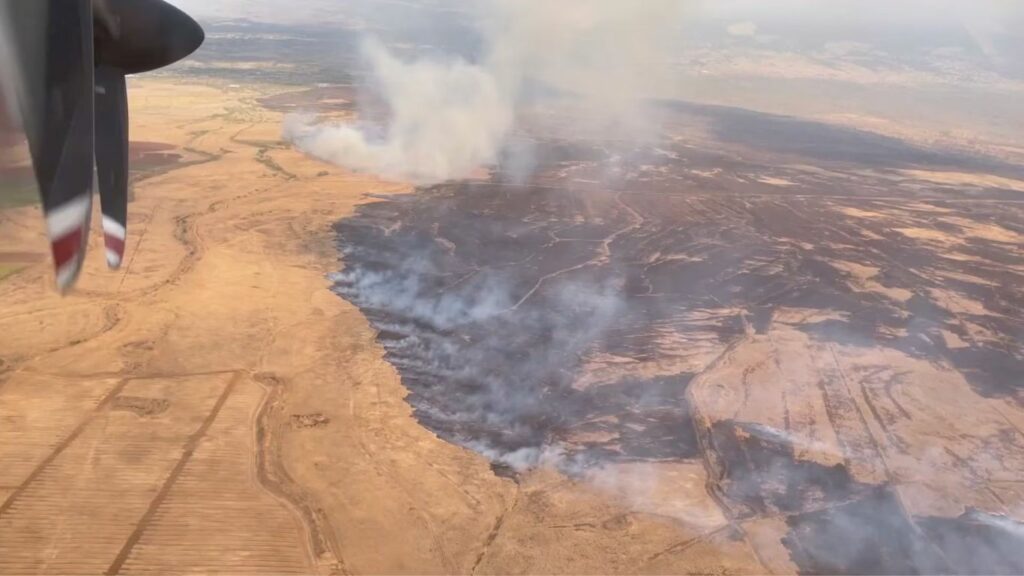
The catastrophic wildfires in Maui are the deadliest wildfires in modern U.S. history and animals are in deadly peril because of them. A tortoise rescued from the fires. Credit: Maui Humane Society Wild animals lost their homes, their sources of food, and even their lives. PLEASE help us rescue surviving animals who are burnt, dehydrated, disorientated and afraid. Some wild animals are resilient to natural disasters and have the ability to flee at the first signs of danger, like elk and mountain lions. However, they will have no home to return to – and with almost all of their natural habitat gone, they face starvation, dehydration and displacement without the urgent support of our teams on the ground. Other wild animals – particularly the very young, very old, or slow-moving like tortoises – are not able to escape quickly, and are at huge risk. These animals are often found badly burnt, dehydrated or struggling to breathe due to smoke inhalation. Birds, while they may be able to fly away, are also highly susceptible to smoke inhalation and dehydration as they become unable to reach their water sources. Dead birds, cats, and other small animals piled up after dying from the fires, possibly from smoke inhalation and the heat. Credit: AP Many animals are unable to walk properly because their hooves, pads or soles are seared by scorching earth. Tragically, animals who are able to escape may not be able to due to roads and buildings blocking their routes out of danger zones. A terrible inferno on Maui has crippled animals. They need your help right now. Wild animals are in the most serious of trouble right now. A rabbit rescued from the broiling island. Credit: Maui Humane Society The fires, fueled by a dry summer and strong winds from a passing hurricane, took the island by surprise. People fled, and wild animals were burnt, trapped and killed as the fires tore through dry summer growth unabated. Haunting drone images show displaced birds with singed wings, terrified animals trying to scramble to safety, and marine life choking on polluted waters. Their only hope is people like you. We are working to help fund rescue missions and provide aid to burnt, trapped and terrified wildlife, from large land animals to reptiles, smaller mammals, birds and aquatic creatures. Tragically, wild animals are often left to fend for themselves as people flee – and this particular crisis is being called Hawaii’s worst natural disaster. Right now, both small and large wild animals are at great risk, and we are working to help fund critically urgent rescue missions into the disaster zones. Surviving animals are likely to be injured, struggling to walk or breathe, displaced from their habitats, or starving and dehydrated. Wildlife rescue and rehabilitation teams – funded by your donations – are the hope amid the horror. Dedicated teams are working around the clock to locate and rescue wild animals driven out of their natural habitats. Animals will be injured, dehydrated and afraid, and we are ready to save as many as we can. People have been jumping into the ocean to escape the flames. What hope do the animals have without your help? Credit: Mengshin Lin/Washington Post Now more than ever, the animals need your support. Every dollar, every pound, every share, and every ounce of aid you can give will help make the difference between life and death for animals caught in this catastrophe. We are on the job, doing the very best we can with limited supplies and resources. We MUST bolster our supplies and stay on the ground, saving animals. Please, help us now! Credit: Hawaii News Now Organizations on the ground are stretched to the limit – without the reserves to manage a disaster of this scale, they urgently need your support right away. Their supplies are dwindling, but their determination is not. They WILL stay on the ground, and they WILL rescue animals, but they need our help today to do it. So please, donate generously right away. No matter how large or small your gift, your contribution will help provide food, medical supplies, shelter, and much-needed emergency resources to help save precious animal lives. Credit: Rick Bowmer/AP Spread the word: share this plea with your friends, families, and network. Together, we can be a lifeline for those who cannot speak for themselves. Donate now, and be a beacon of hope for the wildlife of Maui.
Baby flying foxes need YOU!
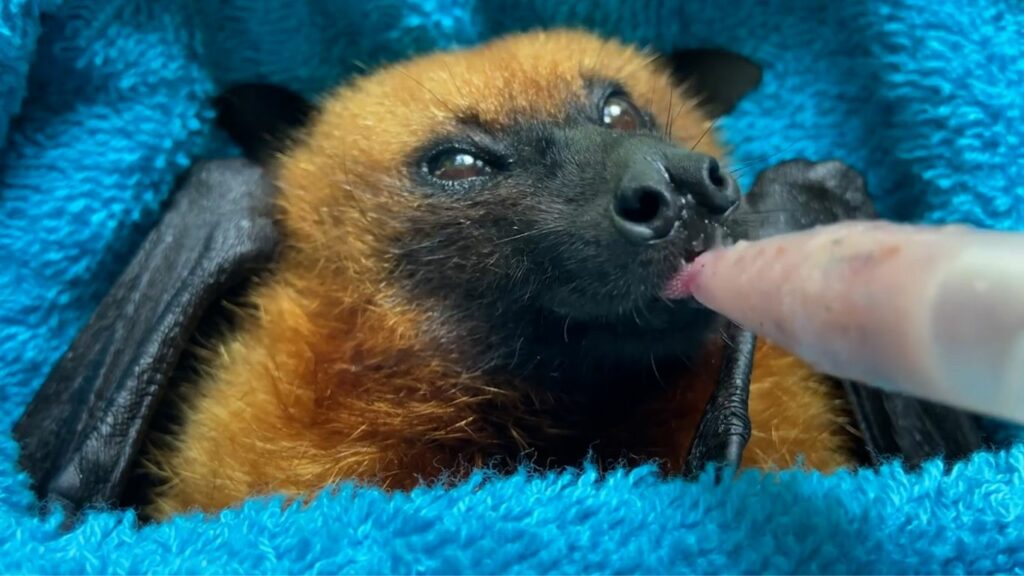
Frodo, the baby flying fox, weighed less than a bar of chocolate when he was found orphaned on the island of Mahé in Seychelles. At just a few days old and 72 grams (2.5 ounces), he was helpless without his mother, but they had become separated. Credit: Protect Paradise Tragically, Frodo and his mother were never reunited. It is likely she was caught by hunters, disoriented by streetlights, or electrocuted by a powerline – just a few of the threats facing flying foxes across the Seychelles. Hunting and human activity are destroying flying fox populations across the island of Mahé in the Seychelles. Without our help today, they have little chance of surviving. Please, help us rescue and rehabilitate infant flying foxes! Credit: ASI – Byron Seale Earlier this year, we told you about one of the terrible threats facing flying fox communities on Mahé: being hunted and caught for an island delicacy: bat curry. It is cruel and barbaric, and it leaves countless babies orphaned as their mothers are captured in crude nets and then stabbed to death. Credit: ASI – Byron Seale But there are many other threats facing the species. A rapidly growing human population means severe encroachment on flying foxes’ habitats. Frequently, they fly into power lines and are electrocuted, get sick or die from poisons used on fruit crops, or lose their food sources to a growing human population. A terrible drug problem on the islands further diminishes their food supply as people steal fruit to sell for drug money. When mother flying foxes are killed by these threats, their babies are left helpless and unable to feed themselves. They would starve to death were it not for our partner, Protect Paradise Seychelles (PPS). Credit: ASI – Byron Seale Ecologically important and largely misunderstood, flying foxes are in crisis. It is only with your help right now that we can give them a fighting chance against the many threats they face. Frodo is one of the many orphaned, injured or disorientated flying foxes rescued by PPS, who do their utmost to bring them back from the brink. Some are rescued after mistaking streetlights for the moon and flying into populated areas instead of out over the sea. They become confused and exhausted. Others are rescued from even more heinous situations, like Bella, who came in severely injured and paralyzed, possibly with a spinal injury. Credit: Protect Paradise PPS suspected she was trying to escape a bat trap or was bludgeoned by a human. However, they were not able to make an accurate diagnosis of her as they do not have an X-ray machine. Left image credit: Protect Paradise & right image credit: ASI Byron Seale It is clear that our team urgently needs an X-ray machine, and if we can raise $15,000 (around £11550), that is exactly what we will purchase for them. Will you help us right now? PPS works diligently and tirelessly to save every flying fox who comes through their doors. Babies are fed using a pacifier specially designed to mimic their mothers’ nipples, which helps make them feel secure. They also use special bat wraps called mumma rolls to imitate the feeling of holding onto their mothers’ bellies and would feel as if their mothers’ wings are wrapped around them. This expert care gives them the best chance of surviving, thriving, and ultimately being released into safe areas free of human activity and traps. Flying foxes play a critical role in the ecosystem, and we cannot see them disappear. Please, help us save orphaned and injured creatures by donating right now. Credit: ASI – Byron Seale Flying foxes are a keystone species in the ecosystem, pollinating and disseminating diverse plant species. Seychelles’ rich and varied flora depend on species like flying foxes for survival, yet the animals – whose once-safe and verdant home is steadily being wiped out – are slaughtered by ignorant people. With your support right now, we will save injured and orphaned babies and adults and show them that despite their reputation, we know they are important and we care!
HURRY! Animal wildfire victims in Greece need HELP!
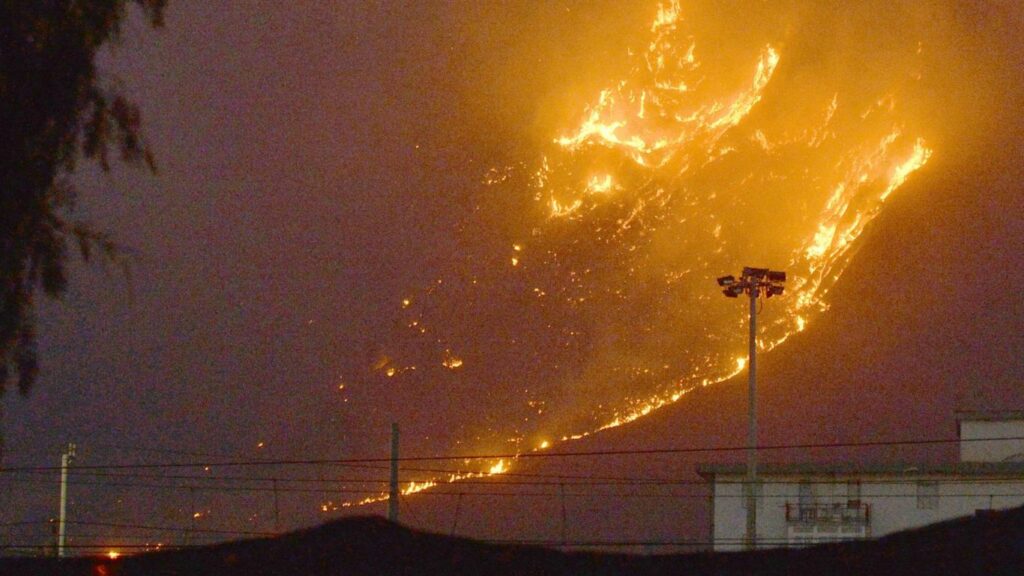
Thousands of people have fled infernos on the island of Rhodes in Greece as wildfires sweep the country for a seventh day. Crete is expected to go up in flames next and the fires near Athens can reignite at any time The week-long blazes, fueled by various factors, including the longest heatwave in the country’s history, have devastated wildlife populations. Credit: EFE_EPA_LefterisDamianidis Animals are in the most dire of trouble right now. And they are waiting for a lifeline from you. Greece is burning, people have fled – WHAT ABOUT THE ANIMALS? Since the fires broke out a week ago, cities and islands have been littered with the charred remains of dogs, owls and rabbits. Searing temperatures have left birds falling from the sky in exhaustion, dehydrated and almost dead. Next year, it is likely that there will be a greatly reduced swallow migration to Africa, as now is the species’ hatching season, and chicks are perishing in the untenable heat. Credit: AFP The fires are thought to be a result of hot, dry conditions and possibly arson, but whatever the reason, the result is the same: thousands upon thousands of trapped and helpless animals who, without our help, have no chance of survival. Upwards of 40,000 people have been evacuated since the start of the disaster, by air and by boat. Tragically, for wildlife whose habitats are going up in flames, there is no evacuation without YOUR HELP right now. Right now, our partners are risking their lives to reach animals trapped by flames. Emergency rescue supplies are running out and we urgently need your help! Credit: Twitter/NiallOLaughlin In crises like these, we are always on the ground – even as others flee – because we know this is when animals need us most. The minute it is safe to do so, we rush into disaster zones and bring out terrified, injured animals. It is these rescue missions that save countless animal lives. We are working with the Wildlife Rehabilitation Association (ANIMA), which has rescued dogs, tortoises, snakes and owls, among other species, and they have sent a team to burning Rhodes to begin the evacuation of animals there. We and our partners are doing our level best to respond to ‘hundreds’ of calls every day from people finding injured animals desperate for help, and supplies are rapidly running out. Credit: ANIMA Among the many creatures saved is a young owl in Crete, discovered a ‘vast graveyard’ of burnt tortoises (among which 11 were miraculously alive), and has rescued countless other creatures from blackened wastelands. Many animals have suffered burns and the effects of smoke inhalation, and with temperatures of up to 46℃ (114.8°F), animals are also at risk of succumbing to severe heat. Birds are gulping SEAWATER in a futile attempt to stay cool as fire infernos destroy their homes. We MUST help – RIGHT NOW! During rescues, large birds such as pelicans and vultures have shown symptoms of poisoning which rescuers believe may be a result of swallowing large amounts of seawater in a desperate attempt to stay cool. Credit: ANIMA The number of animals needing help remains unquantifiable but they number in their thousands and without our partner, they stand little chance against blistering fires, relentless heat waves and unprecedented loss of their habitat. Please help right now by donating any amount you can, no matter how large or small, so our team can race into disaster zones the moment it is possible, rescue terrified, traumatized and trapped animals, and provide critical treatment to those on the brink of death. The animals’ lives are in YOUR hands right now, so please donate as much as you possibly can today.
GREECE WILDFIRE EMERGENCY: Please help us rescue wild animals from deadly Greek wildfires.
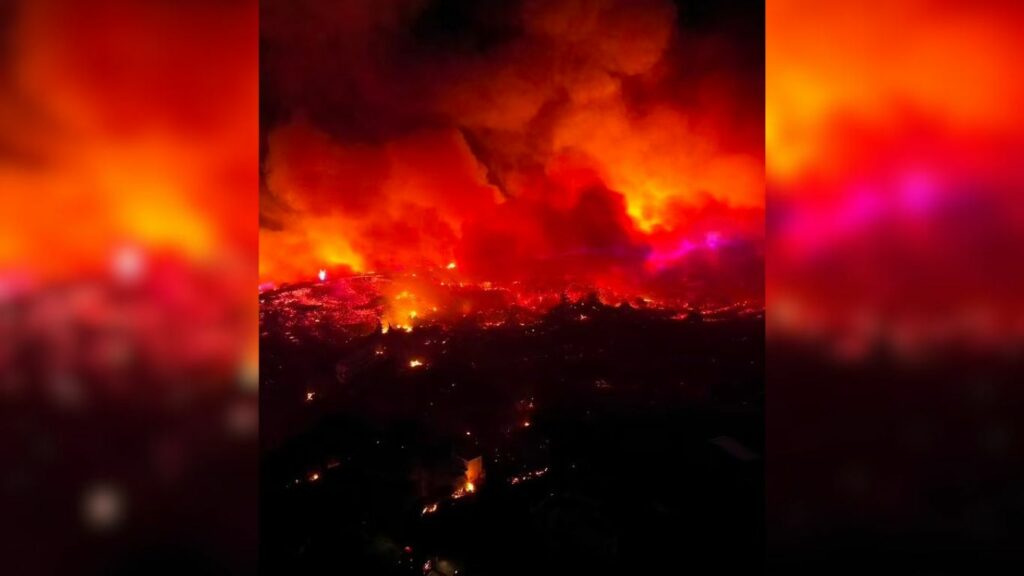
Large-scale evacuations continue as deadly wildfires sweep parts of Greece. All weekend and continuing today, people have fled their homes as large swathes of the country burn. Wild animals are in terrible trouble. Right now, our partners are on the ground, risking their lives to reach animals trapped and helpless animals in the flames. Emergency rescue supplies are running out and we urgently need your help! Credit: ANIMA We are working with the Wildlife Rehabilitation Association (ANIMA) in Athens – a city so sweltering it is surrounded by wildfires, and famous tourist sites like the Acropolis have been closed to the public. Animals are dropping from dehydration and exhaustion as you read this, and we MUST do everything in our power to help them. Credit: ANIMA With temperatures in Greece soaring above 107,6℉ (42℃), animals are desperate, dehydrated, and dying. We MUST rush our partner emergency funds for rescue operations RIGHT AWAY. Birds are falling from the sky from heat exhaustion. Slow-moving animals like tortoises are perishing in fires. The heat is quite literally killing helpless animals as you read this and their hopes of survival rest on our ability to send critical rescue support to ANIMA right now. Credit: ANIMA Our partner rescues around 5,000 injured, sick, or orphaned animals every year. When disasters like these wildfires strike, the number of animals in need soars, and we are trying to help everyone we can. Credit: ANIMA Within just the first two weeks of July, ANIMA treated 1,000 animals injured in fires and affected by extreme heat waves. Evacuations and rescue efforts are currently underway, and with the threat of lingering heatwaves and wildfires spreading, wild animals don’t stand a chance if we don’t help right now. Credit: ANIMA Thick smoke from the raging fires is so severe that animals who do not perish in the fires could die from smoke inhalation and dehydration. It is heartbreaking and with your help, we will save as many as possible. If we can raise $10,000 (£7,627), it will help pay for critical rescue supplies, equipment, and life-saving treatment for animal victims of scorching heat and wildfires. Please, donate right away. Credit: Milos Bicanski Please, donate right now so ANIMA can continue to rescue terrified, traumatized and trapped animals, and provide critical treatment to those on the brink of death and in terrible pain. The animals’ lives are in YOUR hands right now, so please donate as much as you possibly can today.
More than 40,000 hectares of nationally vital koala habitat marked for potential logging in New South Wales
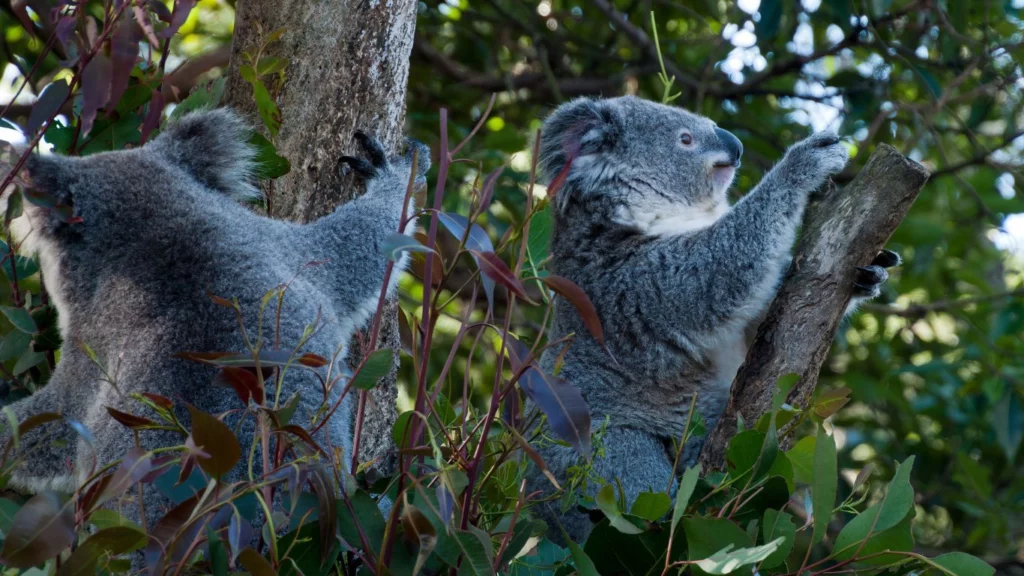
Article written by Lisa Cox Originally published by The Guardian (Sat, May 27, 2023) Analysis shows area includes 9,000 hectares where there was already active logging as pressure grows on government to end practice Conservationists say forest areas that include 41,000 hectares of nationally important koala habitat have been identified for potential logging on the north coast of New South Wales in the region’s 12-month logging plan. The analysis, by the North East Forest Alliance, comes as pressure grows on the NSW government to cease logging of native forests after the Victorian government announced logging in its native forests would end in December, six years earlier than planned. “Both the NSW and commonwealth governments have got to stop logging in areas they have identified as the most important koala habitat,” Dailan Pugh, the president of the North East Forest Alliance, said. Pugh analysed a supplementary report to the national koala recovery plan that identified areas of habitat that were considered of national importance. The threat status of koala populations in NSW and Queensland was upgraded to endangered in 2022 in recognition of the species’ continued decline due to land clearing and catastrophic bushfires. Pugh said 41,000 hectares of nationally important koala habitat was found in compartments identified for potential logging on the north coast, including areas of the proposed Great Koala national park and large areas of forest outside it such as Double Duke state forest. He said about 9,000 hectares of this were in areas where there was active logging. “These areas continue to be logged despite being identified as the most important koala habitat we know of,” he said. The analysis also references a 2017 report by the NSW environment department that identified “koala hubs” – significant areas of koala habitat – in the state and notes state governments had not acted since that time to protect these areas. The Greens MLC Sue Higginson, who has attended forest protests in northern NSW, called on the “NSW and federal Labor governments to act immediately to protect the 40,000 hectares of nationally important koala habitat”. She said the Victorian government had set an example to follow. “Koalas are listed as threatened with extinction at both the state and federal level and without intervention will be extinct in NSW by 2050,” she said. “The NSW government has all of the tools and information that they need to end native forest logging now, at a very minimum they need to work with their federal colleagues to protect vital koala habitat from profitless logging.” Guardian Australia revealed this week that the Perrottet government found native logging could be ended in NSW without costing the budget. The new NSW environment minister Penny Sharpe said Labor had committed to no logging moratoriums before the election and “I stand by that promise”. “The government wants to create the Great Koala national park as soon as possible. During the election we laid out a process for its creation.” “As the process is being established, the [Environment Protection Authority] is engaging with Forestry Corporation of NSW to encourage them to take a precautionary approach to conducting forestry operations in areas with highly suitable koala habitat.” Federal environment minister Tanya Plibersek said regional forest agreements would have to comply with new national environmental standards being developed as part of broader reforms to national environmental laws. “We are committed to reforming Australia’s environment laws. These laws are broken,” she said, adding native forests were valuable for their carbon storage and habitats. “Endangered animals like koalas, Leadbeater’s possums and greater gliders are all affected by native logging,” she said. “We also know there are economic benefits from protecting native forests. It can increase carbon storage and water production, allow for co-management with First Nations and create jobs through feral animal control and forest restoration.” A spokesperson for the NSW forestry corporation said its operations went through detailed planning processes, including ecological surveys and mapping “to identify and protect environmental features”. “Each year around one per cent of the areas available for timber production are harvested and regrown, which in a normal year is about 10,000 hectares on the north coast, including native forests and hardwood timber plantations,” they said. “Operations in native forests are always selective, thousands of habitat and feed trees are protected throughout operations specifically for koalas, and every tree harvested is regrown.”
These 2-day-old serval kittens survived a horror crash.
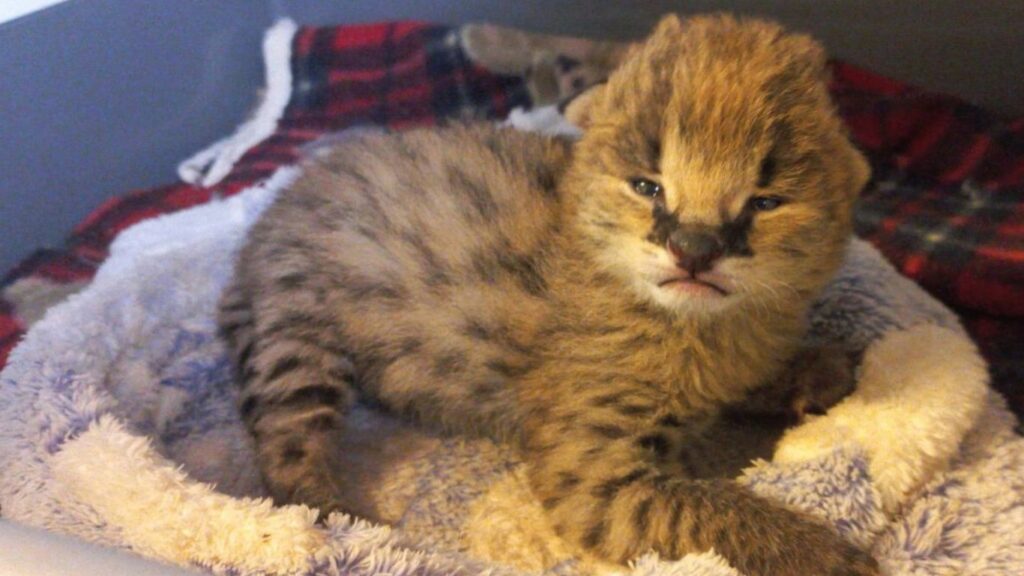
Recently, while rescuing two serval kittens from a sugarcane fire in KwaZulu Natal, South Africa, the FreeME Wildlife (FMW) team was involved in a horrific head-on vehicle collision. They were taking the three-day-old kittens to their base for observation and treatment when an oncoming vehicle hit their van head-on. Credit: FreeMe Wildlife Miraculously, in the moments before impact, one of the team members threw her arms around the crate holding the tiny kittens to protect them. She was seriously injured, breaking her collar bone, puncturing a lung, and incurring severe bruising to her body, but the tiny, days-old kittens were unharmed. It is a miracle and underpins the commitment of our partners to the welfare of wildlife. FreeMe Wildlife’s rescue vehicle was completely wrecked while transporting infant serval kittens to safety. Credit: FreeMe Wildlife Vulnerable wild animals life depend on a rescue vehicle. Friend, please help us replace it right away. The doors of the wrecked vehicle had to be broken off to rescue the trapped human and animal victims. The kittens were immediately transferred to another vehicle and rushed to the FMW clinic, where they were carefully checked for injuries and monitored for signs of shock – they had survived not only a horror crash but also the fire that tore through their natural habitat. The loss of their faithful 7-year-old vehicle is a devastating blow to wild animals in Kwa-Zulu Natal because, without it, critical rescue missions are being impacted. FMW rescues an average of 42 animals every week, some taking place as far as 621 miles (1,000 kilometers) away, and without a vehicle, limited rescues can take place. Credit: FreeMe Wildlife In a near miracle, the kittens sustained no injuries; they are being cared for at the FMW clinic until they can be released back to their natural environment. Servals are carnivorous wild cats native to the African continent and are found primarily in sub-Saharan regions. Their name, translated from Portuguese, means ‘wolf deer’ due to their elongated necks and legs and very large ears on a small skull, which gives them a deer-like quality. Credit: FreeMe Wildlife Their habitats – long-grass savannahs like wetland areas, reed beds and river vegetation – are rapidly being destroyed by human activity: wetland degradation, sport hunting and human/wildlife conflict as humans encroach on their habitats and then kill them when they prey on domestic poultry. They are also hunted for the fur and skin trade, which means they are facing threats on all sides. Servals are being corralled into smaller and smaller spaces as they attempt – often unsuccessfully – to escape humans, their greatest predators of all. Credit: FreeMe Wildlife Servals, like so many other wild species, are under increasing threat, and FMW works to rescue every individual it can. Based in the Kwa-Zulu Natal province of South Africa, FMW is a non-profit organization that rescues and rehabilitates injured and abandoned indigenous wildlife until they can be returned to the wild and integrated with their own species. Credit: FreeMe Wildlife But there IS some good news: because insurance covered the majority of the cost of a replacement vehicle, FMW needs just $6,830 (roughly £5,442 ) to purchase a new animal rescue vehicle. This amount is achievable with your help! Please, donate now. The lack of an appropriate wild animal rescue vehicle is impacting FMW’s rescue work and the release of wild animals back into the wilderness, with some releases now on hold until a replacement vehicle is purchased. FMW only has the capacity to hold a limited number of wild animals at any one time, so it is critical that they stick to release schedules of wild animals: not only does this ensure the animals remain ‘wild’ and fit to return to their habitat, but it ensures there is space for new rescues to be brought in. Credit: FreeMe Wildlife We MUST empower them to respond to wildlife emergencies once again! Purchasing a new vehicle is SO close – and with your help now, we can buy it. Please help us raise $6,830 (roughly £5,442 ) towards the vehicle, and get this expert team back to saving precious lives. Your donation right now will help enormously.
Intensive farming is biggest cause of bird decline in Europe, study says
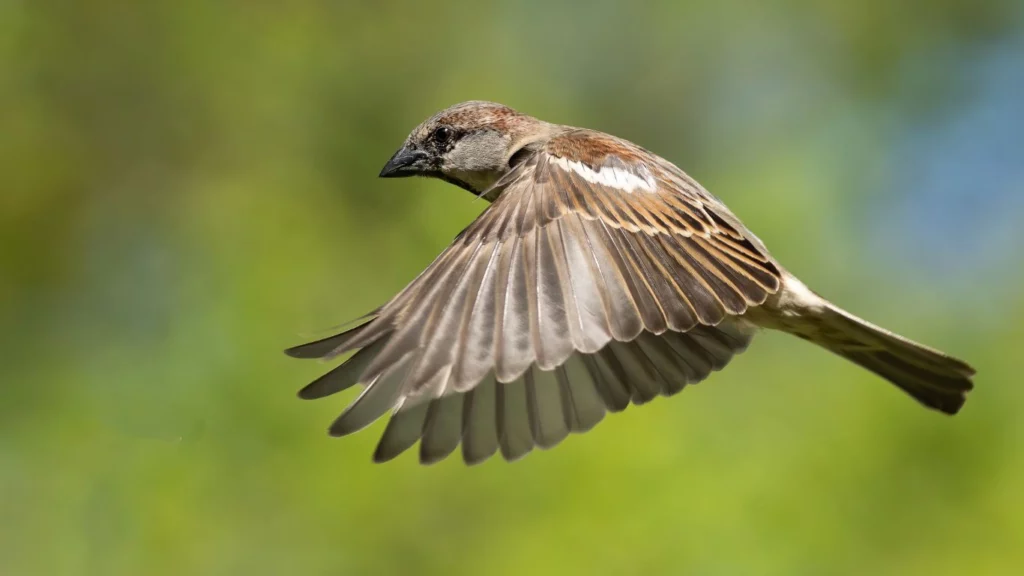
Article written by Damien Gayle Originally published by The Guardian (Mon, May 15, 2023) Use of pesticides and fertilisers identified as most significant factor behind loss of 550 million birds from skies The use of pesticides and fertilisers in intensive agriculture is the biggest cause of the dwindling number of birds in the UK and the rest of Europe, scientists have said. Compared with a generation ago, 550 million fewer birds fly over the continent, with their decline well documented. But until now the relative importance of various pressures on bird populations was not known. A team of more than 50 researchers, analysing data collected by thousands of citizen scientists in 28 countries over nearly four decades, found that it is intensive agriculture, above all, that is behind the decline in the continent’s bird populations. They found the number of wild birds of all kinds across the continent has fallen by more than a quarter since 1980, but that this decline deepened to more than half among farmland species. Birds that rely on invertebrates for food, including swifts, yellow wagtails and spotted flycatchers, were the hardest hit. “It’s more than a smoking gun,” said Richard Gregory, a senior conservation scientist at the RSPB, and one of the lead authors of the study. “I don’t think a study has looked at all these factors in one go, in such a sophisticated fashion, correcting for one variable alongside another; and it comes out with a very clear message.” The study, published in the Proceedings of the National Academy of Sciences, examined how 170 bird species had responded to four widespread manmade pressures, including agricultural intensification, forest cover change, urbanisation and the climate crisis. Farmland species suffered the most precipitous decline, with numbers falling by 56.8% since research began, the study said. Numbers of urban dwelling birds were down 27.8%, and among woodland dwelling birds the fall was 17.7%. But in all contexts, intensive agriculture, which has been on the rise across Europe, was identified as a major factor in decline, with the mass slaughter of invertebrates as pests creating a “trophic cascade” up the food chain. “The losses are quite huge,” Gregory said. “And a lot of them go back to that kind of an insect diet or linkage with insects, which is suggestive of a link to the way we’re farming land.” Urbanisation, also on the increase across Europe, was identified as the next most important factor putting pressure on bird populations. Many cities are steadily losing to development what little plots of green space they had, while modern architecture also played a role, Gregory said. “We know many of the urban birds – the swifts, the house martins, the house sparrows, the starlings – that live in those environments, that their numbers are declining very strongly, driven we think by the problems in relation to the food supplies, but also house construction and how that’s changing, how the modernisation is removing their natural kind of nest sites in those areas,” Gregory said. Northern, cold-preferring species of birds were also found to be under heavy pressure, with numbers down 39.7% as temperatures rise across Europe as a result of the climate crisis. Changing temperatures had winners as well as losers, the study noted, with numbers among southern warm-preferring species down only 17.1%. The researchers wrote: “Overall, while temperature change can lead to an increase in the distribution and abundance of some species, for those (especially cold dwellers) already affected by other anthropogenic pressures, temperature change constitutes a double burden acting directly on their annual cycle.” Only “the rapid implementation of transformative change in European societies, and especially in agricultural reform” could save the continent’s bird populations, the researchers said. They added: “This paper contributes to the highest political and technical challenge faced by agricultural policy in Europe, struggling to balance high productivity from intensive agricultural practices with environmental protection, and the results are therefore crucial to policymakers, scientists, and the general public concerned with biodiversity and global change issues.” Their call was echoed by Alice Groom, the RSPB’s head of sustainable land use policy in England. She said: “Increasing our reliance on pesticides and fertiliser has allowed us to farm more intensively and increase output, but, as this study clearly shows, at a huge cost to our wildlife and the health of the environment. “The UK and devolved governments should ensure agri-environment schemes reward nature-friendly farming practices such as flower-rich margins and herbal leys that are proven to enable farmers to produce good food whilst supporting progressive reductions in the use of pesticides and fertilisers.”
Zimbabwe’s World Heritage Site, Mana Pools, targeted for oil exploration
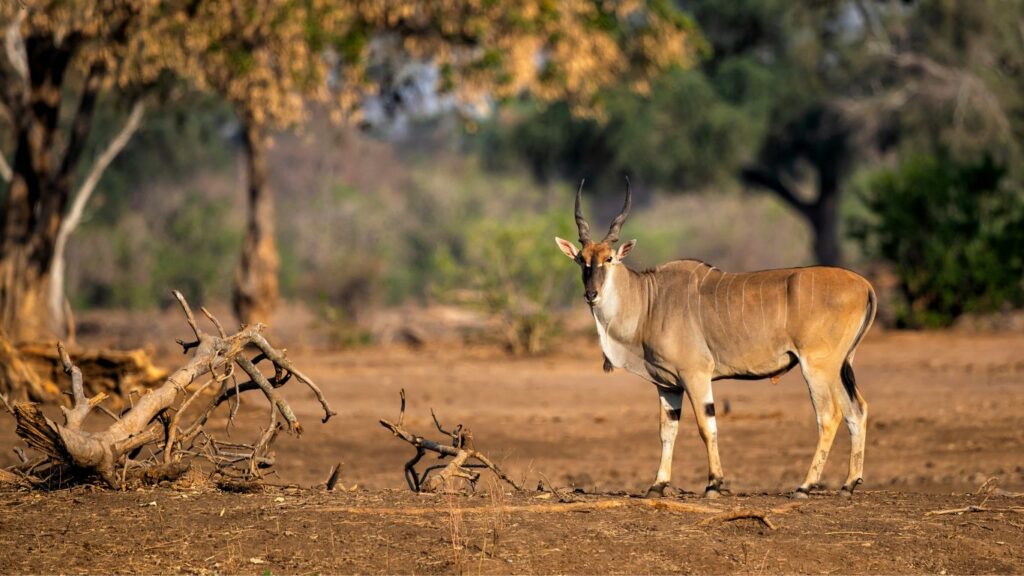
The Zimbabwean government has announced plans for a mining exploration at Mana Pools – a designated World Heritage Site, reports News Day. This according to a notice in the Zimbabwean Government Gazette, as well as the permanent secretary of the Mines and Mining Development Ministry, Pfungwa Kunaka, who announced that Shalom Mining Corporation Private Limited (SMCPL) had applied to explore Mana Pools – declared a World Heritage Site by UNESCO. Mana Pools lies on the southern bank of the Zambezi River which serves as the border between Zambia and Zimbabwe. The site covers 676,600 hectares spanning the Mana Pools National Park, Sapi and Chewore safari areas – home to a remarkable concentration of wild animals, including elephants, buffalo, leopards and cheetahs. Businesses whose primary mission is to discover and procure fossil fuels now want to explore the area for these materials, which could entail prospecting, exploration, drilling, and production. “As an organization, over the years, we have been pointing out that mining as an economic activity has both positive and negative impacts on communities, human rights, the environment, rights of workers and the economy,” said the Zimbabwe Environmental Law Association (ZELA). “Responsible mining is therefore characterized by the awareness of the impacts that mining may have on the economy, environment, communities, human rights and the workers and taking concrete steps to address the impacts. Respect of human rights, fair labor practices, respect of laws, payment of taxes and royalties and safe conditions for workers and preservation of the natural environment are some of the critical aspects of responsible mining.” In response to the announcement, executive director of Animal Survival International, David Barritt, aid that mining operations would only pollute and destroy the region’s ecosystem. “Moreover, it would open the door to poaching and trafficking of wildlife. If permission is granted to SMCPL, it could result in an ecological disaster with serious ramifications and irreversible damage for Mana Pools.” SMCPL, a Zimbabwean company, has applied for an exploration license over an area of 130,000 hectares, and the Mining Affairs Board has said that objections will need to be lodged by 19 May this year. Any person wishing to complain against the application is advised to do so in writing to the Mining Affairs Board and email the current UNESCO Regional Director: Prof. Lidia Arthur Brito: l.brito@unesco.org. You can use the template below or edit it as you wish. To sign the petition, click here: https://chng.it/yGgzLS9p2F To: The Secretary Mining Affairs Board Pvt. Bag 7709 Causeway [DATE] Dear Sir Objection to the application for Prospective Order No.26 of 2022. This letter serves to articulate my strong objection to the above application. As a citizen of (country), I hereby list the reasons for my objection below: 1) National and International legislation prohibiting the destruction of biodiversity in the buffer zones as well as within this designated wilderness area exists (ref Natural Resources Act/Forest Act/Hazardous Substances and Articles Act/Water Act/Communal Land Act/ Parks and Wildlife Act) There are more than 20 such Acts containing STATUTORY LAWS. This means that any license granted would be in flagrant contravention of our own existing legislation. Those who may grant such a license will therefore subject themselves to litigation. 2) Zimbabwe currently demonstrates a critical lack of capacity to enforce our own existing Environmental protection laws. The wholesale destruction of woodlands, wetlands, Mountain Rivers and ecosystems continues now, even within actual so-called “Protected Areas”. This destruction is rampant throughout Zimbabwe as we speak. Until our capacity to enforce our own environmental protection laws is radically improved, it is in the best interests of ALL Zimbabweans to halt all and any new applications for mining-related activities. 3) Global understanding of the vital role of biodiversity as our critical life support systems is yet to take hold within Zimbabwe. Our own so-called Protective mechanisms in the form of EMA, Forestry Commission, Zimparks and the Ministry of Environment are impotent in the face of the devastating mining calamity currently underway in Zimbabwe. Zimbabwe has agreed to pursue the international target of a MINIMUM of 30% of land coming under biodiversity protection laws. Currently, only 10% of our land is allocated for biodiversity protection. The area where Shalom wishes to prospect comes within this 10%. It should NOT under any circumstances be allowed to do so. 4) The Zimbabwe Government is a signatory to the UNFCCC at the Earth Summit of Rio de Janeiro and subsequent summits. The country has accepted the global principle of common and differentiated responsibility. Granting a license to Shalom directly contravenes this commitment. Yours faithfully, [Name]
This hippo calf orphaned after getting trapped in a dam urgently needs your help to survive!
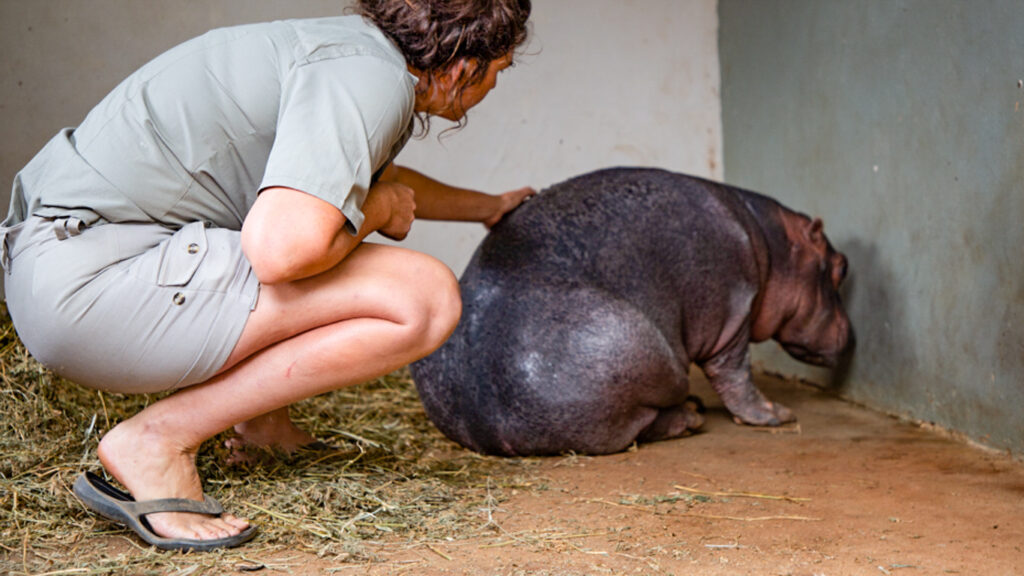
A few days ago, Lucy, a 12-week-old hippo calf, fell into a six-foot (2 meter) deep dam on a farm in Tzaneen, South Africa, and became trapped. It is suspected she was simply following her mother when the tragedy happened. Helpless hippo calf Lucy was stuck in a dam for THREE days. Her survival now depends on all the help she can get from animal lovers like you. Alone and helpless, Lucy quickly became emaciated, dehydrated and exhausted. From the extensive injuries and gaping wounds on her body, it is clear she tried desperately to scramble to safety, but to no avail. Lucy was stuck for so long that her mother was forced to abandon her – and algae began growing on her skin! Please help us support the rehabilitation and eventual release of this distressed and now-orphaned hippo calf. Our partner, the Umoya Khulula Wildlife Center, received an emergency call-out and rushed to the scene to save the calf. After an extensive but unsuccessful search of the area to try and reunite her with her mother, the team made the tough decision to bring little Lucy back to their secure, off-site rehabilitation facility. Lucy needs long-term rehabilitation and, without her mother, special milk formula for the next 12 to 18 months. Please, will you help her? Credit: Umoya Khulula Wildlife Center Our goal is to ensure she gets strong enough to be released back into the wild, where she belongs! The common hippo is an iconic African species currently listed as ‘Vulnerable’ on the IUCN Red List of Threatened Species. Hippos have played a crucial role in African aquatic ecosystems for millions of years, with their dung contributing to the overall health of rivers and lakes. Although a pod of hippos resides in Tzaneen’s Groot Letaba River, their extremely territorial nature means the rescued calf would almost certainly have been killed had she been left with them. Right now, Umoya Khulula is her best and ONLY hope. Credit: Umoya Khulula Wildlife Center Our partner, Umoya Khulula, is a rescue and rehabilitation organization that specializes in the care of orphaned indigenous wildlife. Among the sick and injured wildlife in their care are juvenile antelope, pangolins, mongooses, porcupines and their latest arrival, Lucy the hippo calf. There is a long way to go before Lucy can be released into a safe area. Hippo calves drink from their mothers for up to 12 months – and Lucy is just three months old. She needs a special milk formula with protein additives and probiotics to ensure that she receives the nutrition necessary for her long-term survival. A product like this is costly and not easily accessible in the area, which is why we are urgently reaching out to you today. Credit: Umoya Khulula Wildlife Center If we can raise $10,000 (roughly £8,000), we can purchase enough special milk formula to feed Lucy for an entire year and provide medical care to treat her terrible injuries. Please, help us save the life of this orphaned calf. Lucy is experiencing terrible trauma after being separated from her mother and nearly dying alone in a dam – but thanks to the skilled and fast-acting team at Umoya Khulula, she survived and is safe. With your support, we can get Lucy the nutrition and treatment she desperately needs to grow, get stronger, and eventually be released back into the wild with a mate or accepting pod of hippos. Umoya Khulula has released over 200 different species of animals back into the wild since it opened six years ago. Can we count on you to help give Lucy the hippo calf this same chance? Credit: Umoya Khulula Wildlife Center Umoya Khulula has the expertise to care for Lucy, but we need YOUR help to ensure she gets it, starting with critical milk formula and medical care. Please donate generously to Animal Survival International today and help us save Lucy’s life.
Africa’s painted dog are racing to extinction. Please help them.
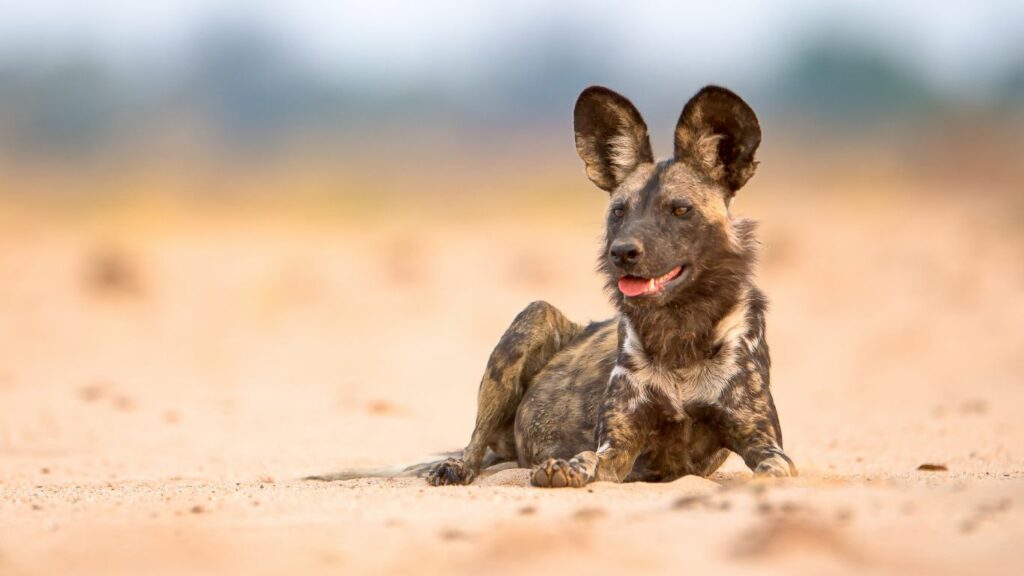
Africa’s painted dogs are among the most endangered mammals in the world. Half a million of these extraordinary predators once roamed African plains – but now, there are fewer than 7,000 left in the wild. They are facing the very real threat of extinction. The biggest threat to painted dog populations was once lions – but now, it is humans. It will come as no surprise to you that the greatest threat to these unique creatures – named for their colorful, patchwork-like coat – is human activity. Illegal hunting, habitat destruction and road collisions are catastrophic for painted dog populations. Painted dogs become victims of snares left out for other wildlife by poaching syndicates. Image Credit: Nick Dyer Poaching is a particularly severe threat. Snares – crude and cruel devices often made from wire – trap an unsuspecting painted dog, and if they are not rescued, they may die slowly, in excruciating pain, over several days. Criminals are not aiming to trap painted dogs, they are after animals to sell in illegal bushmeat markets – antelopes, elephants, giraffes and buffalo – but painted dogs become unwitting victims, caught in snares or killed by poison. Snaring is devastating populations of these endangered animals, but we have a plan to help protect them – and for that, we need your support right now. Painted dogs are tragically endangered, but with your help, we can help bring the species back from the brink of extinction. Around 700 painted dogs live in the wild in Zimbabwe – 10 per cent of the world’s population. Their lives are in danger every single day because of an epidemic of snaring in wildlife areas. Zimbabwe’s struggling economy has caused an increase in poaching: wild animals are illegally caught, killed, chopped up and sold for their meat – known as ‘bushmeat’. A painted dog caught in a snare may die a slow and agonizing death. Image Credit: Nick Dyer We work for the rescue, rehabilitation and release of injured painted dogs – if you are able to support our work for this unique species, please donate now! We are working with Painted Dog Conservation (PDC) near Hwange National Park in Zimbabwe, home to some 200 painted dogs, all of them at risk of being snared every single day. PDC’s highly trained anti-poaching unit works closely with Zimbabwe National Parks and the Forestry Commission to patrol the park every day, finding and removing snares that would otherwise cause intense agony and suffering to painted dogs and other animals. The Painted Dog Conservation (PDC) anti-poaching unit works tirelessly to remove and destroy lethal snares left out by poachers. Image Credit: Nick Dyer The team has retrieved 50,000 snares since 2001– saving perhaps 5,000 animals. When the team is notified about trapped animals, it responds immediately. They are treated onsite or evacuated to the PDC sanctuary clinic, where they are treated and cared for until they can be returned to the wild. Those with injuries or disabilities severe enough to prevent their release become permanent residents at the sanctuary, where they live in an environment as close to the wild as possible. The PDC responds immediately to reports of injured painted dogs and administers expert care. Image Credit: Nick Dyer If we can raise $6,000 (£4,700), we can provide painted dogs with medical care and supplies. There is no exaggeration in saying painted dogs are so endangered that saving a single life is important for the survival of the species. A painted dog is treated after a snare is removed from its neck. Image credit: Nick Dyer Painted dogs are intelligent and highly sociable animals, with each one bearing a unique pattern. They are extremely caring to their packmates and if one dog is elderly, hurt or ill, the pack will take turns caring for it. Only the alpha male and female breed and the rest of the pack supports the raising of the pups. If one dog dies due to snaring or road collision, it affects the hierarchy of the entire pack, and can be the difference between the family structure surviving or collapsing, and the pups dying. We understand the importance of helping every painted dog we can – and we believe you do, too. Please donate as much as you can right now, and help us protect this precious and important species.
Hundreds of Lynx to be Slaughtered in Sweden Following Largest Ever Wolf Cull
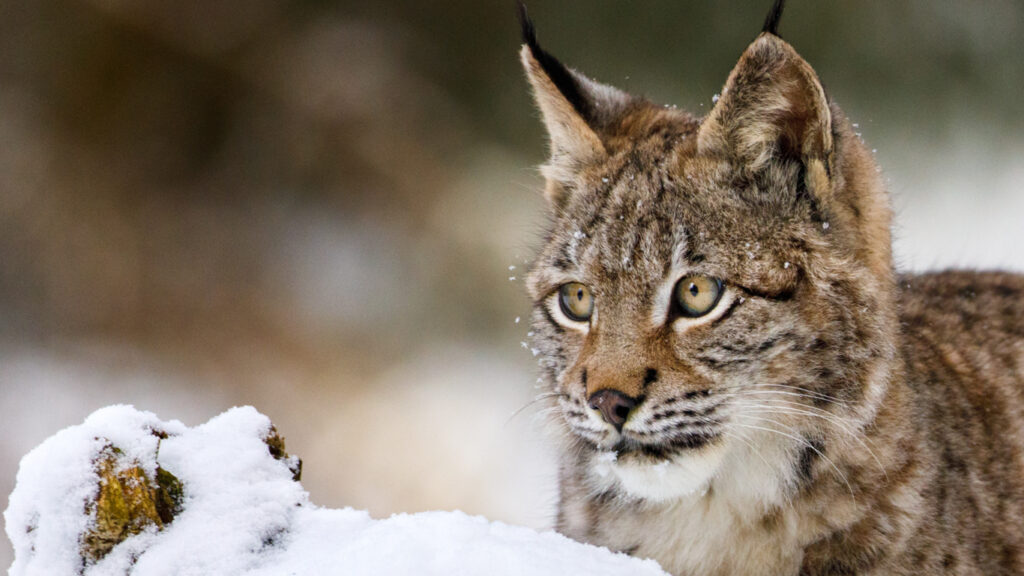
Conservationists have condemned Sweden’s issuing of lynx hunting licenses, branding the cull “trophy hunting”, reports The Guardian. This as hunters barely conceal their ‘excitement’ over the cull. The country has issued licenses to hunters to kill a total of 201, just weeks after dozens of wolves were killed in Sweden’s largest wolf cull in modern times. This lynx slaughter number is more than double the number of that in recent years. Wildlife activists and conservationists say the planned cull is well above any limits needed to protect people or livestock and are asking the EU to take action against Sweden for breaching environmental war. The EU Habitats Directive states that hunting may be permitted either to prevent damage to livestock or in the interests of public safety. “This is a trophy hunt, just like going to Africa to hunt lions,” said Magnus Orrebrant, head of animal rights advocacy group Svenska Rovdjursföreningen. The group has started a petition calling for the trophy hunting of lynx to be stopped. “Hundreds of foreign hunters come to Sweden for lynx hunting because they think it is exciting.” Last month, conservationists warned that Europe’s lynx population could collapse unless immediate efforts were made to protect the species. Tests on the remaining cats in France show that their genetic diversity is so low, they will become locally extinct within the next 30 years without intervention. There are an estimated 1,450 lynx spread across Sweden – around 300 fewer than a decade ago. The Swedish hunters’ association, Svenska Jägareförbundet, admits the animals do not pose a danger to humans, and Swedish environmental protection agency Naturvårdsverket argues that the country needs only 870 animals to maintain a healthy population. “The hunt is absolutely not linked to any danger to humans,” said hunting association advisor, Henrik Falk. “Neither is wolf hunting – there are no documented cases of wolves attacking humans in Swedish modern times. The lynx hunt is more about the excitement, and for some hunters, of course, the skin is the motivation.” It is “strongly questionable” that the issues of public or livestock safety applies to lynx in Sweden, said predator expert Benny Gäfwert of the World Wide Fund for Nature (WWF). “We do not think the hunters can invoke these exceptions, and we have notified the EU Commission,” he said. “That hunting occurs, we do not, in itself, have a problem with, but the extent to which it occurs in relation to the low damage caused by the lynx is unwarranted.” He added that the WWF is also challenging Sweden’s explanation for its ongoing wolf cull. Historically, lynx have ranged across Eurasia but have come under intense pressure in many countries due to habitat loss, poaching, traffic collisions and inbreeding. In Britain, calls to reintroduce lynx to the wild were rejected last month by environment minister, Thérèse Coffey. The planned lynx hunt is taking place during the mating season when the animals’ fur is thickest, making it particularly attractive to hunters, according to Marie Stegard Lind of anti-hunting group Jaktkritikerna. “This is completely unnecessary – a pure trophy hunt,” she said. Conservationists have underscored the importance of lynx in controlling Sweden’s large population of deer, moose and boar. “As an organization committed to the preservation of all species, we strongly condemn the cull and all other instances of trophy hunting,” said David Barritt, executive director of Animal Survival International. “In a world where more than a million species are threatened with extinction, there is simply no place for the gratuitous killing of any animal.”
Like QUICKSAND, the muck of the near dried-up waterhole just SUCKED THE YOUNG ELEPHANT IN DEEPER as he struggled to get free…
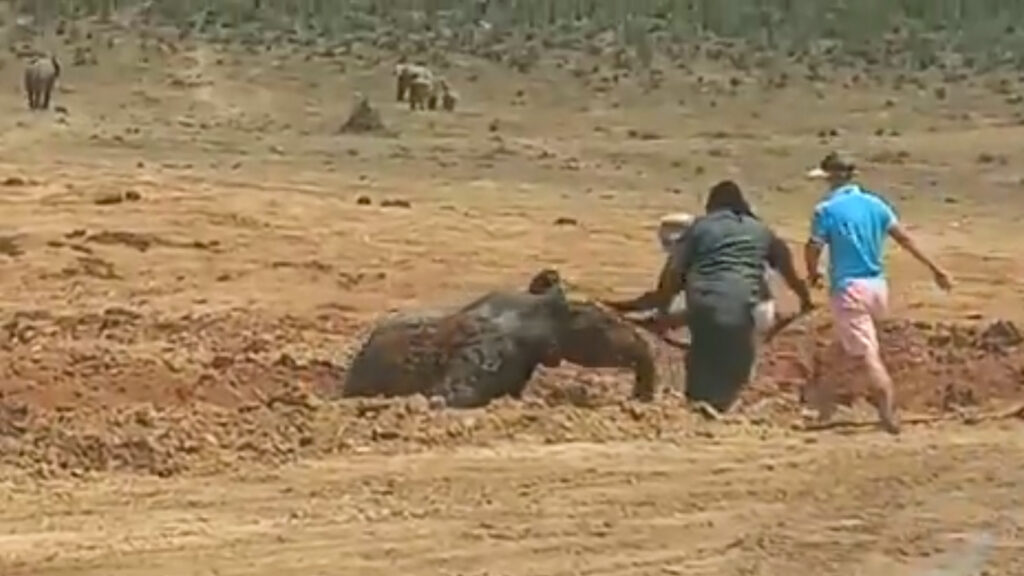
Nothing better illustrates why we are so urgently seeking help to get water back into dried-up African waterholes than the… … recent near-death experience of a juvenile elephant who lives at the Addo Elephant National Park in South Africa. Credit: Philip Keevy We have told you before about the devastating drought that has put hundreds of elephants in peril at Addo. Donations from animal lovers like you allowed us to install eight solar-powered water pumps at waterholes across the park, that are providing vital water for thousands of animals 24 hours a day. But there are still dried-up waterholes, and they pose a significant threat to young elephants and other small animals because they get trapped in dense mud formed with the last of the water. Recently, the mud almost caused the death of a two-year-old male elephant. He and his family were rushing to a near-dry waterhole urgently seeking to drink. In the crush, this youngster was pushed into the mud and trapped. The poor creature quickly exerted all his energy as he writhed to break free. He faced a horrible death, becoming weaker and weaker until he would have eventually collapsed and either drowned in the muddy water remnants or starved to death. Credit: Philip Keevy Fortunately, help was on hand and a risky rescue mission was launched. We say “risky” because elephants associate humans with killing, not kindness, and their instincts are to drive away any human who goes near a youngster. The Addo team, including Mariette de Goede, wife of the park manager, conducted a rescue mission with a family of anxious three-to-six-ton elephants milling about, very unhappy with the situation. Credit: Philip Keevy We have made remarkable progress in securing water for elephants at Addo but hope that the plight of this youngster emphasizes why we could really use your ongoing support. Elephants aren’t the only animals affected by the drought – here, two zebras look for water at a dried-up waterhole in Addo Elephant National Park. If we can raise $10,000 (£8,345), we can start immediately and WILL get more water pumped and flowing again in other dry waterholes used by elephants, buffalo, zebra and other animals in Addo. What happened to this two-year-old elephant is a frequent occurrence in an area reeling from the effects of drought. The Park manager told us that young elephants are getting trapped at the rate of one or two a month. If help is not immediately on hand, the animals die. Any donation, small or large, will make a difference. So please, if you possibly can, donate to Animal Survival International today.
Drakensberg Boys Choir sing for the survival of vultures
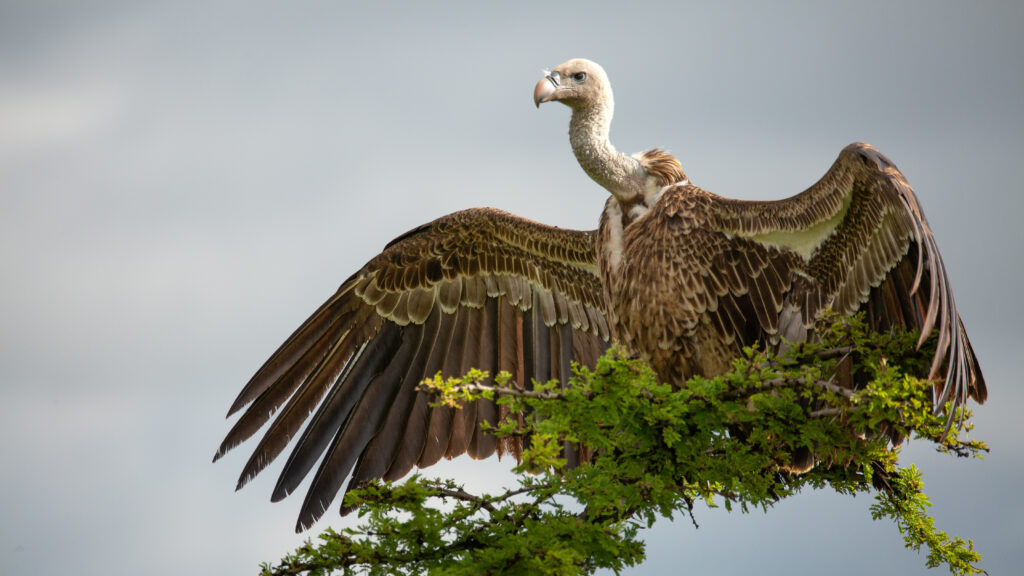
There are many initiatives in place to help bolster conservation efforts for vultures – some of the world’s most maligned and misunderstood creatures. But certainly, one of the more distinctive ones is a recent collaboration to highlight their plight… through song! South Africa’s Drakensberg Boys Choir has joined forces with singer George Philippart and endangered species protection organization, Wildlife ACT, to create a musical number to raise awareness for vulture conservation, performing a rendition of We Are One from Disney’s The Lion King. The song aims to raise awareness and encourage funding towards the conservation of this often-overlooked species. Chris Kelly, Co-Founder and Director of Wildlife ACT said, “it is unfortunate that most people underestimate the role vultures play and how devastating it would be to us if they were to be permanently removed from the environment. We hope that this inspiring piece will help to bring awareness to this endangered species’ plight.” Vultures have an undeservingly bad reputation: dirty, ugly, villainous harbingers of death. The reality, however, is that vultures are critical to maintaining healthy ecosystems as their diet of decaying carrion helps prevent the spread of infectious diseases in both animals and humans. Vultures are crucial for a healthy and functioning environment, and are thus creatures to be praised, not condemned. Unfortunately, Africa’s vultures are circling towards extinction. In just 30 years, their numbers have plummeted by 90%. In Southern Africa, four of the country’s nine vulture species are listed as critically endangered. The greatest threats to their survival are poisoning, powerline collisions and electrocutions, habitat loss and the illegal trade of body parts. Throughout Africa, some people prize vultures for their heads and feet, used in unproven “traditional” medicines. We are fighting hard to help preserve this keystone species, and all our work is made possible entirely by our donors. Support our latest vulture preservation efforts here.
Critically important vultures are being ruthlessly poisoned and pushed to EXTINCTION.
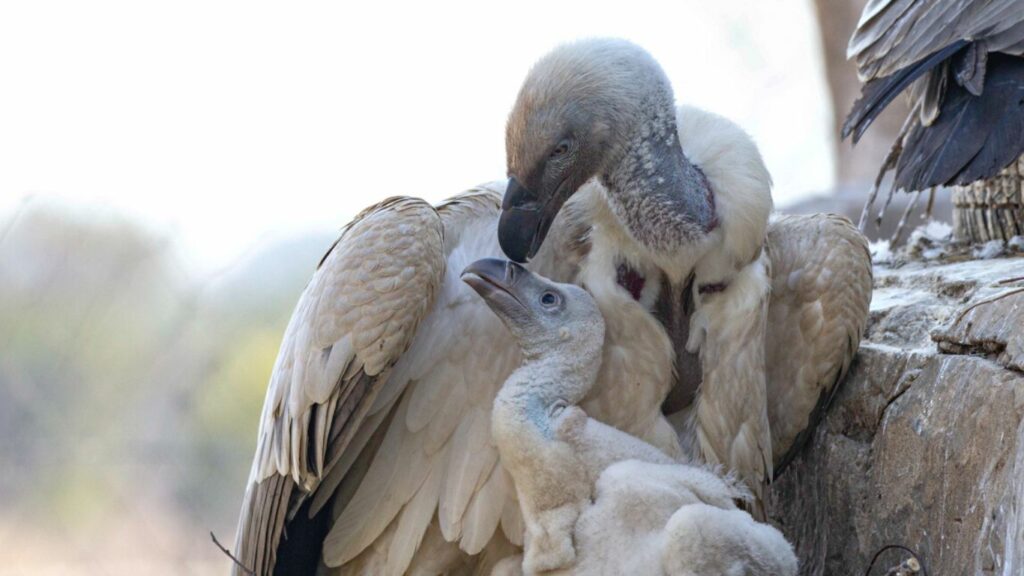
Vultures are perilously close to extinction. If they die out, the consequences for human life will be catastrophic. We need to pay attention to this rapidly dwindling species right now because our health and perhaps our very survival is at stake. Credit: VulPro Tragically, maligned and often misunderstood vultures are given little support because of their association with carrion and death, but… This is the exact reason nature’s “clean-up crew” needs our URGENT protection! If vultures were to become extinct, the damage would be irreparable. Diseases like botulism, the plague and rabies would spread rapidly, and large numbers of rural people would stand little chance against these voracious illnesses. But this is the reality we will face if we do not act immediately. Credit: VulPro We can help by buying hatchers for rescued vultures so that every vulture egg has the optimum chance of survival. In just 30 years, Africa’s vulture numbers have plummeted by 90%. In South Africa, four of the country’s nine vulture species are listed as critically endangered. The African white-backed vulture for example – vital to Southern Africa’s ecosystems and once prolific across the region and the world – is now globally listed as critically endangered. Credit: VulPro The reasons for plummeting vulture numbers in Africa is horrifying. But with your help, we will help the species recover. The plight of African white-backed vultures is alarming, but nearly all vultures are in trouble. One of the major problems is that throughout Africa, they are slaughtered for worthless “traditional” medicines. To capture vultures, poachers kill other animals and lace the carcasses with poison. When the birds die after feeding on poisoned carcasses, poachers harvest their body parts. In other instances, farmers poison vultures because they are considered “pests” – a total lack of understanding of a species that is in fact creating healthy habitats. And in a third peril, vultures fly into power lines, a terrible end. Credit: VulPro Because the vulture may not be killed outright, ailing birds can be rescued and treated so they may return to full health – and this is where your help is needed to ensure that they live and breed. We are working with VulPro, a vulture conservation center near the Magaliesberg mountains in South Africa, which rescues and rehabilitates injured and poisoned birds, and runs a successful breeding program. Vultures who cannot be released back into the wild due to the severity of their injuries live out their lives at the sanctuary, but their offspring are released to help strengthen wild vulture populations. VulPro works with white-backed vultures, the vulnerable Cape vulture, the critically endangered hooded, white-headed vultures and endangered lappet-faced vultures, as well as other large birds of prey and protected species. Credit: VulPro A massive challenge is that vultures usually produce only one egg per year. It is critically important that as many eggs as possible are successfully incubated at VulPro. Because many rescued vultures have disabilities or injuries that make it difficult for them to efficiently incubate their eggs, VulPro uses specialized incubators and hatchers that maintain optimal conditions for vulture eggs to develop and hatch. Right now, VulPro is in urgent need of two more hatchers – critical to ensuring the correct humidity and temperature for eggs to hatch successfully. We really want to help them purchase these important pieces of equipment because the prospect of losing vultures is of utmost concern, and without our help, they are sure to disappear. Credit: VulPro Vultures need your help to survive. Your health could be at risk if they die. If we can raise $6,600 (roughly £5,480), we can support efforts to strengthen vulture numbers. Your donation will be used for important breeding equipment and expert animal staff to care for the hatched offspring. This is a vitally important and worthwhile thing to do, so please be as generous as you can. We know that nobody who values nature – like us, and you, wants to see vultures die out forever.
Unique Madagascan Mammals on Fast Track to Extinction
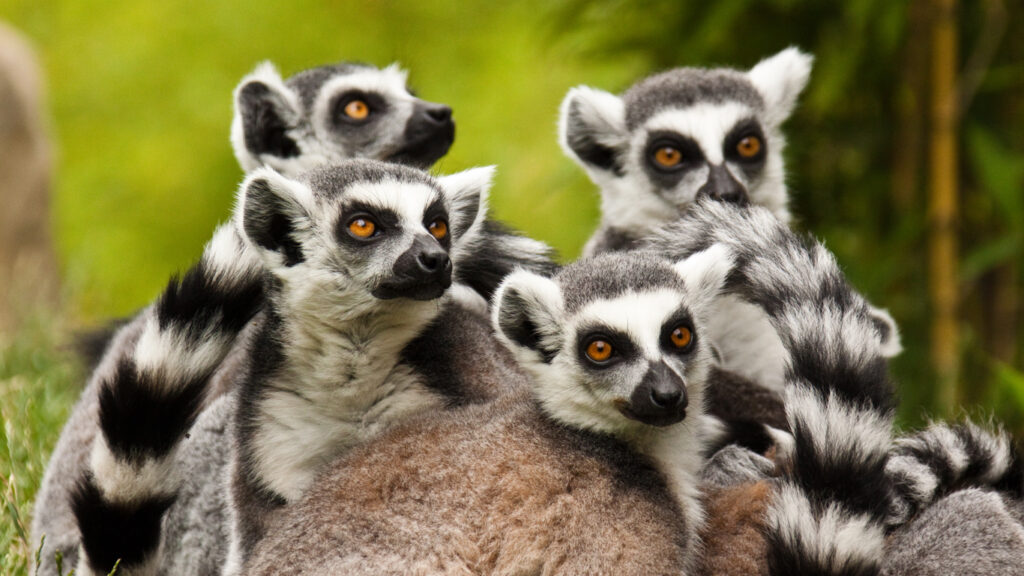
Over 20 million years of evolutionary history could be wiped from the face of the earth if action is not taken now to stop Madagascar’s unique mammals going extinct, according to a new study published in Nature Communications journal. Species at risk include the threatened ring-tailed lemur and the aye-aye, a nocturnal primate native to Madagascar – the fourth largest island in the world and roughly the same size as Ukraine. Shockingly, it would already take three million years for the diversity of Madagascar’s mammal species to recover after human settlement 2,500 years ago. This disturbing trend is set to continue in the coming decades: if threatened Madagascan animals go extinct, life forms that have evolved over 23 million years will be destroyed. Madagascar is one of the planet’s biodiversity hotspots, with 90 percent of its fauna and flora found nowhere else in the world. Now, more than half its mammal species are threatened with extinction. “Our results suggest that an extinction wave with deep evolutionary impact is imminent on Madagascar unless immediate conservation actions are taken,” said researchers. The situation is particularly serious because the island is home to wildlife that has not evolved anywhere else in the world. Species that came from Africa diversified over millions of years, and due to the fact that Madagascar broke away from greater India almost 90 million years ago, these species are not found anywhere else. “It’s about putting things in perspective—we’re losing unique species traits that will probably never evolve again,” said lead researcher Dr Luis Valente from the Naturalis Biodiversity Center in Leiden, the Netherlands, and the University of Groningen. “Every species is valuable in its own right; it’s like destroying a piece of art, so what is happening is very shocking.” His team worked with researchers from the United States and Madagascan conservation organization, Association Vahatra. The island is known especially for its ring-tailed lemurs – members of a unique lineage of primates found nowhere else. Other well-known inhabitants include the fossa, a carnivorous cat-like animal, and the panther chameleon, as well as a wide array of unique butterflies, orchids, baobabs, and many other species. Between 2010 and 2021, the number of Madagascan mammal species facing extinction more than doubled, from 56 in 2010 to 128 in 2021. The primary threats to species are human-driven habitat destruction, climate change and poaching. Biologists and paleontologists built a dataset that showed all the mammal species currently present on the island; those that were alive when humans arrived, and those known only from fossil records. Of the 249 species identified, 30 are extinct. More than 120 of the 219 mammal species alive today on the island are threatened with extinction. Lost species can never return, and so the study looked at how long it would take to recover the same levels of biodiversity through new species colonizing and evolving on the island. Researchers concluded it would take millions of years for natural processes to rebuild the levels of biodiversity already lost. “Lots of these species could be going extinct in the next 10 or 20 years—they cannot wait much longer. The main message is that biodiversity is not going to recover quickly. Even the places we think are pristine and really untouched can be pushed to the point of collapse quite quickly,” said Valente. He added that the loss of mammals would have serious consequences for plants and insects that depend on them. “It’s a cascading effect—losing these mammals would likely cause a collapse of the ecosystem more broadly. In total, it is likely to be more than 23 million years at stake.” What the island urgently needs is conservation programs focused on creating livelihoods for local people, stopping forests being converted into farmland, and limiting the exploitation of resources such as hardwood trees and animals killed for their meat (known as bushmeat). “Real conservation action must be taken – immediately – to help preserve Madagascar’s unique and vulnerable biodiversity,” said David Barritt of Animal Survival International (ASI), which provides direct aid to wildlife in crisis. ASI runs programs on the island which help to fund rehabilitation for rare tortoises rescued from illegal poaching rings and to protect vulnerable indri lemurs from poachers. “We have done enough damage to this critically important island, and if the pillaging does not end now, many species will take millions of years to recover – if they recover at all. The impact of this could be devastating not only for the island of Madagascar, but for ecosystems and our planet at large.” Read more about ASI’s work with tortoises and lemurs in Madagascar.
Brian Davies obituary (1935 – 2022)
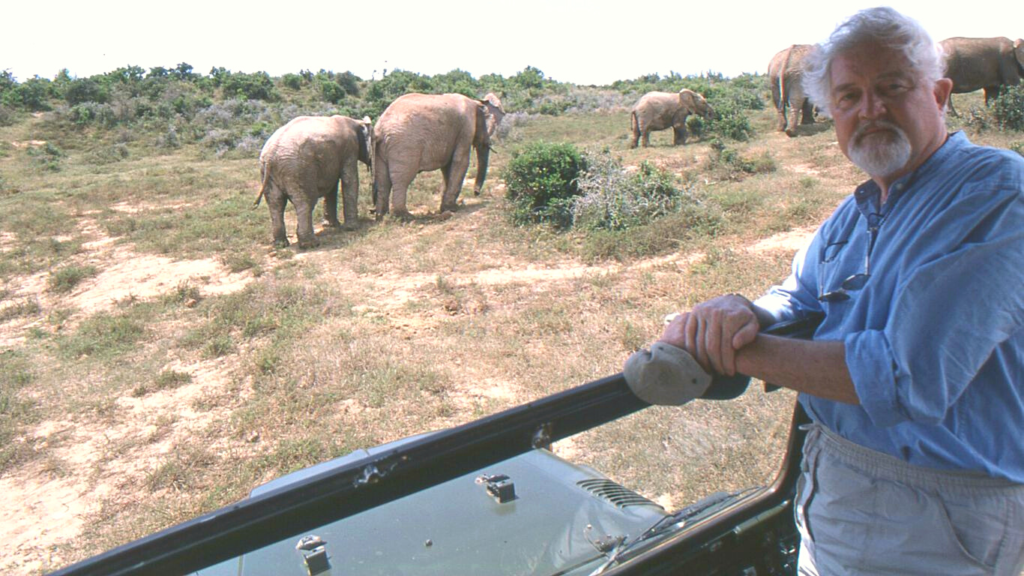
Brian Davies – 4 February 1935 – 27 December 2022 Brian Davies, world-renowned animal welfare activist, has died. He was 87. To the general public, Davies will be most remembered for his success in ending the baby whitecoat seal slaughter in Canada in the 1960s, and for donating £1-million to the British Labour Party election campaign in 1996 in a bid to bring an end to fox hunting. To animal welfare organizations, Davies will be remembered as the man who pioneered direct mail fundraising for animal causes, creating a model that is the world standard today. Davies was born in poverty in the small village of Tonyrefail in Wales, growing up sickly, he was raised by his grandparents until the end of World War ll. Then 11-year-old Davies and his parents moved to England to start afresh. But life was tough, and Davies left school at 14 to work various manual labor jobs. When he was 20, he married Joan Pierce and the couple moved to Canada where they had two children, Nicholas and Toni. They settled in Fredericton, New Brunswick, where Davies joined the military and became secretary of the New Brunswick SPCA. In May 1976, he met his now-wife Gloria (nee Colisanto), and it was love at first sight. They married in 1981. In the 1960s, Davies worked as a government-appointed observer at the annual seal hunt on the Canadian ice floes, during which some 30,000 baby seals were clubbed to death. Alone among observers, Davies spoke out against the cruelty involved and began a one-man crusade to ban the slaughter. Noticing that animal lovers began writing to him offering their support, he hit on the idea of mass-mailing them asking for funds to help his campaign. It was the world’s first animal action-orientated direct mail appeal and was so successful that Davies not only brought the cull to an end, but on the strength of it, created one of the world’s largest animal welfare organizations, the International Fund for Animal Welfare (IFAW). By the time Davies retired, IFAW was a $60-million a year charity. As an activist, Davies was formidable, fearless, wily, canny and utterly determined. During his fight against sealing, he was jailed for defying a government ban on flying to the Canadian ice to witness the cull, survived an apparent assassination attempt, and had so many death threats he left Canada and moved to the US. When the campaign needed traction, Davies lobbied the editor of the powerful British Daily Mirror. On March 26, 1968, the front page of the newspaper read, “The price of a seal skin coat”, below the full-page image of a doe-eyed whitecoat seal pup staring upward at a jackbooted, bloody-handed, bat-wielding hunter, frozen mid-strike. The ever-canny Davies capitalized on the outrage the article caused by taking celebrities to the ice to see the situation for themselves – another innovation for animal welfare. French actress Brigitte Bardot was one of the first and her visit drew international attention to sealing. Eventually, Davies won when the European Union banned the import of baby seal pelts in 1987. Davies went on to other significant achievements. A maverick with a larger-than-life personality and a penchant for the odd bottle of wine or three, he controversially donated £1 million to the British Labour Party in 1996, believing that if Tony Blair won the 1997 general election, he would ban hunting with hounds. Blair won and anti-hunting legislation was passed. At the time, it was the largest single donation in Britain’s history. Davies was offered a peerage, which he turned down – something he often regretted in later years, not because of the status it would have brought but because he came to believe he could have achieved more for animals as a Lord. In 2003, Davies retired from IFAW, telling close friends that he was burned out and exhausted. Retirement did not last long. Restless, he built two new organizations: Network for Animals, an organization that works in 26 countries and focuses on direct action to help street dogs, donkeys and cats in need, and Animal Survival International, which focuses on the plight of wild animals in a world of climate change, habitat destruction and international criminal trade in animals and their body parts. Towards the end of his life, Davies was asked by a journalist if he would do it all again if he had a second chance. “In a heartbeat,” was his reply. Davies is survived by his two children and second wife, Gloria C. Davies, and his beloved dogs Max and Flora.
Pangolins! Elephants! SO MANY rare and endangered animals could be EXTINCT IN OUR LIFETIMES!
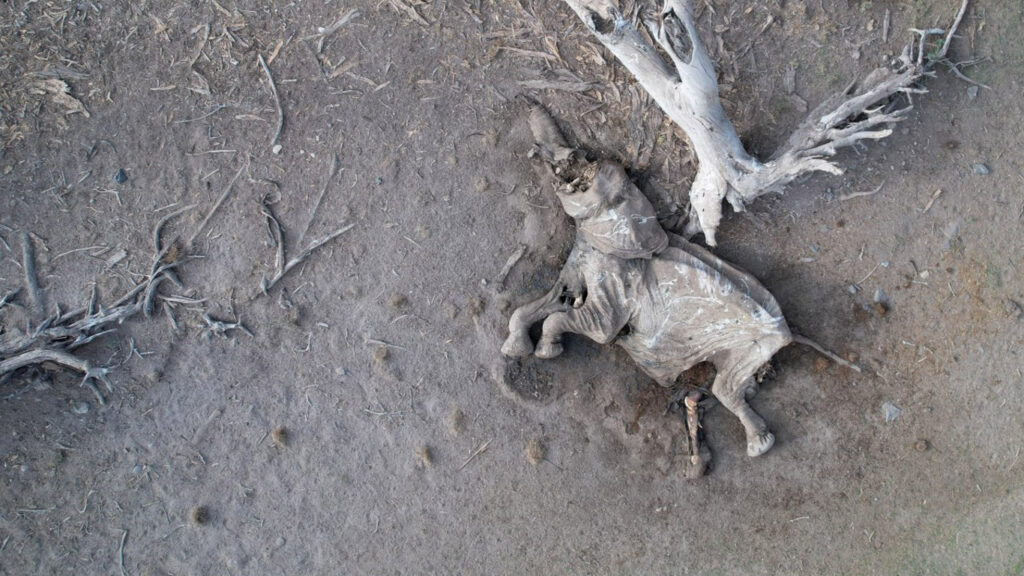
Our planet is in crisis and our irreplaceable wildlife is in terrible danger all over the world. ASI provides direct action to help animals in the most immediate peril – animals who would die without our help. At ASI, we see firsthand the devastating consequences of climate change, habitat destruction and the merciless illegal wildlife trade. What is truly frightening is that it is getting worse. There can no longer be any doubt that without immediate and determined action, we will see more and more wild animals becoming extinct. We are a dedicated team, working with our partners on the ground wherever we are needed, whenever we can. It is your vital donations that keep us in the field. There is hope! Honestly, the animals would be lost without your generosity. Your donations allow us to be there for animals who would otherwise have a slim chance of survival. Take pangolins, for example… Driven by human ignorance and greed, these shy and gentle creatures are the most trafficked mammals in the world and dangerously close to being wiped out. Pangolin meat is prized as a delicacy in several parts of Asia, and their scales are used for useless ‘traditional medicines’. Tragically, this means huge numbers of pangolins are brutally slaughtered each year. Often, they are boiled alive. Africa is seeing a pangolin poaching onslaught, and we are on the frontlines of the battle. In 2022, in Nigeria and South Africa, we aided emergency pangolin rescue operations, covered medical costs and provided high-tech equipment so rescued-and-released pangolins could be monitored and protected. We also helped equip two rehabilitation facilities that are a godsend for rescued pangolins in need of specialized, life-saving care. The insatiable illegal wildlife trade is taking a terrible toll on pangolins, which means the pangolins you help are vitally important if the species is to breed and survive. Will you continue to stand with us? Please, donate to ASI today. On the other end of the size spectrum, we urgently intervened for elephants beset by poaching, climate change-induced drought, and habitat loss… Thanks to the generosity of our supporters, we provided the Addo Elephant National Park in South Africa with high-tech anti-poaching drones, boreholes and solar-powered water pumps to ensure that life-giving water is kept flowing for desperately thirsty elephants and other wildlife caught in the worst drought for 100 years. A happy note: the drought has broken! Drought is still ravaging the African nation of Kenya, so we provided emergency water supplies. Your donations helped us prevent countless elephants, giraffes, buffaloes and antelope from dying of thirst. In 2023, as global temperatures rise at an alarming and unprecedented rate, our crucial drought mitigation efforts will be needed more than ever. So please, if you possibly can, donate right now. Reforestation: We work with partners on the ground in Kenya and South Africa helping to provide a long-term solution to forest loss by planting thousands of trees, thus creating more animal habitats and reducing carbon in the atmosphere. Habitat destruction caused by illegal logging and agriculture means that elephant ranges are shrinking, forcing them to move closer to human settlements in search of food and water. This is deadly dangerous for the elephants because there is a high risk of them being killed as a result of human-wildlife conflict. Tragically, the animals always lose. Tree planting is one of the cheapest and most cost-effective ways to provide elephants and other wild animals with forests they can retreat to – away from humans. We aim to help plant up to 500,000 trees this decade. If we achieve it, we will have provided a slice of hope to future wildlife generations. We cannot do this alone. Please, will you help us? We focus much of our attention on immediate and direct action… In crises, we pride ourselves on being among the first to respond. Our teams are always ready, but our vital work could not happen without you. Your donations are essential and make a world of difference for animals in need when catastrophe strikes… Lastly, but so importantly, we began the fight to free Ljubo – a bear in despair – kept in intolerable conditions in the Balkan nation of Montenegro. Ljubo is caged and so stressed he self-mutilates. We are working to persuade the Montenegrin government to act to improve his living conditions immediately and join us in finding him a home in a bear sanctuary. It is your donations that will give hope to this bear in despair. Read more… Some of our other projects in 2022 are: We provided medical care for critically endangered radiated tortoises, and funded protection units for indri lemurs in Madagascar. In South Africa’s Eastern Cape, we provided tracking collars for a genetically vital breeding pair of cheetahs and supported a hungry and tick-infested giraffe family. We financed anti-poaching and anti-snaring activities in Zimbabwe. Foxes, bats, badgers and vultures all benefit from your compassion and generosity. Sea creatures that benefitted from your donations include critically endangered vaquitas, sea turtles, endangered African penguins and whales caught in life-threatening fishing nets. You can see from reading this how wide-ranging our work is and how important it is. ASI works around the clock and around the globe to protect and preserve wildlife and the environments they depend on. Our successes this year were only made possible by YOU. Our planet is in crisis – please stand with us and fight for wild animals. Please support us as we take action against the threats that endanger the survival of invaluable wildlife by donating right now.
Animal Populations Experience Average Decline of Almost 70% Since 1970
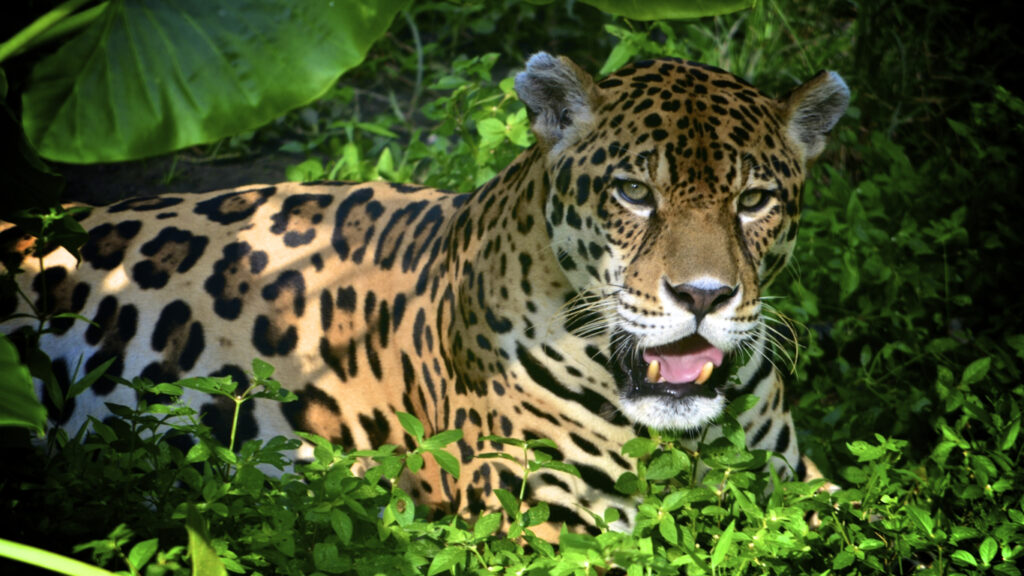
Wildlife populations have plummeted by an average of 69% in less than 50 years, according to the World Wildlife Fund (WWF) and Zoological Society of London’s (ZSL) biennial Living Planet report. Scientists believe the planet is in the midst of its sixth mass extinction, largely driven by humans. As human beings continue to destroy forests, consume beyond the planet’s limits and pollute on a colossal scale, countless species of birds, fish, amphibians and reptiles are being driven toward extinction. Latin America and the Caribbean have undergone the steepest fall, with a 94% wildlife decline in 48 years. Africa had the second largest decline at 66%, followed by Asia and the Pacific each at 55%, and North America at 20%. Europe and Central Asia each experienced an 18% fall. The total loss is equivalent to the human population of Europe, the Americas, Africa, Oceania and China vanishing. The report’s authors are imploring world leaders to decide on an ambitious target at the COP-15 biodiversity summit in Canada this December. “Despite the science, the catastrophic projections, the impassioned speeches and promises, the burning forests, submerged countries, record temperatures and displaced millions, world leaders continue to sit back and watch our world burn in front of our eyes,” said WWF-UK chief executive, Tanya Steele. “The climate and nature crises are not some faraway threats our grandchildren will solve with still-to-be-discovered technology.” The fragmentation of habitats, driven by the global agricultural system, is the primary driver of biodiversity loss across the planet. The International Union for Conservation of Nature (IUCN) is developing a standard to measure conservation potential, which will allow researchers to pinpoint a trajectory of recovery for some of the one million species threatened with extinction. The pink pigeon, burrowing bettong and Sumatran rhino are among the species with promising conservation potential. “The rampant destruction of nature threatens the survival of all life on earth,” says David Barritt, executive director of Animal Survival International (ASI). “Now, more than ever, we need to take meaningful steps to cut carbon emissions, limit global warming and modify our production and consumption levels.”
Typically thought of as “bad guys”, vultures (who are heading towards EXTINCTION) are actually quite the opposite – they play a crucial role in stopping the spread of deadly diseases!
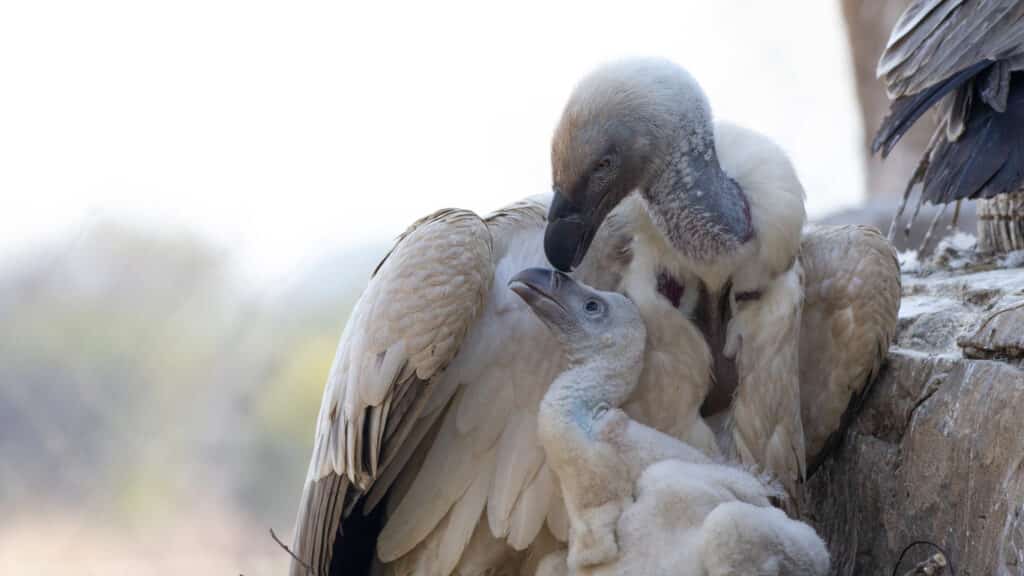
We have told you before about the critical situation for vultures and why it is so important to save them. Today, vultures really need your help. Without help, extinction looms with catastrophic consequences for man and animals. Image: Vulpro Vultures get a bad rap, often associated with death and morbid situations. Unfortunately for them, they are gawky and unattractive birds who feed on carrion – dead animal carcasses – it doesn’t help their image. Yet they are vitally important in ecosystems and play a crucial role in stopping the spread of disease. If we lose vultures, the consequences will be huge, and humanity will suffer. Image: Vulpro Vultures reduce the spread of diseases by rapidly consuming carcasses. In the 1990s, India obliterated more than 97% of its vultures – and the result was disastrous. This loss leads to less efficient scavengers like rats replacing them and directly causes serious problems with the greatly increased spread of disease. Image: Vulpro African vulture populations have dropped by around 90% in the past 30 years, and several African vulture species are on the brink of extinction. They are poisoned, electrocuted, hunted for their body parts – used in black magic – and their habitat is being destroyed. We have a plan. If we can raise $10,000 (£8,990), we can add an additional 15 baby vultures every year, to the world’s diminishing reserves. Please, will you help us? Image: Vulpro We are working with Vulpro, a South African organization that rescues vultures, provides them with medical treatment and whenever possible, releases them back into their natural habitat. Sadly, in many instances, the poor birds can never be released because they are so badly injured that they can never fly again or because they have become too close to humans – but these birds can still help future generations by creating new chicks. Image: Vulpro Vulpro has 270 unreleasable vultures at their facility, who produce up to 50 eggs annually. At the moment, only 25 of these eggs hatch… We need to buy a specialized hatcher and incubators which will dramatically increase the number of hatchlings by as many as 15 new chicks This would be a HUGE WIN for vultures and wildlife in general (but also humans!) because when grown, these vultures can be released into the wild and get on with their job of eating rotten carrion which would spread deadly diseases to humans. Countless lives would be saved. Image: Amanda_Ellis Please, help give vultures a fighting chance of survival by donating generously today so that more vultures can be born, saving them from extinction.
UNBELIEVABLE, BUT TRUE – the process of obtaining charcoal for your barbeque grill is KILLING ANIMALS!
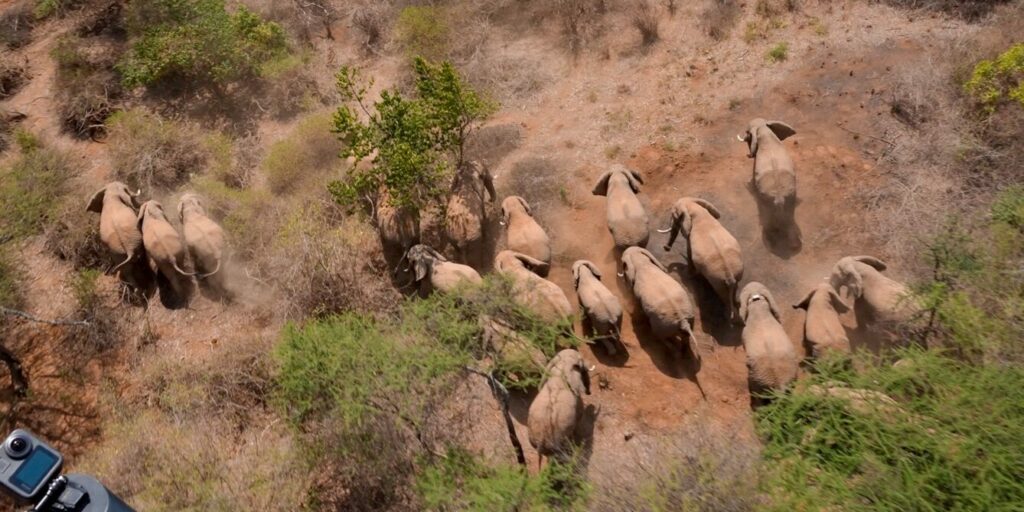
In Kenya, a tragedy is unfolding that is both sad and frightening as charcoal burners destroy forests to make charcoal for barbecue cookouts around the world. It is hard to believe, but the glowing coals that fuel barbecues have TERRIBLE IMPLICATIONS for ANIMALS. Kenya’s forests provide food and habitats for countless animals, and they are being destroyed at a dizzying rate. Forests once covered 30% of Kenya – the figure is now just 8.3% and dropping fast. Illegal charcoal burning destroyed a forest. In protected areas reserved for animals, farmers illegally chop down forest trees and burn them for charcoal, leaving behind a destroyed habitat, resulting in hunger and death for all kinds of animals from small antelopes to elephants. The scale of the problem is immense! But there is a plan underway to begin to address it – called OPERATION SEEDBALLS. Your support today will truly make a difference – and SAVE LIVES! Throughout Kenya, the landscape looks as if it is being ravaged by a dreadful disease that is leaving millions of black patches in the wilderness. The patches are the result of charcoal burning, burnt-out areas, smoking, active burns and smoldering burns stacked with packaged charcoal ready for transportation. This process is wildly illegal, but there is so much burning that rangers can’t control it, plus charcoal burners are so aggressive that rangers put their lives on the line when they try to arrest them. The effect on elephants is particularly disturbing because once the forests have gone, and their food with it, the elephants go closer to human settlements, eat their crops and sometimes injure people in their hunt for food. Then the villagers kill them and steal their tusks to sell on the illegal ivory market. Teddy Kinyanjui, Marc Goss of the MARA Elephant Project, and ASI’s David Barritt preparing to seed a new forest. The charcoal burning business is huge and difficult to control, and animal lovers must fight it as hard as we can. Teddy Kinyanjui from Nairobi’s Tamfeeds has a solution… So much charcoal has been burned in Kenya that huge piles of charcoal dust have built up, creating yet another toxic threat. Teddy’s company takes that dust and, using a special process that makes the dust a sticky ball, wraps tree seeds in it, making seedballs. The seed is the nucleus, and the dust forms a protective coating around it that prevents birds and animals from eating it. When it rains, the dust dissolves, freeing the seed and, hopefully, a tree grows. Teddy teamed up with Marc Goss, who runs the Mara Elephant Project in Kenya, an organization which protects elephants and helps preserve their habitat, and together they are starting to recreate forests in OPERATION SEEDBALLS. The forests Operation Seedballs hopes to recreate will support a variety of wildlife. Marc takes a helicopter to deforested areas in protected zones, flies low over the ground and drops thousands of seedballs from the air, mimicking the way trees naturally spread in Kenya when seeds are dropped by birds or animal droppings. Millions have been sown across Kenya in the last few years – it’s cheap, and it works. You can see new trees springing up where seeds have been sown. Because charcoal burners keep destroying trees even in protected areas, to be really effective, policing must be increased and many more seedballs must be distributed. We promised to ask our supporters to help – $50 (£44) buys 10,000 seedballs – if even 1% of the seeds grow, that’s 100 new trees! Marc took our team by helicopter to see the scale of the problem and sow some seedballs. Within the first few minutes of the flight, we lost count of how many rectangular charcoal-burning areas there are, dotted all over the protected Mount Sizwa area not far from Nairobi. Everywhere you looked, there were hundreds upon hundreds of burned areas where forests once stood. And this dreadful picture is repeated all over Kenya. Operation Seedball uses the charcoal dust left behind by illegal charcoal burning to create a protective layer around a seed nucleus. These seedballs are then distributed by helicopter to deforested areas. Marc landed the helicopter in a place where all that was left of a forest were tree stumps, while in the near distance, smoke poured into the sky as charcoal burners worked their way through the next patch of trees. When we took off and followed the smoke, we saw a herd of confused elephants right next to several charcoal burns. The elephants were seeing their food disappear before their eyes, and there was nothing they could do about it. There are so many threats to animals… but what we saw that day frightened us. This vast, protected area is home to animals great and small and it was being destroyed in front of us. Concern turned to horror when Marc showed us pictures of an elephant who had been speared and killed when, seeking food, it got too close to humans – horrible pictures of a beautiful and noble creature lying dead with gaping wounds where his tusks once were. One fewer elephant in a world where every elephant counts in the fight against extinction – their numbers are plummeting. An estimated 55 elephants are killed every single day, 365 days of the year. This poor elephant was speared by villagers because charcoal burning destroyed its natural habitat and drove it towards human habitation. We must support OPERATION SEEDBALLS. Seedballs work. New trees will grow and provide new homes and food for threatened and endangered animals. Please help us seed a better future for animals by making a generous donation right now. We must stop poaching and charcoal burning, which is going to take time. Reseeding forest areas is something we can do today!
It’s a GIRAFFE calf!
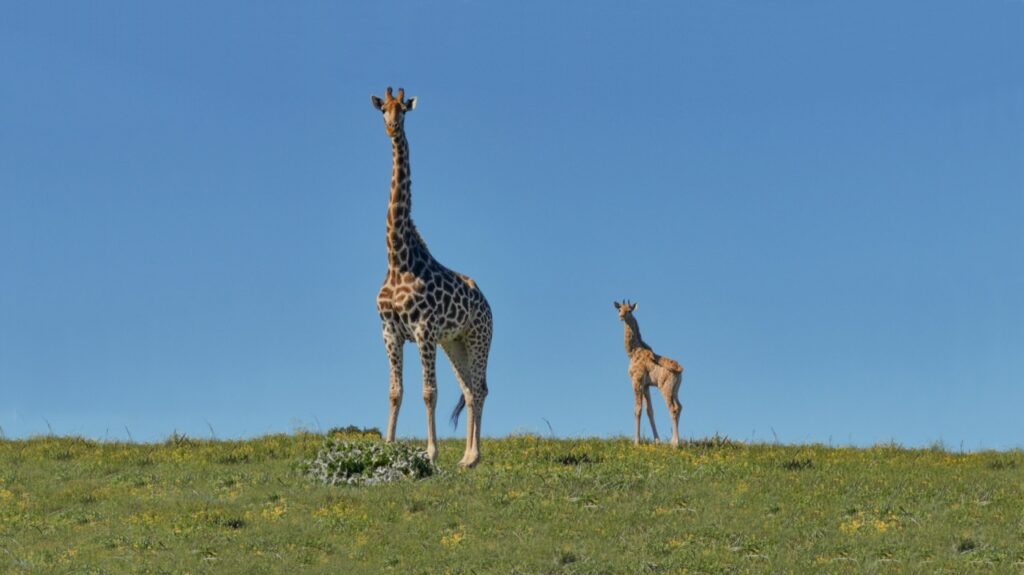
In June, we told you about three adult giraffes living on a totally unsuitable piece of land in South Africa’s Eastern Cape. The land is a smallholding, strewn with junk and far too close to humans. The giraffes were starving due to a lack of sufficient vegetation and riddled with disease-causing ticks. Two newborn calves had already died in this virtual wasteland for wildlife. The illegal wildlife trade is thriving in Africa, and it is likely that criminal activity was responsible for the giraffes being dumped. We knew we had to move them or they would not survive. With your support, we raised enough funds to relocate all three giraffes to a suitable wildlife reserve – but then came the twist none of us had expected. As our expert wildlife relocation team was preparing to move the giraffes to the nearby Royalston Wildlife Reserve, a spacious, vegetation-rich expanse where they would be able to thrive, what can only be described as a miracle occurred… One of the giraffes gave birth to a calf! When this happened previously, the calves died, but despite all the odds stacked against the newborn, this calf has survived. BUT – calves under six months of age cannot be relocated, which means that for now, we MUST continue to feed and care for the animals in their current location. The giraffes need to be moved as a matter of urgency, but the survival of the new calf is our number one priority (along with keeping the three adults alive). We must also keep the giraffes together as a family – moving them separately is not an option. Our skilled relocation team will not dart a giraffe under the age of six months, and thus we cannot move any of them until the calf is older. Relocations are tricky operations, and every effort must be made to ensure that the animals are strong enough to be moved and their stress kept to a minimum for the relocation to be successful. We will not risk the precious life of this newborn. Because our relocation team has advised us not to move the calf until it is at least six months old, we must continue to feed, monitor and treat the giraffes in their current location until they can be moved as a family. Giraffes are under increasing threat to their existence in the wild, so the survival of this calf is really important, not just to its parents and animal lovers, but as a step towards restoring giraffe populations to robust good health. We need your help to provide this family with food and care until they can be moved as a unit. We must urgently provide enough lucerne and salt licks for the giraffes so that they have sufficient food to eat, and so that the mother can stay strong and adequately nurse her offspring. Our plan is to build feeding posts that act like trees so that the giraffes can eat, and also produce enough milk for the growing young calf. Once the calf is old enough to eat solid food – this usually happens at around four months of age, but they may start to graze earlier – we will need to ensure that there is enough food for all four of the animals until we can move them. You have helped us come this far, and the relocation will happen if we can keep these animals and their calf alive. Please, donate generously right now so that we can continue to get the giraffes the sustenance they urgently need, and provide veterinary care until they can be relocated as a unit. Two calves died – we cannot allow a third to die on our watch. This calf deserves the chance to live, thrive, and roam freely just as giraffes are meant to. Please, help us save the lives of this precious youth, its mother and the rest of the family. We cannot afford to lose even one more member of this vulnerable species.
Important Update: Giraffe Relocation in South Africa
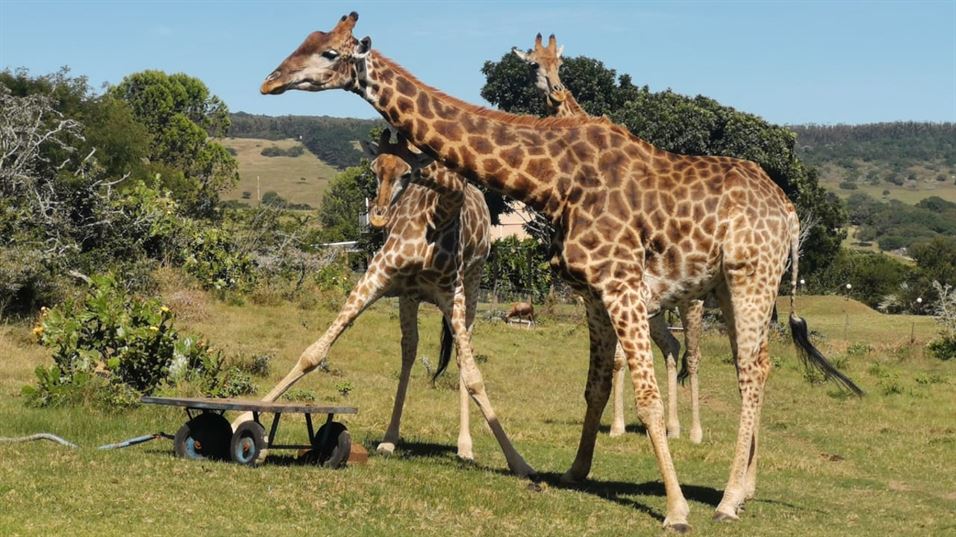
CAPTION: Animal Survival International is persevering in its efforts to relocate three adult giraffes to a more suitable environment as their present surroundings are littered with dangerous junk. Recently, we told you about three adult giraffes living in unsuitable conditions on a small piece of land in South Africa’s Eastern Cape province. They are riddled with ticks and face extreme food scarcity after eating most of the available vegetation in the area. Having seen the severity of this situation first-hand, Animal Survival International (ASI) knew we had to relocate the giraffes as quickly – and safely – as possible. Thanks to your support, we recently reached our fundraising goal and will soon follow through with our plan to move the giraffes to the nearby Royalston Wildlife Reserve. Wildlife relocations are tricky operations requiring expert skill and meticulous planning to reduce unnecessary stress on the animals. While there have been attempts to relocate the giraffes by other parties in the past, every effort has been unsuccessful. This is why we need to be extremely cautious in planning this operation, and to ensure success. ASI has chosen to work with one of the leading game capture teams in the country. They are scheduled to visit the site within in the next week to two to start planning this challenging relocation. In the meantime, the giraffes are being carefully monitored by our team and cared for by the property owners. We promise to keep you updated on the situation and thank you for your continued support. The animals need all the help they can get.
Loggers Close In on DRC’s Yangambi Man and Biosphere Reserve
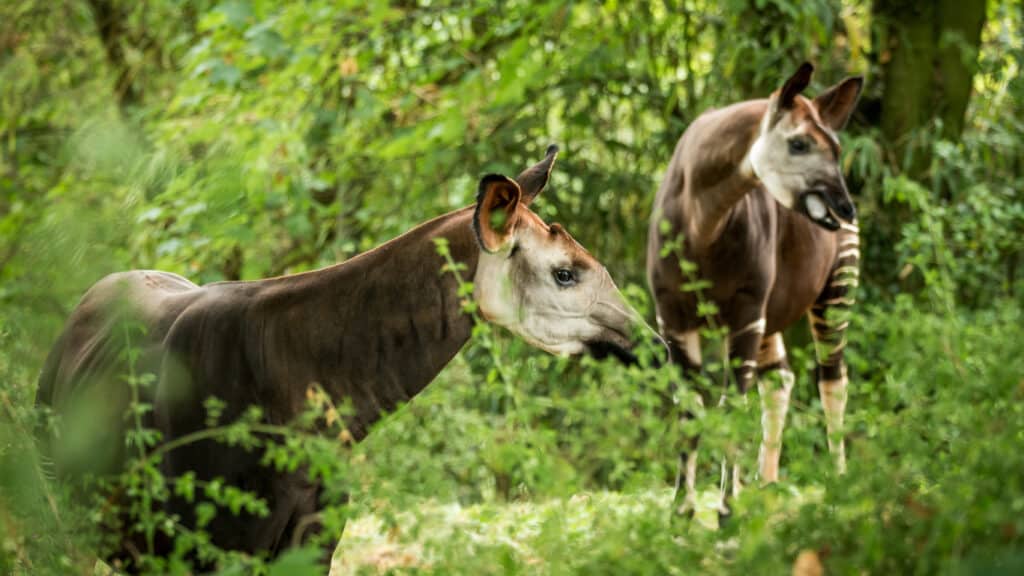
Timber transport roads are planned for 2024 in the Ngazi forest, an ecological haven connected to the famed Yangambi Man and Biosphere Reserve in the Democratic Republic of the Congo (DRC). Ngazi is home to okapi (also known as the “forest giraffe”), chimpanzees, pangolins and the Afrormosia tree – an endangered hardwood traded in global markets. The Yangambi Biosphere Reserve is at the heart of the Congo Basin and is the world’s second-largest tropical rainforest. It can store one-third more carbon over the same area of land than the Amazon. The proposed industrial logging concession, belonging to the Norsudtimber group, exposes the Ngazi forest to commercial hunting, charcoal burning and slash-and-burn agriculture, the leading cause of deforestation in the Congo Basin. Being at the very center of the Congo Basin, the Yangambi Biosphere Reserve requires urgent protection. “Ngazi forest is an important biodiversity reservoir that could eventually help repopulate surrounding areas,” says Noeline Raondry Rakotoarisoa, UNESCO’s director responsible for its African network of reserves. Rakotoarisoa adds that Ngazi provides mammals with a wildlife corridor that lets them roam the terrain and maintain healthy populations. It also successfully shelters the center of the Yangambi Reserve from human encroachment. Some people travel as far as 40 kilometers (25 miles) to exploit natural resources in the reserve. They mine gold, log trees, burn patches of forest and shoot small mammals for urban wildlife markets. There is official evidence that Norsudtimber is one of the top exporters of Afrormosia into Belgium, the main gateway for this endangered tree species into the EU. Sodefor, Norsudtimber’s parent company, claimed it had no knowledge of the documentation confirming that Ngazi was a fundamental part of the biosphere reserve. “But we are in contact with stakeholders… to contribute to the Yangambi Biosphere Reserve and its biodiversity objectives,” a Sodefor spokesperson said. “The importance of the Ngazi forest cannot be overstated. It is an integral part of the Yangambi Biosphere Reserve which is home to an abundance of fauna and flora and forms part of one of the world’s major carbon sinks,” says Tayla Lance of Animal Survival International. “Forests within the Congo Basin are resilient to unfavorable conditions, but human encroachment poses critical consequences that nature cannot rapidly recover from. The deforestation of the Amazon forest has overshadowed the importance of the Congo Basin. Now, the world urgently needs to turn its attention to the planet’s second-largest rainforest that is in dire need of protection.”
Three wild giraffes MUST BE MOVED IMMEDIATELY. Two CALVES have already DIED!
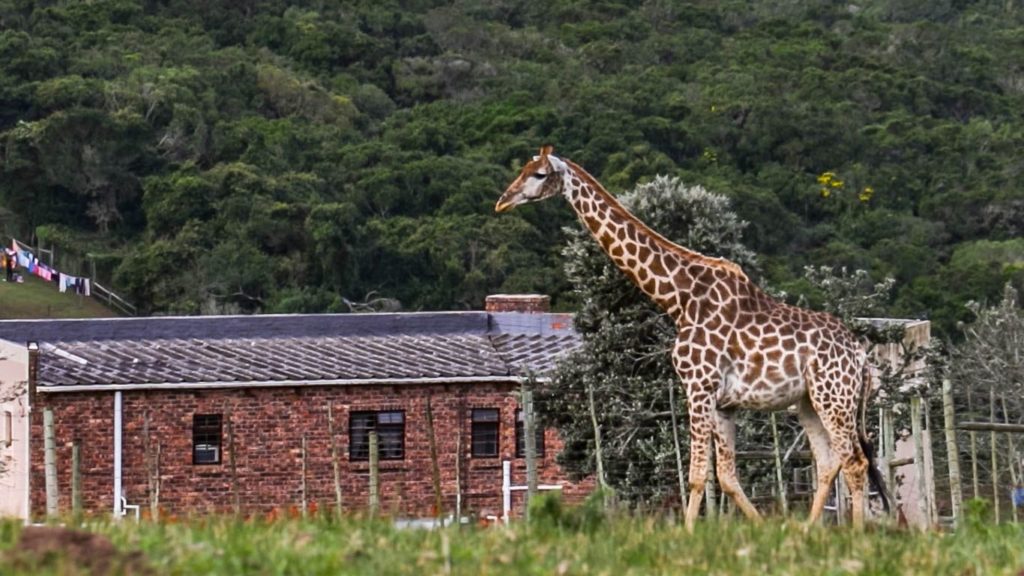
On a small piece of land in South Africa’s Eastern Cape, three adult giraffes (one who lost her calf) live in a totally unsuitable and unsustainable desperate situation. They are riddled with ticks and facing the prospect of starving to death. The giraffes need to be moved to a more suitable area – and FAST! The trio have devoured most of the vegetation and because of a prolonged drought, regrowth is critically slow, making their living conditions increasingly dire. Another problem is that blood-sucking ticks have plagued the land, leeching the life from these already-weakened giraffes and causing wounds and disease. Already two newborn giraffes have died because of these conditions. The second was just one day old when he breathed his last. His mother is still so traumatized that she constantly returns to the site of his death. Usually in situations like this, people simply shoot the giraffes because it is a cheap ‘solution’ to the problem, but we must not let this happen. We need your help to move them to safety. There is no other option – we must move them fast, or the giraffes will most certainly die either from starvation or tick-borne disease. No one knows how the animals came to be in such an unsuitable place, but it is suspected that criminality was involved. The land was bought by a good-hearted young couple who has been giving the giraffes supplementary food, but the reality is that these towering creatures do not belong there. After exhausting all options, they reached out to us for help. As animal lovers, we acted immediately and found a solution. Giraffes are the world’s tallest land mammals and can grow to 17 feet (5.3 meters) so a tower of giraffes needs a lot of space to be comfortable and with your help, we will relocate the giraffes to a bigger area. The nearby Royalston Wildlife Reserve is perfect for giraffes and they will thrive there. So that’s where we plan to move them. The relocation is a tricky operation requiring expert skills to reduce stress on the giraffes and must be carefully planned. It will not be easy, but with your help, we CAN do it. We have successfully relocated giraffes before – in 2021, with your help, we relocated three giraffes in Plettenberg Bay, South Africa, who faced slaughter because their home was going to be used for commercial farming. If we can raise $15,000 (£12,200), we will construct an enclosure, entice the giraffes into it with food, humanely capture them, and transport them to their new home. This thousand-hectare, free-roaming sanctuary is just 8 kilometers (5 miles) from where the giraffes are now. There, they will receive immediate medical care, will have better access to food and, above all, more land to roam freely. With your support, the three giraffes will live and thrive among their own in open grasslands stretching over rolling hills. Our worry for the individual animals is a prime concern, but saving these giraffes is even more critical. Giraffe numbers have dropped by 40% in the last 30 years and are becoming increasingly threatened. There are now only some 117,000 giraffes in the wild. The surviving herds are fragmented and face many threats, from poaching to habitat loss, the latter of which is one of the gravest threats to their continued existence. Giraffes used to range through much of the African savanna, but they now live in a handful of communities scattered in clumps across the continent. In some countries, like Mali, giraffes have disappeared completely. What we have here is a tragedy, but we cannot turn a blind eye when giraffe calves drop dead before they have even had a chance to live. There is a solution and with your help, we will be able to give these giraffes a chance at a long, happy and safe life. The giraffes are only 10 MINUTES away from a potential haven that can meet all three of their most urgent needs – food, space and medical treatment. Will you help us make this happen and allow them to roam free and live as giraffes are intended to live? Please, donate as generously as you possibly can today so that we can put our emergency giraffe relocation project into action.
GONE FOREVER? NOT YET! We cannot, must not, WILL NOT let heartless and illegal slash-and-burn loggers drive indri lemurs the way of the dodo.
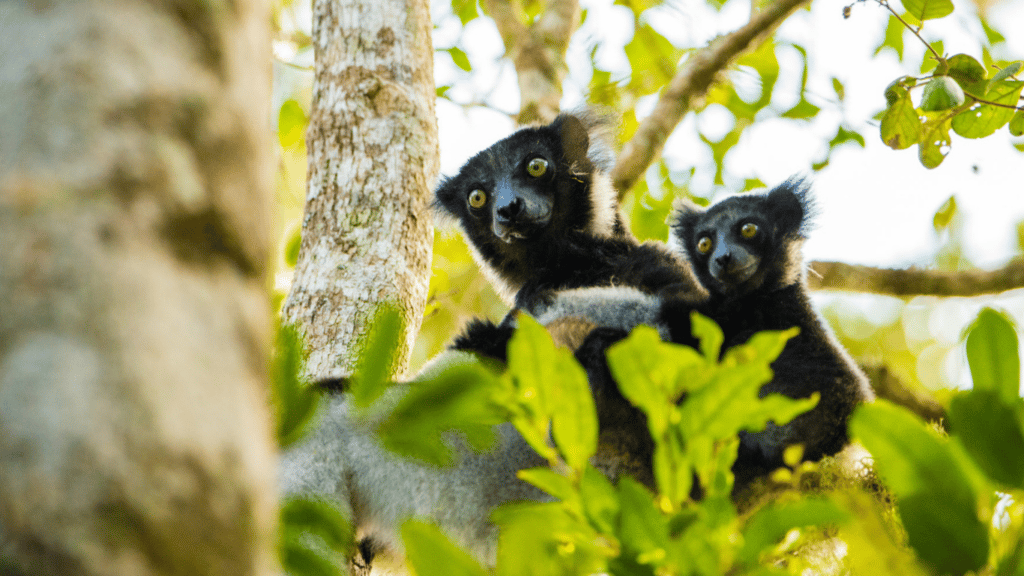
Madagascar is a biodiversity anomaly. Because of the island’s geography, geology and climate, species have been able to evolve and diversify in isolation. This means that the species that live there have been evolving in seclusion for millions of years. Today, we want to tell you about the critically endangered indri lemur, which is in danger of extinction. We can’t stand by and let these animals go the way of the dodo. We must help, and here is how! A lemur is a uniquely evolved mammal closely related to a primate, and a staggering 80% of lemurs’ home forests have been wiped out by deforestation. The island is home to 70 species of lemurs found nowhere else on earth, except small neighboring islands near Madagascar. Indri lemurs are famed for their loud vocalizations and communicate with each other through song. We MUST help them, and with your support, WE WILL! As a result of their habitat being destroyed, today indris are listed as critically endangered by the International Union for Conservation of Nature (IUCN) and are one of the 25 most endangered primates globally. The indri is found only in remote parts of northeastern Madagascar. Habitat destruction, primarily attributed to slash-and-burn farming, a farming method that involves the cutting and burning of plants in a forest or woodland, is indiscriminately killing the animals that live there. If their habitat continues to be destroyed at its current rate, this Madagascan lemur species will be wiped out indefinitely. We MUST support crucial indri conservation and reforestation efforts before it is too late – every second counts. Some scientists estimate that there are as little as 1,000 indri lemurs left, and if they continue to be annihilated at the current rate, soon they will all be gone. This would be a tragedy, and we need to do as much as we can to ensure their survival. We plan to preserve the species by protecting a breeding pair, while working on the long-term problem of deforestation. We have chosen to work with L’Homme et l’Environnement, a French non-governmental organization (NGO) that works tirelessly on lemur conservation through long-term forest preservation and biodiversity. As part of these conservation efforts, the NGO recently identified and captured a breeding pair in the hopes of protecting their offspring. Their previous habitat had been destroyed by slash-and-burn farming. L’Homme et l’Environnement acted fast and quickly moved the breeding pair, later named Jack and Rose, to their new home in the Vohimana forest. They now will be protected by a forest guard unit, whose job is to monitor illegal activities and protect the forest from slash-and-burn farming and illegal miners and loggers. If we manage to raise $10,000 (£8,000), we can better equip the guards with tools like GPS trackers and communication devices. Eventually, we aim to increase the number of guards. Your support is critical to the survival of the highly threatened indri lemur species. Indris (called ‘babakoto’ in Malagasy) are famous for their loud calls across forests and incredible leaping ability. With black tufted ears and patches of white fur on their crown, these creatures are beautiful and graceful as they move through the canopy treetops. The heartbreaking reality is that once they are gone, the songs they sing to each other and the beauty they bring to the world will be lost. Please help us ensure our children can view these animals as they should be – in their natural habitat, behaving as a lemur should. It’s the right thing to do! There is hope. We know what we need to do to prevent lemur extinction, and we have a plan in place. Please support us in this critical work by donating now. We have a concise window of time. If current trends continue, we will lose the opportunity to save many species in the Critically Endangered and Endangered categories, including the precious indri species. There is no more time to lose, but we cannot achieve our goal without your help. If you support us, we can help ensure Madagascar’s indris thrive for generations to come. Please, be as generous as you can so we can get the extra protection for the indris right now!
Breaking News: Polar Bear Shot Dead in Canada, Where Only 16,000 Remain
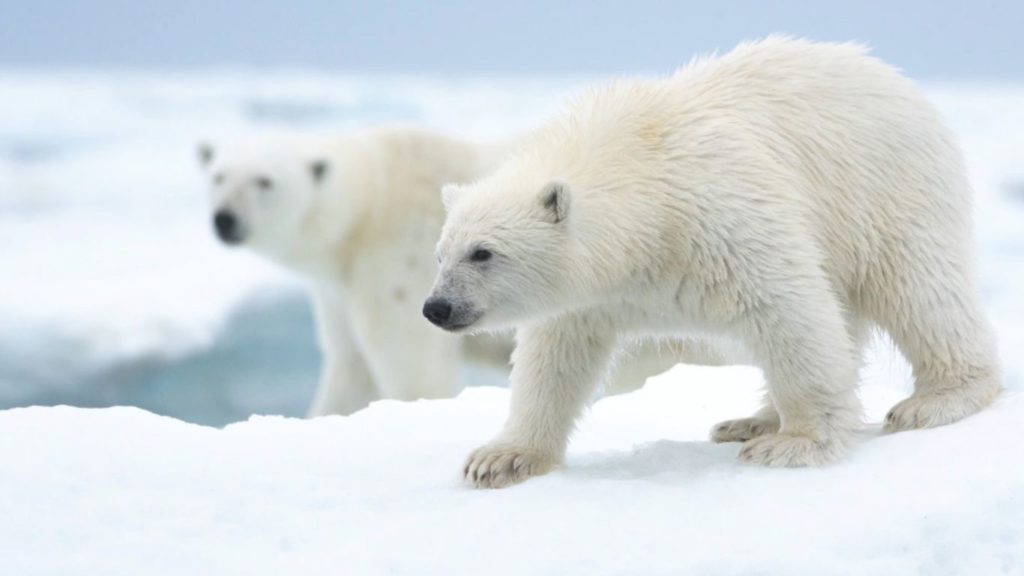
A polar bear was fatally shot last week by Canadian authorities after it was spotted wondering near the town of Madeleine-Centre in Quebec. This is the first time the apex Arctic predator has strayed so far south from its natural habitat. Quebec’s wildlife protection agency was ill-equipped to deal with the 650-pound (295-kilo) mammal and, lacking the skills to capture and relocate the creature, they simply shot it. The majority of the world’s last remaining polar bears reside in Canada. Polar Bears in Canada estimates that there are just 16,000 left in the country, which represents almost two-thirds of the species’ global population of 26,000. Authorities say they had “no choice” because their priority was protecting the local human community. “This tragic incident is yet another indicator of climate change’s devastating impact on our planet’s biodiversity,” says Tayla Lance of Animal Survival International. “Polar bears are critical to the Arctic marine ecosystem, but with the current rate of melting polar ice caps, this likely won’t be the last displaced polar bear at risk of being killed. Their homes are vanishing and they increasingly wind up in areas where they do not belong. We have a responsibility to do everything in our power to protect and conserve these vulnerable animals by taking steps to reverse the detrimental influence of climate change. Killing displaced animals because their habitat is being destroyed is not acceptable and goes against everything ASI stands for.” Banner image credit: SWNS
Locals Drop 202,000 Pounds of Lettuce into Florida’s Indian River Lagoon to Feed Starving Manatees
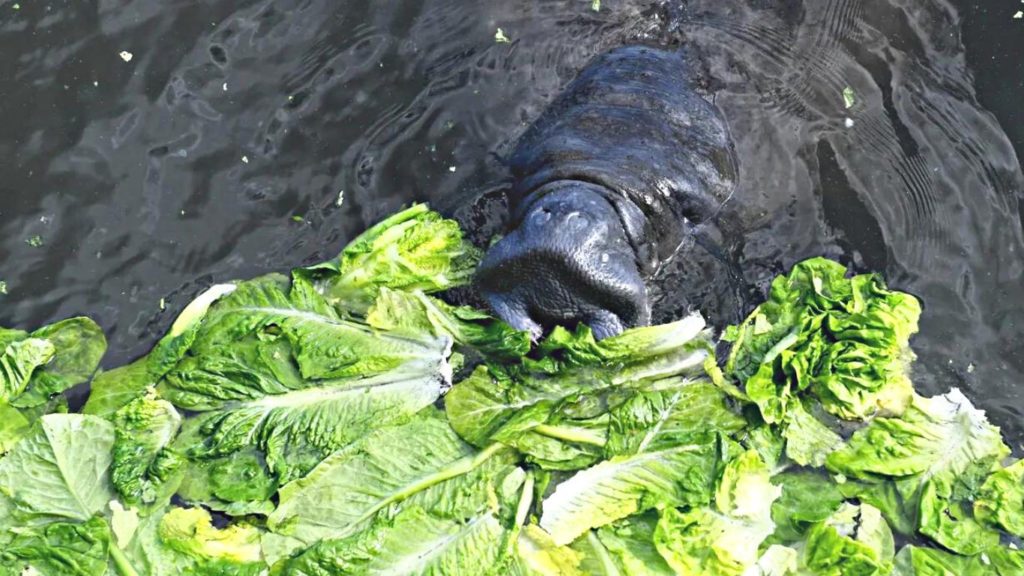
America’s famous manatees are disappearing due to starvation caused by habitat destruction. A local community hopes lettuce will save them. Manatees are large, gentle marine creatures much loved by communities in Florida where many manatees live, but human encroachment is threatening their existence. Development is damaging the natural plumbing of Lake Okeechobee and the Everglades. It has harmed the drinking water supply and left the region deeply vulnerable to climate change. All of this has severely threatened the manatees’ primary food source, seagrass. Only 7,500 Floridian manatees are said to remain in the wild. In 2017, manatees’ status was updated to threatened from endangered after a successful program educated boaters to avoid injuring and killing them. However, because of the looming threat of starvation, the species is once again in peril. In light of this crisis, locals have stepped in alongside federal and state wildlife officials to help. Last year, 202,000 pounds of lettuce was dumped into the lagoon to feed the manatees in the area. This movement saw the death toll fall from 612 to 479 in 2021, giving some small hope for the future. “It’s critical that we as concerned citizens do what we can to help preserve them,” says Gloria Davies, CEO of Animal Survival International (ASI) and a Florida resident. “We at ASI hope that many generations to come will enjoy this precious species. It is up to all of us to act as responsible custodians of our natural environment to ensure that this is possible.” Banner credit: TCPALM/ Patrick Dove