

Be the hero this rhino calf needs to survive
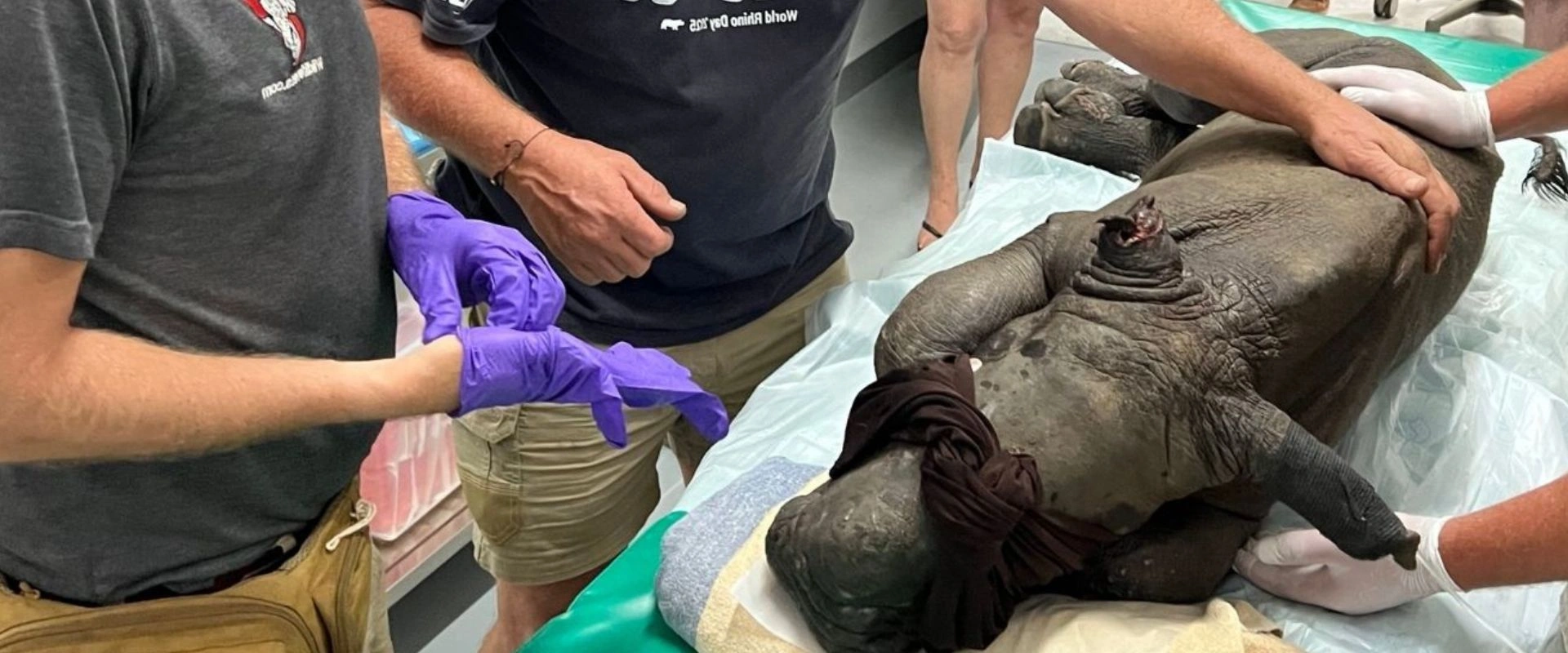
At just a few weeks old, white rhino calf Wilson was found collapsed and gravely wounded in a South African game reserve after being attacked by a clan of hyenas. There was no sign of his mother and she has never been seen since. The little rhino calf was severely injured and running out of time. Rhino calves rely entirely on their mothers for protection and nourishment for up to two years. Without his mother, Wilson was an easy target and stood almost no chance of survival. Rhino calves rely entirely on their mothers for protection and nourishment. Without their mothers, they won’t survive in the wild. Credit: Shutterstock/Rudi Hulshof Many rhino calves die shortly after losing their mothers. Wilson very nearly became one of them. Fortunately, rangers reached him just in time. Severely dehydrated and covered in deep bite wounds to his limbs and ears, the calf was airlifted to the safety of our partner, the Care for Wild Rhino Sanctuary in Mpumalanga (CFW) – an expert rehabilitation centre dedicated to saving orphaned rhinos. Upon arrival, Wilson was rushed into intensive care and given emergency veterinary treatment to stabilize him. But he remains in an extremely fragile condition and a long road to recovery lies ahead. Orphaned rhino calf Wilson is still fighting for his life. He needs six months of intensive, round-the-clock care if he is to have a real chance of survival. Severely dehydrated and covered in bite wounds, this rhino calf was airlifted to specialist care after rangers reached him just in time. Treatment has begun — but he is still fighting for his life. Credit: CFW The rhino calf’s wounds are cleaned and tended to daily. Each treatment brings him one step closer to recovery. Credit: CFW Wilson is battling a serious infection, and having received very little colostrum from his mother, he is extremely immunocompromised. This little calf needs more than the experts at CFW and a miracle to pull through. He needs you. If we can raise $13,000 (around £9,540), we can cover the infant’s critical medical treatment and rehabilitation for the next six months – including wound care, specialized milk formula and supplements, pain relief, antibiotics and ongoing diagnostics to carefully monitor his recovery. After a brief recovery in 2022 and 2023, white rhino numbers in Africa declined by more than 11% in 2024. Wilson is severely immunocompromised but with your help, we can give him the critical care he needs to recover. Credit: CFW Latest figures reveal that 516 rhinos were killed across Africa in 2024, with 420 of these killings occurring in South Africa. This concerning rise in poaching reminds us that we must do everything we can to protect and save Africa’s rhinos, including Wilson. Wilson’s life is critical. Please, will you help us give this brave young calf the second chance he deserves? He has had a painful and traumatizing start to life, but together, we can help him survive.
Help save precious lives this World Pangolin Day
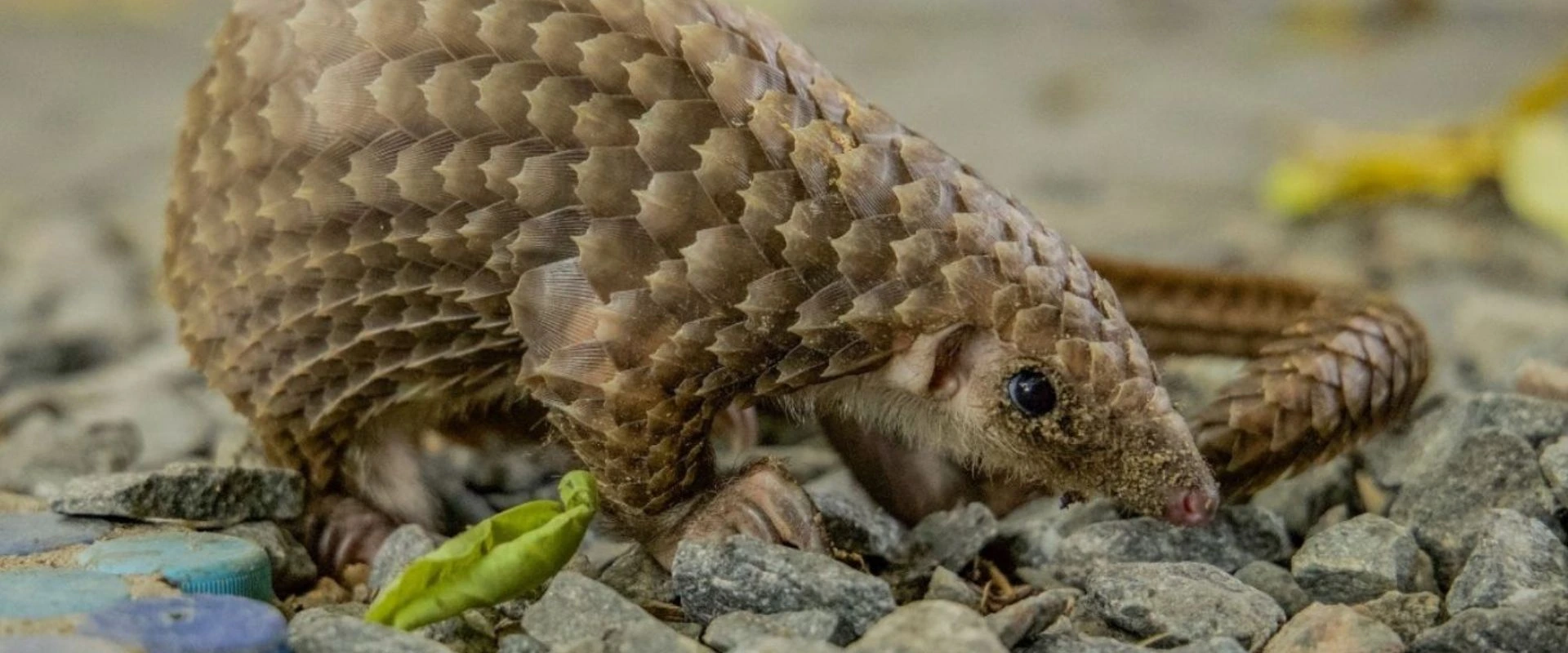
Today is World Pangolin Day, and it’s a moment to recognise one of the most gentle, vulnerable and underappreciated animals on Earth. Pangolins. They don’t roar. They don’t run. They don’t defend themselves with teeth or claws. When they’re afraid, they curl into a tight ball and hope the danger passes. But too often, it doesn’t. Across Africa and Asia, millions of pangolins are being poached from the wild and sold into the illegal wildlife trade, making them the most trafficked wild mammal in the world. Many are intercepted by authorities or found injured, traumatised, dehydrated, and fighting to survive. Injured, dehydrated and far from home — this is the harsh reality of millions of pangolins across Africa and Asia on World Pangolin Day. Credit: Shutterstock And when they are rescued, their survival depends entirely on our partners. Right now, our partners across Africa and Asia work to give these animals a second chance. They are caring for rescued pangolins, providing specialised veterinary treatment, supporting their recovery, and, when possible, returning them to the wild where they belong. They are also protecting pangolins on the ground, monitoring their movements and safeguarding them in the fragile landscapes they call home. This work is quiet. It is complex. And it is essential. Behind every rescued pangolin is a team that refused to give up. Our partners are providing specialised care and painstaking work to return them to the wild when possible. Credit: Prelena Soma Owen/Africa Geographic Because without intervention, pangolins simply don’t stand a chance. Today, on World Pangolin Day, you can help support the teams working every day to protect and care for them. Your support will help: Provide urgent care and rehabilitation for rescued pangolins Support the specialised feeding, monitoring and veterinary treatment they require Strengthen protection efforts for pangolins in the wild Enable rewilding of pangolins Pangolins are the world’s most trafficked wild mammal. Help turn the tide for these precious animals on World Pangolin Day. Credit: Shutterstock Pangolins cannot survive this crisis without our help. Together, we can give them a future. If you can, please donate today. Thank you for standing with pangolins — and with the people working to protect them.
This infant flying fox is fighting for life after falling from his mother
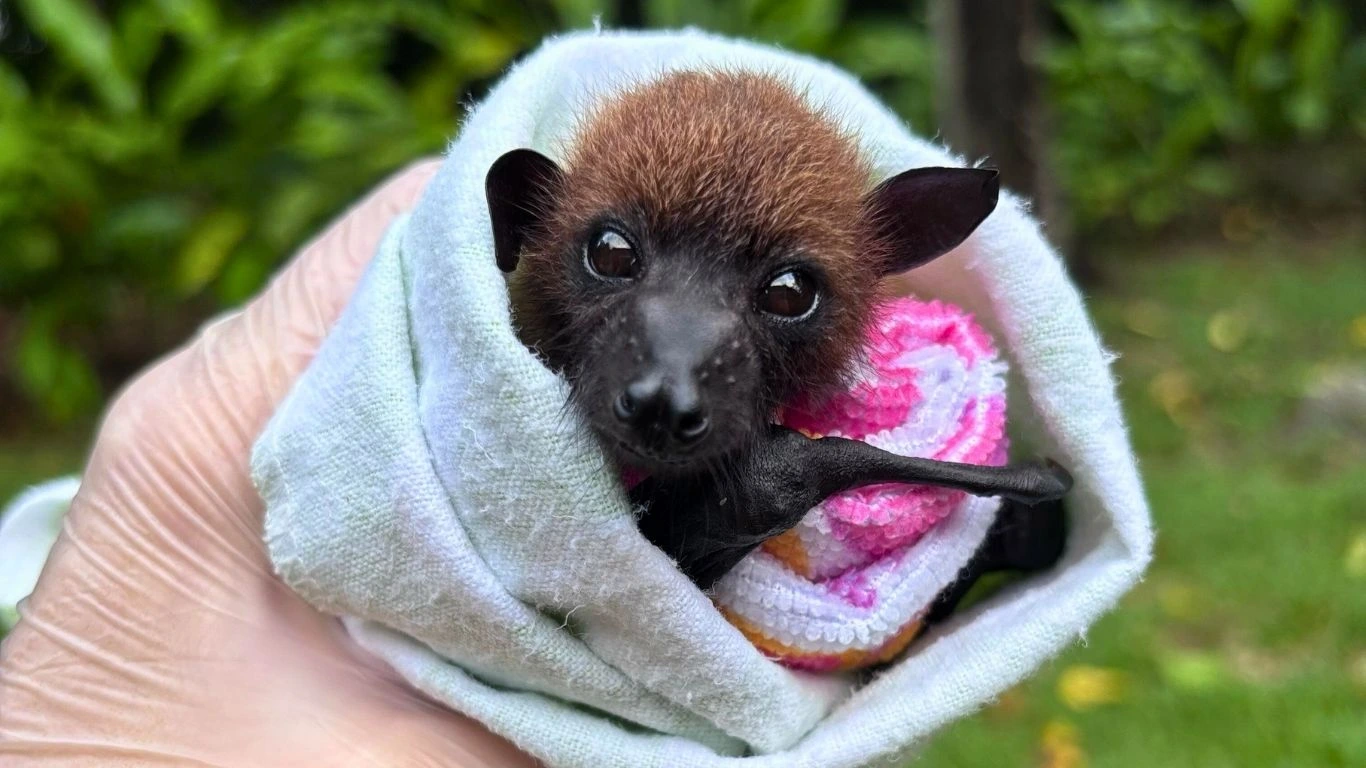
Tragically, baby flying fox Onyx was orphaned when he lost his grip on his mother and fell from her body. He was tiny and just a few weeks old. Infants like Onyx are born blind, hairless and completely reliant on their mothers. Becoming separated is bewildering, terrifying and, in most instances, fatal. The odds of survival for orphaned flying foxes are low – but, with your help, Onyx has a chance. Baby flying foxes, also known as pups, cling to their mothers for the first several weeks of their lives. This (pictured right) is what happens when they fall. Credit: Batusi Nights and Hugh Pitty For these remarkable little ecosystem engineers, life can be brutal, and deadly threats are everywhere. Tiny Onyx would have been completely defenceless in an inhospitable landscape. Infants fall from their mothers for a variety of reasons: predator attacks, flying difficulties (due to mothers’ injuries), or their mothers being ill, injured or starving. They are also torn apart when hunters catch the mothers to be killed and eaten in ‘bat curry’ – a local ‘delicacy’ fed to tourists. Most of these helpless infants do not make it. But Onyx was one of the lucky ones, because our partner, Protect Paradise Seychelles (PPS), came to the rescue. He was immediately taken into their care, given critical nutrition and treated for parasites. Now in the safe care of Protect Paradise, the fight is not over during this critical period of treatment and rehabilitation. Credit: Protect Paradise But Onyx’s fight for survival is not over yet – and he needs YOUR help today. This vulnerable infant will need close monitoring, treatment and expert rehabilitation for at least six months. If we can raise $3,000 (£2,240), we can cover his treatment for six months, as well as help provide life-saving care and nutrition for the other orphaned baby bats in our partner’s care. Flying foxes are delicate, harmless and vitally important to the environment. Flying fox mothers and their pups share a strong, dependent bond. Credit: Nico Faramaz/Shutterstock Flying foxes are critical in pollinating flowering plants and dispersing seeds, keeping forests healthy. They reproduce very slowly, giving birth to just one pup a year, so every life counts. Caring for our planet means caring for all its creatures – not only the majestic elephants of Africa, but also the tiniest flying foxes fighting for survival in an unforgiving landscape – like Onyx. Today, this little fighter and so many others like him need every ounce of your support to survive. He’s counting on you – please, donate to his recovery today.
Devastating – 22-year-old critically endangered black rhino killed by poachers in Zimbabwe
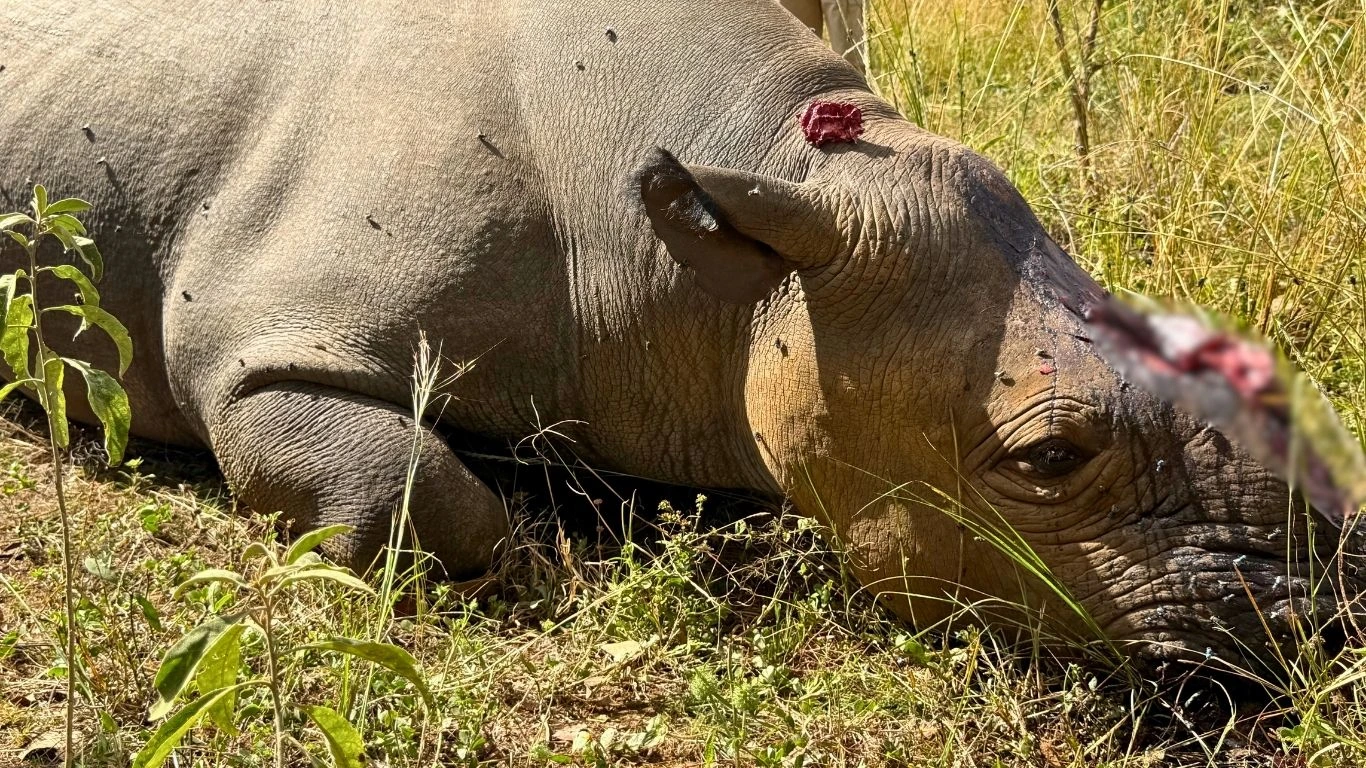
After nearly two decades without a single poaching incident, our anti-poaching partner in Zimbabwe recently suffered a horrifying loss. Gomo, a 22-year-old black rhino, was brutally killed in a meticulously planned poaching attack. Within just 15 minutes, poachers had breached an electrified fence, shot Gomo – whose name means ‘Mountain’ in the Shona language – and hacked off both his horns at the base. They then escaped with the horns and left his still-warm carcass for our devastated team to find. Poachers used an axe to hack off the horns of a 22-year-old black rhino. Gomo didn’t deserve to be brutally killed for his horns. Credit: IRWC (left) & The Guardian (right) The poachers deliberately struck when the team would least expect it – the middle of the day. Most poaching typically happens under the cover of darkness. Anti-poaching equipment alerted our partner, Imire Rhino and Wildlife Conservation (IRWC), to the breach. But by the time they had navigated the dense bush and difficult terrain, it was too late. Gomo was dead. To prevent more rhino deaths, our partner must improve its early warning system so it can locate rhinos and catch poachers before they kill again. This is where we need your help. Zimbabwe is home to just over 600 black rhinos – a population under severe threat. Credit: Alpha Wolf Vision The anti-poaching team has one drone which they use every day to locate the rhinos and ensure they are safe. But with 11,200 acres (4,500 hectares) to patrol, one drone just isn’t enough. A second drone, as well as training an additional pilot, is crucial to enable the team to provide 24/7 monitoring throughout the massive conservancy. These are no ordinary drones. They have been specifically designed to help anti-poaching teams protect animals and catch criminals before they can strike. Each drone boasts night-vision and thermal imaging technology, so they can be used at any time and in any terrain – ensuring full coverage even at night, or in dense forested areas. Drones also capture crucial footage that can be used to prosecute poachers in court, where those found guilty of killing protected animals like rhinos can face up to nine years in a Zimbabwean prison. Gomo’s death is a tragic reminder of the vulnerability of these animals – and of the deviousness of the criminals who hunt them. If we can raise $10,575 (around £7,848), we can pay for the additional drone, giving the remaining rhinos like Gomo, and other animals, an extra layer of safety and protection from cunning poachers. To prevent more needless deaths, we must strengthen security, respond faster, and stay one step ahead of poaching syndicates. Drones are vital in identifying poaching threats, especially in thick brush, and are a critical tool in protecting rhinos from attack. Credit: SANParks Rhino horn is mistakenly believed to have medicinal properties and is sought after for use in traditional Chinese medicine. Driven by greed, poachers are becoming increasingly smart and well organized. Our partners MUST remain a step ahead. Drones are the best solution, and with your help today, we will purchase another for our team, doubling their ability to track and protect endangered animals. Please, donate right away. Gomo’s death is tragic — let his loss be the motivating force we need to better protect our rhinos.
Last call to have your name honored at new vet clinic for abused tigers
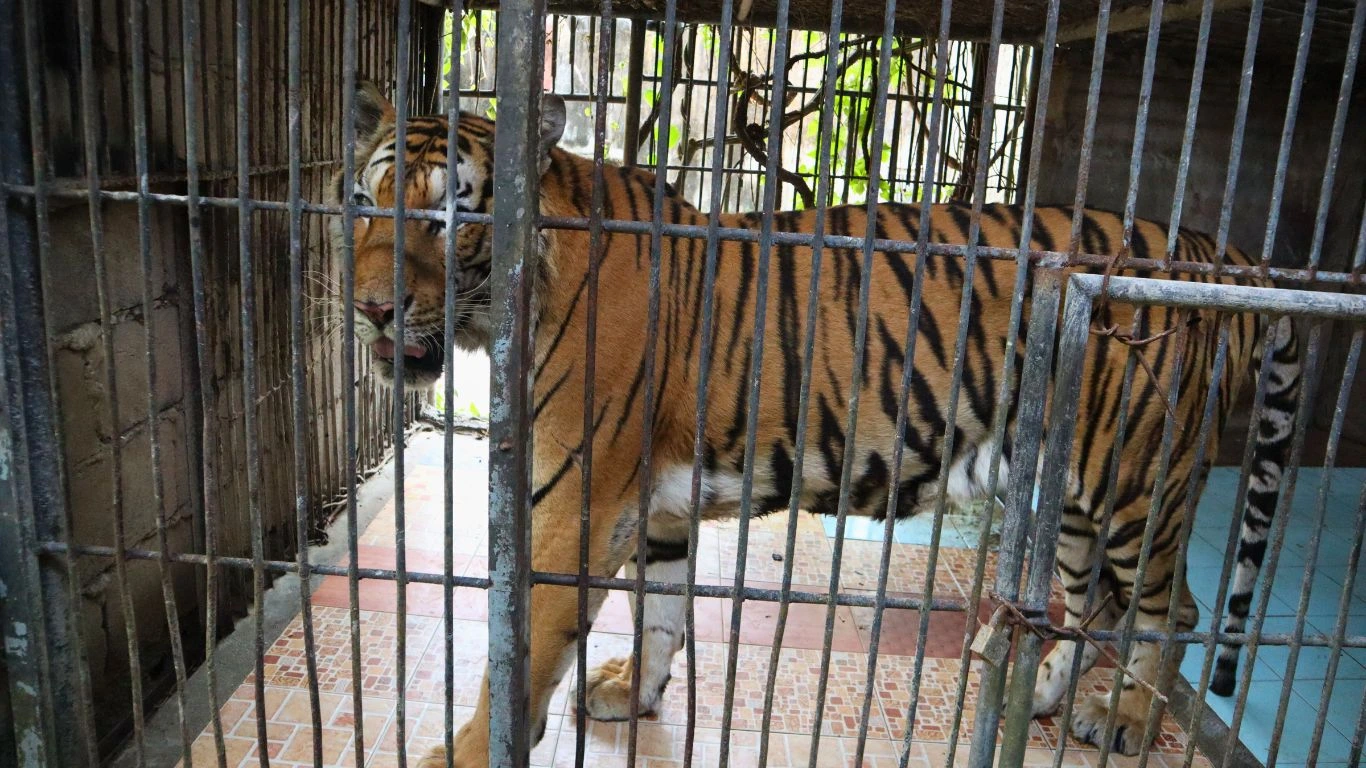
For almost 20 years, Rambo the tiger lived in a concrete cell in Thailand, sentenced to life imprisonment for tourists’ entertainment. The first thing he did upon being rescued was take a swim. For five blissful hours, the Bengal tiger – a species known to love water – experienced the joy of swimming for the first time in his life. Rambo is elderly, half blind, and suffers from severe dental issues due to years of malnutrition and gnawing on the metal bars of his cage. In order to live his final years without pain, he needs the very best, dedicated care – and for that, he needs you. An injured and malnourished Rambo was rescued from the now defunct Phuket Zoo. Credit: WFFT Rambo and other sick, elderly, disabled wild animals have only ever known abuse. Can they count on YOU for kindness in their final years? Rambo was rescued along with 10 other tigers from the defunct Phuket Zoo by our partner, Wildlife Friends Foundation Thailand (WFFT). He and his fellow captive cats had been used as photo props, most likely kept drugged and chained to prevent them from harming visitors. Most suffer from severe health and psychological issues due to malnutrition and poor care, combined with the stress of living in cruel captivity. When the zoo closed down, many of the animals were abandoned to die. By the time Rambo was rescued by our partner, one eye was damaged beyond repair. No one knows what happened, but the injury was so severe it was causing him painful ulcers, and the eye had to be removed. Malnutrition and years spent gnawing on the bars of his cage in desperation has led to Rambo’s severe and chronic dental issues. Credit: WFFT Freeing tigers like Rambo from their cages is only the first step – without your kindness, they cannot receive the life-saving care they need to survive. After decades of abuse, they DESERVE a happy retirement! After 20 years of suffering, Rambo now spends his days lazing in the refreshing lake at WFFT’s Tiger Rescue Centre and hanging out with his best friend and fellow Phuket Zoo rescue, Susu. But the abuse has left him and his friends with life-long damage that causes chronic pain, illness and discomfort. WFFT has an ever-increasing number of animals like Rambo needing rescue and treatment, including animals whose teeth were filed down or removed by their cruel captors. Many of these animals require constant medical care if they are to live a pain-free life – and WFFT needs specialized veterinary equipment to give this to them. Our partner has just built a crucial on-site clinic to enable them to provide the animals with the expert veterinary care they need. But they are missing critical equipment and supplies – and until we can purchase these essentials, the clinic cannot be fully operational. Rambo with his friend and fellow liberated tiger, Susu. Credit: WFFT If we can raise the outstanding $12,000 (approximately £9,000), we can transform our partner’s new clinic into a fully-functioning hospital for animals in desperate need. You have the opportunity to make a lasting impact for these deserving souls. The clinic is about to open, but there are still desperately needed medical supplies outstanding. With your support today, WFFT can be fully operational when its clinic opens, ensuring that every animal gets the high-quality care they need and deserve. If you donate $600 (£440) or more, you will be honored with a personalized plaque at the entrance of the hospital to thank you for your generosity. Any donors who gift $600 (£440) or more will be honored with a personalized plaque at the entrance of the hospital to thank you for your generosity. Should you make this generous donation, please email info@animalsurvival.org once you have completed your donation, and let us know what name you would like on the plaque. Please, donate today, and give Rambo and his friends the greatest gift they could ask for: a healthy, pain-free retirement.
The effects of deadly drought threaten thousands of wild animals
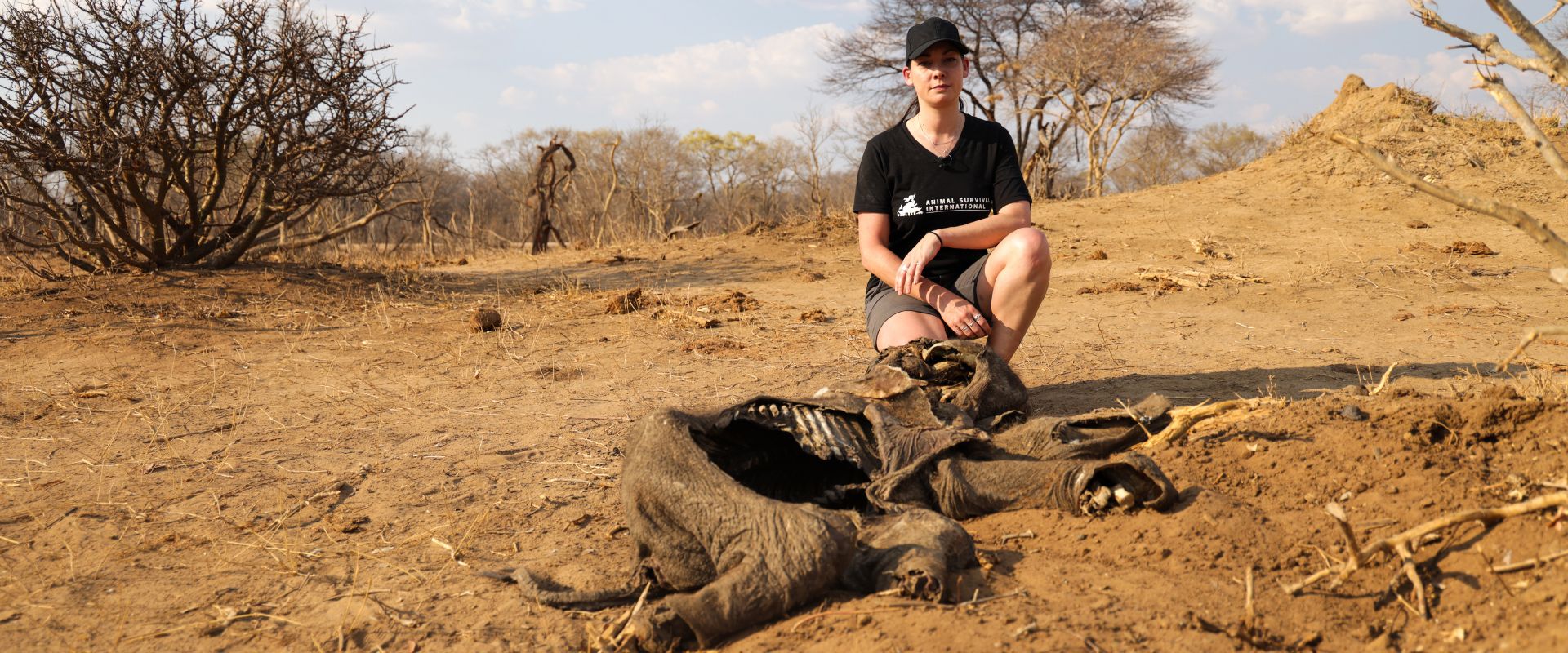
Zimbabwe is reeling from the effects of its worst drought in 40 years. In 2024, the country declared a state of disaster as crops failed and wildlife and people alike struggled to survive. During last year’s dry season, we were horrified to discover the carcasses of elephant calves – staring, dehydrated mothers unable to produce milk to feed them. The effects of this deadly disaster are far from over. Natural resources have not recovered suffiently and unless we help today, the animals will not survive the upcoming dry season. It is a bitter tragedy and one we cannot allow to happen again. The animals need YOU. Desperate animals cluster under skeletal trees in their fruitless search for relief from the baking sun. Credit: ASI/Taryn Slabbert Another year without water: Zimbabwe’s deadly drought means thousands of thirsty wild animals need help. Last year, Zimbabwe’s dry season – made significantly worse by changing weather patterns – killed thousands of wild animals and left countless infants orphaned. When my team and I visited badly-hit Hwange towards the end of 2024, we found a frightening situation. As temperatures soared up to 104°F (40°C), we saw elephants clustered beneath skeletal trees, desperate to escape the intense heat. In dried-up waterholes, we found the remains of animals who died waiting for relief that never came. Elephant mothers’ milk had dried up as they died, leaving their calves to starve. Mother elephants die of exhaustion and thirst, leaving their calves to die of starvation. Credit: ASI/Taryn Slabbert Some rain fell in late December, but because of climate change, the rainy season is almost two months shorter than it used to be, and the region is being plunged back into devastating drought. With your help, we can install critical water pumps to help save lives – and prevent countless young animals from being orphaned. We are working with the Presidential Elephants Research Trust (PERT), which operates in a 7,413-acre (3,000-hectare) area bordering Hwange National Park – an area which has no means of providing water during the dry season. Debby Querido – “I was shocked when I realized how catastrophic the situation could become without our help to provide water for wild animals.” Credit: ASI/Taryn Slabbert With your support, we will help the animals by equipping existing boreholes with solar-powered pumps to create oases. Elephants, giraffes, buffaloes, lions, leopards and countless others will benefit from the oases you can help create. Environmentally conscious people like you helped us quadruple the water available in parts of the Makgadikgadi Pans National Park in Botswana, helping to save thousands of lives. Now, wild animals in Zimbabwe need us too. Please, give as generously as you can today – your support will help make the difference between life and death for Zimbabwe’s parched and desperate animals.
Israel war emergency: Animals have no protection as bombs fall
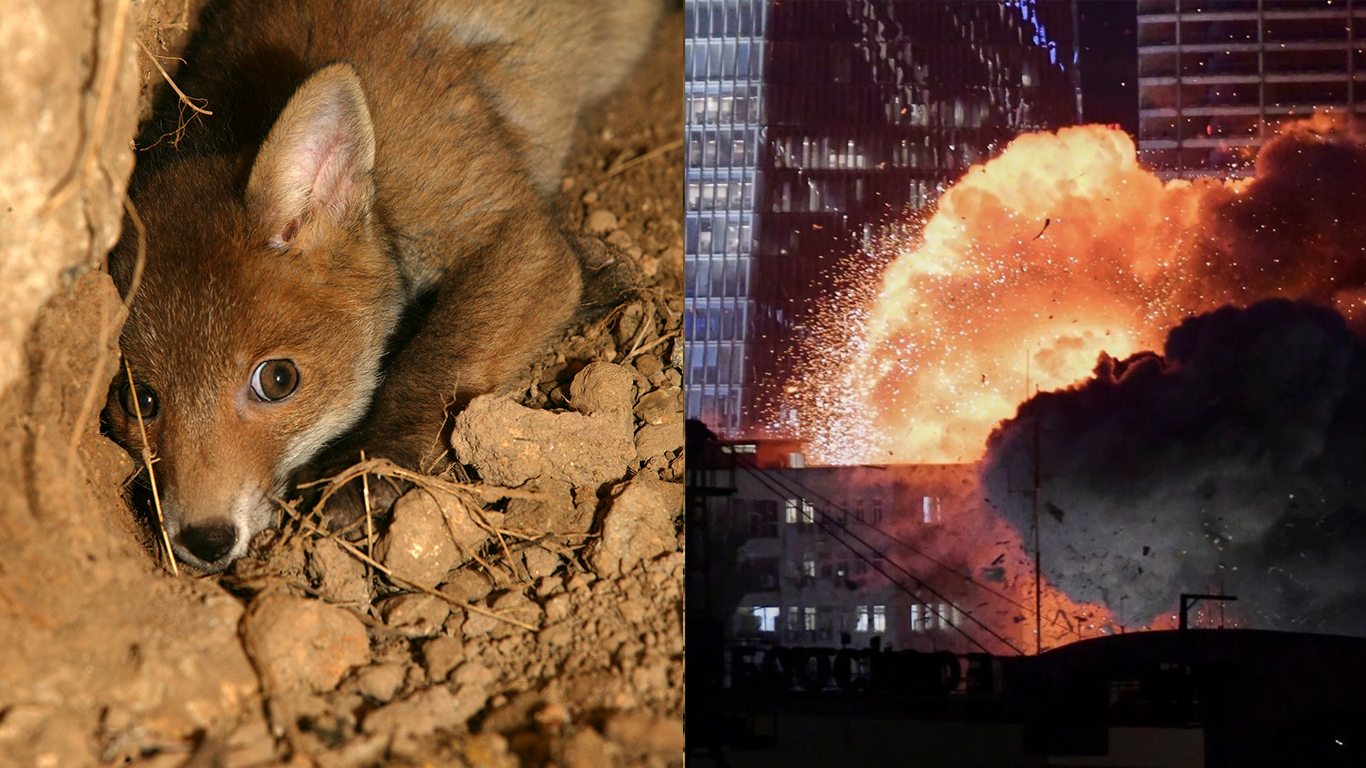
A deadly escalation in the bloody conflict in the Middle East is putting countless animal lives at risk. As Israel and Iran launch relentless attacks, animals are caught in the bloody crossfire. Wild animals are dying as missiles rain down around them, we have a way to protect them. With your help, we WILL. A rescued deer receives round-the-clock care at our partner sanctuary, but all rescued animals are vulnerable to missile strikes without a secure bomb shelter. Credit: TIBS Hundreds of missiles have been fired at Israel from Iran in the past week. The Iron Dome defense system that once kept Israel safe has been breached – now, cities are filled with the sound of warning alarms and sirens, urging people to take cover in bomb shelters. BUT – when the sirens go off, there is nowhere for the animals at our partner shelter to flee to. Together, we can give them the safety they need to survive this horrific war. With the Iron Dome breached, a fortified bomb shelter is the ONLY way to protect animals rescued from war as missiles fall. Credit: TIBS Amid the chaos, destruction and terror, we are doing everything we can to help – but we must act fast. Our partner, The Israeli Bat Sanctuary (TIBS), was initially established to help bats in need. Over the years, it has expanded to help all kinds of wild animals, including foxes, porcupines, deer, jackals, mongooses, birds of prey, and any others needing life-saving assistance. TIBS was the first animal rescue team on the scene after the October 7 attacks, rescuing 500 animals from suffering and death. Today, it is the only safe haven for wild animals outside Tel Aviv and Jerusalem, offering 24-hour rescue, rehabilitation and long-term care. But while the animals have been rescued from death, they are still not safe – not until we can install a bomb shelter to save them from the destruction raining from above. Wild animals are being forgotten as war rages on, like this baby jackal found malnourished and on death’s door. Credit: TIBS A few days ago, bombs fell just three miles (five kilometers) from the sanctuary. The next attack could land a direct hit – and we must act fast to protect the animals before this happens. This rescued porcupine is one of the many animals who are at risk without the protection of a bomb shelter. Credit: TIBS The closest thing TIBS currently has to a bomb shelter is an old walk-in fridge with flimsy polystyrene walls. Every time the sirens blare, the TIBS team moves animals into the old fridge, staying by their side throughout the chaos. If bombs land anywhere near this ineffective shelter, the animals – and the dedicated staff who refuse to leave their side – could be blown to pieces. There is a quick and effective solution that we can implement immediately: A fortified bomb shelter with eight-inch-thick (20cm) concrete walls, which can withstand a missile strike landing as close as six feet (2m) away. The bomb shelter is ready to be purchased and installed – all we need now are the funds. When warning sirens sound, animals are moved to a walk-in fridge offering little protection (L). The team urgently needs a fortified bomb shelter (R) to keep its animals safe. Credit: TIBS The sanctuary receives no government funding and survives solely on the support of volunteers and public donations. Now more than ever, they are financially stretched and cannot afford this crucial protection for their animals. We must act quickly to raise the funds needed to protect animals saved from war. Our partner has sworn to protect them no matter what – and with your help, we can help keep that promise. Please donate right away and help us give these animals the protection they deserve.
Will you help protect these two rhino orphans from poachers.
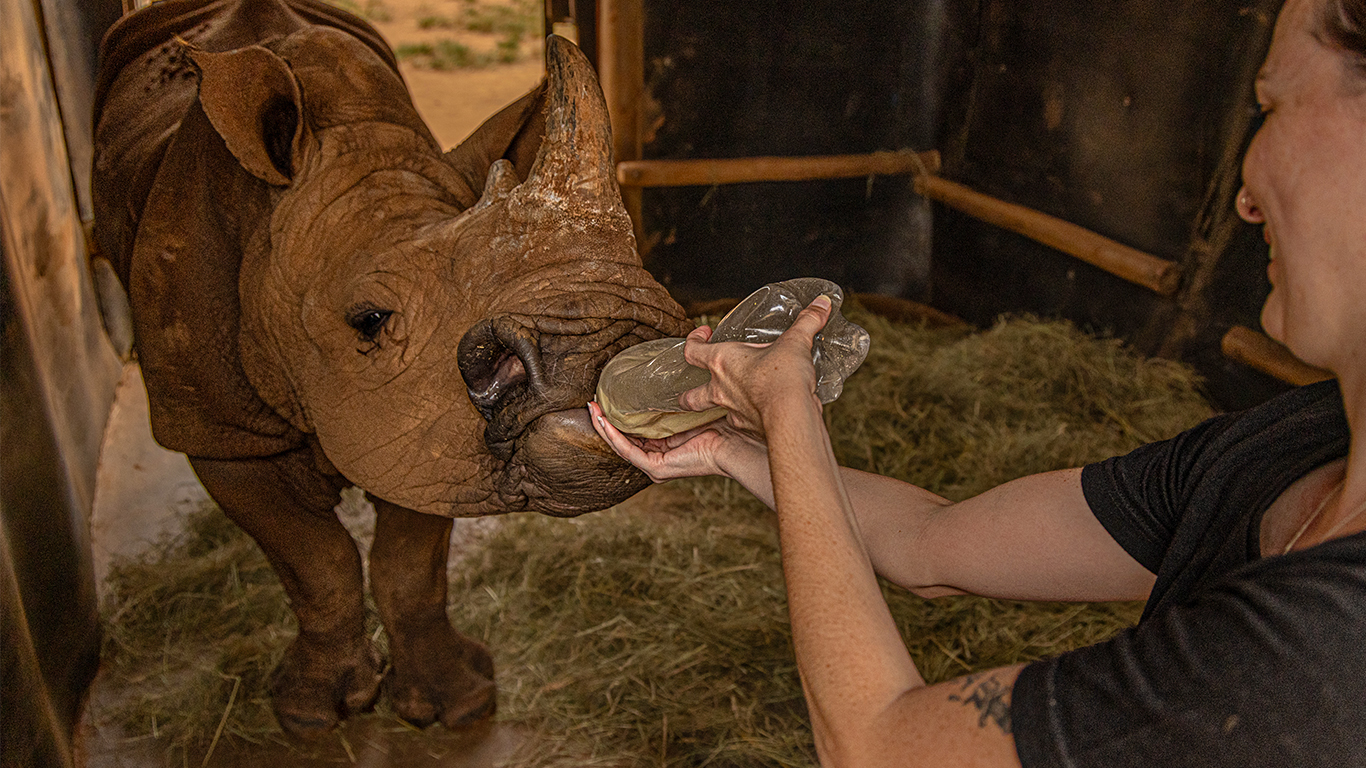
When two mother rhinos were mercilessly slaughtered for their horns in South Africa, their infant calves were left starving, vulnerable and alone. In the first 90 days of 2025, 103 rhinos were killed by poachers in South Africa. Infants Nola and Cathy could be next – if we do not help them today. Our partner, Care for Wild Rhino Sanctuary (CFW), immediately took in the two vulnerable, grieving babies, who were found standing helplessly beside their slain mothers. Dianna, an older orphaned rhino at the CFW Rhino Sanctuary, has been a source of comfort for Nola and Cathy after the loss of their mothers. Credit: CFW They had been forced to watch helplessly as poachers murdered their mothers, then brutally hacked the horns off their dead bodies. Dehydrated, confused and deeply traumatized, Nola and Cathy were quickly airlifted to the safety of CFW’s intensive care unit (ICU). Every rhino lost pushes the species closer to extinction forever. Unless we take action, these animals could disappear forever. Preventing poaching is a vital step in safeguarding rhinos, and we are working with partners across Africa to stop criminals in their tracks. Anti-poaching teams, artificial intelligence and satellite tracking are vital to stopping wildlife crime – and they WORK. Nola and Cathy are growing stronger by the day, which is wonderful news for these orphans. But this is only half of the battle won. This is an example of an advanced AI tracking collar used to protect rhinos from poachers. Credit: CFW Will you help us protect Nola and Cathy with vital anti-poaching tracking collars? Now, each calf MUST be fitted with a state-of-the-art artificial intelligence tracking collar specially designed to provide enhanced protection against poachers and other threats when they are released into a protected wild area. This will ensure the rhinos get to live in a safe, wild area, just as they deserve – AND that they remain protected. For this, they are relying on you, *|FNAME|*. Will you help them? Credit: CFW We couldn’t save Nola and Cathy’s mothers. But with your support, we can save their orphaned babies, giving them a chance at a safe future. We cannot let heartless poachers destroy this species’ only chance at survival. Your support is crucial in the fight to save Africa’s rhinos, and to stop the criminals who are so intent on killing them. Nola and Cathy are counting on you today. Please donate generously, and help give them the safe, protected futures they deserve.
Hunters killed their mothers. Now, they need our help.
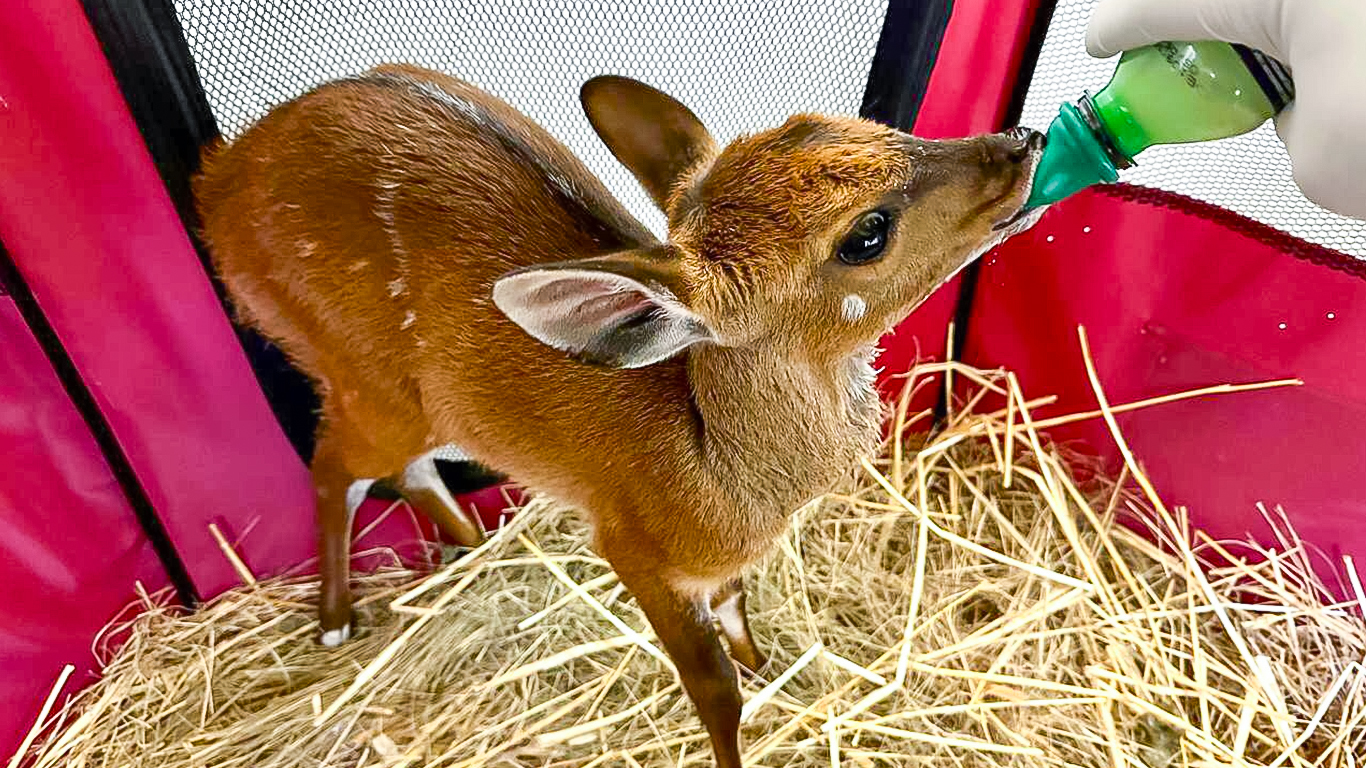
Today, I am sincerely hoping I can count on your compassion for animals. A really sad situation is unfolding in South Africa, and hundreds of little orphaned wild animals desperately need your help. Credit: Friends of Free Wildlife These tiny, precious creatures are sick, injured and alone in the world, and without support from kind people like you, they stand little chance of surviving. Why are there so many orphaned wild animals in need right now? During the height of summer in South Africa, temperatures soar – and, even worse for wild animals, rampant wildfires break out. Their moms get killed in these fires, and they are left alone, often injured and starving. Many die. The lucky ones end up with our partner, Friends of Free Wildlife (FFW). But our partner is at breaking point – there are just SO many animals in critical need. Credit: Friends of Free Wildlife When we visited recently, we saw first-hand how overwhelmed the little sanctuary is. In January alone, FFW took in 463 animals – that’s an average of 15 little souls every day, all requiring varying levels of critical medical care, as well as food and safe shelter. Some of these little creatures – like tiny buck who are barely walking yet – have been orphaned because hunters shot their mothers. Others lost their families to deadly fires. There are SO many hungry mouths to feed. So many broken legs, burn wounds and empty bellies. To make matters worse, a critically important volunteer recently and suddenly passed away. These deaths are not only devastating for the FFW family, but for the countless little creatures counting on the staff for their daily needs. How can you help? During storms, baby genets fall out of trees when their nests are destroyed. Credit: Friends of Free Wildlife You can help by sharing this story with all your friends and family, and by making a donation – every amount makes a difference! It costs our partner around $2,000 (£1,605) a month to feed, treat and take care of all the animals. If we can cover a month’s worth of food, shelter and treatment, it would relieve a massive amount of pressure for our partner, enabling them to give injured, orphaned animals the best possible care. It may be a small organization, but it is doing truly BIG things for the vulnerable and endangered wildlife of South Africa, and you and I can help them do so much more. This baby steenbok, who should still be nursing from its mother, was found orphaned, starving and alone. Credit: Friends of Free Wildlife Will you help? The animals would be so grateful.
This vulnerable aardvark needs your help to survive.
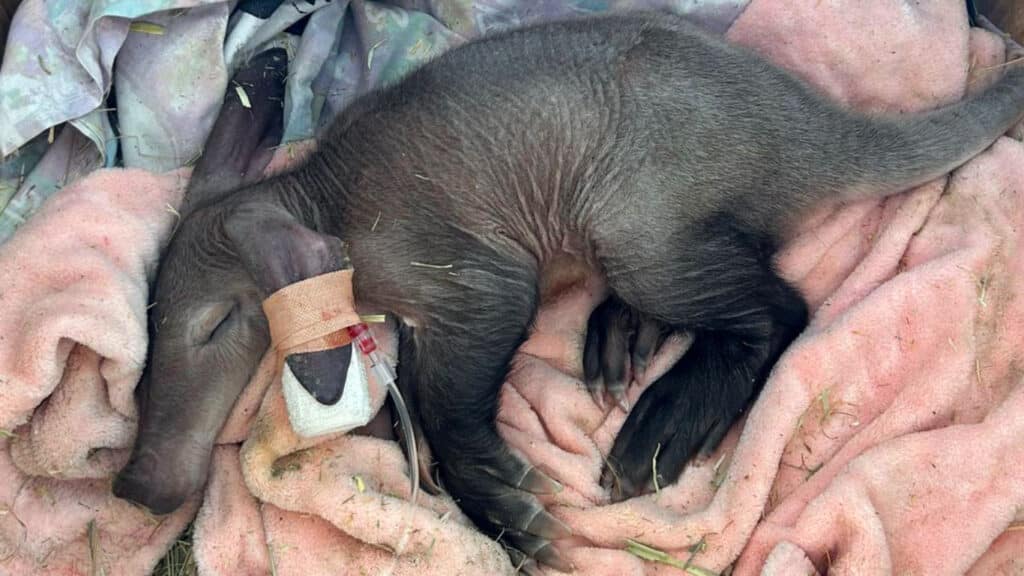
Little Henry was just a few months old when he was tragically orphaned in South Africa. When he was found, he was covered in parasites and on the brink of death – the sun beating down on him as he lay in the dirt. Henry is an aardvark — a gentle, nocturnal, burrowing mammal who is no threat to anyone. But sadly, aardvarks are hunted for their meat and body parts. They are killed out of ignorance, or because they are considered a “pest” by farmers. Tragically, this is probably what happened to Henry’s mom. Orphaned, alone and barely alive, he was rushed to the nearest veterinary clinic. Rescuers didn’t know if he would make it. Credit: Kalahari Wildlife Project A medical exam revealed that Henry was severely dehydrated, struggling to drink on his own, and experiencing severe diarrhea. Henry should have still been with his mom. Aardvarks stay with their mothers for the first six months of their lives. Little Henry was just three months old. Henry needs special milk formula and long-term rehabilitation if he has any hope of survival. Once Henry was stabilized, he was transferred to our partner, the Kalahari Wildlife Project (KWP), which immediately began intensive care. Credit: Kalahari Wildlife Project Just $53 (£43) will cover the cost of Henry’s special milk formula and monthly care. Henry will need specialized care and intensive rehabilitation for up to a year. Vital to his recovery is special milk formula for the next three months. Every $53 (£43) we raise will give Henry an entire month of rehabilitation and care, and will also cover the cost of three months’ worth of special milk formula. Credit: Kalahari Wildlife Project If we can raise $640 (£520), we can fund his entire recovery. By helping Henry, you’re supporting a keystone species that plays a crucial role in the health and biodiversity of ecosystems. Please will you help give orphaned Henry the second chance he deserves? Credit: Kalahari Wildlife Project
Baby pangolin stuffed in a sack and left to die.
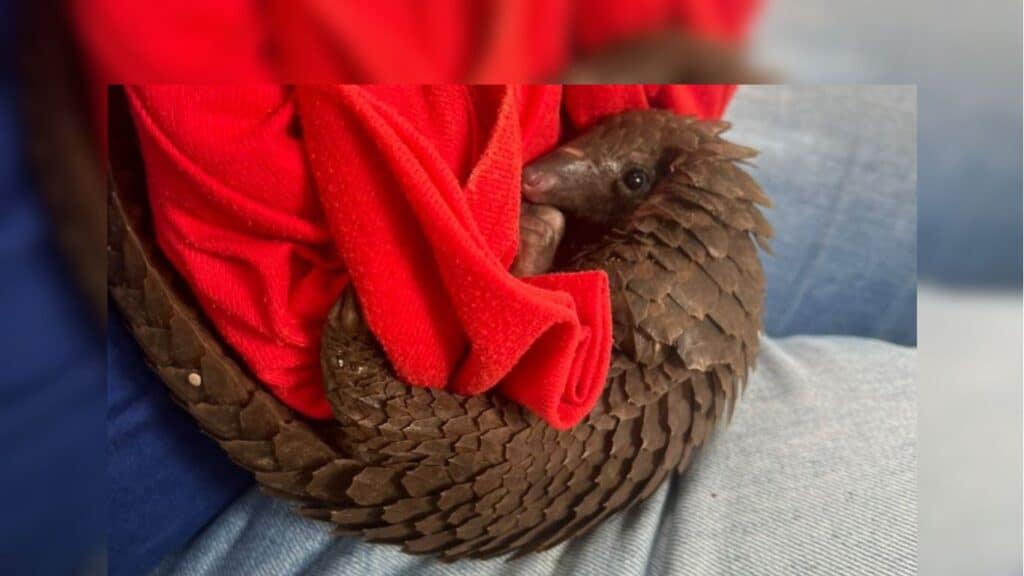
Today, an eight-month-old pangolin pup desperately needs your help. Saved from a bushmeat market in Lekki, Nigeria, after a tip-off, she was found in a truly horrendous state. Credit: GWCI The fragile young animal was stuffed into a filthy sack and infested with hundreds of disease-carrying ticks, which clung to every inch of her body. With the parasites clinging to every inch of her poor body, it was the worst infestation our partner Greenfingers Wildlife Conservation Initiative (GWCI) had ever seen. Tikki the pangolin is just a baby. Her survival hinges on specialized nutrition and expert care. Our partner took Tikki into its care. Once every tick had been painstakingly removed from her little body, she was moved to isolation because she probably still harbors tick eggs, which could cause a disease outbreak at our partner sanctuary. Each of the hundreds of ticks had to be carefully removed by hand. Credit: GWCI Tikki needs close monitoring and specialized milk formula over the next several months. This milk formula is critical, and without it, Tikki will not survive. Once she is fully recovered, she will be released into a protected area where she can live in her natural environment while remaining safe from poachers. As poachers ruthlessly hunt down every pangolin in Nigeria, our partner is one of the few organizations fighting to save these endangered creatures. Image for illustration purposes only. Credit: WCRU/ZXZhang Pangolins are sold on the black market and their body parts harvested for use in ‘traditional Chinese medicine’ (TCM), even though no benefits have ever been proven. Their meat is considered a delicacy in some Asian and African countries, and their skins are turned into bags and belts. Driven by greed, pangolins are being poached to extinction. There are few safe spaces for pangolins in Nigeria and our partner has to work tirelessly every day to save every life it can. Rescuing these fragile animals from the clutches of poachers is essential – and we can do it, but only with your support. One life could make all the difference to the entire pangolin species. In the past 10 years, more than a million pangolins have been poached from the wild. Of the eight species of pangolin, two are considered ‘vulnerable,’ three are endangered, and three are critically endangered – indicating that they are terrifyingly close to going extinct. Credit: GWCI Without dedicated conservation work – and the support of caring people like you – their species stands little chance of surviving the next decade. Tikki may be “just one pangolin,” but with the creatures so close to extinction, every life counts. Can Tikki count on your compassion today?
Feed a tiny pangolin pup for a month this Giving Tuesday.
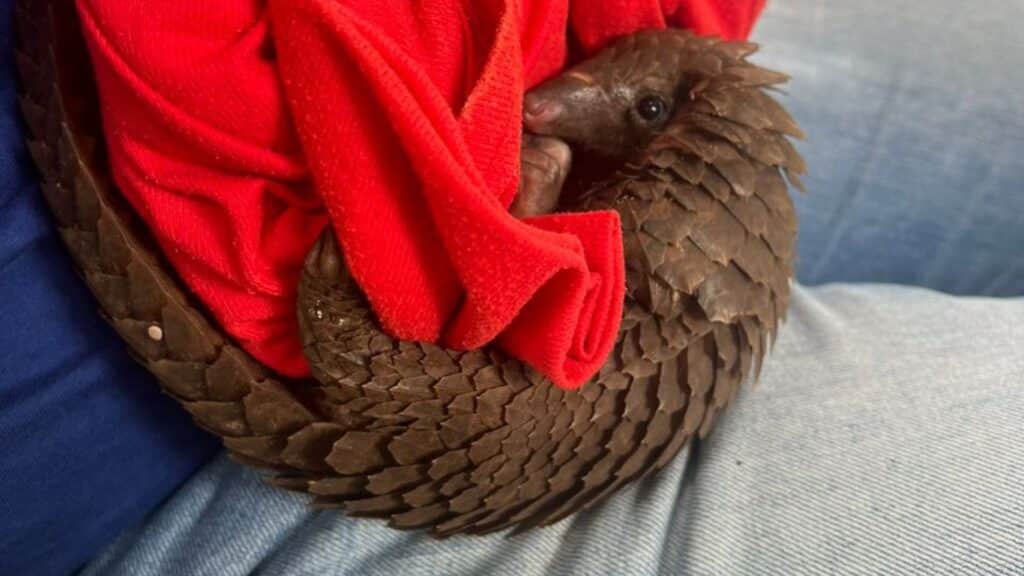
Today, on Giving Tuesday, a baby pangolin in Nigeria is desperately hoping for your compassion. Pangolins are facing the very real threat of extinction, driven by ruthless poachers. Thanks to the dedicated work of our teams, this baby was saved. With your Giving Tuesday gift, you have the power to help save her life. Giving Tuesday is about compassion, and this defenseless pangopup needs yours today. Will you give her the gift of life on this special day? Credit: GWCI This Giving Tuesday, you have the chance to save a pangolin’s life. Eight-month-old pangolin pup, Tikki, was saved from a Nigerian bushmeat market in a truly atrocious state. She was stuffed into a filthy sack and she was infested with hundreds of disease-spreading ticks, slowly sucking the life out of her. They clung to every inch of her battered little body – the worst infestation our partner, Greenfingers Wildlife Conservation Initiative (GWCI), had ever seen. Each of the hundreds of ticks had to be carefully removed by hand. Credit: GWCI Tikki needs close monitoring and specialized milk formula over the next several months. For just $100 (£77) per month, you can give her everything she needs to survive. Our partner took Tikki into its care, painstakingly removing every tick from her weakened body. She was then moved into temporary isolation because she probably still harbors tick eggs, which could cause a disease outbreak at our partner sanctuary. Your donation will give Tikki the pangolin pup the gift of life this Giving Tuesday. Specialized milk formula is critical to Tikki’s survival. It costs $100 (around £77) to feed her for an entire month – a high cost in a country where the minimum wage is less than $42 (£32.50) per month. And she is not the only one fighting for survival at our partner’s shelter. GWCI regularly rescues pangolins from horrific meat markets and cruel traffickers in the chaotic West African country – and sometimes, they are just a few weeks old. They all need special milk if they are to have any chance of surviving, and for that, they really need you. Image for illustration purposes only. Credit: WCRU/ZXZhang $100 (£77) is incredibly hard to come by in Africa, but we know our supporters care enough to help – especially when every life counts in the fight against extinction. One life could make all the difference to the entire pangolin species. Your donation could make that difference. With their thick keratin scales, pangolins are virtually invulnerable to all predators – except humans, who effortlessly snatch them from the wild. Without dedicated conservation work – and the support of caring people like you – their species stands little chance of surviving the next decade. Credit: GWCI So please, make your gift count this Giving Tuesday – for the pangolins of Africa and the future of our planet. Please donate now, and share this plea for Tikki and her fellow rescues with all your friends and family. Saving animals and the planet, Campaign Director Animal Survival International P.S. We work tirelessly to save pangolins from cruel poachers who profit off their death. Your support is crucial to continue this life-saving work, so please, donate as much as you can today. Banner credit: GWCI
World Lemur Day highlights the plight of Madagascar’s critically endangered primates
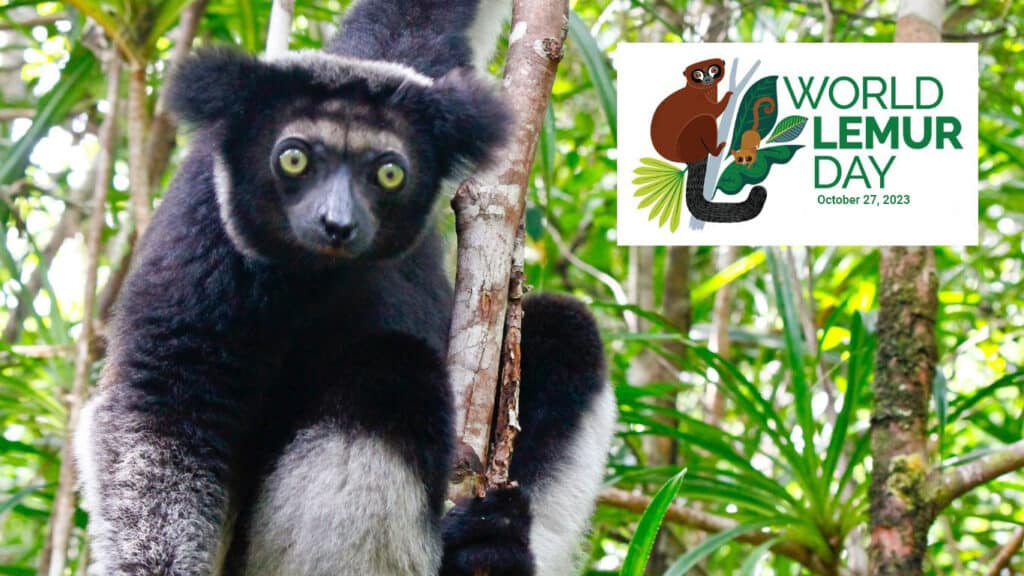
Today is World Lemur Day but tragically, there is little to celebrate. Lemurs – endemic to Madagascar and some of the world’s oldest living primates – are under terrible and constant threat. Climate change, habitat destruction and the illegal trade in bushmeat and exotic pets is rapidly driving their populations to extinction. Madagascar is home to 70 species of lemurs found nowhere else on earth, except for small neighbouring islands. DNA-based evidence suggests that lemurs first appeared on the island 40 to 50 million years ago, and flourished until human activity burgeoned just 2,000 years ago. Coal mining, illegal logging and slash-and-burn agriculture have led to major deforestation and habitat loss, leaving lemurs confined to just 10% of the land they once roamed. The critically endangered indri lemur, famed for communicating through song, has been of particular concern to us. We are working to help ensure that these beautiful creatures can continue to leap through canopy treetops and sing their songs in a safe and protected environment. Our partner L’homme et l’Environment, a French non-governmental organization that works on lemur conservation and long-term reforestation, recently rescued a breeding pair of indri lemurs whose previous habitat had been destroyed by slash-and-burn agriculture. The pair were relocated to the Vohimana forest where they (and their future offspring) will be carefully monitored by dedicated forest guards who, through your support, we armed with vital GPS trackers and communication devices. Scientists estimate that the probability of extinction for critically endangered species will be more than 50% over the next 50 years. While the exploitation of lemurs is punishable by law, the animals remain in grave danger of becoming extinct, with 31% of all lemur species now critically endangered according to the International Union for Conservation of Nature (IUCN). Working with our partners on the ground, we aim not only to support lemurs through protective and reforestation efforts, but also to help prevent hunting by educating local communities about the crucial role the species plays in maintaining Madagascar’s ecosystems. Considered ‘creators of the forest,’ lemurs spread seeds through their droppings, which grow into trees and offer shade and shelter for a wide range of animals. On this World Lemur Day, please join us in fighting for the survival of our planet’s precious remaining lemurs by donating to ASI now, and supporting our efforts to preserve this important species.
WE HAVE JUST LEARNED that 14 other animals have suddenly died at the private zoo where Ljubo, the bear in despair, is held in a tiny cage!
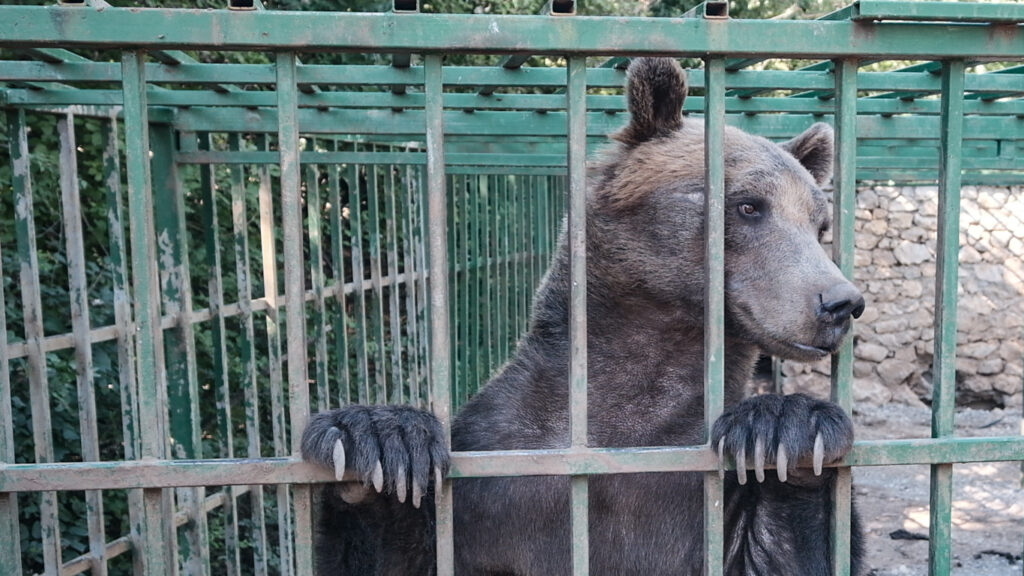
Towards the end of last year, we discovered the SHOCKING CONDITIONS in which five-year-old brown bear Ljubo is kept. Imprisoned alone in a tiny enclosure in Montenegro, he is visibly traumatized and so stressed he self-harms, repeatedly biting his arm and the bars of his cage. We KNEW we had to do everything in our power to rescue Ljubo and move him to a bear sanctuary, but this takes time and… …SUDDENLY, the situation has become even more concerning! Ljubo desperately needs our help, your help, more than ever! Late last month, more than a dozen other animals at the zoo died sudden, unexpected and unexplained deaths. The authorities are investigating, but we tremble for the safety of Ljubo, and all the animals that have survived so far. FOURTEEN ANIMALS dead in a single day where Ljubo is STILL cruelly caged. We MUST NOT LET LJUBO BE NEXT! Please, be as generous as you are able today. The dead included an emu, ostrich, camel, badger, two Vietnamese pigs, a ram, an African pygmy goat, three dogs and a Shetland pony. The deaths remain a mystery and investigations continue, with the country’s prosecutor office now at the helm of the investigation. Meanwhile, Ljubo’s owner persists in keeping him in a cruel cage in spite of mounting legal and government pressure. The most recent deaths under mysterious circumstances are terribly worrying. We MUST redouble our efforts to GET LJUBO OUT of this place (ironically called Shelter and Recovery of Animals of Montenegro). (As for the “recovery” – all we see is the abject suffering of feeling beings and unexplained deaths of precious animals held in captivity.) Can Ljubo count on your support? The “shelter” that Ljubo has is a cage barely large enough for him to stand up. He is so distressed that he self-harms, repeatedly biting his arms and the bars that cage him. Tourists are encouraged to throw fruit scraps at him and pose beside his cage for selfies. It is despicable that any wild animal should be subjected to this daily torture so money can be made through his suffering. How many more animals must die before authorities take action? We will rally them DAILY to save Ljubo and any other animals in harm’s way, but we have to do more. Ljubo is a PRISONER – but his only ‘crime’ was to be caged as a cub by a man who profits from his pain and suffering. Rescuing Ljubo will take a combination of government and legal action, and the latest developments mean we have to work even more intensively. Officials have been alerted, and we are working with the veterinary administration, Environmental Protection Agency (EPA) and Ecological inspection to conduct an urgent inspection of the zoo, along with an independent bear expert. We dearly hope we can count on your donation because, make no mistake, vested interests will do everything they can to stop us from freeing Ljubo. If there is to be a happy ending for Ljubo, our supporters are his best hope. Please, donate right away, and help us continue the fight to FREE LJUBO.
CRUELTY TO ANIMALS GETS NO WORSE THAN THIS! Help FREE this CAGED BEAR to a sanctuary!
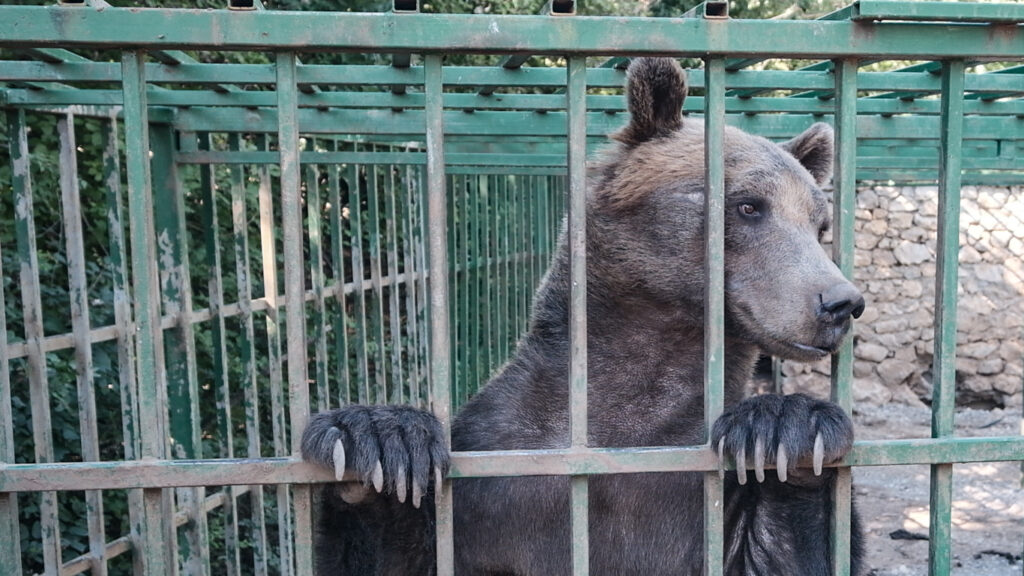
Recently, we told you Ljubo, a bear in despair. In a shameful place in the tiny Balkan country of Montenegro, a sad and lonely brown bear has lived his whole life locked in a caged enclosure that barely allows him to stand up and stretch. He lives in that cage 24 hours a day, 365 days a year, just so the owner can make money from tourists. Ljubo lives in conditions of daily torture. This poor bear belongs in the forest, but instead, he is confined in a totally unsuitable space, with no room for him to roam, stretch, climb, forage, nest, explore, or socialize. Even worse, he has no space to hide from a daily onslaught of visitors who come to throw scraps of fruit and vegetables that his owner sells to them to feed him, so they can take selfies for social media. Ljubo is so traumatized he has resorted to self-harm, repeatedly biting himself. The story of Ljubo, who is about five years old, is sordid, tragic and sad. He is an exhibit at the laughably named Prihvatiliste i Apurva Životinja Crna Gora (Shelter and Recovery for Animals). His owner claims Ljubo was abandoned on his doorstep when he was a baby – yet suspiciously, this happened shortly after two other baby bears the man owned were confiscated because of unsuitable conditions. The authorities should have acted then but took no action to protect Ljubo. Local animal lovers took the owner to court but so far, the authorities have turned a blind eye to the situation, saying it’s difficult for them to solve! IT IS OUTRAGEOUS! The authorities know that Ljubo is kept in appalling conditions and suffering every day, but they do nothing. Every day Ljubo remains in that cage is another day of shame for Montenegro and another day when animal cruelty goes unchecked. Please join us to fight to give Ljubo a better life. With your help, we are tackling the authorities who should have acted but have not done so. We are now meeting with them regularly and pushing them to end his misery. With your help, we will fight to IMMEDIATELY get Ljubo better living conditions, and ultimately moved to a proper bear sanctuary. We simply cannot stop thinking about this desperate bear. We can still see him biting his arms, chewing the bars that cage him, reaching out and staring at us almost beseechingly, surrounded by bits of rotten fruit on the otherwise barren ground around him. We MUST ACT NOW to lobby the government of Montenegro to take action to end this daily misery and cruelty. Bear experts have verified that Ljubo’s living conditions are atrocious. International guidelines say bear enclosures must be at least 1,000 square meters (1,195 square yards) to allow them at least some semblance of natural behavior, including the ability to hide, forage, climb, walk, and run. Captive bears should also be provided with enrichment activities to stimulate mental health. Ljubo has none of this – just a life locked in hell, standing amid rotting fruit in a tiny, caged enclosure 365 days a year. We MUST get him out of there! With your help, we will engage with the Montenegro Environmental Protection Agency (EPA) to relocate him to a suitable bear sanctuary. We have a team on the ground ready to start the fight, but we can only do so with your help. Please donate right now so that we can fight those that seek profit from cruelty, and get Ljubo out of hell and into a haven where he can live comfortably.
FREEDOM FLIGHT! No animal should be held captive… yet this is the plight of two lion cubs who WE’RE ABOUT TO FLY TO A SANCTUARY!
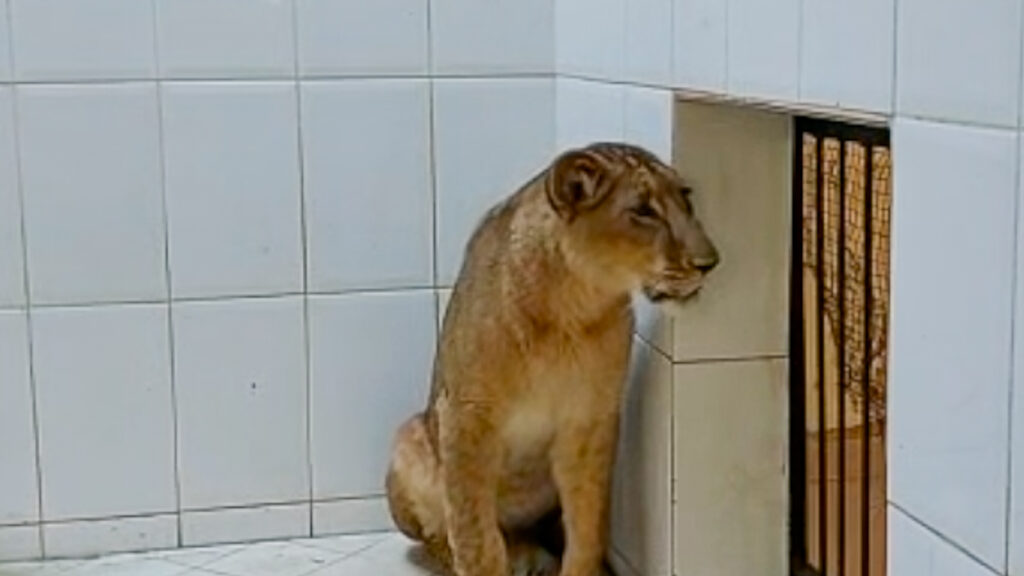
In the Middle East, wealthy Gulf-state nationals buy wild animals to show off as status symbols. These animals are illegally imported, reared in captivity, bred, abused and then often escape or are discarded. This is no life for any wild animal, and no exotic species is safe from the illegal exotic pet trade: lions, chimpanzees, cheetahs and tigers are all kept as pets in countries like Kuwait, Saudi Arabia and Dubai. Najla and Sara are lion cubs rescued from the illegal pet trade in the Middle East. Right now, they are stuck in a zoo in Kuwait. With your help, we will transport them to a safe sanctuary in South Africa where they can live in peace. Najla and Sara, both 13-months-old, were acquired illegally and have only known life in captivity… Sara was rescued from Bedouins who intended to shoot her because they had been unable to sell her. She was rescued in the nick of time, malnourished, traumatized with cuts all over her face. She had been declawed and defanged – two senseless and extremely cruel, painful methods used to make a wild animal “safe” enough to be handled by humans, by leaving them defenceless. Najla meanwhile was kept as an illegal pet. She was confiscated from the hands of her irresponsible owner and taken to a zoo. Najla and Sara were taken to the only safe place that would care for them: a zoo in Kuwait, where each female is living in a 6.5 square-foot (two-square-meter) enclosure. They have slowly been nursed back to health but this is ONLY a temporary solution, and they cannot – and MUST not – stay at the zoo indefinitely. The zoo only offered to take the cubs on condition that they would not remain there forever, and we are terrified at the thought of what could happen if these lions are not moved. In Kuwait, it is common for animals to be euthanized without a second thought! The unsuitable and cramped environment is taking its toll on the growing cubs. The lionesses are becoming more and more frustrated, anxious and depressed from being trapped in tiny rooms 24/7 with no stimulation, no enrichment and no time outdoors. Najla and Sara are struggling to cope in captivity – BUT they have an opportunity to fly to a sanctuary in South Africa as soon as next week… …if the funds can be raised for their flight. Please help us raise the funds to secure their flight – we have just a few days to do it. We have managed to find some money, but sadly not enough. If you can possibly be generous today and we can raise another $7,500 (£6,100), we can get Najla and Sara to safety in a place where they can be left in peace for the rest of their lives. Please , we MUST help them! For months, The Lions Foundation in the Limpopo province of South Africa, has been working hard to prepare everything for the lionesses’ safe relocation to their big cat rescue sanctuary. The Lions Foundation provides lifetime shelter, rehabilitation and care to big cats rescued from circuses, private ownership, zoos and animal parks. The sanctuary provides a wonderful semi-wild home for big cats previously kept captive and who cannot be released into the wild. Everything is ready for the cubs: their new home is prepared, their permits are approved, their travel crates are ready to be loaded… all that is needed now is the remaining funds for the flight! Your donation will really make a difference. The end of their ordeal is within reach and with your help we can give them the life they deserve.
U.N. Gathering Rejects Bids to Trade Ivory and Rhino Horn in Southern Africa
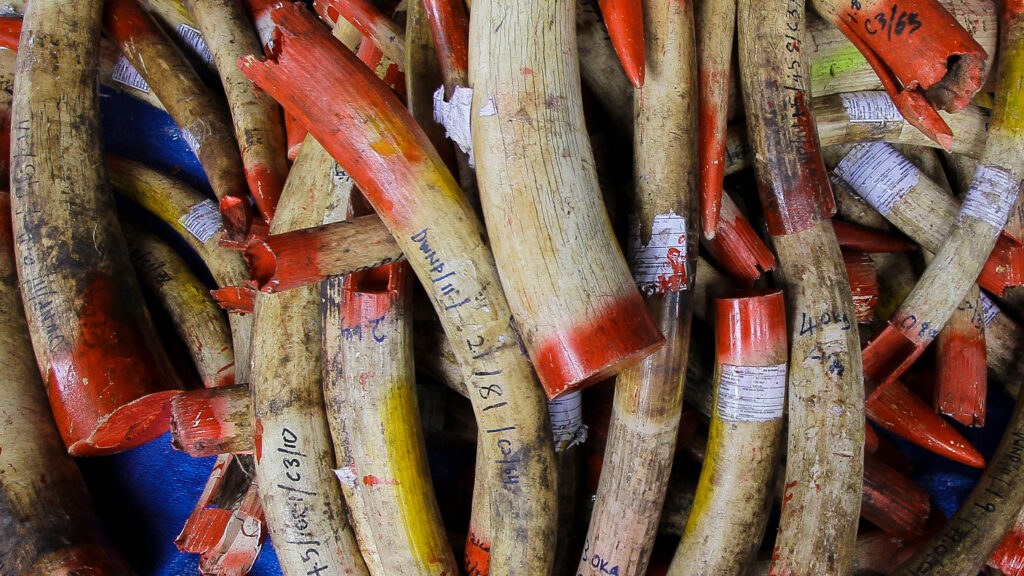
In a blessing for elephants, the African nations of Namibia and Zimbabwe have failed to convince a United Nations body to allow them to export elephant tusks, while Eswatini lost a bid to sell rhino horn, reports Reuters. Namibia and cash-strapped Zimbabwe had claimed that sales would protect the animals and raise money for conservation, and that their populations of rhino and elephant were either growing or stable. However, member states of the U.N. Convention on International Trade in Endangered Species (CITES) were quick to dismiss the bid, voting overwhelmingly to reject the proposals, regardless of whether the tusks or horns were seized from poachers or removed from animals who died naturally or had been euthanized by the state because they were, for example, destroying crops. “It is unconscionable that countries would even consider jeopardizing their animal populations as wildlife continues to be slaughtered in alarming numbers, or die because of our worsening climate crisis,” said David Barritt, executive director of Animal Survival International (ASI). “We welcome the sensible decision of the CITES committee in continuing to uphold the ban on ivory and rhino horn. As our planet’s wildlife dies out in devastating numbers, there is not a single good reason to trade in animal parts.” Zimbabwe had asked CITES for permission to sell a 70-tonne ivory stockpile worth an estimated $35 million (£28.8 million), while Swaziland, also a poor country, wanted to sell 330kg (700 pounds) of rhino horn worth an estimated $10 million (£8.2 million). In 1989, a worldwide ban was imposed on ivory sales to curb a wave of poaching but in a once-off ruling in 2008, CITES permitted Botswana, Namibia and Zimbabwe to sell stockpiles to Japan, and South Africa to sell to China and Japan. In 1977, a similar ban was placed on rhino horn, but in recent years the poaching of both elephants and rhinos has soared to meet the unstoppable demand in newly affluent Asian countries like China and Vietnam. Ivory is prized for its aesthetic qualities while rhino horn is used in Asian “medicines”. There is also speculative demand from buyers who are betting that prices will skyrocket if rhinos are poached to extinction. South Africa, which home to the majority of the world’s rhinos, has seen slaughters surge from 13 in 2007 to 1215 in 2014. In the first half of this year, 259 rhino were slain in the country. Meanwhile, tens of thousands of elephants have been killed, primarily in east and southern Africa. Encouragingly, other African nations including Kenya – currently experiencing a devastating drought that is wiping out large numbers of wild animals – are strongly opposed to any reopening of the ivory or horn trade. They argue it will activate demand and threaten their animals. “Ivory belongs to the elephants and ivory is worth more on a live animal rather than a dead animal,” Kenyan Environment Minister Judi Wakhungu told Reuters. Rhino horn can be harvested from a sedated animal because it grows back, although most poachers simply kill the animal. To extract an entire ivory tusk, an elephant must be killed. For decades, Kenya has focused on wildlife-spotting safaris and ecotourism as the primary revenue streams from its big animals. In April, it destroyed 105 tonnes of ivory. CITES recommended that countries with legal domestic ivory markets that are not regulated by the convention, such as Japan, begin closing them down because they contribute to poaching. CITES members also voted to include the silky shark, three species of thresher sharks, and nine species of devil rays in its Appendix II listing, which strictly controls trade so that species are not exploited or threatened. Devil rays – similar to their larger cousins, manta rays – are killed for their gill plates, which are sold in China for use in a “health tonic”.
Pangolins rescued from criminal gangs urgently need care before they can be returned to the wild. Please, will you help them?
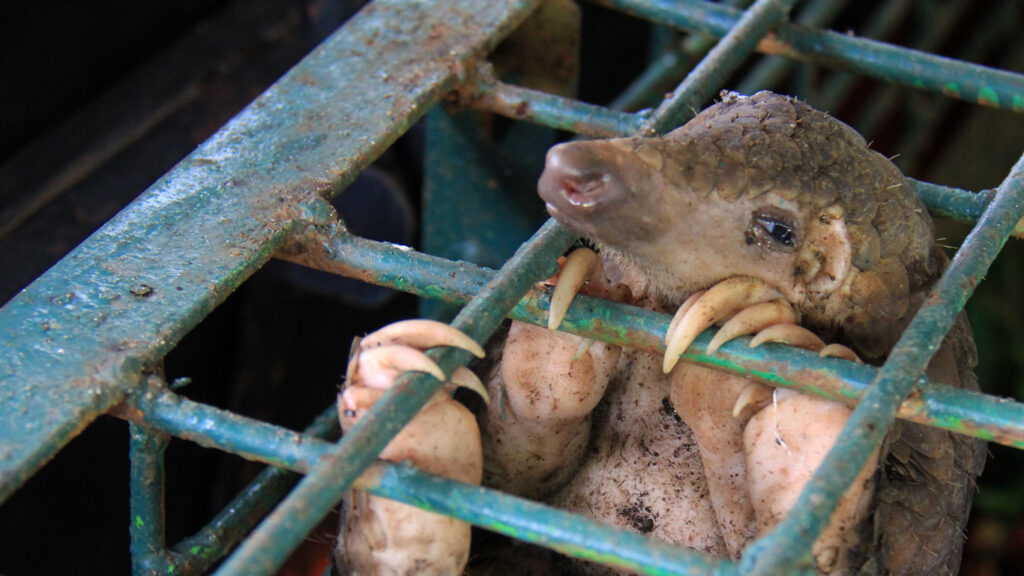
Critically endangered pangolins are the most trafficked mammals in the world, with more than ONE MILLION poached over the last decade. The insatiable demand of the illegal wildlife trade has driven all eight species of pangolin to the brink of extinction. Every year, tens of thousands of pangolins are poached and killed for their scales – falsely believed to serve medicinal purposes – and their meat, which is considered a delicacy among the ultra-rich in many Asian countries. Image credit: Traffic Shockingly, restaurants strip pangolins of their scales and BOIL THEM ALIVE!If we do not act fast and do everything we can to help preserve pangolins, we risk losing these unique creatures for good. Please, will you help us? Animal Survival International (ASI) supports important pangolin projects in Nigeria and South Africa, but our emergency funds for critical operations are running dry. We must ensure that our partners on the ground are ready to respond immediately to any emergency, and that they are well equipped to deal with challenges we may encounter. Image credit: Shaban Omar/The Star Currently, numerous pangolin smuggling routes operate in and out of Mpumalanga, South Africa. There are increasing incidences of wildlife trafficking and successful sting operations confiscating the poor creatures – but unfortunately, there are no suitable facilities for treating them. There is an URGENT need to establish a rehabilitation and release facility for seized pangolins. Our partner, the Care for Wild Rhino Sanctuary in Mpumalanga, South Africa, plans to do exactly that – and with your support, we will help. Image credit: The Mpumalanga Tourism and Parks Agency We work closely with Care for Wild (CFW), a registered wildlife rehabilitation facility and the largest rhino sanctuary in the world, and is the best candidate for the job. CFW has successfully rehabilitated and released nearly one hundred orphaned rhinos. This devoted team has the expertise to extend their care to vulnerable and threatened pangolins – but they desperately need the resources to do it. If we can raise $10, 000 (£8,445), we will provide funds to start equipping the sanctuary with the tools they urgently need to deal with injured, traumatized, and dying pangolins. Your donation will save lives and ensure healthy pangolins are released back into protected areas. Image credit: The Mpumalanga Tourism and Parks Agency Pangolins are extremely vulnerable to stress. Most die within six months of capture or rescue, which is why it is SO important that they are rehabilitated fast and returned to the wild as quickly as possible. During the rehabilitation process, pangolins are as vulnerable as newborn infants. They require intensive, round-the-clock care if they are to make a full recovery following the physical and psychological damage inflicted on them by poaching. Rescuing individual pangolins from traffickers, rehabilitating them, and releasing them into protected areas with high-tech tracking equipment is vitally important in the fight to save the species. Image credit: EAGLE Network/USAID/Flickr Extinction is looming, and EVERY pangolin life is critical to the survival of the entire species. Without your support, we will see more and more cases of rescued pangolins succumbing to their injuries from the sickeningly cruel illegal wildlife trade. Please find it in your heart to donate as much as you possibly can today so that we can work alongside Care for Wild in this critical rehabilitation project.
Conservationists Argue to Protect African Hippo as Wildlife Trade Drives the Species Closer to Extinction
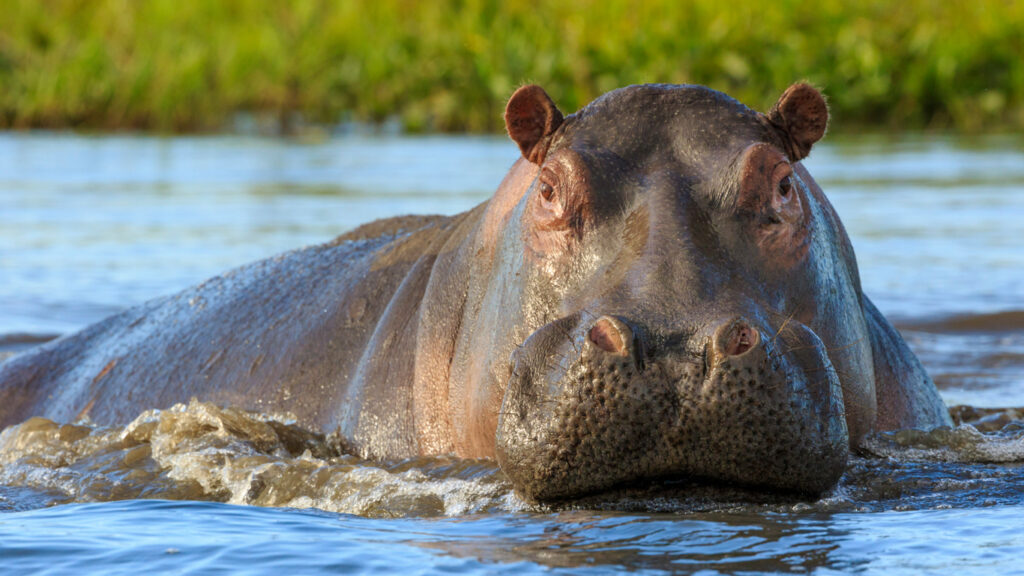
African representatives from Humane Society International (HSI) will argue for the classification of hippo as an endangered species at the Convention on International Trade in Endangered Species (CITES) of Wild Fauna and Flora in Panama next month. This after South Africa exported an average of 122 hippos every year between 2009 and 2018, according to CITES trade data – more than 1% of the country’s entire hippo population. This volume of legal hippo killing threatens to slash the species’ wild population by as much as 30% over the next 30 years. HSI wildlife director Dr Audrey Delsink said that classifying the hippo as endangered will move it from Appendix II (animals not necessarily threatened with extinction) into Appendix I – animals that are under extreme threat and must be protected. Over and above the commercial slaughter of hippos, the species is also vulnerable to climate change and drought. Delsink said that the 2015/2016 drought wiped out 50% of the Kruger National Park’s hippo population. “Including hippos in Appendix I would prohibit international trade in hippos and their parts, thereby ensuring that such trade would not contribute to further declines in wild hippo population,” said Delsink. The impending hippo crisis extends into other African countries, and as such, ten African representatives will recommend the classification for hippos in order to limit legal trade. HSI director of wildlife programs Adam Peyman said, “Hippos are an iconic African species, yet the scale of the international trade in their parts and products such as tusks, teeth, skins, skulls and trophies is shocking. We urge CITES parties to adopt this proposal to ensure that this commercial trade ends. This pointless industry of selling animal parts, along with other threats facing hippos, is pushing these incredible animals to the brink of extinction.” The convention will consider 52 proposals that recommend either an increase or decrease in the protection of 600 endangered species. HSI plans to reject a proposal to amend the listing of the African elephant, which would allow international trade in trophies, live animals, ivory, hair, skins, jewelry and stocks of ivory, and to support a proposal to transfer the African elephant to Appendix I. The species continues to be decimated by rampant poaching, with more than 30,000 elephants killed across Africa every year. The HSI will also reject a proposal to move the southern white rhino population from Appendix I to Appendix II, which would allow international trade in hunting trophies and live animals.
South African Rhino Horn Worth $15-million Seized in Singapore
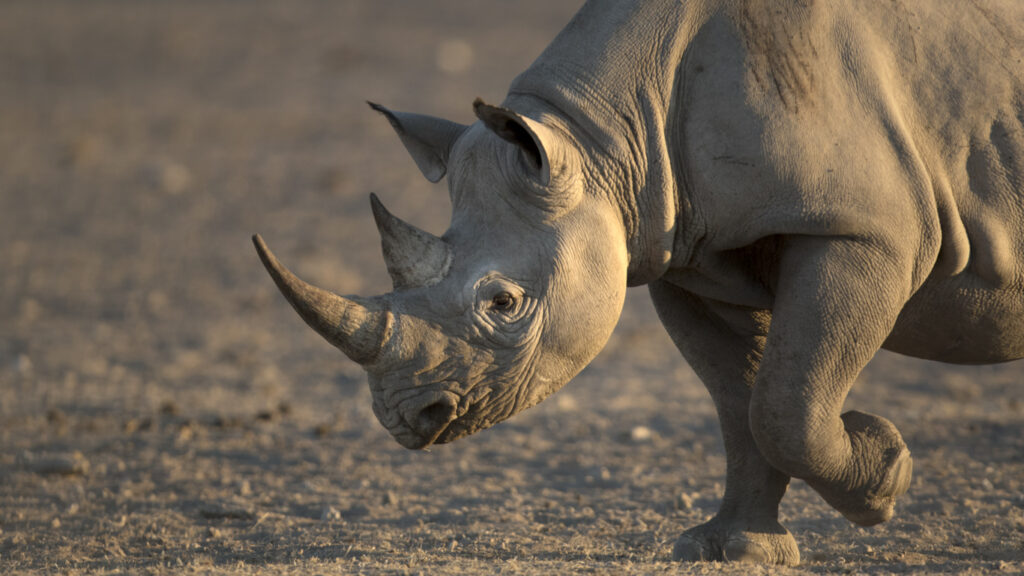
Authorities in Singapore have made their largest-ever seizure of rhino horn, confiscated from a smuggler arriving from South Africa, according to News24.com. The haul is reportedly worth $830,000 (around £735,471). Authorities at Singapore Changi Airport uncovered 20 pieces of rhino horn weighing 34 kilograms (75 lb). The two bags containing the horn were detected by sniffer dogs, and belonged to a passenger continuing onward to Laos. The suspect has been arrested. Rhinos are protected under the Convention on International Trade in Endangered Species of Wild Fauna and Flora (CITES). International trade in rhino horn is illegal. Genetic testing will be carried out on the confiscated horn to determine the exact species of rhino, after which it will be destroyed to prevent it entering the black market. In many parts of Asia, rhino horn is considered a status symbol and is used to make jewellery, buttons, belt buckles and combs. Some falsely believe rhino horn to have medicinal properties and this has given rise to the relentless slaughter of the species. According to the International Union for Conservation of Nature (IUCN), poaching remains a severe threat to the species. Three species of rhino – the black, Javan and Sumatran – are listed as critically endangered. “We applaud the effective work of the Singaporean authorities in detecting and seizing this consignment of rhino horn,” said David Barritt, executive director of Animal Survival International (ASI). “The nations of the world, and in particular those situated on well-known illegal trade routes, must work together to stop poachers at borders and apprehend them. The more regularly and efficiently this happens, the more we send a message to poachers that this slaughter will not be permitted, and we can begin to put an end to this horrendous scourge.” The IUCN says more than 2,700 rhinos were slaughtered in Africa between 2018 and 2021 – 90% of which were killed in South Africa, home to nearly 80% of the world’s rhino population. Most were killed in the Kruger National Park.
Efforts to Pass Global Ocean Protection Agreement Fail
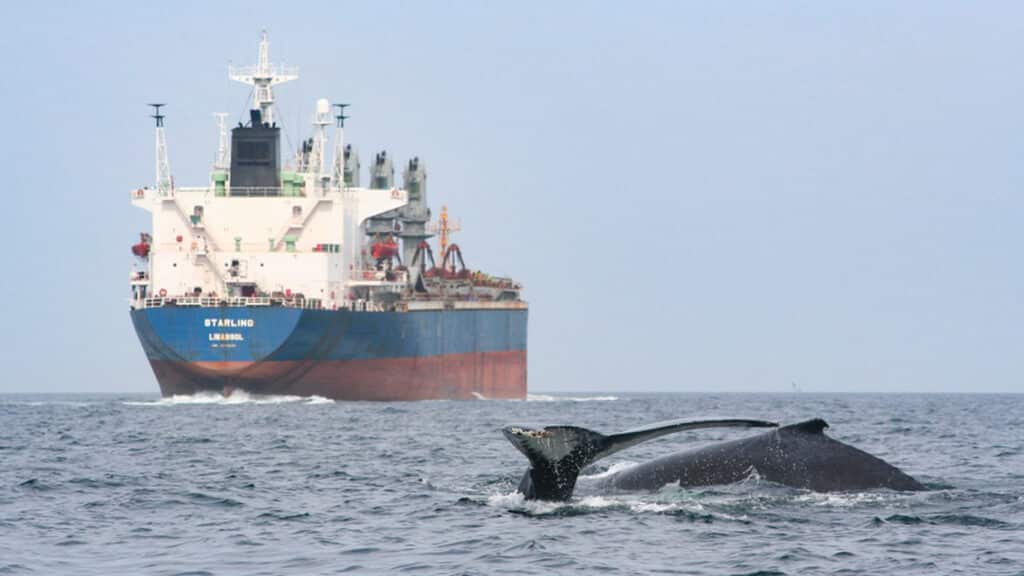
A fifth attempt to pass a global treaty to safeguard the world’s oceans and marine life has failed, according to BBC.com. Discussions to pass the UN High Seas Treaty continued for two weeks in New York, without governments able to come to agreement on the terms. Only 1.2% of international waters are protected, said the BBC, despite the fact that international waters represent almost two-thirds of the world’s oceans. Marine life living outside this small protected area is at risk of harm by overfishing, shipping traffic and climate change. The UN Convention on the Law of the Sea was the last international agreement on ocean protection, signed 40 years ago in 1982. This agreement defined international waters, called the high seas, where all countries had the right to fish, ship and conduct research. “The high seas are the vital blue heart of the planet,” said senior high seas advisor at the International Union for the Conservation of Nature (IUCN), Kristina Gjerde. The IUCN documents the status of the world’ biodiversity. “What happens on the high seas affects our coastal communities, affects our fisheries, affects our biodiversity – things we all care so much about,” she told the BBC. Over two weeks, 168 members of the original treaty came together to try and make a new agreement. Prior to the meeting, over 70 countries had already agreed to put 30% of the world’s oceans into protected areas. This would regulate the amount of fishing that could take place, exploration activities like deep-sea mining, and routes of shipping lanes. However, countries failed to reach agreement on key issues of fishing rights, as well as funding and support for developing countries. There are concerns around the safety of marine life in light of the fact that activities such as deep-sea mining have a potentially toxic impact on marine life – and also that some species, without protection, will become extinct before they are even discovered. According to research published earlier this year funded by the National Oceanic and Atmospheric Administration, around 10% to 15% of marine species currently risk extinction. Sharks and rays are among those expected to be greatest hit by the failure to pass the treaty. According to the IUCN, they face a global extinction crisis and are among the most threatened species in the world. Not only are sharks and rays overfished – leading to rapid population declines – but they, along with other migratory species like turtles and whales, come into close contact with human activities, which can cause severe injuries and death. “Threats to global marine life are severe and worsening every day,” said executive director of Animal Survival International, David Barritt. “This treaty is absolutely critical to the survival of countless marine species, upon which entire ecosystems rely. The oceans are the lifeblood of our world, and failing to protect them is failing to secure the very future of our planet.” Banner: Image: Whale Center of New England
No end in sight to WORST DROUGHT IN A CENTURY in South Africa – majestic elephants and their babies, and countless other animals, are DYING!
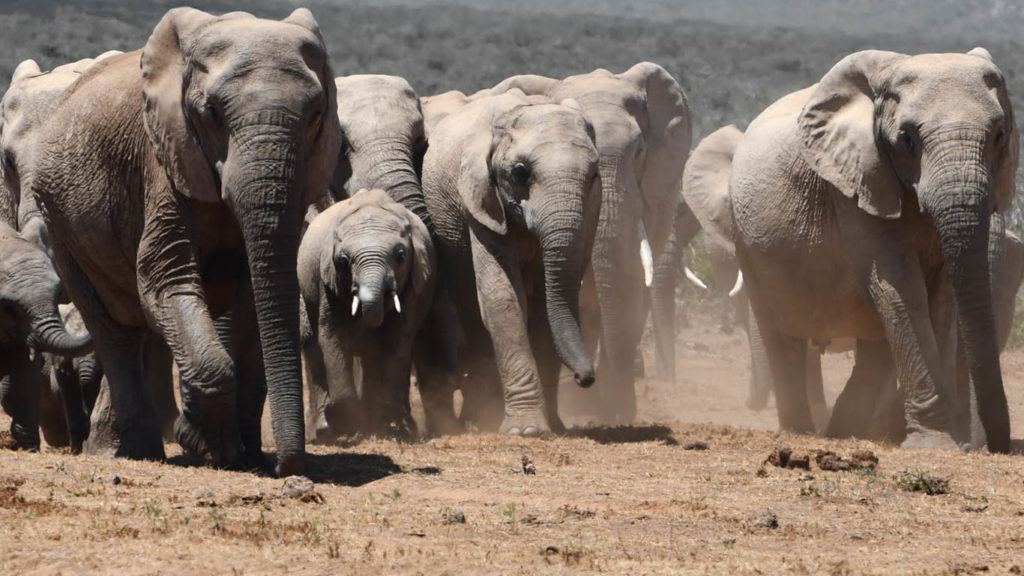
A crippling drought is devastating the wildlife of the Addo Elephant National Park in South Africa. To help the animals survive, we have been installing waterhole pumps across Addo’s vast terrain (633 square miles or 1,640 square kilometers) to provide water, helping to ensure the survival of many species. In 2021, your donations helped us install six state-of-the-art solar-powered water pumps to keep Addo’s main camp waterholes full (with great success!). Now, a severe lack of water in Darlington, the northern-most part of the park, needs our URGENT attention. Addo is situated in South Africa’s Eastern Cape province, which because of climate change is battling its worst drought in 100 years. Addo reached out to us asking for help to provide water for elephants. Obviously, it is vitally important to ensure sufficient water flows once more for these parched elephants and other wildlife. We acted immediately, rushing a team to the region. The good news is that our investigation showed an immense water reservoir lying deep beneath the surface. “We discovered that if we can drill down 115 feet (35 meters), we can provide 1,320 gallons (5,000 liters) of water an hour – an enormous boon for the animals that could be the difference between life and death,” says campaign director, Luke Barritt. Until recently, diesel-powered water pumps would have been used, but in these days of climate change, we must provide a cleaner solution – solar-powered water pumps, because they are non-polluting. These pumps are also quieter, an important factor because wild animals get easily stressed by noise. If we can raise $8,000 (£6,500), we can give Addo’s Darlington elephants and other wildlife enough water for them to be able to drink and bathe to their heart’s content. Please, will you help us dig deep for water and install two new solar-powered pumps for waterholes? The speed at which global temperatures are rising is terrifying, and water is becoming increasingly scarce as droughts become more frequent, intense, and longer-lasting. We work with this issue every day, and every day, we become more alarmed by how serious water shortages are for animal survival. Prolonged dry spells pose life-threatening consequences to African elephants, the largest land mammals on the planet, who can drink up to 200 liters (around 50 gallons) of water daily. Water is also crucial for them to stay calm and do what elephants love to do – wallow in mud. The water shortage in Addo is especially poignant to us. In 2018, our supporters financed the successful relocation of a 28-strong elephant family to Darlington to ease pressure on the park’s central region. Before the relocation, no elephants had lived in Darlington for over 150 years, after being hunted to extinction. We named the family the “Davies herd” after our founders, Brian and Gloria Davies, who are passionate about these magnificent creatures. Now, the elephants are desperately searching for their most critical life source, only to find empty waterholes and bone-dry riverbeds. African savanna elephant populations have dwindled by at least 60% over the last 50 years. They are now listed as endangered by the International Union for Conservation of Nature’s (IUCN) Red List of Threatened Species. The biggest threats faced by these giants are habitat loss, human-wildlife conflict and wildlife crime – primarily, poaching for the illegal ivory trade. Despite anti-poaching efforts, the animals remain at greater risk of extinction than ever before… There are only about 415,000 elephants left across the continent of Africa. Just under 100 years ago, there were more than 10 million. About 600 elephants roam Addo. We must do everything in our power to protect and preserve these remaining few by providing them with their most fundamental and urgent needs. Please donate right now to get life-sustaining water pumped and flowing for desperately thirsty elephants.
UNPRECEDENTED RESCUE MISSION UNDERWAY – to save 6,000 Ukraine frightened and starving zoo animals! We must act fast!
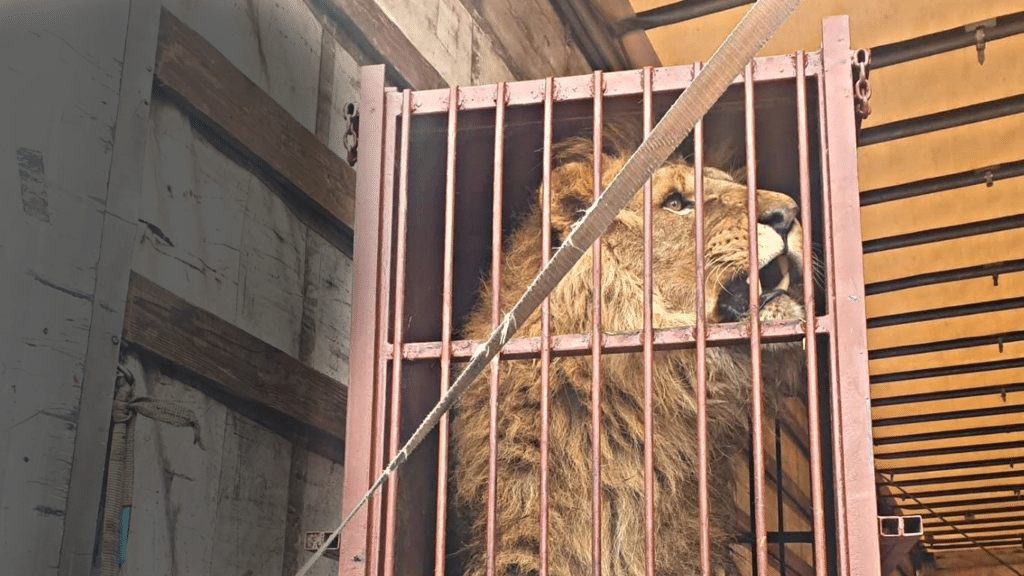
As Russia’s war against Ukraine rages on, ASI is deeply concerned about the country’s wild animals. We are dismayed by the relentless anguish thousands of animals are enduring because of the violence and destruction. The war is having catastrophic consequences on Ukraine’s free wildlife and on the poor, unfortunate animals locked captive in zoos. A deer with deep burns that was rescued after shellings in the Kyiv region Right now, over 6,000 animals are suffering at the Feldman Ecopark in Kharkiv, Ukraine. Since the beginning of the invasion, Kharkiv has been subjected to heavy shelling and bombing. For well over a month now, the park’s animals have been exposed to the ear-splitting noises that have accompanied the countless explosions, gunshots, rockets and air-raid sirens. Their stress levels have soared – they are starving and terrified, and their cages are on the verge of collapse. A Russian shell landed amidst the animals Alexander Feldman, the owner of the Ecopark, has said that the animals’ cages will not remain intact if even one more shelling takes place – and that seems inevitable. The sad reality is that unless action is taken now… THESE ANIMALS WILL BE EUTHANIZED! 6,000 trapped and terrified animals desperately need your help to be evacuated! We have a plan, but we need your help to pull it off. ASI has partnered with UAnimals, an animal organization working to rescue animals from the chaos. Since the outbreak of war, UAnimals has financially supported animal shelters in Ukraine and delivered animal food to various shelters and Ecoparks. Evacuations are already underway; this poor pony collapsed from exhaustion and fear We have agreed to join a massive rescue mission. UAnimals has already successfully evacuated kangaroos, lions, tigers, foxes, tapirs, ostriches, buffalo, lambs, alpacas, pelicans and camels, and has the skill set to do it. The costs involved are simply too much for UAnimals, so we agreed to ask our supporters to join in this last-ditch rescue mission to save 6,000 animals. Your donation is a way to practically help wild animals who are living in hell, with only this rescue attempt standing between them and death. Kangaroos at the back of a van were evacuated We promise to do everything we can to rescue as many as possible of these 6,000 traumatized animals. UAnimals is ready to head back into the warzone in Kharkiv to evacuate more animals from the Ecopark. There is a place for the animals to go: Wild Animal Rescue, a sanctuary near Kyiv, is ready and waiting to welcome them. But time is running out! WE MUST ACT FAST! Every day that passes is a day closer to thousands of innocent animals being euthanized, but without the funds to evacuate and relocate them, there’s little that can be done for them. We need your help to raise the funds needed to join a full-scale rescue mission. We MUST get the funds to UAnimals quickly so they can conduct as many rescue journeys as possible to save as many wild animals as they can. A wolf and foxes ready to be evacuated Whenever there is a threat to animals’ survival, ASI will do everything in its power to help. Despite our fundamental opposition to zoos, we will never ignore or abandon an animal in dire need. We must ask you, in this time of tremendous crisis, to help us save the animals of the Feldman Ecopark and to get them to a safe haven.
We helped SAVE SIX BABY PANGOLINS! Finally, they are about to be RELEASED!
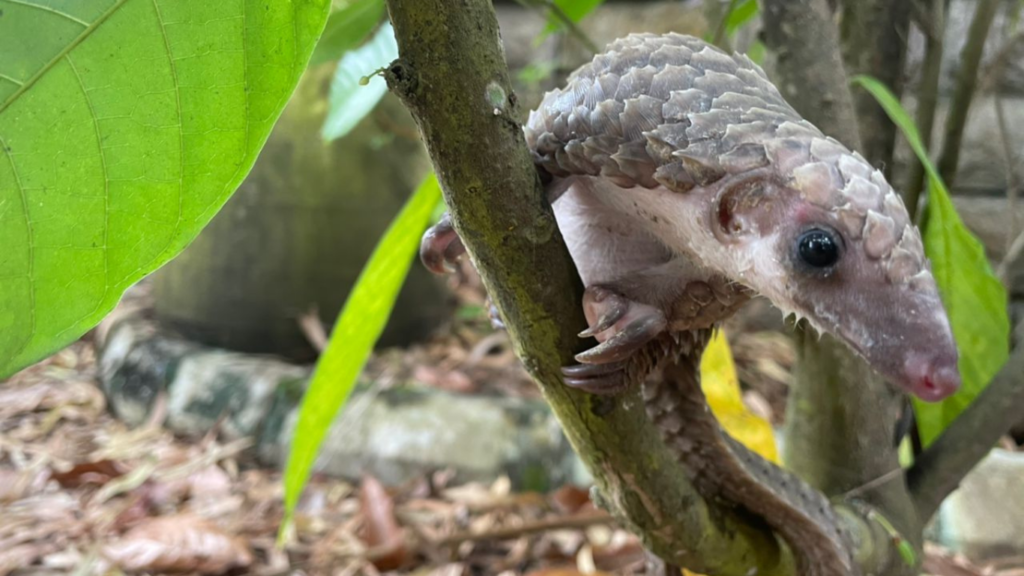
In August, we told you about the rescue of five baby pangolins whose mothers were slaughtered for the illegal bushmeat market in Lagos, Nigeria. A few weeks later, a mother and her newborn baby were also rescued. Sadly, the newborn died, but this meant that the Saint Mark’s Animal Hospital and Shelter team now had six pangolins’ lives in their hands. They turned to Animal Survival International (ASI) for help. Thanks to you, Saint Mark’s managed to save the lives of all six pangolins. Your donations ensured they were provided with constant medical attention, specialized milk formula and around-the-clock care. But the job is not over! We must now keep these babies safe as they are released into the wild. We need your help in keeping these six pangolins safe! The rescued pangolins are ready to be returned to the wild to ensure there will be new generations of these gentle creatures. But we need to help Saint Mark’s buy six GPS trackers, one for each pangolin. The trackers will allow the Saint Mark’s team to monitor their movements at all times – any unusual movement that indicates poachers may have caught them will be flagged and investigated. It is critical that we prevent them from becoming victims of the meat market in Nigeria. Your help could be the difference between life and death for these pangolins! We must urgently raise $4,300 (£3,250) to provide Saint Mark’s Animal Hospital and Shelter with the six GPS trackers. These pangolins will be EXTREMELY VULNERABLE once they are released. Nigeria is at the center of Africa’s illegal wildlife and bushmeat trade. Corruption and a lack of law enforcement have made it nearly impossible to shut down the illegal bushmeat market in Nigeria. This has resulted in hundreds of pangolins in desperate need of being rescued and rehabilitated. Pangolins are the most trafficked mammals in the world. Please donate today and help us save these six! Pangolin scales and meat are in high demand in Asia which has accelerated the species to become the most trafficked mammal in the world! Saint Mark’s is the ONLY animal rescue center in Nigeria’s capital city of Lagos. Each year, the number of rescued animals brought to Saint Mark’s is growing. Founder, Mark Ofua, has made it his mission to save as many wild animals as he can from the many illegal markets… But, for Mark to continue his mission, he needs our help to ensure the safety of the pangolins after they have been released into the wild. Please donate today so that our work to save these animals from being slaughtered and ending up in the illegal bushmeat market can continue.
EMERGENCY! In search of oil and gas, oil giant Shell plans to fire seismic blasts into a huge expanse of ocean. COUNTLESS MARINE CREATURES COULD DIE!
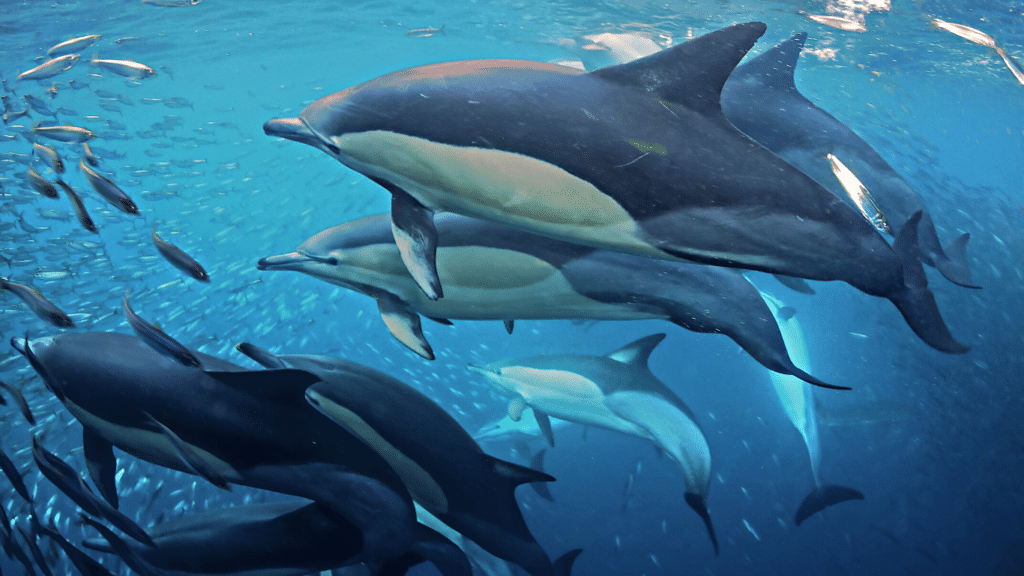
South Africa’s Wild Coast is vitally important to whales, dolphins and countless other marine life, and it’s under threat! Oil and gas giant Shell is about to start oil and gas exploration in the area – with potentially disastrous effects on the region’s marine life. Sea creatures face injury and possible death if we do not stop it. Please, help us take emergency court action and protect the Wild Coast! Shell is looking for oil and gas deposits deep beneath the ocean floor. A seismic vessel will drag a massive array of 48 air guns across more than 2,300 square miles (6,000 square kilometers) of ocean, firing powerful shockwaves every ten seconds, day and night, for FIVE MONTHS to produce images of any deposits. The impact on marine life will be devastating. We cannot allow this survey to go ahead! Seismic blasts can cause tissue damage, embolisms, hearing loss and even death! An enormous number of marine creatures depend on sound for their survival. Communicating, locating prey, social bonding, breeding, navigating and avoiding predators all depend on sound. But seismic booms reach over 200 decibels, which is louder than a rocket launch and could cause stress, injury and death in whales, dolphins, seals, fish and even small crabs and shellfish on the ocean floor. Distressed by the intense, ongoing noise, dolphin and whale calves can become separated from their mothers and starve to death. The noise from these blasts can travel over 2,500 miles (4,000 kilometers) and will happen every ten seconds for five months. The scale and intensity of the auditory onslaught is almost inconceivable. We cannot allow this to be the future of our oceans. Death, pollution and destruction in the pursuit of fossil fuels when we are in the age of renewable energy is unacceptable! We must do everything we can to stop this from happening! Please donate generously today. This could spell the end for large populations of ocean predators and mammals! Blasts from the air guns can kill massive clouds of zooplankton and krill – the building blocks of the ocean’s food chains. They have been recorded dying almost a mile away from air gun operations, and researchers have recorded their abundance dropping by two-thirds in seismic study areas! These are the primary food source of whales and many species of fish! If this continues, large populations of these creatures will simply no longer be viable. Studies have shown that some whales are so sensitive to noise that in frantic efforts to escape these air gun blasts, they surface too quickly and die of decompression sickness. We will do everything in our power to stop this from happening, but we can’t do it without you. Please, donate today.
Shell Oil Set to Cause Massive Marine Disaster in South Africa
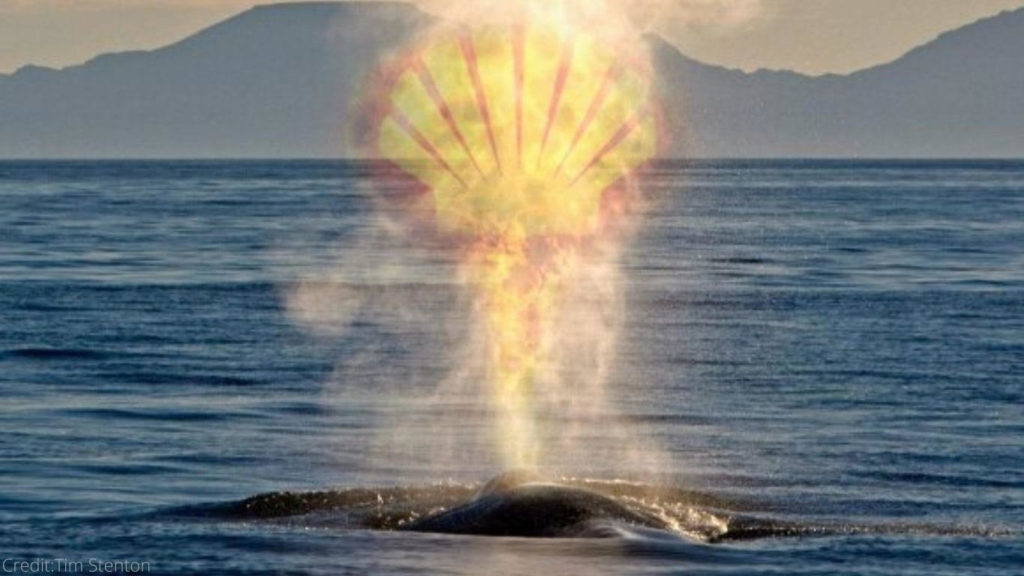
The Wild Coast in South Africa is set to face a massive assault on its entire marine ecosystem because Shell Oil, a subsidiary of the Royal Dutch Company, is about to conduct a five-month seismic survey that will have a devastating effect on millions of sea animals. A major concern for marine biologists is that this will take place during the annual migration of the whales in the area. The high noise levels are likely to cause whale calves to become separated from their mothers because they rely on sound waves for communication. There is no doubt of the catastrophic consequences of this action and it is causing outrage in South Africa, but Shell says it is following the letter of the law and that is that. The search will take place over the next five months. An area of 6,011 kilometers (3,735 miles) squared will be affected from Port St Johns to Morgans Bay. Extremely loud sound waves will be fired by 48 air-guns, towed by the Amazon Warrior, in the direction of the seabed, penetrating through 3 kilometers (1.86 miles) of water and 40 kilometers (24.85 miles) of the Earth’s crust. Seismic surveys are carried out to investigate sub-sea geological formations in the hope of detecting crude oil or gas. Each blast sent out by the air-guns measures over 200 decibels. These blasts emitted by the guns will be fired continuously every ten seconds, 24 hours a day, seven days a week, for five months. Kevin Cole, a natural scientist, said that it will cause tissue damage, temporary or permanent hearing loss, affect their growth and reproduction and often even causes immediate death. Adrienne West, chief campaigner of environmental charity Animal Survival International said that the horrendous consequences of the oil exploration have only just begun to sink into South Africans. “Shell has the blessing of the South Africa government for this exploration. It is almost beyond belief that any government could countenance the devastation this exploration will cause.” West called for an immediate ban on the exploration. Footage: Adapted from original video made by Mark Roach Image: Tom Stenton
EMERGENCY! Lily the pregnant pangolin has taken a SUDDEN TURN FOR THE WORSE!
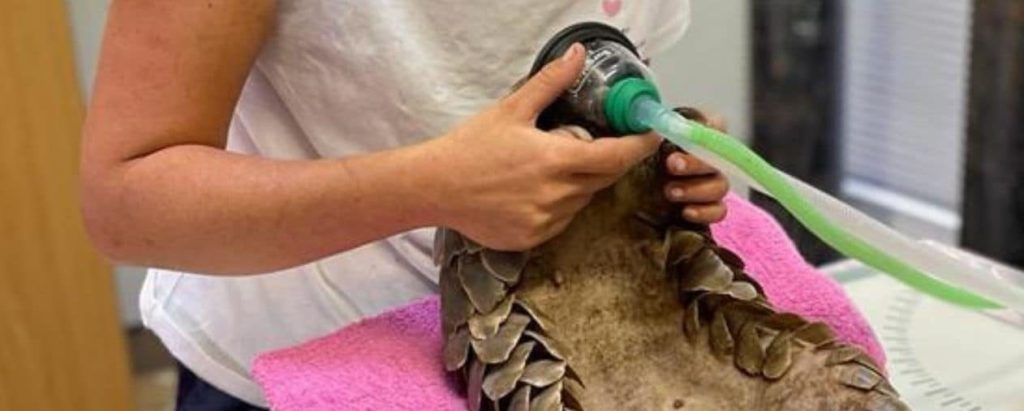
In October, we told you about Lily, the terribly emaciated pangolin who was rescued from traffickers in South Africa and miraculously turned out to be pregnant despite her horrific ordeal at the hands of callous criminals. We reached out to you for support, and you responded generously, allowing us to send critical funds to kick-start her intensive medical care and rehabilitation. But Lily has taken a sudden turn for the worse! Her red blood cell count has plummeted, and her only chance for survival is a blood transfusion! We cannot give up on Lily and her unborn baby now. Please, help us raise the $3,000 (£2,200) needed to give her and her baby a chance of survival! If we are to save Lily and her baby’s lives, two teams must work simultaneously to meet a tight deadline. A medical team will be at the wildlife hospital working to stabilize Lily’s condition so that the procedure can be successful, while a second team will have just hours to track another pangolin, draw a safe amount of life-saving blood for Lily and rush it back to the hospital! An undertaking like this has NEVER BEEN ATTEMPTED before! We MUST try to save Lily and her baby! Lily was rescued from traffickers in a shockingly emaciated state Lily and her baby are lucky that a large adult male pangolin was recently rehabilitated and released in a nearby protected area. Using his state-of-the-art GPS tracking tag, the team know exactly where to find him and is standing by to deploy. Rangers will track him on foot and an expert wildlife veterinarian will draw blood after confirming that it will not negatively impact his health or affect his strength. The blood will be packed into cold storage and rushed to the hospital to hopefully give Lily the strength she needs to recover and see her pregnancy through. Pangolins are the most trafficked mammal on earth. Every pangolin life is critical for their survival! Every single species of pangolin in Africa and Asia are at risk of extinction. Their scales are used widely in phony traditional “medicines” and their meat is served as an illegal delicacy in many countries. A thriving black market for these gentle creatures is driving them to extinction at a rate we have never seen before, and if we don’t do everything we can to save pangolin lives now, they will be wiped out in a matter of years. Lily has been fighting so hard to survive and to see her pregnancy through, and her team of caregivers continues to give her the best possible around-the-clock care. But pangolins are very delicate creatures and Lily won’t be able to recover from her dangerously low red blood cell count without our help. Please, donate now and help us rush emergency help to Lily and her baby!
EMERGENCY! UNPRECEDENTED DROUGHT CONTINUES! Elephants and other wildlife DYING FROM THIRST!
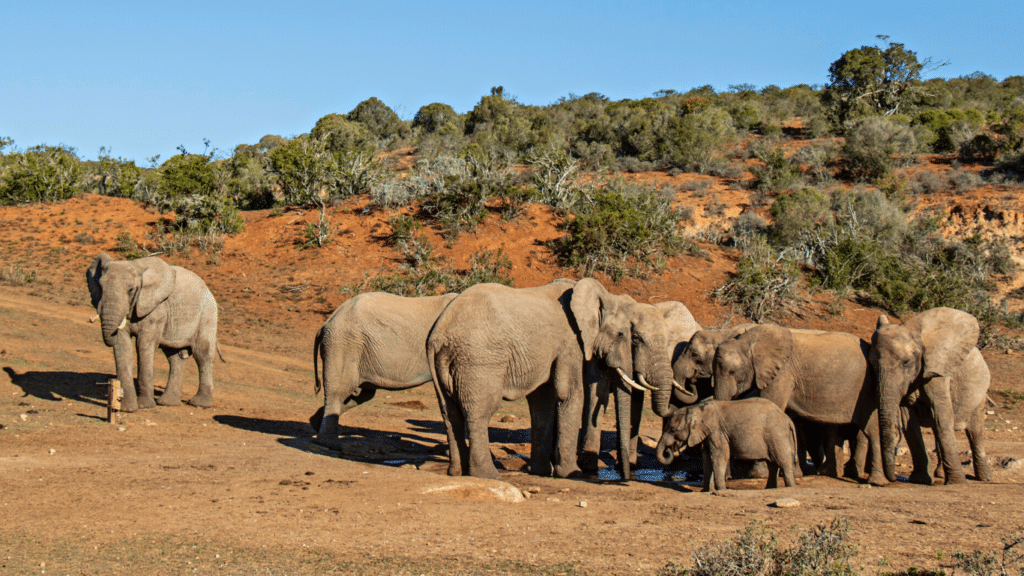
We’ve told you before about the frightening situation in South Africa’s Addo National Park, where the worst drought in 100 years is threatening the lives of thousands of animals. Only because of your donations have many of these animals survived this long. Your contributions allowed us to provide life-sustaining water in their dry waterholes. An awful situation is about to get worse because now is the time of year that animals start to give birth, as the summer rainy season should be setting in and breathing new life into the dry ground. But there is still no rain in sight – and already, hundreds of newborn animals are in need of water! We have promised to do everything we can to help. Please help us raise $8,000 (£5,800) to install two more state-of-the-art solar-powered water pumps to bring life-saving water to these animals in need. Without enough water, mother elephants won’t be able to feed their babies! An adult elephant drinks up to 53 gallons (200 liters) of water every day! With so many new baby elephants about to be born, it is critical that the mothers have enough water to drink for them to produce milk to feed their babies. Every baby elephant life lost is a crippling blow to elephants’ survival. Elephants are deeply emotional and social creatures; they mourn the loss of their loved ones, even visiting the site where they died many years later. We have seen dead baby elephants, and it is something we hope never to see again. Please, help us bring more water to the animals of Addo and help them survive until the rains finally come! Summer temperatures are beginning to soar, and the struggle for water gets worse with the biggest, strongest animals dominating waterholes. Summer temperatures in Addo National Park can reach 115 degrees Fahrenheit (46 degrees Celsius). No animal can survive these temperatures for long without enough water. The waterholes your support enabled us to fill are already crowded with thirsty animals traveling long distances to get a drop to drink. Sadly, baby animals stand little chance of fighting their way to the water’s edge to drink because the bigger, stronger animals drive them away. With your help, we can bring thousands more gallons of water every day to the animals in dire distress. Two additional waterholes will allow countless animals to survive until the rain does fall and the life-saving liquid flows again. Please, donate today so we can rush aid to these animals – help us raise the $8,000 (£5,800) we need to provide them with relief! Waterholes are drying up – and competition for a drink of water is fierce! The ASI team was on the ground in Addo just days ago and we saw the panic of thirst starting to set in. Skittish zebras and warthogs, which are not usually aggressive animals, are violently competing for the last drops of muddy water. We saw how a small herd of thirsty elephant mothers and their babies quickly drained a trough of water we filled, down to the last drop and searched for more. It is critical that we get these animals water. Please donate now so that we can ensure these baby animals survive!
URGENT! We have just ONE DAY to save 6 giraffes, 8 zebras and 50 wildebeest from SENSELESS SLAUGHTER!
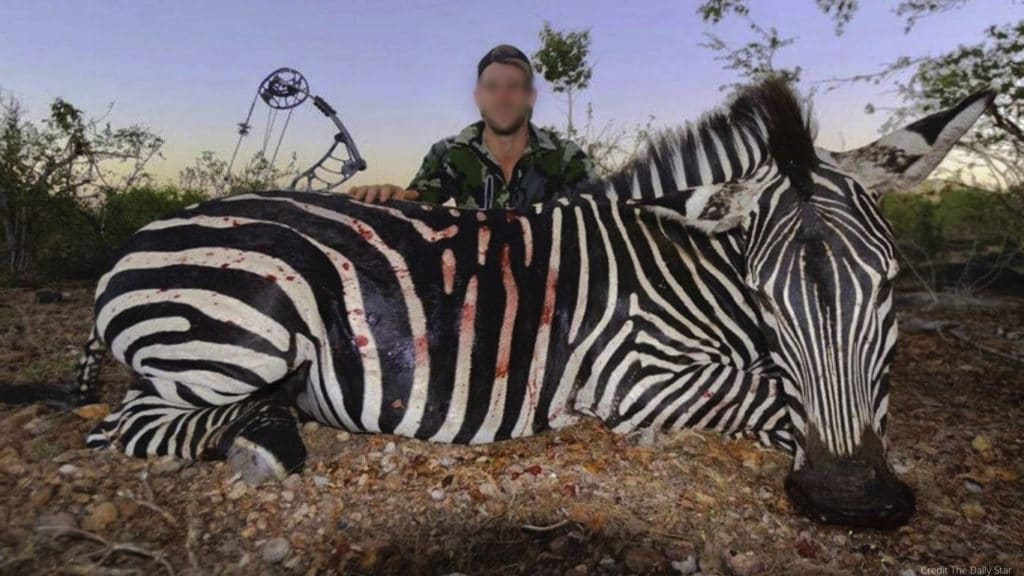
In South Africa’s Plettenberg Bay, 64 wild animals are about to be slaughtered to make room for a commercial macadamia farm! But with your help, we can rescue them from this horrific fate and relocate them to safe reserves where they can live their lives out of harm’s way. We have a plan to save them all – but we URGENTLY need your help! Six giraffes, eight zebras and 50 blue wildebeest (gnus) have been peacefully living on this game farm their entire lives. But now, the owner plans to have them killed to make space for farming activities. We cannot sit back and allow this to happen! Just four days ago we asked you to help us raise $7,000 (£5,100) to safely relocate these creatures to nearby reserves and you responded generously. But we learnt that a major donor has dropped out. This means we need to raise an additional $15,000 (£11,000) to get these animals to safety! Please, if you can, donate to give these animals a future. All over Africa, wild animals are being wiped out. Giraffes are particularly in danger. Populations of these graceful, gentle creatures have plummeted by 40 percent, yet with utter callousness these six are to be shot for meat. Please help stop this slaughter. We must RUSH wildlife veterinarians and expert wildlife capture and transport teams to their home and carefully dart the skittish animals and transport them to two nearby reserves that have offered to take them in. These creatures do not deserve to be killed just to make room for commercial farming! Wildebeest are such social animals that the females in a herd often all give birth at the same time and zebras are an essential part of the African landscape and ecosystems. We cannot let them all die. WE HAVE JUST ONE DAY to get these animals to safety! Hunters were already gathering at the gates! Our partner on the ground, the Karoo Donkey Sanctuary intervened just as a group of hunters were due to arrive at the gates – ready to shoot all 64 animals. We managed to negotiate with the owner of the property and get us five days to remove the animals. We have ONE day left and if we fail, the hunters will be let loose, and there will be a massacre. Wildlife capture and translocation is a costly and delicate operation. We will need a team of highly qualified wildlife veterinarians, darting equipment and medications, helicopters, expert capture and transport teams, and a fleet of specialised trucks. But these animals are worth it, and we know that with your help, we can get them to safety. Please donate now! These are sentient, majestic and social creatures of the African bushveld, closely bonded in herds. It is unthinkable that they could all be butchered in a killing frenzy! We have a chance to save them, to keep them together and let them live wild and free as they’re meant to. Please, donate now and help us get these animals to safety! The clock is ticking! We must get these animals to safety before it’s too late! ONE DAY is all we have to rescue these animals! With your help, we will be able to save them. Please help us raise the additional $15,000 (£11,000) urgently needed to send wildlife veterinarians and expert wildlife capture teams to Plettenberg Bay and prevent this senseless slaughter.
On the verge of death! Starved and wounded pregnant pangolin in need of critical medical care!
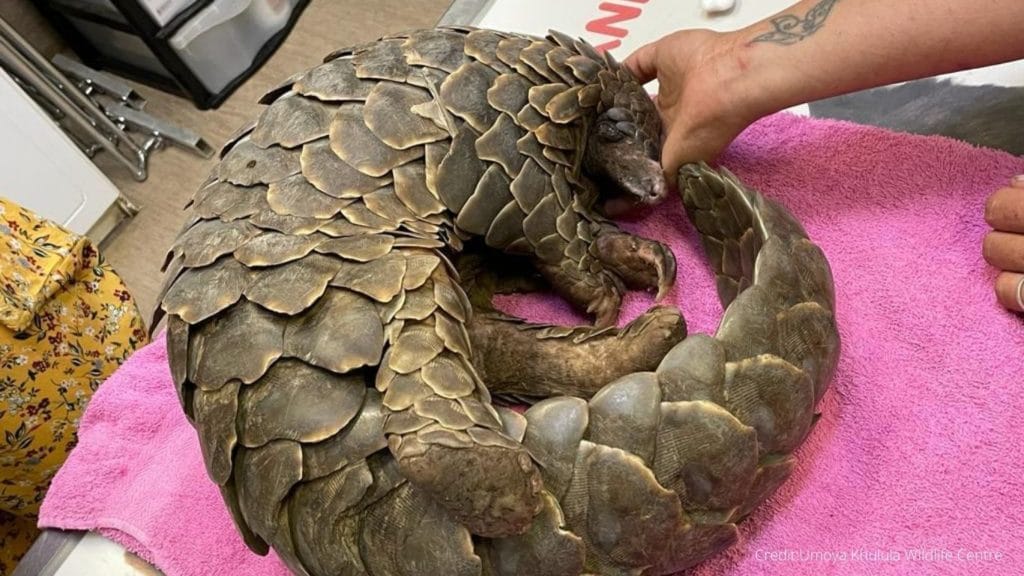
In a daring undercover sting operation in South Africa, a pangolin on the brink of death was rescued from traffickers. The most trafficked mammals in the world, pangolins are prized in Asian restaurants as a delicacy and their scales are used in phony Chinese ‘medicines’. Pangolins are racing towards extinction, and every single life is important for their survival. The pangolin had been badly injured by her captors and was terribly emaciated. She was rushed to a veterinary center where the team made a shocking discovery – she’s pregnant! But now, both her and her baby’s lives are at risk. We urgently need your help to provide critical medical care to this pregnant pangolin if she is to survive these crucial weeks and keep her baby. Starved and wounded by her captors, we must urgently raise $6,500 (£4,700) for costly medical treatment and around-the-clock care for this pangolin and her baby to survive! It is nothing short of miraculous that the stress of her ordeal didn’t cause her pregnancy to fail. Our partner, Umoya Khulula, informed us that the pangolin, named Lily, is in the worst condition they have ever seen. Tied up and stuffed into a backpack for at least 12 days with no food or water, she is critically underweight and her condition is very fragile. Her captors ripped off fistfuls of her protective scales, causing immense pain and leaving her delicate skin bleeding and exposed. Although Lily is now safely in the hands of a committed team of caregivers in an undisclosed and closely guarded location, she is not out of the woods yet. She needs to be carefully rehydrated on a drip, anesthetized and fed through a tube to receive critical nutrients and monitored 24-hours a day for signs of pneumonia, which is a common but deadly side effect of stress in pangolins. There are two lives at stake! Please help us rush funds to provide intensive medical treatment and around-the-clock care! This gentle creature is in desperate need of our help. We have pledged to provide support, but, we need your help to do so. Please help us raise the $6,500 (£4,700) so urgently needed. Your donation will be put to immediate use for intensive medical treatment and around-the-clock care. Each one of these animals is vital to the survival of their species, and we must do everything within our power to ensure that Lily and her baby survive and return to a protected area. If we do not save every pangolin we can, these rare and unique creatures could become extinct in our lifetime. We are working towards a long-term solution to the worldwide illegal trade in pangolins for traditional ‘medicine’ and meat. But in the meantime, rescuing individual pangolins from traffickers, rehabilitating and releasing them into protected areas with high-tech tracking equipment, is our best course of action to try to prevent their extinction. Lily’s captor has been arrested and faces a lengthy prison sentence, but it is now a race against time to save his victim and her unborn baby. Please, can we count on your support? Rescuing a pangolin from traffickers and securing arrests is a big success, but this is only the start. These criminals have no regard for the welfare of the captured pangolins, who are often close to death when they are confiscated. As a result, it becomes a race against time to assess the animal and start emergency treatment. In Lily’s case, the team must provide the emergency care she needs, but also be very careful to keep her stress levels down and her treatment as non-invasive as possible for the sake of her pregnancy. Any additional stress could cause her body to abort the baby. Lily’s medical costs are already skyrocketing, but she and her baby are worth it. Please donate to help us secure their survival. Lily has a long road to recovery ahead of her, and the team must work harder than ever before to ensure that she is healthy enough to be released and give birth in the wild. She will need to be stabilized as soon as possible so that she can begin her rehabilitation and build up her strength. Thankfully, she has dedicated caregivers who are committed to giving her the best possible care. But they cannot do it without our support. Please, help us save Lily and her baby. They have a chance of survival, but only with our help.
EMERGENCY RESCUE OPERATION! Baby elephant has wire snare wound tightly around his leg – cutting off blood-flow. WE CAN’T LET HIM DIE!
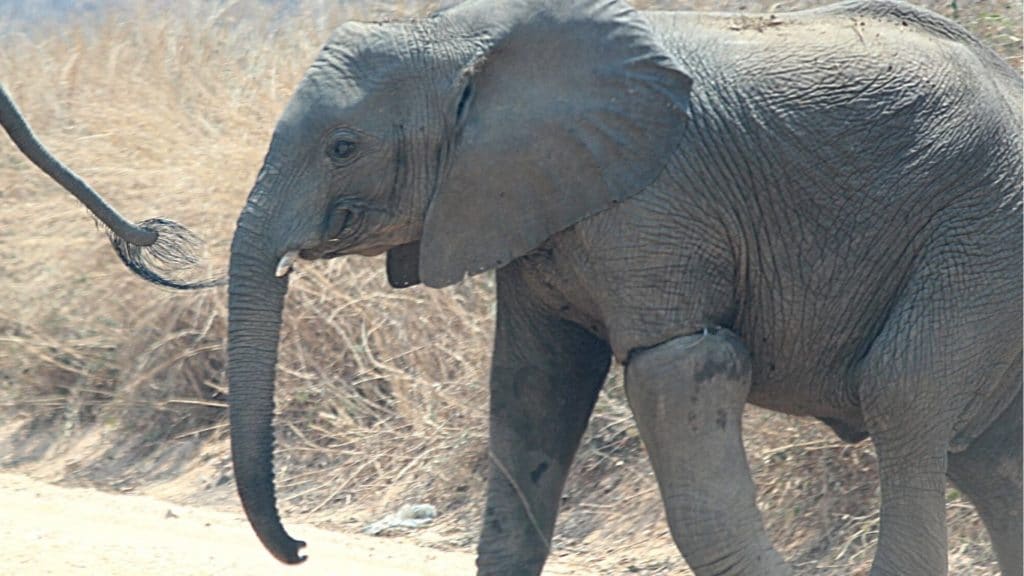
A baby elephant in Zimbabwe’s Kariba region urgently needs your help – and the clock is ticking! The Zimbabwe National Parks Authority has been alerted to a baby elephant with a wire snare wound tightly around the top of his leg. Now, together with the Kariba Animal Welfare Fund Trust (KAWFT), we are working as quickly as possible to help arrange the logistics, specialized equipment and personnel for an emergency rescue operation. We are in a race against time to save a baby elephant’s life! Every step he takes is tightening the device and putting him in greater danger of death. We must urgently raise $7,000 (£5,000) to charter a helicopter and buy medical supplies to dart the baby elephant and remove the snare before it’s too late! The wound is already dangerously swollen, and vets fear his time is running out! The team at KAWFT saw this baby elephant just five days ago, with no sign of a snare. That means the damage is worsening dangerously fast, and he will soon lose the use of his leg. It is critical that we relieve the swelling and return blood-flow to the leg as soon as possible. Please, donate now so that we can rush life-saving assistance to this injured animal. It will be a dangerous rescue operation, but we are committed to saving this baby elephant! This elephant herd is well known by KAWFT, and the calf’s mother is notoriously unpredictable. We anticipate that she will protect her baby fiercely from human interference. This means the expert team of Zimbabwe National Park rangers, veterinarians and a highly trained pilot must execute the rescue with military precision and with the highest level of care. The adult elephants are already on edge because the calf is struggling. But they will need to be kept at a safe distance from the rescue team and the injured calf once he has been successfully darted from the air. Again, we are in a race against time to raise $7,000 (£5,000) to charter a helicopter and purchase medication to save this baby elephant. The team on the ground is busy preparing so they can be ready to mobilize at a moment’s notice. Another team of rangers are keeping as close as possible to the calf, while the veterinarians, who are donating their time and expertise to save the life of this baby elephant, are standing by. All that remains is to secure the helicopter and to purchase the immobilization drugs and medical supplies to dart and treat the injured calf. Please, donate right away so that we can get the team in the air! This baby elephant is an example of why ASI is so committed to ending the use of snares! Snares are horrific devices that torture and kill animals indiscriminately. No animal is safe from their cruelty. This calf is the second baby from the same mother to be caught in a snare. ASI cannot stand by and let this baby elephant suffer and die because of a snare. We have promised to send emergency help, but we cannot do it without you. Snares function like a noose – tightening with pressure! The wire where the snare was anchored to a bush or tree is now catching under the calf’s foot with each step, causing it to become tighter and tighter. We cannot imagine the pain and stress this little elephant is experiencing. Please help us end this anguish and save his life.
Millions of rare and endangered animals, including jaguars and giant anteaters, are caught in a RAGING INFERNO!
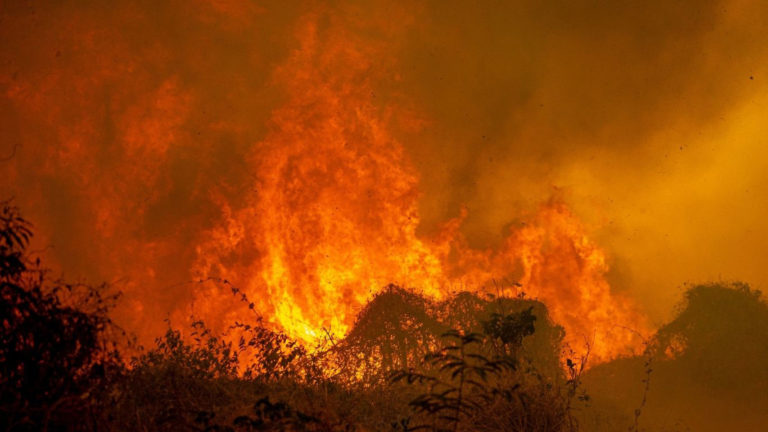
The world’s largest tropical wetland, the Pantanal in Brazil, is burning – again! Millions of rare and endangered animals including jaguars, giant anteaters and maned wolves, face death if we don’t act now to contain the blaze and save every animal we can. Please help us raise funds to provide emergency fire fighting equipment and rescue and treat animals injured by the fire. 17 MILLION animals DIED in the 2020 Pantanal fires! We cannot let this happen again! The Pantanal is one of the most biodiverse and unspoiled places left in the world. Almost 5,000 species rely on this ecosystem for survival. It is home to the world’s largest concentration of jaguars, who have already lost nearly half their native range worldwide. Last year, unprecedented wildfires, driven by the worst drought in half a century, destroyed 38% of the Pantanal, killing an estimated 17 million animals in a matter of weeks! We cannot allow this to happen again! The fires have now spread into the protected areas! Thousands of endangered animals face death if we don’t act now! More than 1,000 wildfires are already destroying the critically sensitive Pantanal and the number is growing by the hour. In just five days, 17,000 hectares (42,000 acres) and untold numbers of animals have already been lost. We have promised to rush emergency funding to the Pantanal Relief Fund, but we need your help. Please, donate now to save the animals of the Pantanal. An emergency animal treatment center is being set up, and volunteer veterinarians are standing by to rescue as many animals as they can. But, without funds for critical supplies and fuel, their work will be limited, and many lives will be lost. If these fires are left to burn, the Pantanal may never recover! It is vital that fire breaks are created to save as much of this habitat as we can. Tens of millions of animals rely on this ecosystem, but if we cannot save critical conservation areas, these animals could be lost forever. The Pantanal’s rainy season should start in October, but the worst drought in over 50 years means that rainfall could come as late as December. Critical zones that need to support the surviving animals until the rains come are already burning. The Pantanal Relief Fund need our support immediately if they are to have any chance of success! This could become the worst ecological disaster of our lifetime! We must do everything within our power to bring it to an end before it is too late! The Pantanal is one of the world’s most effective carbon sinks, helping to fight climate change and providing a refuge for thousands of endangered animals. Larger than England, the loss of this utopia could speed up global warming and the extinctions of hundreds of threatened species. Animal Survival International was created to prevent exactly this and we will do everything we can, but we desperately need your help. Please donate towards the emergency relief efforts today.
LIFE or DEATH struggle for 47 endangered sea turtle BABIES who ate plastic they thought was food!
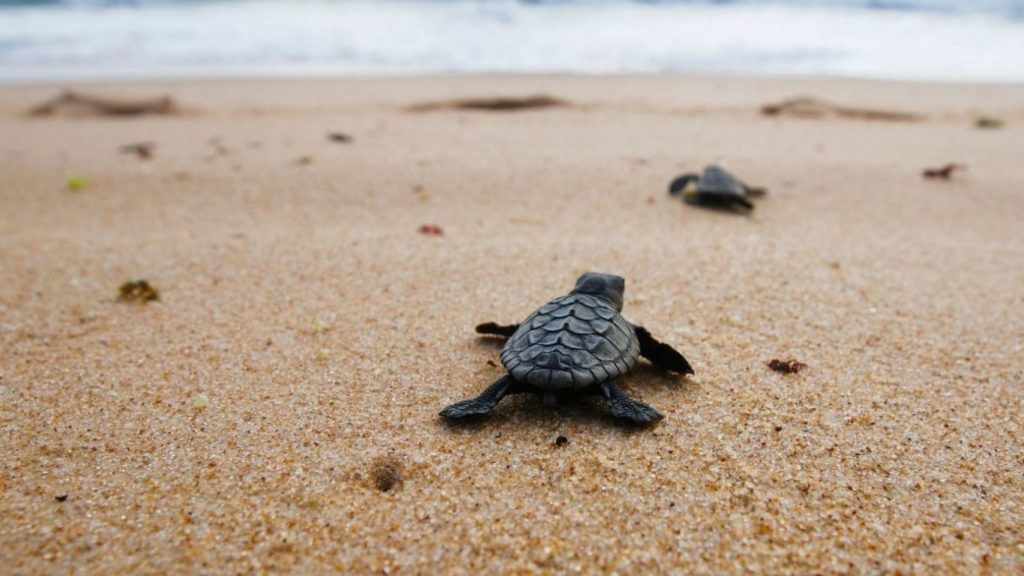
Our oceans have become garbage dumps! There is an estimated 12.7 million tons of plastic in the ocean – that’s the equivalent of 310,000 jumbo jets! Mistaking it for food, marine animals, including endangered sea turtles, eat this plastic which causes internal blockages, infections and eventually death. Right now, 47 rescued turtle hatchlings in Cape Town, South Africa, need intense and expensive rehabilitation after ingesting more than 500 pieces of plastic between them. These creatures have a chance of recovering and being released back into the ocean, but we need your help. Please, will you donate today to help us heal these fragile baby turtles? Recent estimates have shown us that there are 6.5 million sea turtles left in the world… but, plastic waste in the ocean is threatening their survival across the globe. From day one, the endangered loggerhead and leatherback turtle hatchlings, born on the northern coast of South Africa, have the odds stacked against them. Only two in every thousand will survive the arduous journey as they are swept down the coastline to the chilly waters of the southern coast, where many are washed ashore suffering from dehydration and hypothermia. But now, the lives of these fragile babies are even more at risk because of the amount of plastic they swallow along the way. Tiny bits of plastics, known as microplastics, which float on the water surface, are mistaken by baby turtles as food. When too many of these microplastics are ingested, it causes blockages, exhaustion, infections and death. One baby turtle died after ingesting 121 pieces of plastic in its short life. We have a chance to save the rest! Our partner, the Two Oceans Aquarium Education Foundation in Cape Town, works on the ground to rescue stranded turtle hatchlings and nurse them to health until they are ready to be released back into the ocean. ASI has pledged to help them. Already, the Two Oceans Foundation has rescued 60 stranded hatchlings this year, of which 70% had plastic inside of them. In one turtle hatchling, the team discovered 121 pieces of plastic! Of course, he had no chance of survival and died shortly after being rescued. Sadly, 13 of the rescued turtle hatchlings could not be saved, but the remaining 47 have a chance. We have promised to provide support, but we need your help to do so. Please donate generously today. To set an example and raise awareness last month, we called on our supporters to help us clean Sunset Beach in Cape Town – a well-known hotspot for stranded turtle hatchlings. Thanks to your help, we were able to team up with The Beach Co-op and the Two Oceans Foundation to organize an intensive beach clean-up that removed thousands of pieces of plastic, mainly microplastics, in just a few hours! Every piece of plastic picked up is one less in the stomach of a baby turtle! It costs just $2 (£1.50) a day to raise and rehabilitate one baby turtle, and it can take up to a year before the turtle is ready to be released into the wild. That is $730 (£527) per turtle. With only two in every 1,000 turtle hatchlings surviving to maturity, each one of these saved hatchlings is vital to their species. That’s why we need to raise as much as we can to help as many baby turtles survive as possible. Right now, the 47 rescued hatchlings are being cared for at the Foundation’s rehabilitation center. Each one needs constant care, food and monitoring in a high-tech saltwater life-support system if they are to survive long enough to be released back into the ocean. Will you be a part of ensuring their recovery? Please help us to save this fragile species, by donating right now.
Aardvark isn’t just the first word in the dictionary – it’s a fascinating creature UNDER THREAT!
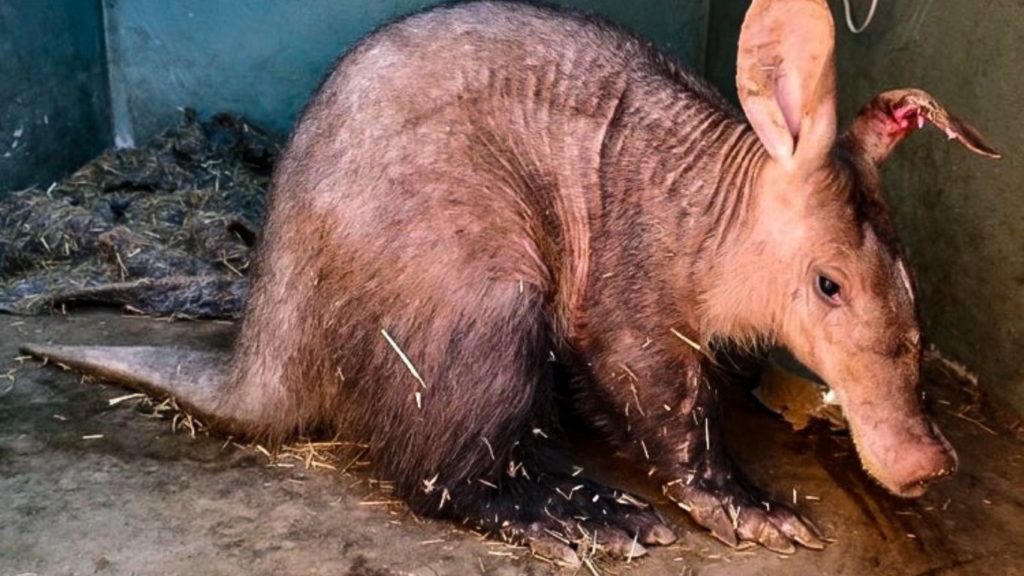
Aardvarks are shy animals that very little is known about. We don’t even know how many aardvarks exist in Africa. What we do know is that one is in desperate need of medical care. In South Africa’s Lowveld region, an aardvark, who has earned the nickname Venus, is fighting for her life. After being hit by a car and enduring life-threatening injuries, she faces a long and uncertain journey. She needs our help if she is to have a chance at recovery and a return to life in the wild. We must urgently raise $6,000 (£4,400) for specialized recovery food, medication and medical treatment. We have promised to provide support, but we cannot do it without you. Please help us by making a donation now. Every single aardvark saved is important to the species. Few people ever get the opportunity to see one of these elusive creatures. Researchers struggle to learn anything about their secretive behavior, partly because their wide necks and slim heads make it impossible to attach a research collar. We have promised to do everything we can to help Venus, who is recovering at the Umoya Khulula Wildlife Rehabilitation Centre near the town of Tzaneen. But saving Venus could yield invaluable insights into aardvark behavior and how best to protect them. Climate change could spell the end for aardvarks and many of the animals that rely on them – before we even learn how many exist. We have no idea how many of these creatures are left on the African continent, but we do know that threats to their survival are growing. With climate change affecting weather patterns and temperatures, ant and termite colonies are forced to move deeper and deeper underground to maintain the temperatures they need to survive. But as they move deeper, they become harder for aardvarks to smell, hear and reach. The interconnectedness of nature never ceases to amaze us, because should aardvarks disappear in an area, it will have negative consequences for many other creatures. Aardvarks will dig 20 or more dens throughout their territory. These dens are used by multiple other creatures once an aardvark has moved on. Porcupines, meerkats, mongooses, bat-eared foxes, warthogs, hyenas, lizards, birds and even some species of bats and snakes rely on aardvarks as the landscape architects who create safe places for them to sleep and raise their young. Without aardvarks, many of these animals will begin to disappear too. We must do our utmost to ensure the survival of every possible aardvark. With civil unrest in South Africa disrupting supply, it is critical that we act immediately to import the specialized food she needs to survive! It is estimated that an adult aardvark in the wild needs to eat roughly 50,000 ants per day! While Venus is recovering, her immune system is dangerously weak, and she needs costly, highly specialized food in addition to antibiotics, anti-inflammatory and pain medication, probiotics and antiseptic wound treatment supplies. With South Africa currently in the throes of devastating civil unrest, the supply of goods into the country, including the specialized prescription food this aardvark needs to survive has been interrupted – and Umoya Khulula’s reserves are running critically low. We must urgently import the specialized food she needs for her recovery. The risk of deadly infection still looms. Time is of the essence! It is truly miraculous that Venus survived long enough to be rescued, and that both her eye and vision could be saved. But there is a long road ahead, So please make a donation right now so we can do everything we can to ensure Venus makes it back into the wild.
How we are helping RIGHT NOW: May 2021
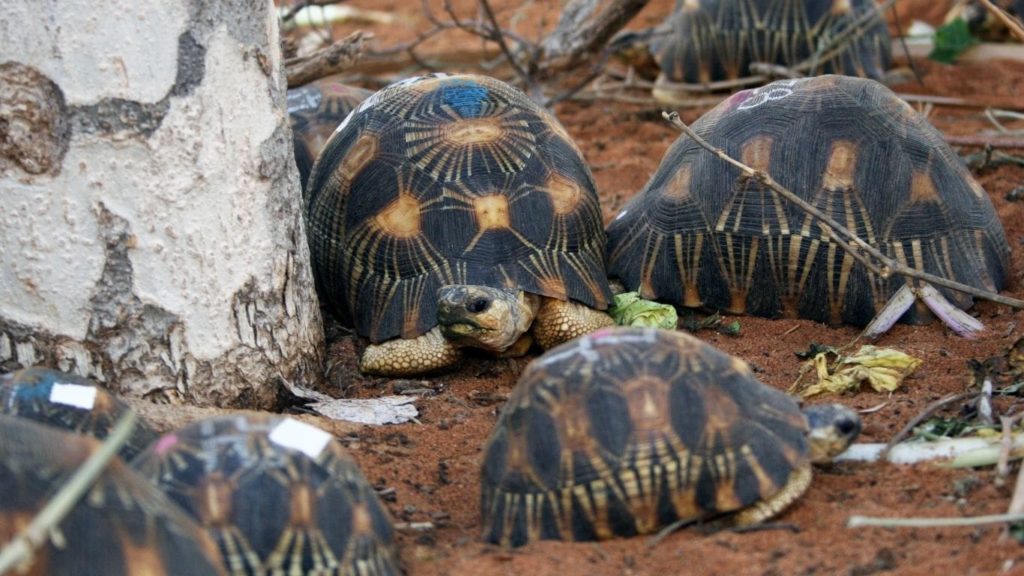
The Political Animal Lobby (PAL) exists to be a voice for animals and the planet. We tackle pressing issues threatening animals around the world. Over the past month, PAL has provided water to drought-stricken elephants in Namibia; kept up the fight to ban snares in the UK; helped a legal battle to save toads in South Africa; given emergency aid to critically endangered tortoises in Madagascar and supported an anti-poaching team fighting ivory poachers in Zimbabwe. But we couldn’t have done it without our supporters. We are deeply grateful to all our donors who make this work possible. Take a look at how your donations are making a difference to animals worldwide right now. United Kingdom Supporting a total ban on the use of wire snares In the United Kingdom (UK), snaring is still legal! We told you last month how this causes shocking suffering and kills up to 1.7 million animals every single year. Incredibly, it is still encouraged by the UK government’s Department for Environment, Food and Rural Affairs (DEFRA) and supported by the British Veterinary Association (BVA)! Millions of innocent animals are left in such horrific pain that they resort to gnawing off their limbs to free themselves. PAL plans to continue fighting against this until it is stopped. Thanks to your donations, we are supporting the National Anti Snaring Campaign (NASC) in convincing the UK government to ban the use of snares outright. We’ll keep you updated on NASC’s progress. South Africa Court action to fight for the survival of western leopard toads In Cape Town, the beautiful and endangered western leopard toad is under severe threat, thanks to plans to build a road through one of its last remaining breeding grounds. These endangered toads are clinging to survival in just a few small areas of South Africa’s Western Cape and only an estimated 320 are left. But their habitat is under serious threat. We support the Noordhoek Environmental Action Group (NEAG) which is taking the toad’s fight to court, seeking to prevent the City of Cape Town from moving forward with the road development. NEAG’s lawyers say the toads stand a good chance of winning. We will keep you posted on the outcomes. Namibia Providing water for one of the last remaining free-roaming elephant herds We’ve secured water for one of the last free-roaming elephant herds in Namibia! Ongoing drought put these vulnerable elephants at risk, forcing them to wander from the safety of a 20,000-acre (8,000-hectare) preservation area in search of water, into places where they are shot at. But now, thanks to our supporters’ help, we’ve managed to drill and strike underground water, which tested safe for elephant consumption. We’ve also erected two water tanks to store the water which is then pumped into a waterhole made easily accessible for the elephants and their babies. Our partners in Namibia have been sending us regular reports that the elephants are visiting the waterhole, which means they are safe and now have a chance of surviving this drought. Madagascar Saving endangered radiated tortoises In Madagascar, radiated tortoises are racing towards extinction. These beautiful tortoises with unique star-patterned shells are highly sought after for the illegal pet trade. Our partner, Turtle Survival Alliance Madagascar (TSA Madagascar), called on us for help when they discovered 800 radiated tortoises being smuggled in shocking conditions and destined for the illegal pet market. These helpless creatures were on the brink of death when the TSA Madagascar team discovered them. But thanks to the help of our supporters, TSA Madagascar will be able to give them the emergency treatment they need to survive. It will take a few months of rehabilitation before these precious tortoises can be released back into the wild and breed. But we are confident that, with your donations, TSA Madagascar will be able to keep them alive until they are ready. With so few left in the wild, saving these 800 radiated tortoises will give the entire species new hope. Zimbabwe Helping an anti-poaching team protect the rare Lake Elephants Zimbabwe’s iconic lake elephants in the Sebungwe region are falling victim to a poaching epidemic. Up to 11,000 of these elephants have been brutally killed for their ivory in the last 15 years. Only 3,500 remain, living in a 580 square mile (1,500 square kilometer) area surrounded by the vast Lake Kariba and hunting areas, both offering ample opportunity for poachers to move in and out. A small anti-poaching team, the Bumi Hills Anti-Poaching Unit (BHAPU), is desperately trying to protect them, but they are running dangerously low on critical supplies and equipment. We visited the area and were shocked by how vulnerable these elephants have become. We asked our supporters to help us raise funds for essential supplies like fuel for their patrol vehicle and boat, rations, and equipment like boots and radios, so that BHAPU can keep fighting for the elephants. Thanks to your generosity, BHAPU will be able to buy critical equipment and supplies and continue its vital work to protect these majestic creatures. Once again, we are deeply grateful for your generous donations and support in raising awareness of these critical issues. You make it possible for us to make a difference, protecting wildlife and wild spaces across the globe.
It is a poaching epidemic! 75% of lake elephants have already been slain for their tusks!
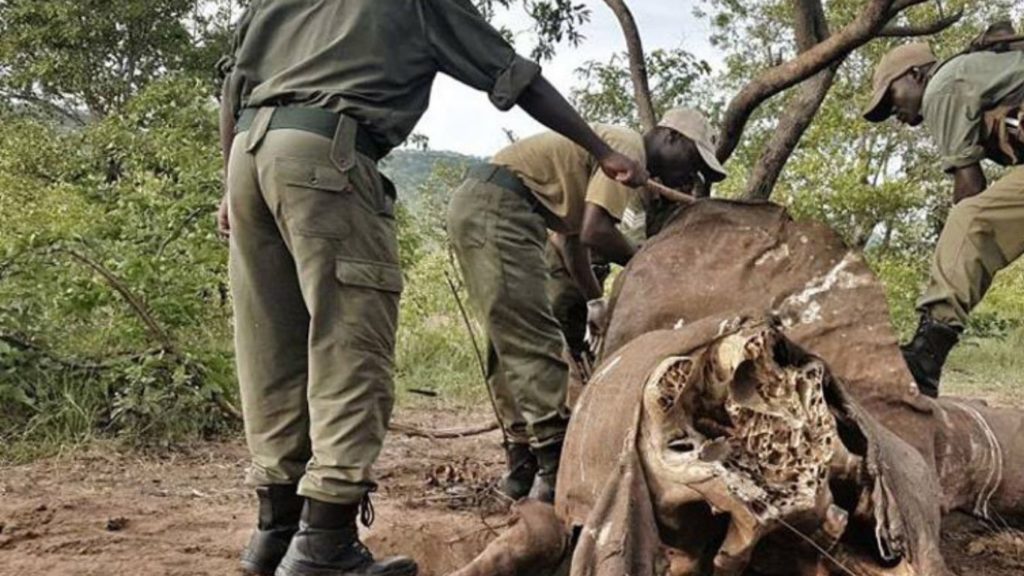
Elephants in Africa are literally a dying breed. The very real threat of extinction is staring them in the face right now. PAL exists to prevent this tragedy. Today, we want to tell you how YOU can protect the last lake elephants of Zimbabwe’s Sebungwe region. These iconic elephants are victims of a poaching epidemic. A small anti-poaching team, the Bumi Hills Anti-Poaching Unit (BHAPU), fights to protect the last of them, day and night, purely for the love of elephants. But, because of COVID-19, they have lost their regular funding and are in desperate need of essential equipment: fuel for their vehicles, rations, boots and radios. If we can’t help them, then the poaching syndicates that are mercilessly killing these iconic creatures will be free to slaughter every last one of these elephants. The small team of expertly trained, dedicated scouts patrol the area knowing that they could be attacked by poachers at any moment. It is so unjust that these brave souls, who are on the front-line of an all-out war on elephants, are so under-funded that when their boots wear out and the radios they use to call for help break, they cannot even replace them. We promised to ask our supporters to give the lake elephants a chance of survival, but we need your help! Please, if you can, donate generously today. These elephants spend the hot African days in the shallows of Lake Kariba, drinking, bathing and bonding with one another. But without your help, sadly, beautiful scenes like this could soon be nothing more than a memory. Poachers have already slaughtered 75% of their population – that’s 11,000 elephants brutally killed for their ivory in the last 15 years (that’s two a day!). Only 3,500 remain. Without your help, they will disappear entirely in less than five years. What we saw in Zimbabwe was shocking and utterly heart-breaking! When BHAPU reached out to PAL for assistance, we knew there was no time to waste. Our team rushed to Zimbabwe to assess the situation, but even we weren’t prepared for what we saw. These majestic creatures were terrified of us. They have been so intensely persecuted by humans that they quickly retreated into the bush at the sight of us. It was utterly heart-breaking to watch a mother elephant try to hide her young calf from us, who were only there to help. These last lake elephants live in a 580 square mile (1,500 square kilometer) area that includes part of Lake Kariba, and hunting areas. This offers limitless opportunities for poachers to move in and out. On the lake, poachers disguise themselves in small boats as local fishermen, hiding rifles and machetes they then use to kill elephants and hack off their tusks before disappearing across the lake with their haul of blood-soaked ivory. The last lake elephants need our help now, before it is too late Elephants are highly intelligent, emotional beings that form strong bonds with each other. They protect each other fiercely and mourn the deaths of their kin for months, even years. We saw for ourselves the sprawling graveyard that these elephants come to visit, rolling over the bones of their loved ones and sometimes even carrying bones away with them. We can’t stand by and see elephants killed for lack of a radio and pair of boots. At BHAPU’s small base in the hills overlooking the lake, we saw what is at stake right now. A family of elephants cautiously moved out of the cover of dense bush towards the cool refreshing water in the heat of the afternoon. Two calves played in the water while their mothers drank watchfully. Behind them, fishing boats dotted the horizon. Any one of them could be poachers in disguise. We must ensure that the lake elephants’ guardians have the fuel, rations, boots and radios they desperately need to protect them. Please, donate generously today!
How we are helping RIGHT NOW: April 2021
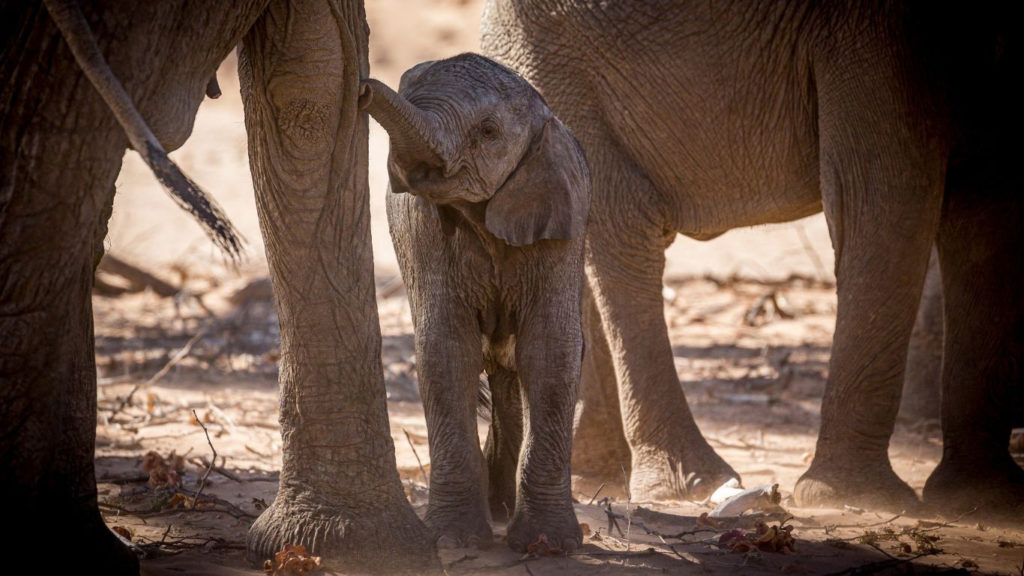
Animals around the globe are in extraordinary peril. From the rampant illegal trade in wildlife, poaching, habitat loss and poor enforcement of wildlife legislation, thousands of species are becoming critically endangered. We need to take heed before it’s too late. If we continue to destroy biodiversity, no life on Earth can survive. The Animal Survival International exists to be a voice for animals and the planet. We tackle pressing issues threatening animals. We are deeply grateful to our supporters who make our work possible. Take a look at our most recent projects and how your donations are making a difference to animals worldwide. Namibia Securing water for one of the last remaining free-roaming elephant herds A family of elephants is at risk from the ongoing drought in the northwest of Namibia. If these 20 elephants and their babies wander from their home range on a 20,000-acre (8,000-hectare) preservation area in search of water, they face being shot at. All the other land in the area is used by hunters and the elephants would be at risk of death or injury. Thanks to our supporters’ swift response to donate funds, we were able to act quickly. ASI is paying for new waterholes to be established by drilling to reach deep underground water sources. After two attempts, we struck water. We are now waiting for test results to make sure that the water is safe for the elephants to drink. If it proves to be contaminated, we have a drilling team standing by to redrill. We will not give up on these elephants. Stay tuned! United Kingdom Supporting a total ban on the use of wire snares Up to 1.7 million animals are brutally killed by snares every year in the UK. Animals endure untold anguish and pain when they are caught in snares. Usually set to catch foxes and rabbits, other wild animals are also caught, including wild cats, hedgehogs, badgers and red squirrels. In some horrific cases, animals have gnawed off their own limbs to free themselves. But despite this horror, the UK’s Department for Environment, Food and Rural Affairs (DEFRA) and the British Veterinary Association (BVA) condone and support snaring! – even though there are more humane and effective solutions available to keep livestock and crops safe from rabbits and foxes. The National Anti Snaring Campaign (NASC) in the UK is fighting to have snaring completely banned. They called on ASI to help them to secure a total ban on the sale and use of snares. Your generous donations allowed us to give NASC £2,500 ($3,500) to continue their fight to bring about an outright ban on wire snares. South Africa Court action to fight for the survival of western leopard toads A plan to build a road through one of their last remaining breeding grounds is threatening the survival of the beautiful endangered western leopard toad in Cape Town. There could be as few as 360 toads left! The Noordhoek Environmental Action Group (NEAG) called on ASI to help its legal battle to prevent Cape Town authorities from building the road. And thanks to our supporters, NEAG may just win a rare, but critical, victory for the animals. Zimbabwe Saving painted dogs in Hwange National Park In Hwange National Park in Zimbabwe, some of the world’s last remaining painted dogs are facing a new threat. With COVID-19 taking its toll on already poor communities, thousands of illegal snares set to catch antelope for food, are being scattered around the park. Each snare means horrific injury and potential death to the beautiful painted dogs. With only 6,500 left in the wild and 160 living in Hwange, we cannot let this continue. Every day, rangers patrol the park on the lookout for snared painted dogs. When they find them, it’s a race to get the suffering animal to help. We partnered with the Painted Dog Conservation (PDC) and asked ASI supporters to donate towards medication essential to transport and treat the wounded animals, and to help them return to their pack in the wild. Thanks to your generosity, we were able to help PDC continue with their vital work of treating and releasing painted dogs back into the wild, as well as teaching villagers about conservation and snare removal. Once again, thank you for your generous donations and your support in raising awareness of these issues. You make it possible for us to make a difference, protecting wildlife and wild spaces across the globe.
We’ve struck water, but it’s not a home run – yet! Namibia’s elephants are STILL AT RISK!
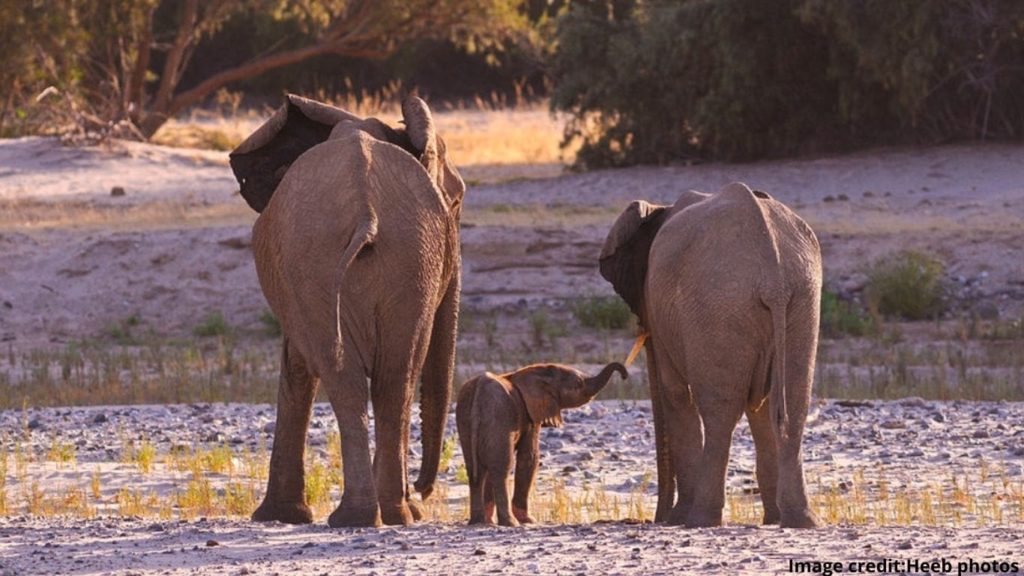
We told you of our battle to save one of Namibia’s last free-roaming elephant herds. These elephants are at terrible risk because drought is forcing them to move from a safe haven to areas where their lives are under threat. We asked for your help, and you responded magnificently. Some 20 elephants with calves have taken refuge on a 20,000-acre (8,000-hectare) preservation area, where they are safe. All the other land in the area is used by hunters, and the elephants are in danger when they enter these zones. But water holes on the preservation area have just about run dry. If we don’t solve this problem, the vulnerable family of elephants will be forced to continue seeking water in places where their freedom and survival is at stake. Thanks to our supporters swiftly donating funds, we were able to pay for a drilling company to search for underground water for the elephants. But this is harsh, dry African terrain, and finding water is no easy task. After striking nothing but hard granite in our first attempt, another site was chosen for drilling. This time, there were technical challenges, and the drill bit broke as we struck water! We thought all was lost and began planning ways to truck in vast amounts of water for the elephants. But, to our relief, overnight, water began to flow! It’s not a very strong flow, but it’s a promising start. Before we drill deeper, our hydrologist advised that we have the water tested for contamination to make sure it is safe for elephants to drink. In Namibia, things work at a slower pace than many other places in the world, so please bear with us. The test results take up to a week to be confirmed. We promise to keep you updated. If we get confirmation that the water is potable, we will finish drilling the borehole and begin pumping fresh water into water holes. If the water is not good for elephant consumption, we will start drilling at a new site. But no matter what, we are not giving up! Again, we are deeply grateful to our caring supporters who have already donated. Not many people can boast that they helped save an elephant family! The elphants are not safe yet, so if you can donate, please do, because the survival of these creatures still hangs in the balance. Over past decades, not only drought but hunting, ivory poaching and habitat loss have been rapidly pushing elephants towards extinction. If the water flows – and we believe it will – there is one entire elephant family that will live to breed another day.
TIME IS OF THE ESSENCE! Devastating FIRE threatens survival of last 50 or 60 remaining Cape Town caracals!
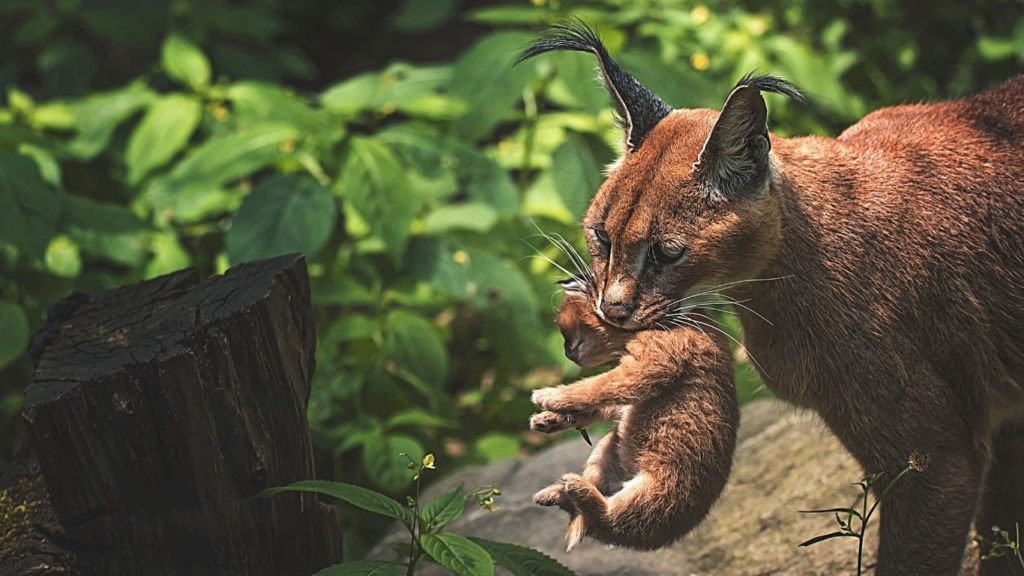
PLEASE HELP NOW! TIME IS OF THE ESSENCE! A devastating FIRE in Cape Town, South Africa, has dealt a horrible blow to the survival prospects of the last precious Cape Town caracals! The fire swept through the University of Cape Town, destroying the Urban Caracal Project’s (UCP) laboratory. Tissue samples of whiskers, fur and blood, painstakingly collected over the last five years are in ashes, possibly wrecking entire critical conservation plans for this highly threatened population of caracal cats. 10,000 acres (400 hectares) of their habitat have been destroyed. We are hoping and praying they all got away safely. Caracals are agile, have sensitive noses and can move like lightning when danger threatens, grabbing their kittens in their jaws and fleeing for their lives. But even one death would be a terrible blow – because there are so few caracals left! Only 50 or 60 caracals – shy and extraordinarily beautiful cats with distinctive pointed ears – cling to life in the last wild areas of Cape Town. They are victims of road accidents and, crucially, poisoning. The problem is that these caracals have become partly urbanized, foraging in urban areas where they eat rodents poisoned by humans. The lost samples were one of the last steps needed to identify if these cats are adapting to urban life, and more importantly, a plan to save them. The UCP team was so close. With your help, we can get the project up and running again. We have promised to raise the money needed for fieldwork to get new samples from the cats. The clock is ticking and sadly… these wonderful creatures do not have the luxury of time! Team members were in tears when they realized the extent of the devastation. They need to get back into the field and replace critical lost samples as soon as possible. UCP has been working tirelessly for years to better understand how this population of caracals is adapting to their urban surroundings in order to help them adapt and survive, despite the threats they face. The fire, which started on Sunday, raged out of control within hours and nothing could be done to save their laboratory or its precious contents. This fire is a bitter blow for caracals. Again, TIME IS OF THE ESSENCE! I sincerely hope you can donate right away!
Two drilling attempts failed, but we didn’t give up!
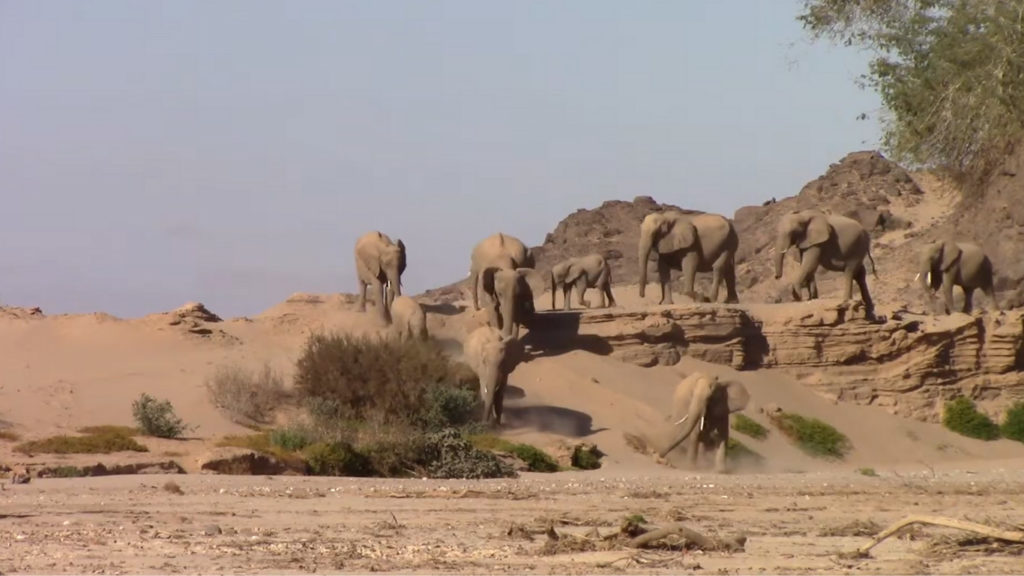
Drought is putting one of Namibia’s last free-roaming elephant herds at risk of death. If they wander from their home on a 20,000-acre (8,000-hectare) farm, a family of 20 elephants with calves will face being shot at. Yet the elephants are caught between a rock and a hard place because the drought means that their water is almost gone. They have just over a week’s supply left. Once that is finished, their freedom and survival are in question. We had to act immediately, or this vulnerable family of elephants would be forced to search for water in areas away from the farm where they are not safe. Their present home is the only farm in the area that does not permit hunting – so the elephants would be in mortal danger. We called on you and other animal lovers like you for help. Your swift response allowed us to hire a borehole drilling company and rush them to the remote site to start drilling. At first, the team struggled to find water. Tension grew after they drilled down 230-feet (70-meters) and found nothing but hard, dry granite. Quickly they found a new site and tried again. Still, no luck. But, they said, if we were prepared to pay, they would risk going to 425-feet (130-meters). We took a deep breath and raided our emergency piggy bank to pay for deeper drilling. Drilling started again. Then catastrophe struck. At 331-feet (101-meters), the drill bit broke. Operations had to be suspended and it will take two weeks to recover it. We ended the day in despair. The next morning there was better news. Overnight, water had risen from the lowest point drilled. Then that water dried up and we are back to square one. Right now, we are investigating the possibility of bringing water in by truck as a temporary measure. We don’t yet know how much that will cost, but we do know that, now more than ever, your donation is urgently needed as we fight to save these elephants. Your donations also helped us buy materials to rebuild a farm dam the elephants had damaged in a quest for a few drops of the life giving liquid. Work is nearly complete. Hopefully soon, the dam will be filled with cool, fresh borehole water which the elephants can drink to their heart’s content. Wish us, and the elephants, luck because this is a watershed moment for one of Namibia’s most vulnerable elephant herds. We must get this right for them. Again, we are deeply grateful to our caring supporters who have already donated. Not many people can boast that they helped save an elephant family! The elephants are not safe yet, and if you can donate today, please do because these creatures need every little bit of help we can give. Over past decades, not only drought but hunting, ivory poaching and habitat loss have been rapidly pushing elephant species towards extinction. If the water flows – and we believe it will – there is one entire elephant family that will live to breed another day. Please, if you possibly can, make a generous donation we need to save these elephants.
Two drilling attempts failed, but we didn’t give up!
One of Namibia’s last remaining free-roaming elephant herds is in desperate trouble. Drought is forcing them to move from a safe haven to areas where they risk being shot. 20 elephants, who have taken refuge on a 20,000-acre (8,000-hectare) family farm, are living on borrowed time. This elephant family needs your help! ASI received an anguished call from animal lovers, in the remote Kunene region of Namibia where the elephants live. Their home, a huge farm, is the only one in the area that does not permit hunting. As long as the elephants stay on the farm, they are safe – but if they move, they risk death. The elephants have lived on the farm for 20 years and have learned that if they wander too far, death awaits, so they stay. Until recently, they have been thriving, and several babies have recently been born. Now, disaster has struck. A severe drought has dried up waterholes and farm dams; there is virtually no water left. This means that the elephants must either die of thirst or risk being killed if they go elsewhere to seek water. A little bit of money will save 20 elephant lives! With your help, we have promised to provide emergency aid to drill a borehole and repair the dam on the farm that will provide water for the elephant family and save their lives. But time is running out – we must act quickly as only one week’s worth of water remains. Namibia is a hot, dry country, and elephants need to drink large quantities of water every day. Can you imagine their desperation as they wander into dangerous areas, anxious to protect their calves and quench their thirst? ASI is the only organization fighting for the survival of this elephant family so your help is crucial. We are close to our goal of raising $7,000 (£5,000) for a borehole and dam that will provide water for the elephants. Your donation today will provide a thirsty elephant with water tomorrow and help save an entire elephant family. If we don’t act right now, this fragile elephant family faces disaster and death! Elephants are intelligent, social creatures who depend on tight-knit family bonds. If one dies, or the herd is split up or relocated, it results in massive torment and suffering for each elephant. This has disastrous long-term impacts on the wellbeing and survival of each elephant. Namibia’s elephants are so severely under pressure that we cannot miss a chance to give a family of 20 of these amazing creatures the chance of continuing to live in the wild without being shot. Africa has already lost 60% of its elephants to ivory poaching, and numbers are continuing to crash. If we don’t act now to save wild elephant populations, there will soon be none left.
Barbarians want to keep snaring helpless animals. Sometimes these animals GNAW OFF THEIR LIMBS!
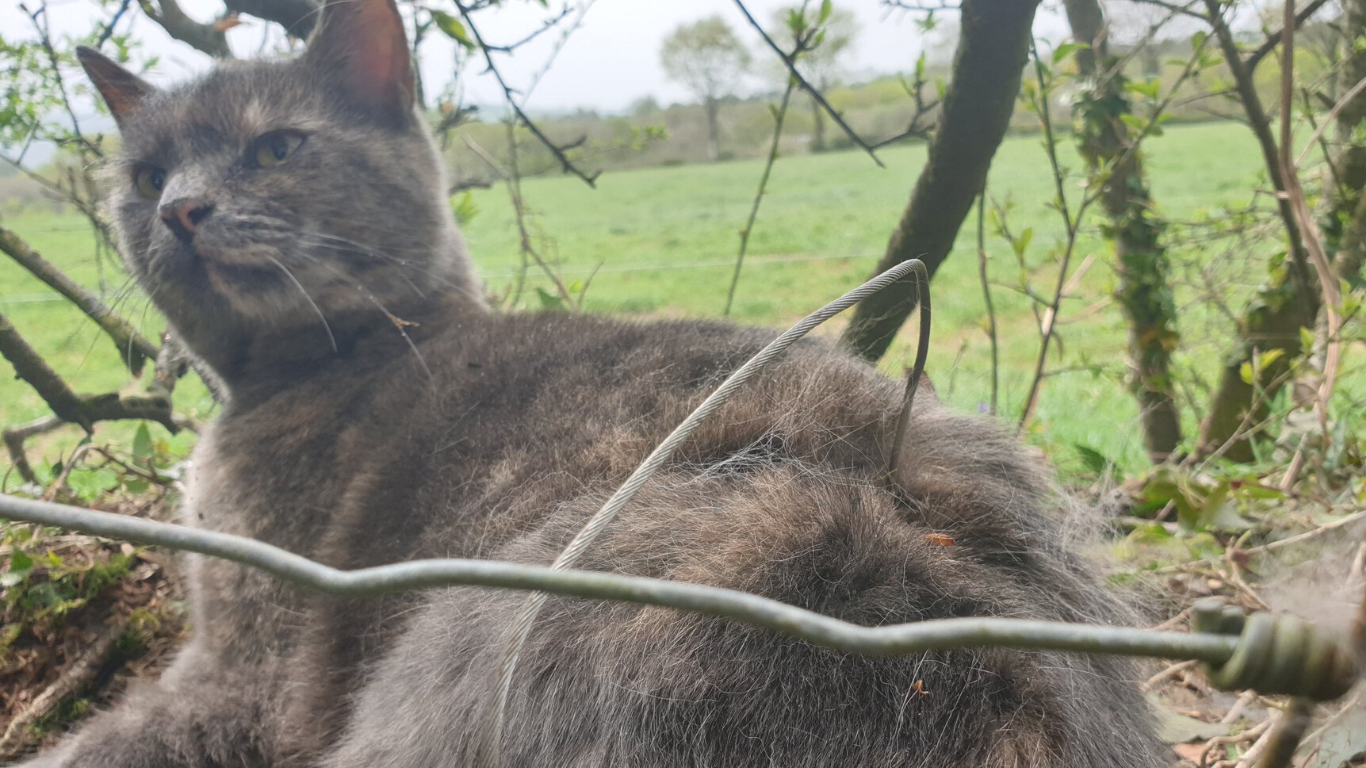
In the United Kingdom (UK), up to 1.7 million animals are brutally killed by snares every single year… Every 20 seconds, another innocent animal is caught in a snare! There can be no worse death than by a snare. Snares cause untold anguish and pain as snare wires cut deep into their flesh while the helpless animals frantically struggle to free themselves. This torture lasts hours, sometimes days, before the animals either succumb to their injuries, the elements, predation, or are executed by the snare-setter. There are horrific cases of frantic animals gnawing off their own limbs to try and free themselves. In some brutal instances, a snare tightens around the creature’s abdomen, slowly cutting them in half! This must be stopped! This barbaric cruelty is LEGAL in the UK and considered to be HUMANE! The UK’s Department for Environment, Food and Rural Affairs (DEFRA) not only condones the use of snares, but states that these devices are “an effective and relatively humane form of control”. Even the British Veterinary Association (BVA)’s so-called “Ethics and Welfare Group” supports snaring, particularly when the victims are badgers – a protected species in the UK. When will the UK’s decision-makers wake up and realize that their policies are endorsing the senseless torture and killing of their dwindling wildlife numbers? As of 2020, a quarter of the UK’s native mammals are now at risk of extinction! Snares are usually set to target foxes and rabbits, but as many as 50% of snaring victims are other creatures, including those that are priorities for conservation. Snares are indiscriminate because these wire death traps cannot tell the difference between a fox, a family pet or a protected species. According to the first Red List of UK mammals, animals such as wildcats, red squirrels and hedgehogs are all under imminent threat. Snares present a serious risk to protected and vulnerable species throughout the UK. This is one of the main reasons snares are banned in many European countries, where they follow the general principle that a device which could accidentally catch and injure any animal which is protected by law, cannot be made lawful. There are simple and effective alternatives to snaring! Clearly, snaring is cruel and inhumane, and there are more effective solutions available to keep livestock and crops safe. For example, fox and rabbit-proof fencing are animal friendly, safe and more effective at protecting livestock and crops. The simple fact is that there is no reasonable argument to support the continued use of these torture devices. We must ACT NOW to have snares completely banned in the UK, and together, we have a real chance to end this horrific practice. Your donation can go a long way in helping us achieve that. Volunteer organization, the National Anti-Snaring Campaign (NASC) in the UK, has an opportunity to bring this to the UK Parliament and potentially secure a total ban on the sale and use of snares. They reached out to the Animal Survival International for support, and we agreed to help. We need your support if we are going to help protect millions of wild animals from pointless torture and death. Please, donate now to support this very important cause. Together, we have a chance to outlaw this horrific practice and secure a victory for the animals.
How we are helping RIGHT NOW: March 2021
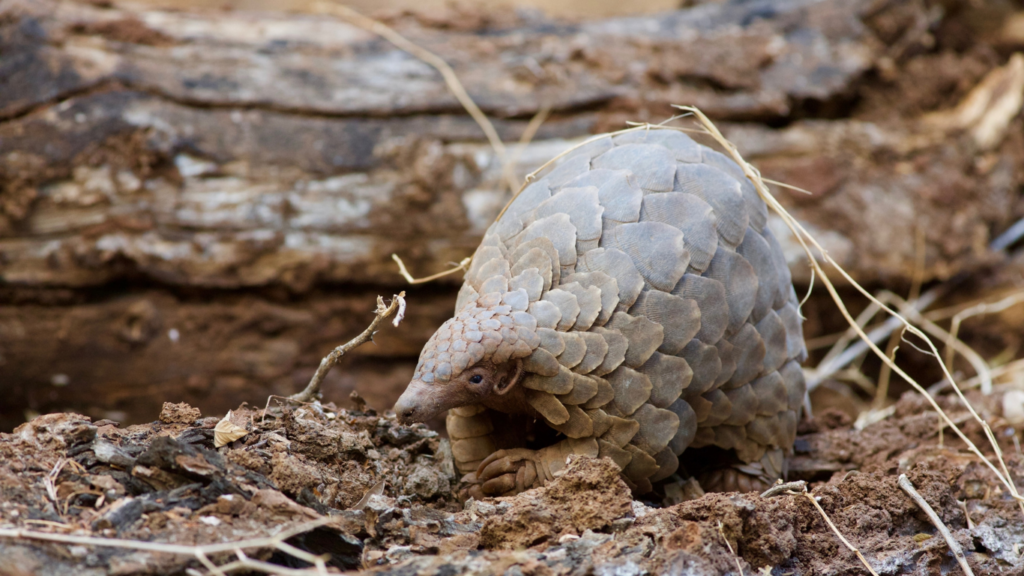
The future of the animals in the natural world has never been more in danger. Climate change, habitat destruction and poor enforcement of international wildlife laws have already pushed numerous species to extinction and will continue to do so if we don’t act now! The Animal Survival International (formerly Political Animal Lobby) exists to be a voice for animals, and we will do everything within our power to fight for their future. Right now, we are hard at work to support the protection of African pangolins, the most trafficked mammal on earth. We can’t share details yet, but keep an eye on your inbox in the coming weeks to learn more. We are incredibly grateful to our supporters who help make the work we do possible. Here’s what ASI is doing now and how your donations are making a difference to animals worldwide: Taking on a City for the future of endangered toads in South Africa Another species is on the brink of extinction because authorities do not care about their survival. This time, it’s the endangered Western Leopard Toads in Cape Town’s Noordhoek valley. The City of Cape Town in South Africa plans to bulldoze a road right through one of their last breeding ponds, even though residents don’t want it. Local organizations, ToadNUTS, and the Noordhoek Environmental Action Group (NEAG) are the toad’s only hope for a future. They are taking the City to court – and the lawyers think they can win. NEAG and ToadNUTS do not have enough funds to fight the big legal teams and carry out their critical day-to-day work. They turned to ASI for aid. With your help, we’re going to do everything we can to help them. A fighting chance for Cape Town’s last Caracal cats in South Africa In the fragmented wild areas of Cape Town, South Africa, as few as 50 caracals cling to survival. Caracals – secretive and nocturnal – are famous for their golden fur and long, elegant ears. They are exquisitely beautiful… and seriously endangered. Caracals are nocturnal, and poorly lit roads crisscross the area where they live. Speeding and negligent drivers have killed 83 of these cats in the past five years. If we act now, we can save many of them from this tragedy. We want to provide a simple and effective solution. The first step is putting up warning signs on the roads, alerting drivers to their presence. The long-term goal is to build tunnels for the caracals to cross safely. The caracals need help now, and that’s why ASI is stepping in; ensuring that effective warning signs are erected in high incident areas while working on a longer-term plan. Bridges for Survival in Kenya Just 5,000 rare Angolan Black and White Colobus Monkeys remain in the entire country of Kenya. Once a stronghold for these gentle creatures, deforestation and illegal bushmeat hunting has destroyed their populations. Naturally living in the treetops, they must now risk their lives crossing dangerous roads to travel between the forest patches that remain. Many try to cross the road using the overhead powerlines, where they are often electrocuted to death. Luckily, there is a simple and effective solution. ‘Colobridges,’ ladder-like structures that provide safe passage across roads, have been tested and have shown to be effective by a local organization, Colobus Conservation. With ASI’s help, the remaining monkey populations will be provided with a network of bridges to keep them safe in their tree canopy sanctuaries. Good News! Life-giving water flows again in South Africa’s Addo Elephant National Park. The ASI team returned to Addo Elephant National Park in South Africa to install state-of-the-art solar-powered pumping equipment that our generous donors helped us purchase. The situation was dire when we arrived, with temperatures soaring and thousands of animals desperate for water. We turned on the tap and animals flocked from miles around for a share of the cool, clean water that will now run every day. Once again, thank you for your generous donations and your support in raising awareness of these issues. You make it possible for us to make a difference, supporting wildlife across the globe.
How we are helping RIGHT NOW: February 2021
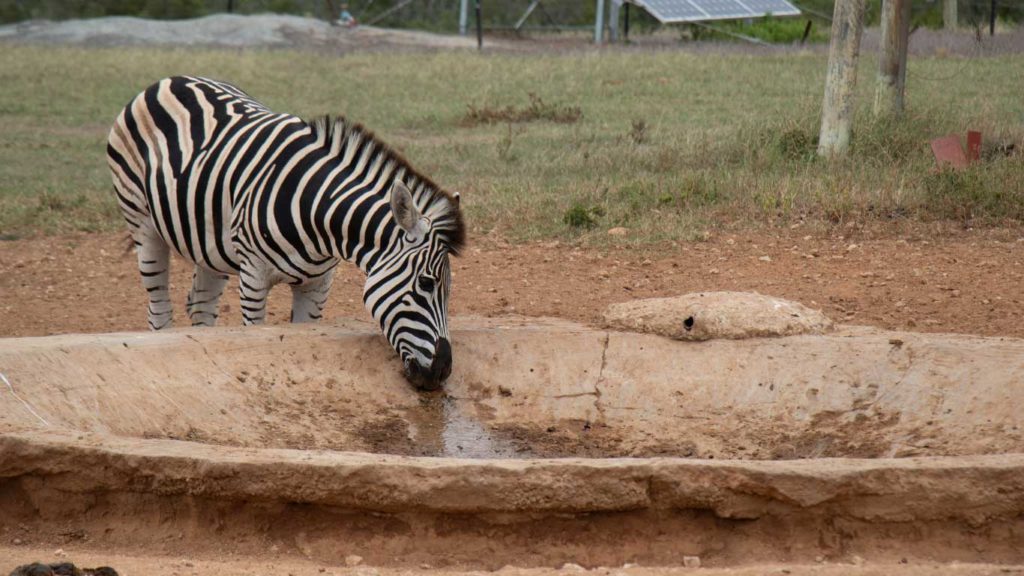
The future of animals and the wilderness they live in has never been more at risk. Climate change, habitat destruction and poor enforcement of international wildlife laws is driving species after species to extinction. We cannot be silent or sit idly by and watch this happen. The Animal Survival International (formerly Political Animal Lobby) exists to be a voice for animals and to do everything within its power to ensure animals survive internationally. We are incredibly grateful to our passionate supporters who make the work we do possible. In case you missed it, here’s what ASI is doing right now and how your donations are making a difference to animals across the globe: Life-Giving Water in the Midst of the Worst Drought in 100 Years In South Africa’s Addo Elephant National Park, hundreds of elephants and countless other animals risk dying of thirst because of the worst drought in 100 years. Water holes are drying up and thousands of animals are suffering – not only from thirst but also injury as they fight one another over the last few drops. Our team watched in horror as zebras kicked and bit each other, desperate for their share. Smaller animals like warthogs stood no chance of getting near the rapidly-drying waterholes. To help this dire situation, we have pledged to fund the installation of state-of-the-art solar-powered water pumps to draw more water from the available boreholes. Thanks to your generous donations, we have raised enough to save one waterhole with new equipment and are nearing our goal of saving a second one. Now we are counting the days until the pumps can be installed. Ending the Cruel Trade of Live Frogs from Turkey Millions of frogs are tortured, maimed and killed so they can be served up as a ‘delicacy’ in restaurants. Every day, thousands of Anatolian water frogs are cruelly harvested in Turkey before being sent across Europe. Hunted with hooks and squashed into bags by the hundreds, these helpless frogs are transported alive. Many die along the way. Those who don’t are often served up alive! Not only is this an example of shocking cruelty, but if we don’t act now, Turkey’s Anatolian frogs will be gone forever, and environmental disaster could ensue. We have pledged to help stop this carnage through the only available avenue – presenting compelling evidence to the authorities. By supporting scientists at Ege University in Turkey in conducting vital research, we will be able to demonstrate the true enormity of the plight of the frogs to the Turkish government and hopefully end this trade forever. A Second Chance for Persecuted and Poisoned Birds of Prey Birds of prey are severely threatened across Africa. Habitat loss, poisoning, local superstitions and climate change are pushing hundreds of raptor species to extinction. The Owl Orphanage in St. Helena Bay, South Africa has made it their mission to rescue and rehabilitate as many poisoned and injured birds as possible. The Owl Orphanage is inundated with birds in desperate need of help. Sometimes they rescue five a day, but they simply do not have enough space to home them all while they recover. Your generous donations helped expand their aviary, meaning that more birds of prey will now get a second chance. Celebrating World Pangolin Day – but for How Much Longer? This month we celebrated the 10th annual World Pangolin Day. On this day we were again reminded of the horrific plight of pangolins, both across Africa and the Far East. As the most trafficked mammal in the world, pangolins are hurtling towards extinction; an estimated 200,000 pangolins are killed every year! Smuggled across borders to Asia, pangolins are hacked to death to be used in traditional Chinese “medicine” or eaten as a delicacy. If we don’t put an end to the rampant slaughter of these quiet, solitary creatures, very soon we won’t be celebrating World Pangolin Day anymore because there won’t be any left. ASI is committed to spreading awareness and offering support wherever needed to help prevent such impending disasters. Thank you for standing with us in this fight. Once again, thank you for your generous donations and your support in raising awareness of these issues. You make it possible for us to make a difference, supporting wildlife across the globe.
Worst drought in 100 years still raging. We must act now!
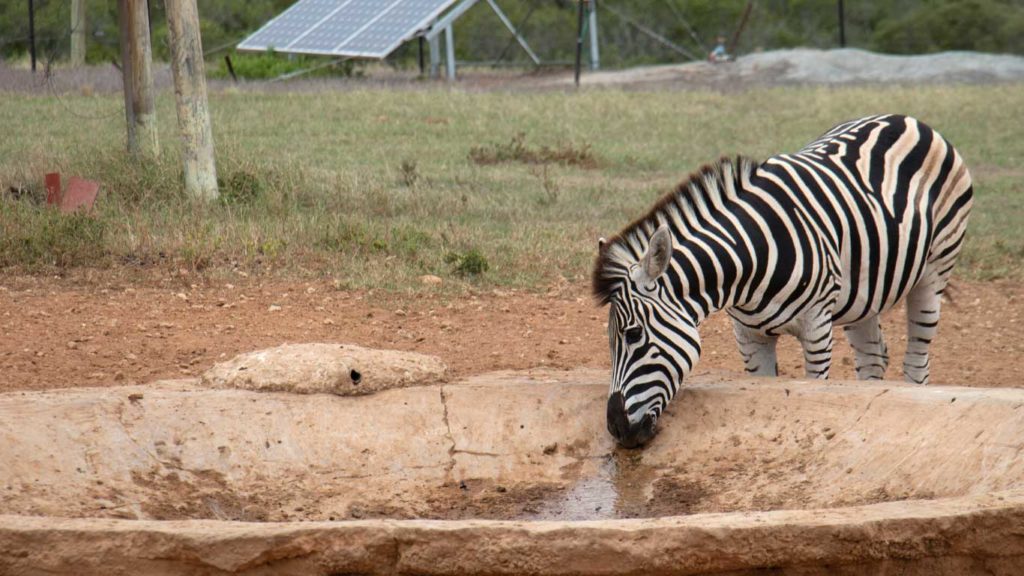
Today we share with you a simple but vitally urgent message: thousands of elephants and other wild animals face dying of thirst in South Africa because of the worst drought in 100 years at the Addo Elephant National Park in South Africa. Water holes are drying up and thousands of animals face death. On a recent emergency visit and as temperatures skyrocketed, our team watched in dismay as animals fought each other over the last few drops of once-plentiful water. Zebra fought among themselves, kicking and biting, warthog families were driven from the life-giving water and baby elephants tried to make an inch of water into a mud bath. With your help, we can save these wild creatures from a slow and agonizing death. The good news is we have a plan. We promised to buy state-of-the-art solar-powered water pumps to provide a reliable source of ground water and, thanks to our supporters, we are nearly there. We just need to raise another $4,000.00 (£2,900.00) to provide two critical waterholes with life-giving water. In the meantime, we are trucking in water from distant reservoirs to help animals survive in the short-term. South African National Parks (SANParks), which manages Addo, is doing everything it can to help and so far no animals have died – but without water, it’s just a matter of time. Donate today, and together we can make sure that these animals get thousands of liters/gallons of life-giving water every day! We have the opportunity – and we must not let it pass – to save elephants, antelope, warthogs, zebra and so many other animals. They cannot survive this drought much longer. As you read these words, water trucks are already at work (we were there to help pumping ourselves). The stress of thirst is driving animals to fight each other for a share of the meager water supply. Worse still – baby animals don’t stand a chance to access the prized remaining inches of muddy water. Zebra are trying frantically to suck water from dry pipes as temperatures soar and dehydration sets in! We witnessed the harsh realities of this drought firsthand. Thirst and panic are making wild animals behave unnaturally. By spending all day lining up, pushing and fighting for water, they don’t have enough time to browse for food or rest. There is no time to waste. We need your support now to respond to this emergency – and save lives! We are on the brink of a massive conservation disaster in Addo National Park. It could be years before this devastating drought ends. Just one elephant drinks 200 liters (over 50 gallons) of water every day. This means that, under current circumstances, an entire day’s dwindling water supply can only sustain a single small family of elephants. It is no understatement that the competition for evaporating water could wipe out whole wildlife populations within the Park. While we have begun to act, we must continue to act! With your help, we WILL save lives! Together, we can save thousands of animals from a horrific fate and protect vital wildlife populations for years to come. Please help us by donating what you can today – every gift is vital.
Badgers being murdered in cold blood! Their only hope is that you speak up before it’s too late!
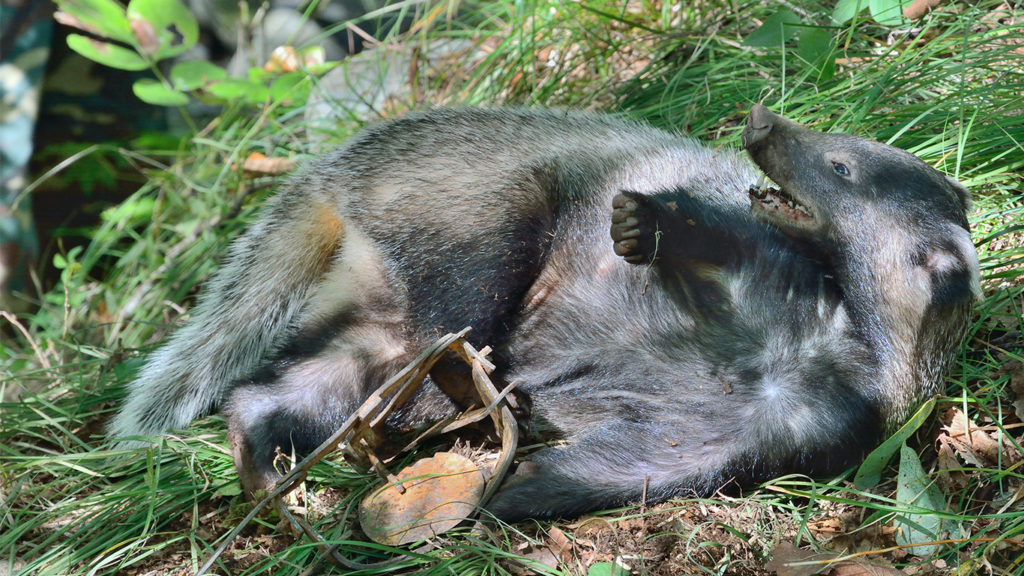
Across England, hundreds of thousands of badgers are wounded, dying or dead because politicians are putting lies before facts. The government says the cull is to stop the spread of bovine tuberculosis (bTB) from badgers to cows. But a recent study shows that cow-to-cow transmission of bTB is ten times more likely than badger-to-cow. Badger culls don’t work. Killing badgers will not stop the spread of bovine TB. The British government knows this and promised to phase out the killing. Instead, as a standard operating procedure (SOP) to farmers, they intend to kill even more badgers. Already this year, 35,000 badgers have been killed. Now the government has announced new measures that will see more than 25,000 killed by the end of year. We must STOP the cycle of violence RIGHT NOW! Please, support our campaign today! The UK government has broken its promise. They pledged to phase out the badger cull. But now, they’re approving 11 new culling zones. The expanded areas will see more than 60,000 badgers butchered in cold blood during this year alone. The killing fields include Derbyshire, Oxfordshire, Warwickshire, Shropshire, Leicestershire and Lincolnshire. This brings the number of cull licenses to 54. It’s an utter betrayal! Anti-cruelty laws exist – why are they being ignored? Murdering badgers in cold blood is unacceptable, intentional, and malicious. We call on the government to stop the badger blame game once and for all. CAN THE CULL! Annihilating a species for no reason is a crime. TB in cattle is a severe problem for farmers and taxpayers, leading to the compulsory slaughter of 30,000 cattle and a cost of £150 million (more than $190 million) every year, but badgers are being used as scapegoats for something that is not their fault. An independent review in 2018 found that frequent trading of cattle and poor biosecurity on farms was severely hampering efforts to tackle the crisis. The scientists said it was highly desirable to move from culling to vaccination of badgers. Tackling biosecurity, trading of infected cattle and testing makes far more sense than inflicting extreme physical pain on innocent creatures. Badgers are being shot in a hit-and-miss approach. Bullet-riddled badgers don’t all die right away. Many are left to suffer before their organs fail and their hearts stop. Badgers have a thick skull, thick skin and a very thick layer of fat. Their short, squat body means their legs often conceal the main killing zone. Getting a clean shot is like taking a shot in the dark. Less than 1% killed of badgers killed have even been tested for bTB, let alone infected with the disease! All the cull does is slaughter innocent animals, for absolutely no reason. When is the UK government going to reach a point where they realize that animals’ lives matter? We need to set hard boundaries and take a stand for badgers. The government must stop the badger cull and embark on effective and cruelty-free options – of which there are plenty. Please, donate today to save these terrified creatures from extermination for no good reason.
Philippines Court Cases
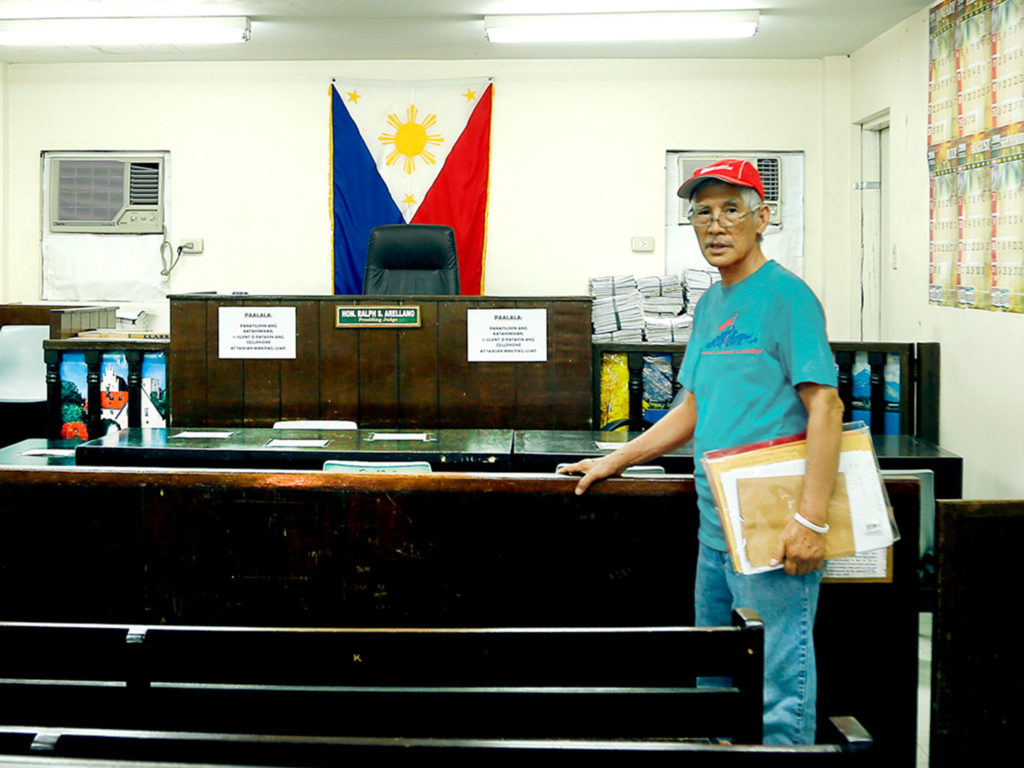
ASI has been fighting for decades to end the illegal dog meat trade in the Philippines. We work closely with law enforcement agencies to track down the evil people who kidnap dogs for slaughter. During a police raid on a dog meat trader’s secret “stash,” officers discovered kidnapped dogs being held for slaughter in a cruel, concrete pit. We rescued them all. It felt so good for our team to lift those suffering souls from that sweltering hellhole in the Philippines, and supporters like you made it happen. But what if our work stopped there, with the rescue? What if there was no prosecuting, convicting, or imprisoning of these brutal dog meat criminals? It would be the saddest kind of dust in the wind, and the killing and the kidnapping of defenceless dogs would continue. This must never be! That’s why we are asking for your help today to fuel a battle against the Philippines dog meat trade that is as critical as our raids and rescues. The battle in the courtroom. Rush your donation now to help us serve up justice to dog meat traders and traffickers in the Philippines, and end their ugly reign of terror. Let us tell you about what has unfolded since we rescued those five poor dogs (they are all safe and in loving homes today). THIRTEEN traders convicted! THREE now locked in prison! OVER ONE MILLION pesos in fines to the government! My team appears at trial after trial, no matter how slowly the judicial process takes. One recent case stretched 24 months but ended in the conviction of two traders. Another took nearly NINE years! Just imagine the grim fates of untold numbers of dogs if we’d run out of funds to pursue each case. Justice is deeply worthwhile, but costly. Sadly, all fines go to the government. My team receives no help for their heroic work and determination. So, I turn now, to you. I know a court hearing isn’t as dramatic as a rescue or a raid. But they are transporting poor, dead dogs by the truckload! Can you imagine stopping even one of these heartless criminals in their tracks? It’s dangerous but VITAL work. Your support now WILL SAVE MORE DOGS, so please be as generous as you can. Thank you so much for being a true friend to dogs in the Philippines.