

The ocean has shielded us from the worst of climate change. Now it is running a fever
Article written by Karina Von Schuckmann Originally published by The Guardian, 17 June 2026 Nearly every indicator of climate change is flashing red. But we still hold the tools available to bring the planet back into balance The ocean is running a fever. In 2025, the number of days of marine heatwaves – prolonged spells when the sea turns abnormally, dangerously warm – was more than triple what it was in the early 1990s. These are not abstract statistics. A severe and persistent marine heatwave bleaches coral reefs, strips away the kelp forests that shelter young fish, empties fishing grounds and – if occurring frequently – can tip whole ecosystems past the point of recovery. It scrambles the chemistry the ocean lives by, its acidity, its oxygen, the carbon it trades with the air, and can feed fiercer weather on land. For the coastal communities whose food and livelihoods come from the sea, the harm is immediate and personal. I have spent my career studying where the heat from climate change actually goes. The answer, overwhelmingly, is the sea. The ocean has absorbed more than 90% of the excess heat that human activity has trapped on Earth, quietly buffering those of us on land from the full force of warming. For decades, that made it our greatest and most uncomplaining ally. Ocean warming and more frequent and intense marine heatwaves are signs that the buffer is straining. The heat we have poured into the ocean is beginning to surface as harm. Ningaloo Reef is facing the heat. Credit: James C. Farr/Shutterstock More frequent and intense marine heatwaves are just one of many new warning lights in this year’s Indicators of Global Climate Change (IGCC) report, the annual health check on the climate system compiled by more than 70 researchers from more than 50 institutions worldwide in the years between the next official UN assessment in 2028. But the climate system is changing in ways we can measure every year, and the single most revealing measurement is one most people have never heard of. It is called the Earth’s energy imbalance, and it is the closest thing we have to a master gauge of climate change: the gap between the energy reaching us from the sun and the energy the planet manages to radiate back out to space. In a stable climate, the two are roughly equal. However, several things are now prising them apart. By far the largest is the greenhouse gases humans keep adding, which thicken the atmosphere’s insulating blanket and trap heat that would otherwise escape. But they are not the whole story. As we clean up the dirty air pollution of the past, we are also losing the faint reflective haze it cast, letting more sunlight through. As the planet heats, it triggers feedback that amplifies warming. Bright, reflective ice giving way to dark, heat-absorbing ocean, cloud changes that tend to leave the Earth absorbing more energy than before and warming soils and waters releasing greenhouse gases of their own. Together, greenhouse gas emissions and this feedback are tipping the scales. Far less energy is now leaving than coming in, and the imbalance has more than doubled since the late 20th century. The Earth is, quite literally, out of balance, storing heat faster and faster. This is the engine behind nearly everything else the report records: rising temperatures, melting ice, fiercer extremes, and the intensifying marine heatwaves now scarring the ocean. The latest findings estimate that human-induced warming has reached approximately 1.37C above pre-industrial levels The other indicators in this IGCC report build a fuller picture of how this growing energy imbalance is fuelling impacts for people around the globe. The rate of sea-level rise has more than doubled in recent decades, and it continues to accelerate. In 2025, we passed a new record of 23cm of rise since 1901, which is pushing floodwaters further into low-lying coastlines and raising the floor of every tide and every storm. And this is what troubles me most: the very ability of scientists and policymakers to track these changes is now under threat. What we know about the ocean and Earth’s energy imbalance rests on a sophisticated network of sensors kept in waters across the globe and satellites. Last month, the scaling back of this work was announced: four of five monitoring sites across the Pacific and Atlantic are set to be closed, and equipment is already being pulled from the water. Other funding is under similar pressure. At the precise moment we most need to see clearly, we are turning off the lights. But paying attention is not the same as looking on helplessly. Thanks to this year’s IGCC report, we understand better than ever how human activity is pulling the climate further out of balance, and we know it lies within our power to ease it. Nearly every indicator of climate change is flashing red, but citizens, businesses and policymakers still hold the tools available to bring the planet back into balance.
Mass drowning of chicks puts emperor penguins at risk of extinction
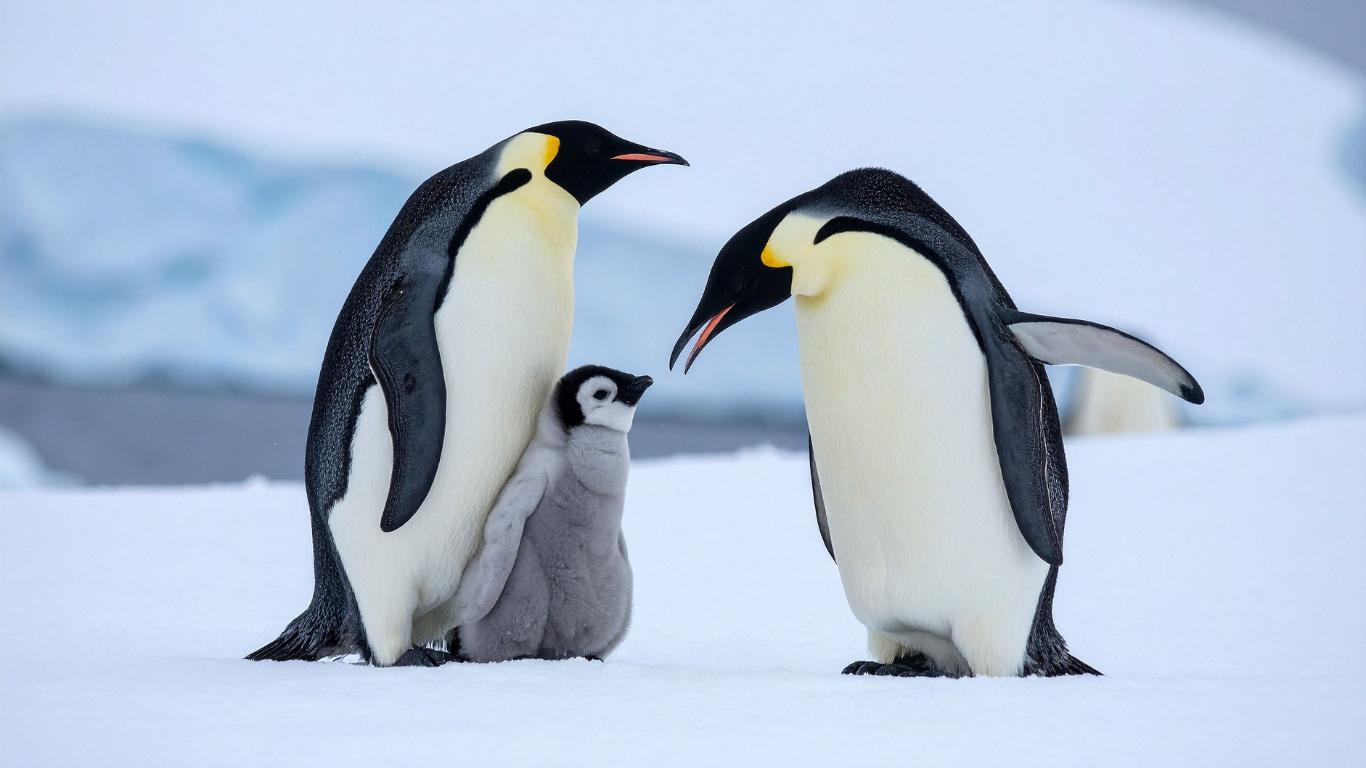
Article written by Damian Carrington Originally published by The Guardian, 9 April 2026 Record low levels of Antarctic sea ice are having grim consequences for penguins yet to grow waterproof feathers The mass drowning of emperor penguin chicks as sea ice is melted by the climate crisis has led the International Union for Conservation of Nature (IUCN) to declare the species officially in danger of extinction. Emperor penguins rely on “fast” ice – sea ice that is firmly attached to the coast – for nine months of the year. It is where their fluffy chicks are hatched and grow until they have their waterproof feathers. Adults moult every year and also need a safe haven while their swimming feathers regrow. However, global heating has led to record lows in Antarctic sea ice since 2016. When sea ice breaks up early, entire colonies can fall into the ocean, leaving the chicks to drown. Even if some penguins escape the water, they are soaked and will freeze to death. Four of the five known emperor penguin breeding sites in the Bellingshausen Sea collapsed in 2022, with the loss of thousands of chicks. Another colony in the Weddell Sea collapsed in 2016. Researchers called the catastrophes “grim” and “extraordinarily distressing”. The IUCN assessment projects that the emperor penguin population will halve by the 2080s owing to sea ice loss. The current emperor penguin population is estimated at 595,000 adults, having already fallen by 10% between 2009 and 2018. Emperors are the largest penguin species and jumped two categories, from “near threatened” to “endangered” in the new IUCN analysis. The assessment also found the climate crisis had driven a halving of the Antarctic fur seal population since 2000, owing to a reduction in the krill that the animals rely on for food. The seal has jumped three categories from least concern to endangered in the latest red list of threatened species. “The emperor penguin’s move to endangered is a stark warning: climate change is accelerating the extinction crisis before our eyes,” said Martin Harper, the chief executive of BirdLife International, which coordinated the IUCN assessment. “Governments must act now to urgently decarbonise our economies.” The marine ecologist Dr Philip Trathan, who worked on the emperor penguin red list analysis, said: “Human-induced climate change poses the most significant threat. Early sea ice breakup is already affecting colonies around the Antarctic, and further changes in sea ice will continue to affect their breeding, feeding and moulting habitat. Emperor penguins are a sentinel species that tell us about our changing world and how well we are controlling greenhouse gas emissions that lead to climate change.” Dr Peter Fretwell, a scientist at the British Antarctic Survey, was part of the team that reported the colony collapses in the Bellingshausen Sea in 2022. “It’s a grim story,” he told the Guardian then. “I was shocked. It’s very hard to think of these cute fluffy chicks dying in large numbers.” Dr Barbara Wienecke, of the Australian Antarctic Division, said of the same colony collapses: “It’s horrendous and I find it extraordinarily distressing to think of this happening.” Rod Downie, chief advisor, polar and oceans at WWF-UK, said: “With the shocking decline in Antarctic sea ice we are currently witnessing, these icons on ice may well be heading down the slippery slope towards extinction by the end of this century – unless we act now. The fate of these magnificent birds is in our hands.” Cutting the carbon dioxide pumped into the atmosphere by burning fossil fuels to zero is the only way to halt global heating. WWF is also calling for emperor penguins to be listed as a “specially protected species” at the next Antarctic treaty meeting in May in Japan, which would help reduce other pressures on their habitat such as tourism and shipping. The Antarctic fur seal population has dropped by more than half since 1999 to 944,000 mature seals in 2025, according to IUCN. The decline is the result of rising ocean temperatures pushing krill to greater depths in search of colder water, reducing the availability of food for seals. Krill shortages at South Georgia island have slashed the survival of pups in their first year. The southern elephant seal is also now at risk of extinction, the IUCN said, having been hit by bird flu outbreaks since 2020. The disease has affected four of the five major subpopulations, killing more than 90% of newborn pups in some colonies. The species is now in the IUCN’s vulnerable category.
Seals and sea lions provide clues to evolution of vocalization
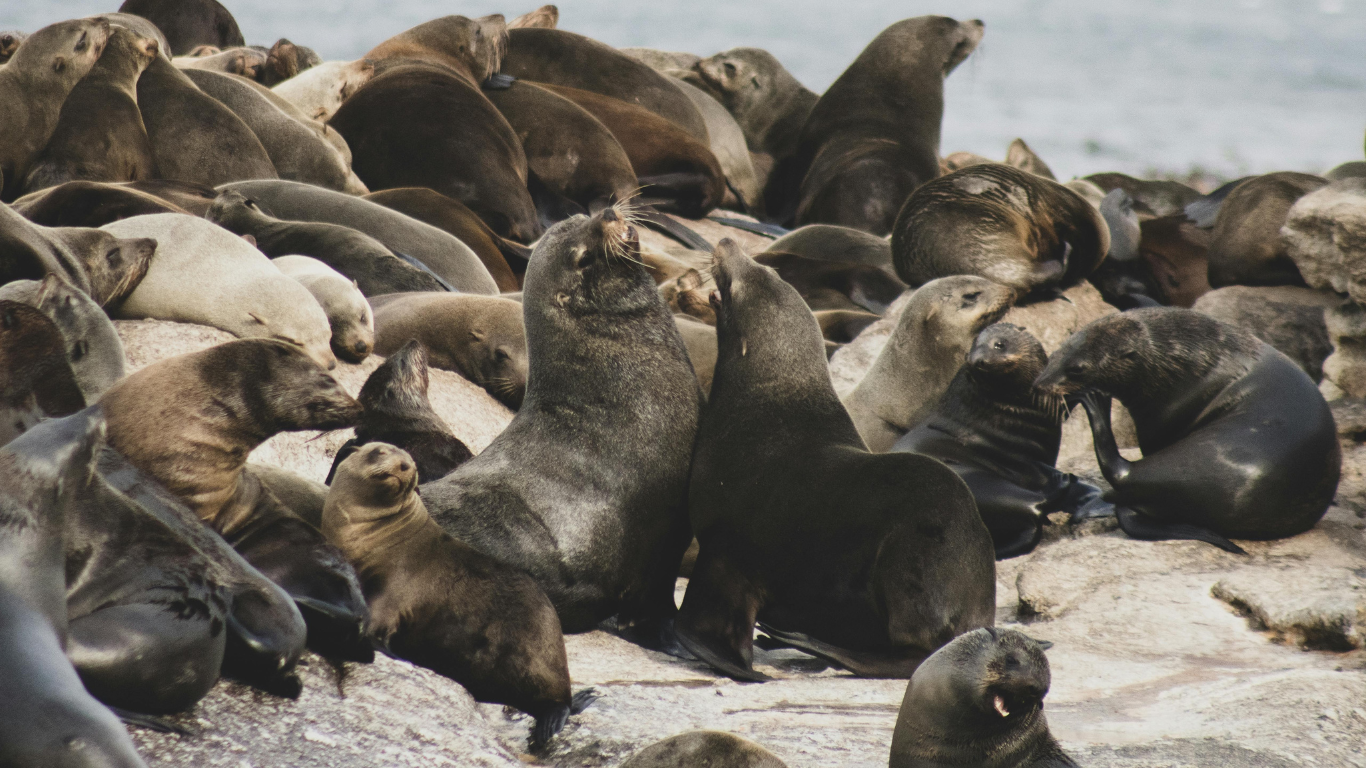
Article written by Robert Egan Originally published by phys.org, 12 March 2026 Neuroscientists have uncovered new insights into a key evolutionary question: Why can humans talk when most animals can’t? The journal Science published the research led by Emory University and the New College of Florida. The findings suggest that seals and sea lions may have vocal flexibility as a side effect of developing a brain “bypass” for voluntary breath control. This same bypass allowed them to adapt to aquatic life. The comparative study examined the brains of coyotes along with those of sea lions, elephant seals and harbor seals—marine carnivores with varying degrees of vocal control that are evolutionary cousins to canines. Seals are among the few animal species known to have the super vocal flexibility that allows them to mimic human voices. Sea lions have also demonstrated good vocal plasticity on a more limited scale. The neurobiology of these capabilities, however, was not known. Senior author Gregory Berns, Emory professor of psychology, and first author Peter Cook, a former Emory postdoctoral fellow, used the technique of diffusion magnetic resonance imaging (MRI) on post-mortem animal brains, giving them a view of connective neural pathways across species. All the brains used in the study came from wild animals that died naturally in rehabilitation facilities or had to be euthanized due to injuries. The results showed that, in coyotes, the mid-brain—associated with automatic behaviors important to survival, such as breathing, swallowing and reactions to threats—controls the groups of cells in the brain stem that send signals to muscles used for vocalization. The marine mammal brains, however, have a direct connection between the vocal motor cortex and the groups of cells controlling vocal muscles. That connection bypasses the mid-brain region. The researchers hypothesize that most animals lack vocal flexibility due to their inability to “unlock” this automatic response mechanism from vocalization. Seals and sea lions have loosened this automatic control through their development of exquisite breathing and swallowing capabilities, allowing them to hunt and eat underwater. Sea lions, for example, can stay underwater for an average of 10 to 20 minutes while some seal species can dive without surfacing for up to two hours. “We’ve discovered an ecological recipe for how a mammal might evolve a vocally flexible brain,” says Cook, who is now associate professor of marine mammal science at New College of Florida. “By broadening the scope and using these neuroimaging techniques to compare more mammalian species wired to have vocal flexibility with those that are not, we might be able to build up an evolutionary tree for language,” adds Berns. Mapping brain connectivity MRI scans reveal information about the architecture of a brain—known as gray matter. Diffusion MRI provides information about how molecules move through biological tissues, mapping the connective pathways of a brain—known as white matter. The technique of using diffusion MRI on a non-living brain was developed by co-author Karla Miller at the University of Oxford to study Alzheimer’s disease in human brains. “Because dead brains don’t move, and don’t mind holding still for hours on end, we can acquire extremely high-quality data,” Miller explains. The technique has since been used in some primate and rodent studies. Berns helped pioneer the use of diffusion MRI in a range of other animals, including brains preserved in museum collections. He led a 2017 study that successfully mapped the connectivity in the brains of two extinct thylacines, or Tasmanian tigers. The brains had been stored in formaldehyde for more than 100 years. “I believe we hold the record for getting diffusion MRI data out of the oldest brain specimens,” Berns says. Cook came to the Berns lab from the Institute of Marine Sciences at the University of California, Santa Cruz, where he studied the neurobiology and behavior of pinnipeds—carnivorous, fin-footed marine mammals that include seals, sea lions and walruses. “Many people have an impression of seals and sea lions as just fat, furry slugs, lying on a beach and barking,” Cook says. In reality, he adds, they are intelligent animals with brains close in size to those of chimpanzees. “I really enjoy teaching them hearing and memory tasks,” Cook says. “They have a tremendous drive to learn new things and are quick at picking up new behaviors.” Both Berns and Cook were intrigued by the unique vocal capabilities of these marine mammals, which offer a rare opportunity to study vocal dexterity in a non-human animal. Hoover, a harbor seal who could mimic his keeper’s Boston accent, is the most famous example of this plasticity. More recently, researchers at the University of St Andrews in Scotland trained gray seals to imitate human voices humming “Twinkle, Twinkle Little Star” and the theme to “Star Wars.” The researchers decided to use diffusion MRI to gain a neurobiological window into how this vocal flexibility may have developed in pinnipeds. They acquired brains from four California sea lions, four harbor seals and three northern elephant seals that died of natural causes or had to be euthanized at a California veterinary rehabilitation center. They compared those brains to the brains of four coyotes that had to be euthanized at a United States Department of Agriculture facility in Utah. Brain data in hand, the researchers painstakingly mapped out specific circuits related to vocal control and vocal learning. They identified and carefully delineated the 15 relevant regions in each animal’s brain. That allowed them to make comparisons between individuals and species. The most striking result showed that the pinnipeds have a neural pathway that links vocalization directly to neurons controlling the larynx—a bypass that allows them to consciously control the muscles used in vocalization. The data also revealed distinctions in pathways connecting auditory and vocal brain systems. The elephant seals and harbor seals all showed robust auditory-vocal motor connections, but the coyotes did not. An additional finding may help explain the ability of seals to mimic novel sounds. Parrots and humans have special connections between the thalamus—the brain’s sensorimotor waystation—and the vocal motor cortex. In the current study, the harbor seals showed much stronger
Investigation underway following suspected rabies outbreak in Hout Bay seal colony
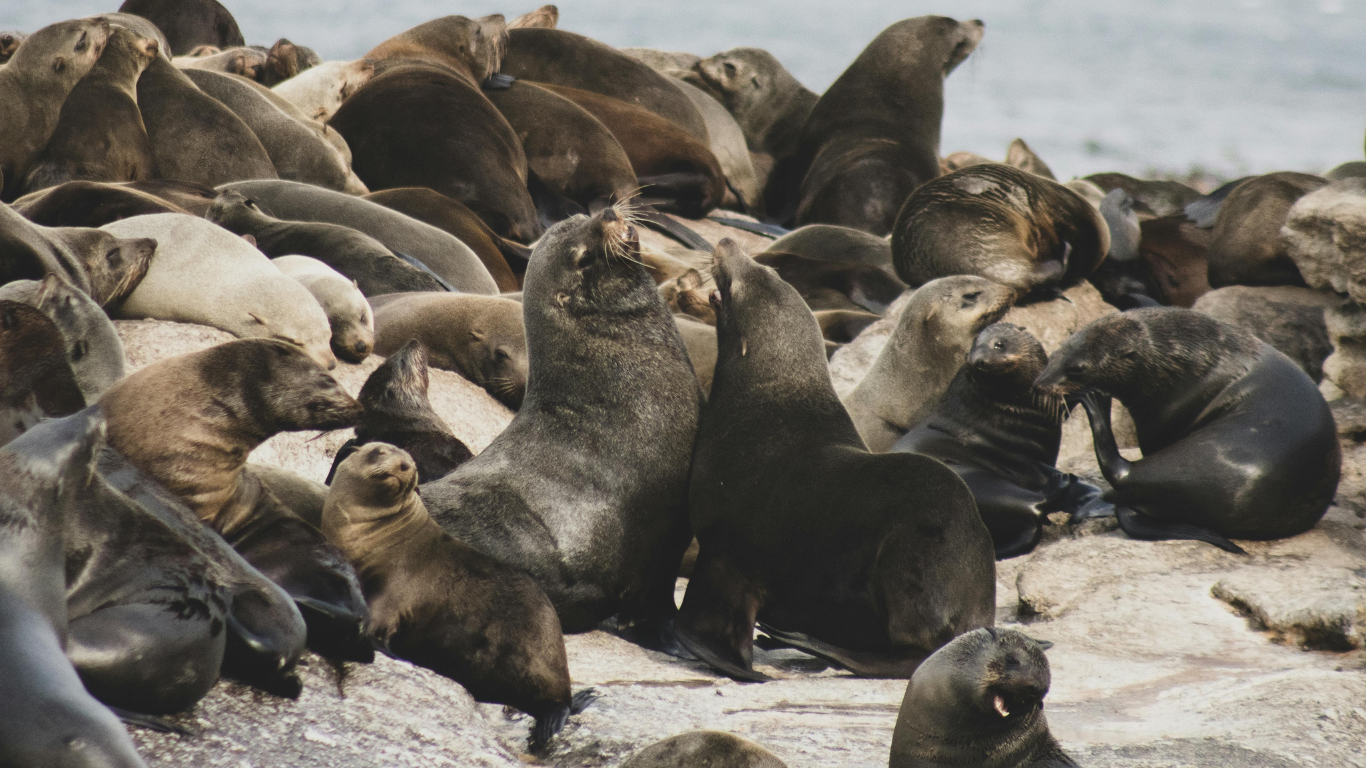
Article written by Camray Clarke Originally published by Eye Witness News, 01 March 2026 Two seals have been removed from the area over the past week, including one following an incident with kayakers last Saturday. Authorities are investigating a suspected rabies outbreak among the seal colony at Duiker Island in Hout Bay. Two seals have been removed from the area over the past week, including one following an incident with kayakers last Saturday. The National Sea Rescue Institute (NSRI)’s Andrew Ingram is urging bathers not to approach seals, either in the water or on land. “We encourage swimmers and paddlers to buddy up, use visible safety gear and make use of the NSRI SafeTracks app.”
Can African penguins be brought back from the brink? Better designed no‑fishing zones could help
.png)
Article written by Jacqui Glencross Originally published by The Conversation, 23 February 2026 South Africa is home to 88% of the world’s colonies of African penguins (Spheniscus demersus). The species is classified as Critically Endangered by the International Union for Conservation of Nature. This means there is a high risk the birds could go extinct in the wild following rapid population declines. This species was once abundant along the coasts of South Africa and Namibia. But the population has fallen by about 78% over the last 30 years, driven by food scarcity, oil spills and climate-related shifts in the marine environment. African penguins mainly feed on anchovy and sardine. Changes in ocean conditions and overfishing have made it more difficult for the penguins to get enough food. In recent years, conservation organisations, scientists and government agencies have escalated efforts to halt this decline. One of the most significant developments was a March 2025 court ruling that supported the introduction of improved no-fishing zones around key breeding colonies, to protect the penguins’ foraging grounds. Robben Island (11km north-west of Cape Town) is one of the colonies. Protecting waters adjacent to breeding colonies is essential for the species’ long-term recovery. Food shortages in these areas, driven in part by competition with the purse-seine fishery (which uses a large net to surround schooling fish), have been directly linked to declining chick survival and the ongoing population collapse. The court case (led by the organisations BirdLife South Africa and the Southern African Foundation for the Conservation of Coastal Birds) concluded that fish can no longer be caught within a 20km radius of Robben Island. We are penguin researchers from the University of St Andrews, University of Exeter, the South African Department of Forestry, Fisheries and the Environment, and BirdLife South Africa. Our work has examined the interactions between penguins and fishing operations in detail, and can offer insights to guide the management of their respective needs. Overlap with the fishing industry Previous research into the effects of fishing on penguin populations has mostly looked at metrics such as the amount of fish removed by the fishery. But technology to track fishing locations and animal movement now enables us to look at the picture on a fine spatial scale. We can see where and how intensely commercial fishing and penguins overlaps, helping us identify areas that should be protected. Our recent research used tracking data from penguins on Robben and Dassen islands, in the Western Cape of South Africa. We measured population-level spatial overlap between penguins and the local fishery. A small proportion of penguins were tracked using GPS devices, then we were able to simulate where more of the colony were going. Knowing where a large proportion of the penguin population is sharing a particular space with fishing vessels makes it easier to target which areas to protect and when. It provides benefits for the fishing industry (allowing fishing in areas which are of lower importance to the penguins) and for the penguins (limiting competition with the fishery during the breeding season). We also developed a new metric, “overlap intensity”, which captures not only how much space penguins share with fishing vessels, but how many individual penguins are affected. Traditional measures of spatial overlap simply calculate the percentage of area shared between predators (penguins) and fishing vessels. But this can dramatically underestimate the actual degree of interaction, especially when only a few areas are shared but many animals use them. It reveals insight into ecological pressure and competition that area overlap alone misses. For example, it suggests stronger competition for prey than spatial overlap metrics imply. This method can not only be expanded to other colonies but more broadly to other species and ecosystems. Our findings show that overlap increases sharply in years when fish are scarce. During 2016, a year of low fish abundance, around 20% of penguins foraged in the same areas as active fishing vessels. In years with healthier fish stocks, however, overlap dropped to just 4%. This pattern indicates that competition between penguins and the fishery intensifies when prey is limited. It poses the highest risk during sensitive periods such as chick-rearing, when adults must forage efficiently to provide for their young. A new tool for risk and management By quantifying overlap intensity at the population level, our study offers a powerful new tool for assessing ecological risk and supporting ecosystem-based fisheries management. It also provides practical guidance for designing dynamic marine protected areas that respond to real-time changes in predator–prey interactions. Our results further show that the new no-fishing zone around Robben Island will protect a key foraging area to the north-east of the colony. This was previously one of the regions with the highest overlap between penguins and fishing vessels. Continued monitoring will be essential to determine how overlap changes in response to the new ten-year purse-seine closures around both colonies. Similar assessments should also be conducted at additional breeding sites, including other islands involved in the closures. Foraging ranges of the penguins and the areas covered by the no-take zones vary from colony to colony. Meanwhile, over the past few years, weighbridges have been installed at some colonies (including Robben Island) collecting penguin weights when they leave to feed and when they return. Data from these large scales will tell us more about how the closures affect penguin foraging success.
A law for the tohorā: New Zealand bill seeks personhood for whales
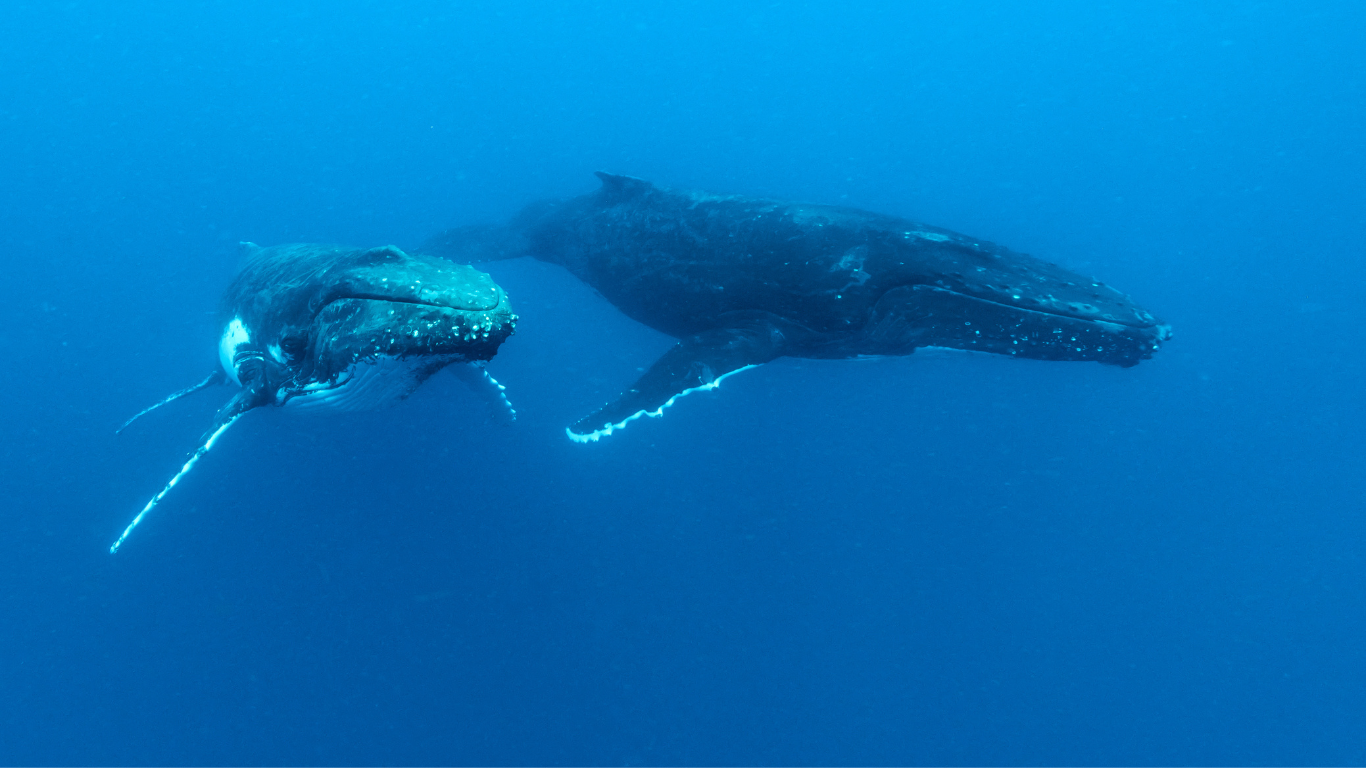
Article written by Rob Hutchins Originally published by Oceanographic, 11 February 2026 Green Party MP Teanau Tuiono has introduced the Tohorā Oranga Bill in New Zealand, seeking legal personhood for whales. The legislation recognises their rights, draws on Indigenous stewardship, and aligns with the global rights of nature movement. A parliamentary bill introduced in Aotearoa New Zealand is seeking to fundamentally reshape how whales are protected in law, proposing that cetaceans be recognised as legal persons with inherent rights. It’s a move that – if granted at a domestic level – could shape our approach to nature rights across the globe. Green Party MP Teanau Tuiono this week launched his Member’s Bill, the Tohorā Oranga Bill, which would require decision-makers across environmental and maritime law to recognise and uphold the rights of whales. “Our tohorā are sacred ancestors for many communities across Te Moana Nui a Kiwa, but they are under threat from commercial fishing, pollution, and climate change.” said Teanau Tuiono. Under the Bill, whales would be recognised as having rights including freedom of movement and migration, protection of natural behaviours, and the ability to thrive in a healthy marine environment. These principles would be embedded into existing legal frameworks, influencing decisions around fishing, shipping, seabed mining, and coastal development. “This Bill represents a transformation in how we protect our marine species and the wider moana, to create a law that would protect whales by legally recognising their mana.” Grounded in te ao Māori, the legislation adopts a relational, values-based approach rather than a purely extractive or harm-reduction model of conservation. “The Bill describes te mana o te tohorā through five fundamental principles: Freedom of movement and migration, protection of natural behaviours, protection of social and cultural structures, right to a healthy environment, and the right to restoration and regeneration of habits and ecosystems.” Ocean advocates working at the intersection of Indigenous rights and marine protection have welcomed the Bill’s introduction. Michelle Bender, an Ocean Rights Champion and a Steering Committee Member of the UN Ocean Decade, has described the moment as both historic and community-led, emphasising that the Bill builds on years of Indigenous leadership across the Pacific. “We are excited to hear this news and report the progress achieved by local community members in advancing the rights of whales in New Zealand. This effort stems from the He Whakaputanga Moana Declaration, cultivated, led and signed by Indigenous leaders across the Pacific. This Declaration has served as the foundation for many communities and entities working to advance the Declaration in different forms and jurisdictions.” Supporters say the proposal represents the first formal attempt in the Pacific to codify the mana and rights of whales through national legislation. In 2022, the Loyalty Islands Province of New Caledonia had passed legislation to recognise sharks and sea turtles as natural entities subject to rights, including a healthy environment. However, that legislation was later found invalid due to lack of legislative authority. Tuiono underscored that the Bill follows Indigenous stewardship of the ocean. “Indigenous peoples are the enduring kaitiaki of our moana. When we follow their lead, we can protect our precious species and the places they call home.” The Bill acknowledges its origins in He Whakaputanga Moana, guided by Ngāti Wai, and the foundational work of Hinemoana Halo, while recognising Indigenous connections across Te Moana Nui a Kiwa and beyond. A rights of nature approach The Tohorā Oranga Bill also reflects the growing global movement to recognise the rights of nature – a legal philosophy that challenges anthropocentric environmental law. Pooja Sharma, director of legal advocacy and policy at Earth Law, says the concept is rooted in Indigenous stewardship and reciprocity. “The essential concept of rights of nature is rooted in indigenous wisdom, stewardship and reciprocity and is based on the idea of how do we grant non-human species and ecosystems the right to exist, flourish and regenerate without human intervention,” she said. Whereas existing environmental law standards are more commonly integrated into our legal system, rights of nature is not quite so anthropocentric. The concept of Earth law recognises, instead, the inherent right for this ecosystems to exist. “So it takes an ecocentric approach in protecting our environment,” she added. Often, legal personhood often centres on species with deep ecological, cultural, and spiritual significance; keystone species that are a natural benchmark because of their role in the food web, such as salmon, whales, and apex predators like sharks. “What’s really cool about the rights of nature movement is that through it, you’re thinking long term about the future; about regenerative futures and advocating for legal personhood.” While implementation remains a challenge, Sharma has stated that it is through moments such as that now in New Zealand, that we can see just what can be done on a global scale to protect the Earth. The Bill will now enter New Zealand’s parliamentary ballot process. While its passage is uncertain, advocates say its introduction alone marks a significant shift in ocean governance. “By recognising the mana of tohorā, this Bill represents a transformation in how we protect our marine species and the wider moana.” says Teanau Tuiono. For a nation with a deep maritime identity and a growing legacy of Indigenous-led environmental law, the proposal signals a new way of imagining ocean protection.
From ‘psychedelic’ spiders to European eels: 10 species heading into 2026 on the brink of extinction
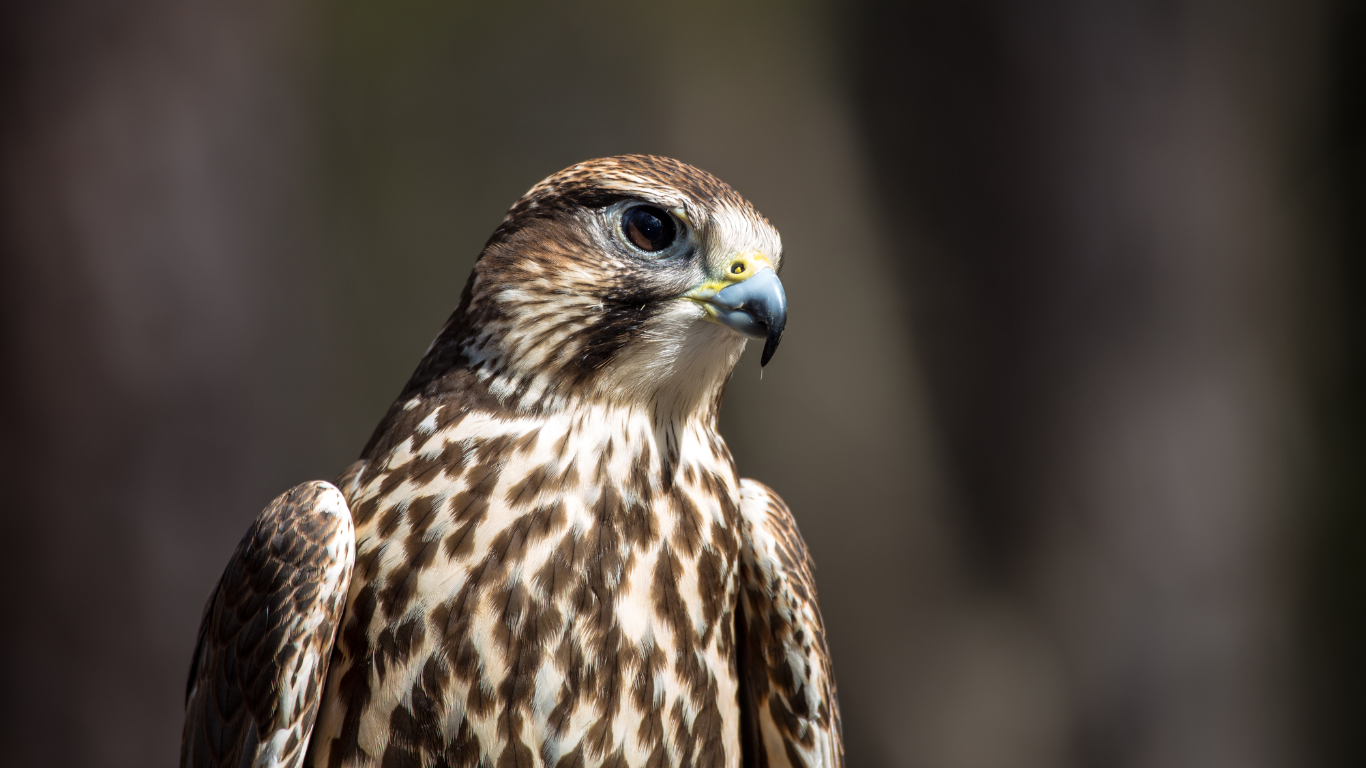
Article written by Liam Gilliver Originally published by EuroNews, 02 January 2026 Habitat loss, deforestation, the illegal wildlife trade, and climate change are pushing these extraordinary species towards extinction. Conservationists warn the world can “no longer afford” to delay climate action to protect and restore our planet’s natural wonders. Today (7 January), international nature charity Fauna & Flora has launched its 2026 Species to Watch list, highlighting some of the “weird and wonderful” creatures at risk of disappearing in the not-so-distant future. Kirsitian Teleki, Fauna & Flora’s CEO, says the list offers an insight into the “key challenges” facing some of the world’s most vulnerable species, including habitat loss, deforestation, the illegal wildlife trade, and the climate crisis. “It also shines a spotlight on the weird and wonderful plants and animals we are working to protect, and on the inspiring people and partners Fauna & Flora works with across the globe to deliver effective conservation action,” Teleki adds. “In challenging times, it stands as a beacon of hope.” As we edge closer to 2030, a “guiding star” for many nature and climate goals, here are 10 species heading into the new year on the brink of extinction. European eel Once common throughout the continent, the European eel is on a slippery slope towards extinction. Over the past 25 years, its UK population alone has plummeted by a staggering 95 percent. Experts point the blame at overfishing, driven by the once-popular jellied eel dish, as well as pollution, habitat fragmentation, and illegal trade. They may not look cute, but experts warn these snake-like creatures play a “crucial role” in freshwater and coastal ecosystems, providing a high-energy food source for otters, bitterns, and other fish-eating creatures. “Their disappearance would have dire consequences,” warns Fauna & Flora. “Having recently detected European eel during freshwater monitoring in Georgia—where they haven’t been recorded for some time—[we] will conduct further research into this enigmatic and critically endangered fish in 2026.” Cao-vit gibbon Named after its distinct call, the Cao-vit gibbon is the world’s second-rarest primate. Scientists feared the species had become extinct until its rediscovery back in 2002. Today, around 74 remain. Fauna & Flora says the critically endangered gibbon is at “extreme risk from loss of genetic diversity, inbreeding, and unforeseen catastrophes.” A 2026 census hopes to verify whether conservation efforts laid out by the organization have helped restore habitats and increase the population. Psychedelic earth tiger (Indian rainbow tarantula) Found solely in the tropical forests of the southern Western Ghats in Kerala, India, this groovy spider is awash with color and a metallic iridescence. However, its striking appearance is fueling its demise—as demand from the illegal pet trade continues to harm the population. Habitat loss and degradation have also pushed the Indian rainbow tarantula towards extinction. The Conservation Leadership Programme (CLP), a female-led team of spider experts, is now working to safeguard the species’ future through field surveys, community engagement, and awareness initiatives. Credit: Mithun Das CLP by Fauna & Flora Blackchin guitarfish This “weird and wonderful” guitarfish looks like a mix between a shark and a ray. It’s instantly recognizable with its flattened nose, broad pectoral fins, and long-finned tail. Native to the Mediterranean Sea and the eastern Atlantic, the blackchin guitarfish has become critically endangered as a result of overfishing, habitat destruction, and slow reproductive rates. Fauna and Flora are currently working in the waters of Cabo Verde, aiming to halt its decline by strengthening networks of marine protected areas and reducing shark and ray mortality from fishing. Temminck’s pangolin This ground-dwelling animal is the only one of Africa’s four pangolin species found in relatively arid areas of East and Southern Africa, with sightings going as far north as Chad and Sudan. The Temminck pangolin forages “very slowly and deliberately,” often walking on its back legs and using its short tail as a counterweight. It’s a fascinating display of adaptation, but like all pangolins, the species is threatened by the illegal trade market for its meat and scales. Fauna & Flora is supporting the development of a crisis clinic in Mozambique to help the rehabilitation and re-release of rescued and injured pangolins. Saker falcon Lightning-fast and powerful, the saker falcon has been highly prized by falconers for millennia, particularly in the Middle East. However, its soaring popularity has seen the population plummet. Scientists predict there are fewer than 30,000 now left in the wild. This year, Fauna & Flora will assess the impact of trade on the species in Central Asia by monitoring populations and gathering data on international trade chains. This evidence will be used to develop conservation strategies, community engagement and enforcement efforts. Clouded leopard Targeted for its striking markings, the clouded leopard has been pushed towards extinction due to the illegal wildlife trade. They’re trafficked alive as exotic pets, while their pelts are sold on the black market for decoration and luxury clothing. It is thought that clouded leopards are even targeted for their teeth, claws and bones, which are passed off as tiger parts. This year, Fauna & Flora is supporting community-led patrols to protect the threatened feline in Cambodia’s Virachey National Park. Utila spiny-tailed iguana Named after a small island in Honduras and known locally as wishiwilly del suampo, the Utila spiny-tailed iguana only lives in mangrove forests. While the lizard remains critically endangered, a recent survey suggests the population has increased from around 3,000-6,000 to 7,000-14,000. Fauna & Flora is supporting its in-country partners to keep on protecting and restoring mangrove trees that the iguanas depend on. Saint Lucia fer de lance A highly venomous viper with a potentially deadly bite, these lancehead snakes can grow up to two meters in length. As its name suggests, this endangered species of pit viper is endemic to the island of Saint Lucia in the Lesser Antilles. Although widely feared, the reptile isn’t aggressive and will only bite when threatened. Still, the Saint Lucia fer-de-lance is often killed by locals on sight. Now, Fauna & Flora are trying to change perceptions of
Sea urchin species on brink of extinction after marine pandemic
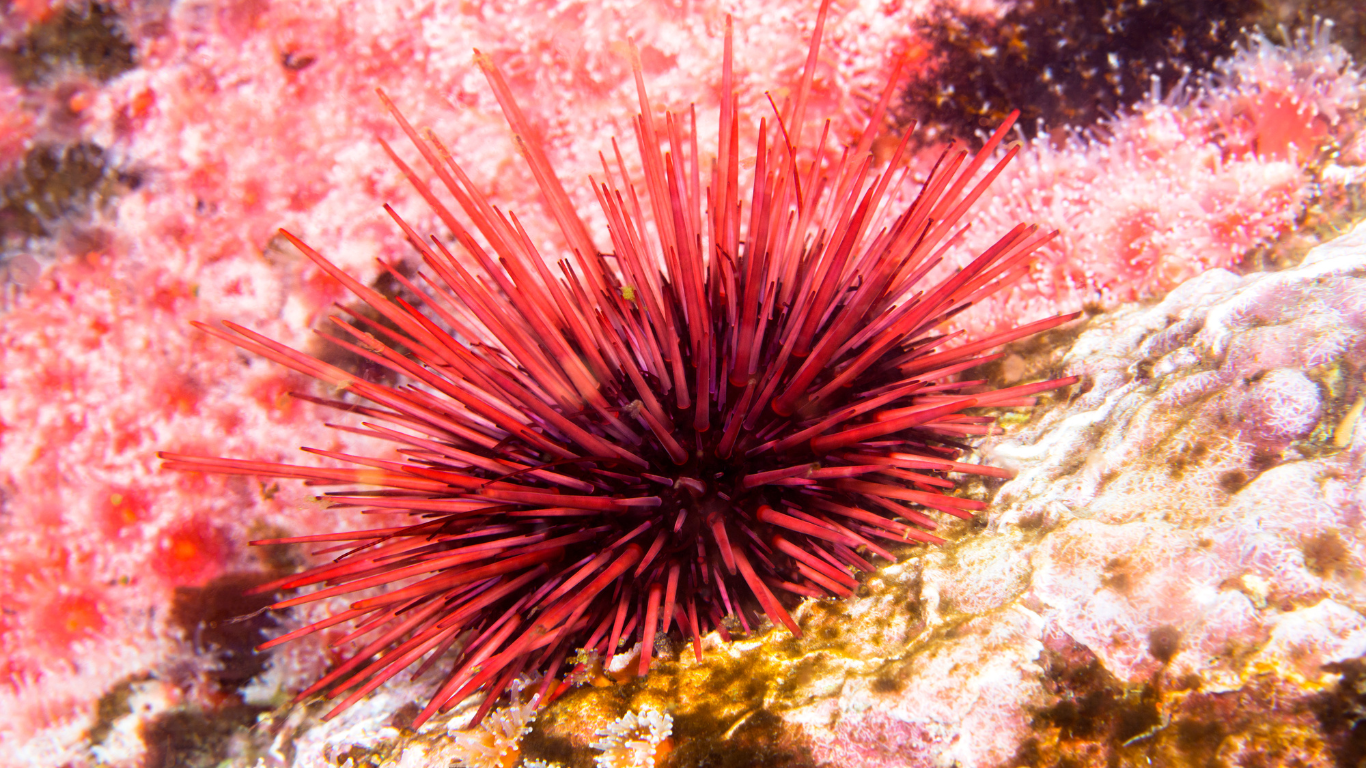
Article written by Isaaq Tomkins Originally published by The Guardian, 11 December 2025 Ecologically important Diadema africanum almost eliminated by unknown disease in Canary Islands A marine pandemic is bringing some species of sea urchin to the brink of extinction, and some populations have disappeared altogether, a study has found. Since 2021, Diadema africanum urchins in the Canary Island archipelago have almost entirely been killed by an unknown disease. There has been a 99.7% population decrease in Tenerife and a 90% decrease off the islands of the Madeira archipelago. In the same period, mass deaths have been detected in species from the Red Sea, Mediterranean, Caribbean, and western Indian Ocean. Iván Cano, a researcher at the University of La Laguna and author of the study, said, “What we have seen since 2021 is really, really concerning. We are talking about the disappearance of several species in a really short time.” Sea urchins are remarkable creatures. A relative of the starfish, they breathe through their feet, and while their spikes are a formidable defense against predators, they also provide refuge for smaller marine creatures. They are known as “ecosystem engineers” and affect their surroundings by grazing on algae, breaking down food for other animals, and acting as food for predators. By controlling algal growth, they promote the survival of hard coral, itself the habitat for thousands of marine species. Their loss has been felt in Caribbean reefs, where coral cover has halved and algal cover has increased by 85%. “What fascinated me in the first place about this species is that they change their environment. Like humans, when they are present, they modify their habitat,” said Cano. “We don’t know the cascading effect that this could have on other species.” The scientists do not know exactly what has caused this pandemic, but Cano said humans were “probably involved” in the distribution of the disease. Current theories about its transmission include shipping, changes to currents, and abnormal wave activity. Cano came to the Canary Islands to study the early life of urchins. He quickly found, to his dismay, that there were not enough young urchins to study. As a result, he changed his doctoral subject to study the rapid decline in their populations. The Diadema genus, which populates tropical waters around the world, is the most widespread and ecologically important family of urchin. There are only a few pockets of water where Diadema have not been affected by this outbreak of disease. “We aren’t yet sure how this pandemic will evolve,” Cano said. “So far, it seems not to have spread to other populations in Southeast Asia and Australia, which is good news – but we cannot rule out the possibility that the disease will reappear and potentially spread further.”
60,000 African penguins starved to death after sardine numbers collapsed – study
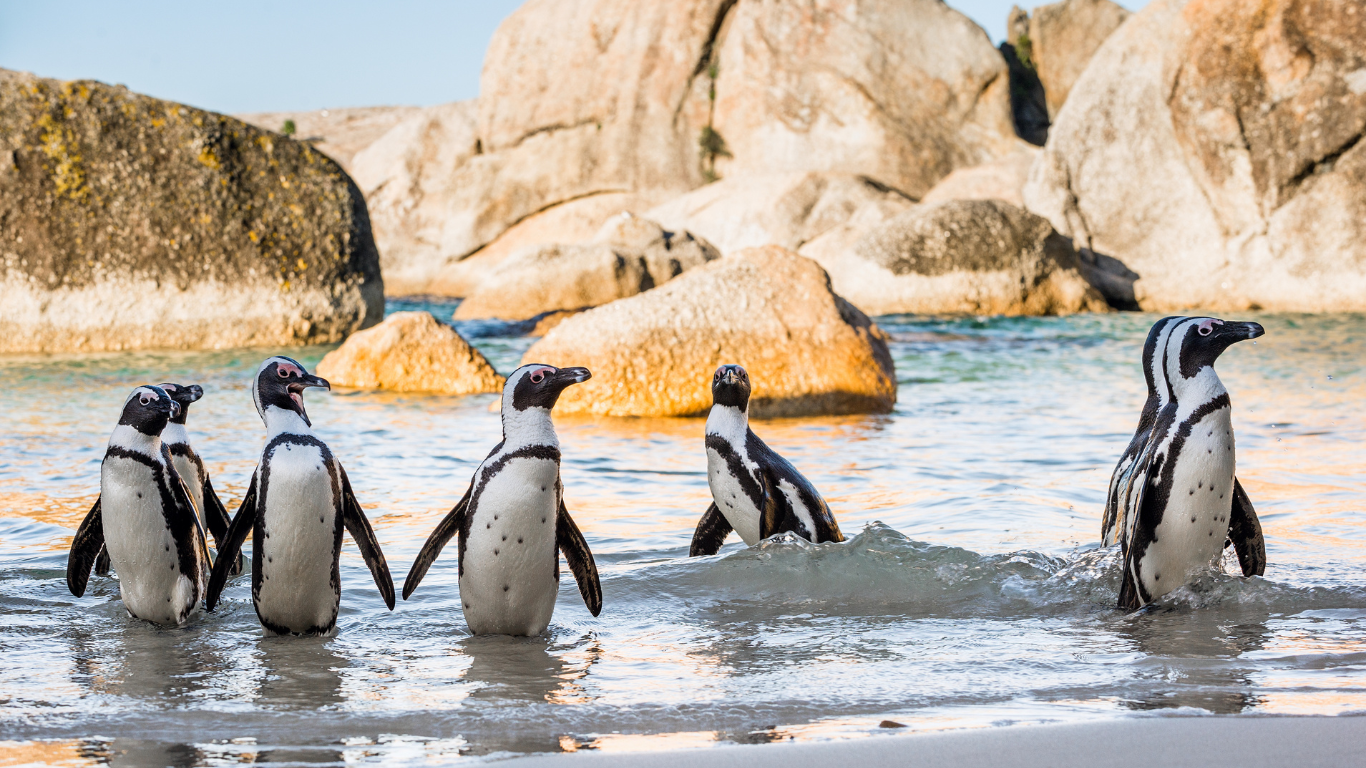
Article written by Phoebe Weston Originally published by The Guardian, 5 December 2025 The climate crisis and overfishing contributed to loss of 95% of penguins in two breeding colonies in South Africa, research finds More than 60,000 penguins in colonies off the coast of South Africa have starved to death as a result of disappearing sardines, a new paper has found. More than 95% of the African penguins in two of the most important breeding colonies, on Dassen Island and Robben Island, died between 2004 and 2012. The breeding penguins probably starved to death during the molting period, according to the paper, which said the climate crisis and overfishing were driving declines. The losses that researchers recorded in those colonies were not isolated, said the paper, which was published in Ostrich: Journal of African Ornithology. “These declines are mirrored elsewhere,” said Dr Richard Sherley, from the Centre for Ecology and Conservation at the University of Exeter. The African penguin species has undergone a population decline of nearly 80% in 30 years. African penguins shed and replace their worn-out feathers every year to protect their insulation and waterproofing. However, during the moulting period, which takes about 21 days, they have to stay on land. To survive this fasting period, they need to fatten up beforehand. “If food is too hard to find before they moult or immediately afterwards, they will have insufficient reserves to survive the fast,” said Sherley. “We don’t find large rafts of carcasses – our sense is that they probably die at sea,” he said. For every year except three since 2004, the biomass of the sardine species Sardinops sagax had fallen to 25% of its maximum abundance off the coast of western South Africa, the study found. The fish are a key food for African penguins. Changes in the temperature and salinity off the west coast of Africa have made the fishes’ spawning less successful. Levels of fishing, however, have remained high in the region. In 2024, African penguins were classified as critically endangered, with fewer than 10,000 breeding pairs left. More sustainable fisheries management could improve the penguins’ chances of survival. Conservationists are taking action on the ground, by building artificial nests to shelter chicks, managing predators, and hand-rearing adults and chicks who need rescuing. Commercial purse-seine fishing, which involves encircling a school of fish with a large net and then trapping them by closing the bottom, has been banned around the six largest penguin-breeding colonies in South Africa. It is hoped this will “increase access to prey for penguins at critical parts of their life cycle,” said the study co-author Dr Azwianewi Makhado, from the Department of Forestry, Fisheries, and the Environment in South Africa. Lorien Pichegru, a professor of marine biology at Nelson Mandela University in South Africa, who was not involved in the study, said the results were “extremely concerning” and highlighted decades-long mismanagement of small fish populations in South Africa. “The results of the study are only based on penguins’ survival until 2011, but the situation has not improved over time,” she said. Pichegru said addressing extremely low levels of small fish stocks required urgent action, “not only for African penguins but also for other endemic species depending on these stocks.”
These rare whales had never been seen alive. Then a team in Mexico sighted two
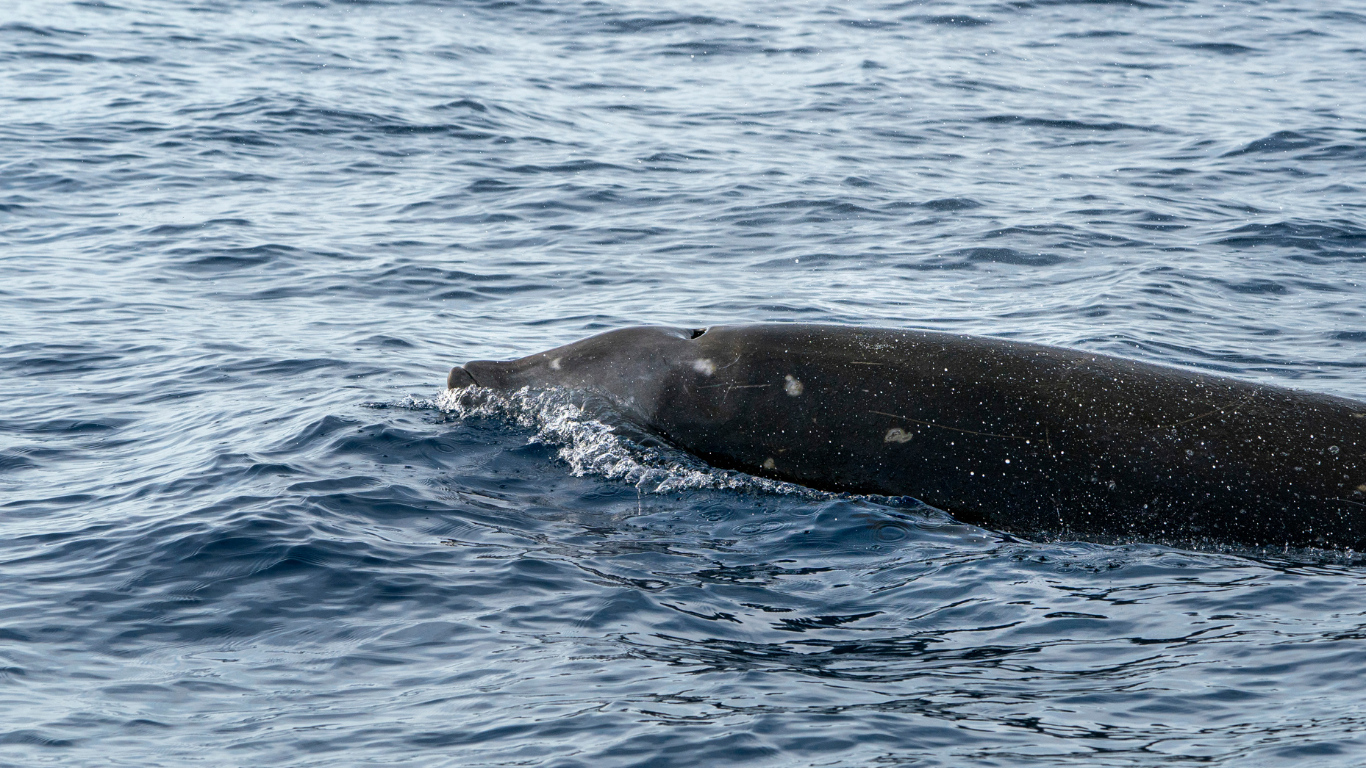
Article written by Fanni Szakál Originally published by The Guardian, 17 November 2025 The search for a ginkgo-toothed beaked whale had taken five years, when a thieving albatross nearly ruined it all It was an early morning in June 2024, and along the coast of Baja California in Mexico, scientists on the Pacific Storm research vessel were finishing their coffee and preparing for a long day searching for some of the most elusive creatures on the planet. Suddenly a call came from the bridge: “Whales! Starboard side!” For the next few hours, what looked like a couple of juvenile beaked whales kept surfacing and disappearing until finally Robert Pitman, a now-retired researcher at Oregon State University, fired a small arrow from a modified crossbow at the back of one of them. The tip carved out a small chunk of skin the size of a pencil eraser. It was this that would later prove to the scientists onboard that they were seeing a species that had never before been seen in the wild: a ginkgo-toothed beaked whale. “I can’t even describe the feeling because it was something that we had worked towards for so long,” says Elizabeth Henderson, a researcher at the US military’s Naval Information Warfare Center and lead author of the resulting paper published in Marine Mammal Science, who was also there that day. “Everybody on the boat was cheering because we had it, we finally had it.” The discovery had been five years in the making. Since 2020, Henderson and her colleagues from Mexico and the US had been tracking a group of whales producing a distinctive call, tagged as BW43, which they initially thought was Perrin’s beaked whale, another species that had never been seen in the wild. The team returned to the same spot for three years, first on a sailing boat, then on a chartered Mexican fishing boat, without any luck. Then in 2024, they teamed up with Oregon State University and set out on its research vessel, which proved to be key to their success. The ship towed an array of hydrophones to listen to underwater sounds and had an observation deck with high-powered binoculars capable of spotting whales hundreds of meters away. When it comes to finding beaked whales, such hi-tech aids are an absolute necessity. There are 24 known species, but apart from a few, very little is known about them. They are the deepest-diving mammals on Earth, spending most of their lives in the oceans, only coming up for air for a few minutes at a time, usually far away from coastlines. They are notoriously shy and easily frightened when approached by a boat. Many species have only been described based on dead animals washing ashore, and new species are still being discovered, the last as recently as 2021. “The Society for Marine Mammalogy has a list of 94 accepted species of cetaceans,” says Pitman. “A quarter of those are beaked whales, but most people have never even heard of them. These are the largest, least-known animals left on the planet.” But learning more about them is crucial. These whales are especially sensitive to military sonars, which interfere with their foraging and in some cases cause them to ascend too fast, suffering fatal injuries akin to decompression sickness in scuba divers. Knowing where these whales live can help mitigate the potential harm of sonar by avoiding military training in important beaked whale habitats. The scientists’ discovery off the Mexican coast that day in June nearly did not happen. Before the crew could scoop the arrow from the surface of the water, an albatross swept in and started to peck at the prized piece of evidence. In panic, the scientists and crew start shouting, some throwing their bread rolls from breakfast to distract or chase away the opportunistic thief. “In hindsight, it is very funny, but in the moment it was very stressful,” says Henderson. Finding ginkgo-toothed beaked whales near Mexico was a big surprise – from stranding records, they had often been found washed up on the other side of the Pacific Ocean, on the shores of Japan. The researchers analyzed existing acoustic databases for BW43, the now-confirmed call of ginkgo-toothed beaked whales, and found that these animals probably lived off the shores of California and northern Baja California. “There were two strandings on the west coast of North America previously, but they had always been assumed to have been anomalous – animals that washed ashore or were sick,” says Henderson. “But now we know that that’s not true and that they actually occupy these waters year-round.” There are many more beaked whale calls out there without a known source, as well as several species with no known call and no sightings at sea. So a key focus of research over the last few years has been to match whale calls to species, which will enable scientists to build maps of the animals’ distribution from acoustic data – the only way to track such elusive species. With a personal bucket list of seeing every whale species on the planet, and now standing at an impressive 90 out of 94, Pitman has tracked down several elusive animals. But he now thinks Perrin’s might be the hardest to find. There have only been six known strandings, all along the coast of California and all in a heavily decomposed state. “I think those are just vagrants. It’s someplace else, and we are not quite sure where to go look for this thing,” he says.
Puffins return to island for first time in at least 25 years
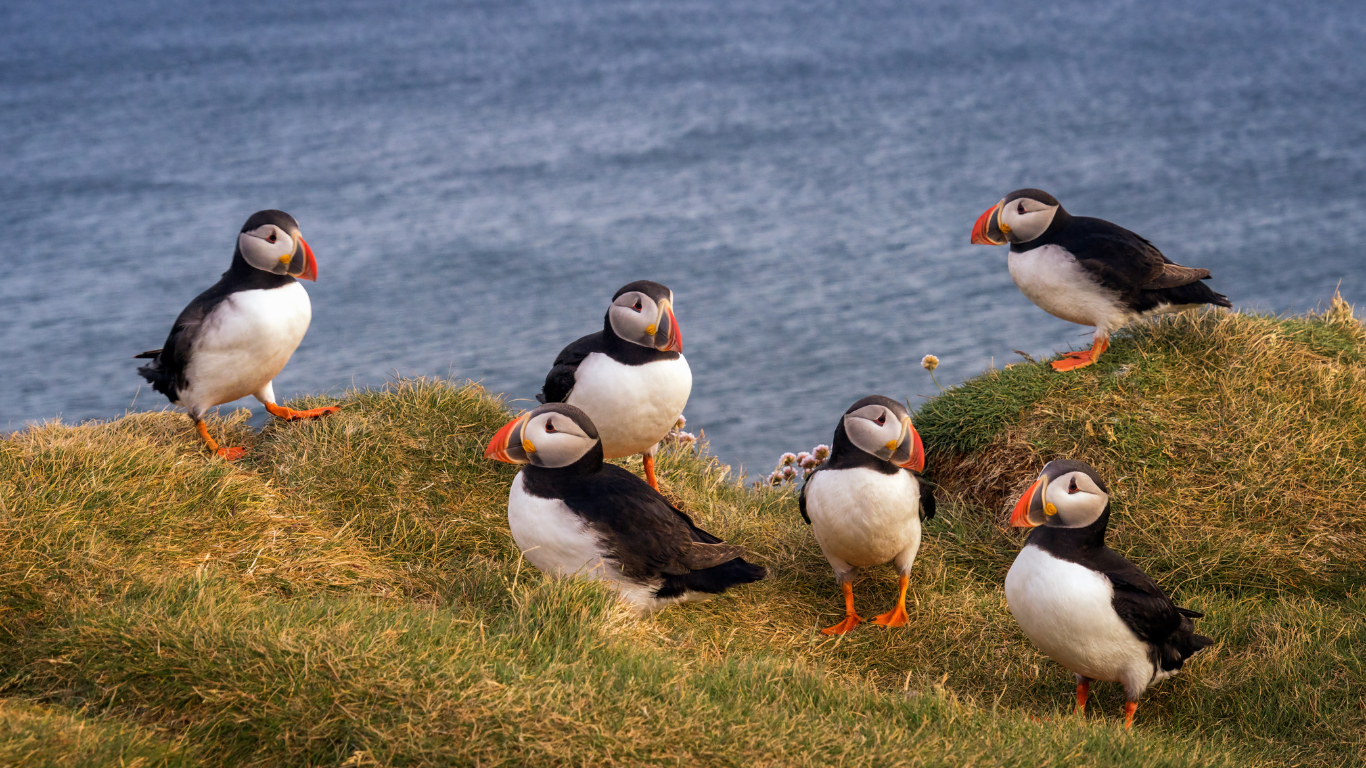
Article written by Louise Cullen Originally published by BBC, 14 November 2025 Puffins have been seen on the Isle of Muck in County Antrim for the first time in years, after a major scheme to remove invasive brown rats. It is the first time the vulnerable seabird has been recorded on the tiny island off Islandmagee since Ulster Wildlife took over the management of the seabird sanctuary 25 years ago. A program of rat eradication began in 2017, and winter grazing has now been implemented to keep vegetation low, so predator cover is reduced. The charity’s nature reserves manager, Andy Crory, said the discovery of the puffins “proves seabird restoration works.” Five puffins were spotted in 2024. Then in spring this year, cameras set up as part of the rat eradication program caught two puffins coming and going from a nesting burrow on the cliff ledges. Their behavior, bringing food back to the nest, was a positive sign that they were breeding. For Mr. Crory, tales of puffins once breeding on the Isle of Muck “felt more like folklore,” but the myth is now becoming a reality. “Seabirds face immense challenges globally, with 24 of the 25 breeding species at risk of local or global extinction,” he said. “So, while a handful of puffins on a tiny island may seem small, this moment is huge – it proves that seabird restoration works.” Hope for pufflings next year The puffin sightings are the latest in a long line of positive signs of the impact conservation management has been having on the island. Annual surveys have begun to record steady increases in eider ducks, guillemots, herring gulls, and lesser-backed gulls on and around the island, year on year. It is not known for certain that the puffins seen this year managed to successfully rear a chick. But Mr. Crory is staying positive. “Our hope is that the Isle of Muck will become a thriving stronghold for puffins and, in time, tempt back other lost species like the Manx shearwater. “For now, we’re waiting with great excitement to see if the first ‘pufflings’ – baby puffins – appear on the cliffs next summer. “That truly would be the icing on the cake.” Puffins are a priority species in Northern Ireland and red-listed in the UK, putting them in the highest conservation concern bracket due to food shortages, climate change, and predation by invasive species. They spend most of their lives at sea, only returning to land to breed in spring and summer at the same nesting site with the same partner, year after year. Each pair raises a single chick during the breeding season. Ulster Wildlife said rats are a major issue for many seabird islands across the UK, posing a threat to eggs and chicks. The Isle of Muck is not accessible to the public, and it is hoped that isolation will help the birds to return safely next summer.
Long time, no sea: more than 100m red crabs migrate on Christmas Island, delighting conservationists
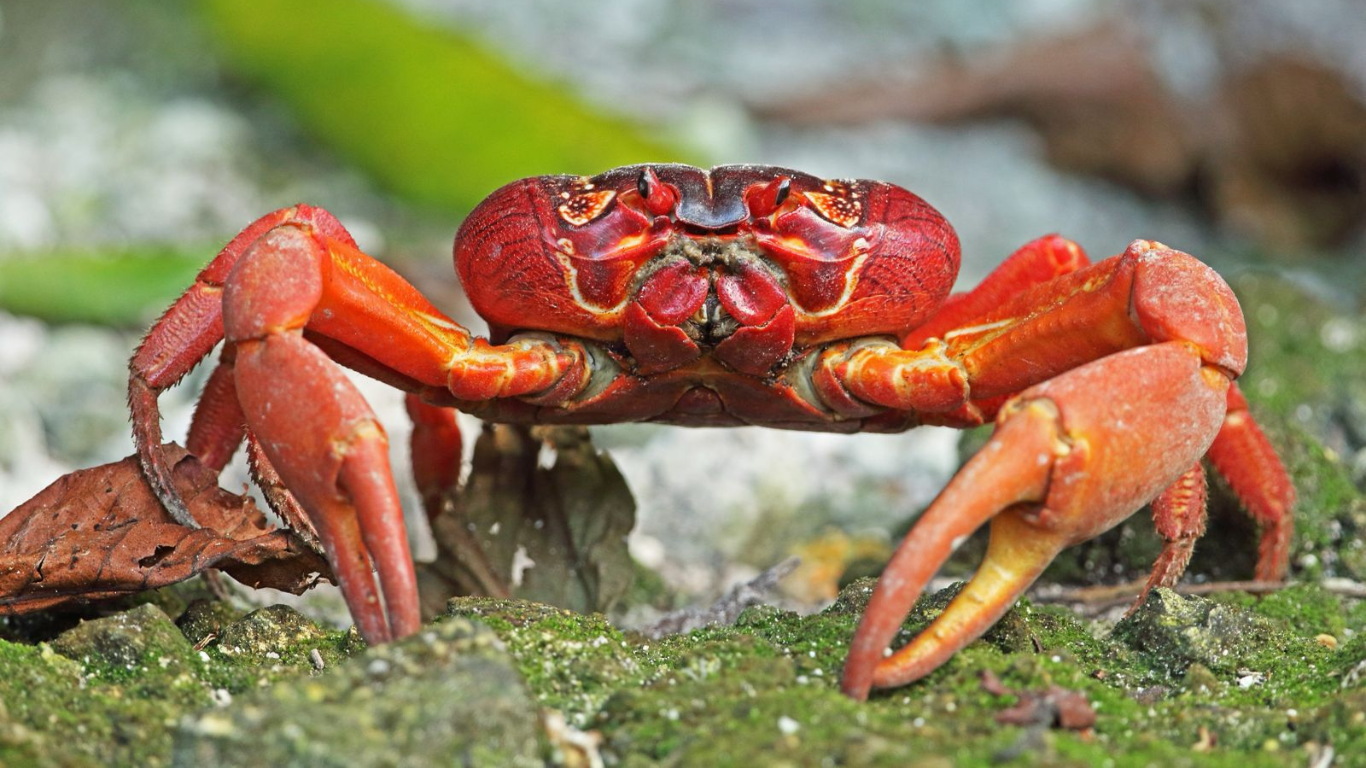
Article written by Australian Associated Press Originally published by The Guardian, 25 October 2025 Authorities report progress in controlling pests – the yellow ant invaders – that are threatening the charismatic crustaceans. Christmas Island’s red crabs begin their famed annual migration as authorities report progress to control pests threatening the charismatic crustaceans. More than 100 million red crabs making their annual trek from Christmas Island’s rainforest to the coast are creating a migration spectacle that occupies countless bucket lists. Their dominance of the landscape is an eye-catching phenomenon loved by tourists and treasured by residents. For the island’s conservationists, it’s a reassuring sight. Brendon Tiernan, Christmas Island National Park’s senior field program co-ordinator for threatened species programs, said the war had not been won against the yellow ant invaders that threatened the red crabs. “But we’ve had a significant impact,” he said. Malaysian micro-wasps were brought in by scientists in 2016 to target a preferred food source of the ants. They’ve helped manage the pests, which are highly territorial and spray formic acid on passing crabs, dehydrating and eventually killing them. Tiernan said the tiny winged bio-control agents had done a “fantastic job” in suppressing the lac scale insect, the symbiotic pest species that produces the honeydew substance eaten by the ants. “We haven’t won the war,” he said, with ant colonies tapping into other food sources. Before the wasp’s introduction, it was estimated roughly two-thirds of the crab population was decimated throughout the early 2000s into the mid-2010s. Fast-forward to 2025 and red crab numbers could be breaching the 180 million mark – a phenomenal recovery in just 10 years, Tiernan said. Bumper years for returning baby crabs have further helped boost numbers. It’s not clear why so many crabs returned in those years however, with eggs at the mercy of currents and predators once left adrift in the ocean. Christmas Island red crabs spend most of their lives on land, returning to the water every year to breed. Before the last quarter of the moon, females emerge from their burrows and release their eggs into the ocean. Spawning typically occurs like clockwork in line with the lunar cycle, although the length of the migration can vary, triggered by the first heavy rains of the wet season, usually around October or November. Migration started a little earlier than usual this year, which was expected due to a negative Indian Ocean Dipole and warmer-than-usual waters – ripe conditions for rainfall in the region. It was not yet clear if and how climate change was impacting crabs or their migration patterns, although Mr Tiernan said the island was expected to experience more severe dry periods as global temperatures rose, accompanied by more intense downpours once they finally arrived. The annual migration creates plenty of work for park rangers, who use rakes to keep them clear of the busiest roads. Crab safety is taken seriously, with eco-hotel Swell Lodge’s owner, Chris Bray, developing a contraption to put on the front of vehicles to gently steer them out of harm’s way. Bray said he was forced to develop the “crab mobile” to travel to and from the lodge, with other residents typically able to stick with cleared and drivable roads. The design has changed little in the six years it has been in use. “The most important thing was it had to be durable, basic, easy to make and repair, and had to work even on the pretty rough roads around here, following the contours even in an eroded four-wheel-drive track,” he said.
UN High Seas Treaty to come into effect
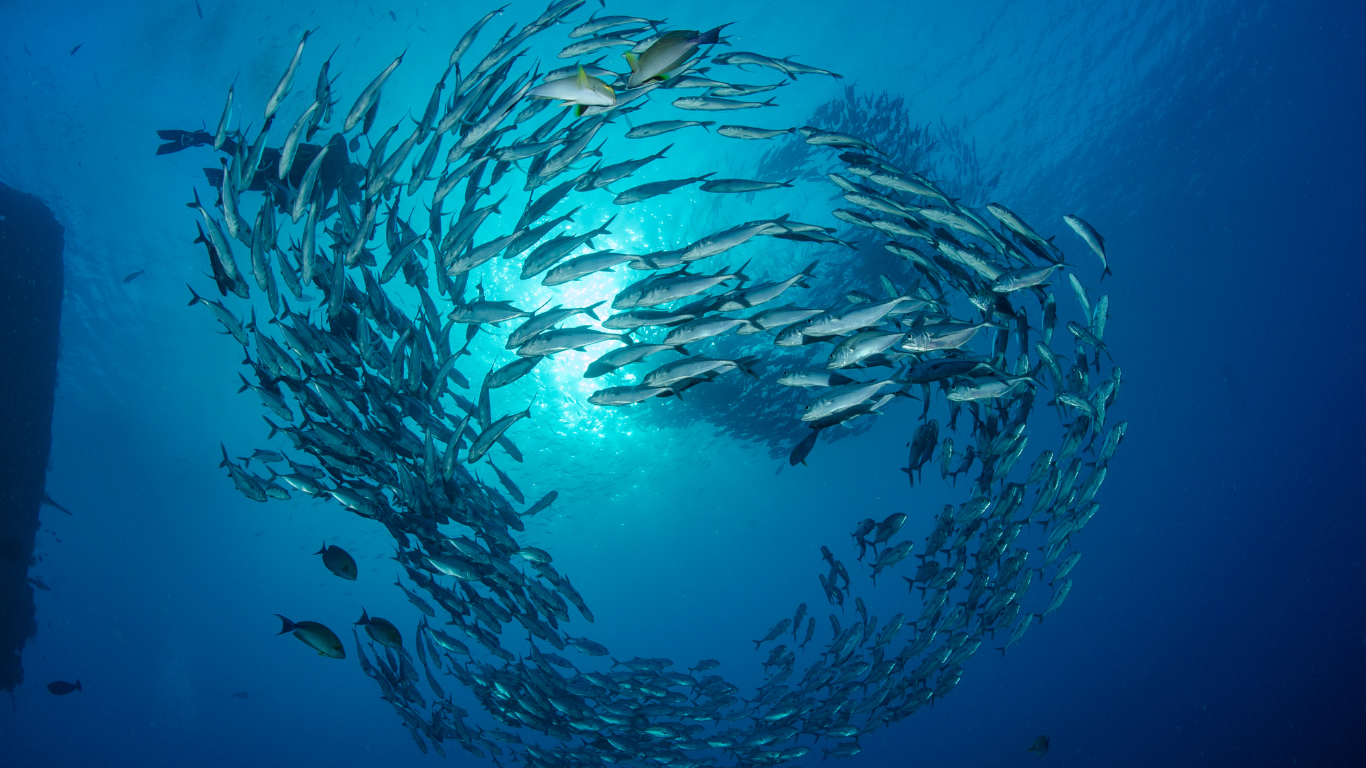
Article written by Freight News Originally published by Freight News, 30 September 2025 The UN High Seas Treaty has achieved a milestone with its sixtieth ratification, paving the way for stronger protection of international waters that are critical to global shipping and trade. UN Secretary-General, António Guterres, recently announced the latest ratification, which will see the treaty, known as the Agreement on Marine Biological Diversity of Areas beyond National Jurisdiction (BBNJ) enter force in 2026. “The BBNJ agreement has reached the required threshold of ratifications for entry into force,” said Guterres. “I welcome this historic achievement for the ocean and for multilateralism. In two years, states have turned commitment into action – proving what is possible when nations unite for the common good.” The treaty, two decades in development, will become legally binding on January 17, 2026, following a 120-day preparation period after Morocco’s ratification on September 19. It addresses overfishing, pollution, and climate impacts on marine life, which supports $2.5 trillion in global economies, including freight sectors reliant on open seas for routes. “Covering more than two-thirds of the ocean, the agreement sets binding rules to conserve and sustainably use marine biodiversity, share benefits more fairly, create protected areas, and advance science and capacity building,” said Guterres. “As we confront the triple planetary crisis of climate change, biodiversity loss, and pollution, this agreement is a lifeline for the ocean and humanity.” “I urge every state to join without delay, and all partners to support a swift, full implementation. The ocean’s health is humanity’s health.” The treaty promises marine protected areas covering 30% of the high seas by 2030, potentially reducing illegal fishing and pollution from vessels. Currently, only 1% is protected, leaving routes vulnerable to overexploitation. The BBNJ fosters cooperation on environmental impact assessments and technology transfer, urging regional bodies to align with UN frameworks. Fourteen African countries have ratified the agreement, including South Africa, which signed it in June, and the Seychelles, which was the first country on the continent to ratify the treaty.
“They Treat Them Like Machines”: Scientists Outraged As First Octopus Farm Unleashes Global Storm Over Cruelty And Environmental Collapse
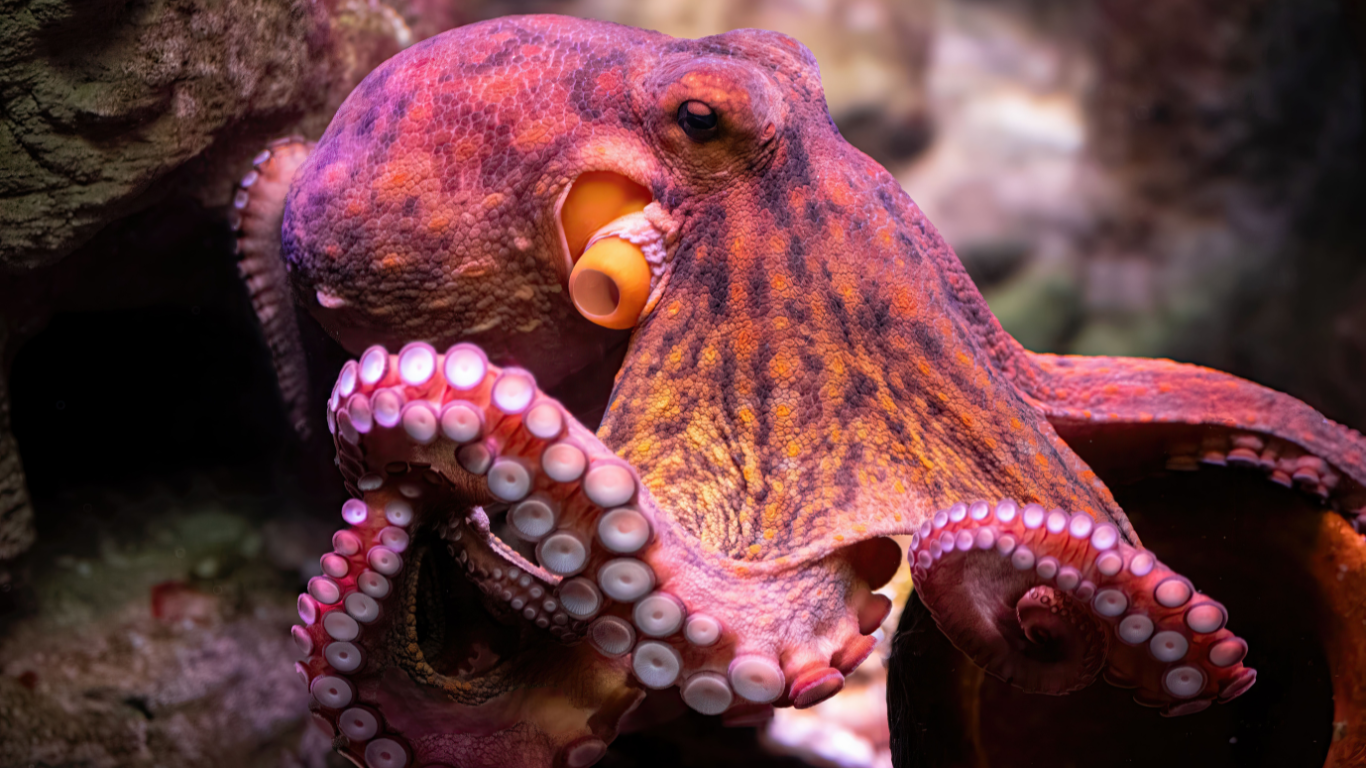
Article written by Gabriel Cruz Originally published by Energy Reporters, 23 August 2025 The unveiling of the world’s first commercial octopus farm by Nueva Pescanova has sparked a global debate, intertwining ethical concerns, scientific insights, and environmental implications, as humanity grapples with the complexities of farming such intelligent creatures. Amidst a world increasingly conscious of ethical considerations in food production, the proposal for the first commercial octopus farm by Nueva Pescanova has ignited a complex debate. As efforts to conserve wild octopus populations transition toward aquaculture, the ethical and environmental dimensions of farming such sentient creatures have come under intense scrutiny. This controversy touches on the intelligence of octopuses, the welfare implications of their farming, and broader environmental concerns. Here, we explore the multifaceted discussions surrounding this issue, examining the scientific, ethical, and legislative responses that have emerged globally. The Cognitive Abilities of Octopuses Octopuses are renowned for their remarkable intelligence, often drawing comparisons to terrestrial mammals. With around 500 million neurons, their cognitive abilities are comparable to those of dogs. This intelligence is distributed throughout their bodies, with two-thirds of neurons located in their arms, allowing for autonomous arm movement and decision-making. Such a sophisticated neural architecture enables octopuses to perform complex tasks like solving puzzles, using tools, and even learning from other octopuses. Documented cases highlight their problem-solving skills. A notable example involves an octopus named Otto, who managed to short-circuit an aquarium’s power by squirting water at a light, reflecting problem-solving and possibly a sense of mischief. Additionally, octopuses have been observed constructing dens and opening jars from the inside, further demonstrating their dexterity and cognitive depth. These abilities have fueled the debate over the moral implications of farming such intelligent creatures. Ethical Implications of Octopus Farming The ethical concerns related to octopus farming are grounded in the animal’s sentient nature. A review by the London School of Economics concluded that octopuses can experience both pleasure and pain, prompting the UK to recognize them under the Animal Welfare (Sentience) Act. This recognition is unique among invertebrates and highlights the need for humane treatment. Nueva Pescanova’s farming proposal has raised alarms regarding the welfare of octopuses. The proposed high-density tank conditions conflict with their solitary nature, potentially leading to stress and aggression. Moreover, the use of ice slurry as a killing method has been condemned for causing prolonged suffering. Experts, including neuroscientists, argue that such practices are unacceptable for creatures of advanced cognition, calling for more humane alternatives. Legislative Responses and Global Reactions The proposal for commercial octopus farming has sparked swift legislative responses. In the United States, Washington state has banned octopus farming, citing ethical and environmental concerns. Federal legislation, known as the OCTOPUS Act, has been introduced to prohibit such farming nationwide and restrict imports of farmed octopus. These legislative actions reflect a growing recognition of octopuses as intelligent beings undeserving of commercial exploitation. On an international level, the backlash is gaining traction. The European Union faces mounting pressure to address the ethical implications of octopus farming, with protests occurring in Spain and beyond. Public sentiment is increasingly opposed to what is perceived as a new frontier of animal cruelty. As awareness of octopus intelligence and the potential for suffering spreads, calls for responsible and ethical treatment are resonating globally. Environmental and Scientific Considerations While proponents of octopus farming argue it could relieve pressure on wild populations, critics point to significant environmental concerns. Octopuses are carnivorous, requiring substantial fish resources for feed, which could strain already depleted fish stocks. This practice runs counter to conservation efforts aimed at sustainable resource management. Furthermore, the scientific community is grappling with the moral implications of farming such intelligent creatures. Documentaries like “My Octopus Teacher” have brought to light the emotional depth and complex social behaviors of octopuses, challenging traditional views. As research continues to uncover the genetic markers of intelligence shared between humans and octopuses, questions about the ethical use of this knowledge emerge. Should it be leveraged for industrial purposes, or should it foster a deeper appreciation and protection of these remarkable animals? The debate over the world’s first commercial octopus farm highlights a critical moment in our relationship with intelligent marine life. Scientific insights into octopus cognition underscore the profound ethical and environmental questions surrounding their farming. As legislative actions and public protests intensify, the future of octopus farming remains uncertain. Will society prioritize ethical considerations and conservation, or will economic interests dominate the discourse? The answer may shape how we engage with the natural world for generations to come. This article is based on verified sources and supported by editorial technologies.
Orcas are bringing humans gifts of food – but why?
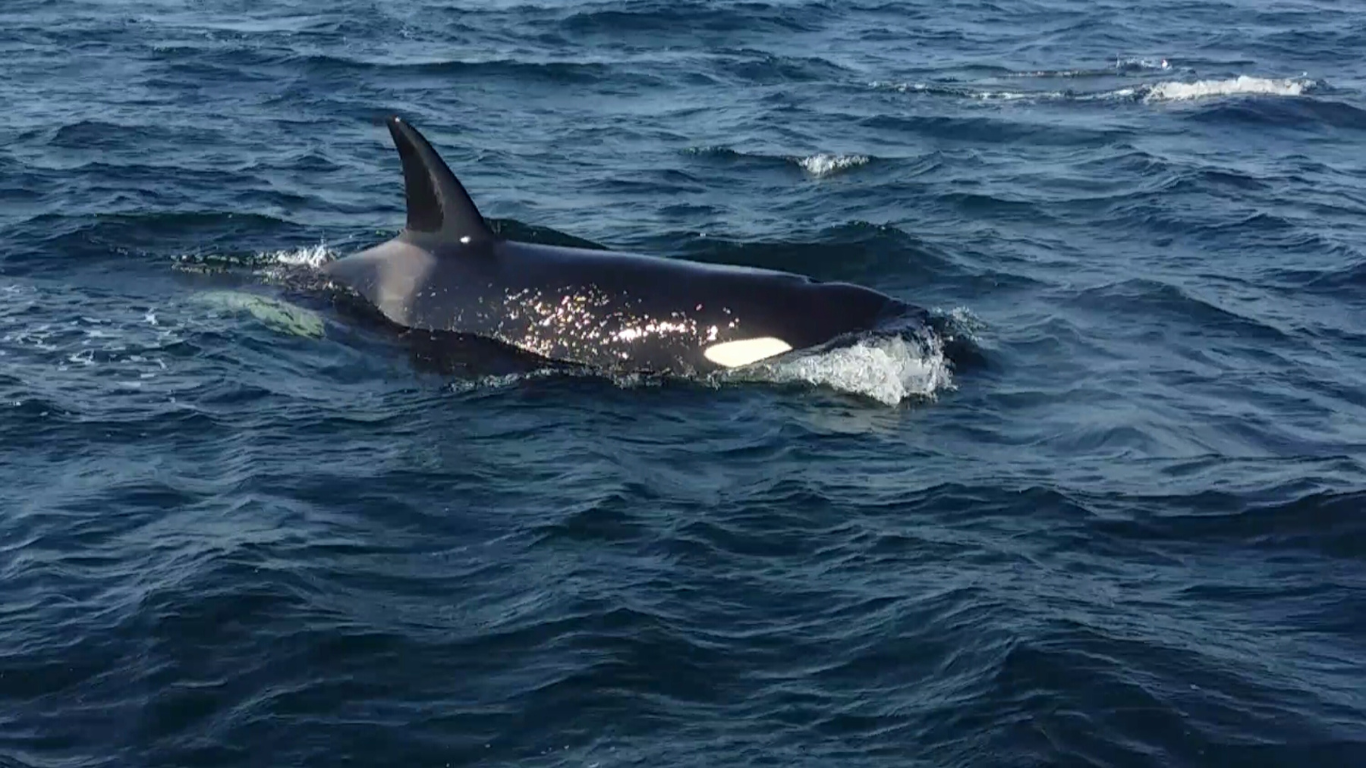
Article written by Issy Ronald Originally published by CNN Science (July 9, 2025) When researcher Jared Towers set up his cameras underwater to observe a pair of killer whales, he saw something strange. One of the orcas, a juvenile female, “approached a camera I had in the water to film her younger brother and then opened her mouth and let out a dead seabird,” Towers, the executive director of Bay Cetology, a Canadian team of marine biologists based in Alert Bay, British Columbia, told CNN. She closed her mouth, paused, apparently watching for Towers’ reaction and hung in the water while the dead seabird floated up above her. Then, after a few seconds, she rolled around towards the camera and swallowed the bird again. A few years later, Towers saw another young female killer whale displaying the same behavior – this time, however, the orca “dropped a freshly killed harbor seal pup right beside my boat.” Towers discussed these incidents with his colleagues around the world, discovering that they too had been gifted food by killer whales. When he collated the instances, he found 34 cases of killer whales presenting humans with food between 2004 and 2024. He and his colleagues laid out their findings in a paper published recently in the Journal of Comparative Psychology where they attempt to unravel the reasons why killer whales might be doing this. Perhaps, they hypothesized, the killer whales are curious and exploring how humans will react to a gift. Maybe they are playing, though they largely discount this theory because whales of all ages, rather than just juveniles, provisioned food. Or, perhaps it is something more sinister – killer whales have been known to use prey to attract other species and then kill them, but there is no record of orcas ever killing humans in the wild. “I don’t think it’s easy to suggest there is one reason for this behavior because there are underlying mechanisms and proximate causes,” Towers said. “The main underlying mechanism is simply that they can afford to offer us food and the main proximate cause may be that they are doing so as a way to explore and subsequently learn more about us.” In all but one of the cases documented, the killer whales initially waited for a response from the humans before most of them retrieved the food, though some simply abandoned it and some even tried to gift it again. The humans ignored the food almost all the time; they took it only four times and in three of those cases, they threw it back into the water afterward. Pets bring their owners gifts – think of the dead mice or birds that cats leave outside the door – and animals have been observed giving gifts to each other. But until now, there have been barely any recorded cases of wild predators giving gifts to humans, aside from a few instances of false killer whales – a species of dolphin – and leopard seals offering people food. “In a way, it’s not surprising, because… everybody who’s on the water with (killer whales) has experienced how inquisitive and curious they are and have had interactions where you know there’s something going on between us and them,” Hanne Strager, a researcher and author who wrote “The Killer Whale Journals,” who wasn’t involved in the study, told CNN. Killer whales are one of the most intelligent animals; only humans have a larger brain relative to their body size, according to the study. And they kill much larger animals relative to their own body size than other whales and dolphins, meaning they can have more food to share around. They are also believed to have spindle neurons in their brains – a type of neuron known to be associated with empathy – said Philippa Brakes, a behavioral ecologist at the University of Exeter specializing in whales and dolphins who wasn’t involved in the study. While she added that determining motivation is difficult “because we can’t interview them,” she suggested to CNN that it could be “altruistic” or just a “basic biological function” mimicking “something you might do to a juvenile.” The researchers found that it didn’t matter where in the world the whale was or whether it was male or female, a calf, a juvenile or adult – they all displayed this behavior. It fits into a wider pattern of killer whales often initiating interactions with humans and boats, offering further insight into their lives. And Towers hopes it serves as a reminder that “while our species is obviously more technologically advanced than any other on the planet, we do share it with other highly evolved species whose welfare must be considered in our actions.”
We’re close to translating animal languages – what happens then?
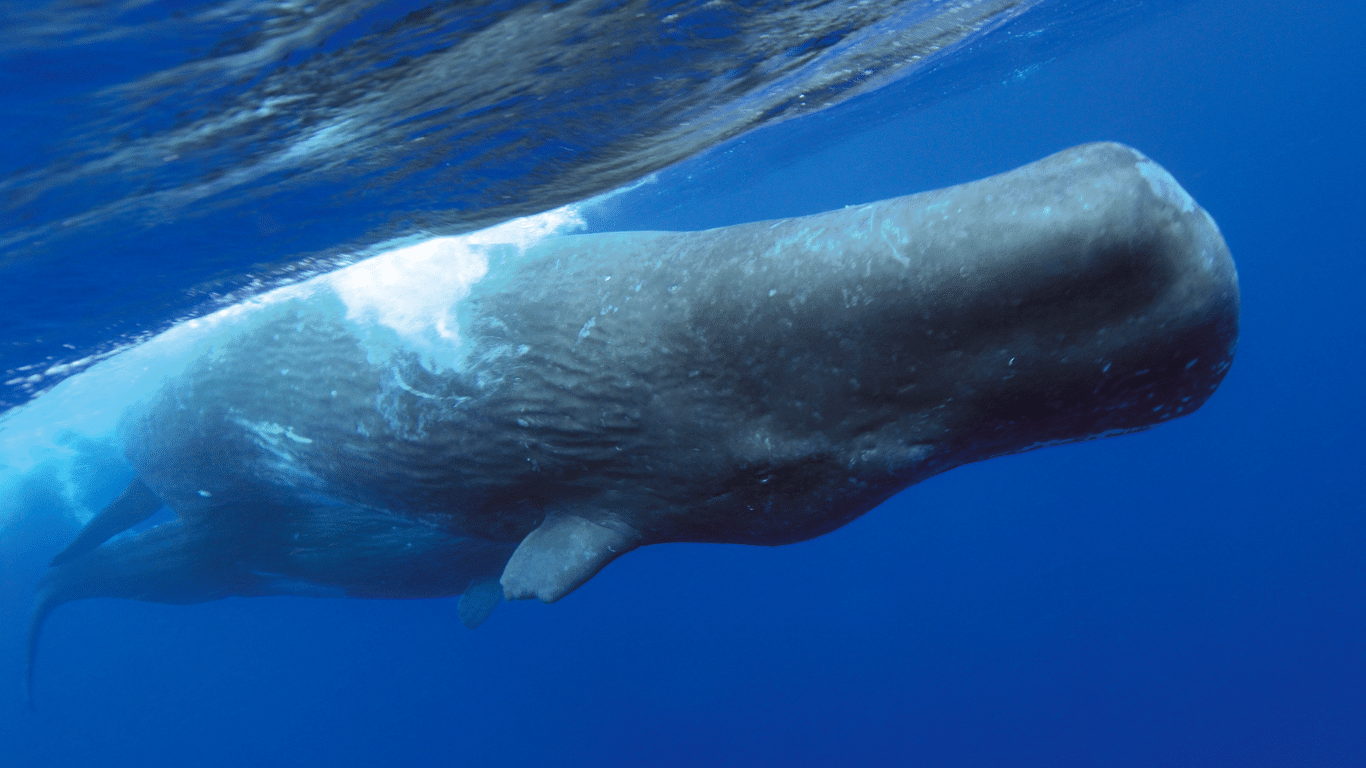
Article written by David Farrier Originally published by The Guardian (June 1, 2025) AI may soon be able to decode whalespeak, among other forms of communication—but what nature has to say may not be a surprise Charles Darwin suggested that humans learned to speak by mimicking birdsong: our ancestors’ first words may have been a kind of interspecies exchange. Perhaps it won’t be long before we join the conversation once again. The race to translate what animals are saying is heating up, with riches as well as a place in history at stake. The Jeremy Coller Foundation has promised $10 million to whichever researchers can crack the code. This is a race fueled by generative AI; large language models can sort through millions of recorded animal vocalizations to find their hidden grammars. Most projects focus on cetaceans because, like us, they learn through vocal imitation, and also like us, they communicate via complex arrangements of sound that appear to have structure and hierarchy. Sperm whales communicate in codas—rapid sequences of clicks, each as brief as 1,000th of a second. Project Ceti (the Cetacean Translation Initiative) is using AI to analyze codas in order to reveal the mysteries of sperm whale speech. There is evidence the animals take turns, use specific clicks to refer to one another, and even have distinct dialects. Ceti has already isolated a click that may be a form of punctuation, and they hope to speak Whaleish as soon as 2026. The linguistic barrier between species is already looking porous. Last month, Google released DolphinGemma, an AI program to translate dolphins, trained on 40 years of data. In 2013, scientists using an AI algorithm to sort dolphin communication identified a new click in the animals’ interactions with one another, which they recognized as a sound they had previously trained the pod to associate with sargassum seaweed—the first recorded instance of a word passing from one species into another’s native vocabulary. The prospect of speaking dolphin or whale is irresistible. And it seems that they are just as enthusiastic. In November last year, scientists in Alaska recorded an acoustic “conversation” with a humpback whale called Twain, in which they exchanged a call-and-response form known as “whup/throp” with the animal over a 20-minute period. In Florida, a dolphin named Zeus was found to have learned to mimic the vowel sounds A, E, O, and U. But in the excitement we should not ignore the fact that other species are already bearing eloquent witness to our impact on the natural world. A living planet is a loud one. Healthy coral reefs pop and crackle with life. But soundscapes can decay just as ecosystems can. Degraded reefs are hushed deserts. Since the 1960s, shipping and mining have raised background noise in the oceans by about three decibels a decade. Humpback whale song occupies the same low-frequency bandwidth as deep-sea dredging and drilling for the rare earths that are vital for electronic devices. Ironically, mining the minerals we need to communicate cancels out whales’ voices. Humpback whale songs are incredible vocal performances, sometimes lasting up to 24 hours. “Song” is apt: they seem to include rhymed phrases, and their compositions travel the oceans with them, evolving as they go in a process called “song revolutions”, where a new cycle replaces the old. (Imagine if Nina Simone or the Beatles had erased their back catalogue with every new release.) They’re crucial to migration and breeding seasons. But in today’s louder soundscape, whale song is crowded out of its habitual bandwidth and even driven to silence—up to 1.2 km away from commercial ships, humpback whales will cease singing rather than compete with the noise. In interspecies translation, sound only takes us so far. Animals communicate via an array of visual, chemical, thermal, and mechanical cues, inhabiting worlds of perception very different to ours. Can we really understand what sound means to echolocating animals, for whom sound waves can be translated visually? The German ecologist Jakob von Uexküll called these impenetrable worlds umwelten. To truly translate animal language, we would need to step into that animal’s umwelt—and then, what of us would be imprinted on her, or her on us? “If a lion could talk,” writes Stephen Budiansky, revising Wittgenstein’s famous aphorism in Philosophical Investigations, “we probably could understand him. He just would not be a lion any more.” We should ask, then, how speaking with other beings might change us. Talking to another species might be very like talking to alien life. It’s no coincidence that Ceti echoes NASA’s Seti – Search for Extraterrestrial Intelligence—Institute. In fact, a SETI team recorded the whup/throp exchange, on the basis that learning to speak with whales may help us if we ever meet intelligent extraterrestrials. In Denis Villeneuve’s movie Arrival, whale-like aliens communicate via a script in which the distinction between past, present, and future times collapses. For Louise, the linguist who translates the script, learning Heptapod lifts her mind out of linear time and into a reality in which her own past and future are equally available. The film mentions Edward Sapir and Benjamin Whorf’s theory of linguistic determinism—the idea that our experience of reality is encoded in language—to explain this. The Sapir-Whorf hypothesis was dismissed in the mid-20th century, but linguists have since argued that there may be some truth to it. Pormpuraaw speakers in northern Australia refer to time moving from east to west, rather than forwards or backwards as in English, making time indivisible from the relationship between their body and the land. Whale songs are born from an experience of time that is radically different from ours. Humpbacks can project their voices over miles of open water; their songs span the widest oceans. Imagine the swell of oceanic feeling on which such sounds are borne. Speaking whale would expand our sense of space and time into a planetary song. I imagine we’d think very differently about polluting the ocean soundscape so carelessly. Where it counts, we are perfectly able to understand what nature has to say;
Time is running out to stop the spread of rabies on South Africa’s coasts.
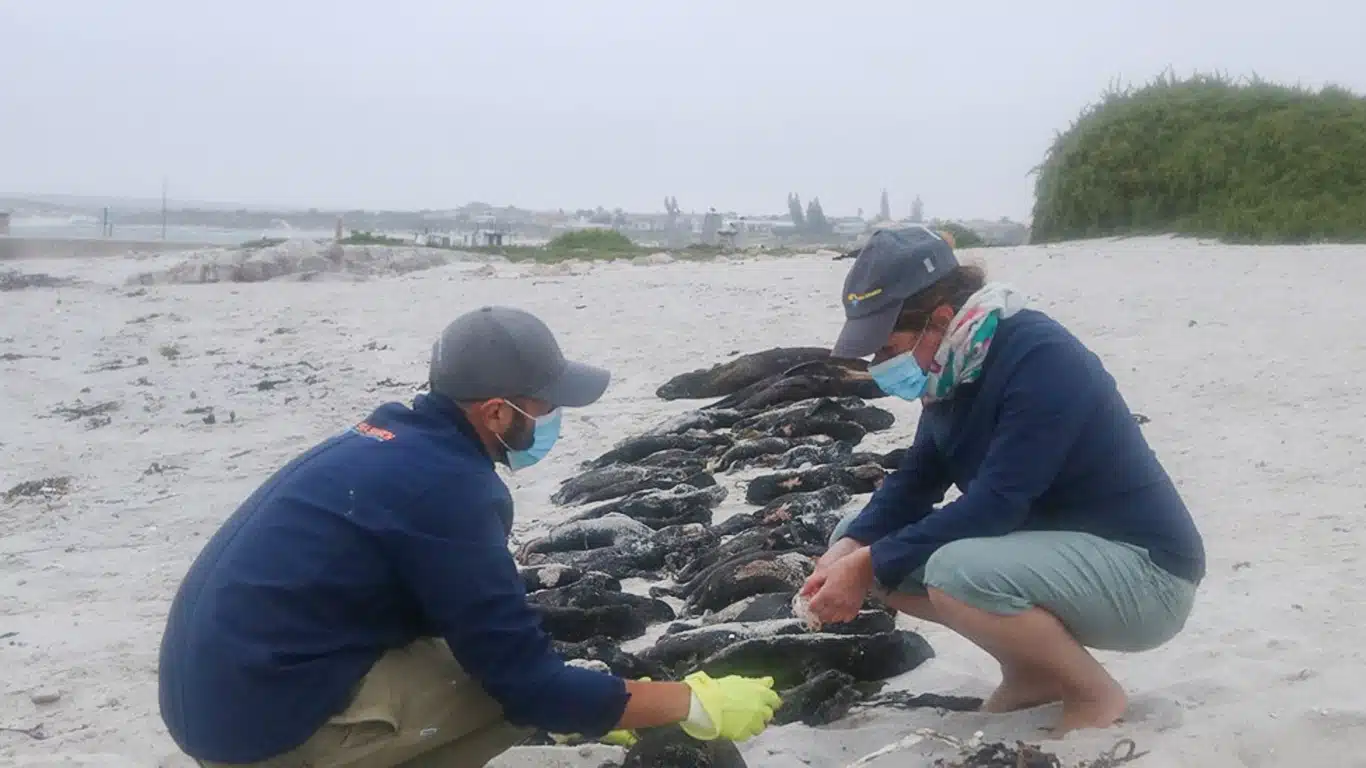
A deadly threat is emerging off the coast of South Africa – one that has the potential to develop into a widespread marine catastrophe. For the first time ever, rabies is spreading through the Cape fur seal population in South Africa, sparking fears of a far-reaching marine pandemic. Without immediate action, this devastating virus could spread rapidly, endangering countless more marine mammals and triggering an ecological crisis. This is not just a disease outbreak – it is a potential ecological and public health crisis. For the first time ever, rabies is spreading through the Cape fur seal population, sparking fear that the virus will infect other marine mammals. Credit: Sea Search Rescue and Conservation/Herbert Gawrisch The first case in Cape fur seals was confirmed in May 2024. Since then, South African scientists have been struggling to track the virus as it spreads amongst local colonies. In the final stages of infection, the rabies virus essentially ‘commands’ the animal to bite, transmitting the virus through saliva. According to the National Institute for Communicable Diseases, “Multiple reports of attacks on humans by aggressive Cape fur seals have been reported over the last few months along the Cape coastline. This is the first incidence of rabies being maintained in a marine mammal population.” We know the virus can infect humans and land mammals. What we don’t know is whether it can jump species yet again, potentially infecting other marine mammals such as whales, orcas and other seal species. Local scientists are battling to understand this terrifying new development. To prevent this from becoming a full-blown pandemic, they need all the help they can get. The deadly disease caused by a virus, often manifests with aggressive behavior in infected animals. This aggression is a key factor in the virus’s transmission. Credit: Sea Search Rescue and Conservation If we ignore this terrible threat, the virus could spread to other marine species, coastal wildlife, and humans. Rabies is a fatal disease; if it isn’t treated immediately after infection, contracting full-blown rabies is a death sentence. We must stop the spread now to prevent countless deaths, both on land and at sea. Animal Survival International (ASI) has partnered with Sea Search, a marine research NGO that was among the first to identify this unprecedented outbreak. Their team of scientists is leading the response, tracking infected seals, conducting post-mortems, mapping behavioral changes, and gathering critical data from coastal colonies to understand how rabies is spreading through the marine ecosystem. But their only surveillance boat was recently destroyed, and Sea Search is now unable to continue their vital, life-saving work. The Sea Search surveillance boat was critical in the monitoring of the spread of rabies in Southern Africa’s marine mammals – we must help the research team return to the sea immediately. Credit: Sea Search Rescue and Conservation The surveillance boat was destroyed in a recent transport accident. Without it, they are unable to access remote colonies, losing critical time, data, and the ability to contain the outbreak at its source. Rabies is continuing to spread, and for every day without this vessel in the water, more animals, ecosystems and people are at risk. This surveillance vessel is not just a boat — it is the frontline defense against the spread of rabies across the world’s oceans. With your support, we can help the Sea Search rabies research team return to the sea immediately, so they can: Reach remote seal colonies rapidly and consistently to monitor the spread of the infection Administer vaccines and facilitate medical intervention for suspected infected animals Coordinate with veterinarians and epidemiologists to understand the epidemic and develop effective solutions Humanely manage infected individuals to stop the spread Protect the seal colonies from fishermen and others who may try to kill the seals out of fear Getting Sea Search back on the water will give us the best chance of containing this virus before it spreads further through the marine ecosystem — and, potentially, beyond. Please, donate today to help protect marine life, coastal ecosystems and human communities from the spread of this deadly, fast-moving virus.
Whaling season cancelled for second consecutive year in Iceland
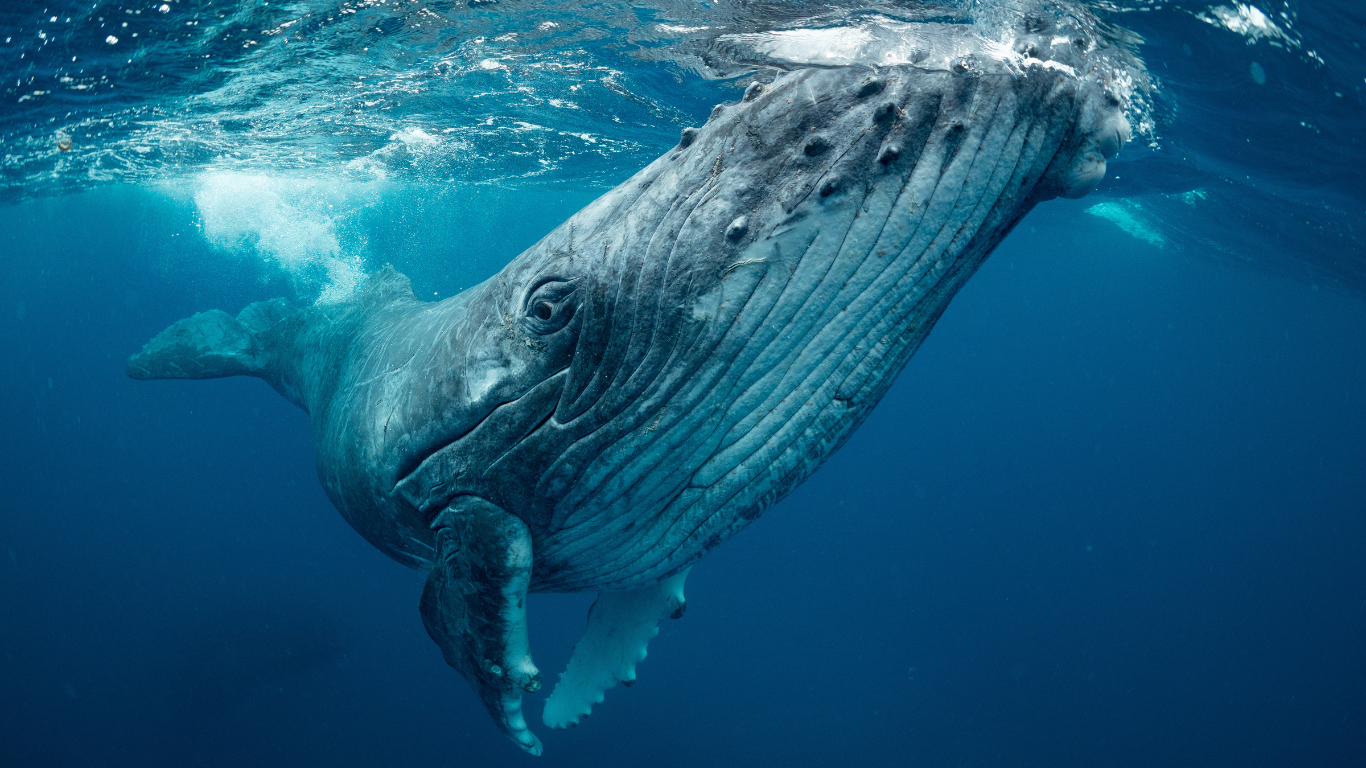
Article written by Malek Fouda Originally published by Euronews (Apr 13, 2025) The controversial practice of ‘whaling,’ hunting and killing whales to extract and sell their meat, is currently only permitted in Iceland, Norway, and Japan. Iceland’s largest whaling company—Hvalur hf.—will not be hunting this season. This marks the second consecutive year that the company has opted out of whaling during the summer season. Although Hvalur is not the only whaling company in Iceland, it is by far the largest, holding a permit for the hunting of 200 fin whales this season. Its CEO, Kristján Loftsson, says his staff have been informed of the decision, which was made due to the global economic situation. “Given the current economic situation, Hvalur HF sees no other option but to stay docked and wait for better days. The situation will be reassessed next year,” said Loftsson, speaking to Icelandic media. Loftsson says the economic situation in Japan—where Hvalur HF sells almost all of its products—such as inflation, has reached a point where whaling is no longer economically viable. “The product price developments in our main market, Japan, have been unfavorable recently and are getting worse,” he said. “The price of our products is now so low that it is not justifiable to hunt.” Last year, whaling did not take place either. In a highly politicized move, Svandís Svavarsdóttir, who was then the Left-Green Minister for Agriculture and Fisheries, issued the season’s permit only one day before it was scheduled to begin. Loftsson says that late issuance of the permit made it impossible for the company to properly plan and execute their operations in 2024. Whaling remains a hot-button issue in Iceland, with the general public essentially split on whether or not they support the practice. Iceland, Norway, and Japan are currently the only countries that still permit the controversial practice of whaling. The whaling season in Iceland typically runs from mid-June to September. However, in recent years, Icelandic whalers have been struggling to meet their quotas. Iceland’s second-largest whaling company, IP-Utgerd, ceased operations in 2020, citing declining profits and demand for whale meat facilitated by the COVID-19 pandemic.
Fewer than 3,650 days remain until the African penguin is extinct.
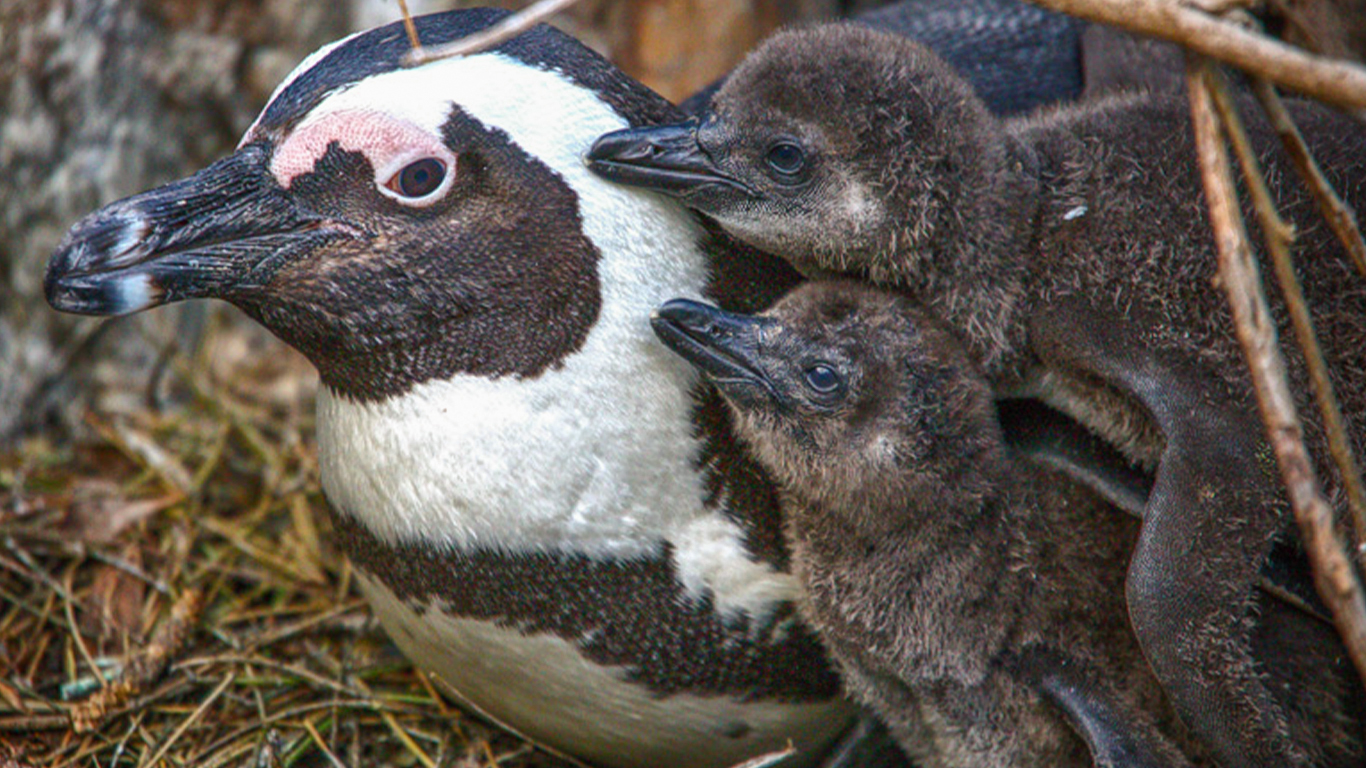
African penguins have just been placed on the critically endangered list of the International Union for the Conservation of Nature (IUCN), with approximately 3,650 days left until they go extinct forever. Starvation and human activity are threatening the species’ last, dwindling numbers – only 3% of the original population remain. With only 8,750 breeding pairs left in South Africa, the situation for African penguins is critical – and the time to act is NOW. Chicks hatched in incubators after their eggs were abandoned are hand-reared until they are strong enough to be released. Credit: Reuters/Esa Alexander Alarmingly, as you read this, the fate of African penguins is hanging in the balance. Increasingly, parent penguins are dying due to starvation – caused by rampant overfishing – and oil spills, which impact their ability to hunt, swim and regulate their body temperature. When they die, their fertilized eggs are left abandoned, and right now, there are eggs all along the coast of South Africa for parents who will never return. Without urgent intervention, these eggs will not survive, dashing hopes for the survival of the entire species. The most critical need right now is to rescue the abandoned eggs and bring them to our partner’s specialized breeding facility. Penguin parents look after eggs together, with one caring for the eggs while the other hunts. With food resources dwindling, the hunting parents are dying of starvation at sea, forcing the carers to abandon their nests in search of food. Credit: Bernd Dittrich We are working with the Southern African Foundation for the Conservation of Coastal Birds (SANCCOB), an organization dedicated to conserving seabird populations in South Africa. It works closely with wildlife rangers in South Africa who monitor breeding colonies to identify abandoned eggs, and birds in need of urgent care. Eggs cannot survive for longer than three days without warmth. SANCCOB runs a successful chick-bolstering program out of Cape Town, South Africa, which rescues and incubates these eggs, hand-rears chicks once hatched, and cares for them until they are strong enough to be released into protected and patrolled areas. Oil spills and pollution impact penguins’ ability to swim, hunt and thermoregulate, leading to hypothermia, starvation and death. Credit: Avian Demography Unit of UCT The penguin egg rescue program saves an impressive 90% of all eggs rescued. Every single life saved this way is critical for the species’ survival. Every $1,000 (£770) we raise will empower our partner to rescue, incubate and raise a critically endangered penguin chick. With every egg crucial to the survival of the entire species, we must support this vital program. We cannot watch these birds die off without doing everything we can to stop them disappearing forever. Please help us save the beautiful African penguin – there is so little time left. Credit: David Selbert SANCCOB is working closely with government officials to curb the impacts of overfishing and progress has been made, most notably through fishing closures around African penguin breeding colonies. However, it will be a while before these initiatives show any positive impact. Meanwhile, the threat of starvation still looms large. The loss of even one chick has devastating effects on the entire African penguin population. Your contribution today, no matter its size, will make a difference in the fight to save the African Penguin from extinction. Please, donate right away.
Deadly rabies outbreak amongst Cape fur seals has potential to become a widespread marine catastrophe, warns Animal Survival International
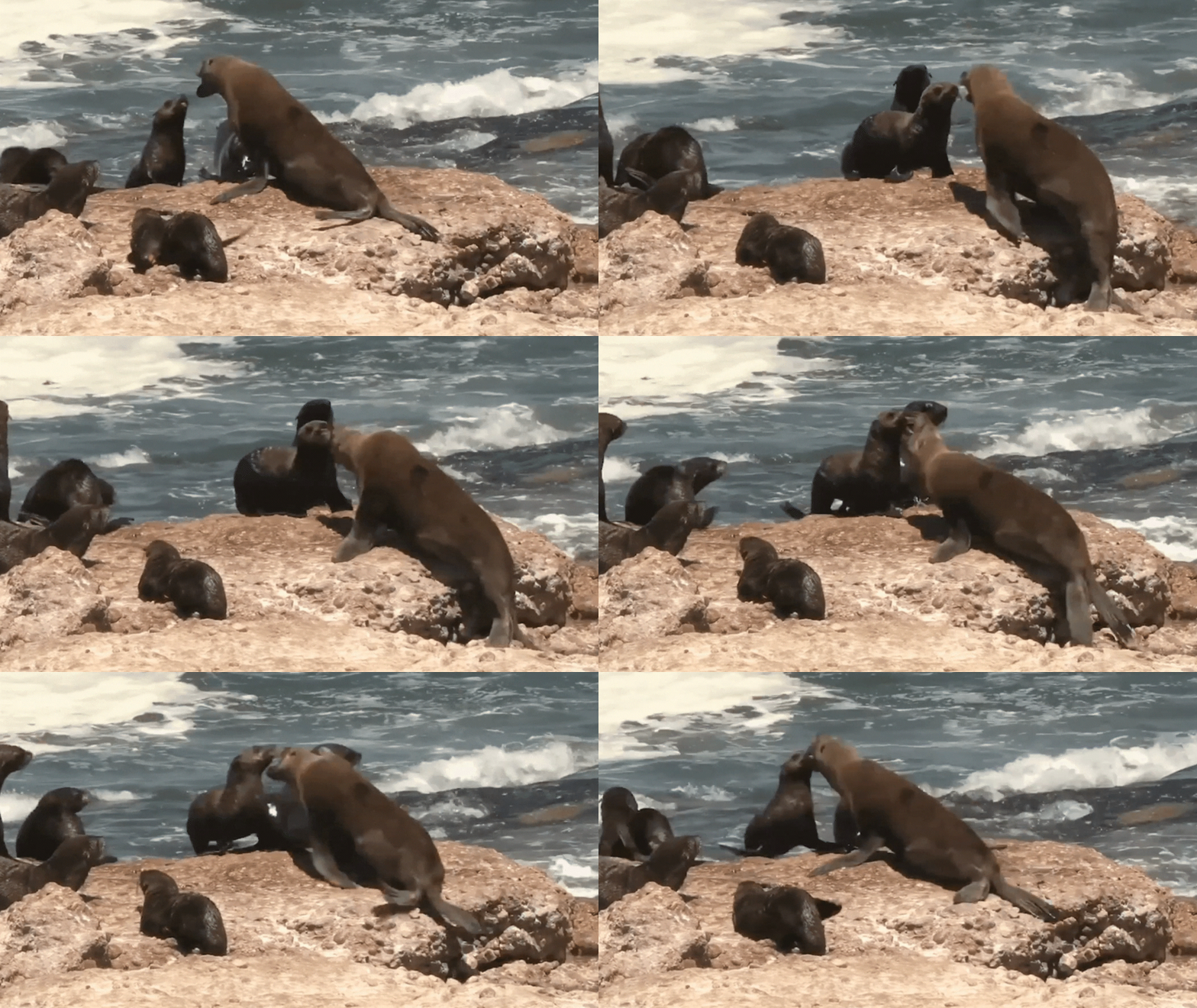
For the first time ever, rabies is spreading through the Cape fur seal population in South Africa, sparking fears of a far-reaching marine pandemic. Cape fur seal rabies outbreak a worrying world first – with possible far-reaching consequences for seals and other marine mammals, like dolphins and whales. This is only the second time that rabies has been recorded in seals, the first being a single case in Norway in 1980. In infected animals, the virus causes heightened aggression, disorientation and, within 10 to 14 days, death. There is no cure. “What is unfolding along the South African coastline is unprecedented,” says Debby Querido, program director of Animal Survival International (ASI). “There is potential for this outbreak to develop into a large-scale cross-species pandemic. I’m worried we are underestimating the danger this poses to our marine ecosystems and the animals that call them home,” she said. Rabies-infected seals are compelled to viciously attack other seals and mammals, spreading the virus through saliva. Credit: Henk Bogaard It is suspected that the seals were infected by black-backed jackals, which prey on seal pups. Regardless of its origin, the virus could spread rapidly throughout local marine mammal populations squeezed into the few natural spaces left untouched by human expansion – especially if it is able to jump species. In the final stages of infection, the rabies virus essentially ‘commands’ the animal to bite, transmitting the virus through saliva. Infected Cape fur seals have been observed attacking each other, as well as people and pets. It is unknown if the seals are attacking other marine mammals in the open ocean, but this cannot – and should not – be ruled out. With the virus compelling them to bite other animals, seals will attack just about anything that moves. Credit: Damien Coulsen There are around two million Cape fur seals living in coastal colonies stretching 1,864 miles (3,000km) from the tip of South Africa through Namibia and into Angola. If the infection keeps spreading, the consequences could be dire. “While the outbreak is devastating for local seal populations, the fear is that the virus could once again jump species, possibly infecting other marine mammals such as orcas, dolphins and even whales,” says ASI campaigner and researcher Savannah Anderson. “The more species are infected, the wider the outbreak could reach. Orcas, for example, could carry the virus long distances and infect marine mammals off the shores of Australia, the Americas and beyond.” Urgent action from the scientific and animal welfare communities South Africa’s scientific and animal welfare communities are working to understand and control the outbreak. There is no way to determine if a live animal has rabies – the only way to be 100% certain is to sample a section of its brain – but experts are quickly learning to identify infected animals based on clinic signs. If the virus continues to spread, the consequences could be devastating for Cape fur seals and other marine mammals. Credit: New York Times SeaSearch, a marine-focused NGO in South Africa, is monitoring colonies, performing autopsies on infected individuals, and tracking new cohorts of pups for potential in-utero transmission. “These are highly gregarious, very social animals,” says Dr Tess Gridley, Founding Director and Principal Scientist of SeaSearch, “and we can see this real uptick in aggressive behaviors and rabies, and it’s really quiet concerning.” “We need to stop it at the colonies before it comes more to the coast,” she added. Cape Town’s Two Oceans Aquarium is conducting a novel vaccination trial on cape fur seals in areas where contact with people is most likely, such as harbors and beaches. Vaccination trials are also underway for itinerant (wandering) seal species, such as elephant and leopard seals, to prevent the spread to other colonies and species. How can you avoid infection, and what can you do if you suspect you may have contracted rabies? Experts have cautioned the public to be wary of seals in areas where humans may interact with them, including when swimming, surfing or paddling in the oceans of South Africa, Namibia and southern Angola. Infected seals can be incredibly aggressive and may attack people and pets without provocation. Anyone who may come into contact with seals should get a rabies vaccination and should vaccinate their pets, especially dogs that walk on beaches. If you are bitten by a seal or another animal you suspect may have rabies, wash the bite area with soap and water, and head straight to the nearest hospital for emergency treatment. You should also contact local animal welfare authorities so they can prevent the animal from attacking and possibly infecting other people, pets or animals. It is also important to leave the management of this outbreak to scientists and animal welfare experts. Do not attempt to attack or cull seals yourself, as this could cause intense suffering for the animals. If you come across a seal you think is infected with rabies, keep your distance and inform local authorities as soon as possible. Banner credit: Sea Search Research & Conservation
‘Like a giant bird box’: the volunteers building huge snowdrifts for Finland’s pregnant seals
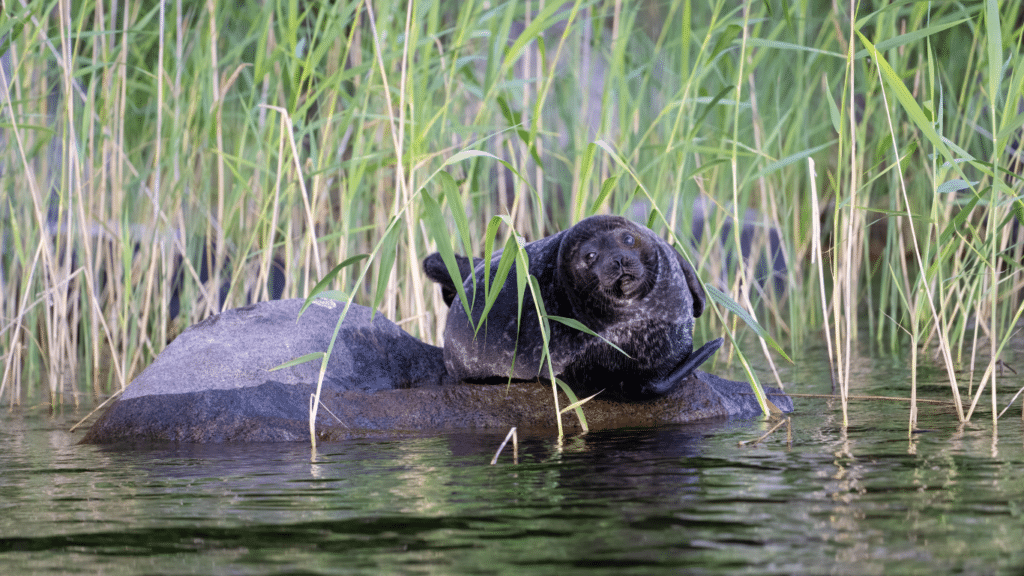
Article written by Samuel Bloch Originally published by The Guardian (Dec 16, 2024) As warmer winters melt the snow drifts that endangered Saimaa ringed seals use to raise their young, humans are giving them a helping hand Eight hours shovelling snow in -20C might not sound like the ideal day out, but a committed team of volunteers in Finland are working dawn to dusk building enormous snow drifts for one of the world’s most endangered seals. The Saimaa ringed seal was once common around Lake Saimaa in the southeast of the country, but only 495 of them remain. The seals make “snow caves” inside snow drifts where they raise their young and protect them from the elements and predators such as red foxes—but as the climate warms, the snow is disappearing. To save these rare seals, 300 volunteers spend days shovelling snow into piles 7 m long and 1.5 m high around the edge of the frozen lake. Last winter they made 200, and the seal population is growing as a result. “It’s kind of a snow cave,” says Vincent Biard, a PhD student and volunteer from the University of Eastern Finland. “The seals come from under and dig into the snow drifts to create a cave where they can give birth and raise their young.” Volunteers meet at first light and work until dusk. They get around on foot or skis, dragging their equipment with them over a distance of 10 km. Biard describes the day as “kind of fun” and adds, “You actually have an impact, which is nice. If we don’t do it, then they would just go extinct quite quickly.” More than 300 pups have been born in artificial snowdrifts since they started making them in 2014. “We are on a rising growth curve, so things still look pretty nice,” says Jari Ilmonen, coordinator of Our Saimaa Seal Life, which is an EU-funded program. “We are doing what we can, so we have to have hope and positive thoughts.” Saimaa seals are less than 1.5 meters long, and each one has a unique fur pattern—individual to each animal, like human fingerprints. In the late 1980s, their population dwindled to its lowest point, with fewer than 200 left, driven by hunting and deaths caused by fish traps. Accidental deaths in fishing nets remain a challenge. Now, the seals are fully protected, but the threat of the climate emergency looms large. Between 1925 and 2002, the maximum thickness of the ice decreased by 1.5 cm a decade. In mild winters, the ice caves can collapse, leaving the pups exposed, with up to 30% of them dying. Human-made snow drifts are larger and “more durable than natural snow drifts,” says Ilmonen. “By the first half of February, most of the natural ones had melted away, but the manmade ones prevailed.” In the future, ice cover is expected to disappear before the pupping season has ended. There have already been some winters where there has not been enough snow to create an artificial drift. In some cases the seals have been known to breed elsewhere, but with no snow, “just a few would hang on,” says Ilmonen. However, scientists from the University of Eastern Finland are working on plan B. They are creating artificial dens, or nest boxes, that mimic the real thing, with preliminary research showing the seals use them for resting, giving birth, and nursing their young. The nest boxes could be used in ice-free winters, researchers say. Biard says: “The long-term perspective is we don’t know if snow drifts are going to be sufficient. So the team is developing artificial nest boxes, similar to what you put in the garden for the birds.” There are about 40 dens on the lake, where three pups have already been born, but Ilmonen wants to get more out there. “If you think that there are maybe 500 seals and maybe 100 pups born each year, you’d need a lot of the boxes,” he says.
‘World’s largest’ coral discovered in Solomon Islands
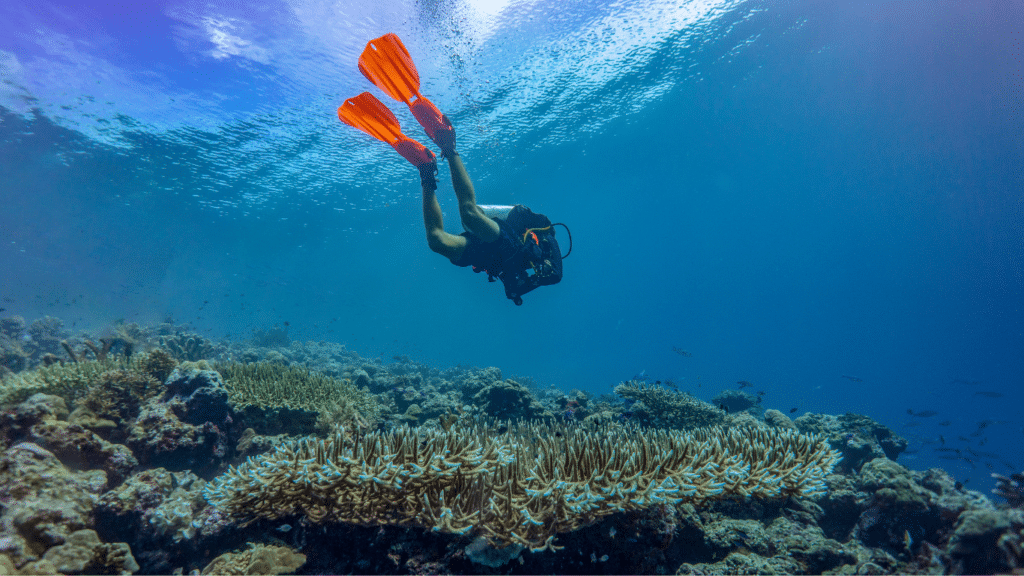
Article written by Nick Squires Originally published by The Telegraph (Nov 14, 2024) The ‘mega’ coral is longer than a blue whale and is in glowing health despite warming seas that bleach others of its kind Scientists have discovered the largest single coral ever recorded—so big that they had originally thought it was a long-forgotten shipwreck. The “mega coral,” which is a network of small creatures that together form one huge organism rather than a reef, was found in the waters of the Solomon Islands in the South Pacific. Unlike coral reefs around the world that have been struck by bleaching as a result of warming seas, the newly-discovered coral is in rude health. Measuring 112ft by 105ft and 16ft high, it is longer than a blue whale and amounts to the size of five tennis courts. The vast coral, thought to be 300 years old, was discovered by marine scientists on the National Geographic’s Pristine Seas expedition in the Three Sisters Islands, hundreds of miles southeast of the capital, Honiara. “Finding this mega coral is like discovering the tallest tree on earth,” Enric Sala, founder of Pristine Seas, told National Geographic. “This discovery rekindles our sense of awe and wonder about the ocean.” In size, it surpassed other corals that were previously thought to be the largest on the planet, including one in American Samoa that is affectionately known as Big Momma. It was so large, the scientists say it can be seen from space. “While Big Momma looked like a huge scoop of ice cream plopped down on the reef, this newly-discovered coral is as if the ice cream started to melt, spreading forever along the seafloor,” said Molly Timmers, lead scientist on the expedition. ‘Coral oasis’ The researchers very nearly missed it altogether—it was found the evening before they were due to move to another area. While a coral reef is made up of multiple coral colonies, this is a single coral colony, formed by a species called Pavona clavus. The scientists believe it consists of up to a billion coral polyps—the tiny marine animals that form corals. “While the nearby shallow reefs were degraded due to warmer seas, witnessing this large, healthy coral oasis in slightly deeper waters is a beacon of hope,” said Eric Brown, coral scientist for the expedition. Peter Mumby, a scientist from the University of Queensland who was not part of the expedition, described the coral as “astonishingly large.”. It may have grown to such a large extent because it was located away from the Pacific’s main cyclone belt, he said. “I would suspect in this case that this coral has existed in a very benign environment that’s sheltered from major disturbances.” “If it’s in the Solomon Islands, it won’t be subjected to very frequent major storms,” Prof Mumby told the Australian Broadcasting Corporation. The scientists embarked on the Pristine Seas expedition last month with the aim of studying the marine ecosystem of the Solomon Islands, a Melanesian island nation that lies north-east of Australia.
Greece becomes first European country to ban bottom trawling in marine parks
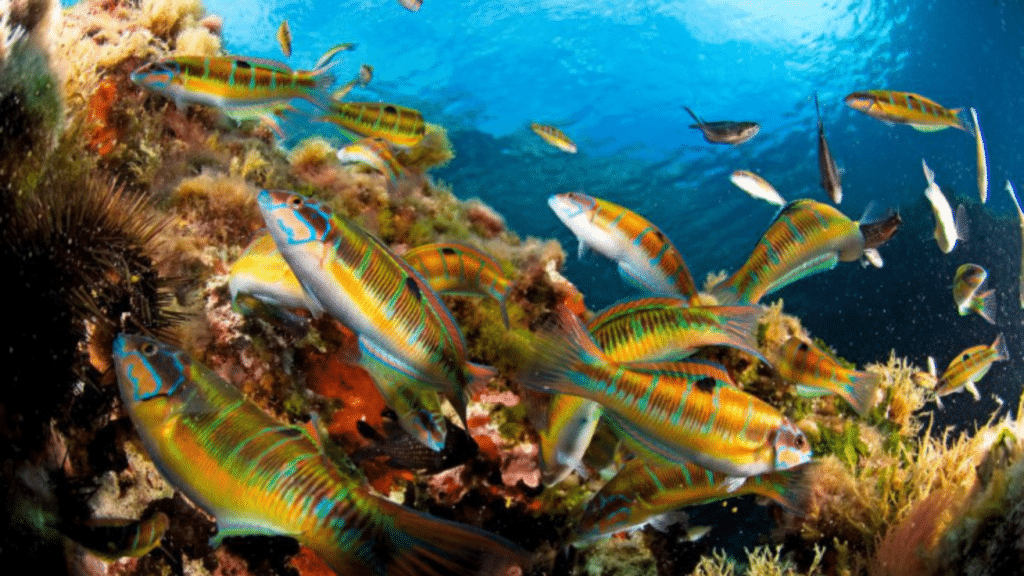
Article written by Karen McVeigh and Helena Smith Originally published by The Guardian (Apr 16, 2024) The law will come into force in national parks within two years and in all of the country’s marine protected areas by 2030 Greece has become the first country in Europe to announce a ban on bottom trawling in all of its national marine parks and protected areas. The country said will spend €780m (£666m) to protect its “diverse and unique marine ecosystems”. The Greek prime minister, Kyriakos Mitsotakis, told delegates at the Our Ocean conference in Athens on Tuesday: “We’ve established two additional marine national parks, one in the Ionian and one in the Aegean, increasing the size of our marine protected areas by 80% and covering one third of our marine territorial waters. “We will ban bottom trawling in our national parks by 2026 and in all marine protected areas by 2030.” He said he would also establish a state-of-the-art surveillance system, including drones, to enforce the ban. The proposed Ionian marine national park will cover almost 12% of Greek territorial waters, safeguarding sea mammals like sperm whales, striped dolphins and the vulnerable Mediterranean monk seal, as well as the South Aegean MPA, which covers 6.61% of Greek territorial waters. However, the Athens government’s decision to go ahead with two new marine parks in the Aegean and Ionian has stirred up tensions with its historical rival Turkey. Ankara’s foreign ministry warned Greece last week that the proposal in the Aegean lay in a disputed area and that the initiative was “politically motivated”. Conservationists welcomed the announcement and said they hoped the move would create a “domino effect” for other EU countries to do the same. Nicholas Fournier, the campaign director for marine protection at the international conservation group Oceana, said: “Everyone was expecting France or Germany or Spain to step up. The fact that Greece is championing this ban on bottom trawling is surprising but very welcome. “We hope this creates a domino effect on other European countries to do the same. The pressure is on France, as it hosts the UN oceans conference next year.” The news came as France was accused of hypocrisy by conservationists over a post-Brexit dispute with the UK over fishing rights. The country launched an official protest after the UK moved to ban bottom trawling from parts of its territorial waters to protect vulnerable marine habitats. Charles Clover, the co-founder of Blue Marine Foundation, a UK-based conservation organisation, said: “The grownups of Europe really do need to sort out the extraordinary chaos between its member states over marine protection. France claims to have already protected 30% of its waters – while their own conservationists tell us less than 0.1% of its waters are effectively protected from trawling. “On top of that, France wants to prevent Britain banning trawling in marine protected areas in the UK’s own waters – which is utter hypocrisy, contrary to habitats laws that apply to both of us and unacceptable to the UK. Today we have Greece leading Europe by announcing that it will actually protect all of its MPAs from trawling by 2030, which amounts to a huge 32% of its waters. Has the EU no common standards?” Bottom trawling by industrial vessels is a hugely damaging fishing technique that drags heavy nets across the seabed, destroying habitats and releasing carbon into the sea and the atmosphere. Oceana – along with other NGOs, the Marine Conservation Society and Seas at Risk – has urged the EU to take tougher action against members that still allow bottom trawling in their marine protected areas. A report in March showed that the destructive practice is still happening in 90% of all offshore MPAs in the EU. At the moment, just 7-8% of the ocean is protected, and only 3% falls under the “highly protected” category. Banner credit: Enric Sala/National Geographic Pristine Seas
Whale song mystery solved by scientists
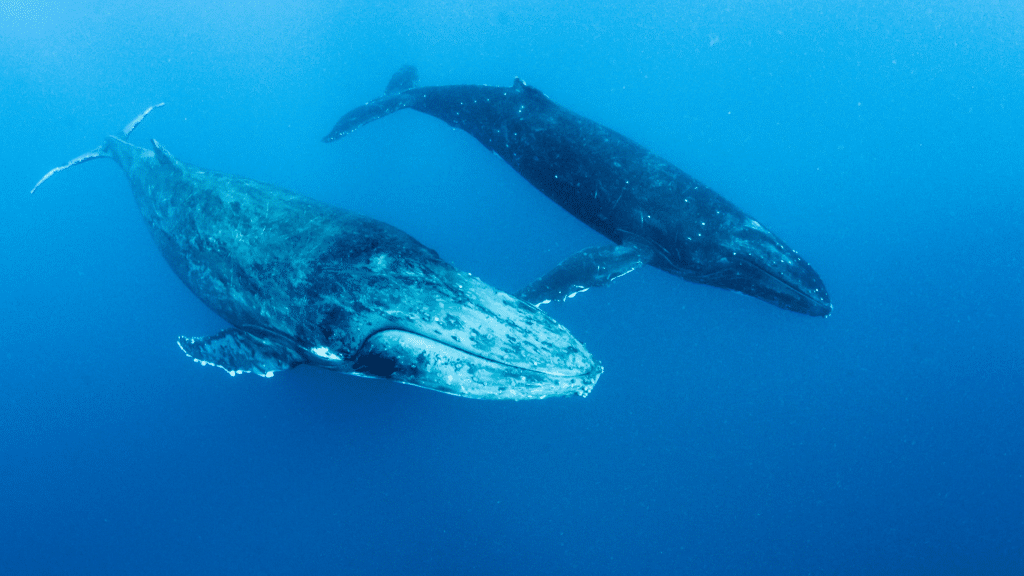
Article written by Helen Briggs and Victoria Gill Originally published by BBC News (Feb 22, 2024) Scientists have worked out how some of the largest whales in the ocean produce their haunting and complex songs. Humpbacks and other baleen whales have evolved a specialised “voice box” that enables them to sing underwater. The discovery, published in the journal Nature, has also revealed why the noise we make in the ocean is so disruptive for these ocean giants. Whale song is restricted to a narrow frequency that overlaps with the noise produced by ships. “Sound is absolutely crucial for their survival, because it’s the only way they can find each other to mate in the ocean,” explained Prof Coen Elemans, of the University of Southern Denmark, who led the study. “[These are some] of the most enigmatic animals that ever lived on the planet,” he told BBC News. “They are amongst the biggest animals, they’re smart and they’re highly social.” Baleen whales are a group of 14 species, including the blue, humpback, right, minke and gray whale. Instead of teeth, the animals have plates of what is called baleen, through which they sieve huge mouthfuls of tiny creatures from the water. Exactly how they produce complex, often haunting songs has been a mystery until now. Prof Elemans said it was “super-exciting” to have figured it out. He and his colleagues carried out experiments using larynxes, or “voice boxes”, that had been carefully removed from three carcasses of stranded whales – a minke, a humpback and a sei whale. They then blew air through the massive structures to produce the sound. In humans, our voices come from vibrations when air passes over structures called vocal folds in our throat. Baleen whales, instead, have a large U-shaped structure with a cushion of fat at the top of the larynx. This vocal anatomy allows the animals to sing by recycling air, and it prevents water from being inhaled. The researchers produced computer models of the sounds and showed that baleen whale song is restricted to a narrow frequency which overlaps with noise produced by shipping vessels. “They cannot simply choose to, for example, sing higher to avoid the noise we make in the ocean,” explained Prof Elemans. His study demonstrated how our ocean noise could prevent whales from communicating over long distances. That knowledge could be vital for the conservation of humpbacks, blue whales and other endangered giants of the sea. It also provides insight into questions that researchers have been asking for decades about these eerie songs, which some sailors used to attribute to ghosts or mythical sea creatures. Whale communication expert Dr Kate Stafford, from Oregon State University, called the study “groundbreaking”. “The production and reception of sound is the most important sense for marine mammals, so any studies that elucidate how they make sounds has the potential to move the field forward,” she told BBC News. The research also paints an evolutionary picture – of how the ancestors of whales returned to the oceans from the land, and the adaptations that made it possible to communicate underwater. The way so-called toothed whales produce sound is better understood, because the animals are easier to study. These marine mammals, which include dolphins, orcas, sperm whales and porpoises, blow air through a special structure in their nasal passages. Dr Ellen Garland, from the Sea Mammal Research Unit at the University of St Andrews, said: “I’ve always wondered exactly how baleen whales – especially humpbacks, which my research is focused on – actually produce the variety of sounds they do. “Studying large whales is extremely challenging at the best of times, but trying to uncover how they produce sound when you may not even be able to see them underwater while vocalising is an added level of difficulty, so these researchers have been very creative.” Dr Stafford added that the mammals’ ability to make such complex vocal signals was “remarkable” and highlighted “how special these animals are”.
This conservationist has a mission: Save the Amazon’s dolphins
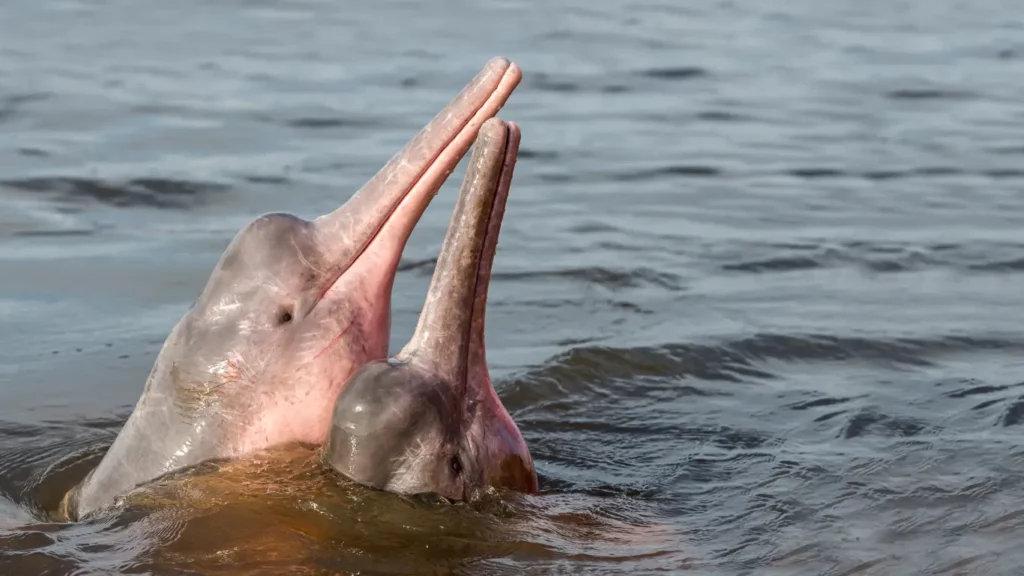
Article written by Cynthia Gorney Originally published by National Geographic (Feb 5, 2024) Freshwater dolphins face an uncertain future as their waterways heat up. But a Colombian biologist has made it his life’s work to advocate for the Amazon’s “pink ambassadors.” The alarms last September from Brazil’s Lago de Tefé first reached Fernando Trujillo by phone—his colleagues, fellow scientists, calling him in a panic. The brutal 2023 summer had been heating the Amazonia lake to temperatures far beyond anything previously recorded, and as they had feared, something was now happening to the pink river dolphins. “Three dead dolphins,” Trujillo remembers. “Then five dead dolphins. Then 70 dead, in one day.” For Trujillo, a Colombian marine biologist and National Geographic Explorer who’s become a global advocate for river dolphins, the Tefé disaster must be understood as both a tragedy and a much needed lesson in the vulnerability of these freshwater ambassadors. Over just a few days, 157 dolphins—10 percent of the lake’s population—died in that overheated water, which pushed above 102°F. The exact cause was still under investigation two months later, but heat stress seemed the likeliest explanation. Trujillo says the sudden attention to the mass deaths may help people grasp other threats—habitat loss, poisoned waters, overfishing, outright slaughter—that imperil river dolphins in all 14 countries where they’re found. He’s been at the work ever since he was a university student and the venerated oceanographer Jacques Cousteau visited his class. (“I asked him what would be important to study. And he said: ‘Dauphins.’ Dolphins. It was kind of like an order.”) Part of the National Geographic and Rolex Perpetual Planet Amazon Expedition, a series of scientific research projects spanning the Amazon River Basin, Trujillo is also helping coordinate international conservation commitments like the Global Declaration for River Dolphins. “And the main point is, it’s not just about the dolphins,” he says. “It’s about the rivers, and the 1.5 billion people living there. The dolphins, for me, are connecting the general public to all the problems in the region. And the general public is listening.”
Dolphins and porpoises increasingly slaughtered for food and fish bait
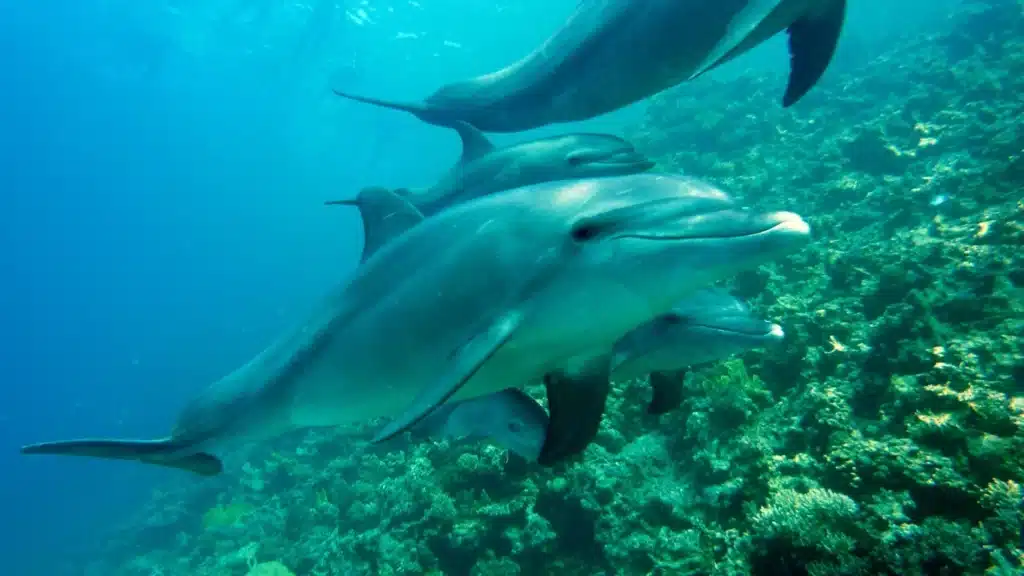
Article written by Don Pinnock Originally published by Daily Maverick (Wed, Feb 7, 2024) As food fish decline, thousands of small cetaceans like dolphins and even orcas are being targeted. The picture of the dolphin cut in half by a man with his hand on its bloody head and a group standing around with basins waiting for meat did it for me. I teared up and couldn’t read the caption. Dolphins are so beautiful, so trusting, so playful and have no history of deliberately harming humans. Unlike some wild creatures, they seem oblivious to the threat we pose to them. In return we are increasingly catching them to eat, or use as bait, or because fishers see them as competitors or as cures for coronavirus. The brutality of the picture was shocking. The photo was in a report by two global NGOs, Pro Wildlife and Whale and Dolphin Conservation (WDC), which shines a spotlight on the horrific numbers of small cetaceans being slaughtered around the world, driving some populations towards extinction. According to the report, “Small Cetaceans – Even Bigger Problems”, more than 100,000 dolphins, porpoises and small whales are being killed each year. Increasing numbers are being chopped up to be used as bait in commercial fisheries or killed and used as a spurious coronavirus “cure”. Hunting is on the rise in many countries, leading to both organisations calling on coastal states and the International Whaling Commission to take action to prevent more and more populations and species from going extinct. The report warns that being near the top of the food chain, there was a risk of human consumption of dolphin and other cetacean meat containing unsafe levels of mercury and other toxins. Several studies and investigations in Japan have found potentially toxic levels of both mercury and methyl-mercury in dolphin meat for sale in markets. “Given the dangerous levels of toxins known to accumulate in some cetaceans, and growing concerns over zoonoses in wildlife,” says the report, “cetacean meat would be an irresponsible food choice that could represent a threat to human health and wellbeing.” Cetaceans were found to be specifically targeted in 20 countries, and at least 30 species of small cetaceans are known to be used as bait, either through hunts or by using animals caught in fishing nets. “This practice has increasingly evolved into a directed take,” said Nicola Hodgins, an expert on small cetaceans at WDC. “In some areas, the market value of dolphins as bait outweighs its value as food.” The report says that about 15,000 dolphins are killed annually in Peru and close to 10,000 in Ghana. Many are also caught as bycatch in trawls. Of great concern is that distant water fleets that prowl the world’s oceans are increasingly using dolphins as bait. “This gives dolphin hunts a new dimension,” said Dr Sandra Altherr, biologist and head of science at Pro Wildlife. “The huge Taiwanese and South Korean distant water fleets are just the tip of a huge iceberg.” Fishers around the globe are also killing dolphins because they see them as competitors for dwindling fish stocks. This claim is false, says the report. With the oceans being overfished, there’s a fear that dolphin culling is likely to increase. What’s being hunted At least 20 countries are targeting cetaceans. Here are just three examples. On the high seas, Taiwan was found to be commercialising bycatch and specifically hunting a wide range of cetaceans by harpoon, spear or electrocution. These include short-finned pilot whale, common dolphin, Risso’s dolphin, Fraser’s dolphin, orca, false killer whale, pantropical spotted dolphin, spinner dolphin, striped dolphin, rough-toothed dolphin, common bottlenose dolphin, Indo-Pacific bottlenose dolphin, Indo-Pacific humpback dolphin, striped dolphin, Cuvier’s beaked whale, melon-headed whale, ginkgo-toothed beaked whale, Blainville’s beaked whale, and pygmy killer whale. Ghana is targeting the pantropical spotted dolphin, Clymene dolphin, Fraser’s dolphin, rough-toothed dolphin, Risso’s dolphin, common bottlenose dolphin, Atlantic spotted dolphin, false killer whale, long-beaked common dolphin, melon-headed whale, short-finned pilot whale, dwarf sperm whale, spinner dolphin, pygmy killer whale, and Cuvier’s beaked whale. Japan’s list is even longer: Dall’s porpoise, short-finned pilot whale, Risso’s dolphin, Pacific white-sided dolphin, false killer whale, pantropical spotted dolphin, striped dolphin, common bottlenose dolphin, Baird’s beaked whale, rough-toothed dolphin, melon-headed whale, Hubbs’ beaked whale, ginkgo-toothed beaked whale, Indo-Pacific bottlenose dolphin, pygmy sperm whale, dwarf sperm whale, northern right whale dolphin and orca. “With fish stocks depleted worldwide and fishing activities continuing to intensify,” said Hodgins, “there is a clear risk that hunting of small cetaceans will further increase in the future unless it is urgently regulated around the world.” Coastal nations have to improve and better enforce national legislation, she said, and increase engagement at international conventions. The alternative is that small cetaceans will share the same fate as large whales, whose populations collapsed before the IWC’s moratorium on commercial whaling in the 1980s brought about a turnaround. Every year, thousands of these endangered animals (locally known as boto) are slaughtered to be used as bait for piracatinga fisheries. Their oil has recently been used to treat coronavirus infections. “We risk losing the boto altogether in the coming decades,” says the report. A high number of cetaceans are being hunted by African countries, mostly in West Africa, but also in Kenya, Mozambique and Madagascar. The use of dolphins as food was reported from Sao Tomé and Príncipe, and in Madagascar, humpback and bottlenose dolphins are killed for consumption or sale. In Mozambique, says the report, the demand for aquatic wild meat is leading to directed and opportunistic hunts, as well as harvesting of stranded individuals, alive or dead. It is not only the sheer number of individuals taken that has a negative impact, says the report, but also the potential disruption of their social structures and loss of cultural knowledge (such as migration routes and hunting techniques for different prey). This is likely to lead to lower survival and reproductive success and the impeded recovery of remnant populations. The report notes that national legislations are poor or inadequate. Even in countries where the
Deep learning discovers dark vessels on seas less empty than we thought
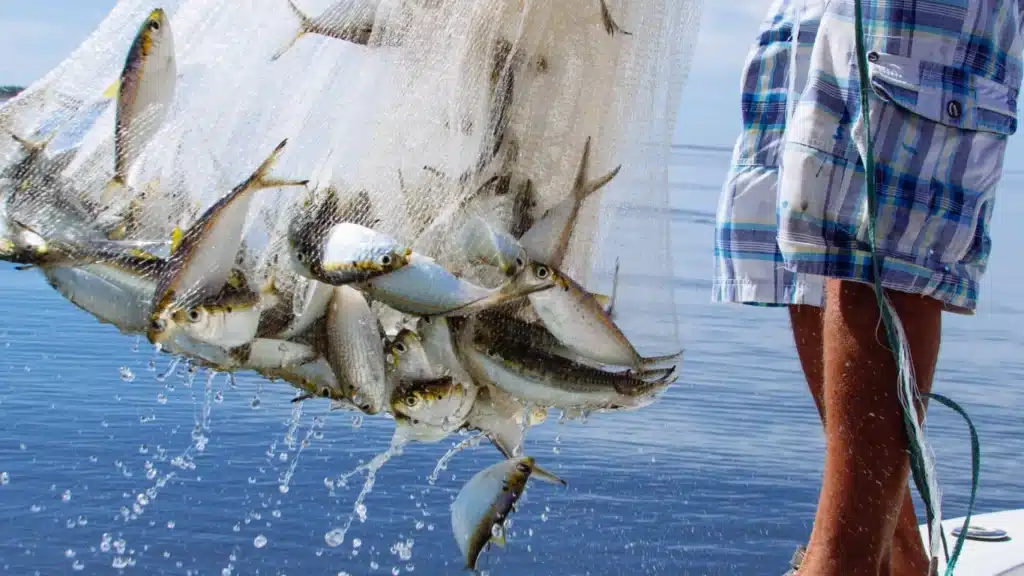
Adapted from article written by Don Pinnock Originally published by Daily Maverick (Wed, Jan 17, 2024) Three-quarters of fishing vessels worldwide have been inaccessible to public scrutiny and are potentially operating illegally, but AI has just tracked them down. On land, maps exist for almost every road, human structure or land use. On the vast, featureless oceans, however, much can be hidden. And it has been – until now. Using artificial intelligence tracking billions of bits of information from multiple sources, including satellite images, a study published in the journal Nature discovered that huge numbers of mainly fishing vessels have been “hiding” by turning off their compulsory automatic tracking systems. The research team led by Global Fishing Watch provides an unprecedented map of ocean traffic and offshore infrastructure, giving a new understanding of an industrial revolution unfolding across the Earth’s oceans. More than a billion people depend on the sea for their food and 260 million are employed in marine fishing. About 80% of all traded goods travel by sea and 30% of the world’s oil is produced in offshore fields. It’s a trillion-dollar “blue ocean” economy growing faster than the overall global economy. But it’s causing rapid environmental decline. A third of fish stocks are operated beyond sustainability and an estimated 30-50% of critical habitats have been lost through industrialisation. The study is an attempt to track and map these developments. Some ship tracking systems are used, but available only to the parent company and not publicly available. Most vessels, however, have an automatic identification system (AIS) which broadcasts their movements as well as logging vessel and owner identities and tracking fishing activities. According to the study, “vessels engaged in illicit activities often turn off their AIS transponders or manipulate the locations they broadcast. In recent years, for example, the largest cases of illegal fishing and forced labour were by fleets that mostly did not use AIS devices.” There are also “blind spots” along coastal waters where satellite reception is poor, and when AIS is routed through a country it can be restricted by governments for commercial or political reasons. Artificial intelligence solved that by combining systems with its ability to make sense of staggering numbers. The study analysed two petabytes of satellite imagery between 2017 and 2021 covering more than 15% of the ocean in which more than 75% of industrial activity is concentrated. It classified more than 67 million images and analysed 53 billion vessel GPS positions. About 63,300 vessel occurrences were detected at any given moment, roughly half of which were fishing vessels. “Notably, about three-quarters of globally mapped industrial fishing did not appear in public monitoring systems, compared with one-quarter (21-30%) for other vessel activities.” Asia dominates industrial fishing, accounting for 70% of all fishing vessel detections – nearly a third were concentrated in China’s exclusive economic zone. Many fishing vessels not publicly tracked were also detected inside marine protected areas (MPAs). The Galápagos Marine Reserve and the Great Barrier Reef Marine Park – two of the most iconic, biologically important and well-monitored MPAs in the world – were penetrated by between five (Galápagos ) and 20 (Barrier Reef) fishing vessels a week. The study also identified fixed marine structures, including piers, wind farms and oil drilling installations. China leads the development of offshore wind generation, with a staggering 900% increase in turbines from 2017 to 2021 (around 950 a year). Offshore wind farms were found to be mostly confined to northern Europe (52%) and China (45%) and have more than doubled since 2017. But there has also been a 16% increase in the number of offshore oil structures. Speaking to Earth.com, Patrick Halpin, a professor at Duke University and co-author of the study, underscored the broader implications of these findings. “The footprint of the Anthropocene is no longer limited to terra firma,” he said. “Having a more complete view of ocean industrialisation allows us to see new growth in offshore wind, aquaculture and mining that is rapidly being added to established industrial fishing, shipping and oil and gas activities. “Our work reveals that the global ocean is a busy, crowded and complex industrial workspace.”
Blue whales: Ocean giants return to ‘safe’ tropical haven
Article written by Victoria Gill and Kate Stephens Originally published by Science team, BBC News (Thu, Nov 23, 2023) Blue whales – the largest animals on Earth – are making their home in a part of the Indian Ocean where they were wiped out by whaling decades ago. Researchers and filmmakers in the Seychelles captured footage of the whales in 2020 and 2021. It features in the Imax film Blue Whales 3D. But a year of underwater audio recording revealed the animals spend months in the region. This means they could be breeding there, scientists say. The researchers, including scientists from the University of Seychelles, described the discovery as a “conservation win” after the Soviet whaling fleet decimated the population in the 1960s. One of the lead investigators, Dr Kate Stafford, told BBC News: “It turns out if you stop killing animals on mass scales and you give them a chance to rebound, they can recover.” Commercial whaling has had a lasting impact. Blue whale numbers are still a tiny proportion of what they were and the species is listed as endangered by the International Union for the Conservation of Nature. More than 300,000 were killed in the southern hemisphere alone – chased down by modern, fast whaling ships. “This is the largest animal to ever exist on the planet,” Dr Stafford said, adding: “We want to know where they are coming back and knowing there’s a population around the Seychelles is incredibly exciting.” The discovery, published in the Journal of Endangered Species Research, was the result of fixing a “sound trap” to the seabed close to the tiny island nation. Fitted with underwater microphones, batteries and recording devices, the trap was left in place for a year, recording 15 minutes of every hour, every day. During the team’s month-long expedition, Dr Stafford also spent a few hours each day dangling a hydrophone [underwater microphone] into the water. Chris Watson, the wildlife sound recordist on the trip, told BBC News: “We heard remarkable things – the tapping of sperm whales thousands of feet down and dolphins echolocating and communicating but sadly no blue whales.” However, after scientists retrieved their sound trap, painstaking analysis of the recording revealed blue whales were there and communicating when the researchers were not. The mammals’ signature, very low frequency song could be heard primarily during March and April. Credit: Getty “This means the Seychelles could be really important for blue whales,” said Dr Stafford, explaining: “They sing during the breeding season and we think it’s probably the males who are singing, based on what we know about other whales. “So there’s also potential that the Seychelles is a breeding area or a nursery area.” The scientists were even able to pick out which acoustic population the blue whales in the area belong to. Dr Stafford said: “You can tell them apart by the sounds they make. In the Seychelles we heard one acoustic population – the one generally associated with the northern Indian Ocean.” The song or fundamental frequency of the blue whale is so deep and such a low frequency that it is beyond the range of human hearing. But Mr Watson, who has managed to record blue whales in the Sea of Cortez, said we can hear what are called its harmonics – higher frequency sounds that “ring out” when a blue whale sings, explaining: “It’s this really low, deep, consistent pulse. “When I recorded blue whales in Mexico, that was what was resonating in my headphones.” Dr Stafford added: “It’s the loudest sustained sound in the animal kingdom. [Their call lasts] 15 to 20 seconds at about 188 decibels, which is the equivalent of a jet engine in air.” Sound travels much faster and further in water, enabling blue whales to communicate over distances of hundreds and even thousands of miles. Credit: Oceanic Films A quiet haven Conservation scientists are keen to understand exactly how important the Seychelles is for blue whales. An area around the islands has been formally protected in a unique “debt for nature” swap, where the country had almost £16.8m ($22m) of its national debt written off in exchange for doing more to protect its oceans. About 400,000 square kilometres (154,000 square miles) of its seas are now protected. Dr Jeremy Kiszka from Florida International University, a lead scientist on the study, told BBC News that the diversity and abundance of marine mammals in the region was “exceptional”. “We recorded 23 species during our surveys,” he said. “Some of these are among the least known species of whales and dolphins around the world. We now need to understand why and make sure human activities do not affect blue whales and other species present.” One major concern is protecting important areas for blue whales from noise pollution, which travels equally efficiently through the water. “There’s not a tremendous amount of ship traffic in the Seychelles so perhaps we could think of it as a nice, quiet, safe place for blue whales,” said Dr Stafford. Banner Credit: Oceanic Films
Penguin crossing: Celebrating and conserving the pride of Simon’s Town
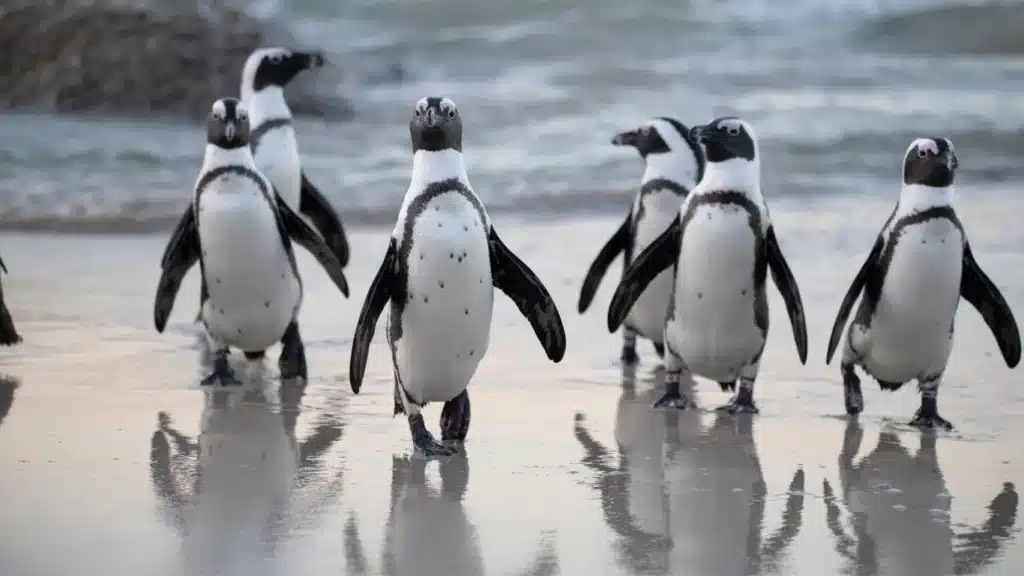
Article written by Jan-Hendrik de Villiers Originally published by news24 (Wed, Dec 13, 2023) The City of Cape Town unveiled a new pedestrian crossing to showcase the African penguins in Simon’s Town. Picturesque Simon’s Town honoured its most famous residents – the penguins – by changing a zebra crossing to a “penguin crossing”. The City of Cape Town unveiled the pedestrian crossing, which now depicts the African penguins. “The Simon’s Town, Boulders Beach area is globally famous for the colony of African penguins, a much-loved feature of the south peninsula, loved by locals and visitors alike. “We have, over the past two years, invested in, or approved partner-installed place-making pedestrian crossings and other ‘pavement’ public art, in order to create an urban streetscape energy or indicate heritage, tourism and cultural precincts,” said the city’s Mayoral Committee Member for Urban Mobility, Rob Quintas. He said the pedestrian crossing depicted the penguins in standing, diving and swimming positions. Quintas said the proposal was initiated by the local ratepayer’s association, who also covered the cost, and the initiative was championed by his directorate. The pedestrian crossing was painted by artist Jacques Coetzer and is located close to Boulders Beach on St George’s Street, near Rectory Lane. In addition, the “place-making initiative” will reinforce the importance of the Boulders penguin colony and create a “further synonymity” between Simon’s Town and the rare and endangered penguins, according to Quintas. Similar projects were undertaken in the past, such as when the City of Cape Town undertook the rainbow pedestrian crossing and “pink meander” in De Waterkant in 2022. It was in an effort to “reinvigorate the historic LGBTQIA+ precinct” and to acknowledge a traditionally marginalised group, as well as creating a sense of inclusion, in line with all global cities, according to Quintas.
Levels of toxic PCB chemicals found at 30 times ‘safe’ limits in stranded whales
Article written by Karen McVeigh Originally published by The Guardian (Tue, Nov 28, 2023) Studies of cetaceans stranded in UK waters show high levels of toxins 20 years since global ban of most PCBs, say scientists Nearly half of the whales and dolphins found in UK waters over the past five years contained harmful concentrations of toxic chemicals banned decades ago, an investigation has found. Among orcas stranded in the UK, levels of polychlorinated biphenyls (PCBs), a group of highly dangerous and persistent chemicals that do not degrade easily, were 30 times the concentration at which the animals would begin to suffer health impacts, researchers said. Scientists described the findings as a “huge wake-up call” that should ring alarm bells not only for the future of marine mammal health but for human health, too. Dr Rosie Williams, lead author and researcher from the Zoological Society of London’s (ZSL) Institute of Zoology, said: “It’s been over 20 years since several of these chemicals were banned globally, yet we still see concerningly high concentrations in wildlife. “Although concentrations of the pollutants seem to be declining, our findings reveal that in many species they are still present at levels associated with negative effects on the immune and reproductive systems.” High PCB concentrations are a major cause of decline in European cetacean populations, studies have found. One paper, from 2018, suggests orcas near industrialised areas could be at risk of population collapse as a result. For the latest report, scientists examined postmortem records and tissue samples from 1,000 marine mammals, consisting of 11 different species stranded in the UK, using data collected over 30 years by a partnership including ZSL’s Cetacean Strandings Investigation Programme, a government-funded project, and the Centre for Environment, Fisheries and Aquaculture Science. They found that concentrations of PCBs, once widely used but banned globally in 2004 under the Stockholm convention, were highest in long-lived species at the top of the food chain: orcas, bottle-nosed dolphins and white-beaked dolphins. Researchers said they controlled for the bias introduced by examining stranded animals, whose deaths may have been hastened by chemicals, by including a high percentage of deaths from trauma, such as boat strikes or entanglement with fishing lines. The toxins, initially taken up by plankton at the bottom of the food chain and not susceptible to being broken down, increase in concentration the higher up the chain they go, a process known as “biomagnification”, Williams said. In 2017, Lulu, an orca from the UK’s last resident pod, was found dead on Tiree in Scotland. She was discovered to have one of the highest concentrations of toxic pollutants ever found in a marine mammal. The extreme level of PCBs in her blubber, at 950mg/kg (0.033oz/2.2lb) – more than 100 times the limit of 9mg/kg regarded as safe – was believed by some scientists to have contributed to her infertility. “This is a huge wake-up call,” said Williams, who called for urgent action to protect the marine environment from historical and emerging pollutants. “We rely on the same ecosystem for some of our own food – so these findings ring alarm bells not only for the future of marine life but indicate a risk to human health also.” The NHS advises pregnant and breastfeeding women, those trying to get pregnant and girls to eat no more than two portions of oily fish a week, because chemical pollutants may build up and affect the future development of a baby in the womb. Banner Credit: Nature Picture Library/Alamy
Dominica creates world’s first marine protected area for sperm whales
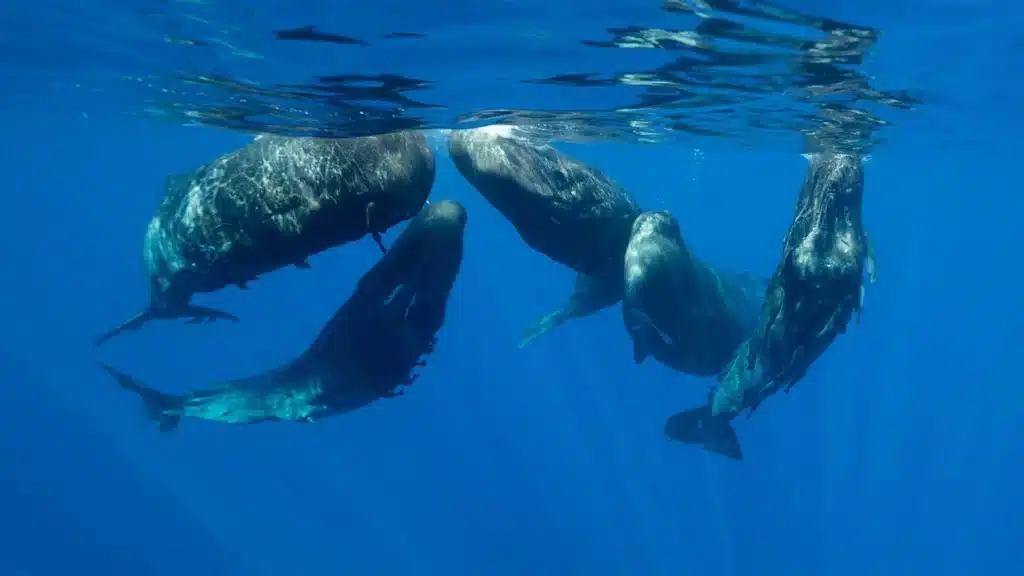
Adapted from the article written by Associated Press Originally published by The Guardian (Mon, 13 Nov, 2023) Nearly 300 sq miles of water on west of Caribbean island to be designated as a reserve for endangered animals The tiny Caribbean island of Dominica is creating the world’s first marine protected area for one of Earth’s largest animals: the endangered sperm whale. Nearly 300 sq miles (800 sq km) of royal blue waters on the western side of the island nation that serve as key nursing and feeding grounds will be designated as a reserve, the government announced on Monday. “We want to ensure these majestic and highly intelligent animals are safe from harm and continue keeping our waters and our climate healthy,” the prime minister of Dominica, Roosevelt Skerrit, said in a statement. Scientists say the reserve not only will protect the animals, but it will also help fight the climate crisis. Sperm whales defecate near the surface because they shut down non-vital functions when they dive to depths of up to 10,000ft (3,000 meters). As a result, nutrient-rich poop remains along the ocean surface and creates plankton blooms, which capture carbon dioxide in the atmosphere and drag it to the ocean floor when they die. And sperm whales in Dominica are believed to defecate more than whales elsewhere, said Shane Gero, a whale biologist and founder of the Dominica Sperm Whale Project, a research program focused on sperm whales in the eastern Caribbean. It is unclear why sperm whales seem to defecate more in Dominica. Gero said it could be they are eating twice as much, or maybe there is something particular about the type of squid they are eating. “In some respects, sperm whales are fighting climate change on our behalf,” Gero said in an interview. Fewer than 500 sperm whales are estimated to live in the waters surrounding Dominica, part of a population that moves along the Lesser Antilles chain, swimming as far south as St Vincent and north into Guadeloupe. Unlike sperm whales elsewhere in the world, the ones around the eastern Caribbean do not travel very far, Gero said. He noted that sperm whales are a matrilineal society, with young males leaving and switching oceans at some point in their lives. As a result, protecting the species is key, especially if few female calves are born, he said. “One calf being entangled can mean the end of a family,” he said. Sperm whales can produce a single calf every five to seven years. In waters around Dominica and elsewhere, sperm whales have been hit by ships, entangled in fishing gear and affected by agricultural runoff, limiting their survival. In the pre-whaling days, an estimated 2 million sperm whales roamed the Earth’s deep waters before they were hunted for oil used to burn lamps and lubricate machinery. Now, some 800,000 are left, Gero said. The government of Dominica said the reserve would allow sustainable artisanal fishing and delineate an international shipping lane to avoid more deaths of sperm whales, which have the largest brain of an animal species in the world and can grow up to 50ft (15 meters). Once the reserve is created, the prime minister said his administration will appoint an officer and observers to ensure the area is respected and that whale tourism regulations are enforced. Visitors can still swim with sperm whales and see them from a boat, but in limited numbers. The move was praised by scientists and conservationists including Enric Sala, an explorer-in-residence at National Geographic. “The government of Dominica has realized that the sperm whales, which were probably here before humans, are also citizens of Dominica,” he said. “These whales will spend most of the year offshore the island. So, they are taking care of some of their citizens in a way that few nations have ever done before.” An estimated 35 families of sperm whales spend most of their time in waters surrounding Dominica. Gero said some are probably more than 60 years old, and they communicate via clicking sounds in a vocalization known as codas. “That’s kind of like asking, ‘I’m from Dominica, are you?’” Gero said. “It’s a symbolic marker.”
Animals to be recognised as sentient beings under proposed Victorian cruelty laws
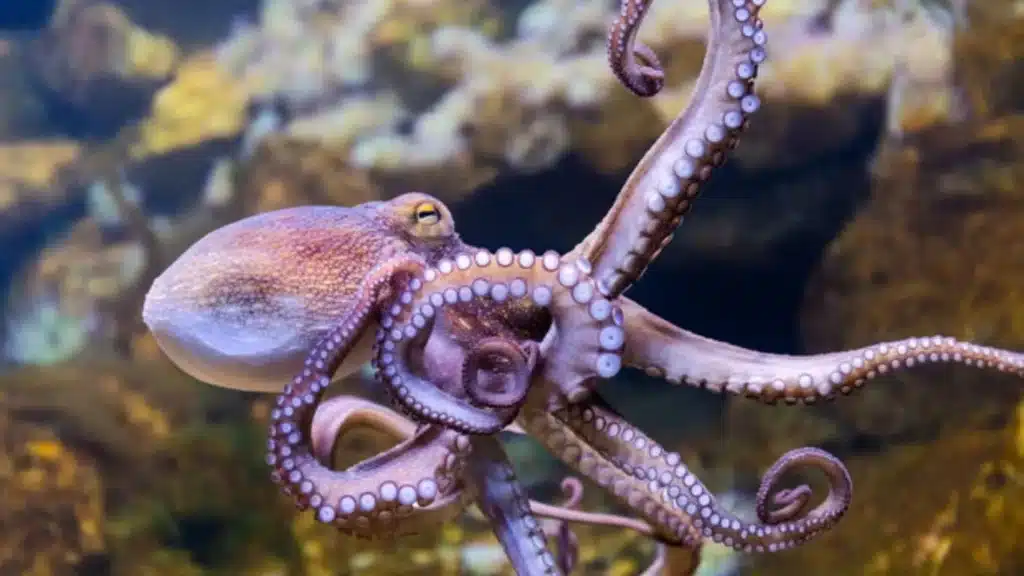
Article written by Benita Kolovos Originally published by The Guardian (Mon, 13 Nov, 2023) Draft of animal care and protection act may make Victoria first state to explicitly recognise animal sentience The Victorian government will follow the Australian Capital Territory and could become the first Australian state to recognise that animals are sentient beings, under a draft overhaul of cruelty laws to be released in the coming weeks. Guardian Australia understands a long-awaited draft of the animal care and protection act will be released for public consultation next month, before a final bill is tabled in parliament in 2024. The new protections are expected to cover more species, including octopuses, squid, cuttlefish, lobsters, crabs and crayfish. This came six years after the government announced a review of the existing Prevention of Cruelty to Animals Act, with a view to replace it “with a modern animal welfare act in 2019”. A 2019 parliamentary inquiry also recommended the government modernise the act “as a matter of priority”. In a statement, a government spokesperson said the current act was outdated. “Work is under way for a new animal care and protection act that would replace Victoria’s current Prevention of Cruelty to Animals Act 1986 – which is more than 35 years old,” the spokesperson said. Under a plan released for consultation in 2022, the government said its new laws would explicitly recognise animals are sentient, meaning they are capable of feelings such as such as pain and pleasure. Guardian Australia understood this would remain in the draft legislation. If passed, Victorian would become the first state to recognise animal sentience in law. The ACT did so in 2019. Several overseas jurisdictions have explicitly recognised animal sentience in law, including Denmark, France, Greece and New Zealand, and in the US the state of Oregon and Washington DC. It is a condition of Australia’s free trade agreement with the UK. But the move could face opposition from the Victorian Farmers Federation, who during consultation have sought assurances from government that such recognition “doesn’t equate to granting animals human-like legal rights or emotions”. Under the Victorian government’s proposal, new care requirements would also be introduced, including minimum standards to guide nutrition, physical environment, health and behavioural interactions. This would take in pets, animals on farms and those kept in zoos, with a new offence to be created for owners who fail to provide the requirements. Three escalating cruelty offences were also expected to be introduced for animal cruelty: general cruelty, aggravated cruelty and a new indictable offence for the most serious cruelty that is intentional or reckless. Examples included in the government’s 2022 plan include “deliberately burning a dog with a cigarette or shocking a racehorse with an electronic prodder”. The plan said the new offence could carries penalties of up to $240,000 for individuals or five years’ jail, or $1.2m for organisations and could be held before a judge or jury. The recognition of octopuses and other species as “animals” in the draft law was welcomed by the Animal Justice party’s MP, Georgie Purcell. “I think many people have learned in recent years just how incredible octopi are following the documentary My Octopus Teacher,” the upper house MP said. “But legally in Victoria there’s some horrific things that can happen to them and crustaceans.” She said she hoped the laws would provide protection from the animals from being boiled alive or kept inside small tanks in restaurants. Purcell said it had been “six years, two elections and five agriculture ministers” since the government announced the new laws and was hopeful their proposed bill will be strong enough to “protect all – not just some animals – from cruelty”. The changes will not come into effect until two years after they are passed. Further work to develop new regulations will follow, and may not be in place before the 2026 election. The government has also committed to reform of the Wildlife Act 1975 after the killing of hundreds of wedge-tailed eagles in East Gippsland and koala deaths in a timber plantation at Cape Bridgewater.
Even biodegradable plastic is harmful to fish populations
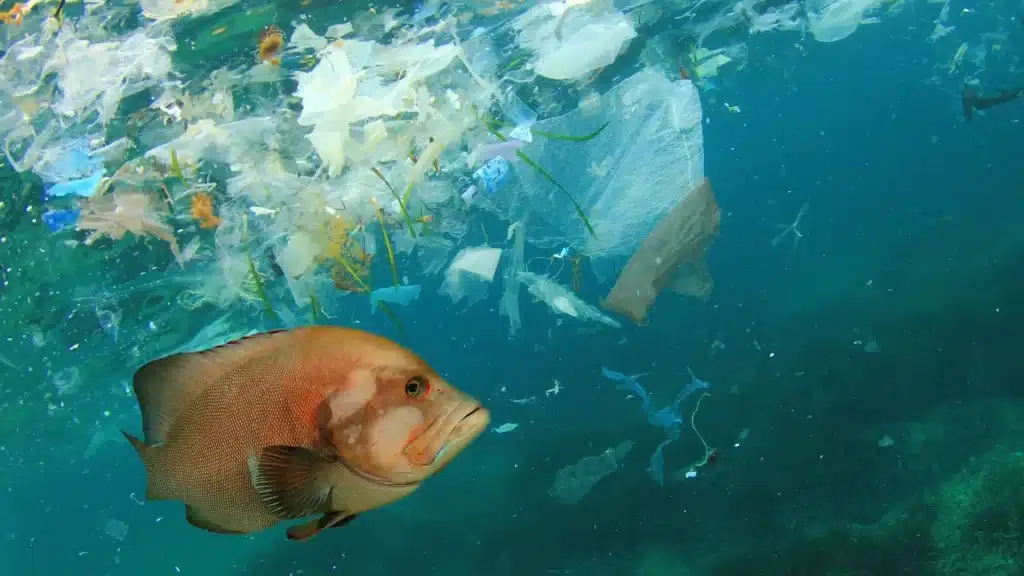
Article written by Eric Ralls Originally published by Earth.com (Tue, 23 Oct, 2023) In a disturbing revelation that challenges long-standing solutions to plastic pollution, a study from the University of Otago indicates that biodegradable plastics still pose a threat to aquatic life. The research assesses the effects of both petroleum-based and biodegradable plastics on wild fish populations. Unfortunately, the scientists discovered that the perceived environmentally-friendly biodegradable plastic alternative is not as benign as previously thought. Plastic’s impact on marine life The investigation stands as the first of its kind to delve into the comparative impacts of different plastic types on marine inhabitants. Ashleigh Hawke, a Master of Science graduate from Otago’s Department of Marine Science, was lead-author of the study. Her research meticulously evaluated how exposure to conventional petroleum-derived plastics and biodegradable counterparts affect various aspects of fish physiology and behavior. It was discerned that petroleum-based plastics significantly hampered several facets of the fishes’ daily functions. These include their escape performance, routine swimming patterns, and overall aerobic metabolism. In a somewhat relieving but still concerning contrast, fish subjected to biodegradable plastics experienced only a detrimental impact on their maximum escape speed. Biodegradable or not, it’s still plastic According to Hawke, these findings are monumental. They underscore the grim reality that, irrespective of their type, plastics have the propensity to inflict harm on marine ecosystems. “Biodegradable plastics may not be the silver bullet to plastic pollution as we believe them to be,” she explains. Hawke went on to say that while these substances are marginally less detrimental, they nonetheless could precipitate adverse outcomes for marine species exposed to them. In the context of her study, such exposure could critically impair populations by diminishing their escape responses. The ability to escape predators is, of course, a vital survival mechanism for fish. Inconsistent path of biodegradable plastic Co-researcher Dr. Bridie Allan is a fellow member of the Department of Marine Science. He accentuates that these insights should propel a re-evaluation of environmental protection strategies. This is especially true for those pertaining to marine conservation. Dr. Allan points out a critical issue in the realm of biodegradable plastics: inconsistency in their production. “The development of traditional plastics has been well established for decades and so there is little variation in the production of them. However, because biodegradable plastics are a relatively new area, there is variation in the way they are manufactured and the materials that are being used,” she elaborates. This lack of standardization in biodegradable plastic production raises questions regarding their ecological safety. The constituents of these plastics matter immensely, as evidenced by the research findings. This suggests a pressing need for these materials to undergo more stringent regulation and control. Calls for policy-level reforms The revelations from the University of Otago’s study serve as a clarion call for policymakers to intensify protections for marine environments. This research unequivocally demonstrates that switching from traditional plastics to biodegradable alternatives is not a straightforward solution. The researchers emphasize the necessity for comprehensive policies that consider the complexities of biodegradable materials. Companies must ensure that their production is as harmless as presumed. They must also continue striving for innovative solutions in addressing the global crisis of plastic pollution. Global environmental stewardship In summary, the study presents a stark reminder that solutions to environmental issues are seldom clear-cut. Biodegradable plastics, once the beacon of hope in the fight against plastic pollution, are now under scrutiny. As the world grapples with the realities of these findings, it is imperative that efforts are not dialed back but rather, that global communities, manufacturers, and policymakers collaborate more closely. Through unified, informed actions and an openness to re-evaluating current practices, there may yet be hope for preserving the delicate balance of life within our oceans.
‘Very serious offence’: Four men sentenced for torturing a seal on a Cape Town beach
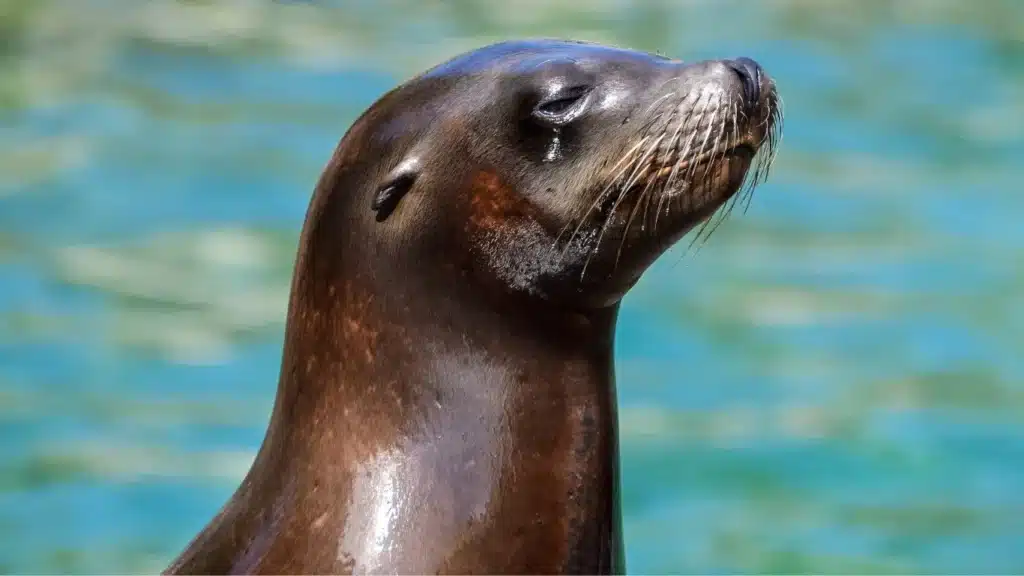
GOOD NEWS: Four men sentenced for torturing a seal in Cape Town Recently, we told our supporters about a terrible situation for Cape fur seals in Cape Town, South Africa. These defenseless creatures face threats from commercial fishing, climate change and, most horrifically of all, are brutally tortured and killed in their natural habitats by humans. Together with our partner, Sea Search – and thanks to your donations – we are working to help protect Cape fur seals and ensure that those responsible for these savage crimes face the full force of justice. We are pleased to report that four men accused of trapping and stoning a seal in January have been found guilty. The accused were sentenced to six years’ imprisonment, suspended for five years, with a range of conditions. Read more below. Article written by Lisalee Solomons Originally published by News24 (Wed, 4 Oct, 2023) The Cape of Good Hope SPCA says a recent court ruling and sentencing of four men found guilty of trapping and stoning a Cape fur seal at the popular Monwabisi Beach earlier this year will send a clear message that animal cruelty won’t be tolerated. The Khayelitsha Regional court found Luxolo Godana, 27; Nyameko Titi, 18; Nkosinathi Ndzendevu, 21, and Zamani Sibusiso, 22, guilty and sentenced them to six years’ imprisonment, suspended for five years with conditions. The SPCA was alerted on 9 January to a harrowing scene at the beach where four men attempted to kill an adult seal by hurling large rocks at the trapped and terrified animal. Image Credit: Cape of Good Hope SPCA The sentencing conditions included that the accused: Avoid convictions under sections of the National Environment Management: Biodiversity Act 10 of 2004. Write and submit a 500-word essay on marine mammals, highlighting the importance of wildlife and education for preservation, drawing from the book “Marine Mammals: A guide to the whales, dolphins and seals of Southern Africa and Southern Oceans” by Chris and Mathilda Stuart. The essay must be submitted to the clerk of the Khayelitsha Court on 13 October and shared on their Facebook timeline before 23:00 on 12 October. Undertake 18 months of community service, clocking a minimum of 16 hours a month at SPCA-designated branches. Make consistent financial contributions totalling R2 000 each to the SPCA. Swift intervention by a City of Cape Town law enforcement officer prevented further harm. SPCA chief inspector Jaco Pieterse said the officer detained the suspects until the SPCA inspector arrived. “Due to the gruesome injuries it suffered, including severe facial and skull fractures, the seal was promptly transported to a 24-hour veterinary clinic where it had to be euthanized. The seal’s mouth bled profusely, one eye was crushed, and most of its teeth had been violently broken off,” said Pieterse. In handing down the judgment two weeks ago, Francke said the young men committed “a very serious offence”. “Standing in front of this court, the court is convinced they do not understand the true nature of the seriousness of their act. They pleaded guilty and are first offenders,” said the magistrate. The SPCA said the harsh punishment should serve as a wake-up call to animal abusers. “This incident serves as a bleak reminder of the urgent need for increased awareness and education on animal rights and welfare. We welcome this judgment and will ensure the convicts abide by the court’s mandate. “Our aim is to teach these individuals compassion, a value crucial for the well-being of society and its creatures,” the SPCA said. Read ASI’s original article.
‘Alarming’ scale of marine sand dredging laid bare by new data platform
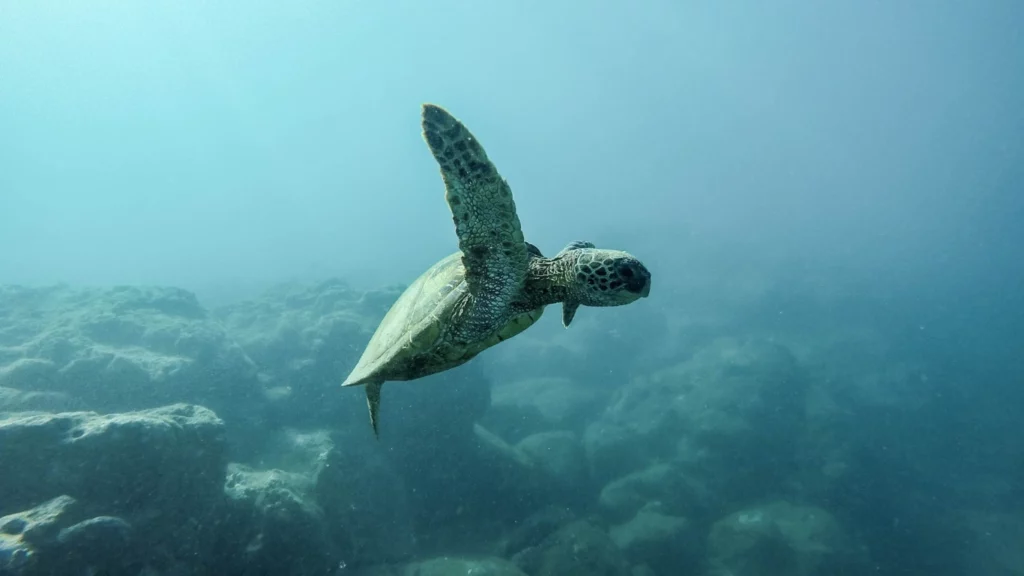
Article written by Karen McVeigh Originally published by The Guardian (Tue, 5 Sep, 2023) UN-developed Marine Sand Watch estimates 6bn tonnes dug up a year, well beyond rate at which it is replenished One million lorries of sand a day are being extracted from the world’s oceans, posing a “significant” threat to marine life and coastal communities facing rising sea levels and storms, according to the first-ever global data platform to monitor the industry. The new data platform, developed by the UN Environment Programme (Unep), tracks and monitors dredging of sand in the marine environment by using the AIS (automatic identification systems) data from ships. Using data from 2012-19, Marine Sand Watch estimates the dredging industry is digging up 6bn tonnes of marine sand a year, a scale described as “alarming”. The rate of extraction is growing globally, Unep said, and is approaching the natural rate of replenishment of 10bn to 16bn tonnes of sand flowing into the sea from rivers and needed to maintain coastal structure and ecosystems. The platform has identified “hotspots” including the North Sea, south-east Asia and the east coast of the United States as areas of concern. In many places where extraction is more intense, including parts of Asia, marine sand is being extracted well beyond the rate at which it is being replenished from rivers. “The scale of environmental impacts of shallow sea mining activities and dredging is alarming, including biodiversity, water turbidity, and noise impacts on marine mammals,” said Pascal Peduzzi, the director of GRID-Geneva at Unep. “This data signals the urgent need for better management of marine sand resources and to reduce the impacts of shallow sea mining,” he said. “Unep invites all stakeholders, member states and the dredging sector to consider sand as a strategic material, and to swiftly engage in talks on how to improve dredging standards around the world.” Developed by GRID-Geneva, a centre for analytics within Unep, Marine Sand Watch has trained artificial intelligence to identify the movement of dredging vessels from its AIS data. It has data from 2012-19 from Global Fishing Watch, a company set up to track commercial fishing activities using AIS data from fishing vessels, but is working on more recent data. Credit: Reuters Sand and gravel makes up half of all the materials mined in the world. Globally, 50bn tonnes of sand and gravel are used every year – the equivalent of a wall 27 metres high and 27 metres wide stretching round the equator. It is the key ingredient of concrete and asphalt. “Our entire society is built on sand, the floor of your building is probably concrete, the glass on the windows, the asphalt on roads is made of sand,” said Peduzzi. “We can’t stop doing it because we need lots of concrete for the green transition, for wind turbines and other things.” Last year, Unep called for better monitoring of sand extraction and use to avert an environmental crisis. It recommended a halt to mining on beaches and to establish an international standard for extraction in the marine environment. While extracting sand from quarries on land can, to some extent, be restored, extracting sand and other materials from the marine and river environment will change the shape of a river or coastline and “sterilise the bottom of the sea. It is very damaging,” said Peduzzi. “These vessels are like a giant vacuum cleaner on the bottom of the sea,” he said. “All the micro-organisms in the sand are crunched and nothing is left behind. If you take all the sand away to bare rock, nothing will recover. But if you leave 30-50cm it will recover.” Peduzzi said the platform was not set up to “name and shame” companies, but to “make the invisible visible” and to highlight the scale of the problem. Already, the platform has achieved its first aim, to highlight the problem, he said. The International Association of Dredging Companies (IADC), the umbrella organisation for the industry, on Tuesday launched a paper on best practice for responsible dredging of the “scant resource”. Overall, the aggregate industry is worth hundreds of billions of dollars annually. While international practices and regulations vary, some countries, including Indonesia, Thailand, Malaysia, Vietnam and Cambodia, have banned marine sand export. The work by Unep/GRID-Geneva follows a UN environment assembly resolution to strengthen scientific, technical and policy knowledge and to support global policies and action on environmentally sound extraction and use of sand. China, which has 200 dredging vessels, is developing a record-breaking dredger 50% more powerful than its existing “super island builder in the South China Sea”, according to reports this year.
African penguins face extinction, please help us prevent that from happening.
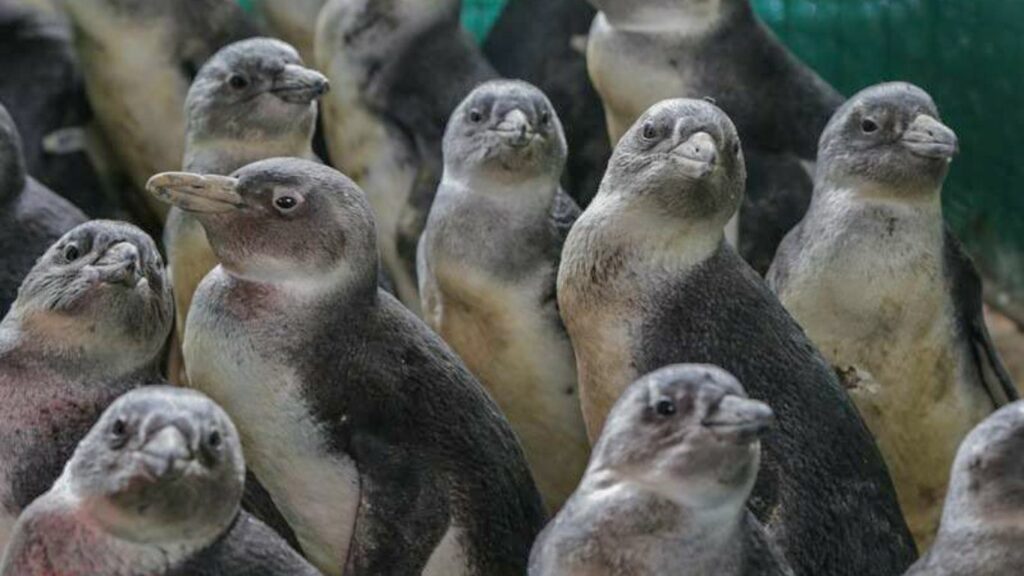
Iconic and charismatic, African penguins have declined in numbers by over 98% in the last century. At their current rate of demise, they could be extinct by 2035. Credit: APSS Once abundant along their native coast of Southern Africa, the African penguin has declined to just 2% of its original population size, placing it on the brink of demise. Today, we are asking for your urgent help in protecting the surviving breeding pairs in Gansbaai, South Africa, which are critical to the survival of the species and the health of our oceans at large. Credit: APSS The steep decline in African penguin populations is deeply alarming. Penguins are dying at a truly terrifying rate. Human-driven activities, like overfishing, are obliterating African penguin populations. A horrific, unexpected side effect of overfishing means that seals lose their food sources, so they attack penguins in an attempt to reach the semi-digested fish in their bellies. Surviving penguins are left with horrific injuries and often succumb to these. Deadly coating of tanker oil; certain death without rescue. Credit: APSS Fishing net entanglement, as penguins hunt for food, further affects their numbers. Oil spills, marine pollution and degradation are other major threats. The African penguin population in Southern Africa is in deep, deep trouble; we have a plan to help bolster their populations along with our partner, the African Penguin and Seabird Sanctuary (APSS) in Gansbaai. APSS works to protect the remaining 1,000 breeding pairs on South Africa’s Dyer Island – a critical breeding ground along the coast and one that has seen its penguin population drop from 26,000 breeding pairs in 1979 to just 1,000 today. Credit: APSS Most adult females lay a maximum of two eggs per breeding season, and only one-third of all hatched chicks survive to reach their breeding age – which takes three to six years. This underscores the importance of protecting every penguin we can. Out of 18 global penguin species, the African penguin has been identified as one of three requiring urgent conservation intervention. Because it is human activity that has disrupted penguin populations, it is critical that we help intervene and save as many as possible. Deadly coating of tanker oil; certain death without rescue. Credit: APSS Our partner regularly rescues injured penguins, chicks and other seabird species who would otherwise have no chance of survival. Once successfully rehabilitated, they are released back onto Dyer Island. This rescue, treat and release program has seen Dyer Island’s penguin population stabilize and remain that way for the past three years. Credit: APSS With your help, human threats to penguins, like fishing net entanglement, can be monitored by the expert team, and swift intervention can occur when a penguin is in trouble. Rescued penguins have 89.5% survival rate if they are given the right treatment and care. We really need your help today to save every penguin we can. There is a small emergency rehabilitation center on Dyer Island where emaciated, injured, and sick birds can be immediately cared for and undergo basic surgical operations. There is also a desalination plant used to hydrate penguins with purified water – a literal life-saver for many seabirds. Credit: APSS But this machine needs urgent maintenance and will not function for much longer. Without it, birds are almost guaranteed to perish after surviving all they have endured on the island. If we can raise $7,000 (roughly £5,513), we can repair and refurbish the desalination plant and ensure the team has every piece of equipment they need to save lives. Because of Dyer Island’s remote location and the region’s unpredictable water conditions, trips to the mainland are infrequent, which means the Dyer Island clinic MUST be fully prepared to handle any penguin illness or injury they need to. Credit: APSS The situation for the African penguin species is critical. Please support our critical rehabilitation efforts by donating now. The situation for African penguins is dire; now is the time for action. It is imperative that we take every step necessary to save every penguin life we can – so please donate generously right now.
Ocean temperatures hit 90 degrees, fueling weather disasters
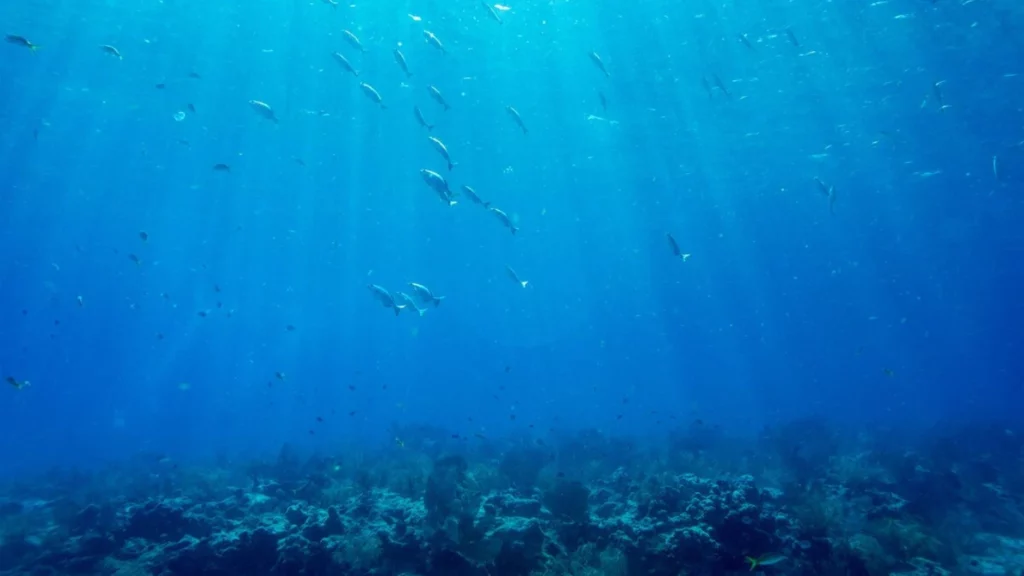
Article written by Brian K Sullivan Originally published by Bloomberg (Tue, Jul 25, 2023) Soaring water temperatures are triggering extreme heat, storms and drought. Heat searing enough to knock out mobile phones. Wildfire smoke that turns the skies an apocalyptic orange. Flash floods submerging towns in upstate New York and Vermont. This grim procession of recent disasters is being driven in part by climate change. But there’s one particular facet of global warming that’s providing potent fuel to make extreme weather even more intense: record-hot oceans. Global ocean surface temperatures in June were the highest in 174 years of data, with the emergence of the El Niño weather pattern piling onto the long-term trend. Near Miami, coastal Atlantic waters are pushing 90F (32C.) Hot oceans are amplifying weather-driven catastrophes that are claiming lives and inflicting massive economic damages — a cost that could rise to $1 trillion per year in the coming decades, according to marine scientist Deborah Brosnan. They’re also accelerating climate change. As water temperatures rise, oceans lose their ability to serve a vital function: absorb the world’s excess heat. That’s setting off a cascade of climate impacts, including stronger storms, rising sea levels and the loss of coral reefs and other marine life. As water temperatures climbed, they’ve had impacts that extend to the most remote places on Earth: Antarctic sea ice reached its lowest June extent on record despite winter being underway there, according to the US National Centers for Environmental Information. But the impact of sizzling seas has hit closer to home for millions around the globe, often with catastrophic results. Hurricanes and typhoons are among the most salient examples of extreme weather fueled by warm oceans. Soaring water temperatures supercharge storms by adding moisture to the atmosphere — and there are signs that’s already happening. Global accumulated cyclone energy – a measure of storms’ collective power – was almost twice the normal value for June. Earlier this year, Tropical Cyclone Freddy set a preliminary record as the longest-lasting tropical cyclone ever recorded. The storm formed near Australia and crossed the Indian Ocean before making landfall in East Africa and killing hundreds. Freddy put out as much power as all the storms in an average North Atlantic hurricane season. It was followed in April by Tropical Cyclone Ilsa, which roared into Western Australia with the strongest winds on record in the area prior to landfall. The world is currently in the grips of an El Niño, a natural climate pattern characterized by warmer-than-normal waters in the eastern tropical Pacific. That shifts weather patterns around the globe, though it also typically creates wind conditions that tamp down on storms in the Atlantic. But hot Atlantic ocean temperatures could change that. Though the North Atlantic hurricane season doesn’t usually reach its peak until September, it’s already seen an active start with two storms churning at the same time in June, the first time that’s happened in more than five decades. This year could see more storm activity than normal. The hot ocean temperatures are a major reason why Phil Klotzbach, author of the closely watched Colorado State University hurricane outlook, boosted his forecast for this year’s Atlantic hurricane season to 18 named storms from 14 in June. “While we’re likely to have a moderate to potentially even strong El Niño event for the peak of Atlantic hurricane season, the extremely warm Atlantic is likely to mitigate” the wind conditions that can rip apart storms, he said. Rainfall from everyday summer storms has also been juiced by hot seas, unleashing destruction far from the coast. Flooding across the US Northeast in July killed one woman in New York, closed rail lines and devastated Vermont, causing as much as $5 billion in losses. The freak storm tapped into a deep vein of moisture stretching all the way from the Atlantic. Warm oceans also contribute to the other end of the extreme-weather spectrum: Droughts and wildfires. Winds in the upper atmosphere known as the jet stream are influenced by the ocean below, and hot seas can cause them to bend in extreme ways. That results in areas of high pressure that can trap hot air in place for weeks — a phenomenon known as heat domes. In Texas, blistering conditions have sent power demand to record highs. The sizzling heat has extended to Europe, where temperatures on the Italian island of Sardinia touched 115F (46C) last week and nearly toppled Europe’s all-time high. Scorching weather is also blanketing Asia, with temperatures in Tokyo soaring to nearly 16F (9C) above the seasonal average. This shift in the jet stream kept storms away from Canada, leading to drought and the nation’s worst wildfire season on record. A haze from the Canadian blazes descended on New York City in June, creating hazardous air quality, and later drifted across the Atlantic to Europe. “This pattern has been in place most of the winter and spring, and it is responsible for the storms out west, persistent dry conditions where the fires are raging, and the winds bringing the smoke to the Eastern Seaboard,” said Jennifer Francis, a climate scientist at the Woodwell Climate Research Center in Massachusetts. Bone-dry conditions are lowering water levels on the Mississippi and Ohio Rivers in the US and the Rhine and the Danube in Europe, raising the prospect of shipping problems on important freight routes. The drought is also threatening global supplies of crops including sugar cane and rice. As oceans heat up, they are also less able to absorb CO2 from the atmosphere, said Brosnan. That could create a cycle of warming oceans, more carbon dioxide in the atmosphere and, as a result, ever-more extreme weather. The problem of warming oceans ultimately only has one solution, according to Michael Mann, a climate scientist at the University of Pennsylvania: Cut greenhouse gas emissions. “The large factor here, at a global scale, is the ongoing warming from carbon pollution,” Mann said. “It’s the steady overall ocean heating we should be most concerned about. It will continue until carbon emissions reach zero.”
Gulf Stream could collapse as early as 2025, study suggests
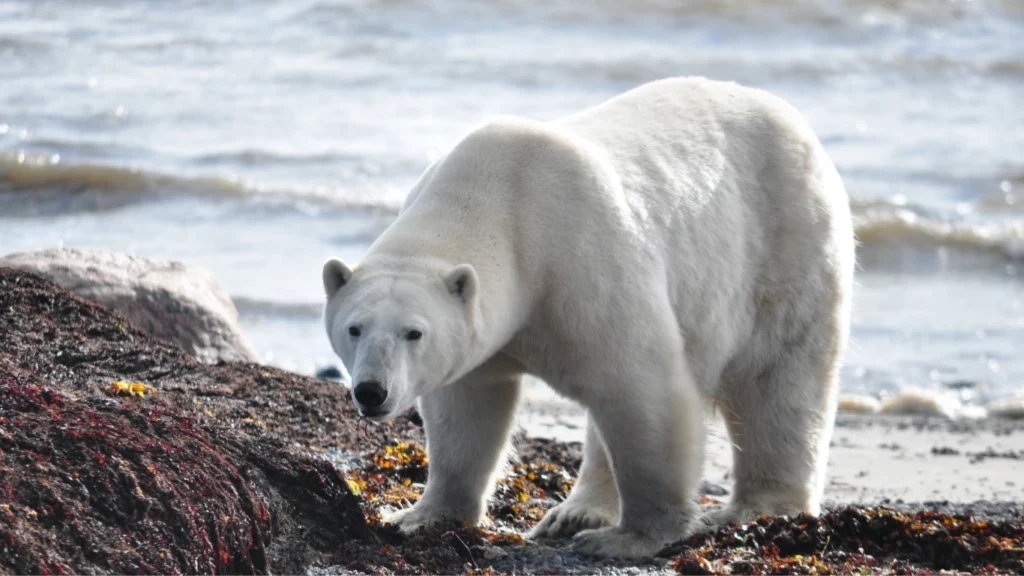
Article written by Damian Carrington Originally published by The Guardian (Tue, Jul 25, 2023) A collapse would bring catastrophic climate impacts but scientists disagree over the new analysis The Gulf Stream system could collapse as soon as 2025, a new study suggests. The shutting down of the vital ocean currents, called the Atlantic Meridional Overturning Circulation (Amoc) by scientists, would bring catastrophic climate impacts. Amoc was already known to be at its weakest in 1,600 years owing to global heating and researchers spotted warning signs of a tipping point in 2021. The new analysis estimates a timescale for the collapse of between 2025 and 2095, with a central estimate of 2050, if global carbon emissions are not reduced. Evidence from past collapses indicates changes of temperature of 10C in a few decades, although these occurred during ice ages. Other scientists said the assumptions about how a tipping point would play out and uncertainties in the underlying data are too large for a reliable estimate of the timing of the tipping point. But all said the prospect of an Amoc collapse was extremely concerning and should spur rapid cuts in carbon emissions. Amoc carries warm ocean water northwards towards the pole where it cools and sinks, driving the Atlantic’s currents. But an influx of fresh water from the accelerating melting of Greenland’s ice cap and other sources is increasingly smothering the currents. A collapse of Amoc would have disastrous consequences around the world, severely disrupting the rains that billions of people depend on for food in India, South America and west Africa. It would increase storms and drop temperatures in Europe, and lead to a rising sea level on the eastern coast of North America. It would also further endanger the Amazon rainforest and Antarctic ice sheets. “I think we should be very worried,” said Prof Peter Ditlevsen, at the University of Copenhagen in Denmark, and who led the new study. “This would be a very, very large change. The Amoc has not been shut off for 12,000 years.” The Amoc collapsed and restarted repeatedly in the cycle of ice ages that occurred from 115,000 to 12,000 years ago. It is one of the climate tipping points scientists are most concerned about as global temperatures continue to rise. Research in 2022 showed five dangerous tipping points may already have been passed due to the 1.1C of global heating to date, including the shutdown of Amoc, the collapse of Greenland’s ice cap and an abrupt melting of carbon-rich permafrost. The new study, published in the journal Nature Communications, used sea surface temperature data stretching back to 1870 as a proxy for the change in strength of Amoc currents over time. The researchers then mapped this data on to the path seen in systems that are approaching a particular type of tipping point called a “saddle-node bifurcation”. The data fitted “surprisingly well”, Ditlevsen said. The researchers were then able to extrapolate the data to estimate when the tipping point was likely to occur. Further statistical analysis provided a measure of the uncertainty in the estimate. The analysis is based on greenhouse gas emissions rising as they have done to date. If emissions do start to fall, as intended by current climate policies, then the world would have more time to try to keep global temperature below the Amoc tipping point. The most recent assessment by the Intergovernmental Panel on Climate Change concluded that Amoc would not collapse this century. But Ditlevsen said the models used have coarse resolution and are not adept at analysing the non-linear processes involved, which may make them overly conservative. The potential collapse of Amoc is intensely debated by scientists, who have previously said it must be avoided “at all costs”. Prof Niklas Boers, from the Potsdam Institute for Climate Impact Research in Germany, revealed the early warning signs of Amoc collapse in 2021. “The results of the new study sound alarming but if the uncertainties in the heavily oversimplified model [of the tipping point] and in the underlying [sea temperature] data are included, then it becomes clear that these uncertainties are too large to make any reliable estimate of the time of tipping.” Prof David Thornalley, at University College London, UK, agreed the study had large caveats and unknowns and said further research was essential: “But if the statistics are robust and a relevant way to describe how the actual Amoc behaves, then this is a very concerning result.” Dr Levke Caesar, at the University of Bremen, Germany, said using sea surface temperatures as proxy data for the strength of the Amoc currents was a key source of uncertainty: “We only have direct observational data of the Amoc since 2004.” The extrapolation in the new analysis was reasonable, according to Prof Tim Lenton, at the University of Exeter, UK. He said the tipping point could lead to a partial Amoc collapse, for example only in the Labrador Sea, but that this would still cause major impacts. Ditlevsen said he hoped the debate would drive new research: “It’s always fruitful when you do not exactly agree.” Prof Stefan Rahmstorf, at the University of Potsdam, Germany, said: “There is still large uncertainty where the Amoc tipping point is, but the new study adds to the evidence that it is much closer than we thought. A single study provides limited evidence, but when multiple approaches have led to similar conclusions this must be taken very seriously, especially when we’re talking about a risk that we really want to rule out with 99.9% certainty. Now we can’t even rule out crossing the tipping point in the next decade or two.”
Deep sea mining permits may be coming soon. What are they and what might happen?
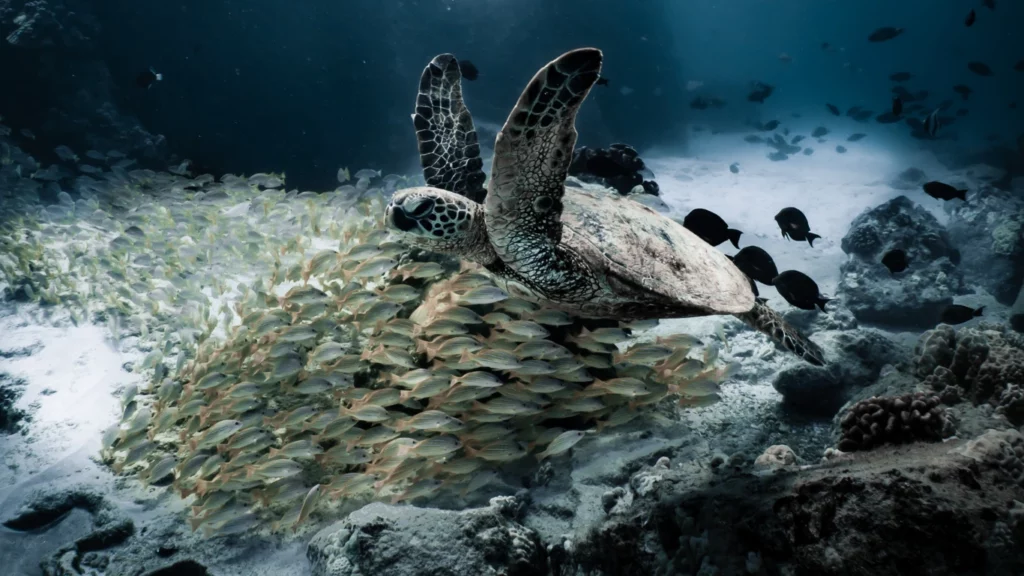
Article written by Victoria Milko Originally published by AP News (Mon, Jul 3, 2023) Deep sea mining permits may be coming soon. What are they and what might happen? JAKARTA, Indonesia (AP) — The International Seabed Authority — the United Nations body that regulates the world’s ocean floor — is preparing to resume negotiations that could open the international seabed for mining, including for materials critical for the green energy transition. Years long negotiations are reaching a critical point where the authority will soon need to begin accepting mining permit applications, adding to worries over the potential impacts on sparsely researched marine ecosystems and habitats of the deep sea. Here’s a look at what deep sea mining is, why some companies and countries are applying for permits to carry it out and why environmental activists are raising concerns. What is Deep Sea Mining? Deep sea mining involves removing mineral deposits and metals from the ocean’s seabed. There are three types of such mining: taking deposit-rich polymetallic nodules off the ocean floor, mining massive seafloor sulphide deposits and stripping cobalt crusts from rock. These nodules, deposits and crusts contain materials, such as nickel, rare earths, cobalt and more, that are needed for batteries and other materials used in tapping renewable energy and also for everyday technology like cellphones and computers. Engineering and technology used for deep sea mining are still evolving. Some companies are looking to vacuum materials from seafloor using massive pumps. Others are developing artificial intelligence-based technology that would teach deep sea robots how to pluck nodules from the floor. Some are looking to use advanced machines that could mine materials off side of huge underwater mountains and volcanoes. Companies and governments view these as strategically important resources that will be needed as onshore reserves are depleted and demand continues to rise. How is Deep Sea Mining Regulated Now? Countries manage their own maritime territory and exclusive economic zones, while the high seas and the international ocean floor are governed by the United Nations Convention on the Law of the Seas. It is considered to apply to states regardless of whether or not they have signed or ratified it. Under the treaty, the seabed and its mineral resources are considered the “common heritage of mankind” that must be managed in a way that protects the interests of humanity through the sharing of economic benefits, support for marine scientific research, and protecting marine environments. Mining companies interested in deep sea exploitation are partnering with countries to help them get exploration licenses. More than 30 exploration licenses have been issued so far, with activity mostly focused in an area called the Clarion-Clipperton Fracture Zone, which spans 1.7 million square miles (4.5 million square kilometers) between Hawaii and Mexico. Why is There Pressure on the ISA to Establish Regulations Now? A clause of the U.N. treaty requires the ISA to complete regulations governing deep sea exploitation by July 2023. Countries and private companies can start applying for provisional licenses if the U.N. body fails to approve a set of rules and regulations by July 9. Experts say it is unlikely it will since the process will likely take several years. What are the Enviromental Concerns? Only a small part of the deep seabed has been explored and conservationists worry that ecosystems will be damaged by mining, especially without any environmental protocols. Damage from mining can include noise, vibration and light pollution, as well as possible leaks and spills of fuels and other chemicals used in the mining process. Sediment plumes from the some mining processes are a major concern. Once valuable materials are extracted, slurry sediment plumes are sometimes pumped back into the sea. That can harm filter feeding species like corals and sponges, and could smother or otherwise interfere with some creatures. The full extent of implications for deep sea ecosystems is unclear, but scientists have warned that biodiversity loss is inevitable and potentially irreversible. “We’re constantly finding new stuff and it’s a little bit premature to start mining the deep sea when we don’t really understand the biology, the environments, the ecosystems or anything else,” said Christopher Kelley, a biologist with research expertise in deep sea ecology. What’s Next? The ISA’s Legal and Technical Commission, which oversees the development of deep sea mining regulations, will meet in early July to discuss the yet-to-be mining code draft. The earliest that mining under ISA regulations could begin is in late 2024 or 2025. Applications for mining must be considered and environmental impact assessments need to be carried out. In the meantime, some companies — such as Google, Samsung, BMW and others — have backed the World Wildlife Fund’s call to pledge to avoid using minerals that have been mined from the planet’s oceans. More than a dozen countries—including France, Germany and several Pacific Island nations— have officially called for a ban, pause or moratorium on deep sea mining at least until environmental safeguards are in place, although it’s unclear how many other countries support such mining. Other countries, such as Norway, are proposing opening their waters to mining.
Government introduces law banning international shark fin trade
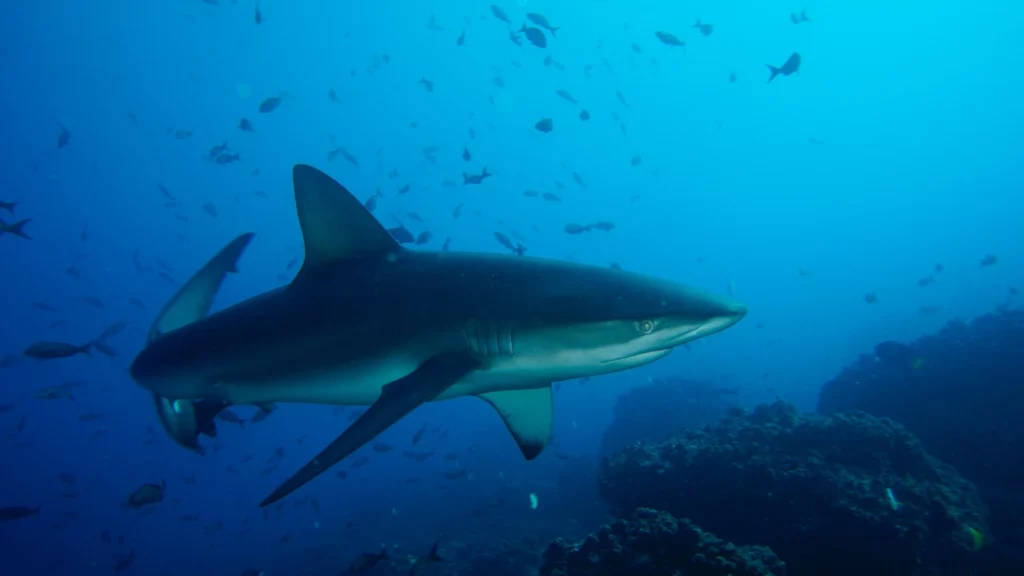
Adapted from article written by by Himanshu Nitnaware Originally published by GOV.UK (Thu, Jun 29, 2023) The Shark Fins Act passed into law today banning the international shark fin trade Import and export of detached shark fins banned to promote shark conservation Ban will extend to imported & exported products containing shark fins including tinned shark fin soup Legislation represents another important step in the UK’s journey to delivering better shark conservation globally The Shark Fins Act passed into law today (29 June), marking a major step in cementing the UK as a global leader in shark conservation. The Act will ban the import and export of detached shark fins, including all products containing shark fins such as tinned shark fin soup. Shark finning is the cruel and wasteful practice of removing a shark’s fins at sea and discarding the finless body back in the water. The practice has been banned in the UK since 2003 through the Shark Finning Regulation, and since 2009 a ‘Fins Naturally Attached’ policy has been enforced to further combat illegal finning of sharks in UK waters and by UK vessels worldwide. This Act goes further to build on these existing protections by preventing the trade of detached shark fins and related products obtained using this method. Many species of shark now face significant population pressures. Out of over 500 species of shark, 143 are listed as ‘Under Threat’ under the International Union for Conservation of Nature, with different species ranging from ‘Vulnerable’ to ‘Critically Endangered’. Demand for shark fin products and subsequent overfishing is a significant driver for these pressures. The Act will help protect sharks and reduce the unsustainable overfishing of sharks. The presence and variety of sharks in marine areas act as a key indicator for ocean health while the animals also play a vital role in marine ecosystems by helping to maintain healthy levels of fish below them in the food chain. The Act follows our Action Plan for Animal Welfare pledge, and our call for evidence in which most respondents emphasised their strong opposition to shark finning. Animal Welfare Minister Lord Benyon said: “Shark finning is an inexcusably cruel practice that has led to the suffering and death of countless sharks. The practice is rightly banned in UK waters, but trade has continued, with serious implications for the future of these magnificent creatures. “That is why it is so important we ban the import and export of detached shark fins and I welcome the Shark Fins Act as an important step in our commitment to champion the conservation and sustainable management of sharks wherever they are fished.” Steve Backshall MBE said: “Today is a huge win for shark conservation and a real cause for celebration. Sharks are beautiful and incredibly complex animals, but sadly frequently misunderstood. “With this tough ban on the import and export of shark fins now law, we are not only supporting the survival of these ancient creature but also sending a clear message the UK has zero tolerance for this wasteful and destructive trade.” Ali Hood, Director of Conservation at the Shark Trust, said: “It’s fantastic news! The UK has long taken a stand against shark finning. Seeing fins naturally attached enshrined into UK law reinforces this stance. And the addition of a ban on the import and export of detached shark fins eases customs checks and enables the UK to hold other countries to the same standard to which we hold ourselves. Our thanks to Christina Rees MP, Baroness Whitchurch, and the many organisations and individuals who have joined this cause over the years.”
Orca rams into yacht near Scotland, suggesting the behavior may be spreading
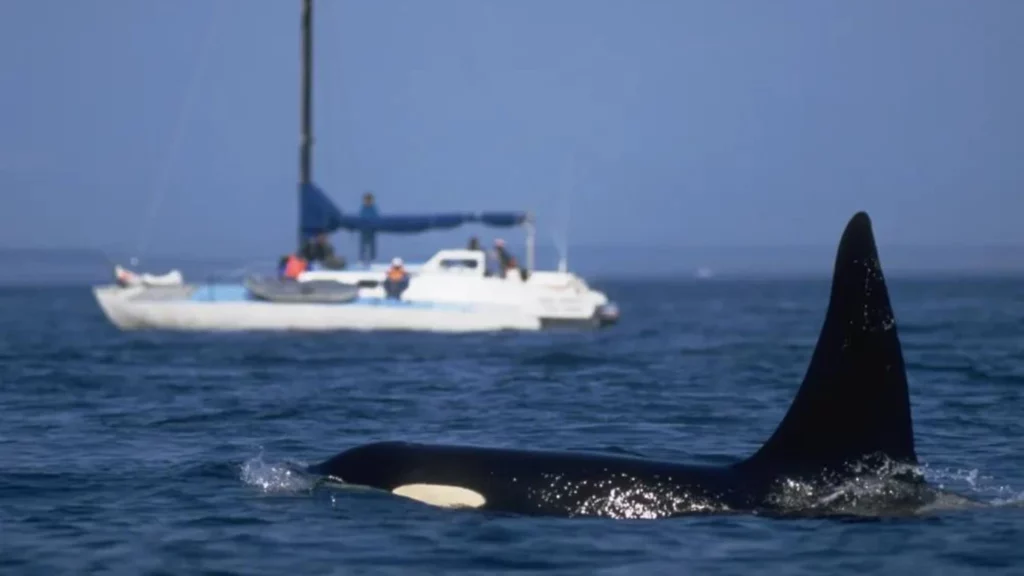
Article written by Sarah Kuta Originally published by Smithsonian Magazine (Mon, Jun 26, 2023) The incident occurred roughly 2,000 miles away from the recent encounters near Spain and Portugal Orcas have been ramming into ships off the coasts of Spain and Portugal and making headlines worldwide, but until now, the behavior appeared contained to that one population. Last week, however, one of these black-and-white mammals slammed into a yacht between Scotland and Norway, some 2,000 miles away from the Iberian orcas. Though scientists don’t quite know what to make of the recent incident, they say it might mean the behavior is spreading. This is believed to be the first known orca-boat encounter in northern waters, as Philip Hoare and Jeroen Hoekendijk report for the Guardian. On June 19, Dutch sailor Wim Rutten spotted an orca in the waters of the North Sea while traveling east from the Shetland Islands of Scotland. Rutten, 72, was using a single line off the back of the boat to fish for mackerel, when seemingly out of nowhere, the orca rammed into the stern of his seven-ton, aluminum hull yacht. The creature then proceeded to hit the vessel multiple times. It swam behind the boat and appeared to be searching for the keel, or the main structural support that runs along the bottom of a boat’s hull from front to back. The orca got so close that Rutten could hear its “very loud breathing,” he tells the Guardian. “Maybe he just wanted to play,” he adds to the publication. “Or look me in the eyes. Or to get rid of the fishing line.” Though the incident shook him up a bit, Rutten made it home safely. Scientists are intrigued that this behavior occurred so far away from the Iberian orcas. One possible explanation is that the North Sea orca was a juvenile that simply got curious about the fishing line coming off the back of Rutten’s boat. However, the behavior could have spread from the Spain and Portugal subpopulation, perhaps transmitted by very mobile orcas. “It’s possible that this ‘fad’ is leapfrogging through the various pods/communities,” says Conor Ryan, an independent researcher who advises the Hebridean Whale and Dolphin Trust, to the Guardian. Meanwhile, off the Iberian coast, the boat-ramming behavior is still going strong: Last week, a pod of orcas slammed into a yacht as it got near the Strait of Gibraltar during the Ocean Race, an around-the-world sailing competition. The group on the yacht took down its sails and slowed their vessel as much as possible, and the orcas stopped bashing the ship soon after. In a statement, Jelmer van Beek, the team’s skipper, described the incident as a “scary moment.” “[It was] impressive to see the orcas, first of all, beautiful animals, but also a dangerous moment for us in the team,” he says in a video by the Ocean Race. (Warning: The video contains profanity.) In the case of the orcas off the coasts of Portugal and Spain, scientists suspect that a female named “White Gladis” may be at least partially responsible for the recent interactions: They worry she had a traumatic run-in with a boat that gave rise to the new behavior, which other orcas are now learning via observation. Since the summer of 2020, scientists have recorded more than 500 incidents involving contact between the Iberian orcas and boats, including three that resulted in the vessels sinking, per Live Science’s Sacha Pare. About 20 percent of the encounters damaged the boats so badly they could not continue sailing. And in one recent incident, a group of orcas in the Strait of Gibraltar followed a boat all the way into port, even after they’d destroyed its rudder. ORCA ATTACK: A killer whale is filmed ripping the rudder blade off of a boat sailing off the coast of Gibraltar, the latest in a series of incidents that have seen the predators targeting ocean vessels. https://t.co/VGYQ1StKnF pic.twitter.com/V5tyZgwWWb — ABC News (@ABC) June 14, 2023 In Spain, authorities are now tagging and tracking six of the Iberian orcas that have been involved in the incidents. Next, they want to share the animals’ locations with sailors in hopes of avoiding future interactions. However, not everyone supports this plan. Alfredo López Fernandez, a biologist at the University of Aveiro and a member of the Atlantic Orca Working Group, has been studying the interactions and believes shooting satellite tags at the whales will only aggravate the creatures further. “The orcas will surely not find it very funny,” he tells RTVE’s Samuel A. Pilar. Banner Credit: Stuart Westmorland via Getty Images
‘Vaquita are survivors’: World’s rarest marine mammal clings on at the edge of extinction
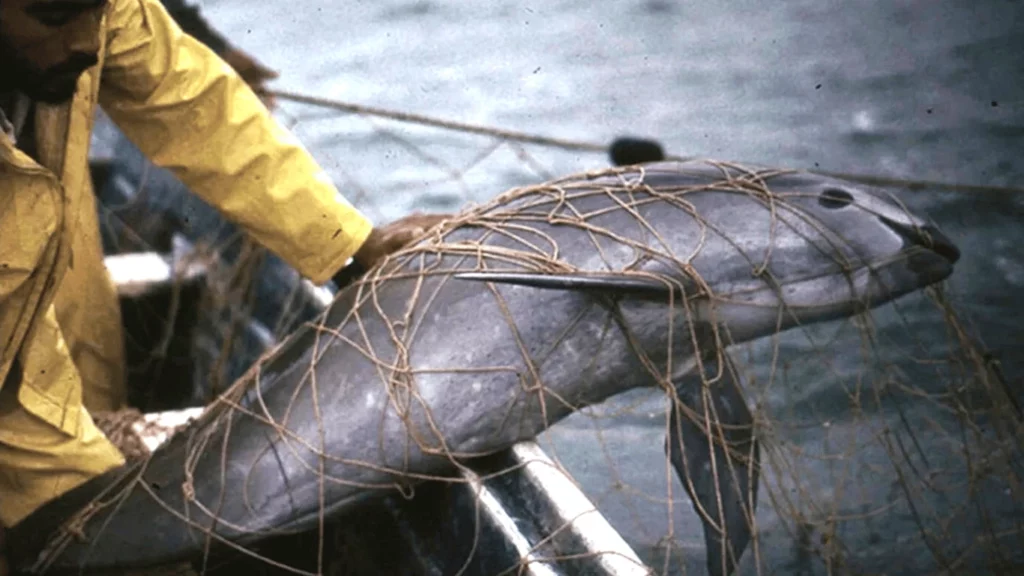
Originally published by Euronews Green (Fri, Jun 09, 2023) Vaquita are only found in small numbers in Mexico’s Gulf of California. Against all odds, the handful of remaining endangered vaquita porpoises are holding on in their only habitat in the Gulf of California in Mexico, according to a new research expedition report released Wednesday. Experts on the expedition estimate they saw between 10 to 13 of the tiny, shy, elusive porpoises during nearly two weeks of sailing in the gulf last month. That is a similar number to those seen in the last such expedition in 2021. Because they are so small and elusive, many of the sightings through powerful binoculars are categorised as probable or likely. The animals also emit “clicks” that can be heard through acoustic monitoring devices. Calf sightings raise hopes for the survival of vaquitas Experts from Mexico, conservation group Sea Shepherd and the US National Oceanic and Atmospheric Administration said they saw at least one and probably two young vaquita calves. The sighting has raised hopes for the survival of the world’s most endangered marine mammal. They say there may even be more vaquitas out there since the voyage covered only part of the creature’s habitat in the gulf, also known as the Sea of Cortez. It lives nowhere else, and the species cannot be captured, held or bred in captivity. But it is far too soon to celebrate. Illegal gillnets have trapped and killed vaquitas for decades. The population has declined from nearly 600 individuals in 1997. Fishermen set the nets to catch totoaba, a fish whose swim bladder is considered a delicacy in China and can fetch thousands of euros per kilogram. While the Mexican government has made some efforts to stop net fishing – like sinking concrete blocks with hooks to snag nets – the fishermen still enter the protected area to fish on a daily basis and even sabotage monitoring efforts. According to the report, “fishermen have begun removing the acoustic devices (CPODs) used to record vaquita clicks. The data recorded on each device is lost, and it is expensive to replace the stolen CPODs.” “Unless enforcement of the fishing ban is effective and the theft of equipment is stopped, acoustic monitoring cannot collect data as it has in the past,” the report states. What needs to be done to save these endangered mammals? Researcher Barbara Taylor called on Mexico to sink more concrete blocks to snag nets, because some of the vaquitas were seen outside the protected area. The expedition took place from 10 to 26 May, crisscrossing a corner of the gulf where the few remaining vaquitas had last been seen. Alex Olivera, the Mexico representative for the Center for Biological Diversity, said it is “encouraging news and it shows that vaquita are survivors. But we still need urgent conservation efforts to save these tiny porpoises from extinction.” Olivera, who was not part of the expedition, estimated that “even in a gillnet-free habitat, it will take about 50 years for the population to return to where it was 15 years ago.” “We need Mexico to urgently comply with existing regulations to prevent the vaquita from disappearing forever,” he added. President Andrés Manuel López Obrador’s administration has largely declined to spend money compensating fishermen for staying out of the vaquita refuge and not using gillnets. It also doesn’t monitor their presence or the areas they launch from. Illegal fishing harms vaquitas and efforts to track them Sea Shepherd has been working in the Gulf alongside the Mexican Navy to discourage illegal fishing in the area known as the ‘zero tolerance zone’, where fishing is supposedly banned. However, illegal fishing boats are regularly seen there, and so Mexico has been unable to completely stop them. Pritam Singh, Sea Shepherd’s chairman, said that patrols with the Mexican Navy have reduced the number of hours that fishing boats spend in the restricted zone by 79 per cent in 2022, compared to the previous year. The last vaquita sighting expedition in 2021 yielded probable sightings of 5 to 13 vaquitas, a decline from the previous survey in 2019. Illegal fishing itself has impeded population calculations in the past. According to a report by experts published in 2022, both the 2019 and 2021 surveys “were hindered by the presence of many illegal fishing boats with gillnets in the water.” “Some areas could not be surveyed at all on some days due to the density of illegal fishing.” The government’s protection efforts have been inconsistent at best, and also often face violent opposition from local fishermen. Banner credit: Luces-del-Siglo
Thousands of dead fish have washed up on a Thai beach. Experts say climate change may be to blame
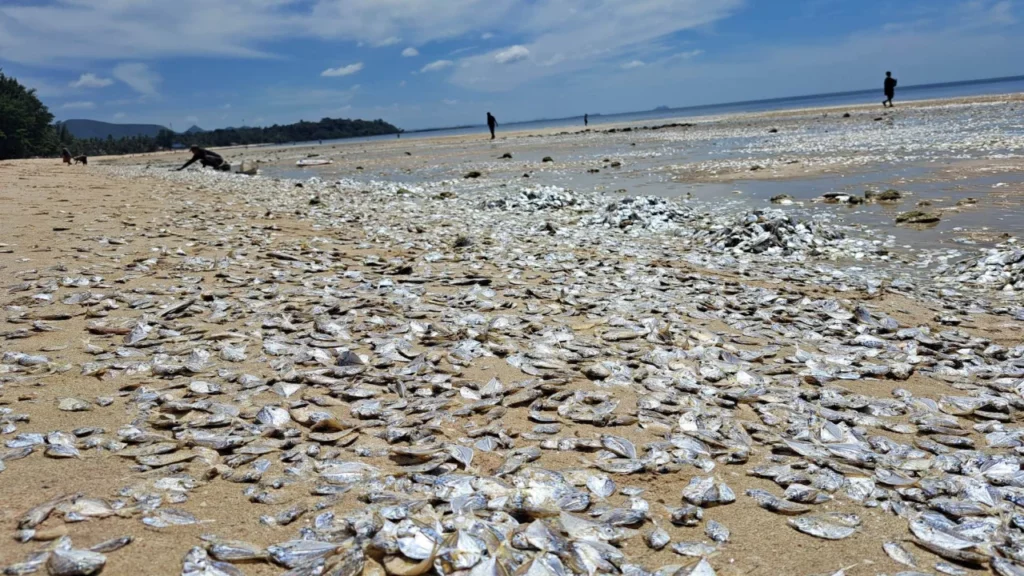
Article written by Reuters and Laura Paddison, CNN Originally published by CNN (Fri, Jun 23, 2023) Climate change may have stimulated a plankton bloom that caused thousands of dead fish to wash up along a roughly 4 kilometer (2.5 mile) stretch of beach in Thailand’s southern Chumphon province on Thursday, an expert said. Thon Thamrongnawasawat, deputy dean of the Faculty of Fisheries at Kasetsart University, attributed the fish deaths to the bloom – a natural occurrence that lowers oxygen levels in the water and causes fish to suffocate. “Various natural phenomena, such as coral bleaching or plankton bloom, have naturally occurred for thousands to tens of thousands of years. However, when global warming occurs, it intensifies and increases the frequency of existing phenomena,” he said. According to local authorities, plankton blooms happen once or twice a year and typically last two to three days. Officials have collected seawater for further assessment and analysis. Worldwide, marine heatwaves have become a growing concern this year. Global sea surface temperatures for April and May were the highest on record for those months, according to the British Met Office, which said the cause is both the arrival of the natural climate phenomenon El Niño, which has a warming impact globally, as well as human-caused climate change, which means higher temperatures for oceans and land. This month, thousands of dead fish washed up on beaches in Texas, and experts are warning of algal blooms along the British coast as a result of rising sea temperatures. In Southern California, hundreds of dolphins and sea lions have been washing up on beaches dead or sick, amid a toxic algal bloom. While California’s algal blooms were caused more by strong coastal upwelling than high temperatures, scientists say climate change likely to increase toxic algal blooms, as some thrive in warm water. “Whether it’s Australia and places like the Great Barrier Reef or even places around England which are experiencing quite bad marine heatwaves at the moment, it’s really going to be detrimental to those local ecosystems,” said Sarah Perkins-Kirkpatrick, a climate scientist with the University of New South Wales in Australia. Banner credit: Kantaphong Thakoonjiranon/Reuters
Here’s proof fishing bans leave plenty to eat, says study of Mexico marine park
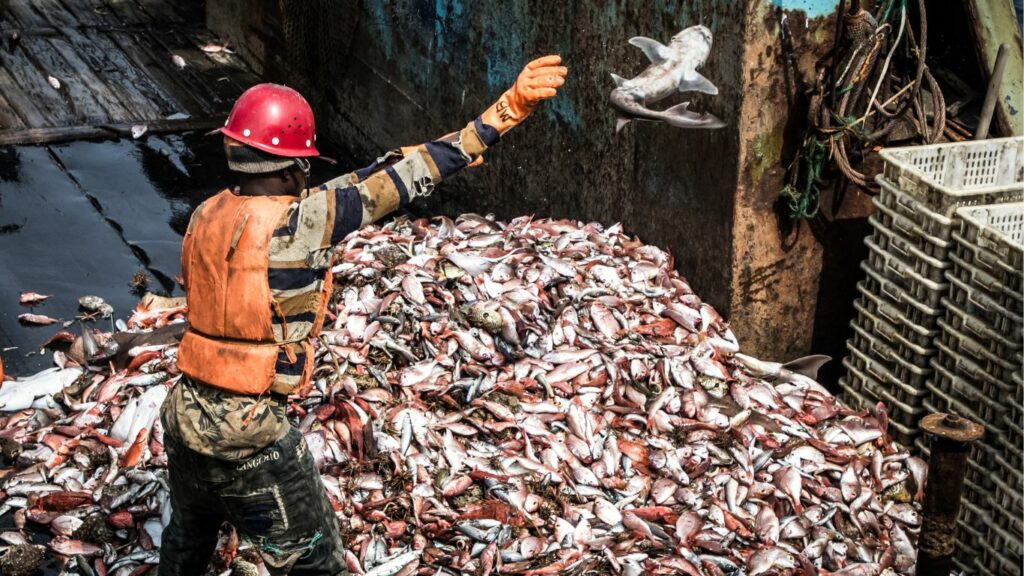
Article written by Sophie Kevany Originally published by The Guardian (Thu, Jun 1, 2023) Scientists compared catch data from four years before and after a permanent ban and found minimal impact on commercial fishing Banning fishing in a Mexican marine park did not reduce the fishing catch, according to a new study that says it has dispelled the “myth” spread by fishing companies that protecting marine areas leaves less fish available for people to eat. The before-and-after study looked at whether banning commercial fishing from the Revillagigedo national park, which covers 147,000 sq km (57,000 sq miles) of Pacific Ocean west of Mexico, would reduce the country’s catch volumes. The answer was no, said the study’s authors, who said the finding showed that “large, fully protected MPAs [marine protected areas] can contribute to a more sustainable and equitable use of the ocean, without major economic repercussions on the fishing industry”. Before fishing in the MPA was banned in 2017, Mexico’s $1bn fishing sector had warned it could reduce their catch of tuna and other pelagic fish by 20%. But catch data comparisons from the four years before and after the ban showed the MPA “had no causal effect on catches or area use, and therefore did not cause harm [to the Mexican fishing fleet]”, said Fabio Favoretto, a postdoctoral scholar at Scripps Institution of Oceanography in San Diego, California, and the lead author of the peer-reviewed study, published in the journal Science Advances. One reason for the MPA’s apparently minimal impact on commercial fishing, he said, might be that the protected area “was almost insignificant” compared with the expanse of ocean available to the Mexican fleet. Another “highly speculative” conclusion might be the existence of more fish in the areas around, as well as inside, MPAs, caused by a “spillover effect” into the surrounding seas, he said, adding that the research team aimed to look at this issue in its next study. Favoretto said it was not possible that significant levels of fishing could have continued undetected in the protected area, with boats potentially killing their transponder signals before entering the park. “Because we were able to see the fishing activity elsewhere, so we didn’t have gaps [in the activity data], we saw them somewhere else,” he said. By law Mexico’s fishing fleet is required to carry vessel monitoring system (VMS) transponders, which must be left on and are physically difficult to turn off, Favoretto said. “You can switch off AIS [another boat tracking system], but you cannot switch off VMS, and our data is from the VMS.” He said that neither had there been any significant displacement of fishing activity to other areas. “We looked at the displacement effect, but there was not more of that,” he said, adding that ships were not going out further than before, with the fleets apparently catching the same volume of fish in a reduced area. Illegal fishing during the four years was minimal as well, the researchers found, with average fishing activity within the MPA declining by 82%. Infractions were higher just after the ban, Favoretto said, and dropped to zero once a specialised marine crime monitoring programme called Skylight was fully implemented in 2021. “I was surprised there was not more illegal fishing … and this is another message [from the study],” he said, adding that compliance was unexpectedly high. The idea that MPAs might mean more, not less, fish for fleets is not new, said Enric Sala, one of the study’s co-authors and the National Geographic Society’s explorer-in-residence. “A study last year showed the yellowfin tuna catch around the Papahānaumokuākea Monument, [the world’s largest no-fishing zone, off the coast of Hawaii] increased by 54%,” he said. Sala added: “It’s really a myth that we can’t protect more of the ocean because we need more fish to feed more people. The global fishing catch has been declining since the mid-90s, yet only 3% is protected from fishing. The worst enemy of the fishing sector is not protected areas, it’s overfishing.” Measuring the fish population in and around the Revillagigedo MPA, which protects humpback whales, whale sharks, silky sharks and manta rays, is the researchers’ next goal. They hope to see more MPAs, too. “Last year at Cop15, the countries agreed to [protect] 30% of the oceans by 2030. If Mexico wants to meet that goal, it will need two to four more Revillagigedos,” said Octavio Aburto, a third co-author and Scripps’ professor in marine biology and biological oceanography. However, there is no single model of MPA, Aburto said. The Revillagigedo national park MPA was helpfully situated far from land and people, which helped minimise threats and made policing easier, he said. MPAs closer to where people lived would need a “completely different conservation strategy,” he said.
Revealed – most of EU delegation to crucial fishing talks made up of fishery lobbyists
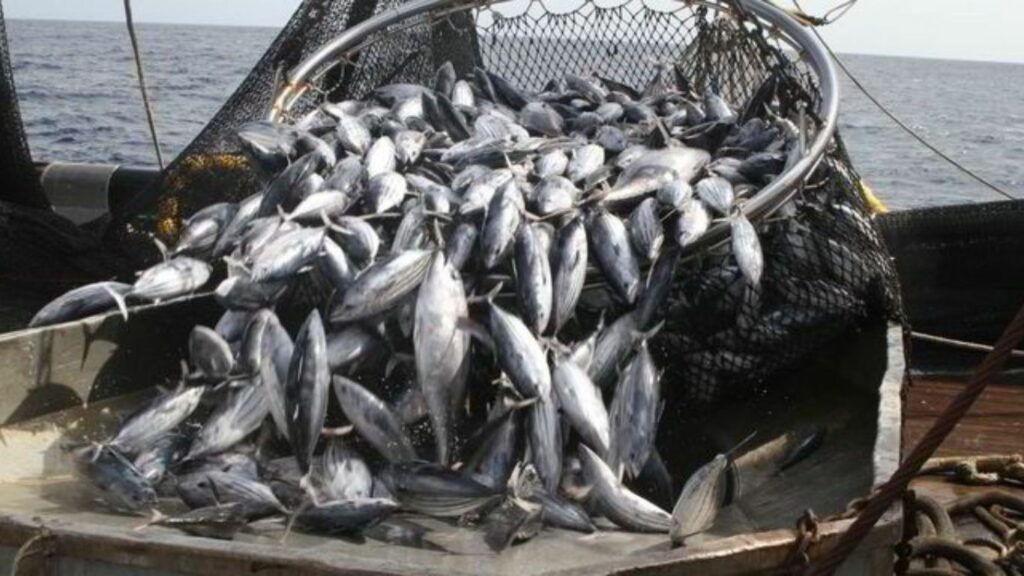
Article written by Karen McVeigh Originally published by The Guardian (Wed, April 26, 2023) Europe accused of ‘neocolonialism’ for using vassal small island states to sway policy and continue ‘disgraceful plundering’ of distant waters. More than half of the EU’s delegation to a crucial body of tuna stock regulators is made up of fishing industry lobbyists, the Guardian’s Seascape project can reveal, as Europe is accused of “neocolonial” overfishing in the Indian Ocean. The numbers could shed some light on why the EU recently objected to an agreement by African and Asian coastal nations to restrict harmful fish aggregating devices (FADs) that disproportionately harvest juvenile tuna. Stocks of yellowfin tuna are overfished in the Indian Ocean. FADs are large floating rafts that attract fish by casting a shadow, making it easy for vessels to catch massive numbers of tuna. They contribute to overfishing of yellowfin because they attract juveniles as well as endangered turtles, sharks and mammals that get caught up when the devices are encircled in purse seine nets. In February, a proposal by Indonesia and 10 other coastal states in the region – including India, Sri Lanka and Pakistan – for a 72-day ban on FADs used by purse seine vessels was adopted by the Indian Ocean Tuna Commission (IOTC), the main regulatory body. With a two-thirds majority vote, the measure was welcomed by conservationists as a “huge win” for yellowfin and other marine life. Retailers including Tesco, Co-op and Princes have previously issued calls for tough action to preserve and rebuild the $4bn yellowfin industry, while this year Marks & Spencer warned EU officials that FADs are a major cause of yellowfin tuna overfishing, and that they cripple future stocks. FADs pollute the ocean when lost or discarded. Credit: Seychelles Nation The devices, typically made of plastic, also pollute the ocean and small island states when lost or discarded. But earlier this month the EU, which is the largest harvester of tropical tuna in the region, objected to the measure, effectively exempting it from the restrictions. Critics described the move as “neocolonialism”, pointing to the influence of industry lobbyists from France and Spain in ignoring the will of many coastal nations. At the last annual IOTC meeting, the EU’s 40-strong delegation was made up of at least 24 industry lobbyists listed as “advisers”, Guardian analysis shows. At the smaller special session on FADs this year, at least half of the 10 EU delegates were from the tuna industry. The percentage of lobbyists in the EU’s official delegation has been rising since 2015, when yellowfin tuna was declared overfished by IOTC scientists. A report in January by Bloom, a French NGO, calculated that the annual number of industrial lobbyists within the EU delegation has more than doubled in recent years, rising from an average of eight in 2015 to 18 in 2021. A European Commission official said, in a statement, that industry representatives have “no decision-making responsibility” at the IOTC, unlike commission officials. Policymaking at the IOTC relies on the European Green Deal objectives, the conservation of biodiversity and sustainability of stocks, and was more complex than the number or type of delegates, said the official. The EU tabled the largest number of proposals in 2022, including yellowfin management and FAD management, the statement said, adding that this was not what you might expect if “commercial interests dominated the EU position”. Concerns over the European industry’s influence over Indian Ocean coastal states deepened following two proposals by Seychelles to the IOTC containing changes that appear to have been made by Europêche and other industry groups. Jess Rattle, the head of investigations at the Blue Marine Foundation, said the EU’s actions flew in the face of commitments made at the historic high seas treaty, agreed last month to protect biodiversity. “The EU has entirely abandoned this sentiment in favour of plundering the Indian Ocean’s already overfished stocks, safe in the knowledge that, once all the fish are gone, its highly developed fleet can simply move to another ocean, unlike the many coastal states left behind with nothing.” More than two-thirds of countries accepted the ban. But Seychelles, which has 13 EU-owned tuna vessels flagged to its state, also objected to the FAD proposal, along with Comoros, Oman, Kenya and the Philippines. Credit: M.Taquet “Their objections can be seen as a form of neocolonialism by the EU,” said Rattle. “This measure was voted in at the IOTC, not just by a majority but a two-thirds majority. By objecting, and stirring up objections from their vassal states, the EU are making it clear they’re going to continue to fish the way they want to, regardless. That is disgraceful.” Referring to the changes to Seychelles’ proposals by Europêche, Rattle said: “The industry appears to be making changes to proposals submitted by Seychelles. They clearly have power over this coastal state.” Jeremy Raguain, a Seychellois conservationist and a negotiator for Seychelles in the high seas treaty talks, said his country is highly dependent on the EU, its largest trading partner, and on tuna exports. “We need a thriving tuna industry for economic survival, but it is environmentally unsustainable and only profitable through huge subsidies,” he said. “Seychelles is in a tight spot. Indonesia has taken the right stance, but Seychelles is not Indonesia. There is neocolonial pressure.” An official in the European Commission said the EU had already submitted a proposal “with a strong scientific basis” to reduce the number of FADs but that the IOTC “unfortunately” agreed to an alternative from Indonesia. The adopted proposal “lacks a scientific basis and would prove impossible to implement”, added the spokesperson, claiming it could have a “very substantial” negative impact on many fishers and communities. A spokesperson for Europêche , which represents fishers in the EU as well as tropical tuna producers organisations – including the Europêche Tuna Group (ETG) – confirmed that some of its boats fly Seychelles’ flag. “Seychelles consult ETG, as they also consult NGOs and other industries’ groups, on their
High concentrations of DDT found across vast swath of California seafloor
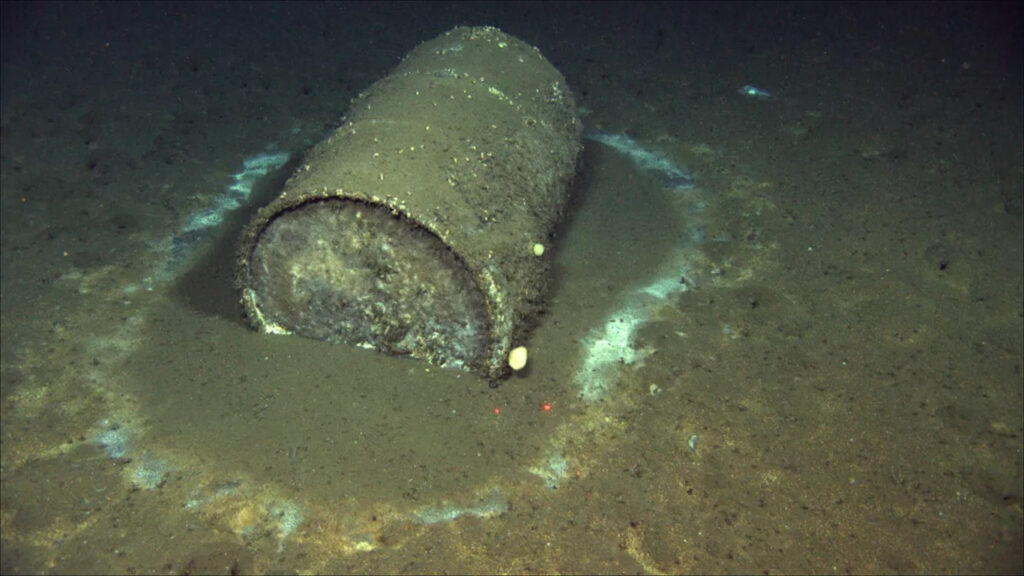
Article written by Dani Anguiano Originally published by The Guardian (Friday, March 24, 2023) Barrels of the toxic chemical were dumped along the Pacific coast decades ago. New research shows the material never broke down For years industrial companies in southern California used the coast as a dumping ground for toxic chemical waste, including DDT. Decades later, scientists have found that the pesticide remains in high concentrations on the ocean floor and has never broken down. Nearly two years after the discovery of tens of thousands of barrels of waste off the coast of Los Angeles, a scientist working on the issue shared this week that the chemical is still spread across a vast stretch of the seafloor, the Los Angeles Times reported. “We still see original DDT on the seafloor from 50, 60, 70 years ago, which tells us that it’s not breaking down the way that [we] once thought it should,” David Valentine, a UC Santa Barbara scientist, said. The LA Times reported that the contamination covered an area of seafloor larger than the city of San Francisco. “And what we’re seeing now is that there is DDT that has ended up all over the place, not just within this tight little circle on a map that we referred to as dumpsite two.” DDT, which was widely used in the US as an agricultural pesticide and sprayed in large quantities at beaches to kill mosquitoes, has been linked to cancer and disease in humans and the mass die-off of animals. In the 1970s, it was banned in the US due to its harmful effects on wildlife and potential risks to humans. Research has shown a link between exposure to the chemical and breast cancer as well as reproductive problems. Southern California was the center of DDT production in the US. The Montrose Chemical Corporation in Torrance produced massive amounts of the chemical between the end of the second world war through 1982. During that time, before Congress banned such activity, up to 2,000 barrels a month of acid sludge waste containing DDT were dumped off the coast. Workers sometimes poked holes in the barrel so they would sink more quickly. Image Credit: David Valentine In late 2020, a report from the LA Times told the story of how LA’s coast became a dumping ground for DDT, revealing that as many as half a million barrels could still be on the sea floor, prompting Senator Dianne Feinstein to ask the EPA to take action. A two-week survey, conducted in 2021 by a team from the Scripps Institution of Oceanography at University of California, San Diego and the National Oceanic Atmospheric Administration, using seafloor robots, sonar acoustic imagery and data helped reveal the scale of the issue, finding more than 25,000 barrels. Scientists identified more than 100,000 human-made items across the entire survey area. Scientists’ most recent analysis has found that the most concentrated layer of DDT is roughly 6cm deep in the sediment, the Times reported. “Trawls, cable lays, could reintroduce this stuff back up to the surface,” Valentine told the newspaper. “And animals feeding – if a whale goes down and burrows on the seafloor, that could kick stuff up.” DDT has already been linked to continued harmful affects on wildlife. On the central California coast, which also served also a dumping ground for DDT, a 20-year-long study found a link between exposure to contaminants and high rates of cancer and herpes in sea lions. Congress has allotted millions of dollars toward researching the issue. “The federal funding we secured will be significant for advancing research to understand the scope and scale of DDT pollution off the coast of southern California,” Feinstein said on Twitter. “We must act quickly to clean this up.” Banner Image Credit: David Valentine
Brazilian researchers find ‘terrifying’ plastic rocks on remote island
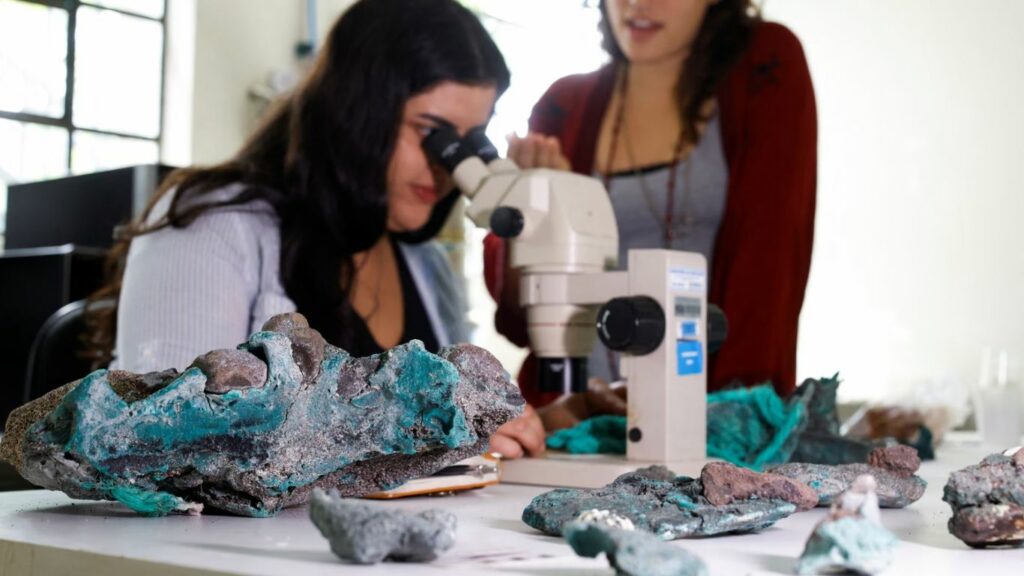
The discovery of rocks made from plastic debris on Brazil’s Trindade Island has sparked alarm among scientists, reports Reuters. Located 1,140 kilometers (708 miles) from the State of Espirito Santo in southeastern Brazil, Trindade Island’s rocks have become intertwined with melted plastic. According to researchers, this is a new and harrowing illustration of humans’ escalating negative impact on the planet. “Pollution has reached geology,” said geologist Fernanda Avelar Santos of the Federal University of Parana. These “plastiglomerates” comprise a mixture of sedimentary particles and other debris held together by plastic. After running chemical tests to identify the types of plastics in the rocks, Santos and her team discovered that the pollution mainly comes from fishing nets, which is very common debris on Trinidade Island’s beaches. “The nets are dragged by the marine currents and accumulate on the beach. When the temperature rises, this plastic melts and becomes embedded with the beach’s natural material,” Santos said. The concerning discovery prompts questions regarding humankind’s legacy on earth. “We talk so much about the Anthropocene, and this is it,” Santos said, referring to a proposed geological period during which humans are the dominant influence on climate and the environment. “The pollution, the garbage in the sea and the plastic dumped incorrectly in the oceans is becoming geological material… preserved in the earth’s geological records.” Trindade Island is one of the world’s most important conservation sites for threatened green sea turtles (Chelonia mydas), with thousands arriving each year to lay their eggs. The plastic rock samples were found close to where they lay their eggs. Image credit: Rodolfo Buhrer/Reuters Banner Image credit: Rodolfo Buhrer/Reuters
New Disease Caused Solely by Plastics Discovered in Seabirds
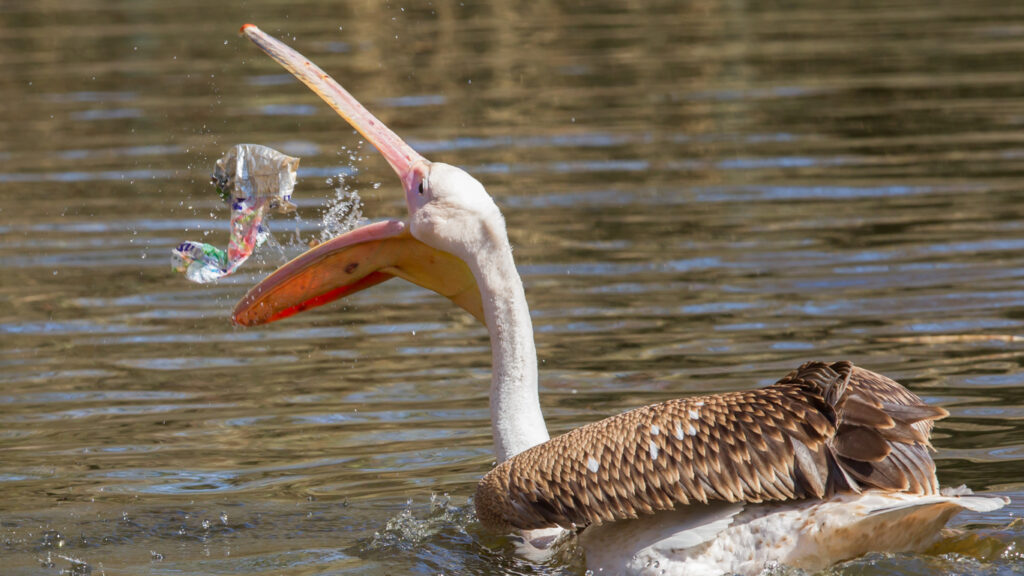
Scientists have discovered a new disease in seabirds which is caused solely by plastics, reports The Guardian. Plasticosis scars the digestive tract of birds as a result of ingesting waste, according to researchers at London’s Natural History Museum. This is the first recorded instance of specifically plastic-induced fibrosis in wild animals. A study published in the Journal of Hazardous Materials said that plastic pollution is becoming so widespread that the scarring was prevalent across a range of birds of different ages. Alarmingly, it is thought that young birds with the disease contracted it as chicks when their parents inadvertently fed them plastic-filled food. Scientists studied flesh-footed shearwaters from Australia’s Lord Howe Island to examine the relationship between the amounts of ingested plastic and the condition of the proventriculus, the first part of a bird’s stomach. Plasticosis can lead to the gradual breakdown of tubular glands in the proventriculus. If birds lose these glands, they can become more vulnerable to infection and parasites, and it can affect their ability to digest food and absorb certain vitamins. Scientists found that when birds ingest small pieces of plastic, their digestive tract becomes inflamed. Over time, this persistent inflammation causes tissue to become disfigured and scarred, affecting the birds’ growth, digestion and survival. The more plastic a bird had ingested, the more scarring it had. The disease was given the name ‘plasticosis’ to make it clear that it is caused by plastic in the environment. However, natural materials found in the birds’ stomachs, like pumice stones, did not result in the same issues, leading scientists to label this a plastic-induced disease. “While these birds can look healthy on the outside, they’re not doing well on the inside,” said principal curator in charge of birds at the Natural History Museum, Dr Alex Bond. “This study is the first time that stomach tissue has been investigated in this way and shows that plastic consumption can cause serious damage to these birds’ digestive systems.” Though scientists studied only one species of bird in a single part of the world, they believe it is likely that more species are affected – but more research is needed to discover just how widespread plasticosis is. However, researchers say exposure to plastic by all organisms is inevitable, due to increasing plastic emissions and plastic pollution – now prevalent in all environments on the planet. “Further, the ingestion of plastic has far-reaching and severe consequences, many of which we are only just beginning to fully document and understand,” said Bond. “Plastic pollution has become a global crisis that is rapidly worsening over time,” said David Barritt, executive director of Animal Survival International. “If we are to overcome it, governments need to reduce their own outputs and work together to put pressure on countries producing large amounts of plastic waste and not disposing of it responsibly. As individuals, we must also be mindful of our own plastic usage and follow the correct channels for recycling. It is an entirely solvable problem and we cannot allow it to claim the lives of our precious marine animals. Ultimately, it affects all ecosystems and us, too.”
High Seas Treaty: Historic Agreement to Protect International Waters Reached at UN
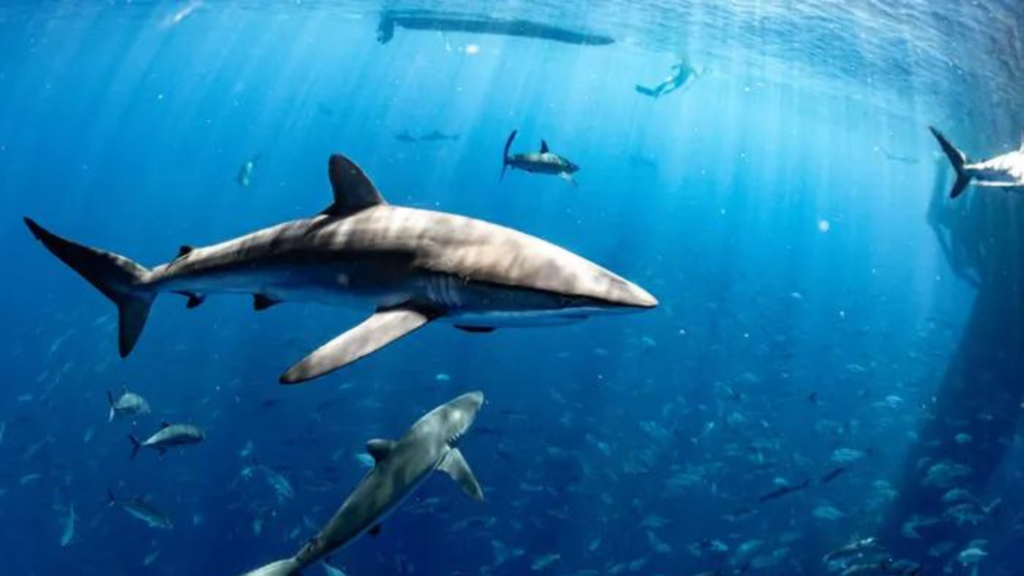
After almost two decades in the making, United Nations member states have finally agreed on a treaty to protect the high seas – parts of the ocean that are not within a particular country’s jurisdiction. The treaty, reached late on Saturday 4 March at UN headquarters in New York, is vital for enforcing the 30×30 pledge made by countries at the UN biodiversity conference in December 2022. The pledge aims to protect 30% of the planet’s land and water by 2030. Without a treaty, this target would inevitably fail, as until now no formal legislature existed to set up marine protected areas (MPAs) on the high seas. Covering almost two-thirds of the ocean that lies outside national boundaries, the treaty will provide a legal framework for establishing vast MPAs to protect against the loss of wildlife and share out the genetic resources of the high seas. Credit: Guardian Graphic Ocean ecosystems produce half the oxygen we breathe, represent 95% of the planet’s biosphere, and soak up carbon dioxide as the world’s largest carbon sink. Until now, loosely enforced rules governing the high seas meant that this area was more vulnerable than coastal waters to exploitation. “Following a two-week-long rollercoaster of a ride of negotiations and superhero efforts in the last 48 hours, governments reached agreement on key issues that will advance protection and better management of marine biodiversity in the high seas,” said director of the High Seas Alliance, Rebecca Hubbard. Director of The Pew Charitable Trust, Liz Karan, added that, “High seas marine protected areas can play a critical role in the impacts of climate change. Governments and civil society must now ensure the agreement is adopted and rapidly enters into force and is effectively implemented to safeguard high seas biodiversity.” Credit: The Guardian_Ed Jones/AFP/Getty Images The WWF – also present led by Jessica Battle at the negotiations – said, “What happens on the high seas will no longer be ‘out of sight, out of mind. We can now look at the cumulative impacts on our ocean in a way that reflects the interconnected blue economy and the ecosystems that support it.” The fact that an agreement was reached between 193 nations is an enormous achievement, but conservationists say there is still room for improvement. In particular, countries agreed that entities in charge of managing activities such as fisheries, shipping and deep-sea mining could continue to do so without having to carry out environmental impact assessments issued by the treaty. The agreement was called a “historic moment for the ocean” by European commissioner for the environment, ocean and fisheries, Virginijus Sinkevičius, who added that the treaty was a culmination of over a decade of work and international negotiations. “With the agreement on the UN High Seas Treaty, we take a crucial step forward to preserve the marine life and biodiversity that are essential for us and the generations to come.” Banner image: The Guardian
More than half of reef sharks and rays threatened with extinction, study shows
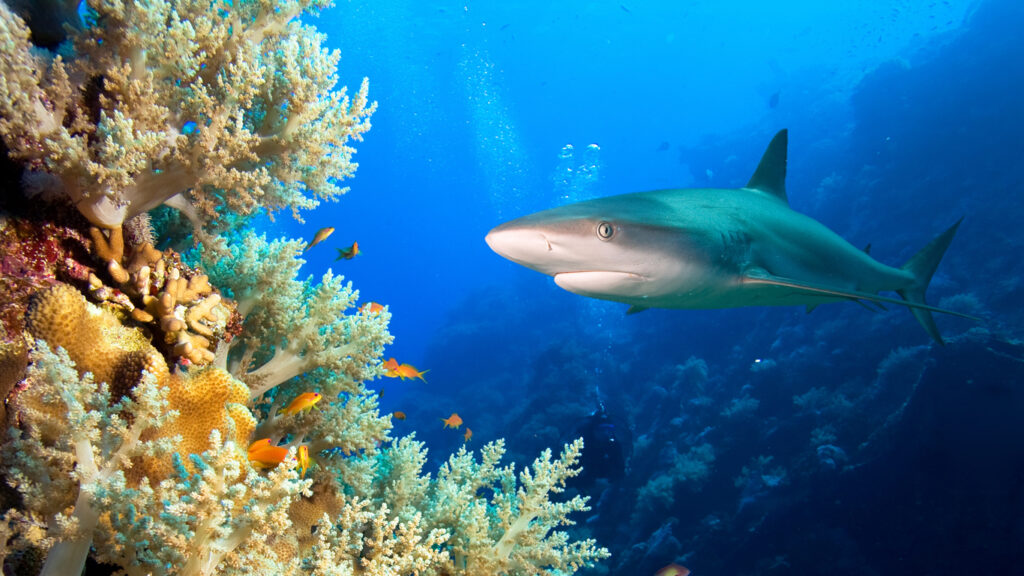
More than half of the world’s known species of coral reef sharks and rays are now threatened with extinction, reports conservation news service Mongabay. The primary culprit? Overfishing, along with the ravages of climate change and other environmental threats. According to a study published in Nature Communications journal earlier this month, populations of 94 species of coral reef shark and rays are declining, with rays at greater risk. The study identified 79 of the world’s 134 coral reef-associated ray and shark species – known as chondrichthyans – as being in one of the threatened categories on the IUCN Red List – a comprehensive inventory on the conservation status of the planet’s fauna and flora. The study showed that overfishing appeared to be the greatest cause for the population decline, followed by climate change, habitat loss and degradation, urban and commercial development, and pollution. Reef sharks and rays are often caught for human consumption, and in some cases for their body parts, which are used to make apparel or accessories. Others are caught for aquariums, for feed for domestic animals, and for “traditional medicines.” “There are few policies that have been put in place to manage reef sharks and rays,” said lead author Samantha Sherman of Simon Fraser University in Canada. “These species are difficult to manage as they occur mainly in countries with very high coastal populations that rely on resources from the ocean for food and earning money to support their families,” she added. “These countries also tend to have large numbers of small boats and small markets spread throughout the coast, which makes implementation of any policies difficult.” The authors of the study developed a Red List Index to track progress toward international biodiversity targets over the past half century. They found 14 species fit the “critically endangered” category, making them nearly extinct in the wild; 24 species were “endangered,” which indicates population reduction of 50 to 70% in the past three generations, and 41 species were classed as “vulnerable” as their populations had declined by around 20 to 50% in the past three generations. “There are many interesting facts about sharks and rays, but I would like to highlight stingrays, as people don’t hear about them often,” Sherman said. “Stingrays act as ecosystem engineers because when they feed, they create pits in the sand called ‘feeding pits.’ When the tide goes out, some pits will hold water and provide a place for small fish and other animals to hide from bigger predators.” The study identified the coral reefs of Southeast Asia and northern Australia and as having the strongest population of both sharks and rays. It also found that sharks faced the most threat in the western Atlantic, while rays were most vulnerable across Asia and southeast Africa. Areas like the Pacific islands, where reef sharks and rays are fairly abundant, could serve as refuges for threatened species, making them key to regional and global conservation efforts. The risk of extinction is greatest for widely distributed large species, such as the bull shark (Carcharhinus leucas) and reef manta ray (Mobula alfredi). Both are found in the waters of more than 60 countries. The study further found that risk is also particularly high in countries with higher fishing pressure and weaker governance, such as Brazil, Tanzania and Indonesia. Effective ways to help combat this worrying decline would be through improved control and management across all scales of fisheries, combined with strong enforcement and effective marine protected areas at regional and global levels of government. In addition, better education and diversification of rural livelihoods in regions with overexploited reefs could help reduce fishing pressure on threatened species. “Lots of reef species occur in many countries, meaning conservation efforts require global cooperation,” Sherman said, adding that international trade regulations for sharks and rays that are meant to protect them still lack effective implementation and thus fall short in tackling the problem of bycatch-related deaths. Mongabay said that without large scale action to improve the status of reef sharks and rays, their populations will continue to decline with increasingly dire consequences for the ecosystem health of coral reefs and coastal communities whose livelihoods depend on them. “The findings are being communicated by all the co-authors and others that work in the field to relevant governments they already work with to make the case for greater action to conserve these species,” Sherman said. Already, governmental failure to address these threats can be seen in many reefs around the world where shark populations have declined to steeply, they can be considered “functionally extinct” from these ecosystems. Sharks are apex predators which prey on sick and weak fish, leaving the stronger ones to reproduce. This helps maintain a healthy marine ecosystem. “Human greed, apathy and ignorance are wiping out populations of both land and marine animals at a truly alarming rate,” said David Barritt, executive director of Animal Survival International (ASI). “Governments must urgently recognize that protecting ocean species is critical to the health of not only our marine ecosystems, but our planet as a whole. If we destroy our oceans and their inhabitants, we destroy our entire planet.”