Disasters

Disaster strikes in the freezing winter – rescued lions and tigers need your help.

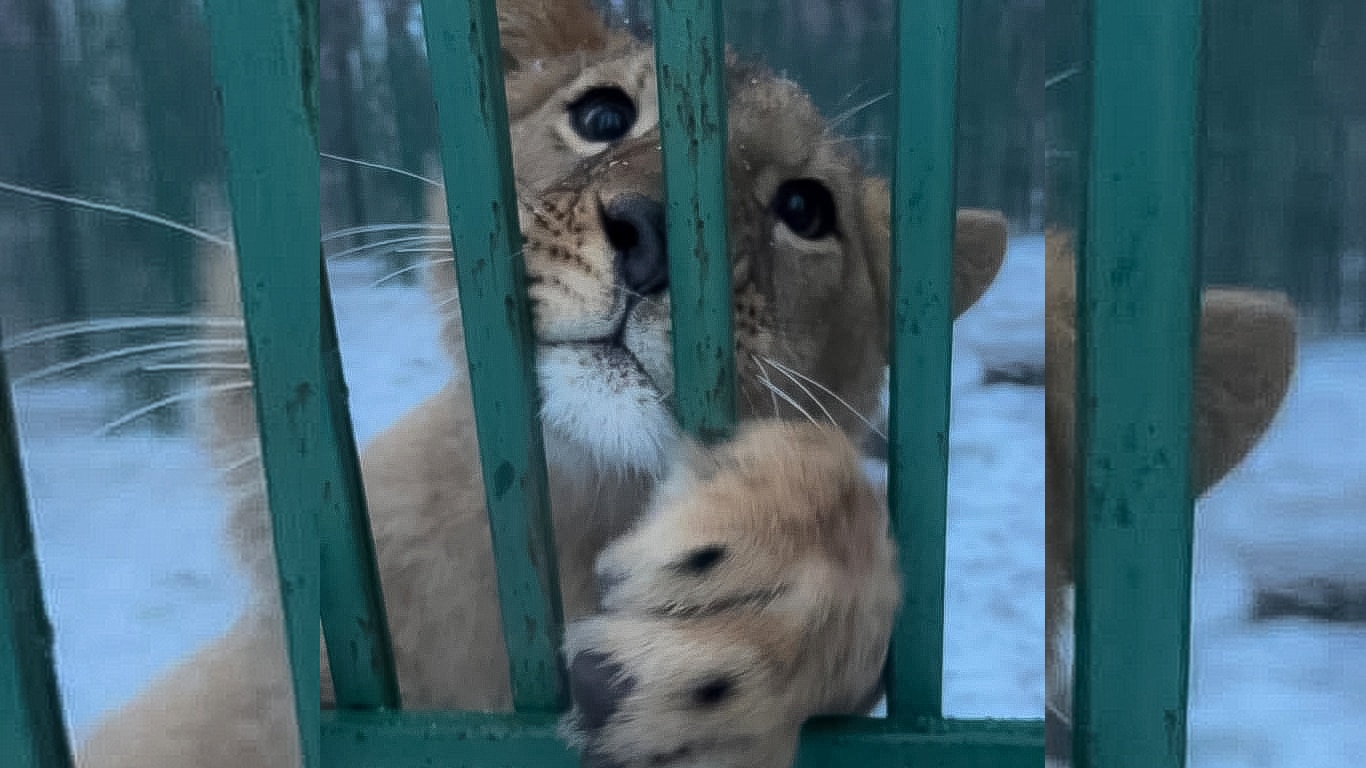
Battle-worn Ukraine is in the midst of a freezing winter, with temperatures dropping as low as 4°F (-20°C). For countless lions and tigers, many brought into the country illegally, these sub-zero temperatures are deadly. Abandoned lion cubs rescued from the cold need access to warmth to survive the Ukrainian winter. Credit: WARC Lions and tigers native to warm climates are battling to survive Ukraine’s freezing winter. These animals, native to the warm climates of Africa, India and Asia, are ill-equipped for Ukrainian weather, but at least when they were in zoos or private hands, they did not have to brave the winter months without warm shelter. Rescued by our partner, Tigrulya has kidney failure and severe hind leg injuries. Without a warm indoor enclosure, he will not survive. Credit: WARC But now, even that small mercy has disappeared. When war broke out, many of these big cats were abandoned as their owners fled – some left in their cages to starve to death, while others were tragically killed by their owners who saw no other option. These big cats cannot survive in freezing war-torn Ukraine without your help. Many of our partner’s rescues are struggling with illness and injuries. For these animals, exposure to the cold could be deadly. Credit: WARC Our partner has rescued lions and tigers with severe injuries and health complications – now they need warm shelter if they are to make it through the winter. Our partner, Wild Animal Rescue Center (WARC), has rescued dozens of these unfortunate animals abandoned during the war. Many of the big cats in WARC’s care are battling the foreign climate, as well as injuries, illness and disability. Abandoned in a zoo as bombs exploded around him, Simba the lion broke his nose on the bars of his cage. He is one of many big cats that need your help. Credit: WARC With below-freezing temperatures expected to last at least another month, and food and veterinary costs soaring, WARC fears they won’t be able to provide warmth for much longer. If they cannot pay their heating bills, their electricity will be cut off – a devastating tragedy for the lions, tigers and other animals who depend on them for survival. Credit: WARC We need to raise $10,000 (approximately £8,000) to cover critical heating expenses, before a brutal winter claims the lives of even more majestic big cats. A heated enclosure at our partner’s facility. Credit: WARC Please help in any way you can today.

Read More »

In the aftermath of savage Los Angeles fires, animals still need life-saving care.

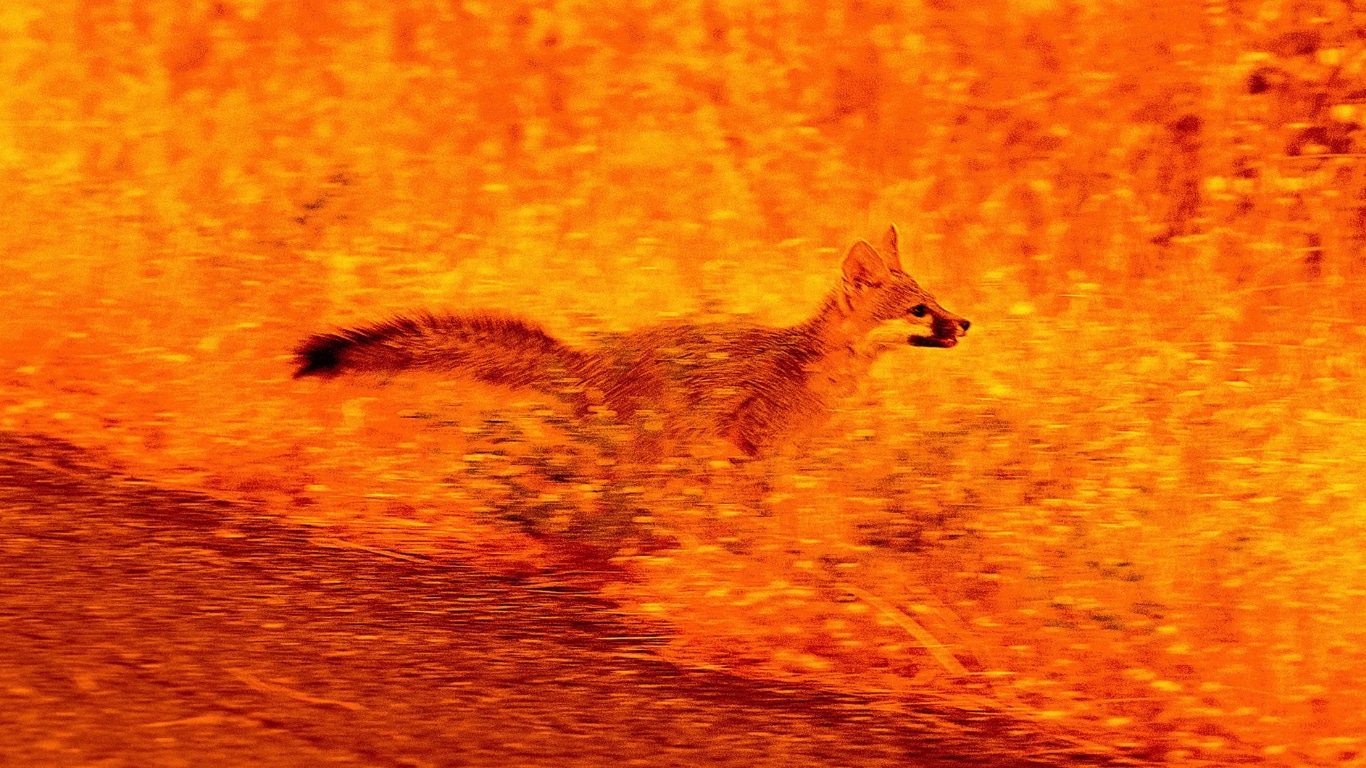
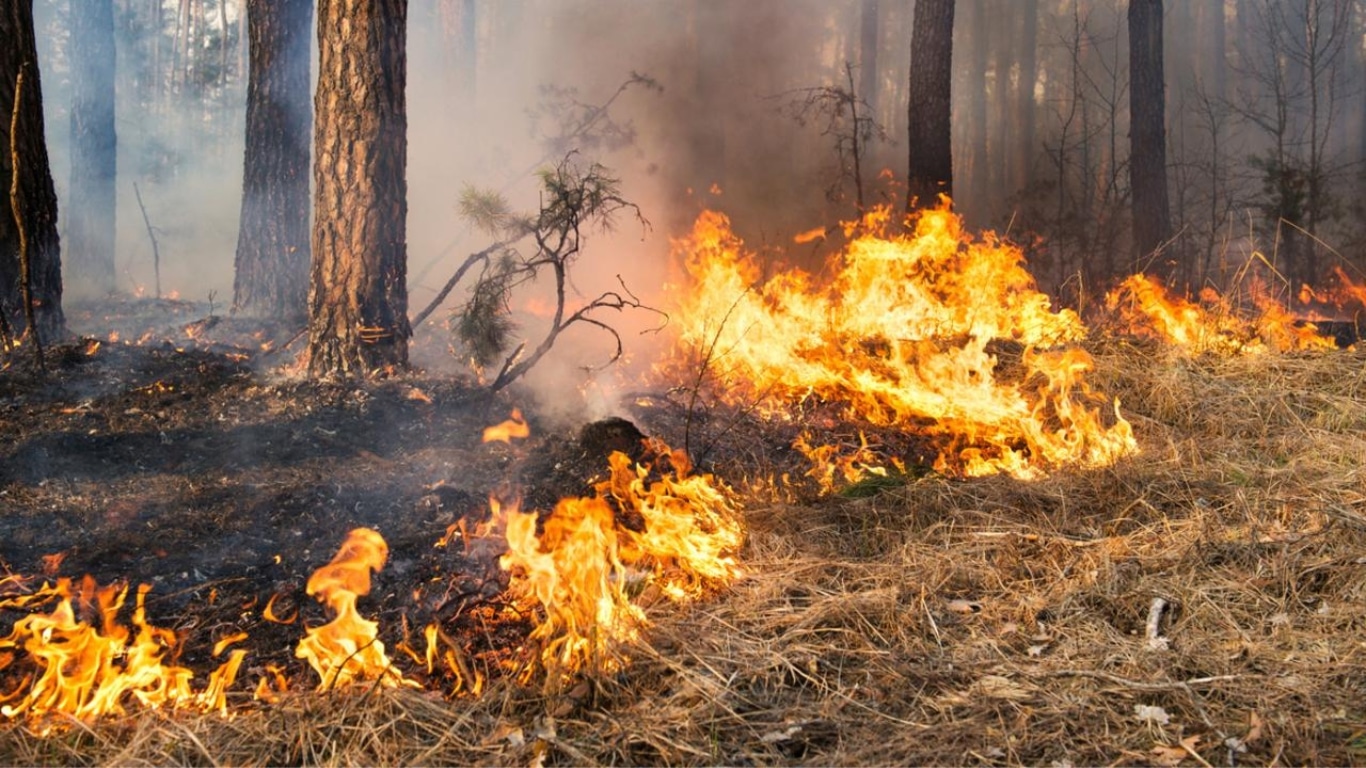
Intense fires are still raging in Los Angeles and extreme winds forecasted for today and tomorrow pose a deadly new threat to wildlife. Rescuers are being overwhelmed by the number of wild bird and animal victims and these creatures badly need your help. A mountain lion in Los Angeles seeks refuge from the burning landscape. Credit: Jason Klassi/Getty “Tragically, many wildlife are impacted by wildfires and lose their lives. But for those that can be rescued, our staff is trained and ready to triage and treat burn and smoke inhalant victims.” – Wetlands and Wildlife Care Center LosAngeles’ wildfires are catastrophic for wildlife. Owls, opossums, coyotes, bobcats, rabbits and mountain lions all need immediate emergency care. Our partner, Wetlands and Wildlife Care Center of Orange County (WWCC), is taking in as many as it can, but it needs help. The animals arrive in terrible conditions, and as the fires continue to rage, more are pouring in all the time. Your donation will help cover the cost of critical care, including X-rays to check for broken bones, veterinary wipe-downs to remove toxic soot, burn wound treatment, skin grafts, emergency oxygen, and surgery for the severely injured. Deer surveying the charred, barren wasteland that remains of their home in the Palisades. Credit: Apu Gomes/Getty The fires, among the most destructive in Los Angeles’ history, have razed 40,300 acres (16,300 hectares) of land so far – an area larger than the city of Paris.  Experts believe the disaster has been exacerbated by global warming, as climate-related extreme events increase in frequency and intensity across the globe.  Search and rescue missions are underway for injured wildlife seared by fire. Our partner works tirelessly to help wild animals caught in natural disasters. Credit: WWCC Imagine the terror of these helpless creatures as fires blaze around them, with no hope of escape. It is the stuff of nightmares. Our team is ready to find and triage survivors, stabilize them and give them critical care – but they need our help to save them. Your donation today will help save wild animals caught in LA’s cataclysmic fires. Credit: WWCC It is a deeply distressing situation, but we know that with your help today, we can bring comfort and hope to animals who have lost everything.  Please, open your heart to the tragic wild animals of Los Angeles, and donate any amount you can right away.

Read More »

Paralyzed animals lose all their food in devastating fire.

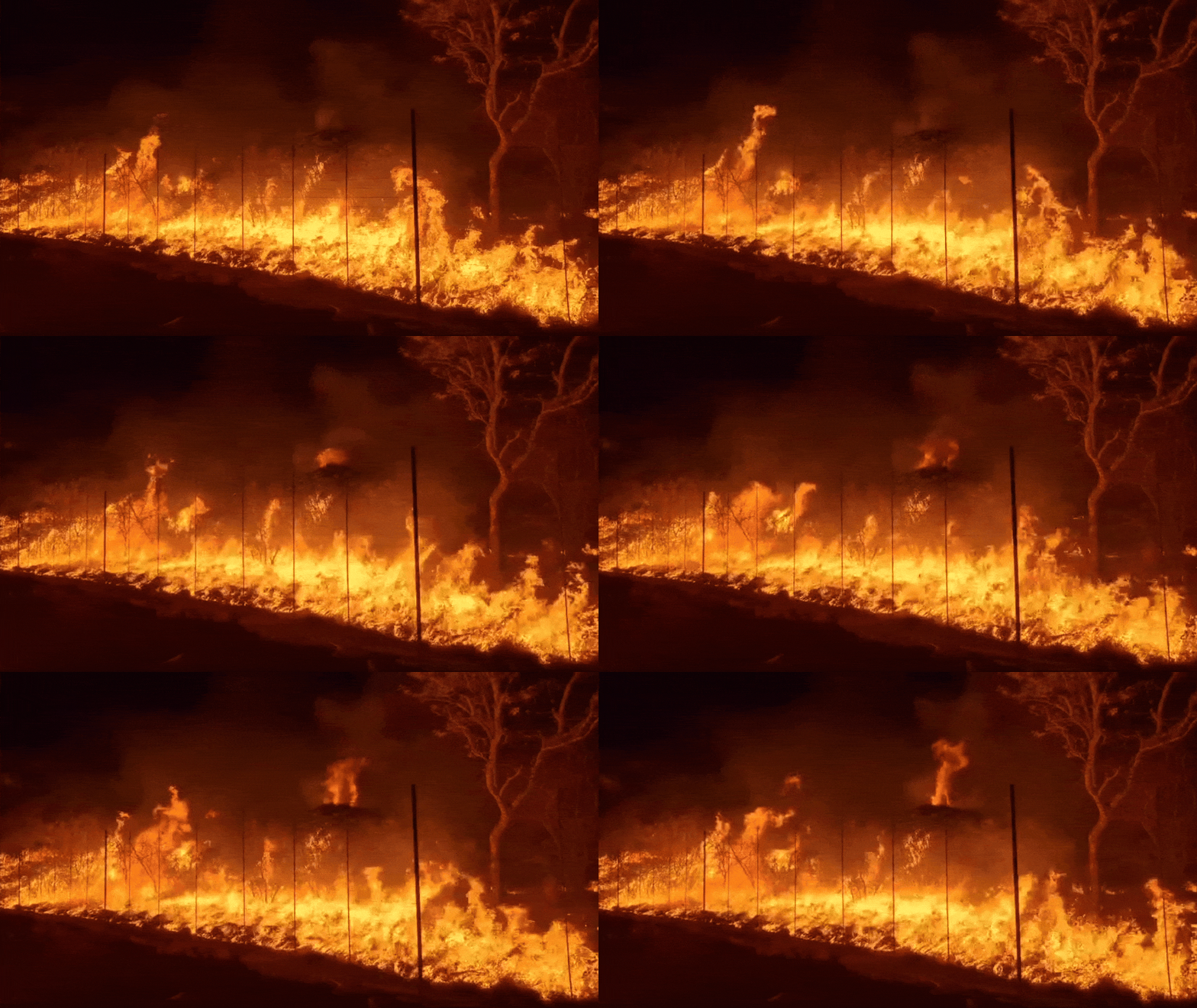
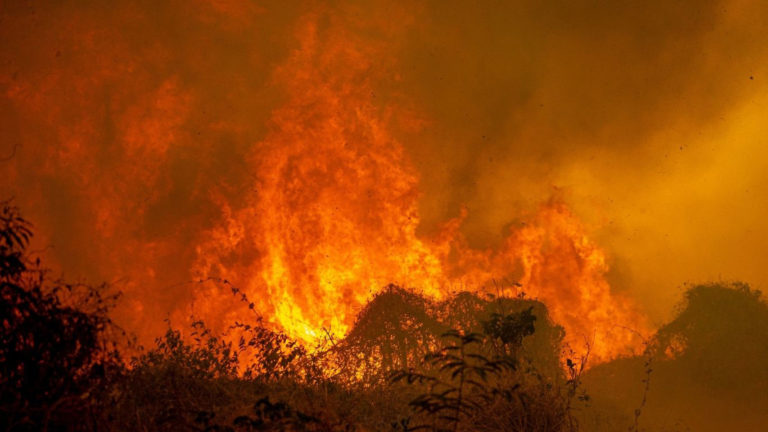
A crucial wildlife sanctuary in South Africa has been devastated by a wildfire that raged for five days and destroyed 80% of its haven for hundreds of animals. Credit (top and bottom): Bambelela Wildlife Sanctuary This sanctuary, which rescues, rehabilitates and, when possible, releases animals like zebras, monkeys, giraffes, warthogs and antelope back into the wild, now desperately needs our help. Paralyzed, injured and orphaned wild animals miraculously survived the devastating fire – but now, they have no food. Please, help right away. The dedicated team at Bambelela Wildlife Sanctuary in Bela Bela, a town in the Limpopo province of South Africa, risked their lives to fight the fire and protect the 200 rescued animals in their care. Without their intervention, many would have been entirely helpless against the raging fire. Some of the animals have been paralyzed after being hit by cars, others have lost limbs due to abuse or vehicular collisions, and others still have lost their sight due to abuse or old age. Despite orders from firefighters to evacuate, the team stayed behind, trying to stop the flames from reaching the animal enclosures and the injured, paralyzed, orphaned, elderly and blind animals inside. An injured monkey being rescued. Credit: Bambelela Wildlife Sanctuary Sadly, the fire spread too fast, forcing the sanctuary to release the animals onto the reserve to save them from being trapped and killed by the flames or smoke. Most animals have been recovered safely, but three monkeys are still missing. The team is searching for them, and we are hopeful they will be found. We don’t know what caused the fire, but we do know that it destroyed the sanctuary’s grazing areas. Bambelela desperately needs help to feed its 200 animals for the next month while the sanctuary works to recover from the disaster. Credit: BBFPA Right now, Bambelela’s biggest priorities are finding the missing animals and keeping bellies full. Their greatest need is food, as the disaster destroyed all the natural food sources their animals rely on. 80% of this critical wildlife sanctuary’s land has been destroyed by flames that burned more than 32 feet (10 meters) high. Please, will you help feed these vulnerable animals? Credit: Bambelela Wildlife Sanctuary If we can raise $2,080 (roughly £1,600), we can feed all 200 animals for a month, relieving the pressure on the sanctuary as they rush to repair and rebuild what they can. Your support will be a saving grace for animals who have experienced yet another horrendous trauma after lives of hardship, captivity and severe abuse. Please will you help feed the animals of Bambelela Wildlife Sanctuary, and be their guardian angel in their greatest time of need?

Read More »

Wild animals stand no chance against this deadly drought without YOU.

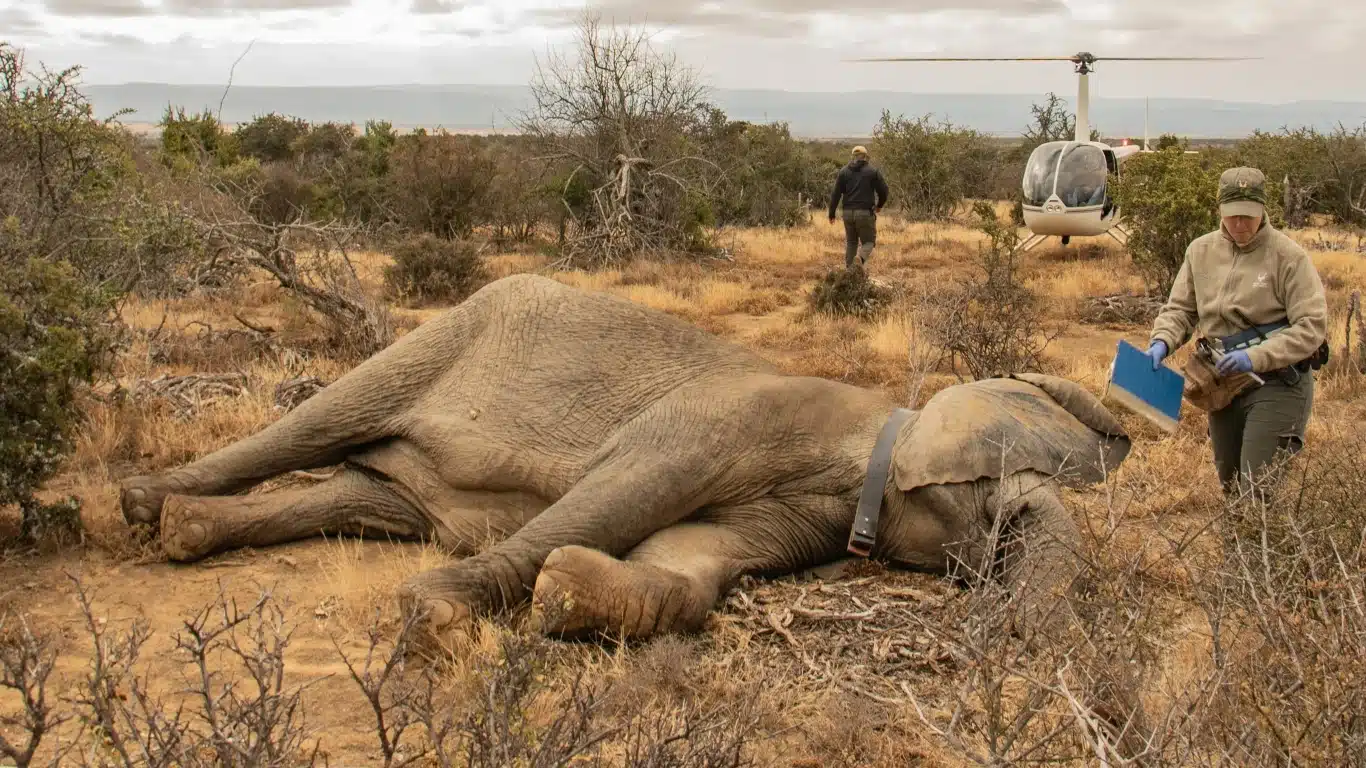
In Botswana, once-majestic wild animals are withering away and dropping dead on parched landscapes – tragic victims of the country’s worst drought in decades. This year, the nation experienced its wet season in 40 years, with less than 20% of its expected rainfall. Deadly conditions were made worse by extreme heat exceeding 99℉ (37℃). For illustration purposes only. The consequences have been devastating for wild animals. In one of the most heart-rending scenes, an orphaned elephant calf was found next to her dead mother, who had been powerless against the raging drought and succumbed to dehydration. The mother had given her baby every last drop of sustenance her body could muster before she collapsed and died. Her calf, helpless and alone, remained by her mother’s side. She was later rescued and taken into the care of an elephant orphanage – but she will never know her mother, who she would have stayed with for her entire life. Drought is reducing Africa’s iconic wildlife to skin, bone, and dust in Botswana – elephants, zebra, lions, hippos, hyenas, and wildebeest are clinging to life as you read this. Credit: Camelthorn Farmstead With your support, we can help save as many of these beautiful animals as possible. The Boteti River runs through the Makgadikgadi National Park in north-eastern Botswana and is one of the animals’ main water sources. Since October 2022, it has been almost completely dry. A smattering of rain in April this year has barely helped, providing a thin trickle of water that will definitely run dry before the next rainy season, which only starts in December. This devastating drought has been exacerbated by a combination of climate change and the impact of the El Niño climate pattern. Wild animals are battling with relentless heat, struggling to find precious water and food. Strong, young wild animals in Botswana who should be in the prime of their lives are dropping dead after traveling countless miles in search of water they never find. For illustration purposes only. Starved, parched, and bone-weary, they fall where they stand, their carcasses littering the barren landscape. Others become stuck in near-dry muddy waterholes, exhausting themselves in futile attempts to escape the mud and ultimately perishing. Under these disastrous conditions, not even the strong survive. Can you imagine, just how dire the situation is for older, weaker and juvenile animals? Amidst this disaster, two wildlife warriors are coming to the aid of desperate wild animals – and they urgently need support for their life-saving mission. This kind-hearted couple owns a private farmstead along a boundary fence of the Makgadikgadi National Park, where desperate animals scour the barren landscape for anything to drink. Using the park’s two wellpoints, their own borehole, and long pipes that extend through the park’s fence, they pump water daily into the park’s dry riverbed for elephants, zebras, and other animals. For illustration purposes only. The animals are so frantic for water that they have come to recognize the sound of the pumps being switched on, clamoring around the pump as they await their turn to drink. This is both heart-warming and heart-breaking to witness. HUNDREDS of wild animals need water right now, and our partner CANNOT meet the demand for this life-saving resource. With two extra water pumps, we can help bring much-needed relief to dehydrated wild animals in crisis. Please support this cause now. Each of the two existing wellpoints currently has the capacity to pump around 7,925 gallons (30,000 liters) of water a day. While this may sound like a lot, elephants alone can drink over 52 gallons (200 liters) every day. In a park covering around 4,630 square miles (12,000km²), home to large herds of elephants, zebras, oryx, wildebeests, impalas, and so much more, the need far exceeds what our partner is able to supply. Credit: Calmelthorn Farmstead By installing new, highly-efficient solar-powered pumps, the output of the existing wellpoints will be DOUBLED, collectively producing around 31,700 gallons (120,000 liters) daily – enough to quench the thirst of the area’s 150 elephants, as well as hundreds of other animals like zebras, giraffes, leopards and hippos. We MUST raise the funds to supply our partner with two solar-powered water pumps RIGHT AWAY. Wild animals are DEPENDING on it – can they count on your generosity today? Countless animals are depending on us to give life-saving water pumps. Credit: Camelthorn Farmstead The animals are desperate. One of the most tragic cases our partner recently witnessed was a mother zebra who succumbed to thirst and starvation while in labor. Our partner did their utmost to help, but it was too late – both mother and foal died. We MUST prevent more wildlife tragedies like this, but we can’t do it without your support today. Please help us raise $6,000 (roughly £4,800) to install these life-saving water pumps immediately. There is no time to waste! The situation is catastrophic, but with your donation today, we WILL rush support to the dangerously dehydrated animals of Botswana – animals who are counting on YOU for a miracle. Please donate as much as you possibly can right away.

Read More »

Right now, criminals are “shopping” for wild animals!

Sickeningly, over the holidays, poaching skyrockets in Africa – as Asians “go shopping” in Africa for sought-after rhino horn and other animal parts. These are especially popular as gifts and shows of excess during Christmas and the Chinese New Year. We are ramping up our efforts to help thwart poachers in their tracks. Did you know that THIS is the MOST DANGEROUS time of year for wild animals? Credit: Brent Stirton Is this the SICKEST “holiday shopping” you’ve ever heard of? Asian markets “SHOP” for rhino horn and other animal parts in Africa as Christmas and the lunar new year approaches! Credit: V.L Williams Please, help us prepare our anti-poaching teams for the onslaught! Every year, at least 20,000 African elephants are poached for their tusks. This holiday season, we are working harder than ever to ensure our anti-poaching teams are equipped and ready to intercept poachers before disaster strikes: Bumi Hills Anti-Poaching Unit (BHAPU) in Lake Kariba, Zimbabwe, which protects the lake elephants and other vulnerable wildlife in this poaching hotspot.  Matetsi Anti-Poaching Unit (MAPU), which makes 95% of its arrests along the Zambezi River in Zimbabwe, along with its expertly trained K9 team. Care for Wild Rhino Sanctuary (CFW) in South Africa, which runs a highly skilled anti-poaching team and K9 unit that protects rhinos and other wildlife in Mpumalanga. Nearly 10,000 rhinos have been poached in Africa over the past decade. Addo Elephant National Park (AENP) anti-poaching team, which patrols the vast 293,000 hectares of the AENP in South Africa’s Eastern Cape. Wildlife criminals don’t take the holidays off – and neither do we! Credit: ASI/Taryn Slabbert You can rest easy this holiday season knowing that we are putting your donations to immediate use… …bolstering our anti-poaching teams across multiple projects in Africa… Credit:Carl De Souza/AFP …preparing to thwart poachers in their tracks… ….and KEEPING ANIMALS SAFE FROM CRIMINALS! Together with our partners, we are making great progress in our anti-poaching work. BHAPU has not lost a single elephant to poaching in the last seven years… Credit: Steve Edwards/Caters News MAPU has stamped out poaching in the entire Matetsi Private Game Reserve since 2021 – once a wasteland of butchered carcasses… Care for Wild’s anti-poaching unit includes ex-military personnel using the most advanced surveillance equipment available today… The AENP anti-poaching unit uses drones to home in on criminals within the park’s borders, apprehend them, and ensure they face the full might of the law. Recently, we helped them fit advanced AI-tracking devices to elephants in a particularly vulnerable part of the reserve… Credit: ASI/Zara King BUT! None of these teams would be able to continue their LIFE-PRESERVING work for wildlife without your support. Your support throughout 2023 has helped enable these teams to perform their crucial role in protecting wild animals – but they cannot continue during this critical holiday period and into 2024 without your support. Our teams need fuel for their patrol vehicles and boats, supplies for their K9 units, including cooling jackets for summer, and more AI-enabled tracking devices for elephants and other animals vulnerable to criminals. These teams can only be as strong as their equipment. Credit: ASI This season, we need to keep our feet on the ground, with our anti-poaching teams doing everything in their power to protect animals 24/7. You have the power right now to help ensure this! So please, donate as much as you possibly can right now, and help us continue our work to protect the precious wild animals of Africa against ruthless criminals.

Read More »

Wildfire emergency for animals in Australia!

Matty, a joey of just a few months old, has lost his entire family in horrendous wildfires sweeping parts of Australia. Credit: Express Animal Rescue and Rehab His feet, hands, and belly were badly burnt. He is the sole survivor of a troop of roughly 80 kangaroos who were trapped and burnt to death in the blazes currently obliterating parts of the country. Matty is just one example of the thousands of wild animals left injured, homeless, and traumatized as Australia’s fire season has begun, fuelled by the warmest winter on record and an unseasonably warm, dry spring. Fires have destroyed thousands of acres of land and homes along the west and east coasts of the country, people have been evacuated, and thousands of wild animals have had their homes destroyed. Orphaned, injured and alone, these animals are counting on you today… Thousands of kangaroos, joeys, owls, magpies, and reptiles like bobtail lizards are injured and in need of critical life-saving treatment. Please help them now! Firefighters and law enforcement officials have their hands full trying to evacuate people to safety. Kind policemen saved Matty from the flames, but as you can imagine, animals are often not the priority when human lives are at stake. Credit: DFES “The damage out here is shocking. So much lost. The heat is mad without the temperature [of] the day on top. Think of the people that [sic] have lost everything. The animals that have lost [their] lives and the animals still out there in pain.” – Express Wildlife Rescue and Rehab Our partner is on the ground right now, and providing critical treatment to animals burnt, injured, and displaced by Australia’s devastating wildfires. They desperately need YOUR support. Tragically, helpless wild animals, including infants, have been terribly injured and traumatized in the disaster. Some have been horrifically burnt after becoming trapped amid the blaze; others have been severely damaged through smoke inhalation. We are working with a courageous organization on the ground in Western Australia called Express Wildlife Rescue and Rehab based in Henley Brook. They are critically low on supplies as the number of animals in need continues to soar, and right now, are in urgent need of essential veterinary supplies and equipment, which you have the power to help us provide. Australia’s fires are a tragedy for animals who cannot flee like people can and who, in times of disaster, are often overlooked. Only with your support right now can we race to the aid of Australia’s trapped, injured, burnt animals. Please help NOW! As a loyal supporter of our work, you know that we are ALWAYS there for animals in their darkest hour… … You also know that it is ONLY with your generous support that we can rush emergency aid to them. Animal rescue teams are supporting as many helpless wild animals as they can. They are desperate for food for the animals, transport crates, and funds for crucial veterinary care. The number of animals in need continues to climb, and our partners cannot rescue more without the resources to do so. The survivors, covered with burns or with severe respiratory complications due to smoke inhalation, need emergency veterinary care and long-term rehabilitation. These animals have fought relentlessly to survive… we must honor their battles and will to live by doing everything we possibly can to support their recovery… Credit: Express Animal Rescue and Rehab Your donation will be used to purchase food, transport crates, and life-saving veterinary supplies. Many animal victims are hanging by a thread right now. Your donation will quite literally be helping to save animal lives – animals like little orphaned Matty and other burnt kangaroos and exhausted, singed birds and reptiles. Please, we cannot save these precious lives without your support now – so please donate anything you possibly can right away. Your decision to donate is the decision to save animal lives!
Read More »

Critical pangolin sanctuary UNDER WATER.

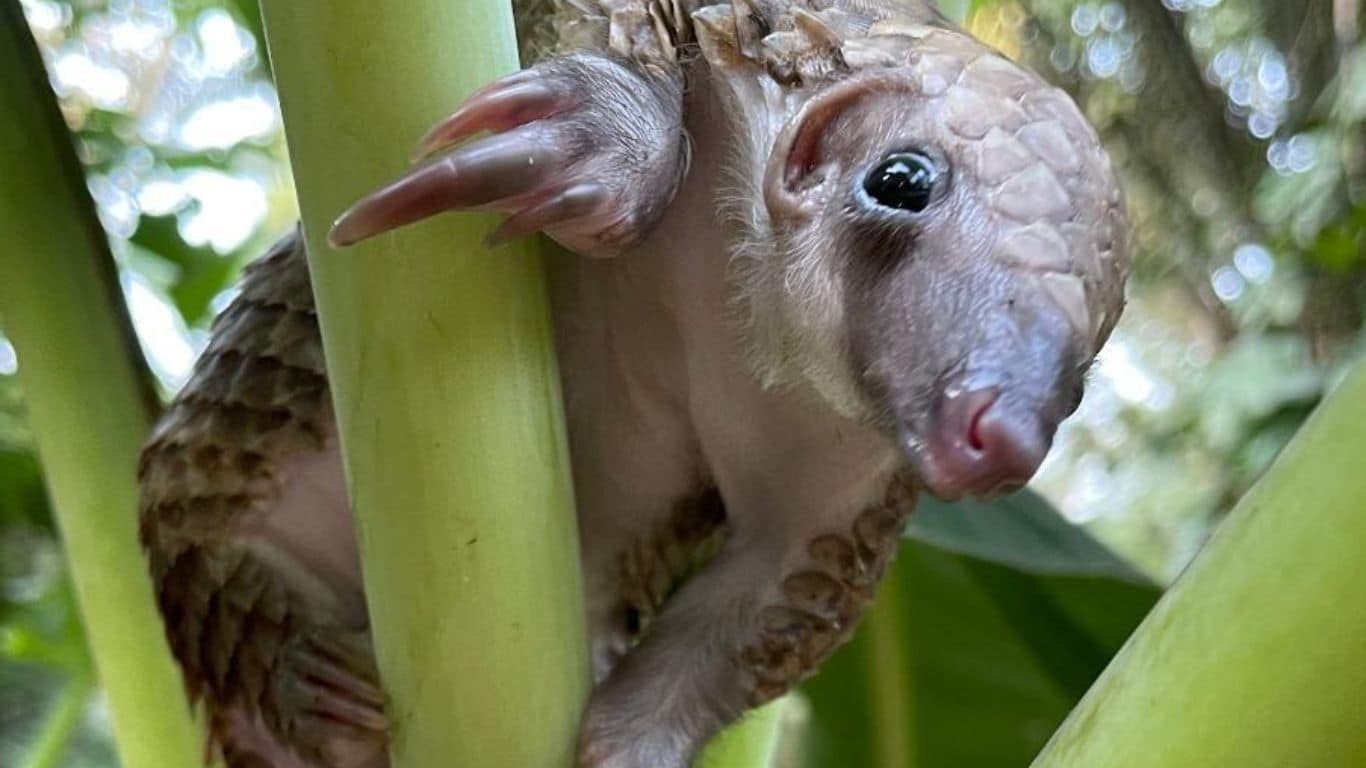
This is an URGENT PLEA FOR HELP for pangolins! Last week, our partner in Lagos, Nigeria, was flooded by freak torrential rains that swept through the sanctuary, completely wrecking it. We have been appealing for your help in rebuilding this sanctuary for critically endangered and vulnerable animals, including infant pangolins and their mothers rescued from the brutalities of the country’s meat trade. Please, these animals could really use your help right now. Credit: GWCI  We MUST rebuild, for all the wild animals in desperate need. PLEASE HELP NOW! We are heartbroken to tell you that not all the animals at the sanctuary survived the flooding, which also swept through major parts of the city and is expected to continue for several more days. Parts of Lagos are submerged, and countless properties have been destroyed. Birds, hedgehogs and tortoises are among the helpless victims of the tragedy. Fragile, critically endangered pangolins have lost their shelter – animals who depend on it for their survival, and for whom any little amount of stress can be lethal to their recovery. Extreme and unexpected weather conditions have battered countries around the world this year, and Nigeria is the latest to experience deadly weather. Our partner, Greenfingers Wildlife Conservation Initiative (GWCI), was not prepared for this freak flood, its shelters not strong enough to withstand the scale of the disaster. Credit: GWCI  Animals affected by the flood need your help to get emergency provisions as fast as possible – food, clean drinking water and temporary shelter – as well as supplies for repairing and rebuilding the sanctuary. The rebuild will use stronger, reinforced materials installed by experts so that a disaster of this kind cannot happen again. Saved from abuse, torture and agony, Nigeria’s rescued wild animals NEED YOU NOW. Help give them back their SAFE home. Most of the animals at the GWCI sanctuary have survived unthinkable brutality and misery in their lives. They are subjected to horrific violence, right from the time they are stolen from the wild as pregnant mothers or infants, and then strung up (often alive) in meat markets, killed for their body parts, or traded as pets. Credit: GWCI  Those who miraculously survive and are rescued by our partner usually require lengthy veterinary care and rehabilitation. Many will never live normal lives again and the GWCI is the only home they will ever have. We MUST send emergency supplies to the displaced wild animals and rebuild the sanctuary as FAST as possible! Please donate right away. The full extent of the damage can only be properly assessed once the water levels begin to drop. Right now, it is as deep as 24 inches (61 cm) in some places. But we already know that we MUST rebuild – and rebuild we will. Credit: AP The animals need our help RIGHT AWAY, so please, donate as generously as you can right now. If we can raise $10,000 (£8,000), we can rush funds to cover rebuilding and repair efforts, as well as emergency supplies for the hungry, scared and displaced wild animals in GWCI’s care. PLEASE make an impact NOW. Please HELP by donating as much as possible right now. Your support will be a lifeline to so many animals who have nothing and no one else.

Read More »

Wild animals decimated as GREECE BURNS AGAIN!

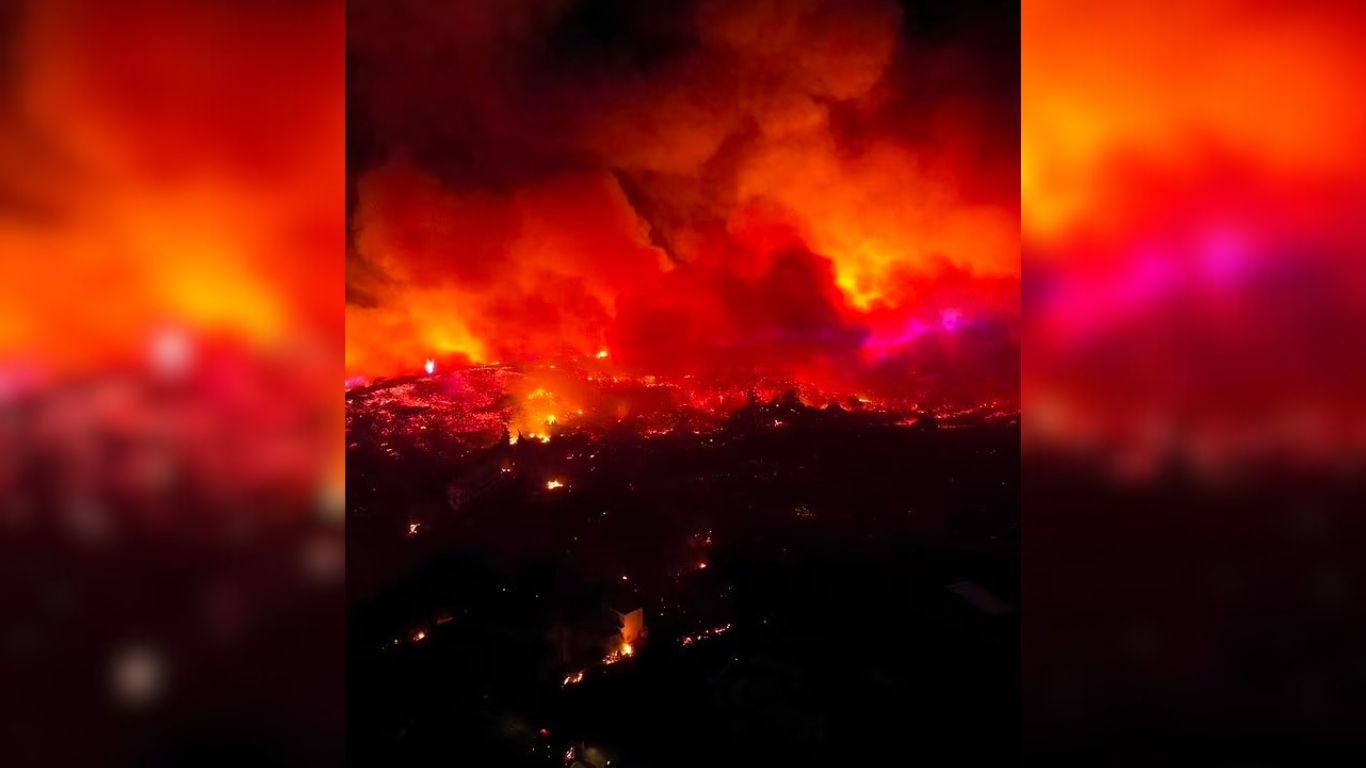
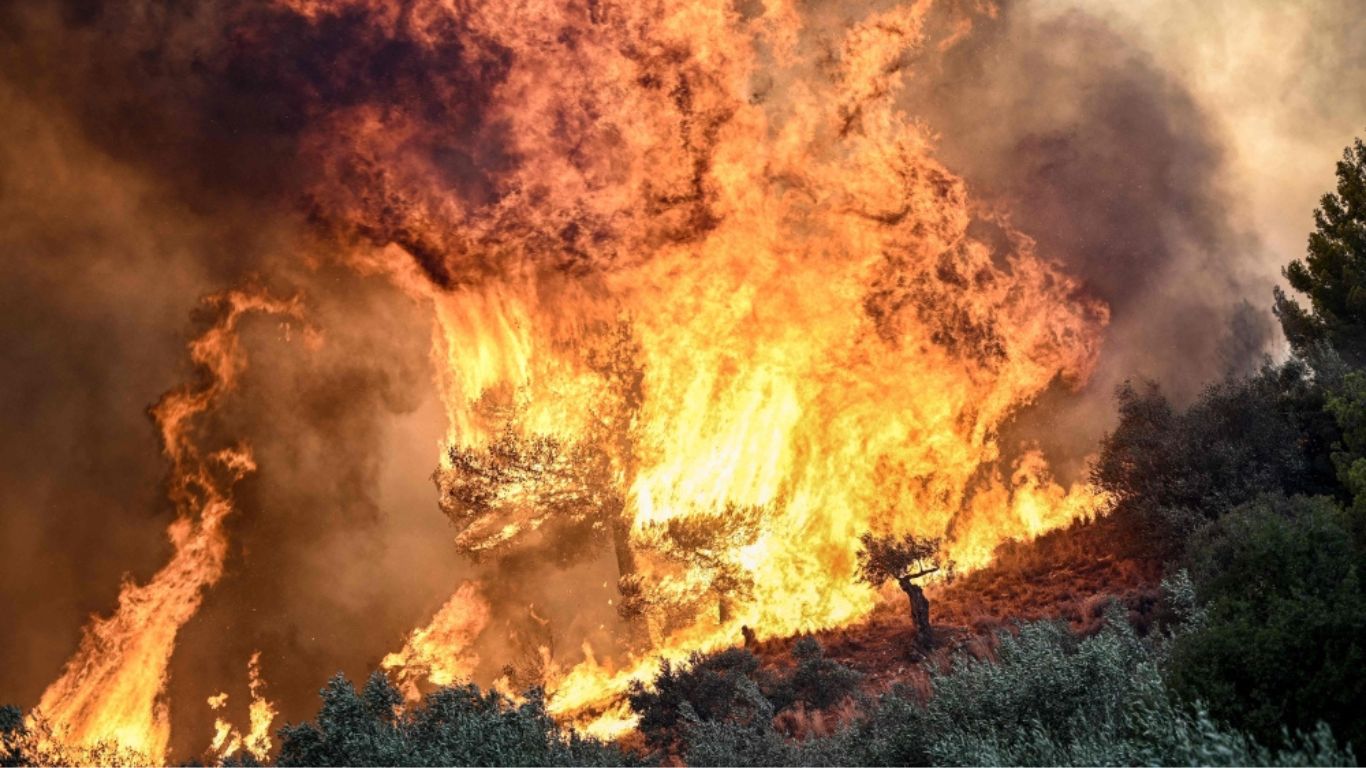
Firefighters in Greece continue to battle blazes that “cannot be contained” as the country burns into a fresh week. Fire is devouring vast swathes of the country fuelled by gale-force winds and dry summer conditions. Credit: AngelosTzortzinis_AFP Animals continue to be in danger of burning to death right now. The fire has destroyed 77,000 hectares (190,000 acres) of land and is, as you read this, eating into Mount Parnitha’s crucial green-belt national park. Untold numbers of animals have been killed by the unstoppable flames but our team continues to be on the ground, racing to the aid of those trapped, terrified, and burnt. Please keep supporting our emergency rescue teams! MORE ANIMALS ARE IN PERIL and without your continued support, they stand no chance against unstoppable flames. Credit: Dejan Radic A few weeks ago, you helped us rush aid to trapped, terrified, and injured animals, and today, we are asking you to once again open your hearts to the helpless wildlife of Greece. The raging flames, fueled by gale-force winds, are showing NO signs of abating, and trapped wild animals need your help right now! Please help! MORE blazing wildfires across Greece have sparked mass evacuations – what about the animals? In times of crisis, we are on the ground helping animals in the most desperate of need. At last count, firefighters were battling 99 separate blazes across the country, including in woodlands northwest of Athens, where our partner ANIMA (Wildlife Rehabilitation Association) is working day and night to save animals. Sadly, our worst fears of ongoing fires have become a reality. The need for our immediate help has never been greater. Animals need you NOW. Credit: DespinaTheodosiadou Large-scale evacuations continue around Athens and other parts of Greece, but for the animals, it is not so simple. We already know from the previous wave of devastation that exhausted, dehydrated birds will be falling from the sky. Young, old and slow-moving animals like tortoises stand no chance against the flames. Without our help, they will succumb to fiery death. Heartbreakingly, many wild animals who miraculously survive the flames will succumb to the effects of smoke inhalation. Credit: DespinaTheodosiadou Right now, ANIMA is on the ground helping to evacuate and treat any animals they find alive. Once they have permission from fire services and local authorities, they will enter disaster zones and carry out their critical rescue and evacuation missions. They are rescuing not only wild animals but any injured, displaced or trapped animals they can – domestic animals, livestock and wild. As you read this, helpless animals are engulfed by flames and burning, and their hopes of survival rest on our ability to send critical rescue support to them now. Credit: Dejan Radic Time is of the essence, and EVERY MOMENT COUNTS! Some of the fires are wildly out of control in places of extreme natural importance, like the national forest of Dadia in Evros (a unique nesting place of two of the most endangered species of vulture) and Parnitha, where red deer and wolves live, and where our rescue teams are focusing their efforts. Please help us URGENTLY raise $10,000 (around £8,000) to equip our rescue teams with fuel for their missions, veterinary supplies, animal transport crates and supplies of food and water. Many animals will need urgent, critical care and long-term rehabilitation for their injuries. They will be traumatized and in need of shelter after the devastating loss of their habitats. They need YOU. Europe’s summer fires have destroyed wooded areas capable of absorbing 2.3 million tonnes of carbon dioxide a year. We know the situation for wildlife is only going to get worse, and we URGE you to stay by our side, for the wildlife who need us more than ever. Credit: DespinaTheodosiadou These fires are one of the worst disasters in modern Greek history, and without us, the animals stand almost no chance of survival. Please donate right now so our partner can continue to treat and rescue terrified, traumatized and trapped animals and provide critical treatment to those in pain and on the brink of death. The lives of these animals are in YOUR hands, so please donate as much as you possibly can today.

Read More »

🆘 DEADLIEST US FIRE in OVER A CENTURY 🆘 Animals NEED YOU NOW!

The catastrophic wildfires in Maui are the deadliest wildfires in modern U.S. history and animals are in deadly peril because of them. A tortoise rescued from the fires. Credit: Maui Humane Society Wild animals lost their homes, their sources of food, and even their lives. PLEASE help us rescue surviving animals who are burnt, dehydrated, disorientated and afraid. Some wild animals are resilient to natural disasters and have the ability to flee at the first signs of danger, like elk and mountain lions. However, they will have no home to return to – and with almost all of their natural habitat gone, they face starvation, dehydration and displacement without the urgent support of our teams on the ground. Other wild animals – particularly the very young, very old, or slow-moving like tortoises – are not able to escape quickly, and are at huge risk. These animals are often found badly burnt, dehydrated or struggling to breathe due to smoke inhalation. Birds, while they may be able to fly away, are also highly susceptible to smoke inhalation and dehydration as they become unable to reach their water sources. Dead birds, cats, and other small animals piled up after dying from the fires, possibly from smoke inhalation and the heat. Credit: AP Many animals are unable to walk properly because their hooves, pads or soles are seared by scorching earth. Tragically, animals who are able to escape may not be able to due to roads and buildings blocking their routes out of danger zones. A terrible inferno on Maui has crippled animals. They need your help right now. Wild animals are in the most serious of trouble right now. A rabbit rescued from the broiling island. Credit: Maui Humane Society The fires, fueled by a dry summer and strong winds from a passing hurricane, took the island by surprise. People fled, and wild animals were burnt, trapped and killed as the fires tore through dry summer growth unabated. Haunting drone images show displaced birds with singed wings, terrified animals trying to scramble to safety, and marine life choking on polluted waters. Their only hope is people like you. We are working to help fund rescue missions and provide aid to burnt, trapped and terrified wildlife, from large land animals to reptiles, smaller mammals, birds and aquatic creatures. Tragically, wild animals are often left to fend for themselves as people flee – and this particular crisis is being called Hawaii’s worst natural disaster. Right now, both small and large wild animals are at great risk, and we are working to help fund critically urgent rescue missions into the disaster zones. Surviving animals are likely to be injured, struggling to walk or breathe, displaced from their habitats, or starving and dehydrated. Wildlife rescue and rehabilitation teams – funded by your donations – are the hope amid the horror. Dedicated teams are working around the clock to locate and rescue wild animals driven out of their natural habitats. Animals will be injured, dehydrated and afraid, and we are ready to save as many as we can. People have been jumping into the ocean to escape the flames. What hope do the animals have without your help? Credit: Mengshin Lin/Washington Post Now more than ever, the animals need your support. Every dollar, every pound, every share, and every ounce of aid you can give will help make the difference between life and death for animals caught in this catastrophe. We are on the job, doing the very best we can with limited supplies and resources. We MUST bolster our supplies and stay on the ground, saving animals. Please, help us now! Credit: Hawaii News Now Organizations on the ground are stretched to the limit – without the reserves to manage a disaster of this scale, they urgently need your support right away. Their supplies are dwindling, but their determination is not. They WILL stay on the ground, and they WILL rescue animals, but they need our help today to do it. So please, donate generously right away. No matter how large or small your gift, your contribution will help provide food, medical supplies, shelter, and much-needed emergency resources to help save precious animal lives. Credit: Rick Bowmer/AP Spread the word: share this plea with your friends, families, and network. Together, we can be a lifeline for those who cannot speak for themselves. Donate now, and be a beacon of hope for the wildlife of Maui.

Read More »

HURRY! Animal wildfire victims in Greece need HELP!

Thousands of people have fled infernos on the island of Rhodes in Greece as wildfires sweep the country for a seventh day. Crete is expected to go up in flames next and the fires near Athens can reignite at any time The week-long blazes, fueled by various factors, including the longest heatwave in the country’s history, have devastated wildlife populations. Credit: EFE_EPA_LefterisDamianidis Animals are in the most dire of trouble right now. And they are waiting for a lifeline from you. Greece is burning, people have fled – WHAT ABOUT THE ANIMALS? Since the fires broke out a week ago, cities and islands have been littered with the charred remains of dogs, owls and rabbits. Searing temperatures have left birds falling from the sky in exhaustion, dehydrated and almost dead. Next year, it is likely that there will be a greatly reduced swallow migration to Africa, as now is the species’ hatching season, and chicks are perishing in the untenable heat. Credit: AFP The fires are thought to be a result of hot, dry conditions and possibly arson, but whatever the reason, the result is the same: thousands upon thousands of trapped and helpless animals who, without our help, have no chance of survival. Upwards of 40,000 people have been evacuated since the start of the disaster, by air and by boat. Tragically, for wildlife whose habitats are going up in flames, there is no evacuation without YOUR HELP right now. Right now, our partners are risking their lives to reach animals trapped by flames. Emergency rescue supplies are running out and we urgently need your help! Credit: Twitter/NiallOLaughlin In crises like these, we are always on the ground – even as others flee – because we know this is when animals need us most. The minute it is safe to do so, we rush into disaster zones and bring out terrified, injured animals. It is these rescue missions that save countless animal lives. We are working with the Wildlife Rehabilitation Association (ANIMA), which has rescued dogs, tortoises, snakes and owls, among other species, and they have sent a team to burning Rhodes to begin the evacuation of animals there. We and our partners are doing our level best to respond to ‘hundreds’ of calls every day from people finding injured animals desperate for help, and supplies are rapidly running out. Credit: ANIMA Among the many creatures saved is a young owl in Crete, discovered a ‘vast graveyard’ of burnt tortoises (among which 11 were miraculously alive), and has rescued countless other creatures from blackened wastelands. Many animals have suffered burns and the effects of smoke inhalation, and with temperatures of up to 46℃ (114.8°F), animals are also at risk of succumbing to severe heat. Birds are gulping SEAWATER in a futile attempt to stay cool as fire infernos destroy their homes. We MUST help – RIGHT NOW! During rescues, large birds such as pelicans and vultures have shown symptoms of poisoning which rescuers believe may be a result of swallowing large amounts of seawater in a desperate attempt to stay cool. Credit: ANIMA The number of animals needing help remains unquantifiable but they number in their thousands and without our partner, they stand little chance against blistering fires, relentless heat waves and unprecedented loss of their habitat. Please help right now by donating any amount you can, no matter how large or small, so our team can race into disaster zones the moment it is possible, rescue terrified, traumatized and trapped animals, and provide critical treatment to those on the brink of death. The animals’ lives are in YOUR hands right now, so please donate as much as you possibly can today.

Read More »

GREECE WILDFIRE EMERGENCY: Please help us rescue wild animals from deadly Greek wildfires.

Large-scale evacuations continue as deadly wildfires sweep parts of Greece. All weekend and continuing today, people have fled their homes as large swathes of the country burn. Wild animals are in terrible trouble. Right now, our partners are on the ground, risking their lives to reach animals trapped and helpless animals in the flames. Emergency rescue supplies are running out and we urgently need your help! Credit: ANIMA We are working with the Wildlife Rehabilitation Association (ANIMA) in Athens – a city so sweltering it is surrounded by wildfires, and famous tourist sites like the Acropolis have been closed to the public. Animals are dropping from dehydration and exhaustion as you read this, and we MUST do everything in our power to help them. Credit: ANIMA With temperatures in Greece soaring above 107,6℉ (42℃), animals are desperate, dehydrated, and dying. We MUST rush our partner emergency funds for rescue operations RIGHT AWAY. Birds are falling from the sky from heat exhaustion. Slow-moving animals like tortoises are perishing in fires. The heat is quite literally killing helpless animals as you read this and their hopes of survival rest on our ability to send critical rescue support to ANIMA right now. Credit: ANIMA Our partner rescues around 5,000 injured, sick, or orphaned animals every year. When disasters like these wildfires strike, the number of animals in need soars, and we are trying to help everyone we can. Credit: ANIMA Within just the first two weeks of July, ANIMA treated 1,000 animals injured in fires and affected by extreme heat waves. Evacuations and rescue efforts are currently underway, and with the threat of lingering heatwaves and wildfires spreading, wild animals don’t stand a chance if we don’t help right now. Credit: ANIMA Thick smoke from the raging fires is so severe that animals who do not perish in the fires could die from smoke inhalation and dehydration. It is heartbreaking and with your help, we will save as many as possible. If we can raise $10,000 (£7,627), it will help pay for critical rescue supplies, equipment, and life-saving treatment for animal victims of scorching heat and wildfires. Please, donate right away. Credit: Milos Bicanski Please, donate right now so ANIMA can continue to rescue terrified, traumatized and trapped animals, and provide critical treatment to those on the brink of death and in terrible pain. The animals’ lives are in YOUR hands right now, so please donate as much as you possibly can today.

Read More »

We must move this captive leopard to a spacious sanctuary – his relocation permit is about to expire!

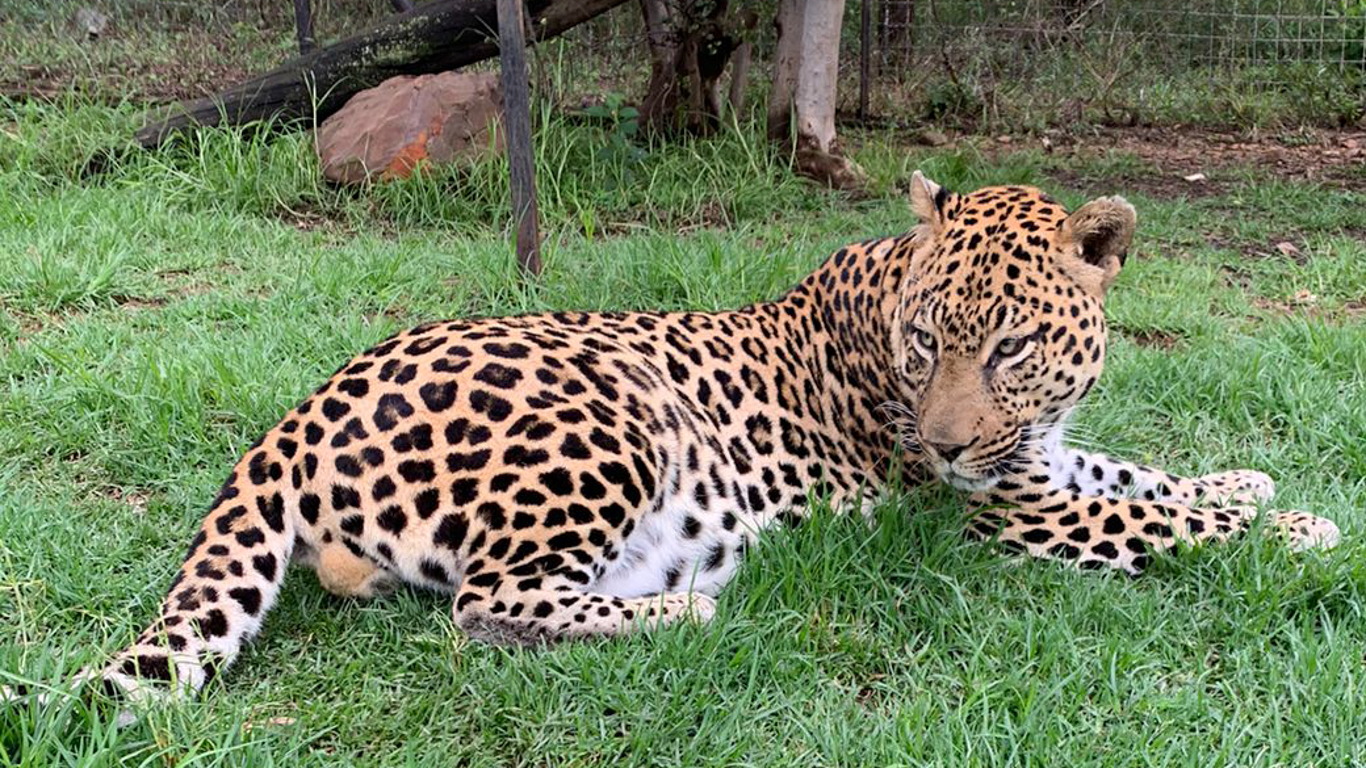
Today we come to you with an urgent plea for help: a captive wildlife facility in South Africa is shutting down. They have found new locations for most of their animals, but a hand-reared 13-year-old leopard remains. He has just days to be rehomed, which is why our partner, Panthera Africa Big Cat Sanctuary, has turned to us for help. Panthera Africa, an expert big-cat sanctuary and rehabilitation facility in the Western Cape, has the space for the cat but not the funds to relocate him. Another complication is that the leopard’s transport permit expires in less than a week, so the funds to relocate him must be found immediately. Panthera Africa’s sanctuary will allow the cat – named Gabriel – to live as close to ‘free’ as possible – something we know every wild animal deserves, but tragically doesn’t always get. Gabriel deserves to live out his days in an environment as close to his natural habitat as possible. Credit: Panthera Africa Please, help us relocate Gabriel to a spacious new home. With your help, we will relocate Gabriel, a 13-year-old hand-reared leopard, from a captive facility in South Africa to a new home where he will finally experience life as close to freedom as possible. Will you help us? Gabriel has lived in a small, captive facility for his entire life, and because he was hand-reared as a cub, he can never be released into the wild. Tragically, human interference in this wild animal’s life means he will never be able to hunt or fend for himself. A big risk Gabriel faces now is that if he is not transferred to Panthera Africa within the next few days, he could be snapped up by a breeding facility. In South Africa, captive breeding facilities exist with their nefarious activities taking place under the radar, all in the name of financial gain. Here, big cats are bred in captivity, and the cubs are removed from their mothers almost immediately, to be used for exhibition purposes, petting zoos, or sold, often to people who have not the faintest idea how to care for a wild animal. Trophy hunting contributes to the decline in leopard numbers. Credit: US Sun In the wild, a female leopard will reproduce every two to two-and-a-half years. However, in captive facilities where cubs are removed from their mothers almost immediately, females go into heat much faster, which means they can breed far more often. We cannot allow Gabriel to end up at a breeding facility. No wild animal should be kept and bred in captivity, and while we work hard to fight this scourge around the world, sometimes we must focus on one animal at a time – like Gabriel. Leopards in captivity are exploited by the entertainment industry around the world. Leopards everywhere are in trouble – and we must do everything we can to help. Leopards, the smallest of all big cat species, are in serious trouble. Habitat loss and human activity, such as trophy hunting and the illegal wildlife trade, have caused a significant decline in their numbers in recent decades. Around the world, they are exploited by the entertainment industry, forced to perform tricks in circuses, caged in zoos or bred for human ownership or interaction. Wealthy people, often in Middle Eastern countries, buy leopard cubs as pets as a show of their wealth – usually with no knowledge of how to care for them – and it almost always ends in disaster for the animal. This is why we must fight to preserve every leopard life we can. Panthera provides appropriate enrichment in specially designed enclosures for all their rescued big cats. Credit: Panthera Africa We have ONLY DAYS remaining to move this beautiful wild cat, and we urgently need your help to make it happen. The Panthera Africa sanctuary offers the ideal environment for a wild cat: a spacious 6,500-square-meter, semi-wild enclosure with natural vegetation, hiding places and shelter – in stark comparison to Gabriel’s current home, which is less than a tenth of the size. Their expert team is working with a specialist wildlife veterinarian and relocation team to prepare Gabriel for relocation to their sanctuary, 932 miles (1,500 km) away from where he currently is – they hope to relocate him at the end of this week. Prior to his relocation, he must have a full health check to determine his current physical state and physiological needs. This includes vaccinations, sterilization, bloodwork and a full body X-ray to check for any abnormalities like arthritis due to his age. He will also have an assessment of an old injury to both front legs, which is causing him to limp. At PABCS, Gabriel will be looked after by a team of specialist veterinarians and wildlife experts. Credit: Panthera Africa If we can raise $4000, (£3,213), we will be able to cover the costs of Gabriel’s relocation, his veterinary care, and the right nutrition to support his health for the first months in his new home. Please, help us give Gabriel his freedom and well-being! Panthera Africa cares for big cats and other wild animals that are emotionally, physically or genetically impaired and cannot be fully rehabilitated and released into the wild. Once at their sanctuary, animals receive expert care for the rest of their lives. The sanctuary allows no hands-on interaction and ensures that animals live as close to the wild as possible. This is what Gabriel deserves – and with your help right now, it is what he will have, for the rest of his life. Please, help us get Gabriel to freedom by donating now.

Read More »

KILLER DROUGHT! 200 elephants and thousands more animals (giraffes, wildebeest, zebras) have perished from thirst!

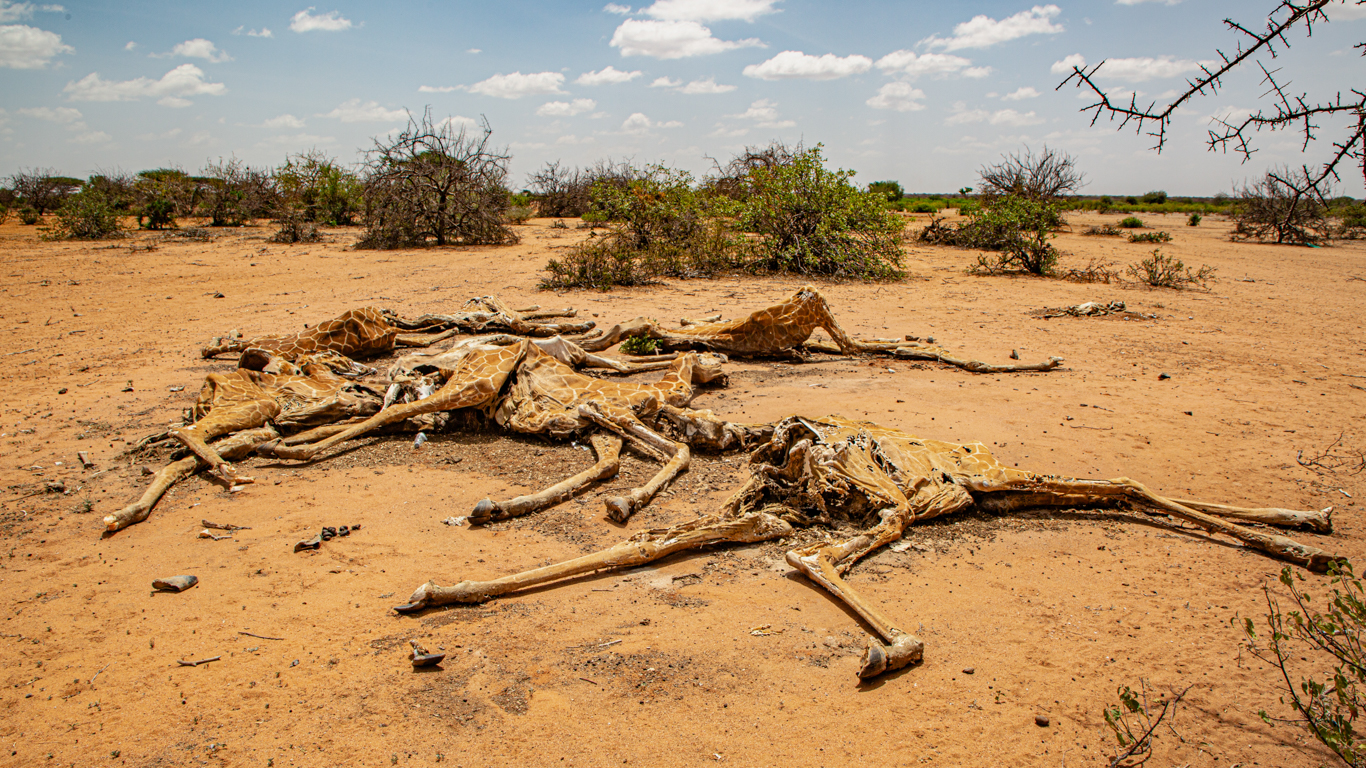
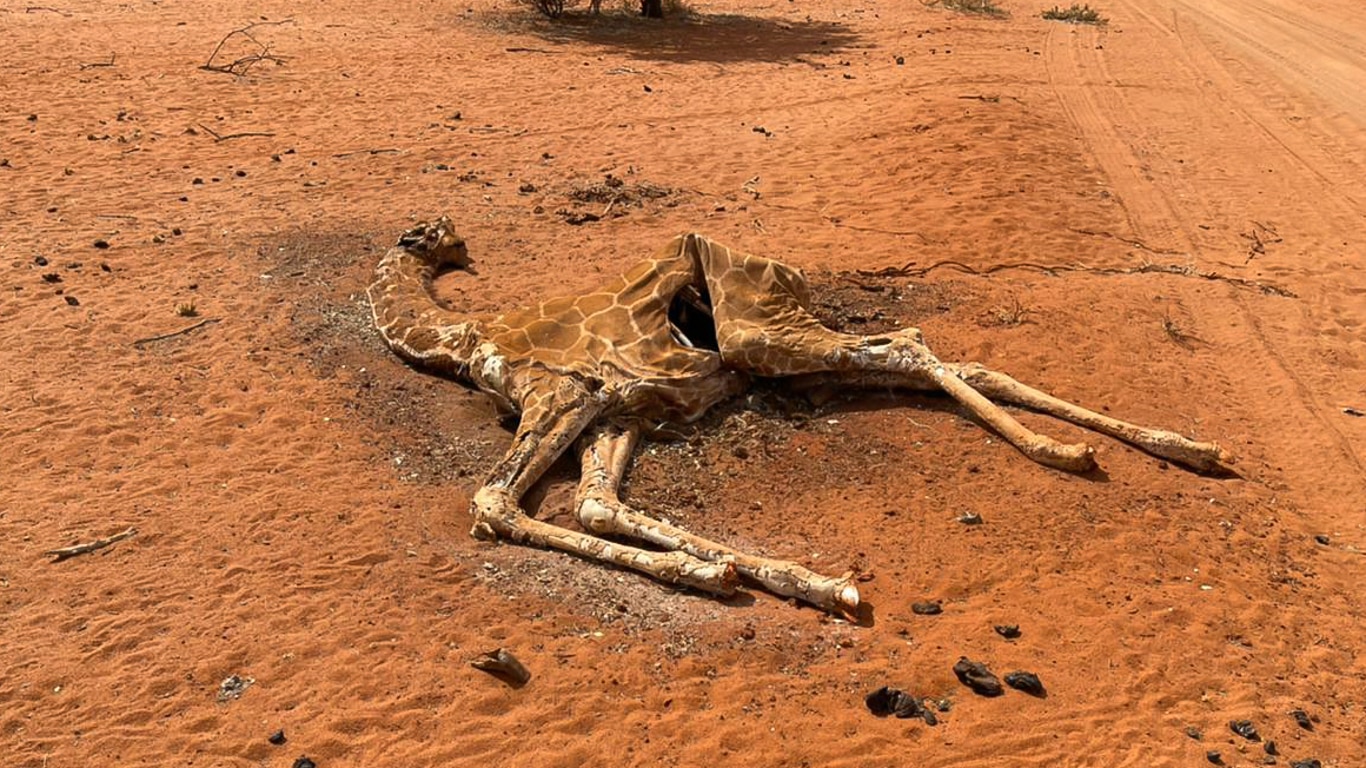
Last week, we appealed to you for help in creating life-saving waterholes for the dehydrated animals of Kenya – you can read all about the devastating drought below. We have made progress but still have not reached our goal of $50,000 (£41,500). The longer it takes to raise the funds, the more animals will die – including desperate juveniles and their dehydrated mothers. Please help right now! One of the worst droughts in recent history is obliterating wildlife populations in Kenya. More than 200 elephants and at least a thousand more wild animals have died of thirst during the country’s most severe drought in decades. Kenya now faces the terrifying prospect of a sixth consecutive dry rain-season. This is an absolute tragedy! We need your help! Credit Reuters The severity of the situation is heart-wrenching. The scorching heat is so relentless that animals have no choice but to risk their lives just to quench their thirst, walking for days or weeks across parched landscapes in search of water. It is a cruel reality that many drop dead before they find it. We need to act fast and do everything in our power to provide them with the water they so desperately need. Every second counts, and we cannot let them suffer any longer. Elephants, giraffes, wildebeest and endangered Grevy’s zebras are just some of the irreplaceable species dropping dead beside dried-up water holes – sometimes after having traveled for weeks in a futile search for water. Elephants for example can drink up to 63 gallons (240 liters) of water per day – but right now in parts of Kenya, there is not a single drop to be found. Their desiccated carcasses litter the bone-dry landscapes. It is a crisis of enormous consequence for wildlife, wiping out animals the world cannot afford to lose. We have been helping for a year now and can proudly say our efforts have saved lives, but the drought is getting worse, it’s getting so serious that scientists are worried the land may never be the same. That means we must be there for the animals indefinitely and we need your help to continue saving lives. Precious wild animals are dropping dead as you read this. Please help us get them water as quickly as we can. As drought wreaks havoc on biodiversity – depleting food and water sources and leaving the country’s wildlife populations in crisis – our work to mitigate its effects continues. We have focused our efforts on Turkana County, Kenya’s largest and northernmost county, and one of the worst-hit. Here, our plan is to install boreholes in order to provide a sustainable water supply to the wildlife of the region. While we have delivered water to meet the most urgent needs of the animals, we know that longer-term solutions are needed. Creating a single borehole is a costly and intensive undertaking. But the reality is that if we don’t help, more and more animals will die. It costs a staggering $50,000 (£41,500) per borehole, which is simply mind-blowing, but the reality is if we don’t help, the animals will suffer and die, and we can’t let that happen. The world’s wildlife is too important to let it be destroyed. Your donation is really important because the animals need every bit of help they can get. The rains are long overdue, but experts say climate change makes it unlikely they will come any time soon – which is why elephants, zebras, giraffes and wildebeest urgently need your help right now. As wildlife numbers dwindle rapidly everywhere in the world, it up to concerned custodians of nature, like us and you, to do everything in our power to help. This drought is a disaster. We are doing everything possible to help the animals, but we need your continued support to reach desperate wildlife in urgent need. Please donate any amount you possibly can right now. The more we can raise, the more lives we can help save. It is up to us, and the time to help is immediately.

Read More »

IMAGINE being a tortoise (or a badger or hedgehog) and trying to outrun a wildfire!

Every year, thousands of wild animals are found hurt and in need of urgent help in the bustling city of Athens in Greece. Tortoises, foxes, bats, vultures, badgers and hedgehogs all find themselves injured or displaced because of animal trafficking, natural disasters, and encroachment on their habitats. Last year, Greece experienced the country’s worst heatwave in 30 years, and wildfires ravaged about 300,000 acres (121,000 hectares) of forest and bushland across the country. These natural disasters are often lethal for animals who burn to death or die of thirst. The Wildlife Rehabilitation Association (ANIMA) rescues a minimum of 5,000 wounded, sick or orphaned animals every year – but often, it’s much more than this. ANIMA is a non-profit association established in 2005 and is made up of 10 staff members, including an on-site vet. ANIMA is the only organization helping wildlife rescue and rehabilitation in Athens, and without its help, virtually all these animals would die. As our climate crisis worsens, extreme weather conditions and fires raging out of control are increasing problems. As concerned citizens of this planet and people who care deeply about the wildlife inhabiting it, we MUST do whatever we possibly can to protect vital species from being obliterated – in the most excruciating ways – by natural and human-induced disasters. With your contribution, we will help ensure that ANIMA has the essential resources and tools it needs to assist helpless wild animals when disaster strikes. This year, ANIMA has experienced a 30% increase in the number of displaced animals coming into its care. Severe recent wildfires have swept through north, south, and east Greece, putting further pressure on animals and ANIMA. And, in 2021, ANIMA treated over 10,000 animals compared to “only” 6,300 the year before. The recent wildfires, exacerbated by heatwaves, strong winds and dry weather, destroyed more than 13,000 hectares of forest and woodland. ANIMA is caring for many animals severely affected by these fires, including numerous charred tortoises who are generally too slow to outrun out-of-control blazes. In July 2022, ANIMA cared for more than 1,500 animals, treated 50 fire victims, and provided on-the-ground care for burn victims on site. There are currently around 500 animals in its care. Because of this crisis, ANIMA’s costs have risen by an estimated $10,000 (£8,600), mostly because of the increased need for vital emergency supplies. As a non-profit organization (NPO), ANIMA relies on private institutions and public donations for the majority of its funding. Please help us do what must be done to help these devastated animals. Raising $5,000 (£4,300) will go a long way towards helping achieve this. With your support right now, we will be able to keep funding the critically important work of ANIMA in Athens – the only haven for some of the city’s smallest, most helpless victims of disaster. Please, donate right now for the bats, badgers, foxes, hedgehogs and numerous other animals desperate for help.

Read More »

Animals are suffering in one of the WORST HEAT WAVES ever recorded – burning alive in forest fires, starving to death from lack of food and losing their homes to fire.

Right now, the northern hemisphere is scorching as fires rage through Europe while temperatures in the United States and China soar. Animals are suffering – burning alive in forest fires, starving to death from lack of food, and losing their homes to fire. For decades, governments ignored the scientific evidence that climate change was real and disaster after disaster would befall us. Now it is almost too late – environmental disasters are escalating as greenhouse gases blanket the earth. Food scarcity, drought, flooding, heat waves, wildfires and disease are significant concerns threatening all life on earth. We must act now! Trees and other vegetation remove carbon dioxide from the environment while at the same time creating habitats for wildlife. The science is well established on which trees to plant and where to create woods and forests. We know how to provide forest havens for animals, and we know that trees mitigate climate change. With your help, we can battle climate change by planting trees that absorb carbon dioxide, provide homes for animals and help preserve species. Environmental experts estimate that we need to plant trees on least a billion hectares (almost 3.9 million square miles or 10 million square kilometers) by 2050 to curb global warming and other effects of deforestation. Through collaboration with partners in multiple countries, we aim to plant 500,000 trees by this decade. This will capture approximately 81 million pounds (37 million kilograms) of carbon! We have already identified organizations in South Africa and Kenya to join forces with and make this a reality. It must be done! Scientists say temperatures on multiple continents have reached unprecedented levels as a direct consequence of global warming, with greenhouse gas emissions increasing their intensity, duration and frequency. For the first time in history, Britain recorded its highest ever temperature of 40C (104F). It is so serious that the United Kingdom authorities issued a level 4 alert, the highest level, corresponding to a national emergency. Climate change is caused by greenhouse gas emissions, which trap heat inside the planet’s atmosphere. CO2 produced by human activities is the largest contributor to global warming. By 2020, its concentration in the atmosphere had risen to 48% above its pre-industrial level (before 1750). The burning of fossil fuels, deforestation and the increase of livestock farming are just a few examples of human-driven activities that are influencing the climate and destroying natural carbon capture systems, which keep our planet cool. Forests are the planet’s air-conditioning systems and are vital for sustaining life. We must start restoring them and fast! Please, will you help? Roughly 15 billion trees are cut down each year! We must plant as many trees as we can if we are to save animals and the planet. There is no time to waste. Just $8 (£7) is all it takes to plant one tree. Please donate today to help remove carbon dioxide from our planet and save the homes and lives of millions of animals.

Read More »

EMERGENCY! Endangered animals are DYING OF THIRST in DROUGHT-STRICKEN Kenya!

A terrible drought is ravaging the African country of Kenya! Shocking scenes show an arid and hopeless wasteland scattered with the carcasses of dead animals. Elephant, buffalo and antelopes will all soon die without your help. Critically endangered species including hirolas, gerenuk (rare long-necked antelopes) and Nubian giraffes (just 625 left) will soon be no more. Countless animals have already died of thirst – or from exhaustion as they dragged themselves further and further to find water that simply doesn’t exist. We must rush the animals life-giving water right now. Every second counts. Please, donate to help save their lives! The drought, probably driven by climate change, is so bad that states of disaster have been declared in 10 counties. It is an unmitigated disaster for the animals! No rain means no food. As a result, animals are forced to travel greater distances in the vain hope of finding sustenance. Nursing mothers, unable to provide for their young, are abandoning their babies to fend for themselves. Death is inevitable and could mean the end for many endangered species. We have a two-fold life-saving plan to SAVE LIVES: truck water to fill waterholes, repair broken boreholes that once supplied water to the animals. We must urgently – and we mean URGENTLY – raise $8,000 (£5,800) to provide water for the wildlife of Kenya! Your donation will help our team save lives. Your support RIGHT NOW is critical to the survival of countless animals. Endangered animal species are in mortal danger because of Kenya’s drought. We CANNOT afford to lose more wild animals! Countless wild animals with absolutely no access to food or water have already fallen victim to a devastating drought, forecast to continue well into 2022. You can HELP SAVE LIVES – we desperately need your support now! To a thirsty person, even a single glass of water is a Godsend. Imagine the relief of a giraffe, buffalo, elephant or antelope dying of thirst when water splashes into their waterhole! Together, we can MAKE THIS HAPPEN! Please, be as generous as you are able so we can get the animals water right now!

Read More »

An IMPORTANT MESSAGE from ASI’s Chief Financial Officer: “I am worried for my children, and yours – and the animals!”

My job at Animal Survival International (ASI) is a financial one and I am not used to talking to our supporters, but while working at ASI I have learned so much about the danger the world is in from climate change that, as the mother of two young children, I have to speak. The pace of climate change is so fast and so potentially deadly that I truly fear for all the world’s children who face what is coming. Climate change is causing disaster after disaster around the globe. As a mother and wife, I speak to all families out there and urge them – urge you – to ACT NOW to stop climate change before it is too late. Please, will you help us today? Let me give you just one example… A devastating drought in South Africa is threatening the lives of thousands of wild animals in the Addo National Park. It is not a routine drought – it is a catastrophe and should not be happening. The WORST DROUGHT IN A CENTURY has put the lives of hundreds of elephants and their babies at imminent risk! Waterholes are drying up with terrifying speed. Just this year ASI provided four waterholes with solar-powered pumps, and I am trying to find the funds for two more. Without this help, the 650 elephants and thousands of zebras, buffalo, lions, antelope and other animals that call Addo National Park home would not have enough to drink. This means that mother elephants will struggle to produce enough milk for their babies – and as a mother, I can barely imagine the anguish of any mother whose baby is suckling and finding no nourishment, ever-weakening until the end comes. I can’t help but think about my girls and how I would feel in the same situation. It gets even worse because even if the rains finally come, the vegetation will take years to recover. Bad news for elephants. This is a story that is sadly repeated throughout Africa. In the northeast of Namibia too, the last of the iconic desert elephants and the last desert lions are on the verge of extinction because of an intense drought that has lasted five years. The time for talk is over. World leaders must ACT on climate change NOW! ASI does all it can to ensure that beleaguered animals survive (the waterholes we have funded – and more, if you will donate today – ARE SAVING LIVES!), but this problem is bigger than any one organization can effectively tackle. It’s time for the world’s governments to do more than pay lip service to climate change. Our world – our children’s world is in peril, and it’s plain to see. There is no denying the situation when you see the elephants of South Africa’s Addo National Park or the lions of north-eastern Namibia dying of thirst and the desert slowly creeping over farmland. Please, join us in our fight – for the animals and for our children. There is much to be done, but ASI will not give up! Can we count on your help today? We have also provided water to help one of the last free-ranging elephant herds of Namibia survive. Without us, elephants in Addo would be thirsty. At ASI, we know we are doing the absolute best we can to help, but so much more needs to be done. Saving animals and the planet, Chief Financial Officer Animal Survival International

Read More »

OUTRAGEOUS! Leopards slaughtered by the thousands for their skins! In the name of FASHION!

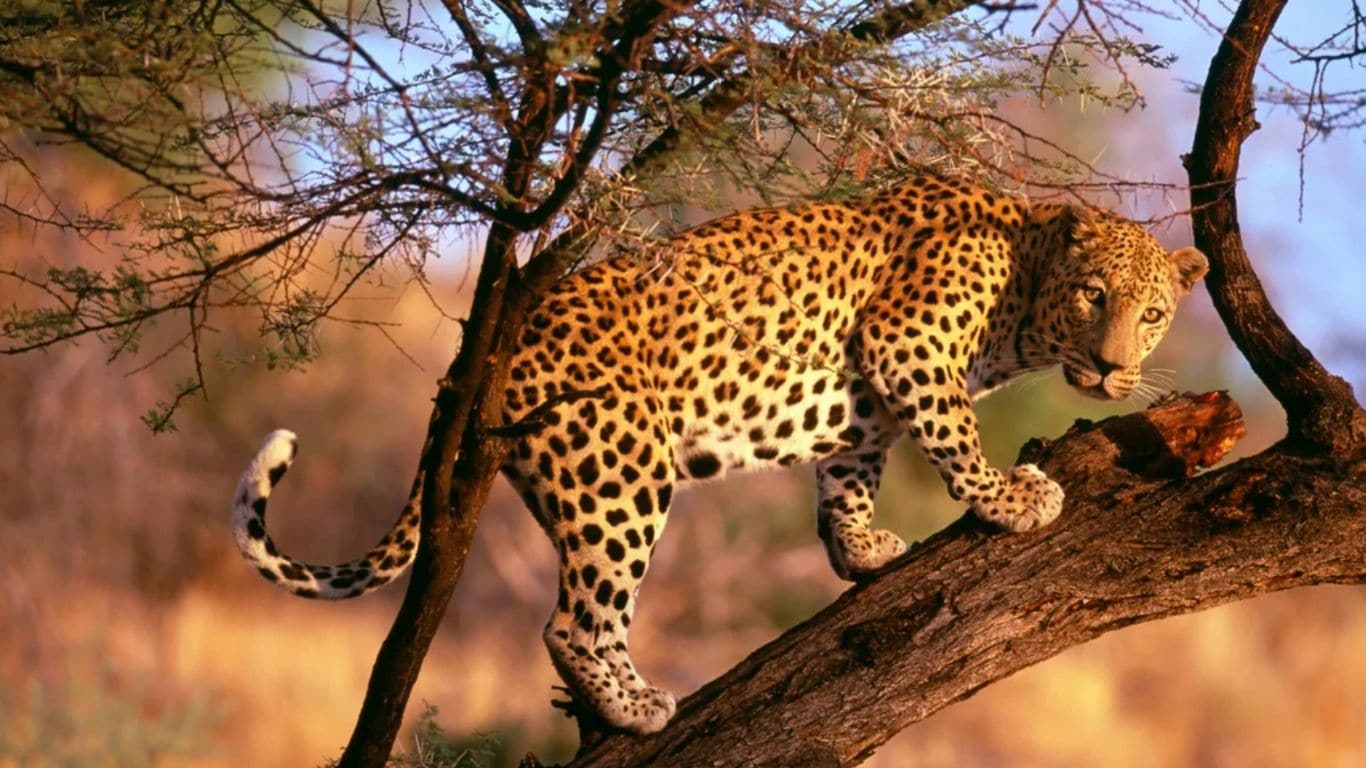
Leopards are the most persecuted big cats in the world! In the last 50 years, almost ONE MILLION of these magnificent animals have been killed in Africa for trophies, to make coats from their beautiful skins and because some farmers view them as pests. It takes EIGHT leopard skins to make one coat! Fashion has played a big role in pushing leopards to the brink of extinction. Sadly, in the 1960s, their beauty fueled the slaughter of 50,000 of these exquisite creatures for their skins to be made into coats and hats – every year. Even today, thousands are being killed for their skins annually. It’s only a matter of time before they disappear forever – unless we do something. It’s OUTRAGEOUS! Leopards slaughtered by the thousands for their skins! In the name of FASHION! There is a booming illegal trade in leopard skins too, but because we know so little about leopard numbers, it’s difficult to pinpoint from where these animals are being poached. Please, will you help us raise the $8,000 (£5,812) needed to learn this critical information and give leopards the protection they so desperately need? Leopards’ massive territories and their secretive behavior make it exceptionally difficult to determine how many are left. There is a dreadful suspicion that a conservation disaster is looming. Researchers say that their populations are declining faster than they can understand – and at a rate that surely cannot continue for long. The Hwange National Park in Zimbabwe may just be one of the leopards’ last strongholds in Africa. But we need to find out how bad the situation is and establish the threats they face to protect them. Please, help us raise the funds needed to humanely collar and track leopards in Hwange to secure a future for these mysterious, imperiled big cats before it’s too late. Leopards have lost almost 70% of their habitat – and the rest is shrinking fast! This leopard was saved just in time from a snare thanks to a tracking collar Leopards are solitary animals who each need territories of up to 270 square miles (700 square kilometers). But with human settlements growing and encroaching on wild areas, these creatures are being put into fierce competition with each other for space or killed when they enter farms or communities in search of food. Sometimes, these cats are shot by farmers who view them as pests. Those who don’t die immediately are left to suffer and slowly succumb to bullet wounds or starvation. We must do everything we can to protect these magnificent creatures! At almost 6,000 square miles (15,000 square kilometers), the Hwange National Park could be a haven and support a large breeding population of leopard. But we must first learn more about their behavior, movements and the threats they face here. Please donate today and help us secure a future for these cats.

Read More »

Millions of rare and endangered animals, including jaguars and giant anteaters, are caught in a RAGING INFERNO!

The world’s largest tropical wetland, the Pantanal in Brazil, is burning – again! Millions of rare and endangered animals including jaguars, giant anteaters and maned wolves, face death if we don’t act now to contain the blaze and save every animal we can. Please help us raise funds to provide emergency fire fighting equipment and rescue and treat animals injured by the fire. 17 MILLION animals DIED in the 2020 Pantanal fires! We cannot let this happen again! The Pantanal is one of the most biodiverse and unspoiled places left in the world. Almost 5,000 species rely on this ecosystem for survival. It is home to the world’s largest concentration of jaguars, who have already lost nearly half their native range worldwide. Last year, unprecedented wildfires, driven by the worst drought in half a century, destroyed 38% of the Pantanal, killing an estimated 17 million animals in a matter of weeks! We cannot allow this to happen again! The fires have now spread into the protected areas! Thousands of endangered animals face death if we don’t act now! More than 1,000 wildfires are already destroying the critically sensitive Pantanal and the number is growing by the hour. In just five days, 17,000 hectares (42,000 acres) and untold numbers of animals have already been lost. We have promised to rush emergency funding to the Pantanal Relief Fund, but we need your help. Please, donate now to save the animals of the Pantanal. An emergency animal treatment center is being set up, and volunteer veterinarians are standing by to rescue as many animals as they can. But, without funds for critical supplies and fuel, their work will be limited, and many lives will be lost. If these fires are left to burn, the Pantanal may never recover! It is vital that fire breaks are created to save as much of this habitat as we can. Tens of millions of animals rely on this ecosystem, but if we cannot save critical conservation areas, these animals could be lost forever. The Pantanal’s rainy season should start in October, but the worst drought in over 50 years means that rainfall could come as late as December. Critical zones that need to support the surviving animals until the rains come are already burning. The Pantanal Relief Fund need our support immediately if they are to have any chance of success! This could become the worst ecological disaster of our lifetime! We must do everything within our power to bring it to an end before it is too late! The Pantanal is one of the world’s most effective carbon sinks, helping to fight climate change and providing a refuge for thousands of endangered animals. Larger than England, the loss of this utopia could speed up global warming and the extinctions of hundreds of threatened species. Animal Survival International was created to prevent exactly this and we will do everything we can, but we desperately need your help. Please donate towards the emergency relief efforts today.

Read More »

Unable to respond to animals in need! Time is running out!

We’ve told you before that an estimated 3,000 snares have been set around the unfenced Hwange National Park in Zimbabwe – so many that the very survival of entire populations is threatened. Lying in wait, these cruel devices trap and strangle animals, causing severe pain, injury and ultimately death. Our partner in Zimbabwe, DART (Dete Animal Rescue Trust) is a dedicated team that works around the clock to remove snares and rescue injured animals in the Hwange area. But now, DART faces an emergency that is preventing them from doing this vital work! The organization’s only two vehicles, vital for its operation, are out of working order and need costly repairs. Without these vehicles, the team cannot respond to emergency calls to rescue snared and injured wild animals. We must help DART continue saving animal lives. It will cost $4,800 (£3,500) to repair the vehicles and get them back on the road. Every day they are out of action means more suffering for animals trapped in snares. Please donate generously today so we can get help to the animals RIGHT NOW. The snares are primitive, yet deadly. Made with any available material such as telephone wire, steel fencing wire, nylon rope, electrical cable, and even braided tree bark – the Hwange area has become a lethal killing zone for wild animals. Even elephants and lions aren’t spared the torture and possible death caused by deadly snares. We cannot ignore the suffering Hwange’s wild animals are enduring. We need your help to save Zimbabwe’s already endangered wildlife from being caught by these deadly devices. Without DART able to do its job, hundreds of animals who become trapped by snares will die long, painful deaths. Or the few lucky enough to get away will live with horrific festering wounds that, in the end, will also kill them. Each life saved is hope for an entire species. Several years ago, DART saved a snared female cheetah on the verge of death. Thankfully, the team got to her just in time and managed to treat and release her. A short time ago, we received news from DART that this cheetah had recently given birth to a SECOND LITTER of cubs since her rescue! These babies have increased Hwange’s critically endangered cheetah population by 25%. This goes to show how vital DART’s work is. Please help us get them back in action. We have no time to lose. With snares, no animal is safe. Endangered creatures such as wild dogs, lions and elephants are at risk of being caught, tortured and killed. The animals of the national park roam free, crossing main roads, even passing through villages. Every step they take is a possible disaster waiting to happen. They need the assistance and life support that DART gives them. Please, help us today to support DART and save indiscriminately snared animals from excruciating pain, prolonged suffering and death. Donate as generously as you can – together we can get DART back on the road.

Read More »

How we are helping RIGHT NOW: February 2021

The future of animals and the wilderness they live in has never been more at risk. Climate change, habitat destruction and poor enforcement of international wildlife laws is driving species after species to extinction. We cannot be silent or sit idly by and watch this happen. The Animal Survival International (formerly Political Animal Lobby) exists to be a voice for animals and to do everything within its power to ensure animals survive internationally. We are incredibly grateful to our passionate supporters who make the work we do possible. In case you missed it, here’s what ASI is doing right now and how your donations are making a difference to animals across the globe: Life-Giving Water in the Midst of the Worst Drought in 100 Years In South Africa’s Addo Elephant National Park, hundreds of elephants and countless other animals risk dying of thirst because of the worst drought in 100 years. Water holes are drying up and thousands of animals are suffering – not only from thirst but also injury as they fight one another over the last few drops. Our team watched in horror as zebras kicked and bit each other, desperate for their share. Smaller animals like warthogs stood no chance of getting near the rapidly-drying waterholes. To help this dire situation, we have pledged to fund the installation of state-of-the-art solar-powered water pumps to draw more water from the available boreholes. Thanks to your generous donations, we have raised enough to save one waterhole with new equipment and are nearing our goal of saving a second one. Now we are counting the days until the pumps can be installed. Ending the Cruel Trade of Live Frogs from Turkey Millions of frogs are tortured, maimed and killed so they can be served up as a ‘delicacy’ in restaurants. Every day, thousands of Anatolian water frogs are cruelly harvested in Turkey before being sent across Europe. Hunted with hooks and squashed into bags by the hundreds, these helpless frogs are transported alive. Many die along the way. Those who don’t are often served up alive! Not only is this an example of shocking cruelty, but if we don’t act now, Turkey’s Anatolian frogs will be gone forever, and environmental disaster could ensue. We have pledged to help stop this carnage through the only available avenue – presenting compelling evidence to the authorities. By supporting scientists at Ege University in Turkey in conducting vital research, we will be able to demonstrate the true enormity of the plight of the frogs to the Turkish government and hopefully end this trade forever. A Second Chance for Persecuted and Poisoned Birds of Prey Birds of prey are severely threatened across Africa. Habitat loss, poisoning, local superstitions and climate change are pushing hundreds of raptor species to extinction. The Owl Orphanage in St. Helena Bay, South Africa has made it their mission to rescue and rehabilitate as many poisoned and injured birds as possible. The Owl Orphanage is inundated with birds in desperate need of help. Sometimes they rescue five a day, but they simply do not have enough space to home them all while they recover. Your generous donations helped expand their aviary, meaning that more birds of prey will now get a second chance. Celebrating World Pangolin Day – but for How Much Longer? This month we celebrated the 10th annual World Pangolin Day. On this day we were again reminded of the horrific plight of pangolins, both across Africa and the Far East. As the most trafficked mammal in the world, pangolins are hurtling towards extinction; an estimated 200,000 pangolins are killed every year! Smuggled across borders to Asia, pangolins are hacked to death to be used in traditional Chinese “medicine” or eaten as a delicacy. If we don’t put an end to the rampant slaughter of these quiet, solitary creatures, very soon we won’t be celebrating World Pangolin Day anymore because there won’t be any left. ASI is committed to spreading awareness and offering support wherever needed to help prevent such impending disasters. Thank you for standing with us in this fight. Once again, thank you for your generous donations and your support in raising awareness of these issues. You make it possible for us to make a difference, supporting wildlife across the globe.

Read More »

Worst drought in 100 years still raging. We must act now!

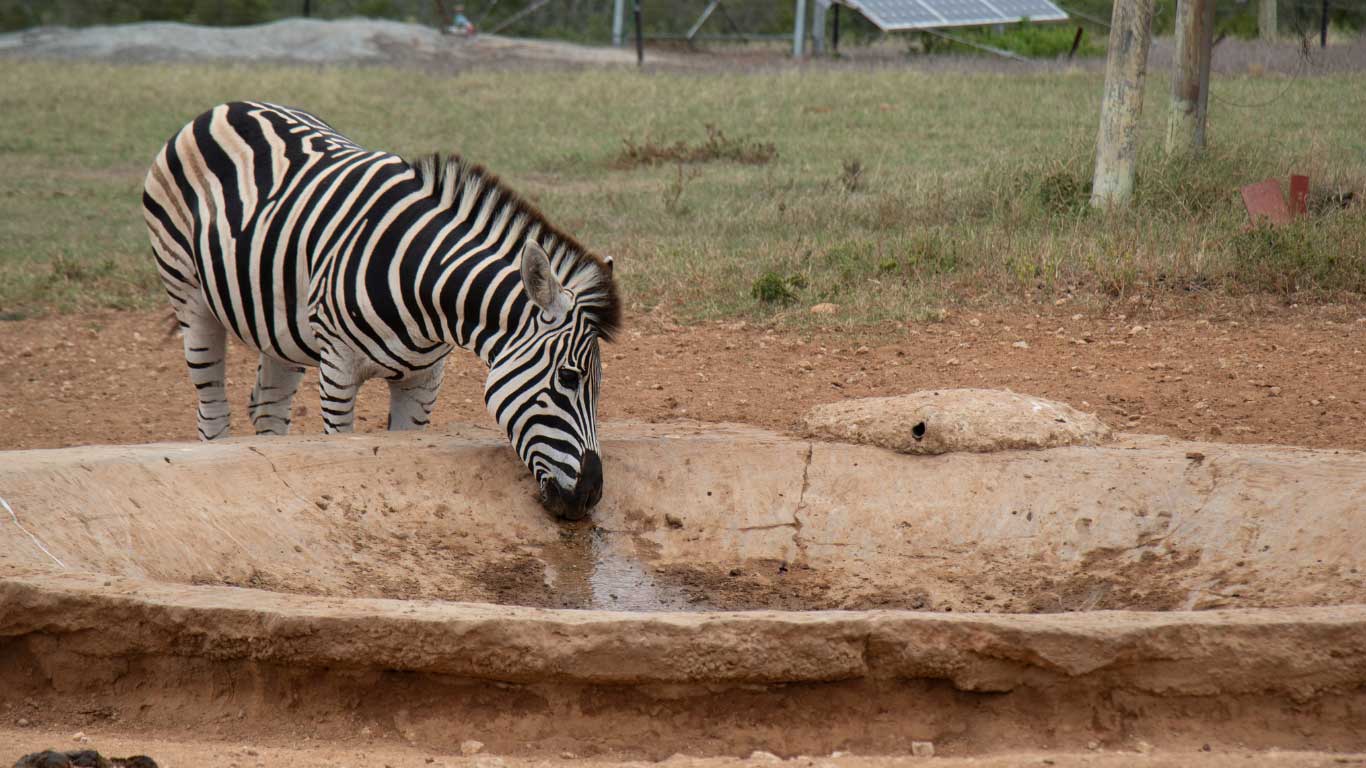
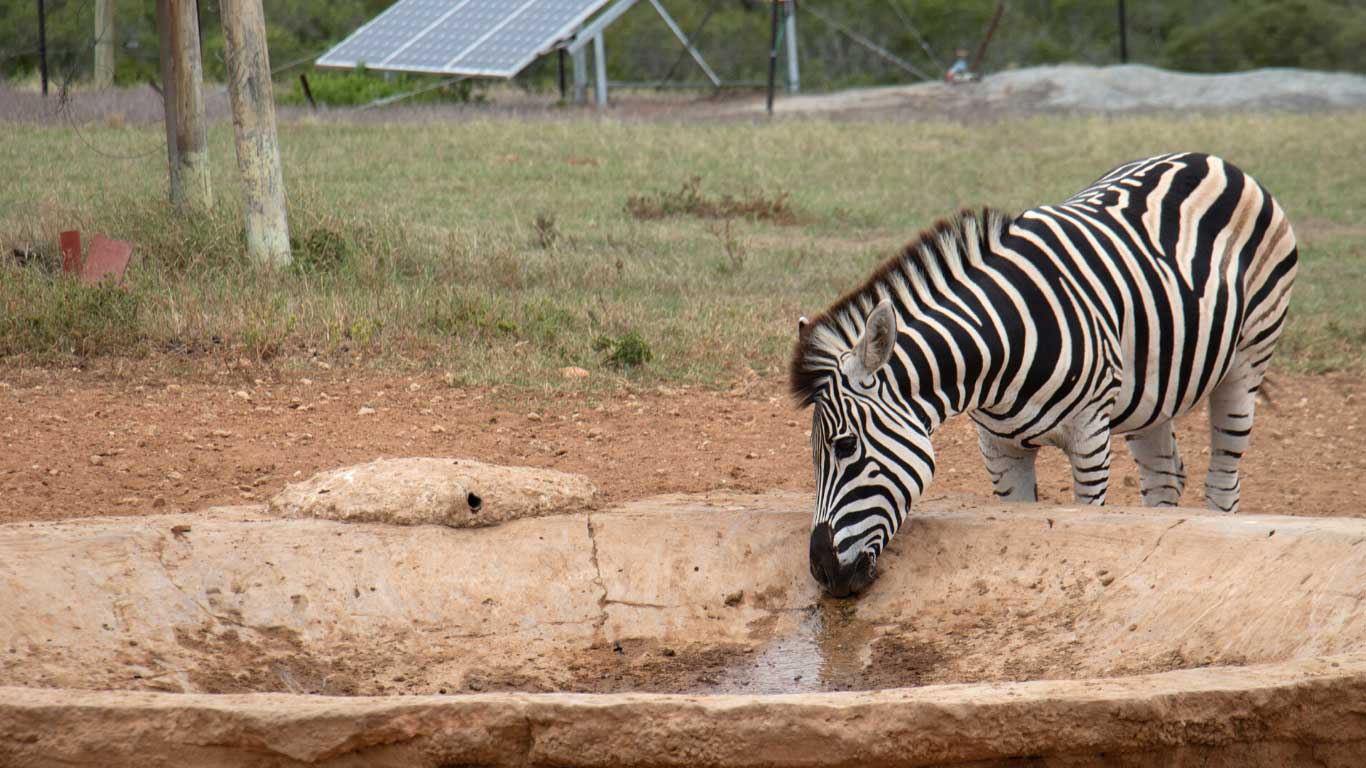
Today we share with you a simple but vitally urgent message: thousands of elephants and other wild animals face dying of thirst in South Africa because of the worst drought in 100 years at the Addo Elephant National Park in South Africa. Water holes are drying up and thousands of animals face death. On a recent emergency visit and as temperatures skyrocketed, our team watched in dismay as animals fought each other over the last few drops of once-plentiful water. Zebra fought among themselves, kicking and biting, warthog families were driven from the life-giving water and baby elephants tried to make an inch of water into a mud bath. With your help, we can save these wild creatures from a slow and agonizing death. The good news is we have a plan. We promised to buy state-of-the-art solar-powered water pumps to provide a reliable source of ground water and, thanks to our supporters, we are nearly there. We just need to raise another $4,000.00 (£2,900.00) to provide two critical waterholes with life-giving water. In the meantime, we are trucking in water from distant reservoirs to help animals survive in the short-term. South African National Parks (SANParks), which manages Addo, is doing everything it can to help and so far no animals have died – but without water, it’s just a matter of time. Donate today, and together we can make sure that these animals get thousands of liters/gallons of life-giving water every day! We have the opportunity – and we must not let it pass – to save elephants, antelope, warthogs, zebra and so many other animals. They cannot survive this drought much longer. As you read these words, water trucks are already at work (we were there to help pumping ourselves). The stress of thirst is driving animals to fight each other for a share of the meager water supply. Worse still – baby animals don’t stand a chance to access the prized remaining inches of muddy water. Zebra are trying frantically to suck water from dry pipes as temperatures soar and dehydration sets in! We witnessed the harsh realities of this drought firsthand. Thirst and panic are making wild animals behave unnaturally. By spending all day lining up, pushing and fighting for water, they don’t have enough time to browse for food or rest. There is no time to waste. We need your support now to respond to this emergency – and save lives! We are on the brink of a massive conservation disaster in Addo National Park. It could be years before this devastating drought ends. Just one elephant drinks 200 liters (over 50 gallons) of water every day. This means that, under current circumstances, an entire day’s dwindling water supply can only sustain a single small family of elephants. It is no understatement that the competition for evaporating water could wipe out whole wildlife populations within the Park. While we have begun to act, we must continue to act! With your help, we WILL save lives! Together, we can save thousands of animals from a horrific fate and protect vital wildlife populations for years to come. Please help us by donating what you can today – every gift is vital.

Read More »