

Lions and tigers abandoned on Ukraine war frontlines.

The war in Ukraine is a nightmare for countless lions, tigers and other wild animals. As people flee Russian advances, zoos and private owners abandon dangerous, captive wild animals who will be shot on site by soldiers. Our supporters already helped rescue two injured, infant lion cubs from the frontline. They will survive, thanks to you… …But so many more animals are desperate for your help. Credit: ASI/Dejan-Radic In Ukraine, it is legal for private citizens to keep wild animals, and before the war, anyone with a few thousand dollars could buy their choice of exotic pet. Now, as bullets fly and missiles tear up the land around them, these animals are being abandoned by fleeing owners and caretakers. They are petrified and starving, and they will die without help Please don’t wait until it is too late for these poor animals. Our partner in Ukraine, the Wild Animal Rescue Center (WARC), works around the clock to rescue animals in the war zone. Our team puts their lives at risk on every mission. Credit: WARC WARC responds within minutes of receiving calls for help, no matter the size or species of the animal. For bears, lions, tigers, lynxes and so many others on the frontline, our partner team is there, providing life-saving medical care and temporary shelter for injured, terrified, emaciated animals. The cost of supplies is rising but rescue missions and care must continue. We must equip our rescue teams with everything they need to continue fighting to save animals who truly have no-one else to turn to. Image credit: ASI/Justine Haralambous We need YOUR help to continue this vital work. Each mission costs up to $4,000 (roughly £3,050), depending on the logistics, species and dangers of the situation. The costs don’t end there. Animals often need critical veterinary care once they are rescued, and they all need shelter and food until they can be safely relocated. Can you imagine how terrifying it must be to try and save a wild animal as enemy soldiers rain fire all around you? Credit: WARC There is probably no more dangerous animal in the world than a frightened Bengal tiger. Imagine how brave our team was to rescue this guy in a battlefield while a war goes on around them? And imagine how wonderful it is for the tiger that he was rescued and we and WARC are looking after him. Credit: ASI/Dejan Radic We have seen first hand the terrors of this war. The situation for animals is getting worse and so many wild animals have no chance of survival without help. You can give them that help today. Please, stand with us and make a difference for the abandoned wild animals of Ukraine. They are desperately hoping for your support now.
Wildlife trafficking ring killed at least 118 eagles in the US, prosecutors say.

Originally published by NBC News (Sep 5, 2024) Travis John Branson made between $180,000 and $360,000 from 2009 to 2021 selling bald and golden eagle parts illegally, according to federal prosecutors. BILLINGS, Mont. A man helped kill at least 118 eagles to sell their feathers and body parts on the black market as part of a long-running wildlife trafficking ring in the western U.S. that authorities allege killed thousands of birds, court filings show. Travis John Branson is scheduled to be sentenced in federal court on Sept. 18 for his role in the trafficking ring that operated on the Flathead Indian Reservation in Montana and elsewhere. Prosecutors say the Cusick, Washington, man made between $180,000 and $360,000 from 2009 to 2021 selling bald and golden eagle parts illegally. “It was not uncommon for Branson to take upwards of nine eagles at a time,” prosecutors with the U.S. Attorney’s Office in Montana wrote in a Tuesday court filing. “Not only did Branson kill eagles, but he hacked them into pieces to sell for future profits.” Native Americans who use them in ceremonies highly prize eagle wings, tails, feathers, and other parts. Prosecutors asked Judge Dana Christensen to sentence Branson to “significant imprisonment” and restitution totaling $777,250. That includes $5,000 for every dead eagle and $1,750 for each of 107 hawks that investigators said he and his co-conspirators killed. Branson’s attorney disputed the prosecutors’ claims and said they overstated the number of birds killed. The prosecution’s allegation that as many as 3,600 birds died came from a co-defendant, Simon Paul, who remains at large. Branson’s attorney suggested in court filings that the stated death toll has fueled public outcry over the case. “It is notable that Mr. Paul himself went from a 3,600 to 1,000 bird estimate,” Federal Defender Andrew Nelson wrote in a Tuesday filing, referring to a statement Paul made to authorities in a March 13, 2021, traffic stop. Nelson also said restitution for the hawks was not warranted since those killings were not included in last year’s grand jury indictment. He said Branson had no prior criminal history and asked for a sentence of probation. Branson and Paul grew up in the Flathead Reservation area. Since their indictment, Paul has been hiding in Canada to evade justice, according to Nelson. Paul’s defense attorney did not immediately respond to a telephone message seeking comment. Investigators documented the minimum number of eagles and hawks killed through Branson’s text messages, prosecutors said. Two years of his messages were not recovered, leading prosecutors to say the “full scope of Branson’s killings is not captured.” Government officials have not revealed any other species of birds killed. Bald and golden eagles are sacred to many Native Americans. U.S. law prohibits anyone without a permit from killing, wounding or disturbing eagles, or taking their nests or eggs. Illegal shootings are a leading cause of golden eagle deaths, according to a recent government study. Members of federally recognized tribes can get feathers and other bird parts legally through the National Eagle Repository in Colorado and non-government repositories in Oklahoma and Phoenix. There’s a yearslong backlog of requests at the national repository. Branson pleaded guilty in March to conspiracy, wildlife trafficking, and two counts of trafficking federally protected bald and golden eagles. He faced a maximum of five years in prison and a $250,000 fine on the most serious charge, conspiracy. Under a plea deal, prosecutors said they would seek to dismiss additional trafficking charges. Federal guidelines call for a sentence of roughly three to four years in prison for Branson, they said.
Three tiny pangolins fighting for survival after poachers’ brutal attack.

In a ‘perfect’ world, baby pangolins Lulu, Biscuit and Henry would still be in the wild. They would be learning to forage for food and discovering the wonders of their natural habitat under the gentle, protective watch of their mothers. But this is not a perfect world… Credit: Umoya Khulula Instead, it is a world plagued by callous poachers and a lucrative illegal wildlife trade. Pangolins Lulu, Biscuit and Henry were barely six months old when they were cruelly stolen from their natural habitat by poachers. Stripped of both freedom and their mothers’ nurturing care, like countless other pangolins before them, they were destined for horrific suffering and a brutal end. Lulu was being hawked on a roadside in Limpopo, South Africa, for a meager $5 (£4) by criminals when our team received a tip-off and raced to the rescue. This is how one of the baby pangolins was found. Credit: Umoya Khulula Biscuit was saved during a daring undercover sting operation where he was found soaked in a mysterious substance that severely damaged his delicate skin, causing it to rot. Alongside Biscuit, our team uncovered a gruesome stash of pangolin scales and bones – revealing the awful extent of the poachers’ cruelty. All six of these heartless criminals were arrested. Henry, the smallest and most vulnerable of the three pangolins, was discovered after four torturous days in captivity. Credit: Umoya Khulula Dehydrated and covered in injuries, he has serious wounds to his face and paws from his desperate, futile attempts to escape. Two poachers were arrested in connection with Henry’s capture, facing up to 10 years in jail. Our partner, Umoya Khulula Wildlife Centre in Tzaneen, South Africa, acted fast to save the lives of these three tiny, defenseless young pangolins. The trauma of being poached and separated from their mothers has left these fragile little pangolins extremely vulnerable. Without YOUR help, they face almost certain death. Every year, hundreds of thousands of helpless pangolins are snatched from the wild, slaughtered, and sold for their meat, skin and scales. Lulu, Biscuit and Henry are extremely fragile. They require constant, round-the-clock care, intensive treatment and supplementary protein via a feeding tube. This is the reality of the illegal pangolin trade. Credit: TRAFFIC Pangolins are notoriously difficult to treat, as they are highly sensitive to stress, and without proper care, they often die within months of captivity. Our team has extensive experience in treating these vulnerable animals, and with your support, we will do everything we can to save their lives. Lulu, Biscuit and Henry are each the size of a newborn baby, weighing around 7lbs (3kg). Their survival depends on your support. It costs approximately $5,000 (£3,800) to rehabilitate a pangolin from the moment of rescue until its release – a meticulous process that can take up to a year. Please donate as generously as you possibly can today to help us cover Lulu, Biscuit and Henry’s recovery. Together, we can help them grow strong enough to be released into protected wild areas where they can thrive. Please, donate right away! Credit: Umoya Khulula Baby pangolins typically stay with their mothers until they are ten months old, learning crucial survival skills and gaining strength through their mothers’ guidance and protection. Please help us give these fragile infants the specialized care they need to heal so they can return to their rightful place in protected wild spaces. Donate generously to Animal Survival International today.
Sold online, this rescued baby gibbon is barely bigger than your hand.

Tiny Sombad, a white-cheeked gibbon, was just a few weeks old when he was ripped from his family in the Cambodian wild and caught in the terrifying world of illegal wildlife smuggling in Southeast Asia. Just a baby, he lost everything – the safety of his family; his natural habitat; his loving and nurturing mother. Credit: LCTW Every year, thousands of critically endangered gibbons like Sombad are stolen from the wild to be sold as pets or eaten. Poachers will shoot a mother holding a baby, and once the mother is dead, they will steal the baby. Only around one in 10 baby gibbons poached this way will survive. Many die as they fall from the trees, or as a result of incidental bullet wounds or abuse after being caught. For every one baby gibbon you see paraded online, there is a bloody trail of up to 10 dead mothers and nine dead babies. In June, 5,000 trafficked animals burned to death at a notorious open-air “pet” market in Thailand. Credit: LCTW 5,000 animals just like Sombad. Helpless infants like Sombad, considered “cute” and trainable, are smuggled across Asia’s borders and sold at illegal markets to be pets, exploited on the streets for money, or forced to perform on social media for “likes.” Sombad was being sold on the internet. Sombad is one of the few trafficked animals whose story has a “happy” ending – although, orphaned and living in a sanctuary until he is old enough to fend for himself is hardly a “happy” outcome. Our partner, Lao Conservation Trust for Wildlife (LCTW) in Vientiane, Laos, is the only hope for countless endangered and critically endangered wild animals trafficked through Southeast Asia and into Laos for unfounded “traditional Chinese medicine” (TCM), to be cooked – sometimes still alive – or to become “pets.” Heartbreakingly, gibbons will be wiped out entirely if this onslaught doesn’t stop. Some species are estimated to have only 30 individuals left in the wild. This is why LCTW, alongside local authorities, works tirelessly to intercept and penalize poachers, and save near-extinct wild animals. Credit: LCTW Baby Sombad, who was found tied up with chains, is deeply traumatized and terrified after his ordeal. After a tip-off from social media, where Sombad was being sold online in private groups, LCTW saved him from his captors. He was wrapped in chains, weak and trembling. LCTW has begun carefully introducing him to a surrogate mother at their sanctuary. Gibbons have strong family bonds and males and females remain monogamous throughout their lives. Offspring stay with their parents to learn how to forage, vocalize, sing, and survive in the wild. Credit: LCTW Had Sombad not been rescued by our partner, his life would have been tragically different. Too often, trafficked monkeys are illegally confined in tiny cages, where they live their entire lives. Worse are the animals who are chopped up and used in traditional Chinese medicine (TCM). Monkeys, particularly gibbons and macaques, have long been “prescribed” in TCM, with ancient texts calling for crushed monkey skull and pickled monkey meat to treat malaria, alongside even more horrific uses. Sombad was just days or perhaps hours from this fate. Credit: LCTW With your help today, we can provide Sombad with the sanctuary he deserves – a jungle-like enclosure where he can roam freely, bask in sunlight, and rediscover the joys of a natural habitat. Please, donate for Sombad right away. LCTW does not have sufficient appropriate space for the gibbon right now, and urgently needs our help to construct the ideal enclosures for this rescued animal. Gibbons are territorial so they are often kept alone, but within view of other gibbons, during the early phases of their rehabilitation. They may later be introduced to a potential mate. Credit: LCTW Right now, Sombad is living in the sanctuary’s quarantine area as there is no enclosure for him. If we can raise $15,000 (approximately £11,750), we can help LCTW to construct a large, semi-wild enclosure so that Sombad can finally live the life he deserves. The enclosure will also go on to provide a home for more animals rescued from the brutal illegal wildlife trade in the future. Infant Sombad has his whole life ahead of him, and after the trauma he experienced, we want to give him the best. Please, help us give Sombad the second chance he dearly deserves. We must do our best to give this brave survivor the safe, spacious enclosure he deserves after his terrible ordeal – so please, donate right away, and show your kindness to this deeply traumatized animal.
Help us save a snared baby elephant before it’s too late.

An elephant calf in Lake Kariba has been abandoned by her herd as she struggles through the rugged vegetation with a crude wire snare wrapped tightly around her leg, slowly ripping through her flesh as it tightens by the hour. The calf – believed to be under two years of age – was spotted by a Zimbabwe Parks ranger who quickly reported the situation to our partner, Kariba Animal Welfare Fund Trust (KAWFT). They turned to us with a plea: they desperately need our support in helping to dart the animal and get her treated and relocated to an elephant orphanage, where she can heal in peace. Can this helpless calf count on you today? Credit: ASI/Byron Seale Snared elephant calf faces death if we do not act FAST. Please, help as soon as you can! Laid by heartless poachers who care little for the agony they cause helpless animals, snares can be lethal – and they are particularly dangerous for young animals like this elephant calf. Slowed and hampered by the cruel contraption, they are often abandoned by their herds as they simply cannot keep up. This is what appears to have happened to this vulnerable little calf, who faces death as a result. Without intervention, she will either succumb to her injuries, or grow weak and starve as a result of being abandoned. Elephants form close bonds with the members of their herd and mourn the deaths of other elephants. Usually, when an elephant is injured – especially a calf – the herd slows down to accommodate them. These intelligent, empathetic animals have even been seen trying to help dying loved ones by lifting them up with their trunks and tusks, bellowing in distress when they fail. We weren’t there when the herd was forced to abandon this calf, but we can only guess at the heartbreaking reality of that painful situation. Credit: KAWFT We MUST act as soon as possible – time is running out for a helpless snared elephant calf in Lake Kariba! We are preparing emergency supplies, including milk, drips, treatment and appropriate transportation for the badly injured animal, so we can hit the ground running as soon as we raise the necessary funds. But rescue operations like this are challenging, time-sensitive and very expensive. Our team must travel over difficult and dangerous terrain for approximately 2.5 hours to reach the calf. Once located, they will dart, treat, rehydrate and stabilize her. Ultimately, our team will relocate her to an elephant orphanage where she will receive the long-term care she needs to survive. Elephant calves are reliant on their mothers until they are around three years old, normally staying with them until they are 10. Females stay with their herds for life. Snares that are not removed will eventually cut into an animal’s bone, causing excruciating injuries that may lead to infection and death. Credit: ASI/Byron Seale Without her mom to feed and guide her, this calf stands little chance of survival. Your support is crucial to the success of this life-saving mission. Please donate now to help us give this young elephant a second chance at life. The snare is digging so deeply into the calf’s flesh, we suspect it may soon cut bone-deep. With the risk of infection, exhaustion and starvation skyrocketing by the day, we must act at once. Your donation will help make a life-saving difference. Please donate as much as you can to help us cover the outstanding costs of the rescue mission, including expert veterinary care, medication and special milk formula. She is counting on you.
Tiny lion cubs rescued in Ukraine urgently need treatment.

The terrible war in Ukraine is claiming animal lives by the thousands. Among the most tragic victims are lions and tigers abandoned as zoos collapse and private owners flee. Credit: ASI/Dejan Radic We have just rescued two tiny lion cubs from Ukraine’s deadly frontlines. Their legs are BROKEN. Please, help us care for them right away. Our team was in Ukraine last week when two tiny lion cubs were found wandering around the frontline with serious injuries to their back legs. We don’t know how they ended up there or how they were injured, but we do know that, frightened and alone, they only had each other until our partner, Wild Animal Rescue Center (WARC), came to their rescue. WARC founder Natalia Popova saved them from the violence and they are now at WARC, which provides medical treatment and temporary shelter for animals rescued from Donetsk and Luhansk in eastern Ukraine. Credit: ASI/Justine Haralambous Captive big cats are abandoned in their cages and left to die as their owners flee. All the big cats rescued by WARC were kept in captivity prior to the war, either in zoos or by private owners, and then abandoned during the explosions. We cannot begin to imagine their fear – and we do not want to think about how many have already perished, trapped in their cages as missiles rained down. We have promised to help the animals with whatever they need to survive. X-rays show that the leg bones of both cubs are cracked, but given time and proper nutrition, they can heal. Both cubs have severe cracks in the bones of their legs. Please help us cover the cost of their care until we can find them a permanent sanctuary to call home. With your support, we will help these infants get the treatment they need until they find a safe, permanent sanctuary. Credit: ASI/Dejan Radic The mental image of lion cubs wandering around the rubble of ruined cities, while Russian missiles rain down and automatic weapons spit death, is horrendous. Sadly, tragic situations like this are all too common in this awful war. These injured lion cubs are not the only big cats that need our help. An enormous tiger weighing at least half a ton was found on the frontline after escaping from a private estate in eastern Ukraine. WARC was called in and the animal, now named Tigarula, was rescued and taken into its care. Tigers need a lot of space to thrive, but sadly, due to a lack of funding, Tigarula is being kept in a cage that is barely large enough to accommodate his bulk. Tigers are among the most dangerous animals in the world, extraordinarily strong and natural born killers – but Tigarula is like a giant pussycat, rubbing up against the bars of his cage and seeking affection. Credit: ASI/Dejan Radic When we saw this majestic beast in a tiny cage, our hearts broke. We know that if you could see this exquisitely beautiful tiger locked up and lonely, you would want to help him. Can he count on you today? We have been asked to provide finance for a large tiger-proof space for Tigarula, until he can be relocated to a sanctuary. For his mental and physical health, this is truly urgent. The war has gone on for so long, people are forgetting its horror and have stopped helping. ASI depends on donations from kind-hearted people who have a flash of compassion for creatures like Tigarula, and any donation you are able to give will help get him out of a cage, out of the war, and to safety. Even a small donation will help provide him with better living conditions until he can be relocated to a permanent sanctuary. Our hearts are so often broken by what we see in our work, but the animals need us – and if we don’t help, who will? Your donation today will make a crucial difference for Tigarula and the other 32 wild animals at WARC. Incredibly, it is legal for people to keep lions and tigers as ‘pets’ in Ukraine; but of course, when the missiles start to fall, people flee and the animals are abandoned. Zoos are just as bad. They portray themselves as saviors of animals, but when trouble arrives, many zookeepers disappear, leaving the animals to fend for themselves. Big cats have no place in zoos, let alone private homes, and to its credit, Ukraine is working to ban this in future. But that law will come far too late for the terrified wild animals who have suddenly found themselves at the mercy of Russian bombs, missiles and soldiers. Credit: ASI/Dejan Radic One private estate that kept wild animals in Donetsk was captured by Russians. After it was recaptured by Ukrainian troops, they found that the occupiers had eaten some of the wild animals. There are 12 lions and three tigers at WARC. We have experience working with lions and some we met are clearly suffering from post traumatic stress disorder (PTSD), alternately cowering as far from humans as possible or launching angry, snarling attacks. We cannot blame them – they have only known humans to be the source of their terror and pain. A white tiger, abandoned in the war and temporarily at WARC, cowered at the back of a cage, fear written all over his face, snarling defiance. He is powerless to change his situation, but we exist to help animals like him, and will do everything in our power to do so. Credit: ASI/Justine Haralambous Any donation you make as a compassionate animal-lover will help a frightened white tiger, two broken lion cubs, a half-ton caged tiger, and 29 other wild animals caught in the war, far from their homes and with no-one else to turn to. Our team members are not soldiers. We are ordinary people who love animals. We were there when the missiles fell, and we were afraid for our lives. Can you imagine the terror animals feel when the buildings around them explode?
Romania to step up cull of brown bears after hiker killed

Article written by Agence France-Presse Originally published by The Guardian (Jul 15, 2024) MPs approve the culling of 481 bears this year, up from 220 last year, to control ‘overpopulation’ of protected species Romania’s parliament has approved the culling of almost 500 bears this year in an effort to control the “overpopulation” of the protected species after a deadly attack on a hiker sparked nationwide outcry. The country is home to 8,000 brown bears, according to the Environment Ministry, Europe’s largest brown bear population outside Russia. Bears have killed 26 people and severely injured 274 others over the past 20 years in Romania, the ministry said this year. After a young hiker was mauled to death on a popular trail in Romania’s Carpathian mountains last week, the prime minister, Marcel Ciolacu, summoned lawmakers back from their summer recess to attend an emergency session of parliament. As well as adopting legislation on Monday to control the brown bear population, the parliament held a moment of silence in the 19-year-old hiker’s memory. The new law authorises the culling of 481 bears in 2024, more than twice last year’s total of 220. Lawmakers argued that the bears’ overpopulation had led to an increase in attacks, while admitting that the law would not prevent attacks in the future. Environmental groups denounced the measure. “The law solves absolutely nothing,” said Calin Ardelean, a World Wildlife Fund biologist, arguing that the focus should be shifted towards “prevention and intervention” as well as “problem bears.” According to WWF Romania, culls will not remedy the problem unless measures are put in place to keep bears away from communities, such as better waste management or preventing people from feeding animals. In 2023, about 7,500 emergency calls to signal bear sightings were recorded, more than double the number of the previous year, according to data presented last week by Romanian authorities.
Amputee lion who survived being gored and attempted poachings makes record-breaking swim across predator-infested waters

Article written by Li Cohen Originally published by CBS News (Jul 10, 2024) At just 10 years old, a lion named Jacob has survived being gored, his family being poisoned for body parts, and an attempted poaching that left him an amputee. But now, the animal known as “Africa’s most resilient lion” has broken an incredible record alongside his brother by swimming across crocodile- and hippo-infested waters known to be deadly for their species. Jacob’s story was documented in a new study published in Ecology and Evolution, led by researchers at Griffith University in Australia and Northern Arizona University. Using drones equipped with high-definition heat detection cameras, they filmed Jacob and his brother Tibu crossing the Kazinga Channel in Uganda. According to the Queen Elizabeth National Park, the channel reaches a width of 20 miles and holds “the biggest population of hippos and numerous crocodiles in whole world.” Most lions who attempt to cross that channel only make it between 10 and a couple hundred meters in, as the waterway is filled with predators. Some of those attempts were fatal due to the crocs. And yet, the two brothers made it, swimming what researchers believed to be a total of 1.5 kilometers from bank to bank, just under a mile, at night. While big cats swimming long distances have been documented, the study says that the data and footage of such incidents are “scarce and inconsistent.” Alexander Braczkowski, a researcher from Griffith’s Centre for Planetary Health and Food Security, said that it’s likely that the search for females is what drove the lions to make the dangerous journey. While there is a small bridge that connects either side of the waterway, he said that people being present probably deterred the animals from using it. “Competition for lionesses in the park is fierce, and they lost a fight for female affection in the hours leading up to the swim,” he said, “so it’s likely the duo mounted the risky journey to get to the females on the other side of the channel.” While both brothers managed to accomplish an amazing feat—even hippos, with their aggression, size, and jaw strength, can be deadly to lions—it’s Jacob’s success in particular that stunned researchers. “Jacob has had the most incredible journey and really is a cat with nine lives,” Braczkowski said. “I’d bet all my belongings that we are looking at Africa’s most resilient lion: he has been gored by a buffalo, his family was poisoned for lion body part trade, he was caught in a poacher’s snare, and finally lost his leg in another attempted poaching incident where he was caught in a steel trap.” Braczkowski added that the lion population they belong to has nearly halved in five years, making just surviving these circumstances, which are largely the result of humans, “is a feat in itself.” According to the IUCN Red List, lions are considered a vulnerable species, with population numbers decreasing overall. In some areas, particularly in West Africa, the IUCN says it’s likely populations have declined so much that the animals could be considered endangered. “His swim, across a channel filled with high densities of hippos and crocodiles, is a record-breaker and is a truly amazing show of resilience in the face of such risk,” Braczkowski said.” Jacob and Tibu’s big swim is another important example of how some of our most beloved wildlife species are having to make tough decisions just to find homes and mates in a human-dominated world.” Banner credit: Alex Braczkowski
The greatest land mammal migration on Earth is taking place – and it’s not the Serengeti

Article written by Don Pinnock Originally published by Daily Maverick (Jun 25, 2024) In an area you’ve probably never heard of, the largest movement of land mammals on the planet is under way. Each year millions of white-eared kob, Mongalla gazelle, tiang and Bohor reedbuck migrate across the Boma Badingilo Jonglei Landscape in South Sudan. A survey just completed by African Parks and the Sudanese Wildlife Ministry counted about six million antelope. The findings confirm a remarkable and unmatched wildlife phenomenon across a landscape of immense ecological importance which is largely unknown to the rest of the world. The survey covered 122,774km2, encompassing the entire known range of the four main migratory antelope species in the Great Nile Migration. Data from 251 tracking collars on large mammals was also integrated, providing a wide understanding of the region’s ecological dynamics which includes parts of South Sudan and Ethiopia. Announcing the survey results, South Sudan President Salva Kiir Mayardit said it confirmed that the country remained rich in biodiversity with some of Africa’s most beautiful animals. “The results of this survey are nothing short of staggering,” said Peter Fearnhead, CEO of African Parks. “The astonishing scale of the migration is only equalled by the responsibility to ensure that it survives into the future in an extremely complex landscape.” War and commercial poaching have been an ongoing threat to the migration. “This wildlife and larger ecosystem is the basis for survival for multiple ethnic groupings which are often in conflict with each other over resources,” said Fearnhead. “Successful management of this landscape will only be possible through building trust with and amongst these ethnic groupings.” Many ethnic groups live within the Boma Badingilo Jonglei Landscape, including the Dinka, Murle, Anyuak, Jie, Toposa, Nyangatom, Nuer, Mudari, Bari, Lokyoya, Madi, Lolubo, Ari, Lopit, Latuka, Boya and Didinga. Each of these communities has deep cultural traditions and activities that are firmly embedded and heavily reliant on wildlife. The combined survey of white-eared kob, tiang, Mongalla gazelle and Bohor reedbuck counted just under 5,900,000 individuals. No black rhinos were seen – they are thought to have gone extinct in the 1980s. Zebras have also not been seen in the area since 2008, and buffalo were absent except on the periphery of the Sudd Swamp and along the Ethiopian border near Gambella. The survey flights encountered massive populations of open-billed, marabou, yellow-billed, Abdim’s and woolly-necked storks, black-crowned cranes, herons and several species of vultures. The survey used two aircraft equipped with cameras that captured over 330,000 images. A team of seven graduates from the University of Juba, trained in specialised software, analysed 59,718 photos across 64 transects to document wildlife presence. Situated in the east of South Sudan, the Boma Badingilo Jonglei Landscape forms part of a larger 200,000km2 ecosystem that stretches east of the Nile, covering Central Equatoria State, Eastern Equatoria State, Jonglei State and the Greater Pibor Administrative Area. This immense landscape is critically important to the Sudd Swamps – the largest wetlands in Africa and the second largest in the world. African Parks, which conducted the survey, is a non-profit conservation organisation that takes on the responsibility for the rehabilitation and long-term management of protected areas in partnership with governments and local communities. It currently manages 22 national parks and protected areas in 12 countries covering over 20 million hectares in Angola, Benin, Central African Republic, Chad, Democratic Republic of the Congo, Malawi, Mozambique, the Republic of Congo, Rwanda, South Sudan, Zambia and Zimbabwe. It recently bought the farm owned by rhino breeder John Hume and is presently rewilding his 2,000 rhinos on to protected areas across the continent.
Elephants, leopards and lions in snare nightmare.

Right now, wild animals in the ecologically important Lake Kariba region of Zimbabwe urgently need your help. This is why… An increasing number of wild animals are being caught in deadly snares across the 9,320-square-mile (15,000-square-kilometer) region. Snaring is one of the cruelest methods poachers use to kill wild animals. This lioness was lucky to survive after BHAPU intervened and removed a snare from its hind leg. Credit: BHAPU Our partner, Bumi Hills Anti-Poaching Unit (BHAPU), tirelessly patrols the area, which has historically been a hotspot for wildlife crime. Since 2016, our team has entirely stamped out ivory poaching in Lake Kariba. However, driven by the lucrative bushmeat trade, poachers are increasingly targeting the area, which is roughly the size of Connecticut or the whole of Northern Ireland. This gives you an idea of the vast area the team must regularly patrol to keep animals safe. Please help our team to find stricken wild animals and save their lives before it’s too late! Credit: BHAPU Often, animals caught in snares are never “collected” by poachers, which dooms them to a slow, agonizing death as they succumb to their injuries or starvation over days or weeks. In fact, as you read this, it is likely there are animals trapped, terrified and in desperate need of saving right now – or they WILL die. BHAPU runs regular snare sweeps to find and remove snares around the conservancy. Every snare removed means another animal saved from this atrocious suffering, but this is only possible with the continued financial support of animal-lovers like you. Credit: BHAPU Our partner also constantly patrols to find animals in distress – and when the team comes across them, it works fast to sedate the animal, remove the snare and treat the wounds. Without this help, these animals would die. Please donate now to fund emergency snare removal to help protect lions, elephants, leopards and countless more wild animals in Lake Kariba. Our team is completely reliant on donations. Every day, we wake up worrying that our funds will run out, forcing us to stop our life-saving work. But the animals need us, and so few people really understand how important wild animals are to the environment or know how much they suffer when caught in snares. Credit: BHAPU A crashing Zimbabwean economy means poaching is up and donations are down – there has NEVER been a more critical time to keep our team on the ground, saving wild animals who need it most. Every $190 (roughly £150) we raise covers an extra snare patrol per day and the removal of approximately 15 snares – potentially saving FIFTEEN animals’ lives. Credit: BHAPU Your donations will empower us to massively increase our efforts to save animals in distress – animals like Najam, who you helped us save from a horrific snare injury in 2022. Without your support, our team CANNOT save the lives of frightened, injured, helpless wild animals. Our team discovered this heart-wrenching scene on one of its regular patrols: A pregnant buffalo trapped in a wire snare aborted her baby before slowly succumbing to her injuries. Credit: BHAPU Just think how terrified this mother buffalo must have been as she realized all hope was lost; as she fought frantically to save her baby; to spare the life growing in her womb. It is too horrific to contemplate, but we MUST face it because only TOGETHER can we prevent future tragedies like this. Wild animals do NOT deserve to die slow, excruciating deaths in wire snares. Please, help us protect what is left of Zimbabwe’s natural heritage – we cannot wait another moment. Can the animals count on your support today? Because of your generous donations, our team has not lost a single elephant to poaching since 2016. Credit: BHAPU We have to maintain this record and keep saving precious animal lives. We need your support right now. Please, donate as much as you possibly can, and together, we can protect and save Zimbabwe’s precious, irreplaceable wild animals.
Why is rhino poaching down at this park? The reasons may not be good
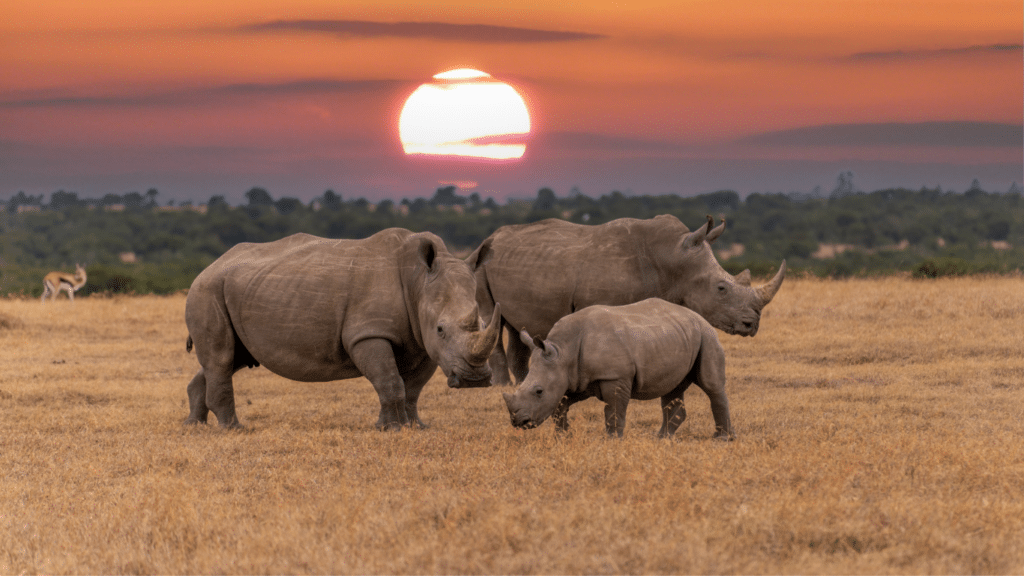
Article written by Kiley Price Originally published by Inside Climate News (Jun 21, 2024) It’s taking poachers longer to find rhinos now that populations have dropped, researchers say. In recent years, the South African government has touted the steady decline of rhino poaching in Kruger National Park, the largest wildlife sanctuary in the country and a habitat for many of these iconic horned mammals. But a new study, published Friday in Science Advances, suggests there may be more to this story. Using mathematical models, researchers found that the drop in poaching incidents could be due to an unfortunate fact: fewer rhinos. Low population density makes poaching harder because rhinos are simply more difficult to track down, the researchers found. But the demand for rhino horns on the illegal wildlife market remains persistently high, and so has overall poaching activity in Kruger, the research concludes, despite anti-poaching measures. Climate change, meanwhile, could cause further havoc. The poaching problem: White and black rhinos are among the largest land-based animals on Earth. Male white rhinos can measure 12 feet long and clock in at around 5,000 pounds (2,265kg, or 2.5 tons) as adults. But Kruger National Park covers 2 million hectares of land—about the same size as Israel. With only around 10,000 white rhinos left in all of South Africa, finding these hoofed ungulates in the park is harder than one might think. Poachers often spend days searching for a rhino to kill for its horn, according to the study’s lead author, Jasper Eikelboom. “There’s no way that poachers can find almost all the rhinos and kill them… because it’s becoming increasingly difficult to find them,” Eikelboom, an ecologist at Wageningen University in the Netherlands, told me. This is why poachers aren’t giving up: A rhino horn—made of keratin, similar to human fingernails—can sell for $40,000 (around £31,545) or more on the illegal black market. Most of the demand comes from Southeast Asia and China, where some people buy rhino horns as a status symbol or use them in traditional medicines. “Searching for a couple of days or a couple of weeks is still worth it because there’s an enormous profit margin,” Eikelboom said. Over the past few decades, the South African government has implemented a range of strategies to combat this illegal activity, from pairing ranger teams with dog patrol units to dehorning rhinos in Kruger. While South Africa has seen a modest decrease in rhino poaching incidents across Kruger in recent years, Eikelboom and his co-author, Herbert Prins, another ecologist at Wageningen University, wanted to determine if part of the reason for the decline was the smaller pool of animals to hunt. To do this, they used a model that calculated how far poachers moved on average from 2007 to 2022 to find a rhino in the context of the dwindling rhino densities. Their data reveals that poaching activity has proportionally remained consistent as rhino populations have dipped, despite the more stringent anti-poaching measures. “We have to look at the relative numbers, like how many rhinos are being killed on a percentage basis instead of an absolute number,” Eikelboom said. The research shows that anti-poaching efforts have not been strong enough to prevent population decline, the authors say, because illegal hunting activity should have gone down no matter what. “It’s a fantastic first step in trying to quantify the issue and then setting up hypotheses for others to test,” said Dave Balfour, an independent conservation ecologist who wasn’t involved in the study. Balfour chairs the African Rhino Specialist Group of the nonprofit International Union for Conservation of Nature’s African Species Survival Commission. “Conserving rhinos in an area the size of Kruger, which is huge, is ideal for every purpose except the security needs of the species, and that’s because it’s just extremely difficult to secure an area that size.” However, Balfour sees limitations in some of the paper’s assumptions. Its model follows the premise that many poachers are searching for rhinos without much information about where to look and that these “naive” poachers have to travel an average distance before stumbling upon one. “I’m not sure that there is such a thing as a naive poacher. Just about every poaching incident relies on some form of internal-collaboration corruption,” Balfour said. “So how naive these poachers are is highly questionable, and whether the rhinos are broadly, evenly spread through the landscape, as I read in the paper, is also questionable.” Risks from all sides: Rhino conservation is an exceedingly complex issue in South Africa. Many of the communities surrounding Kruger and other rhino habitats are impoverished, and unemployment rates in the country surpass 30 percent. Experts say these conditions are often the reason that individuals might risk dangerous wildlife encounters or a 25-year jail sentence to track down rhino horns. While poaching incidents have decreased in Kruger, they increased in the country overall last year, with 499 rhinos killed—51 more than in 2022, the BBC reports. Rising temperatures and unpredictable rainfall due to climate change could soon compound the problem, according to a study published in January. Rhino skin has very few sweat glands. That makes the animals particularly vulnerable to heat because they cannot cool off on a hot day by sweating like humans can. Instead, they must consume a lot of water or seek out shade to prevent heat stress. But the study found that climate change will likely push rhinos to the upper heat threshold that they can handle and require them to travel greater distances to access watering holes. “Wildlife, and even humans, have to actually travel farther and farther to find water, and that means that… the risk of poaching, the risk of habitat destruction, or other types of interactions, will start to increase,” study author Timothy Randhir, an ecologist at the University of Massachusetts Amherst, told me. He and the other authors say that the South African government could plant more trees and add watering holes to the landscape to help minimize these interactions and provide cooling spaces for the rhinos. However, the
Iceland grants whale hunting permit despite animal welfare concerns
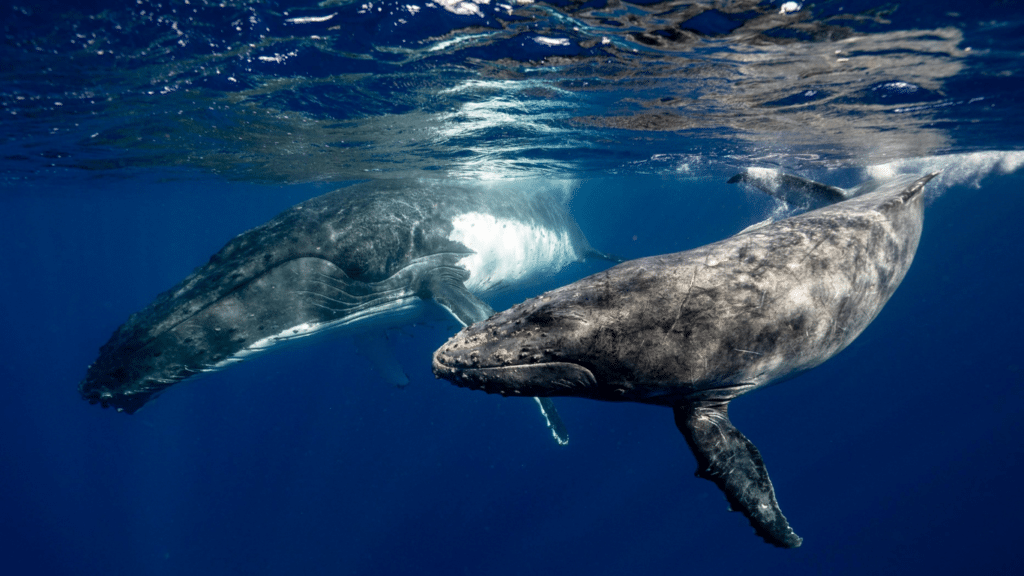
Article written by Jaroslav Lukiv Originally published by BBC news (Jun 11, 2024) Iceland’s government has issued a license to hunt whales to the country’s sole whaling company, a move condemned by animal welfare groups. The license for the 2024 hunting season allows the Hvalur company to kill 128 fin whales. The decision “is based on a precautionary approach and reflects the government’s increased emphasis on the sustainable use of resources,” the government said. The Humane Society International animal protection charity said the license was granted “despite clear evidence of immense animal suffering.” It said an independent report by the Icelandic Food and Veterinary Authority on whaling in 2022 “revealed some whales killed in Icelandic hunts had taken up to two hours to die, with 41% of whales suffering immensely before dying for an average of 11.5 minutes.” “Such suffering was deemed in contravention of the country’s Animal Welfare Act,” the charity said. Iceland, Norway and Japan are currently the only three nations that allow commercial whaling. In a statement on Tuesday, the Icelandic government said the license to Hvalur “is valid for the 2024 hunting season.” It said the company was now permitted to hunt “99 whales in the Greenland/West Iceland region and 29 whales in the East Iceland/Faroe Islands region, totaling 128 whales.” “This decision aligns with the Marine and Freshwater Research Institute’s 2017 advice and considers the conservative ecosystem factors of the International Whaling Commission,” the statement added. Last year, Hvalur, which is believed to have two whaling vessels, was allowed to hunt 161 fin whales. The whaling season in Iceland usually lasts from June to September, before it becomes too windy and dark. Most of the whale meat is exported to Japan. The practice has given rise to protests from conservation groups that consider fin whales, the second-longest marine mammal after the blue whale, to be vulnerable to extinction. In a recent survey, 51% of Icelanders said they were opposed to commercial whaling.
This infant rhino was orphaned when poachers slaughtered his mother.
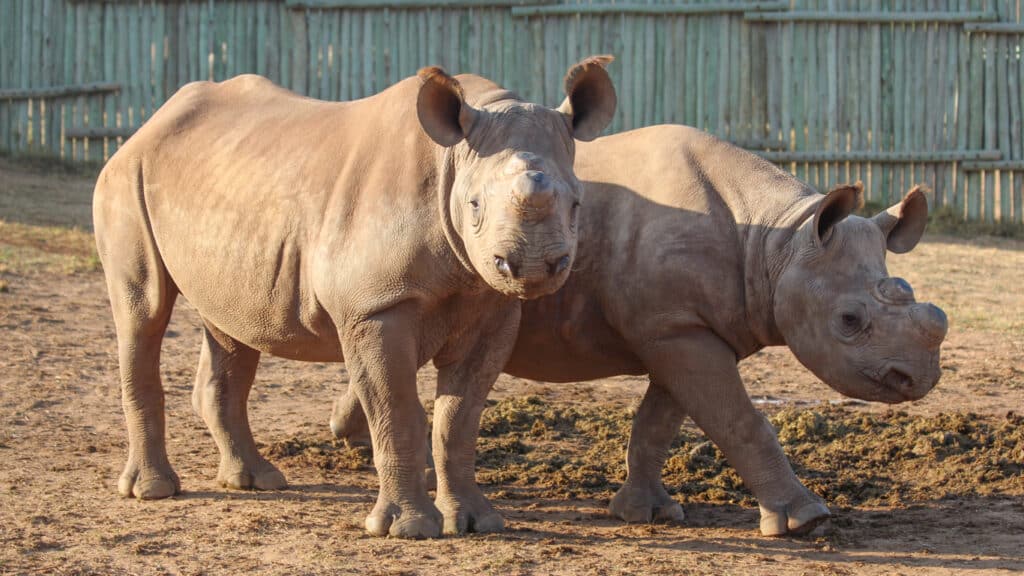
Odin, a critically endangered black rhino, was barely two years old when he witnessed his mother being brutally slaughtered by poachers in South Africa’s Kruger National Park. A few months later, fellow black rhino calf Marcules was abandoned by his own mother in the same park. Orphaned and bereft, both calves deteriorated fast. The outlook for the grieving infants was grim. To give them the best chance of survival, they were taken in by our expert rhino rehabilitation partner, Care for Wild Rhino Sanctuary, and housed together. Although black rhinos are solitary by nature, the two youngsters quickly bonded, and their fast friendship gave them the strength to begin to recover and thrive. How touching it was to see them eating together, taking mud baths, and resting side by side .…But now, Odin and Marcules face a new threat: Poachers, just like the ones who killed Odin’s mother. Credit: CFW Following their successful rehabilitation and remaining devoted to each other, Odin and Marcules were released together into an intensive protection zone (IPZ), where expert anti-poaching teams watch over them day and night – but as poachers become more and more advanced, our team needs a special tool in their arsenal. Poaching remains a serious threat in South Africa, where shockingly, at least one rhino is poached every day. Odin was rescued by our partner after his mother was killed by poachers. Credit: CFW We CANNOT let our guard down. We have a plan to protect these two critically endangered black rhinos from poachers. Can they count on your support today? Poachers are more sophisticated and relentless than ever, driven by greed and a lucrative illegal trade that leaves them hell-bent on destroying precious wild species. They do not care about the animals they torture, often leaving rhinos to suffer slow, agonizing deaths after their horns have been viciously hacked off. We are sad to tell you that these cold-blooded criminals even kill baby rhinos for their tiny stubs of horn. Odin and Marcules are among the last 6,100 black rhinos remaining worldwide. Credit: CFW Odin and Marcules are among the last of their kind – only 6,100 black rhinos remain worldwide. Their survival is crucial for their species, and we MUST protect them. Our plan combines traditional conservation methods with cutting-edge Artificial Intelligence (AI) technology to provide the highest level of protection for these rhinos. With your help, we can equip Odin and Marcules with state-of-the-art, AI-enabled tracking devices, specially designed to combat poaching. These devices are non-invasive, solar-powered and fit comfortably around a rhino’s foot. AI-powered tracking devices are true game changers. They include smart algorithms that continuously monitor an animal’s location and behavior, generating real-time alerts at the first sign of anxiety or abnormal activity. This allows anti-poaching units to respond within minutes, making the difference between life and death – and helps to nab criminals. Our partner works around the clock to rescue, rehabilitate and rewild rhinos orphaned by poaching, but they need your help. Credit: CFW Will you stand with us in our fight to protect critically endangered black rhinos in South Africa? Odin and Marcules are counting on YOUR support today. If we can raise $5,000 (£3,900), we can purchase two cutting-edge AI-powered tracking devices for Odin and Marcules. These devices will help safeguard their lives and secure a brighter future for their entire species. Please, donate RIGHT AWAY! Credit: CFW Despite their traumatic start, Odin and Marcules have found friendship, resilience and the protection of a team that will do everything in their power to keep them safe. But our team cannot do it alone. With your donation, we can ensure they have the best possible protection from cruel poachers. You can be a hero for Odin and Marcules today! Please, help us give these magnificent black rhinos the safe future they deserve by donating generously to Animal Survival International now.
Fire at famous Bangkok market kills 1,000 animals

Article written by Kelly Ng & Ryn Jirenuwat Originally published by BBC.com (Jun 11, 2024) Around 1,000 animals were killed in a fire in Bangkok’s famous open-air Chatuchak market early Tuesday, gutting nearly 100 shops. Birds, dogs, cats and snakes were burned to death in their cages in the pet zone, which also included rats, pythons and geckos. Authorities claimed that an electrical short circuit caused the blaze, but there have been no reports of fatalities or injuries. The incident prompted renewed calls for authorities to shut down the pet zone, which has long been criticised for the animals’ poor living conditions and has reportedly led to high rates of disease and death. With tens of thousands of shops crowding narrow lanes, Chatuchak is one of Southeast Asia’s biggest markets. It’s also the largest and best-known of Thailand’s weekend markets. It claims to draw nearly 200,000 tourists every Saturday and Sunday. But the portion of the market selling pets is open through the week. This accounts for about four of the 27 sections in the Chatuchak market and is arguably its most controversial trade. This zone of the market is subjected to regular inspections. “When I got here, everything was gone, all burned down,” says Amporn Wannasut, a shop owner who rushed to the market after being alerted to the fire. “I couldn’t do anything because it was dark inside as well. I couldn’t help them at all. They were all gone.” The 42-year-old sold turtles, pythons, and king snakes, among other reptiles, as pets. “I don’t even know what to do next. I think we have to start all over again, but I don’t know how,” she adds. “I froze some of the dead snakes so that we could calculate how much [money] we lost.” The fire damaged most of the 118 shops in the pet zone, which covers about 1,400 square metres (15,000 square feet), according to a preliminary inspection. When the BBC arrived at the market on Tuesday afternoon, shop owners were standing in line to register their requests for compensation. Some of them looked distraught and several were crying. There were also people taking selfies in front of the destroyed shops, even as police officers warned them not to go near the affected structures, which could collapse. Meecha, a shop owner, recounted her narrow escape to online news source Thaiger, saying that the cries of the animals in the loft above her store had woken her up. “Suddenly, thick smoke filled the air, making it impossible to breathe,” said Meecha, who climbed through a window to safety. Some shop owners do live in the market, but it’s unclear how many were there when the fire broke out. International wildlife charity, Animal Survival International (ASI), strongly condemned the trade of captive animals in Asia and in other parts of the world, where animals are kept caged in abysmal conditions, traded like commodities, and used for human entertainment. Many, it said, were illegally smuggled into the country. “We urge the Thai authorities to take a stand against the abhorrent cruelty to animals at so-called “pet shops” and markets across Asia, like Chatuchak market and countless others like it,” it said. “There is no place for this needless animal suffering.” ___________________________ Banner Caption: Flames can be seen ripping through Chatuchak market, located in Thailand’s capital city, in the early hours of Tuesday morning. Banner Credit: ViralPress
Elephants call each other by name, study finds
Article written by Agence France-Presse in Paris Originally published by The Guardian (Jun 10, 2024) Researchers used artificial intelligence algorithm to analyse calls by two herds of African savanna elephants in Kenya Elephants call out to each other using individual names that they invent for their fellow pachyderms, according to a new study. While dolphins and parrots have been observed addressing each other by mimicking the sound of others from their species, elephants are the first non-human animals known to use names that do not involve imitation, the researchers suggested. For the new study published on Monday, a team of international researchers used an artificial intelligence algorithm to analyse the calls of two wild herds of African savanna elephants in Kenya. The research “not only shows that elephants use specific vocalisations for each individual, but that they recognise and react to a call addressed to them while ignoring those addressed to others,” the lead study author, Michael Pardo, said. “This indicates that elephants can determine whether a call was intended for them just by hearing the call, even when out of its original context,” the behavioural ecologist at Colorado State University said in a statement. The researchers sifted through elephant “rumbles” recorded at Kenya’s Samburu national reserve and Amboseli national park between 1986 and 2022. Using a machine-learning algorithm, they identified 469 distinct calls, which included 101 elephants issuing a call and 117 receiving one. Elephants produce a variety of sounds, ranging from loud trumpeting to rumbles so low that a human ear cannot hear them. Names were not always used in the elephant calls. But when names were called out, it was often over a long distance, and when adults were addressing young elephants. Adults were also more likely to use names than calves, suggesting it could take years to learn this particular talent. The most common call was “a harmonically rich, low-frequency sound,” according to the study in the journal Nature Ecology & Evolution. When the researchers played a recording of an elephant of their friend or family member calling out their name, the animal responded positively and “energetically,” the researchers said. But the same elephant was far less enthusiastic when playing the names of others. Unlike those mischievous parrots and dolphins, the elephants did not merely imitate the call of the intended recipient. This suggests that elephants and humans are the only two animals known to invent “arbitrary” names for each other, rather than merely copying the sound of the recipient. “The evidence provided here that elephants use non-imitative sounds to label others indicates they have the ability for abstract thought,” senior study author George Wittemyer said. The researchers called for more research into the evolutionary origin of this talent for name-calling, given that the ancestors of elephants diverged from primates and cetaceans about 90 million years ago. Despite our differences, humans and elephants share many similarities, such as “extended family units with rich social lives, underpinned by highly developed brains,” the CEO of Save the Elephants, Frank Pope, said. “That elephants use names for one another is likely only the start of the revelations to come.”
6 arrested in scheme to smuggle thousands of pounds of bird intestines
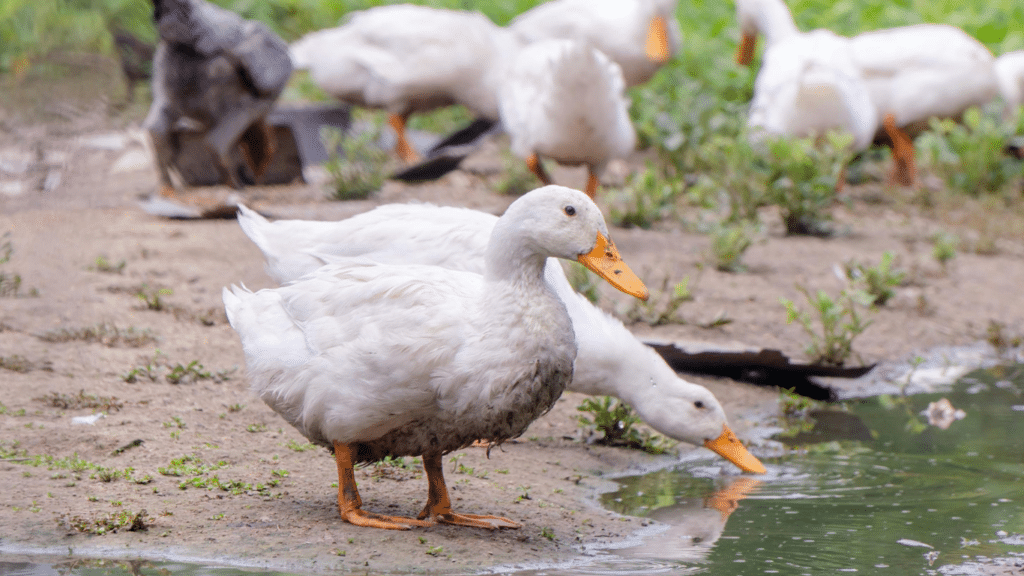
Article written by ABC.com Team Originally published by msn.com (Mar 21, 2024) Six people were arrested Tuesday in connection with a scheme to smuggle thousands of pounds of raw goose and duck intestines from China, through Los Angeles, and ultimately to New York City for sale to restaurants and consumers. Five of the defendants reside in Brooklyn and one in Queens, according to a criminal complaint. They are charged with importing and selling illegal merchandise from China. According to the criminal complaint, shipments of the illegal products were falsely labeled. On August 19, 2022, a shipping container that arrived in Long Beach, California, from China falsely stated the container held “1,966 cartons of pet grooming tool pet nail clippers.” Federal law prohibits the importation of raw goose and duck intestines from China and duck-blood products from any unapproved establishments in China. Federal prosecutors said the products seized in the investigation contained both. In the August shipment, investigators said they observed 79 cartons containing approximately 1,800 pounds of illegal goose intestines and 960 pounds of illegal duck intestines. In another shipment, the illegal products were concealed under packaged rattlesnakes, the complaint says. “Each defendant knew of the illegal nature of their conduct,” federal prosecutors said. According to them, USDA authorities had previously warned five of the defendants. Investigators believe there are additional shipments of illegal products that have gone undiscovered. “[S]hipment records for the companies involved in the shipments of illegal merchandise described above indicate a broader conspiracy than just the shipments that have been identified to date,” the complaint said. The six defendants were expected to make an initial appearance in Brooklyn federal court later Tuesday. It was not immediately clear whether they had lawyers.
Meet Renzo, the pangolin stuffed into a backpack and left to die.

Wrapped in wire and stuffed into a backpack, Renzo could barely breathe. He could not uncurl his little body or move even an inch. It is beyond miraculous that this young pangolin survived – saved without a moment to spare from the ghastly illegal wildlife trade in South Africa. Today, Renzo is making a slow recovery in the care of our partner, Umoya Khulula Wildlife Centre in South Africa – where, without kind-hearted individuals like you, Friend, he would stand NO chance of surviving his terrifying and deeply traumatizing ordeal. In seven years of saving animals, Umoya Khulula has NEVER seen such a massive pangolin poaching epidemic. The need for action is urgent! It is not only Renzo who needs your help. Countless more pangolins just like him – including newborn infants and wounded mothers – are taken in by our partner every year after successful sting operations. It is because of the success of anti-poaching operations that more pangolins are being rescued from the hands of cruel poachers, who snatch them from the wild for their meat, skin and scales. Once they are saved, they need YOUR help to recover. Credit: Umoya Khulula At one rehabilitation facility, the influx of rescued pangolins has increased from 30 to 100 every year. These rescued pangolins provide hope for the survival of the entire species – IF we can do everything in our power to rehabilitate them. Together with our partner, we are on the frontlines of the fight to help save pangolins. Every month, our team rescues and rehabilitates scores of sick and injured animals, including severely compromised pangolins, all confiscated from the illegal trade. Renzo, stuffed into a backpack and wrapped with wire, was saved in the nick of time from the brutal illegal wildlife trade in South Africa. Credit: Umoya Khulula We are sorry to tell you that in many instances, pangolins are hacked with shovels and machetes by poachers, stuffed into sacks, hidden in car engines and starved for weeks on end. We are helping to end this cruelty, but we NEED your support to continue. Credit: Umoya Khulula A mobile pangolin clinic will be a lifeline for these brave survivors. Can they count on your donation today? Our partner recently acquired a caravan trailer, which we urgently need to transform into a fully-equipped mobile clinic to respond swiftly to pangolins in peril. This clinic will dramatically shorten emergency response times, ensuring vulnerable pangolins in critical condition receive immediate, life-saving treatment following their rescue. It will also be a crucial asset during their soft release, giving them the best chance at a safe, successful rewilding. Pangolins are easily stressed and suffer from travel sickness, making this mobile clinic their best hope of successful recovery after the trauma they have experienced. Please, will you support this vital project? Credit: Umoya Khulula A pangolin mobile clinic will deliver IMMEDIATE, life-saving medical care the moment these gentle creatures are rescued. It will also ensure a smooth, stress-free release, transforming the future for countless pangolins. Credit: Umoya Khulula Once the mobile clinic is fully equipped, our team can respond quickly to save and treat pangolins following successful undercover sting operations. Additionally, during the soft-release process, pangolin caregivers will be able to stay on-site in reserves, ensuring rescued pangolins’ smooth transition back into the wild. Releasing rehabilitated pangolins into fenced, protected and patrolled wild spaces is vital for their survival. During the soft-release process, pangolin caregivers closely monitor their progress through daily walks, medical and behavioral check-ups and weight gain observations. With pangolins’ delicate health in mind, having the necessary equipment and supplies on-site is ESSENTIAL for their continued wellbeing. We are in a race against time to save every pangolin life we can! If we can raise $16,000 (£12,500), we can provide a critically needed mobile clinic for pangolins in South Africa. Your support means everything in our fight for these fragile and important animals. Please, donate RIGHT NOW! Credit: Umoya Khulula Your donation is urgently needed to cover all internal and external renovations to the caravan, including a dedicated pangolin and carer room, off-road tyres for fast response, solar power for reliable, continuous operation, and air conditioning to regulate pangolins’ body temperature, a crucial step in ensuring their survival. If we raise enough, we will also include a portable X-ray machine and a fully stocked pangolin medical kit to ensure IMMEDIATE care. Every moment counts – please donate now and help us save pangolin lives. Please donate as generously as you possibly can to Animal Survival International today and help us continue our critical work protecting vulnerable, desperate pangolins in South Africa.
The tragic elderly elephant forced to work for 60 YEARS.
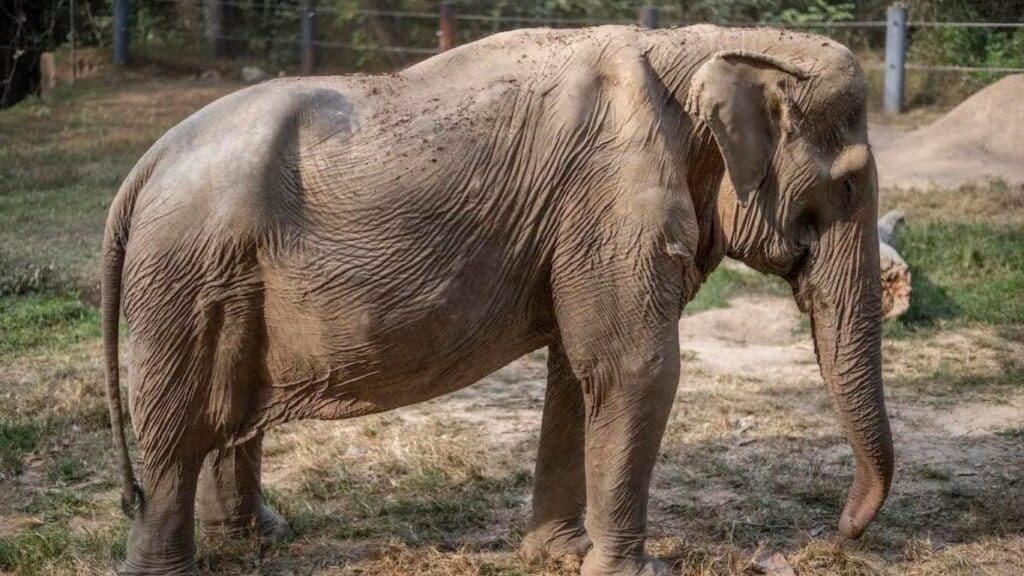
With her disfigured spine and decades-old scars, Pai Lin’s 60 years of hard labor are etched into every inch of her battered body. Asian elephant Pai Lin, left, has a deformed spine. A fellow WFFT resident, Thung Ngern, right, displays a healthy dome-shaped spine. Spinal deformities in elephants can be caused by malnutrition or heavy labor. Credit: WFFT Pai Lin, 75, has endured more agonizing pain and abuse in her long life than it is possible to fathom. For decades, she was used as a working elephant, probably in the commercial logging industry before it was banned in 1989. After logging was banned, this tortured, tragic animal was likely used to haul as many as six tourists at a time on her back in a heavy wooden seat that would have ground relentlessly into her body. At some point during her horrific 60-year “working career,” she was forced to beg on the streets. Her deformed spine speaks volumes about her life of abject cruelty. This helpless animal, completely reliant on cruel humans, almost certainly lived in daily agony, but no one cared. She was making money for her owners, and to them, that was all that mattered. For illustrative purposes only. Credit: Jack Board When Pai Lin was about 60 years old, her owners finally declared her “useless,” complaining that because she was in constant pain, she was “too slow” to work. Our partner, Wildlife Friends Foundation Thailand (WFFT), stepped in and now Pai Lin lives at its sanctuary – Asia’s first completely chain-free elephant haven. The forested land around the rescue center gives the elephants a chance to roam in near-natural surroundings and to socialize with other elephants. Here, they are finally given the chance to find peace and friendship. Pai Lin is now 75, the oldest elephant our partner has rescued. She prefers to spend her days alone, quietly enjoying her hard-won freedom in the protected forest she now calls home. Most of the rescued elephants at WFFT have experienced decades of abuse in Thailand, where cruelty towards wild animals is sickeningly common. Pai Lin, in particular, touched our hearts. This contraption is called a “howdah.” People will sit in them and force these poor elephants to carry them and other heavy objects for hours on end. Credit: WFFT/Amy Jones/Moving Animals The vast majority of our partner’s 23 rescued elephants were exploited in trekking camps and/or for logging. Others were forced to perform tricks or were used for street begging. It is hard to comprehend the trauma they have experienced in their lives. Most of these animals arrive covered in lice and wounds, severely traumatized and requiring intensive treatment and care – not to mention up to 660 pounds (300 kilograms) of food every day per elephant. To feed their 23 elephants, WFFT needs over 15,000 pounds (almost 7,000kg) of food every day, or 227,7 tons every month. Our partner is completely dependent on donations to provide their rescued elephants with the daily care they need, and desperately wants to give the animals the very best nutrition, treatment, enrichment and care it can. We want to help. For illustrative purposes only. This is an example of some of the abuse Pai Lin could have endured for 60 years. Credit: Aaron Gekoski/Lady Thinker Captive elephants in Thailand endure relentless, excruciating labor until they collapse in agony and exhaustion, or simply drop dead. The survivors are hoping for your compassion today. We really want to give Pai Lin and her fellow rescued elephant friends every bit of happiness we can – and for elephants, that starts with a delicious and varied diet of fresh fruit and vegetables, banana trees and leaves, and special, nutrient-rich pellets. Many elephants do not survive Thailand’s brutal tourist trade. For the amusement of tourists, elephants are chained, starved and beaten, forced to work through searing pain in blistering heat, day after dismal day. Above and below, you will see some photographs of elephants like Pai Lin, who undergo daily abuse. Unfortunately, in Thailand, there are currently no laws to prevent this abuse and mistreatment, which is why our partner works tirelessly to rescue, treat and care for the survivors. Pai Lin endured these cruel and exhausting conditions for 60 years. But no more. After lives of unending suffering, will you help give Pai Lin and her friends this small kindness, which will make a huge difference in their lives? Pai Lin in her new home. Credit: WFFT For every $300 (roughly £240) we raise, we can provide a month’s worth of heavenly food and treats for an elephant at WFFT. If we raise $3,000 (roughly £2,400), we can provide 99 tons of food, feeding 10 elephants for a month. Pai Lin’s particular favorites are jackfruit and papaya, and we really want to give her these delicious treats. Pai Lin may only have a few years left, and after six decades of sheer hell, we want to make her last years the best of her life. Can she count on you for that kindness today? Please, donate as much as you can now, and help us give this brave survivor the golden years she deserves.
This eight-week-old wildebeest orphan really needs you!

When wildebeest calf Wanda was just two months old, she was found lying beside the lifeless, mutilated body of her mother, who was tragically killed by a cruel wire snare in South Africa. Credit: ASI/Taryn-Slabbert Heartbreakingly, orphan Wanda stayed faithfully by her mother’s side for days, repeatedly headbutting her in an attempt to suckle without realizing that she was already dead. Wanda and her mother are among the most recent victims of brutal, noose-like traps, which are ruthlessly laid by wildlife traffickers and bushmeat poachers across Africa to hunt and kill precious wild animals. It was too late for Wanda’s mother, but with your help today, we can give her calf the second chance she deserves. Credit: ASI/Taryn-Slabbert Please help us support the rehabilitation of orphaned wildebeest calf Wanda. Our partner, the Umoya Khulula Wildlife Center in Limpopo, South Africa, specializes in rehabilitating orphaned indigenous wildlife and is ready to nurse little Wanda back to health. But they cannot do it without your support today. Wanda needs intensive care and a special milk formula to ensure her healthy growth and well-being, but the formula is costly and hard to find in this area. Each day, Wanda consumes 1.3 gallons (five liters) of this vital milk – a cost that quickly adds up. Because she was separated from her mother at such a young age, this little fighter will need milk and probiotic additives for the next six months to receive the nourishment she needs to grow, get stronger and eventually be released back into the wild. For illustration purposes only. Wanda never got the chance to be cared for and nourished by her mother during her critical developmental months. A wildebeest calf suckles from its mother for at least four months and females usually remain in the same herds as their mothers for life. Unfortunately, Wanda does not have this chance and is relying on animal lovers like you to help care for her in this critical stage of her development. If we can raise $3,000 (£2,400), we can purchase enough special milk formula to feed Wanda for the next six months, so she will be ready to join her new herd. Credit: ASI/Taryn-Slabbert Wildebeest are sociable, playful animals that rely on one another for survival. After six months of rehabilitation, Wanda will be integrated into a new herd and released into a protected, predator-free nature reserve where she can live out the rest of her days in peace. Can Wanda count on you today for her second chance? Umoya Khulula is being inundated with orphaned wild animals. Should we exceed our fundraising goal, your generosity will benefit other young animals in our partner’s care – animals like Bagheera, a two-week-old large-spotted genet who was orphaned after falling from his nest during the terrible heatwaves ravaging Limpopo. Credit: ASI/Taryn-Slabbert The resilience of brave souls like Wanda and Bagheera warms our hearts. But to continue facing this cruel world with such courage, they need you. Please donate as generously as you can to Animal Survival International today. Your donation will help us give sweet Wanda and other orphaned wild animals like her the critical care they need to survive so they can be released back into the wild where they belong.
Rising rhino poaching in South Africa

Article written by Keith Somerville Originally published by The Ecologist (Apr 24, 2024) Shock and disappointment at rise in rhino poaching in South Africa. Poaching in South Africa surged in 2023, with a staggering 499 rhinos killed – 51 more than in 2022. This disappointing figure is a chilling reminder that the South African government and wildlife authorities have not got poaching under control. Barbara Creecy, the minister of forestry, fisheries and the environment (DFFE), said when releasing the annual poaching figures that poaching had dropped in Kruger National Park, previously the focal point of rhino crime. However, she added: “The pressure again has been felt in the KwaZulu-Natal (KZN) province, with Hluhluwe-iMfolozi Park facing the brunt of poaching cases.” A total of 307 of the 499 deaths nationally took place there. Creecy said the KZN figure for 2023 was the “highest poaching loss within this province” recorded for any one year. In Kruger NP, 78 rhino were killed in 2023, compared with 124 in 2022—a decrease due to improved security, careful vetting of staff in the park to weed out corrupt rangers and other staff, and the dehorning of many of the rhinos, but also because there is a much smaller rhino population due to over a decade of heavy poaching. Gangs White rhino numbers in Kruger fell from 10,621 in 2011 to 1,988 at the end of 2022 and there is now likely to have been a further fall in 2023 when natural mortality is added to the poaching figures and balanced against births: black rhino numbers are down from 415 in 2013 to 208 at the end of 2022. KZN became the main focus for poaching in 2023, with 307 poached in Hluhluwe-iMfolozi alone, compared with 93 in 2020 and a jump to 244 in 2022 (228 on reserves and 16 privately-owned). Pelham Jones of the private Rhino Owners’ Association predicted a level of 282 in 2023 in the province’s reserves (especially Hluhluwe-iMfolozi), a prediction that turned out to be too optimistic, with 307 rhino killed in 2023 in Hluhluwe-iMfolozi alone and 325 across the whole province according to DFEE figures. KZN and Hluhluwe-iMfolozi have a number of problems that make poaching easier, now that security has been tightened in Kruger. Cedric Coetzee, head of rhino protection at Hluhluwe-iMfolozi in KZN, told me when I visited him there in 2016 that while it might take poachers days to track a rhino in Kruger, the high density of animals in the KwaZulu-Natal reserves meant they might only spend two to three hours there before killing a rhino and escaping with its horns. The upsurge in poaching in KZN demonstrates how the accessibility of rhino in reserves like Hluhluwe-iMfolozi exposes them to poaching as gangs move in. KZN is a province beset by corruption, and both political and criminal violence, with violent factional struggles within the governing African National Congress Party. Bribes Corruption in provincial government, law enforcement, and the judiciary is rife. The major example of this has been the investigation and suspension of KZN Regional Court President Eric Nzimande following accusations of corrupt payments, racketeering and receiving bribes to appoint unsuitable candidates as attorneys in cases. The Save the Wild NGO had campaigned for Nzimande’s suspension, believing him to have been key in obstructive cases against suspected rhino poaching kingpins—kingpins being the term used to describe the leaders of highly organised poaching syndicates, which are often involved in a wide range of violent criminal activities. Nzimande was charged with offences related to corruption and is awaiting trial. Implicated in his crimes is Z.W. Ngwenya, who represented the suspected rhino poaching kingpin Dumisani Gwala in his court appearances. Gwala was arrested in 2014 on rhino poaching charges. Over a period of nine years, there were 30 postponements of his trial after a series of objections by his defence team. The man’s poaching case was dismissed by a magistrate in July 2023. He was found not guilty due to the prosecutor’s evidence being deemed inadmissible. However, he did receive a suspended sentence and a small fine for resisting arrest. Toxic The corruption, incompetence, and often political interference in cases mean that those at the top of the poaching syndicates escape justice or spend years on bail, during which time they can continue directing the poachers on the ground. With 325 rhinos poached for their horns in KZN 2023, KZN recorded only 49 arrests and 13 seizures of illegal weapons, and these were low-level poachers, not gang leaders. Work has been done to end corruption within Kruger staff and to track payments to corrupt rangers and poachers (with the Hawks and the international accountancy and management company KPMG having some success in this field), with more integrity testing of employees and those applying for park jobs. Ending corruption within Kruger, Hluhluwe-iMfolozi and other parks or reserves is crucial to reducing poaching in the long-term, as 40–70 percent of Kruger’s anti-poaching and law enforcement staff are thought “to be aiding poaching networks or involved in corrupt or criminal activities in some way, including high levels of fuel theft”. Hluhluwe-iMfolozi is riven with corruption, incompetence and sheer fatigue of those fighting poaching. The criminal syndicates involved in poaching often have close political connections with corrupt police, judges, and members of the governing ANC. The diverse links with corrupt individuals in key state institutions has enhanced their ability to recruit national park and provincial reserve employees and use them to aid poaching operations. As Julian Rademeyer, the investigative journalist and rhino trade expert, acutely observed: “Toxic politics, deep-seated inequality, corruption and embedded organised criminality have profoundly affected the park and surrounding communities. Crime and corruption in the Kruger National Park should not be viewed in isolation without taking the impact of organized crime in Mpumalanga, including kidnappings, cash-in-transit heists, ATM bombings, illegal mining, extortion and corruption, into account.” Incorruptible Police and judicial corruption and the role of provincial ANC postholders as godfathers of a diversity of crimes makes this criminal nut a very hard one to crack.
Namibia rhino poaching on rise in first quarter of 2024

Original article written by Vitalio Angula Originally published by VOA News (Apr 17, 2024) Environmentalists in Namibia have accused local wildlife officials of hiding the real extent of rhino poaching in the Etosha National Park, which holds the highest concentration of black rhinos in the world. The Ministry of Environment recently acknowledged that rhino killings at the park quadrupled during the first quarter of 2024. Namibian police apprehended two suspects Sunday for the killing of an adult female black rhino and a medium-sized male calf black rhino at the park’s waterhole earlier that day. The two were found in possession of four rhino horns with an estimated value of $55,000. The park has seen a steep increase in rhino poaching, with 28 rhinos killed during the first three months of the year, compared to seven in 2023. Environmental activist and journalist John Grobler attributed the increase, in part, to a three-week mourning period for the passing of Namibia’s president, which led to a security lapse by law-enforcement officials. But Grobler suspects officials are still not disclosing the full extent of the rhino poaching. “They still refuse to show us the rhino horn stockpile to show if everything is there, if all the ivory is there,” he said. “When you ask them things like this, they tend to sit on their hands for as long as they can before they make any kind of disclosure. My fear is that it could actually be worse than 28 rhinos, it could be more than that.” A large number of rhino carcasses were discovered during the annual dehorning exercise undertaken in March. The media is usually invited but were not this year, further fueling concern that police did not want the public to know the real extent of rhino poaching in the area. Police spokesperson Kauna Shikwambi said he could not verify or deny the extent of rhino poaching at the Etosha National Park and referred all queries to the newly appointed police commander for Etosha, Theopolina Nashikaku. Nashikaku also refused to comment on the extent of poaching in the park. “All I know is that the Minister of Environment, Forestry and Tourism, through the spokesperson of his ministry, has shed light on the number of rhinos discovered during the dehorning exercise,” Nashikaku said. “The ministry has enough scientists with the capacity to establish how long the animal has been dead. Perhaps for now let me just concentrate on my mandate.” Rhinos are critically endangered, and Namibian authorities have previously said that disclosing the number of rhinos in the national park only puts them in harm’s way. That idea is rebuffed by some conservationists, who say that organized poachers, because of their high level of sophistication, already know the rhino population, estimated at 6,000 black rhinos and 15,000 white rhinos globally. A spokesperson for the environment ministry, Romeo Muyunda, said the plight of Namibia’s rhino population is a priority. “Based on the urgency of this situation, the ministry is undertaking an assessment to establish the full extent of this problem and, also based on that urgency, we have called for an urgent meeting with the security cluster which includes the police and NDF [Namibian Defence Force] to make sure that we dissect the matter and come up with possible interventions,” Muyunda said. In addition to the arrest of two men Sunday, Namibian police are reaching out to communities for assistance in identifying and apprehending more suspected rhino poachers.
Ringleader of global monkey torture network, ‘The Torture King’, was charged

Article written by Joel Gunter and Rebecca Henschke Originally published by BBC News (Apr 5, 2024) A ringleader in a global monkey torture network exposed by the BBC has been charged by US federal prosecutors. Michael Macartney, 50, who went by the alias “Torture King”, was charged in Virginia with conspiracy to create and distribute animal-crushing videos. Mr Macartney was one of three key distributors identified by the BBC Eye team during a year-long investigation into sadistic monkey torture groups. Two women have also been charged in the UK following the investigation. Warning: This article contains disturbing content Mr Macartney, a former motorcycle gang member who previously spent time in prison, ran several chat groups for monkey torture enthusiasts from around the world on the encrypted messaging app Telegram. The groups were used to share ideas for custom-made torture videos, such as setting live monkeys on fire, injuring them with tools and even putting one in a blender. The ideas were then sent, along with payments, to video-makers in Indonesia who carried them out, sometimes killing the baby long-tailed macaque monkeys in the process. According to charging documents, Mr Macartney, who lives in the US state of Virginia, is accused by prosecutors of collecting funds from his chat groups and distributing videos depicting the “torture, murder, and sexually sadistic mutilation of animals, specifically juvenile and adult monkeys”. Mr Macartney has cooperated with investigators from the Department of Homeland Security and agreed to plead guilty to conspiracy charges. He will formally make a plea later this month and is facing up to five years in prison. Speaking to the BBC Eye investigations team last year, Mr Macartney confessed to his role in the torture network, describing himself as the “king of this demented world”. “I was the man,” he said. “You want to see monkeys get messed up? I could bring it to you.” Mr Macartney also described the moment he joined his first Telegram monkey group. “They had a poll set up,” he said. “Do you want a hammer involved? Do you want pliers involved? Do you want a screwdriver?” The resulting videos were “the most grotesque thing I have ever seen”, Mr Macartney said, and yet he went on to become a key player in the monkey torture groups. The BBC understands that more charges are expected to follow soon for other key players in the monkey torture network. At least 20 people were placed under investigation last year globally, following the BBC’s investigation. Three participants have already been charged in the US, including Mr Macartney. Two torturers were arrested and jailed in Indonesia, and three women have been arrested in the UK, two of whom have been charged. Holly LeGresley, 37, of Kidderminster and Adriana Orme, 55, of Upton-upon-Severn, were charged last month with publishing an obscene article and causing unnecessary suffering to a protected animal. Ms LeGresley and Ms Orme were high-profile members of the online torture groups. Ms LeGresley, who went by the screen name “The Immolator”, was a moderator in a group run by Mr Macartney and was involved in commissioning some of the most extreme videos. In the US, two others have been charged with the same counts as Mr Macartney. David Christopher Noble, 48, a former US Air Force officer who was previously court-martialed and dismissed from the military, and Nicole Devilbiss, 35. They are both facing up to five years in prison.
Scotland’s snare ban “an important day for animal welfare”

Article written by Dave Pickering Originally published by North Edinburgh News (Mar 22, 2024) Wildlife Management and Muirburn Bill passed Scotland’s wildlife will benefit from increased protection thanks to a new law passed by the Scottish Parliament yesterday. The Wildlife Management and Muirburn Bill includes a range of measures that will help tackle raptor persecution, and ensure that the management of species on grouse moors is done so sustainably and with animal welfare as a priority. The Bill: bans the practice of snaring in Scotland bans the use of glue traps to catch rodents gives greater powers to Scottish SPCA inspectors to tackle wildlife crime introduces a new licensing framework for grouse moors strictly regulates the use of muirburn, the controlled burning of vegetation on peatland Agriculture Minister Jim Fairlie said: “This Bill is a significant step in our wider journey to ensure Scotland’s environment is managed sustainably. “People who live and work on our land have shown that it’s possible to manage wildlife. They have shown that muirburn, which is a key approach to helping manage wildfires, can be undertaken responsibly and in a way that protects biodiversity. “We have struck the right balance between improving animal welfare, supporting rural businesses and reinforcing a zero-tolerance approach to raptor persecution and wildlife crime.” Cats Protection says Scotland’s ban on snares is a turning point for animal welfare and will prevent cruel and horrific deaths being inflicted on pets and wildlife. The UK’s largest cat charity has been campaigning for an outright ban on snares throughout the UK and says it is delighted Scotland is taking a step forward to protect cats and other animals from unnecessary suffering with the Wildlife Management and Muirburn Bill. Alice Palombo, Advocacy and Government Relations Officer for Scotland at Cats Protection, said: “The introduction of this law is an important day for animal welfare in Scotland, and will put an end to the cruel and horrific deaths that snares inflict on pets and wildlife. “Whether it’s domestic pet cats, feral or community cats, or any other animal captured in them, snares cause incredibly distressing injuries, often leading to animals suffering long, painful deaths. “Those animals which do manage to free themselves, or are found and released, cannot be considered lucky as they will most likely suffer life-changing injuries requiring extensive veterinary treatment. “We are delighted that Scotland has introduced an outright ban on snares, recognising the indiscriminate suffering they cause. These outdated, inhumane and cruel traps have no place in a modern, caring society.” The Bill was also welcomed by cat owner Marion Brownlie, of Aberdeenshire, whose pet cat Harry was found collapsed in a field with horrific injuries last year. Harry’s injuries were so appalling that she at first believed he had been “cut in two” when he was discovered close to his home in St Cyrus. It is thought the ginger-and-white moggy may have been trapped in the snare for five agonising days before he was able to drag himself to safety. Having confirmed his injuries were caused by a snare, vets carried out surgery to repair a deep wound running from hip to hip across Harry’s abdomen. He was later able to return home but needs to be confined to a cage for rest during his recovery. Marion said: “Harry had been missing for five days when we found him collapsed in a field and it was like something from a nightmare – I was afraid to pick him up as it looked as though he’d been cut in two. “He must have been in agony, but somehow he was still alive and after lots of veterinary treatment and rest he pulled through. “No animal deserves the pain and suffering that these inhumane devices inflict, and I’m incredibly relieved that they have finally been banned.” Major blow to the grouse shooting industry as Scottish Parliament passes reform Bill Grouse moor management is to be regulated for the first time as snaring animals is also banned The Scottish Parliament has now passed a Bill to license grouse shooting, to tackle illegal wildlife persecution on grouse moors. The killing of Scotland’s birds of prey has been associated with grouse moor management for decades and campaigners hope that this legislation will tackle the ‘national disgrace’ of raptor persecution. The passing of the Wildlife Management and Muirburn (Scotland) Bill (by 85 votes in favour to 30 votes against) means that if a wildlife crime takes place on a grouse moor it could lose its licence to operate. It also means that heather burning (known as muirburn) will also be licensed and restricted on peatlands which are considered a vital carbon resource. Meanwhile environmental and animal welfare campaigners are celebrating the Bill’s banning of snares: the animal traps which they deem as ‘cruel and indiscriminate’. Responding to the grouse moor reform bill, Max Wiszniewski, the Campaign Manager for REVIVE, the coalition for grouse moor reform said: “This Bill marks a significant intervention into land management practices in Scotland and finally regulates a controversial industry that’s responsible for environmental destruction, that restricts economic opportunities for rural communities and that kills hundreds of thousands of animals so a few more grouse can be shot for sport. “While it doesn’t go far enough to end the ‘killing to kill’ on grouse moors, banning snares – the cruel and indiscriminate traps that are common on grouse moors – is an important win for animal welfare against an industry that was desperate to keep them. “The extra protection of peatlands is welcome but with three quarters of Scots against moorland burning for grouse shooting, the Parliament still has some catching up to do. “Nevertheless, this legislation will hopefully go some way to tackling the persecution of Scotland’s birds of prey, something that our first First Minister Donald Dewar called a ‘national disgrace’ in 1998.”
Endangered pangolins need dedicated intensive care unit to survive.
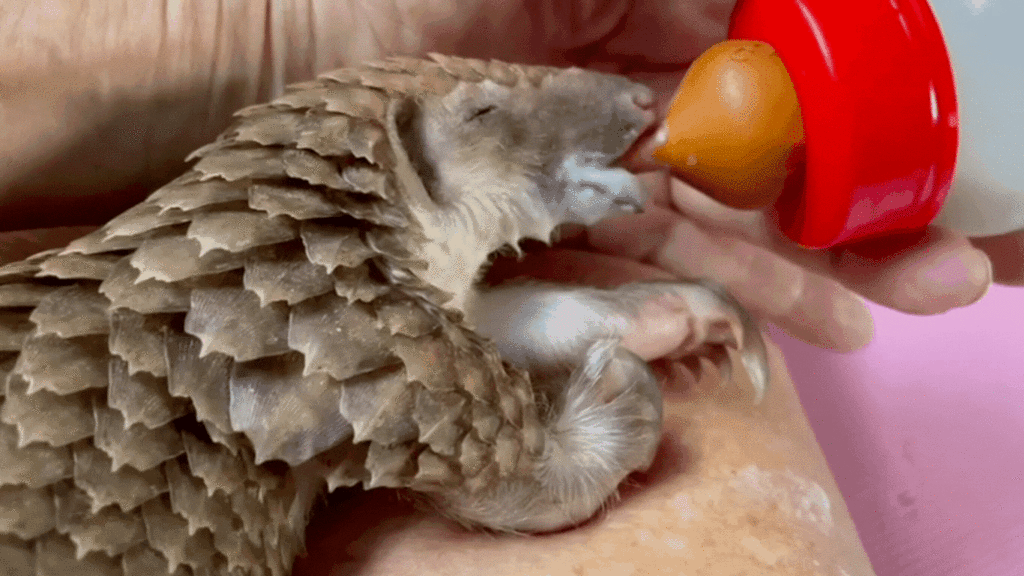
Nigeria is a perilous country that even humans are scared of. Can you imagine just how terrifying it must be for a pangolin? Small, shy, and prized for their body parts, pangolins are deliberately and mercilessly hunted in a country teeming with wildlife criminals, leaving them with few spaces to hide. A dedicated safe space for these endangered creatures and their tiny pups is critical to their protection in Nigeria. But we really need your help to build it. With your support today, we will set up the first dedicated pangolin intensive care unit (ICU) and nursery in Nigeria. Can rescued, newborn pangopups count on you right now? Nigeria is listed as a “Country of Particular Concern” by the United States’ Task Force on Wildlife Trafficking, a designation that officially recognizes the high-level corruption that is fueling the abominable illegal trade. Safe spaces for wild animals here are few and far between. It is not their fault they are born in a violent country where all manner of cruel and unusual crimes are able to flourish. It is up to us as concerned custodians of our planet’s wildlife to do something to help protect pangolins. Credit: Pangolins International We MUST get pangolins out of the hands of blood-thirsty criminal gangs. Building the country’s first-ever dedicated pangolin nursery is CRITICAL to their survival – and YOU can help make it happen. In the chaotic capital of Lagos, there is a desperate need for a safe, peaceful clinic in which pangolins and their babies can recover after being rescued from cruel poachers and death-filled meat markets. Our partner, Greenfingers Wildlife Conservation Initiative (GWCI), works on the ground to save pangolins from the ruthless poaching industry. Many of GWCI’s rescues are babies, as pangopups are considered “worthless” to poachers and are usually discarded as if they were nothing more than rubbish. Construction has stalled on a critical pangolin nursery and ICU in Lagos due to lack of funds. Credit: GWCI The ICU and nursery will be fully equipped with everything needed for dedicated, specialized critical care of these fragile pups, as well as all adults found alive. Pangopups need a safe, sterile, and quiet place to recover, one that is separate from other species. This prevents the spread of disease and is particularly essential in their early stages of life when their underdeveloped immune systems are highly susceptible to infection. To complicate things further, they also need a specialized milk formula to survive. Completing the ICU and nursery will give them the best possible chance of survival on their difficult road to recovery. Once fully healed, our partner releases rehabilitated pangolins onto privately owned land that is monitored and protected day and night by a robust anti-poaching team. Established by Animal Survival International and run by our dedicated partner, this new clinic in Lagos will be completely dedicated to emergency care, treatment, rehabilitation and long-term shelter for pangolins in Lagos. It will be a place where they can finally be free and safe while they recover from the horrors they have endured at the hands of poachers. Every minute is CRUCIAL when rescuing animals in critical condition and can make the difference between life and death. Many pangolins rescued by GCWI are in critical condition: dehydrated, malnourished, and in severe shock. These fragile animals are notoriously difficult to treat and keep alive, particularly when they have been mutilated by cruel snares and traps. To make matters worse, in many life-threatening emergencies, so much valuable time is lost navigating through hours of gridlocked Lagos traffic; and tragically, the time lost can spell death for these helpless creatures. The pangolin ICU and nursery will be built in Lagos, close to pangolin rescue hotspots, cutting down on travel time and dramatically increasing their chances of survival. Credit: Pangolins International The project is already underway but has stalled due to lack of funds. Please help us complete this VITAL hospital and safe haven for pangolins. Construction of the ICU and nursery has begun, but our partner is out of funds. If we can raise $20,000 (roughly £16,000), we can complete the building and furnish it with the vital veterinary supplies and equipment we need to help save pangolin lives and pull them back from the brink of extinction. The longer it takes to complete the project, the more animals will die – so please, donate as much as you can immediately, and let’s work together to complete Nigeria’s first dedicated pangolin ICU and pangopup nursery.
UK government overturns plans to phase out badger cull

Article written by Helena Horton Originally published by The Guardian (Mar 14, 2024) ‘Sunak now wants all the badgers dead,’ says ecological consultant Tom Langton The government has U-turned on its plans to phase out the badger cull, with proposals to exterminate the vast majority of some local populations across much of south-west and central England. Ministers plan to introduce controversial targeted culling, also known as “epidemiological culling” or “epi-culling”, whereby populations of badgers can be reduced to almost zero in some areas where cattle are deemed to be at high risk of contracting bovine TB (bTB). Tom Langton, an ecological consultant and badger expert, said: “Sunak now wants all the badgers dead.” He said the consultation launched by the government on Thursday included “chilling plans to kill 100% of badgers in bovine TB affected areas, an increase on the limit previously imposed since culling started in 2013”. The cull, which has failed to get support of eminent scientists over more than a decade and has caused some badger populations to go locally extinct, was initially going to be phased out under plans announced by the then environment secretary, George Eustice, in 2021. After campaigning from farming unions, the government has announced it will continue to issue licences to shoot badgers. Langton criticised the proposed introduction of epi-culling, saying it “is based on a single ‘model’ trial in Cumbria where over 1,100 badgers were shot dead between 2018 and 2022, but where a published report states no demonstrable benefit was achieved in terms of reduced TB breakdowns in cattle herds. It is also based on incompetent misunderstandings by government scientists of their own findings and the misbriefing of their minister.” It is believed ministers wish to create a point of difference with the Labour party, which has said it would stop the cull, in an attempt to retain seats in rural areas. Recent polling by the Country Land and Business Association shows the majority of Conservative MPs in the most rural areas are at risk of losing their seats to Labour and the Liberal Democrats in the upcoming general election. Langton said: “This looks like a last-chance grab at getting widespread culling back in place so it is difficult for Labour to scrap it.” Ministers say that they do plan to end culling eventually, but have not given an end date. They said problem areas included “much of south-west and central England, where there are high levels of infection in cattle and where evidence suggests badgers are part of the problem in the spread of disease to these herds” and that culling will continue in these targeted areas until the disease situation has been deemed to have improved, after an annual review by the UK’s chief veterinary officer. When this happens, culling will stop and badgers will be vaccinated to end the disease. The government cites peer-reviewed evidence from the first 52 areas where badger culling was conducted, which shows a reduction in rates of bTB breakdowns in cattle by 56% on average after four years of culling. But independent scientists have challenged this analysis, highlighting the presence of so many different variables and the absence of any scientific control. Peter Hambly, executive director of the Badger Trust, said: “The UK government needs to protect our native wildlife while focusing on dealing with the scourge of bTB where it matters: within the cattle herd. This approach is best for cattle, farmers, taxpayers, wildlife and the wider community. “We urge individuals, communities, and stakeholders to work together to tackle this disease, which importantly can only be done by demanding its accurate management. The UK government appears only to listen to stakeholders with vested interests and is fixated on a badger-focused policy that affects all of us and our right to nature. We must speak up to protect it.” Steve Barclay, the environment secretary, said: “Bovine TB has taken a terrible toll on farmers, leading to the loss of highly prized animals and, in the worst cases, valued herds. “There are no easy answers in the battle against TB, but badger culling has proved highly effective and needs to remain a key part of our approach. Our strategy has led to a significant reduction in this insidious disease, which we will continue to cull in areas where the evidence confirms it is required, as well as making use of vaccinations.” On comments about Sunak’s attitude to badgers, a government spokesperson said the aim of the new policy was not to remove all badgers, but to lower the badger population to reduce infection, and that full extinction would not happen.
Sixteen bear cubs rescued from home in Laos

Article written by France 24 Team Originally published by France24.com (Mar 24, 2024) Sixteen undernourished Asiatic black bear cubs have been found in a home in Laos capital Vientiane by a conservation charity, the largest rescue of the year. The clutch of cubs, also known as moon bears after the white crescent of fur across their chests, are classified as vulnerable on the IUCN Red List of endangered species. Across Asia, thousands of the animals are kept as pets or farmed to extract their bile for use in costly traditional medicine. Wildlife conservation charity Free the Bears said they found 17 cubs in the private home in Laos early last week, but that one of them had already died. “When we arrived at the house there were bear cubs everywhere,” said Fatong Yang, animal manager with the charity. The group found ten males and six females, weighing between 1.3 to four kilograms and believed to be around two to four months old. “Cubs this small are extremely vulnerable. In the wild their mothers would never leave them and we suspect the mothers were killed by poachers,” Fatong said in a statement over the weekend. Charity head Matt Hunt said the organisation would have to bring in experts from Cambodia to cope with the number rescued, surpassing a 2019 mission when five cubs were saved in the country’s north. “This is the most bears we’ve rescued in a single year and we’re only three months into 2024,” he said. Free the Bears said that police were alerted to the house after a neighbour heard the cries of one of the cubs. One Laotian person has been taken into custody, the group said, while police continue to search for the owner of the property. The cubs have been transferred to Luang Prabang Wildlife Sanctuary, Free the Bears said in a statement, where they will be bottle-fed and closely monitored. Hunt added that they were “so happy sixteen of the seventeen are alive and have a second chance to live a life free from fear and suffering”.
Botswana threatens to send 20,000 elephants to Germany in trophy hunting row

Article written by Guardian staff and agencies Originally published by The Guardian (Apr 3, 2024) President Mokgweetsi Masisi voices anger over Berlin’s opposition to the import of trophies over poaching concerns Botswana’s president has threatened to send 20,000 elephants to Germany amid a dispute over the import of hunting trophies. Earlier this year Germany’s environment ministry raised the possibility of stricter limits on the import of hunting trophies over poaching concerns. But a ban on the import of hunting trophies would only impoverish Botswanans, Mokgweetsi Masisi told German daily Bild. The African leader argued that conservation efforts have led to an explosion in the number of elephants and that hunting is an important means to keep them in check. Botswana banned trophy hunting in 2014 but lifted the restrictions in 2019 under pressure from local communities. The country now issues annual hunting quotas. Herds of elephants were causing damage to property, eating crops and trampling residents, Masisi told the German paper. “It is very easy to sit in Berlin and have an opinion about our affairs in Botswana. We are paying the price for preserving these animals for the world,” he said. Germans should “live together with the animals, in the way you are trying to tell us to”. “This is not a joke,” said Masisi, whose country has seen its elephant population grow to some 130,000. Botswana, home of the world’s largest elephant population, has already offered 8,000 elephants to Angola and another 500 to Mozambique, as it seeks to tackle what Masisi described as “overpopulation”. Officials in March also threatened to send 10,000 elephants to London. “We would like to offer such a gift to Germany,” Masisi said, adding that he would “not take no for an answer”. A spokesperson for the environment ministry in Berlin said Botswana had not raised any concerns with Germany on the matter. The ministry remained in talks with African countries affected by import rules, including Botswana, the spokesperson said. “In light of the alarming loss of biological diversity, we have a special responsibility to do everything to ensure the import of hunting trophies is sustainable and legal,” she said. Germany was one of the largest importers of hunting trophies in the European Union, she said. African elephant hunting trophies already require import authorisation under current rules, she added. Discussions within the EU on harsher import restrictions are focused on extending the list of protected species, she said.
Cruel and needless — the grim truth about wildlife farming exposed in new report

Article written by Don Pinnock Originally published by The Daily Maverick (Apr 1, 2024) A generation ago, farming with animals like lions, rhinos and crocodiles would have seemed bizarre. Today, millions of wild animals are raised on farms to supply a burgeoning demand for pets, parts and meat. Breeding wild animals for profit is cruel and poses a threat to humans, according to a report by World Animal Protection. But what’s startling is the NGO’s estimate of the numbers — about 5.5 billion animals from around 487 wild species worldwide. Wildlife farming is fuelled by commercial industries like the pet trade, fashion, tourism and traditional medicine. The report, “Bred for Profit”, says some breeding operations replenish their stocks from the wild, others from poaching. The report points out that wild animals do not adapt to being farmed like domesticated animals. These have been captive for thousands of years and have undergone permanent changes to their behaviour around humans. Wildlife farming took off in the late 20th century as the demand for wildlife and wildlife-derived products grew. Since then, the industry has boomed. Consumers and traders seek wild animals or their parts as pets, entertainment attractions, decorations, ornaments, fashion items such as fur, leather, feathers, as an ingredient in perfumes (including deer or civet musk), luxury food, musical instruments and traditional medicine. This rising demand, says the report, may be due to the growing human population and increasing economic prosperity as well as the commercialisation, in the media, of wild animals. The growth of online marketplaces may also be providing consumers with increased awareness and access to the wildlife trade. The pet trade is huge and includes demand for birds, reptiles, amphibians and mammals. Favoured are parrots, lizards, snakes, tortoises, frogs and sugar gliders. Tourist activities involving captive wild animals include swimming with dolphins, elephant rides, watching dolphins, sea lions, big cats or elephants perform, and direct interaction with wildlife such as posing for selfies, petting or feeding. Breeding for profit Wild animals bred for use in tourism are also exploited by other industries. Many lions bred for cub petting and “walking with lions” in South Africa are later used for “canned” trophy hunting or killed so their bones can be sold for use in traditional medicine or tiger-bone wine. Traditional Asian medicine can include body parts from bears (gallbladder and bile), deer (antlers or musk), pangolins (scales), tigers (bones and paws), rhinos (horns), turtles and snakes, geckoes, sea horses and many other animals. The researchers found that over 20,000 bears, 5,000 tigers, 8,000 lions, hundreds of thousands of seahorses and millions of turtles are bred on farms for traditional medicine. Many parts of farmed wild animals are used as fashion items. These include feathers and down (usually from ostriches, ducks and geese), fur (mainly mink, raccoons, chinchillas, sables and foxes) and leather from the skins of reptiles (mainly crocodiles and snakes). The report says that when commercial industries become economically unviable, animals are culled in vast numbers. In 2020, Europe was the second largest producer of fur, farming 37.8 million mink, foxes, raccoons and chinchillas. The level of culling in response to the danger of Covid is not known but was considerable. The largest producer of these animals is China, with over 50 million farmed mink, foxes and raccoons. A census of Vietnamese wildlife farms in 2015 found that 1,907 farms housing 158,093 animals from 45 species were no longer operating because market prices had dropped. The fate of these animals is unknown. While conditions in cattle feedlots, piggeries and chicken hatcheries often find their way into the public eye, wildlife farms tend to fly below the radar. Big numbers Millions of crocodiles in 47 countries are farmed for their skins and meat. More than 300 million turtles are farmed in China alone. Nearly 100 million foxes, mink and raccoons are farmed in 27 countries. Almost 9,500 deer farms hold more than 452,000 sika deer. Bear farms hold 24,000 Asiatic bears on farms across China, Vietnam, Lao PDR, Myanmar and South Korea. Tigers were found to be farmed in their thousands in several countries, including South Africa. Between 8,000 and 12,000 lions are kept on 366 farms in South Africa. Millions of ostriches are recorded on farms in over 20 countries. There was little information on the size of wildlife farms, although one report from Vietnam documented 4,099 farms containing more than 996,000 animals from 175 species. Of these farms, at least 24 held more than 5,000 animals. The largest farm contained almost 54,000 crocodiles. A third of species recorded on farms are considered near threatened, vulnerable, endangered or critically endangered by the International Union for Conservation of Nature. Disease warning Zoonotic diseases are infectious and can spread between animals and people, especially when wild animals are in close proximity to humans. The report warns that wildlife farms create opportunities for disease transmission because of the high concentrations of animals, poor hygiene and regular human contact for husbandry purposes. It says zoonotic disease outbreaks are thought to cause over two million human deaths a year, and substantial human illness. They also hit financially: the Covid pandemic — undoubtedly of wildlife origin — is estimated to have cost the global economy as much as $16-trillion. Of the zoonotic diseases in human populations between 1940 and 2004, 72% were of wildlife origin. There are no global regulations governing pathogen screening for traded wildlife, but in lions alone, 63 pathogens have been recorded. Value to conservation Some conservationists, the report says, argue that wildlife farms could benefit conservation by providing competition on the market and reducing the incentive to take wild animals for money. There is, however, very little published evidence to support this. “Wildlife farming could negatively affect wild populations because wild-caught animals are sometimes used to supplement captive ‘stock’ when farmed products cannot meet consumer demand, and because farms can struggle to breed wildlife in captivity. “Wildlife farms can also open the door to criminal activity, such as the laundering of wild-caught animals
Give today, and we will MATCH your donation.
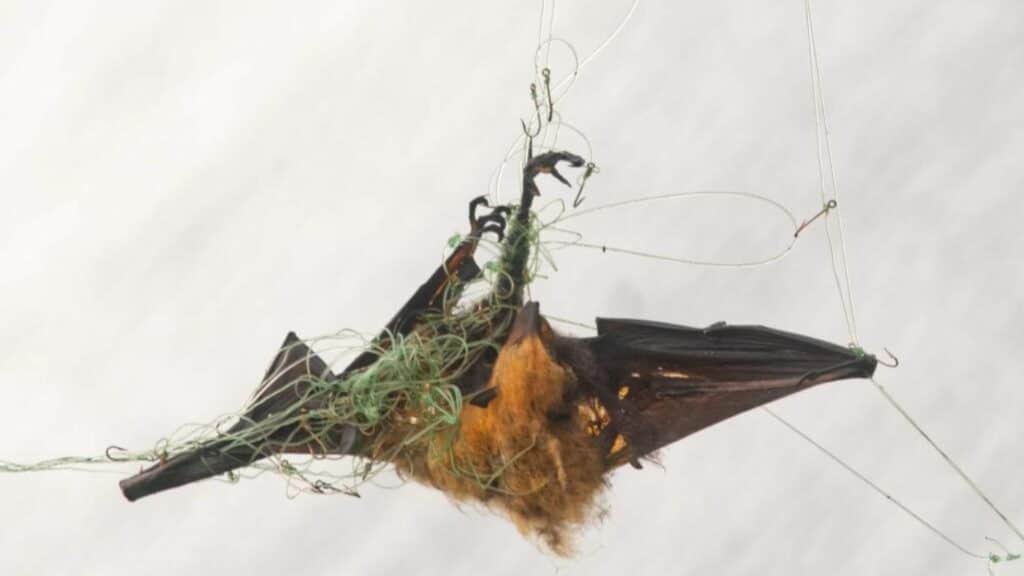
Today, we are imploring you to consider the plight of fragile, helpless flying foxes in Seychelles – animals with bodies barely bigger than your palm – who are maligned, hunted, ripped from their families, and needlessly slaughtered for gruesome “traditional” foods. Flying foxes need YOU today – and if you help right away, your gift will be DOUBLED. Read on… Widely misunderstood and ruthlessly hunted for their flesh, flying foxes are in deep peril. Right now, they are dying in their droves across the island of Mahé in the Seychelles. Credit: Protect Paradise Seychelles They are desperate for YOUR help. Using the poor excuse of “tradition,” flying foxes are caught and killed for “bat curry,” a dish with no place in a society with an abundance of ethical food sources. Hunters string crude fishing lines and hooks high up in trees, and when the unsuspecting flying creatures forage for fruit, they get trapped in these barbaric contraptions. Helpless babies die still clinging to their mothers or fall from their mothers’ bodies to die slowly on the ground. Animals not killed outright by the nets are butchered with knives. Those who don’t partake in this culinary catastrophe are often disinterested in halting this brutal practice, as the animals are seen as little better than pests. Credit: Anna Buckley To make matters exponentially worse, this is far from the only threat facing the species on Mahé. A growing human population means fewer food sources and increasing environmental threats. Their habitats are destroyed, fruit trees are replaced by urban blight or harvested for human consumption, and bright city lights leave them disorientated, lost and prone to accidents. Frequently, they fly into power lines, killing them or leaving them fatally injured.The rampant killing of helpless flying foxes is heartbreaking. Please show these gentle, sweet flying foxes that YOU care! Also known as fruit bats, flying foxes are intelligent, social creatures who often live in family groups. Pups are totally reliant on their mothers as infants when they weigh less than a small apple and stay with their mothers for up to one year. There is a glimmer of hope for these mammals: your matched donation today, and our dedicated partner on the ground, Protect Paradise Seychelles (PPS). This hardworking organization rescues orphaned, injured and displaced flying foxes, among many other species, and helps to save as many lives as they can. They need extra support NOW, because it is “orphan season.” Credit: Protect Paradise Seychelles A very kind donor has pledged to MATCH your donation to flying foxes today, empowering you to make EVEN MORE of a difference! A generous-hearted ASI donor with a special interest in flying foxes has pledged to MATCH every donation made towards these special mammals, up to a total of $4,000 (roughly £3,160). That means whatever you donate will effectively be DOUBLED, so your contribution will go twice as far! As PPS’ rehabilitation center fills with injured, orphaned souls needing help during the species’ birthing season, this compassionate pledge – combined with your donations – has the power to help save so many more lives! Credit: Protect Paradise Seychelles PPS desperately needs an X-ray machine to accurately diagnose and treat injuries. It will make a LIFE-SAVING DIFFERENCE to flying foxes, and your MATCHED DONATION will help us provide it! Failing to protect flying foxes could have devastating consequences for life on Earth. These winged mammals disperse seeds and pollinate flowers to sustain forests and promote healthy growth. In turn, forests support thousands of species of fauna and flora, and are crucial in combating climate change by removing carbon dioxide from the air. Without forests, the impact of dramatically changing weather events would become even more severe, turning rains into floods and dry spells into droughts. Our very life on Earth depends on healthy forests – and forests depend on creatures like flying foxes. We know you care about our beautiful planet and every wild animal that calls it home. We know that you won’t let these helpless little creatures down! Please donate as much as you can now. Every donation up to $4,000 (roughly £3,160) will be MATCHED! That means the time to give is right now.
South Africa approves end to captive breeding of lions and rhinos

Article written by Don Pinnock Originally published by Daily Maverick (Mar 30, 2024) After nearly a decade of inquiries, reports and a parliamentary colloquium, the government has approved an end to captive breeding of lions and rhinos. Cabinet has agreed to end the controversial captive breeding of lions and rhinos. It approved a Policy Position submitted by Environment Minister Barbara Creecy to close lion facilities and end commercial exploitation of lions and ‘canned’ hunts. Cabinet also agreed to phase out intensive management and captive breeding of rhinos and to enhance the conservation of wild leopards. It also agreed to limit the live export of lions, elephants, leopards and both rhino species to only habitats within Africa. This effectively curbs the growing Asian demand for zoo specimens. On the export of rhino horn and ivory, the policy says South Africa would work to support international trade, only when “conditions became favourable”. It does not specify what these conditions are, but does provide a local platform upon which the contested CITES ban on export can be debated. It says there is “no immediate intention to trade in rhino horn.” According to a media statement by the Department of Forestry, Fisheries and Environment, the policy “will transform practices within the wildlife industry that are not conducive to animal well-being and promote conservation and sustainable use of biodiversity in general, and these species in particular. “This will enhance South Africa’s position as a megadiverse country and leader in the conservation and sustainable use of these iconic species.” The policy is the result of nearly a decade of inquiries, reports, a parliamentary colloquium and increasing local and international abhorrence of ‘canned’ lion hunting which was highlighted in a shocking film flighted in 2015 called Blood Lions. These inquiries include the Rhino Committee of Inquiry (2015), the Parliamentary Portfolio Committee Lion Colloquium on lion breeding (2018), the High-Level Panel Report on lions, rhinos, elephants and leopards (2021) and the White Paper on Conservation and Sustainable use of South Africa’s Biodiversity (2023). More recently, the collapse of rhino farmer John Hume’s breeding programme left the fate of around 2,000 rhinos at risk until it was saved through a purchase for relocation by the NGO Africa Parks. The fate of his considerable stockpile of horns is unknown. The acceptance of the Policy Position coincides with the release for discussion by the Environment Department of a Biodiversity Economy Strategy. This proposes to grow areas under conservation — called mega living conservation landscapes — from 20 million hectares to 34 million hectares by 2040, an area equal to seven Kruger National Parks. The strategy envisages an increased focus on tourism in these landscapes as well as more Big Five animals available for fair-chase trophy hunting. It also envisages an expansion of recreational and traditional hunting, wild meat harvesting and fishing, and the increased use of indigenous plants and insects for food. The plan massively extends areas under a form of protection. The banning of captive-bred lion farming raises the issue of what to do with around 10,000 lions. A departmentally appointed panel has been discussing this since its appointment last year and its recommendations are due for release shortly. Captive-bred lions cannot be rewilded because of genetic inbreeding, poor condition of many and because lions are social animals which are taught to hunt and survive in open systems by a pride. There seems to be three options: euthanise, open them for hunting or fund their care in sanctuaries. It’s likely that a mix of these solutions will be considered. The Policy Position calls for enhanced conservation of wild rhinos and elephants under private, community and state ownership, an acknowledgement that private ownership of wildlife – unique to South Africa – has been a conservation success story. It makes a clear distinction between intensive wildlife farming and wild ranching, which would include private game reserves. It says the captive lion industry involves intensive and selective breeding, handling, hunting of captive or captive-bred lions and lion bone and other derivative trade. “This threatens South Africa’s reputation as a leader in the conservation of wildlife and as a country and destination with iconic wild lions. “Although some operators may implement acceptable standards of welfare, there are major animal welfare contraventions in the industry in general. This policy objective seeks to ensure duty of care towards lions.” The Policy spells out the steps required: Halt domestication of lions in controlled environments; End exploitation of captive and captive-bred lions; End the captive breeding of lions, including through sterilisation; Close captive lion facilities; Develop an exit process in respect of the disposal of lions in existing captive facilities; Monitor the impacts on breeding of other cat species, and ensure that poor lion practices are not transferred to other species; Improve security for wild lions to prevent a shift to illegal killing for derivatives from wild lion populations; Expand the number and distribution of extensive wildlife systems containing free-roaming lions; Address the future employment of workers in the industry; Develop enabling regulatory tools for ending the keeping, breeding, handling, and trade in captive lions and their parts and derivatives, hunting of captive and captive-bred lions and establishment of new captive lion facilities. Implementing these actions, says the Policy Position, will result in closure of the captive lion industry.
Red panda found in luggage of smuggling suspects at Thailand airport
Article written by Rebecca Ratcliffe Originally published by The Guardian (Mar 7, 2024) Bangkok customs officers arrest six after finding 87 animals, including lizards, birds, a monkey and snakes Thai customs officials have arrested six Indian nationals for attempting to smuggle dozens of wild animals, including a red panda and cotton-top tamarin monkey, out of the country. Officers found 87 animals, including monitor lizards, birds and snakes, packaged inside the suspects’ checked luggage at Bangkok’s Suvarnabhumi airport. They were trying to fly to Mumbai. Thailand is one of the world’s major hubs for illegal wildlife smuggling, a multibillion-dollar transnational trade, due to its rich biodiversity, location and infrastructure. Smugglers use Thailand to transit animals to be sold in China and Vietnam, and recent years have seen an increase in trafficking to India. “We have found out that the animals include 29 black throat monitor lizards, 21 snakes, 15 birds, including parrots – a total of 87 animals. The animals were hidden inside the luggage,” the customs department said in a statement on Wednesday. Photos released by the department showed a red panda – an endangered species that is about the size of a domestic cat, with a bear-like body – peeking out of a wicker basket. A cotton-top tamarin monkey, which is a critically endangered species, according to the ICUN red list, had been placed in a plastic box. A Sulawesi bear cuscus, which is classified as vulnerable, was inside a basket that had been taped shut. Snakes and lizards were packed away in cloth bags and plastic food tubs. If found guilty, the suspects could face a maximum of 10 years in jail or a fine of four times the amount of import duties. In February, a Mongolian man was arrested at the same airport on suspicion of trying to smuggle Komodo dragons, pythons and more than 20 live fish out of Thailand. Kanitha Krishnasamy, the south-east Asia director for Traffic, an NGO focused on the illegal wildlife trade, said there had been a “very active and persistent level of trafficking of live animals between south-east Asia and south Asia”, especially since the resumption of air travel after the lifting of Covid lockdowns. She said: “The incredible number and diversity of species being smuggled between south-east Asia and south Asia is mind-boggling. In the most recent case you have wild species from South America all the way to the Himalayas and Indonesia. “Airlines and the transport sector play a crucial role, as frontliners who come across these bags being loaded on to a plane or sent as cargo. They have the ability not only to detect but collaborate with enforcement agencies to identify the parties involved in the trafficking chain.”
Orphaned elephant calf Phabeni needs special milk formula to survive!
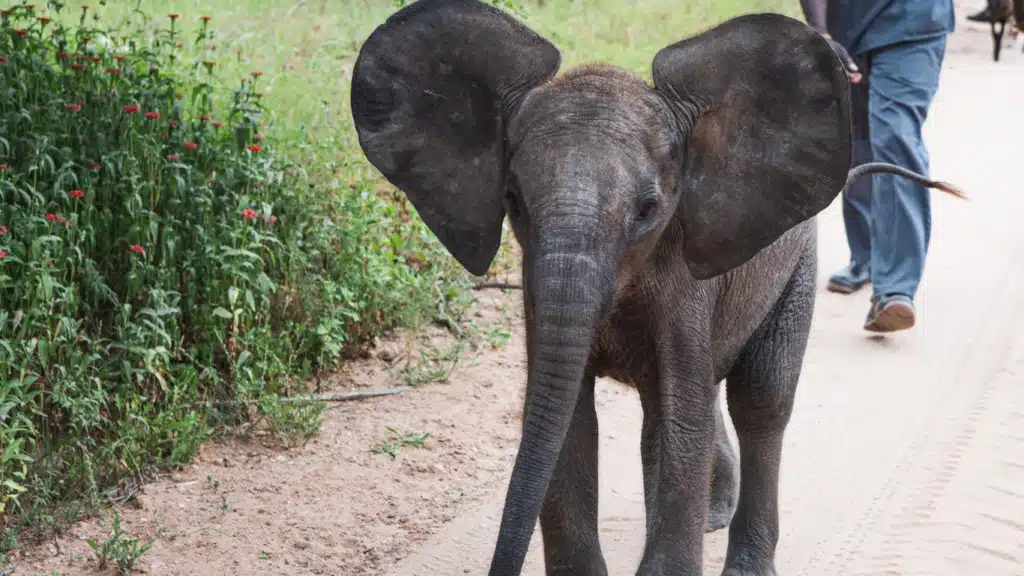
When Phabeni was just four months old, he was spotted wandering alone near the Kruger National Park in South Africa, with his mother and herd nowhere in sight. Credit: HERD Our partner, HERD, raced to his rescue. They found the little calf covered head-to-toe in wounds and showing signs of severe starvation and dehydration. Judging from his condition, it is likely Phabeni had been alone for at least several days. To put it in perspective, elephant calves are much like human children, totally reliant on their mothers throughout their infancy and juvenile years. They will usually stay with their mothers until they are around 16 years old. Alone and helpless without mothers, suckling elephant calves will usually die within DAYS of being displaced or orphaned. Credit: HERD Phabeni is lucky to be alive – but he needs YOUR help to ensure his survival. Our partner is a dedicated elephant orphanage that provides around-the-clock care and specialized nutrition to elephant calves orphaned through poaching or snaring. The team currently cares for 17 rescued elephants. Credit: HERD Phabeni, the newest rescue, arrived emaciated, dehydrated, injured, and traumatized. But with YOUR support today, the little calf can pull through. The most urgent need for Phabeni right now is a special milk formula. It closely mimics his mother’s milk and is CRITICAL to his survival. Credit: HERD Orphaned elephant calves are at their most vulnerable during the first few weeks following their rescue and are highly dependent on the correct nourishment, care, and companionship. Expert elephant carers monitor Phabeni around the clock, but what he really needs now is enough special milk formula to help him grow. With your support today, we CAN give Phabeni this chance. Phabeni will need milk for the next four to five years and will need help throughout this time. Elephant calves are extremely sensitive, and a gradual milk-weaning process must be followed. Rushing the weaning process could be fatal. Credit: HERD It is critical that we provide Phabeni with a special milk formula that replicates the vital nutrients he would have received from his mother. Please help Phabeni now! If we can raise $7,000 (£5,540), we can provide enough special milk formula for orphaned elephant calf Phabeni for the next THREE months. Your donation will also cover crucial medication and veterinary care to help the baby elephant recover from his wounds. Credit: HERD Extensive studies have shown that elephants feel emotions including grief, joy, love, and compassion. Can you imagine the heartbreak of poor orphaned calf Phabeni, who tragically became separated from his mother and was forced to endure the dangers of the wild alone? As social beings used to the tight fabric of a family, elephants need other elephants for their well-being and survival. Once fully healed, HERD’s orphans are gradually introduced to the Jabulani Herd – a unique and close-knit family of 17 rescued and orphaned elephants from Zimbabwe and South Africa, who are always accepting of new calves. Phabeni has constant companionship and comfort in the form of Lammie, his surrogate sheep mother… Credit: HERD Please, extend your compassion to the orphaned elephant calf Phabeni. Your support is critical in providing him with the care he needs to survive and be reintegrated into a new, loving herd. Help us make a lasting impact on little Phabeni’s life by donating generously to Animal Survival International today!
More than 400,000 songbirds killed by organised crime in Cyprus
Article written by Phoebe Weston Originally published by The Guardian (Mar 6, 2024) Report links rise in birds trapped for human consumption to cuts in anti-poaching resources in area of British military base More than 400,000 songbirds were trapped and killed in Cyprus last autumn as part of a recent increase in wildlife crime, according to a new report. Organised crime networks use decoys and speakers playing birdsong to lure these small birds – including garden favourites such as robins and sparrows – to land in bushes or orchards, where they catch them with “mist” nets or branches covered in glue. They are then sold via the hidden market to restaurants to be eaten as a local dish called “ambelopoulia”, which consists of pickled or boiled songbirds. The report, drawn up by BirdLife Cyprus with support from the RSPB and the Committee Against Birds Slaughter (Cabs), found that 435,000 birds were killed this way in autumn 2023 alone. While the number caught has been trending downwards over the past decade, last year marked an increase of 90,000 from 2022. Martin Hellicar, the director of BirdLife Cyprus, said: “Despite the very good progress made in recent years, this autumn was a reminder that this can be quickly reversed if enforcement resources are not maintained.” Cyprus is a stepping stone for many birds on huge autumn migrations between their breeding grounds in Europe to overwintering grounds in Africa each year. Blackcaps, flycatchers, chiffchaffs, willow warblers, reed warblers and Cetti’s warblers are among those being targeted, many of which are in steep decline in the UK. The practice of trapping songbirds for human consumption was outlawed in Cyprus in 1974 but it continues to be carried out on an industrial scale. Twenty years ago, more than 2 million birds were caught like this every year, with more than 10 million killed in the 1990s. Since then, law enforcement authorities in Cyprus have been working with BirdLife Cyprus, Cabs and the RSPB to reduce the number of birds killed. Authorities found that more than 4.5km of netting was being used to trap birds. Much of the increase came from the British military base in Cyprus – the Sovereign Base Area (SBA) – where there was a 41% increase in nets out than during the previous year. The resources of the SBA anti-poaching unit were reduced significantly at the start of the autumn 2023 trapping season. The report said: “This season was a good case study of what can happen when police resources are removed/redirected from illegal trapping enforcement and deterrence action.” Mark Thomas, the head of RSPB investigations, said organised trappers are continuing to make huge profits for little risk. “We cannot allow the progress we have made to be undone and the shocking levels of songbird killings to return to the abhorrent levels we once saw,” he said. Thomas added that police resources were needed to keep bird trapping levels low. “For two decades, our international partnership has shown that we can work together to tackle this criminal activity through direct action on the ground backed up by enforcement action,” he said. “However, this autumn shows that more still needs to be done, particularly in the Republic of Cyprus.” Hellicar said BirdLife Cyprus has been growing an awareness-raising campaign that aims to “achieve a change in the hearts and minds of the local culture, from eating to protecting and appreciating them [birds]”. “This is an even greater challenge to overcome, but we are committed to continuing and confident that eventually we will see a positive behavioural change in favour of bird conservation,” he added.
Woman who welcomed eight foxes into her home now uses them as therapy animals to help domestic abuse survivors
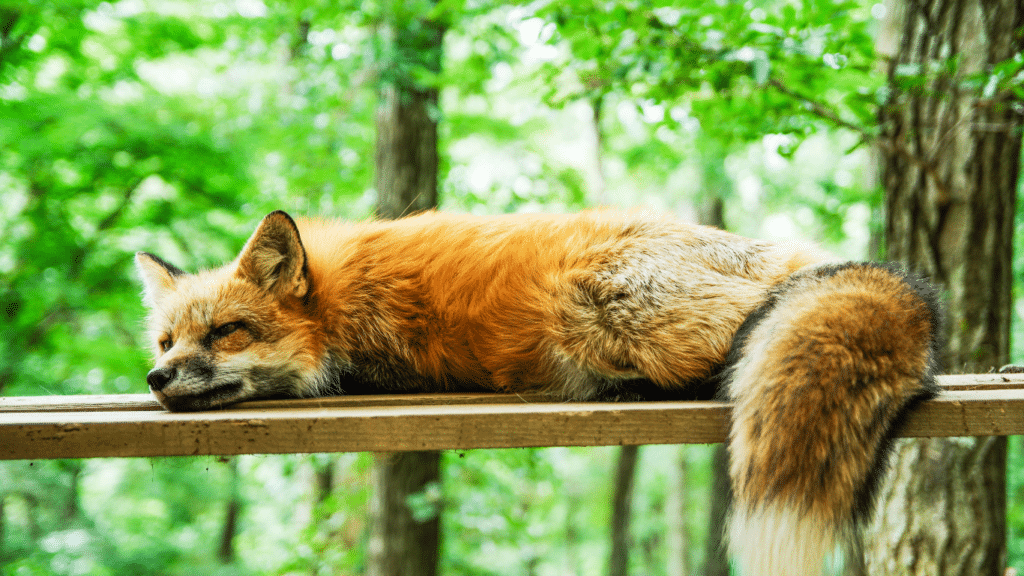
Article written by Molly Powell Originally published by Independent UK (Feb 5, 2024) At the end of 2022, Nicole began using her foxes as therapy foxes. A woman who rescued eight foxes from fur farms that now sleep in a twin-size bed in her home now uses them as therapy foxes in women’s shelters and youth rehabilitation programmes and claims many “resonate” with the foxes’ “story of survival”. Nicole Navarro, 43, who works part-time on a tourist boat and lives in Key Largo, Florida, with her eight foxes, Libby, Louie, Reef, Kai, Coral, Jasper, Ridley and Penny, began rescuing the animals in 2020 after she got laid off in the pandemic. Nicole says all of her foxes were “deemed undesirable” by fur farmers, as they had “some sort of physical defect”, such as missing tails or toes, but claims this is what “ended up saving their lives”. Nicole’s foxes have 24/7 access to a room in her house, with luxuries such as air conditioning and a bed, as well as a huge enclosure outside with “enrichment activities”, and Nicole spends most of her days off playing with them, and feeding them their diet of chicken, duck, rabbit and turkey, which costs 800 dollars (£625) a month. At the end of 2022, Nicole began using them as therapy foxes, where she puts them in a harness, allows people to stroke them and tells the foxes’ stories of going from being bred to kill to living a happy life, which she finds “extremely rewarding” as she has “experienced intense trauma” in her past. Credit: Collect/PA Real Life Nicole said: “When I take the foxes to the sessions, I find that the people really resonate with the foxes’ story of survival. “Often these people are victims of domestic abuse and in a way, have been in a similar position.” Nicole first fell in love with foxes in 2018 when she was volunteering at the Monroe County Sheriff’s Office in Key West, Florida, which had an animal farm. She explained: “In 2018, two foxes were surrendered and even though I had a lot of experience with different species of animals throughout my life, I grew up on a very large horse farm in western Pennsylvania, I had never had up close personal experience with foxes. “And I just sort of became completely infatuated with the species and then started learning more about their backgrounds – most foxes here in the United States can be traced back to fur farming and it’s illegal to capture, obviously, wild animals out of the wild and turn them into pets.” From then on, Nicole started contacting fox rescue centres throughout America about potentially rescuing them in the future, and in March 2020, one of her contacts asked her if she was ready to take some foxes that were being surrendered from a fur farm. Nicole thinks her foxes have improved her mental health. Credit: Collect/PA Real Life She said: “I quickly scrambled to raise money because at that time, the Florida Keys completely shut down since we’re tourism based so I got laid off, and it became a bit of a lockdown project.” Two months later, she welcomed Louie and Libby, foxes from a fur farm, into her home and since then, she has adopted another six foxes. She said: “All of the foxes were deemed undesirable meaning the fur farmer would not have been able to kill them and sell them because they had some sort of physical defect. “So some of the foxes I have don’t have tails, some of them are harmed by their mother at a very young age so they’re missing parts of their tail and Reef is even missing some toes. “So all the foxes I have here have some sort of thing that was deemed imperfect by the farmer, but it’s actually what ended up saving their lives.” Nicole keeps them all in two large enclosures outside and they even have 24/7 access to a room in her house. Nicole first encountered foxes when she was volunteering at an animal farm. Credit: Collect/PA Real Life She said: “They have a twin-size bed that they sleep on and there’s no electrical wires or anything they can chew on or harm themselves with. “It gets pretty warm here so the room is air conditioned… and they all have outdoor enclosures with ramps and platforms and enrichment activities, toys and tunnels. “So they are really given everything they need to use the natural instincts they have – they’re not domestic in any way, shape or form.” Nicole explained her daily-routine to look after her furry friends, saying: “I get up fairly early and I do a spot clean of the enclosures. “I feed them a little breakfast – they eat rabbit, duck, chicken, turkey, I do offer them fruits and vegetables, but they rarely go for it. “I sit back there with them, I interact with them, I play with them.” At the end of 2022, Nicole began using her foxes as therapy foxes. Nicole started rescuing her foxes in lockdown. Credit: Collect/PA Real Life She said: “I reached out to a women’s holistic trauma recovery programme and just sort of proposed the idea of bringing a fox to meet the women and sharing the foxes’ stories of survival – going from certain deaths to living on an island in Florida. “When I take one of my foxes into the sessions, I put him in a harness and a little leash, but I don’t train him on a leash. “I tell his story and then welcome people to pet him or play with him, but it’s amazing, as soon as I put the harness on him his personality changes – he’s so calm and relaxed and we’ve never had any issues with him.” From there, Nicole has expanded her sessions. She said: “The Florida Keys Children’s Shelter saw what we were doing with the women and asked if they could start bringing children here to meet the
South African jailed after being caught at Changi Airport in Singapore’s largest seizure of rhino horns
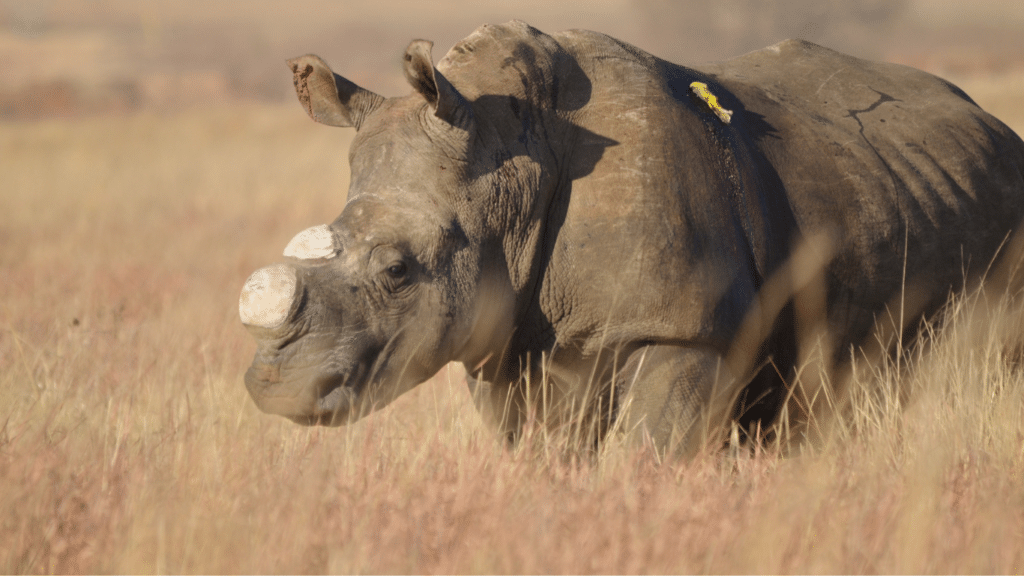
Adapted from original article written by Lydia Lam Originally published by Channel News Asia (Jan 26, 2024) The rhino horns that were seized were worth about S$1.2 million in total. SINGAPORE: A South African man who was caught at Changi Airport while trying to transport 34.7kg of rhinoceros horns to Laos was sentenced to two years’ jail on Friday (Jan 26). Gumede Sthembiso Joel had pleaded guilty to one charge each of transporting 18 pieces of white rhinoceros horn and two pieces of horns from the rarer black rhinoceros into Singapore without a valid permit. The rhino horns were worth about S$1.2 million (US$895,400) and were intercepted in October 2022. It was Singapore’s largest seizure of rhino horns. Based on the two different species, the prosecution tried to ask for 37 months’ jail, quoting the case of Xavier Yap Jung Houn, where the sentences for the killing of two sons ran consecutively as they were distinct acts. However, District Judge Eddy Tham on Friday ruled that the situation was different in this case, as Gumede engaged in a single “transaction” when he checked in both bags containing both types of horns. Judge Tham said this was akin to a drug trafficker, who was found with a packet of drugs that was analysed and later found to contain more than one type of drug. In those cases, sentences are typically ordered to run concurrently, explained the judge. He sentenced Gumede to concurrent jail terms – 24 months for the white rhino horns and 14 months for the black rhino horns. Judge Tham also stated that Gumede was not involved in the acquiring and packing of the horns. Instead, he had shown up at the airport in South Africa, where he took the cargo from his accomplice, a South African man called Jaycee Israel Marvatona. Gumede sat in the dock listening to proceedings quietly, narrowing his eyes at various points while his lawyer, Ms Stephania Wong from Rajah & Tann, acted for him. The Case Gumede, 33, knew Jaycee was involved in the illegal rhino trade. They exchanged WhatsApp messages about rhino horns and the sale of the horns. After failing to recruit another man to join him on the flight to Laos through Singapore, Gumede took a Singapore Airlines flight from South Africa and transited in Singapore in October 2022. He had checked in two bags containing cardboard boxes that held the horns. Fifteen minutes before his connecting flight to Laos was to leave, a baggage screening officer at Changi Airport spotted organic material shaped like horns in the two bags. Gumede was escorted to an inspection room, where the boxes were opened in his presence, revealing the 20 pieces of rhino horn. DNA analysis revealed that the horns came from 15 southern white rhinos and one black rhino. Of these, the samples were linked to 11 female rhinos, whose reproduction could have been halted as a result. The horns, which Jaycee had purchased from illegal poachers in South Africa, were meant to be sold to a person known as Jimmy in Laos. For bringing in [the horns of] endangered species without the required permits, he could have been jailed for up to two years per charge, fined up to S$50,000 per species, or both.
Track pangolins 💪 Stop poachers!
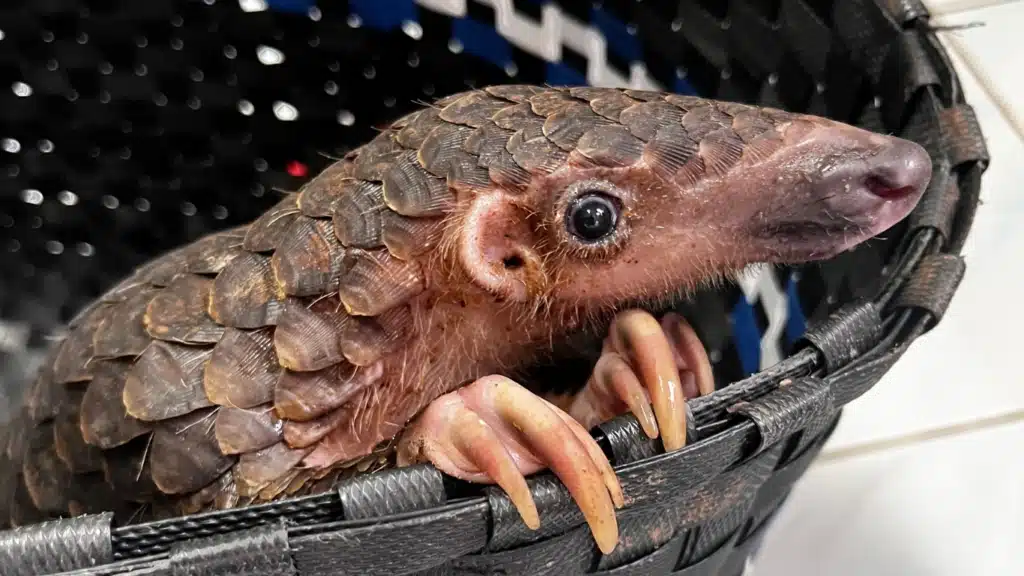
Five critically endangered pangolins, including a tiny baby and a very sick adult, have just been rescued in the nick of time from a horror meat market in Lao, Asia. Pancake the critically endangered pangolin receiving life-saving care at LCTW. Anti-poaching devices will enable our team to apprehend poachers in their tracks. Credit: LCTW The animals were rescued during an investigation into the illegal wildlife trade in the country, which sees hundreds of thousands of animals slaughtered every year for bogus “traditional medicine”, jewelry, trinkets, and unfounded virility potions. The pangolin poaching crisis is REAL, and if we do not act NOW, the species could be gone forever. We have a plan to help. Sick, starving and dehydrated, the fragile animals were rushed to the care of our partner, the Lao Conservation Trust for Wildlife (LCTW). Credit: LCTW All the rescued pangolins are of the critically endangered Sunda and Chinese sub-species, relentlessly hunted for their meat, skins and scales in Asia. It is estimated that 80% of Sunda pangolins have been wiped out by poaching, while the population of Chinese pangolins is expected to plummet by 80% by 2040. You will be relieved to know that LCTW works closely with law enforcement to rescue pangolins and bring poachers to book. Credit: LCTW The rescued creatures were all saved in the capital of Vientiane during an undercover investigation. A sixth was later saved by local government authorities. As this important investigative and prosecution work continues, the plight of the six rescued animals is currently critical. Image for illustrative purposes only. Credit: Wikipedia Pancake, a Chinese pangolin, is receiving intensive care after arriving terrified, starving and dehydrated. She was named ‘Pancake’ because she lies so flat – clearly weak and severely traumatized after her horrendous ordeal. The other survivors – all Sunda pangolins – include a baby, juveniles and adults. The infant pangopup is still suckling from its mother, and all are receiving critical care at the sanctuary. We have a way to help our partner NAB POACHERS and protect pangolins from being poached – please, help us implement it now! Once the pangolins have recovered from their nightmare ordeal, they will be released back into their natural environment. Credit: LCTW We know you will agree that they MUST be protected at all costs once released. That is exactly what we plan to do with your help today. If we can raise $15,000 (around £11,880), LCTW can fit each of the pangolins with hi-tech tracking devices prior to their release, which will immediately alert the team if a pangolin is snared or caught by a poacher as it is being transported. These advanced tracking solutions are already being used to great success by our anti-poaching partners in Africa. Should a pangolin be caught, the device will send an instant alert to its exact location, enabling the team to race into action, rescue the animal, and catch the perpetrators. The devices also monitor the animals’ breathing, heart rate and pace of movement to alert the team immediately to anything out of the ordinary. If enough money can be raised, our partner will also be able to install hidden devices throughout the forest that detect the presence and exact location of any mobile phones entering the area – almost guaranteed to be hunters or poachers. An immediate alarm will be sent, and the on-site team will be dispatched to thwart the poachers in their tracks. It is the advanced protection pangolins urgently need – AND DESERVE – right now. Credit: LCTW It is not enough to rehabilitate pangolins – we MUST ALSO track poachers and keep pangolins safe in the wild! Will you help critically endangered pangolins today? Your support now will help us protect pangolins in Lao – so please be part of the solution! Donate right away, and help us give pangolins their safety and freedom – and poachers the penalties they deserve!
New research uncovers disturbing pattern in the decline of African raptors: ‘It’s a wake-up call’
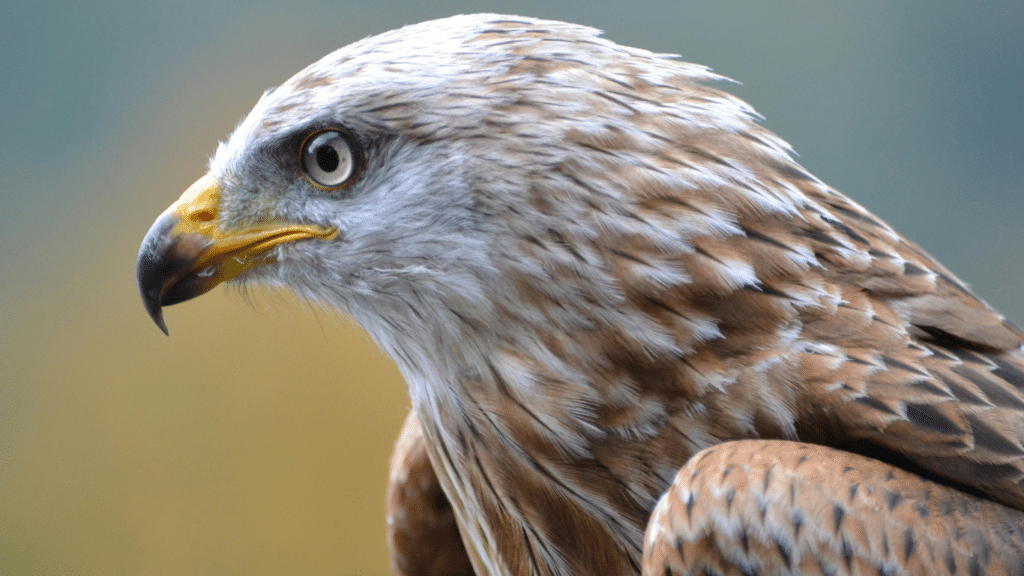
Article written by Jenny Allison Originally published by The Cooldown (Feb 15, 2024) In these areas, protections “exist in name only.” A recent study reported that raptors across Africa are suffering a significant population decline. But what alarmed researchers the most is that these losses are happening both inside and outside of national parks. What’s happening? A team of researchers surveyed populations of 42 species of raptors in four regions of sub-Saharan Africa. Scientists in these regions have collected raptor population data since 1969, so the team was able to calculate accurate changes — and they were devastated by the results. It’s “shocking,” said Dr. Darcy Ogada, one of the study’s authors. She reported that 88% of the surveyed species had declined significantly in the past several decades, and 69% are now either threatened with extinction or at least more endangered than previously thought. Certain species, like the secretary bird and the martial eagle, have declined by 85 to 90%. The reasons behind these declines are numerous, with habitat loss being the leading cause. Raptors are also threatened by poaching, electrocution, wind turbines and other technology, power lines, and the changing climate. “We’re looking at really iconic species in Africa that are declining significantly,” Dr. Ogada said. “It’s a wake-up call.” Why is raptor loss so concerning? Birds of prey are critical to their ecosystems for several reasons. They serve as apex predators, keeping other populations under control. As scavengers, they prevent disease from spreading, and they recycle nutrients back into the environment. More broadly, they serve as key indicator species: If a bird of prey is thriving, it means that small vertebrates are thriving, which indicates that plant life is thriving. “Losing [these birds] is going to have major trickle-down impacts to the rest of the ecosystem,” Dr. Ogada said. Additionally, perhaps the most concerning find was that these losses were significant both outside and within national parks. One explanation for this, Dr. Ogada suggested, is the existence of Africa’s “paper parks.” In these areas, protections “exist in name only,” and both a lack of funds and lack of management are a “major problem for wildlife.” What’s being done to protect raptors? Many research and conservation groups are working to combat the losses. One way they’re doing so is by updating conservation statuses. Dr. Stuart Butchart of BirdLife International explained that those statuses help “set action priorities by governments and other stakeholders, such as working with local communities to protect land, increasing efforts to protect raptors, and making sure that new infrastructure – like wind turbines – are installed with minimal impacts to birds.” Gaining local buy-in is also crucial in accomplishing conservation objectives, which is why the researchers launched a new educational mentorship initiative, the African Raptor Leadership Grant, which is aimed at African scientists across the continent.
Kenya’s black rhino numbers quadruple since 1984
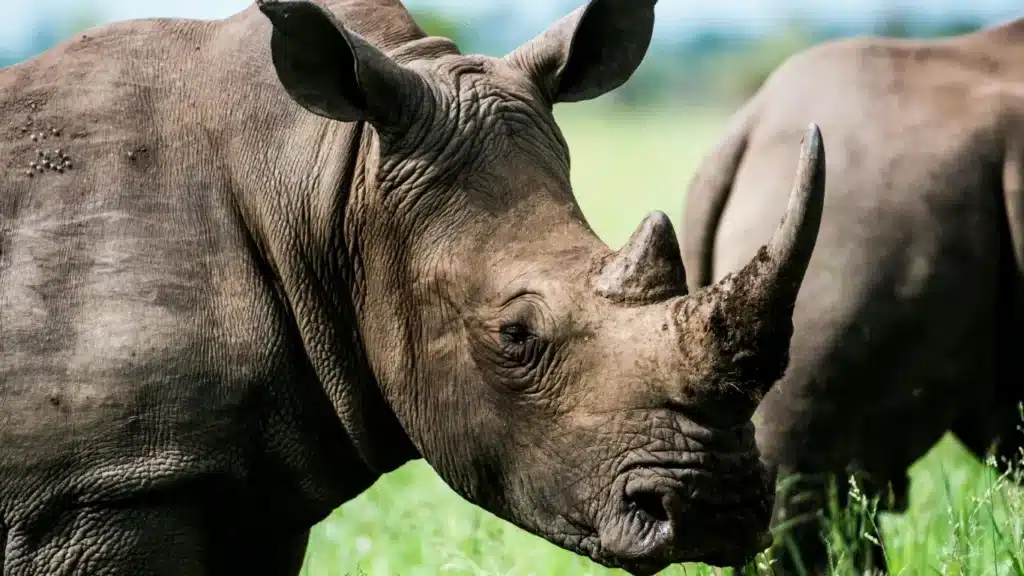
Article written by Annelie Coleman Originally published by Farmer’s Weekly (Wed, Feb 7, 2024) Black rhinos in Kenya were on the brink of extinction three decades ago, but their numbers have since quadrupled from 240 in 1984 to 966 in 2024. This recovery has been ascribed to sharpened-up security that has brought more poachers to justice over the past three decades. Kenya’s black rhino numbers have increased so fast that they are now overcrowding sanctuaries in the country. One of the remedies to prevent overpopulation includes relocation, with 21 eastern black rhinos recently being relocated to the Loisaba Conservancy in Laikipia County. According to a report published by EIN Presswire, the last rhino in Loisaba was killed 50 years ago by poachers. “It’s incredibly exciting to be part of the reintroduction of rhinos to a landscape where they’ve been absent for 50 years,” said Tom Silvester, CEO of the Loisaba Conservancy. “It is a mark of Kenya’s conservation success. Some [11 736ha] have been set aside for the rhinos’ new sanctuary.” The recent relocation was led by Kenya Wildlife Services. The animals, which can weigh up to 1,400 kg, were moved by truck to their new home. Supporting the project were the San Diego Zoo Wildlife Alliance, the Nature Conservancy, the Elewana Collection, and Space for Giants. The rhinos came from Nairobi National Park, Ol Pejeta Conservancy, and Lewa Wildlife Conservancy. “The reintroduction of the eastern black rhino to Loisaba is a testament to our collective ability to enact meaningful change for Kenya’s iconic wildlife and be a force for nature,” said Dr. Max Graham, CEO of conservation organisation Space for Giants. Because of heightened security and success in bringing poachers to justice, Kenya is now home to the third-largest rhino population in Africa, after South Africa and Namibia. Research has shown that Kenya needs a stable number of 2 000 eastern black rhinos for the species to survive in the face of threats to their survival. The EIN Presswire report said the key to success has been Kenya’s efficiency in safeguarding keystone species like rhino in protected areas. Black rhinos were solitary animals, and without enough room to disperse, they could not be encouraged to breed. With some of Kenya’s existing 16 sanctuaries nearing maximum capacity, there was an urgent need to create new ones offering ideal conditions, such as the right habitat, effective security, and strong support from neighbouring communities.
Sick lion cubs are STILL waiting for your help!
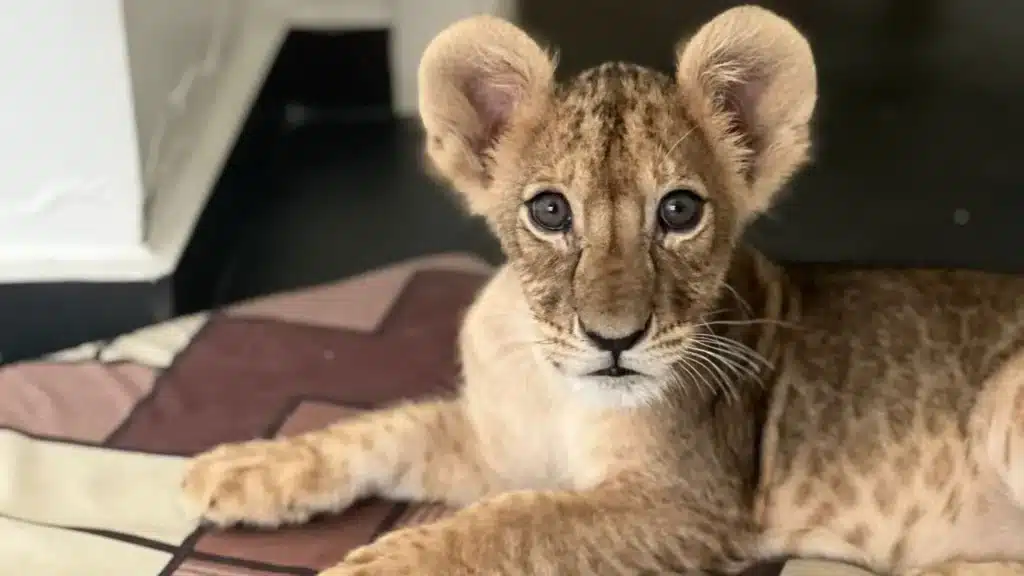
Today, Issam and Kelly really need your help. This is their story… Every year, thousands of wild animals are trafficked around the world. The Middle East and North Africa are hotspot transit points for the trade. Animals are bred and sold to zoos or to be “exotic pets” for the rich – sent to unknown fates that bear no resemblance to their natural environment. Credit: Animals Lebanon Lion cubs Issam and Kelly have been saved from wildlife traffickers in Lebanon – potentially one of the largest animal trafficking operations ever intercepted in Lebanon. The state of these infant lion cubs will leave you AGHAST! Authorities stopped traffickers at an army checkpoint north of Lebanon, 90 minutes outside Beirut. To their horror, they discovered 1,500 caged exotic birds – many already dead – and two terrified lion cubs hidden among them. The two-month-old cubs, frozen from fear, were hidden in small plastic cat boxes with no food or water, and were drenched in their own urine. Credit: Animals Lebanon All the animals were confiscated by the police, and the traffickers were arrested. After veterinary examinations, the birds – both wild-caught and captive-bred – were able to be released back into the wild or sent to specialized organizations. But both cubs, who are believed to be siblings, were severely underweight and exhibited signs of malnutrition and abnormal development. They were in a shockingly bad way. Heartbreakingly, due to the extent of human-inflicted abuse, Issam was unable to walk normally. Credit: Animals Lebanon The development of both infant cubs was severely stunted due to the conditions in which they were kept captive. Issam’s disabilities were particularly severe. The muscles in his back legs had not developed properly, and his legs were not strong enough to support him. It was utterly tragic to see – a helpless eight-week-old cub struggling to walk. His mobility problems were caused by being confined in a small plastic crate for who knows how long – combined with a lack of proper care, nutrition and exercise – all of which the cubs would have received had they not been stolen from their mother and their natural way of living. Issam and Kelly will need intensive rehabilitation, as well as expert care, for the rest of their lives. Credit: Animals Lebanon The cubs were placed with an animal welfare organization in Lebanon until the right sanctuary could be found. That is where our partner, Drakenstein Lion Park in South Africa, stepped in. Now, they need YOUR SUPPORT TODAY to recover! Please, help now! Drakenstein Lion Park has committed to giving the cubs a lifelong home at their sanctuary where no breeding is permitted, and where wild animals live free from physical visitor interaction in semi-wild spaces. The lifelong care for both cubs will amount to hundreds of thousands of dollars over 20 years. If we can raise $7,300 (around £5,732 ), we can help ease the long-term financial pressure on our partner for an entire year, so they can continue rescuing wild animals in serious trouble. Credit: Animals Lebanon Please help give these rescued cubs the life they truly deserve after their terrible abuse at the hands of humans. We partner with ethical big cat rescue facilities to give rescued wild animals the lives they deserve after being born into cruel and abusive situations. The reality, is that when “exotic pets” are bred and confiscated outside of their indigenous countries, many have nowhere to go and may end up in zoos… or worse… euthanized. This is an outcome we at ASI will ALWAYS fight to avoid, and thus it is of critical importance that we support our ethical sanctuary partners. Credit: Animals Lebanon Please help us to ensure that there will ALWAYS be a safe home for helpless, orphaned wild animals rescued from the hands of cruel humans. Donate right away to help our partner support Issam and Kelly’s long-term care and give these animals the peace, security and safety they deserve. Without your support today, we cannot help rescue all the other Issams and Kellys out there who, without us, would be subjected to a truly horrific fate.
Why is Sri Lanka losing its elephants?
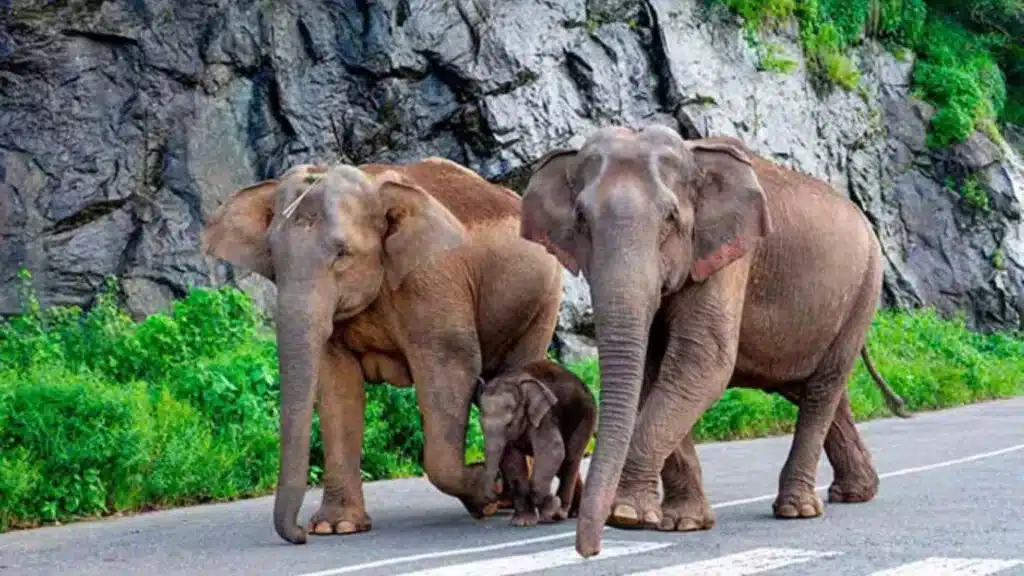
Article written by The Vantage Take Originally published by The Firstpost (Thu, Feb 8, 2024) As Sri Lanka stands at a crossroads, the government faces a dual challenge of preserving its flagship species while safeguarding the livelihoods of its people When traversing the landscapes of Sri Lanka, one cannot ignore the omnipresence of the elephant. Embedded deeply within the nation’s cultural and religious tapestry, these majestic creatures have served as symbols of power, prosperity and spiritual significance for over two millennia. From intricate art to architectural marvels, the elephant motif pervades every aspect of Sri Lankan life, making it a central figure in the country’s identity. Cultural and religious significance Historically, elephants held a revered status, often serving as prized possessions of kings and symbols of royal authority. Employed in warfare and celebrated for their strength and opulence, they symbolise more than mere beasts of burden. In Buddhist beliefs, elephants hold deep religious significance, embodying wisdom and sacredness. Their presence in folklore and religious ceremonies further solidifies their esteemed position in Sri Lankan culture. Guardians of ecosystems Beyond their cultural importance, elephants play a crucial ecological role as keystone species. They shape habitats, maintain ecosystem balance and support the survival of numerous other species. However, their survival is increasingly under threat due to human-induced pressures on their habitats. Facing a looming extinction Despite their revered status, Sri Lanka’s elephant population is in a state of peril. Over the past century, their numbers have dwindled significantly, with a sharp increase in deaths recorded in recent years. Human-animal conflict, driven by habitat loss and encroachment, stands as the primary reason behind the alarming rise in elephant fatalities. While efforts to protect elephants are paramount, it is essential to acknowledge the human toll of these conflicts. Farmers, striving to safeguard their livelihoods, resort to lethal methods to deter elephant raids, exacerbating the crisis. Moreover, encounters with elephants pose a significant risk to human lives, with casualties reported annually. To mitigate the crisis, concerted efforts are needed on multiple fronts. Firstly, expanding protected areas for elephants is crucial to safeguarding their habitats and ensuring their long-term survival. Additionally, promoting sustainable agricultural practices that mitigate human-elephant conflicts can help alleviate pressure on both elephants and farmers. A dual challenge As Sri Lanka stands at a crossroads, the government faces a dual challenge of preserving its flagship species while safeguarding the livelihoods of its people. Failure to act decisively could result in the irreversible loss of this iconic symbol of Sri Lankan heritage. With concerted efforts, however, there remains hope for a future where humans and elephants coexist harmoniously, preserving the rich cultural and ecological heritage of the island nation.
South African rhinos: Poaching on the rise in new hotspot

Adapted from original article written by Kyle Zeeman Originally published by BBC.com (Feb 27, 2024) South Africa’s battle to defeat rhino poaching has taken a turn for the worse with the numbers killed rising in 2023. Last year, 499 rhinos were hunted, an increase of 51 from the previous year, Environment Minister Barbara Creecy said. South Africa is home to most of the world’s rhinos. The country has some 2,000 black rhinos, considered to be “critically endangered”, and around 13,000 white rhinos, classed as “near threatened”. Looking back over 10 years, poaching has fallen sharply from 2014 but has increased more recently. Rhino horns have been in huge demand in Asian states such as China and Vietnam, where they are used in traditional medicines. The majority of animals killed last year were in the Hluhluwe-iMfolozi Park in KwaZulu-Natal province. The Kruger National Park, which had previously been a hotspot for poaching, saw a reduction of more than a third in 2023. The success in dealing with poaching at Kruger, the biggest game park in South Arica, had led to criminal groups moving elsewhere, Ms Creecy told journalists. “The increase is very concerning,” a spokesperson for the company that runs Hluhluwe-iMfolozi Park, Musa Mntambo, told the BBC. Poaching groups “often struggle to spot rhino in the Kruger and so come here where they are more visible”, he added. Last year, the government allocated $2.1m (£1.7m) to improving fencing in the Hluhluwe-iMfolozi Park. Mr Mntambo said several other steps had been taken to fight poaching, including hiring more than a dozen more patrollers and acquiring a new surveillance helicopter. “We have seen a decrease so far this year and we are hopeful that poaching will decrease in the coming months. By February last year we had 30 rhinos poached. This year we have 22.” Ms Creecy said her department had undertaken an extensive de-horning programme, making the rhinos less attractive to poachers. It has also gone on an anti-corruption drive to prevent park officials from colluding with gangs. Jamie Joseph, head of environmental group Saving the Wild, has been a long-time critic of the government’s anti-poaching measures. She predicted that poaching would continue to increase unless there was better intelligence gathering on the gangs. “There is only one thing that will save that park and that is if they start running intel, set up ambushes and make arrests. Otherwise nothing is going to change,” she told the BBC. But Ms Creecy applauded the country’s specialist policing unit, the Directorate for Priority Crime Investigation, for its work in convicting 45 rhino poachers and traffickers last year.
German zoo sparks outrage with plans to cull some of its 45-strong tribe of baboons and feed them to captive predators after contraception failed to stop the primates breeding
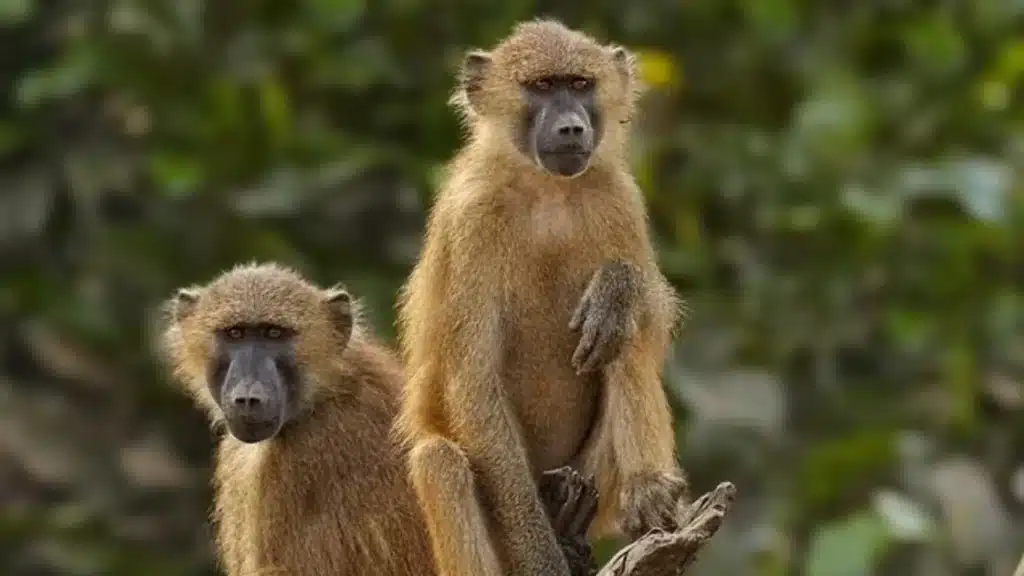
Article written by Miriam Kuepper Originally published by Mail Online (Fri, Feb 9, 2024) Nuremberg Zoo now has 45 apes in the monkey house, but it was designed for 25. A German zoo has sparked outrage with plans to cull some of its 45-strong tribe of baboons and feed them to captive predators after contraception failed to stop the primates from breeding. The director of the Nuremberg Zoo, Dag Encke, announced the ‘sensible’ plan to kill off nearly half of the baboon population in the zoo – to allegedly ‘ensure the survival’ of the species. Zookeepers even tried putting the protected Guinea baboons on contraception, but this ‘didn’t work’ as the monkeys kept replicating and the population continued to grow, according to a statement by the zoo. The Nuremberg Zoo now has 45 apes in the monkey house, but this was designed to hold only 25 animals. This lack of space resulted in additional stress for the primates and more arguments between these otherwise social animals, which increasingly often end in blood. The healthy baboons which will be killed for conservation will either be handed over to science or fed to predators in the zoo. The latter caused outrage among animal rights activist groups like PETA Germany. The International Union for Conservation of Nature classified Guinea baboons as endangered and said they should be kept in zoos for species conservation. The Guinea baboons live in protected areas in several West African countries, but because the population there has also surged, there is no space to relocate Nuremberg’s primates to African countries either, Encke explained. The zoo even tried to rehome the primates to a monkey sanctuary, but they already have a waiting list of more than 200 confiscated animals waiting for a new home. ‘No one from the zoo thinks what is being done is good. But it is sensible,’ Encke said. The surge in the zoo’s baboon population could endanger their survival, as the primates are getting too old and are having too few offspring due to the overcrowding in the monkey house, the zoo directed added. If there were too few offspring, this would in turn destroy the social structure within the group. ‘Breeding and killing animals is a vicious circle created by zoos themselves. This can only be broken if plans are drawn up to stop breeding and close zoos, instead of discussing the possible killing of animals – no matter what species it concerns,’ PETA biologist Yvonne Würz said in a statement. ‘Killing public favorites such as primates, lions or giraffes is considered less acceptable than killing ungulates, which are often used within zoos as food for other animals,’ Würz added. ‘The Nuremberg Zoo has also repeatedly killed animals in the past – including animals that belong to endangered species, for example Mendes antelopes. ‘This once again shows how much the zoo audience is being deceived by the supposed species protection argument. ‘In the case of the Guinea baboons that are now to be killed, the zoo even openly admits that releasing them back into the wild is not possible or wanted.’ PETA Germany said in the statement that it would like to file criminal charges against those responsible at the Nuremberg Zoo if baboon are killed. It would have to be carefully examined whether those killings are an exceptional case under federal laws that allow them as a ‘last resort’. The decision is ‘a declaration of bankruptcy,’ James Brückner from the German Animal Welfare Association told BR24. He added that the zoo had ‘cultivated’ the overpopulation of the baboons for ‘years’ and was only now doing something about it. But killing the primates now was ‘irresponsible’, and Brückner suggested that either Nuremberg Zoo or a different zoo should make room for the animals. Banner: The director of the Nuremberg Zoo, Dag Encke, today announced the ‘sensible’ plan to kill off nearly half of the baboon (pictured) population in the zoo – to allegedly ‘ensure the survival’ of the species
We could lose pangolins forever.
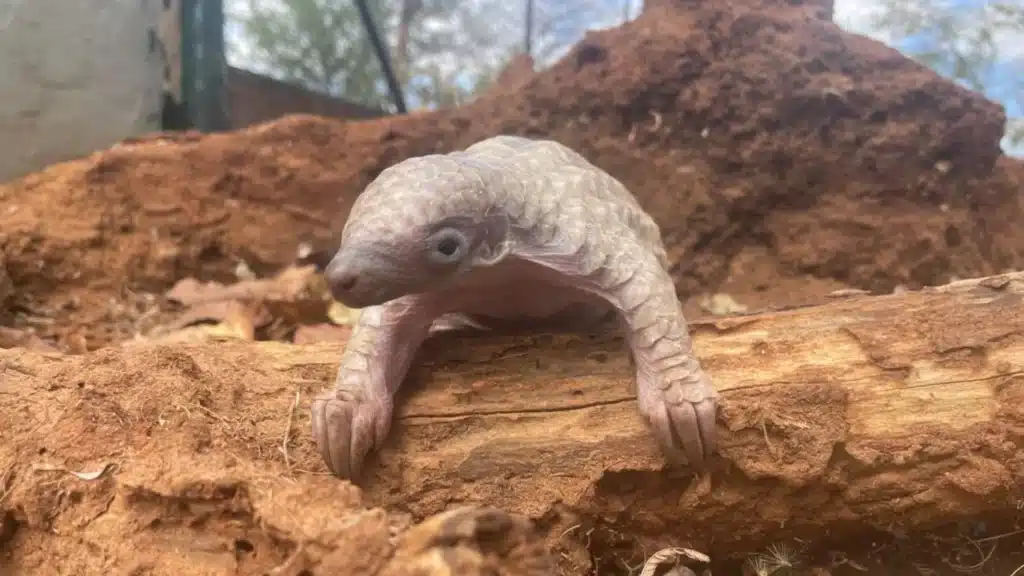
The rate at which pangolins are disappearing from our planet is truly horrifying. Up to 2,7 million of these critically important mammals are mercilessly hunted every year for the illegal wildlife trade. Credit: Umoya Khulula Archie, an infant Temminck’s pangolin in South Africa, is a survivor of this sickening scourge. His mother, tragically, was not so lucky. In a wicked act of wildlife cruelty, mother pangolin Sarabi was beaten about the head with a spade as she tried to protect her infant baby from poachers. It ultimately killed her. Sarabi was poached from the Kalahari Desert in Southern Africa, and suffered a terrible head wound when poachers attempted to uncurl her with a shovel. Their frenzied attack on this helpless, fragile creature fractured her skull and gouged out a big piece of flesh. They were most likely trying to force her to uncurl as she was tightly wrapped around her newborn infant, desperate to keep him safe. Credit: ASI/Dejan Radic After a successful sting operation, Sarabi was confiscated from the poachers and rushed for medical treatment. But the abuse she had endured was just too much, and heart-breakingly, she died as a result of her extensive injuries, stress and trauma. Her baby, Archie, was just six weeks old and weighed 280 grams (less than 10 ounces) when he was left orphaned. Sarabi’s baby, Archie, was entrusted to our partner, Umoya Khulula Wildlife Rehabilitation Centre in Tzaneen, South Africa, for life-saving care. At just six weeks of age, his survival was uncertain – especially as he lost 35 grams between the time he was confiscated and when he arrived in our partner’s care. That is a massive amount of weight for such a tiny creature. Archie’s mother, Sarabi, receives a CT scan. Despite efforts to save her, she succumbed to her terrible head wound. Credit: Umoya Khulula Archie received expert 24/7 care, began to suckle, and gained weight. He now weighs 11 pounds (5 kg), and once he reaches 12 pounds (5,5 kg), he will be released into a protected reserve where he can be kept safe and monitored while still enjoying life in the wild. Our partner is currently seeing some of the WORST cases of cruelty towards pangolins. It costs an average of $5,000 (around £3,980) to medicate and rehabilitate each one that survives… THIS is why it is CRITICAL we fight to save every one. Pangolins are the most trafficked mammal in the world, relentlessly hunted from the wild for their meat, skins and scales. The animals are consumed as a delicacy in Asian countries like Vietnam and China, while their skins are turned into bags and belts. As for their scales, some people believe they can cure ailments, even though this has never been proven by science. Pangolin tongues may be dried and carried as good-luck charms; their fetuses consumed as aphrodisiacs. Credit: WCRU/ZXZhang Because of sickening, widely held misconceptions about pangolins in Asia and Africa, it is easy to see why this timid nocturnal creature is being hunted to the brink of extinction. Help us rescue and save every pangolin life we can! All eight species of pangolin are threatened with extinction, with three being listed as critically endangered and perilously close to being wiped out. Archie is almost ready to be released, but our partner has other pangolins in its care that urgently need critical treatment and care in order to survive. Sweet Pea, a rescued pangolin who weighs less than 9 pounds (4 kg), desperately needs supplementary feed and continued long-term rehabilitation in order to regain her strength. Without the support of people like you, she will not have a fighting chance. Can Sweet Pea count on you today? Credit: Umoya Khulula For every $5,000 we raise (around £3,980), we can help save the life of a pangolin and give hope to the entire species. Given the alarming pace at which pangolins are hurtling towards extinction, EVERY PANGOLIN LIFE COUNTS. So please, be as generous as you can right now. The survival of the species relies on the survival of each individual pangolin – and you have the power to help save lives now.
Researchers make unexpected discovery in rhino dung at national park in Nepal — here’s what experts found

Article written by Kaiyo Funaki Originally published by Yahoo News (Feb 19, 2024) Nepal’s monsoon season shuts down Chitwan National Park to visitors every year from June to August, but the residual effect of flooded rivers leaves unwanted items that threaten the one-horned rhinoceros that inhabit the forest. What’s happening? A study found macro pieces of plastic in 10% of the 258 rhino feces samples collected from 2020-22. The rhinos were exposed to the plastic after flood waters receded, leaving areas where the creature feeds covered with trash. Locals in Chitwan dump their garbage in landfills situated on the banks of the Narayani River, which allows it to get swept away by heavy rains. Additional pollution comes from tourists and locals who litter in public areas of the forest. The ingested waste the researchers discovered included plastic balls, soft drink bottle caps, chewing tobacco sachets, polythene bags, product packaging, and masks. “Chewing tobacco sachets were the most pervasive compared to other items,” said Balram Awasthi, lead author of the study and a doctoral student at the Chinese Academy of Sciences’ Xishuangbanna Tropical Botanical Garden. However, the researchers surmised that the prevalence of plastic in rhino fecal matter was likely higher than what they reported because they only “documented visible particles and did not usually search entire dungs.” Why is plastic in rhino feces concerning? The International Union for Conservation of Nature Red List considers the one-horned rhinoceros vulnerable, with around 2,200 left in the wild. A 2021 census conducted by Nepal lists 752 one-horned rhinoceros in the country’s wildlife sanctuaries. Though it’s unclear what the long-term effects of plastic ingestion are for the species, Awasthi noted it “could cause problems with their digestion, metabolism, and reproduction.” It may have also been the primary driver of rhino deaths in Chitwan. “We only looked at plastic that could be spotted with the naked eye. There may be smaller plastic particles that are doing the damage,” he added. Amir Sadaula, a veterinarian at Nepal’s National Trust for Nature Conservation, couldn’t confirm whether plastic ingestion had killed rhinos in the area but said that it could block digestive processes or leach toxic chemicals into the animals’ bodies. The research team also found that 18% of the dung samples from the inner, restricted zone of the park contained plastic — three times higher than that of the samples collected from the fringe areas where people live and visit. That likely means the rhinos are transporting plastic from one zone to another, creating an additional problem for other species in the ecosystem. Regardless, plastic pollution continues to be a pervasive issue for creatures around the world. Autopsies of camels, orcas, and bears have all revealed plastic waste in their systems. What’s being done? The conclusion of the study called for comprehensive waste cleanup programs after monsoonal floods to prevent plastic garbage from polluting the areas where rhinos and other creatures forage. Awasthi also suggested sustainable waste management systems for towns upstream to prevent trash from affecting rhino habitats.
Thai police to charge two over pet lion spotted cruising in Bentley
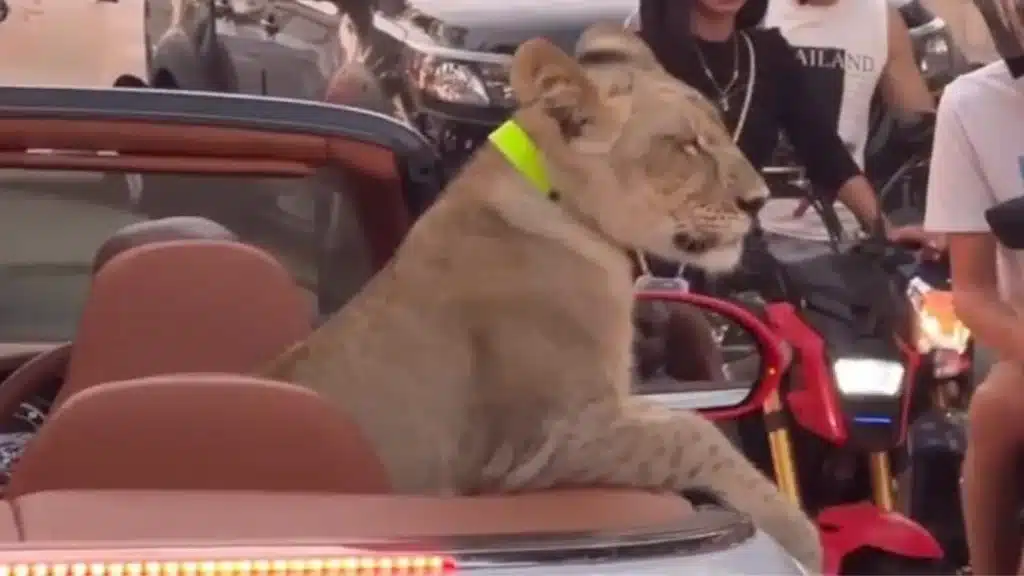
Article written by Yvette Tan Originally published by BBC News (Thu, Jan 25, 2024) Police in Thailand have arrested a woman whose pet lion was pictured going on a joyride in the streets of Pattaya. A video that has now gone viral shows the chained lion cub seated in the back of a white, open-top Bentley. The lion was being driven about by a Sri Lankan man who has since left the country, and is believed to be a friend of the woman, Sawangjit Kosoongnern. While it is not illegal to own a lion in Thailand, it needs to be officially registered. Authorities in Thailand said Ms Sawangjit claimed to have bought the animal from a Thai man in Nakhon Pathom province, who successfully facilitated its delivery to Pattaya. However he failed to have his facility checked by officials before doing so, which made both the transfer and ownership of the animal illegal. She is therefore facing charges of possessing a controlled wild animal without permission, which carries a penalty of a year’s imprisonment and a fine of up to 100,000 baht ($2,800; £2,200). Police were also reportedly looking to charge the Sri Lankan man, who had kept the lion in his rented pool villa, but were unable to as he is no longer in Thailand. He was due to be charged with bringing a controlled wild animal into public places, which carries jail time of up to six months and a fine of 50,000 baht. The man who sold the lion to Ms Sawangjit will also face charges of moving an animal without permission. Officials say there are currently 224 lions in Thailand that are legally owned. Banner credit: BBC News
Africa’s rhinos are headed for extinction.
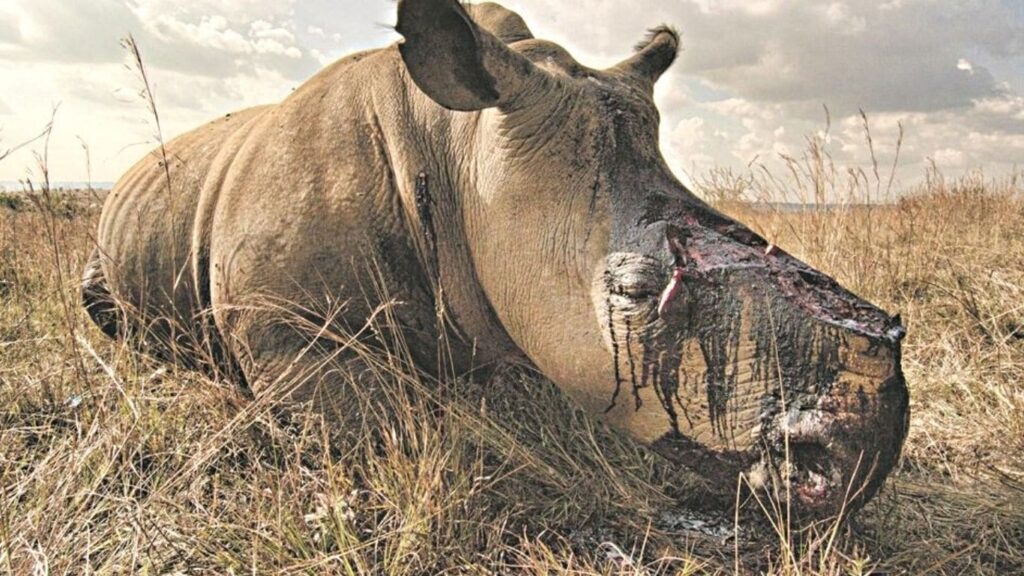
Africa’s poaching crisis is spiraling out of control, wiping out rhino populations and other irreplaceable wildlife species across the continent. Shockingly, at least one rhino is killed by poachers EVERY DAY in South Africa alone. As you read this, at least one and often many more magnificent rhino, blissfully unaware of the impending danger, is destined to be brutally butchered for its horn in the next 24 hours. Fueled by the insatiable greed of largely Asian markets, rhinos are relentlessly slaughtered for their horns sold and used in unfounded traditional Chinese medicine. The closer rhinos edge to extinction, the more “valuable” their horns become. Credit: Reuters Without any exaggeration, the situation is dire. Black rhinos are listed as critically endangered, with only 6,100 individuals remaining. White rhinos are decreasing rapidly, with less than 17,000 left in the wild. We MUST ramp up our anti-poaching efforts to prevent rhinos from becoming extinct in the wild. Our team has a vital secret weapon in the fight against criminals. Our partner, Care for Wild (CFW), is the largest orphaned rhino sanctuary in the world and specializes in the rescue, rehabilitation, and protection of orphaned and injured rhinos. CFW operates 24/7 anti-poaching patrols to protect the rhino population in the Greater Barberton Nature Reserve in Mpumalanga. These patrols, by expert rhino guards, are supported by canine and mounted units and carried out with near-military precision. The canine and mounted units consist of four highly trained dogs and 14 horses that play a pivotal role in protecting rhinos by patrolling fence lines, securing perimeters, and detecting potential threats. The dogs possess remarkable tracking abilities, detecting scents and footprints and even detecting the presence of snares and firearms. Horses navigate challenging terrains with ease, cover greater distances than foot patrols, and provide rangers with a much higher field of vision. Using such anti-poaching patrols essentially DOUBLES the impact of rangers on the ground. These dogs and horses are the unsung heroes in the ongoing battle against poaching, and they need YOUR help today. Please help provide essential care to vital dog and horse anti-poaching units in South Africa. These four-legged heroes help keep rhinos alive. The dogs and horses work in tough conditions, negotiating rugged terrain and the fierce African sun. It is vital that they get the best possible care, including dental and veterinary care and vaccinations against rabies, tetanus, and horse flu. Plus, emotional support and love are so important for animals whose lives are dedicated to helping other animals. If we can raise $12,000 (£9,500), we can cover the next round of dental and veterinary health check-ups and vaccinations for the heroic four-legged anti-poaching teams. Funding their care will show your IMMENSE appreciation for the animals’ dedication and your recognition of their work in the fight against rhino poaching. They deserve every bit of support we can give them! Please donate NOW! Together, we can ensure that the anti-poaching paws and hooves on the ground at CFW are in the best possible health to continue their heroic work for endangered wildlife species. So please join us in our mission to help save rhinos and protect their heroes by donating as generously as you possibly can to Animal Survival International today.
World’s first IVF rhino pregnancy could save a nearly extinct subspecies
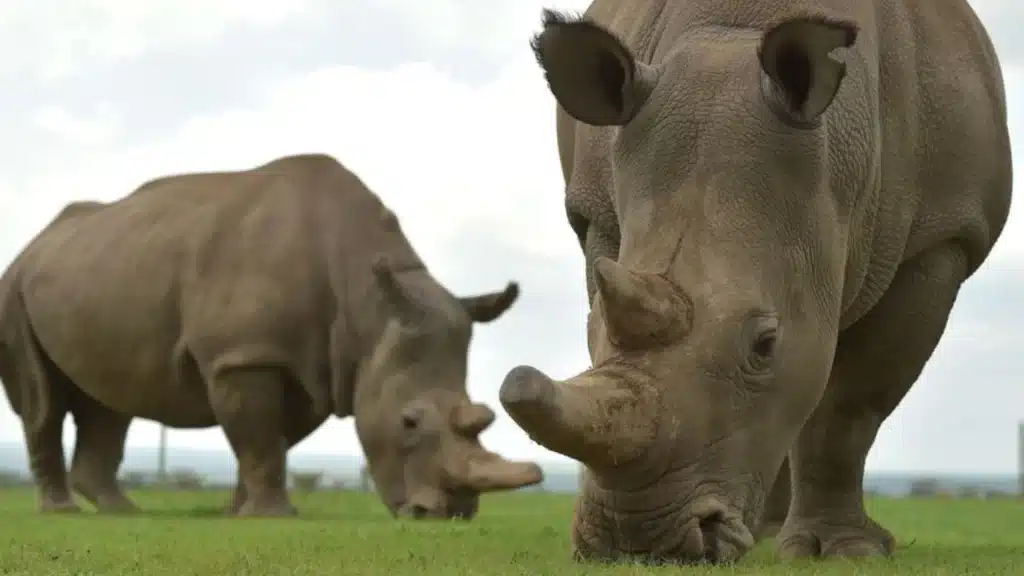
Article written by Catherine Duncan Originally published by Smithsonian Magazine (Fri, Jan 26, 2024) Only two northern white rhinos remain, but the new reproductive breakthrough may pull them back from the brink of erasure In a first, scientists have achieved a rhinoceros pregnancy through in vitro fertilization (IVF)—an innovative technique that could be the key to saving the northern white rhino. The critically endangered subspecies is on the brink of extinction, with a living population of just two individuals. Researchers with the BioRescue project conducted the procedure with a southern white rhino, a closely related subspecies, by transferring a lab-made rhino embryo into a surrogate mother in Kenya. Though the mother died seventy days into her term, after succumbing to an unrelated bacterial infection, her pregnancy has opened the door for the northern white rhino’s restoration. Tissue harvested from the embryo revealed it was the result of the IVF procedure, providing the crucial “proof of concept” that the technique could be applied to restore other rhinos, says BioRescue project coordinator Jan Stejskal to National Geographic’s Dina Fine Maron. “To achieve the first successful embryo transfer in a rhino is a huge step,” Susanne Holtze, a scientist at Leibniz Institute for Zoo and Wildlife Research in Germany, tells BBC News’ Rebecca Morelle and Alison Francis. “Now I think with this achievement, we are very confident that we will be able to create northern white rhinos in the same manner and that we will be able to save the species.” The northern white rhino population has been decimated amid aggressive poaching, driven by rampant demand for the animals’ horns. The only individuals left—two elderly females—live under strict surveillance in Kenya, reports CNN’s Jessie Gretener. “This animal played a crucial role in a complex ecosystem before it got extinct for a while,” says Thomas Hildebrandt, head of the project, to the Washington Post’s Rael Ombuor and Ami Vitale. “It lived in the landscape and architecture of central Africa—bringing back the northern white rhino to this ecosystem will help to heal the ecosystem.” But returning the species to the wild is no easy task. The last male northern white rhino died in 2018, and neither of the remaining females are capable of carrying pregnancies. Still, preserving the rhinos has rallied international support. Through IVF, BioRescue hopes to take a lab-grown northern white rhino embryo and implant it into a southern white rhino, which will carry the fetus and help repopulate the critically endangered species. The organization’s recent IVF success was the first phase of this process and an effort that spanned years and borders. The team retrieved sperm from a southern white rhino in Austria, collected egg cells from a southern white rhino in Belgium, fertilized the samples in vitro in Italy and finally transferred the two embryos to the surrogate mother in Kenya, according to CNN. It took 13 attempts to achieve a sustained pregnancy through IVF, reports BBC News. “It’s very challenging in such a big animal, in terms of placing an embryo inside the reproductive tract, which is almost two meters inside the animal,” Holtze tells the publication. The challenges don’t stop there. As BioRescue turns its attention to transferring a northern white rhino embryo into a surrogate mother, they will have limited attempts to reach success. Only 30 of these embryos exist, harvested from the eggs of one of the remaining females and the preserved sperm of the now-deceased male. Now, the team is racing against time, as scientists hope that any new northern white rhino calves can live among the remainder of their kind, meaning “they need to be born before the two remaining females die,” writes National Geographic. “These animals learn behaviors—they don’t have them genetically hard-wired,” conservation ecologist David Balfour, chair of the International Union for Conservation of Nature’s African rhino specialist group, tells National Geographic. “We’re really skating on the edge of what’s possible… but it’s worth trying.” Two southern white rhinos, named Arimet and Daly, are the likely surrogates for the embryos, reports the Washington Post. BioRescue will continue to use southern white rhinos as surrogates until the northern subspecies can breed independently—which, if all goes according to plan, will likely occur in the next 10 to 15 years. “I think the situation for the northern white rhino is quite privileged for the embryo transfer because we have a closely related recipient—so their internal map is nearly the same,” says Hildebrandt to BBC News. The long-term success of the project, however, will hinge on a series of breakthroughs. For one, IVF across a subspecies has never been attempted before. Scientists at BioRescue also hope to create more rhino sperm and eggs from stem cells, which could in turn produce additional embryos—an incredibly experimental technique, according to BBC News. Yet in the face of uncertainty, the BioRescue team remains optimistic—and steadfast. “One thing we have to understand is that behind the extinction of the northern white rhino is man. It’s not because of evolutionary pressure, it was greed, it was the consumption of the rhino horn,” says Stejskal to BBC News. “So, in a way, we are responsible, and if we actually have a technique that can assist us to save them, then I think we have a responsibility to use it and try to save them.” Banner credit: Tony Karumba/AFP
Belgium bans hunting trophy imports, activists want Europe to follow
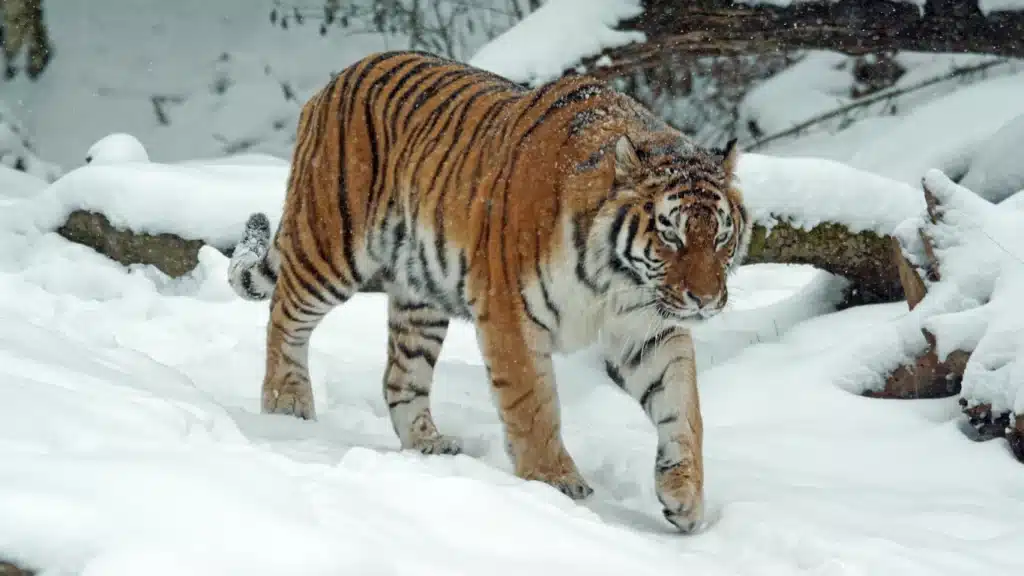
Article written by Christian Levaux and Marta FIorin Originally published by Times Live (Wed, Feb 7, 2024) Belgium has banned the import of hunting trophies such as lion claw bottle openers and ashtrays made from elephant feet, a move campaigners hope will be followed by other European countries. Belgium’s parliament voted in late January to ban the imports from a range of rare or threatened animals including alligators, lions, tigers, elephants, rhinoceroses, various turtles, orangutans, lemurs and northern hairy-nosed wombats. Belgian environment minister Zakia Khattabi told Reuters the Belgian ban was more symbolic than significant because licences could be issued by other EU countries. “It’s a political signal … because we know that today, on a European scale, few countries ban as ambitiously as Belgium,” she said, adding there were bans in Finland and the Netherlands and France was working on one. The European parliament called, in October 2022, for a ban on the import of trophies derived from species listed by CITES, an international agreement that aims to ensure that trade in wild animals and plants does not threaten their survival. EU law says an import permit is required for trophies of threatened or rare species, and checks should also be carried out on trophies from a wider range of wild animals. Ruud Tombrock, executive director at the Humane Society International, an animal protection organisation, said 25,000 animal trophies had been imported into the EU from 2014 to 2022, of which about 500 were into Belgium. “And those were trophies in particular from cheetahs, polar bears and the hippopotamus,” he said. Tombrock said industry arguments that trophy hunting was essential for the conservation of species and that local communities benefited were wrong. Instead, he said it was often that healthy animals were taken out and the main beneficiaries were foreign nationals organising trips and local elites.
Urgent help needed to save a young elephant from DEADLY SNARE!
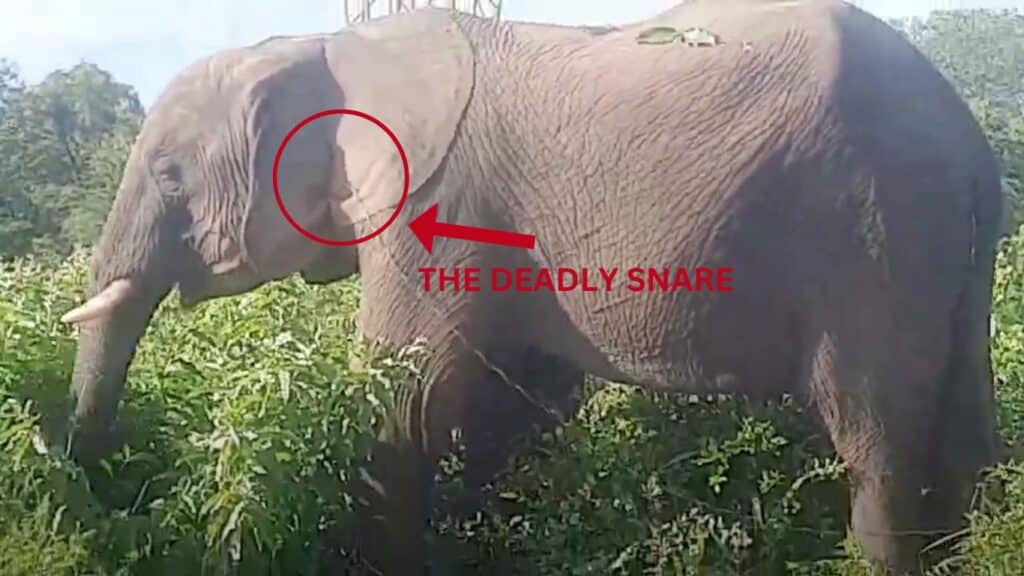
A young elephant in Zimbabwe with a deadly snare wrapped around his head, neck, and left ear needs your help right away. Credit: KAWFT With each passing day, the snare tightens its grip around the animal’s throat – and without our immediate intervention, his life could be cut painfully short. Please help get our emergency rescue team to him right away! Our team is ready and waiting to remove the snare and save Masimba – meaning “Strong” in Shona – but we must raise the funds to charter a helicopter and dart him for treatment… …If we do not act FAST, he could die. Read on… Young male elephant in excruciating pain needs your urgent help! Please help us raise funds for an URGENT snare removal for an elephant in terrible pain! Time is of the essence! Credit: KAWFT Our partner in Zimbabwe, Kariba Animal Welfare Fund Trust (KAWFT), spotted the 15-year-old male in the vicinity of the Lake Kariba region and immediately noted a snare wound tightly around his head, left ear and throat. The wire from the snare is trailing roughly 13 feet (four meters) to the ground, and as it tightens more each day, it is likely causing Masimba immense pain. He cannot move his left ear at all due to the restriction. Elephants’ ears are critical to their wellbeing, which means this young bull is in SERIOUS trouble right now. The primary role of African elephants’ ears is not only for hearing, but for thermoregulation – ensuring the animal maintains an optimal body temperature in hot weather. As the elephants flap their ears, they create a cooling breeze. Moreover, blood vessels close to the surface release heat, further cooling the animal. With summer temperatures in Lake Kariba currently reaching – and sometimes exceeding – 95°F (35°C), this function is critical to the animals’ overall health. Elephants also use their large ears to deter predators, spreading them out to appear even larger to deter potential threats. For illustrative purposes, it’s hard to get close to injured elephants as they are extremely protective of each other. Credit: KAWFT The ONLY way to RAPIDLY and effectively remove the snare is by darting Masimba from a helicopter. Once he is tranquilized, our team can rush in and remove the life-threatening trap. We need funds for the chopper right away – please help! With your help, our team has effectively removed snares from elephants in Zimbabwe in the past. With your support now, we can do it again. It is too dangerous to approach Masimba on foot; particularly as he is part of a large herd with highly protective mother elephants and their calves. It is critical we hire a helicopter from which to dart the animal and that we MOVE fast. If Masimba is not darted and treated SOON, the snare could begin slicing into his trachea, cutting off his air supply and killing him. Please help us raise $10,500 (£8,316) to charter a pilot and helicopter, and hire a wildlife vet to carry out this critical rescue operation FAST. Snare injuries cause excruciating pain and slow animals down, making them more vulnerable to poachers. Left untreated, they can be deadly. Credit: Steve Edwards: CATERS NEWS 1 A successful snare removal could see him living happily for another 20 to 25 years – but if we do not help right away, his life may be cut tragically short as the wire cuts ever closer to his trachea and inhibits breathing. Please, open your heart to an elephant in great need right now. Donate as much as you can to Animal Survival International today.
Smoked monkey and whole sharks: the suitcase smugglers feeding Europe’s hunger for bushmeat
Article written by Phoebe Weston Originally published by The Guardian (Thu, Feb 1, 2024) Customs officers and scientists are working together to combat the highly lucrative illicit trade in wildlife meat that is helping to push some species to extinction At Brussels airport, customs staff are digging into suitcases and cooler boxes full of charred meats and fish. There are boxes of flies with shrivelled dead caterpillars and juicy live ones. It is 6am, and they are checking all hold luggage from four morning flights – three from Africa and one from China – in an attempt to stem the flow of illegal meat from wildlife making its way into Europe via this major transit hub. There is a lingering smell of dried seafood. Staff here are used to finding all kinds of creatures in baggage, from a 1.5-metre basking shark folded inside a box to a whole smoked monkey. But most meat comes dried, smoked, charred and chopped, so it is hard to identify it. In some cases, that’s probably the point. A hunk of meat being confiscated could be from a cane rat, catfish, monkey or pangolin – or it could just be a bit of beef. Researchers estimate 3.9 tonnes of bushmeat a month is smuggled through this airport, including bits of elephants, pangolins and crocodiles, and demand for bushmeat has become one of the main drivers of wildlife trafficking. The trade in some species has created a “significant extinction threat” to some wildlife populations, particularly in Asia, Africa and South America, according to the first global assessment of hunting’s effect on terrestrial mammals. Millions of people around the world rely on bushmeat as a source of local protein. However, it is increasingly being funnelled into a lucrative organised trade, providing luxury goods to an international market which pushes prices up. Credit: The Guardian A recent Europe-wide effort to tackle it, Operation Thunder, resulting in more than 2,000 seizures of endangered animals and protected timber during a law enforcement crackdown in October. The illegal wildlife trade is one of the most profitable areas for organised crime and is continuing to grow, Interpol warns. It also poses a significant risk to human health. Researchers tracking personal baggage through Paris’s Charles de Gaulle airport have found entire sheep and calves wrapped in plastic and placed in holdalls, which had apparently been slaughtered just before boarding. These were not protected species, but the movement of animal carcasses and products risks the creation of novel infectious diseases, as well as spreading existing ones, such as mpox (formerly known as monkeypox) and Ebola. There is no easy way of testing for pathogens on these bits of meat in an airport, even if officials knew which pathogens to look for. “Covid was a warning shot,” says Sandrella Morrison-Lanjouw, a biosurveillance researcher from Utrecht University. “Contaminated meat from a wet market in Africa can be in Europe in less than eight hours, but we won’t find what we are not looking for.” Credit: The Guardian The scale of the illegal bushmeat trade is unknown, but scientific reviews suggest it is becoming increasingly commercialised, with more demand in overseas cities and urban centres as well as rural areas. Within Africa, reports from countries including Angola and Nigeria suggest there is increasing demand in big cities, with more people dependent on the trade for income. As customs staff dig through the bags in Brussels, they confiscate all meat, as well as all fish that is not dried or gutted, free from insects and weighing less than 20kg (44lb). Usually, confiscated meat is incinerated, as it is too costly and complicated to find out what these animals could be. This makes it impossible to provide scientific data on the extent of this trade via airports. Authorities say some individuals fly in every week, with as much as 80kg of luggage. “For them, it’s an income,” says Maarten Weyters, team leader of Brussels airport customs checks. Most planes do not undergo full checks on the baggage, as this one has. Credit: The Guardian In 2023 Weyters says, his team found 56 items of wildlife listed as endangered by the Convention on International Trade in Endangered Species of Wild Fauna and Flora (Cites), including pangolin, coral and crocodile. “I think most of them know it’s illegal,” Weyters says. “It’s also illegal where they live.” Today is relatively quiet: 10 seizures, adding up to 75kg of contraband wildlife. Meat is found concealed under dried fish or bags of vegetables and herbs, and is often wrapped in black binliners. In many packages, the meat is already decaying, dotted with maggots and flies. These can pose a risk to biodiversity, introducing insect pests and potential pathogens to new environments. “Very little is known about the true volume of this meat,” says Morrison-Lanjouw, who has written extensively on unregulated meat imports. The level of transparency at Brussels is unique, she says – very few airports in Europe will let researchers study what is happening. The issue is a “biosurveillance blind spot for the EU”, she adds. A key problem is identifying the meat quickly, so law enforcement can intervene. To get around this, researchers take a portable DNA testing unit to the airport – the first time such a device has been used to test bushmeat in a European airport, they believe. The technology needs to be as rapid and simple as possible, says Emily Patterson, a PhD researcher in forensic DNA analysis at Leicester University. “The ideal scenario is someone with minimal training could do all of this.” Credit: The Guardian Wearing hazmat suits, Patterson and Morrison-Lanjouw prick meat samples and pass them through the MinION, a machine developed by an Oxford University spin-off to extract DNA. The kit can fit inside a suitcase and identify samples within eight hours. One man casually announces he is carrying duiker, an African antelope, including one 500g joint that he says he could sell for $30 (£24). The DNA sequencing test shows that the two species he had were bay duiker and Maxwell’s duiker, both species listed in Cites’ Appendix II, meaning trade must be