

Time is running out to stop the spread of rabies on South Africa’s coasts.
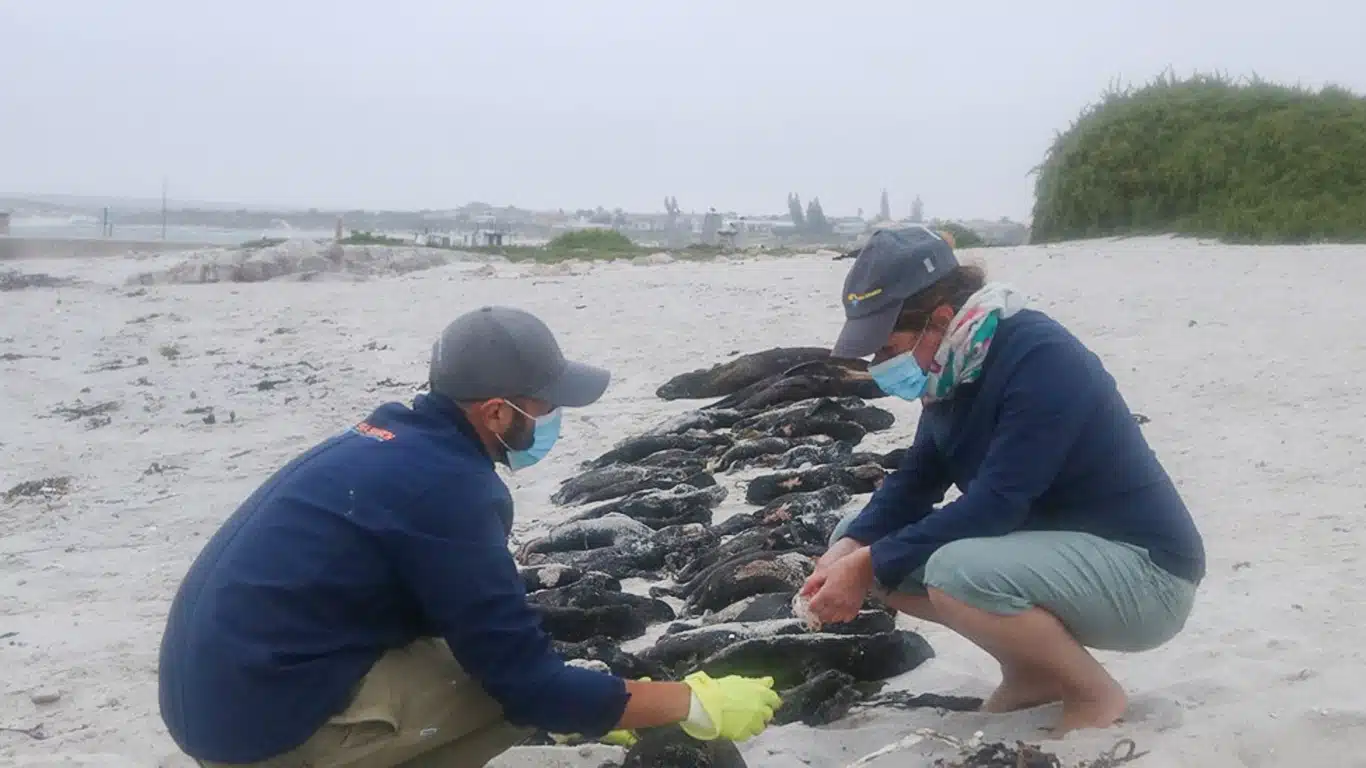
A deadly threat is emerging off the coast of South Africa – one that has the potential to develop into a widespread marine catastrophe. For the first time ever, rabies is spreading through the Cape fur seal population in South Africa, sparking fears of a far-reaching marine pandemic. Without immediate action, this devastating virus could spread rapidly, endangering countless more marine mammals and triggering an ecological crisis. This is not just a disease outbreak – it is a potential ecological and public health crisis. For the first time ever, rabies is spreading through the Cape fur seal population, sparking fear that the virus will infect other marine mammals. Credit: Sea Search Rescue and Conservation/Herbert Gawrisch The first case in Cape fur seals was confirmed in May 2024. Since then, South African scientists have been struggling to track the virus as it spreads amongst local colonies. In the final stages of infection, the rabies virus essentially ‘commands’ the animal to bite, transmitting the virus through saliva. According to the National Institute for Communicable Diseases, “Multiple reports of attacks on humans by aggressive Cape fur seals have been reported over the last few months along the Cape coastline. This is the first incidence of rabies being maintained in a marine mammal population.” We know the virus can infect humans and land mammals. What we don’t know is whether it can jump species yet again, potentially infecting other marine mammals such as whales, orcas and other seal species. Local scientists are battling to understand this terrifying new development. To prevent this from becoming a full-blown pandemic, they need all the help they can get. The deadly disease caused by a virus, often manifests with aggressive behavior in infected animals. This aggression is a key factor in the virus’s transmission. Credit: Sea Search Rescue and Conservation If we ignore this terrible threat, the virus could spread to other marine species, coastal wildlife, and humans. Rabies is a fatal disease; if it isn’t treated immediately after infection, contracting full-blown rabies is a death sentence. We must stop the spread now to prevent countless deaths, both on land and at sea. Animal Survival International (ASI) has partnered with Sea Search, a marine research NGO that was among the first to identify this unprecedented outbreak. Their team of scientists is leading the response, tracking infected seals, conducting post-mortems, mapping behavioral changes, and gathering critical data from coastal colonies to understand how rabies is spreading through the marine ecosystem. But their only surveillance boat was recently destroyed, and Sea Search is now unable to continue their vital, life-saving work. The Sea Search surveillance boat was critical in the monitoring of the spread of rabies in Southern Africa’s marine mammals – we must help the research team return to the sea immediately. Credit: Sea Search Rescue and Conservation The surveillance boat was destroyed in a recent transport accident. Without it, they are unable to access remote colonies, losing critical time, data, and the ability to contain the outbreak at its source. Rabies is continuing to spread, and for every day without this vessel in the water, more animals, ecosystems and people are at risk. This surveillance vessel is not just a boat — it is the frontline defense against the spread of rabies across the world’s oceans. With your support, we can help the Sea Search rabies research team return to the sea immediately, so they can: Reach remote seal colonies rapidly and consistently to monitor the spread of the infection Administer vaccines and facilitate medical intervention for suspected infected animals Coordinate with veterinarians and epidemiologists to understand the epidemic and develop effective solutions Humanely manage infected individuals to stop the spread Protect the seal colonies from fishermen and others who may try to kill the seals out of fear Getting Sea Search back on the water will give us the best chance of containing this virus before it spreads further through the marine ecosystem — and, potentially, beyond. Please, donate today to help protect marine life, coastal ecosystems and human communities from the spread of this deadly, fast-moving virus.
21 wild cats including tigers, lynxes and leopards dead from avian flu.

A freak avian flu outbreak at a Washington wild animal sanctuary has left 21 big cats dead and 16 more in need of critical support. Credit: WFAC Because it is suspected that food was the source of the outbreak, the sanctuary has been forced to destroy three tons of supplies to avoid further risk of infection. Now, the survivors need animal-lovers like you, to keep them fed as they recover. 16 vulnerable and hungry wild cats need food and critical support after an avian flu outbreak. The Wild Felid Advocacy Center of Washington (WFAC) in North Shelton, Washington, is a lifetime haven for tigers, lynxes, cougars, bobcats, servals, African leopards and other large felines rescued from abuse, exploitation and neglect. It provides permanent safe sanctuary, giving the animals the peace, comfort and well-being they deserve. Credit: WFAC But tragedy has struck. Following an avian flu outbreak across several U.S. states, the sanctuary tragically lost 21 of its big cats, including vulnerable lynxes and an endangered Bengal tiger. Right now, 16 survivors are in quarantine, receiving critical care. After destroying three tons of food – which would have fed all 16 survivors for five months – to avoid further risk of contamination, they need to replace the food fast. Credit: WFAC Please help us provide crucial food for the survivors. These big cats need our help, and they need it today. Avian flu is a highly contagious virus carried by wild birds, spreading through respiratory secretions and bird-to-bird contact. It can also be transmitted to predators who eat infected birds. The virus can quickly progress to pneumonia, causing death within just 24 hours. Now, as the WFAC team works around the clock to keep the surviving cats safe and prevent further infections, their resources are stretched dangerously thin. Credit: WFAC If we can raise $6,000 (£4,825), we can feed the 16 surviving big cats for a month, providing them with the safe, high-quality food they need to survive. Every $12 (around £10) you give will feed a big cat for a day – and just $360 (£290) will give a tiger, leopard or another cat a month’s worth of nutritious food. This is the most devastating tragedy that has struck at the sanctuary since it opened its doors 20 years ago. Your donation will help the surviving animals recover, so they can continue living peaceful, healthy lives. Credit: WFAC Please help give these brave survivors the best chance to survive this deadly outbreak by keeping them fed and strong – donate right away.
1,000 days of war means 1,000 days of animal suffering.
It has been over 1,000 days since war broke out in Ukraine – and every day has meant unbelievable suffering and abject terror for the wild animals abandoned as missiles strike and bullets fly. Credit: WARC Countless animals have died and countless more still wander the frontlines, miraculously escaping death as their homes are blown up and their families killed. Many of these wild animals were kept as “pets” before war broke out. Once the fighting began, they were either abandoned to die in their cages or released to fend for themselves. Despite being left to starve to death or be slaughtered by Russian soldiers, many animals have managed to survive, scavenging what food they can from amidst the rubble and destruction. For these terrified wild animals, every day on the frontline could mean death. We MUST keep up our search-and-rescue missions to save these forgotten animals – but we can’t do it without your help. Every week, our team risks their lives to save desperate wild animals from the war zone. As freezing winter sets in and enemy troops pour into Ukraine, we are fighting to save them all before it’s too late. Credit: WARC A bitter winter has Ukraine in an icy grip, leaving animals to freeze on top of ravenous hunger, debilitating injuries and constant terror. Our partner in Ukraine, Wild Animal Rescue Center (WARC), needs to conduct critical rescue missions for animals on the frontline, but snowy conditions are making it extremely difficult to continue their life-saving work. One of the most crucial needs is a set of specialized winter tires, to let its animal ambulance safely navigate the pot-holed, treacherously wet and icy roads. Getting to the animals is only half the battle. When our team finds them, many are so badly injured, they need major medical intervention. And with below-freezing temperatures coupled with the constant threat of attack, treating animals on the side of the road can be deadly. If we can get the snow tires and install an examination table in our partner’s animal ambulance, we will drastically improve the chances of survival for both the animals and our hard-working team. Credit: WARC Last but not least, we need to supply secure animal crates for transporting large animals like bears from the frontlines to the safety of the WARC sanctuary. If we can raise $4,300 (approximately £3,400), we can equip our partner’s animal ambulance with everything it needs to continue saving defenseless animals in Ukraine. We promised to help until the war is over, but we can only do it with your continued support. Credit: WARC Please, help us give these animals a chance at survival by donating as much as you possibly can right away.
Baby pangolin stuffed in a sack and left to die.
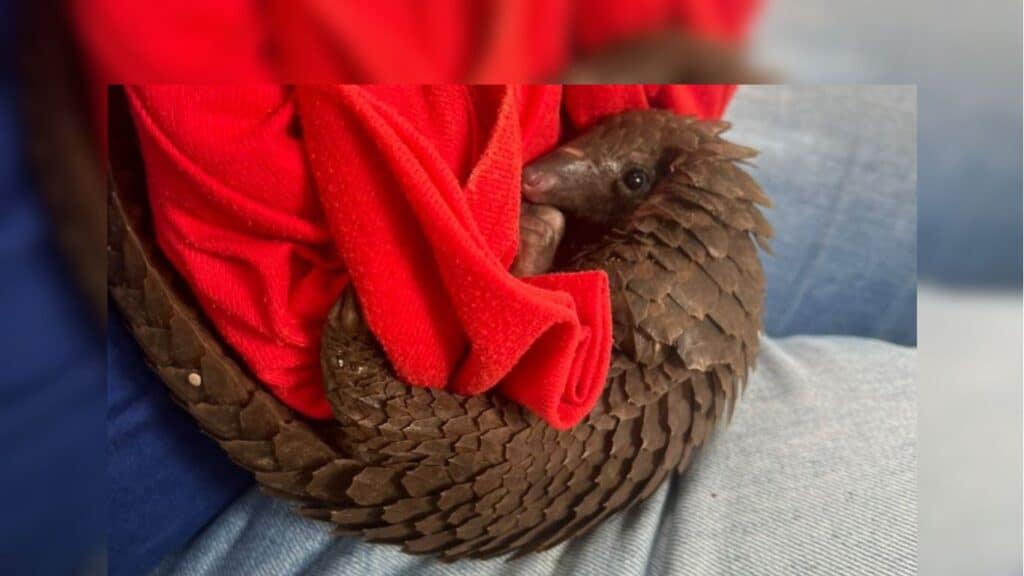
Today, an eight-month-old pangolin pup desperately needs your help. Saved from a bushmeat market in Lekki, Nigeria, after a tip-off, she was found in a truly horrendous state. Credit: GWCI The fragile young animal was stuffed into a filthy sack and infested with hundreds of disease-carrying ticks, which clung to every inch of her body. With the parasites clinging to every inch of her poor body, it was the worst infestation our partner Greenfingers Wildlife Conservation Initiative (GWCI) had ever seen. Tikki the pangolin is just a baby. Her survival hinges on specialized nutrition and expert care. Our partner took Tikki into its care. Once every tick had been painstakingly removed from her little body, she was moved to isolation because she probably still harbors tick eggs, which could cause a disease outbreak at our partner sanctuary. Each of the hundreds of ticks had to be carefully removed by hand. Credit: GWCI Tikki needs close monitoring and specialized milk formula over the next several months. This milk formula is critical, and without it, Tikki will not survive. Once she is fully recovered, she will be released into a protected area where she can live in her natural environment while remaining safe from poachers. As poachers ruthlessly hunt down every pangolin in Nigeria, our partner is one of the few organizations fighting to save these endangered creatures. Image for illustration purposes only. Credit: WCRU/ZXZhang Pangolins are sold on the black market and their body parts harvested for use in ‘traditional Chinese medicine’ (TCM), even though no benefits have ever been proven. Their meat is considered a delicacy in some Asian and African countries, and their skins are turned into bags and belts. Driven by greed, pangolins are being poached to extinction. There are few safe spaces for pangolins in Nigeria and our partner has to work tirelessly every day to save every life it can. Rescuing these fragile animals from the clutches of poachers is essential – and we can do it, but only with your support. One life could make all the difference to the entire pangolin species. In the past 10 years, more than a million pangolins have been poached from the wild. Of the eight species of pangolin, two are considered ‘vulnerable,’ three are endangered, and three are critically endangered – indicating that they are terrifyingly close to going extinct. Credit: GWCI Without dedicated conservation work – and the support of caring people like you – their species stands little chance of surviving the next decade. Tikki may be “just one pangolin,” but with the creatures so close to extinction, every life counts. Can Tikki count on your compassion today?
Starving animals in Botswana resorting to cannibalism.
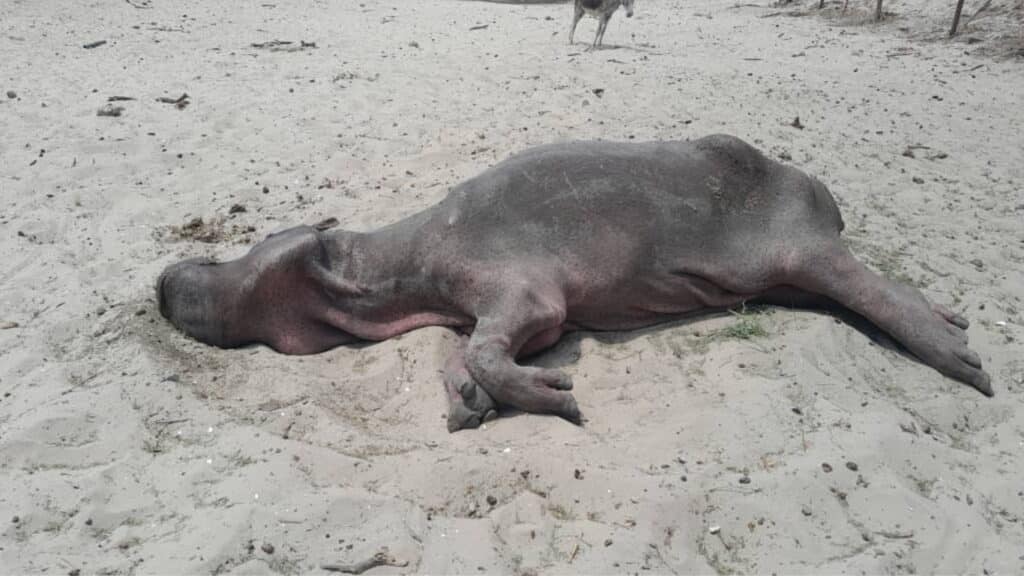
Across Southern Africa, drought-stricken hippos are resorting to dreadful measures to fill their achingly empty bellies. Credit: de Wets Wild In Botswana, these normally herbivorous animals are so hungry, they have been eating the rotting carcass of a dead cow. But somehow, it gets worse. In the Motopi region, a herd of hippos was seen eating excrement to fill their bellies… and then one of their own – a hippo that had become trapped in the sticky mud of a near-dry waterhole. The hippo was literally being eaten alive – THAT is how desperate the situation is. Right now, 88 animals are starving to death. Credit: MAWS Our partner in Botswana, Maun Animal Welfare Society (MAWS), has launched a vital assistance program for animals affected by this horrific drought, providing much-needed food and water. MAWS has now expanded the program to feed 13 hippos and 75 other animals who require immediate help. “Hungry, hungry animals… They are dropping like flies, we have calls every day about horses, donkeys and cows [falling] down and unable to get up. Starving to death or having eaten plastic bags in desperation.” – Equine Assist, Maun MAWS needs good quality bales, pellets, quick beet supplements, and lucerne – anything with high nutritional value – to help feed the animals, and they need it right away. Time is of the essence. These animals are eating plastic, rubbish and worse – and they are getting sicker, weaker, and ever closer to a slow, premature death. For just $48 (£38), you can feed a starving animal for a month. If we can raise $4,200 (around £3,300), we can feed all 88 animals for an entire month, including hippos, donkeys, horses and other starving creatures. Credit: MAWS Every $48 (£38) you donate feeds an animal for a month – hopefully, buying enough time until the rains come in late December. Botswana’s rainy season was supposed to start in November, but the rains never came. No one knows when the drought will break. We have to help until the rains finally arrive. Please, will you be the lifeline for 88 starving animals?
Infant flying fox, Suzie, was blinded, orphaned and maimed by a poacher.
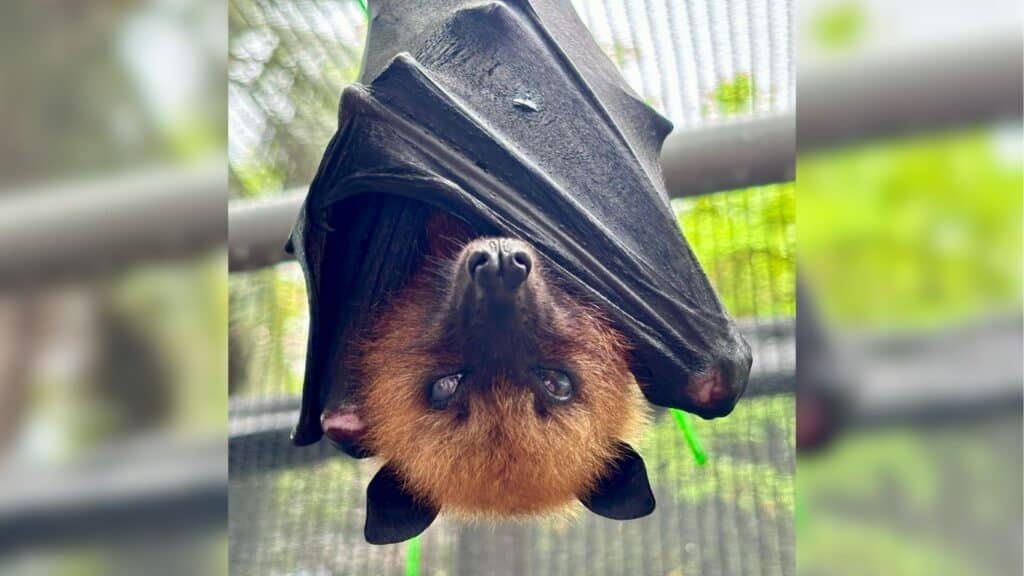
Suzie is a tiny, fragile infant flying fox who has endured horrendous suffering in her short life. A poacher in the Seychelles stole her from a tree while her mother was out foraging for food, and then horrifically abused her. Credit: Online Just a helpless infant torn from her mother, Suzie was blinded after being beaten and then used as a tourist attraction. The poacher beat Suzie so badly he blinded and maimed her. He then locked her in a tiny cage, took her to a popular tourist spot on the island of Mahé, and cajoled tourists into paying to touch her and pose for photos. Our partner, Protect Paradise Seychelles (PPS), rushed to the rescue as soon as it heard about little Suzie’s plight. Credit: iStock Suzie’s wings were badly damaged from her repeated, futile attempts to escape her filthy metal cage. She is certainly blind in one of her eyes; the fight is on to try and save the other. Our partner rushed Suzie to its sanctuary, where she joined PPS’s many other rescues. Suzie needs specialized care and calcium-enriched formula to survive. Credit:Protect Paradise Will you help one of our most fragile rescues ever? Female flying foxes give birth to a single pup at a time. Infants only start learning to fly at around three months old, and are completely dependent on their mothers for the first six months of their lives. When infants become too heavy to carry, their mothers fly out at night to forage, leaving their babies safely in a tree – or so they think. Little Suzie would have been waiting for her mother to come back, stuck in a tree and unable to escape, when the man beat her with a stick and stole her. Flying foxes in the Seychelles live on fruit-and-nectar diets and play a vital role in pollinating hundreds of the fruit we eat – bananas, mangoes and avocados among them. Not everyone knows the importance and fragility of flying foxes, but we know how important it is to fight cruelty by saving one creature at a time. Please, show your compassion to our planet’s every living creature – including little Suzie – by helping them with a donation today.
Poachers are killing weakened wild animals as they search for water during drought.
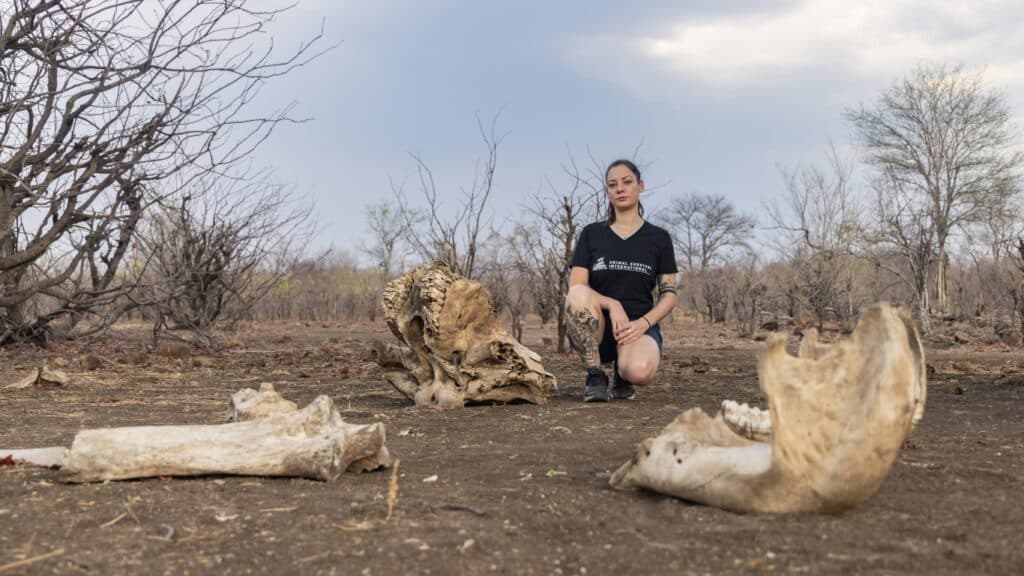
Along the banks of the drying-up Zambezi River, wild animals are being slaughtered as they drink what little life-saving water they can. While they battle devastating drought, cunning poachers are taking advantage of their weakness, and majestic elephants, giraffes, leopards, lions, sable antelope and many others are easy targets. The diminishing Zambezi River forms a natural boundary between Zambia and Zimbabwe. But with the river running low, heartless criminals simply hop across the Zambezi and “help themselves” to the wildlife as they drink from the river – one of the only water sources available to them. It is devastating and infuriating – but we have a solution to protect the animals, and today, we need your help to implement it. Zimbabwe’s worst drought in 40 years is making wild animals easy targets for poachers. Help us create safer drinking areas for them, FAST. Countless precious wild animals have fallen victim to poaching along the drying-up Zambezi River. Recently, Animal Survival International conducted an extensive site survey. In the area bordering the Zambezi River, much of the water has dried up due to intense drought. It is one of the worst in recent history, fueled by climate change and the effects of the El Niño weather pattern. Currently, the Zambezi River is one of the only viable drinking spots for thousands of wild animals – but, because water levels are so low, it is easy for poachers to target animals as they huddle under the scorching African sun for a drop to drink. Worse still, in other areas, opportunistic hunters await, killing these desperate, unsuspecting animals. They are truly being hunted from all sides, and unless we protect them, countless more will die. We MUST get animals away from these dangerous areas and we MUST do it FAST. Poachers easily cross the now-shallow river to poach animals desperate for a drink of water. Working with a wildlife partner in Victoria Falls, we have identified a safe area to provide water for desperate animals. We need to drill boreholes and equip them with solar-powered water pumps. This will provide reliable water sources a safe distance from the Zambezi River, protecting animals from poachers and hunters. To ensure sufficient water for the thousands of wild animals in the area, we need to set up three solar-powered boreholes. These waterholes will provide water for at least 2,000 animals per day. With the border impossible to secure, solar-powered boreholes are vital to protect the animals. For the animals being picked off on the banks of the Zambezi, boreholes will ensure they do not have to risk their lives just for a drop to drink. With your help, we will drill life-saving boreholes for the animals, just as you have helped us to do in Botswana (pictured). Credit : Camelthorn Farmstead Please help us raise $30,000 (around £23,400) to install three boreholes and solar-powered pumps, and create safe, abundant drinking areas for wild animals – BEFORE poachers wipe them out. ASI has implemented many successful water initiatives in Zimbabwe, South Africa and Botswana, thanks to our supporters’ generous help. These projects have helped save thousands of animals’ lives, and today, we need your help to save even more. Donors who fund an entire borehole system will be entitled to borehole naming rights and a plaque in their honor, or in the name of someone of their choosing. It costs $10,000 (£7,800) to dig each borehole and furnish it with a solar-powered pump – if you would like to sponsor a complete borehole system, please reply to this email today. Please, donate as much as you possibly can now, and help us protect the precious, vulnerable and endangered wildlife of Zimbabwe.
Devastating wildfires leave baby animals orphaned.

When the dry South African landscape catches fire, there is little animals can do to escape the raging flames, which can tear through the bushveld at a terrifying 13.5mph (22kph). Credit: Friends of Free Wildlife Recently, two tiny jackal cubs were orphaned in such fires. Their mothers either lost them as they became disoriented in the chaos, or perished in the devastating flames. Even more heartbreakingly, a newborn red hartebeest – a species of antelope – lost her mother moments after she was born. The fragile calf was found with her umbilical cord still attached, disorientated and too weak to even stand on her own. These traumatized little animals stand no chance without support from our team and animal-lovers like you. Infant wild animals are fighting for their lives after fire orphaned them and destroyed their homes. Credit: Friends of Free Wildlife These animals, and many others with equally tragic histories, have found safety and care at our partner, Friends of Free Wildlife (FFW), a private, community-run wildlife rescue and rehabilitation center in Gauteng, South Africa. FFW has placed the baby jackals together so they can support each other in the wake of this crushing loss, helping them on their long road to recovery. But for the little hartebeest, recovery will take a lot more time, resources and effort. Because her mother died immediately after the infant was born, she did not receive her first, vital feed, which would have given her crucial immune-boosting colostrum. While she is clinging to survival, she is weak, immuno-compromised, and at serious risk of death. Credit: ASI/Savannah Anderson When our team visited, she was still not able to stand or walk on her own. Baby animals dependent on their mothers have lost their primary caregivers to devastating wildfires. Please, help us give them a second chance at life. FFW works to help rescue, rehabilitate and release wild animals in the Gauteng region, including endangered species so close to extinction, even a single life could tip the scales. In the aftermath of this spate of wildfires, they have their hands full. The little antelope needs to be bottle-fed every two hours, from the early hours of the morning until well into the night. She is also receiving physiotherapy so she may gain the strength to stand and walk on her own, and red light therapy to speed up her recovery. Even as the team struggles to fund the rehabilitation of these survivors, more rescues keep pouring in. Credit: ASI/Savannah Anderson Devastating wildfires in Gauteng are increasing in frequency and intensity, due largely to climate change. Animals lucky enough to escape the flames are often left with severe injuries and rely on organizations such as FFW to survive. Without this care and the dedicated team at FFW, they wouldn’t have a chance. FFW is in dire need of funds for food, medicine and veterinary supplies to keep these babies alive, and to ensure they can recover and be safely returned to wild areas where they belong. But as more animals in need arrive at the shelter, they can only continue their work through the support of people like you. Please, open your heart to these little victims. They are vulnerable, afraid, and need all the support they can get – so please, donate any amount you can today.
We’re still trying to reach our goal to fill waterholes in Botswana.

Our supporters are helping to provide critical water sources for wildlife in drought-ravaged Botswana, saving countless animals from dehydration and death. Credit: Camelthorn Farmstead Now, we have discovered that animals are dying on the banks of two more waterholes that have run completely dry. The situation is heart-breaking – but the good news is that, with your support, we can provide a long-term solution. Animals are dying of thirst on the banks of two dried-up waterholes. Please help us install water pumps FAST. Two sites need our immediate attention – one inside the Makgadikgadi National Park in north-eastern Botswana, and another in the Motopi region, about an hour’s drive away. Severe drought in parts of Botswana has left wild animals, like these hippos in Maun, trapped in near-dry waterholes. Credit: AFP Here, dried-up waterholes have created muddy death traps. Desperately thirsty animals wade in, seeking a drop to drink, and become lodged in the thick, sticky mud. Writhing, crying and baking under temperatures exceeding 99°F (37°C), they slowly die over many days. It is utterly gut-wrenching – no animal should suffer like this. Zebras and at least three hippos have already died this way, and unless we can fix the waterholes, more will perish. There is a solution. Credit: Camelthorn Farmstead If we can raise $6,500 (roughly £5,000), we can install solar-powered water pumps at both sites. Water will begin flowing fast, providing a crucial lifeline to these desperately thirsty animals. We must install two solar-powered water pumps to help save elephants, zebras and other wild animals in Botswana. Since June, we have provided a life-saving supply of water to elephants and other animals in the Khumaga region of the Makgadikgadi National Park. This park spans an enormous 2,423 miles (3,900 kilometers) and is a haven for countless vulnerable and endangered wild species. As Botswana’s worst dry spell in over 40 years bakes the land, functional waterholes are essential to prevent thousands of animals from succumbing to dehydration. Time is truly of the essence – the longer it takes to raise the funds, the more animals will die. Our partner, Camelthorn Farmstead, is ready to install the solar-powered pumps as soon as funds are raised, and can complete both projects within a matter of weeks. The situation may be dire, but together, we can and will make a difference, saving wild animals who have no-one else to turn to. Please donate whatever you can today.
Critical haven for abused tigers in Thailand has run out of space.

For around 15 years, Susu the Bengal tiger was chained up in Phuket Zoo in southern Thailand, abused and mistreated for human ‘entertainment.’ Credit: Amy Jones/Moving Animals Every day of those 15 years she lived in anguish, locked up like a prisoner. Her “crime?” Being born in a country where animals are commodities, used to make money until they offer no more value to their owners. Susu was kept in chains all day so people could pet her and pose for photos. At night, she would be confined to a tiny, barren concrete cell. While chained, she would frantically pace in small circles, panting and distressed. After 15 years of imprisonment, Susu was rescued by our partner in Thailand, which hopes to continue rescuing abused, exploited wild animals like her… Animals like Salamas – horrifically abused and desperate for freedom – cannot be saved until WFFT has the space. Sadly, Salamas died in September, but thanks to WFFT and our supporters, she knew freedom and kindness in her final months. Credit:ASI/Debby Querido … But tragically, the sanctuary has run out of space. After being rescued by our partner, Wildlife Friends Foundation Thailand (WFFT), Susu felt grass under her feet for the first time in her sad, painful life. She experienced sunshine, proper care, a healthy diet and a life close to freedom in a near-natural habitat – things she had never known in 15 long years. Today, her favorite thing to do is lie on the grass in the sunshine beside her one-eyed tiger companion, Rambo. This is a simple freedom every tiger should experience, but sadly, one that many animals in Thailand never do. Credit: Amy Jones/Moving Animals Had she not been rescued, Susu would have continued to suffer, likely dying in captivity and never knowing freedom or relief from pain. Please help us rescue more captive tigers, elephants and other animals that are suffering as you read this. In a country where thousands of wild animals are chained, beaten, abused and relentlessly bred for entertainment and fake medicinal ‘cures,’ WFFT has its work cut out for it. As you read this, thousands more animals like Susu are in chains, and WFFT hopes to save as many as they possibly can. Credit: Amy Jones/Moving Animals But the sanctuary has completely run out of space, and cannot take in any more animals like Susu who are desperately hoping to be saved. WFFT has an opportunity to expand its sanctuary by purchasing a piece of neighboring land. This land will be transformed into a haven for animals like Susu, and Pai Lin, who we told you about a few months ago – an elderly elephant forced to do back-breaking labor for sixty years. Credit: Amy Jones/Moving Animals These animals, and so many more like them, are hoping for you to give them freedom from pain and abuse. Right now, you have the power to do it. Animals are waiting, hoping to be saved – and our partner desperately wants to take them in. Here’s how you can help. Every dollar, penny or pound you can give will be used to help enlarge the WFFT sanctuary, giving hope to countless wild animals still locked in cages, desperately waiting to be rescued. Everything is in place to help them, except this final piece – and that’s where you come in. After 15 years of cruel captivity, Susu is now living in peace at the WFFT sanctuary. So many more like her are waiting to be saved. Credit: WFFT With your support, rescuing more animals will be made possible. From caged tigers to exhausted, overexploited elephants, there are countless souls hoping for your kindness today. Please, donate any amount you possibly can, and help make the dream of a better future possible for these precious, desperate souls.
Lions and tigers abandoned on Ukraine war frontlines.

The war in Ukraine is a nightmare for countless lions, tigers and other wild animals. As people flee Russian advances, zoos and private owners abandon dangerous, captive wild animals who will be shot on site by soldiers. Our supporters already helped rescue two injured, infant lion cubs from the frontline. They will survive, thanks to you… …But so many more animals are desperate for your help. Credit: ASI/Dejan-Radic In Ukraine, it is legal for private citizens to keep wild animals, and before the war, anyone with a few thousand dollars could buy their choice of exotic pet. Now, as bullets fly and missiles tear up the land around them, these animals are being abandoned by fleeing owners and caretakers. They are petrified and starving, and they will die without help Please don’t wait until it is too late for these poor animals. Our partner in Ukraine, the Wild Animal Rescue Center (WARC), works around the clock to rescue animals in the war zone. Our team puts their lives at risk on every mission. Credit: WARC WARC responds within minutes of receiving calls for help, no matter the size or species of the animal. For bears, lions, tigers, lynxes and so many others on the frontline, our partner team is there, providing life-saving medical care and temporary shelter for injured, terrified, emaciated animals. The cost of supplies is rising but rescue missions and care must continue. We must equip our rescue teams with everything they need to continue fighting to save animals who truly have no-one else to turn to. Image credit: ASI/Justine Haralambous We need YOUR help to continue this vital work. Each mission costs up to $4,000 (roughly £3,050), depending on the logistics, species and dangers of the situation. The costs don’t end there. Animals often need critical veterinary care once they are rescued, and they all need shelter and food until they can be safely relocated. Can you imagine how terrifying it must be to try and save a wild animal as enemy soldiers rain fire all around you? Credit: WARC There is probably no more dangerous animal in the world than a frightened Bengal tiger. Imagine how brave our team was to rescue this guy in a battlefield while a war goes on around them? And imagine how wonderful it is for the tiger that he was rescued and we and WARC are looking after him. Credit: ASI/Dejan Radic We have seen first hand the terrors of this war. The situation for animals is getting worse and so many wild animals have no chance of survival without help. You can give them that help today. Please, stand with us and make a difference for the abandoned wild animals of Ukraine. They are desperately hoping for your support now.
Food has run out once again for starving hippos.

A while ago, we asked for your help to feed 100 starving hippos along the Boteti River in Botswana’s Makgadikgadi National Park, where a brutal drought had decimated the animals’ food sources. The desperately hungry hippos were eating elephant dung to survive – until we rushed them emergency food supplies thanks to your support. Credit: Camelthorn Farmstead Now, food and funds have run out – and the drought is only going to get worse over the next few months. With no food and rain still months away, 120 suffering hippos are facing starvation once more. Please, help us feed them. Right now, the drought is worse than ever in the park, and the hippos need YOU. Drought has wiped out their food sources, and more hippos have arrived from other parts of the park desperately hungry. We now have 120 hungry hippos to feed. A donor reached out and offered to provide food for the worst part of the dry season, but this support has now fallen through, and we urgently need to raise funds to feed the animals. Itf we don’t, these hippos face starvation and will die. Credit: AFP/Getty The consequences of drought have been devastating for wild animals, and with no sign of rains to come, more animals will die – unless we help. Since 2022, northern parts of the country have been affected by a drought so severe, animals have dropped dead, infants have been left orphaned, and water-related human/wildlife conflict has left countless wild animals dead. With your help, we are bringing relief in the form of boreholes, wellpoints and pumps to help save these thirst-ravaged animals. But while water can be pumped out of underground reservoirs, food must be shipped from outside the park – and until the rains come again, the hippos are relying on us and kind-hearted supporters like you for life-saving food. Credit: David Dugmore Not only are there more hippos than before, but they’re also so hungry that they’re eating more than usual to get enough nutrition. With the increased number of hippos and their higher food consumption, we need to provide more food than we originally anticipated. Despite being fed, the hippos are rapidly losing weight and struggling each day. With so many desperate animals on the brink of starvation, we need at least 150 bales of hay each week for the next two months. Without viable food sources, desperate hippos eat elephant dung to survive. We cannot turn our backs on these painfully hungry hippos now, or everything we have already done will have been in vain. Our partner, Camelthorn Farmstead, situated near a waterhole where the hippos gather, has been working hard to distribute the food donations they’ve received through your support. They have less than a week’s worth of food left for the hippos. Credit: ASI/Taryn Slabbert With your support today, 120 starving hippos can receive life-saving food, saving them from slowly succumbing to starvation. Please help us raise $7,000 (about £5,300) to feed 120 hippos for the next two months during the driest and most difficult time of the year. Your support will help keep these animals and their calves from suffering and starvation. Please, donate to make a difference right away. 120 hungry hippos are hoping for your compassion today. Please, donate as much as you possibly can, and help us save their lives.
Three tiny pangolins fighting for survival after poachers’ brutal attack.

In a ‘perfect’ world, baby pangolins Lulu, Biscuit and Henry would still be in the wild. They would be learning to forage for food and discovering the wonders of their natural habitat under the gentle, protective watch of their mothers. But this is not a perfect world… Credit: Umoya Khulula Instead, it is a world plagued by callous poachers and a lucrative illegal wildlife trade. Pangolins Lulu, Biscuit and Henry were barely six months old when they were cruelly stolen from their natural habitat by poachers. Stripped of both freedom and their mothers’ nurturing care, like countless other pangolins before them, they were destined for horrific suffering and a brutal end. Lulu was being hawked on a roadside in Limpopo, South Africa, for a meager $5 (£4) by criminals when our team received a tip-off and raced to the rescue. This is how one of the baby pangolins was found. Credit: Umoya Khulula Biscuit was saved during a daring undercover sting operation where he was found soaked in a mysterious substance that severely damaged his delicate skin, causing it to rot. Alongside Biscuit, our team uncovered a gruesome stash of pangolin scales and bones – revealing the awful extent of the poachers’ cruelty. All six of these heartless criminals were arrested. Henry, the smallest and most vulnerable of the three pangolins, was discovered after four torturous days in captivity. Credit: Umoya Khulula Dehydrated and covered in injuries, he has serious wounds to his face and paws from his desperate, futile attempts to escape. Two poachers were arrested in connection with Henry’s capture, facing up to 10 years in jail. Our partner, Umoya Khulula Wildlife Centre in Tzaneen, South Africa, acted fast to save the lives of these three tiny, defenseless young pangolins. The trauma of being poached and separated from their mothers has left these fragile little pangolins extremely vulnerable. Without YOUR help, they face almost certain death. Every year, hundreds of thousands of helpless pangolins are snatched from the wild, slaughtered, and sold for their meat, skin and scales. Lulu, Biscuit and Henry are extremely fragile. They require constant, round-the-clock care, intensive treatment and supplementary protein via a feeding tube. This is the reality of the illegal pangolin trade. Credit: TRAFFIC Pangolins are notoriously difficult to treat, as they are highly sensitive to stress, and without proper care, they often die within months of captivity. Our team has extensive experience in treating these vulnerable animals, and with your support, we will do everything we can to save their lives. Lulu, Biscuit and Henry are each the size of a newborn baby, weighing around 7lbs (3kg). Their survival depends on your support. It costs approximately $5,000 (£3,800) to rehabilitate a pangolin from the moment of rescue until its release – a meticulous process that can take up to a year. Please donate as generously as you possibly can today to help us cover Lulu, Biscuit and Henry’s recovery. Together, we can help them grow strong enough to be released into protected wild areas where they can thrive. Please, donate right away! Credit: Umoya Khulula Baby pangolins typically stay with their mothers until they are ten months old, learning crucial survival skills and gaining strength through their mothers’ guidance and protection. Please help us give these fragile infants the specialized care they need to heal so they can return to their rightful place in protected wild spaces. Donate generously to Animal Survival International today.
Sold online, this rescued baby gibbon is barely bigger than your hand.

Tiny Sombad, a white-cheeked gibbon, was just a few weeks old when he was ripped from his family in the Cambodian wild and caught in the terrifying world of illegal wildlife smuggling in Southeast Asia. Just a baby, he lost everything – the safety of his family; his natural habitat; his loving and nurturing mother. Credit: LCTW Every year, thousands of critically endangered gibbons like Sombad are stolen from the wild to be sold as pets or eaten. Poachers will shoot a mother holding a baby, and once the mother is dead, they will steal the baby. Only around one in 10 baby gibbons poached this way will survive. Many die as they fall from the trees, or as a result of incidental bullet wounds or abuse after being caught. For every one baby gibbon you see paraded online, there is a bloody trail of up to 10 dead mothers and nine dead babies. In June, 5,000 trafficked animals burned to death at a notorious open-air “pet” market in Thailand. Credit: LCTW 5,000 animals just like Sombad. Helpless infants like Sombad, considered “cute” and trainable, are smuggled across Asia’s borders and sold at illegal markets to be pets, exploited on the streets for money, or forced to perform on social media for “likes.” Sombad was being sold on the internet. Sombad is one of the few trafficked animals whose story has a “happy” ending – although, orphaned and living in a sanctuary until he is old enough to fend for himself is hardly a “happy” outcome. Our partner, Lao Conservation Trust for Wildlife (LCTW) in Vientiane, Laos, is the only hope for countless endangered and critically endangered wild animals trafficked through Southeast Asia and into Laos for unfounded “traditional Chinese medicine” (TCM), to be cooked – sometimes still alive – or to become “pets.” Heartbreakingly, gibbons will be wiped out entirely if this onslaught doesn’t stop. Some species are estimated to have only 30 individuals left in the wild. This is why LCTW, alongside local authorities, works tirelessly to intercept and penalize poachers, and save near-extinct wild animals. Credit: LCTW Baby Sombad, who was found tied up with chains, is deeply traumatized and terrified after his ordeal. After a tip-off from social media, where Sombad was being sold online in private groups, LCTW saved him from his captors. He was wrapped in chains, weak and trembling. LCTW has begun carefully introducing him to a surrogate mother at their sanctuary. Gibbons have strong family bonds and males and females remain monogamous throughout their lives. Offspring stay with their parents to learn how to forage, vocalize, sing, and survive in the wild. Credit: LCTW Had Sombad not been rescued by our partner, his life would have been tragically different. Too often, trafficked monkeys are illegally confined in tiny cages, where they live their entire lives. Worse are the animals who are chopped up and used in traditional Chinese medicine (TCM). Monkeys, particularly gibbons and macaques, have long been “prescribed” in TCM, with ancient texts calling for crushed monkey skull and pickled monkey meat to treat malaria, alongside even more horrific uses. Sombad was just days or perhaps hours from this fate. Credit: LCTW With your help today, we can provide Sombad with the sanctuary he deserves – a jungle-like enclosure where he can roam freely, bask in sunlight, and rediscover the joys of a natural habitat. Please, donate for Sombad right away. LCTW does not have sufficient appropriate space for the gibbon right now, and urgently needs our help to construct the ideal enclosures for this rescued animal. Gibbons are territorial so they are often kept alone, but within view of other gibbons, during the early phases of their rehabilitation. They may later be introduced to a potential mate. Credit: LCTW Right now, Sombad is living in the sanctuary’s quarantine area as there is no enclosure for him. If we can raise $15,000 (approximately £11,750), we can help LCTW to construct a large, semi-wild enclosure so that Sombad can finally live the life he deserves. The enclosure will also go on to provide a home for more animals rescued from the brutal illegal wildlife trade in the future. Infant Sombad has his whole life ahead of him, and after the trauma he experienced, we want to give him the best. Please, help us give Sombad the second chance he dearly deserves. We must do our best to give this brave survivor the safe, spacious enclosure he deserves after his terrible ordeal – so please, donate right away, and show your kindness to this deeply traumatized animal.
Help us save a snared baby elephant before it’s too late.

An elephant calf in Lake Kariba has been abandoned by her herd as she struggles through the rugged vegetation with a crude wire snare wrapped tightly around her leg, slowly ripping through her flesh as it tightens by the hour. The calf – believed to be under two years of age – was spotted by a Zimbabwe Parks ranger who quickly reported the situation to our partner, Kariba Animal Welfare Fund Trust (KAWFT). They turned to us with a plea: they desperately need our support in helping to dart the animal and get her treated and relocated to an elephant orphanage, where she can heal in peace. Can this helpless calf count on you today? Credit: ASI/Byron Seale Snared elephant calf faces death if we do not act FAST. Please, help as soon as you can! Laid by heartless poachers who care little for the agony they cause helpless animals, snares can be lethal – and they are particularly dangerous for young animals like this elephant calf. Slowed and hampered by the cruel contraption, they are often abandoned by their herds as they simply cannot keep up. This is what appears to have happened to this vulnerable little calf, who faces death as a result. Without intervention, she will either succumb to her injuries, or grow weak and starve as a result of being abandoned. Elephants form close bonds with the members of their herd and mourn the deaths of other elephants. Usually, when an elephant is injured – especially a calf – the herd slows down to accommodate them. These intelligent, empathetic animals have even been seen trying to help dying loved ones by lifting them up with their trunks and tusks, bellowing in distress when they fail. We weren’t there when the herd was forced to abandon this calf, but we can only guess at the heartbreaking reality of that painful situation. Credit: KAWFT We MUST act as soon as possible – time is running out for a helpless snared elephant calf in Lake Kariba! We are preparing emergency supplies, including milk, drips, treatment and appropriate transportation for the badly injured animal, so we can hit the ground running as soon as we raise the necessary funds. But rescue operations like this are challenging, time-sensitive and very expensive. Our team must travel over difficult and dangerous terrain for approximately 2.5 hours to reach the calf. Once located, they will dart, treat, rehydrate and stabilize her. Ultimately, our team will relocate her to an elephant orphanage where she will receive the long-term care she needs to survive. Elephant calves are reliant on their mothers until they are around three years old, normally staying with them until they are 10. Females stay with their herds for life. Snares that are not removed will eventually cut into an animal’s bone, causing excruciating injuries that may lead to infection and death. Credit: ASI/Byron Seale Without her mom to feed and guide her, this calf stands little chance of survival. Your support is crucial to the success of this life-saving mission. Please donate now to help us give this young elephant a second chance at life. The snare is digging so deeply into the calf’s flesh, we suspect it may soon cut bone-deep. With the risk of infection, exhaustion and starvation skyrocketing by the day, we must act at once. Your donation will help make a life-saving difference. Please donate as much as you can to help us cover the outstanding costs of the rescue mission, including expert veterinary care, medication and special milk formula. She is counting on you.
Tiny lion cubs rescued in Ukraine urgently need treatment.

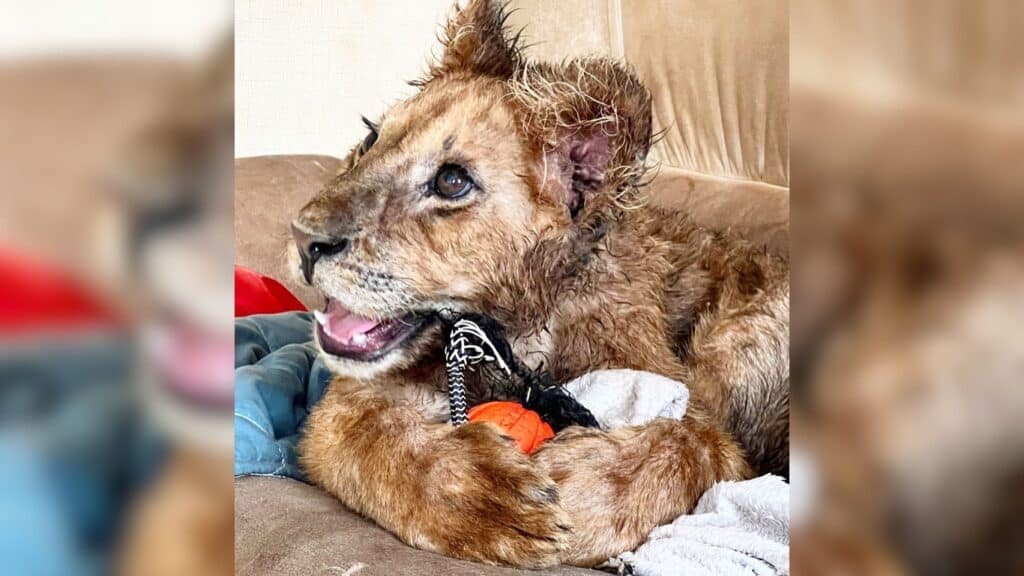
The terrible war in Ukraine is claiming animal lives by the thousands. Among the most tragic victims are lions and tigers abandoned as zoos collapse and private owners flee. Credit: ASI/Dejan Radic We have just rescued two tiny lion cubs from Ukraine’s deadly frontlines. Their legs are BROKEN. Please, help us care for them right away. Our team was in Ukraine last week when two tiny lion cubs were found wandering around the frontline with serious injuries to their back legs. We don’t know how they ended up there or how they were injured, but we do know that, frightened and alone, they only had each other until our partner, Wild Animal Rescue Center (WARC), came to their rescue. WARC founder Natalia Popova saved them from the violence and they are now at WARC, which provides medical treatment and temporary shelter for animals rescued from Donetsk and Luhansk in eastern Ukraine. Credit: ASI/Justine Haralambous Captive big cats are abandoned in their cages and left to die as their owners flee. All the big cats rescued by WARC were kept in captivity prior to the war, either in zoos or by private owners, and then abandoned during the explosions. We cannot begin to imagine their fear – and we do not want to think about how many have already perished, trapped in their cages as missiles rained down. We have promised to help the animals with whatever they need to survive. X-rays show that the leg bones of both cubs are cracked, but given time and proper nutrition, they can heal. Both cubs have severe cracks in the bones of their legs. Please help us cover the cost of their care until we can find them a permanent sanctuary to call home. With your support, we will help these infants get the treatment they need until they find a safe, permanent sanctuary. Credit: ASI/Dejan Radic The mental image of lion cubs wandering around the rubble of ruined cities, while Russian missiles rain down and automatic weapons spit death, is horrendous. Sadly, tragic situations like this are all too common in this awful war. These injured lion cubs are not the only big cats that need our help. An enormous tiger weighing at least half a ton was found on the frontline after escaping from a private estate in eastern Ukraine. WARC was called in and the animal, now named Tigarula, was rescued and taken into its care. Tigers need a lot of space to thrive, but sadly, due to a lack of funding, Tigarula is being kept in a cage that is barely large enough to accommodate his bulk. Tigers are among the most dangerous animals in the world, extraordinarily strong and natural born killers – but Tigarula is like a giant pussycat, rubbing up against the bars of his cage and seeking affection. Credit: ASI/Dejan Radic When we saw this majestic beast in a tiny cage, our hearts broke. We know that if you could see this exquisitely beautiful tiger locked up and lonely, you would want to help him. Can he count on you today? We have been asked to provide finance for a large tiger-proof space for Tigarula, until he can be relocated to a sanctuary. For his mental and physical health, this is truly urgent. The war has gone on for so long, people are forgetting its horror and have stopped helping. ASI depends on donations from kind-hearted people who have a flash of compassion for creatures like Tigarula, and any donation you are able to give will help get him out of a cage, out of the war, and to safety. Even a small donation will help provide him with better living conditions until he can be relocated to a permanent sanctuary. Our hearts are so often broken by what we see in our work, but the animals need us – and if we don’t help, who will? Your donation today will make a crucial difference for Tigarula and the other 32 wild animals at WARC. Incredibly, it is legal for people to keep lions and tigers as ‘pets’ in Ukraine; but of course, when the missiles start to fall, people flee and the animals are abandoned. Zoos are just as bad. They portray themselves as saviors of animals, but when trouble arrives, many zookeepers disappear, leaving the animals to fend for themselves. Big cats have no place in zoos, let alone private homes, and to its credit, Ukraine is working to ban this in future. But that law will come far too late for the terrified wild animals who have suddenly found themselves at the mercy of Russian bombs, missiles and soldiers. Credit: ASI/Dejan Radic One private estate that kept wild animals in Donetsk was captured by Russians. After it was recaptured by Ukrainian troops, they found that the occupiers had eaten some of the wild animals. There are 12 lions and three tigers at WARC. We have experience working with lions and some we met are clearly suffering from post traumatic stress disorder (PTSD), alternately cowering as far from humans as possible or launching angry, snarling attacks. We cannot blame them – they have only known humans to be the source of their terror and pain. A white tiger, abandoned in the war and temporarily at WARC, cowered at the back of a cage, fear written all over his face, snarling defiance. He is powerless to change his situation, but we exist to help animals like him, and will do everything in our power to do so. Credit: ASI/Justine Haralambous Any donation you make as a compassionate animal-lover will help a frightened white tiger, two broken lion cubs, a half-ton caged tiger, and 29 other wild animals caught in the war, far from their homes and with no-one else to turn to. Our team members are not soldiers. We are ordinary people who love animals. We were there when the missiles fell, and we were afraid for our lives. Can you imagine the terror animals feel when the buildings around them explode?
Massive drought has starving hippos running out of time!

We are reaching out today because we have still not reached our goal to feed 100 starving hippos through Botswana’s worst drought in decades. Please, will you help? The scenes are harrowing: A hundred starving hippos desperately searching the parched landscape for scraps to eat, their helpless, newborn infants by their sides. Without food, they will die – and without your support right away, we cannot feed them. Read on… Credit: Shutter Stock Hippos are on the brink of starving to death in Botswana’s Makgadikgadi National Park, where we have been working to help mitigate the effects of a terrible drought. They URGENTLY need your help. 100 hippos face death by starvation due to the horrific, relentless drought in Botswana. Please help us feed them FAST. Recently my team and I visited Botswana to oversee the beginning phases of the drought-mitigation project you are helping us implement. Northern parts of the country have been affected by a drought so severe, animals are dropping dead, infants are being left orphaned, and human/wildlife conflict for water is leaving countless wild animals dead. There are many baby hippos with their mothers that are also at risk of dying. Credit: ASI/Taryn Slabbert Right now, we are starting to provide crucial water to the desperate animals, but there is another urgent need we must address… …food for 100 starving, vulnerable hippos. Drought has wiped out the food sources for this rapidly declining pod, and roads and fences – erected to keep wildlife out of human settlements – are obstructing their access to areas that may offer vital sustenance and nutrition for the hippos and their young calves. This year, Botswana has experienced its driest wet season in 40 years, with less than 20% of its expected rainfall. These deadly conditions are made worse by extreme heat steadily climbing above 99℉ (37℃). Water is drying up, and with it, food sources are rapidly disappearing – a tragic result of climate change and the impact of the El Niño climate patterns. Credit: David Dugmore The consequences of drought have been devastating for wild animals, and with no sign of rains to come, more animals will die – unless we help now. Food has almost completely run out for the hippos, and in another TWO WEEKS, they will be in serious trouble. The clock is ticking! During times of food scarcity, hungry hippos can go for up to three weeks without eating, but any longer and they are doomed. Right now, there is no food left, and time is quickly running out. One adult hippo needs up to 110 pounds (50 kilograms) of food every day, and this pod has been walking miles every day in search of food they never find. Ravenous hippos are so desperate for food, they are eating ELEPHANT DUNG to survive! The hippos are so hungry, they are now resorting to eating elephant dung to fill their painfully empty bellies. It is a truly heart-breaking sight. Our partner, Moela Safari – situated near a waterhole where the hippos flock to find precious water – has pledged to get the animals fed if we can help raise the funds. With your support today, 100 starving hippos can receive life-saving food, saving them from slowly succumbing to starvation. This baby hippo died after its mother became too weak and malnourished to feed it. Credit: ASI As the animals become increasingly desperate for food, they may start to break fences and cross roads to approach villages in a last-ditch attempt to find food. This will almost certainly pose a risk to human life, and communities are likely to kill any hippos that get too close, posing yet another threat to their lives. By providing reliable food sources within the protected Makgadikgadi National Park, we can ensure they neither starve to death nor get injured or killed in their frantic search for food. With rains only expected in December, we MUST rush food to the starving hippos RIGHT AWAY. We have no time to waste. Please, hungry animals are desperate for your help now! We have not reached our goal and urgently need your help to provide food for the next five months. For every $4,000 we raise (approximately £3,140), we can feed 100 hippos for a month, protecting these precious wild animals and their defenseless calves from misery and death. 100 hungry hippos are hoping for your compassion today. Please, donate as much as you possibly can, and help us save their lives.
Elephants, leopards and lions in snare nightmare.

Right now, wild animals in the ecologically important Lake Kariba region of Zimbabwe urgently need your help. This is why… An increasing number of wild animals are being caught in deadly snares across the 9,320-square-mile (15,000-square-kilometer) region. Snaring is one of the cruelest methods poachers use to kill wild animals. This lioness was lucky to survive after BHAPU intervened and removed a snare from its hind leg. Credit: BHAPU Our partner, Bumi Hills Anti-Poaching Unit (BHAPU), tirelessly patrols the area, which has historically been a hotspot for wildlife crime. Since 2016, our team has entirely stamped out ivory poaching in Lake Kariba. However, driven by the lucrative bushmeat trade, poachers are increasingly targeting the area, which is roughly the size of Connecticut or the whole of Northern Ireland. This gives you an idea of the vast area the team must regularly patrol to keep animals safe. Please help our team to find stricken wild animals and save their lives before it’s too late! Credit: BHAPU Often, animals caught in snares are never “collected” by poachers, which dooms them to a slow, agonizing death as they succumb to their injuries or starvation over days or weeks. In fact, as you read this, it is likely there are animals trapped, terrified and in desperate need of saving right now – or they WILL die. BHAPU runs regular snare sweeps to find and remove snares around the conservancy. Every snare removed means another animal saved from this atrocious suffering, but this is only possible with the continued financial support of animal-lovers like you. Credit: BHAPU Our partner also constantly patrols to find animals in distress – and when the team comes across them, it works fast to sedate the animal, remove the snare and treat the wounds. Without this help, these animals would die. Please donate now to fund emergency snare removal to help protect lions, elephants, leopards and countless more wild animals in Lake Kariba. Our team is completely reliant on donations. Every day, we wake up worrying that our funds will run out, forcing us to stop our life-saving work. But the animals need us, and so few people really understand how important wild animals are to the environment or know how much they suffer when caught in snares. Credit: BHAPU A crashing Zimbabwean economy means poaching is up and donations are down – there has NEVER been a more critical time to keep our team on the ground, saving wild animals who need it most. Every $190 (roughly £150) we raise covers an extra snare patrol per day and the removal of approximately 15 snares – potentially saving FIFTEEN animals’ lives. Credit: BHAPU Your donations will empower us to massively increase our efforts to save animals in distress – animals like Najam, who you helped us save from a horrific snare injury in 2022. Without your support, our team CANNOT save the lives of frightened, injured, helpless wild animals. Our team discovered this heart-wrenching scene on one of its regular patrols: A pregnant buffalo trapped in a wire snare aborted her baby before slowly succumbing to her injuries. Credit: BHAPU Just think how terrified this mother buffalo must have been as she realized all hope was lost; as she fought frantically to save her baby; to spare the life growing in her womb. It is too horrific to contemplate, but we MUST face it because only TOGETHER can we prevent future tragedies like this. Wild animals do NOT deserve to die slow, excruciating deaths in wire snares. Please, help us protect what is left of Zimbabwe’s natural heritage – we cannot wait another moment. Can the animals count on your support today? Because of your generous donations, our team has not lost a single elephant to poaching since 2016. Credit: BHAPU We have to maintain this record and keep saving precious animal lives. We need your support right now. Please, donate as much as you possibly can, and together, we can protect and save Zimbabwe’s precious, irreplaceable wild animals.
This infant rhino was orphaned when poachers slaughtered his mother.
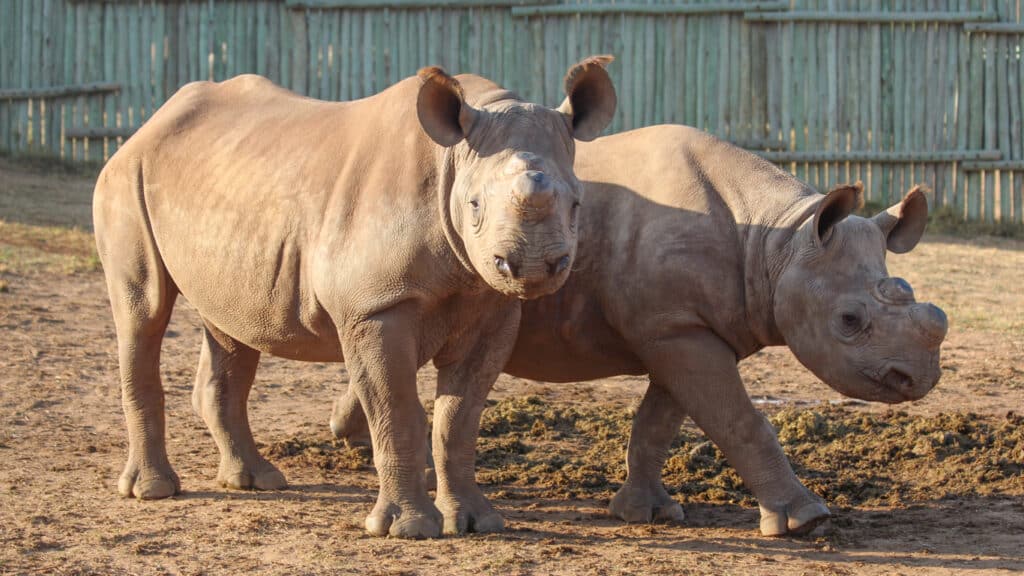
Odin, a critically endangered black rhino, was barely two years old when he witnessed his mother being brutally slaughtered by poachers in South Africa’s Kruger National Park. A few months later, fellow black rhino calf Marcules was abandoned by his own mother in the same park. Orphaned and bereft, both calves deteriorated fast. The outlook for the grieving infants was grim. To give them the best chance of survival, they were taken in by our expert rhino rehabilitation partner, Care for Wild Rhino Sanctuary, and housed together. Although black rhinos are solitary by nature, the two youngsters quickly bonded, and their fast friendship gave them the strength to begin to recover and thrive. How touching it was to see them eating together, taking mud baths, and resting side by side .…But now, Odin and Marcules face a new threat: Poachers, just like the ones who killed Odin’s mother. Credit: CFW Following their successful rehabilitation and remaining devoted to each other, Odin and Marcules were released together into an intensive protection zone (IPZ), where expert anti-poaching teams watch over them day and night – but as poachers become more and more advanced, our team needs a special tool in their arsenal. Poaching remains a serious threat in South Africa, where shockingly, at least one rhino is poached every day. Odin was rescued by our partner after his mother was killed by poachers. Credit: CFW We CANNOT let our guard down. We have a plan to protect these two critically endangered black rhinos from poachers. Can they count on your support today? Poachers are more sophisticated and relentless than ever, driven by greed and a lucrative illegal trade that leaves them hell-bent on destroying precious wild species. They do not care about the animals they torture, often leaving rhinos to suffer slow, agonizing deaths after their horns have been viciously hacked off. We are sad to tell you that these cold-blooded criminals even kill baby rhinos for their tiny stubs of horn. Odin and Marcules are among the last 6,100 black rhinos remaining worldwide. Credit: CFW Odin and Marcules are among the last of their kind – only 6,100 black rhinos remain worldwide. Their survival is crucial for their species, and we MUST protect them. Our plan combines traditional conservation methods with cutting-edge Artificial Intelligence (AI) technology to provide the highest level of protection for these rhinos. With your help, we can equip Odin and Marcules with state-of-the-art, AI-enabled tracking devices, specially designed to combat poaching. These devices are non-invasive, solar-powered and fit comfortably around a rhino’s foot. AI-powered tracking devices are true game changers. They include smart algorithms that continuously monitor an animal’s location and behavior, generating real-time alerts at the first sign of anxiety or abnormal activity. This allows anti-poaching units to respond within minutes, making the difference between life and death – and helps to nab criminals. Our partner works around the clock to rescue, rehabilitate and rewild rhinos orphaned by poaching, but they need your help. Credit: CFW Will you stand with us in our fight to protect critically endangered black rhinos in South Africa? Odin and Marcules are counting on YOUR support today. If we can raise $5,000 (£3,900), we can purchase two cutting-edge AI-powered tracking devices for Odin and Marcules. These devices will help safeguard their lives and secure a brighter future for their entire species. Please, donate RIGHT AWAY! Credit: CFW Despite their traumatic start, Odin and Marcules have found friendship, resilience and the protection of a team that will do everything in their power to keep them safe. But our team cannot do it alone. With your donation, we can ensure they have the best possible protection from cruel poachers. You can be a hero for Odin and Marcules today! Please, help us give these magnificent black rhinos the safe future they deserve by donating generously to Animal Survival International now.
Meet Renzo, the pangolin stuffed into a backpack and left to die.

Wrapped in wire and stuffed into a backpack, Renzo could barely breathe. He could not uncurl his little body or move even an inch. It is beyond miraculous that this young pangolin survived – saved without a moment to spare from the ghastly illegal wildlife trade in South Africa. Today, Renzo is making a slow recovery in the care of our partner, Umoya Khulula Wildlife Centre in South Africa – where, without kind-hearted individuals like you, Friend, he would stand NO chance of surviving his terrifying and deeply traumatizing ordeal. In seven years of saving animals, Umoya Khulula has NEVER seen such a massive pangolin poaching epidemic. The need for action is urgent! It is not only Renzo who needs your help. Countless more pangolins just like him – including newborn infants and wounded mothers – are taken in by our partner every year after successful sting operations. It is because of the success of anti-poaching operations that more pangolins are being rescued from the hands of cruel poachers, who snatch them from the wild for their meat, skin and scales. Once they are saved, they need YOUR help to recover. Credit: Umoya Khulula At one rehabilitation facility, the influx of rescued pangolins has increased from 30 to 100 every year. These rescued pangolins provide hope for the survival of the entire species – IF we can do everything in our power to rehabilitate them. Together with our partner, we are on the frontlines of the fight to help save pangolins. Every month, our team rescues and rehabilitates scores of sick and injured animals, including severely compromised pangolins, all confiscated from the illegal trade. Renzo, stuffed into a backpack and wrapped with wire, was saved in the nick of time from the brutal illegal wildlife trade in South Africa. Credit: Umoya Khulula We are sorry to tell you that in many instances, pangolins are hacked with shovels and machetes by poachers, stuffed into sacks, hidden in car engines and starved for weeks on end. We are helping to end this cruelty, but we NEED your support to continue. Credit: Umoya Khulula A mobile pangolin clinic will be a lifeline for these brave survivors. Can they count on your donation today? Our partner recently acquired a caravan trailer, which we urgently need to transform into a fully-equipped mobile clinic to respond swiftly to pangolins in peril. This clinic will dramatically shorten emergency response times, ensuring vulnerable pangolins in critical condition receive immediate, life-saving treatment following their rescue. It will also be a crucial asset during their soft release, giving them the best chance at a safe, successful rewilding. Pangolins are easily stressed and suffer from travel sickness, making this mobile clinic their best hope of successful recovery after the trauma they have experienced. Please, will you support this vital project? Credit: Umoya Khulula A pangolin mobile clinic will deliver IMMEDIATE, life-saving medical care the moment these gentle creatures are rescued. It will also ensure a smooth, stress-free release, transforming the future for countless pangolins. Credit: Umoya Khulula Once the mobile clinic is fully equipped, our team can respond quickly to save and treat pangolins following successful undercover sting operations. Additionally, during the soft-release process, pangolin caregivers will be able to stay on-site in reserves, ensuring rescued pangolins’ smooth transition back into the wild. Releasing rehabilitated pangolins into fenced, protected and patrolled wild spaces is vital for their survival. During the soft-release process, pangolin caregivers closely monitor their progress through daily walks, medical and behavioral check-ups and weight gain observations. With pangolins’ delicate health in mind, having the necessary equipment and supplies on-site is ESSENTIAL for their continued wellbeing. We are in a race against time to save every pangolin life we can! If we can raise $16,000 (£12,500), we can provide a critically needed mobile clinic for pangolins in South Africa. Your support means everything in our fight for these fragile and important animals. Please, donate RIGHT NOW! Credit: Umoya Khulula Your donation is urgently needed to cover all internal and external renovations to the caravan, including a dedicated pangolin and carer room, off-road tyres for fast response, solar power for reliable, continuous operation, and air conditioning to regulate pangolins’ body temperature, a crucial step in ensuring their survival. If we raise enough, we will also include a portable X-ray machine and a fully stocked pangolin medical kit to ensure IMMEDIATE care. Every moment counts – please donate now and help us save pangolin lives. Please donate as generously as you possibly can to Animal Survival International today and help us continue our critical work protecting vulnerable, desperate pangolins in South Africa.
The tragic elderly elephant forced to work for 60 YEARS.
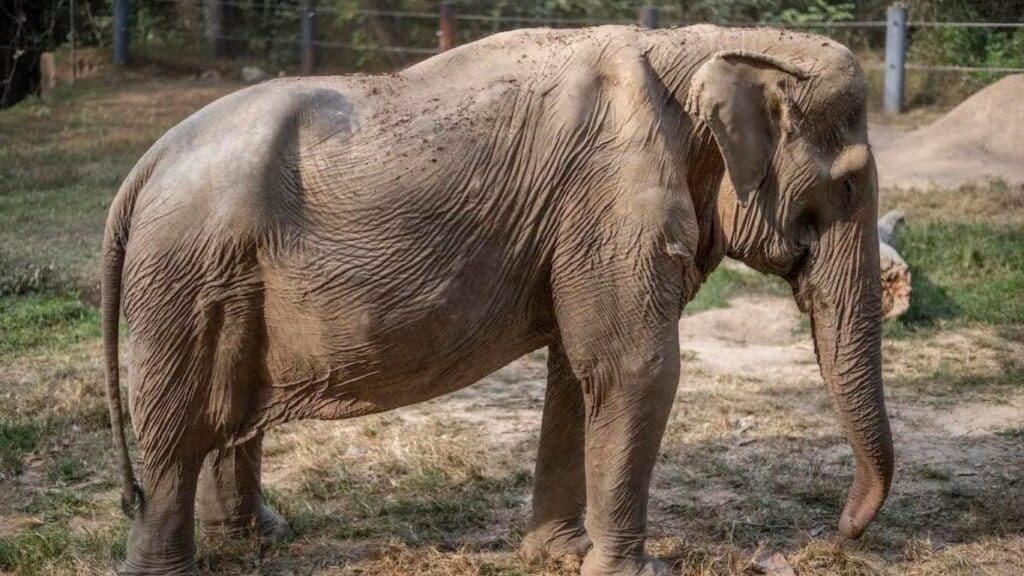
With her disfigured spine and decades-old scars, Pai Lin’s 60 years of hard labor are etched into every inch of her battered body. Asian elephant Pai Lin, left, has a deformed spine. A fellow WFFT resident, Thung Ngern, right, displays a healthy dome-shaped spine. Spinal deformities in elephants can be caused by malnutrition or heavy labor. Credit: WFFT Pai Lin, 75, has endured more agonizing pain and abuse in her long life than it is possible to fathom. For decades, she was used as a working elephant, probably in the commercial logging industry before it was banned in 1989. After logging was banned, this tortured, tragic animal was likely used to haul as many as six tourists at a time on her back in a heavy wooden seat that would have ground relentlessly into her body. At some point during her horrific 60-year “working career,” she was forced to beg on the streets. Her deformed spine speaks volumes about her life of abject cruelty. This helpless animal, completely reliant on cruel humans, almost certainly lived in daily agony, but no one cared. She was making money for her owners, and to them, that was all that mattered. For illustrative purposes only. Credit: Jack Board When Pai Lin was about 60 years old, her owners finally declared her “useless,” complaining that because she was in constant pain, she was “too slow” to work. Our partner, Wildlife Friends Foundation Thailand (WFFT), stepped in and now Pai Lin lives at its sanctuary – Asia’s first completely chain-free elephant haven. The forested land around the rescue center gives the elephants a chance to roam in near-natural surroundings and to socialize with other elephants. Here, they are finally given the chance to find peace and friendship. Pai Lin is now 75, the oldest elephant our partner has rescued. She prefers to spend her days alone, quietly enjoying her hard-won freedom in the protected forest she now calls home. Most of the rescued elephants at WFFT have experienced decades of abuse in Thailand, where cruelty towards wild animals is sickeningly common. Pai Lin, in particular, touched our hearts. This contraption is called a “howdah.” People will sit in them and force these poor elephants to carry them and other heavy objects for hours on end. Credit: WFFT/Amy Jones/Moving Animals The vast majority of our partner’s 23 rescued elephants were exploited in trekking camps and/or for logging. Others were forced to perform tricks or were used for street begging. It is hard to comprehend the trauma they have experienced in their lives. Most of these animals arrive covered in lice and wounds, severely traumatized and requiring intensive treatment and care – not to mention up to 660 pounds (300 kilograms) of food every day per elephant. To feed their 23 elephants, WFFT needs over 15,000 pounds (almost 7,000kg) of food every day, or 227,7 tons every month. Our partner is completely dependent on donations to provide their rescued elephants with the daily care they need, and desperately wants to give the animals the very best nutrition, treatment, enrichment and care it can. We want to help. For illustrative purposes only. This is an example of some of the abuse Pai Lin could have endured for 60 years. Credit: Aaron Gekoski/Lady Thinker Captive elephants in Thailand endure relentless, excruciating labor until they collapse in agony and exhaustion, or simply drop dead. The survivors are hoping for your compassion today. We really want to give Pai Lin and her fellow rescued elephant friends every bit of happiness we can – and for elephants, that starts with a delicious and varied diet of fresh fruit and vegetables, banana trees and leaves, and special, nutrient-rich pellets. Many elephants do not survive Thailand’s brutal tourist trade. For the amusement of tourists, elephants are chained, starved and beaten, forced to work through searing pain in blistering heat, day after dismal day. Above and below, you will see some photographs of elephants like Pai Lin, who undergo daily abuse. Unfortunately, in Thailand, there are currently no laws to prevent this abuse and mistreatment, which is why our partner works tirelessly to rescue, treat and care for the survivors. Pai Lin endured these cruel and exhausting conditions for 60 years. But no more. After lives of unending suffering, will you help give Pai Lin and her friends this small kindness, which will make a huge difference in their lives? Pai Lin in her new home. Credit: WFFT For every $300 (roughly £240) we raise, we can provide a month’s worth of heavenly food and treats for an elephant at WFFT. If we raise $3,000 (roughly £2,400), we can provide 99 tons of food, feeding 10 elephants for a month. Pai Lin’s particular favorites are jackfruit and papaya, and we really want to give her these delicious treats. Pai Lin may only have a few years left, and after six decades of sheer hell, we want to make her last years the best of her life. Can she count on you for that kindness today? Please, donate as much as you can now, and help us give this brave survivor the golden years she deserves.
This eight-week-old wildebeest orphan really needs you!

When wildebeest calf Wanda was just two months old, she was found lying beside the lifeless, mutilated body of her mother, who was tragically killed by a cruel wire snare in South Africa. Credit: ASI/Taryn-Slabbert Heartbreakingly, orphan Wanda stayed faithfully by her mother’s side for days, repeatedly headbutting her in an attempt to suckle without realizing that she was already dead. Wanda and her mother are among the most recent victims of brutal, noose-like traps, which are ruthlessly laid by wildlife traffickers and bushmeat poachers across Africa to hunt and kill precious wild animals. It was too late for Wanda’s mother, but with your help today, we can give her calf the second chance she deserves. Credit: ASI/Taryn-Slabbert Please help us support the rehabilitation of orphaned wildebeest calf Wanda. Our partner, the Umoya Khulula Wildlife Center in Limpopo, South Africa, specializes in rehabilitating orphaned indigenous wildlife and is ready to nurse little Wanda back to health. But they cannot do it without your support today. Wanda needs intensive care and a special milk formula to ensure her healthy growth and well-being, but the formula is costly and hard to find in this area. Each day, Wanda consumes 1.3 gallons (five liters) of this vital milk – a cost that quickly adds up. Because she was separated from her mother at such a young age, this little fighter will need milk and probiotic additives for the next six months to receive the nourishment she needs to grow, get stronger and eventually be released back into the wild. For illustration purposes only. Wanda never got the chance to be cared for and nourished by her mother during her critical developmental months. A wildebeest calf suckles from its mother for at least four months and females usually remain in the same herds as their mothers for life. Unfortunately, Wanda does not have this chance and is relying on animal lovers like you to help care for her in this critical stage of her development. If we can raise $3,000 (£2,400), we can purchase enough special milk formula to feed Wanda for the next six months, so she will be ready to join her new herd. Credit: ASI/Taryn-Slabbert Wildebeest are sociable, playful animals that rely on one another for survival. After six months of rehabilitation, Wanda will be integrated into a new herd and released into a protected, predator-free nature reserve where she can live out the rest of her days in peace. Can Wanda count on you today for her second chance? Umoya Khulula is being inundated with orphaned wild animals. Should we exceed our fundraising goal, your generosity will benefit other young animals in our partner’s care – animals like Bagheera, a two-week-old large-spotted genet who was orphaned after falling from his nest during the terrible heatwaves ravaging Limpopo. Credit: ASI/Taryn-Slabbert The resilience of brave souls like Wanda and Bagheera warms our hearts. But to continue facing this cruel world with such courage, they need you. Please donate as generously as you can to Animal Survival International today. Your donation will help us give sweet Wanda and other orphaned wild animals like her the critical care they need to survive so they can be released back into the wild where they belong.
Wild animals stand no chance against this deadly drought without YOU.
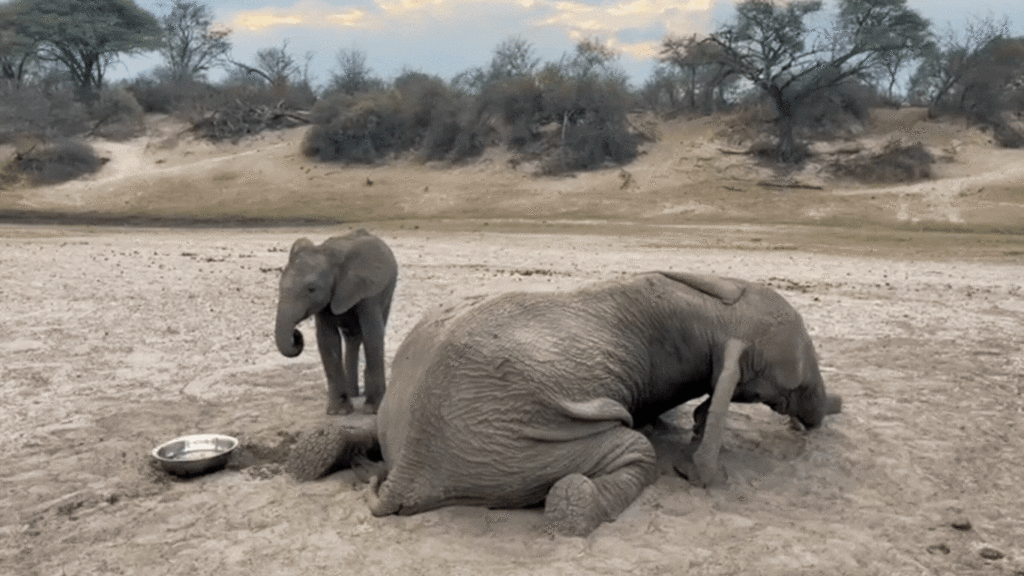
In Botswana, once-majestic wild animals are withering away and dropping dead on parched landscapes – tragic victims of the country’s worst drought in decades. This year, the nation experienced its wet season in 40 years, with less than 20% of its expected rainfall. Deadly conditions were made worse by extreme heat exceeding 99℉ (37℃). For illustration purposes only. The consequences have been devastating for wild animals. In one of the most heart-rending scenes, an orphaned elephant calf was found next to her dead mother, who had been powerless against the raging drought and succumbed to dehydration. The mother had given her baby every last drop of sustenance her body could muster before she collapsed and died. Her calf, helpless and alone, remained by her mother’s side. She was later rescued and taken into the care of an elephant orphanage – but she will never know her mother, who she would have stayed with for her entire life. Drought is reducing Africa’s iconic wildlife to skin, bone, and dust in Botswana – elephants, zebra, lions, hippos, hyenas, and wildebeest are clinging to life as you read this. Credit: Camelthorn Farmstead With your support, we can help save as many of these beautiful animals as possible. The Boteti River runs through the Makgadikgadi National Park in north-eastern Botswana and is one of the animals’ main water sources. Since October 2022, it has been almost completely dry. A smattering of rain in April this year has barely helped, providing a thin trickle of water that will definitely run dry before the next rainy season, which only starts in December. This devastating drought has been exacerbated by a combination of climate change and the impact of the El Niño climate pattern. Wild animals are battling with relentless heat, struggling to find precious water and food. Strong, young wild animals in Botswana who should be in the prime of their lives are dropping dead after traveling countless miles in search of water they never find. For illustration purposes only. Starved, parched, and bone-weary, they fall where they stand, their carcasses littering the barren landscape. Others become stuck in near-dry muddy waterholes, exhausting themselves in futile attempts to escape the mud and ultimately perishing. Under these disastrous conditions, not even the strong survive. Can you imagine, just how dire the situation is for older, weaker and juvenile animals? Amidst this disaster, two wildlife warriors are coming to the aid of desperate wild animals – and they urgently need support for their life-saving mission. This kind-hearted couple owns a private farmstead along a boundary fence of the Makgadikgadi National Park, where desperate animals scour the barren landscape for anything to drink. Using the park’s two wellpoints, their own borehole, and long pipes that extend through the park’s fence, they pump water daily into the park’s dry riverbed for elephants, zebras, and other animals. For illustration purposes only. The animals are so frantic for water that they have come to recognize the sound of the pumps being switched on, clamoring around the pump as they await their turn to drink. This is both heart-warming and heart-breaking to witness. HUNDREDS of wild animals need water right now, and our partner CANNOT meet the demand for this life-saving resource. With two extra water pumps, we can help bring much-needed relief to dehydrated wild animals in crisis. Please support this cause now. Each of the two existing wellpoints currently has the capacity to pump around 7,925 gallons (30,000 liters) of water a day. While this may sound like a lot, elephants alone can drink over 52 gallons (200 liters) every day. In a park covering around 4,630 square miles (12,000km²), home to large herds of elephants, zebras, oryx, wildebeests, impalas, and so much more, the need far exceeds what our partner is able to supply. Credit: Calmelthorn Farmstead By installing new, highly-efficient solar-powered pumps, the output of the existing wellpoints will be DOUBLED, collectively producing around 31,700 gallons (120,000 liters) daily – enough to quench the thirst of the area’s 150 elephants, as well as hundreds of other animals like zebras, giraffes, leopards and hippos. We MUST raise the funds to supply our partner with two solar-powered water pumps RIGHT AWAY. Wild animals are DEPENDING on it – can they count on your generosity today? Countless animals are depending on us to give life-saving water pumps. Credit: Camelthorn Farmstead The animals are desperate. One of the most tragic cases our partner recently witnessed was a mother zebra who succumbed to thirst and starvation while in labor. Our partner did their utmost to help, but it was too late – both mother and foal died. We MUST prevent more wildlife tragedies like this, but we can’t do it without your support today. Please help us raise $6,000 (roughly £4,800) to install these life-saving water pumps immediately. There is no time to waste! The situation is catastrophic, but with your donation today, we WILL rush support to the dangerously dehydrated animals of Botswana – animals who are counting on YOU for a miracle. Please donate as much as you possibly can right away.
Endangered pangolins need dedicated intensive care unit to survive.
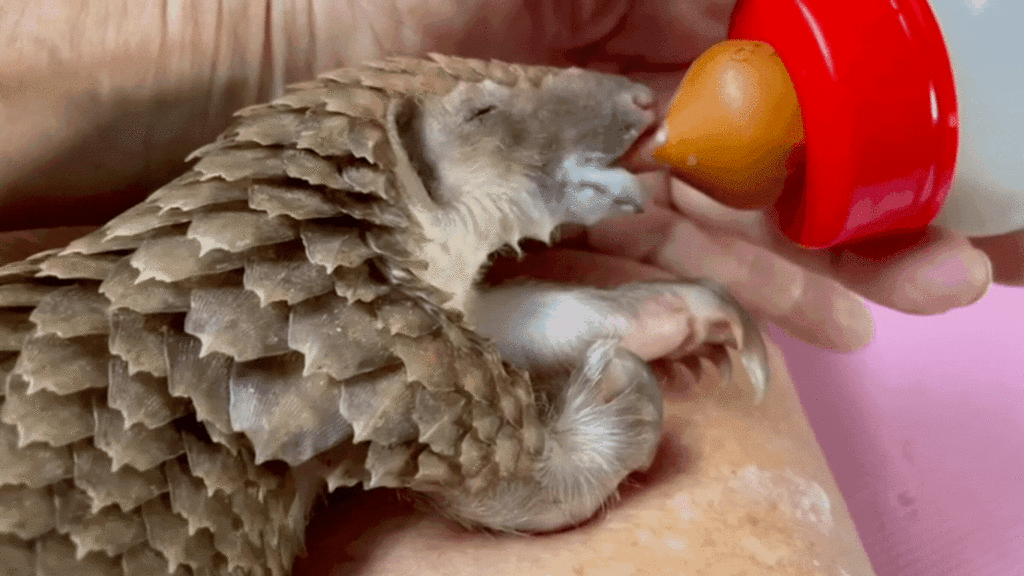
Nigeria is a perilous country that even humans are scared of. Can you imagine just how terrifying it must be for a pangolin? Small, shy, and prized for their body parts, pangolins are deliberately and mercilessly hunted in a country teeming with wildlife criminals, leaving them with few spaces to hide. A dedicated safe space for these endangered creatures and their tiny pups is critical to their protection in Nigeria. But we really need your help to build it. With your support today, we will set up the first dedicated pangolin intensive care unit (ICU) and nursery in Nigeria. Can rescued, newborn pangopups count on you right now? Nigeria is listed as a “Country of Particular Concern” by the United States’ Task Force on Wildlife Trafficking, a designation that officially recognizes the high-level corruption that is fueling the abominable illegal trade. Safe spaces for wild animals here are few and far between. It is not their fault they are born in a violent country where all manner of cruel and unusual crimes are able to flourish. It is up to us as concerned custodians of our planet’s wildlife to do something to help protect pangolins. Credit: Pangolins International We MUST get pangolins out of the hands of blood-thirsty criminal gangs. Building the country’s first-ever dedicated pangolin nursery is CRITICAL to their survival – and YOU can help make it happen. In the chaotic capital of Lagos, there is a desperate need for a safe, peaceful clinic in which pangolins and their babies can recover after being rescued from cruel poachers and death-filled meat markets. Our partner, Greenfingers Wildlife Conservation Initiative (GWCI), works on the ground to save pangolins from the ruthless poaching industry. Many of GWCI’s rescues are babies, as pangopups are considered “worthless” to poachers and are usually discarded as if they were nothing more than rubbish. Construction has stalled on a critical pangolin nursery and ICU in Lagos due to lack of funds. Credit: GWCI The ICU and nursery will be fully equipped with everything needed for dedicated, specialized critical care of these fragile pups, as well as all adults found alive. Pangopups need a safe, sterile, and quiet place to recover, one that is separate from other species. This prevents the spread of disease and is particularly essential in their early stages of life when their underdeveloped immune systems are highly susceptible to infection. To complicate things further, they also need a specialized milk formula to survive. Completing the ICU and nursery will give them the best possible chance of survival on their difficult road to recovery. Once fully healed, our partner releases rehabilitated pangolins onto privately owned land that is monitored and protected day and night by a robust anti-poaching team. Established by Animal Survival International and run by our dedicated partner, this new clinic in Lagos will be completely dedicated to emergency care, treatment, rehabilitation and long-term shelter for pangolins in Lagos. It will be a place where they can finally be free and safe while they recover from the horrors they have endured at the hands of poachers. Every minute is CRUCIAL when rescuing animals in critical condition and can make the difference between life and death. Many pangolins rescued by GCWI are in critical condition: dehydrated, malnourished, and in severe shock. These fragile animals are notoriously difficult to treat and keep alive, particularly when they have been mutilated by cruel snares and traps. To make matters worse, in many life-threatening emergencies, so much valuable time is lost navigating through hours of gridlocked Lagos traffic; and tragically, the time lost can spell death for these helpless creatures. The pangolin ICU and nursery will be built in Lagos, close to pangolin rescue hotspots, cutting down on travel time and dramatically increasing their chances of survival. Credit: Pangolins International The project is already underway but has stalled due to lack of funds. Please help us complete this VITAL hospital and safe haven for pangolins. Construction of the ICU and nursery has begun, but our partner is out of funds. If we can raise $20,000 (roughly £16,000), we can complete the building and furnish it with the vital veterinary supplies and equipment we need to help save pangolin lives and pull them back from the brink of extinction. The longer it takes to complete the project, the more animals will die – so please, donate as much as you can immediately, and let’s work together to complete Nigeria’s first dedicated pangolin ICU and pangopup nursery.
Orphaned elephant calf Phabeni needs special milk formula to survive!
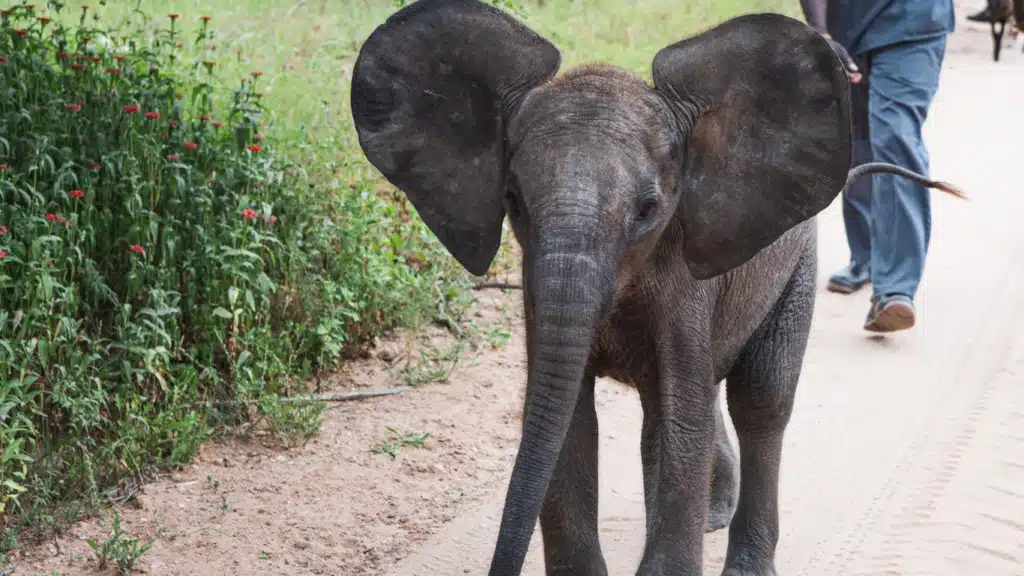
When Phabeni was just four months old, he was spotted wandering alone near the Kruger National Park in South Africa, with his mother and herd nowhere in sight. Credit: HERD Our partner, HERD, raced to his rescue. They found the little calf covered head-to-toe in wounds and showing signs of severe starvation and dehydration. Judging from his condition, it is likely Phabeni had been alone for at least several days. To put it in perspective, elephant calves are much like human children, totally reliant on their mothers throughout their infancy and juvenile years. They will usually stay with their mothers until they are around 16 years old. Alone and helpless without mothers, suckling elephant calves will usually die within DAYS of being displaced or orphaned. Credit: HERD Phabeni is lucky to be alive – but he needs YOUR help to ensure his survival. Our partner is a dedicated elephant orphanage that provides around-the-clock care and specialized nutrition to elephant calves orphaned through poaching or snaring. The team currently cares for 17 rescued elephants. Credit: HERD Phabeni, the newest rescue, arrived emaciated, dehydrated, injured, and traumatized. But with YOUR support today, the little calf can pull through. The most urgent need for Phabeni right now is a special milk formula. It closely mimics his mother’s milk and is CRITICAL to his survival. Credit: HERD Orphaned elephant calves are at their most vulnerable during the first few weeks following their rescue and are highly dependent on the correct nourishment, care, and companionship. Expert elephant carers monitor Phabeni around the clock, but what he really needs now is enough special milk formula to help him grow. With your support today, we CAN give Phabeni this chance. Phabeni will need milk for the next four to five years and will need help throughout this time. Elephant calves are extremely sensitive, and a gradual milk-weaning process must be followed. Rushing the weaning process could be fatal. Credit: HERD It is critical that we provide Phabeni with a special milk formula that replicates the vital nutrients he would have received from his mother. Please help Phabeni now! If we can raise $7,000 (£5,540), we can provide enough special milk formula for orphaned elephant calf Phabeni for the next THREE months. Your donation will also cover crucial medication and veterinary care to help the baby elephant recover from his wounds. Credit: HERD Extensive studies have shown that elephants feel emotions including grief, joy, love, and compassion. Can you imagine the heartbreak of poor orphaned calf Phabeni, who tragically became separated from his mother and was forced to endure the dangers of the wild alone? As social beings used to the tight fabric of a family, elephants need other elephants for their well-being and survival. Once fully healed, HERD’s orphans are gradually introduced to the Jabulani Herd – a unique and close-knit family of 17 rescued and orphaned elephants from Zimbabwe and South Africa, who are always accepting of new calves. Phabeni has constant companionship and comfort in the form of Lammie, his surrogate sheep mother… Credit: HERD Please, extend your compassion to the orphaned elephant calf Phabeni. Your support is critical in providing him with the care he needs to survive and be reintegrated into a new, loving herd. Help us make a lasting impact on little Phabeni’s life by donating generously to Animal Survival International today!
Track pangolins 💪 Stop poachers!
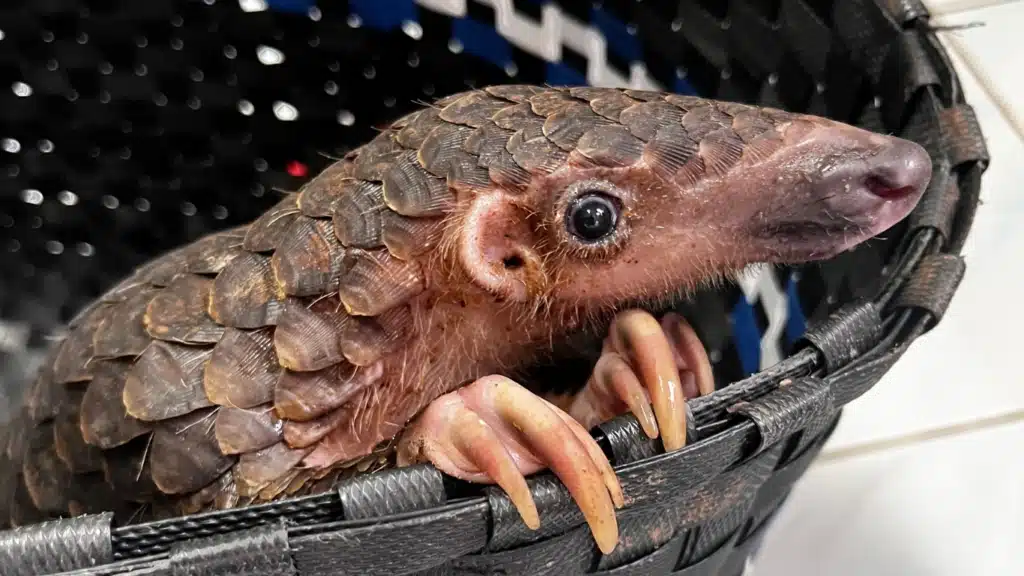
Five critically endangered pangolins, including a tiny baby and a very sick adult, have just been rescued in the nick of time from a horror meat market in Lao, Asia. Pancake the critically endangered pangolin receiving life-saving care at LCTW. Anti-poaching devices will enable our team to apprehend poachers in their tracks. Credit: LCTW The animals were rescued during an investigation into the illegal wildlife trade in the country, which sees hundreds of thousands of animals slaughtered every year for bogus “traditional medicine”, jewelry, trinkets, and unfounded virility potions. The pangolin poaching crisis is REAL, and if we do not act NOW, the species could be gone forever. We have a plan to help. Sick, starving and dehydrated, the fragile animals were rushed to the care of our partner, the Lao Conservation Trust for Wildlife (LCTW). Credit: LCTW All the rescued pangolins are of the critically endangered Sunda and Chinese sub-species, relentlessly hunted for their meat, skins and scales in Asia. It is estimated that 80% of Sunda pangolins have been wiped out by poaching, while the population of Chinese pangolins is expected to plummet by 80% by 2040. You will be relieved to know that LCTW works closely with law enforcement to rescue pangolins and bring poachers to book. Credit: LCTW The rescued creatures were all saved in the capital of Vientiane during an undercover investigation. A sixth was later saved by local government authorities. As this important investigative and prosecution work continues, the plight of the six rescued animals is currently critical. Image for illustrative purposes only. Credit: Wikipedia Pancake, a Chinese pangolin, is receiving intensive care after arriving terrified, starving and dehydrated. She was named ‘Pancake’ because she lies so flat – clearly weak and severely traumatized after her horrendous ordeal. The other survivors – all Sunda pangolins – include a baby, juveniles and adults. The infant pangopup is still suckling from its mother, and all are receiving critical care at the sanctuary. We have a way to help our partner NAB POACHERS and protect pangolins from being poached – please, help us implement it now! Once the pangolins have recovered from their nightmare ordeal, they will be released back into their natural environment. Credit: LCTW We know you will agree that they MUST be protected at all costs once released. That is exactly what we plan to do with your help today. If we can raise $15,000 (around £11,880), LCTW can fit each of the pangolins with hi-tech tracking devices prior to their release, which will immediately alert the team if a pangolin is snared or caught by a poacher as it is being transported. These advanced tracking solutions are already being used to great success by our anti-poaching partners in Africa. Should a pangolin be caught, the device will send an instant alert to its exact location, enabling the team to race into action, rescue the animal, and catch the perpetrators. The devices also monitor the animals’ breathing, heart rate and pace of movement to alert the team immediately to anything out of the ordinary. If enough money can be raised, our partner will also be able to install hidden devices throughout the forest that detect the presence and exact location of any mobile phones entering the area – almost guaranteed to be hunters or poachers. An immediate alarm will be sent, and the on-site team will be dispatched to thwart the poachers in their tracks. It is the advanced protection pangolins urgently need – AND DESERVE – right now. Credit: LCTW It is not enough to rehabilitate pangolins – we MUST ALSO track poachers and keep pangolins safe in the wild! Will you help critically endangered pangolins today? Your support now will help us protect pangolins in Lao – so please be part of the solution! Donate right away, and help us give pangolins their safety and freedom – and poachers the penalties they deserve!
Sick lion cubs are STILL waiting for your help!
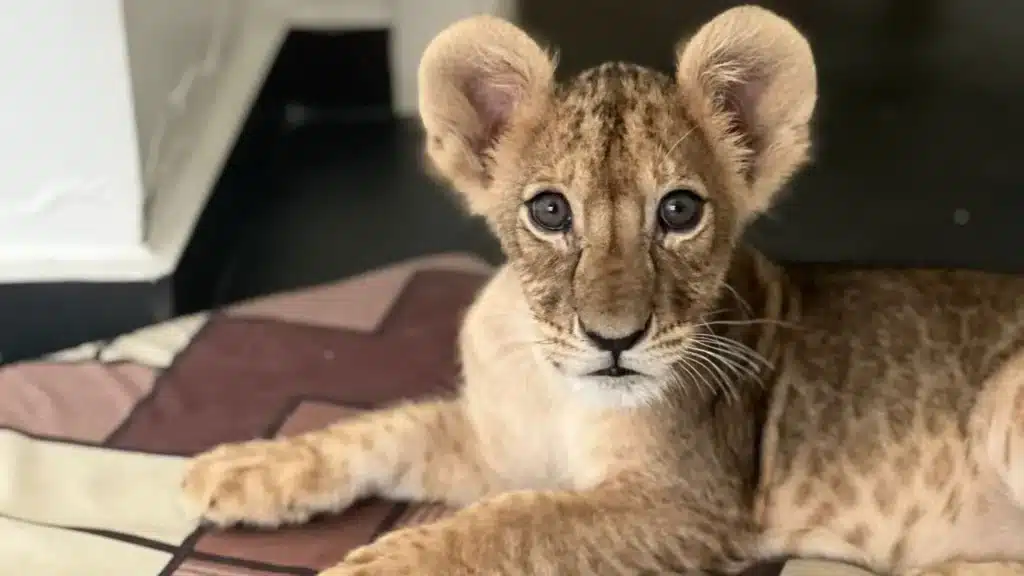
Today, Issam and Kelly really need your help. This is their story… Every year, thousands of wild animals are trafficked around the world. The Middle East and North Africa are hotspot transit points for the trade. Animals are bred and sold to zoos or to be “exotic pets” for the rich – sent to unknown fates that bear no resemblance to their natural environment. Credit: Animals Lebanon Lion cubs Issam and Kelly have been saved from wildlife traffickers in Lebanon – potentially one of the largest animal trafficking operations ever intercepted in Lebanon. The state of these infant lion cubs will leave you AGHAST! Authorities stopped traffickers at an army checkpoint north of Lebanon, 90 minutes outside Beirut. To their horror, they discovered 1,500 caged exotic birds – many already dead – and two terrified lion cubs hidden among them. The two-month-old cubs, frozen from fear, were hidden in small plastic cat boxes with no food or water, and were drenched in their own urine. Credit: Animals Lebanon All the animals were confiscated by the police, and the traffickers were arrested. After veterinary examinations, the birds – both wild-caught and captive-bred – were able to be released back into the wild or sent to specialized organizations. But both cubs, who are believed to be siblings, were severely underweight and exhibited signs of malnutrition and abnormal development. They were in a shockingly bad way. Heartbreakingly, due to the extent of human-inflicted abuse, Issam was unable to walk normally. Credit: Animals Lebanon The development of both infant cubs was severely stunted due to the conditions in which they were kept captive. Issam’s disabilities were particularly severe. The muscles in his back legs had not developed properly, and his legs were not strong enough to support him. It was utterly tragic to see – a helpless eight-week-old cub struggling to walk. His mobility problems were caused by being confined in a small plastic crate for who knows how long – combined with a lack of proper care, nutrition and exercise – all of which the cubs would have received had they not been stolen from their mother and their natural way of living. Issam and Kelly will need intensive rehabilitation, as well as expert care, for the rest of their lives. Credit: Animals Lebanon The cubs were placed with an animal welfare organization in Lebanon until the right sanctuary could be found. That is where our partner, Drakenstein Lion Park in South Africa, stepped in. Now, they need YOUR SUPPORT TODAY to recover! Please, help now! Drakenstein Lion Park has committed to giving the cubs a lifelong home at their sanctuary where no breeding is permitted, and where wild animals live free from physical visitor interaction in semi-wild spaces. The lifelong care for both cubs will amount to hundreds of thousands of dollars over 20 years. If we can raise $7,300 (around £5,732 ), we can help ease the long-term financial pressure on our partner for an entire year, so they can continue rescuing wild animals in serious trouble. Credit: Animals Lebanon Please help give these rescued cubs the life they truly deserve after their terrible abuse at the hands of humans. We partner with ethical big cat rescue facilities to give rescued wild animals the lives they deserve after being born into cruel and abusive situations. The reality, is that when “exotic pets” are bred and confiscated outside of their indigenous countries, many have nowhere to go and may end up in zoos… or worse… euthanized. This is an outcome we at ASI will ALWAYS fight to avoid, and thus it is of critical importance that we support our ethical sanctuary partners. Credit: Animals Lebanon Please help us to ensure that there will ALWAYS be a safe home for helpless, orphaned wild animals rescued from the hands of cruel humans. Donate right away to help our partner support Issam and Kelly’s long-term care and give these animals the peace, security and safety they deserve. Without your support today, we cannot help rescue all the other Issams and Kellys out there who, without us, would be subjected to a truly horrific fate.
Africa’s rhinos are headed for extinction.
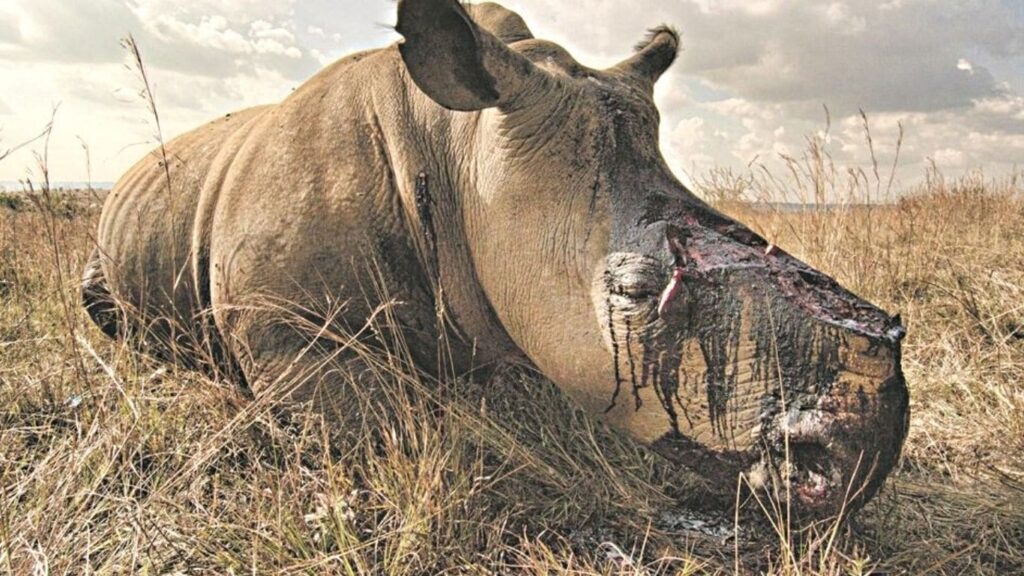
Africa’s poaching crisis is spiraling out of control, wiping out rhino populations and other irreplaceable wildlife species across the continent. Shockingly, at least one rhino is killed by poachers EVERY DAY in South Africa alone. As you read this, at least one and often many more magnificent rhino, blissfully unaware of the impending danger, is destined to be brutally butchered for its horn in the next 24 hours. Fueled by the insatiable greed of largely Asian markets, rhinos are relentlessly slaughtered for their horns sold and used in unfounded traditional Chinese medicine. The closer rhinos edge to extinction, the more “valuable” their horns become. Credit: Reuters Without any exaggeration, the situation is dire. Black rhinos are listed as critically endangered, with only 6,100 individuals remaining. White rhinos are decreasing rapidly, with less than 17,000 left in the wild. We MUST ramp up our anti-poaching efforts to prevent rhinos from becoming extinct in the wild. Our team has a vital secret weapon in the fight against criminals. Our partner, Care for Wild (CFW), is the largest orphaned rhino sanctuary in the world and specializes in the rescue, rehabilitation, and protection of orphaned and injured rhinos. CFW operates 24/7 anti-poaching patrols to protect the rhino population in the Greater Barberton Nature Reserve in Mpumalanga. These patrols, by expert rhino guards, are supported by canine and mounted units and carried out with near-military precision. The canine and mounted units consist of four highly trained dogs and 14 horses that play a pivotal role in protecting rhinos by patrolling fence lines, securing perimeters, and detecting potential threats. The dogs possess remarkable tracking abilities, detecting scents and footprints and even detecting the presence of snares and firearms. Horses navigate challenging terrains with ease, cover greater distances than foot patrols, and provide rangers with a much higher field of vision. Using such anti-poaching patrols essentially DOUBLES the impact of rangers on the ground. These dogs and horses are the unsung heroes in the ongoing battle against poaching, and they need YOUR help today. Please help provide essential care to vital dog and horse anti-poaching units in South Africa. These four-legged heroes help keep rhinos alive. The dogs and horses work in tough conditions, negotiating rugged terrain and the fierce African sun. It is vital that they get the best possible care, including dental and veterinary care and vaccinations against rabies, tetanus, and horse flu. Plus, emotional support and love are so important for animals whose lives are dedicated to helping other animals. If we can raise $12,000 (£9,500), we can cover the next round of dental and veterinary health check-ups and vaccinations for the heroic four-legged anti-poaching teams. Funding their care will show your IMMENSE appreciation for the animals’ dedication and your recognition of their work in the fight against rhino poaching. They deserve every bit of support we can give them! Please donate NOW! Together, we can ensure that the anti-poaching paws and hooves on the ground at CFW are in the best possible health to continue their heroic work for endangered wildlife species. So please join us in our mission to help save rhinos and protect their heroes by donating as generously as you possibly can to Animal Survival International today.
Urgent help needed to save a young elephant from DEADLY SNARE!
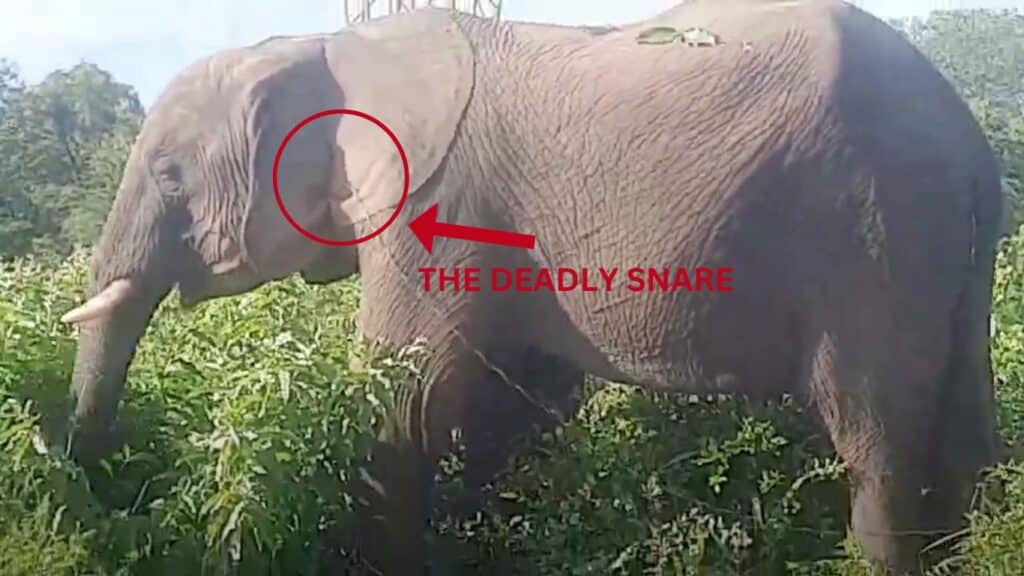
A young elephant in Zimbabwe with a deadly snare wrapped around his head, neck, and left ear needs your help right away. Credit: KAWFT With each passing day, the snare tightens its grip around the animal’s throat – and without our immediate intervention, his life could be cut painfully short. Please help get our emergency rescue team to him right away! Our team is ready and waiting to remove the snare and save Masimba – meaning “Strong” in Shona – but we must raise the funds to charter a helicopter and dart him for treatment… …If we do not act FAST, he could die. Read on… Young male elephant in excruciating pain needs your urgent help! Please help us raise funds for an URGENT snare removal for an elephant in terrible pain! Time is of the essence! Credit: KAWFT Our partner in Zimbabwe, Kariba Animal Welfare Fund Trust (KAWFT), spotted the 15-year-old male in the vicinity of the Lake Kariba region and immediately noted a snare wound tightly around his head, left ear and throat. The wire from the snare is trailing roughly 13 feet (four meters) to the ground, and as it tightens more each day, it is likely causing Masimba immense pain. He cannot move his left ear at all due to the restriction. Elephants’ ears are critical to their wellbeing, which means this young bull is in SERIOUS trouble right now. The primary role of African elephants’ ears is not only for hearing, but for thermoregulation – ensuring the animal maintains an optimal body temperature in hot weather. As the elephants flap their ears, they create a cooling breeze. Moreover, blood vessels close to the surface release heat, further cooling the animal. With summer temperatures in Lake Kariba currently reaching – and sometimes exceeding – 95°F (35°C), this function is critical to the animals’ overall health. Elephants also use their large ears to deter predators, spreading them out to appear even larger to deter potential threats. For illustrative purposes, it’s hard to get close to injured elephants as they are extremely protective of each other. Credit: KAWFT The ONLY way to RAPIDLY and effectively remove the snare is by darting Masimba from a helicopter. Once he is tranquilized, our team can rush in and remove the life-threatening trap. We need funds for the chopper right away – please help! With your help, our team has effectively removed snares from elephants in Zimbabwe in the past. With your support now, we can do it again. It is too dangerous to approach Masimba on foot; particularly as he is part of a large herd with highly protective mother elephants and their calves. It is critical we hire a helicopter from which to dart the animal and that we MOVE fast. If Masimba is not darted and treated SOON, the snare could begin slicing into his trachea, cutting off his air supply and killing him. Please help us raise $10,500 (£8,316) to charter a pilot and helicopter, and hire a wildlife vet to carry out this critical rescue operation FAST. Snare injuries cause excruciating pain and slow animals down, making them more vulnerable to poachers. Left untreated, they can be deadly. Credit: Steve Edwards: CATERS NEWS 1 A successful snare removal could see him living happily for another 20 to 25 years – but if we do not help right away, his life may be cut tragically short as the wire cuts ever closer to his trachea and inhibits breathing. Please, open your heart to an elephant in great need right now. Donate as much as you can to Animal Survival International today.
Asian wildlife sanctuary forced to SHUT, placing endangered animals in peril.
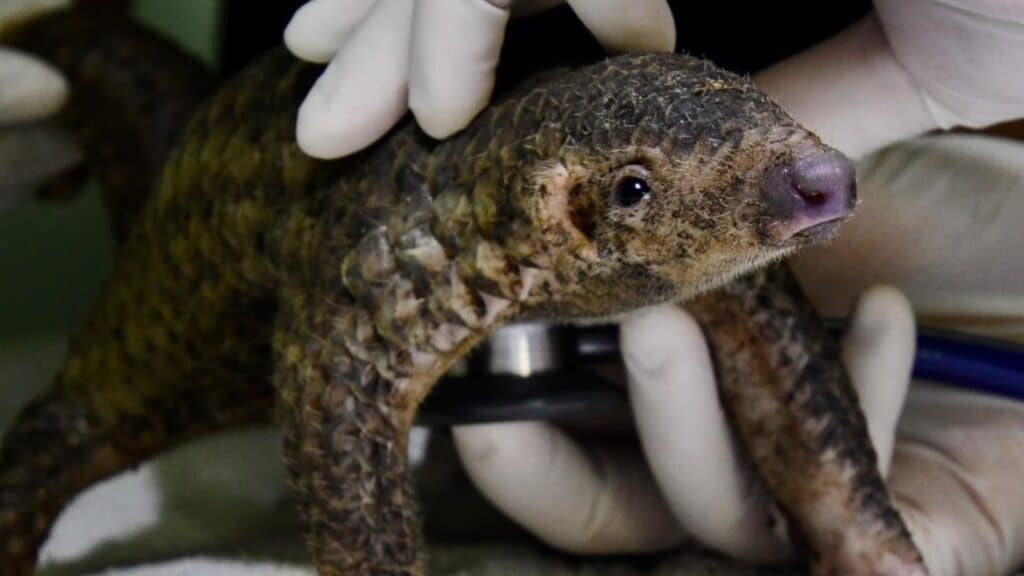
Bound, butchered for their meat, or forced to live as captive chained “pets.” This is the reality for thousands of wild animals in the Asian country of Laos – and now, you have an opportunity to help rush some to safety. Read on… Wild animals, some just infants, are stolen from the wild and kept in cramped, filthy cages as “pets” or to be sold at markets for their meat and body parts. Credit: LCTW Wild animals rescued from Asia’s BRUTAL meat and pet trade are TRAUMATIZED, INJURED and DESPERATE for SAFE sanctuary. Please, help give them life-long protection they deserve! Our partner, the Lao Conservation Trust for Wildlife (LCTW), rescues hundreds of wild animals every year from bushmeat markets, illegal traders, and cruel people who keep them chained in squalor as pets. Two infant monkeys cling to each other after being rescued by our partner. Credit: LCTW There are 250 creatures at the sanctuary. When we visited in December, we saw these animals, including critically endangered pangolins, langurs and white-cheeked gibbons, were happy and thriving, with superb care and enclosures that mimic their wild habitats. But now they have to go. Until now, LCTW has been able to treat, care for and shelter its animals at their beautiful, spacious sanctuary… …In a terrible blow to the animals, the sanctuary’s landowners want their land back – by JUNE! Our partner is racing to prepare a new sanctuary while continuing their critical rescue work for other wild animals. These screenshots, showing pangolin scales (left) and slaughtered wild animals (right), show social media being used for the illegal trade of wildlife. Translation: “Traders traders, which customer wants to buy a variety of wild animals, can order. Contact the dealer to see the actual items. Wild animals for sale daily.” Credit: LCTW The sanctuary move is a massive undertaking made more so because existing rescue work never stops! This means the animals need help right now if they have any chance of a safe future. Many rescued wild animals can never be released back into the wild because of the extent of their injuries and the severity of their trauma. They need a safe, spacious sanctuary to live in peace… There are just four months to turn this wild area into habitable spaces for its rescued wild animals. Credit: LCTW The challenge is constructing species-appropriate enclosures for all 250 wild animals in their care – and THIS is where you come in. From the smallest infant pangolins to the largest Asiatic bears and critically endangered Siamese crocodiles, every rescued animal needs a safe, appropriate enclosure. We have just sixteen weeks to help them build these – a very narrow window in which to complete a huge, expensive amount of work for the animals. Crittica, a critically endangered Chinese pangolin, and her baby, were rescued and rehabilitated. Credit: LCTW If we cannot help complete the enclosures by the deadline of JUNE, the animals will have to remain in cramped transport cages until the money CAN be raised. This would be DEEPLY TRAUMATIZING for all of them. Please, help us raise the money to provide them a new haven. Baby binturongs – also known as bearcats – are vulnerable carnivores who are poached for Chinese “medicines”, for their fur, and for the pet trade. These two infants were rescued by our partner. Credit: LCTW Each enclosure costs from $10,000 to $20,000 (around £8,155 to £16,300). They are costly but WORTH IT for animals who have lived chained, beaten, and caged for years – if not their whole lives. We CANNOT let them go back into cages! Credit: LCTW The very least they deserve is a safe home, with spacious enclosures, grass and trees to enjoy, and sun on their backs. Will you help give them that?
Illegal wildlife trade survivors need YOU!
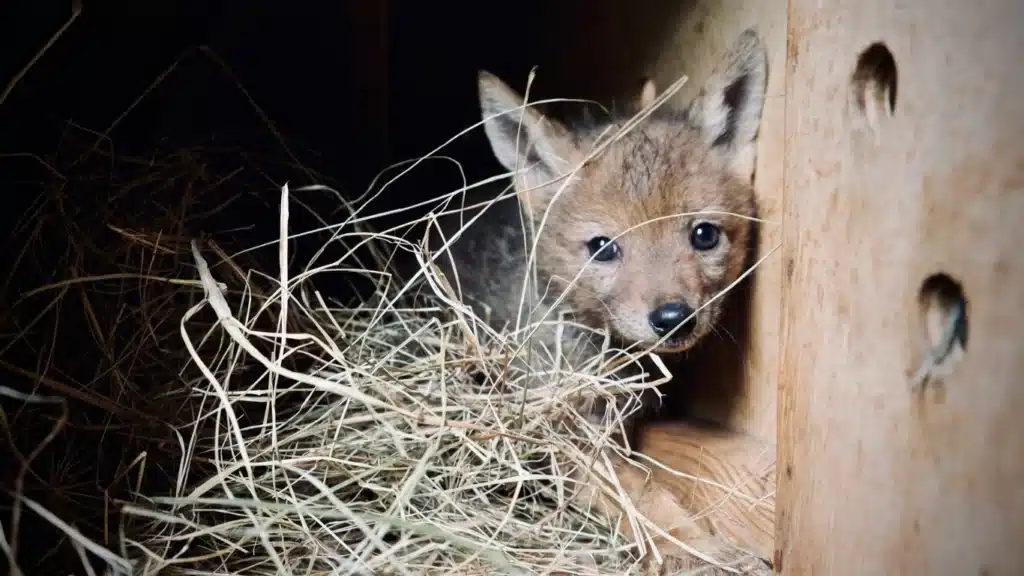
In South Africa, hundreds of thousands of indigenous wild animals are brutally slaughtered each year to feed the insatiable demand for their flesh, fur, teeth and bones. Jackals are a threatened species due to hunting, habitat loss and agriculture. Credit: FreeMe Wildlife Bushbabies, black-backed jackals, servals and caracals are some of the vulnerable species at the mercy of the despicable illegal wildlife trade. The animals are stolen from the wild and sold as exotic pets or ruthlessly slaughtered and dismembered for their body parts, to use in ritualistic magic and traditional medicine. Can you imagine the sheer terror of these poor animals (many of them babies), torn from their natural habitats and condemned to a life of captivity, or worse, subjected to savage slaughter for their body parts? A burnt genet undergoes treatment. Credit: FreeMe Wildlife We cannot comprehend such cruelty – but rest assured that we are helping to save as many of these tortured creatures as we possibly can from the clutches of cold-blooded criminals. Together with our partner, FreeMe Wildlife (FMW) in KwaZulu Natal, South Africa, we are on the frontline of the fight to rescue scores of threatened wildlife species from cruel and brutal persecution for the illegal wildlife trade. Credit: FreeMe Wildlife FMW works alongside the local authorities to confiscate animals from wildlife traffickers and provides around-the-clock, long-term care to rehabilitate them before they are ready to be released into safe, protected wild areas. Our team plays a critical role in safeguarding wildlife. But the animals we care for desperately need your support today. Genets are among the many animals our partner takes in. Credit: FreeMe Wildlife In the past five years, the number of rescued wild creatures admitted to FMW has DOUBLED. The life-saving rehabilitation facility is now at FULL CAPACITY and faces the heartbreaking prospect of having to turn away animals in need. We must not let this happen. Thousands of vulnerable and injured wild animals need help and we ask you make a donation to care for them until they can return to the wild. …Animals like Obi (‘Heart’), Jamba (‘Celebrate’) and Dumi (‘Inspire’) – three orphaned three-month-old black-backed jackal pups rescued after their mother was killed. Alone and defenseless, the pups had been saved from ruthless slaughter for their fur. Credit: FreeMe Wildlife The jackal pups are LUCKY to be alive. Without our rescue team, they would be dead! Obi, Jamba and Dumi are just a few of the countless wild animals FMW saves from the illegal trade: around 100 animals are rescued by our partner every month and they have to care for them for a year before they can be released in the wild. Credit: FreeMe Wildlife The animals need more space at the haven. If we can raise $7,600 (around £6,000), we will construct additional enclosures for orphaned, injured and traumatized bushbabies, jackals, servals and caracals rescued from the illegal wildlife trade. Please donate now! We really need your help to save as many animals as possible. Most require months of specialized care and rehabilitation before being released. By building more enclosures that closely mirror natural habitats, we will ensure rescued wildlife receive the best possible care they need to survive, heal and thrive in the wild once more. Credit: FreeMe Wildlife Please, will you help provide safe spaces and critical care for rescued wild animals who desperately need our support? They stand little chance of survival without YOU, so please donate as generously as you possibly can now.