


Asia now hub of growing illegal wildlife trade across 100+ countries, study shows
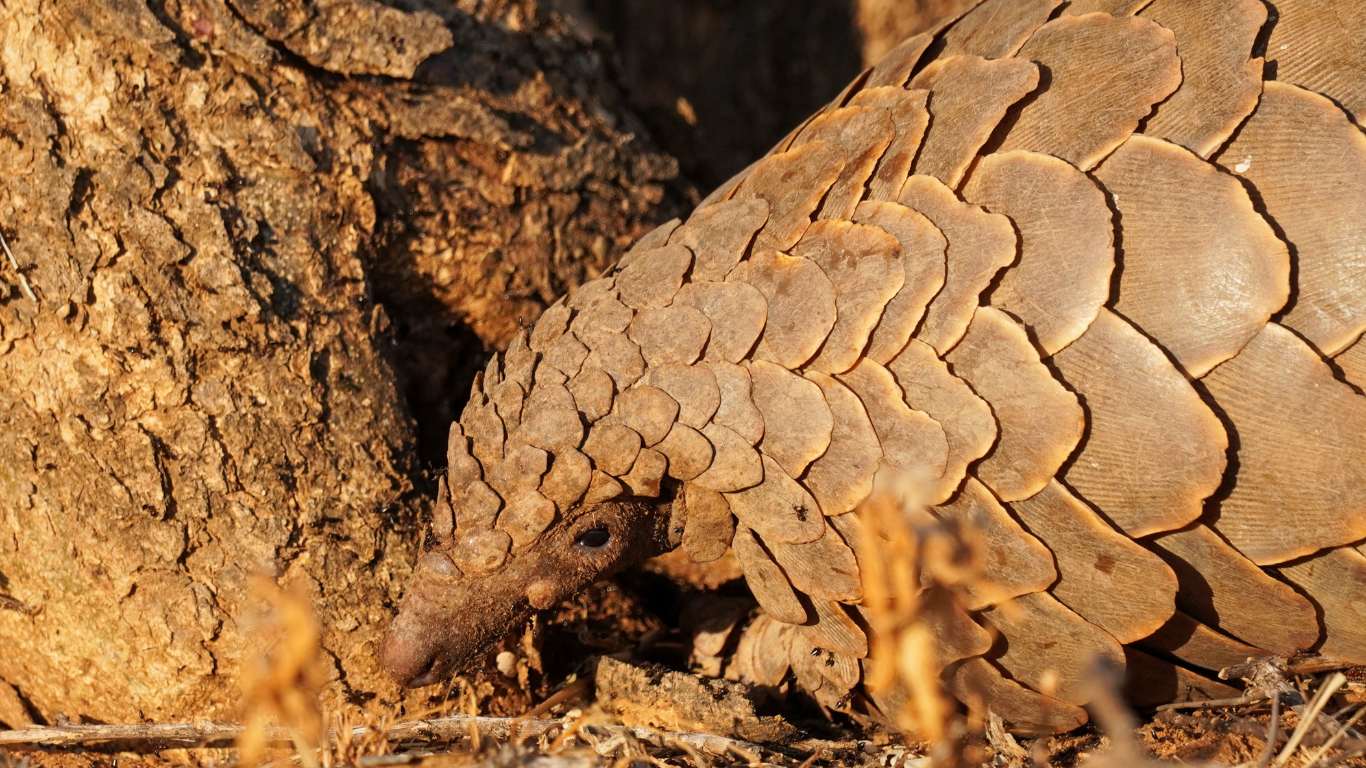
Article written by Spoorthy Raman Originally published by Mongabay, 31 March 2026 Wildlife trade is decimating the planet’s biodiversity, driving declines in more than 31,500 wild species and spreading infectious zoonotic diseases that jump between wildlife, livestock and humans. In addition to massive legal, regulated trade, there’s widespread illicit trafficking in both live animals and high-demand, profitable animal products, a commerce worth at least $20 billion per year. Dubbed “one of the world’s largest criminal activities,” wildlife ranks among the most lucrative smuggled goods, a list that includes guns, drugs and humans — but with way lower risks. Yet, there’s patchy data on how this trade has grown over the years; what species are trafficked; and where the hotspots are. What we do know comes from law enforcement seizures, which are often just the tip of the iceberg. “Much of what we know about [illegal wildlife trade] is based on static estimates, isolated case studies or regional snapshots, rather than long-term, system-level analyses,” said researcher Tow Jia Hao at the National University of Singapore. “[It] is a difficult picture to piece together and tackle, especially with much of the pieces still being hidden.” To fill the knowledge gaps, Hao and his colleagues analyzed data on illegal wildlife trade from the last two decades (2000 – 2019), and compared it with legal trade data. They gathered seizure data from TRAFFIC’s Wildlife Trade Portal and collected information on permitted wildlife trade from the CITES legal trade database, which records all legitimate commerce in species listed under a global wildlife treaty, CITES. They mapped out source and destination countries and tracked trade routes. Their analyses revealed that wildlife trafficking networks are complex and resilient and can easily shift trade routes and source countries as needed. It also uncovered shocking growth in illicit networks that now spiderweb across the globe: The number of countries involved more than doubled from 49 in 2000 to 110 in 2019, and trade connections jumped by more than 400%. Their findings were published in the journal Conservation Biology. “Wildlife trade has grown exponentially … with increasing connectivity among countries, providing more opportunities for wildlife products to move across continents,” Hao said. “While some countries remain as hubs in the network, trade links have been established directly between supplier and consumer countries.” Hao and his colleagues also discovered that illegal trade is no longer confined to a small set of routes or actors: It’s now highly spread out, happening in countries on every continent, with Asia, Africa and Europe being key hubs. Asia, Europe and North America are current hotspots of legal trade. “The study underscores how trafficking groups are highly flexible, able to shift transport routes, target different species and modify their modes of transportation in response to enforcement pressure, trade restrictions and changing market conditions,” Michelle Anagnostou said. She’s a wildlife crime researcher and Banting Fellow at the University of Oxford who was not involved in the study. Asia is now a center of illegal wildlife trade Prior to the 2010s, European countries were the top importers of both legal and illegal wildlife and acted as transit hubs for global trade. But as Asia’s middle class grew wealthier, starting in the 1980s, the demand for wildlife products surged — particularly in China and Vietnam. Endangered tigers poached from India in large numbers were smuggled to China — a trade that still continues. And as pangolins, turtles and other species dwindled in Asia, Africa became the target. For example, since 2008, when Chinese pangolin (Manis pentadactyla) numbers had plummeted by 90%, poached pangolins began pouring out of Africa headed for China, where they’re coveted for meat and scales used in traditional Chinese medicine (TCM). Between 2005 and 2010, Asia emerged as the hotspot for illegal trade, with Africa being the prominent source. “Asia overtook Europe as the main center of illegal imports, particularly for high-profile taxa such as pangolins, rhinoceroses, large cats, reptiles and [other] species used in traditional medicine,” Has said. Today, he said, “Europe remains a major market for both legal and illegal wildlife commodified products such as skins and live specimens, whereas demand for TCM-related wildlife products [is] centered around Asia.” Illegal wildlife trade networks are complex and resilient International criminal networks, the researchers found, are resilient to global disruptions, such as the COVID-19 pandemic. Although commerce came to a near-grinding halt with borders closed during the early days of the pandemic, illegal wildlife trafficking continued — slow at first, but then picking up. For instance, the rhino horn trade in Asia decreased in 2020, but shot up a year later as traffickers shifted from planes to ships to move goods and avoid quarantine restrictions. “The COVID-19 pandemic seemed to only slow the flow of wildlife trade, despite global trade disruptions and initial hesitation towards wildlife products surrounding the origin of the virus,” Hao said. “It highlights how overwhelming the demand for wildlife products is, and how suppliers will find a way to meet demand, regardless of restrictions.” Illicit trade is also quick to shift when certain species receive protections. When European eels were regulated under CITES in 2009 and export was banned outside the EU a year later, smugglers targeted new grounds: first, North Africa for European eels and then North America and the Caribbean for American eels. Since this analysis relies on reported seizures, the researchers say this is an underestimate of the true scale of wildlife trade. Not all seizures are tallied: Noncharismatic animals, such as amphibians and insects, often go undetected or unreported, and not all criminals are caught. Tackling this hydra-headed problem of illegal wildlife trade needs consistent monitoring, Anagnostou said, “to keep pace with changing dynamics, and to ensure enforcement efforts remain effective.” By pointing out hubs of illegal commerce, this research helps authorities prioritize high-risk trafficking paths, Hao said. “Strengthening cooperation between linked source, transit and destination countries, through joint investigations, intelligence sharing and targeted border controls can help break established routes and reduce the resilience of illegal wildlife trade networks.”
Mexico’s monarch butterfly population jumps 64%, offering hope for at-risk species
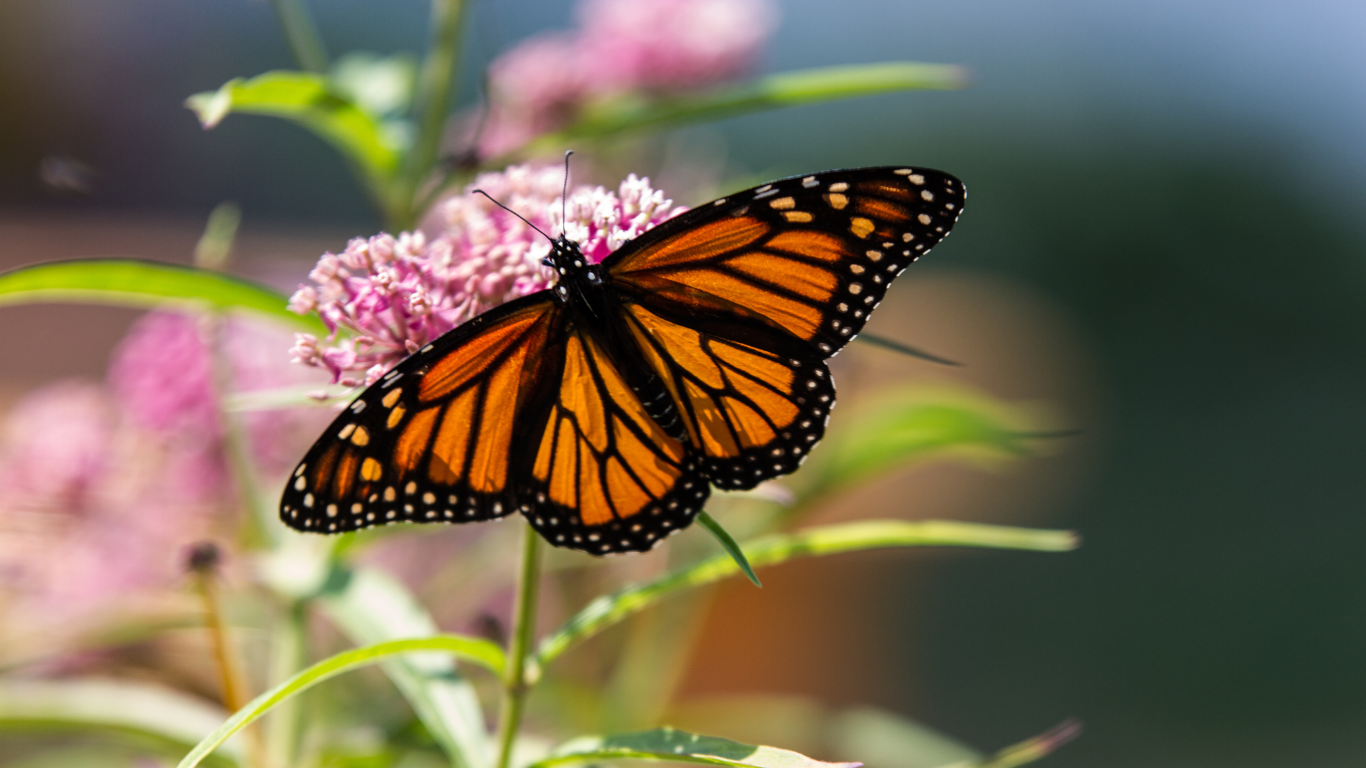
Article written by Oscar Lopez Originally published by The Guardian, 20 March 2026 The insects covered its largest area since 2018, despite threats from habitat loss, climate crisis and pesticides The population of monarch butterflies in Mexico increased 64% this winter, compared with the same period in 2025, offering a glimmer of hope for an insect considered at risk of extinction. The figures, released this week by the World Wildlife Fund (WWF) Mexico, showed that the area occupied by monarchs expanded to 2.93 hectares (7.24 acres) of forest from 1.79 hectares (4.42 acres) the previous winter, the largest coverage since 2018. “The monarch butterfly is the symbol of the trilateral relationship between Mexico, the United States and Canada,” Mexican environment minister Alicia Bárcena Ibarra said at a news conference on Tuesday. “Its conservation is a collective commitment we must maintain for the future.” Every fall, tens of millions of the butterflies travel nearly 3,000 miles from Canada, across the US and finally to the forests of western Mexico. There, the orange insects cover entire trees and flutter through the air in spectacular fashion. But a combination of habitat loss from deforestation, climate crisis and the use of herbicides has seen their numbers plummet over the last 30 years. In the US, the increasing use of herbicides like glyphosate and dicamba has seen the amount of milkweed, the only plant that monarch caterpillars can eat, drop considerably, with butterfly numbers also plummeting as a result. Because of this decline, the Biden administration had proposed listing the monarch as threatened under the Endangered Species Act at the end of 2024, but Trump officials have since delayed the decision indefinitely. In February, two environmental groups filed a lawsuit to compel the Trump administration to set a date for protections. “It would be unforgivable for [the monarch’s] epic migrations to collapse because of political cowardice on enacting range-wide protections for them,” said Tierra Curry, endangered species co-director at the Center for Biological Diversity, one of the groups behind the lawsuit in a statement. “Even the Trump administration has to think twice about letting these iconic butterflies collapse toward oblivion.” In Mexico, the spread of avocado farming in the state of Michoacán has seen vast swaths of forest lost to illegal logging, driven partly by organized crime groups who have infiltrated the highly profitable avocado trade. Compared with a peak of nearly 18.21 hectares (45 acres) in the winter of 1995, the area covered by monarchs in Mexico today is just a sliver, and well below the 6.07 hectares (15 acres) that scientists say are necessary for the species’ survival. The involvement of cartels in logging has at times become deadly: in 2020, Homero Gómez González, one of the best-known monarch butterfly conservators in Mexico, was found dead, with his family suspecting he was murdered by organized crime groups intent on clearing the monarch’s habitat. Still, conservation efforts have slowed logging in recent years: from a peak of nearly 500 hectares (1,235 acres) of forest in 2003-2004, just 2.55 hectares (6.3 acres) between February 2024 and February 2025 were affected. “One of the greatest achievements of this work is that illegal logging in the core zone of the Monarch Butterfly Biosphere Reserve has been virtually eradicated since 2008,” María José Villanueva, WWF Mexico’s director, told reporters. “This means that the forests that represent the fundamental habitat for the monarch butterfly’s hibernation are being protected and conserved.”
Facebook shuts Indonesia groups after Mongabay and Bellingcat report illegal wildlife trade
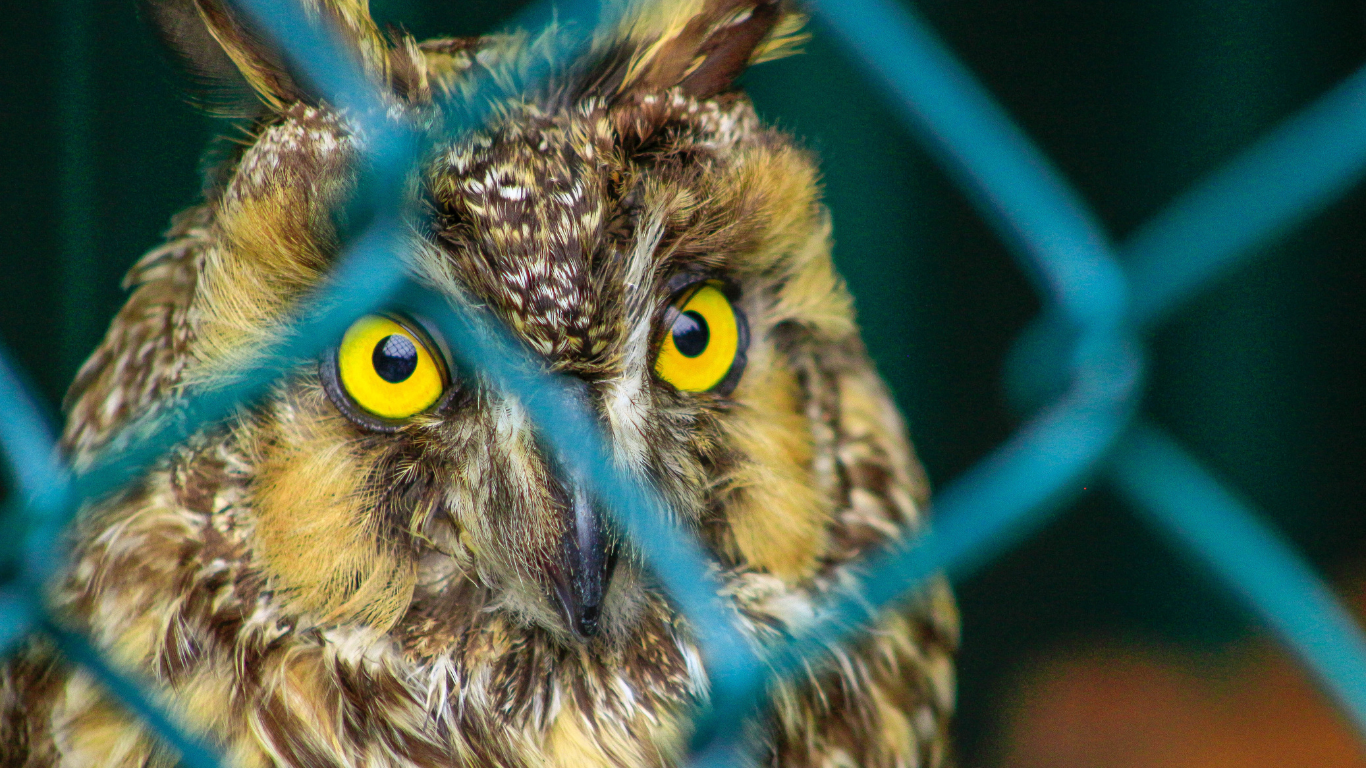
Article written by Achmad Rizki Muazam, Foeke Postma Originally published by Mongabay, 19 March 2026 A new report by Mongabay and independent journalism organization Bellingcat has uncovered several Facebook groups selling protected species in Indonesia, one of the most biodiverse countries in the world. In a Facebook group whose Indonesian name translates to “West Bogor Animal Selling and Trading Forum,” reporters last year found a member of that group advertising a rhinoceros hornbill (Buceros rhinoceros) for sale. In Indonesia, all hornbill species are protected by law. In comments below the post advertising the caged bird, one member warns: “Careful not to get caught.” “That’s the risk,” replied the seller. Another advertisement featured two infant Javan silvery gibbons (Hylobates moloch), fewer than 2,500 mature individuals of which are left in the wild. This species is also protected by law. The West Bogor Animal Selling and Trading Forum group on Facebook added more than 200 advertisements in just one week. Eighteen of them were for threatened species. In total, reporters uncovered a total of nine Facebook groups selling animals like these threatened apes and hornbills. Three of the groups have been active for more than five years. Meta, Facebook’s parent company, states that trade of animals on its platforms is prohibited. Among thousands of adverts posted in the nine groups were a handful of animal photos with the same poster in frame, giving away the location as Station Sato, a quiet pet store in Cibinong, a southern suburb of Indonesia’s capital, Jakarta. The inside of Station Sato, seen in mid-November 2025. Image by Achmad Rizki Muazam/Mongabay Indonesia. Wildlife crimes After Bellingcat identified the Facebook groups with photos taken at Station Sato, Mongabay visited the pet store three times, starting with a pair of undercover trips in October and November last year. On one visit, we found three Javan coucal chicks (Centropus nigrorufus) confined without their mother. The chicks were likely around 2 weeks old. The IUCN, the global wildlife conservation authority, first listed the Javan coucal as a vulnerable species on its Red List in 1994. That status was reaffirmed in the most recent assessment, published in 2025 amid a continuously declining population, now estimated at fewer than 10,000 mature individuals. The store manager, Jordan Bastian, removed two of the protected birds from a cage and fed them rice bran. The Javan coucals were priced at 175,000 rupiah each, around $11 a bird. Jordan said the chicks were taken from the wild in Tasikmalaya, a nearby district with a mix of heavy industry and urbanized areas, as well as surviving pockets of forest. He claimed the birds were supplied by an acquaintance with a wider inventory of animals ready for sale. Jordan runs the store, he said, on behalf of his father. Almost all of Station Sato’s sales are made online, Jordan said, with a network of brokers using Facebook and its sister company, WhatsApp, to connect with buyers. During three visits to Station Sato, Mongabay saw no sales, only window shoppers looking at caged animals. A two-week-old Javan coucal is fed by the manager of the Station Sato pet store in Bogor in mid-November 2025. Image by Achmad Rizki Muazam/Mongabay Indonesia. A long-tailed macaque (Macaca fascicularis) in a cage at the Station Sato pet store in Bogor. Image by Achmad Rizki Muazam/Mongabay Indonesia. Station Sato sells owls, these belonging to an unprotected species. Image by Achmad Rizki Muazam/Mongabay Indonesia. The store also advertises its animals on Tokopedia, the largest online marketplace in Indonesia, now owned by ByteDance’s TikTok. Many of Station Sato’s 71 current listings on Tokopedia have been miscategorized by the seller as books, toys and other seemingly inert categories of goods. Tokopedia prohibits the sale of endangered or protected wildlife on its platform, but its guidelines are perhaps unclear regarding the sale of other animals, including pets. Station Sato used Tokopedia to obtain customers for its captive civets and reptiles, as well as long-tailed macaques (Macaca fascicularis), an endangered species whose wild populations have declined by 50-70% over the past three generations due to habitat loss and exploitation for medical research. The business also sold barn owls (Tyto alba) and Oriental scops owls (Otus sunia). Secret squirrels On Nov. 28, Mongabay and Bellingcat presented these findings to Dwi Januanto Nugroho, the head of the Indonesian Ministry of Forestry’s law enforcement arm, and Satyawan Pudyatmoko, the ministry’s head of conservation. Both officials pledged to investigate the report of animals sold by Station Sato. On Dec. 1, officials from the provincial conservation agency of West Java province, where Cibinong subdistrict is located, conducted a spot check at Station Sato. Stephanus Hanny Rekyanto, the head of conservation at the agency, the BKSDA, attended the inspection. “We went inside and checked every animal … We did not find any protected species,” Stephanus said. He added the only wildlife they found on sale at Station Sato were several owls and reptiles, none of which were illegal to trade. “The shop owner previously dealt with protected wildlife several times,” Stephanus told Mongabay at his office in December. “But he learned his lesson — after that, he stopped selling protected species.” Stephanus added that inspectors were satisfied the owner complied with regulations on protected wildlife trade under Ministry of Environment and Forestry Regulation No. 106/2018, which is the government’s updated list of protected species. In response, reporters showed Stephanus a photo of a Javan coucal taken on Nov. 8 as evidence that a protected species was present at Station Sato. Stephanus said inspectors did not find any Javan coucals during their inspection. Stephanus said he lacked the expertise to identify juvenile birds, and called in a bird breeder who happened to be at the conservation agency office to identify the chick in the photo. “This is a Javan coucal, sir,” the breeder said. Three two-week-old Javan coucals are caged without their mother at Station Sato pet store in Bogor, in mid-November 2025. Image by Achmad Rizki Muazam/Mongabay Indonesia. Even if protected wildlife were found during the site visit, Stephanus said, the conservation
Born in captivity or stolen from the wild: How exotic animals become pets in Europe
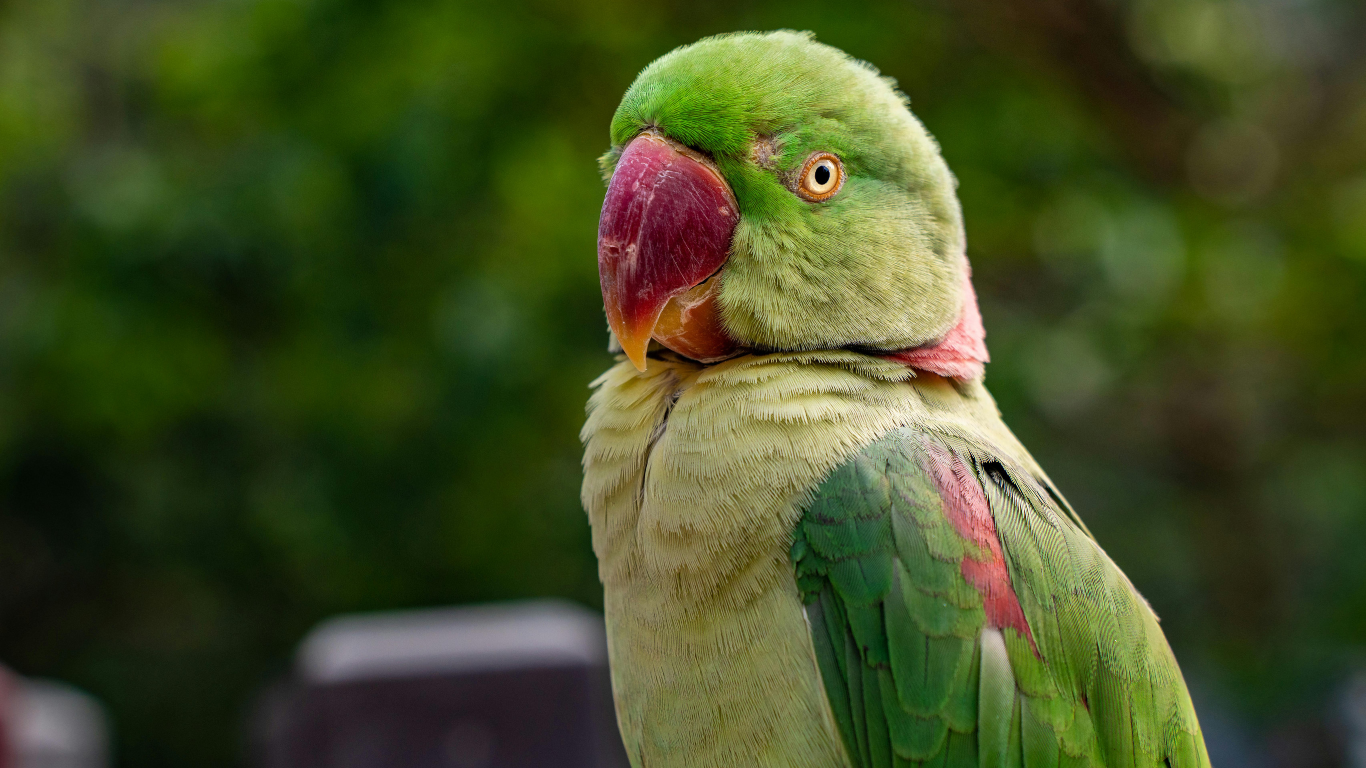
Article written by Cristina Coellen Originally published by Euro News, 18 March 2026 Every year, birds, reptiles and thousands more exotic animals are brought into the European Union. The vast majority of them end up with animal enthusiasts and collectors, who keep them as pets. But this trade comes with many problems. One major concern is wildlife trafficking of endangered species. There is no doubt that Europeans love their animal companions, with around 90 million dogs and 108 million cats living in people’s homes, according to Worldostats’ 2025 figures. But cats and dogs are not the only animals being kept as pets: numerous exotic species, such as servals from sub-Saharan Africa, snakes and tropical birds from Latin America also live in households across the EU. However, organisations that advocate for animal welfare and rescue exotic animals, like the Netherlands-based Animal Advocacy and Protection (AAP), warn against keeping such exotic creatures at home. “When we talk about exotic pets, usually we talk about animals that are wild by nature. So, whether they have been captured from the wild or bred in captivity, inherently they are wild. So, wild characteristics, often complex nutritional needs, complex social needs, adequate space. All these requirements mean that they are really unsuitable to be kept as pets,” explained Michèle Hamers, AAP’s EU Policy Officer. And the problems related to exotic pets do not stop there. These animals are traded across the globe, but not all of this trade is legal. Endangered species, like the red panda, the Barbary macaque or the Galápagos marine iguana are prohibited from being sold commercially under the international wildlife trade framework CITES. This international convention classifies animals according to three different categories, which accordingly limit trade in the respective species. But endangered species can fall victim to wildlife trafficking, as their rarity often increases their value in the eyes of exotic animal collectors. The NGO TRAFFIC, which monitors wildlife trade around the world, estimated that in 2023, 28% of all wildlife seizures were destined for the exotic pet trade, making it one of the largest illegal wildlife trade sectors in the EU. Among the species seized, birds represented the biggest variety, with 196 different species taken in by law enforcement operations. The NGO’s 2024 report is set to be released in early summer. Illegal wildlife trade also leads to the animals suffering if they are taken from their habitats and smuggled away. Often, they travel in crammed spaces such as containers or luggage, without adequate food and water. Trafficked tropical fish are frequently put into water-filled plastic bags that are hidden in luggage and smuggled by plane. If they reach their destination alive, the animals can also suffer from inadequate care from their owners. The organisation AAP documented several cases of rescued servals and chimpanzees that had developed health problems due to improper nutrition and care. If handled in the wrong way, exotic animals can also pose a risk to their owners. In rare cases, bites and scratches can transmit zoonotic diseases. But solutions exist. To find out what is being done in the EU and how exotic pets could be better protected from wildlife trafficking and animal cruelty, watch our explainer video.
A 60-year-old abused elephant and her friends need to get to safety
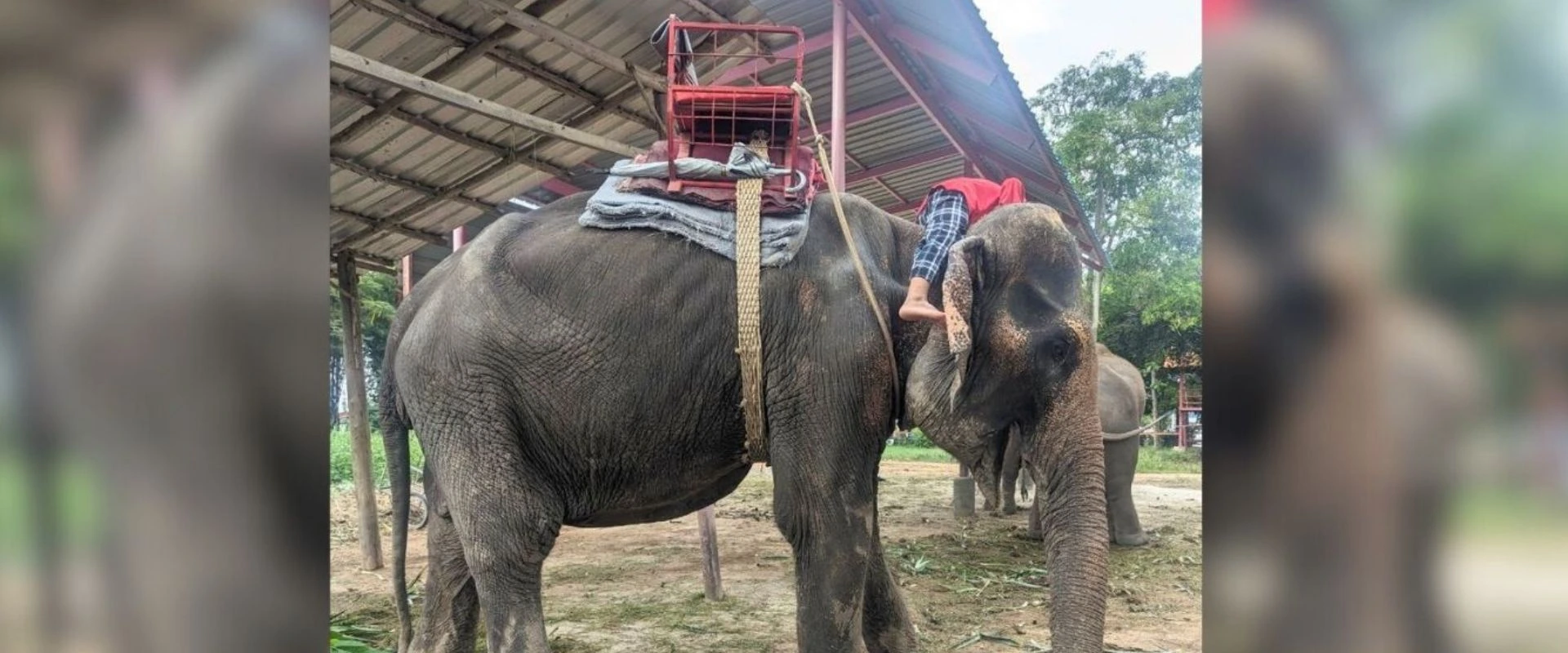
With one eye missing, her throat severely injured and chains around her legs, 60-year-old Kham Phaeng was one of the most dreadfully abused elephants our partner had seen. This elderly animal used to be a riding elephant in Pattaya, Thailand. Chained up day and night, she was unshackled only for people to ride on her back. She was denied physical contact with other elephants, and for at least 10 years, she was chained too tightly to lie down. The rough wooden chair on her back, which pressed painfully into her body, was seldom if ever removed. A harness strapped to her back, a rider on top — this was Kham Phaeng’s reality for years. Exploited as a riding elephant in Pattaya, this 60-year-old elephant endured unimaginable suffering, denied even the simple comfort of another elephant’s touch. Credit: Somboon Legacy Foundation These chains once held Kham Phaeng captive day and night, unshackled only so tourists could ride her injured body. For this 60-year-old elephant, they represent decades of pain and isolation. Credit: Somboon Legacy Foundation To save money, this horribly abused animal was fed a diet of pineapple tree leaves, which severely damaged her throat and left it swollen and excruciatingly painful. Elephants like Kham Phaeng are born into suffering. It is their fate from the moment they take their first breath. In Thailand, wild elephants are protected by law, but “domestic” elephants – such as those used in the tourism trade – are legally classified as working animals. Welfare standards for working animals are almost non-existent and leave significant room for exploitation. Even more horrifying, some forms of severe abuse inflicted on captive elephants are not outlawed. To make them submissive, elephants used for entertainment are subjected to a brutal process known as “phajaan” or “breaking the spirit”. It involves separating young calves from their mothers, confining them in small spaces, and inflicting severe pain using bullhooks, sticks, or sharp metal objects until the elephant’s will is broken and it learns to obey commands out of fear. They call it “phajaan”. Calves are taken from their mothers, confined and beaten into submission using bullhooks and sharp metal objects. Credit: Protect All Wildlife Credit: Protect All Wildlife Help us give elephants in extreme old age the dignified retirement they deserve. This is where our partner, Somboon Legacy Foundation, comes in. At Somboon Legacy Foundation, elephants have minimal human contact to allow them to live as naturally as possible. All its elephants have been rescued from lifetimes of abuse, exhaustion, stress and exploitation. At last, these majestic beings – one is 90 years old – can finally walk freely, socialize and behave naturally in a peaceful, natural environment where their emotional and physical scars can begin to heal. After seven years, our partner has been told to vacate the premises by April. The riverside resort where Somboon keeps its elephants has asked the foundation to relocate. This relocation is set to be incredibly stressful for the elephants. Malee (90 years old) was abused in the logging industry in Thailand, and even endured a broken leg after a log hit and severely injured her. She is now safe at Somboon Legacy Foundation. Credit: ASI/Taryn Slabbert (Left) and Somboon Legacy Foundation (Right) Somboon has found a new home for its animals, but is struggling to raise funds for the relocation. Without these funds, they cannot move the elephants, which leaves their futures dreadfully uncertain. Please help us get these abused elderly elephants to a new home. Please help us get Kham Phaeng and her friends to their new home. Time is ticking and we must help right away.
Chinese national arrested over attempt to smuggle 2,000 queen ants from Kenya
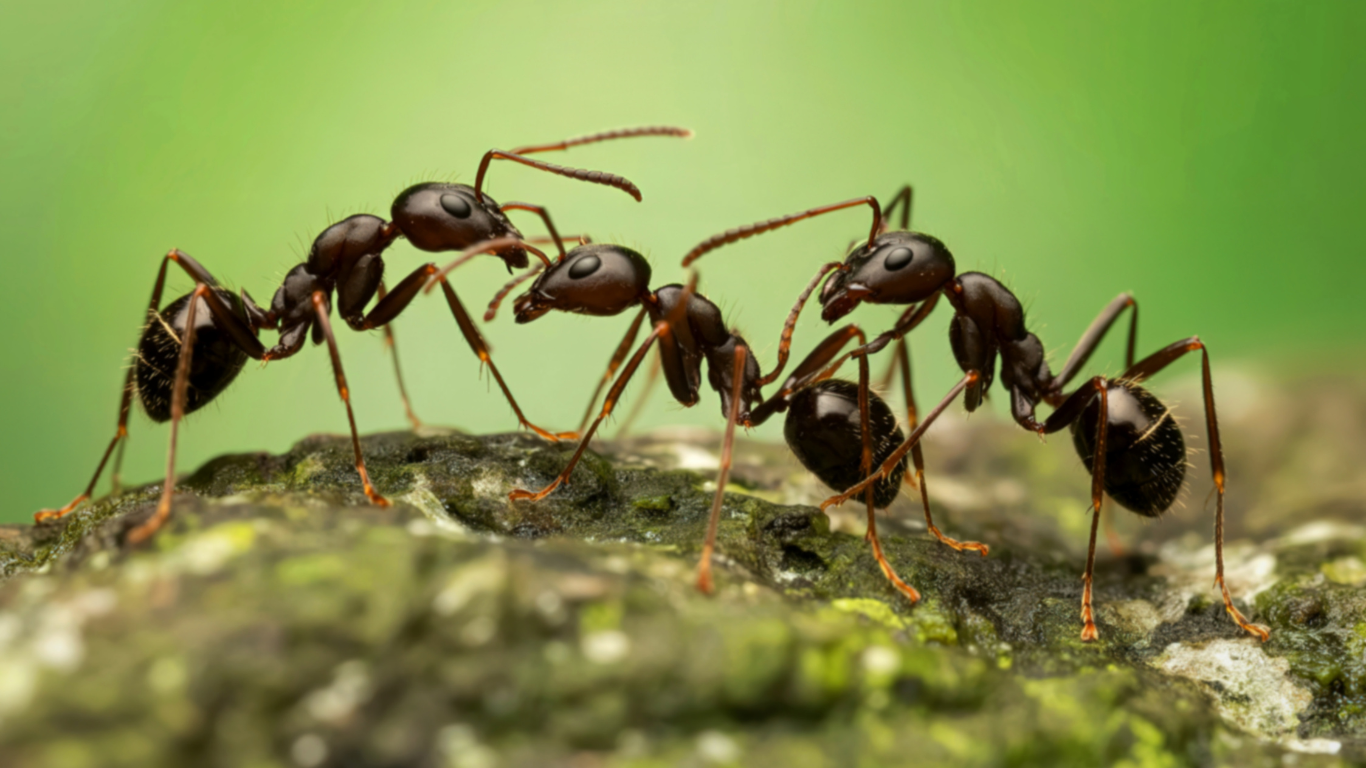
Article written by Wycliffe Muia Originally published by BBC, 12 March 2026 A Chinese national has been arrested in Kenya’s main airport accused of attempting to smuggle more than 2,000 queen garden ants out of the country. Zhang Kequn was intercepted during a security check at Jomo Kenyatta International Airport (JKIA) in the capital Nairobi after authorities discovered a large consignment of live ants in his luggage bound for China. He has yet to respond to the accusation but investigators said in court that he was linked to an ant-trafficking network that was broken up in Kenya last year. The ants are protected by international bio-diversity treaties and their trade is highly regulated. Last year, the Kenya Wildlife Service (KWS) warned of a growing demand for garden ants – scientifically known as Messor cephalotes – in Europe and Asia, where collectors keep them as pets. A state prosecutor told the court on Wednesday that Zhang had packed some ants in test tubes, while others were concealed in tissue paper rolls hidden in his luggage. “Within his personal luggage there was found 1,948 garden ants packed in specialised test tubes,” prosecutor Allen Mulama told the court. “A further 300 live ants were recovered concealed in three rolls of tissue paper within the luggage,” he added. The prosecutor asked the court to allow the suspect’s electronic devices – phone and laptop – to be forensically examined. Duncan Juma, a senior KWS official, told the BBC that more arrests were expected as investigators widen their probe into other Kenyan towns where ant harvesting was suspected to be ongoing. Last May, a Kenyan court sentenced four men to one year in prison or a fine of $7,700 (£5,800) for trying to smuggle thousands of live queen ants out of the country, in a first-of-its kind case. The four suspects – two Belgians, a Vietnamese and a Kenyan – had pleaded guilty to the charges after their arrest in what the KWS described as “a co-ordinated, intelligence-led operation”. The Belgians told the court that they were collecting the highly sought-after ants as a hobby and didn’t think it was illegal. Investigators now say Zhang was the mastermind behind this trafficking ring but apparently escaped Kenya last year using a different passport. On Wednesday, the court allowed prosecutors to detain him for five days to enable detectives to conduct further investigations. The KWS, which is more used to protecting larger creatures, such as lions and elephants, described last year’s ruling as a “landmark case”. The ants seized last year were giant African harvester ants, which KWS said were ecologically important, noting that their removal from the ecosystem could disrupt soil health and biodiversity. It is believed that the intended destinations were the exotic pet markets in Europe and Asia.
Botswana shows how smarter cattle herding can save lions, reopen ancient wildlife pathways
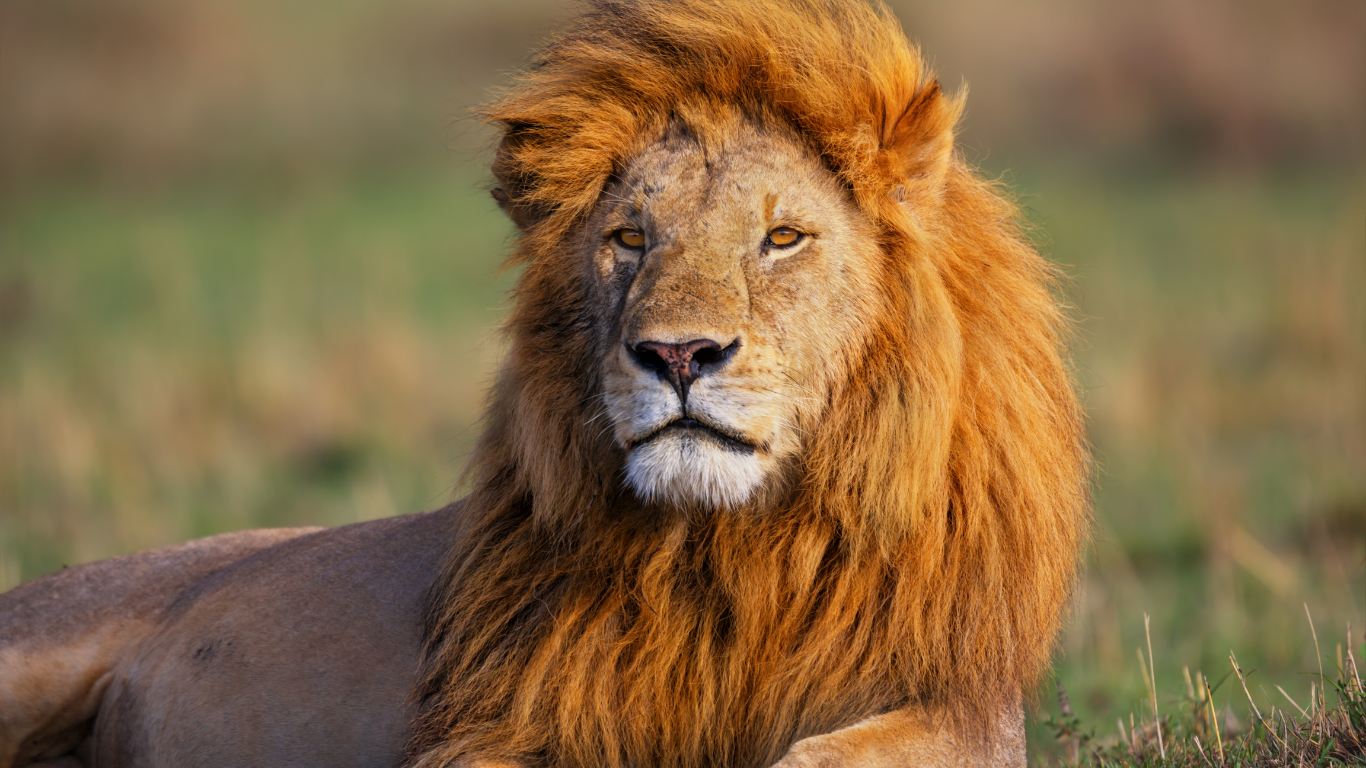
Article written by Gloria Dickie Originally published by Mongabay, 24 February 2026 The lions that roamed the plains of northern Botswana were dying. One by one, the big cats were succumbing to poisoned bait planted by exasperated villagers. The lions had been chipping away at their livelihood, feasting on the cattle that they left to graze along the Okavango Delta. By the end of 2013, around 30 lions — more than half of the northern Okavango population — had been killed in just one year. More than a decade later, the situation is radically different. The lion population has rebounded. Cub survival rate is up. And cattle losses are dramatically down. It’s the result of years of hard work: restoring traditional herding practices, collaring and tracking lions, and, most recently, establishing a market for ‘wildlife-friendly beef.’ This serves as a model, wildlife advocates say, for other parts of southern Africa where modern grazing practices have collided with big cats’ appetites. “It can be adapted to just about anywhere,” said Andrew Stein, the founder of Communities Living Sustainably Among Wildlife (CLAWS) Conservancy, which is based in Botswana. In the last 25 years, more than half the lions have vanished from the plains of Africa, largely due to conflicts with communities. As human populations have expanded, the animal’s range has shrunk, leaving remnant isolated groups. Today, there are fewer than 25,000 lions left across the continent. But in southern Africa, one large continuous population still roams the Kavango-Zambezi Transfrontier Conservation Area (KAZA TFCA), the world’s largest transnational land-based protected area, which runs across Angola, Botswana, Namibia, Zambia and Zimbabwe. “When we started working there in 2014, as we spoke to people, we realized they felt that all lions are the same. They are all out there just killing cattle,” Stein said. “We thought if we could show that each individual has a different approach — a different behavior or personality — we might be able to trigger individualized management with non-lethal approaches.” Desperate to curb the conflict, Stein and his colleagues introduced the first-of-its-kind lion early warning program known as the Lion Alert System. By outfitting lions with GPS collars and tracking their movements, the group sends automated alerts to local community members’ mobile phones when a lion is detected lurking near a human settlement or livestock area. This allows farmers to act before an attack occurs, bringing their animals together in an enclosure or adjusting their herding practices. CLAWS also encouraged locals to name the lions in their Indigenous languages in hopes of fostering a stronger connection. “That’s important because they are the ones that are going to decide whether these animals live or die at the end of the day,” Stein said. Some of the names, he reminisced, were admirable: like Mayenga, meaning the ‘one who is decorated by the Gods.’ “As conflict persisted, some people gave them rough names like Kufakuduze, which means, ‘If you come for my cattle, I will find you.’ But then there were others like Shedipatera, which means ‘the one who belongs to us.’” One of the reasons for heightened conflict, the conservancy realized, was that traditional hands-on herding practices had fallen away. In decades past, young boys were often responsible for carefully moving cattle herds to graze. But as more children began to go to school, an unintended consequence was that there were fewer people left to watch over the herds and keep lions away. “Of course, we want people to get educated, but it left a gap. And the adult men of the village did not want to be perceived to do the low-status job of a child,” Stein said. An aerial view of the Okavango Delta, Botswana. Credit: M. Atkinson, AHEAD. Communal herding protects livestock and lions Jack Ramsden grew up in northern Botswana, in the village of Maun on the edge of the Okavango Delta. “During my dad’s days, it was active herding 24/7 with the cattle,” he said. “When I was growing up in the 1980s, the permanent herding of cattle in Botswana had already somewhat changed … the herders were now more likely to release the cattle in the morning and then in the afternoon go look for them and bring them back. It has just gradually eroded.” At the time, Maun also had a much larger lion population. That has gone. Struggling farmers have steadily shot and poisoned the prides. “Now if a lion comes there, it’s like a comet flying through the skies. It’s something that some generations never see,” Ramsden said. Today, he works as the herding program coordinator for CLAWS, reintroducing traditional and lion-resilient methods. This includes consolidating cattle into communal herds managed under trained herders who stay with the animals throughout day and night. Ramsden also teaches the herders — roughly 24 are currently enrolled in the program full-time across three villages — about rangeland ecology and rotational grazing, as well as basic veterinary care. At night, the group deploys mobile canvas bomas — circular stockades — to keep the cattle safe from predators. “When the cattle are behind the canvas sheet, the lions will approach. They’ll walk along the outside. They can hear the cattle. They can smell the cattle. But if they don’t see them, they don’t actually jump in and attack,” Stein said. After grazing during the day, cattle are returned to their kraal (or boma) in the Zambezi Region, Namibia. Kraaling cattle overnight reduces predation risk. Credit: M. Atkinson, AHEAD. CLAWS is working in five villages in northern Botswana, which host around 5,000 cattle. Of those, about 700 are currently in CLAWS’ herding program. “In the past five years or so, we’ve probably only lost a maximum of 10 cattle,” Ramsden said, which marks a dramatic decline from the dozens and sometimes hundreds that were lost each year prior to CLAWS’ interventions. One of the program’s greatest achievements is not only that fewer cattle and lions are dying, but that cub survivorship is stronger. From 2014 to 2017, only about a third of the cubs
Tracking wildlife trafficking in the age of online marketplaces
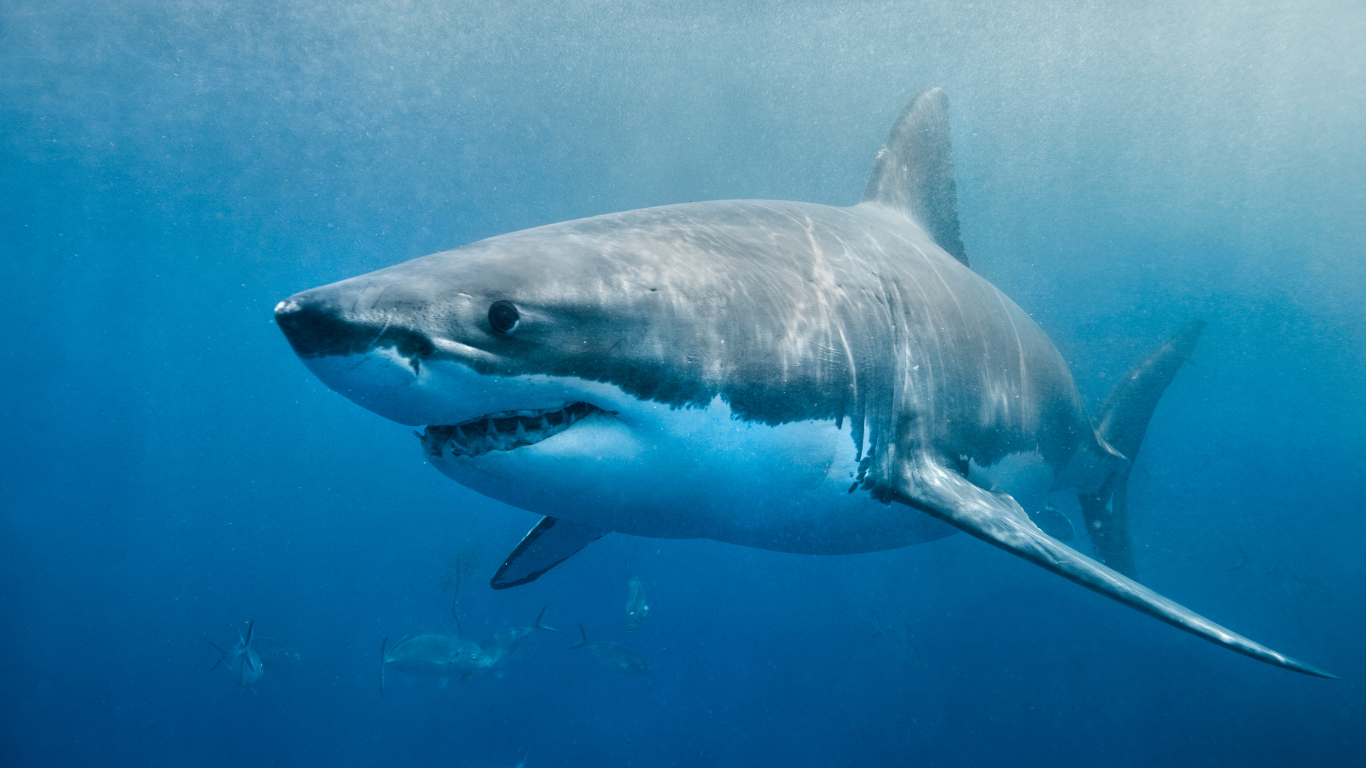
Article written by Gaby Clark Originally published by Phys Org, 26 February 2026 Wildlife trafficking is one of the world’s most widespread illegal trades, contributing to biodiversity loss, organized crime, and public health risks. Once concentrated in physical markets, much of this activity has moved online. Today, animals and animal products are advertised on large e-commerce platforms alongside ordinary consumer goods. This shift makes enforcement harder—but it also creates a valuable source of data. Every online advertisement leaves behind digital information: text descriptions, prices, images, seller details, and timestamps. If collected and analyzed at scale, these traces can help researchers understand how wildlife trafficking operates online. The problem is volume. Online marketplaces contain millions of listings, and most searches for animal names return irrelevant results such as toys, artwork, or souvenirs. Distinguishing illegal wildlife ads from harmless products is difficult to do manually and challenging to automate. Institute Professor of Computer Science Juliana Freire is part of a team that is taking on the problem head on, building a scalable system designed to address this challenge. They developed a flexible data collection pipeline that automatically gathers wildlife-related advertisements from the web and filters them using modern machine learning techniques. The goal is not to focus on one species or one website, but to enable broad, systematic monitoring across many platforms, regions, and languages, as well as to develop strategies to disrupt illegal markets. The findings are published in the Proceedings of the ACM on Management of Data. The team is a multidisciplinary effort, including Gohar Petrossian, Professor of Criminal Justice at John Jay College of Criminal Justice; Jennifer Jacquet, Professor of Environmental Science and Policy at the University of Miami; and Sunandan Chakraborty, Professor of Data Science at Indiana University. The pipeline begins with web crawling. The researchers generate tens of thousands of search URLs by combining endangered species names with the search structures of major e-commerce websites. A specialized crawler then follows these links, downloading product pages while limiting requests to avoid overwhelming servers. Over just 34 days, the system retrieved more than 11 million ads. Next comes information extraction. Product pages are messy and inconsistent, varying widely across websites. The pipeline uses a combination of HTML parsing tools and automated scrapers to extract useful details such as titles, descriptions, prices, images, and seller information. These data are stored in structured formats that allow large-scale analysis. The most critical step is filtering. While machine learning classifiers can be used for this filtering, training specialized classifiers for multiple collection tasks is both time-consuming and expensive, requiring experts to create training data for each task. Freire’s group developed a new approach that leverages large-language models (LLMs) to label data and use the labeled data to automatically create specialized classifiers, which can perform data triage at a low cost and at scale. This research has enabled large-scale data collection to answer different scientific questions and shed insights into different aspects of wildlife trafficking. One analysis of 14,000 reptile leather product listings on eBay showed that crocodile, alligator, and python skins dominated the market. Only about 10 animal-product combinations (such as “crocodile bags,” “alligator bags” and “alligator watches”) made up about 72% of all listings, indicating that the trade heavily focuses on a few luxury items. The analysis of all of the listings from these sites showed that while small leather products were shipped from 65 countries, 93% came from 10 countries, with the United States, United Kingdom, and Australia collectively accounting for over 3/4th of this market. Similar data from eBay on shark and ray trophies reveals that, although the platform has introduced policies to restrict threatened or endangered species, their derivatives are still circulated widely on the platform. Tiger shark trophies accounted for one-fifth of such listings, with asking prices up to $3,000. Over 85% of listings were linked to sellers in the United States, suggesting a pipeline from deep sea commercial fishing vessels to the US trophy trade. This research is also being used to determine what would be the most effective way to disrupt this market. For example, the researchers found that targeting key sellers is effective, but targeting key product types—”alligator watch,” for example—breaks the market of reptile leather products equally effectively, and is much easier to enact at a broad scale. The authors emphasize that this system is a starting point, not a finished solution. The pipeline is designed to be extensible, allowing future researchers to incorporate better classifiers, image-based analysis, or new data sources. By making the code openly available, they aim to support broader collaboration. As the wildlife trade continues to move online, understanding its digital footprint will be increasingly important. Scalable data collection tools like this one offer a way to transform scattered online listings into actionable knowledge, an essential step toward disrupting illegal wildlife trade in the digital era.
Cape Town must not punish wild baboons for living near humans. Trapping and confining them is cruel and impractical. Humane solutions exist.
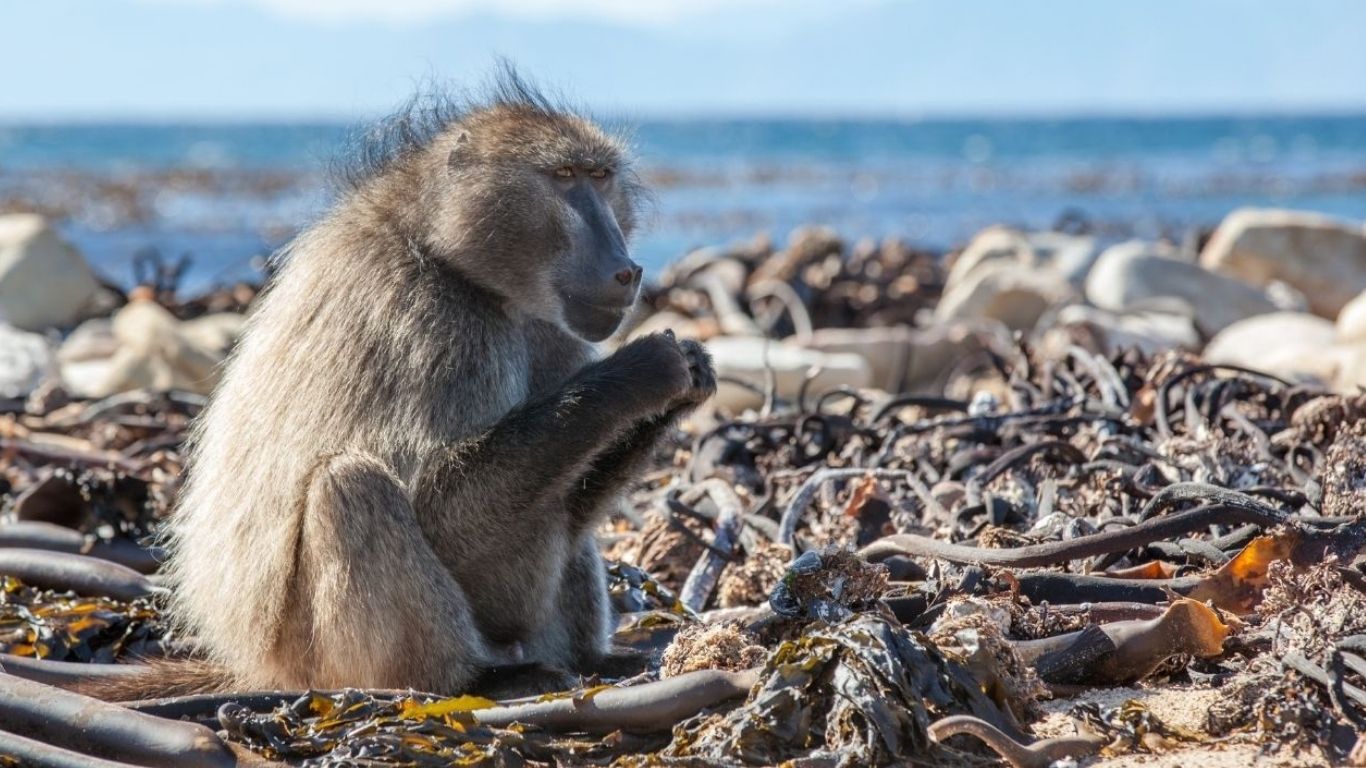
SIGN THE PETITION 16,000 voices ignored as Cape Town mayor snubs ASI baboon petition The executive mayor of Cape Town has refused to accept a petition from Animal Survival International (ASI), signed by more than 16,000 people, over the City’s plans to capture, confine and sterilize wild, free-ranging baboons in the Cape Peninsula. According to Geordin Hill-Lewis, he doesn’t have the authority to do so. ASI rejects this notion because the City has allocated R12-million in its 2026 budget for the Cape Peninsula Baboon Strategic Management Plan (CPBSMP). ASI executive director David Barritt said the mayor is trying to distance himself from a wildly unpopular and cruel plan. “The issue he faces is that the City cannot separate itself from the fact that it is using taxpayers’ money to implement a plan which is fundamentally cruel and essentially a zoo, a place where wild animals are taken and exhibited for money. How can he then tell 16,000 people it’s not his problem?” The CPBSMP has caused widespread public concern, with thousands speaking out against the proposed confinement of the wild baboons. The ASI petition underscores strong community opposition and a clear demand for humane, science-based solutions to human-baboon conflict. “Confinement would rob baboons of the freedom to forage, disperse and maintain complex social bonds, while sterilization would destabilize troop hierarchies and increase aggression. This threatens the long-term survival of these animals,” said Barritt. ASI emphasizes that human-baboon conflict in Cape Town is preventable. Access to human food, unsecured waste and intentional feeding are the main drivers. “The solution is not punishment, it’s prevention,” Barritt stressed. “With proactive management, coexistence is possible.” Proven and humane alternatives do exist and include: Universal deployment of baboon-proof waste bins Securing refuse collection areas and limiting access to waste Strict enforcement of bylaws prohibiting the feeding of wildlife Continued use and strengthening of trained baboon ranger programs Strategic fencing and deterrent measures to prevent access to urban attractants Public education campaigns to encourage responsible human behaviour “Baboons play a critical role in their ecosystems. Removing them disrupts natural processes, such as seed dispersal, that have been in place for generations,” Barritt said. According to the CPBSMP, the Seaforth troop will be relocated to a ‘trail enclosure of 1,5 hectares’ on a purpose-built baboon sanctuary on private land on Plateau Road by February 2026. The plan states that each baboon will be sedated and physically examined before relocation. A veterinarian will assess the animals and provide appropriate sterilization or contraception as breeding in the sanctuary will not be permitted. No baboon will also be released back into the wild from the sanctuary. Trapping and confining wild, free-ranging baboons in this manner is cruel and impractical. ASI therefore calls on City leadership to abandon the enclosure and sterilization plan and to prioritise humane, preventative measures that safeguard both communities and wildlife. SIGN THE PETITION Media Contact: Liryn de Jager liryn@networkforanimals.org
Plans underway to rescue lonely lioness – we’re almost there
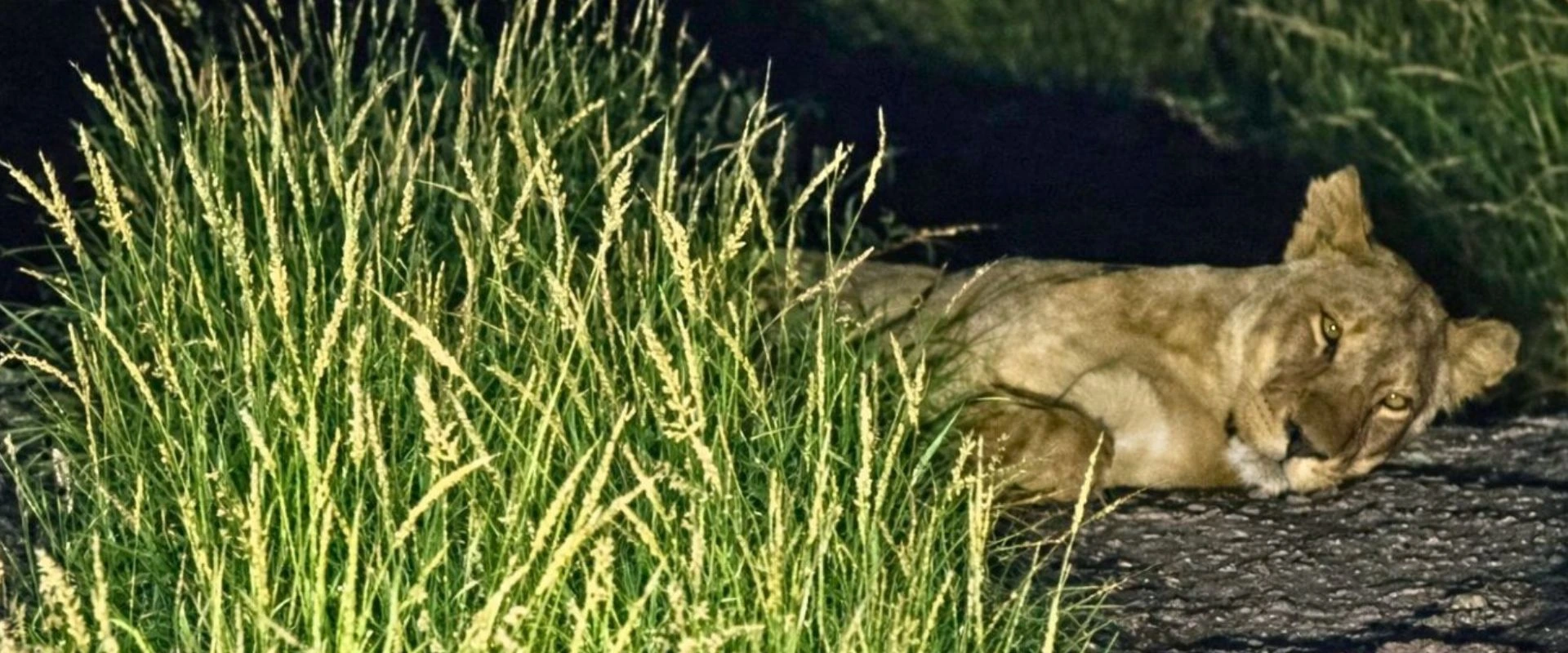
In Limpopo, South Africa, a lonely and vulnerable lioness is roaming the bushveld. Her entire pride has been wiped out by hunters and farmers. Day after day, she remains trapped between a safe sanctuary she cannot access and farmlands where she will likely be killed. Right now, plans are underway to dart and move her to safety. Teams have begun preparation, and she is being closely monitored. As soon as it is safe for her to be darted, she will be captured. This regal queen is the lone survivor of a once-proud pride, and now, we are raising funds to secure her relocation into a 36,000-hectare protected game reserve where she will be safe in a spacious fenced area. With her pride lost to hunting and human-wildlife conflict, this lioness now roams alone. Each day, she moves between a sanctuary she is unable to access and farmlands where she risks being shot. She has no safe place to call ‘home.’ Credit: The LionWatch Project Threats are all around and closing in fast. We must help right away. A solitary lioness has managed to evade the horror that met the rest of her pride – but she is in grave danger. Human-wildlife conflict is escalating across South Africa’s northern farming regions where shrinking habitats force lions beyond protected areas and into danger. When livestock is lost to a hungry lion – even once – retaliation is often swift and fatal: shooting, poisoning or trapping and killing the animal. This conflict is now one of the leading causes of lion deaths outside reserves in South Africa and solitary lions are the most vulnerable. Without a pride or safe territory, every step this lonely lioness takes risks becoming her last. Lions are killed and mutilated for trophies or “traditional medicine,” or murdered by farmers in retaliation for attacking livestock. Credit: Tyrone Winfield-Shutterstock Alone and unprotected, the lioness drifts along the sanctuary’s perimeter, searching for connection. She is desperately lonely and in grave danger. Lions are highly social creatures who live and thrive in a pride. For hours, this animal lies against the fence of the sanctuary, drawn to the lions inside, aching to belong. A bonded male and female from another pride have shown her rare moments of kindness. But lions are territorial and her presence is beginning to cause deep stress among the others in the pride – putting not only her life, but theirs, in danger. Her safety and survival are under threat every moment she spends roaming in the grey area between farmland and the sanctuary’s border. She’s found brief moments of connection with members from another pride, inside the safety of the reserve fences. But her presence is causing mounting stress, threatening the fragile peace that keeps them all alive. Credit: The LionWatch Project This is a wild lion and cannot ethically or legally be kept in captivity. Our partner, the LionWatch Project, is prepared to relocate her to a secure reserve where she can join a new pride and live freely as a wild animal once again. The total cost of the relocation, including a satellite collar to monitor her progress in her new home and ensure she adapts well, is $4,500 (roughly £3,300). Right now, the lioness risks her life every time she hunts for food. If she kills livestock, even once, she will be shot. This is not a question of if, but when. We MUST help. Please donate right away and help us relocate this vulnerable animal to a safe, spacious reserve where she can live the wild life she deserves – without the threat of death. She has already survived the unthinkable. Please don’t let her story end with a gunshot.
Lion DNA helps convict poachers for first time
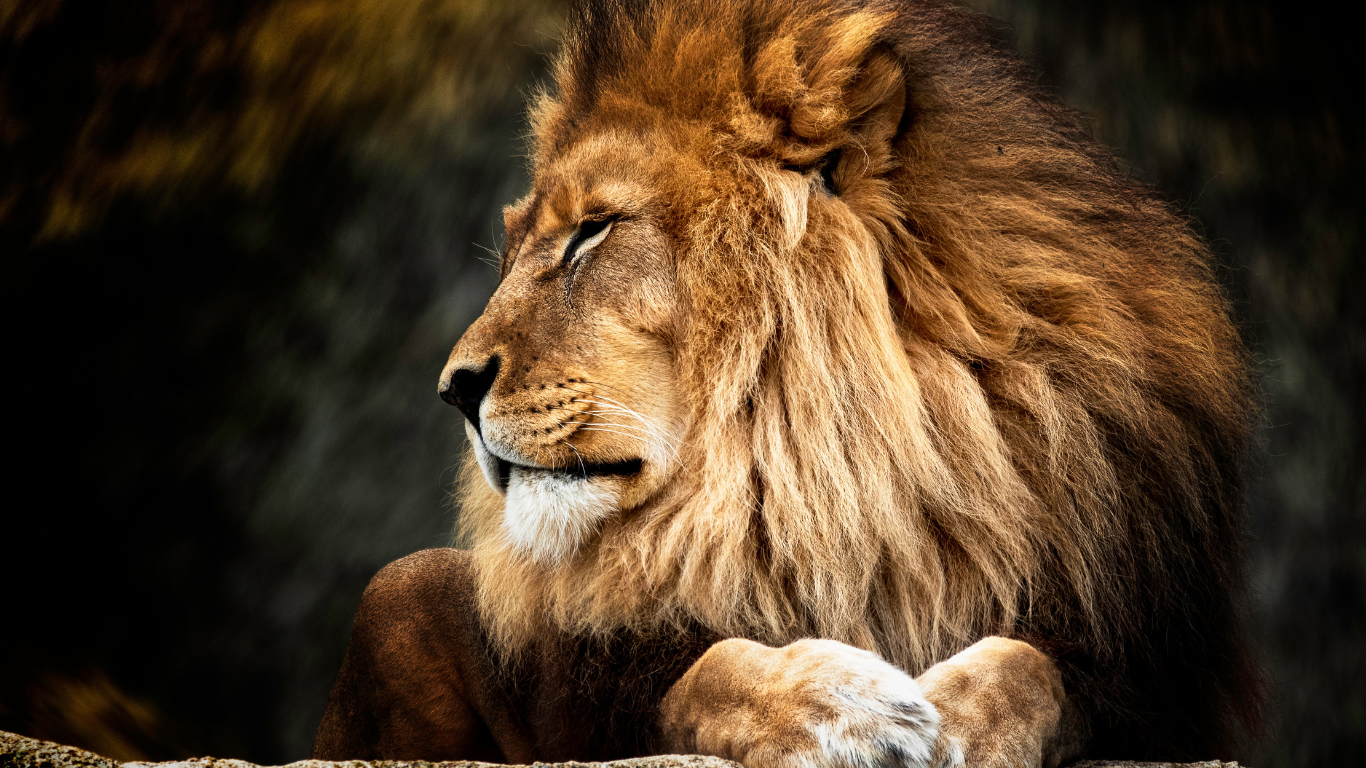
Article written by Angus Crawford Originally published by BBC, 20 February 2026 Lion DNA has been used to successfully prosecute poachers for the first time in the world, it has emerged. Wildlife crime experts have only just revealed how they were able to identify the individual animal from body parts found in a suspect’s village, as they matched a profile on Zimbabwe’s lion database. A blood sample had previously been taken from the male lion, which was being tracked by authorities in Hwange National Park – using a radio collar. Two poachers were convicted for the 2024 incident and sent to prison in what is thought to be the first prosecution of its kind. The details of the convictions and the role the DNA database played have been previously unknown. Non-governmental organisation (NGO) Traffic, which works to combat the illegal trade in wildlife, has shared the detail with us. In May 2024, authorities in Hwange National Park became suspicious after a radio collar worn by a male lion stopped working. Investigators and police traced its last known position and found a snare with lion fur attached to it. After collecting forensic evidence they questioned two men in a nearby village and discovered three sacks of meat, 16 lion claws and four teeth. These body parts would later be tested against the database, with the DNA from all matching the profile of that missing lion. Credit: TRACE/Simon Dures But possessing lion parts is not necessarily a crime in Zimbabwe. Having them can be explained away as old, traditional ornaments or as coming from an animal that died of natural causes. This has been an obstacle to prosecutions in the past. But thanks to a breakthrough in DNA profiling, that’s now changed. The lab generated a DNA profile from the recovered body parts and compared this to the profile previously generated from a blood sample of the lion with the radio collar. The two profiles matched and scientists were able to identify the specific missing animal. Over the last eight years the Victoria Falls Wildlife Trust (VFWT) has received about £250,000 from the People’s Postcode Lottery in the UK to build up the DNA database of lions in Zimbabwe. The scientist at the trust, who made the discovery, asked to remain anonymous for his own safety, but said: “Before we had access to this technology, we were only able to do species identification, but sometimes that’s not enough. “We can essentially match those claws or those products to the lion of interest that we are looking for.” Within 10 days of the killing, the DNA evidence was presented in court. Two men pleaded guilty and were given 24 month prison sentences. The hearing was told the value of the lion was about $20,000. Richard Scobey, Traffic’s executive director, said “countries now have the forensic capability to bring, solid science-based evidence to court” and that it will have global impact. Credit: TRAFFIC/Viv Williams This is understood to be the first time that DNA from an individual lion has been identified and used to prosecute poachers. Professor Rob Ogden has been closely involved in setting up the project and is co- founder of the organisation Trace, which promotes the use of forensic science in wildlife law enforcement. He says the prosecution gives “a message of hope” and shows what can be done using a combination of training, research and development and forensic casework. Recent figures suggest an increase in the number of lions being killed for their body parts which are then sold both as cultural objects in Africa and for traditional Chinese medicine. It is thought the rise may be down to organised crime gangs also involved in the illegal trade in Rhino horn and ivory trafficking. In Mozambique between 2010 and 2023, 426 lions were killed as a result of contact with humans with a quarter linked to deliberate poaching. A measure of the scale of the trade is also the number of seizures by the authorities in recent years. That includes 17 lion skulls found in Lusaka in 2021, reportedly en-route from South Africa, and a 2023 seizure in Maputo of more than 300kg of lion body parts. Which is why this breakthrough on DNA identification is seen as sending an important message to would-be poachers.
Rhino Poaching Doubles In South Africa’s Kruger Park
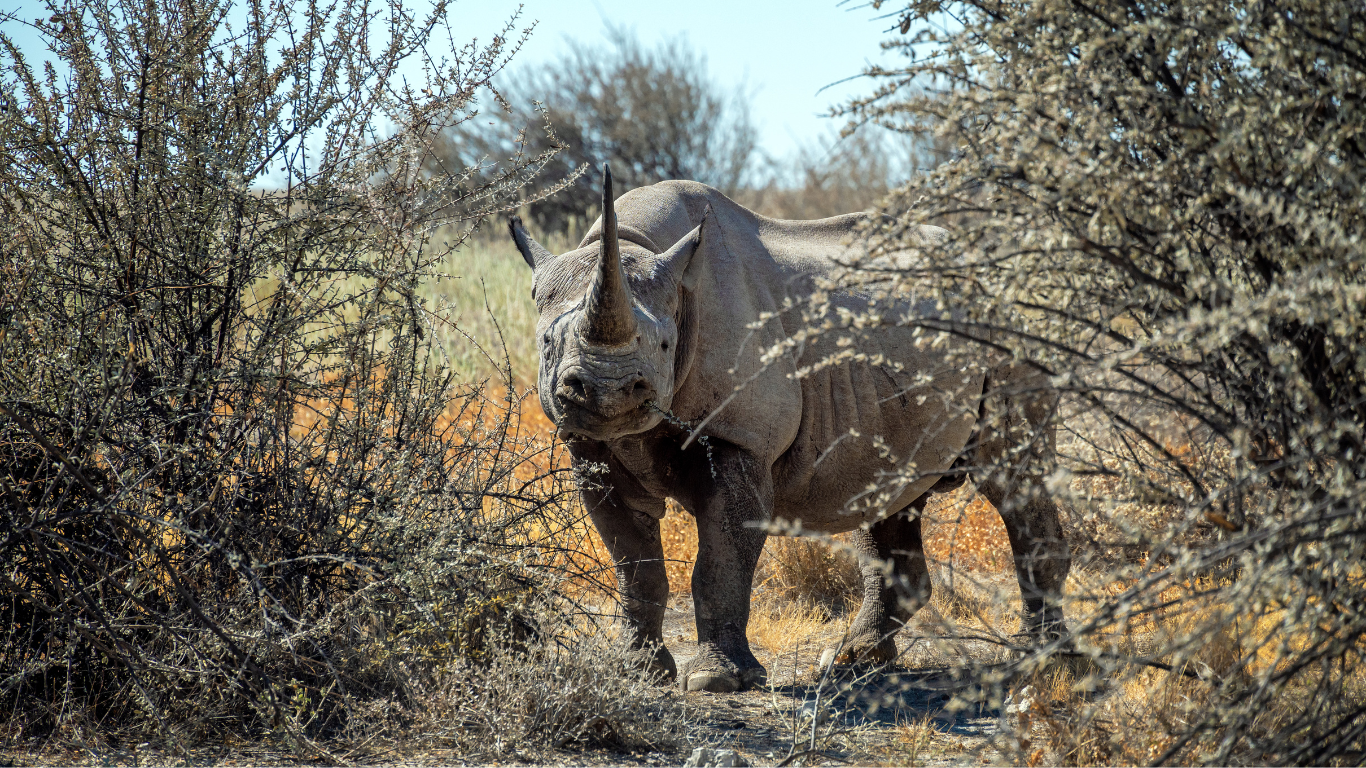
Article written by AFP – Agence France Presse Originally published by Barrons, 10 February 2026 Rhino poaching almost doubled in South Africa’s Kruger National Park in 2025 compared to the previous year, despite interventions including dehorning and lie detector tests for rangers, the government said Tuesday. South Africa is home to the world’s largest population of rhinos, which are poached for their horns that fetch high prices on the black market. Kruger, one of Africa’s biggest national parks, lost 175 rhinos to poachers in 2025, following 88 reported the previous year, the environment ministry said in a statement. Across the country, poachers killed 352 of the animals over last year, a 16 percent drop from 2024, it said, citing good results from dehorning programmes and detection measures such as the use of advanced cameras and sensors. Kruger had noted a link between failed polygraph tests on its rangers and a surge in poaching, with follow-up investigations resulting in the dismissal of seven staff, it said. South Africa has the biggest rhino population in the world, with nearly 14,390 of the animals at the end of 2024, more than 80 percent of them white rhinos, according to the International Rhino Foundation. The global population is about 26,700, it says. The environment ministry did not say if the poached animals were white rhinos or the black species, which is listed as critically endangered by the International Union for Conservation of Nature (IUCN). Environment minister Willie Aucamp has proposed reintroducing limited hunting trophy export quotas for black rhinos, elephants and leopards after a four-year freeze that has frustrated hunters and wildlife ranchers. The quotas published last week for public consultation are for 150 elephants, 12 black rhino and 11 leopards. South Africa’s elephant population had increased by 41 percent to more than 43,680 animals in the wild, the proposal said. The suggested quota for black rhino was in accordance with a CITES provision that the number of adult male black rhino exported as hunting trophies does not exceed 0.5 percent of the population, it said.
Rescued lions and tigers at risk of freezing to death in Ukraine
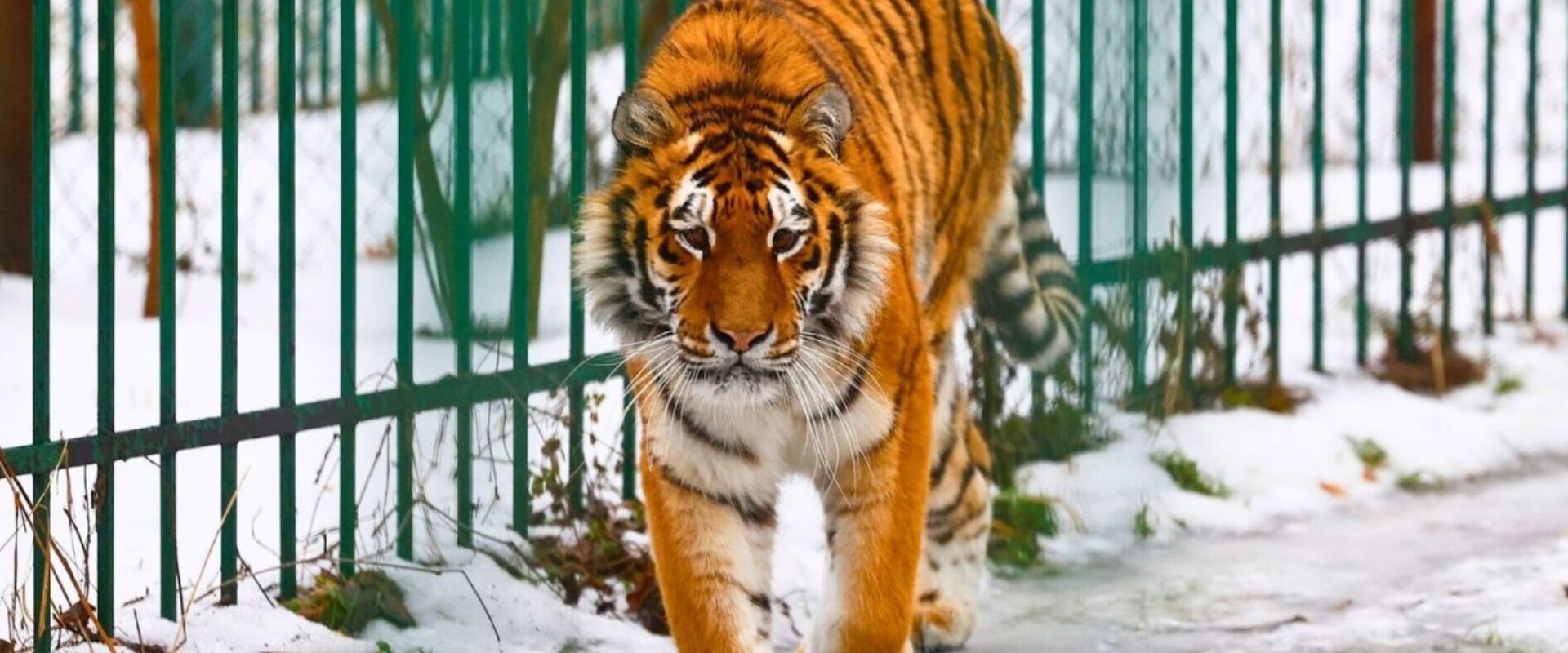
Ukraine is being destroyed by war and the situation for animals there keeps getting worse. The Russians are launching relentless attacks in a bid to destroy Ukraine’s electricity supply so now the animals we help care for are freezing cold in the middle of winter with no heating. Because of the bombing, our partner, Wild Animal Rescue Center (WARC) near Kyiv, has no power and no water. 42 wild animals, including lions, tigers, lynxes and many others, and 62 domestic animals, are living in arctic conditions without any way to get warm. At Wild Animal Rescue Center (WARC), this wolf and dozens of other rescued animals are enduring freezing conditions. No electricity means no heat, no water and no escape from the cold. Credit: WARC With temperatures plunging as low as -4°F (-20°C), the situation is utterly desperate and we must help. “We are all freezing. The water in our pipes has frozen. There is no water in the center, no electricity. We cannot keep the animals warm. We really need help urgently.” – Natalia Popova, founder, Wild Animal Rescue Center (WARC) Animal Survival International has fought for these animals since the war broke out and now we are reaching out to every animal lover to help, because their situation is desperate. We must buy a generator to help these animals before it is too late. Many of the animals are exotic species, not native to Ukraine, who were dumped or abandoned when owners and zookeepers fled. This tiger and other exotic animals are living without electricity and have to endure bitterly cold conditions. A generator will provide the warmth they need to make it through winter. Credit: WARC Just two years old, Khan was kept in appalling conditions before being abandoned. When WARC was alerted of Khan’s situation, it moved quickly to save him but the damage was already done. Khan is forever traumatised and gravely ill, suffering from serious kidney and liver disease that requires long-term, costly treatment just to keep him alive. A generator will give him the warmth he needs to fight for his life. Khan is battling liver disease, and in freezing temperatures, his condition worsens. Without warmth and care, every cold night puts his life at risk. Credit: WARC Please help us raise $13,000 (£9,500) to purchase a life-saving generator and fuel to see our partner through winter. It could be the difference between life and death for the animals. These animals have already survived war, abandonment, and unimaginable suffering. Please don’t let freezing temperatures be what takes their lives. Please, donate right away. Every day without a generator brings the animals closer to doom. Your donation today means a step closer to massive relief for animals on the brink of disaster.
Rescued elephant Pun had every one of her babies ripped away
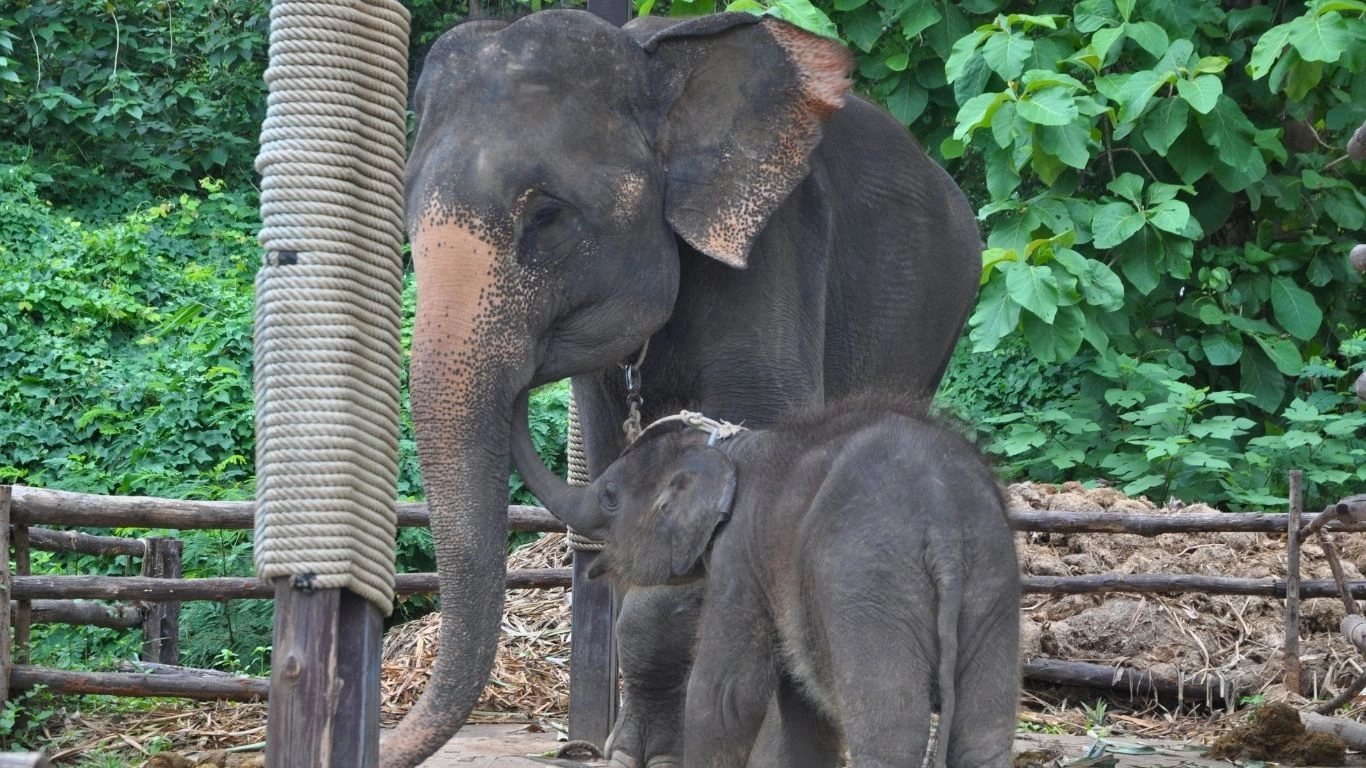
Pun has endured a lifetime of heartbreak. Exploited as a breeding elephant in Thailand, her babies were taken from her again and again, to be sold into the entertainment industry for a lifetime of abuse. It is a trauma no mother or baby should ever have to go through. All of Pun’s babies were ripped from her after birth. She suffered heartbreak after heartbreak – all while being beaten and abused. An emotional moment for all, when Pun and her daughter – who tragically later died – were finally rescued and brought to our partner’s sanctuary. Credit: WFFT Our partner, Wildlife Friends Foundation Thailand (WFFT), was able to rescue Pun and one of her daughters before their cruel captors could separate them. Sadly, her daughter – who was just a year old at the time of rescue – later passed away, and since then, traumatized Pun has struggled to find companionship. Lonely and heartbroken, all we want for Pun is friendship and love. Will you help? As a breeding elephant, Pun was kept tightly chained in a tiny enclosure. Credit: WFFT After years of loss, Pun now finds it difficult to trust others and is frightened of other elephants. But with time, patience, and the right environment, Pun could begin to rediscover what it means to be an elephant and even find a place in a herd. We urgently want to give Pun a new, much larger enclosure. This is because with careful introductions, made possible through neighboring elephant enclosures, it may be possible for Pun to form a friendship with another rescued elephant, and experience the companionship she so deeply deserves. But to make this dream a reality, she needs your help. Every contribution, no matter the size, brings Pun one step closer to a bigger home and the chance of friendship. Will you help her today? Credit: WFFT Pun’s future is in your hands. Every donation, large or small, will help this precious animal heal and rediscover joy. Can she count on your support today?
INVESTIGATION | Wildlife crime syndicates tighten grip on South Africa’s natural heritage
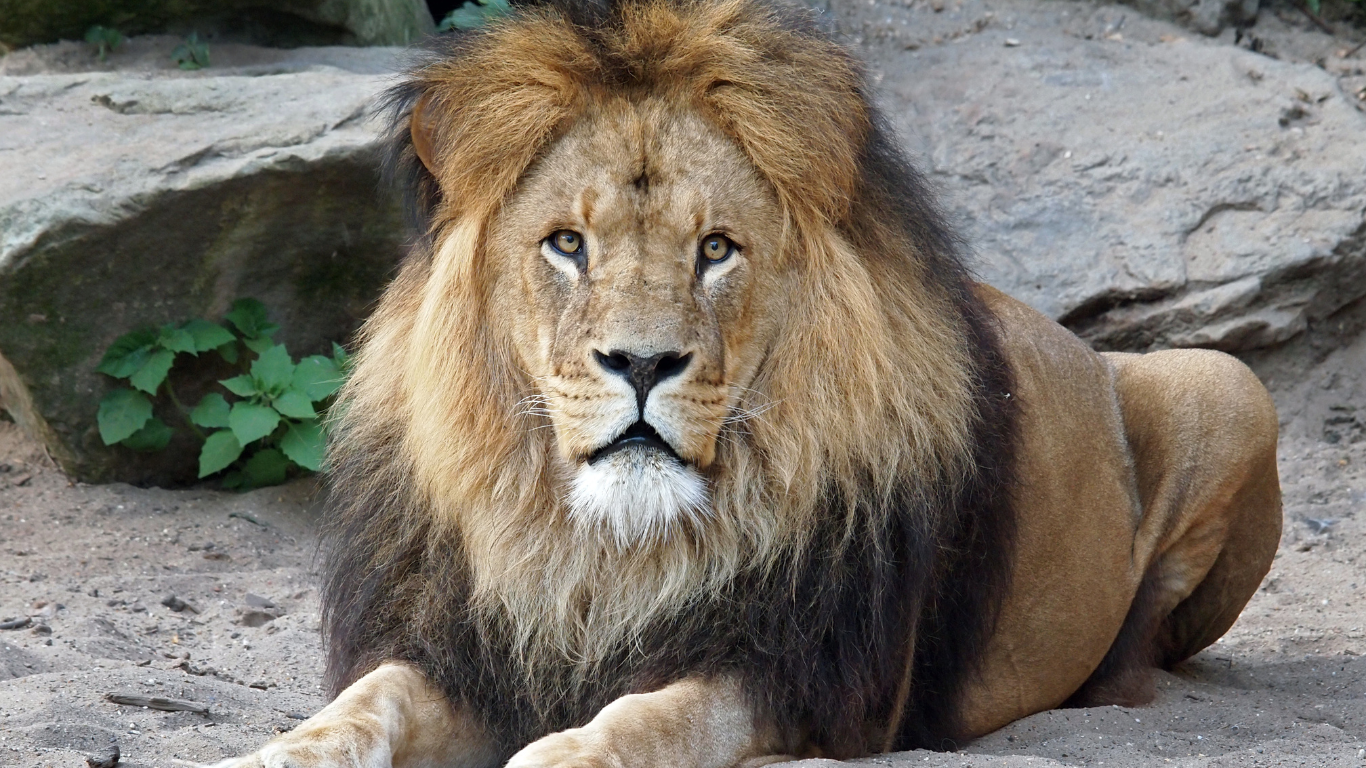
Article written by Nicola Mawson Originally published by IOL, 13 January 2026 South Africa’s natural heritage is under siege from organised crime, weak regulation and murky legal markets. From vaults holding rhino horn stockpiles to pens of captive-bred lions, and from the elusive pangolin to plundered seas, an expanding illicit wildlife economy is eroding biodiversity, undermining sustainable livelihoods and fuelling transnational criminal networks. Legal loopholes, under-resourced enforcement agencies and the high value of wildlife products have created fertile ground for trafficking syndicates, allowing them to move endangered animals and derivatives across borders with alarming efficiency. The consequences reach beyond conservation: local communities are left vulnerable, ecological systems are destabilised, and South Africa’s global reputation as a leader in wildlife protection is increasingly at risk. Rhino horn stockpiles: legal piles, illegal flows South Africa holds one of the world’s largest rhino horn stockpiles – legally accumulated from horns harvested in dehorning, natural deaths and confiscations. Official disclosures from government Promotion of Access to Information responses from the Department of Environment, Forestry and Fisheries (DFFE) obtained by the EMS Foundation in mid-2024 show government holdings of about 27,650 kg and private holdings at roughly 47,500 kg. This accounts to around 70,000 kg of horn. The legal regime allows domestic trade under strict permits, while international commercial trade remains prohibited under the Convention on International Trade in Endangered Species (CITES) and domestic implementing law, the National Environmental Management: Biodiversity Act (NEMBA). Yet, Jason Gilchrist, lecturer in the School of Applied Sciences at the Edinburgh Napier University, has said that “diminishing demand for rhino horn would ultimately remove the incentive for poaching rhino. It would also remove any incentive to private landowners to farm rhino for their horn.” Between 2016 and 2021, at least 974 kg of seized rhino horn were forensically traced back to legal stockpiles, demonstrating leakage into illicit channels, according to EMS Foundation research. A seven-year investigation by the South African Police Service’s Hawks and DFFE culminated in the arrest of suspects linked to 964 horns destined for illegal export, confirmed in a government media release. South Africa’s wildlife tracking economy. Credit: ChatGPT Then DFFE Minister Dion George said that this “complex investigation… is a powerful demonstration of South Africa’s resolve to protect its natural heritage. The Hawks’ work shows that our enforcement agencies will not hesitate to pursue those who plunder our wildlife for criminal profit.” George added that “the illegal trade in rhino horn not only destroys biodiversity but also undermines the rule of law and the foundations of environmental governance”. In 2025, the High Court in the Northern Cape delivered a ruling interpreting a captive breeding exemption in CITES to potentially allow horn exports under narrow conditions. The EMS Foundation has previously noted that “instead of destroying the rhino horn after removal, South Africa has chosen to continue the risk to the diminishing surviving rhino population by driving the perception that the horn has value and stockpiling it… It is inevitable that rhino horns from stockpiles will flow into the international illegal trade.” Canned lions and captive breeding South Africa is at the centre of one of the world’s most contentious wildlife industries: controlled lion breeding for hunting, tourism and bone export. An estimated 7,800 to 8,000 lions are held in captivity across more than 300 facilities, according to research from the Ministerial Task Team and NGO estimates. A Ministerial Task Team was appointed in December 2022 to recommend pathways for a voluntary closure of captive lion facilities. But, recently, the current Minister of Forestry, Fisheries and the Environment – Willie Aucamp – said he was still awaiting comprehensive implementation plans before taking further steps, amid allegations of industry ties he denies. Captive breeding of lions has underpinned “canned hunting” – hunts in confined spaces where escape is impossible. Lion bones, like rhino horn, are sought in some Asian markets for purported medicinal value, despite no scientific basis, according to animal welfare organisations. Where Pangolin trafficking is rampant. Credit: Statista Pangolins: silent trafficked mammals on a global highway The Temminck’s ground pangolin, South Africa’s only indigenous pangolin species, is listed as Vulnerable and protected under domestic law and CITES Appendix I. From January to August 2023, around 30 pangolins were seized in the country, primarily live animals, according to EMS Foundation data. A ScienceDirect article from last year found that interceptions of pangolin scales from Africa to China have increased remarkably in recent years totaling 6.4 tonnes, 6.3 tonnes in 2015, 18.9 tonnes in 2016, 46.8 tonnes in 2017, 39.7 tonnes in 2018 and more than 97 tonnes in 2019. “As the four Asian pangolin species have become even more scarce, the demand for pangolin scales has in turn increased in Africa at industrial levels in order to supply the Asian market demands,” it said. Seafood plunder: abalone and beyond Marine wildlife also plays a role in the illegal wildlife economy. South African abalone (perlemoen), prized in East Asia as a luxury seafood delicacy, is among species heavily targeted by illegal harvesters and organised syndicates. Although commercial abalone fishing was banned in 2007, enforcement challenges have allowed illegal sea harvesting and smuggling to flourish, with gangs working with foreign networks to export dried abalone to lucrative destinations, analysis by governance and fisheries organisations shows. Perlemoen, shark fins and other marine products are among the broader suite of illicit wildlife commodities trafficked across borders, reinforcing how marine crime intersects with terrestrial organised trafficking networks. How South Africa’s illicit trade stacks up globally. Credit: Tracit A tangled web with global consequences Wildlife trafficking is not just an environmental issue – it is a criminal economy worth billions. Global enforcement demonstrates this: Interpol’s Operation Thunder 2025 rescued nearly 30,000 trafficked live animals and seized tons of wildlife products. “Nearly 30,000 trafficked live animals were rescued during coordinated operations against wildlife and forestry crime, and tons of wildlife products were seized,” said Interpol. Conservation groups argue that eliminating stockpiles, closing controversial breeding industries and enhancing coordinated enforcement are essential to stop legal markets being co-opted by illegal networks. What’s next for South Africa’s
7 hopeful wildlife sightings that researchers celebrated in 2025
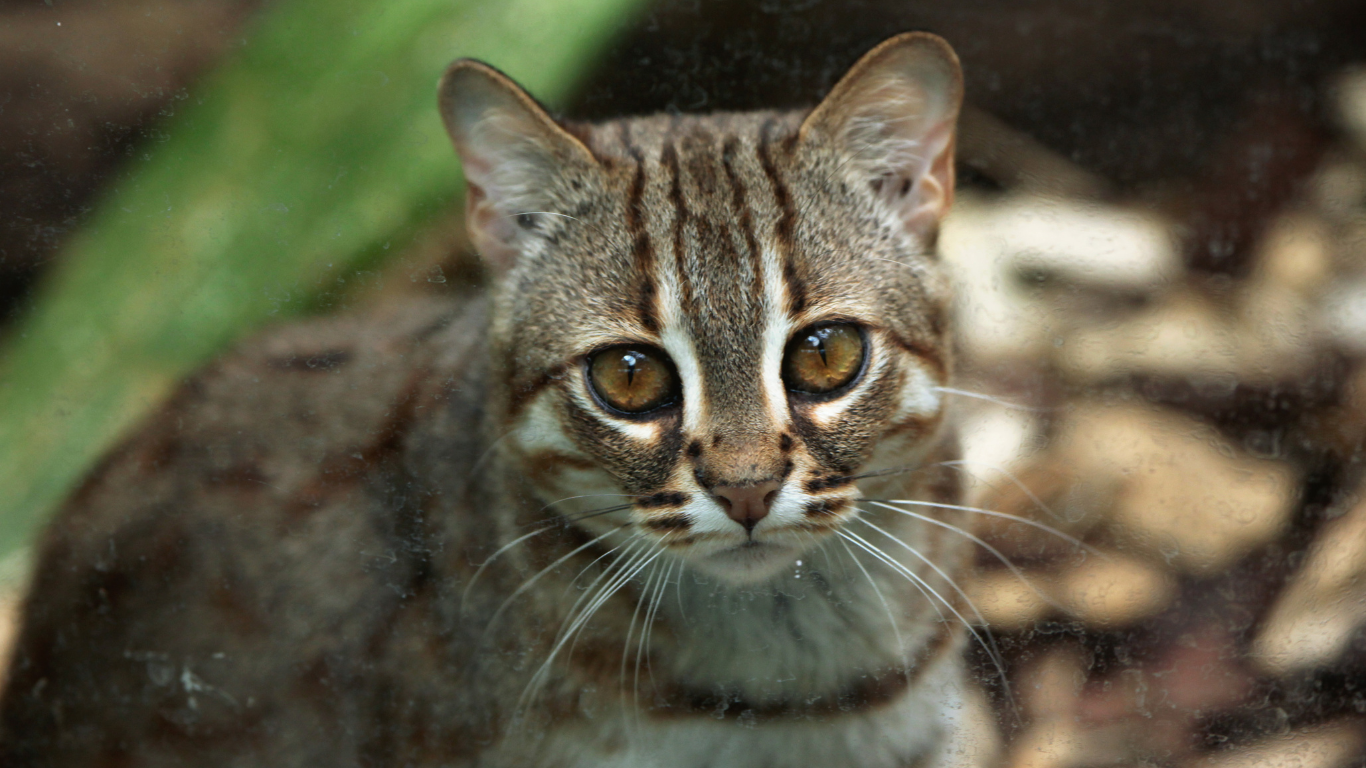
Article written by Shreya Dasgupta Originally published by Mongabay, 6 January 2026 Once in a while, an animal shows up where it’s least expected, including places from where it was thought to have gone extinct. These rare sightings bring hope — but also fresh concerns. These are some of the wildlife sightings Mongabay reported on in 2025. Colossal squid recorded for the first time in its deep-sea home Researchers made the first confirmed recordings of a colossal squid (Mesonychoteuthis hamiltoni), the world’s heaviest invertebrate, while exploring the deep sea near Antarctica. Until then, everything scientists knew about the species came from the bits of them that turned up in the bellies of other animals. (Read story) A baby colossal squid. Credit: Schmidt Ocean Institute Eurasian otter reappears in Malaysia after a decade In Malaysia, camera traps in Tangkulap Forest Reserve photographed a Eurasian otter near a waterbody. This is the first confirmed sighting of the species in Malaysia in more than a decade and makes Tangkulap Forest Reserve the only place in the country where all four East Asian otter species coexist. (Read story) First elephant sighting in a Senegal park since 2019 Camera traps in Senegal’s Niokolo-Koba National Park captured video of a large bull elephant named Ousmane, thought to be a hybrid of the critically endangered African forest elephant (Loxodonta cyclotis) and savanna elephant (Loxodonta africana). Researchers say this is the first elephant to be seen in the park in six years. (Read story) Rare Javan leopard sighting Camera traps in Indonesia’s Mount Lawu forest area snapped rare images of a Javan leopard, following reports of the animal by a hiker. The endangered Javan leopard (Panthera pardus melas) is Java’s last surviving top predator, following the extinction last century of the Javan tiger (Panthera tigris sondaica). (Read story) First-ever sighting of critically endangered right whales spotted in the Bahamas In April, divers captured videos of two North Atlantic right whales (Eubalaena glacialis) in the Bahamas, making it the first time the species has been seen in the nation’s waters. During that time of the year, the critically endangered whale is usually found thousands of kilometers north off the northeastern U.S. coast. There are fewer than 400 estimated individuals remaining. (Read story) New population of rare douc langurs in Vietnam Researchers confirmed a new subpopulation of critically endangered gray-shanked douc langurs (Pygathrix cinerea) in Khe Lim Forest in south-central Vietnam. The sighting is hopeful, but the researchers warn the forest lies outside Vietnam’s formally protected areas, leaving the population exposed to numerous threats. (Read story) Flat-headed cats ‘reappear’ in Thailand NGOs and authorities captured footage of numerous flat-headed cats (Prionailurus planiceps) in the peat swamp forests of Princess Sirindhorn Wildlife Sanctuary in south Thailand from 2024-2025. The endangered, understudied species was last spotted in Thailand by researchers in 1995, leading to the assessment that they were “possibly extinct” in the country. (Read story) A flat-headed cat in Sabah, Malaysia Credit: Sebastian Kennerknecht/Panthera
Orphaned baby wild animals in South Africa are fighting for life right now
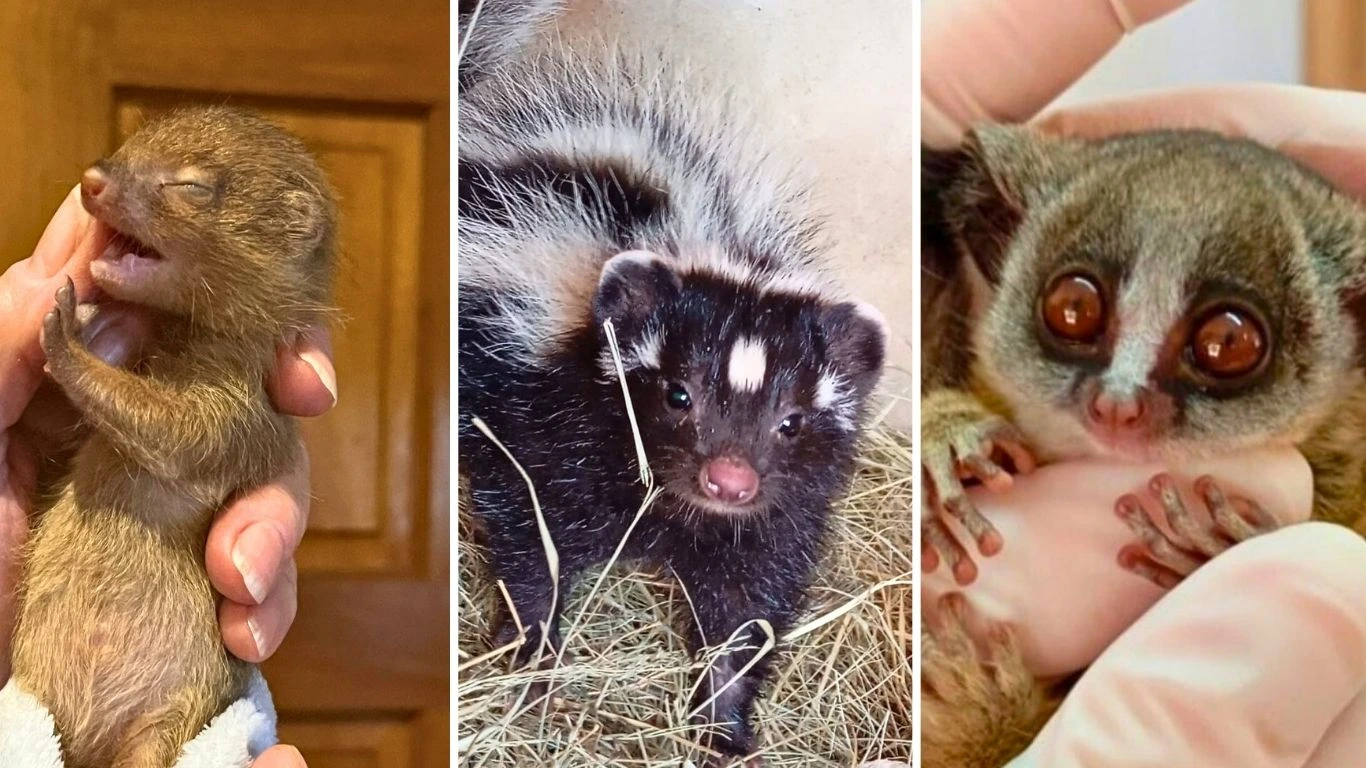
A tiny scream pierced the air as our rescue team rushed through a violent summer storm in South Africa. On the ground lay a newborn genet — a small, cat-like wild mammal — with its umbilical cord still attached. Its eyes were closed, and its mother gone. Without immediate help, this little life had no chance of survival. Imagine the terror this newborn must have felt — fresh from the womb, still blind, and utterly alone. Fortunately for the little genet, our team was able to help. This newborn genet was found abandoned in a violent storm with its umbilical cord still attached. Thanks to our partner, it is receiving the critical support it needs. Credit: FFW This year, there are more animals in need than ever before. Sadly, this story is all too common in South Africa where wildlife habitats and human settlements often overlap. Each summer, wildfires, vehicle strikes, habitat destruction and intensified hunting tear mother animals from their babies. In the illegal traditional medicine trade, adult animals are killed for their body parts, leaving infants behind. A lucky few survive long enough to be rushed to our partner, Friends of Free Wildlife, barely clinging to life. Each month, our partner rescues and rehabilitates animals, including orphaned mongooses like this one. Credit: FFW Among the most vulnerable rescues are: Bushbabies, some weighing as little as one ounce (28 grams) Baby bats, torn from their mothers Newborn hedgehogs, no bigger than your palm and completely defenceless A blue duiker – a threatened type of antelope heavily hunted for the traditional medicine trade, even though it is protected under South African law The lives of fragile wild animals hang in the balance, like (L-R) newborn bush babies and hedgehogs, and this threatened blue duiker. Credit: FFW (Left and right) and EyeEm Mobile GmbH (Centre) We urgently need to raise $2,000 (£1,500) to complete a vital upgrade to our partner’s veterinary clinic. As more and more animals need help, our partner is trying as hard as it can to help these fragile infants. Their survival depends entirely on rapid rescue — and on compassionate supporters like you.. To cope, our partner urgently needs to get more equipment for its clinic. Priorities are: Heating pads and incubator boxes for newborns who cannot regulate their body temperature Infrared lamps to stabilise fragile infants Isolation units to prevent deadly infections Basic medical tools needed for emergency neonatal care Your donation can make the difference between life and death for orphaned wild animals. Credit: FFW Your donation will help provide warmth, sterile treatment, feeding support, burn care, and medical intervention for tiny bodies fighting to survive. Quite simply, your kindness could mean the difference between life and death. Will you help today? With your support, these helpless orphans can grow stronger — and one day return to the wild where they belong.
Bali Zoo ends elephant rides in landmark step for animal welfare
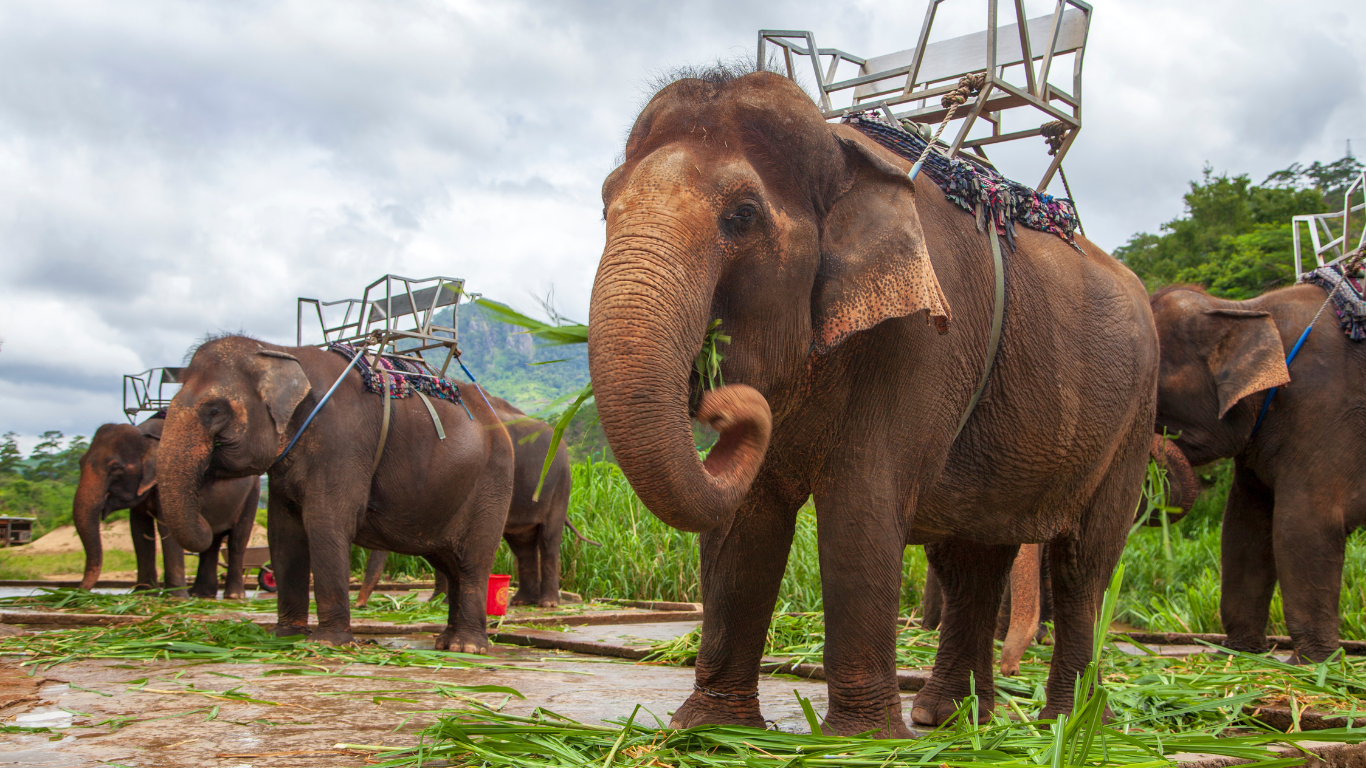
Article written by World Animal Protection Originally published by World Animal Protection, 19 January 2026 Bali Zoo has ended elephant riding, marking major progress for elephant welfare and responsible wildlife tourism in Indonesia. Bali Zoo has announced it will no longer offer elephant riding to visitors, a move that reflects growing awareness that these activities cause real harm to elephants. The decision follows similar action by TSI Bogor, TSI Prigen, and A’Famosa, which also stopped elephant riding in 2024. These changes show that the tourism industry is beginning to move away from outdated and harmful practices. This progress comes after years of research, advocacy, and engagement by World Animal Protection, as well as increasing pressure from travelers who want to enjoy wildlife without causing suffering. Why elephant riding harms elephants Elephant riding is widely recognized as one of the most harmful forms of wildlife tourism. To make elephants accept close contact with people, many are subjected to harsh training methods that rely on fear and pain. In captivity, they are often kept in conditions that limit their ability to move freely, socialize, and behave naturally. Our investigations into wildlife tourism in Bali have repeatedly highlighted the suffering faced by elephants used for entertainment. Tourism is starting to change The move by Bali Zoo has been supported by the Southeast Asian Zoos and Aquariums Association, which has publicly opposed elephant riding. In December 2025, the Bali Province Conservation and Natural Resources Agency also called on attractions to show greater respect for elephants and move away from riding activities. As expectations change, venues that continue to offer elephant rides risk falling out of step with both community values and responsible tourism standards. How tourists can help protect elephants Many travelers do not realize that what feels like a special holiday experience can mean a lifetime of suffering for an elephant. Tourists can make a real difference by choosing responsible experiences that put animal welfare first. We encourage visitors to: Avoid venues that offer elephant riding, bathing or performances Observe elephants from a safe distance in their natural environments Book with responsible travel companies that prioritise animal welfare Ask questions about how animals are treated before booking Progress, but elephants still need protection While this is an important step, some venues in Bali are still offering elephant riding. While rides continue to operate, elephants will still suffer as a result. We will continue to work with governments, the tourism industry, and the public to help ensure elephants are no longer exploited for entertainment. Together, we can make wildlife-friendly tourism the norm.
Camera traps hidden in Brazilian rainforest. They just captured something that has never been seen before
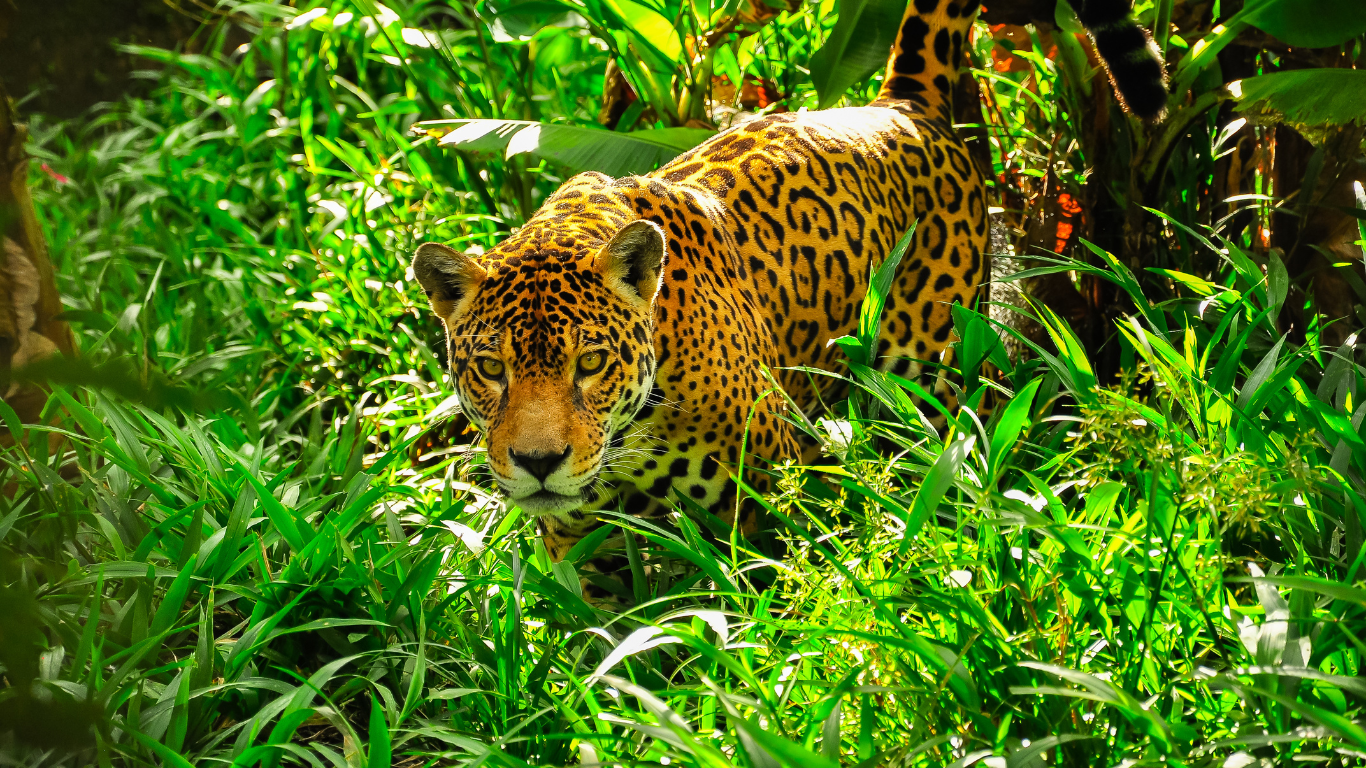
Article written by James Fair Originally published by Discover Wildlife, 13 January 2026 The cameras recorded jaguars meowing in the wild for the first time. Jaguars are unusual among the big cats in actively hunting and attacking their prey – frequently reptiles as large as caimans – in water. Now scientists have found something else, perhaps even more surprising, that distinguishes them from their relatives in the Panthera genus (leopards, lions, snow leopards and tigers). They meow, just like your average pussycat. A team of scientists from a number of academic institutions, including the University of Salford in Manchester, set up camera traps in Iguaçu National Park in the Atlantic rainforest of southeastern Brazil. These cameras recorded two separate females meowing to their cubs, and their offspring responding in kind. Marina Duarte, from the University of Salford and one of the authors of a paper that reveals this new behavior, says there have been anecdotal suggestions from field workers in the past that jaguars might produce these types of vocalizations, but it had never been recorded in the wild. Credit: University of Salford Jaguars are normally considered solitary and relatively silent big cats. “Observing repeated, context-specific vocal exchanges between mothers and cubs over extended periods challenges this simplistic view and highlights a more flexible maternal communication system,” Duarte says. “It reinforces the idea that maternal care involves complex acoustic strategies that may be underappreciated due to the difficulty of observing these animals in the wild.” Duarte says the scientific literature suggests big cats cannot meow because of the structure of their larynxes and tracheas, but this consensus has been overturned with this discovery. It is accepted that big cats cannot purr (and all other cats cannot roar – though, nor can snow leopards), but Duarte says leopards do produce a broader vocal repertoire that includes “softer calls sometimes described as meow-like.” That female jaguars use meows to talk with their offspring is not surprising – that’s exactly what house cats do, as do many other felines. Both male and female cheetahs communicate with meows, but it’s not known if male jaguars do. In general, they are more renowned for roaring. Still, this is a major new finding. As Duarte says, “The results of our research remind us that even in one of the world’s most studied big cats, there are still intimate aspects of behavior waiting to be discovered, quietly unfolding in forests just beyond human sight.”
Legal threats raise concern over public opposition to Cape Baboon enclosure proposal
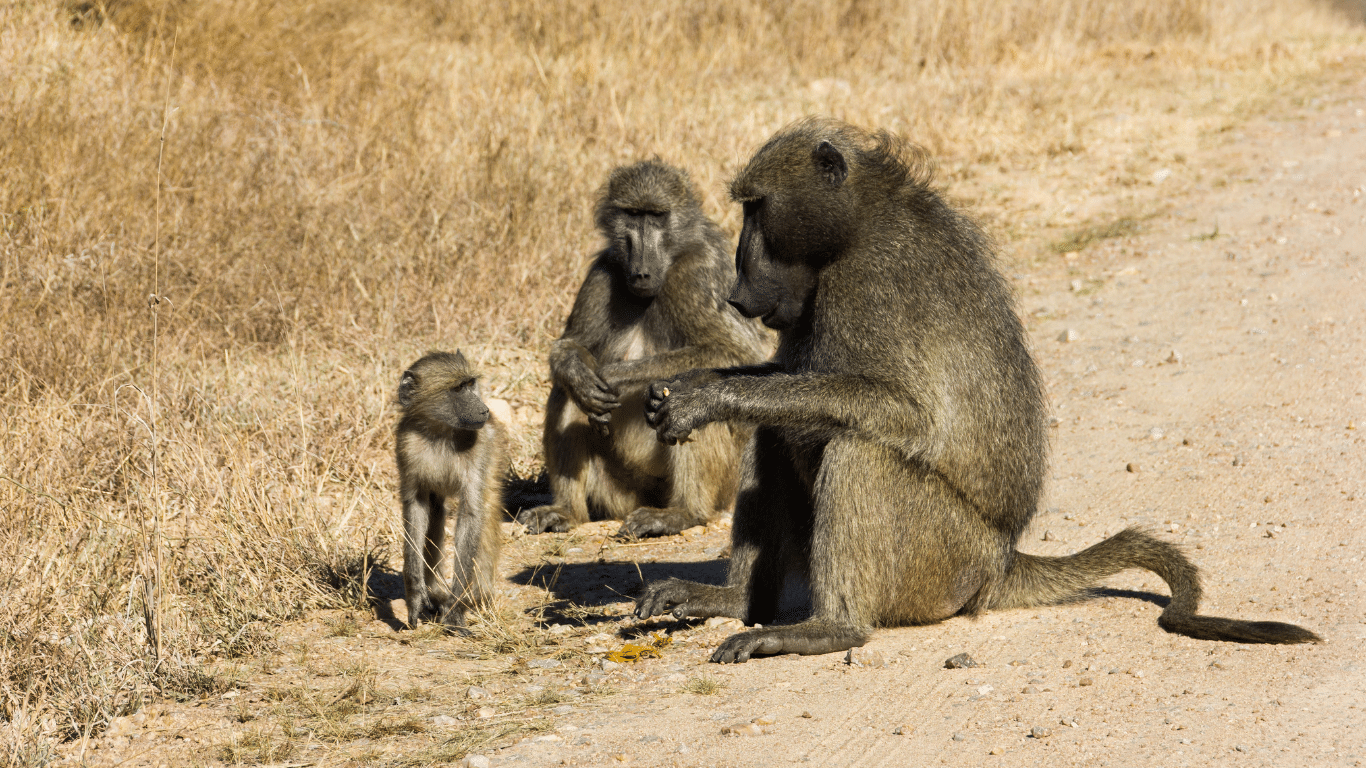
SIGN THE PETITION In a development that has raised serious concerns, a leading campaigner who has publicly objected to the City of Cape Town’s proposal to capture and confine wild baboons, has been threatened with legal action should she continue speaking out. Animal Survival International (ASI), a leading animal welfare organisation, has raised concerns that legal action may be being used to discourage public opposition to the proposal. This is after a member of the Cape Point Baboon Trust was served with a cease-and-desist letter by lawyers acting on behalf of the private landowner where the enclosure is intended to be built. ASI warns that the use of legal pressure against concerned citizens marks a dangerous turning point in conservation decision-making, where public participation and scientific debate are being suppressed rather than encouraged. “This is not just about baboons,” said Luke Barritt, campaign director at ASI. “This is about the right of communities, scientists and civil society to speak openly when wildlife and public resources are at stake. We cannot allow the decision makers to silence people who have the best interests of animals at heart.” ASI stands firmly with the Cape Point Baboon Trust and all members of the public who are raising legitimate concerns about the proposed enclosure. Conservation outcomes succeed through transparency, evidence and public engagement; not through fear and legal threats. The City of Cape Town and CapeNature now face a defining choice: pursue a short-term, high-risk intervention or set a global gold standard for ethical, science-led management of human-wildlife conflict in an urban environment. Biologist and scientific researcher stressed the need for principled decision-making: “Conservation measures are never easy to implement. However, we must follow the line of action that truly serves the long-term interests of the baboons and the people who live alongside them. That is the only path to sustainability for future generations.” The Cape Peninsula Baboon Strategic Management Plan explicitly recognizes the importance of fencing, waste management and coexistence-based strategies over extreme containment measures. ASI urges authorities to honor both the spirit and substance of this plan. “This moment calls for leadership, not intimidation,” ASI said. “Priorities must be reframed back to the baboons and the broader community and away from private entities and expedient solutions.” The Cape Point Baboon Trust will host “Boogie for Baboons”, a public fundraising and awareness event, on Sunday 25 January at the Brass Bell, Kalk Bay. Tickets are available on Quicket, with further details to be shared via ASI’s social media platforms. SIGN THE PETITION Media Contact: Liryn de Jager liryn@networkforanimals.org
Big cats suffer severe burns after devastating fire
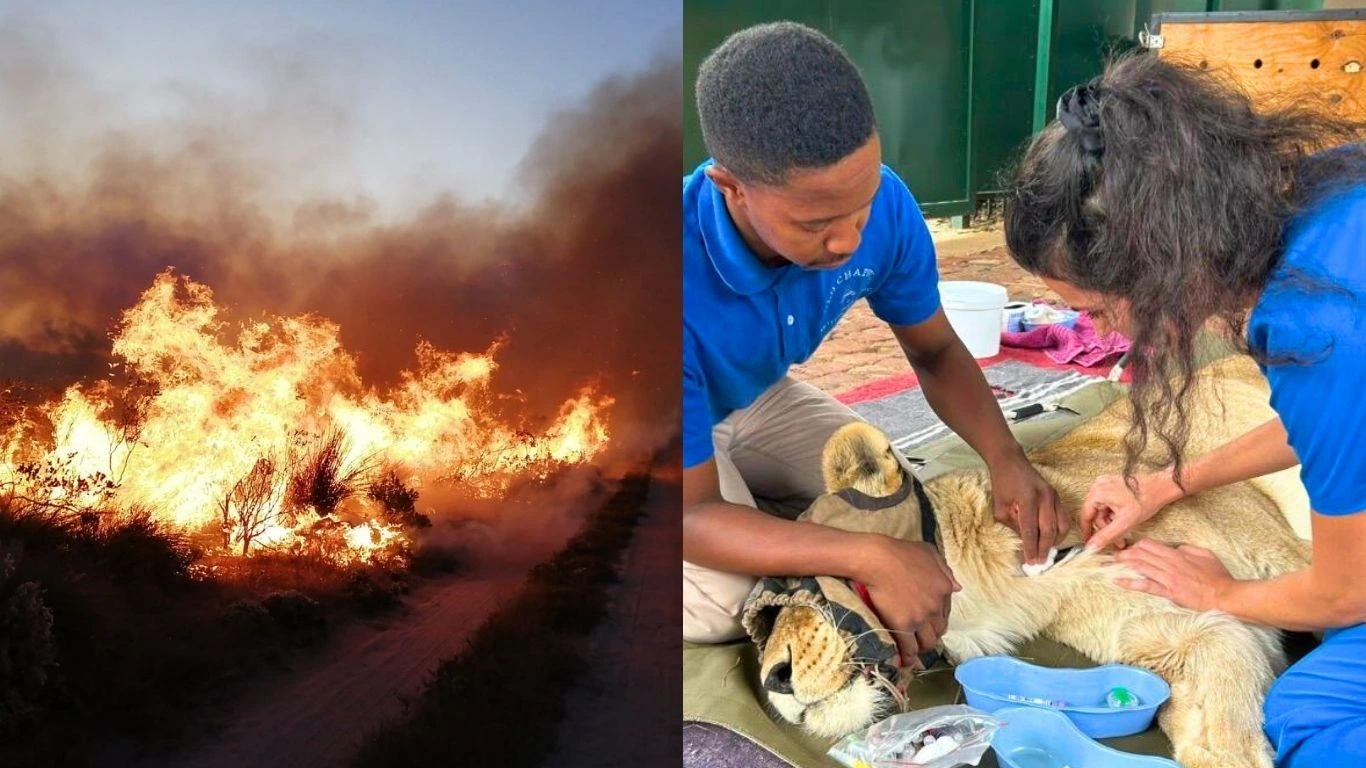
Since last week, we have been appealing for your help in supporting our partner sanctuary, Panthera Africa Big Cat Sanctuary in South Africa, which has been devastated by terrible wildfires. Tragically, one precious life was lost – a tiger named Rays, who succumbed to smoke inhalation – and two other big cats have suffered severe burns to their paws. The surviving animals badly need your help, and here is what you can do. 25 wild animals rescued from the fire now need critical help. Please, help us rush them aid. Already rescued from severe abuse, this lion now suffers burn injuries from the wildfire, adding new distress to animals who have endured so much. Credit: Panthera Africa Big Cat Sanctuary As the wildfire rages around them, rescuers work to save lions, tigers, and other wild cats from the flames. Credit: Panthera Africa Big Cat Sanctuary All 25 of our partner’s surviving animals, including lions, tigers, leopards and caracals, have now been evacuated. However, two need close monitoring and round-the-clock care. As the days pass, their wounds are becoming more visible. It is fairly common for the full extent of burn injuries to show up later in animals. Injured cats have also been licking painful areas, which is a natural, instinctual response, but it can make healing more difficult. All this means the animals need ongoing, intensive treatment to heal their wounds and keep their pain under control. The full extent of the damage to our partner’s sanctuary is not yet known, but it is already clear that it has suffered extensive structural losses, with several enclosures and essential facilities destroyed. The most urgent need right now is funding for critical, ongoing veterinary care for injured animals. Our partner is committed to providing day-and-night veterinary care to the animals. Critical cases, like lioness Baguira and tiger Arabella, are receiving intensive care by a specialist big-cat vet. Continuous veterinary care is being provided to assess and treat each animal. Critical cases are under the close supervision of a specialist big-cat vet. Credit: Panthera Africa Big Cat Sanctuary Round-the-clock veterinary support is in place to treat and evaluate every animal, with those in critical condition being monitored closely. Credit: Panthera Africa Big Cat Sanctuary Right now, funds are still urgently needed to cover the immense costs of veterinary treatment and emergency care injured and distressed animals. “If you pray, please pray.” – Lizaene Cornwall, co-founder Panthera Africa It has been a devastating few days for our partner, which works to save big cats from horrifically cruel conditions. Animals like Gabriel, a magnificent leopard rescued from South Africa’s brutal breeding industry. As a tiny cub, no more than five months old, both of Gabriel’s front legs were broken. For years, he was used for breeding purposes until ultimately the facility was shut down and he was rescued by our partner. Our supporters helped fund his relocation. Gabriel has known distress before: broken legs as a cub, years in captivity, then finally rescue. Now flames have consumed the sanctuary that was meant to be his refuge. Credit: Panthera Africa Big Cat Sanctuary Every one of our partner’s animals bears the physical, psychological and emotional scars of a life of cruelty and suffering. At Panthera, each has finally found freedom and peace – until the fire, which raged so fast and vicious, it is a miracle almost every animal survived. We MUST help keep them alive. It is at times like this that we rely most heavily on supporters like you. Today, we are asking you to open your hearts to these precious animals and donate any amount you possibly can. The animals will be eternally grateful for your compassion.
What Craig’s long life reveals about elephant conservation
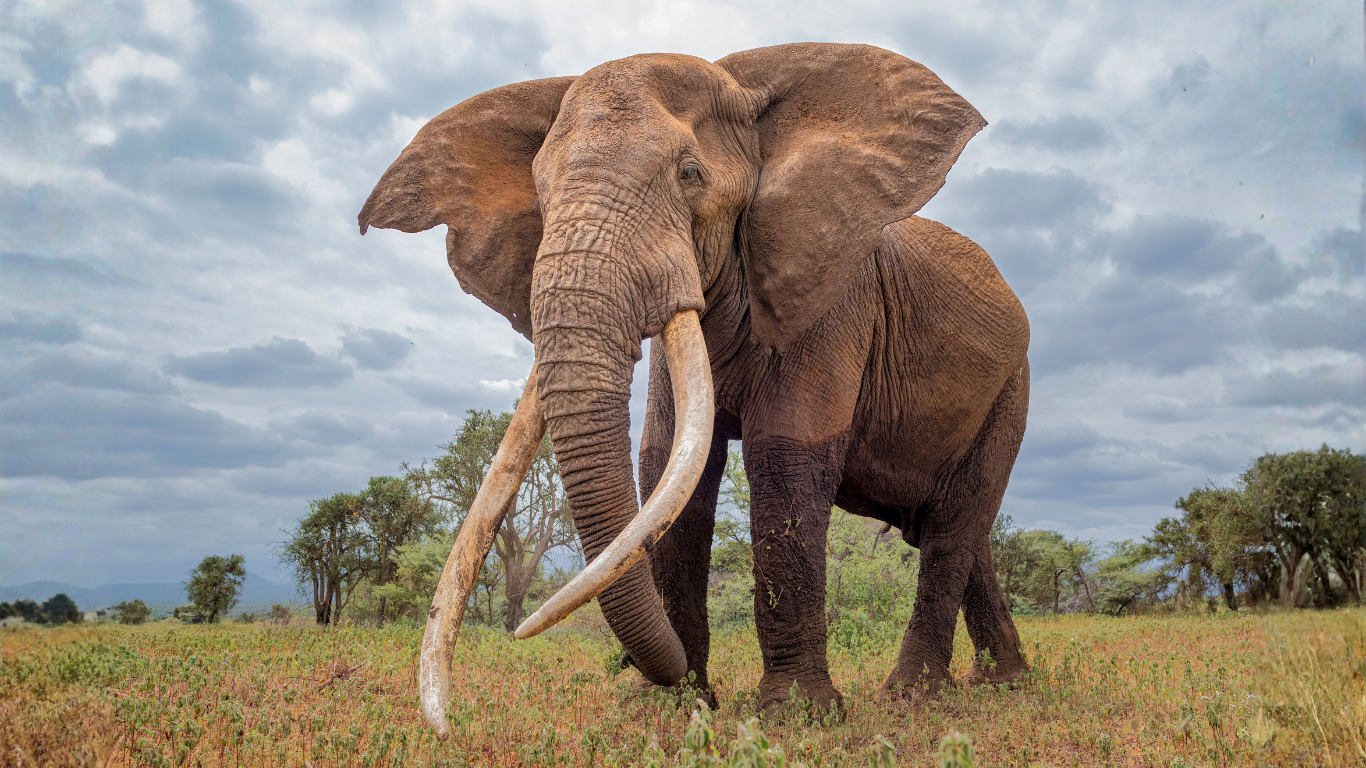
Article written by Rhett Ayers Butler Originally published by MongaBay, 03 January 2026 The death of a well-known wild animal is an odd kind of news. It is intimate because so many people feel they have met the creature through photographs and video. It is also impersonal, because the animal has no public life beyond what humans project onto it. For elephants, that tension is sharpened by history. Their bodies have been turned into luxury goods, their habitats into development sites, and their survival into a test of whether conservation can work at scale. That is why today’s news from Kenya traveled quickly. Craig, the Amboseli bull famous for tusks that nearly brushed the ground, died at the age of 54. Conservation groups and wildlife authorities said he died of natural causes after showing signs of distress overnight, with rangers staying close by. His final hours seemed to reflect age, not violence: intermittent collapsing, short attempts to stand and move, and evidence that he was no longer chewing properly as his last molars wore down. For an elephant, teeth often write the closing chapter. Craig was not obscure. He was, by most accounts, one of the most photographed elephants in Africa and perhaps the best-known “super tusker” alive—one of the rare bulls whose tusks weigh more than 45 kilograms each. He was also known for temperament: calm around vehicles, patient in the presence of cameras, and unusually tolerant of the attention that followed him. That quality, as much as the ivory he carried, helped make him a symbol of what protection can look like when it is consistent enough to last decades. Craig, the super tusker elephant, in Kenya. Credit: Cristina Mittermeier / @mitty That Craig died of natural causes is not a small detail. It is, by modern standards, an achievement. Elephants with tusks like his have been selected against by poachers for half a century. In parts of Africa, big-tusk genetics have been edited out with bullets. The continental population collapsed from about 1.3 million in 1979 to roughly 600,000 by 1989. Today it is often put at around 400,000–415,000—a number that reflects both local recoveries and vast, unresolved losses. Forest elephants remain in particularly grim shape, hollowed out across Central Africa. Kenya offers a cautiously better line on the graph. Official figures cited by the government put its elephant population at 42,072 in 2025, up from 36,280 in 2021. Craig became a mascot of that progress, even acquiring a corporate afterlife when a brewery adopted him as an ambassador for Tusker beer. Yet the terms of survival are changing. Much of Amboseli’s elephant range now sits among farms, roads, fences, and fast-growing settlements. Corridors narrow. Water becomes negotiated. Habitat loss is a quieter enemy than ivory, but it is relentless. There is, still, a reason that Craig’s passing has landed as more than wildlife news. Demand for ivory appears to be slowing compared with its worst years, enforcement has improved in key places, and elephants have become a high-profile conservation priority across much of their range. That does not bring back what was lost. It does suggest that some of the remaining giants may, like Craig, be granted the simple dignity of dying old.
From ‘psychedelic’ spiders to European eels: 10 species heading into 2026 on the brink of extinction
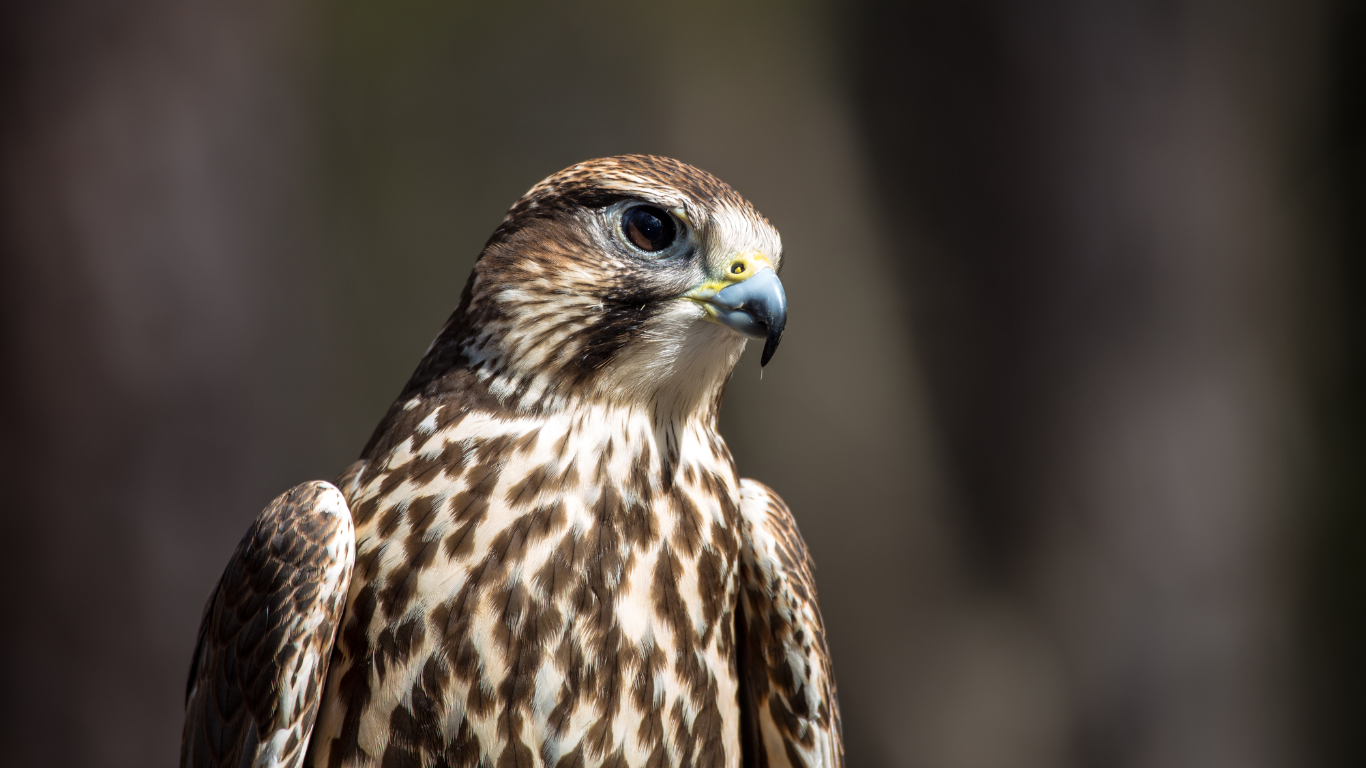
Article written by Liam Gilliver Originally published by EuroNews, 02 January 2026 Habitat loss, deforestation, the illegal wildlife trade, and climate change are pushing these extraordinary species towards extinction. Conservationists warn the world can “no longer afford” to delay climate action to protect and restore our planet’s natural wonders. Today (7 January), international nature charity Fauna & Flora has launched its 2026 Species to Watch list, highlighting some of the “weird and wonderful” creatures at risk of disappearing in the not-so-distant future. Kirsitian Teleki, Fauna & Flora’s CEO, says the list offers an insight into the “key challenges” facing some of the world’s most vulnerable species, including habitat loss, deforestation, the illegal wildlife trade, and the climate crisis. “It also shines a spotlight on the weird and wonderful plants and animals we are working to protect, and on the inspiring people and partners Fauna & Flora works with across the globe to deliver effective conservation action,” Teleki adds. “In challenging times, it stands as a beacon of hope.” As we edge closer to 2030, a “guiding star” for many nature and climate goals, here are 10 species heading into the new year on the brink of extinction. European eel Once common throughout the continent, the European eel is on a slippery slope towards extinction. Over the past 25 years, its UK population alone has plummeted by a staggering 95 percent. Experts point the blame at overfishing, driven by the once-popular jellied eel dish, as well as pollution, habitat fragmentation, and illegal trade. They may not look cute, but experts warn these snake-like creatures play a “crucial role” in freshwater and coastal ecosystems, providing a high-energy food source for otters, bitterns, and other fish-eating creatures. “Their disappearance would have dire consequences,” warns Fauna & Flora. “Having recently detected European eel during freshwater monitoring in Georgia—where they haven’t been recorded for some time—[we] will conduct further research into this enigmatic and critically endangered fish in 2026.” Cao-vit gibbon Named after its distinct call, the Cao-vit gibbon is the world’s second-rarest primate. Scientists feared the species had become extinct until its rediscovery back in 2002. Today, around 74 remain. Fauna & Flora says the critically endangered gibbon is at “extreme risk from loss of genetic diversity, inbreeding, and unforeseen catastrophes.” A 2026 census hopes to verify whether conservation efforts laid out by the organization have helped restore habitats and increase the population. Psychedelic earth tiger (Indian rainbow tarantula) Found solely in the tropical forests of the southern Western Ghats in Kerala, India, this groovy spider is awash with color and a metallic iridescence. However, its striking appearance is fueling its demise—as demand from the illegal pet trade continues to harm the population. Habitat loss and degradation have also pushed the Indian rainbow tarantula towards extinction. The Conservation Leadership Programme (CLP), a female-led team of spider experts, is now working to safeguard the species’ future through field surveys, community engagement, and awareness initiatives. Credit: Mithun Das CLP by Fauna & Flora Blackchin guitarfish This “weird and wonderful” guitarfish looks like a mix between a shark and a ray. It’s instantly recognizable with its flattened nose, broad pectoral fins, and long-finned tail. Native to the Mediterranean Sea and the eastern Atlantic, the blackchin guitarfish has become critically endangered as a result of overfishing, habitat destruction, and slow reproductive rates. Fauna and Flora are currently working in the waters of Cabo Verde, aiming to halt its decline by strengthening networks of marine protected areas and reducing shark and ray mortality from fishing. Temminck’s pangolin This ground-dwelling animal is the only one of Africa’s four pangolin species found in relatively arid areas of East and Southern Africa, with sightings going as far north as Chad and Sudan. The Temminck pangolin forages “very slowly and deliberately,” often walking on its back legs and using its short tail as a counterweight. It’s a fascinating display of adaptation, but like all pangolins, the species is threatened by the illegal trade market for its meat and scales. Fauna & Flora is supporting the development of a crisis clinic in Mozambique to help the rehabilitation and re-release of rescued and injured pangolins. Saker falcon Lightning-fast and powerful, the saker falcon has been highly prized by falconers for millennia, particularly in the Middle East. However, its soaring popularity has seen the population plummet. Scientists predict there are fewer than 30,000 now left in the wild. This year, Fauna & Flora will assess the impact of trade on the species in Central Asia by monitoring populations and gathering data on international trade chains. This evidence will be used to develop conservation strategies, community engagement and enforcement efforts. Clouded leopard Targeted for its striking markings, the clouded leopard has been pushed towards extinction due to the illegal wildlife trade. They’re trafficked alive as exotic pets, while their pelts are sold on the black market for decoration and luxury clothing. It is thought that clouded leopards are even targeted for their teeth, claws and bones, which are passed off as tiger parts. This year, Fauna & Flora is supporting community-led patrols to protect the threatened feline in Cambodia’s Virachey National Park. Utila spiny-tailed iguana Named after a small island in Honduras and known locally as wishiwilly del suampo, the Utila spiny-tailed iguana only lives in mangrove forests. While the lizard remains critically endangered, a recent survey suggests the population has increased from around 3,000-6,000 to 7,000-14,000. Fauna & Flora is supporting its in-country partners to keep on protecting and restoring mangrove trees that the iguanas depend on. Saint Lucia fer de lance A highly venomous viper with a potentially deadly bite, these lancehead snakes can grow up to two meters in length. As its name suggests, this endangered species of pit viper is endemic to the island of Saint Lucia in the Lesser Antilles. Although widely feared, the reptile isn’t aggressive and will only bite when threatened. Still, the Saint Lucia fer-de-lance is often killed by locals on sight. Now, Fauna & Flora are trying to change perceptions of
International wildlife group Animal Survival International Raises Concerns Over Proposed Enclosure of Cape Town Baboon Troops
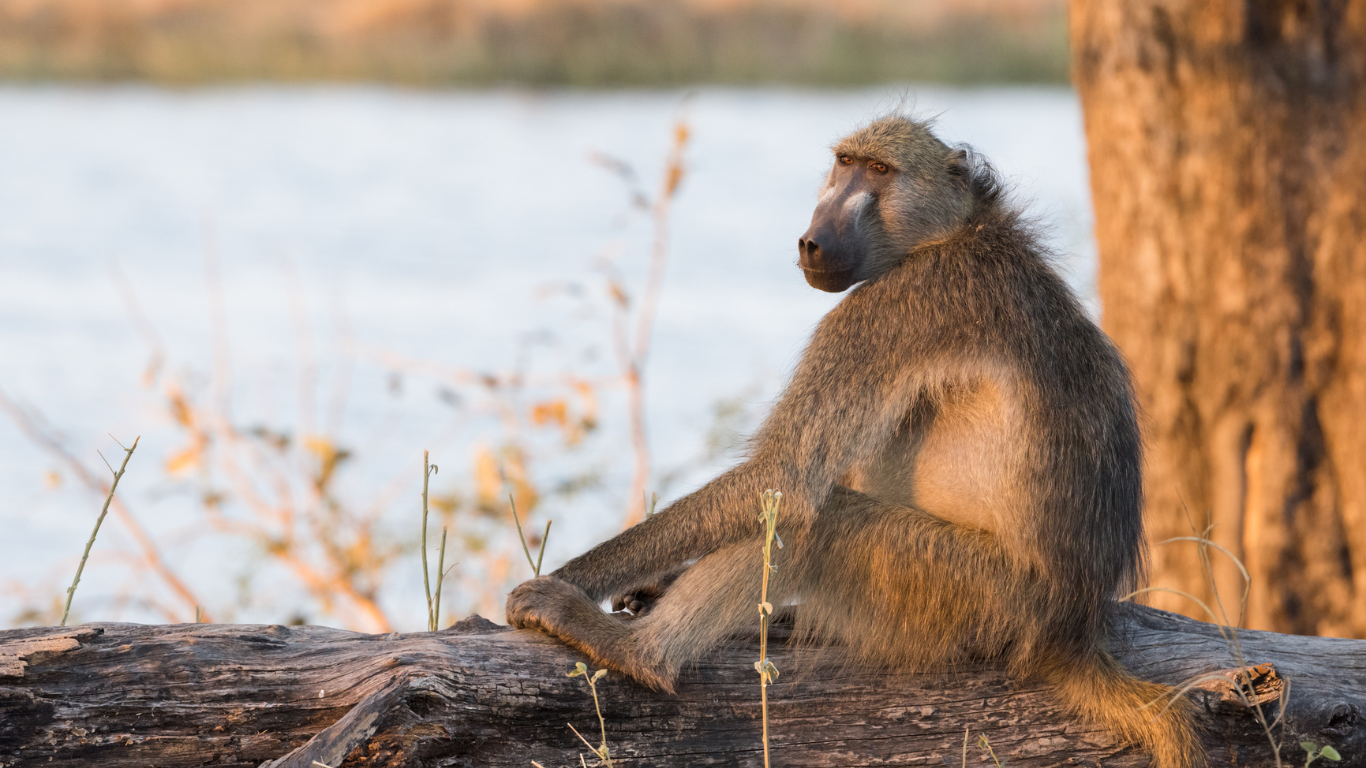
SIGN THE PETITION Animal Survival International (ASI), an international animal welfare organisation working in more than 10 countries with a focus on Africa, is gravely concerned about the City of Cape Town’s proposal to capture two troops of free-ranging chacma baboons from the Cape Peninsula and confine them within a one-hectare enclosure. ASI campaign director Luke Barritt said the proposal raises profound animal-welfare and environmental concerns, and that the project appears to have got underway before all required legislative, environmental, and administrative processes had been completed. “ASI urges the city to urgently relook at this situation because of how serious those implications are,” said Barritt. Cape Peninsula baboons are highly intelligent, socially complex wild animals that naturally range over large areas of mountainous and fynbos habitat. Even troops that interact with urban environments rely on extensive movement and spatial separation for their physical and psychological wellbeing. Confinement to a one-hectare enclosure represents an extreme and unnatural restriction of space. Of particular concern is the plan to place two separate baboon troops into a single enclosure. Baboon troops have established hierarchies, kinship bonds and social stability. In the wild, rival troops avoid conflict through distance and movement. Forced proximity removes this mechanism and creates a high and foreseeable risk of aggression, injury, and death, especially among adult males. Cape Town’s hot, dry summer conditions further compound these risks, intensifying competition for shade, water and food within a confined space and placing vulnerable animals at increased risk. Barritt said: “Enclosing two free-ranging Cape Town baboon troops in such a limited space would predictably cause stress, conflict, and suffering. This is neither humane nor proportionate, particularly when viable alternatives exist.” ASI notes that non-lethal, non-confinement alternatives, including improved waste management, baboon-proofing, and coexistence-based strategies, have been proposed. SIGN THE PETITION Media Contact: Animal Survival International Email: info@animalsurvival.org Website: www.animalsurvival.org
Super tusker elephants at extreme risk – only 30 remain in East Africa
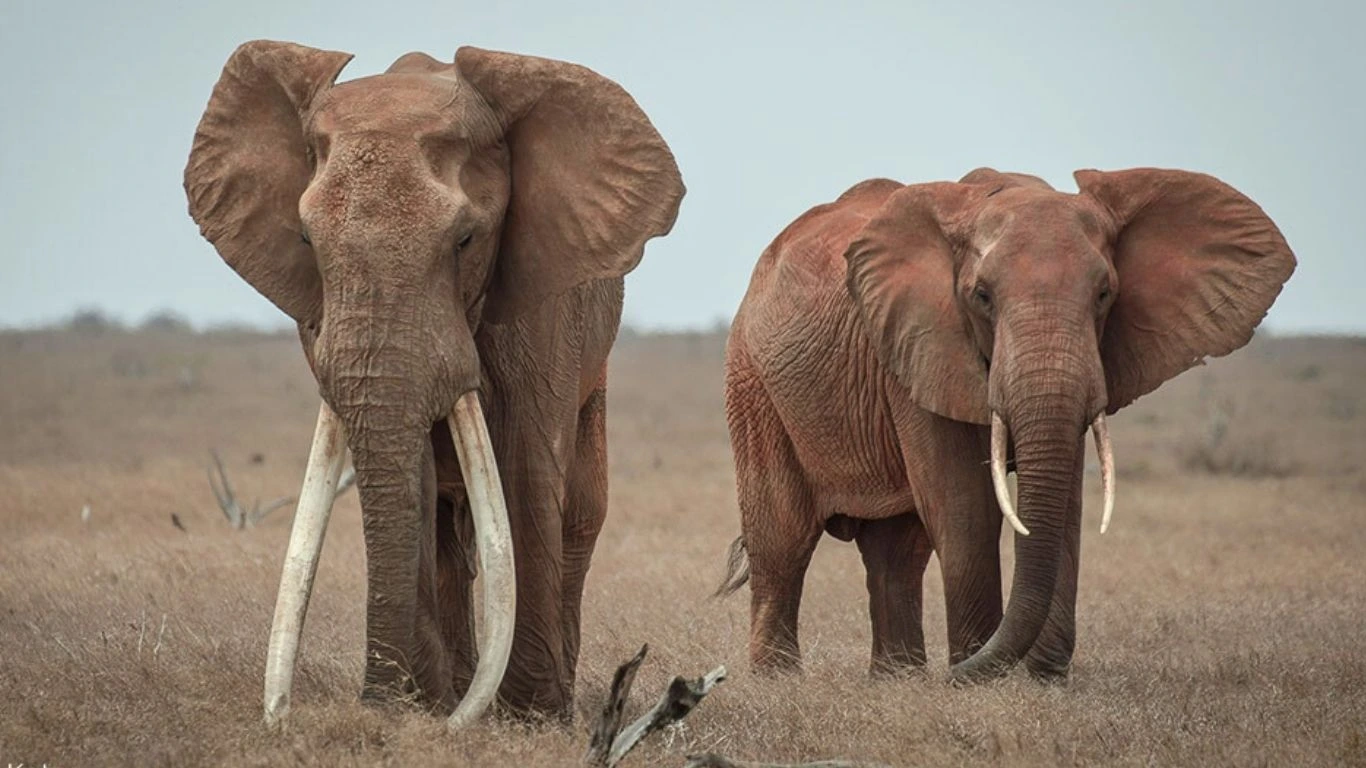
A few months ago, we told you about the plight of rare ‘super tusker’ elephants in East Africa. We are desperate to save the last remaining 30 – but we haven’t yet reached our fundraising goal. The threats are mounting and time is running out, if they have ANY hope of surviving, they need YOU. Less than 30 ‘super tusker’ elephants remain in East Africa. Poachers and hunters want to kill them. Elephants, especially super tuskers, are prized for their massive tusks, making them prime targets for trophy hunters and poachers. Credit: John Dugmore/Sports Afield ‘Super tuskers’ have enormous tusks that each weigh over 100 pounds (45 kilograms), and which often grow long enough to touch the ground. Only 30 remain in East Africa. Their magnificent ivory tusks make them a prime target for poachers and trophy hunters. When these animals move between Kenya and Tanzania, they have no idea that killers are lying in wait to murder them. East Africa’s last remaining super tuskers are about to be wiped. In the last 100 years, 90% of all African elephants have been wiped out. Of those that remain, less than 30 individuals in East Africa are famed ‘super tuskers,’ with the rare and special big-tusk gene. During the dry season, these super tuskers migrate through wildlife corridors between Kenya and Tanzania in search of food and water. As they cross the vast, unfenced corridors, they are extremely vulnerable to being poached and killed. Young super tuskers beginning their journey. Very few of these elephants will develop the massive tusks that make them both remarkable and highly vulnerable to poaching. Credit: William Burrard-Lucas/Financial Review While all elephants face constant threats, super tuskers are particularly targeted – both by ivory poachers and trophy hunters, who see them as a ‘big ticket’ prize. Their efforts to evade these dangers aren’t the only threats. Increasingly frequent droughts across the region are shrinking elephants’ habitats. Hunger and thirst drive elephants into human-populated areas. In desperation, they eat farmers’ crops or seek out water within communities, leading to retaliatory killings. Elephants face deadly threats from all sides. Drones will help them. Please, donate today. We are working with Conservation Through Tourism (CTT), dedicated to safeguarding elephants across wildlife corridors between Kenya and Tanzania. Over the past 10 months, it has responded to approximately 740 elephant-related incidents, saving countless lives. Using drones, the team guides elephants toward safe, designated water sources and food, and then back to safety. This ‘guarding from the sky’ keeps elephants away from humans and hunting zones, reducing the animals’ risk of being illegally poached, shot by trophy hunters, or killed by the authorities for damaging human settlements. Drone technology helps guide elephants to safety, keeping them away from poachers, hunters and human settlements. Credit: CTT Our partner protects elephants in three key wildlife corridors, but two remain unprotected. Please help us shield the final two corridors. To expand into the remaining two unprotected areas, we need additional drones. Each drone costs $12,600 (around £9,600). Ultimately, our partner needs nine more drones. So far, with our supporters’ help, we have funded one additional one. Every extra drone brings us closer to full protection across all five corridors. Super tusker elephants are running out of time. We must help right away. Please, donate now to help protect East Africa’s last remaining super tusker elephants.
Lions and tigers wounded after Russia bombs Ukrainian zoo
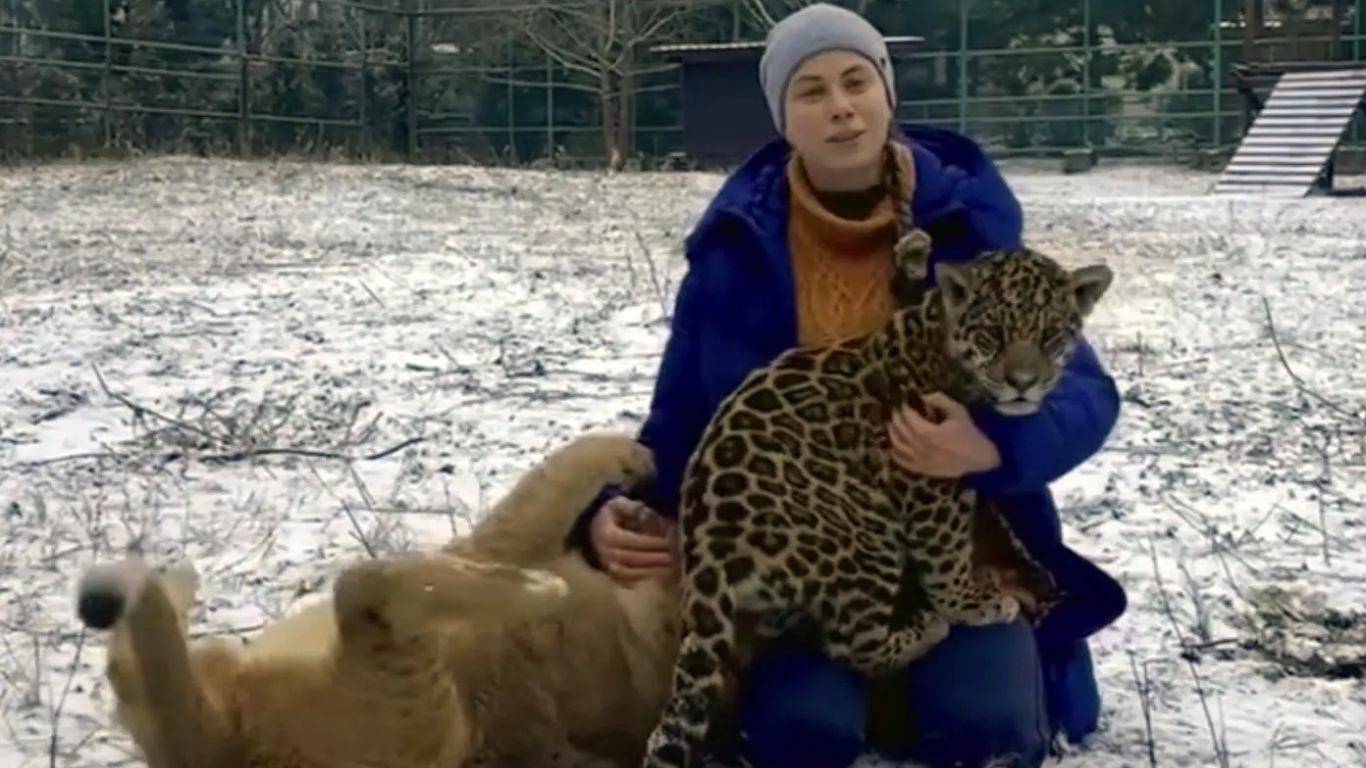
Article written by Antonia Langford Originally published by The Telegraph, 02 January 2026 Many rare birds killed and big cat enclosures in ruins after Moscow attacks Feldman EcoPark again Lions were wounded, and tigers were buried under rubble after Russia bombed a zoo in Ukraine’s second-largest city. Moscow’s attack on Thursday turned animal enclosures into heaps of ash, killing most of the rare birds at the Feldman EcoPark in Kharkiv, according to staff. Oleksandr Feldman, the founder of the zoo and a Ukrainian parliamentarian, told local media, “The birds have died – if not all of them, then the majority. A shell hit the aviary. All the parrots, pheasants, and rare birds that needed warm conditions were in that building.” A volunteer, a 40-year-old woman, was also admitted to hospital with head injuries. The tigers were left stranded for hours in half-destroyed buildings as staff waited for a tranquilizer rifle to arrive in order to rescue them. Ivan Dostov, the head of the zoo’s veterinary department, said that vets were examining the “traumatized” tigers and lions, but that they would probably recover. “It seems to me that their lives are not in danger,” he told local media. Credit: Sergey Kozlov/Shutterstock “Is there any logic to this war anymore? When places like an eco-park are being hit, I see no logic at all. If anyone tries to claim there are safe places in Ukraine, name them for me,” Mr. Dostov added. Footage shows the aftermath of the guided bomb strike, leaving the zoo grounds pockmarked with huge craters, while buildings, enclosures, and cages have been shredded into sooty debris. Lions, which had to be moved, were seen lying in the snow-covered enclosures outside despite the freezing temperatures. Credit: Sergey Kozlov/Shutterstock Located just 20 km from the front line, the Feldman EcoPark, which houses pelicans, leopards, zebras, lynxes, and camels, among others, has been hit repeatedly by Russia since war broke out. Before the full-scale invasion, it was one of the most popular tourist attractions in Kharkiv for tourists from Russia and Ukraine alike, holding at least 6,000 animals of 300 species. As Russian troops advanced, the park became caught in the crossfire and was partially destroyed, leading to the evacuation of most of the animals. Some animals were later returned in November 2022, and the zoo partly reopened in the summer of 2023 before being declared fully operational a few months later. Credit: Sergey Kozlov/Shutterstock The park’s staff became famous for their daring escapades by feeding, tending to and evacuating the animals during bombardment from Moscow. Six employees and volunteers were killed, and 100 animals died in Russian attacks on the park in 2022. After the initial evacuation, two volunteers who stayed behind to feed the animals were later found to have been shot dead by Russian soldiers and barricaded into a back room, the park said. Credit: Serhii Masin/Anadolu Denis Selevin, 15, who had risked his life to return to the zoo to tend to the animals alongside his parents, was also killed in Russian shelling in May 2022. The zoo recently became home to two tiger cubs named Dexter and Dakota, as well as lemur pups and baboon infants, which staff described days ago as “a true symbol of hope” for the new year. “Once again – far from the first or even the second time – bombs are falling on our EcoPark, which has always been a beacon of the ideas of peace, mutual understanding, and tolerance,” Mr. Feldman wrote on Facebook. “What we had only just managed to restore with such great effort has been destroyed.” Credit: Global Images Ukraine
Interpol seizes record 30,000 living animals from illegal wildlife trade
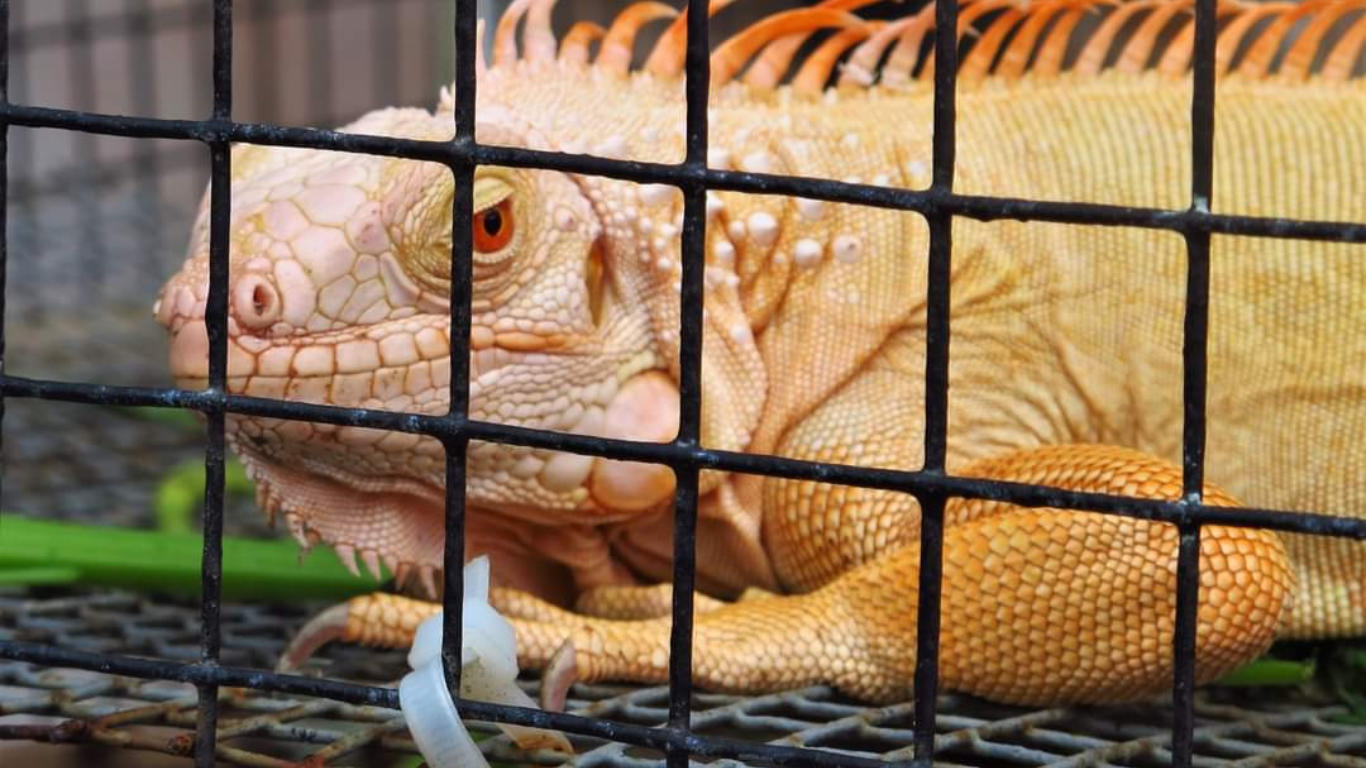
Article written by Claudia Tan Originally published by The Straits Times, 11 December 2025 An Interpol operation in multiple countries, including Singapore in September and October targeting the illegal wildlife trade seized almost 30,000 live animals. The international police organization said on Dec 11 that this is the highest number of animals ever seized in Operation Thunder, in its ninth run in 2025. The operation, which targets the illegal trafficking of flora and fauna, involved the authorities from 134 countries. They embarked on a record 4,620 raids, seizing protected animals and plants, illegally logged timber, and endangered species, said Interpol in a release on Dec 11. A total of 20,000 animals were seized by the authorities in 2024’s operation. The National Parks Board (NParks) said it successfully carried out a series of coordinated raids across Singapore on Oct 9 in support of Operation Thunder. These operations targeted individuals suspected of engaging in illegal wildlife trade through online platforms, including Telegram. “A total of six premises were raided, resulting in the seizure of 16 wildlife specimens. “Among the confiscated animals were endangered species listed under the Convention on International Trade in Endangered Species of Wild Fauna and Flora (CITES), such as yellow-headed day geckos, a leopard tortoise, a spiny-tailed monitor, and an Argentine black and white tegu,” said Dr. Anna Wong, senior director of Wildlife Trade at NParks. She added that the animals are currently being housed and cared for at NParks’ Centre for Wildlife Rehabilitation. Interpol said the illegal trade is largely driven by a demand for exotic pets. Despite the increase in the number of animal seizures in 2025, most wildlife trafficking involved animal remains, parts and derivatives, says Interpol. Credit: Interpol. In total, 1,100 suspects were identified, and 69 notices were issued to aid the identification, tracking, and arrest of potential suspects. Despite the increase in the number of animal seizures this year, most wildlife trafficking involved animal remains, parts, and derivatives, often used in traditional medicine or specialty foods, said Interpol. It added that the estimated annual value of wildlife crime is US$20 billion (S$25.9 billion), but the actual figure could be much higher due to the clandestine nature of the trade. This year’s Operation Thunder revealed an increasing illicit trade of bushmeat, or wild animal meat. Globally, 5.8 tonnes of bushmeat were seized by the authorities, including more than 400 kg of giraffe meat found in Kenya, as well as zebra and antelope meat and skins uncovered by Tanzanian law enforcement. More than 10,000 tonnes of live plants and plant derivatives were found as well. Law enforcement agencies across the 134 countries also reported 14,000 pieces of illegally logged timber this year. Illegal logging is estimated to account for 15 percent to 30 percent of all timber traded globally, said Interpol. Besides live animals, the operation also revealed a spike in trafficking of exotic arthropods. Nearly 10,500 butterflies, spiders, and insects – many protected under CITES – were seized around the world. Interpol Secretary-General Valdecy Urquiza said, “Operation Thunder once again exposes the sophistication and scale of the criminal networks driving the illegal wildlife and forestry trade – networks that increasingly intersect with all crime areas, from drug trafficking to human exploitation. “These syndicates target vulnerable species, undermine the rule of law, and endanger communities worldwide. “Recognizing these deeply interconnected crime threats, Interpol is committed to strengthening global policing responses, dismantling the entire ecosystem of illicit activity, and protecting our planet’s shared natural and human heritage.” Most wildlife trafficking involved animal remains, parts and derivatives, often used in traditional medicine or speciality foods. Credit: Interpol Stopping wildlife crime in Singapore On Nov 8, an attempt to smuggle 35.7 kg of rhinoceros horns from South Africa into Laos through Singapore was foiled by air cargo handler Sats and NParks. The authorities uncovered 20 rhino horns, estimated to be worth about $1.13 million, and some 150 kg of other animal parts, including bones, teeth, and claws. NParks’ Dr. Wong said it was the largest seizure of rhinoceros horns in Singapore to date, adding that the wildlife parts were en route to Vientiane, Laos. In June, a married couple was sentenced to three weeks’ jail each for smuggling a Pomeranian and a dachshund across the Causeway. The buyer of the dachshund, Tok Su Wen, 41, was fined $7,000 in December 2024, marking the first time NParks had prosecuted a purchaser for abetting animal smuggling. In May, The Straits Times reported that 42 cases of animal smuggling attempts were stopped at Singapore’s borders – the highest number of smuggling attempts in recent years. One of these cases involved a 40-year-old Indian national who attempted to smuggle 58 Indian star tortoises into Indonesia via Changi Airport. He was jailed for 16 months. The tortoises were hidden in luggage with no ventilation. One of the tortoises was found dead, while 22 others were later assessed to be “thin.” Other cases in 2024 included the smuggling of kittens, puppies, and birds. Apart from the 42 cases, NParks said live corals were also smuggled. “Singapore adopts a zero-tolerance stance on the illegal trade of endangered wildlife species and their parts and derivatives,” said Dr. Wong, adding that agencies work closely with international partners to maintain vigilance in regulating and enforcing against illegal wildlife trade. She added that the community can play a key role by ensuring their purchases do not contain animal parts of endangered species and they are not contributing to the demand for the illegal trade of wildlife.
Researchers sound alarm after observing behavior of African lions: ‘Very serious’
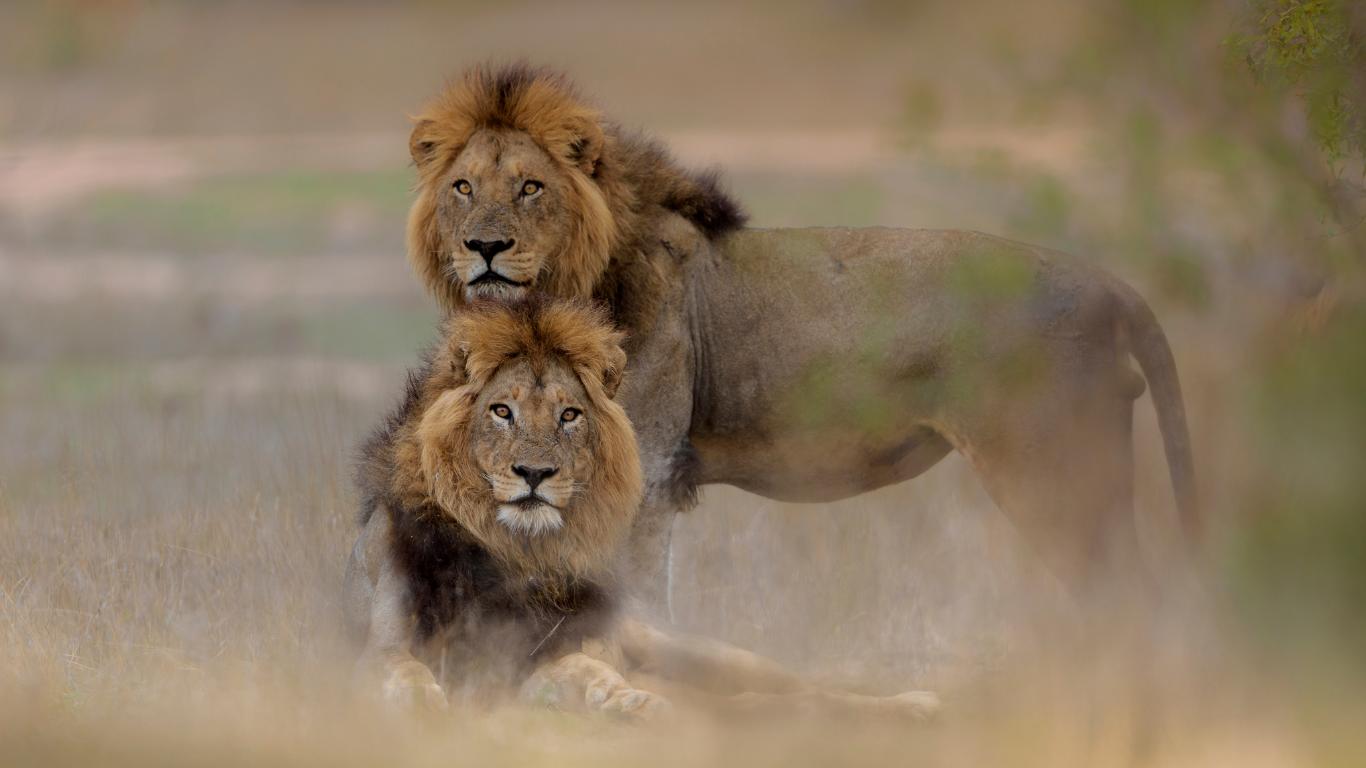
Article written by Jeremiah Budin Originally published by Yahoo! News, 7 December 2025 Ecosystems are entirely interconnected — if one element is changed, it can cause ripple effects through the entire system. For evidence, look no further than Kenya, where the introduction of a new invasive ant species is causing a threat to the lion population. What is happening? Big-headed ants, introduced to Kenya probably through global shipping and international tourism, have caused an “ecological chain reaction,” researchers have warned. Big-headed ants are killing the native acacia ants, which usually play the role of protecting trees from elephants and other herbivores by biting their nostrils when they attempt to eat the bark, leaves, and branches. Fewer acacia ants means that elephants can knock down more trees, which serve as cover for lions while they hunt zebras. Without their typical hiding places, lions have killed 25% fewer zebras than normal between 2003 and 2020, reducing their overall food supply. Why is this concerning? The case of the big-headed ants is a prime example of how invasive species can wreak havoc on an ecosystem — and the problems don’t just end with lions getting less food. The more species that are affected, the more downstream consequences will begin to emerge, often unpredictably. “When you have invasive species, they can affect other species that wouldn’t seem to have anything to do with the species invasion in kind of weird, unpredictable ways — ways that are hidden, but very serious,” one of the study’s co-authors, Jacob Goheen, a University of Wyoming zoology professor, said. “The big-headed ant invasion is kind of changing everything, and it takes time for all these dynamics to play out,” Corinna Riginos, another author of the study, said. “We’ve already seen evidence of big changes. What happens next?” What is being done about it? The question of how to manage an invasive species is not a simple one. In Florida, big-headed ant populations are often treated by spraying insecticides. However, these toxic chemicals often do more harm than good, poisoning not just the intended invasive species but multiple native species as well and causing human health problems at the same time. The study on the big-headed ants in Kenya did not offer a solution but sought to highlight the problem. As Riginos pointed out, it is difficult to know how to take action when we still don’t know what the ultimate effects of the issue will be.
We must complete these three projects for animals – before the year is out
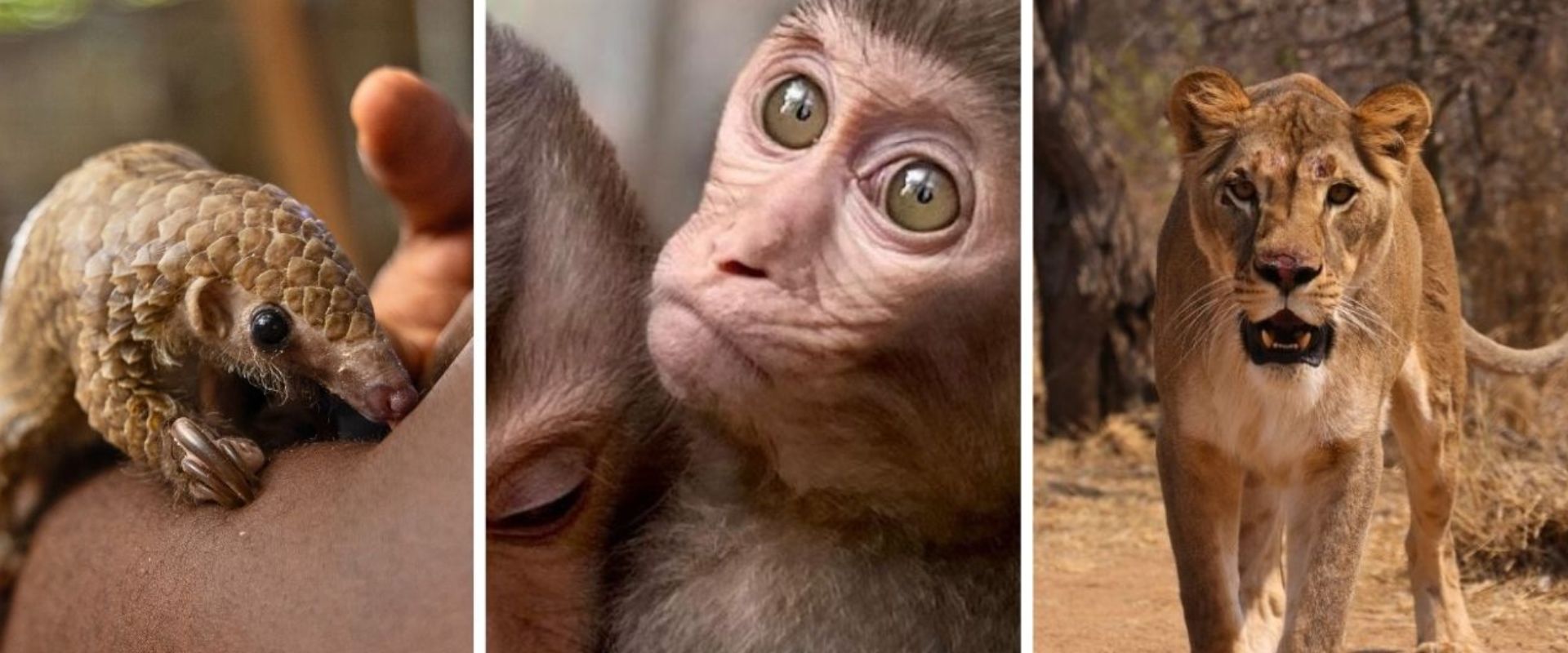
With just a few days left until the year ends, we are reaching out for your help one last time in 2025. This year, animal-lovers like you helped us achieve outstanding victories for wild animals in Africa, Asia and beyond. But there are still a few wildlife projects we’d love to complete before the year is out. And, with your help, we will. While we were able to provide a lifeline to these precious and vulnerable animals, there are a few projects we were unable to fully fund. In the Nigerian city of Lekki, we are helping to establish the country’s first pangolin nursery and intensive-care unit (ICU) with our partner, Greenfingers Wildlife Conservation Initiative (GWCI) – but we are short $3,000 (£2,300). This vital facility will help care for endangered pangolins saved from the country’s horrific illegal trade. Without intensive medical care, these rescued infants and their mothers will not survive. We are so close to completion – we just need one final push. In Laos – a key hub for the illegal wildlife trade in Asia – we are desperate to equip our partner, Lao Conservation Trust for Wildlife (LCTW), with a high-tech drone. It is vital in the fight against increasingly cunning poachers. To do so, we must raise a final $5,200 (£3,200). In Alldays, South Africa, three lions have finally found safety after being saved from the Ukraine war. Rescued by our partner, Wild Animal Rescue Centre (WARC), and now in the care of the LionWatch Project, these animals can look forward to a lifetime of peace in a spacious African sanctuary – but the one thing they need is a sustainable waterhole. With your help, we will install an energy-efficient water system in their sanctuary area – particularly necessary as South Africa enters its sweltering summer season. We are short $1,700 (£1,300) on this project. Make your final donation for 2025 count. Help us complete these life-saving projects for wild animals in Africa and Asia. Through our donors’ generosity this year, we helped save and improve the lives of thousands of wild animals around the world, by: funding critical anti-poaching drones and AI-powered camera traps to help protect endangered animals – and prosecute criminals – in Southern Africa… …relocating three traumatized lions from the frontlines of the Ukraine war to a safe, beautiful, permanent sanctuary in South Africa… …rescuing critically endangered tortoises from deadly flood waters in Madagascar… …providing solar-powered water pumps to desperately thirsty elephants in drought-ravaged Zimbabwe… …and so much more. But unfinished projects, when animals need help, badly trouble us. Large or small, any amount you donate will help us finish 2025 strong for the animals – animals who will be endlessly grateful for your help in an increasingly hostile world. Please help get us all the way there – before the end of year.
Shameful testing on bodies of living animals goes on in Hong Kong
Article written by Trevor Bailey Originally published by Hong Kong Buzz, 12 December 2025 To their shame, all universities in Hong Kong use animals for testing — just look at their websites. Mice, rats, rabbits, hamsters, guinea pigs, goats, and ferrets are being caged in laboratories, and their bodies are exploited for research. But the Financial Times said the need for testing on the bodies of innocent creatures is much reduced now. Growing miniature human organs in a test tube and modelling human biology with AI mean many experiments need no longer be conducted on animals. Briefly, a look at what is happening locally: The University of Hong Kong has its Centre for Comparative Medicine Research, which breeds animals for medical research. HKU’s CCMR has colonies of mice and rats, rabbits, pigs, goats and guinea pigs that their faculty and students can experiment upon. Exploitation of animals is happening in the HKU at scale. From the HKU website: “The CCMR encourages standing orders for regular supply (of animals), which helps ensure continuous availability.” It goes on: “Orders for large quantities of animals with narrow specifications … should be submitted well in advance, as setting up specific breeding colonies takes time.” And more: “If the required strain is not available in-house, the CCMR can import animals from overseas suppliers . . .” This “service” is limited to “authorized users” who have approval from the HKU Committee on the Use of Live Animals in Testing and Research. (BUZZ reached out to HKU for this article but had no response). City University of Hong Kong has its LARU, which “provides centralized animal care” for its life sciences faculty and students. The Hong Kong University of Science and Technology operates its Animal and Plant Care Facility for animal-based study. The Chinese University of Hong Kong has its LASEC, which “supplies animals and ensures high welfare standards.” These include mice, rats, hamsters, shrews, pigs, goats, ferrets, guinea pigs and chickens. The latest FT Weekend includes an editorial on animal testing. “The heart-rending expression of a baby macaque in a lab brings home the moral urgency of change.” Hear, hear! Globally, governments and regulators have made encouraging commitments to phase out animal testing, the FT says. But cruel practices still go on. “Toxicity testing for an antibody product can involve more than 100 monkeys over six months. Often this cruelty happens despite the later banning of the product for other safety reasons.” In the UK last year there were 2.64 million scientific procedures involving animals. Worldwide an estimated 100 million animals are used in testing. “Biology and electronics are coming together in models of human systems to test if drug candidates are safe and effective, e.g., through organ-on-chip technology,” The FT says. “Scientists are also creating increasingly sophisticated digital twins — computer representations of the human body — to predict how people will respond to diseases and treatments. . . . Everyone involved in life sciences should work to ensure the new technological opportunities to replace (animals) are used as far as possible.”
Lions are being mutilated by poachers in Zimbabwe
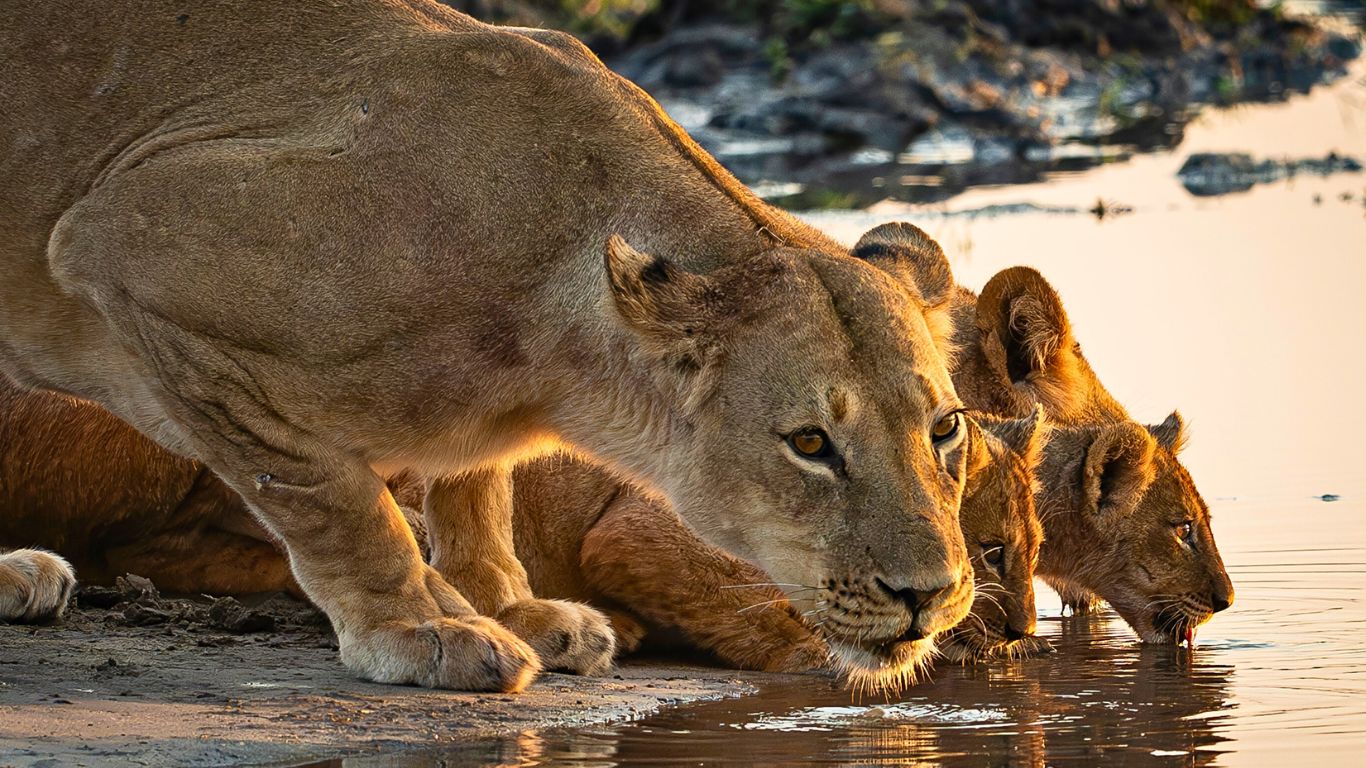
A few months ago, a horrifying poaching incident shook Victoria Falls, the famed tourist town in Zimbabwe. The mutilated remains of a lioness were found with her flesh stripped from her bones, and her head and paws viciously hacked off. The mother’s death left her three nine-month-old cubs to fend for themselves – and we knew we needed to act immediately before the vulnerable cubs, and their older siblings, were targeted by poachers. The best way to protect them is to install AI-powered camera traps. These camera traps are highly-effective in the fight against poachers. They detect human movement in real time and send instant alerts to anti-poaching units. Teams are immediately dispatched to stop the poachers before they can lay cruel snares or kill a helpless creature. For adequate protection, the cubs need 10 camera traps. We have already funded five – now we need a final push to fund the remaining five. We are halfway to our goal – so close to ensuring comprehensive protection for the cubs. This year alone, using its existing camera traps, Victoria Falls Anti-Poaching Unit (VFAPU) rescued six animals from snares, removed 97 snares, detected 49 incursions, and arrested 11 poachers. Our team patrols a vast area covering 124,000 acres (50,000 hectares). The more camera traps we can install, the more animals we can protect. Please donate as much as you can today.
Africa: The Last Great Bulls – Inside Botswana’s Silent Struggle Over Its Elephants
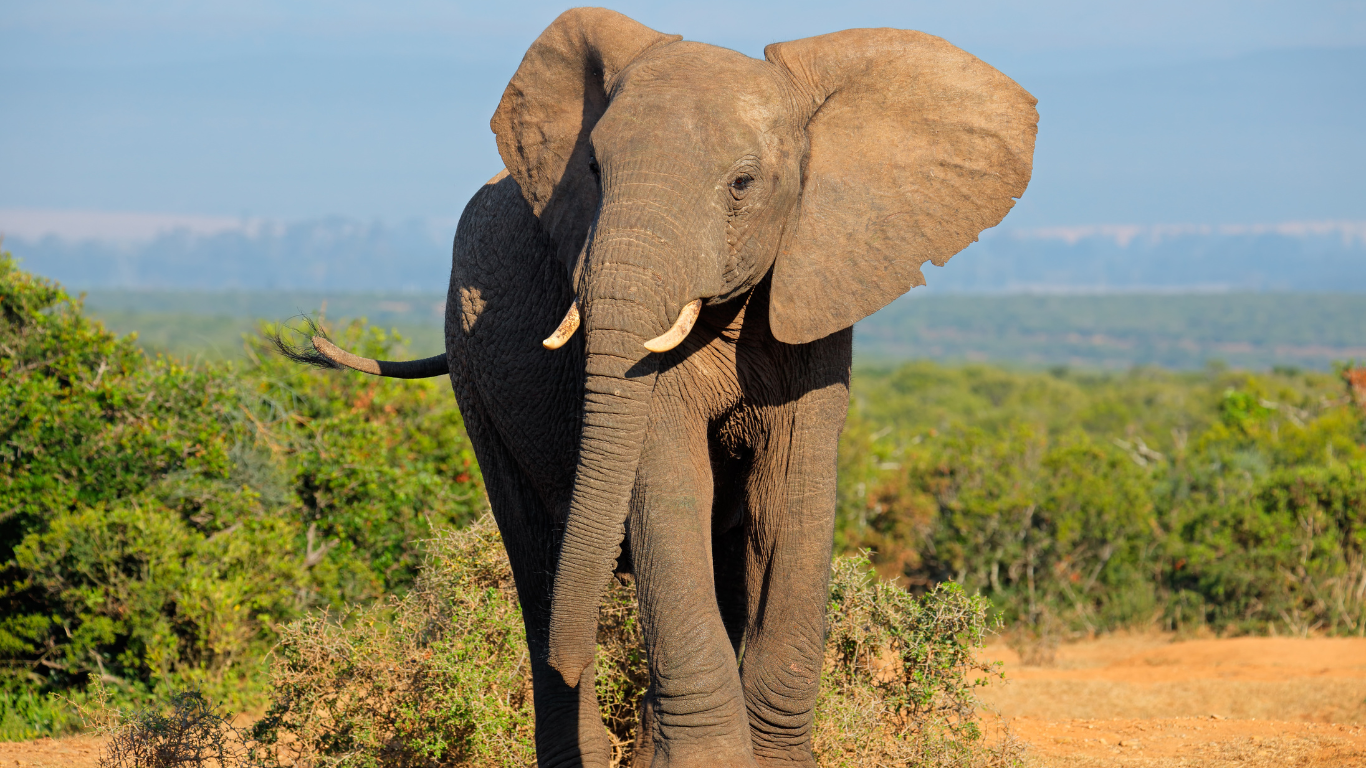
Article written by Adam Cruise Originally published by All Africa, 2 December 2025 Cape Town — When Dr Mike Chase banks the small survey plane over northern Botswana’s mopane woodlands, he can see the country’s wildlife story written in the dust below. Carcasses — some months old, others more recent — lie scattered along ancient elephant paths, mute evidence of drought, hunting and poaching. Farther ahead, the shadows of living elephants stretch across the floodplains of the Chobe. But the aerial view tells a different story — one that challenges years of political messaging and sparks a contentious debate over how one of Africa’s largest elephant populations should be managed. Chase, who leads Elephants Without Borders (EWB), has spent two decades studying Botswana’s elephants from the air. His latest report , with co-author, Scott Schlossberg, shows irrefutably that the country’s hunting programme — reinstated in 2019 and expanded since — is based on flawed assumptions, outdated models and an incomplete picture of the pressures elephants now face. “ Botswana’s crisis is not one of too many elephants — it is one of too little understanding,” he says. “We don’t have an elephant problem. We have an information problem. Everyone has an opinion, yet too few rely on evidence. Too many opinions. Too little truth, and the science capable of guiding us is too often left unused.” A Population That Isn’t Growing — But Is Changing For more than a decade, Botswana’s government has stubbornly maintained that the country is home to too many elephants and that their growing numbers are putting pressure on people and landscapes. Yet aerial surveys conducted in 2010, 2014, 2018 and 2022 show a remarkably consistent figure: about 130,000 elephants in the north, which holds 94% of the country’s population, contradicting the claims of population growth. The new EWB report confirms what scientists have been observing quietly for years — that this number has not risen significantly in over a decade. Instead, another trend has emerged: carcass ratios, a key indicator of mortality, have been steadily increasing. Higher carcass ratios signal a rise in deaths from poaching, drought, disease or hunting. Between late 2023 and mid-2025 alone, EWB documented at least 120 poached elephants, almost all of them adult males. The pattern reflects an earlier surge in 2017–2018, when up to 400 elephants were believed to have been killed. The scale of these deaths matters not just for the numbers themselves, but for the type of elephants being lost. The Selective Pressure on the Last Great Bulls Botswana reopened trophy hunting in 2019, issuing quotas that have increased annually. This year’s quota of 431 elephants represents about 0.3% of the population — a figure defenders of hunting often describe as insignificant. Chase argues that this statistic obscures the real ecological impact. “ The quota of 410 elephants is often shrugged off as ‘only 0.3% of the population.’ But this statistic is dangerously misleading,” he says. “The real threat is not how many elephants are killed; it is which elephants are being removed. This is not random offtake. Trophy hunters and ivory poachers selectively target the rarest animals in Botswana: the last great bulls, the oldest males, that carry the largest tusks. These elephants represent only a tiny fraction of the population.” Older bulls, 40 to 60 years old, carry tusks large enough to attract high-end hunting clients. They represent a tiny percentage of the population — perhaps 1–3% — and play an outsized role in elephant society. They father most calves due to female mate choice, teach younger bulls’ social behaviour and seasonal movements, and act as cultural memory keepers for drought-hard landscapes. Modelling in the EWB report shows that hunting at current levels could halve the number of bulls aged 50 and above and reduce bulls aged 30 and older by nearly a quarter compared with a scenario without hunting. These declines are amplified when drought or poaching is added into the equation. Critically, the government’s justifications of hunting quotas do not take drought or poaching into account. Climate and Conflict: A Changing Landscape Northern Botswana is scorched ever more frequently by drought. Climate projections for southern Africa indicate that severe dry seasons could occur in up to 40% of years by 2080. During drought, elephants crowd around diminishing water sources, increasing the likelihood of conflict with communities and disease transmission. Drought also affects the long-term structure of elephant populations. Calves and reproductive females suffer higher mortality during dry years, reducing the number of future males that will eventually reach trophy size. When hunting and poaching selectively remove older males at the same time, the demographic pyramid begins to narrow from both ends. Hunting Blocks as “Sink” Landscapes One of the report’s more striking findings is that many hunting concessions function as “sink” areas — landscapes where elephants die faster than they can be naturally replaced. The only reason these areas still produce huntable bulls, the researchers argue, is that males disperse from protected areas like Chobe National Park and Moremi Game Reserve. These dispersal patterns, however, may be changing. Survey teams noted shifts in elephant distribution between 2018 and 2022, suggesting that some elephants are beginning to avoid hunting areas altogether. If that trend continues, the supply of older bulls will diminish regardless of how large the overall population is. Old Models and Missing Data The EWB report scrutinizes the scientific basis for Botswana’s hunting quotas. It finds that the primary model used by the Department of Wildlife and National Parks was developed in 2011, relying on survival rates that were not based on field data and assuming steady population growth without accounting for density dependence — a key factor in any large mammal population. Density dependence means that as an elephant population gets larger and more crowded, natural pressures like food scarcity, drought, and competition automatically slow its growth. The model also assumed annual elephant emigration to neighbouring countries at levels not supported by survey data. These assumptions, the report argues, make the model unsuitable
Unsustainable elephant hunting is a growing economic risk for Botswana, says report
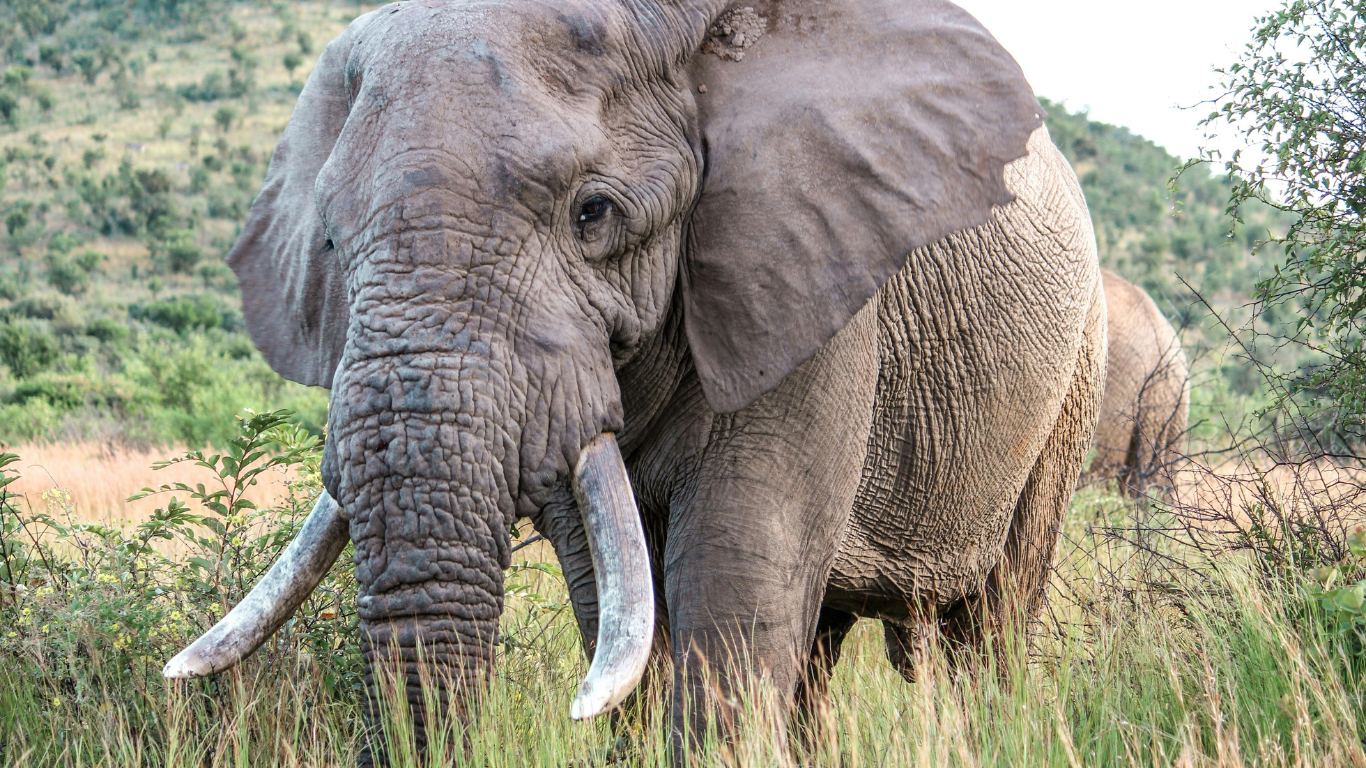
Article written by Don Pinnock Originally published by Daily Maverick, 1 December 2025 When poaching amplifies the effect of higher hunting quotas, it is bad news for the future of Botswana’s elephant population and its contribution to the economy, according to research just in. Botswana – home to the world’s largest remaining population of African elephants – is losing its most valuable wildlife asset at a rate far higher than officials have acknowledged, according to a major new report released by Elephants Without Borders (EWB). Combined with an aggressive trophy-hunting quota and rising mortality from hunting, drought and human-elephant conflict, the country’s elephant management system is entering what researchers describe as a dangerous period of biological and economic fragility. Adding to this, elephant poaching in northern Botswana is now occurring with “alarming regularity”, targeting the nation’s biggest and most economically significant bulls. According to one of the authors, Scott Schlossberg, “poachers and trophy hunters are both targeting the same elephants: older bulls with big tusks. So poaching directly affects hunting by reducing the number of bulls available to hunters. In the long run, controlling poaching is one of the best ways to ensure the sustainability of legal hunting.” EWB’s population simulations demonstrate that: When hunting quotas are high, the population has no buffer to absorb spikes in poaching, drought mortality, or human–elephant conflict; Even minimal poaching deeply depresses trophy sizes; and A decade-long poaching outbreak of around 500 elephants a year reduces trophy size for up to 50 years. Unfortunately, says the report, the monitoring system used by the Department of Wildlife and National Parks (DWNP) relies primarily on tracking the tusk sizes of hunted elephants. This approach detects declines a decade too late – after irreversible depletion has already taken place. In economic terms the findings are a warning: Botswana could be losing an estimated BWP2.5-billion (about R3-billion) every year from elephant poaching – losses that fall disproportionately on rural communities, tourism operators and the national treasury. When numbers of bulls become depleted, says Schlossberg, it directly affects the hunting industry. “They have fewer bulls to hunt, and hunters are forced to take younger bulls with smaller tusks. That sort of change can impact the hunting outfits’ bottom line and the revenue that Botswana receives from hunting fees.” Poachers target old bulls with big tusks In Botswana, poachers select for the biggest tusks – and therefore the oldest males. In EWB’s datasets, the average age of poached elephants is around 41 years, compared to 29 years in elephants dying of natural causes. These old bulls are the country’s biological crown jewels: They carry the largest, most impressive tusks, crucial for high-value photographic tourism; They serve as leaders in male elephant societies, guiding younger bulls through landscapes and migrations; and They are disproportionately important for mating success. Losing such bulls has cascading effects – not only on tourism revenue and genetic health but on elephant behaviour. When old males are removed, younger bulls can become more aggressive and less disciplined. Collision course with science While poaching escalates, Botswana has sharply increased its trophy-hunting quota. After lifting the hunting moratorium in 2019, the 2025 quota rose to 410–431 elephants, equivalent to 0.29–0.31% of the national population.In 2019 the elephant quota was 290. By 2025 it had risen to 431 – an increase of 48.6%. The assumption was that this level of hunting would be biologically harmless to a population of roughly 140,000 elephants. But this statistic is dangerously misleading. According to one of the report’s authors, Dr Mike Chase, “the real threat is not how many elephants are killed, it is which elephants are being removed. “Trophy hunting doesn’t remove a random sample of elephants. It disproportionately targets the largest, oldest bulls, usually over 40 years old, the carriers of Botswana’s biggest tusks and strongest genetic traits. These elephants represent only a tiny fraction of the population.” Trophy hunting also does not occur across the whole elephant range. It is concentrated in specific hunting blocks that together hold only about 45,000 elephants. Within those areas, the effective harvest rate reaches 0.9% – almost double the rate that the government itself previously declared “biologically safe”. EWB’s modelling shows that at a 0.9% harvest rate, older bulls disappear entirely within 25 years. Tusk sizes shrink steadily until hunters are forced to take bulls that barely meet minimum trophy thresholds. The government’s justification for these high quotas is based heavily on a 2011 study that the EWB report identifies as seriously flawed. EWB alleges that the 2011 study used invented survival rates, ignored density-dependent population dynamics (the way an elephant population’s growth rate changes in response to its own density) and failed to incorporate known ecological processes. Bull immigration One of the report’s most striking findings is the extent to which hunting zones in Botswana are population sinks – areas that lose more bulls to hunting than they can naturally produce. Trophy hunting relies on a constant flow of big bulls migrating out of protected areas such as Chobe and the Okavango Delta into the hunting block. The latest quota allows for 84 elephant to be hunted in blocks bordering immediately on the Okavango Delta and 75 to be hunted in blocks bordering Chobe National Park, of which 30 may be hunted along the Chobe River itself. But because trophy hunting targets the biggest and the best, it will become more difficult to find trophy-quality bulls with big tusks. Early survey data suggests that elephants may be starting to avoid hunting areas, a behavioural shift that would undermine the entire hunting model. If bull immigration slows, hunting operators could face a rapid collapse of trophy quality within a few years. The poaching problem The report shows a consistent trail of ivory-poaching interceptions from 2023 to 2025, exposing organised international syndicates operating with troubling efficiency. On 23 November 2023, authorities seized 26 elephant tusks weighing 652kg, the equivalent of more than 10 large bulls. Three days later, another batch of 15 tusks was intercepted, followed by nine
Rhinoceros horns worth $1.13m and other animal parts seized at Changi Airport in record haul
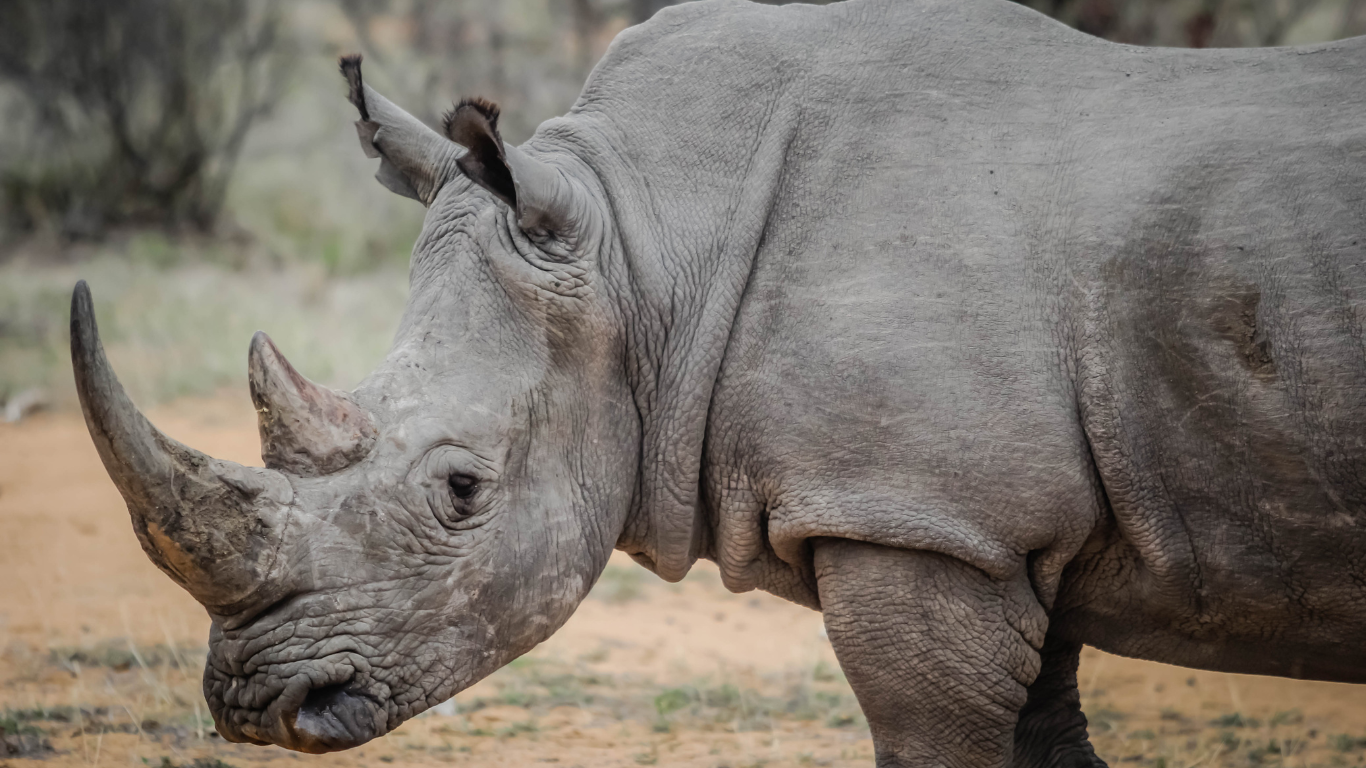
Article written by Koh Xing Ying Originally published by Asia One, 18 November 2025 A record 35.7 kg of rhinoceros horns, along with about 150 kg of other animal parts, was seized during a routine transit inspection at Changi Airport on Nov 8 (Saturday). The 20 pieces of rhino horn, valued at about $1.13 million and found in four cargo parcels, were en route from South Africa to Vientiane, Laos, the National Parks Board (NParks) and Sats said in a joint statement on Tuesday (Nov 18). Other parts discovered included bones, teeth, and claws. Senior director of wildlife trade at NParks Dr. Anna Wong said this seizure of rhino horns was the largest to date, adding that most people purchase rhino horns because they are believed to have medicinal value. “This is our largest seizure ever, surpassing the seizure we had in 2022, which was 34.7 kg,” she said. Vengadeswaran Letchumanan, a SATS cargo acceptance staff member, recounted how he discovered the suspicious package. “I was inspecting the cargo for any damage. When I got closer, there was a strong, unpleasant smell, as if something had decomposed,” said the 30-year-old, who has been working with the cargo handler for three years. Upon closer inspection, he noticed that the contents were inconsistent with those declared on the airway bill, which listed the shipment as “furniture fittings.” Vengadeswaran then alerted his duty manager, who then activated Sats Security Services to conduct a detailed inspection. One package contained what appeared to be animal parts. The remaining three cargo parcels were subsequently X-rayed and found to contain similar contents. The Airport Police Division of the Singapore Police Force was also alerted, and the items were subsequently seized by NParks. Kuah Boon Kiam, senior vice-president of Sats cargo services, said that the trade in illegal wildlife is multinational, with air transport being a common mode of shipment. He added that training is crucial in enabling staff to detect such shipments. “Part of their training requires them to focus on how to handle animals as well as animal parts. It also teaches them how to detect false declarations of cargo. And this is very important, because it affects aircraft safety,” said Kuah. Horns from white rhinos During a tour of the center for wildlife forensics, the media was given a demonstration of how animal species are identified through testing. Based on species identification carried out at the center, the 20 pieces of rhinoceros horn were confirmed to be from white rhinos, a species protected under the Convention on International Trade in Endangered Species of Wild Fauna and Flora (CITES). NParks noted that species identification of the other animal parts is ongoing. Dr. Wong said, “As a signatory to CITES, Singapore takes a zero-tolerance stance against illegal wildlife trade, and we are very committed to combating illegal wildlife trade. Please do not purchase items that have wildlife specimens, especially endangered species.” The earlier major haul was on Oct 4, 2022, when NParks’ K9 Unit detected and inspected two pieces of baggage at Changi Airport, uncovering 20 pieces of rhino horn weighing 34.7 kg. The owner of the bags, a South African national, was immediately arrested. He pleaded guilty on Jan 26, 2024, and was sentenced to 24 months in jail. Under the Endangered Species (Import and Export) Act, the maximum penalties for trading Cites-listed species transiting through Singapore without a valid CITES permit are a fine of up to $200,000 for each specimen and/or imprisonment of up to eight years.
Not only lionesses: another part of the animals was seized from a private zoo in Khmelnytskyi
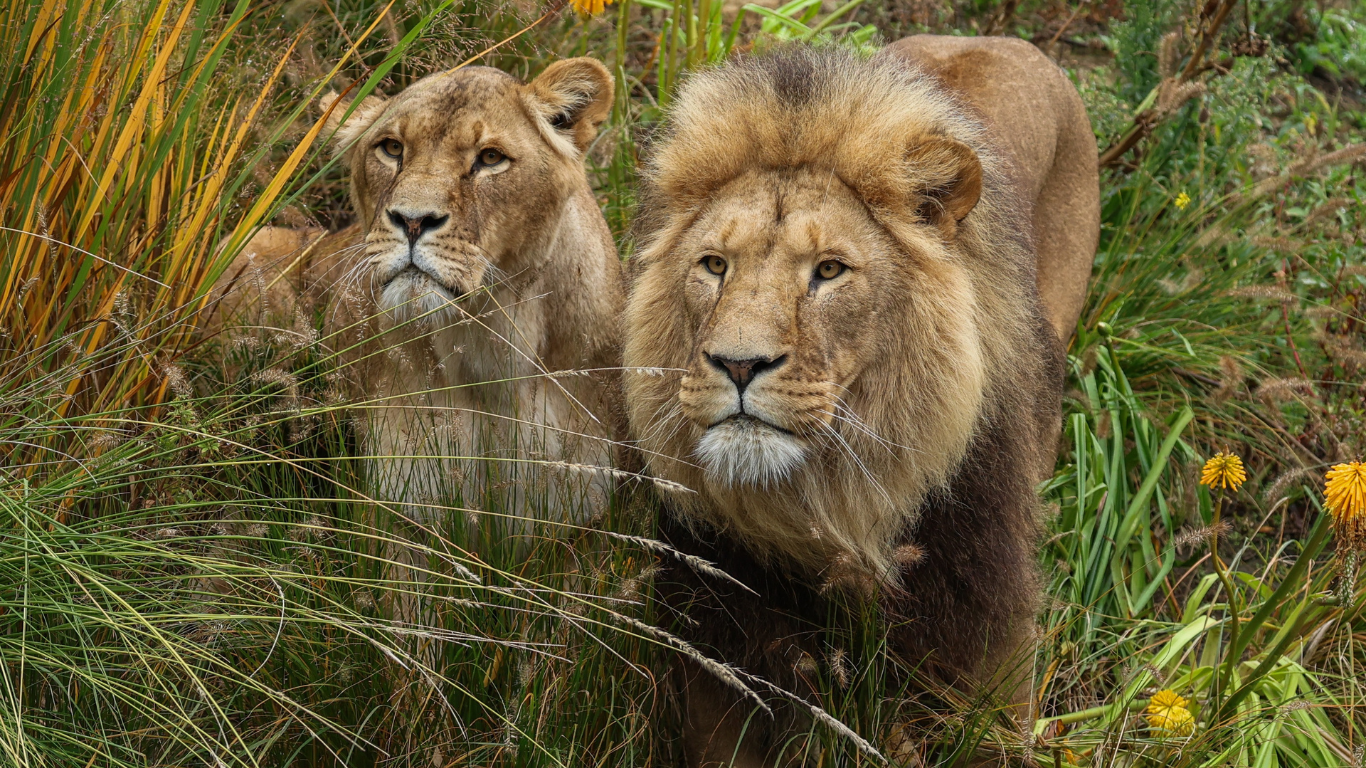
Article written by UNN Kyiv Originally published by UNN, 21 November 2025 Prosecutors, together with animal rights activists, seized some animals from a private zoo in Khmelnytskyi. Two lionesses, a fox, a raccoon dog, and a badger were transferred to the Center for the Rescue of Wild Animals. Animal rights activists, together with prosecutors, seized some of the animals from a private zoo in Khmelnytskyi, from where lionesses had escaped. The issue regarding the rest is being resolved, UNN reports with reference to the Khmelnytskyi Regional Prosecutor’s Office. As part of the pre-trial investigation, prosecutors, together with representatives of UAnimals, the Association of Animal Protection Organizations of Ukraine (AZOU), and the Wild Animals Rescue Center, seized some of the animals from the shelter. Two lionesses, a fox, a raccoon dog, and a badger were transferred to the Wild Animals Rescue Center today. They will stay there temporarily until permanent homes with appropriate conditions are found for them. – the message says. According to the prosecutor’s office, the issue of placing other animals remaining in the shelter in favorable conditions is currently being resolved. Recall On November 15 of this year, two lionesses escaped from their enclosure, resulting in the death of animals that were in adjacent premises. One lioness was found on the territory of the shelter; the other was searched for throughout the day. The owner of the shelter was notified of suspicion, and a preventive measure in the form of round-the-clock house arrest was chosen.
Advocates want to give bears rights in South Lake Tahoe sanctuary city proposal
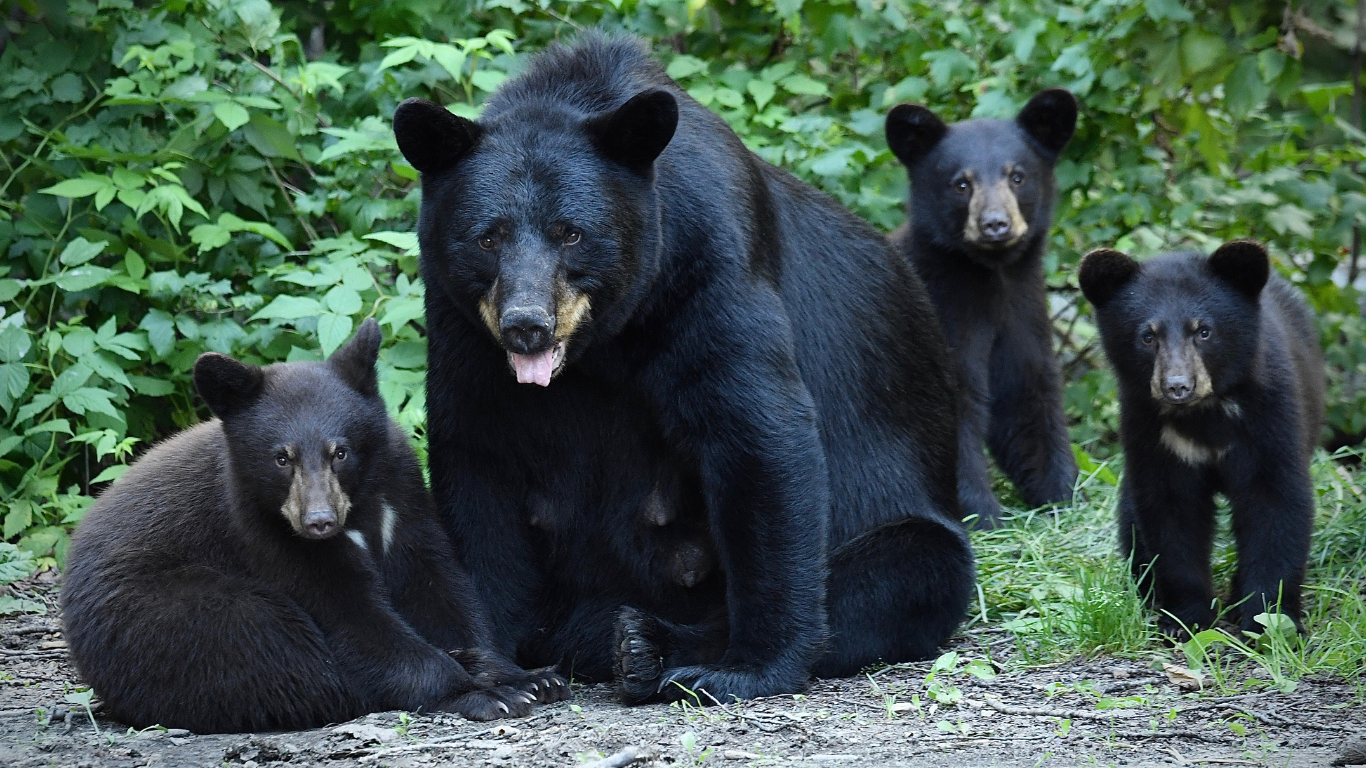
Article written by Tara Campbell Originally published by ABC 7 News, 21 November 2025 After a tense summer of bear break-ins in South Lake Tahoe, wildlife advocates say it’s time for a new approach to try and keep both its beloved black bears and people safe. “What we’d like to do is make the City of South Lake Tahoe a city where bears would be given some rights,” Ann Bryant, the Bear League Executive Director. Next month, the nonprofit plans to present a proposal to the city council to designate South Lake Tahoe as a sanctuary city for bears. The move comes as one video after the next surfaces of bears getting into everything from trash to homes and vehicles. This summer, the California Department of Fish and Wildlife clashed with residents trying to protect a mama bear and her cub, affectionately known as ‘Hope’ and ‘Bounce,’ after officials announced plans to euthanize Hope, citing several break-in attempts. “So what we’re thinking is, people would need to do a little bit more to avoid having a problem in the first place. And there are many things they can do, and the Bear League helps them with that. And so does the Department of Wildlife, and so does the police,” said Bryant, noting bringing those entities together is the key to the sanctuary city proposal. “Then instead of just the Department of Wildlife being the only agency or the only group that says, okay, he has to die, then we have a governing board and we sit down and we look at this practically. And what did the bear do, and what did the people do to avoid it? And what can be done to avoid it happening again? And then we decide together, kind of like a trial, in effect, you know, we give the bear a fair shake.” The Department of Fish and Wildlife says it’s committed to supporting a thriving black bear population and will continue prioritizing non-lethal methods of control.
Conviction Shows Nigeria’s Efforts Against Pangolin Trafficking are Paying Off, Officials Say
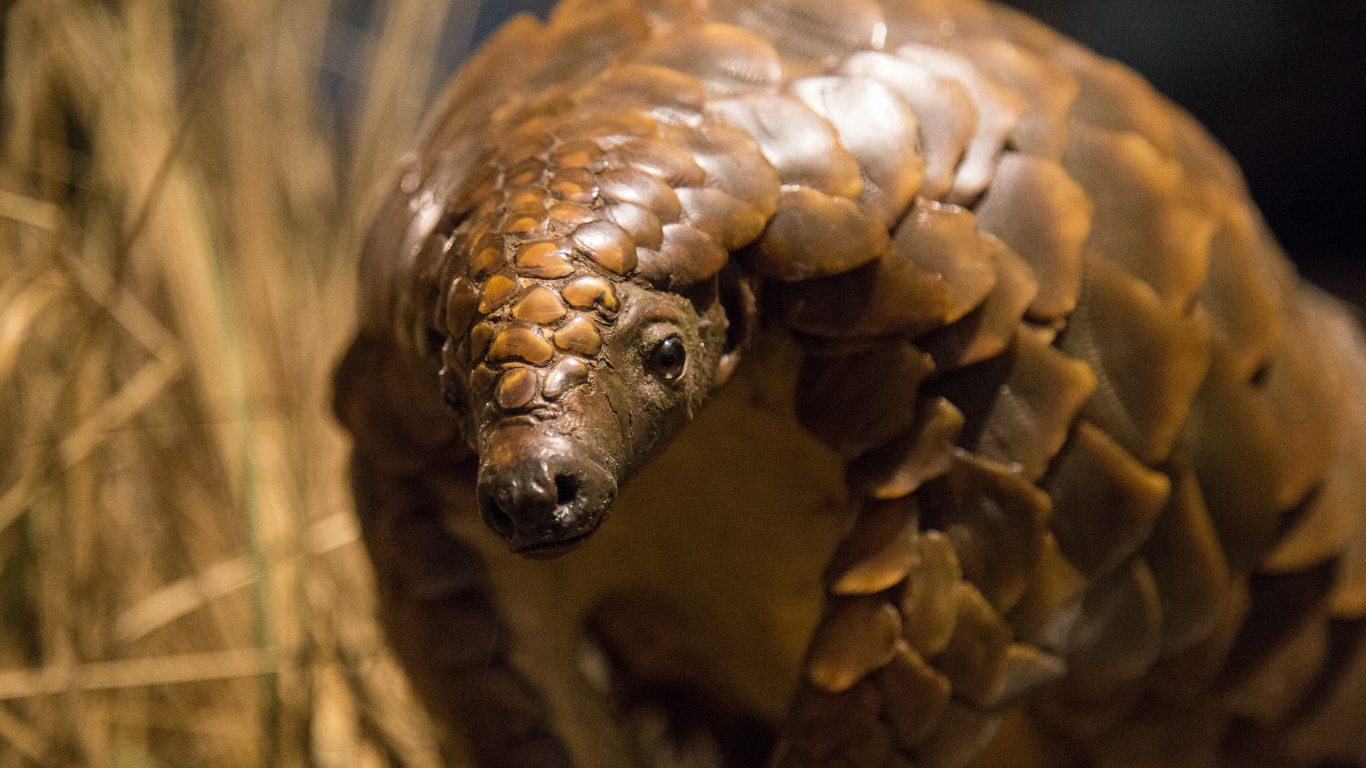
Article written by Nathalie Bertrams Originally published by OCCRP, 19 November 2025 Pangolins have the regrettable distinction of being the world’s most trafficked mammals. But the recent conviction of a man in Nigeria — formerly the world’s hub for smuggling the scaly ant eaters — shows progress against wildlife trafficking. Nigeria’s recent conviction of a man for illegally selling a metric ton of pangolin scales was welcomed this week by government and NGO officials, who are hailing better protection against the trafficking of the threatened scaly anteaters. Steven Chinonso — also known as Chukwunonso Stephen Obunadike — was convicted by the Federal High Court in Lagos on November 7 of conspiracy, unlawful possession, and the illegal sale of pangolin scales and sentenced to one year in prison. The verdict “sends a clear message to the world that we do not encourage or tolerate those who participate in the illicit trade in endangered species. We understand the ecological value of making sure that these animals are protected,” Timi Bomodi, Deputy Comptroller General for Nigeria’s Customs Service (NCS), told OCCRP. Pangolins, found across Africa and Asia, are the world’s most trafficked mammals. With the four Asian species hunted to near extinction, the African Wildlife Foundation estimates that around 2.7 million pangolins are trafficked from Africa’s rainforests each year. Because their survival is threatened, the trade in pangolins or their scales is banned under the Convention on International Trade in Endangered Species of Wild Fauna and Flora. Now, stronger law enforcement appears to be reducing the smuggling of pangolins from Nigeria, which used to be the center of their trafficking. A joint operation by the NSC and the Wildlife Justice Commission (WJC), a nongovernmental organization, seized around 1 metric ton of pangolin scales from Chinonso. Many of the scales came from other African countries and were destined for Asia, where they are popular in traditional medicine. The conviction of Chinonso was hailed as a “major step forward in disrupting the wildlife trafficking networks operating in West Africa” by Olivia Swaak-Goldman, Executive Director of the WJC. “It demonstrates that traffickers who once operated with impunity in Nigeria — previously the world’s largest hub for pangolin trafficking — are now being held accountable, sending a strong signal that wildlife crime carries real consequences,” she told OCCRP. “Increasingly, the risks of engaging in wildlife trafficking in Nigeria now outweigh the potential rewards.” She noted that Nigeria’s newly passed Endangered Species Conservation and Protection Bill will soon introduce stronger penalties for trafficking, including sentences of up to 10 years and fines of 12 million naira (approximately $8,300), further bolstering the country’s ability to combat wildlife crime.” The case against Chinoso is part of a broader investigation by NSC and WJC into Lagos-based wildlife trading networks, which has so far resulted in 3.7 metric tons of pangolin scales seized and five arrests, with the remaining accused still before the courts. “The conviction of this trafficker marks a major victory for biodiversity conservation in Nigeria and West Africa as a whole,” said Denis Mahonghol, the Central Africa director of wildlife trade monitoring network TRAFFIC, who estimated the one metric ton of seized scales corresponded to 2,008 individual pangolins. “It disrupts a critical link in the wildlife trafficking network, reduces immediate pressure on pangolin populations, and signals Nigerian authorities’ strong commitment to prosecuting wildlife crimes,” he told OCCRP. But TRAFFIC’s Mahonghol and Customs officer Bomodi noted enforcement should focus more on the demand side of pangolins. “Without demand, there won’t be a supply,” Bomodi said. “So it is important that while we do our bit here in Nigeria and Africa in particular, that those of you in Europe and in Asia […] work towards exposing the cartel that encourages the trade in this endangered species. That would really help us.”
War could wipe out critically endangered gorillas forever
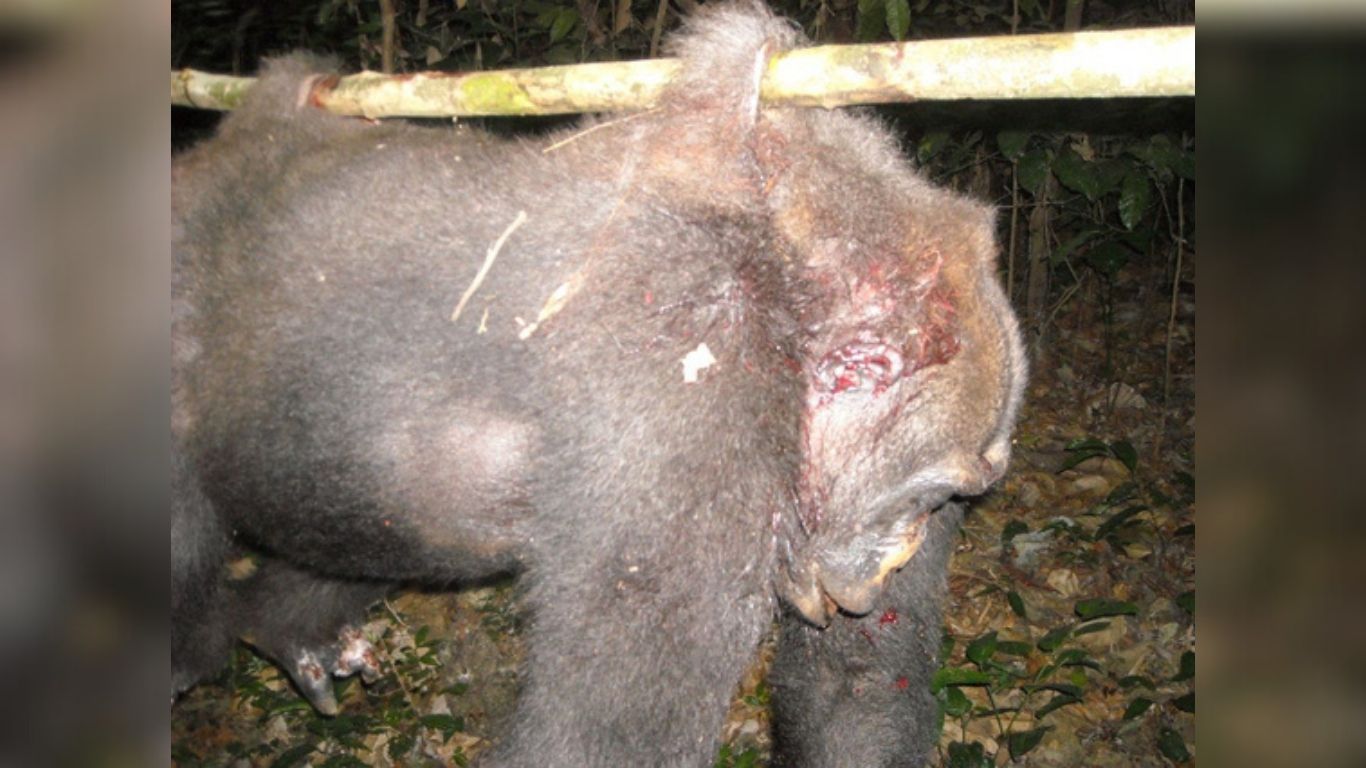
A few months ago, we reached out for much-needed help: critically endangered gorillas in the Democratic Republic of Congo (DRC) were at risk of being wiped out forever. Caught between warring groups, they were inching closer to doom. With our supporters’ help, we raised half the funds we needed to provide critical monitoring tools to rangers protecting these vulnerable animals. With your help today, we can raise the remaining amount and help ensure the continued survival of these precious animals. Here’s what you need to know. Conflict could wipe out the last of the DRC’s already critically endangered gorillas. The DRC has endured decades of conflict and broken peace deals. This year, war erupted again, leaving millions of people displaced and thousands dead. Peace deals have stalled and fighting continues unabated. The war has led to a surge in poaching. Driven by desperation, starving people are hunting wildlife, and this puts the region’s iconic gorillas – all of which are listed as endangered or critically endangered – at grave risk. Amid the chaos of war, critically endangered gorillas face a terrifying fight for survival, because they are at risk of being POACHED for their meat. We are working with The Gorilla Organization (TGO), which protects gorillas and their habitats in the Congo, Uganda and Rwanda. Recently, gorilla rangers have battled increasingly hostile conditions, making their already dangerous work even more perilous. To protect the animals, they’ve been forced to dodge armed militia and navigate a terrifying, war-torn landscape – yet the rangers continue their vital work despite the lethal dangers all around them. Rangers desperately need satellite communication devices if they have any hope of protecting the last of the DRC’s gorillas. In a crisis like this, reliable communication is critical to saving animal lives. It allows teams to alert one another to situations that could put gorillas at risk, and to coordinate their efforts effectively, intercepting hunters and poachers, and protecting wild animals. But much of the country’s telephone networks are disrupted, and communication is one of the biggest challenges for the team, leaving many helpless gorillas at grave risk of being killed. A few months ago, with your help, we raised half the amount needed for satellite phones. Today, we are asking for your help to raise the outstanding funds. If the gorilla rangers have any hope of protecting these vulnerable animals, we MUST equip them with satellite phones. If we can raise the outstanding $2,800 (£2,200), this is exactly what we will do. These devices are designed to provide reliable communication even in the most extreme and remote environments, as well as offering GPS location tracking and an SOS alert button. Some species of gorilla have declined 80% since the 1990s, placing them on the critically endangered list and on the fast-track to extinction. The chaos has enabled poachers in the country to intensify their illegal activities, while driving people to kill gorillas for food. Unless we act, the conflict could easily undo more than 30 years of conservation work. Without help, gorillas will be pushed closer and closer to the brink of extinction – until it’s too late to save them. Please donate right away and help us do all we can to help protect this fragile species.
European wildcats could be seen again in England for first time in 100 years
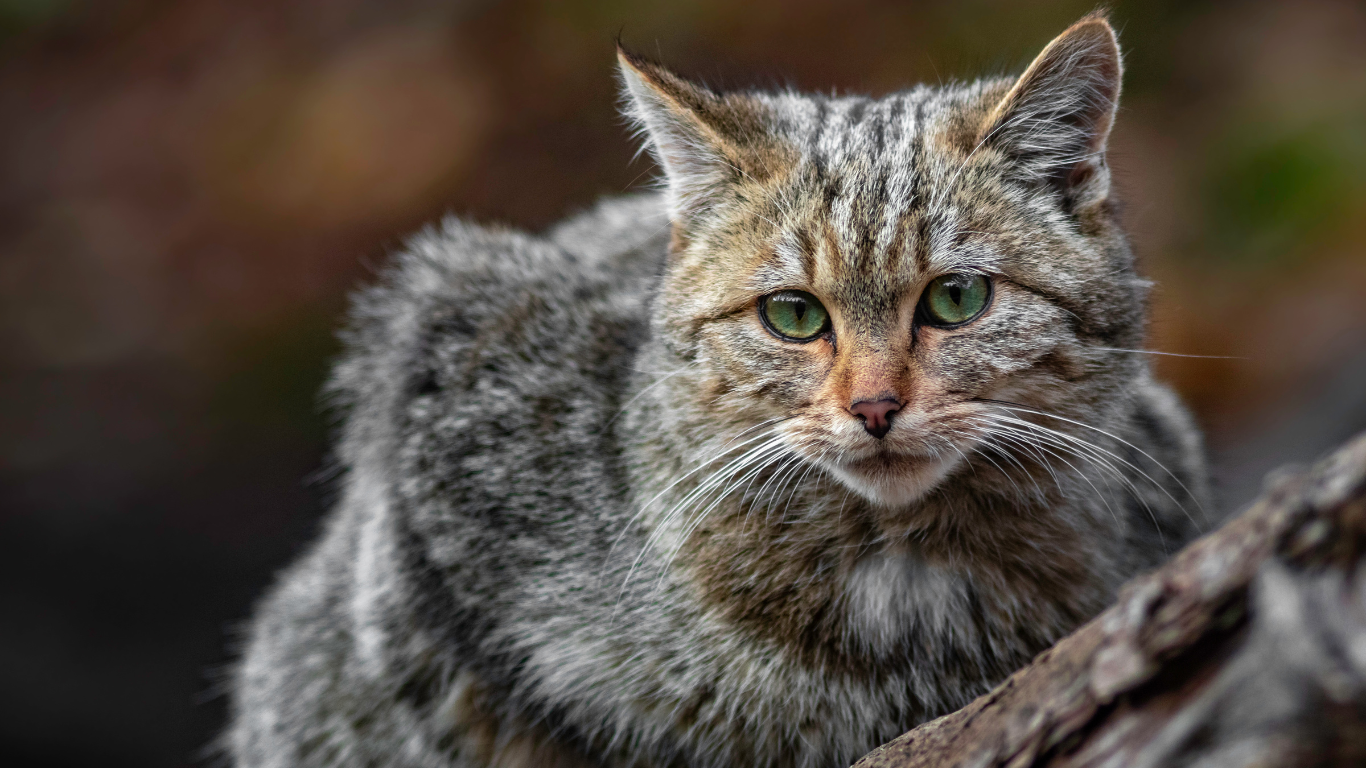
Article written by Steven Morris Originally published by The Guardian, 18 November 2025 Two-year study finds area of woodland in Devon to be ideal habitat to support a controlled release of the creatures The prospect of European wildcats prowling in southwest England has taken a leap forward after a two-year study concluded a reintroduction was feasible – and most local people were positive about the idea. Felis silvestris has been absent from mid-Devon for more than a century, but the area has been judged to have the right kind of habitat to support a population of the wildcat. The area has the woodland important for providing cover and den sites while its low intensity grasslands and scrubland create good hunting terrain. According to the study, the wildcats would not be harmful to humans or to farm livestock and pets. It envisages between 40 and 50 animals being released, though not before 2027. There may be some hitches. Interbreeding between wildcats and feral/domestic cats is an issue for wildcat populations in Scotland, threatening the genetic security of the species. For a reintroduction project in the southwest to succeed, the study says there would have to be cooperation with local communities and cat welfare organizations to support a neutering program for feral and domestic cats. The two-year investigation was carried out by the South West Wildcat Project – a partnership of organizations led by Devon Wildlife Trust, which includes Forestry England and the Derek Gow Consultancy, which works on “rewilding” projects. It looked at the effects on people, communities, other wildlife, farming livestock, and pets and examined the long-term sustainability of a wildcat population after reintroduction. European wildcats – historically also known as “woodcats” – were once widespread in the southwest of England. Centuries of persecution, plus the loss and fragmentation of their favored habitats, resulted in them disappearing across much of their range. The southwest’s last wildcats are thought to have survived on Exmoor until the mid-19th century. Cath Jeffs, southwest wildcat project lead at Devon Wildlife Trust, said, “It’s exciting that this report suggests wildcats could be part of the region’s nature once again. The return of this critically endangered species would be another step in the restoration of our native wildlife and will help rebalance local ecosystems. “Wildcats were once a widespread part of our countryside, and today they remain an important part of woodlands throughout continental Europe, including Germany, France, Spain, and Italy. “A lot of work remains to be done before the first wildcats could be released in the southwest. Honest and open dialogue with stakeholders will be key.” The UK’s only remaining wildcats live in the Highlands of Scotland. Despite being given protected status in 1988, wildcats are now classed as at risk of extinction, with as few as 115 individuals remaining in the wild. The Southwest Wildcat Project was established in 2023 to investigate the feasibility of a reintroduction to the region. Its report, published on Tuesday, concludes: The southwest contains enough woodland cover connected by other suitable habitat to support a sustainable wildcat population. Two surveys were conducted by researchers at the University of Exeter. In one, 71% of 1,000 people liked the idea of the wildcat’s return. In the other, 83% of 1,425 who responded expressed positivity. Wildcats pose no significant risk to existing endangered wildlife populations such as bats and dormice. Wildcat diets concentrate on widespread, commonly found species, with 75% of their prey consisting of small mammals, including voles, rats, wood mice, and rabbits. Wildcats pose no threat to people, domestic pets or farming livestock such as lambs. Commercial and domestic poultry can be protected from wildcats with the same precautions deployed for existing predators such as foxes. There is a wildcat captive breeding program in Britain, with the studbook managed by the Royal Zoological Society of Scotland. If they were to be re-introduced in Devon, cats would be selected from this cohort and brought to breeding enclosures. It would be their offspring that may be released.
These lions are safe from war – but now, they need water
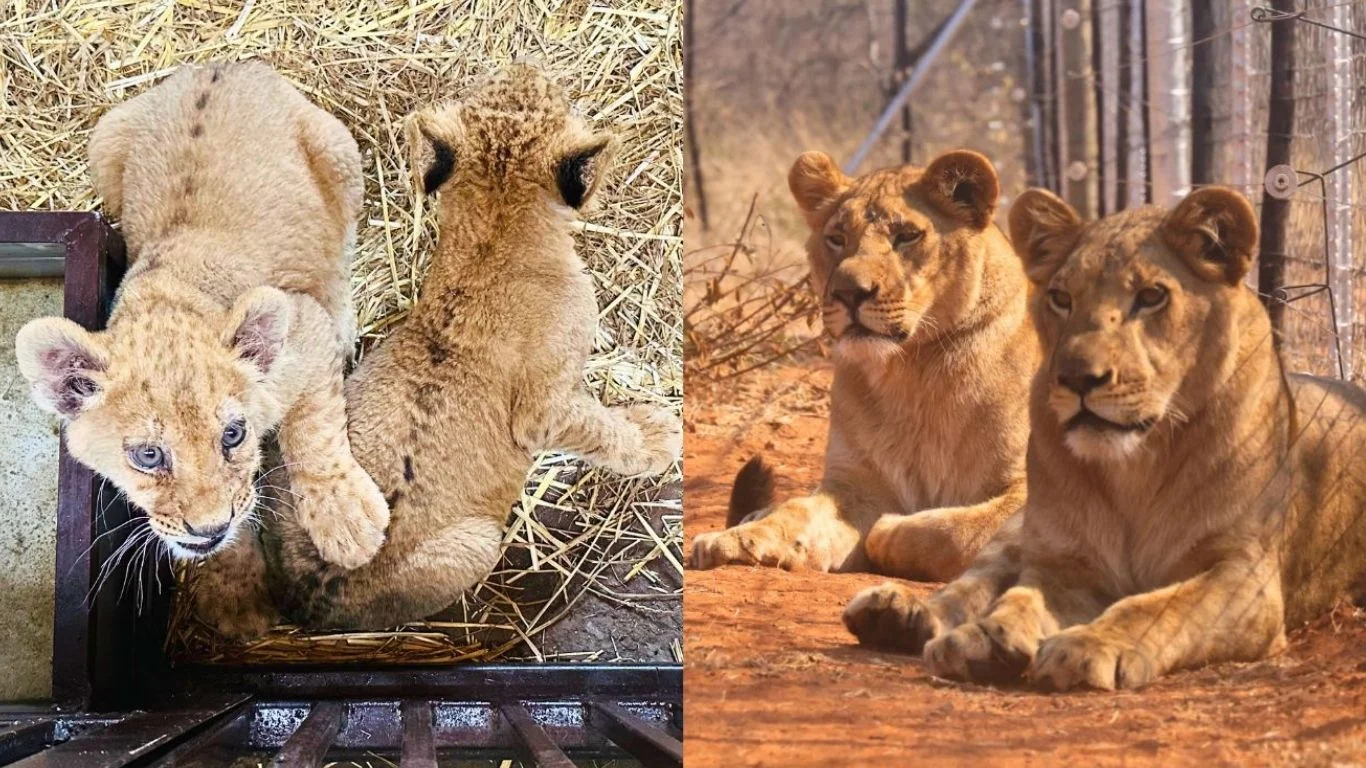
When lion cubs Zorya and Mira dragged their tiny, broken bodies through the wreckage of war on the Ukraine frontline, it seemed almost impossible that these terrified, severely injured infants would ever find safety. We helped care for them for over a year in a temporary Ukrainian shelter – and recently, our supporters helped us get them to safety in South Africa. Now they need your help to not just survive, but to thrive. Credit: WARC No-one knows how the infant cubs, both with their back legs broken, ended up frightened and alone on the frontlines of the Ukraine war. We do know they were just two of many victims of animal abandonment. Thanks to the generosity of animal-lovers like you and the help of our partners, Wild Animal Rescue Center (WARC) in Ukraine and the LionWatch Project in South Africa, we achieved something truly extraordinary for the lions: financing medical care to heal their wounds and, recently, evacuating them from the war zone. While their escape was the crucial first step, it’s only the beginning of what they need to truly thrive. From a Ukrainian zoo to the turmoil of war, Cleopatra, Mira and Zorya are now adjusting to their new lives on African soil. Credit: WARC (Left) and ASI/Luke Kruyt (Right) Safety is the bare minimum. It doesn’t mean their needs are over. Far from it. The lions are safe now, but Zorya and Mira have one vital need and are counting on your support: they need water, as their new home is in an area where temperatures reach around 104°F (40°C), and the rainy season has passed. With your help, we will install an energy-efficient, self-sustaining water system in their sanctuary area – particularly necessary as South Africa enters its sweltering summer season. This system will automatically refill the waterhole whenever necessary. It will be a huge benefit for Zorya and Mira. Credit: WARC (Left) and ASI/Luke Kruyt (Right) Together, we can create the oasis they deserve in Africa. Today, Zorya and Mira no longer hear bombs falling. They feel the sun on their backs, the earth beneath their paws, and the safety of a home they can finally call their own, but they do need a reliable source of water. If we can raise $8,000 (£6,100), we can keep the lions hydrated and healthy through the harsh summer, and beyond. It will ensure the lions always have access to clean, fresh water as summer temperatures soar to 104°F (40°C). Every contribution, large or small, will make a tangible difference to their lives.
Spanish photographer captures world’s first ever white Iberian Lynx on camera
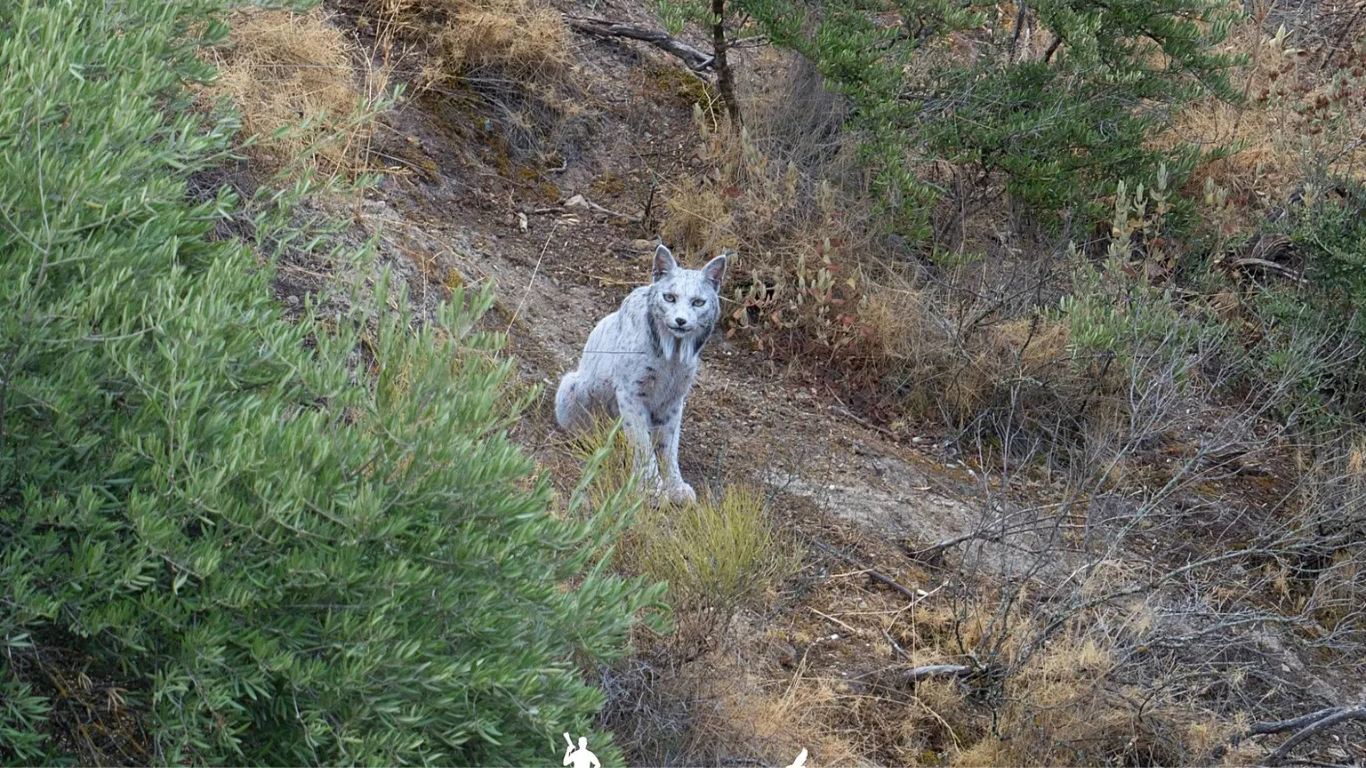
Article written by Javier Iniguez De Onzono Originally published by Euro News, 30 October 2025 The genetic anomaly testifies to the good progress of the Lynx pardinus conservation plans in the two countries of the Iberian Peninsula, after releases began in 2011 when the species was on the verge of extinction. The white ghost of the Mediterranean forest. This is how Ángel Hidalgo, an amateur nature photographer, has described his latest find while reviewing the images from one of his photo-trapping cameras, placed in the depths of one of Jaén’s mountain ranges in southern Spain. Hidalgo has managed to record an Iberian lynx with leucism, a genetic condition that causes a partial or total lack of pigmentation in its skin, although not in the eyes, as would occur in the case of albino animals. According to local media ‘Ahora Jaén’, this unprecedented discovery took place on 22 October in the province of Jaén. The place where this specimen of ‘Lynx pardinus’ has been recorded in the wild, as attested by the absence of a tracking collar, is kept secret. The Iberian lynx, despite the conservation efforts of the Spanish and Portuguese authorities, is still listed as “vulnerable” by the International Union for Conservation of Nature. The Spanish Ministry of Ecological Transition estimates that the animal’s population exceeded 2,000 in 2023, spread across the two countries of the Iberian Peninsula. The animals have spread to geographical areas such as Sierra Morena, the Montes de Toledo, the Spanish-Portuguese Guadiana basin and Doñana, as well as other places where they are being reintroduced that would have been unthinkable until a few years ago, such as the Sierra Palentina.
Poachers are killing animals YOU helped save
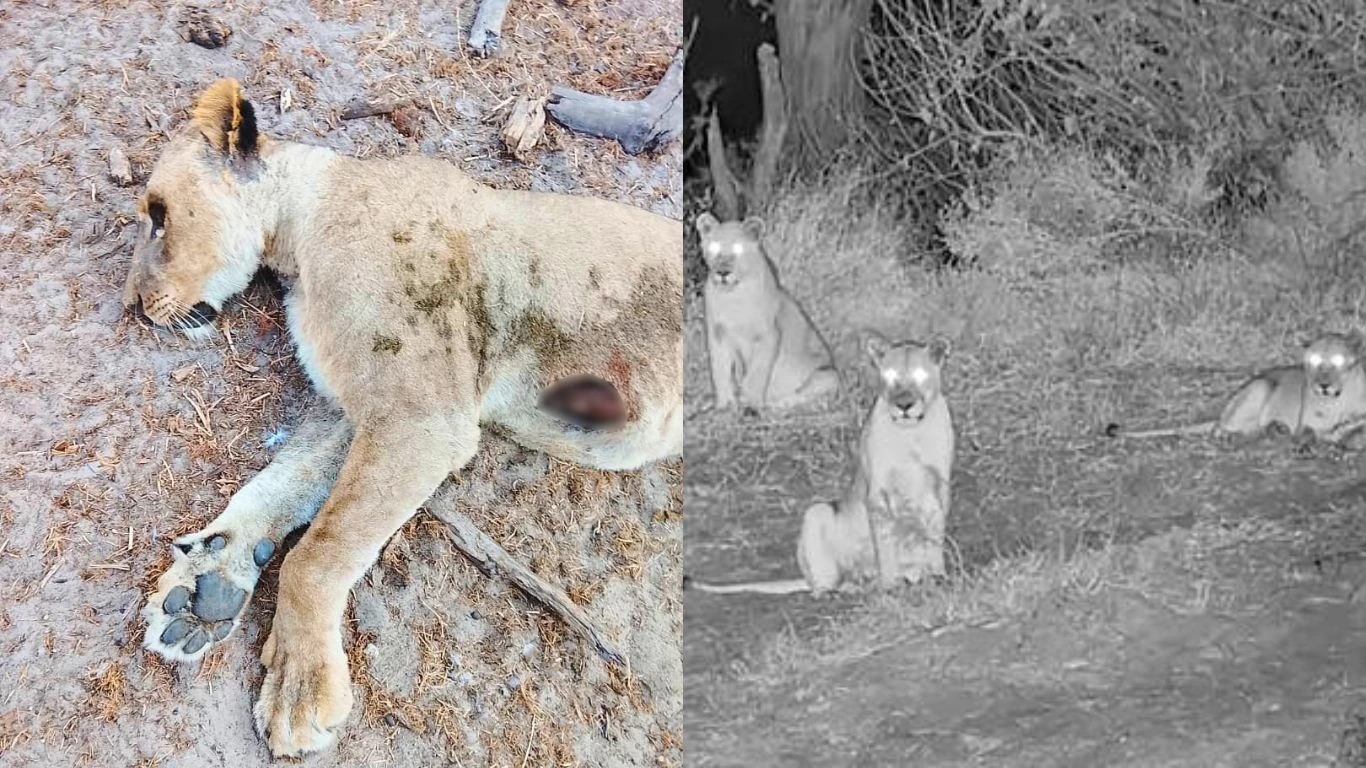
Last year, you helped us provide life-saving water for thousands of wild animals caught in a dreadful drought in Botswana. Now, a new danger is threatening their lives: a recent surge in snaring. This horrifically cruel poaching method leads to brutal death for wildlife – all to feed the insatiable demand for animal parts. Lions are at particular risk. Credit: Camelthorn Farmstead Recently, a lioness succumbed to a snare that slowly strangled her to death. Now, her orphaned cubs are in grave danger. The snared mother lioness was spotted by our partner, Camelthorn Farmstead, along the banks of the Boteti River in Botswana’s Makgadikgadi National Park. She had a snare wound tightly around her neck, causing severe injury and hampering her ability to hunt and eat. The snared mother lion was in obvious pain as the wire cut into her neck. She ultimately succumbed to her wounds. Now, without our immediate help, her cubs face the same threat. Credit: Camelthorn Farmstead We tried to find and de-snare the animal, but each time rescuers got close, she would disappear into the thick bushes, making it impossible to keep tabs on her long enough for rescuers to dart her. Tragically, she died before we could reach her, leaving two orphaned cubs behind. A drone would have helped save the mother lion’s life. Now, it is urgently needed to protect her surviving cubs. Drones have become critical to protecting wildlife in high-risk areas. They allow teams to locate injured animals quickly, identify poachers or hunters, and stop illegal activity fast. In this case, it would have allowed our team to keep their eyes on the lioness at all times, and dart her fast to save her life. The snare caused significant damage to the right side of her jaw through to the back of her neck. Can you imagine the incredible pain she suffered up to her death? Credit: Camelthorn Farmstead As the dead mother’s cubs roam the wilderness, oblivious to the lethal threats all around them, they dearly need our protection. Will you help them? We have already raised almost half the funds needed for a drone. Please help us raise the outstanding $5,400 (£4,000) to purchase it. There is a growing demand for lion parts in “traditional Chinese medicine” (TCM) and local “muthi” (traditional African medicine). There have been increasing instances of poached lion carcasses found with their body parts removed – a key indicator of the illegal trade. Credit: Thomas Retterath/Shutterstock We must help these animals. The surviving cubs and their pride are crucial to the survival of the species in Botswana. Today, lions are extinct in 26 of 48 African countries. Roughly 3,000 of those who remain live in Botswana, including these cubs – and if we do not protect them, we could lose this population entirely. Please, donate now. We are almost halfway to our goal – help us get all the way there.
Here is why for the first time in their lives, 11 captive wild cats are free from human cruelty
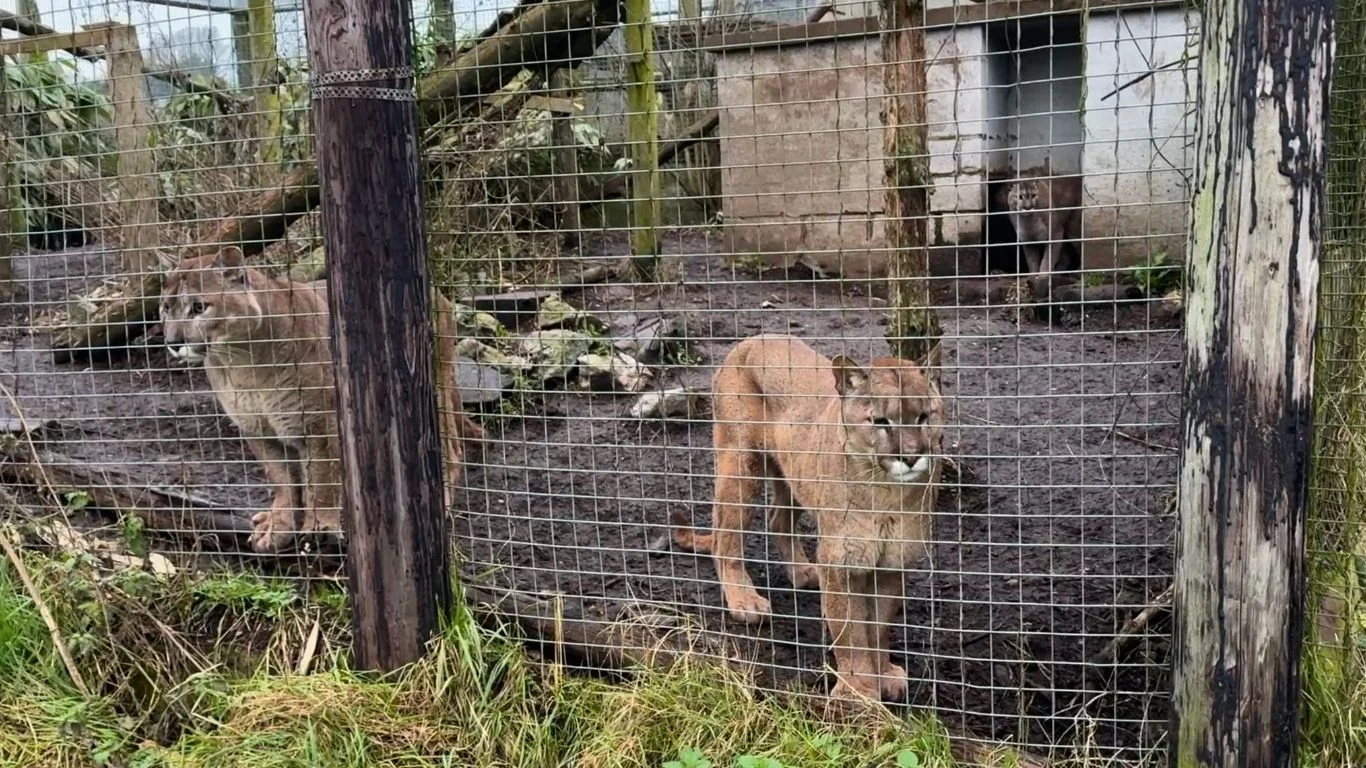
When authorities raided a so-called ‘conservation center’ in the UK, they discovered a truly shocking scene: lions, lynxes and other wild cats were being kept in horrific conditions, malnourished, neglected and yet still forced to perform for paying visitors. Our partner, WildSide Exotic Rescue, saved 11 of the cats from being euthanized, and supporters like you helped us give them the food and care they needed to heal and recover. 11 big cats rescued from bitterly cruel conditions have a chance at peace – with your help. Credit: WildSide Exotic Rescue WildSide originally promised to take in four cats, because that was all they had space for. But with the looming threat of the animals being euthanized, they rescued seven more – a total of 11 abused and miserable wild animals with a huge need for care. Without WildSide, these animals would in all probability be dead. Instead, they have a chance of a stress-free life, but right now, they are confined to temporary enclosures. With 11 additional big cats to feed and care for, our partner simply cannot afford to construct new, spacious areas for their newest residents. But with your help, we know we can raise the funds to give these majestic animals the forever homes they deserve. 11 lions, lynxes and bobcats were saved from death – now, Friend, they need somewhere to live. This is the facility where the 11 big cats, and many other animals, were kept in cruel and abusive conditions. Credit: Hertfordshire Zoo (Left) and ITV News Anglia (Right) After the cruelty they endured, most of the cats are terrified of humans. WildSide does not allow visitors and no unnecessary human presence is allowed. Even when our team visited the sanctuary recently, we required special permission to see the rescued cats. It means the animals can begin to recover in quiet seclusion, far from human exploitation and stress. This is what makes a true sanctuary so special – it exists entirely for the animals, not for people. The cats were spared death – but our mission isn’t complete. They need more space to heal physically and emotionally. Vets provide immediate on-site treatment to the worst-affected animals during their rescue. Credit: WildSide Exotic Rescue Every donation will help create larger enclosures designed not for visitors’ entertainment, but for the animals themselves, with cleverly designed tunnels to give them even more freedom of movement and provide stimulation to enrich their lives. The cats will then have true sanctuaries – quiet, secluded and safe – where they can finally live without fear, intrusion, or the constant stress of human presence. After everything they’ve suffered, they deserve nothing less. Please donate today.
Why do bats spread so many diseases? They’re evolutionary marvels.
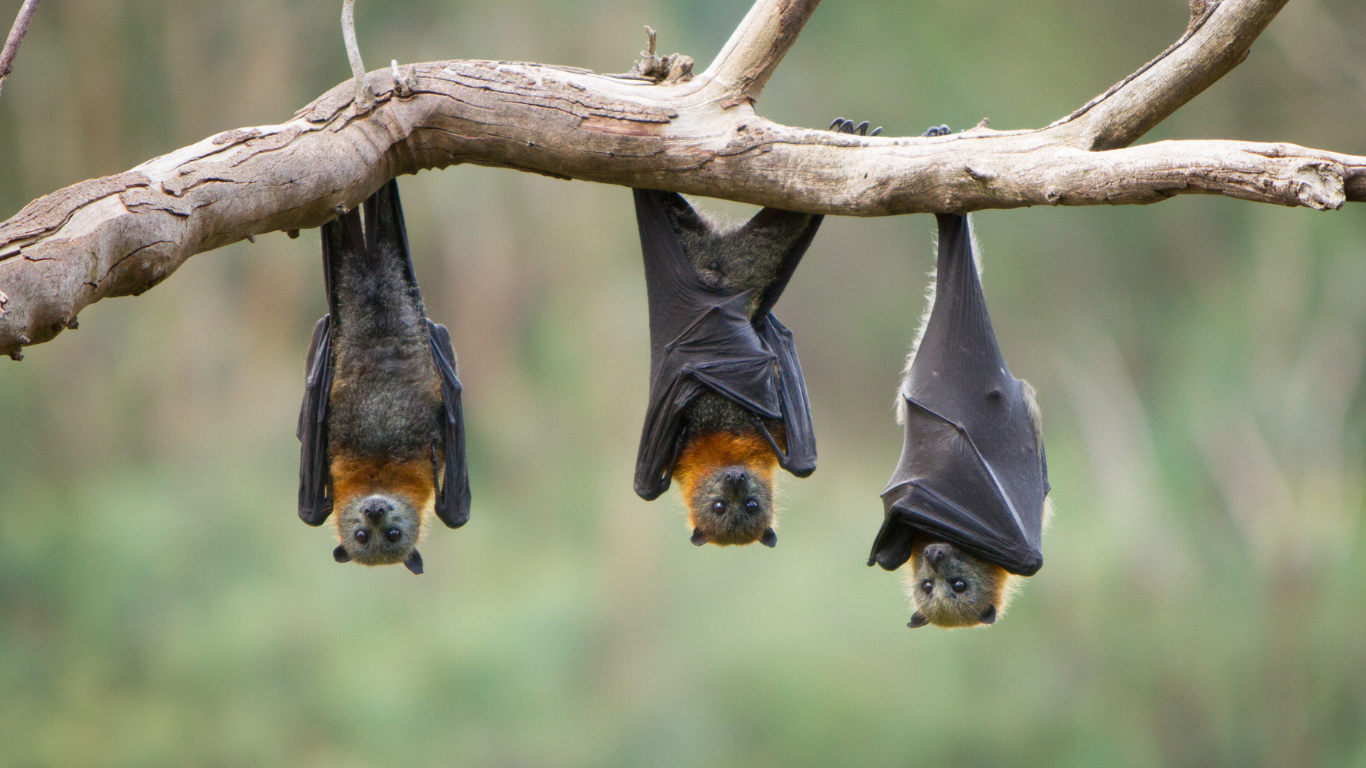
Article written by Andrew Paul Originally published by Popular Science, 14 October 2025 Survival of the fittest doesn’t always mean smartest, fastest, or strongest. There are way more bats than you might think. Second only to rodents, bats make up around a fifth of all mammals, with over 1,500 species of winged nightflyers. But it’s this wide biodiversity that also contributes to their (somewhat undeserved) reputation as disease carriers. According to biologists, 50 million years of evolutionary adaptation make bats uniquely suited to not only contracting and spreading pathogens, but also resisting them. “[Infectious disease] has been the biggest factor in all of evolution,” University of Florida veterinary pathologist Jim Wellehan said in a recent profile. “People are always looking for an excuse why bats are magic, and the truth is bats have just been exposed to a lot of stuff and selected for those genes accordingly.” Wellehan contends the most important factor for an animal population to thrive from an evolutionary standpoint is its genetic diversity. A broad spectrum of variation greatly increases the chance that at least some individual animals will possess immunity genes that are effective against whatever new pathogen strains may come their way. Ideally, these immune creatures survive long enough to reproduce and pass along those valuable genes to the next generation of offspring. “When I first learned about Darwin and evolution, ‘survival of the fittest,’ I assumed, meant ‘smartest and fastest and strongest,’ but if you look at our genomes, [it] turns out that’s wrong,” explained Wellehan. “The genes that are selected for are mostly immune-related.” Among bats, these pathogens spread even more because many species live in highly social colonies. Taken together, this means bats pass diseases between one another in tandem with the genes necessary for developing immunity better than most other animals. But what can make the animals dangerous is also what primarily sets them apart from all other mammals—its wings. Flight has dramatically expanded bats’ habitat range over millions of years, allowing them to traverse humanity’s artificially constructed geopolitical borders without a second thought. This is how disastrous pathogens like Ebola, Nipah virus, and even the SARS-CoV-2 virus that causes COVID-19 can wreak such havoc on society. That said, don’t start blaming bats just yet. They’re simply living in a world that is increasingly disrupted by society’s encroachment. This avoidable close contact between humans and bats is what ultimately can cause diseases to leap between species. “Pathogen transmission to humans and conservation efforts go hand-in-hand. When populations get under stress, that’s when ecological balances get shifted, and zoonotic jumps occur,” said Wellehan. “It turns out that if we think of ourselves as something separate from nature, it doesn’t work so well.”
These critically endangered pangolins will die without your help
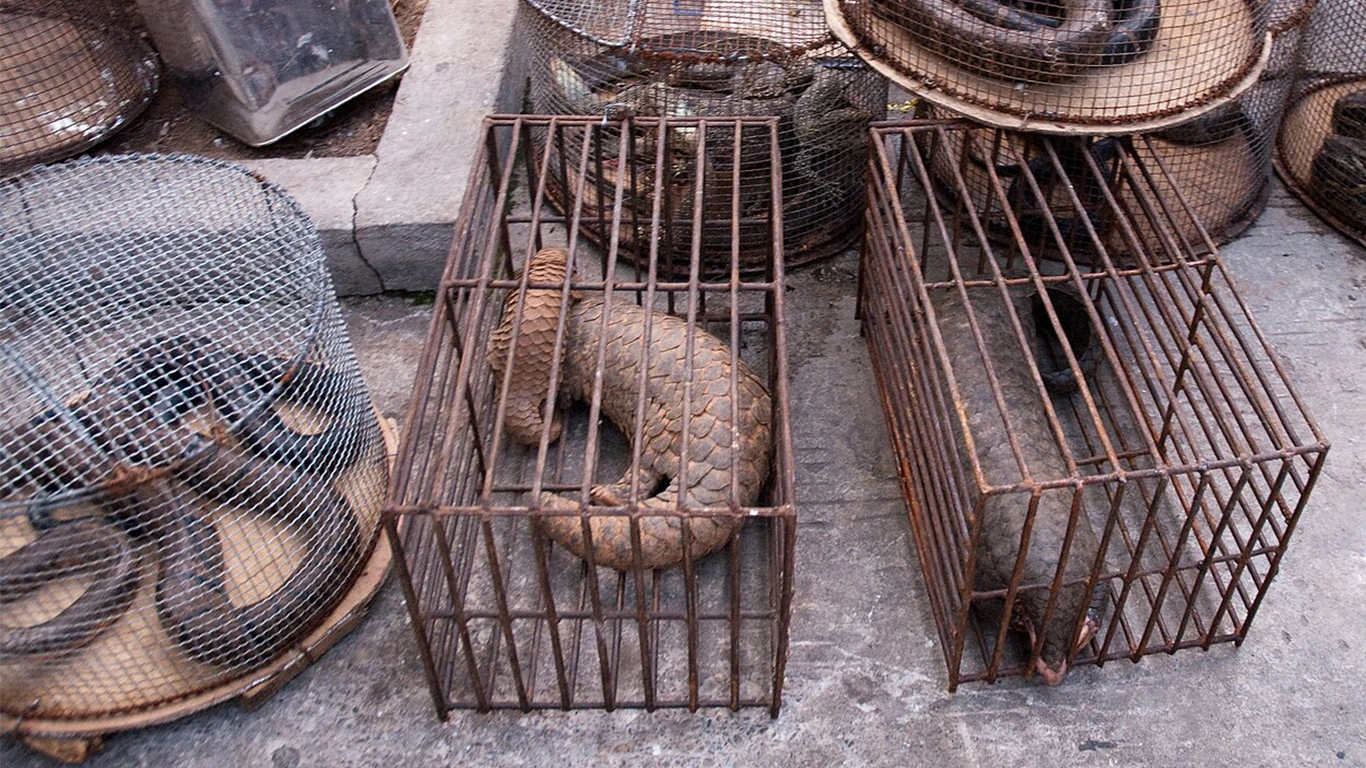
Every year, thousands of critically endangered species are ripped from the wild and slaughtered for their body parts. Pangolins, bears, tiger cubs, primates and countless other wild species suffer this gruesome fate. Other animals are shamefully abused and torn from their mothers’ sides as infants; terrified, bereft and enslaved as ‘pets.’ Almost no wild animal in Southeast Asia is safe. From the very moment they are born, every helpless creature lives with the threat of poaching hanging over its head. There is only one hope for these terrified, tortured animal victims: your support today, Friend. Because together, we have the power to save them. Sold like commodities, live and dead animals are advertised across social media. Pictured here: sun bear head and paws (left) and three Indian civet cubs ready to be slaughtered and sold (right). Credit: LCTW In Laos, a key animal trafficking hub, our partner fights on the frontlines of this crisis. The small team at Lao Conservation Trust for Wildlife (LCTW) works day and night, rescuing animals from bushmeat markets, intercepting wildlife traffickers and racing against the clock to save lives that are constantly under threat. It works closely with local law enforcement to bring perpetrators to justice. LCTW has successfully rehabilitated and released over 400 animals into the natural, protected forest surrounding its sanctuary – including monkeys, jackals and critically endangered Sunda pangolins – and today has 250 animals in its care. But now, the threat has reached its doorstep. Poachers have started targeting the animals in the forest surrounding the sanctuary, and without vital equipment, our team is struggling to protect them. In Laos, animals are sold for their skins or as pets: pictured here is a marbled cat in an open market, waiting to be skinned or sold. Credit: LCTW When poached, these animals face imprisonment, torture and probable death – but there IS something we can do to stop this. Today, you can help keep them safe. The best way to help protect Laos’ wildlife from poachers is with high-tech drones. A drone will enable LCTW to patrol large areas of forest effectively and discreetly, identifying suspicious activity before poachers can strike. This will ensure that criminals are quickly identified, intercepted and handed over to law enforcement for punishment. A drone will help make the difference between allowing a poacher to take a life, or putting an end to their operation – and each day without one puts the animals at risk. Pangolin meat is considered a delicacy in many Asian cultures. Here, a live pangolin is about to be butchered alive at a Chinese restaurant in Vientiane, Laos. Credit: Agent C Wildlife Initiative Prevention is ALWAYS better than rescue. In markets across Laos, you can witness the horror of tiny civet kittens in cages, beheaded bears, animal skins hung next to their live, caged counterparts, and pangolins reduced to just their scales. We cannot let this go unchallenged – and an advanced drone is a crucial weapon in the fight against poachers. If we can raise $7,000 (£5,200), we can equip the LCTW team with this vital tool. One of thousands of live pangolins sold at Dongmakkhay market, Vientiane. Credit: Agent C Wildlife Initiative This is an awful lot for a sanctuary that is already stretched to its limits, yet still continues to save every life it can. Together, I know we can help them protect precious wildlife, ensuring animals never experience the horrific suffering that awaits them if they are caught by poachers. So please: I am calling on you to donate as much as you can today. The animals will be endlessly grateful for your compassion.
Cheetah cubs destined for illegal trade in exotic pets rescued in Somaliland
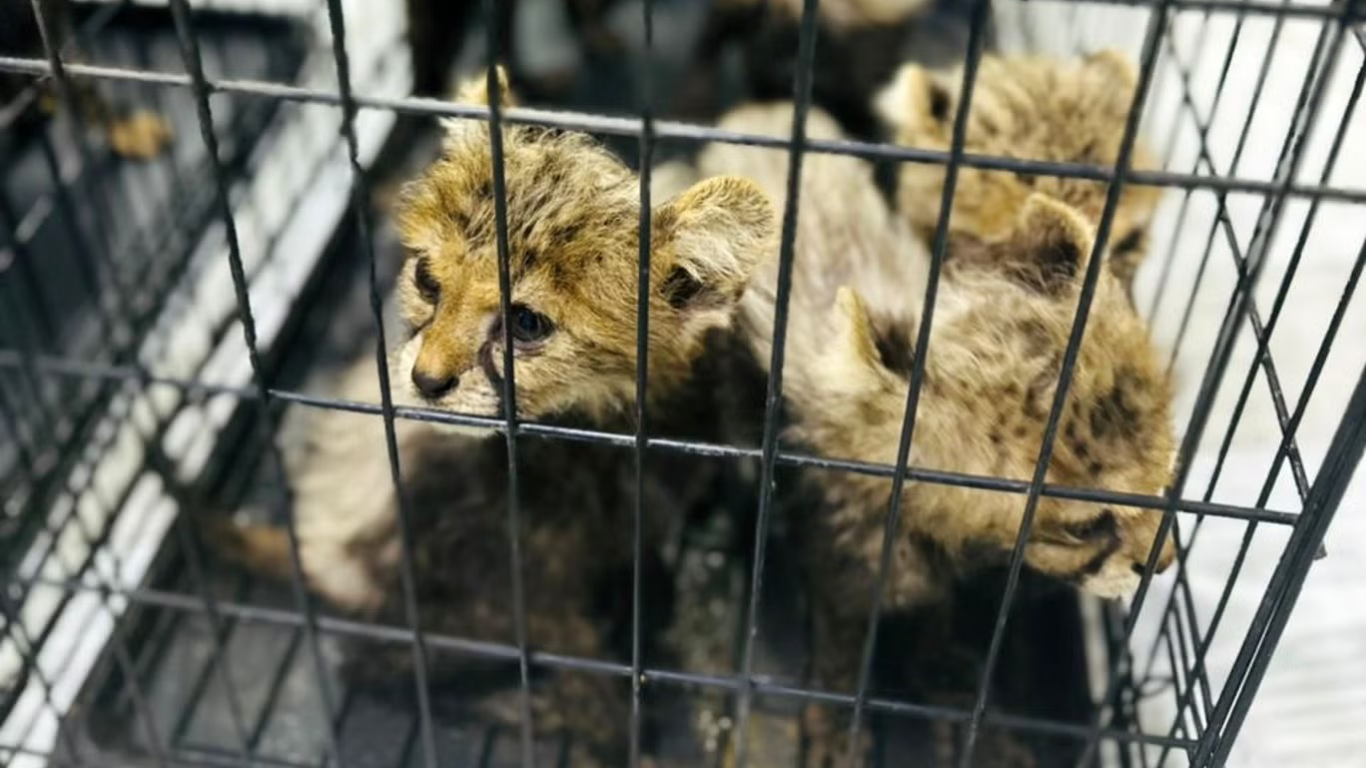
Article written by The Associated Press Originally published by Seattle Times, 2 October 2025 Eleven cheetah cubs were rescued from illegal trade in Somaliland in what a conservationist said was “one of the largest confiscations of the species.” NAIROBI, Kenya (AP) — Eleven cheetah cubs were rescued from illegal trade in Somaliland in what a conservationist described on Thursday as “one of the largest confiscations of the species.” The cubs were packed in bags that resembled sacks of potatoes and were being transported in a small dhow off the Somaliland coast at Berbera when the local coast guard intercepted them on Sunday. Two locals and three Yemenis were arrested during the rescue operation, and the cheetahs were taken to a rescue center owned by the Cheetah Conservation Fund, or CCF. Somaliland, a breakaway region of Somalia, is a major transit hub for the illegal wildlife trade. Hundreds of cheetahs and leopards from the Horn of Africa have been transported to Gulf countries through the Gulf of Aden. Credit: MoECC via AP Possession of wildlife is illegal in Somaliland, and police often crack down on suspected traders. In August, local authorities arrested two people and rescued another 10 cheetah cubs that were destined for the Gulf. CCF founder Laurie Marker said the rescued cubs were “very malnourished” and were being reintroduced to food slowly, starting with fluids. “The cubs were in very poor condition,” she said. “One died only a few hours after arriving at CCF’s centre, although in ICU and critical care administered. Another died the next day under same conditions. Two others are in critical care, one of which is in very bad state. The other seven are responding.” Credit: MoECC via AP Marker, whose center now has 128 rescued cheetahs, said the illegal trade in cheetahs was driving the species into extinction. “Cheetahs are not pets. They are wild animals, top predators and play an important role in the ecosystem,” she said. “Wildlife belongs in the wild. Please help us stop the illegal wildlife pet trade in cheetahs and other wildlife species being illegally traded around the world.” The rescue of cubs is “critical” in the fight to save the cheetah from extinction, Marker said, adding: “With fewer than 7,000 cheetahs left in the wild, we can’t afford to lose a single one to the illegal pet trade.” Conservationists in the Horn of Africa have previously expressed concern over the rise in demand for exotic pets in Gulf countries and the resulting illegal trade affecting ecosystems in Horn of Africa nations.
Man jailed after killing Spotted Eagle Owl in Cape Town, South Africa
Article written by Angelica Rhoda Originally published by Cape{town}Etc, 7 October 2025 A Cape court found 38-year-old Gustigu Mthini guilty of four charges after he beat a protected Spotted Eagle Owl on the Sea Point Promenade on 16 February 2025. The attack was filmed and shocked people who were nearby. The Cape of Good Hope SPCA said it ‘welcomes the successful conviction and sentencing.’ The footage, witness reports and the SPCA’s investigation led police to arrest Mthini on 22 February 2025. He remained in custody until his trial. A postmortem found that the owl had multiple fractures and later died from its injuries. Credit: Cape of Good Hope SPCA / capespca.co.za The court found Mthini: guilty of animal cruelty two counts of killing a protected species an immigration offence The Magistrate imposed the following sentences: Count 1-Animals Protection Act: R2000 fine or 2 months’ imprisonment, wholly suspended for 5 years Count 2-Nature Conservation Ordinance: R3000 fine or 3 months’ imprisonment, wholly suspended for 5 years Count 3-Nature Conservation Ordinance: R3000 fine or 3 months’ imprisonment, wholly suspended for 5 years Count 5-Immigration Act: R2000 fine or 2 months’ imprisonment, of which R1,000 or 1 month is suspended for 5 years The magistrate further ordered that Mr Mthini be deported back to Mozambique upon completion of his one-month imprisonment sentence under count 5. Count 4 was withdrawn under CoCT By-Law. The court ordered one month of immediate custody for the immigration count and that Mthini be deported to Mozambique after he serves that sentence. Chief Inspector Jaco Pieterse, who led the case for the SPCA, said: ‘This is a victory for the animals we serve and protect.’ (Cape of Good Hope SPCA) He thanked the Sea Point CID and members of the public who shared footage and information that helped the investigation. The SPCA asked people to report cruelty if they see it and to help protect the city’s wild animals. The organisation said the outcome sends a clear message that those who harm animals will be held to account.
Frail Asian elephant is permanently scarred after 30 years of hard labor
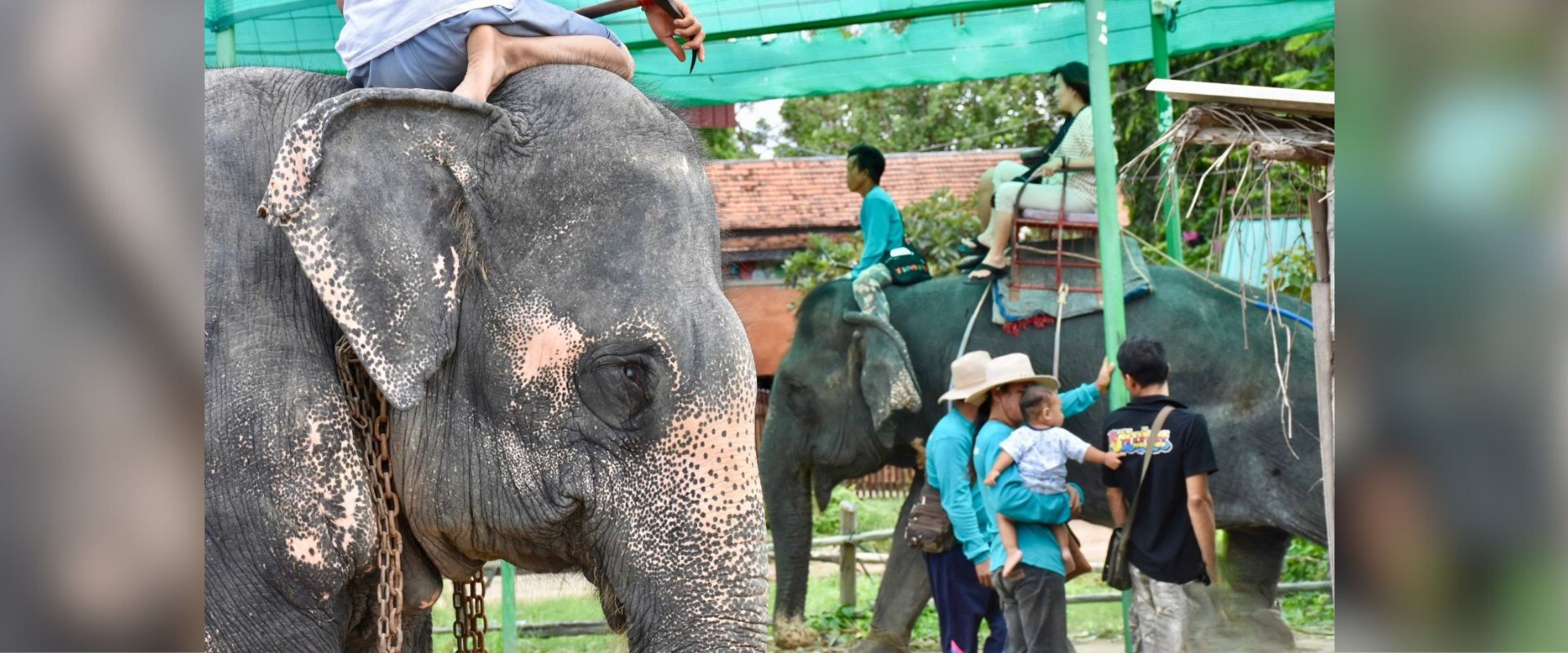
A few months ago, we told you the story of Boon Dee – a Thai elephant forced into 30 years of back-breaking labor in the tourist camps of Pattaya. Day after excruciating day, this poor animal carted endless loads of tourists on her aching back. By the time she was rescued by our partner, Wildlife Friends Foundation Thailand (WFFT), Boon Dee was emaciated and nearly blind in her right eye, and her skin was marred by deep, painful abscesses. Our dream for Boon Dee is a beautiful oasis to call her own. While some funds have been raised, we’re shy of our goal – and that’s why we are reaching out to you today. Boon Dee survived 30 years of horrific abuse in Thailand. With your help, we will give her the happy final years she deserves. For 30 years, Boon Dee was chained up and abused in Thailand. She has been left nearly blind in one eye. Credit: WFFT An estimated 3,000 Asian elephants – much smaller than their African counterparts – live like prisoners in entertainment venues across Thailand. Through desperation, ignorance or simple indifference, people use these animals as little more than money-making machines, usually keeping them chained up, and controlling them through regular, brutal beatings. Elephants are forced to work long hours in debilitating heat without rest. Constant, agonizing pressure from carrying tourists on their backs leads to permanent, excruciating damage to their spines. Some elephants suffer this way for decades – like Boon Dee. Until she was saved, this tragic animal had not experienced kindness in nearly 30 years. As she was led to freedom, Boon Dee resisted with all her might, no doubt expecting even more excruciating abuse. Elephants used in tourist camps, like Boon Dee, are chained, beaten and overworked, leaving them permanently injured and in agony. Credit: WFFT Boon Dee took her first steps to freedom with great fear and anxiety – but then something miraculous happened. During her first walk in her new sanctuary, she approached another rescued elephant named Gan Da. The team discovered they had worked together at a riding camp in Chiang Rai many years before, and Boon Dee immediately recognized her old friend. Help give Boon Dee the retirement she dreams of – after 30 years of hard labor. In her new home, Boon Dee discovered something that she never had the chance to find out before – she loves to swim! But accessing the water is a terrifying prospect for Boon Dee. Sadly, due to years of trauma, Boon Dee is afraid of the other elephants, even her old friend Gan Da. As naturally social creatures, this fear underscores her deep physical and psychological scars. After 30 years of torment, we dream of giving Boon Dee the retirement she deserves. Will you help us? Credit: WFFT While this sweet girl gets two lovely, long “walks” a day with her carers, there is one thing that would make her life complete: a large enclosure with permanent access to her very own lake, so she can swim whenever her heart desires. Nothing brings this sweet elephant more joy than her daily swims, and with your help, we can build her the retirement home of her dreams. We know you will agree, that after decades of heartache and abuse, Boon Dee deserves every bit of happiness she can get. Please, give as generously as you can today, and help give Boon Dee the happy retirement she deserves.
Angus, an orphaned otter, was found crying for his mother
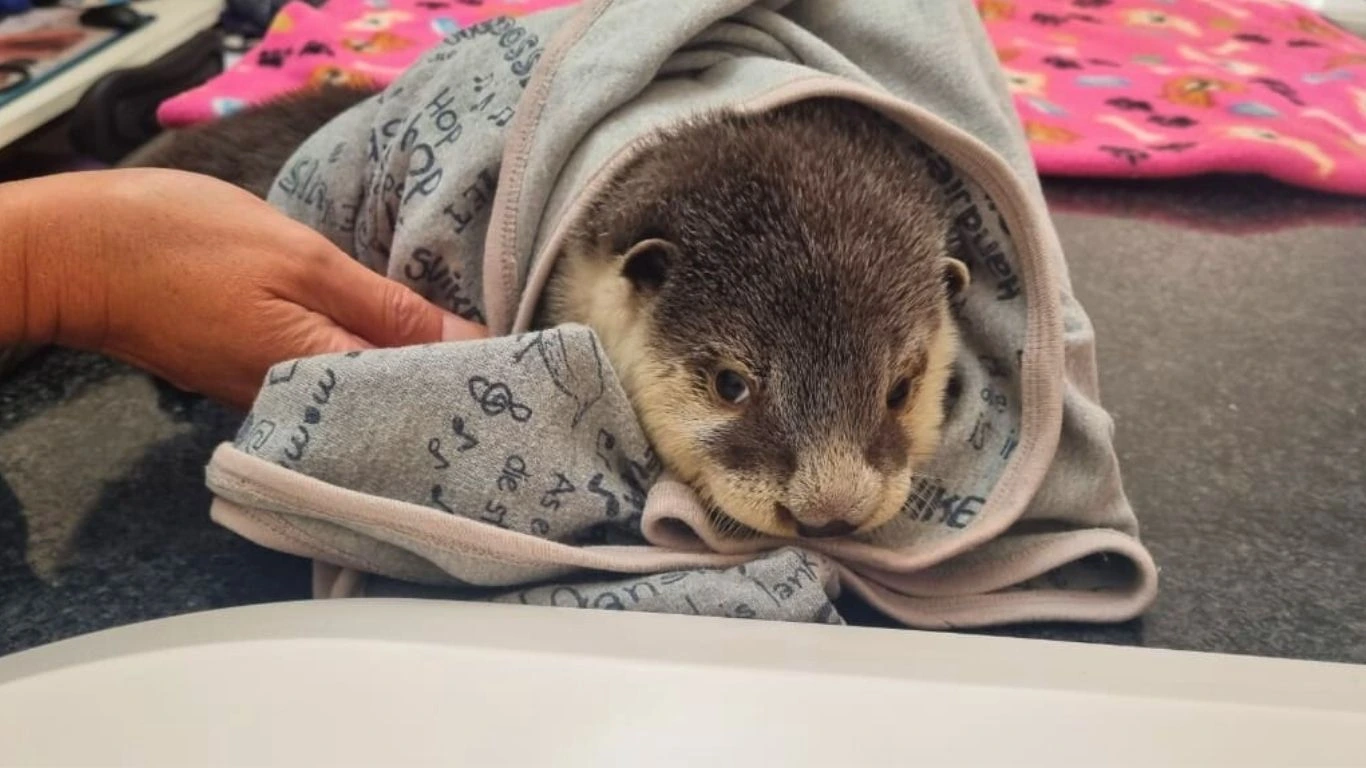
When otter pup Angus was just one month old, he was found terrified, emaciated and alone on the side of the road in Limpopo, South Africa, desperately crying for his mother and snapping in fear at those trying to rescue him. No one knows what happened to Angus’s mother, but it is likely she was struck by a car and left for dead, or cruelly killed by poachers. Angus, found terrified and emaciated, is now safe in the care of our partner, but his road to recovery has only just begun. Credit: Umoya Khulula Baby otter Angus is bereft without his mother. But with your help, we can give this precious orphaned pup a second chance. Angus was rushed to our partner, the Umoya Khulula Wildlife Center, which specializes in the rescue and rehabilitation of sick, injured and orphaned wildlife. The infant weighed just two pounds (one kilogram) – the same as a small bag of rice. In the wild, baby otters like Angus stay with their mothers for around a year, learning to swim, hunt and survive on their own. The animals form strong family bonds, and otter pups have even been seen holding hands with their mothers while floating or resting, just to make sure they stay close at all times. Angus does not have this chance. He is alone, with no mother to guide him, and no paw to hold. Just a few days into rehab, Angus was already splashing playfully in his pool. With continued support from animal lovers like you, he will have the future he deserves. Credit: Umoya Khulula After losing his mother, baby Angus needs your help to survive. Can he count on you? Umoya Khulula is doing everything it can to recreate the nurturing environment Angus would have had in the wild, feeding him a natural diet of fish, crabs and clams, and teaching him to swim in its dedicated baby enclosure. But our partner has so many injured and orphaned animals to care for, and to keep giving Angus everything he needs to develop and grow, we need your help. If we can raise $3,500 (around £2,500), we can help provide specialized care, nutrition, shelter and treatment for this precious otter pup who has already lost so much in his short life. Will you help him today? African clawless otters are under increasing threat. We must give baby Angus the best possible chance at survival. Baby otters are poached from the wild and sold into the exotic pet trade. To capture the infants, their protective parents are often electrocuted or shot to death. Credit: EuroNews/Reuters Around the world, otters face mounting threats to their survival. Urbanization, agricultural development and pollution are destroying their habitats, while in countries like South Africa, they are slaughtered for their skin and body parts, to be used in traditional ‘medicine’ and to make clothes, hats and even musical instruments. Because so many people find them adorable, they are also increasingly snatched from the wild to feed the exotic pet trade. Horrifically, protective parents may be shot or electrocuted just so poachers can easily snatch the babies. They are then bred in inhumane conditions, sold to the highest bidder, and forced to live life in captivity, ‘performing’ for likes on social media or being handled by streams of visitors in Asian ‘pet cafes.’ This is how Angus should be living – wild and free. With your help, we can get him there. Credit: Liaan Lategan Angus is lucky to have survived – and to have escaped a fate of lifelong imprisonment. But the loss of his mother means his survival is in the hands of animal-lovers like you. Together, we can give him the expert care he needs to develop and grow, so he may one day have a family of his own. Please, donate today, and help give Angus the happy future he deserves.
High hopes that new Lappet-faced vulture chick can help rebuild species numbers
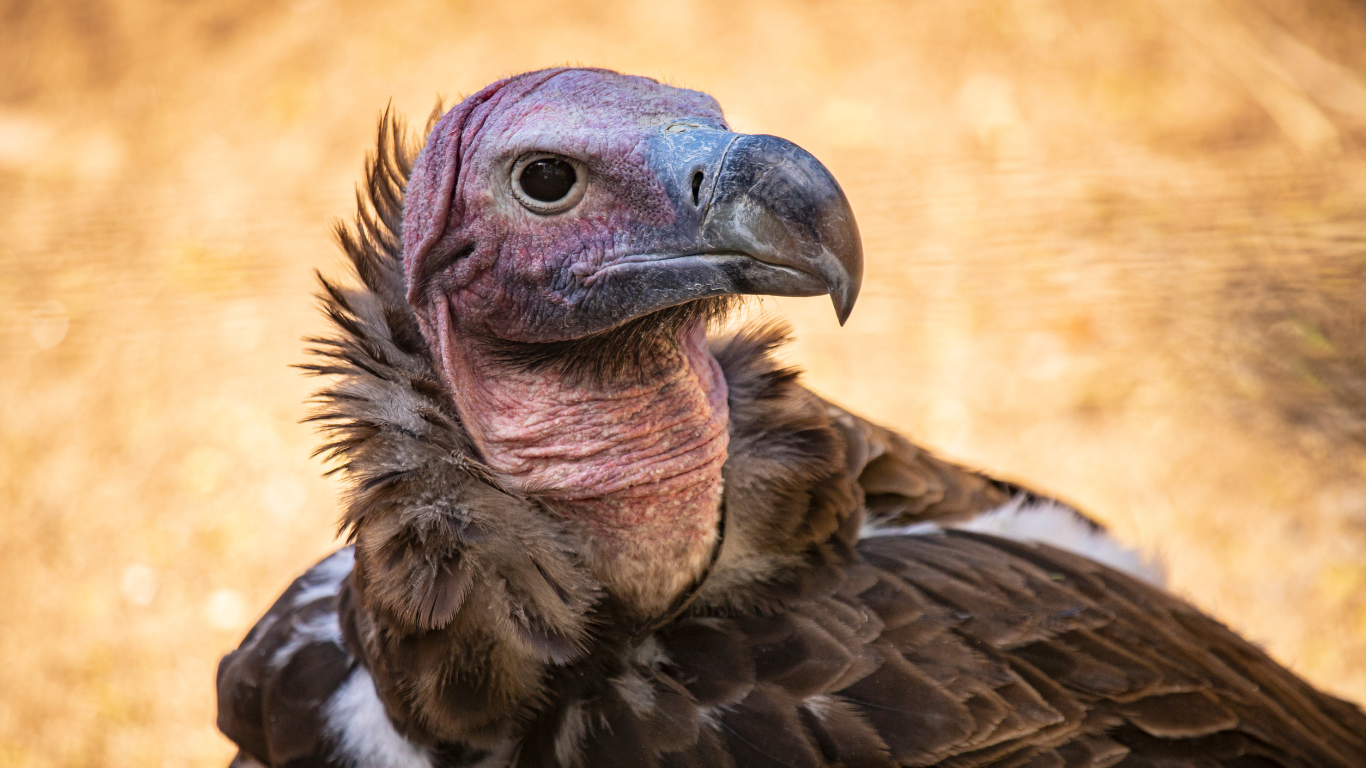
Article written by Morgan Van De Rede Originally published by Eyewitness News, 29 September 2025 On Heritage Day, a new chick hatched for the first time in four years. A newly hatched Lappet-faced vulture is now expected to play a critical role in rebuilding population numbers of the critically endangered species. On Heritage Day, a new chick hatched for the first time in four years. The chick hatched at Vulpro’s captive breeding facility based at Shamwari Private Game Reserve in the Eastern Cape, which currently has three breeding pairs. It’s the first of the species that has been specifically bred for conservation purposes. Vulpro CEO, Kerri Wolter, said they would like to reach a minimum of 10 breeding pairs. “They’ve produced a fertile egg and this chick has hatched, which is phenomenal. They’re a very difficult species to breed. Globally, there’s only a handful that are breeding and even when they do start breeding, it’s not to say that every year they’re going to breed.” Image for illustrative purposes by cws_design from Getty Images