


Forty-three rescued animals in Ukraine need heating fuel now
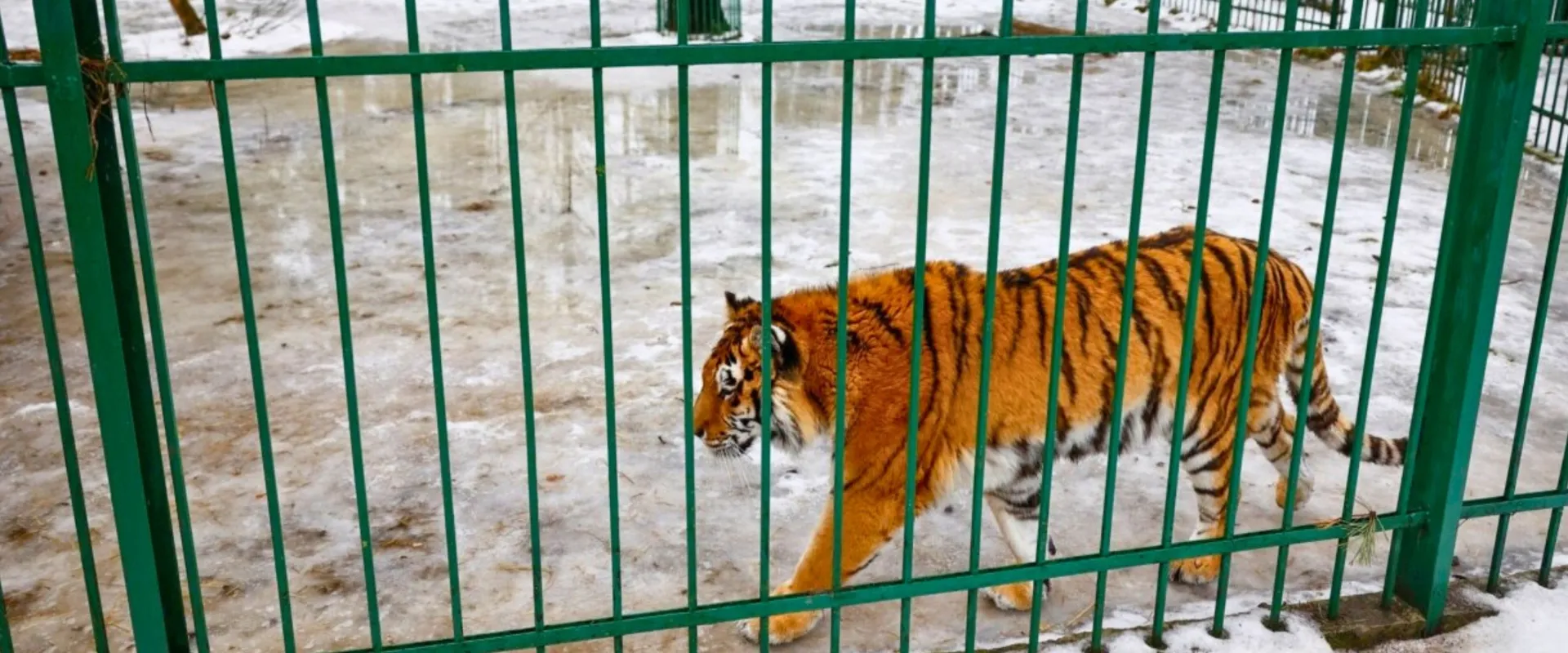
Please help buy heating fuel to get 43 rescued wild animals through winter in war-torn Ukraine. Forty-three rescued wild animals in Ukraine, including lions, lynxes, wolves and tigers, are enduring a winter they were never designed for and suffering as a result. The animals need 45 tons of solid fuel pellets to get them through the harsh winter. These animals have survived war, abandonment and terrible neglect. Now we must secure the fuel that will keep their shelters warm through snow and ice. Some of the animals at our partner, the Wild Animal Rescue Centre (WARC) near Kyiv, were abandoned when their owners fled their homes after missile attacks. Others were rescued from a zoo destroyed by Russian bombing. Some arrived so sick or injured that they could not travel onwards to permanent sanctuaries. Winter is coming, and we refuse to repeat last year when this wolf and dozens of other rescued wildlife went without heat and water in freezing conditions. Help us prepare now. Source: WARC Russian attacks have made life hell for these animals. We have been supporting WARC from the first days of the war. We have helped move rescued lions from Ukraine to South Africa and provided essential supplies and enlarged enclosures to give the animals more space. Now the animals need solid fuel pellets because electrical power is being targeted by the Russian military and driving up costs for the generator our supporters provided them with last winter. Our partner needs the pellets to heat the animals’ shelters. Please donate to Animal Survival International today and help buy solid fuel pellets lions, tigers and lynxes need to keep warm. For an animal recovering from injury or struggling to regain its strength, a warm shelter is an essential part of survival. Rescue from war brought these animals to safety. We must help keep them safe. Last winter showed us how quickly that safety can be threatened. Attacks on Ukraine’s electricity supply left our partner without power or water. Water froze in the pipes. The animals suffered bitter cold while the centre struggled to keep their shelters warm. During severe winter weather, temperatures around Kyiv can fall towards −20°C (−4°F). For animals already weakened by illness or injury, prolonged exposure to that cold could be fatal. Last winter was so harsh that even fresh water didn’t stay liquid for long. Within an hour of filling the animals’ bowls, they’d freeze over. Source: WARC The time to provide their heating fuel is now. Your donation can help give a recovering tiger a warm place to rest. It can help protect rescued lions from the bitter cold. It can help ensure that animals who have already endured so much do not face another winter without adequate heating. Please give whatever you can today.
Sparky is home. Please help the next pangolin.
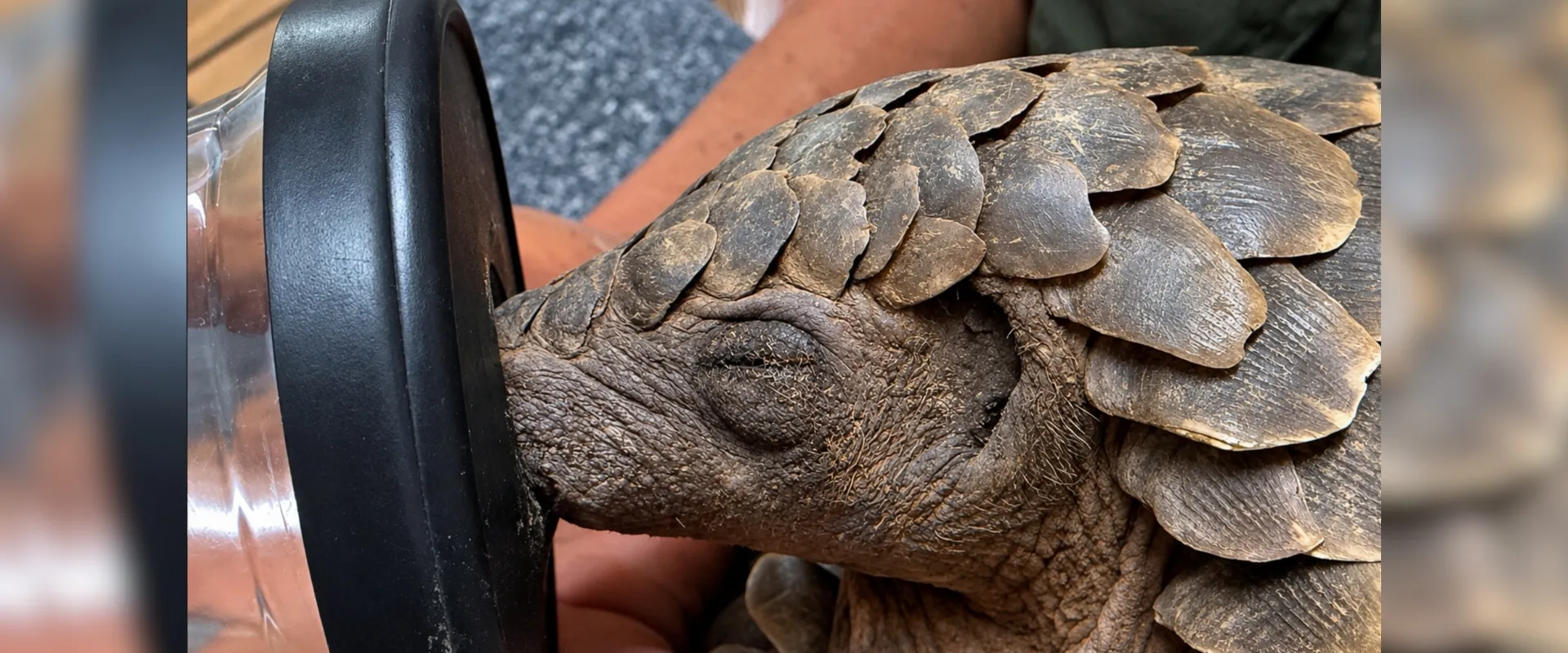
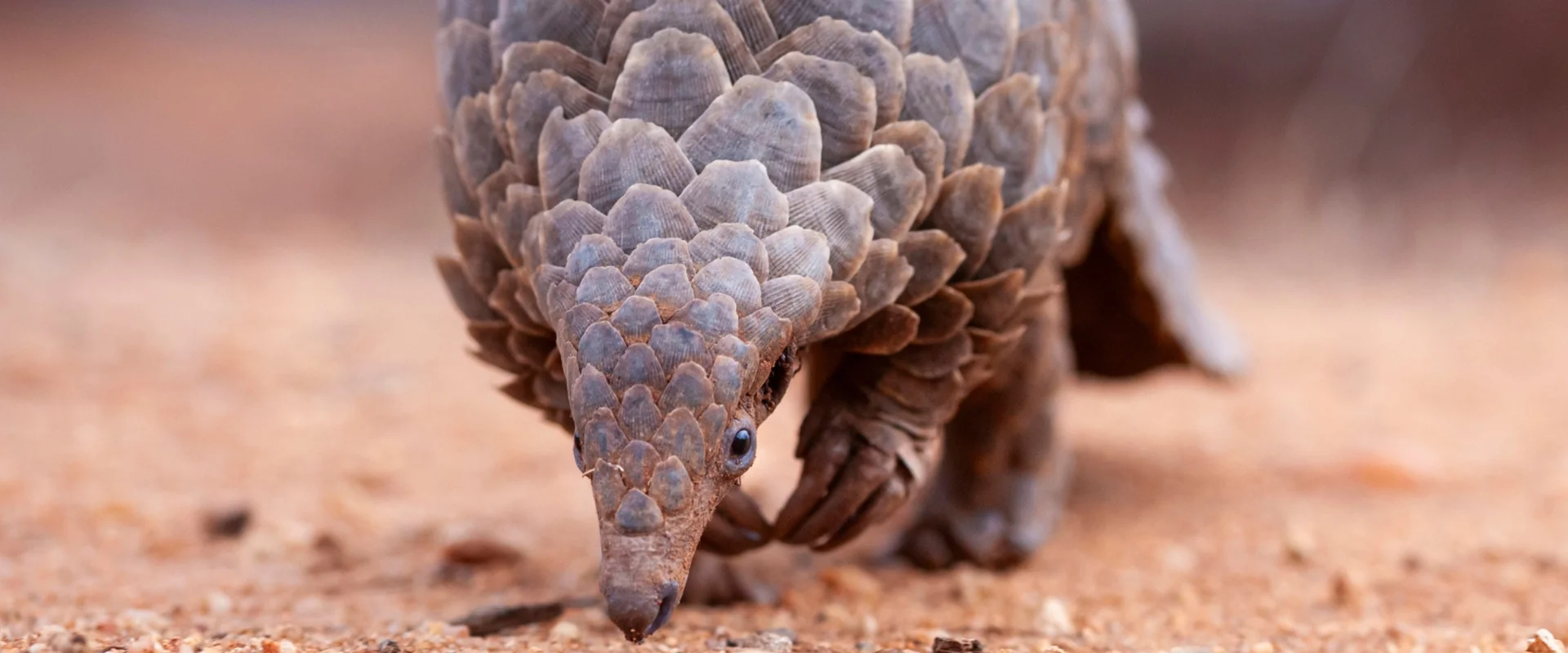
Somewhere in Namibia tonight, a pangolin will be pulled out of a sack. It will be dehydrated, underweight and in shock. It will be alive, which is more than most of them manage. And then the difficult part begins. Pangolins are being stolen from the wild, trafficked for the illegal trade and pushed towards extinction. For those that survive, the ordeal can leave them desperately injured and fighting for their lives. They need our help. Pangolins are the most trafficked mammals in the world, targeted for their scales and meat. Pangolins are shy nocturnal creatures covered in protective scales and equipped with long, sticky tongues for eating ants and termites. When threatened, they curl into a tight ball and because they have no vocal cords, they suffer in silence. All eight species are threatened with extinction, ranging from vulnerable to critically endangered. Illegal hunting and trafficking for their scales and meat are driving their decline. After surviving for millions of years, humans are now their greatest threat. We cannot stand by and watch them disappear. This is how pangolins are transported wrapped in plastic. They’re disappearing fast, and without action, there won’t be any left. Source: PCRF To give the species a chance to survive, we have to fight for every single pangolin life. But rescuing a pangolin is only the beginning of a long battle to get them ready to return to the wild. In Namibia, our partner, the Pangolin Conservation and Research Foundation (PCRF), urgently needs a dedicated recovery room where rescued pangolins can receive specialist care. It will cost $15,000 (£11,300) to build and equip this life-saving space. Let me explain why it matters. In Namibia, the survival rate for rescued pangolins used to be around 40%. Six out of every ten animals saved from traffickers died anyway. Since 2023, that figure has risen above 90%. Nothing changed about the pangolins. What changed was what happened to them after the rescue: the right environment, constant monitoring and people who know what they are looking at. The most trafficked mammal in the world, often confiscated from smugglers by the crate load. Source: AP One pangolin’s fight to survive. When Sparky, a Temminck’s pangolin, was found, he was in terrible condition. He staggered when he tried to walk. He could not eat. He could not even use his tongue. This little pangolin had fluid around his heart and in his chest, a septic wound on his tail and partial sight loss in one eye. For weeks, he had to be sedated twice a day just to be fed by hand. He depended on his carers for every mouthful. Our partners refused to give up on him. After months of intensive treatment, his tongue began to work again. He could feed himself. He gained weight. And eventually he was strong enough to return to the bush – and the wild life he almost lost. Sparky made it home. Please help us give other rescued pangolins the same chance. From the ground in Namibia – the future site of the PCRF base camp that will house the recovery room. Source: PCRF Pangolins are exceptionally sensitive animals. Recovering from severe injuries and the psychological effects of trafficking can take months of specialist care and rehabilitation. They need a quiet, sheltered environment where they can rest, heal and be carefully monitored without unnecessary noise and disturbance. Since 2020, PCRF has been rescuing and rehabilitating pangolins – using borrowed rooms, temporary enclosures and facilities at other enclosures. Their dedication has helped give pangolins like Sparky a second chance, but they desperately need a permanent space. We need to raise $15,000 (£11,300) to build and equip an essential pangolin recovery room in Namibia. Will you help us reach our goal? Every donation brings us one step closer to creating a secure space where rescued and injured pangolins can heal, regain their strength and return to protected wild areas where they belong. Sparky made it home after months of specialist care. Please help us give the next rescued pangolin in Namibia that same chance by donating generously today.
Weak prosecution leaves Southeast Asia’s tigers vulnerable to trafficking: Report
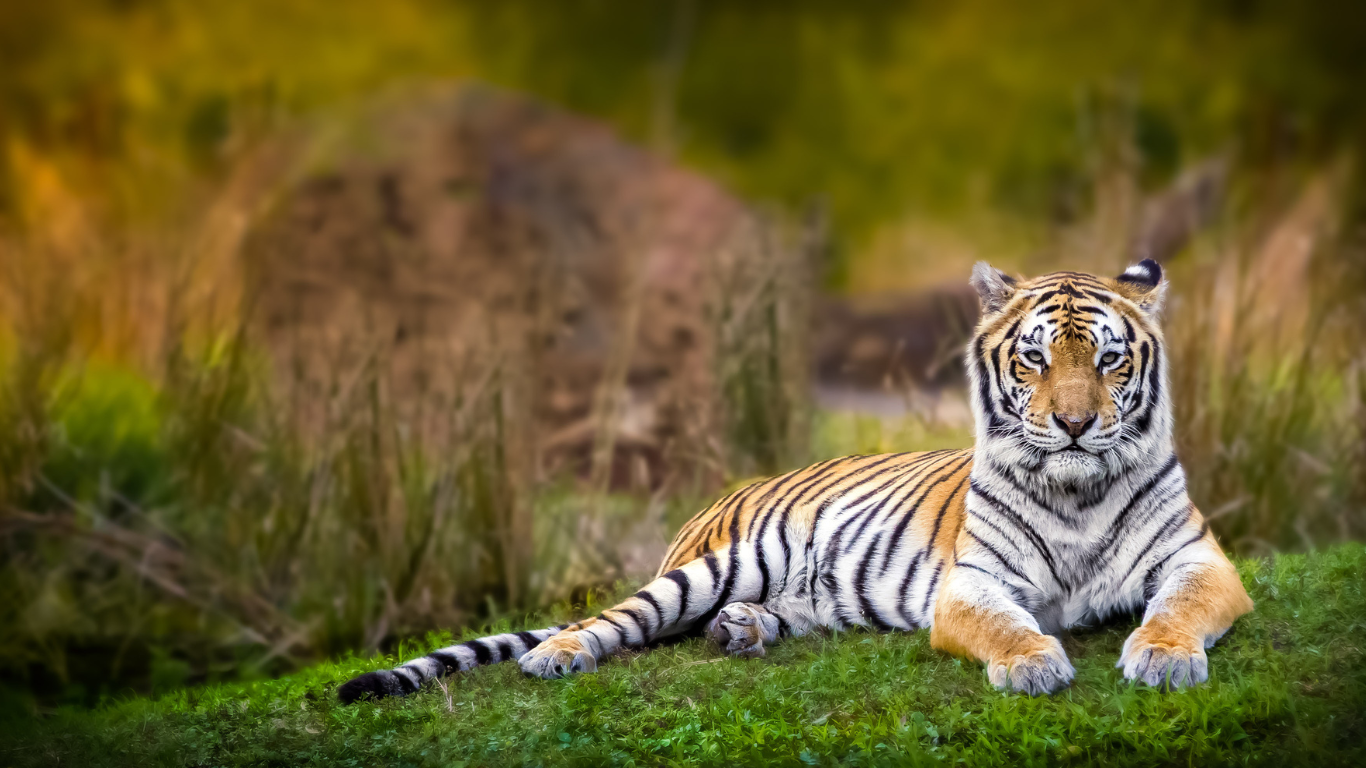
Article written by Naina Rao Originally published by Mongabay, 5 October 2026 Fewer than half of tiger poaching and trafficking arrests in Southeast Asia result in convictions or legal penalties, providing little deterrent to an illegal black market that is driving wild tigers towards extinction, reports contributor Sean Mowbray for Mongabay. Researchers analyzed 259 tiger seizure cases recorded between 2019 and 2024 across seven range countries: Indonesia, Vietnam, Thailand, Malaysia, Cambodia, Myanmar and Laos. Of those 259 cases, only 110 resulted in prison sentences or fines, according to the report published by Canadian conservation think tank the GuArdean Centre for Conservation Research, wildlife trade watchdog TRAFFIC, and WWF International. Another 35 cases ended in suspended sentences, while 63 arrests lacked a clear outcome and 48 had no available public data. The report reveals that law enforcement efforts overwhelmingly target low and mid-level poachers, couriers and local traders, rather than the high-level organizers financing transnational syndicates. “We’re talking about serious organized crime,” Heather Sohl, tiger trade lead at WWF and report co-author, told Mongabay. “These are criminal networks that are involved in other organized crime, such as human trafficking and money laundering.” Sohl added that arrests alone are insufficient, “Investigation and case-building is needed to build support for strong prosecutions, and only by looking across the whole criminal justice response can we look to really disrupt these wildlife trafficking networks.” Vietnam and Indonesia logged the highest conviction numbers, with 51 cases in each country carrying jail time or fines. However, Vietnam also accounted for 33 of the region’s 35 suspended sentences. Thailand recorded 36 arrests and Malaysia 35, but these yielded just five and nine imprisonments respectively. Cambodia and Laos documented just one successful prosecution each, while Myanmar reported none. “It’s really difficult to develop a clear picture of what’s happening in some of the other countries because there’s just no transparency with regards to prosecutions,” report lead author Rachel Boratto, executive director of the GuArdean Centre for Conservation Research, told Mongabay. Boratto said that without follow-through, wildlife laws become “just laws on paper.” For Vincent Nijman, a wildlife trade researcher and director of U.K.-based EcoVerde Global Consulting, who wasn’t involved in the analysis, the report gives a great overview of illegal wildlife trade, but has some limitations. “The rate of successful prosecution, while high compared to other protected wildlife, remains rather low,” he told Mongabay by email. He acknowledged that limited data is a “major barrier” to understanding the full picture. Chas Barnes, counter-trafficking lead at wildcat conservation nonprofit Panthera, said that failing to prosecute kingpins undermines overall conservation goals. “Weak law enforcement or weak punishment undermines other important [conservation] interventions,” Barnes stated. “Targeting the low- and medium-level offenders isn’t always the way to go for the maximum disruption”.
Baby elephant rescued by fishermen who saw trunk in flooded river
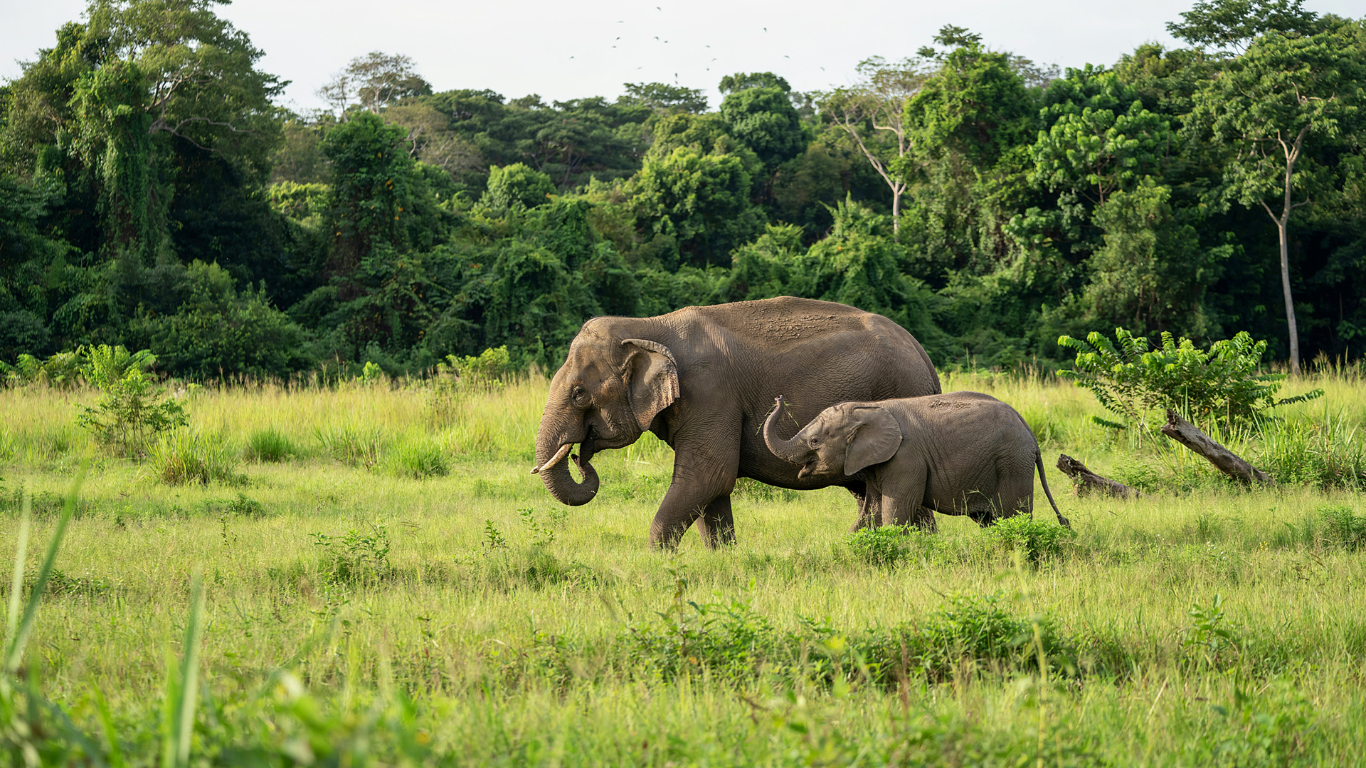
Article written by Lily Shanagher Originally published by The Telegraph, 22 September 2026 Five Bengali men travelled nearly three miles by boat to reach three-day-old calf after it was swept away A baby elephant has been rescued from drowning after fishermen saw its trunk poking out of the water. The calf was separated from its herd while trying to cross the Teesta River in West Bengal and was swept away in the current. Members of the North Bengal Fishermen’s Forum saw the calf and travelled nearly three miles by boat from Kranti-Punjab Dam to reach it. Footage showed the men – named Mithu Das, Rajesh Das, Biswanath Das, Gopal Das and Bablu Das – rowing in a small wooden boat towards the calf’s trunk, which partially emerged from the water. They approached the calf and pulled it out of the water before laying it on its side, exhausted, in the boat. The men then released the elephant, which was found to be healthy, out onto dry land. Fishermen rescued the calf and put it onto their boat before releasing it on land It was later seen walking towards what appeared to be its mother. Both mother and calf remain under forest department supervision. “A three-or-four-day-old elephant calf was separated from its mother near Gajaldoba barrage,” Mudit Kumar, a divisional forest officer of Baikanthapur, told The Indian Express. “We are not sure but they might have been trying to cross the river. While the mother was upstream in Gajaldoba, the calf was washed away 4km (2 and a half miles) downstream.” Mr Kumar said the rescuers were initially worried that prolonged human touch would cause the mother to reject the elephant but were relieved to see she nursed her calf and the pair reunited. The Baikanthapur forest division is known to have a large population of Asian elephants, leopards and birds. The calf, along with its mother, is under forest department supervision In late August, a herd of elephants were rescued after being swept away by a strong river current in the Uttar Pradesh, near the Nepal border. The herd of five elephants – comprising three adults and two calves – were being swept towards a barrage in the Kaudiyala river when range officers from the Katarniaghat wildlife sanctuary came to their aid, Ramesh Pandey, of the Indian Forest Service, said. The team closed a barrage gate to slow the current, allowing the adults to guide the calves to safety. The herd exited the river and disappeared into the forest.
Orphaned rhino calf found close to death
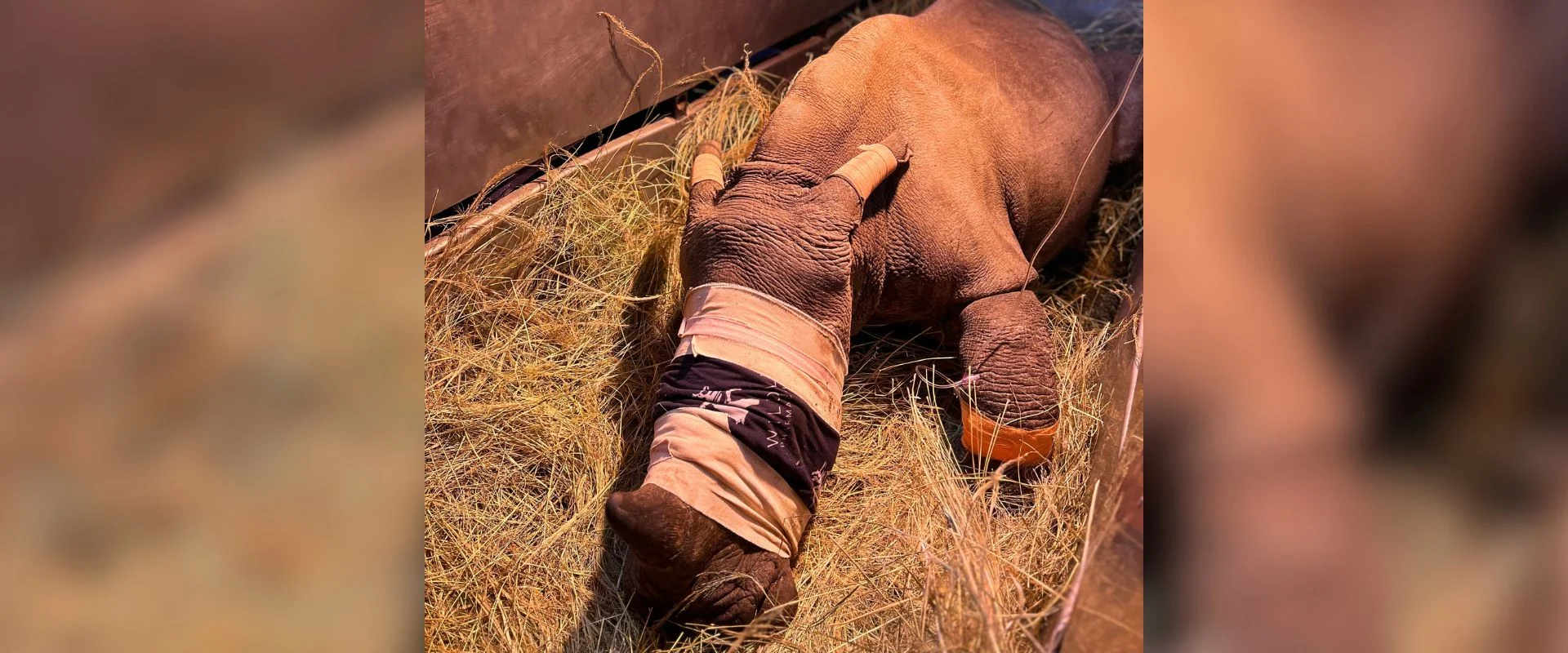
At about ten months old, Lihawu, a white rhino, spent weeks alone in the South African bush after poachers killed his mother. By the time he was rescued, he was dangerously dehydrated, hypothermic and so weak that he could not even lift his head. He is now safe in the care of our partner, Care for Wild Rhino Sanctuary (CFW), but he faces months of specialized nutrition, veterinary care and rehabilitation to recover. When Lihawu was found, he was severely dehydrated, hypothermic and weak. Treatment began right away, giving him the best chance to recover. Source: CFW Lihawu is one small survivor of a much larger crisis. In 2025, almost one rhino was killed every day in South Africa. Behind every statistic is a precious, individual animal that lost its life – and in many cases, a calf left vulnerable and defenceless without its mother. For Lihawu, those weeks alone nearly cost him his life. When he arrived at CFW, the veterinary team began intensive stabilization immediately. Too weak to drink on his own, he was given tiny amounts of milk by syringe while the team worked to restore his hydration, temperature and strength. Slowly, he began to recover. His suckle reflex returned. He began drinking milk from a bottle. His temperature stabilized. His circulation improved. And around 48 hours after his rescue, he stood – then he drank two liters of milk from a bottle on his own. Too weak to drink alone, Lihawu was initially fed milk by syringe until his strength slowly returned and he could feed from a bottle. Source: CFW Lihawu is getting stronger. He has left intensive care and is beginning to explore his new environment, become more familiar with his caregivers and express the normal behaviours and instincts of a young rhino. But survival is only the beginning. Rhino rehabilitation is a long-term commitment. Lihawu needs the nutrition his growing body would have received from his mother – including regular milk feeds, supplementary feed such as lucerne and oats and nutritional supplements. He also requires dedicated caregivers monitoring his behaviour, appetite and energy levels around the clock, alongside ongoing veterinary care, blood tests and physical examinations to ensure he continues to develop normally and stay healthy. Lihawu’s care costs approximately $990 (£734) per month. Lihawu still has a long recovery journey ahead. Every bottle of milk, every check-up and every moment with his caregivers is a small step toward the life in the wild he deserves. Source: CFW We need to raise as much as possible to provide the support Lihawu needs for the next six months as he is helped to heal and grow stronger. Will you donate today to support this orphaned rhino calf through his recovery? We could not save Lihawu’s mother. We cannot undo what happened to her or reunite mother and child. But we can be there for young Lihawu. With your help today, we can give this young rhino the best possible chance of surviving, healing and, one day, returning to a protected area where he can live as a wild rhino. Please donate as generously as you can to Animal Survival International today to help give Lihawu his second chance.
New cat species discovered for first time in a century

Article written by Our Foreign Staff Outlet Originally published by The Telegraph, 17 September 2026 The tilcayo, which has light brown fur, was found in Bolivia’s Yungas forest A small wild cat that inhabits a forest in Bolivia has been identified as a new feline species. The animal, called tilcayo by local communities, is part of a group called tiger cats – small, spotted wild cats native to Central and South America. It is the first time in more than a century that a previously unknown living feline species has been formally named. The tilcayo was found in Bolivia’s Yungas forest, a mountainous region of low-level cloud and high humidity. It measures around 46cm (18in) long and weighs about 1.4kg (3lb), making it smaller than the average domestic cat. Researchers used genetic data to confirm that the cat was a new species, giving it the scientific name Leopardus tilcayo. Paola Nogales-Ascarrunz, one of the authors of a study into the new species published on Thursday, said: “Its fur is light brown, with irregularly shaped rosettes across its body.” Little is known about the cat’s biology and lifestyle. Remains of small rodents in faecal samples suggested that they might form part of its diet and the feline could be more active at night, Ms Nogales-Ascarrunz said. Paola Nogales-Ascarrunz, who led the research, with a tilcayo at a refuge in the Yundas region Credit: Reuters/Fernando Faciole Tiger cats are described as cryptic species because they cannot easily be distinguished by appearance, according to Jonas Lescroart, a University of Antwerp biologist and co-lead author of the study. They were previously considered a single species before genetic studies suggested the existence of several different species. Referring to the new discovery, Mr Lescroart said: “Our information at this moment is limited to the two live individuals that we examined and a small number of camera-trap records.” One of the cats examined is a 10-year-old male that now lives in Bolivia’s Senda Verde Wildlife Sanctuary after being kept by a local family in their home. Ms Nogales-Ascarrunz said the cat drew interest because “its characteristics did not match the descriptions, most of them based on Brazilian cats”. This led them to look closer at which tiger cats species inhabited Bolivia. Her team analysed DNA from 38 cats sampled across several South American countries, including eight museum specimens. The study found that tiger cats were five genetically distinct species. “We never expected this Bolivian tiger cat to be a separate species, and no one had ever proposed it as a different animal, sub-species or otherwise,” Mr Lescroart said. Genetic analysis suggested that the tilcayo lineage separated from other tiger cats about 1.4m years ago. “The more differences in their DNA, the longer the time that we estimate those lineages to have been physically separated,” Mr Lescroart said, adding that such a gap was generally considered a species-level divide in cats. Genetic analysis suggested that the tilcayo lineage separated from other tiger cats about 1.4m years ago Credit: Reuters/Fernando Faciole The research team also described a new tiger cat subspecies in the Peruvian region of the Yungas forest, naming it Leopardus tigrinus antisuyo after Antisuyu, an area of the Inca Empire. The International Union for Conservation of Nature Red List, which tracks the status of species, treats tiger cats as two vulnerable species with declining populations. The researchers have shared their findings with the IUCN, whose upcoming review will assess the five lineages separately. Species such as the tilcayo could potentially be considered endangered when assessed on their own, Mr Lescroart said. The assessment will be particularly important for the Yungas forest, which is considered one of the region’s most threatened ecosystems. The mountain forests face growing pressure from deforestation, agricultural expansion, human-caused fires and mining, Ms Nogales-Ascarrunz said. She added that restoring forest patches damaged by fires, protecting remaining native forest and maintaining connections between habitats were urgent priorities. Eduardo Eizirik, one of the study’s senior authors, said: “Showing the general public that even in a flagship group such as cats there are still new species to be discovered may transmit an important message. “There are many undiscovered species out there in the world, and they are at risk of disappearing before we even discover them.”
A young tiger’s fragile recovery in war-torn Ukraine
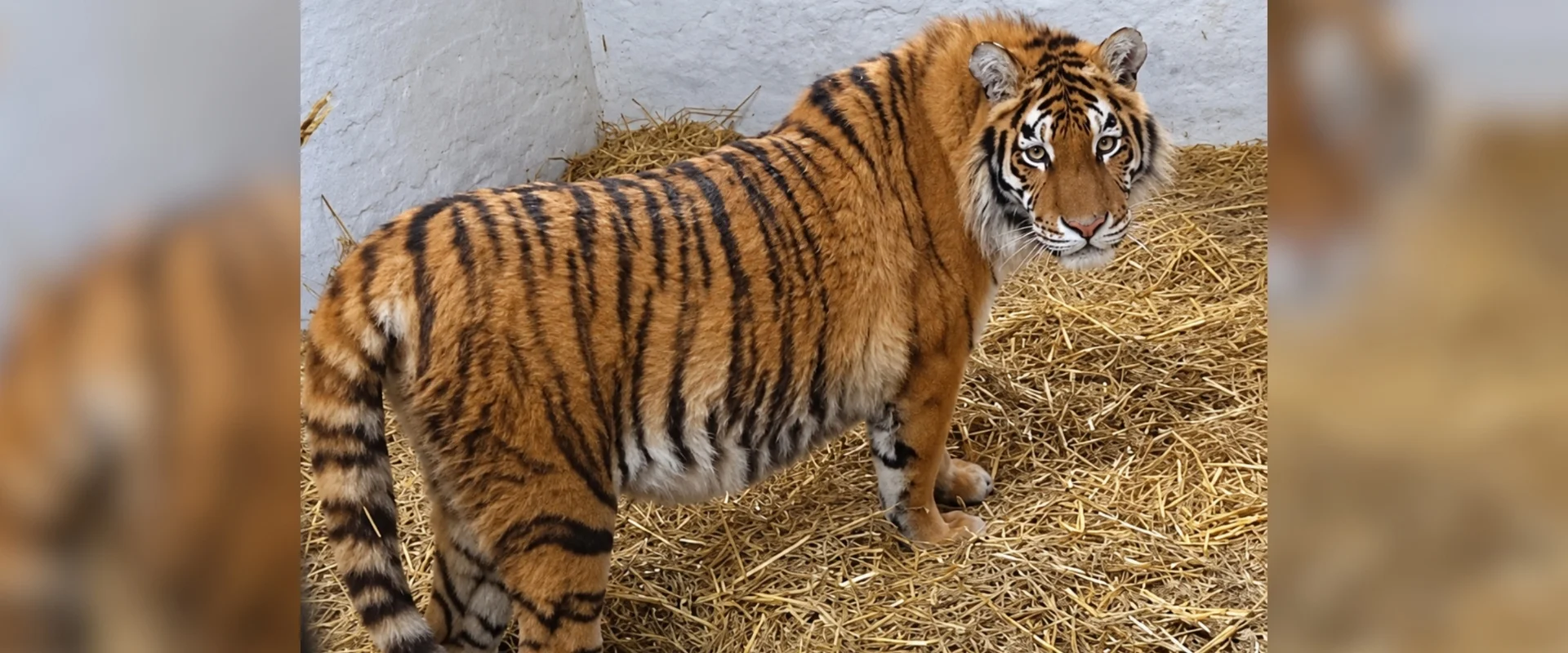
Cruelty left young tiger Electra unable to walk. Please help provide her with a better future. Electra is less than a year old and already human cruelty has cost her the ability to walk. This young tiger was kept as a pet in Ukraine by people who had no understanding of how to care for her. They fed her food that could not support her growing body. Malnutrition damaged her spine and prevented her bones from developing normally. She was completely crippled. Human ignorance has left a young tiger crippled – help give her the treatment she needs. When Electra was rescued from the Ukraine war zone and taken to our partner, the Wild Animal Rescue Centre (WARC) in Kyiv, the veterinary assessment was devastating. The veterinarians said there was no hope she would walk again and recommended euthanasia. Our partner refused to give up on Electra, determined to give her one more chance of life. Their team began intensive treatment and slowly there has been improvement. For Electra, walking means dragging her hind legs behind her. But a dedicated team refused to give up and she is making slow, steady progress. And she can now stand. Source: WARC Electra can now stand. For a young tiger once thought beyond help, standing is an enormous step forward. It gives us hope that, with continued treatment, she may one day be able to move around freely. Please donate to Animal Survival International today to help Electra continue her treatment. She has come this far. She needs our help to literally take the next steps. In Ukraine, it is legal to keep wild animals as pets but there is a particular cruelty in taking a wild animal into a home and failing to meet even her most basic needs. Electra could not choose what she was fed. She could not seek the care she needed. Everything depended on the people who kept her, and they failed her while her body was still developing. She should have had the chance to grow strong. Instead, she is spending her youth recovering from harm that should never have happened. We need your help to fund Electra’s ongoing care and treatment. Rescue brought her safety, but it could not undo that damage overnight. Every little improvement has come through intensive care, and there is still a long way to go. Electra’s treatment will take a long time. We are determined to help her through it and we ask you to stand beside us. Electra’s road to recovery is long, and every improvement has come through intensive care. Your support can help fund the treatment and care she needs to keep healing. Source: WARC Your donation will help fund her continued veterinary treatment and the appropriate nutrition and daily care she needs as she grows. Helping a tiger like Electra is really tough in a war zone where treatment costs are high and medical supplies sometimes limited. But we have high hopes for Electra, while recognising how much remains uncertain. Our goal is to give her the best possible chance of a comfortable, active life, with her wellbeing guiding every decision about her care. Electra has already suffered because people failed to understand what she needed. Now she has caring people working hard to help her heal. With your support, we can help them stay beside her through the months ahead. Please give whatever you can to Animal Survival International today. Help us build on Electra’s first, precious progress and give this young tiger the chance of a better life.
Killed, leaving her baby behind. We must help this leopard cub survive.
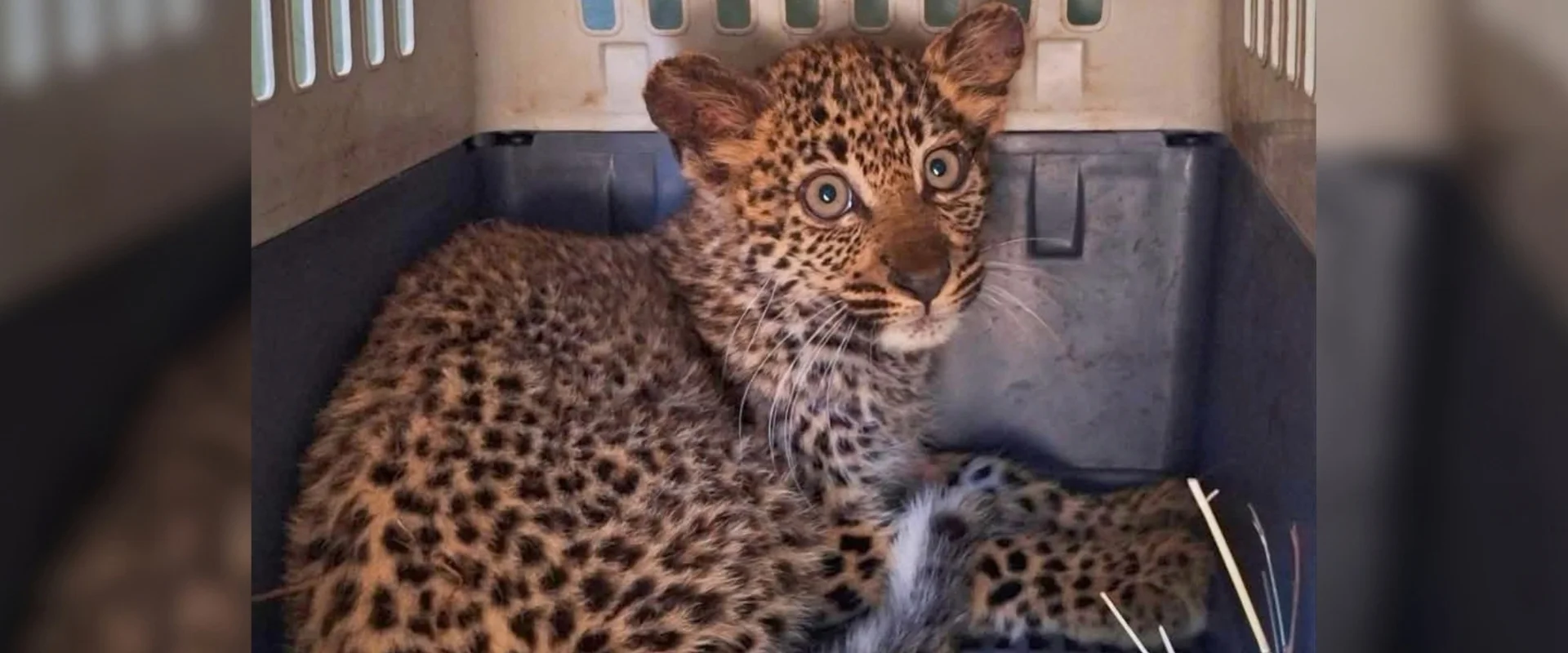
We are still working to reach our $21,000 (£15,800) goal to give orphaned leopard cub Mohli the soft-release enclosure and specialist care she needs to return to the wild. When Mohli was only three months old, she lost the one thing every leopard cub depends on to survive: her mother. As human-wildlife conflict is growing across the Limpopo Province of South Africa, more leopards are losing their lives simply because their natural habitat overlaps with farmland. Mohli became one of its youngest victims after her mother was killed by farmers. Too small to survive on her own, she wandered desperately in search of food. Instead of reaching safety, she was caught in a farmer’s trap and found weak, starving and desperately ill. Leopard cub Mohli was just three months old when she lost her mother. When she was found, she was sick, starving and desperately weak. Source: Indlulamithi Wild Big Cat Sanctuary By the time rescuers reached her, Mohli was severely malnourished. She was suffering from diarrhoea, dangerously dehydrated and so weak that veterinarians struggled to draw blood because her blood pressure was almost undetectable. She was fighting for her life. Without her mother to protect her, feed her and teach her how to survive, Mohli had almost no chance of making it on her own. Today, you can still become the reason her story has a happier ending. Your donation will help provide everything Mohli needs to recover – expert veterinary care, nutritious food, rehabilitation and, most importantly, the specialized enclosure where she can learn the skills every young leopard should have learnt from her mother. Mohli is safe at our partner, Indlulamithi Wild Big Cat Sanctuary in Limpopo, where experienced wildlife rehabilitators are helping her recover from the trauma of losing her mother. It was here she received her name: Mohli, meaning warrior. But surviving those first few months was only the beginning. If Mohli is ever to live the wild life she deserves, she must first learn to hunt, stalk prey, avoid danger and become independent. These are vital skills that leopard mothers spend up to two years teaching their cubs. Because Mohli lost her mother so young, people must now carefully recreate that opportunity without allowing her to become dependent on humans. Mohli is safe at our partner sanctuary, but she needs a soft-release enclosure and specialist care to learn the skills her mother would have taught her in the wild. Source: Indlulamithi Wild Big Cat Sanctuary But none of this can happen without you. We urgently need to raise $21,000 (£15,800) to build Mohli’s 2.5-acre (one-hectare) soft-release enclosure and provide the specialist care she needs during her rehabilitation. This enclosure will become her classroom. It is where Mohli will learn to stalk silently through the grass, build her strength and confidence, and develop the instincts her mother never had the chance to teach her. Every day she spends there brings her one step closer to where she belongs, not behind fences for the rest of her life, but living freely as a wild leopard in a protected reserve. Please help us reach our goal of $21,000 (£15,800) to give Mohli a fighting chance at returning to the wild, where she belongs. If you have already donated, THANK YOU. Your gift today won’t simply build an enclosure. It will help give an orphaned leopard cub her future. Please make your most generous gift today.
Fouross the pangolin was caught in a snare
In South Africa’s Northern Cape, a pangolin named Fouross is fighting to survive. Fouross was found limping through the bush with a swollen, badly wounded hind leg after becoming caught in a cruel wire snare set by poachers. He is now in the care of our partner, the Kalahari Wildlife Project (KWP), a small, dedicated team working to save Temminck’s ground pangolins like Fouross from disappearing forever. But his road to recovery is far from over. Please help us give Fouross the specialist rehabilitation he needs to survive and heal – and equip KWP to save the next pangolin in crisis. Badly wounded by a poacher’s snare, Fouross was found limping through the bush. He’s now safe, recovering in the care of our partner. Source: Kalahari Wildlife Project Pangolins are armoured against predators, but defenceless against poachers. Pangolins are widely recognized as the most trafficked mammals on the planet. Pangolins captured in southern Africa are trafficked for their scales, which are smuggled to Asia for use in traditional medicine. Millions have died, but poaching isn’t the only threat these small, gentle creatures face. Electric fences are another deadly danger. When a pangolin touches a live wire, its instinct is to curl into a protective ball – sometimes around the wire itself. Each shock can tighten its grip, causing catastrophic injuries or death. KWP sees even more electrocution cases than poaching cases, with an estimated 1,200 pangolins dying on electric fences each year. For pangolins, fencing can be just as deadly as poaching. Their instinct to curl into a protective ball, when caught against a fence, can trap them in place, often with fatal results. Source: Supplied For injured pangolins, rehabilitation is a race against time. Without proper rehabilitation, up to 70% of injured pangolins die. They are extraordinarily sensitive animals and need months of quiet, specialist care to recover from physical trauma and stress before they can be safely released into protected wild areas. At KWP, rehabilitation for an injured pangolin takes six months on average. Fouross is receiving pain medication and antibiotics, with strict monitoring and cage rest until his wounds heal. Over the coming months, KWP will continue his treatment until he is strong enough for a carefully managed soft release, giving him time to adjust before he must fend for himself. The full cost of Fouross’s rehabilitation is $7,400 (£5,500) – including CT scans, veterinary treatment, medication, check-ups and two GPS trackers to monitor him after release. Our partner X-rayed Fouross’ hind leg to understand the full extent of his injuries. Source: Kalahari Wildlife Project Will you help us raise the funds needed to give Fouross his second chance? Your gift will help Fouross heal today – and help KWP reach the next vulnerable pangolin tomorrow. Fouross is just one of the pangolins our partner is called upon to rescue. With only three people and one vehicle covering the entire Northern Cape, KWP is stretched to its limits. Please donate now to support Fouross’s rehabilitation and strike a blow for the survival of one of the world’s most abused creatures.
Your gift will be doubled to help save Africa’s rarest elephants
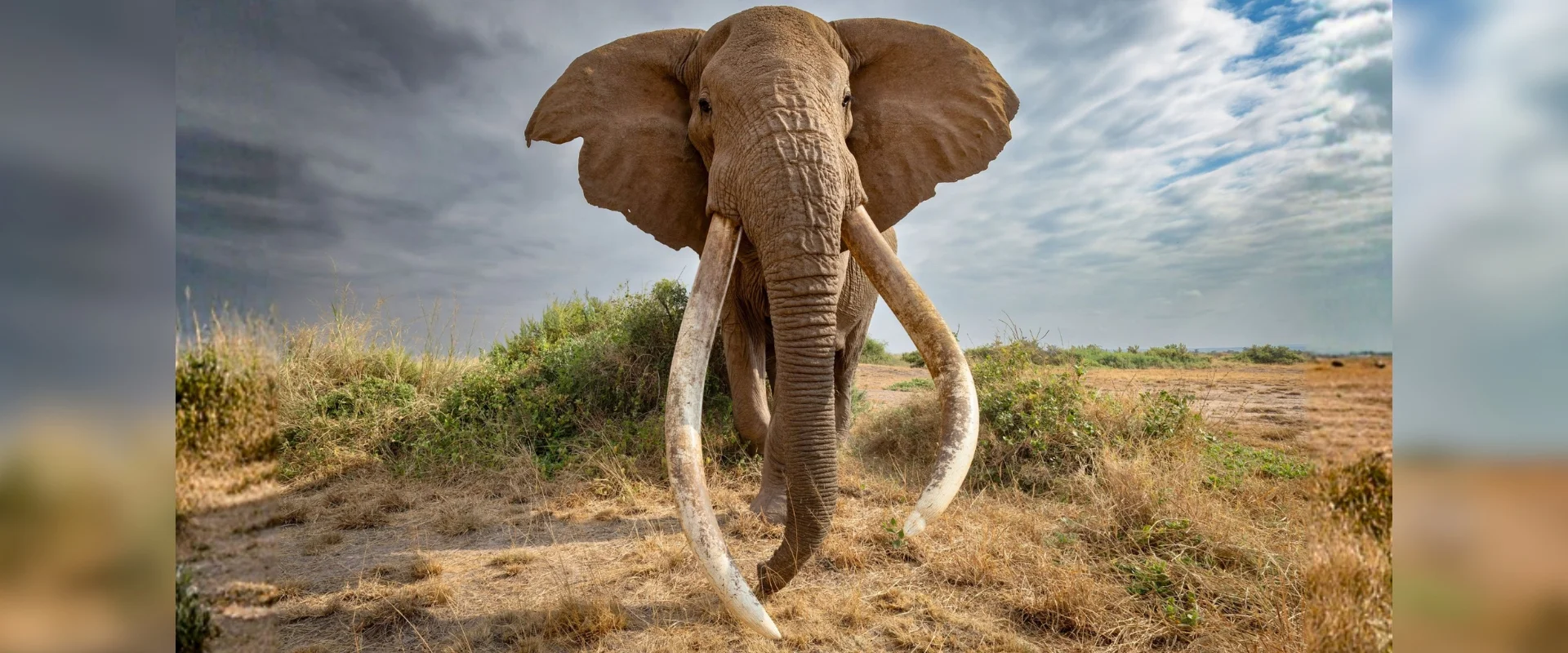
There are moments when your compassion can change far more lives than usual. This is one of those moments. A generous supporter has offered to double every donation made toward this appeal for East Africa’s super-tusker elephants, up to our fundraising goal. That means your gift today can have twice the impact. A donation of $50 (£37) instantly becomes $100 (£75). A gift of $100 (£75) becomes $200 (£150). For a limited time, you have the rare opportunity to protect twice as many of East Africa’s last remaining super-tusker elephants. But this extraordinary opportunity is time-sensitive. Fewer than 30 super-tusker elephants remain in East Africa Imagine standing beside an elephant so immense that its ivory tusks almost touch the ground. These are Africa’s legendary super-tuskers – elephants carrying some of the world’s most extraordinary genetics. They have survived decades of relentless poaching, shrinking habitat and increasing conflict with people. Every journey a super tusker makes is dangerous. Poachers know their routes, and their extraordinary tusks make them a target. Credit: Africa Geographic Today, fewer than 30 are believed to remain in East Africa, and only 90 on the entire continent. If we lose them, we lose far more than individual elephants. We lose an irreplaceable part of Africa’s natural heritage forever. Every journey these giants take could be their last. As these magnificent elephants move between Kenya’s Amboseli National Park and Tanzania’s Kilimanjaro landscape, they face constant danger. Poachers know where elephants travel. Trophy hunters covet their enormous tusks, which weigh as much as 100 pounds (45 kilograms) each. Without protection, even one encounter could end the life of an elephant that has survived for half a century or more. That is why our partner, Conservation Through Tourism (CTT), urgently needs additional anti-poaching drones. Eyes in the sky. Hope on the ground. These specialized drones allow rangers to monitor elephants across vast landscapes in real time. From the air, they can detect suspicious activity, locate vulnerable elephants and respond far more quickly to threats than would ever be possible on foot. Every extra drone dramatically expands the area that can be protected. Every extra drone gives these remarkable elephants another chance to survive. Today, your gift goes TWICE as far. Thanks to our generous matching donor, your support today will do twice as much to help purchase these life-saving drones. Super tuskers must cross largely unprotected corridors to survive. For these elephants, more drones could mean the difference between life and death. Credit: CTT That means: Your compassion reaches twice as far. Your generosity protects twice as much habitat. Your gift helps safeguard twice as much of the landscape these elephants depend on. It is rare to have an opportunity like this. Please don’t let it pass by. You can help write the next chapter for these giants. Every super-tusker still walking East Africa today has survived extraordinary odds, but they have never been more threatened. Your gift today will be matched dollar for dollar, helping CTT obtain the equipment needed to watch over these magnificent elephants before danger strikes. Please give as generously as you can while your donation will still be DOUBLED. Together, we can help ensure that these gentle giants continue to roam the wild landscapes they have called home for generations.
Baby, the sloth, held onto me the way she should have been embracing her dead mother
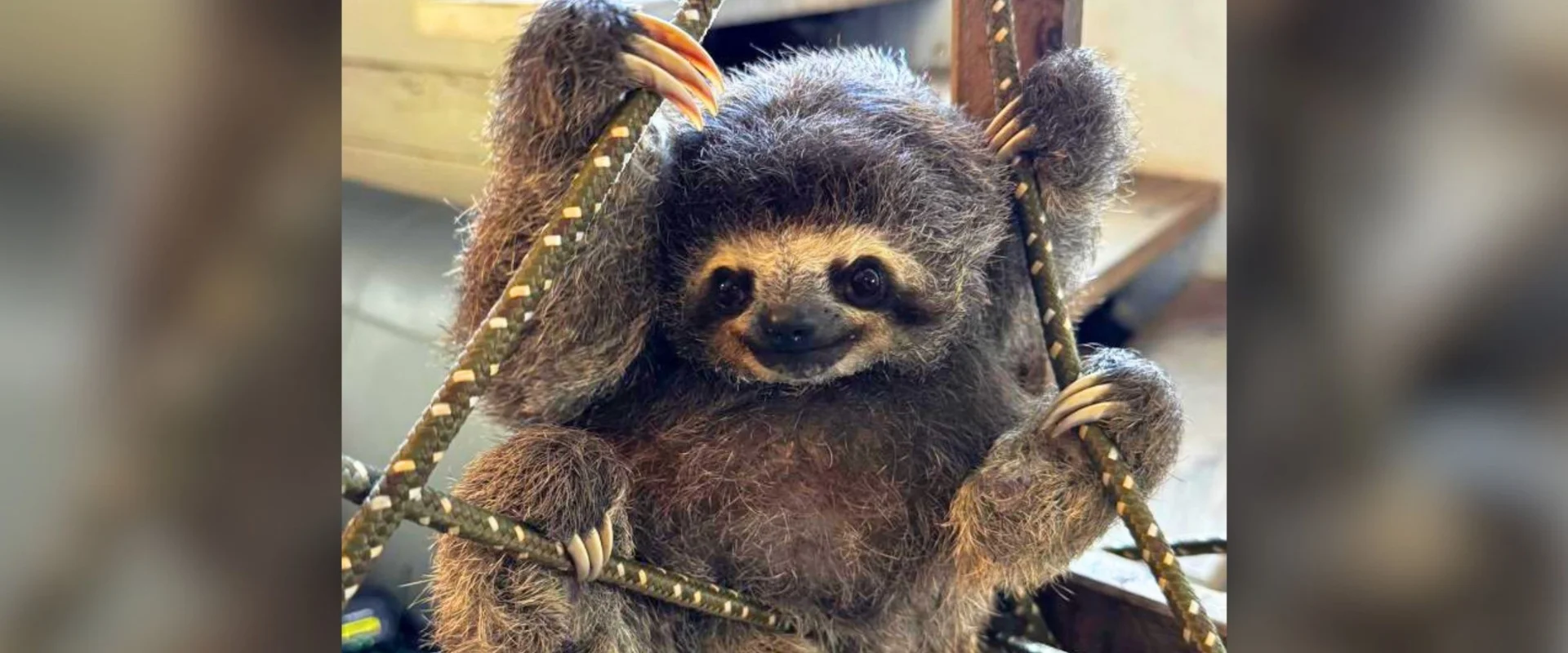
A few days ago, I wrote to you about Baby, the orphaned sloth in Venezuela whose mother was killed by stray dogs. I am writing again because we have not yet raised enough funds to give her rescuers the equipment they need. Baby is safe and growing stronger. But the danger facing Venezuela’s sloths has not changed. Her rescuers are still responding to sloths stranded on power lines without all the insulated equipment they need to reach them safely. The next call will come – whether the team is properly equipped or not. I am asking again: please consider making a gift today. Baby’s rescuers have almost no funding and every contribution will help them continue their vital work. Baby was only days old when stray dogs killed her mother near Caracas. She was entirely dependent on her. Everything a young sloth needs – milk, warmth and the long apprenticeship that teaches her which leaves to eat and which branches will hold her weight – Baby should have learned from a mother who was no longer there. Sloths are tree-dwelling mammals found in the forests of Central and South America. They are roughly the size of a large house cat, with long, curved claws that work like hooks and an extraordinarily slow digestive system that can take weeks to process a meal of leaves. Baby is a brown-throated three-toed sloth. She belongs in the forest canopy. For now, she is being hand-reared in the home of the people determined to return her there. Baby is doing well. She now weighs almost a kilogram, nearly four times what she weighed when she arrived at Fundación Chuwie. At two kilograms, the next stage of her rehabilitation will begin. Source: ASI/Dan Snyders When I met her, her grip explained everything. At our partner, Fundación Chuwie, Baby was placed briefly against me under her rescuers’ supervision. She took hold of my clothing immediately, and her grip was astonishing. It felt like an embrace. It was nothing of the kind. An infant sloth grips because, in the forest, letting go means falling from the trees. Baby was following the instinct that should have kept her attached to her mother. Built for a forest that is coming apart. Sloths are superbly adapted to the forest canopy. They move slowly enough not to register as movement, and algae grows in their fur, tinting them green until they disappear into the leaves. A predator can look directly at a sloth and fail to see an animal at all. When development breaks that canopy into fragments, every one of those adaptations turns against them. A sloth on the ground cannot outrun a dog or escape a car. And where branches have been replaced by cable, it will reach for a power line exactly as it would reach for a vine – then hold on, because holding on is the only thing it knows how to do. One rescued sloth started a project that now helps 300 every year. Juan Carlos and Haydée Rodríguez found a sloth grievously injured on a high-voltage line. They had no training. They called specialists in Costa Rica and Panama, did as they were told, and the animal lived. They named him Chuwie, and his face is now the logo of the foundation his rescue created. They care for sloths in their own home, because the animals keep arriving – around 300 a year, attacked by dogs, struck by cars or stranded on power lines. They have never turned one away. If a sloth finds its way onto a power line, getting it down safely is specialist work. A frightened animal grips with enormous force, and pulling it free will be terribly painful. Rescuers use insulated tools to reach it, cut it free and lower it without anyone touching a live line. The power lines around Caracas have become death traps for sloths. Specialized equipment like insulated poles and hot-stick tools are needed for emergency rescues. Source: Fundación Chuwie Everything depends on that equipment being in the vehicle before the call comes. Animal Survival International is raising $6,400 (£4,800) to equip Venezuela’s only sloth rescue team properly – insulated poles and hot-stick tools, a pole saw, a ladder, gloves, nets, transport crates, recovery enclosures, first-response supplies, orphan formula and fuel. Here is exactly what your gift buys: $25 (£19) – formula and supplements for an orphan like Baby $100 (£75) – gloves, nets and a transport crate: what it takes to carry one sloth safely $350 (£265) – a recovery enclosure, so an injured sloth heals properly $900 (£680) – the insulated rescue poles. The difference between one casualty and two. Baby is doing well. Most sloths are not. Baby now weighs almost a kilogram – nearly four times what she weighed when she arrived. At two kilograms, the next stage of her rehabilitation begins, and if she keeps going as she is, she may one day go back into the forest wearing a tracking device. But any donation you give is not only about Baby. The equipment will still be there for the next sloth, and the one after that. It cannot put a forest back together. It decides whether a rescuer reaches an animal safely, whether an injured sloth is carried without being hurt further, and whether the next orphan is fed. Baby survived because trained people were ready. Please help us keep them ready.
Crippled in the prime of his life, this is how an elephant manages to stay with his herd.
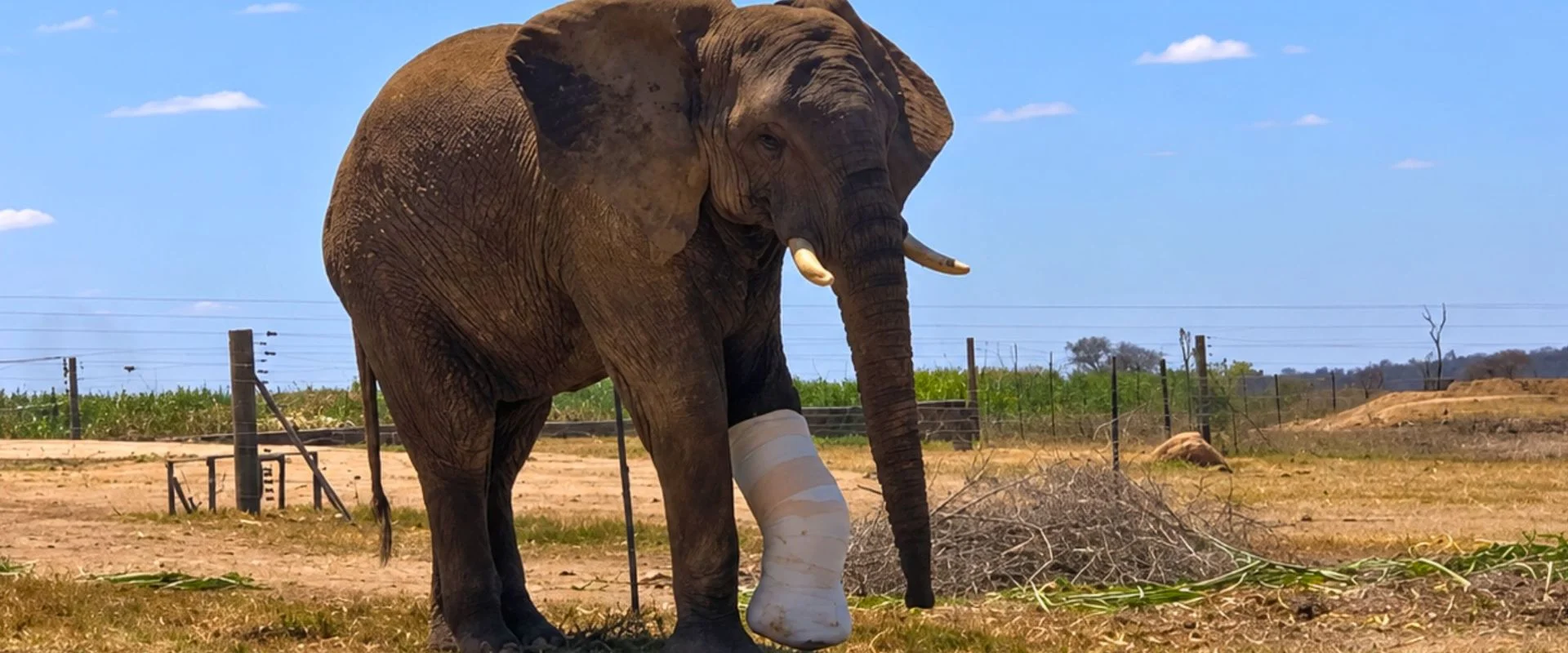
Every step Fishan takes is agony. In South Africa’s Greater Kruger wilderness, this 37-year-old elephant should be at the peak of his physical strength roaming the bush with his herd. Instead, he lives with severe and debilitating pain every day of his life, dependent on human kindness to make life in the bush possible. Fishan is struggling with a long-term injury that will only get worse without specialized medical care. Fishan is part of the HERD (Hoedspruit Elephant Rehabilitation and Development) wild elephant project that helps orphaned or rescued elephants form a herd and live together in the wilderness. Over the years, our supporters have helped Fishan with special care, aiming to keep his life as happy and natural as possible. Years ago, Fishan – who had already endured a traumatic rescue from Zimbabwe – fractured his leg after stepping into a deep hole in shallow water. Although he partially recovered, the injury never healed completely. For Fishan, age and arthritis have turned an old injury into daily suffering. When Fishan first broke his leg, he was unable to bear weight on it. For 36 agonising hours, the HERD team stayed by his side, gently encouraging him forward, a few painful steps at a time. They brought him food, water and even a bathtub, filling it with water so he could stand in it and ease the relentless throb in his injured leg. At night, they slept near him in the bush so that he wouldn’t suffer alone. Fishan suffers from debilitating pain after fracturing his leg. He uses this bathtub filled with water to bring relief, but it isn’t enough. Source: HERD Months of specialist veterinary treatment followed. Vets fitted Fishan’s fractured leg with a cast, but caring for an enormous bull elephant is no easy task. One cast broke beneath his immense weight. Then another. His team refused to give up, adapting his treatment until he recovered enough to return to the herd. But the damage never truly disappeared. Fishan depends on expensive specialist veterinary treatment, pain relief and rehabilitation to stay mobile. We know many of our supporters who remember Fishan will want to help him again. His care, including specialist veterinary treatment and medication, costs around $7,000 (£ 5,200) per month and we are asking our supporters to do what they can to help. Without this special medical care, Fishan’s pain will worsen. And, for an adult male elephant weighing as much as 15,000 pounds (6,800 kilograms), we can only imagine how intense his untreated pain would be. Continued specialist veterinary treatment is necessary to keep Fishan mobile and free from pain. You can help make this possible. Source: HERD Elephants are among the most intelligent and emotionally complex animals on Earth. They comfort those they love. Now it’s our turn to comfort Fishan. At 37, Fishan should be in his prime. Your donation today will help make every step a little less painful and make his time with his herd longer. Please make a generous gift today.
Kidnapped rare Serbian eagle freed into wild after rescue
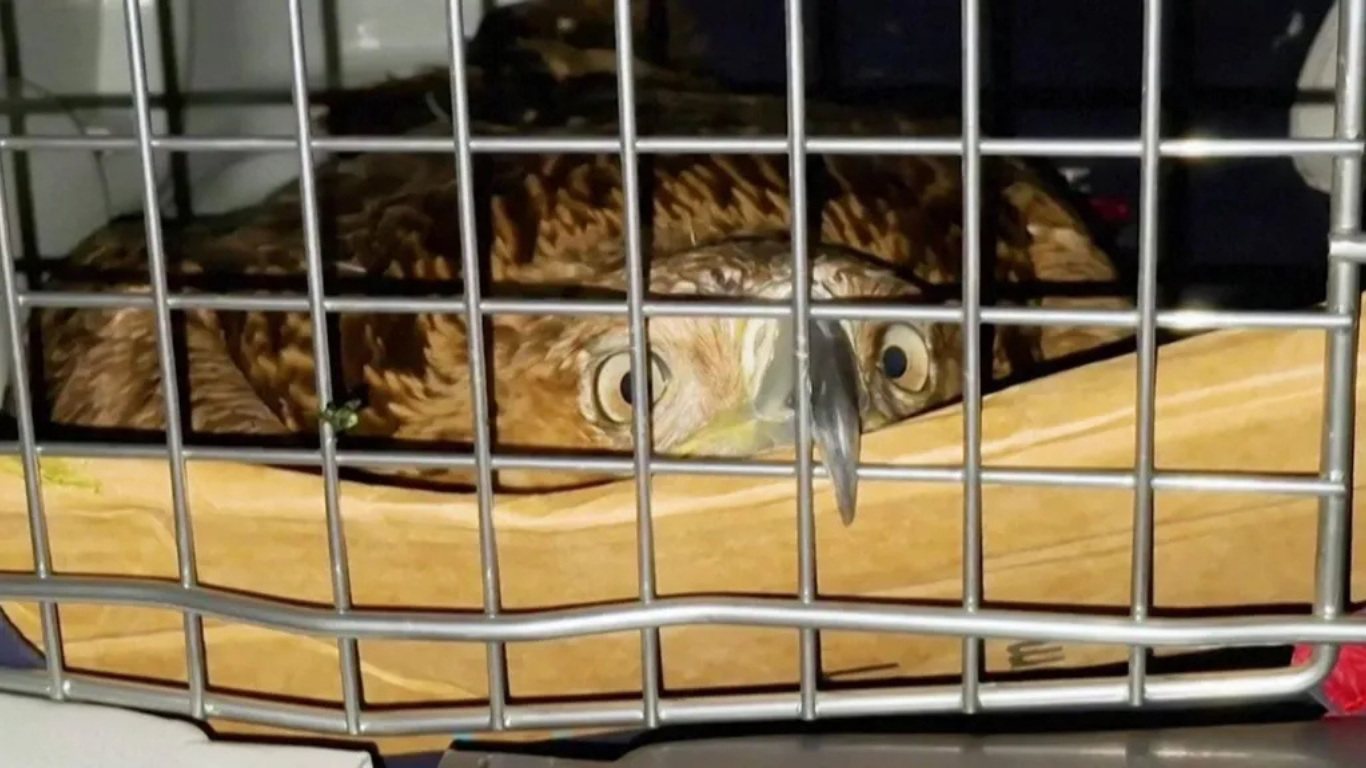
Article written by Tom McArthur Originally published by BBC News, 7 August 2026 A rare eastern imperial eagle has been rescued from animal traffickers and released back into the wild in Serbia after months in captivity. After leaving the nest last year, Feliks was caught in Syria by poachers who eventually demanded a ransom – which was refused. After protracted talks the bird was taken to a wildlife centre in Beirut, Lebanon, where he recuperated for more than half a year before his repatriation on a Serbian military plane. The protected species is critically endangered, but conservation work since 2017 has brought the population in Serbia from one pair up to 29 pairs this year, according to the Bird Protection and Study Society of Serbia (BPSSS). In July 2025, just as the young raptor first flew the nest, experts tracked him for conservation purposes as he flew towards the Middle East. Feliks spent months in recovery before he was finally released again. Credit: AFP “At that point, we started to worry because we could see that he was heading towards an extremely unsafe region,” Uros Stojiljkovic of the BPSSS told the AFP news agency. When the bird’s tracking signal was lost in October, initially it was thought the tracker was faulty. But it soon became clear Feliks had been abducted and eventually was put up for sale by poachers. Weeks passed before a partner organisation in Lebanon contacted the Serbian conservationist and said Feliks’ unnamed captors had demanded a ransom. An adult eastern imperial eagle has a wingspan of six feet (2 metres) Credit: AFP “We categorically refused. By doing so, you are effectively supporting that smuggling chain,” Stojiljkovic told AFP. Lengthy negotiations secured the bird’s release, but not before refugees carried Feliks in a potato sack over the Nahr al-Kabir river on the northern border between Syria and Lebanon, the Associated Press reported. In June this year, Serbian peacekeepers returning from Lebanon escorted the bird to Palic Zoo. The young eagle will be closely monitored in the coming weeks, experts said. Credit: AFP Feliks arrived at the zoo’s shelter “exhausted, after a long and demanding transport by military plane”, zoo director Sonja Mandić said in a statement, and his health was monitored daily. After more than a month of careful recovery, Feliks was released into the wild on Thursday. “We wish Feliks to get stronger as soon as possible, survive all the adversities, conquer his territory and leave descendants,” said Milan Ružić, executive director of the BPSSS.
Campaigners demand sanctuary for Johannesburg Zoo elephants
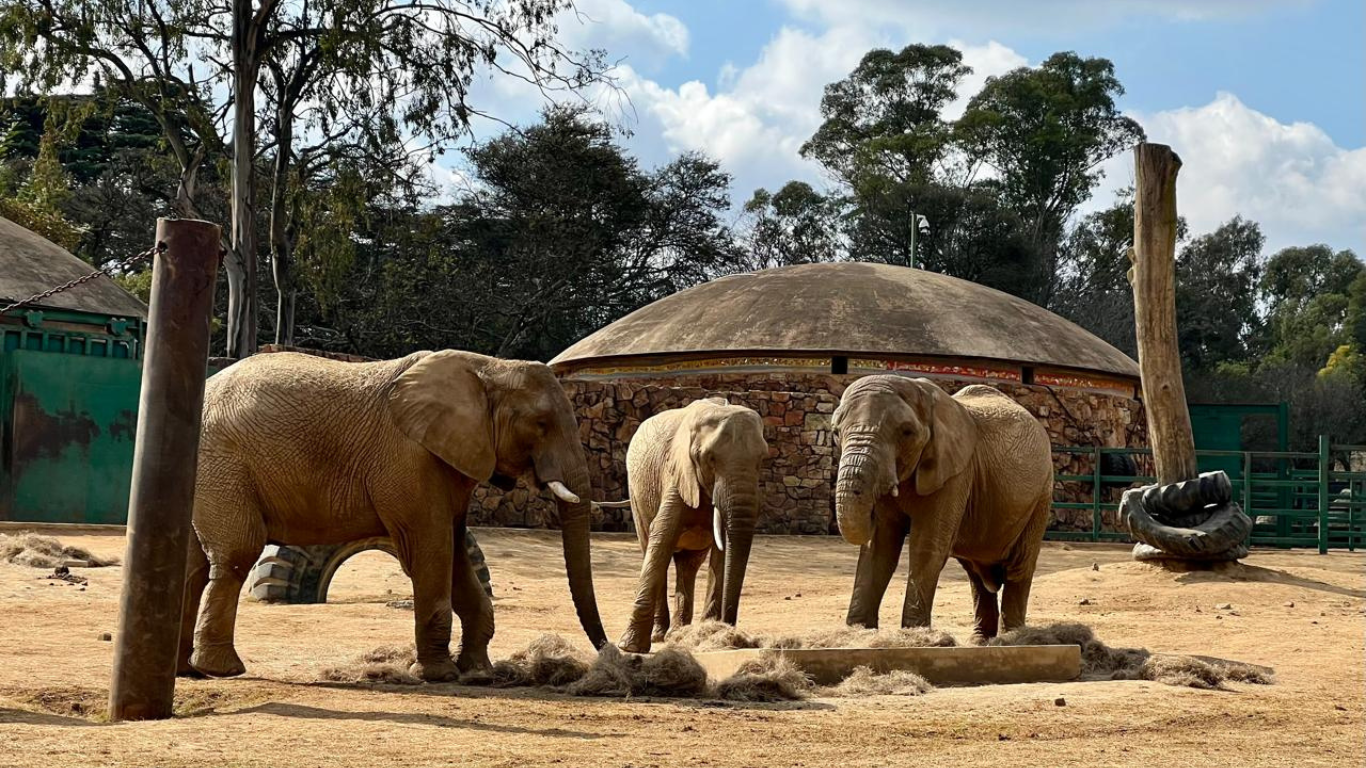
Article written by Rédaction Africanews and AP Originally published by Africa News, 31 July 2026 The last three elephants still in a traditional South African zoo entered their enclosure in single file, fruit and vegetables scattered on the ground to encourage natural foraging. For visitors to the popular Johannesburg Zoo, it was a chance to see Africa’s largest land animal in real life. But for animal welfare campaigners, it is a scene of cruelty that they have petitioned the courts to end by ordering the trio’s release into a rewilding sanctuary. In a case supported by international elephant experts, the campaigners told a court in May that observation showed that Lammie, aged 47, Ramadiba, 28, and Mopane, 26, were distressed and depressed. “These elephants are highly intelligent, socially complex and sentient beings who are living in conditions that are damaging to their well-being, and who are, as a result, in a state of distress,” said the three parties behind the case. The court should “authorise their immediate release to a suitable sanctuary… where they can rehabilitate”, they argued. Judgment is expected in the coming weeks, said Megan Carr, senior researcher at the EMS Foundation that is part of the application. Lammie, an African elephant housed at the Johannesburg Zoo in South Africa, standing near the edge of her enclosure moat. Credit: The Incidental Tourist Carr told AFP the three elephants were the only ones remaining in an urban zoo environment on the entire continent. “They are the last three elephants showcased within an exhibition in a traditional zoo-type setting in South Africa and Africa,” she said. The legal bid for their freedom follows campaigners’ success in having a 42-year-old elephant released from the national zoo in Pretoria and into a private reserve in 2024, after years of negotiation with the South African government. The animal had spent 40 years at the facility. – Compromised – When an AFP team visited Johannesburg Zoo, a group of small children pressed towards a viewing area shouting, “Elephant! Elephant!” as the three animals shuffled around their enclosure. Lammie, focused only on the food, was born at the zoo, one of a handful in South Africa and among a plethora of state-run and private animal sanctuaries or game reserves. Ramadiba and Mopane arrived in 2019. The trio are well cared for and had recently been given a clean bill of health, said Johannesburg city parks spokeswoman Jenny Moodley. The facility could accommodate up to five elephants, and two keepers were dedicated to each animal, with food hidden around the enclosure to encourage foraging and walking, said an official not authorised to speak to the media. Credit: Timothy Bernard/Independent Newspapers Johannesburg City Parks and Zoo does not want the trio freed, saying they are suited to captive life, especially Lammie, who has never lived elsewhere. Should they be relocated, the zoo would not be able to offer important research and education possibilities to the public, managing director Thanduxolo Mendrew said in papers for the court case, which was launched after negotiations failed. Having the animals among the zoo’s offerings allowed school children, especially from poorer backgrounds, to see them live, he said. Carr responded: “Why would you show your child a compromised elephant when it is much easier for them to look at elephants on a video or a TV programme?” “They need a vast amount of space in order to remain healthy and fit, and no enclosure is able to offer that to an elephant.” The elephants share two holding bomas or enclosures at night, each measuring 160 square metres (1,700 square feet), smaller than an average tennis court, according to campaigners. During the day, they are allowed to roam in an unshaded enclosure several times larger, around the size of a football pitch. South Africa is home to about 44,000 African savannah elephants, about 6,000 owned privately or by communities, the government said in August last year. Banner image: Lammie, Ramadiba, and Mopane—the final three captive elephants at the Johannesburg Zoo in South Africa. Credit: EMS Foundation
Wild animals need your help after wildfires in France destroy their homes
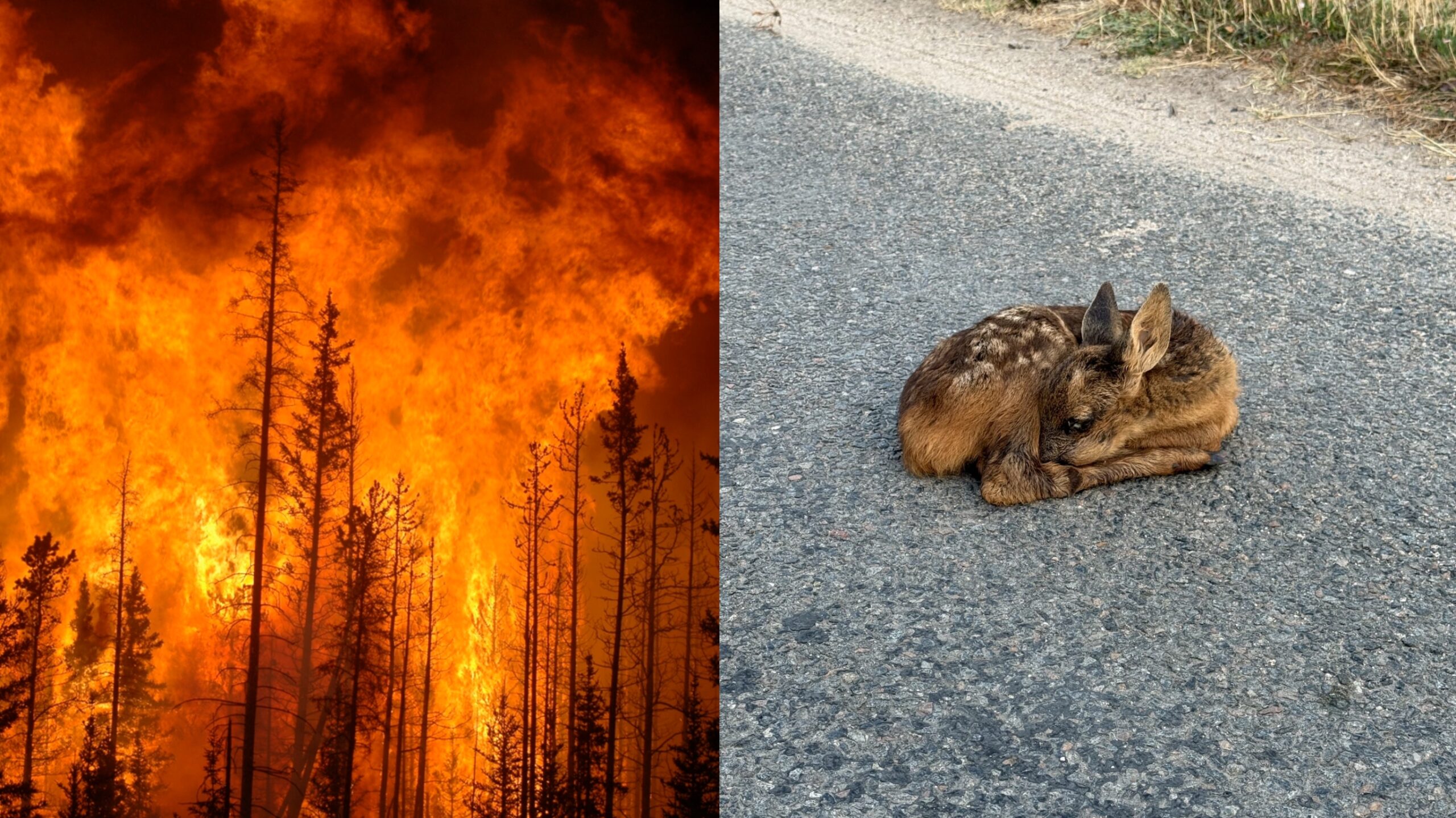
Catastrophic wildfires have left a trail of devastation in southwestern France, reducing thousands of hectares of precious wildlife habitat to ash. Entire forests that once sheltered wild animals created death traps for helpless creatures. Those who weren’t burnt to death were forced to flee through walls of fire and choking smoke, leading to severe and debilitating injuries. Wild animals suffer severe injuries, burns and trauma when wildfires tear through forested areas. Source: FRANCE 24 English We are in a race to save and treat wild animals in France. Even though the fires are now under control, the crisis is far from over for animals in need of rescue and care. We are working with Réseau Centres de Soins Faune Sauvage (RCSFS), in one of the largest wildlife emergency responses in France as these unprecedented heatwaves and wildfires overwhelm animal rescue centers. Animals big and small, from tiny hedgehogs – who curl into defensive balls instead of running – to foxes, squirrels and deer, which collapse from dehydration after fleeing the flames, have died. Young mammals were separated from their mothers in the chaos of fire, left bewildered, terrified and alone. Birds fell from scorched nests, while reptiles and amphibians perished as their habitats were consumed by fire. Those that survived arrived at rescue centers with horrific injuries: burned paws, scorched feathers, smoke-damaged lungs, severe dehydration and overwhelming trauma. Many were orphaned. Others continue to fight for their lives. Emergency teams are on the ground providing life-saving help to wildlife affected by the fires in southwestern France. For illustrative purposes. Photo credit: Réseau Centres de Soins Faune Sauvage (RCSFS). Source: Réseau Centres de Soins Faune Sauvage Veterinarians and wildlife carers are providing emergency treatment, pain relief, oxygen, fluids, wound care and constant feeding for vulnerable, displaced and orphaned animals. But they are being pushed to breaking point. Rescue centers have admitted thousands of wild animals, but supplies are running out and there is no space left. This is why we need to rush emergency support to the animals. Please donate as generously as you can today. The burnt, frightened and exhausted wild animals of France are depending on you. Your gift today will help cover the costs of emergency evacuation and transport, life-saving vet care, critical medications and vital supplies that rescue teams desperately need to continue saving lives. Every hour matters. Every minute matters. We cannot wait a moment longer to help. Please make an urgent gift today.
Namibia’s rescued pangolins are dying – help build the center that can save them
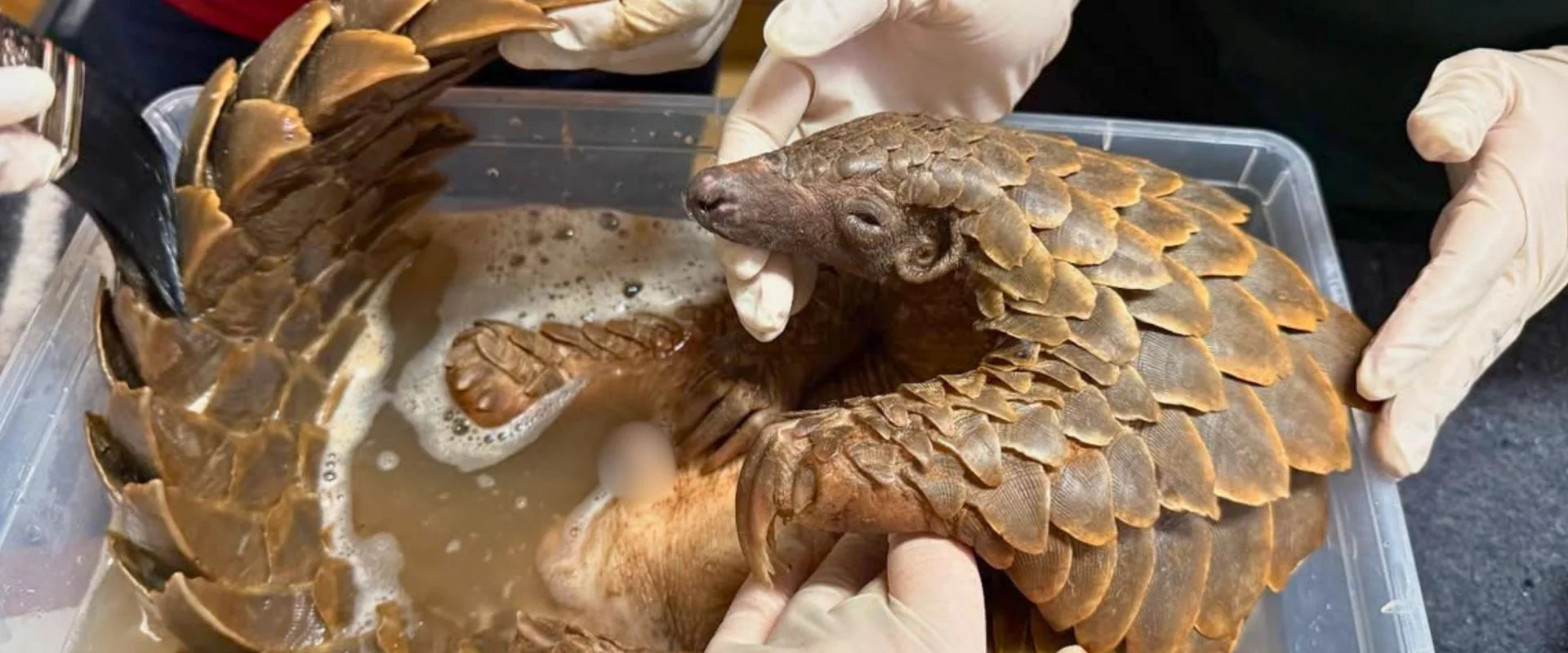
There has been a catastrophic collapse of pangolins throughout much of Asia. Now they are being driven to extinction across Africa. Pangolins are dying because of a vast illegal trade in their scales. These shy, nocturnal scaly anteaters are now the most trafficked mammals in the world. In Namibia, the species is increasingly under attack. Enforcement has been stepped up but most pangolins seized from traffickers are already dead when they are found. Only around three out of ten are rescued alive and each one will be traumatized and most likely sick or injured. Rescued pangolins are fighting a losing battle. For years, nobody knew what happened to them after release. Our partner, the Pangolin Conservation and Research Foundation (PCRF), fitted pangolins with satellite tags to find out. It was terrible news. The animals were so stressed they walked, night after night, never stopping to feed. Tag temperatures climbed to 40°C (104°F) because they weren’t finding burrows deep enough to shelter in. One male lost more than a fifth of his body weight in five weeks. Eleven days later, he was found dead. If pangolins are to avoid extinction, this has to stop. Animal Survival International is working with PCRF to help build a pangolin research and rehabilitation center in Namibia’s Otjozondjupa region to help address this problem. Our partner’s specialized skills and soft-release approach increase survival of rescued pangolins from roughly 30% to around 90%. Rolled into a ball for protection. Zipped into a bag for profit. This is what trafficking does to an animal built to survive everything except us. Source: PCRF Post-release monitoring, wild pangolin research and survival success will help inform and guide pangolin rescue across the African continent. A purpose-built center can change everything. With your help, we can do so much more for these gentle, shy creatures. A pangolin’s scales are believed to cure swelling and boost milk supply. None of it is true. But the myth is driving one of the gentlest creatures on Earth to extinction. Source: PCRF (left) and Shutterstock (right) Rescued pangolins in Namibia need sophisticated medical care to survive. Source: PCRF Your donation will help create a place where rescued pangolins can be stabilized, recover and be prepared for a successful return to the wild. Your generosity will help fund: Dedicated pangolin holding rooms designed for rehabilitation (quiet, secure, low-stress conditions) A clinic space and equipment for veterinary assessment and treatment Expanded on-site capacity so more rescued pangolins can be accommodated at the same time Research that improves rehabilitation protocols and long-term survival after release Please donate now if you possibly can – every amount counts for the animals.
The South African cheetah census that broke the population illusion
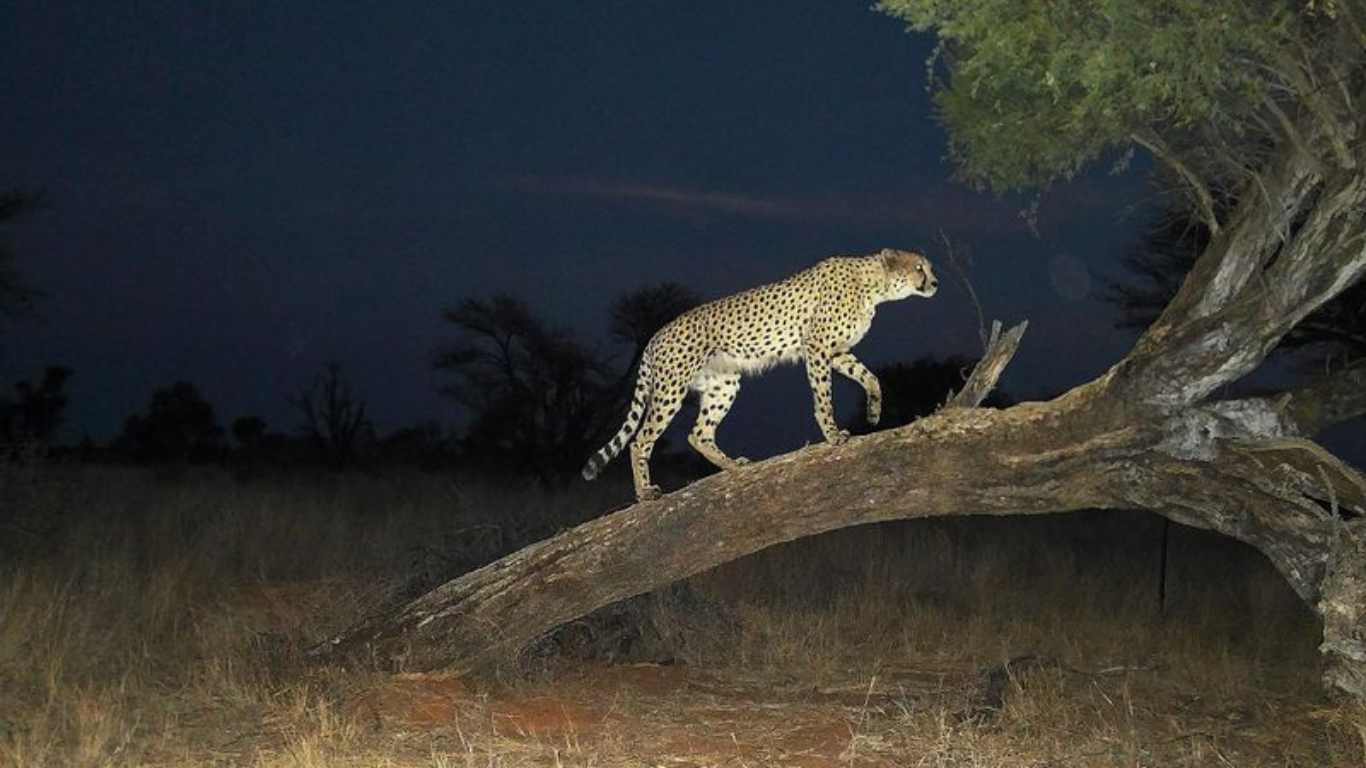
Article written by Don Pinnock Originally published by Daily Maverick, 19 July 2026 After three-and-a-half years, 389 camera traps and 5.2 million images, researchers found a wild population much smaller, more fragmented and more exposed than anyone had assumed. For years, South Africa’s free-roaming cheetah population had a reassuringly round number attached to it: about 300 mature animals living beyond national parks and fenced reserves. It turns out that number was less a count than an educated shrug. “Nobody ever really knew for sure,” says Marna Smit, project coordinator at Ashia Cheetah Conservation. “The 300 was a guess from people who worked in the field, and they kind of just went with that for lack of any better evidence.” Now there is better evidence, and it is grim. The first national Free-Roaming Cheetah Census found a minimum of 83 mature adults across almost 100,000 square kilometres of the Northern Cape, North West and Limpopo. Add cubs and subadults and the verified total reached 119 animals. During the study, 17 mature adults died. That doesn’t necessarily mean the population suddenly crashed from 300 to 83. It may mean South Africa never had a solid idea of how many cheetahs were left. “This is the first correct, or the most correct, baseline that we’ve ever had,” Smit says. “Maybe we’ve always had low numbers and the estimates were ridiculously high.” Earlier estimates came from isolated regional studies, some of them conducted in cheetah hotspots. Researchers may have looked at places where the cats were doing relatively well and assumed the rest of the country looked much the same. “Now that we have a baseline, we can start figuring out if there is an intense decline,” she says. “Or maybe this is just the number that can be held in South Africa with the fragmentation going on. Maybe there’s just not enough space for them.” The three-and-a-half-year census involved 389 camera traps, three field teams, farmer interviews, genetic samples, GPS collars and 5.2 million images. Teams spent three months at a time on the road. Floods cut off sites, poachers appeared in the frames and cameras were stolen, taking months of information with them. Photo deluge Then somebody had to look at the pictures. Image-recognition software helped, but, as Smit puts it, “AI is great, but it’s only great about 70% of the time”. Humans still had to check its work and match individual cheetahs by their unique spot patterns. The scale of the effort gives Smit confidence that the census did not miss hundreds of cats. “I’m sure there are some that we’ve missed,” she says. “But considering the effort that we put in, I wouldn’t say we missed a lot. Even if there’s another 50% of that number, that’s still only about 120 mature animals, which is not a lot.” Curious livestock watch a cheetah investigating scent marks left on a tree. Credit: Ashia Cheetah Conservation & Cheetah Outreach Trust A male cheetah investigates scent markings on a tree in the Northern Cape. Credit: Ashia Cheetah Conservation & Cheetah Outreach Trust The animals live in the least-glamorous part of conservation: farms, roads, fences, settlements and scraps of open land between formal reserves. Here, a cheetah is not a tourism mascot. It is a predator that may be blamed for eating someone’s income. Often, Smit says, the blame is misplaced. Cheetahs are visible during the day, unlike caracals and leopards, and that visibility works against them. “The caracals and jackals are usually the main culprits with smaller livestock, and leopards with bigger livestock,” she says. “Cheetahs get blamed because you see them more often.” A hungry cheetah may take livestock, particularly a calf, but Smit says it is not the norm. Talking to farmers The relationship with farmers was better than outsiders might expect. About 90% were willing to speak, although farmers, Smit says, have “a healthy scepticism” of researchers who arrive, collect data and vanish. Anonymous questionnaires allowed landowners to report cheetahs that had previously been shot, captured or moved without permits. Smit encountered less outright hatred than financial pressure. Left: Field team member Louis Heyns secures the safety box for a camera trap in Limpopo. Right: Deon Cilliers of the Cheetah Outreach Trust takes biological samples and measurements of a free-roaming female cheetah in Limpopo. Credit: Ashia Cheetah Conservation & Cheetah Outreach Trust “When a person’s livelihood is at stake, and you have a family relying on you and bills that need to be paid, those will always be a priority for some people rather than the cheetah.” Goodwill does not pay for a dead sheep or game animal. Guardian dogs can help stock farmers, she says, but game farmers raise the very wildlife cheetahs want to eat. Compensation becomes tangled in proof, paperwork and the question of who pays. The team has even discussed a predator version of carbon credits, rewarding landowners for keeping big cats alive. “We know the numbers and we know what the issues are,” Smit says. “Now is the time we have to start figuring out what we do going forward.” Prosecution problem One finding stands out for all the wrong reasons: there has apparently never been a successful prosecution for the illegal killing of a free-roaming cheetah in South Africa. “Imagine somebody going out and just shooting a rhino,” Smit says. “But not one prosecution for a single cheetah, unfortunately.” Proving intent is difficult. A farmer can say the shooting was accidental or that the animal was mistaken for another predator. “It’s not for lack of trying,” she says. “Sometimes it’s just for lack of knowing how to do it properly.” A cheetah caught in a gin trap. Credit: Ashia Cheetah Conservation & Cheetah Outreach Trust Study area. Map: Ashia Cheetah Conservation & Cheetah Outreach Trust Meanwhile, collared cheetahs vanish. Some are caught in snares. Some are shot. In at least one case, Smit says, a cheetah was deliberately driven off the road by a vehicle. Others simply stop appearing. With bonded male coalitions, the
Orange-lipped monkey that roars and snorts deep in Congo rainforest is new species to science
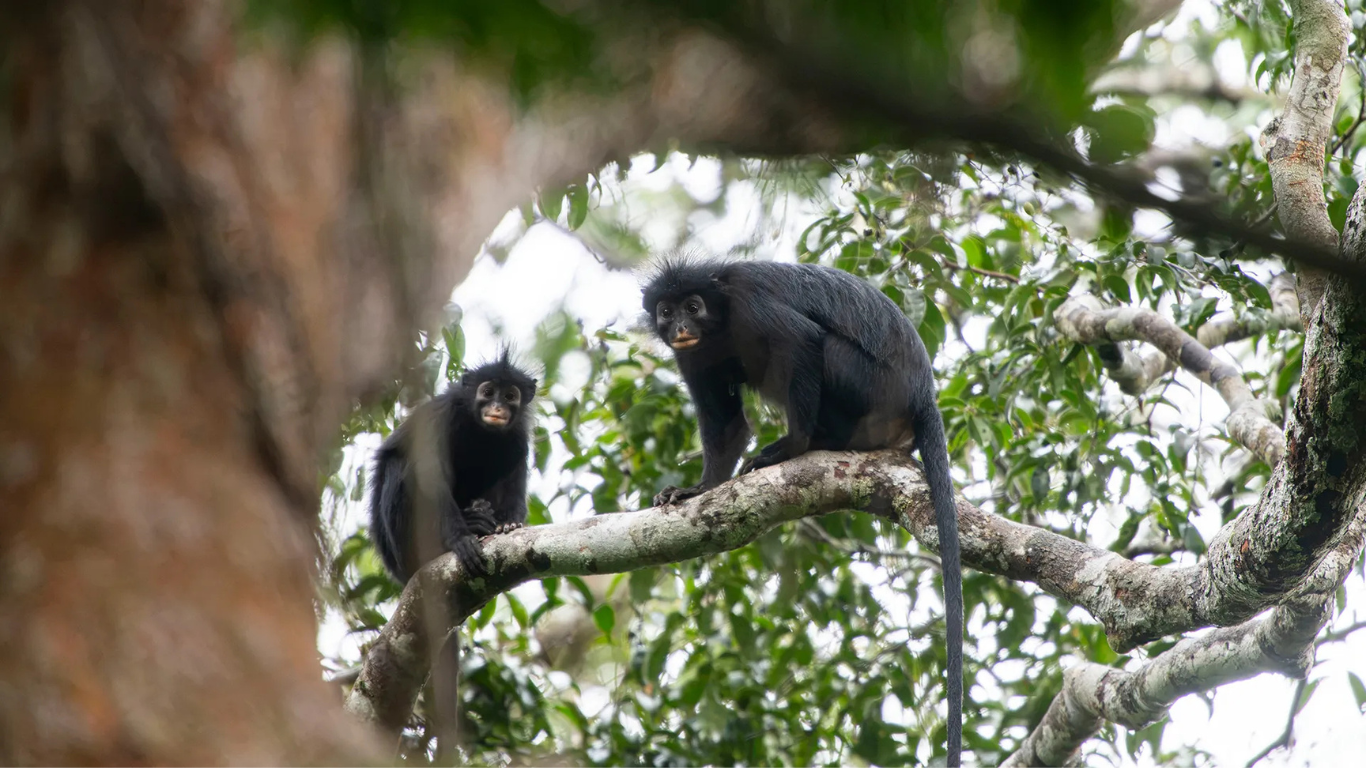
Article written by Chris Simms Originally published by Live Science, 15 July 2026 A striking new monkey species, Colobus congoensis, was discovered deep in the Congo rainforest and has been scientifically described for the first time. Scientists have identified a new species of monkey that has orange lips and makes unique roars and snorting sounds. The distinctive monkey lives in a remote region of the Democratic Republic of the Congo (DRC). It is only the fifth new monkey species to be identified in Africa in the past 75 years, and there might be more unknown monkey species in the region, scientists behind a new study suggested. Researchers named the newly identified species of monkey Colobus congoensis, after the region, and it is known by the common name “likweli” in the local Kilanga language. “This is remarkable because it’s not very common these days to find a new, never-before-documented primate species, let alone a relatively large species of monkey,” said Joshua Linder, an anthropologist and president and co-founder of the The Forest Collective, a nonprofit that aims to conserve and restore tropical rainforests. In 2008, conservationists in the dense rainforests of Lomami National Park, within the Congo Basin in the DRC, photographed an unidentified monkey, but it was partially obscured. Then, in 2018 a similar-looking animal was captured on camera, prompting study co-author Junior Amboko, a Lomami National Park researcher and a Florida Atlantic University anthropologist, to set out to find the mysterious monkey. To see what was already known, Amboko and his colleagues showed the pictures to people from 52 villages around the park. The researchers worked in the Lomami National Park, within the Congo Basin in the Democratic Republic of Congo. Credit: Daniel Rosengren, Frankfurt Zoological Society “These people really know the fauna and flora in the forest,” Amboko told Live Science. “In only eight villages, people knew the monkey — and these were hunters, who know the economic value of animals or how much food each animal can provide, but even they didn’t know much.” Hunters of the Balanga ethnic group called the monkey “likweli,” although the meaning of this name isn’t known. Some in the Mituku local communities called the species “kasaba nkoni,” which Amboko said means “the branch shaker.” This refers to the way colobus monkeys leap from branch to branch, Amboko said. In their searches between 2018 and 2022, the researchers recorded 114 sightings of the species across an estimated range of about 660 square miles (1,700 square kilometers) naturally isolated between the Lomami and Lualaba rivers. They reported their findings July 15 in the journal PLOS One. The monkeys, seen hanging out in groups of between one and 20 individuals, are mainly glossy black, but they have a conspicuous orange patch around the mouth and nose. Bare gray skin on their cheekbones makes it look as if they’re wearing masks. They also have a patch of white fur around the anus. DNA analysis confirmed C. congoensis was a previously unknown species. Credit: Daniel Rosengren, Frankfurt Zoological Society “We’re going with the face and the rump as the two distinctive traits,” said study co-author Kate Detwiler, an anthropologist at Florida Atlantic University. “If you see the face, you see this unique bare skin that’s orange cream. And then if you’re coming from behind, you see this white patch.” The monkeys, which weigh about 15 pounds (7 kilograms), also make deep, loud roars, punctuated by distinctive snorts. These unique vocalizations distinguish them from other colobus monkeys, Detwiler told Live Science. By taking samples, and sequencing DNA, from monkeys killed by hunters and destined for the illegal bushmeat trade, and comparing the results with what’s in museum collections and datasets of genetics, skulls, teeth and pelts for other colobus monkeys, the team confirmed that C. congoensis was a previously unknown species. “My lab got the tissue sample and did the genetics, and we were shocked by how divergent the key area of the mitochondrial genome was from other colobus monkeys,” Detwiler said. The monkeys live in the same forest as the Angola colobus (Colobus angolensis), but their closest relatives are black colobus monkeys (Colobus satanas), which live around 750 miles (1,200 kilometers) to the west, in Cameroon, Gabon and Bioko Island. Researchers think the new species diverged up to 5.78 million years ago. Credit: Daniel Rosengren, Frankfurt Zoological Society “The fact that the results show that the closest living relative to this new species is the black colobus located 1200 km away in West Africa is equally remarkable,” Linder, who was not involved in the new study, told Live Science via email. Detwiler estimates that these close relatives diverged between 5.78 million and 3.44 million years ago — the longest known split between species within the Colobus genus. “The discovery is reshaping our understanding of African monkey evolution,” she said. Given the small geographic range, rare sightings and increasing habitat loss, the researchers recommend that C. congoensis be classified as endangered on the IUCN Red List. The discovery also emphasizes the importance of Lomami National Park, where another previously undescribed monkey, the lesula (Cercopithecus lomamiensis), was reported in 2012 by a team that included Detwiler. The Congolian rainforest ranging across this part of Africa is the world’s second-largest tropical forest, after the Amazon, and about 60% of it is in the DRC. “It is a paradise for biodiversity,” Amboko said, adding that there might be more undescribed primate species there. “If we are able to discover two big new primate species, who knows how many other new mammals, fish, reptiles or plants there could be?”
Trail cameras show elephants, leopards, and more embracing India’s 7-mile wildlife crossing months ahead of schedule
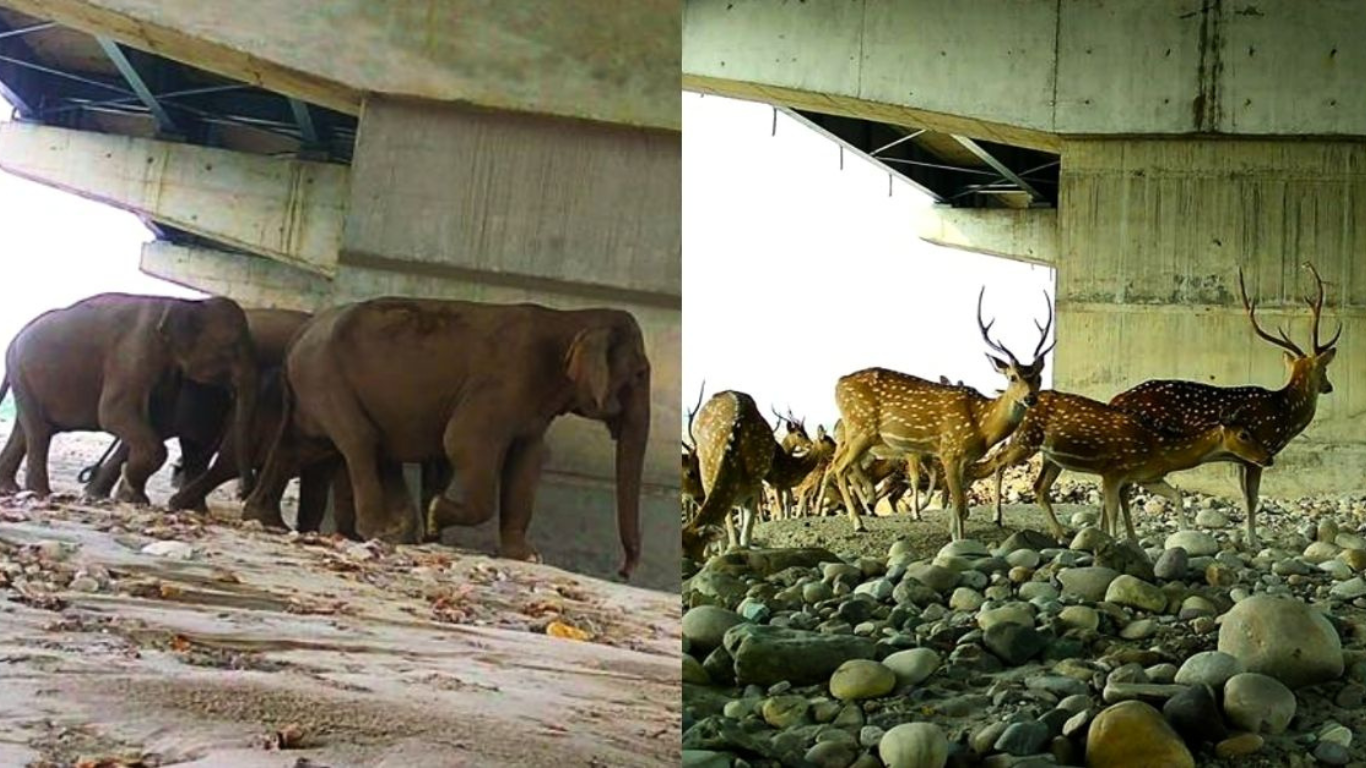
Article written by Meghan Cook Originally published by Good Good Good, 29 June 2026 On April 14, the National Highways Authority of India officially opened the Delhi-Dehradun Expressway, a six-lane highway connecting the national capital of India to Dehradun, near the Himalayan foothills. The expressway was designed so that wildlife could cross beneath it by way of a 6.8-mile corridor underneath the overpass. “The corridor marks a significant milestone in the development of sustainable infrastructure, demonstrating that National Highway development can coexist with the preservation of ecologically sensitive areas,” the Wildlife Institute of India and the National Highways Authority of India said in a joint press release. According to the agencies, the neighboring forest regions of Asharodi and Ganeshpur are home to some of the world’s most endangered species, including tigers, elephants, greater hornbills, and king cobras. Credit: National Highways Authority of India “The 20 kilometer-long stretch between Ganeshpur and Asharodi features a total of 10.97-kilometer long animal underpass designed specifically to facilitate unobstructed animal movement,” the agencies explained. “This engineering milestone includes one of Asia’s largest wildlife elevated corridors, standing at an average height of 6 to 7 meters to accommodate even the largest mammal.” Although the roadway was officially completed in mid-April, local animals didn’t wait for permission to cross. In fact, in a new study from the Wildlife Institute of India and the National Highways Authority of India on the effectiveness of wildlife corridors, researchers recorded over 40,000 images of animals using the crossing in the 40-day window before construction was completed. Credit: National Highways Authority of India “40,444 were attributed to 18 unique wild species utilising the underpass, including various carnivores, herbivores, ungulates, pheasants, and primates,” the agencies stated. “The golden jackal was the most frequently captured, followed closely by Nilgai, Sambar, and spotted deer. Smaller mammals, including the Indian hare, also showed consistent movement through the structures.” “Notably,” they added, “the study also recorded 60 instances of the elephants safely utilising the corridors, establishing that even the largest wild animals can navigate the new infrastructure to maintain their natural migration patterns.” India is home to approximately 22,446 wild elephants — roughly 60% of the world’s remaining Asian elephants. Credit: National Highways Authority of India Although Asian elephants are listed as endangered on the International Union for Conservation of Nature’s Red List, nonprofit groups like Wildlife SOS have achieved major conservation milestones in the region over the last decade. Recent efforts include India’s first Humane Elephant Rescue Center, India’s first elephant hospital, and the implementation of an “elephant” ambulance custom-designed to save elephants in distress. And now, the Delhi-Dehradun Economic Corridor is one more defense for elephants and other vulnerable species against the preventable violence of traffic collisions. The agencies concluded their press release by stating: “NHAI remains committed to integrating environmental sustainability into National Highway development and will continue to adopt innovative mitigation strategies and measures, including data-driven approaches to balance infrastructure growth with ecological and biodiversity conservation.” Credit: National Highways Authority of India
Mother leopard killed simply for being hungry. Help us save her cub’s life.
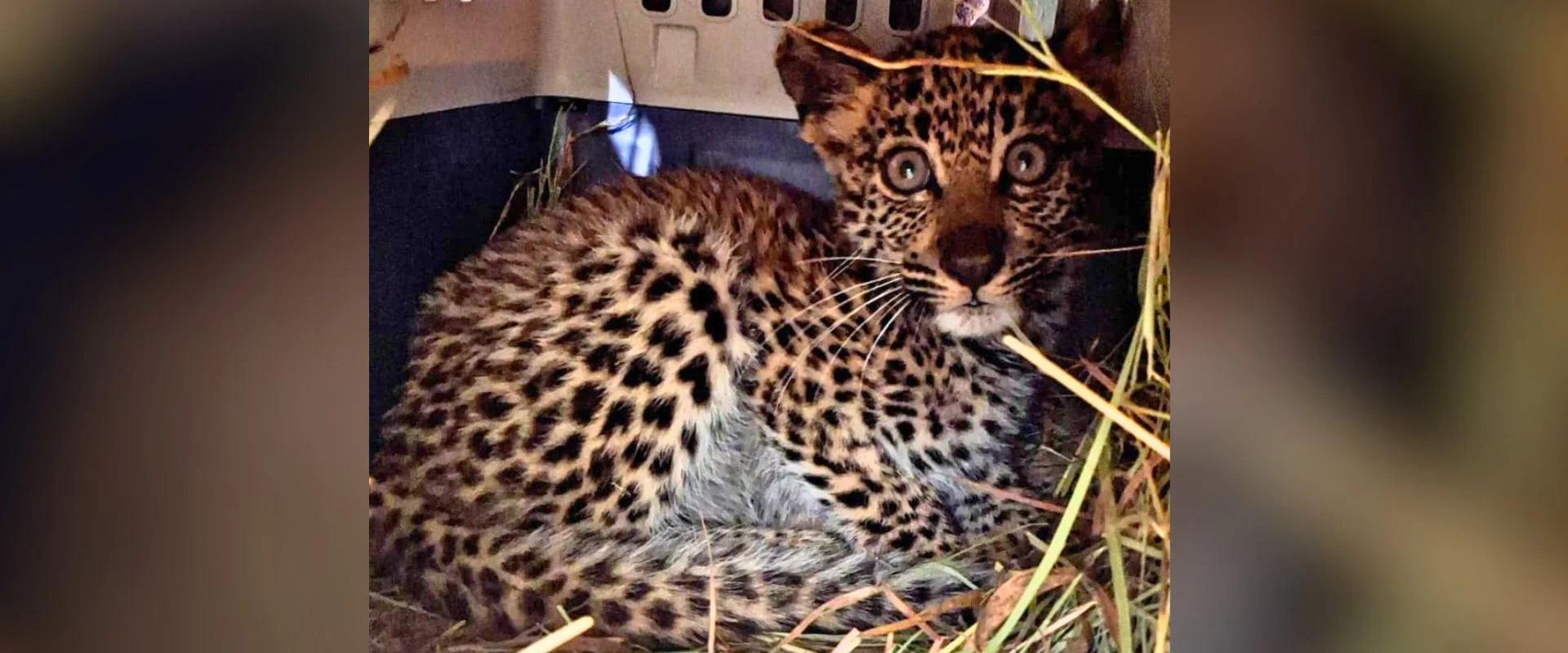
When leopard cub Mohli was just a few months old, her mother was mercilessly killed by farmers in South Africa for simply trying to feed her baby. Mohli’s mother was a tragic victim of escalating human-wildlife conflict in Limpopo, one of the country’s largest farming regions. Human settlements are continually expanding into natural spaces, and as a result, wild animals like leopards may prey on their livestock. When that happens, the animals pay the ultimate price. With no mother to feed her and no one to keep her safe, this tiny leopard cub did the only thing her instincts told her to do: she went hunting for food. The very thing that killed her mother saved her life. Mohli’s mother was tragically killed, leaving the young leopard cub with no one to feed her. She was extremely weak and severely malnourished when rescuers found her in a farmer’s trap. Source: Indlulamithi Wild Big Cat Sanctuary At just three months old and barely bigger than a domestic cat, Mohli was far too young to be away from her mother. She crept onto a farm near Modimolle in Limpopo and was caught in a trap by a farmer. Farmers set these traps to capture leopards and have them released elsewhere so they cannot prey on their livestock. What rescuers found when they arrived was heartbreaking. Mohli was severely malnourished and dangerously weak. She had diarrhoea, which can be lethal in a young animal, and her condition was so poor that it was hard to estimate her age. When the vet tried to take her blood, her blood pressure was too low to draw any. She was starving, alone and fighting for her life. A leopard cub without her mother doesn’t just lose her parent. She stands to lose her chance at life. Your support will help give her her life back. Poaching, the illegal wildlife trade and human-wildlife conflict have led to the decline of leopard populations by more than 30% in the last 20 years. Credit Wikimedia Commons – leopard skins Leopard mothers are everything to their young. They nurse them, shelter them and teach them everything they need to know about surviving in the wild. When Mohli was strong enough to be moved, she was transferred to our partner, Indlulamithi Wild Big Cat Sanctuary in Limpopo, an expert in rehabilitating infant big cats. It was here that she was given her name, “Mohli”, meaning warrior. We need your help to help get Mohli strong enough to live a wild life in a protected sanctuary. Indlulamithi occupies 2,470 acres (1,000 hectare) of pristine wild land, and will be the perfect place for Mohli to live once she has developed her skills as a wild leopard. Here, she will have plenty of food to hunt, and because it is private and fenced, she will always be safe from hunters and farmers. But to give her this life, we must help rehabilitate her. If we can raise the funds for an enclosure that closely mimics the wild environment she lost, we can give Mohli back her life — and her freedom. The goal is to give Mohli, now five months old, around 18 to 24 months of expert rehabilitation, and then release her into a large, fenced wild reserve, where she belongs. But for this to be possible, she needs a two-and-a-half-acre (one-hectare) soft-release enclosure where she can develop the hunting and survival skills her mother never had the chance to teach her. More than anything, she deserves this chance. Leopards are running out of time. After losing her mother at a young age, Mohli is now regaining her strength at our partner’s sanctuary in Limpopo. She will need between 18 and 24 months of expert rehabilitation. Source: Indlulamithi Wild Big Cat Sanctuary The African leopard is listed as Vulnerable on the IUCN Red List of Threatened Species, facing a high risk of extinction in the wild. Populations have declined by more than 30% in the last 20 years, driven by habitat loss, the illegal wildlife trade and the same deadly human-wildlife conflict that killed Mohli’s mother. Every cub that can be saved, rehabilitated and returned to the wild is a lifeline for the species. Please donate generously today.
Infant pangolin destined to be turned into alcoholic beverage

Pepsi should have been safe in his mother’s care. Instead, he was about to be submerged in a jar of rice wine to become a novelty alcohol product in Asia. It is horrific, that somewhere in the forests of Laos, this tiny pangolin’s life was torn apart by wildlife traffickers. Stolen from the wild and without the protection of his mother, Pepsi became another victim of the cruel, illegal wildlife trade. At an age when infant pangolin Pepsi should have been with his mother, in the wild, he was about to be made into an alcoholic drink. No baby should have to endure that. In Laos, infant pangolins are ripped from their mothers and drowned in rice wine, with the vile potion falsely believed to have medicinal value. Source: JITTRAPON KAICOME/The Telegraph In Laos, a brutal and illegal practice sees infant pangolins stolen from the wild, killed, and their tiny bodies submerged in jars of rice wine. This is sold either as a novelty product or purchased by people who falsely believe the cruel concoction holds medicinal value, despite there being absolutely no scientific evidence to support this belief. It is nearly impossible to believe that anyone could be so cruel as to rip a helpless, infant creature from its mother, let alone to drown the baby in alcohol. But that’s exactly what happened to little Pepsi, a critically endangered Sunda pangolin native to Southeast Asia. For the pangolins of Asia, this heartbreaking story is all too common. Fortunately for Pepsi, a good Samaritan stepped in as the killing was about to happen. The infant was rescued and then turned over to our partner, Laos Conservation Trust for Wildlife (LCTW), which cares for thousands of endangered animals every year. Pepsi was saved at the very last moment by a good Samaritan who refused to look away. Now in safe hands, this tiny infant is finally getting the care he deserves. Source: LCTW Terrified, dehydrated and desperately weak, infant pangolin Pepsi was another victim of humanity’s demand for wildlife products. Pangolins stay with their mothers for three to four months. Pepsi was just a few weeks old when he was rescued. It was a miracle he was still alive, and touch-and-go whether he would survive. These gentle, secretive animals are extremely fragile, and raising a baby without its mother is one of conservation’s greatest challenges. Please donate today and give Pepsi a second chance at life. Every $500 raised covers the cost of vital milk formula for a month. Pepsi needs round-the-clock care and feeding to grow strong enough to forage for the ants that pangolins live on. For several months, he will be given specialized milk formula and until he can begin the process of soft-release into a safe, protected wild area. Pepsi’s recovery will take months of dedicated care. Source: LCTW Pangolins are the most trafficked mammals on Earth, and are rapidly being driven towards extinction. Every individual saved, like Pepsi, presents hope for the entire species. Millions of pangolins have been stolen from the wild for their scales, despite there being no scientific evidence that their scales have medicinal value. Entire populations have been devastated by poaching and trafficking. That is why today, we must do everything in our power to help Pepsi survive and thrive, so he may one day be released into a monitored forest where he can live free and safe from poachers. Please donate today.
They thought they were rescuing a penguin, what they found astounded them
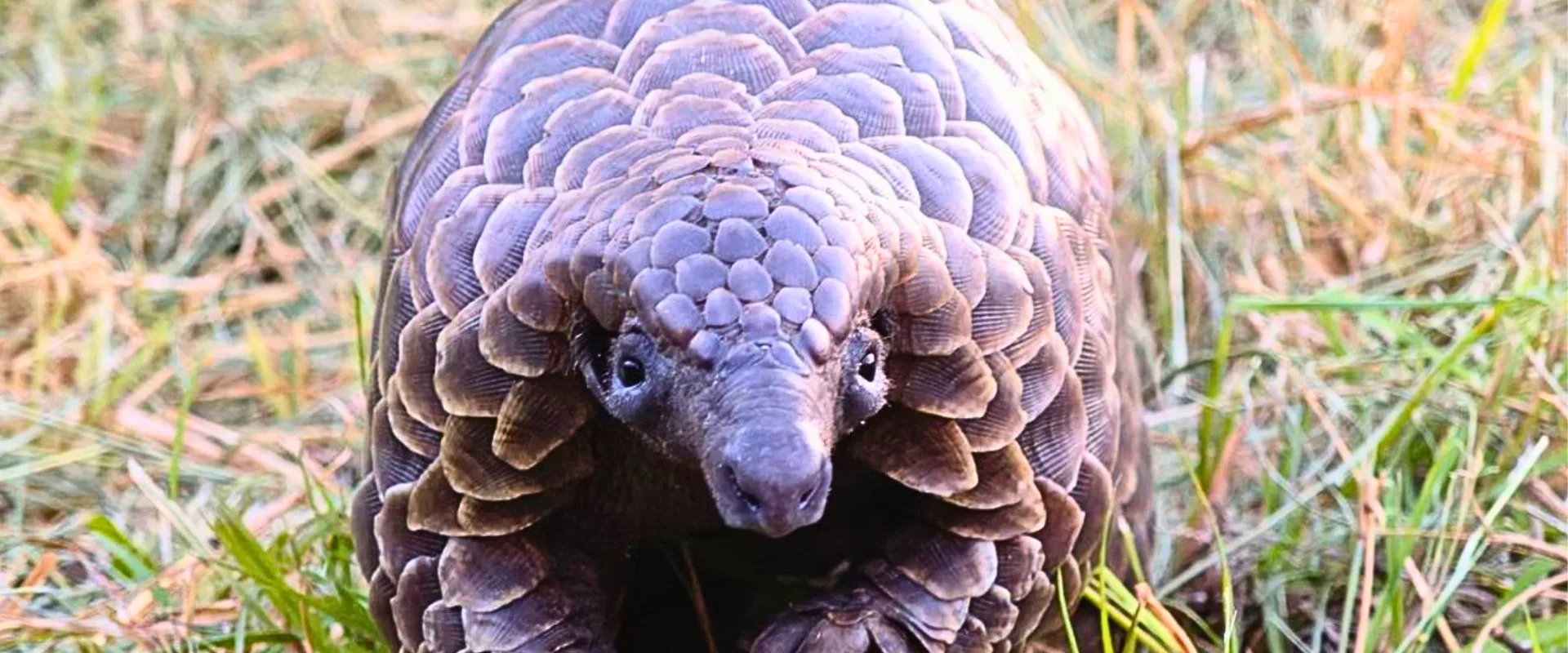
When Pingu the pangolin was confiscated from criminal traffickers in Cape Town, the authorities were baffled because they did not know what kind of animal they had. When they called for help, based on the description they provided, rescuers believed it was a penguin in distress and rushed to the scene with equipment designed to rescue a seabird. When they arrived, they found something very different — a tiny, frightened pangolin curled into a ball. A rescue nobody expected. Meet Pingu, who was thought to be a penguin, but turned out to be a pangolin. Source: ASI/David Barritt Pangolins are the most trafficked mammals on Earth. Millions are killed for their scales, which are falsely believed to have medicinal value in parts of Asia. Africa is now the center of the trade and unscrupulous criminals are ripping pangolins from the wild at a horrifying speed. Our partner, Umoya Khulula Wildlife Centre in South Africa, takes pangolins rescued from the wickedly cruel illegal trade and rehabilitates them before returning them safely to the wild. Pangolins are shy, gentle and pitifully defenceless. Pangolins don’t have vocal cords, so they can’t even cry for help. They are easy victims for poachers, with a terrible fate in store when caught, often descaled while they are alive and then dropped into boiling water and cooked for food in restaurants. Pangolins are gentle, quiet and completely defenceless, with no voice to call for help. They are also the most trafficked mammals on Earth, taken from the wild at an alarming rate. The little survivor, now called Pingu — named after a cartoon penguin — had been moments away from being trafficked for her scales. She was quickly flown to our partner sanctuary, where she is slowly recovering. But caring for a pangolin is incredibly costly and demanding. Why does Pingu needs a bodyguard day and night? Pangolins are nocturnal, sensitive and easy to catch. Pingu must be protected 24 hours a day. When she wakes, she goes on long walks to feed on ants — always accompanied by her dedicated bodyguard, Thomas Mosiamadi. Wherever Pingu goes, Thomas follows to make sure she is safe. Rehabilitating a pangolin like Pingu can take many months. She requires constant monitoring, special nutritional formula and round-the-clock care. At night, Thomas sleeps in the same room to supervise her care. Without intense care, Pingu would not survive. Meet Thomas, Pingu’s dedicated bodyguard. Wherever she goes, he follows, on her walks to feed on ants and through every month of her rehabilitation. Source: ASI/David Barritt Pangolins are so endangered that every life saved is a major victory. Please help us protect and care for Pingu and the other rescued pangolins. Your donation today will help provide the specialized care, food and protection Pingu and others like her desperately need until they can return safely to the wild. Please donate today.
Massive Seizure Of 500 Elephant Tusks In Tanzania Raises Alarming Questions About Global Ivory Trade
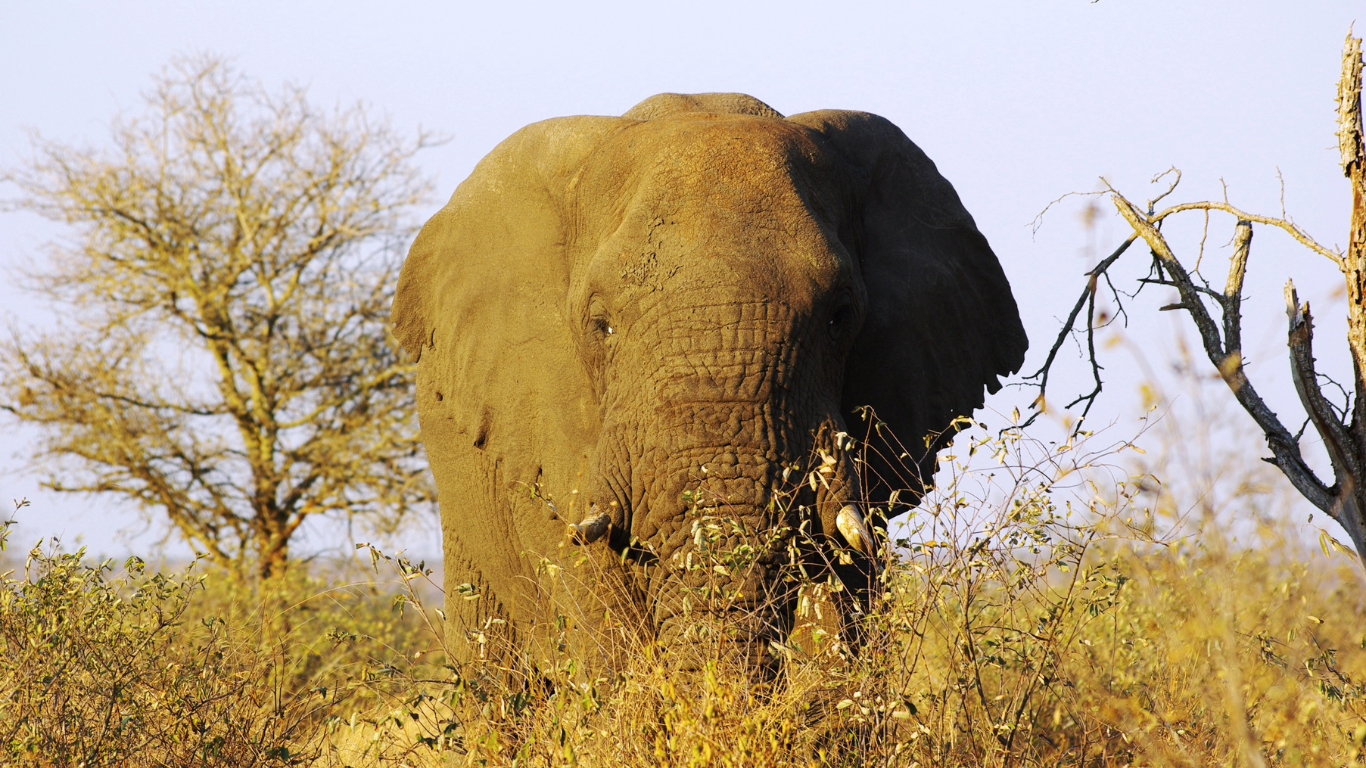
Article written by WAN Editorial Team Originally published by World Animal News, 16 June 2026 A massive seizure of 500 elephant tusks in Tanzania is shining a spotlight on the devastating toll the illegal ivory trade continues to take on elephants across Africa. The case has sparked renewed calls for Tanzanian authorities to look beyond a single arrest and investigate the larger trafficking networks that may be responsible. Wildlife advocates say seizures of this magnitude often point to organized criminal operations that extend far beyond one individual. Police in Dar es Salaam have arrested a North Korean national accused of the illegal possession of hundreds of elephant tusks with the intent to sell them, in a case that has raised concerns about the criminal syndicates driving the global ivory trade. Despite decades of international efforts to combat ivory trafficking, elephants continue to be slaughtered for their tusks. African elephant populations have plummeted from an estimated 12 million a century ago to roughly 415,000 today, with poaching for the ivory trade remaining one of the species’ greatest threats. Large-scale ivory busts like this one serve as a stark reminder that criminal organizations are still profiting from the slaughter of one of the world’s most iconic species. Much of the ivory trafficked from Africa has historically been destined for markets in Asia, where demand has fueled decades of poaching and contributed to devastating declines in elephant populations across the continent. Maliki Wardjomto, Head of TRAFFIC East Africa, said: “Every major bust should trigger deeper, intelligence-led investigations to identify the networks, financiers, and routes behind the trade. “Without this, we risk addressing only the symptoms rather than the system sustaining wildlife trafficking.” Wardjomto added: “TRAFFIC works closely with the Tanzanian Police, prosecutors, and judiciary to strengthen responses to wildlife crime, and we are confident that these institutions will treat this case with the seriousness it deserves and pursue strong, coordinated follow-up action.” This is not the first time authorities have intercepted large quantities of ivory. Over the years, major seizures in Africa and Asia have exposed international trafficking routes linking elephant poaching hotspots to illegal wildlife markets. While some shipments have been intercepted, conservationists warn that many more may have slipped through undetected. In recent decades, conservation efforts, anti-poaching initiatives, and international ivory bans have helped reduce elephant losses in some regions. Yet poaching, habitat loss, and human-wildlife conflict continue to threaten elephant populations, while traffickers exploit international smuggling routes to move illegal ivory across borders. As TRAFFIC noted: “This is a major seizure. But seizures should never be the end of the story.” For every tusk seized, there is an elephant that lost its life. Conservationists hope this case will lead investigators beyond a single suspect and toward those responsible for financing, coordinating, and profiting from the illegal ivory trade. Ultimately, protecting elephants requires more than confiscating ivory; it requires dismantling the syndicates that continue to fuel demand, finance poaching, and profit from one of the world’s cruelest wildlife crimes.
Cape Town International Airport sting nets man with 150 venomous scorpions
Article written by Agence France-Presse (AFP) Originally published by CBS News, 15 June 2026 Authorities arrested a 28-year-old man with 150 venomous scorpions at Cape Town International Airport. The man had concealed the live arachnids between his clothing inside his luggage, South African police said. His arrest on Friday (12 June) followed an intelligence operation conducted by the SAPS Kuilsriver Stock Theft and Endangered Species Unit in collaboration with CapeNature. “He was arrested under the Nature and Environmental Ordinance Act, being in possession of a wild animal,” police said in a statement, without naming the man. He appeared in court on Monday (15 June). Police released an image of the scorpions, which appear to be individually wrapped in plastic. The scorpions have been handed over to a wildlife facility for safekeeping, while officials assess their market value. Wildlife trafficking remains a major threat in South Africa, one of the world’s most biodiverse countries. Last August, six people, including a well-known rhino breeder, were charged in South Africa in connection with an international rhino horn trafficking network. Crime syndicates target iconic species such as rhinos and elephants, but also lesser-known creatures including pangolins and reptiles, feeding a lucrative global black market. South African authorities arrested a 28-year-old man whom they caught trafficking 150 venomous scorpions through Cape Town airport, police said. Supplied: South Africa Police
Critically endangered, taped and BOUND
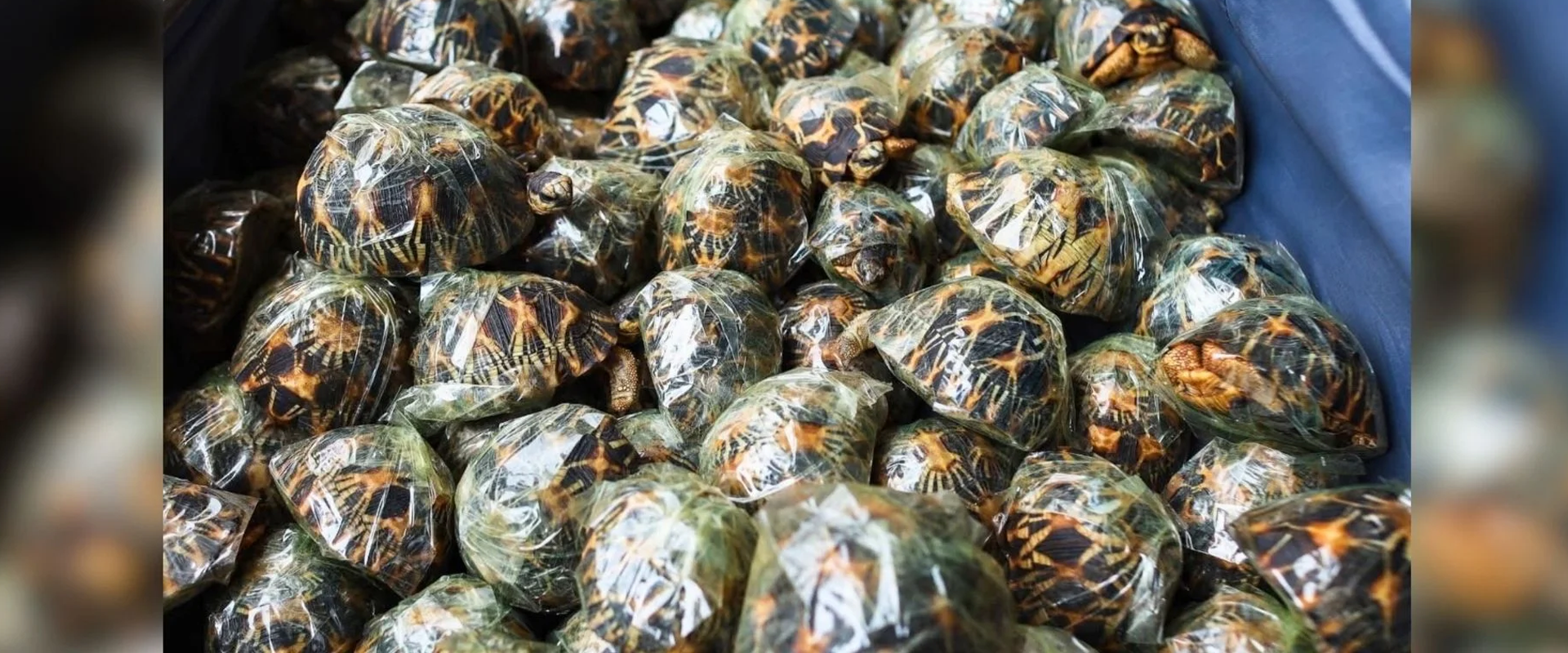
A horrifying discovery has just been made in Madagascar. Critically endangered radiated tortoises were found alive inside suitcases after being confiscated from wildlife traffickers. Each terrified animal had its legs forced into its shell and its body tightly wrapped in packaging tape so it could not move. Then they were crammed into luggage and prepared for transport across borders — treated like cargo instead of living, feeling creatures. This is the brutal reality of the illegal wildlife trade. From the moment a critically endangered radiated tortoise is stolen from the wild, its suffering begins – and may continue for up to a CENTURY. Confiscated from wildlife traffickers in Madagascar, these critically endangered radiated tortoises were found bound with tape and crammed into suitcases, still alive. Source: TSA Radiated tortoises are among the world’s most beautiful tortoises, known for the dazzling yellow star patterns on their shells. But their beauty has become a curse. Stolen from Madagascar’s forests to be sold as exotic “pets,” these gentle animals are condemned to unimaginable suffering. They can live for more than 100 years. That means a tortoise stolen from the wild today could endure a century of captivity, neglect and misery. Barely alive when rescued. When rescued by our long-time partner, Turtle Survival Alliance (TSA), many tortoises are barely alive — emaciated, dehydrated, starving and traumatized. Some do not survive the ordeal. Others are only alive because help reached them in time. Since January alone, TSA has confiscated 1,038 radiated tortoises from traffickers across Madagascar — every one of them stolen from the wild — including the ones found in the suitcases. Found with broken shells, open wounds and bodies ravaged by starvation, these radiated tortoises were stolen from Madagascar’s forests for the illegal pet trade. Source: TSA Our partner urgently needs to relocate 1,000 tortoises to their larger rehabilitation center – a challenging journey of roughly 620 miles (1,000km) to the south of the island. With nearly 19,000 rescued tortoises already in its care, TSA urgently needs help relocating 1,000 vulnerable tortoises from its headquarters in Antananarivo to a larger rehabilitation center in the Androy region. This area is perfect for these shelled creatures to thrive, thanks to the unique formation of its arid forest ecosystem. Without enough space, overcrowding creates extreme stress, disease outbreaks, injuries and even death. You can help save 1,000 lives. After rescue, each tortoise is carefully cleaned, rehydrated, fed and treated for injuries and illness. Slowly, they regain their strength and get a second chance at life. If we can raise $3,700 (£2,760), we can help transport 1,000 rescued tortoises safely to the rehabilitation center in the Androy region and provide a YEAR of food, treatment and care for them. Will you help save these critically endangered animals? Every survivor matters. Each rescued tortoise is cleaned, rehydrated and treated — given a second chance at life. But space is running out and these tortoises need your help today. Source: TSA Radiated tortoise populations have crashed by 80% in the last 30 years because of poaching and habitat destruction. Every tortoise that survives is a victory against wildlife traffickers — and a chance for this species to survive. Please donate as generously as you can today. Without urgent support, more tortoises could be lost forever.
Calling One Acre of Forest “Secure Habitat” for Grizzly Bears Is Scientific Nonsense
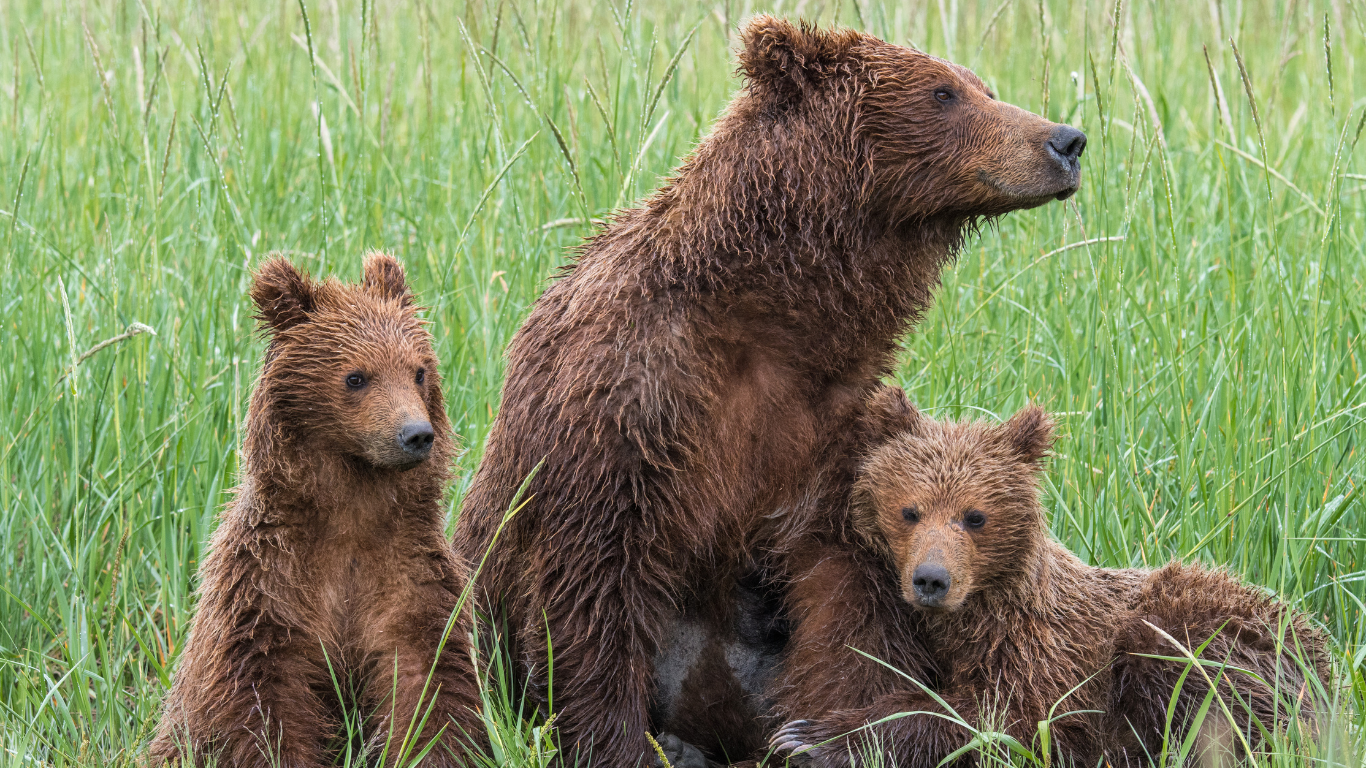
Adapted from original article written by David Stalling Originally published by The Wildlife News, 5 June 2026 The U.S. Forest Service and Fish and Wildlife Service have done something remarkable – and not in a good way. They have effectively declared that a single acre of forest can qualify as “secure habitat” for a grizzly bear. One acre. For decades, federal land managers and wildlife scientists used a common-sense definition of secure habitat. To qualify as a secure habitat, a patch of land generally had to be part of at least 2,500 contiguous acres located away from open motorized routes and developed sites. The standard reflected a basic biological reality: grizzly bears need large blocks of relatively undisturbed habitat where they can forage, travel, rest, and avoid potentially dangerous encounters with people. In 2024 and 2025, however, the agencies quietly abandoned that long-standing definition. Under the new approach, a habitat patch can be as small as one acre and still be counted as “secure habitat” on agency maps and analyses. The agencies did not make this change because new science suddenly showed that grizzly bears can thrive in tiny habitat fragments. No such science exists. Instead, the definition changed as federal agencies sought to justify a major logging and road-building project that would not have met the previous standard. That is not science-based management. It is bureaucratic convenience. A one-acre patch of forest surrounded by roads, logging activity, and human disturbance does not provide the kind of security the term was originally intended to describe. Grizzly bears now occupy only a small fraction of their historic range in the Lower 48 states. They remain vulnerable to human-caused mortality and face growing pressures from expanding development, increasing recreation, road construction, livestock conflicts, and climate change. This is precisely the moment when habitat security should be strengthened, not diluted. The Larabee Hat project lies within one of the most important wildlife corridors in the Northern Rockies. Scientists have long emphasized that maintaining connectivity between these populations is essential for long-term grizzly recovery. Yet instead of protecting this corridor, federal agencies are approving extensive logging and road construction while simultaneously redefining habitat security into meaninglessness. The scientific community understands that grizzly bears require large landscapes. They require connected landscapes. They do not require semantic games. Perhaps most telling is that this is not the first time federal agencies have attempted to reduce secure habitat standards. A federal court previously rejected an effort to reduce the minimum secure habitat patch size from 2,500 acres to 10 acres, concluding that the agencies had failed to adequately justify the change and had not demonstrated that it would protect grizzly bears. Now the agencies have gone even further – from 2,500 acres to one acre. The issue is not whether a grizzly bear can physically stand on one acre of land. The issue is whether a one-acre fragment surrounded by disturbance can honestly be counted as “secure habitat” for purposes of conservation planning and recovery. Common sense says no. Science says no. Yet federal agencies now say yes. Conservation standards should follow science. Definitions should reflect biological reality. And federal agencies should not be permitted to discard decades of habitat-security principles simply because they complicate a logging project. A grizzly bear does not care about bureaucratic definitions. It cares whether the landscape provides enough secure habitat to survive. One acre is not habitat security. It is a redefinition designed to make habitat loss disappear on paper.
Incredible maiden flight for Eastern Cape captive-bred lappet-faced vulture
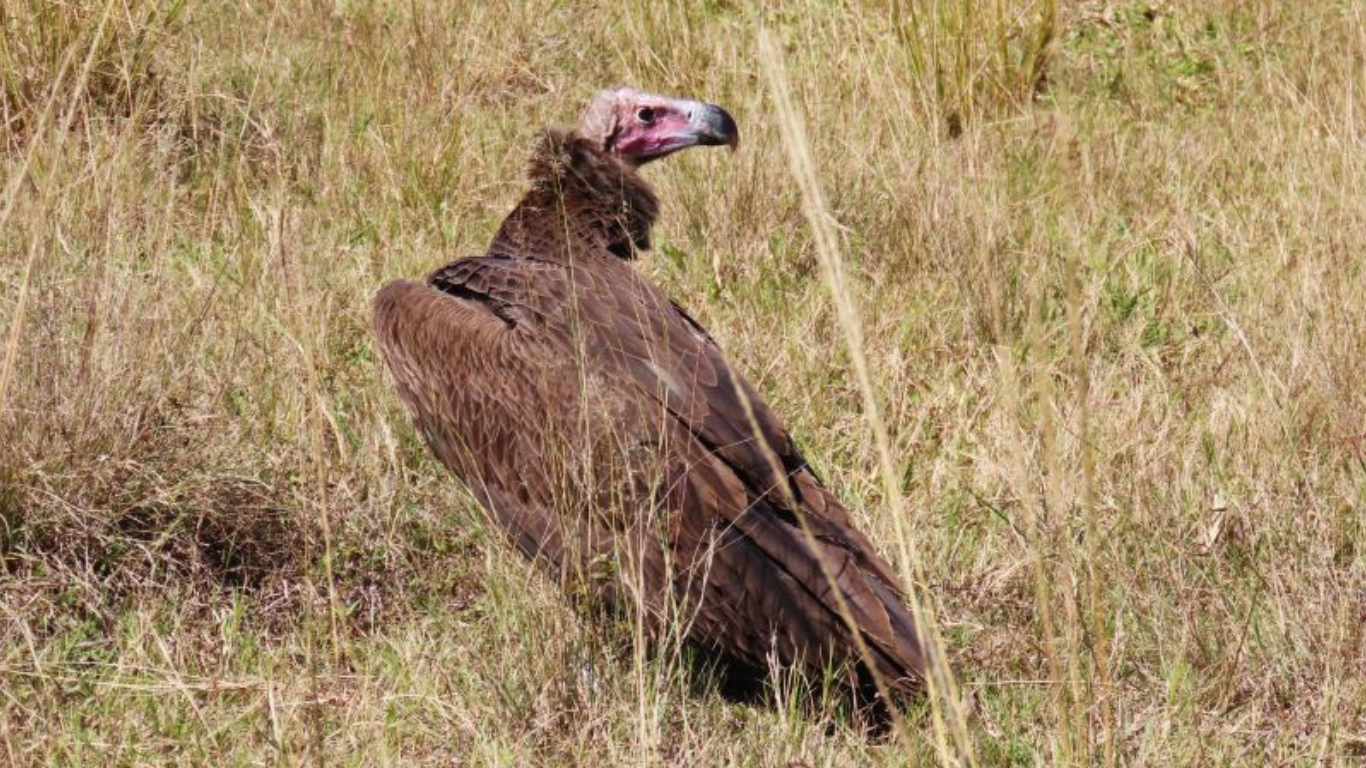
Article written by Kyran Blaauw Originally published by Daily Maverick, 7 June 2026 A young lappet-faced vulture makes history with a remarkable 1,500km flight after its release from captivity, offering hope for the future of this endangered species in Africa. A young lappet-faced vulture that hatched in captivity in Eastern Cape is soaring far beyond what conservationists had dared hope. Less than a month after being released into the wild, the bird had flown more than 1,500km across southern Africa, travelling through Botswana before reaching Namibia’s Etosha region, one of the species’ remaining strongholds on the continent. The bird is believed to be the first captive-bred lappet-faced vulture released in Africa. “It is a significant milestone. As far as we understand, he is the first captive-bred lappet-faced vulture ever to be released in Africa,” said Vulpro founder and CEO Kerri Wolter. The male chick hatched on 26 September 2025 at Vulpro’s breeding facility at Shamwari Private Game Reserve in Eastern Cape. With only about 160 breeding pairs remaining in South Africa, the species is considered critically endangered locally. “There was a lot of debate whether we release him or whether we incorporate him into our captive-breeding programme,” Wolter said. After genetic testing confirmed he was male, conservationists decided he could contribute more to the species in the wild. “There is no baseline data. We don’t know the survival rates of a captive-bred lappet-faced vulture once released. We don’t know how they move. We don’t know how well they integrate into wild populations.” Possibly the first captive-bred lappet-faced vulture ever released in Africa, this bird was bred and raised at the Shamwari Private Game Reserve in Eastern Cape before being released into the wild in Limpopo. (Photo: Supplied / Vulpro) First flight After leaving the nest in Eastern Cape, the young bird spent several months developing independence before being moved to Hartbeespoort in North West. Because lappet-faced vultures do not naturally occur in Eastern Cape, releasing him there was not an option, Wolter said. Instead, Vulpro sought to mimic nature as closely as possible. The young bird was housed with other tree-nesting vulture species and released at Dabchick Wildlife Reserve in Limpopo at roughly the age wild juvenile lappet-faced vultures would naturally leave their parent’s wings. “Remember, that was his maiden flight. He had never flown. He just took off. I like the saying that he flew where his wings took him.” Wolter said reserve staff monitored him closely in the days after release and supplementary food was provided at a safe feeding site away from power infrastructure and other threats. For four or five days, he remained close to the release site. Then he took to the skies. “Remember, that was his maiden flight. He had never flown. He just took off. I like the saying that he flew where his wings took him,” Wolter said. With a wingspan of nearly 2.8m, the young vulture headed north. Tracking data later showed him crossing Botswana and entering Namibia, where he remains. Whether instinct, genetics or something scientists do not yet understand guided him there remains a mystery. “Did his DNA tell him where to go? It’s impossible to know. But the fact that he almost knew where other lappet-faced vultures would be, and that’s where he flew, is incredible,” Wolter said. Namibia is widely regarded as one of the species’ major strongholds and conservationists suspect the young bird may have joined wild vultures there. “He’s surviving. He’s doing incredibly well. His maiden flight was successful. He appears to be doing pretty well from the tracking. We’re incredibly proud of this bird,” Wolter said. The achievement is also a significant moment for a conservation partnership that began two years ago when Vulpro relocated dozens of vultures from Hartbeespoort to Shamwari in what was then South Africa’s largest vulture translocation project. With an impressive wingspan of 2.8 metres, the young lappet-faced vulture has already travelled more than 1,500 km since its release and is currently believed to be in Namibia. (Photo: Supplied / Vulpro) Conservation beyond the Big Five For Shamwari CEO Joe Cloete, the success highlights the need to focus conservation efforts beyond Africa’s iconic big game species. “A lot of the attention over the last 20, 30 or 40 years has always been on the big animals – rhinos, elephants and wild dogs,” Cloete said. “People have largely forgotten about species like vultures.” Vultures play a critical ecological role by rapidly disposing of carcasses that could otherwise spread disease through ecosystems. Across Africa, populations continue to decline due to poisoning, collisions with energy infrastructure, habitat loss and other human-driven threats. “The vulture numbers are declining rapidly around Africa and indeed around the world for many reasons,” Cloete said. “It is such a massive effort that Vulpro are trying to make to get these vultures back into the wild.” Despite heavy rainfall and flooding disrupting operations in Eastern Cape this breeding season, Vulpro has already confirmed fertility in 24 eggs and expects more. To improve hatching success, the fertile eggs are removed from the nest and replaced with dummy eggs, while the real eggs are incubated under carefully controlled conditions, Wolter said. Once the eggs hatch, the chicks are reunited with their parents, who continue to raise them. Last year, the programme produced 30 chicks and Wolter hopes to match that success this year. Meanwhile, a pair of bonded female Cape vultures reunited earlier this year just in time for Valentine’s Day are thriving, Wolter said. As Daily Maverick reported, the birds were originally separated in the hope that they would pair with males and contribute to Vulpro’s breeding programme, but neither accepted a new mate. “They are totally in love. They don’t have eyes for anyone else. The one chased me the other day because I got too close to their nest,” Wolter said. Although any eggs they produce will be infertile, conservationists hope the pair could one day serve as surrogate parents. Banner credit: A male captive-bred lappet-faced vulture, bred at
5 reasons for hope in global wildlife conservation
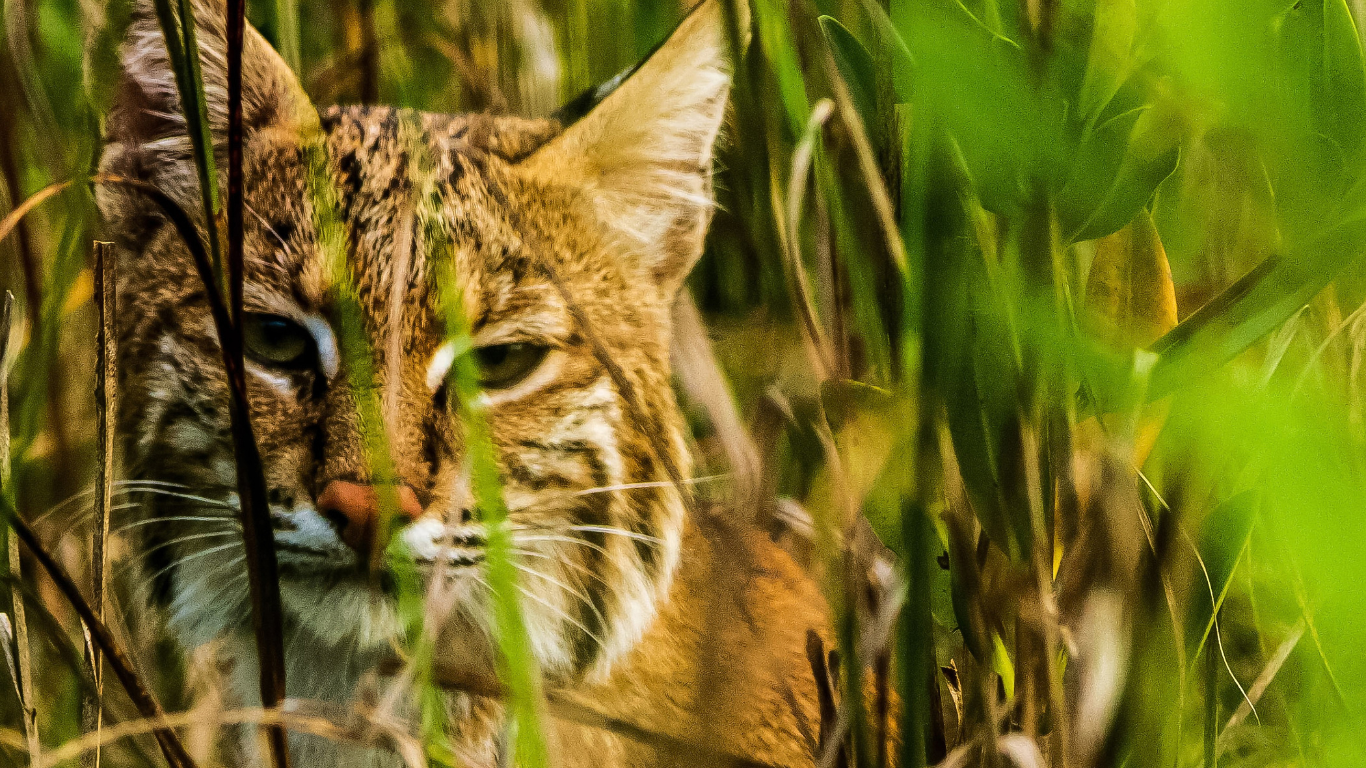
Article written by Miriam Kimvangu Originally published by Getaway, 5 June 2026 While headlines about biodiversity loss and environmental pressures often dominate the news cycle, conservationists, researchers and local communities continue to achieve remarkable successes for wildlife around the world. From the discovery of species new to science to the recovery of endangered animals and ecosystems, the past week has offered several encouraging reminders that conservation efforts can make a difference. Here are six wildlife stories worth celebrating. New species discovered on Angola’s remote plateau One of the most exciting conservation stories of the week comes from Angola, where scientists exploring the remote Lisima Plateau have identified several species believed to be new to science. The expedition uncovered previously undocumented dragonflies, grasshoppers, butterflies, moths and even a fluorescent spider that glows under ultraviolet light. The discoveries highlight just how much of Africa’s biodiversity remains unexplored and poorly understood. The plateau forms part of a region that feeds major river systems including the Congo, Okavango and Zambezi. Protecting these landscapes is important not only for wildlife but also for the millions of people who depend on the water resources they support. New species discoveries help researchers better understand ecosystems and provide stronger arguments for protecting habitats before they are altered or lost. (Source: Reuters) Tiny marsupial continues its comeback in Australia Conservationists working to save the critically endangered Kangaroo Island dunnart have reported encouraging progress in the species’ recovery. The small insect-eating marsupial was pushed to the brink after devastating bushfires swept across Kangaroo Island during the summer of 2019 and 2020. Much of its habitat was destroyed, leaving scientists concerned about the species’ long-term survival. To assist recovery efforts, conservation teams installed artificial shelters throughout affected areas. Recent monitoring suggests the shelters are helping dunnarts survive and reproduce while natural vegetation continues to regenerate. The project highlights the importance of practical, hands-on conservation measures that support wildlife during the critical years following environmental disasters. (Source: ABC News) Birds of prey celebrate conservation milestones Decades of conservation work in the United States are paying off for several iconic bird species. Connecticut recently proposed changes to its endangered species list that would see species such as the bald eagle and peregrine falcon downgraded from their previous conservation status due to population recovery. Both birds experienced severe declines during the twentieth century, largely because of habitat loss and pesticide use. Conservation actions including habitat protection, nest monitoring and restrictions on harmful chemicals have helped populations rebound. Their recovery demonstrates how long-term conservation planning can reverse declines that once appeared irreversible. (Source: CT Insider) Costa Rica strengthens protection for monkeys A landmark court ruling in Costa Rica has been welcomed by conservationists seeking greater protection for the country’s monkey populations. The decision requires authorities and the national electricity provider to address dangerous power infrastructure that has caused thousands of monkey deaths through electrocution over the years. Howler monkeys, spider monkeys and white-faced capuchins are among the species affected by unsafe power lines. By requiring mitigation measures, the ruling could significantly reduce wildlife mortality and improve habitat connectivity. The case also highlights an important aspect of modern conservation. Protecting wildlife often involves adapting human infrastructure to reduce unintended impacts on animals. (Source: The Guardian) A hopeful season for one of the world’s rarest whales Conservationists are celebrating an encouraging breeding season for the critically endangered North Atlantic right whale. Researchers recorded 23 calves during the latest calving season, the highest number observed since 2009. The species remains one of the most endangered large whales on Earth, with only a few hundred individuals believed to remain. North Atlantic right whales face threats from ship strikes, fishing gear entanglements and changing ocean conditions. Every successful calf represents an important contribution to the future of the population. While scientists caution that long-term recovery will require continued conservation action, this year’s breeding success offers a welcome sign of hope for a species that has faced decades of challenges. (Source: NOAA Fisheries)
They’re back! Rhino orphans return to the shores of Lake Kariba
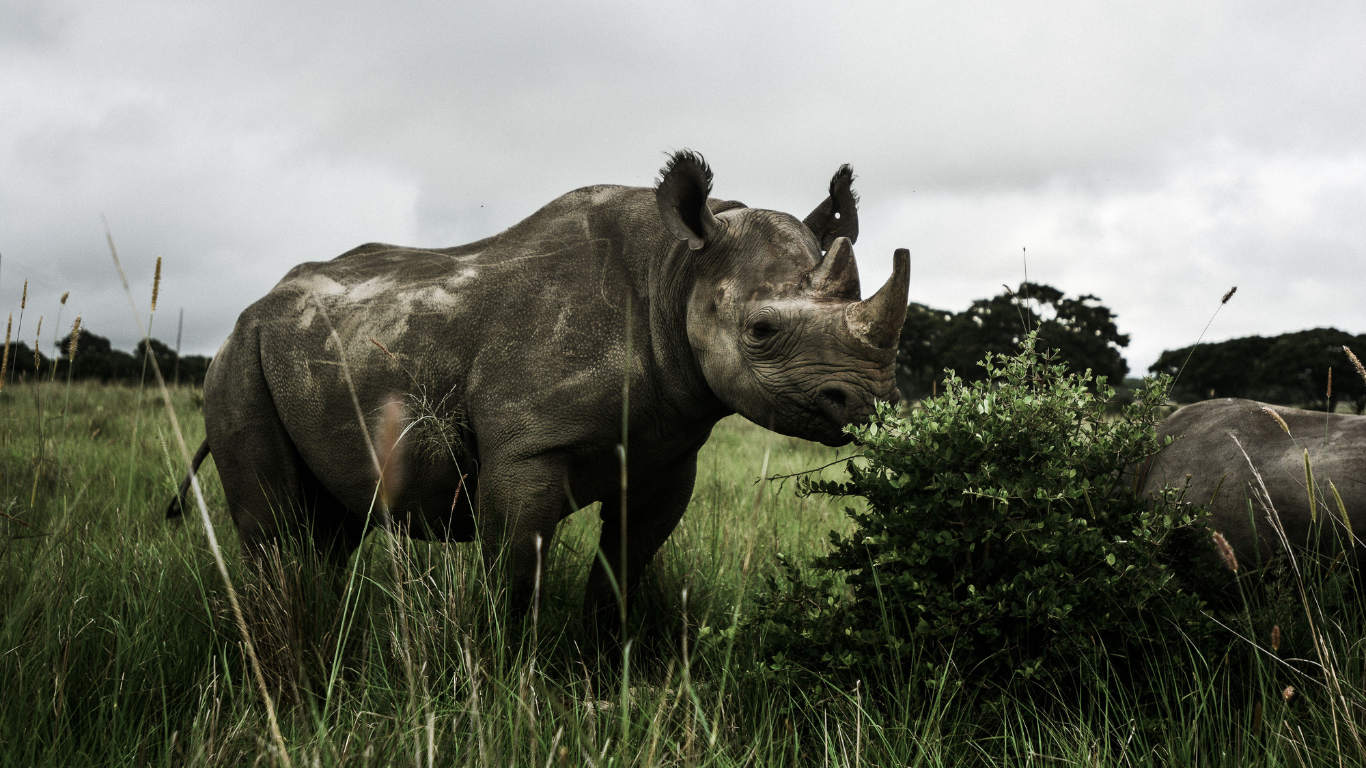
Article written by Tony Carnie Originally published by Daily Maverick, 4 June 2026 Three decades after their parents were evacuated to save them from the bullets of poachers, a group of black rhinos has returned home to Zimbabwe’s Matusadona National Park. The once abundant population of black rhinos in northern Zimbabwe was almost wiped out by gangs of Zambian-based poachers during the late 1980s and early 1990s, prompting a desperate effort to save the survivors. Under the leadership of former Zimbabwe parks chief warden Glen Tatham, scores of these endangered animals were moved from Matusadona and other parks in the Zambezi Valley to more secure sanctuaries in central or southern Zimbabwe during Operation Stronghold. Now, an undisclosed number of their descendants have been flown home to the 147,000ha Matusadona National Park on the southern shores of Lake Kariba. In a statement, the African Parks group said the foresight of moving survivors to other areas had proved critical. This had ensured that the animals were safeguarded through one of its most difficult periods, also preserving the genetic lineage of the animals from the region. “Some of the translocated animals are direct descendants of those moved out of Matusadona more than three decades ago.” The park, now managed by African Parks in terms of an agreement with the Zimbabwe Parks and Wildlife Management Authority , was once the core area of the country’s largest contiguous population of black rhino. Matusadona Park Manager Michael Pelham recalled: “I was here in the 1990s when we lost them. I helped capture the last survivors, we crated them and flew them out to safety, not knowing if the species would ever come back. “Having witnessed the rhino’s catastrophic decline in Matusadona, it is incredibly emotional to see their return. This reserve is synonymous with black rhino, and walking through this landscape recently, there has been an overbearing sense that we are missing an icon. “No words can describe the feeling of seeing these animals arrive back here.” The returned animals were sourced from Imire Rhino and Wildlife Conservancy; Matobo National Park, and one other undisclosed location, loaded into crates and airlifted to the park. Following a period of monitoring in containment bomas, they will be released in phases into a secure Intensive Protection Zone in the national park. Each animal is fitted with a tracking device, enabling real-time monitoring and rapid response to any signs of stress or conflict after release. The translocation was made possible through philanthropic support from the European Union, Global Wildlife Fund and Thomas and Sara de Swardt, with funding for preliminary preparation provided by the Rhino Recovery Fund. ZimParks Director-General Professor Edson Gandiwa described the return as a historic event for the park. “It is a testament to what is possible when government, conservation organisations and local partners work together with shared purpose.
Infant orphan with fractured back leg needs life-saving care
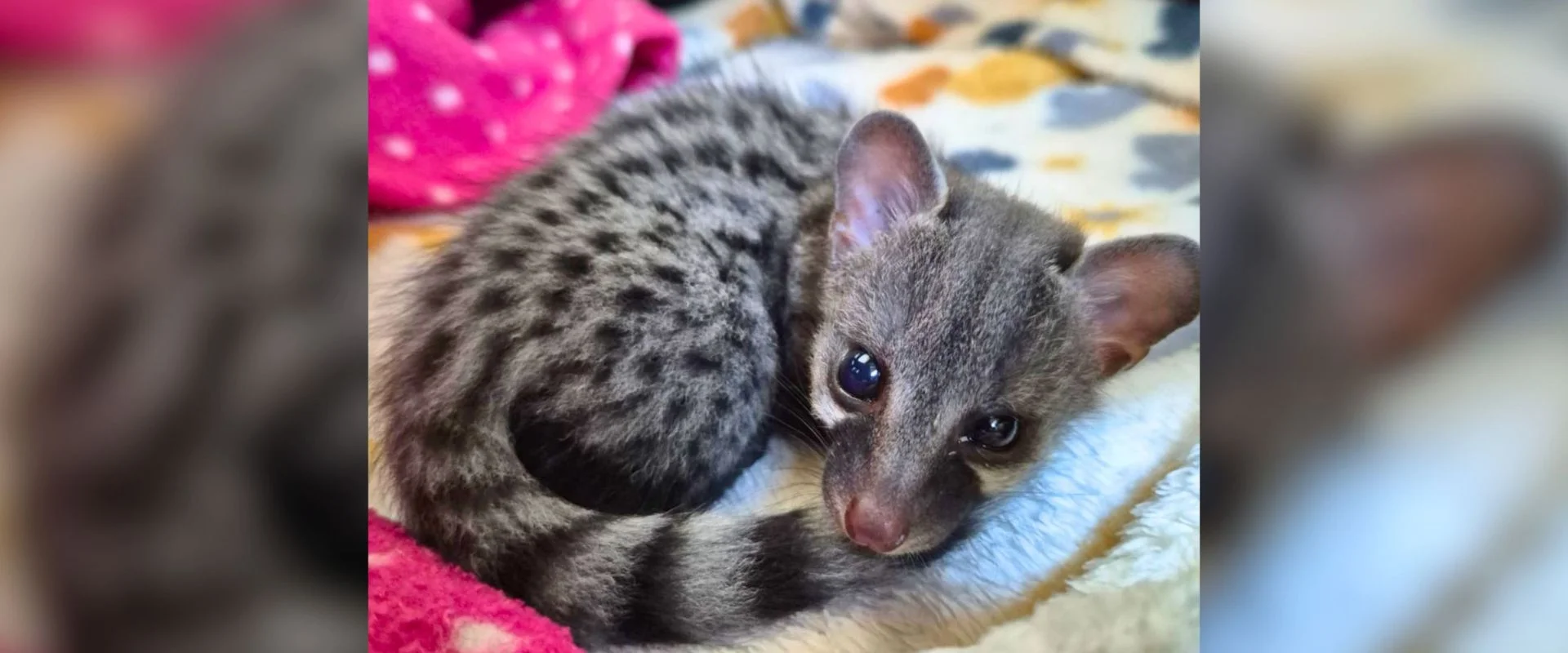
When a treefeller in South Africa cut down a palm tree without thinking twice, it set off a heartbreaking chain of events that left an infant wild animal severely injured, another crushed to death and their mother dead. The surviving animals – two newborn genets no larger than an avocado — were rushed to our partner’s vet clinic. Although the little male seemed fine, it quickly became apparent that the female – weighing just 6.7oz (190g) and now orphaned – had a terrible leg fracture and a further injury to her tail. Weighing just 6.7oz (190g), this tiny survivor faced enormous challenges from the very start. She relies on compassionate people like you to help support her recovery. Source: Kalahari Wildlife Project Infant genet needed a pin inserted into her leg after being severely injured falling from a tree. Help this orphan now. The injured infant needed emergency surgery to insert a pin into her tiny, fractured leg to give it any hope of healing. This pin will remain for around four weeks to give the leg the stability it needs. Only time will tell if she regains the ability to be released into a protected nature reserve. Either way, she will need intensive rehabilitation for a year. If she cannot be released, she will remain in the care of a sanctuary for life – all because humans continue to encroach on the natural habitats of our planet’s precious wildlife. These orphaned genets are small enough to fit in the palm of a hand. Round-the-clock care from our partner gives them the specialist treatment they need to survive and have a second chance. Source: Kalahari Wildlife Project This helpless little creature is not the only animal requiring critical care right now. Every year, our partner, the Kalahari Wildlife Project (KWP), rescues hundreds of injured and displaced wild animals, including endangered and critically endangered pangolins, which are frequently confiscated from poachers. These creatures usually arrive traumatized, sick, severely injured or pregnant, and KWP expertly rehabilitates them. Once healthy, pangolins are released into undisclosed, intensely monitored locations that are never revealed to the public. If we can raise $5,720 (£4,270), we can cover the cost of critical care for injured, orphaned pangolins, genets and other animals for an entire month. Our partner works to support wildlife in one of the most spectacular regions of Southern Africa. The Kalahari – a semi-arid wilderness spanning South Africa, Namibia and Botswana – is home to hundreds of iconic species including the endangered desert black rhino, ground pangolin and African wild dog. From rescue and rehabilitation to carefully managed releases back into protected habitats, the team at KWP works to give these wild animals a second chance at life. Source: Kalahari Wildlife Project Many of the animals KWP treats, have been injured in car collisions or rescued from the illegal trade in wildlife. On the blackmarket, animals are sold – dead or alive – for use in ‘traditional medicine’ or for their body parts to be used as talismans, status symbols or exotic ingredients. Humans are killing our planet’s wild animals at a truly alarming rate. We wipe out millions of land animals every year and, if you include marine animals, that figure jumps to billions. Each animal our partner rescues is critical to the health of the entire Kalahari ecosystem, which sustains everything from the smallest rodents to the largest desert-adapted elephants. With your help today, we can help provide a lifeline to creatures severely impacted by habitat loss, illegal trafficking and other human-related impact. Please donate now.
Wild animal consumption on the rise in Central Africa, study finds
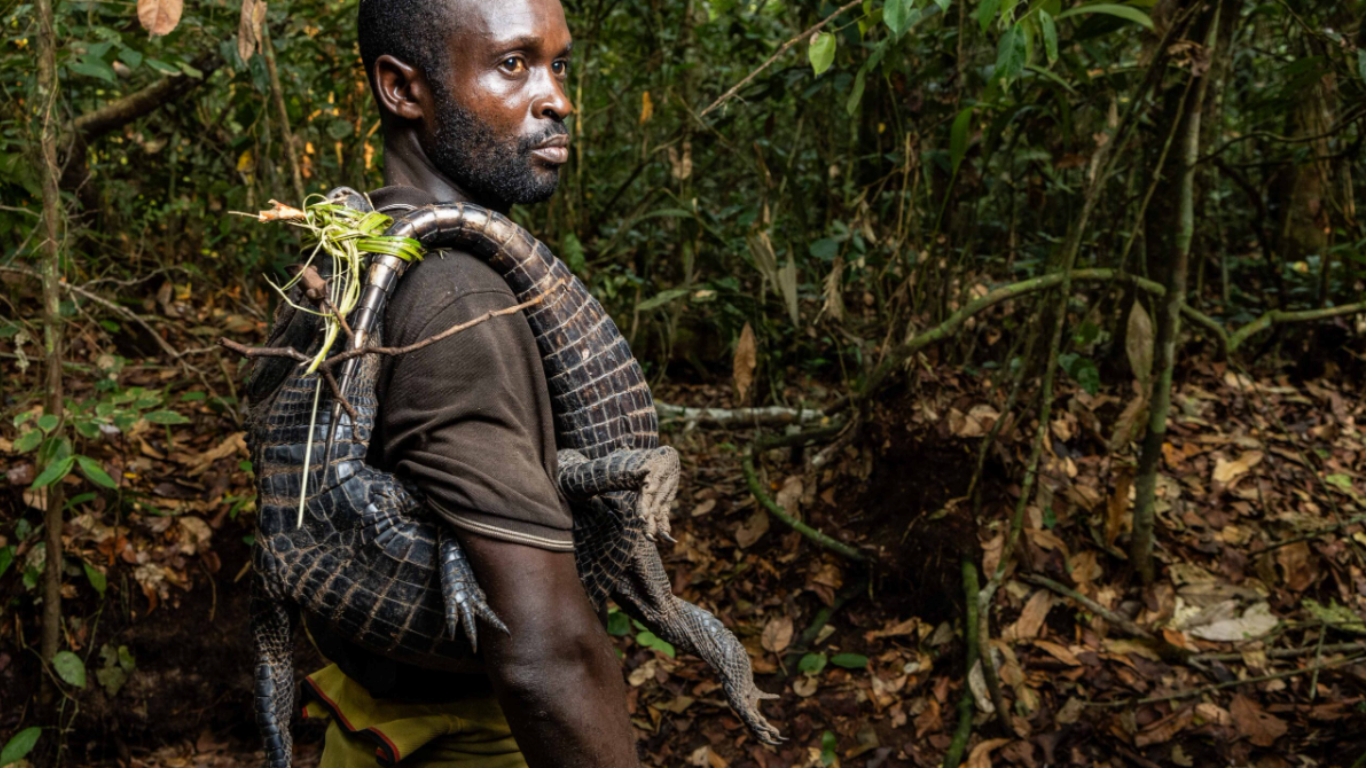
Article written by David Akana Originally published by Mongabay, 21 May 2026 A new study has shed light on the scale of wild meat consumption across Central Africa. According to research led by CIFOR-ICRAF, a roughly 50% increase in the amount of wild meat being consumed is driven largely by growing demand from rapidly expanding urban populations. Published in the journal Nature, the study analyzed data from more than 12,000 households across 252 locations in Cameroon, the Central African Republic, the Democratic Republic of the Congo, Equatorial Guinea, Gabon and the Republic of the Congo between 2000 and 2022. Meat from wild animals continues to serve as a primary source of food for millions of people in the region, particularly traditional hunter-gatherers. According to the study, population growth in Central Africa — from 25 million to 140 million people — has sharply increased demand for both food and income, placing additional pressure on wildlife populations. The study determined 31% of mammals, birds, reptiles and amphibians in the region are currently at risk of extinction. Researchers found annual wild meat consumption rose from about 730,000 tons in 2000 to 1.1 million tons in 2022. “Wild meat is a fundamental component of diets of rural populations, accounting for 20% of the recommended daily protein intake,” the study noted. The report concluded that ensuring the availability of wild meat in rural areas will require reducing its consumption in large urban centers. The study was co-authored by several researchers affiliated with the Wildlife Conservation Society (WCS). In a press statement obtained by Mongabay, Germain Mavah of WCS said the findings reflect a growing threat to wildlife in both rural and urban areas. With the ongoing Ebola outbreak in eastern DRC, the study is also likely to raise renewed questions about the relationship between humans and wild animals, which can cause the spread of zoonotic diseases including COVID and Ebola. The 2014 Ebola outbreak in West Africa was linked to interactions with wild animals. “Wild meat consumption is a major part of Central Africa’s socio-economic fabric,” said the study’s lead author, Mattia Bessone, an ecologist at the Max Planck Institute of Animal Behavior at the University of Konstanz in Germany. “Measures should be enacted to ensure rural populations can sustainably use this food source.” The report acknowledged that wild meat consumption is deeply rooted in the region’s culture. However, it recommended strengthening alternative protein sectors like poultry and fisheries, while also creating alternative livelihoods and employment opportunities for people currently involved in the wild meat trade. The study further argued that reducing dependence on wild meat within the food system will require greater regional production, importation and distribution of healthy, safe and culturally acceptable alternatives. Banner image: According to WCS, dwarf crocodiles, among the most intensely hunted species in the Congo Basin, are often transported alive from remote rainforest areas to urban wild meat markets to keep the meat fresh during transit. Image courtesy of Thomas Nicolon/WCS
Help critically endangered super tusker elephants and we’ll MATCH your gift
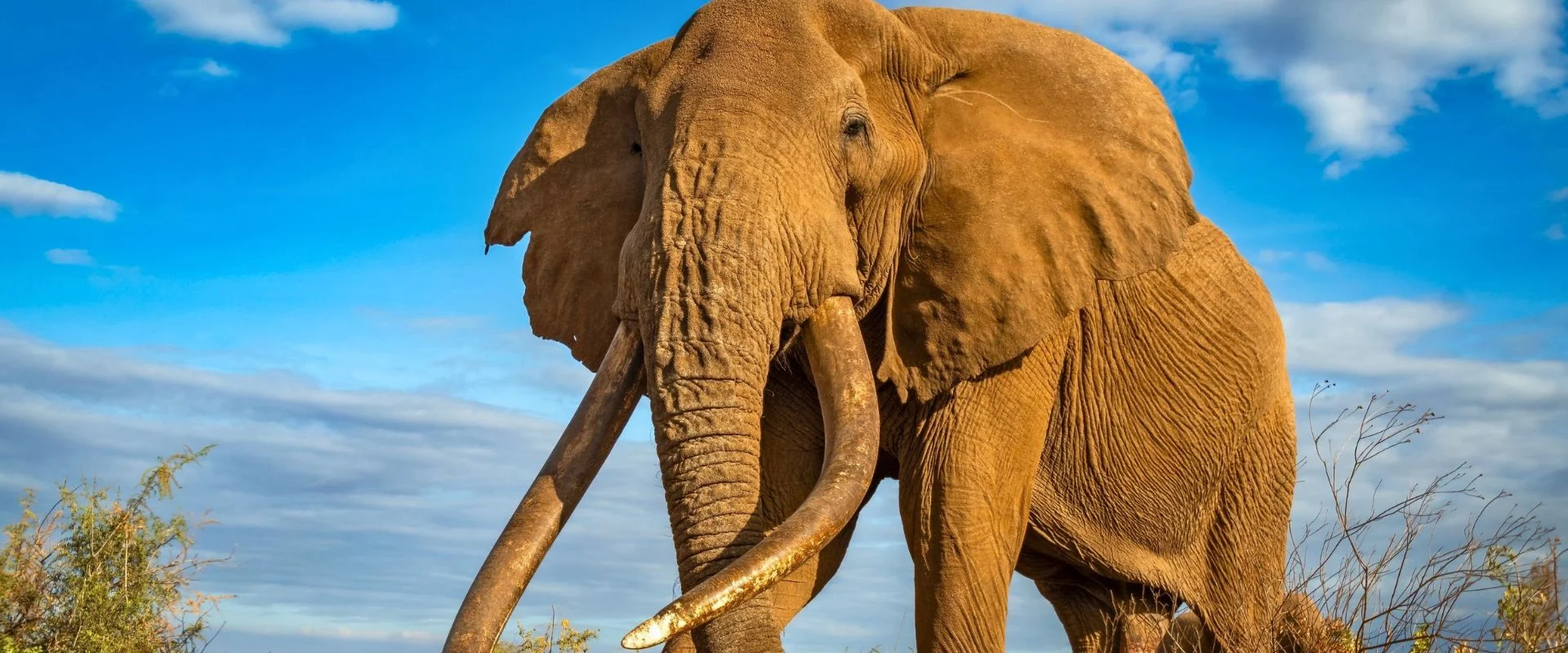
Right now is the most dangerous time of year for East Africa’s remaining, critically endangered super tuskers – elephants with tusks so long, they sweep the ground and which weigh up to 100 pounds (45 kilograms). During the dry season, June to October, these enormous animals migrate between Kenya and Tanzania in search of food and water, crossing vast, unprotected corridors where they are highly vulnerable to being killed. Only 90 remain in all of Africa. The most effective way to protect them from poachers, trophy hunters and communities is with advanced drones. We’ve funded two, but two more are needed. Today, the value of your donation will be DOUBLED – which means if we raise enough funds for a drone, we’ll be able to DOUBLE THAT to fund TWO drones. The super-tuskers of East Africa are the last of an ancient bloodline — magnificent, irreplaceable, and vanishing. Fewer than 30 remain in East Africa, and every single one matters. Source: Harry Collins Photography This week, a generous supporter is MATCHING all donations up to $13,000 (£9,700). If you donate $50 (£37), it becomes $100 (£74). If you donate $100 (£74), it becomes $200 (£150). An ASI donor with a deep love of these animals is offering to match all donations made toward protecting these animals, up to $13,000 (£9,700). That means your gift today will DOUBLE its impact to help super tusker elephants. East Africa’s last super tuskers are not just rare elephants. They are the final guardians of an extraordinary genetic inheritance — the ancient big-tusk bloodline that once defined Africa’s greatest elephants. They are living proof of a genetic legacy that is disappearing before our eyes. Fewer than 30 super tuskers remain in East Africa. Only around 90 are left in all of Africa. Hunted, killed and stripped of the very tusks that define them — only to be turned into trophies, edging one of nature’s most extraordinary bloodlines closer to extinction. Source: Africa geographic Our partner, Conservation Through Tourism (CTT), works across Kenya and Tanzania’s critical wildlife corridors, which super tuskers cross in search of water, food and safety. These corridors are vast, remote and often unprotected — exactly where these elephants are most vulnerable. Using drones, the team can monitor elephants, guide them toward safe water and food sources and help steer them away from human settlements, hunting zones and areas where poachers may be waiting in ambush. This “guarding from the sky” helps prevent deadly encounters before they happen. It dramatically reduces the risk of elephants being poached, shot by trophy hunters or killed after entering human areas in search of food and water. The team protects elephants in three key wildlife corridors, but we are now tackling an area that remains largely unprotected. Super-tuskers must cross largely unprotected corridors to survive. For these elephants, more drones could mean the difference between life and death. Source: CTT To cover this vulnerable corridor, two more drones are urgently needed. These elephants cannot be replaced. If the super tusker gene is lost, it may never return, or it could take centuries to do so. Please donate today. Your gift will be matched, your impact will be doubled and you will help protect the last elephants capable of passing on this rare inheritance.
UAE warns of up to 15 years jail, Dh2-million fine for illegal wildlife trade
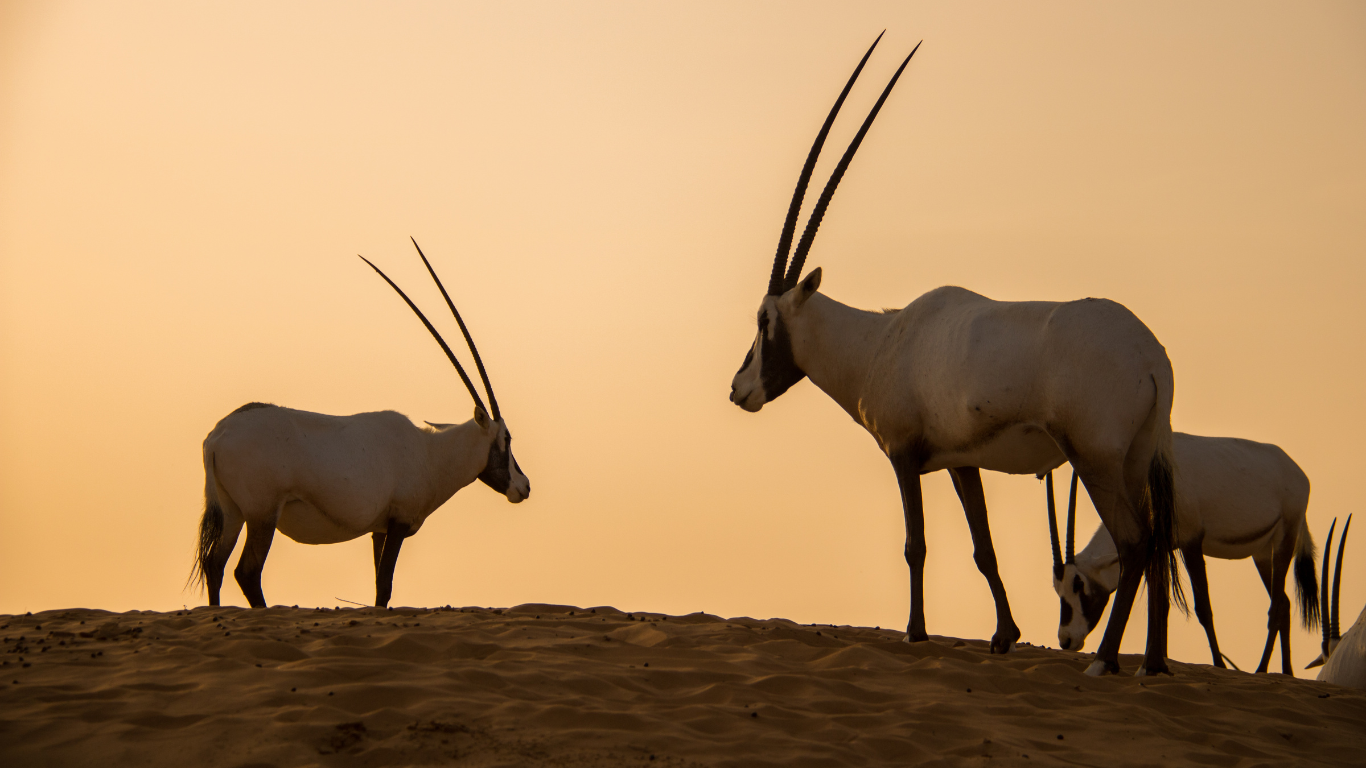
Article written by Amal Alduwaila AlHashmi Originally published by Khaleej Times, 26 May 2026 The UAE imposes prison sentences of up to 15 years and fines of as much as Dh2 million on those involved in the illegal trade of endangered species, the Minister of Climate Change and Environment has said. Dr Amna bint Abdullah Al Dahak said the country operates a zero-tolerance policy on wildlife trafficking under its commitments to the Convention on International Trade in Endangered Species of Wild Fauna and Flora (CITES). The minister framed the UAE’s record as an extension of the legacy of the late Sheikh Zayed bin Sultan Al Nahyan, citing the country’s role in breeding and reintroducing the Arabian oryx, sheltering the world’s second-largest dugong population in Emirati waters, and leading international action on falcons and other birds of prey. 100 million mangroves by 2030 The Mangrove Alliance for Climate (MAC), launched by the UAE in partnership with Indonesia, has grown to 47 member nations. The platform promotes nature-based solutions to climate change and supports the expansion of mangrove forests worldwide. The UAE has committed to planting 100 million mangroves nationally by 2030, part of a wider marine agenda that includes major projects to restore and rehabilitate coral reefs and protect fish stocks. “The Emirates is leading major proactive projects to restore and rehabilitate coral reefs, with the aim of enhancing marine biodiversity and protecting fish stocks,” Dr Al Dahak said. Dr Al Dahak said the UAE’s environmental work is rooted in dedicated national efforts that have produced measurable results well beyond the country’s borders. “The UAE’s national programmes have made significant progress in our commitment to achieve the goals of the Convention on Biological Diversity, reaching milestones that extend beyond our geographical borders,” she said. She pointed to pioneering initiatives to regulate the trade of falcons and other birds of prey, ensuring the sustainability of the heritage and safeguarding it against illegal trafficking, as part of a broader effort to embed biodiversity in the UAE’s environmental diplomacy. The minister said the UAE would continue to strengthen its national legislative, regulatory, and technological frameworks and expand its international partnerships, “guided by the firm belief that protecting nature and safeguarding species today are essential to building a sustainable planet and a prosperous economy for future generations.”
War on Iran may threaten conservation of the world’s rarest big cat
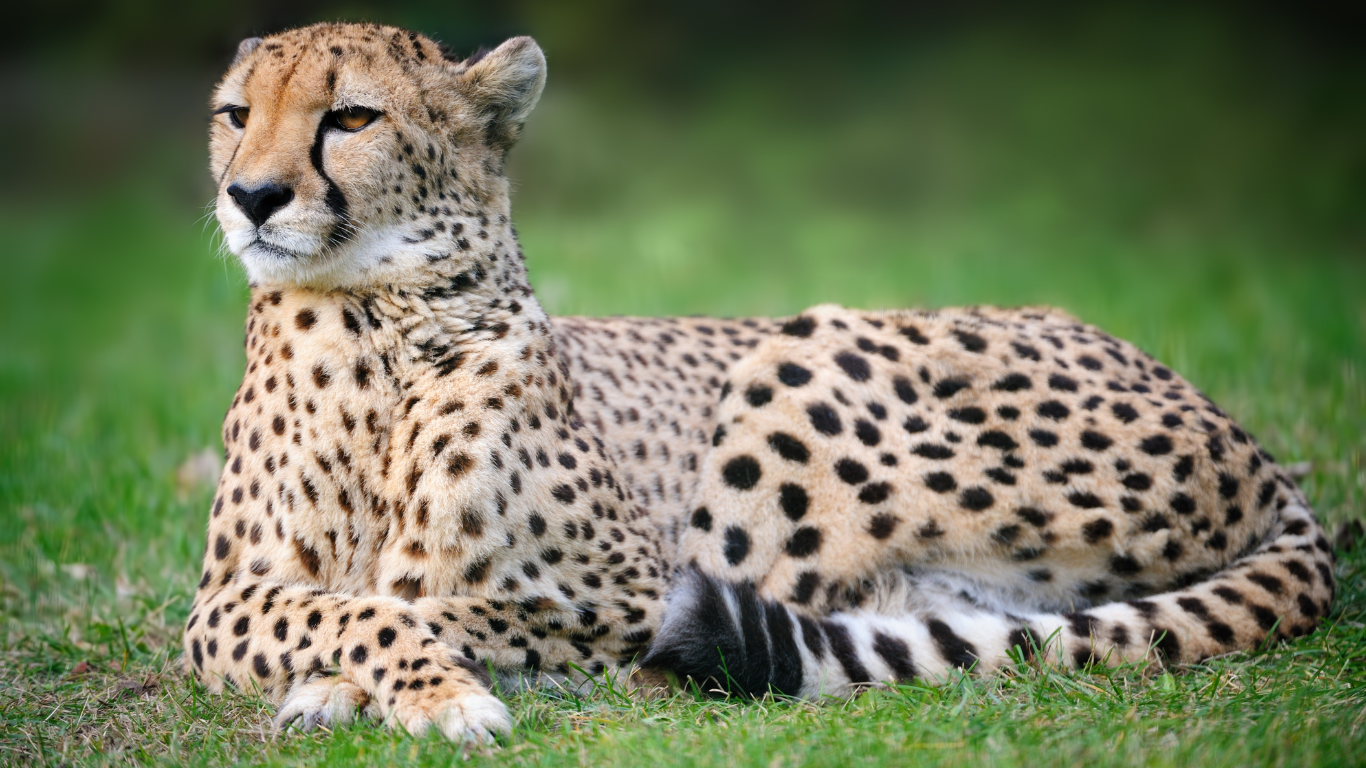
Article written by Naina Rao Originally published by Mongabay, 18 May 2026 The Asiatic cheetah, the world’s most endangered big cat, faces an increasingly precarious future as ongoing conflict in Iran disrupts critical conservation efforts, reports Mongabay contributor Kayleigh Long. Once ranging from the Arabian Peninsula to India, the cheetah subspecies (Acinonyx jubatus venaticus) is now confined to just 16% of its former territory, with fewer than 30 individuals estimated to remain in the wild in Iran. Before the war began in February 2026, conservationists observed a rare sign of hope: a female cheetah named Helia was filmed in North Khorasan province with five cubs, the largest litter ever recorded for the subspecies. Bagher Nezami, national director of the Conservation of the Asiatic Cheetah Project, told Iranian media that these were “ID-carded” individuals being monitored by researchers. However, access to protected areas for nongovernmental groups has now “slowed down considerably,” interrupting long-term monitoring and camera trapping, a local conservationist told Mongabay, speaking on condition of anonymity. There are also fears that conservation vehicles could be misidentified as military targets in the remote desert landscapes where the cheetahs live. Sarah Durant, a research scientist at the Zoological Society of London, emphasized the protection of field scientists, park rangers, and Indigenous peoples during armed conflict is “a matter of urgent international concern.” Beyond the direct impact of combat, Western sanctions on Iran have also taken a toll. “Critical activities such as monitoring, law enforcement and the development of wildlife-friendly infrastructure have declined,” the authors of a 2025 study wrote. “These limitations have contributed to a decrease in prey availability and an increase in direct cheetah mortality, particularly from road accidents.” Road accidents account for more than half of recorded cheetah deaths in Iran, including the devastating 2023 death of a pregnant female that was hit and killed on a road in Semnan province. Reduced patrolling due to the war may further increase risks from poaching and habitat disturbance. Import restrictions have also limited or prevented access to high-quality conservation tech and satellite or SIM-enabled devices that can help track and identify individual cats. The use of camera traps brought controversy in 2018, when nine conservationists from the Persian Wildlife Heritage Foundation were arrested and accused of espionage. The current U.S.-Israeli war on Iran will likely mean a reduction in resources dedicated to conservation, said Jamshid Parchizadeh from Michigan State University, U.S., who has worked as a wildlife biologist in Iran. He said he’s doubtful the Iranian government would have funds for wildlife once post-war reconstruction on infrastructure becomes the primary focus. “Before the war, cheetah conservation received limited funding from the government,” Parchizadeh said. “But after the war, I doubt that the government has any money left for the conservation of the cheetah.” Read the full story by Kayleigh Long here.
Three pangolins have been rescued from ruthless poachers. One is fighting to survive
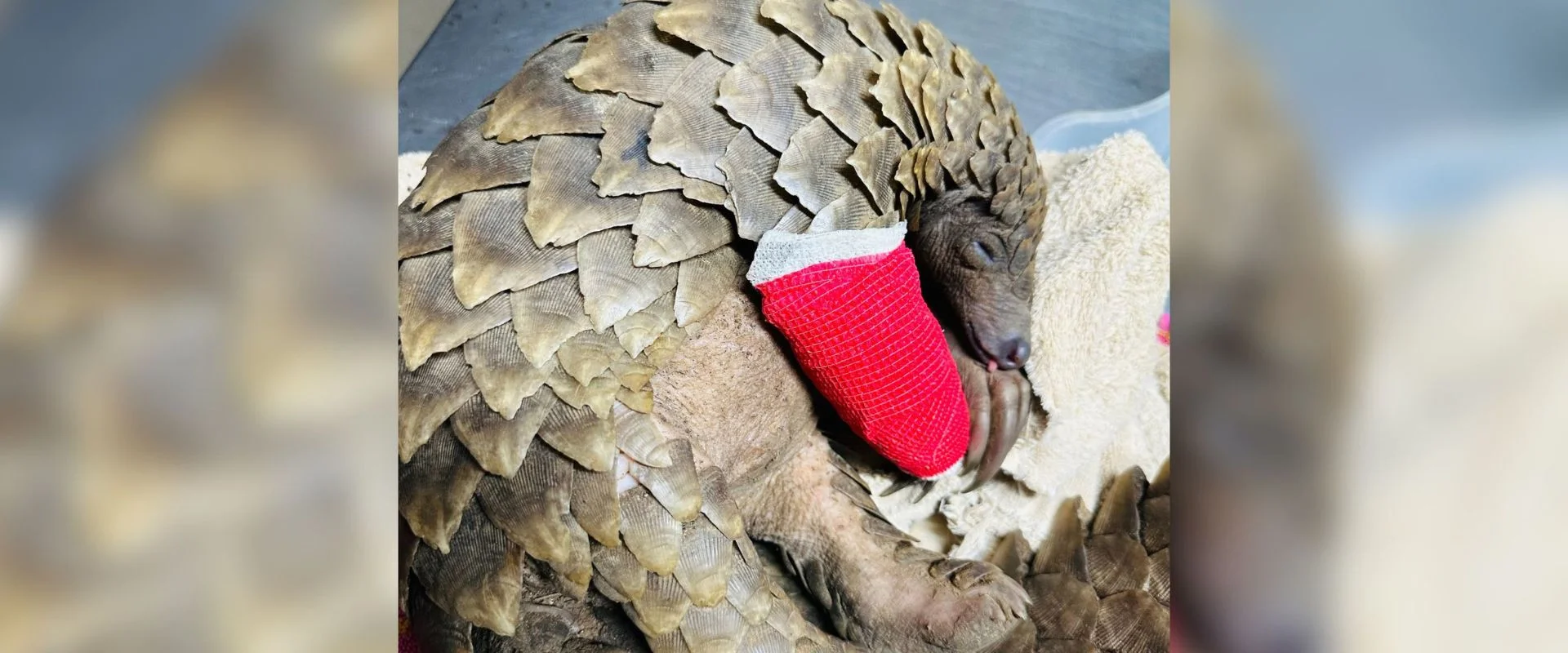
A tiny pangolin named Kuru is clinging to life in South Africa, and he desperately needs your help. When rescuers intercepted poachers during an undercover sting operation, they found Kuru and two other shy, gentle pangolins trussed up and ready for sale. They were shocked by the suffering inflicted on these extremely endangered animals. What they had endured was almost unbearable to witness. Their legs had been bound so tightly with rope that they could not move. The restraints had cut deep into their flesh, leaving horrific wounds and painful abscesses hidden beneath their scales. Kuru was bound so tightly by poachers that the rope cut deep into his flesh, leaving horrific wounds hidden beneath the scales. Source: Umoya Khulula Wildlife Centre Their terrified little bodies were filthy and covered in human waste, because poached pangolins are often hidden in sewers to avoid detection. One female had suffered so horrifically that the veterinary team had no choice but to end her pain. Another, a pregnant mother, was already under such extreme stress that keeping her in rehabilitation could have killed both her and her unborn baby. In a heartbreaking decision, rescuers released her early, hoping to give them their only chance at survival. Now only Kuru remains. Kuru is weak, traumatized and fighting for breath. He needs your urgent help. Kuru is now in the care of our trusted partner sanctuary, Umoya Khulula Wildlife Centre, at a secure, undisclosed location. But he is in a dire condition. He is battling a dangerously low red-blood-cell count, hypoglycemia (dangerously low blood sugar), severe trauma and devastating injuries to his front leg. He is in an extremely fragile state, frightened and exhausted. Yet despite everything humans have done to him, this tiny creature is still fighting to stay alive. Kuru is in critical condition — battling severe trauma and exhaustion. This tiny survivor needs around-the-clock care in his fight to stay alive. Source: Umoya Khulula Wildlife Centre Rescued pangolins cannot survive without specialized, long-term rehabilitation. Kuru needs around-the-clock intensive care. He requires: constant monitoring specialized milk formula wound treatment and medication heating support through the bitter South African winter, now present in full force Please donate now and help save Kuru’s life. Your donation today will help provide the life-saving treatment Kuru urgently needs over the coming months. Every $1,800 (£1,350) raised covers a month of his rehabilitation costs. Kuru will need at least six months of intensive treatment, including tube feeding, medication, wound care, rehabilitation therapy and expert support to help him heal from the unimaginable cruelty he has suffered. If Kuru recovers, he will one day be released into a vast, protected habitat where he can finally live safely and freely. All eight known species on the verge of extinction. Pangolins are the most trafficked mammals on Earth. These gentle, defenceless animals are being driven to extinction by the illegal wildlife trade. That is why every single rescued life matters. The poachers who tortured Kuru have been arrested. Now, we must give this tiny survivor the chance to live. Please donate right away and help save Kuru the pangolin.
This rare monkey is disappearing from one forest — but bouncing back in another
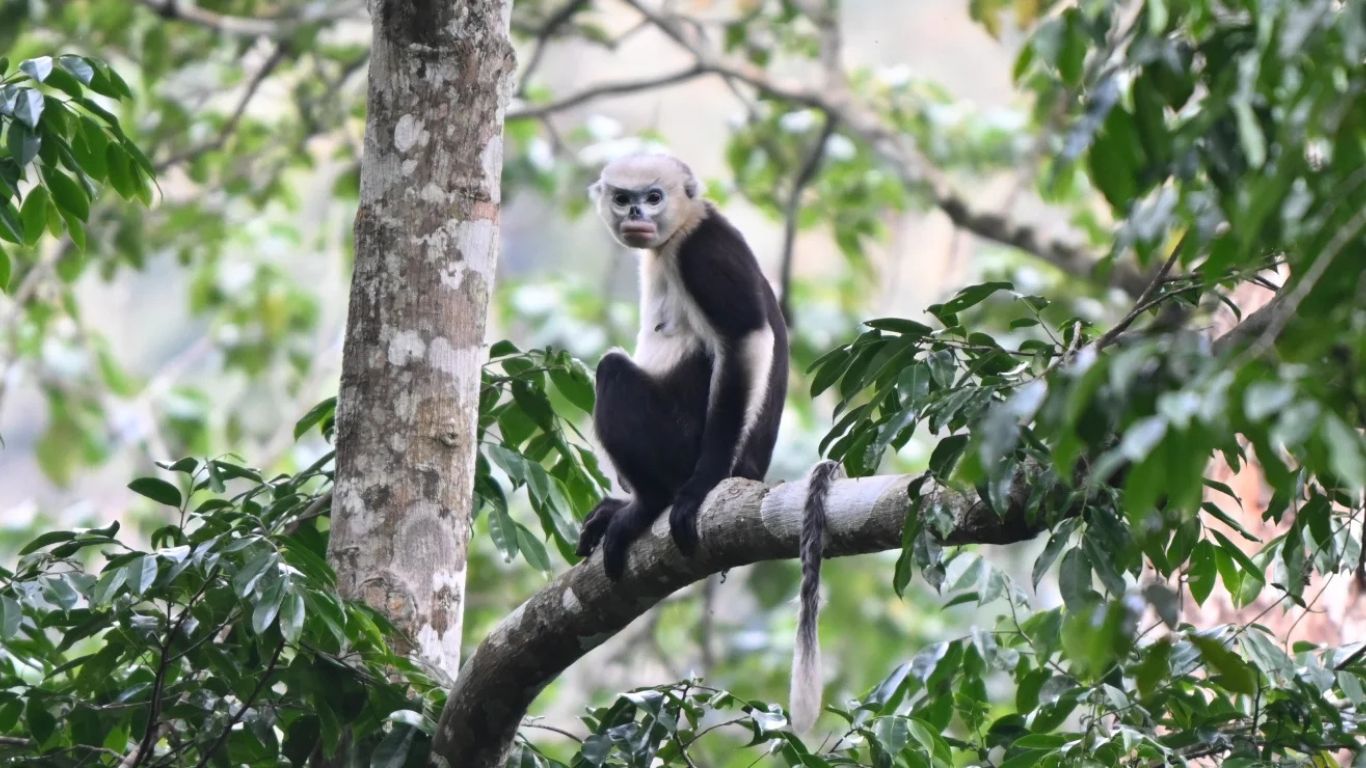
Article written by Rebecca Cairns Originally published by CNN Science, 19 May 2026 Between the branches of broad-leaf evergreens, a pair of blue-ringed eyes stare across the treetops of Khau Ca’s limestone forest. It’s a rare glimpse of one of the world’s most endangered monkeys — and one that field conservationist Canh Xuan Chu relishes. Tonkin snub-nosed monkeys are endemic to Vietnam, and only found in fragmented patches of forest in two of the country’s northernmost provinces, bordering China. A population of just 50 was discovered in Khau Ca in 2002, adding to the handful of locations where the species was rediscovered in the late 1980s and 1990s, after being presumed extinct. The Cat Ba langur, also called the golden-headed langur, is critically endangered with less than 100 remaining on Vietnam’s Cat Ba Island in the greater Ha Long Bay region. Throughout the 20th century, habitat loss and poaching for traditional medicine decimated its population, but conservation efforts on the island have seen the population grow over the past decade. Source: Tim Plowden/Shutterstock Today, the monkeys have all but disappeared from these other habitats. But a new census from conservation non-profit Fauna & Flora International found that Khau Ca’s population has more than tripled since 2002, with 160 of the critically endangered monkeys — an estimated 80% of the entire species — now living in the reserve. “It’s one of our most successful surveys,” says Chu, the project manager for Fauna & Flora’s Tonkin snub-nosed monkey program. The survey’s findings are giving the fragile species a hope for survival — and could be a model for other forests in Vietnam to restore their populations of Tonkin snub-nosed monkeys. Cao vit gibbons have the longest arms of any primate, proportional to their body size, allowing them to swing through the treetops at speeds of up to 34 miles per hour. They were presumed extinct through much of the 20th century, until they were rediscovered in the limestone forests on the border between Vietnam and China in the early 2000s. It’s one of the rarest primates in the world, with just 74 individuals counted during its last population count in 2021. Source: Editorial/Shutterstock ‘Significant increase’ Despite their outlandish facial markings, these monkeys are shy and reserved, avoiding humans and often disappearing at any unusual sounds, says Chu. It’s part of what makes them so difficult to count, a problem that goes back decades. Hunted extensively for use in traditional medicine, and sometimes bushmeat, Tonkin’s snub-nosed monkeys were so rarely seen that by the 1980s, many thought they were extinct. Shortly after discovering the population at Khau Ca, Fauna & Flora set up a conservation field station, and established community conservation teams to protect and patrol the forest, helping to remove snares and report signs of illegal deforestation or hunting. The critically endangered Raffles’ banded langur is found in Singapore and southern peninsular Malaysia, and its fragmented population is threatened by forest clearances for urban development, agriculture and mining. In Singapore, where only around 60 individuals remain, conservationists are trying to reconnect sections of forest with rope bridges over roads, and citizen scientists are helping to collect data to save their habitat. Source: Then Chih Wey/Xinhua News Agency/Getty Images To support communities that would typically make their income from farming or foraging in the forest, the project also creates new income streams, like the patrol groups. Other conservation partners, like the New Nature Foundation and Denver Zoo, are also working to reduce demands on the forest, distributing fuel-efficient stoves that cut firewood needs by 50%. Tran Van On, a member of Fauna & Flora’s community conservation team, has observed a “significant increase” in community awareness around the conservation of the Tonkin snub-nosed monkey. “People are now not only more conscious about protecting this endemic species of Vietnam, but also more aware of the importance of safeguarding forest habitats and other wildlife species,” said On, in a written statement. Banner source: Nguyen Quyet
DNA from Seized Pangolins Is Mapping Global Crime Routes
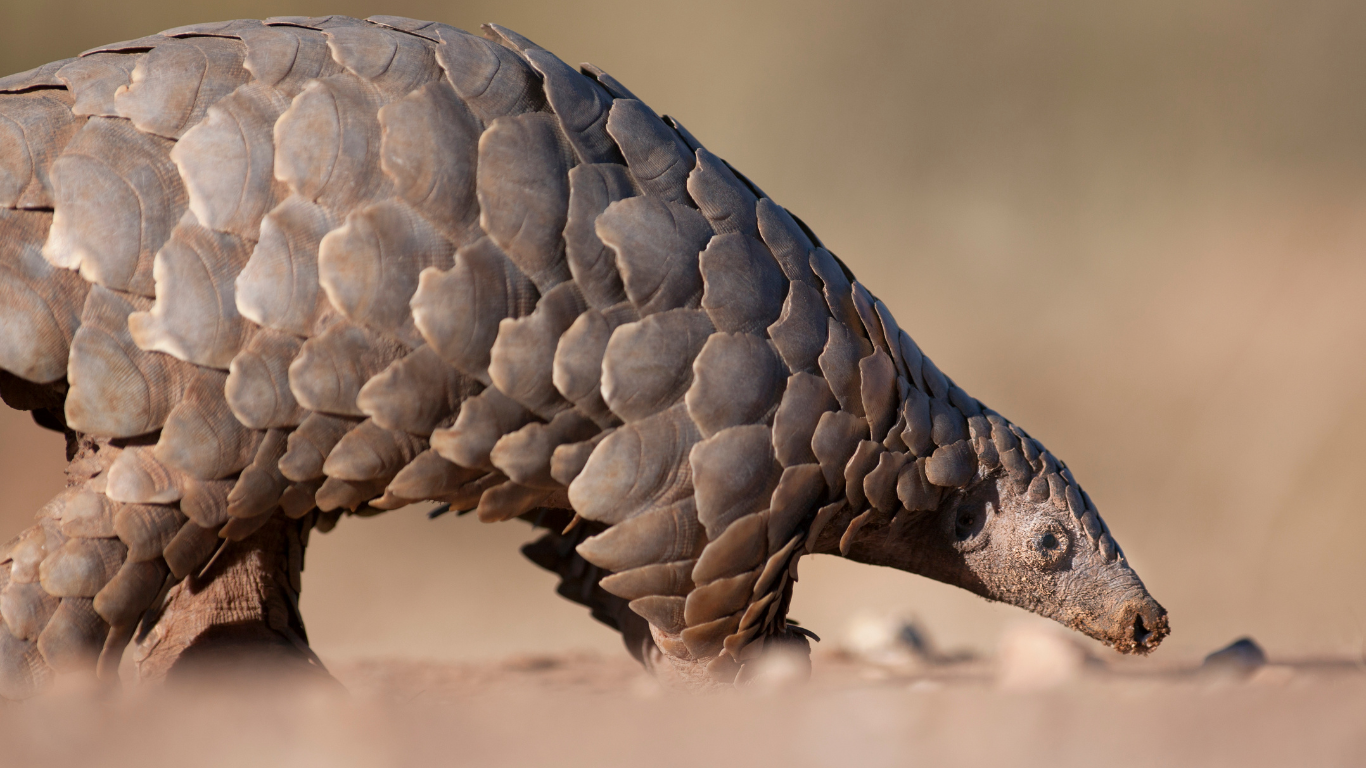
Article written by Tad Malone Originally published by a-z animals.com, 16 May 2026 Like any other clandestine industry, the illegal wildlife trade generates billions of dollars a year without much of a paper trail. Criminals operate under the cover of night, and money changes hands behind closed doors. The advent of DNA profiling, however, might give authorities a fighting chance in tracking the global span of this illegal and often cruel industry. According to researchers from the University of Toulouse, even minuscule samples of DNA can reveal the trade’s hotspots, trade routes, and destinations. New research published in the open-access journal PLOS Biology shows that even trace samples of DNA can provide clues regarding the flow of exotic animals. To reach these conclusions, researchers used samples from pangolins. Due to the value of their meat and scales as food and traditional medicine, pangolins account for nearly a third of the illegal wildlife trade. Though pangolins have DNA like any other creature, the lack of viable samples previously made it hard for researchers to trace trafficked specimens. However, thanks to a new technique from the researchers behind the study, even trace samples can be used to build a fuller picture of the illegal flow of these creatures. Pricey Pangolins There aren’t many creatures that look like pangolins. Though they are sometimes referred to as scaly anteaters, pangolins sit in a category all their own. For a long time, scientists believed pangolins belonged to a sister group closely related to the order Carnivora, which includes animals like cats, dogs, and bears. More recent genetic evidence has confirmed that pangolins are actually the closest living relatives of carnivorans, despite looking nothing like typical predators. Quite literally, the only mammal covered in keratinous scales, pangolins curl into tight balls that look like bowling balls of armor when threatened. Solitary and nocturnal, these thick-skinned creatures lack teeth but have strong front claws. They use their claws to dig into ant and termite nests, which make up their entire diet. They are important fixtures of their ecosystems, acting as natural pest controllers by eating tens of millions of insects each year. Sticking out in nature can be beneficial, but pangolins have the tragic distinction of being among the most trafficked mammals in the world. The scales that make them so unique fetch a high price due to their use in traditional medicine. Even their meat makes them a target, as some cultures consider it a delicacy. This made pangolins a perfect subject for researchers conducting DNA analysis of the illegal animal trade. Biological Breadcrumbs While the reputation of pangolins as one of the most trafficked animals is well established, scientists previously lacked effective methods for tracing their flow across the global wildlife trade. Simply put, genetic samples of pangolins are hard to come by. Sensing an opportunity for better insight, researchers from the University of Toulouse and the Institute de Recherche pour le Développement in France set out to find better methods. Sean Heighton, Philippe Gaubert, and their colleagues found a solution to the pangolin genetic sample problem by looking into the past. Indeed, they collected over “700 samples of Sunda, Chinese, and white-bellied pangolins from museum collections, field-sites, bushmeat markets, and international trade seizures.” By combining these resources, the researchers managed to build a pangolin genomic map. This revealed certain hotspots for illegal pangolin hunting, including Myanmar, Cameroon, and several other African locations. Furthermore, the researchers found notable trade routes between China and the Indonesian islands. As Sean Heighton explained to Phys.org, the team developed a single gene-capture kit for all eight pangolin species. This makes the genomic tracing process “more accessible, scalable, and practical for real-world pangolin conservation and forensic use.” Further Fact-finding Missions Without this diverse collection of DNA samples, researchers would still be in the dark regarding solutions to the pangolin trade. As Philippe Gaubert explained to Phys.org, their research revealed some surprising facts. He said, “One of the most striking findings was that domestic pangolin trade is largely local, but it overlaps with the same sourcing regions that supply international trafficking—revealing a connected supply chain rather than separate markets.” The team’s findings now make it possible to track trafficked pangolins within just a few kilometers of their geographic origin. While the process is now in place, the researchers acknowledge that data availability remains the true bottleneck. As such, the team behind the study suggests developing a more meticulous DNA database of trafficked animals. This, combined with more standardized sampling agreements and integrations, could make a real dent in the illegal pangolin trade. Considering that several species of pangolins are now endangered due to illegal trade, any new way to track their movements could offer a better long-term outlook.
Big cats displaced after deadly fire destroys their home
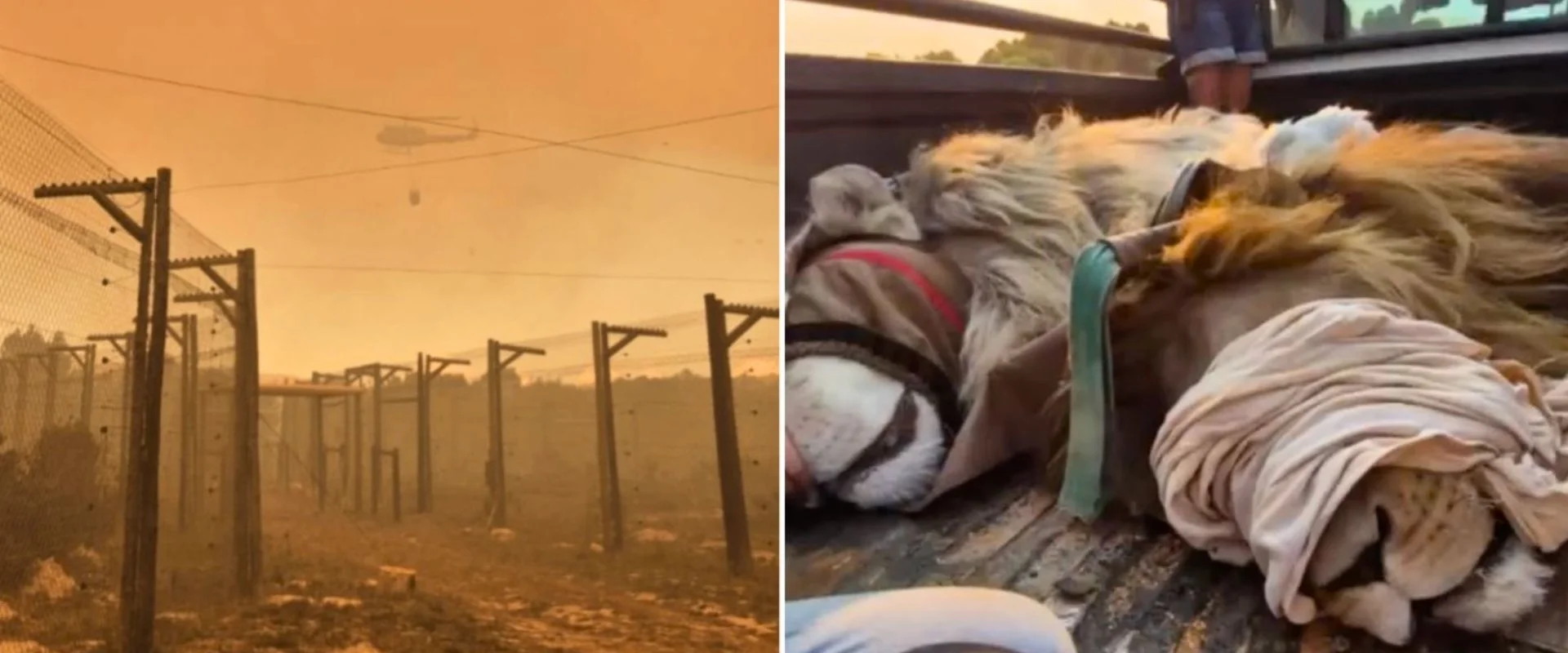
Earlier this year, you helped us rush critical support to our partner in South Africa, Panthera Africa Big Cat Sanctuary, after a fire all but destroyed their sanctuary. Some animals were left seriously injured and tragically, a tiger lost his life. Now, the surviving animals – slowly healing from their trauma and wounds — are ready to return. More than anything, they need homes to come back to. We promised Panthera Africa that we would help rebuild when the time came, and that time is now. Can these animals count on you today? Panthera co-founder Lizaene Cornwall could only helplessly watch the destruction of the wildfire. Source: Panthera Africa Big Cat Sanctuary Please help rebuild a sanctuary for big cats who survived abuse, exploitation and now wildfire. After the destruction of the bulk of their infrastructure, Panthera is re-building eight night houses for the big cats in their care. These are designed to protect animals in changing weather conditions and, critically, will also be fire-proof. These structures are especially important for older animals who need extra warmth during winter, which is rapidly approaching in South Africa. Many of the sanctuary’s lions and other cats are elderly, and warmth is vital to their well-being and comfort. Every $4,500 (£3,500) raised builds a night-house for a precious rescued animal – an animal who has endured so much.. Earlier this year, animals watched anxiously as the flames and smoke approached Panthera, threatening the only safe home they’ve ever known. Source: Panthera Africa Big Cat Sanctuary With your support now, we will transform this burnt, damaged big cat sanctuary into the haven the animals deserve in their twilight years. They are desperate to come home, but they need a home to come back to. Fire destroyed their safe place, but it doesn’t have to destroy their future. With your help, the animals can return to the place they love. Please donate generously now.
Elephant Trophy Imports Soar in Trump’s Second Term
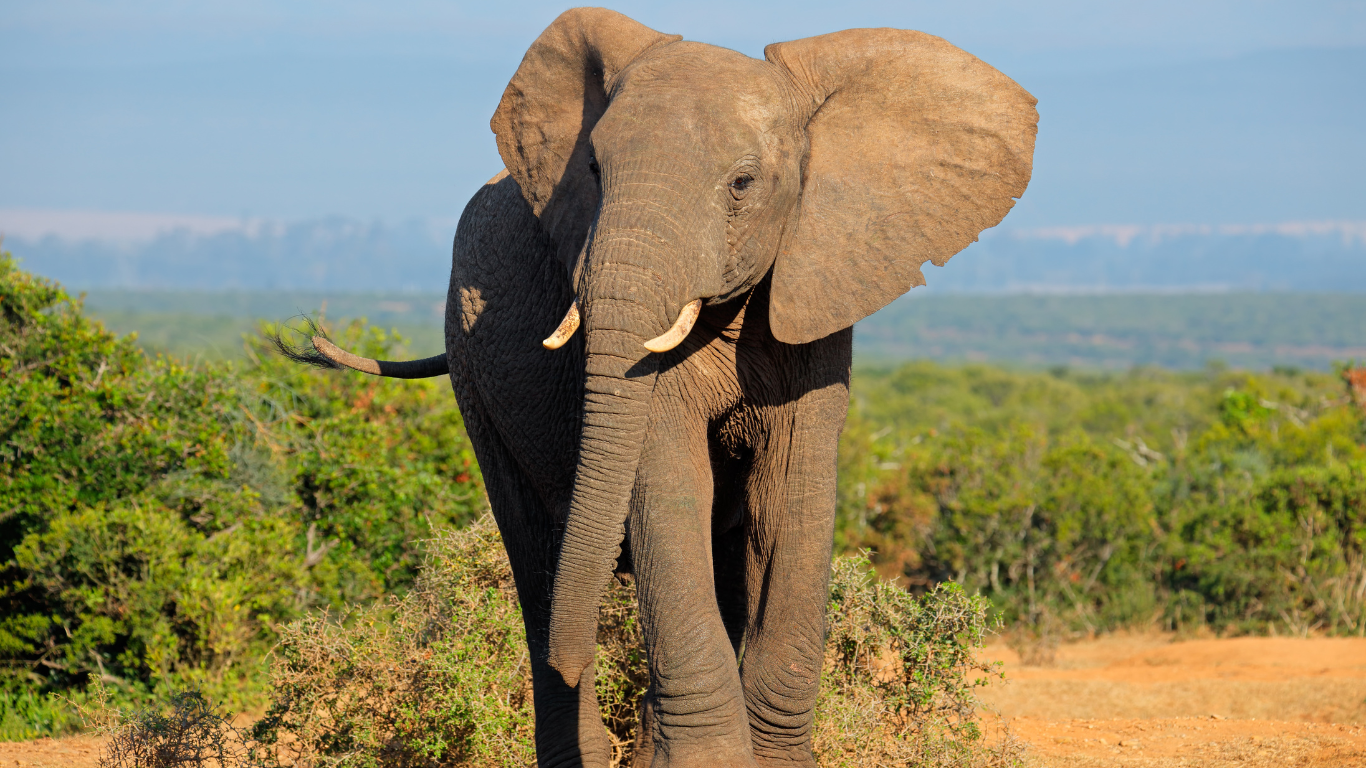
Article written by Tanya Sanerib Originally published by Center for Biological Diversity, 6 May 2026 New Case Study Shows United States OK’d More Than 300 Trophies in 2025 A new case study prepared by the Center for Biological Diversity shows that the Trump administration permitted the import of more than 300 elephant trophies in 2025, based on federal government records obtained via the U.S. Freedom of Information Act. By comparison, the first Trump administration reported importing 114 elephant trophies in 2018, following Trump’s 2017 tweet calling elephant trophy hunting a “horror show.” “Why is a president who once decried elephant hunting rolling out the red carpet for the elitist practice of killing these imperiled animals for décor? This about-face is terrible for Africa’s beleaguered elephants,” said Tanya Sanerib, international legal director at the Center for Biological Diversity. “Hunting elephants for sport takes the biggest, healthiest males out of the population, skewing elephant genetics and harming their social fabric. With so many trophy hunters coming from the United States, our government should be helping to police the trophy trade, but Trump officials are instead rubberstamping imports of tusks and heads.” More than two-thirds of the 2025 imports came from Botswana, which reopened to elephant trophy hunting in 2019, after a pause of five years. The country is home to about 140,000 elephants. Local scientists have raised concerns that the country’s annual quota of more than 400 elephants is not sustainable. Since trophy hunters generally remove large mature males who are also threatened by poaching and drought, these elephants could soon be depleted from the population, harming breeding, genetics and elephant social functioning. Despite the harm trophy hunting can cause to imperiled species, pro-trophy hunting organization Safari Club International is asking the Trump administration to entirely eliminate Endangered Species Act permitting requirements for imports of trophies from threatened African elephants, African lions and Argali sheep. A rulemaking petition from the group, obtained under FOIA by Humane World for Animals, formerly called the Humane Society of the United States, illustrates how the trophy hunting industry is trying to take advantage of the current deregulatory agenda. “Safari Club International is pushing an exploitative proposal that threatens hard-won protections for African elephants and other iconic species by expanding the U.S. market for trophy hunting — a market that already dominates global trophy imports of species threatened by trade,” said Sarah Veatch, wildlife policy principal for Humane World for Animals. “SCI is actively lobbying to roll back Endangered Species Act protections that the Fish and Wildlife Service finalized for African elephants just two years ago. If the U.S. becomes an increasingly welcoming market for elephant trophies, it would undermine decades of work and public support to save these important, intelligent animals from extinction.” African elephants are complex, social animals. They work together to nurture and protect their babies, they learn from the experience of elders, and they depend on each other to thrive. Trophy hunters pose a substantive threat to the limited population of “super tuskers,” male elephants with tusks weighing 100 pounds or more, who in recent years have been shot down for trophies in the famed Greater Amboseli-West Kilimanjaro ecosystem on the border of Kenya and Tanzania. A no-hunting agreement for the region among Tanzania hunters had previously been in place since 1994. This is the longest-studied elephant population on Earth, and it has one of the largest remaining collections of super tuskers with some 20-25 mature bulls. Scientists think there are only around 50 super tuskers left in all of Africa. The records analyzed for the case study do not include permits for elephants from this population but do include elephants killed in a hunting area adjacent to the Serengeti. For more details on the elephant trophy permits authorized by the second Trump administration and the harm the trade poses to the species, see the full case study.
At 100, David Attenborough’s message is no longer just about wonder
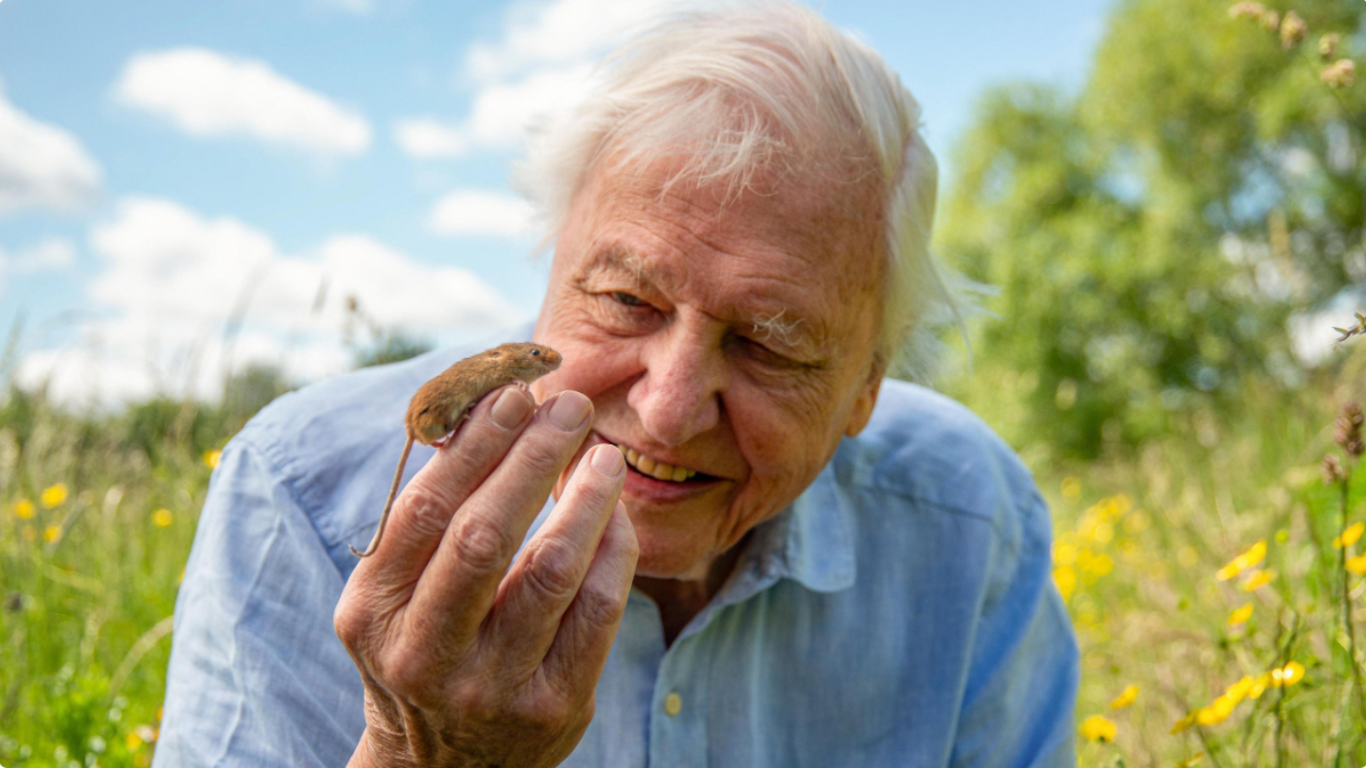
Article written by Rhett Ayers Butler Originally published by Mongabay, 5 May2026 As his 100th birthday approaches, David Attenborough occupies an unusual place in public life: not a practicing scientist, not quite a conventional journalist, and no longer only a broadcaster. His voice, familiar from decades of natural history programming, has become one of the most recognizable ways the public hears about the state of the living world. That was not always the role he played. When Attenborough began his career at the BBC in the 1950s, the task was more modest. Television was still finding its footing, and natural history programming largely meant showing audiences what they could not otherwise see. Early series such as Zoo Quest were shaped by that spirit. They were exploratory, sometimes improvised, and often framed around the thrill of encountering unfamiliar species. The tone was one of discovery. The unspoken assumption was that the natural world, vast and varied, would endure. As his work evolved, so did the technology that made it possible. Color film, lightweight cameras and, later, digital imaging expanded what could be captured. Attenborough used those tools with unusual patience. His programs lingered on behavior as much as spectacle. Courtship rituals, feeding strategies, and migrations were given time to unfold. His programs did more than show animals; they asked viewers to notice how they lived. Attenborough in Borneo, 1982. Photo by Rex Features This attention to detail became one of his signatures. It reflected a view that understanding begins with careful seeing. Attenborough rarely made himself the story. His narration was measured and often understated. The attention stayed on the animal, the habitat or the behavior unfolding on screen. The approach helped establish a standard for natural history filmmaking. It also shaped how audiences related to the material. Animals were not props for adventure. They were creatures with their own pressures, habits and place in a wider order. For much of the late 20th century, that approach carried a sense of confidence. Series such as Life on Earth and The Living Planet presented ecosystems as intricate but resilient. There were acknowledgments of human impact, though they tended to sit at the margins. The prevailing mood was one of admiration. The natural world was portrayed as something to be appreciated, perhaps even cherished, but not yet as something being pushed toward dangerous limits. That balance began to shift in the 2000s and early 2010s. Scientific consensus around climate change became firmer. Evidence of biodiversity loss accumulated. The changes were not abstract. They appeared in the very subjects Attenborough had spent decades documenting. Coral reefs bleached. Species once filmed in abundance became harder to find. Habitats fragmented. His later work did not abandon the aesthetic that had defined his earlier films. The images remained carefully composed. The storytelling retained its discipline. Still, the framing grew more direct. In series such as Planet Earth II and A Life on Our Planet, the concluding segments took on a heavier purpose. The camera still showed the beauty of forests, oceans and grasslands. The narration made clearer that these systems were under strain. Sir David Attenborough accepting The Perfect World Foundation Award in 2018. Photo by Daniel Wilke What changed was not only the tone, but the purpose. Attenborough began to speak more openly about consequences. The loss of species was no longer treated as a distant or specialized worry. It was linked to broader questions about stability, food systems and climate. The argument, when he chose to make it, was straightforward: understanding the natural world is not a matter of curiosity alone. It is tied to how societies will fare in the decades ahead. He did not always speak in the language of advocacy. His instinct remained to show rather than to argue. Yet the cumulative effect of his later work is difficult to separate from a sense of warning. The authority comes less from rhetoric than from continuity. Few individuals have documented the same systems over such a long period. Fewer still have done so for so many people. There is a restraint in how Attenborough presents these shifts. He avoids exaggeration. He also avoids offering simple resolutions. The closing passages of his recent films often point toward changes in energy use, land management and consumption. They are framed as possibilities rather than prescriptions. This has drawn criticism from those who would prefer a more forceful stance. It has also helped his work remain accessible to people who may not share the same politics. David Attenborough on Lizard Island, on the Great Barrier Reef. Photo by Freddie Claire/BBC/Atlantic Productions The result is a body of work that has changed in emphasis without losing its core method. The early films asked viewers to look closely at the natural world. The later ones ask what follows from that attention. The link between the two is the idea that knowledge carries implications. To see clearly is, eventually, to confront the conditions that make such scenes possible. As his 100th birthday approaches, it is tempting to treat Attenborough as a symbol. He has become one, in part because his career spans a period in which the relationship between people and the natural world has changed so sharply. Yet his influence is more practical than symbolic. He helped establish how nature is filmed, how it is narrated, and how it is brought into public conversation. The arc of his work traces a change in how that conversation is conducted. What began as an effort to reveal the richness of life on Earth has come to include a more sober assessment of its trajectory. The continuity lies in the premise that understanding matters. Not as an end in itself, but as the beginning of responsibility.
Pangolin left permanently disabled after being trapped in a poacher’s snare
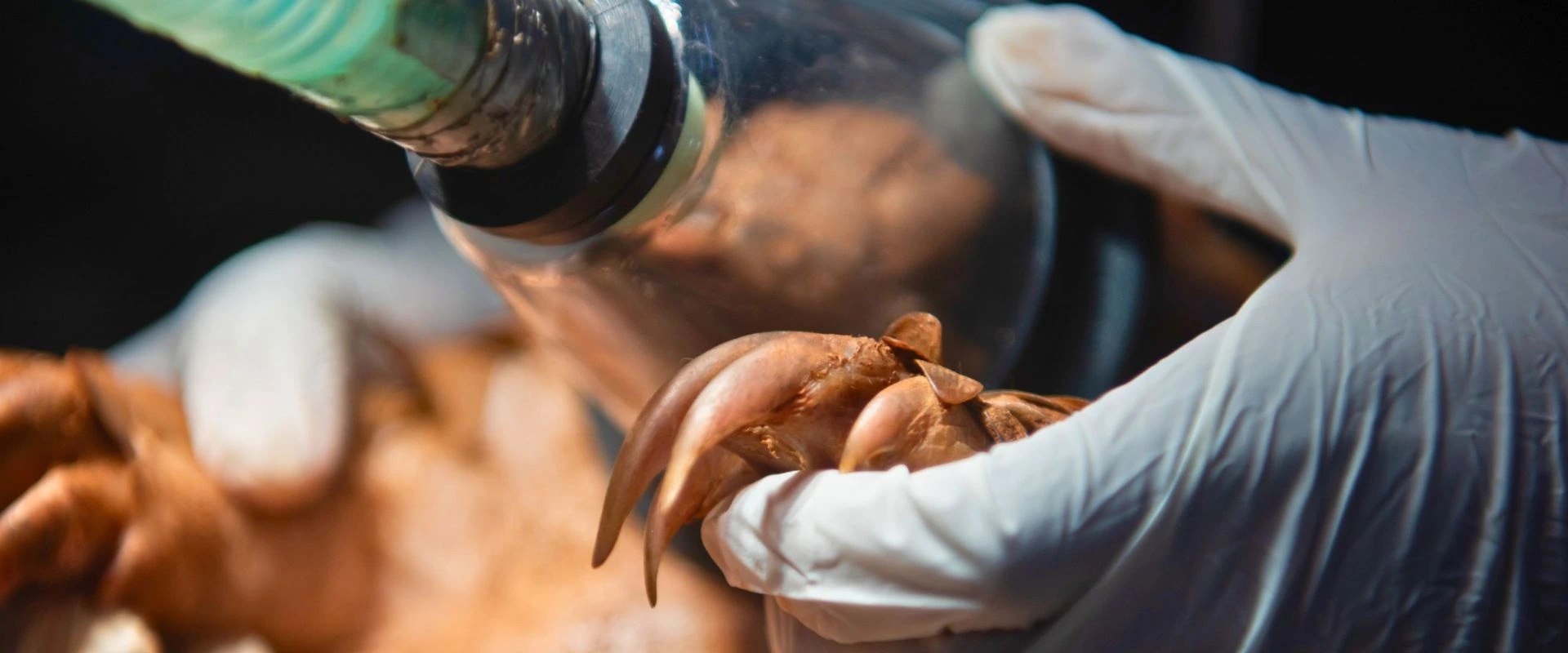
When Nthambi was saved from cruel poachers in Malawi, bone protruded from her leg. The criminals did not care that she must have been in excruciating pain. All they cared about was making money by selling this traumatized, severely injured pangolin. Shy, harmless pangolins just like Nthambi are the most trafficked mammal in the world, prized for their scales – used in so-called ‘traditional medicine’ – and meat, considered a delicacy in parts of Asia. “It was immediately obvious that she was very seriously injured. She was missing part of one of her back legs, and the bone was sticking out.” – Lilongwe Wildlife Trust (LWT), Malawi Nthambi underwent emergency surgery to have her leg amputated before being transferred to our partner, the Lilongwe Wildlife Centre (LWC), part of LWT. She was immediately assigned an emergency caretaker to stay with her 24 hours a day, even sleeping in the same room together. Every year, our partner cares for pangolins like Nthambi – animals stolen from the wild and the protection of their families, and sold on the brutal black market, largely to Asian buyers. Animals who are terrified, wounded and in horrendous pain. Although pangolins can survive with a missing limb, it was clear that fragile Nthambi was in terrible pain. Nthambi remained largely immobile, and when she was encouraged to forage for food, she would curl up into a tight ball and refuse to move. Losing a limb in a cruel snare and being ripped from the wild was nearly too much for her. She had to be sedated to be tube-fed each day. Nthambi can get a second chance – but only with your help. As Asian pangolin populations declined, trafficking networks shifted to Africa. Today, these ancient animals are the most trafficked mammal in the world. Source: WCRU/ZXZhang After her horrific trauma, Nthambi’s recovery is slow. She and other rescued wild animals are counting on you to help support their recovery. Our partner rescues and supports countless pangolins and other wild animals, like wild cats and primates, in Malawi. Source: Lilongwe Wildlife Trust LWT can support up to 200 rescued wild animals a day, which includes pangolins, primates, wild cats, antelope and others that have been injured, orphaned or poached in Malawi. Animals like a young baboon called Benja, whose mother was killed for bushmeat. Benja was absolutely terrified on arrival – so much so that staff and volunteers had to sit with him for 24 hours a day, every day. He now has a foster mom, Ivy, and together they will eventually join a new troop. Benja lost his mother to the bushmeat trade. He now has a foster mom, Ivy, and in due time they’ll join a new troop. Source: Lilongwe Wildlife Trust Please donate now. Your gift will help heal Nthambi, Benja and their friends. Your support today is the lifeline these little animals need to heal from the abuse inflicted by cruel humans, and recover, so that they may live in safe, protected areas – free, just as they’re supposed to be. Here’s how your donation will be used: $20 / £15 buys ten days’ worth of antibiotics for sick and injured orphans. $34 / £25 covers two weeks of care for an orphaned baboon like Benja. $68 / £50 pays for milk for the orphans in our partner’s care for a whole week. $135 / £100 buys a heat lamp to keep infant animals warm during critical periods of rehabilitation. $680 / £500 covers food costs for all animals for a week. Your donation today will be a lifeline for these fragile and traumatized creatures. They need you. Please donate right away.
Critically endangered wild dog pups senselessly killed in Zimbabwe
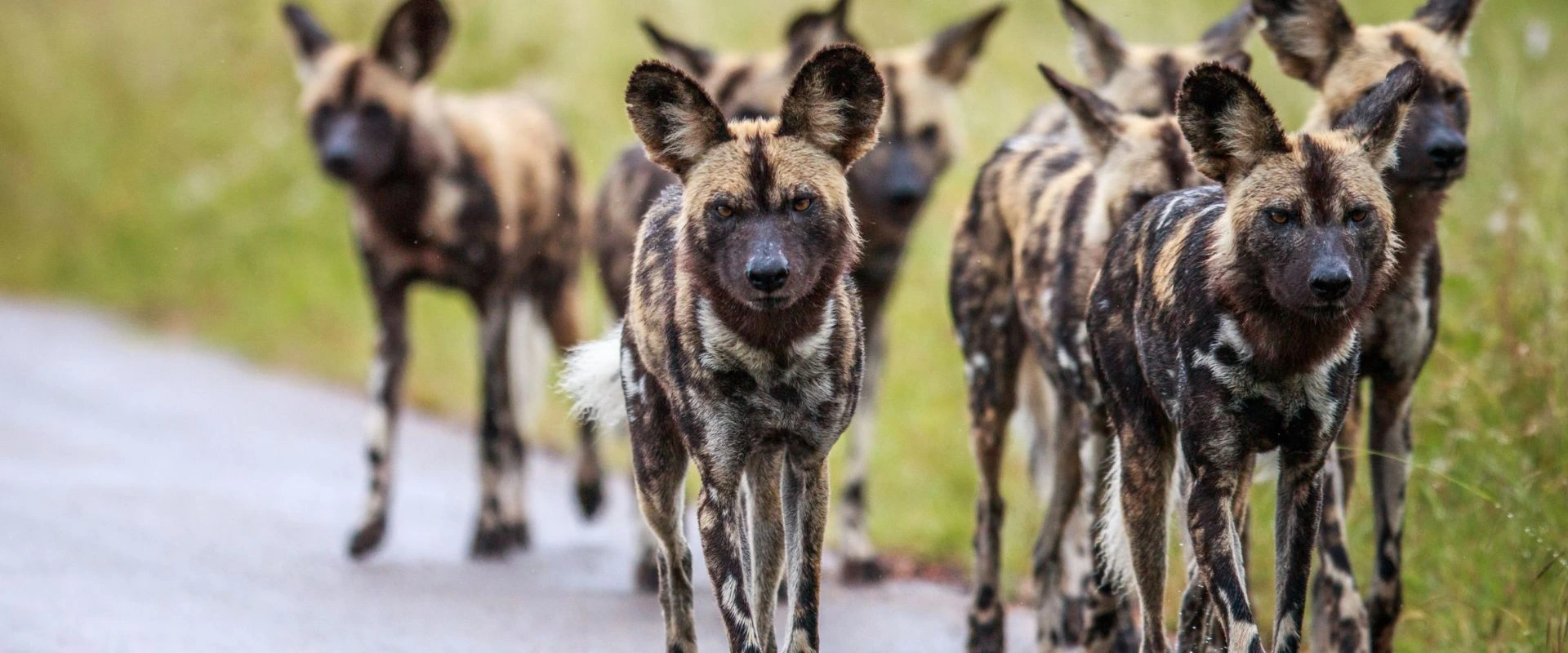
Recently, three critically endangered, painted wild dog puppies were killed by speeding vehicles near Hwange National Park in Zimbabwe. The bewildered pups were trying to cross the busy, unlit, unfenced roadway that separates parts of Hwange when tragedy struck. Without any road sense, they became tiny, heartbreaking victims of drivers unaware of the danger because there are no warning signs. Traffic calming measures are PROVEN to work. Help us raise $30,000 (£22,000) to install them as soon as possible. Also known as ‘painted dogs’ because of their patterned coats, African wild dogs are teetering on the edge of extinction. For years, they have battled shrinking habitats, cruel snares and poaching. Those caught in snares die slow, excruciating deaths over days or weeks. Now, as the species battles to survive, it is being wiped out by speeding cars because motorists don’t even know they’re there. With your compassionate support today, we will help our partner, Painted Dog Conservation (PDC), to install traffic calming measures, including reflective signs and speed bumps in wildlife-rich areas. Snares, poaching, shrinking habitats — and now speeding cars. Wild dogs are fighting on every front. Source: Painted Dog Conservation African wild dogs are teetering on extinction . Every death damages the species’ chance of recovery. Wild dogs grieve their dead, and our hearts break at the thought of mothers mourning their infants. A grieving wild dog may return to the site of a deceased companion for days, vocalize with mournful howls and show signs of depression – such as lowering their tails and heads – after a close pack member dies. Wild dogs like these face many threats — but road kill is one of the most preventable. Slowing down in wildlife areas could save their lives. Source: Painted Dog Conservation The thought of these sentient beings mourning breaks our hearts – and the idea of them being wiped out forever is unconscionable. As caring custodians of our planet’s wildlife, we must do everything we can to help. Road signs and speed bumps are a basic safety measure, but the Zimbabwe economy is in tatters and this is a very low priority in the national park. But we know it is not a low priority for our supporters. Please donate today and help us protect the lives of helpless wild dogs and the future of the entire species.
Chinese court cases reveal most trafficked rhino horns come from Southern Africa
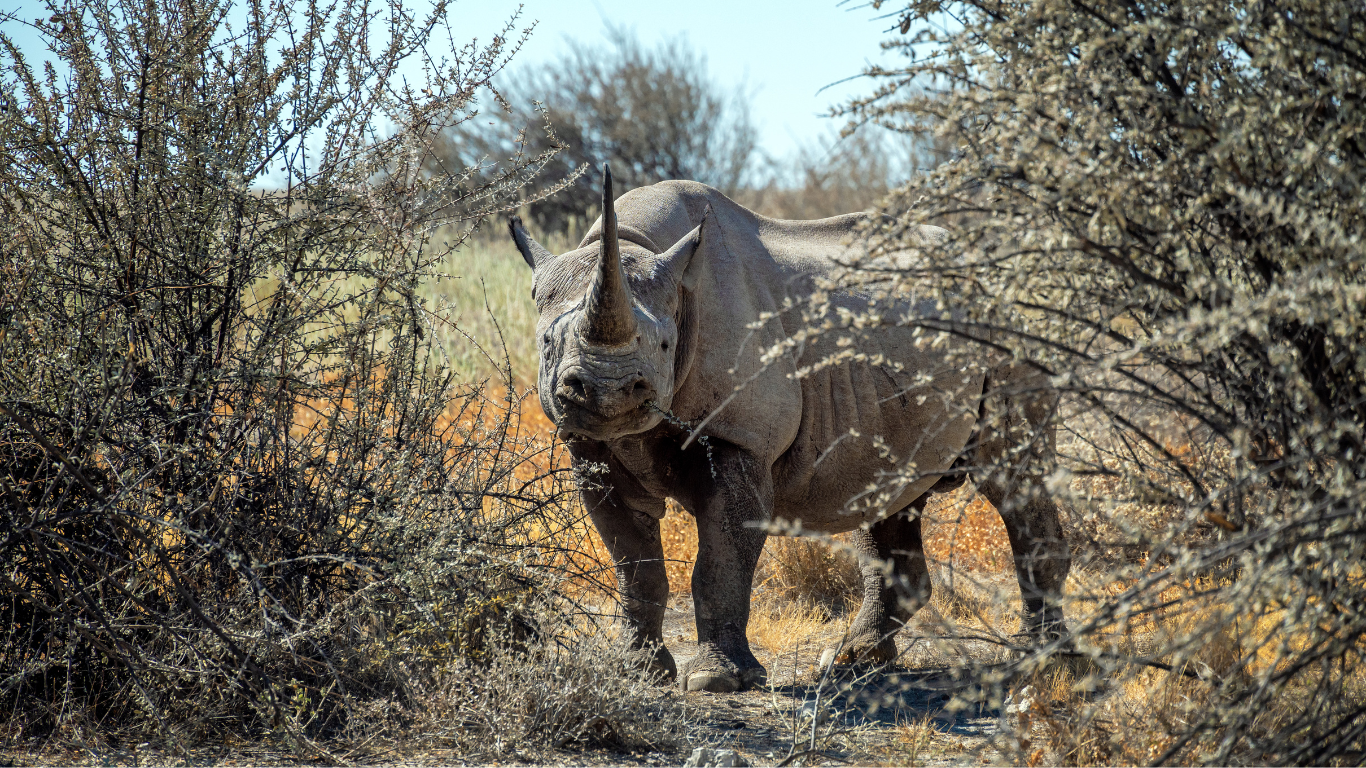
Article written by Spoorthy Raman Originally published by Mongabay, 21 April 2026 Rhinoceroses, one of the largest groups of animals on the planet, are fighting a battle for survival because of a prized body part: their horn, which they use to defend territories, assert dominance and protect their young. But people use this keratinous horn as medicine, adornment and decoration. In traditional Chinese medicine, it’s believed to have broad healing properties. The horns are also crafted into jewelry, and carved horns are displayed as luxury items. The unrelenting demand for their horns has decimated these mega-herbivores across their Asian and African ranges, and combating the trade is a tough fight: Rhino horns are extremely valuable. They’re worth an estimated $20,000 per kilogram (about $9,090 per pound) on the black market, often trafficked and sold by transnational organized crime syndicates. Poaching has pushed three of the five living rhino species to the brink. The International Rhino Foundation estimates that some 500,000 roamed the wild at the start of the 20th century; today, just under 27,000 remain, and a rhino is killed every 15 hours. China is the largest consumer, but data on trade within its borders is limited. A team from the U.S.-based Environmental Investigation Agency (EIA) tried to bridge the information gap in a new report. It analyzed 258 court cases involving horn trafficking between 2013 and October 2025, posted on the China Judgments Online database. These court records revealed that authorities seized 700 kilograms (1,543 pounds) of rhino horns during that period, which means that perhaps 200 rhinos were killed to supply this market during that period. There were 512 arrests. Those smugglers faced prison sentences averaging 4.5 years and paid fines of about 92,322 yuan ($13,540). Most of these crimes involved less than 10 kg (22 lb) of rhino horn. China’s long-drawn appetite for rhino horns Demand for rhino horn grew alongside rising wealth in China and Southeast Asia in the 1980s and ’90s, and poachers decimated all five species of these mega-herbivores in Asia and Africa. Three are now critically endangered: the black rhino (Diceros bicornis), the Javan rhino (Rhinoceros sondaicus) and the Sumatran rhino (Dicerorhinus sumatrensis). Amid poaching and ever-shrinking habitat, Africa’s white rhino (Ceratotherium simum), the most populous and least threatened species, has dwindled to a two-decade low, according to the most recent IUCN-TRAFFIC assessment. The greater one-horned rhino (Rhinoceros unicornis) is threatened. Poaching and trafficking of rhino horns continue despite a ban on international trade in 1977 under CITES, a global wildlife trade treaty. In China, domestic trade was legal until 1993, when it was outlawed. But then, 25 years later, the Chinese ban was partially lifted. In 2018, the government permitted the use of powdered horns from farmed rhinos in “qualified hospitals by qualified doctors recognized by the State Administration of Traditional Chinese Medicine” and also as “cultural relics.” For decades, researchers monitoring the international rhino horn trade have been aware that China is the largest consumer, based on seizures, which are often a sliver of the actual trade. But information on the volume of trade within its borders is limited. “We know that China is one of the primary end-use countries for rhino horn,” said Taylor Tench, senior wildlife policy analyst at EIA and the lead of its rhino campaign. But so far, there’s patchy data on the extent of the domestic trade in China and the country’s response to it through its judicial system. China hasn’t fully reported either its horn stockpiles or its seizure data to CITES, making it challenging to understand the trade within its borders, Tench said. China Judgements Online, an online database with more than 143 million court cases resulting in criminal charges, is not an exhaustive source. It doesn’t include cases that weren’t prosecuted in courts, and importantly, it omits data from both Hong Kong, an extremely active wildlife trade hub, and Macau. Susan Lieberman, vice president of international policy at the nonprofit Wildlife Conservation Society, said this new report provides “useful insight into the trafficking” in China. “Analysis of court cases can assist in understanding trafficking routes and patterns and the outcomes of criminal cases. It is, however, the ‘tip of the iceberg,’ and is dependent on enforcement efforts and the nature of cases that actually go to court,” she said in an email. Trends in the Chinese rhino horn trade EIA’s investigation indicates there are many Southeast Asia-based traders who still offer rhino horns to Chinese consumers for medicinal purposes. While this creates a huge demand, the horn is hard to detect in its powdered form, which may be one confounding factor in their finding that most seizures were either rhino horns worked into carvings or pieces made into jewelry. “The seizures involved either antique and curio stores or physical market stalls,” Tench said, some of which also sold small quantities of rhino horns. “Taken together, cumulatively, it’s a potentially significant force contributing to the illegal trade within China, and it warrants much more research into the sourcing of [the horns] and distribution.” Rhino horn seizures peaked in 2020, surging from just two in 2013 to 72 seven years later, but have dropped steeply to fewer than 10 since 2022. Tench cited a few reasons that could explain why, which raise questions about the true volume of China’s domestic trade. With the onset of the COVID-19 pandemic, international travel essentially stopped, with borders shut down. The movement of people and goods, including contraband, slowed dramatically. Meanwhile, law enforcement and reporting were weak. And in 2020, Chinese authorities began removing “sensitive” judgments from the database of court cases, which likely impacted accounting on wildlife crime. So lower seizure numbers may not necessarily mean that trafficking has declined. About 72% of the 258 cases analyzed by EIA included products from other endangered wildlife: elephant ivory or skin, helmeted hornbill (Rhinoplax vigil) casques, pangolin scales, golden coin turtles (Cuora trifasciata) and Przewalski’s gazelle (Procapra przewalskii) horns. “I was a bit surprised by the wide diversity of other illegal wildlife products trafficking along with rhino horn, but I shouldn’t be surprised. Criminals will do
Salmon on cocaine swim twice as far as normal
Article written by Sarah Knapton Originally published by The Telegraph, 20 April 2026 Traces of drugs in rivers could damage species’ development, scientists warn Cocaine-fuelled salmon swim nearly double the distance of non-drugged fish and venture much farther afield, scientists have said. Wildlife experts worry that fish exposed to drugs through water pollution may end up swimming into unfamiliar waters or wear themselves out with the extra effort, potentially damaging their immune systems and development. The remnants of recreational drugs are frequently found in Britain’s rivers and lakes, with estimates suggesting 80,000 lines of cocaine pollute the Thames each day. Although there had been laboratory studies showing drugs in water changed animal behaviour, it was not known whether animals were being affected in the wild. Researchers from the Zoological Society of London (ZSL) and Griffith University in Australia teamed up with Dr Daniel Cerveny of the Swedish University of Agricultural Sciences. They implanted 105 juvenile Atlantic salmon with slow-release drugs that delivered the same cocaine by-products as polluted rivers. They released the fish into Lake Vattern in Sweden and monitored their behaviour for eight weeks. The salmon swam up to 1.9 times farther a week than unexposed fish and dispersed up to 7.6 miles farther across the lake. “The idea of cocaine affecting fish might seem surprising, but the reality is that wildlife is already being exposed to a wide range of human-derived drugs every day,” said Dr Marcus Michelangeli, from Griffith University’s Australian Rivers Institute. “Where fish go determines what they eat, what eats them and how populations are structured. “If pollution is changing these patterns, it has the potential to affect ecosystems in ways we are only beginning to understand.” It is estimated that global illicit drug use has increased by about 20 per cent over the past decade, and sewage treatment works are not designed to remove the compounds, which means they turn up in rivers. Last week, figures from the Home Office’s waste-water analysis for narcotics detection programme estimated that some 123,000kg of cocaine with a market value of £9.8bn was flowing through Britain’s sewage systems. Cocaine is a stimulant that acts on the brain and elevates dopamine, the feel-good chemical, which scientists believe increases swimming activity in fish. Once it has been through a human body, it turns into a cocaine metabolite called benzoylecgonine, which is what salmon are exposed to in rivers. Evidence suggests the cocaine by-product has an even bigger influence on animals. Researchers used drug implants to raise drug concentrations to levels they would expect for fish living downstream of large urban waste-water outlets in regions where cocaine use is prominent, such as London. Experts say the long-term consequences are “difficult to predict”, but that it may cause fish populations to spread out and lose contact, as well as making them more vulnerable to predators. Dr Jack Brand, a visiting researcher at the ZSL, said: “Movement is fundamental to almost everything an animal does. It determines which habitats a fish uses, what food it encounters, what predators it’s exposed to and how populations stay connected across a landscape. “Fish that are moving farther and dispersing more widely than they normally would are potentially entering unfamiliar or suboptimal habitats and expending more energy on locomotion, energy that could otherwise go towards growth, immune function, or building the reserves needed for later life stages. “For juvenile salmon, ‘energy budgets’ are particularly tight, so any additional cost during this vulnerable period could have real consequences.” Previous studies have shown that cocaine-exposed eels in laboratories become hyperactive, with evidence of serious injury and muscle breakdown. The team said there was no risk to people consuming fish. The research was published in Current Biology.
The overlooked trade in Africa’s wild birds
Article written by The Conversation Originally published by The Conversation, 15 April 2026 BIRDS have, for centuries, been captured from the wild to be kept in cages – valued for their looks, songs and ability to imitate sounds. Data compiled by the Convention on International Trade in Endangered Species (CITES), the global agreement that regulates trade in threatened animals and plants, indicate that in the 1990s and early 2000s Africa was a leading supplier of live birds to global markets. Most were captured from the wild and sold to western European countries. This trade was permitted under rules at the time, despite concerns raised by conservationists about animal welfare and public health. Then in 2005, a global outbreak of avian influenza prompted a suspension on imports of all wild birds into the European Union, saving millions of birds from being captured and sold. Shortly after, in 2007, 114 of the most traded bird species were removed from the CITES lists. These species had accounted for over 70% of the global bird trade. Currently, over 80% of bird species are not listed by CITES and very few countries publish data on trade in non-CITES species. This means that when these birds are sold across borders, trade is not systematically recorded in global wildlife databases. Decision-makers tasked with managing risks to people, wildlife and ecosystems lack information on the scale or scope of trade or its impacts. As a group of scientists with knowledge of the bird trade in both Africa and Asian trade hubs, we set out to explore how customs data compiled by the United Nations Comtrade database could address this blind spot. This database records the trade of many commodities reported by national customs authorities, including live animals not listed on the CITES appendices. We focused on trade between 2006 and 2020 in live birds from African countries to Hong Kong and Singapore – well known hubs in global trade networks, with some of the most complete customs data. Public attention often focuses on illegal trade in charismatic species such as parrots. But our research found that a vast international trade is taking place in species that rarely make headlines. The overlooked trade in wild birds is important. It carries risks for wildlife conservation, animal welfare and human health. Our research found that the scale of bird trade has been significantly underestimated. Since 2006, 1,085,326 birds have been imported into Hong Kong and Singapore from around the world. Of these, we found that more than 700,000 birds – about 65% of all imports – came from African countries. Most were likely captured from the wild, posing particular risks to wild populations, and from the spread of infectious diseases and invasive species. Although striking, these figures only represent a snapshot of the African bird trade. Another recent study revealed export markets for African birds in a range of countries, across the Middle East and Asia. South Asian countries such as Bangladesh, Pakistan and India, which were not a focus of our study, featured prominently. Many West African birds were also exported to the US. The Comtrade data we used does not provide information on the exact species being sold. However, when we examined detailed import records from the Hong Kong government, we found this trade was dominated by small songbirds. In particular, canaries in the genus Crithagra accounted for the vast majority of imports to Hong Kong. Two species – the yellow-fronted canary and the white-rumped seedeater – made up around 84% of birds imported from Africa between 2015 and 2020. These birds are popular in the caged-bird trade and are kept in homes because of their ability to sing. A recent study found that beyond songbirds, at least 83 bird species from 26 avian families are being advertised for export from Africa. Among them are turacos, hornbills and various water birds. The risks that this trade poses were highlighted by the listing of several species of African hornbills on CITES in November 2025 following concerns about impacts on numbers in the wild. There are multiple other risks associated with the trade in wild birds. Bird trade has been linked to the transmission of pathogens including avian influenza, psittacosis and other diseases that affect both wildlife and humans. Countries involved are therefore exposing themselves to zoonotic diseases and other biosecurity risks, particularly when large numbers of species are housed together in stressful conditions. Wildlife trade can also lead to ecological problems if animals are released or escape and set up populations outside their native area. Because of the risks, many countries have taken action to ban or heavily restrict the commercial export of their native wild birds. Tanzania was once one of the largest exporters of birds globally but in 2016 ended exports. The impact of this decision was evident in our study, which showed a dramatic reduction in trade from Tanzania. Our findings highlight a major gap in how wildlife trade is monitored globally. Millions of animals move across borders every year, but if they belong to species that are not formally protected under national or international rules, this passes unnoticed. Better monitoring is needed to understand the scale and impacts of this trade. Improvements could include customs reporting systems that record data at the species level, rather than grouped into broad categories, and listing more species under CITES.
23 rescued Asian bears need one vital gift
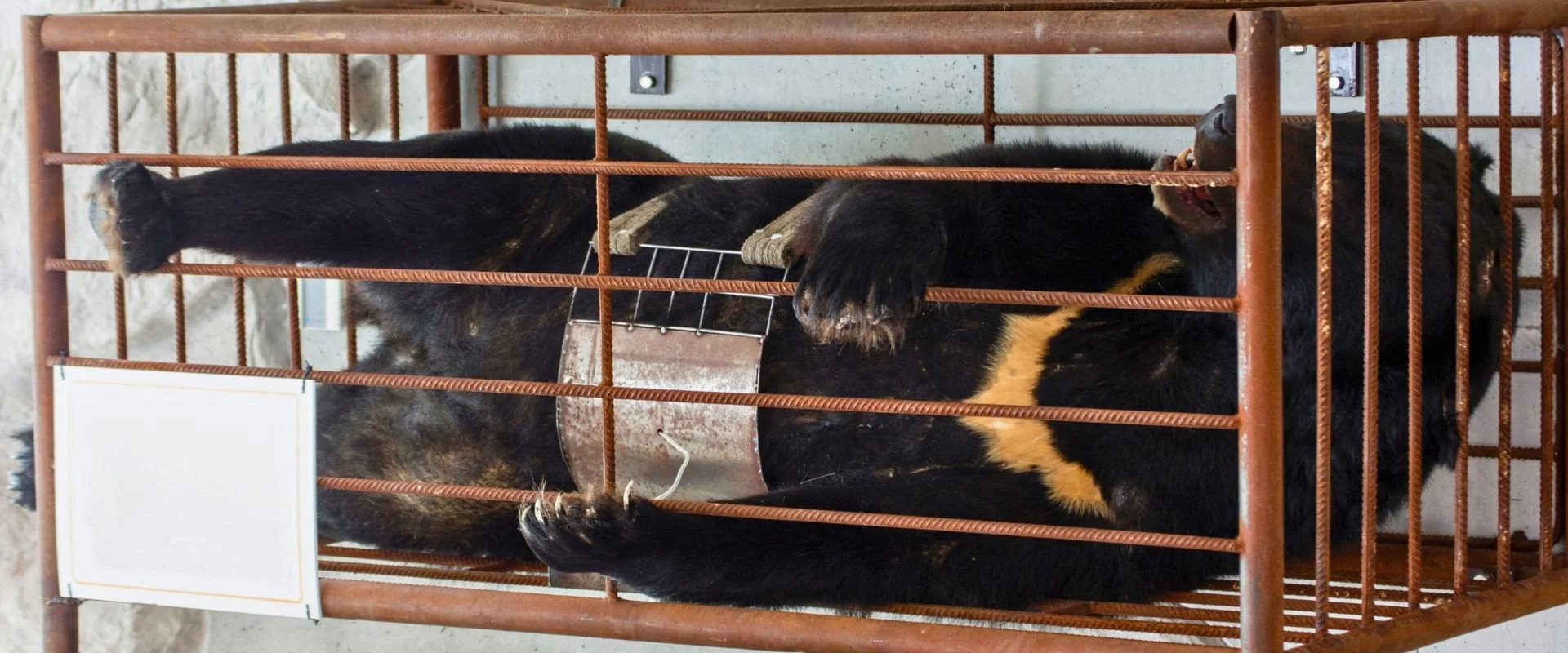
When our partner, the Laos Conservation Trust for Wildlife (LCTW), took over a zoo and changed it into a sanctuary for rescued animals, it inherited a large challenge – 23 large challenges, to be exact. That’s because the zoo was home to 23 sun and moon bears, none of whom could ever be released into the wild. When our partner turned the zoo into the sanctuary it is today, it pledged to care for the bears for the rest of their lives. Now, the bears – 21 black bears (also known as moon bears) and two sun bears – live in large, naturalistic forest enclosures. They are no longer being used as living exhibits to make money for zoo owners. But there is one wish these animals still have… Currently using their drinking water basin, these bears dream of having a pool to cool off in. Credit: LCTW 23 rescued Asian bears would LOVE a pool to cool down in. Will you help? The bears love to swim – hardly surprising considering the sweltering temperatures in Vientiane, Laos, where they reside at our partner’s sanctuary. Between March and May, temperatures can soar to 108.5°F (42.5°C), and to cool off, bears love to submerge themselves in refreshing pools. In 2024, our partner was ordered to move. Its new sanctuary, officially opened earlier this year, provides beautiful, spacious enclosures for the bears. But our partner has yet to raise the funds for four pools for the different bear enclosures. We watched the animals frolic in their small drinking basins, and we just knew we had to help with proper pools. Everything has changed for these sun and moon bears. No longer living exhibits, they can now relax and enjoy life. Credit: LCTW With your support today, Friend, we will raise $3,200 (£2,350) for four pools – one for each bear enclosure. We know these special animals will be so grateful for the relief your gift will bring them, especially during these, Laos’ hottest months of the year. Right now, they are splashing around in their small drinking pools, but this is not ideal. The dream is large enough pools to submerge themselves in. Will you give the animals this gift? Any donor who gifts $500 (£370) or more will have a personalised plaque installed at a pool. Donate individually, as a family or as part of a group or team. Should you wish to do this, please email info@animalsurvival.org once you have made your donation. Asian bears are widely hunted, bred, chained and abused for the “traditional medicine” and entertainment markets in Asia. The illegal trade of sun and moon bears is a pervasive and significant threat to the species’ survival, driven by the demand for their body parts, especially bile, in traditional “medicine” and folk remedies. Poached, forced onto bile farms and kept in cramped enclosures — this is the devastating reality for moon and sun bears across Asia. Credit: Shutterstock/Ovchinnikova Irina The illicit trade continues across Asia despite national and international laws against it. It is a primary cause of population decline for species like the Asiatic black bear and the sun bear, both listed as vulnerable by the International Union for the Conservation of Nature (IUCN). These animals are tortured and abused – and, after everything these 23 have endured, they would love nothing more than pools to cool down in. Please donate today.
‘A dream come true’: Brazil’s blue-and-yellow macaws return to Rio after 200 years
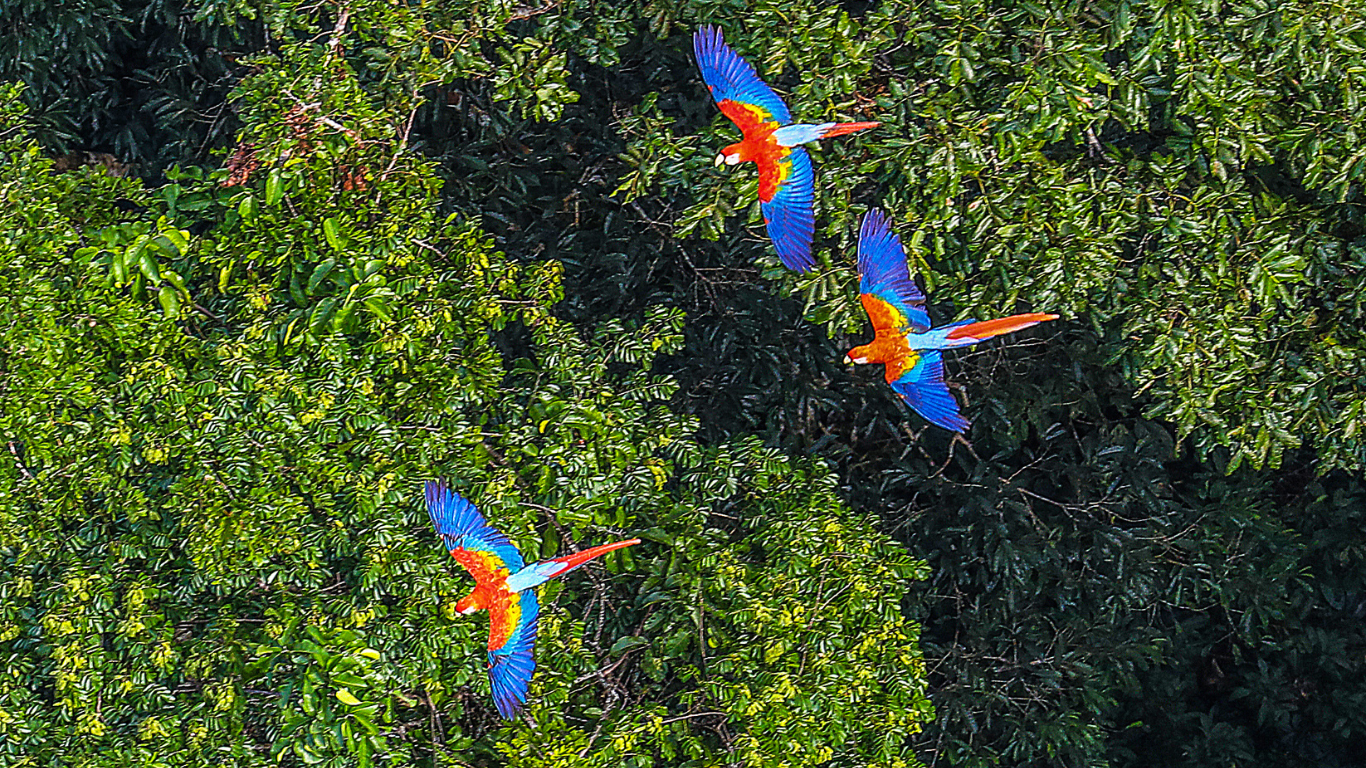
Article written by Luke Taylor Originally published by The Guardian, 9 April 2026 An ambitious ‘refaunation’ project is bringing the much-loved birds and other lost species back to the city’s national park Images of the iconic blue-and-yellow macaw can be spotted all over Rio de Janeiro. Yet the real thing has been seen so rarely in the Brazilian city that some wondered if it ever really existed there at all. The French explorer Jean de Léry first described an abundance of the giant, colourful parrots around Indigenous tribes in the 16th century, and the Austrian naturalist Johann Natterer sighted the Ara ararauna in the city in 1818. After that, the record goes blank. Experts say the species was almost certainly wiped out by deforestation, along with the tapirs, jaguars and peccaries that once roamed the forests surrounding the city. Now, 200 years later, flashes of blue and gold are once again peppering the forest canopy as biologists bring the species – and the forest – back to life. “They are so magnificent. It’s no surprise that all the visitors are constantly asking how they can see them,” says Viviane Lasmar, director of Tijuca national park. “For me, as the head of the park, it’s special. But even more so as a carioca [someone from Rio]. It’s a dream come true.” Tijuca is one of the world’s largest urban parks. Its nearly 4,000 hectares (10,000 acres) of green canopy cover the steep granite mountains of Rio, closely hugging the city’s concrete limits. This lush remnant of Brazil’s Atlantic rainforest feels wild and remarkably untouched. But exploitation for commodities such as coffee and charcoal in the 19th century decimated the forest. In what many see as one of the world’s first tropical reforestation initiatives, Emperor Dom Pedro II ordered the replanting of trees in Tijuca in the 1860s, but many species had already been lost. The blue-and-yellow macaw was one of the victims of this deforestation, with its colourful plumage also making it a prized target for wildlife traffickers. “They probably went extinct [in Rio] due to the wildlife trade and deforestation during the European colonisation here,” says Marcelo Rheingantz, executive director of Refauna, which estimates that two-thirds of large and medium-sized mammals that once lived in Tijuca have also been lost. But, one by one, these animals are returning to the forest. For the first time in centuries, giant rodents scuttle through the undergrowth, yellow-footed tortoises meander languidly and howler monkeys swing through the trees, their bellowing calls echoing for miles. Only four macaws have been brought back so far but it sounds like dozens as their aggressive squawks pierce the rainforest canopy. “It’s really beautiful to be putting the forest’s orchestra back together again,” Rheingantz says with a broad grin. Refauna started restoring the rainforest through its “refaunation” programme, introducing the red-rumped agouti – a long-legged rodent the size of a cat – in 2010, followed by other species that exist elsewhere in Brazil but were extinct in the park. These include the brown howler monkey, which was probably last recorded in Rio in Charles Darwin’s Beagle diaries in 1832, and the yellow-footed tortoise. All the reintroductions have brought excitement and new visitors to the park but none are as beloved as the macaws. The large parrots, almost a metre in length, which can be found in other parts of Brazil and South America, are famously intelligent and mate with their partner for life. The blue-and-yellow macaw adorns artwork, T-shirts and tote bags across the city and beyond, its colours echoing the country’s national flag. The hero of the blockbuster film Rio was a plucky macaw trying to save the last of his kind – though Rheingantz is quick to point out it was the Spix’s macaw that is endemic to northeastern Brazil. “Now we are correcting the story and putting the right species here,” he says, chuckling. Three females and a male have been brought to the park so far and are currently back in their enclosure for monitoring after being released for 15 days earlier this year. Refauna is planning to release them again in September. “The release scheduled for September is a significant milestone in the process, though not necessarily the final one. All individuals will continue to be monitored, and recapture may take place if required,” says Rheingantz. The macaws, Fernanda, Selton, Fatima and Sueli – named after actors in the Oscar-winning film I’m Still Here and characters from the popular Brazilian sitcom Slaps and Kisses – all have distinct personalities, according to the Refauna team, with the mischievous Sueli, who destroys almost everything she touches, a particular favourite. Another six macaws will soon be brought to the park, and eventually Refauna plans to release 50 of them. The sight of a mosaic of gold and blue sweeping through the skies would be spectacular, but the project is about saving the forest rather than creating a spectacle, says Vanessa Kanaan, director of Instituto Fauna Brasil. “Reintroducing species is not simply about returning animals to the forest. It is about rebuilding ecological relationships and ensuring that these species can once again perform their ecological roles,” the biologist says. As with rewilding projects across the world, the Refauna team is constantly surprised by the way bringing back just one species can spark changes that ripple throughout the entire ecosystem. “This is an excellent example,” Rheingantz says as he bends down and picks up a peculiar fruit resembling an avocado. Joannesia princeps, popularly known as agouti fruit, was the main symptom of “empty forest syndrome”, which sparked Refauna’s inception. The agouti tree drops its fruit as an incentive for animals to eat them and disperse the seed, but without the agouti rodents, the forest floor was carpeted with rotting fruit. In some parts of the Atlantic forest, 90% of flora rely on animals to spread their seeds. By reintroducing species, researchers hope to gradually bring the entire forest back to life. The agouti’s razor-sharp teeth can crack open the toughest of nuts, making them a super seed disperser, while the large droppings of howler monkeys provide moisture and shade for seed germination, which are then
Citizen ‘Frog Patrol’ helps amphibians survive a dangerous road journey in Poland
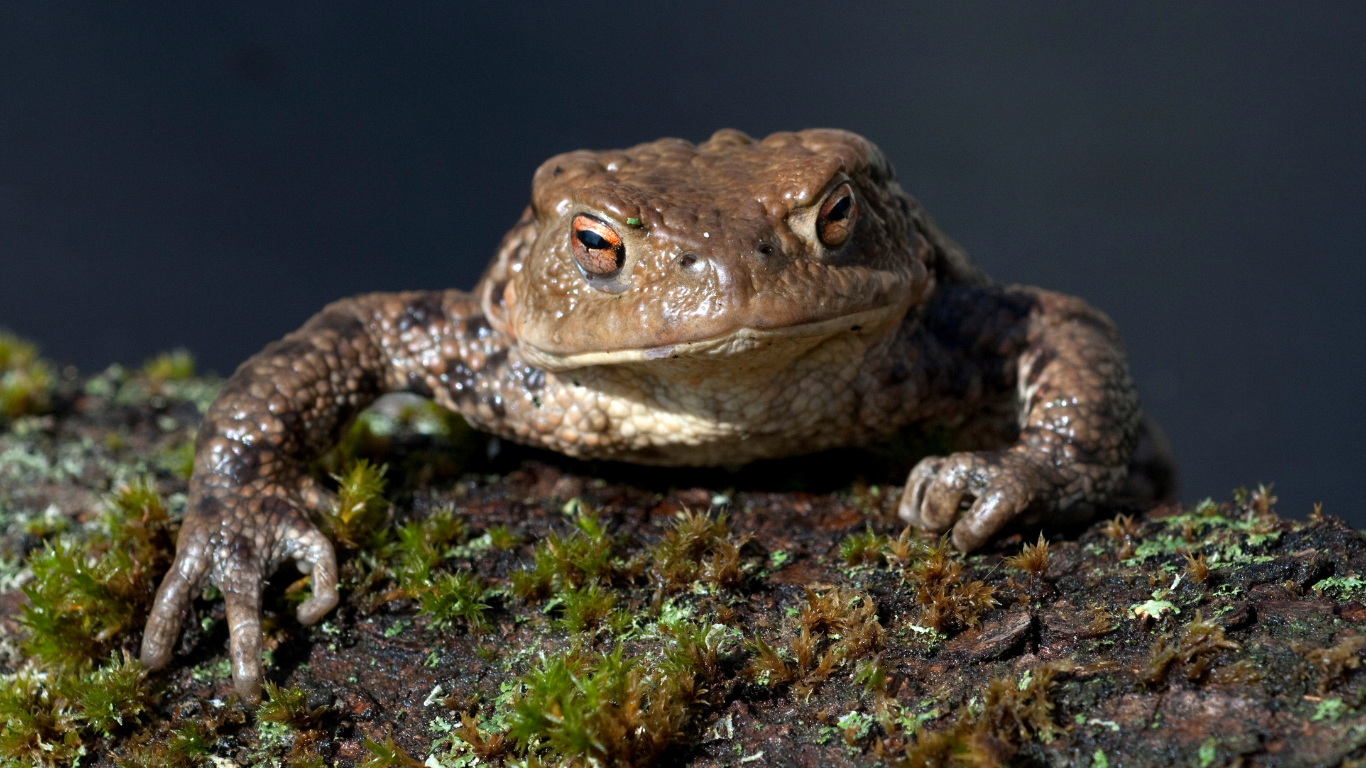
Article written by Claudia Ciobanu Originally published by AP News, 10 April 2026 On rainy spring nights in a forest near the Polish capital, a citizen “Frog Patrol” springs into action — humans helping amphibians survive dangerous road crossings for a chance to enjoy millennia-old mating rituals. As warmer weather comes to Mlochowski Forest, 30 kilometers (19 miles) west of Warsaw, thousands of toads and frogs wake up from their winter slumber and begin their meticulous spawning journey to the marshes, a few kilometers away. The females carry the burden of the journey. Male toads here don’t really give off princely vibes but travel on the backs of their much larger female partners, tightly holding on to ensure they are not dumped in favor of a rival upon reaching the waters. While generations of toads and frogs have traveled to these marshes to mate, a road built in the last decade right across their route made the spring journey much more dangerous. What followed was sheer amphibian slaughter — when the mating season started and the frogs were on the move, thousands would get run over. Enter the ‘Frog Patrol’ Łukasz Franczuk, coordinator of the “Frog Patrol” initiative, recounted the sad scenes from four years ago. “The frogs were being run over in the hundreds or thousands,” he said. “When you were driving on this road, you could see the decomposing corpses of the frogs. People going to collect the surviving ones were crying, they couldn’t stand to watch what was happening.” Franczuk and his friends responded by helping locals organize, starting three years ago. Volunteers would meet every wet, rainy evening as soon as spring starts, fan out along the road by the forest and collect frogs from the roadside, then carry them safely across to the marshes. Frogs breathe through their skin, which must stay humid, so they only move and migrate when it rains. Wearing reflective yellow vests emblazoned with the words “Frog Patrol” and armed with head lamps and buckets, hundreds of volunteers can now be routinely seen out in the evenings during migration season. Locals, including children, have also started carrying gloves with them during the day, so they can pick up the amphibians if they see them in distress at any time.“It’s really impressive to see whole families with kids walking in the rain, with buckets, in these lovely jackets to make them visible because it’s pretty unsafe, this road is narrow, and they carry the frogs from one side of the road to the other,” said Katarzyna Jacniacka, one of the participants. “When the frogs are migrating, there are a lot of people here,” she added. For Aleksandra Tkaczyk, another volunteer, this is “the kind of connection with nature about which some of us care deeply.” Locals say they have saved about 18,000 amphibians since their initiative started. Helping frogs survive Biologist Krzysztof Klimaszewski from the Institute of Animal Sciences at the Warsaw SGGW University, who took part in a few of the frog patrols, said that what the locals are doing here is very important because “it actually allows this local population of amphibians to survive.” Such citizen initiatives to help toads and frogs cross roads built through their natural habitats are not unique to Poland. In New Hampshire, U.S. volunteers from the Harris Center for Conservation Education save all sorts of amphibians, including salamanders, from being run over by cars. In Bavaria, in southeastern Germany, volunteers from BUND Naturschutz say they rescue up to 700,000 frogs, toads, newts and salamanders every year. Even in France, where frog legs are a culinary delicacy, local volunteers help the suffering amphibians. In the southern French region of Provence-Alpes-Côte d’Azur, people have installed nets on the roadside to collect the frogs before they head into the dangerous traffic. And in the Estonian capital of Tallinn, authorities announced in early April the construction of additional frog fences on Tahetorni Street — right on the frogs’ springtime migrating route — to guide the amphibians and other animals safely into underground tunnels and avoid getting them killed by traffic.
The fence effect: What happens to wildlife when you draw a line around it?
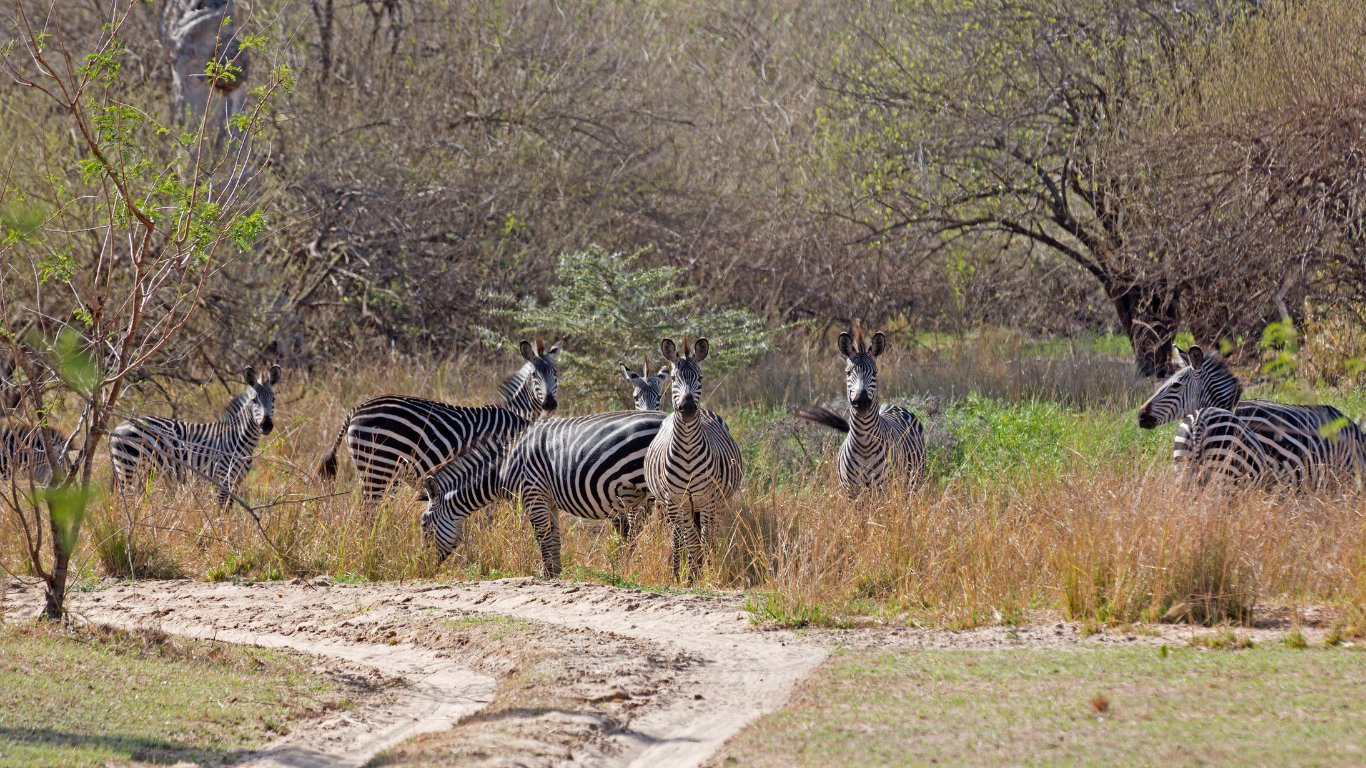
Article written by Gillian McAinsh Originally published by Daily Maverick, 7 April 2026 Are the fences around South Africa’s game reserves saving biodiversity or subtly changing it? Research from Nelson Mandela University suggests the answer is both. A large-scale study of South Africa’s protected areas finds that conservation tools like fencing, roads and artificial waterholes are not neutral – they actively shape biodiversity and predator-prey dynamics. In his PhD, “Evaluating the ecological impacts of fencing on wildlife diversity and dynamics in South African protected areas”, conservation scientist Dr Gert Botha examined how fencing and tourism infrastructure such as roads and artificial waterholes influence mammal diversity and predator-prey dynamics. His supervisors were Professor Jan Venter and Professor Hervé Fritz, both based on the “green” George Campus of Nelson Mandela University. “In an ideal world, you would not have fences at all,” said Botha. “But we don’t live in that. Fences serve a very important purpose in conserving wildlife. They are not just to protect wildlife, but also to protect people from wildlife.” In SA, fences are required by law to manage dangerous game and prevent conflict with neighbours. However, Botha’s research shows that fences also act as ecological filters, influencing which species thrive and which retreat. Most earlier studies focused on a single species or park. Botha instead analysed thousands of camera trap records collected through Snapshot Safari, a large-scale monitoring project developed by Venter. The data span national parks including Pilanesberg National Park, Madikwe Game Reserve, Mountain Zebra National Park and Karoo National Park, as well as private reserves. Overall, herbivores were less likely to use areas close to park boundaries. “They tended to avoid getting too close to the fences,” Dr Botha said. “Human activity near those boundaries, including nearby villages, probably also influences their behaviour.” Carnivores responded differently. “Lions are often seen on roads, and fences don’t seem to discourage them. They use these clear paths to move around more easily, instead of going through dense vegetation.” Predator space use was strongly associated with prey availability, supporting a bottom-up regulatory structure within fenced systems. Artificial water sources, widely used to support tourism and buffer dry periods, also reshaped ecosystems. “The goal of this research was to use science to support managers in maintaining healthy ecosystems. SA is experiencing a decline in biodiversity, and protected areas are one of our most important tools for conserving species and preventing further losses,” Botha said. “What is the ecological impact of adding watering holes, roads, or fences, and how does it affect the species inside fenced protected areas? “Watering holes and roads are essential, but they must be designed and managed in ways that protect wildlife and the ecosystem. We want to halt the ongoing loss of biodiversity, which is largely driven by human interventions. “Tourism is important, and artificial water points can be a useful management tool. They make it easier for visitors to see wildlife. However, they must be implemented responsibly and managed sustainably. Similarly, species can adjust to landscapes that include roads.” At the same time, he cautioned: “Too many water points can disrupt the balance of the ecosystem. Animals may concentrate in these areas, leading to overutilisation.” Artificial water points were used by a wide range of species, while other, less water-dependent species tended to roam more widely across the reserve. Rainfall and reserve size also mattered, with larger protected areas generally supporting more balanced predator-prey systems than smaller fenced landscapes. Professor Jan Venter said the real power of the study lay in the scale and continuity of data behind it. “What makes this work particularly important is that it is built on a large, standardised, long-term dataset collected across multiple protected areas. In conservation science, scale matters.” Botha’s research draws on thousands of camera trap records generated through the Snapshot Safari network, one of the largest coordinated wildlife monitoring initiatives in Africa. “Large datasets allow us to separate signal from noise. Wildlife populations fluctuate naturally from year to year. Without long-term monitoring, it is very easy to misinterpret short-term changes as ecological crises, or to miss gradual but important trends,” said Venter. Broader patterns “When you monitor consistently over time and across space, you can begin to see broader patterns. That is essential if we want conservation decisions to be evidence-based rather than reactive.” He added that SA was in a strong position internationally because of its structured monitoring programmes, as few countries had been able to generate this kind of standardised, multi-reserve dataset. Botha’s work added to this. “A fenced protected area is a closed system that needs to be monitored and managed,” said Botha. “As a conservationist at heart, you want to protect. We want to conserve the environment, but you also want to do it in a sustainable way, where we can grow as a society. This protected area is not just for tomorrow or the day after, but forever.” For Botha, who grew up visiting the Kruger National Park, the question is not whether SA should fence its reserves. It is how carefully those fences, roads and waterholes are used in landscapes that must remain both economically viable and ecologically intact.
Decades after poaching drove them extinct, rhinos are back in the wild in Uganda
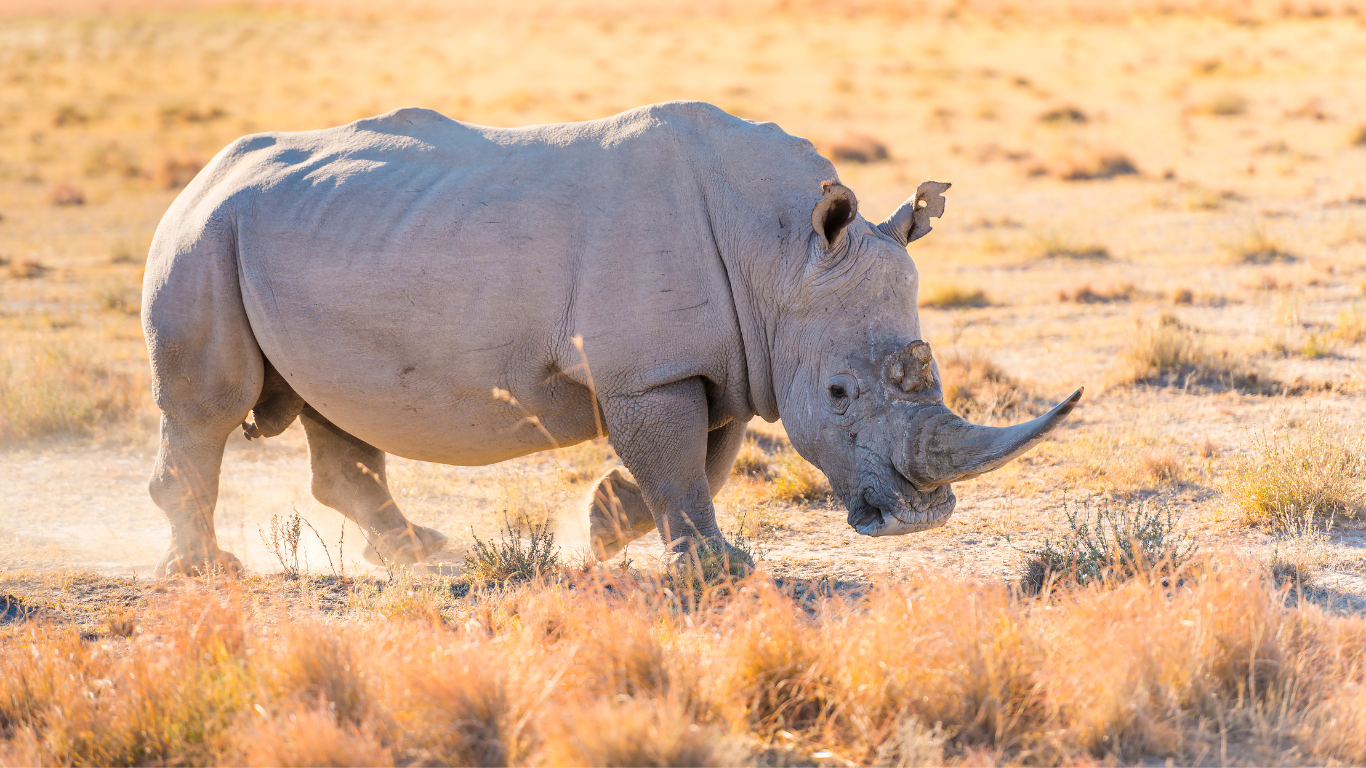
Article written by Benjamin Jumbe Originally published by Mongabay, 31 March 2026 Forty-three years after the last free-ranging rhinos were seen in the country, the Uganda Wildlife Authority has welcomed four southern white rhinos to Kidepo Valley National Park, in the country’s north, from a breeding sanctuary designed for the species’ reintroduction. “We are glad and privileged to be taking back rhinos much as it is a different subspecies from that that used to exist, because the northern white rhino is the one which used to exist there but was hunted to extinction,” UWA executive director James Musinguzi said at the Ziwa sanctuary on Mar. 17. According to the wildlife authority, a total of eight rhinos will be released in the park by May this year, marking the beginning of a longer process aimed at establishing a viable free-ranging rhino population in Kidepo Valley National Park. Uganda was once home to around 300 northern white rhinos (Ceratotherium simum cottoni) and 400 eastern black rhinos (Diceros bicornis michaeli). But these populations were devastated by intense poaching that flourished amid the civil war that began in the late 1970s. The last of the country’s wild rhinos was killed in 1983. In 2005, a breeding program for rhinos was established at Ziwa Rhino Sanctuary. Six southern white rhinos (Ceratotherium simum simum) — four from Kenya and two from a sanctuary in the U.S. — were introduced the following year, and by 2023, that herd had grown to 42, according to the sanctuary’s website. Bashir Hangi, UWA’s head of communications, told Mongabay that four rhinos have been translocated from Ziwa to Kidepo so far, with four more to follow. In January, four southern white rhinos from the sanctuary to were translocated to Ajai Wildlife Reserve in the West Nile region. The decision to establish rhinos in these protected areas is anchored in Uganda’s National Rhino Conservation Strategy, and follows a feasibility assessment undertaken by UWA. The authority says it hopes the animals’ reintroduction will help to restore ecological integrity and contribute to national conservation objectives. In addition to creating an additional conservation stronghold for rhinos, Hangi told Mongabay, their presence will also support the local economy through increased tourism and conservation-related opportunities. Robert Aruho, a veterinary specialist who headed UWA’s rhino conservation program from 2013-2020, agreed that having rhinos at this national park will attract visitors and enhance its conservation value. “Ecologically, the white rhinos are grazers, and their large food intakes keep the grasslands in check,” he told Mongabay in an interview. He cautioned that there are also potential difficulties, including managing the rhinos’ health, possible human-wildlife conflict with surrounding communities, and the high costs of protecting the rhinos against poachers. But, he said, rhino conservation raises the stakes and effort of park management, which in turn helps the protection of other species. “The translocation helps us not keep all eggs in one basket and create opportunities to mitigate all the above risks.” Hangi said the wildlife authority has prepared carefully for the translocations. “This was a deliberate program with extensive planning undertaken, which included habitat preparation, enhanced security, and veterinary protocols put in place in addition to community engagement.”