

Warzones

Lions rescued from the Ukraine war have ONE CHANCE to get to safety.

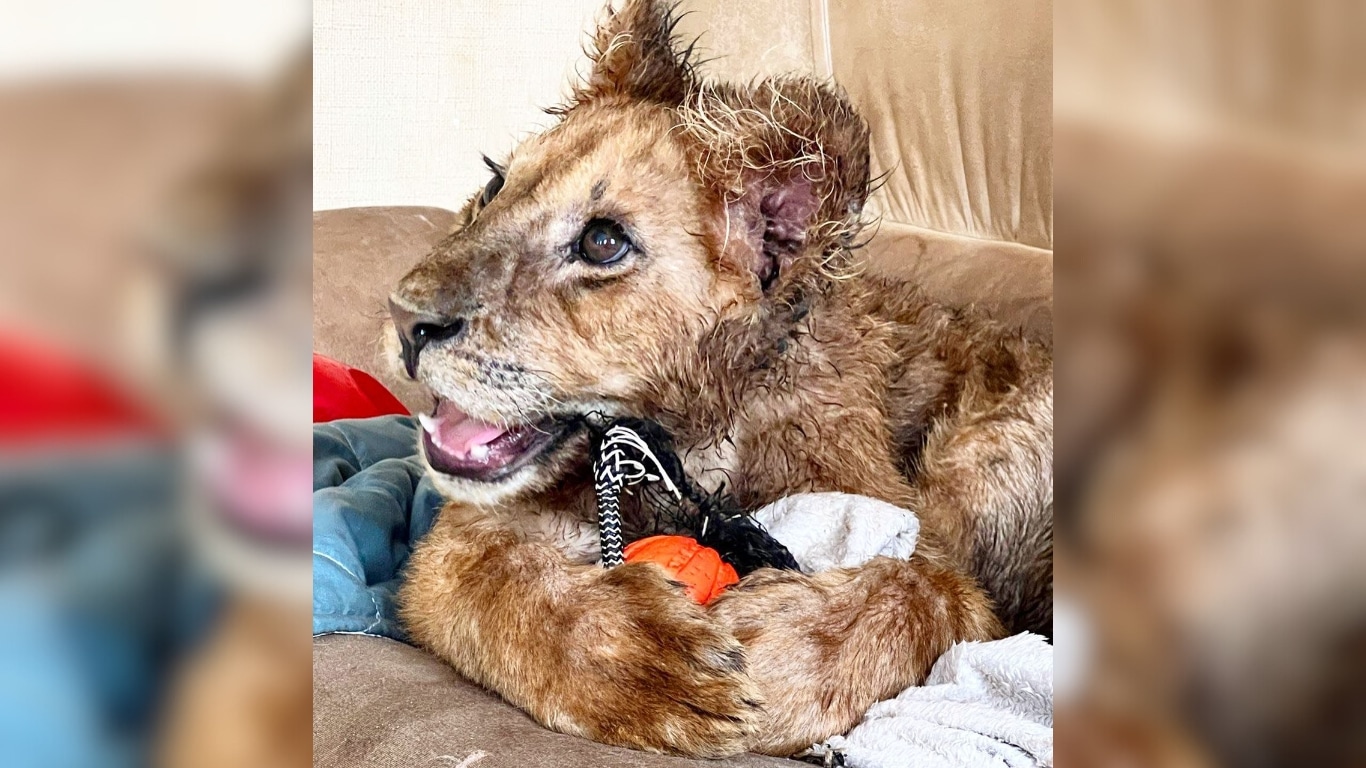
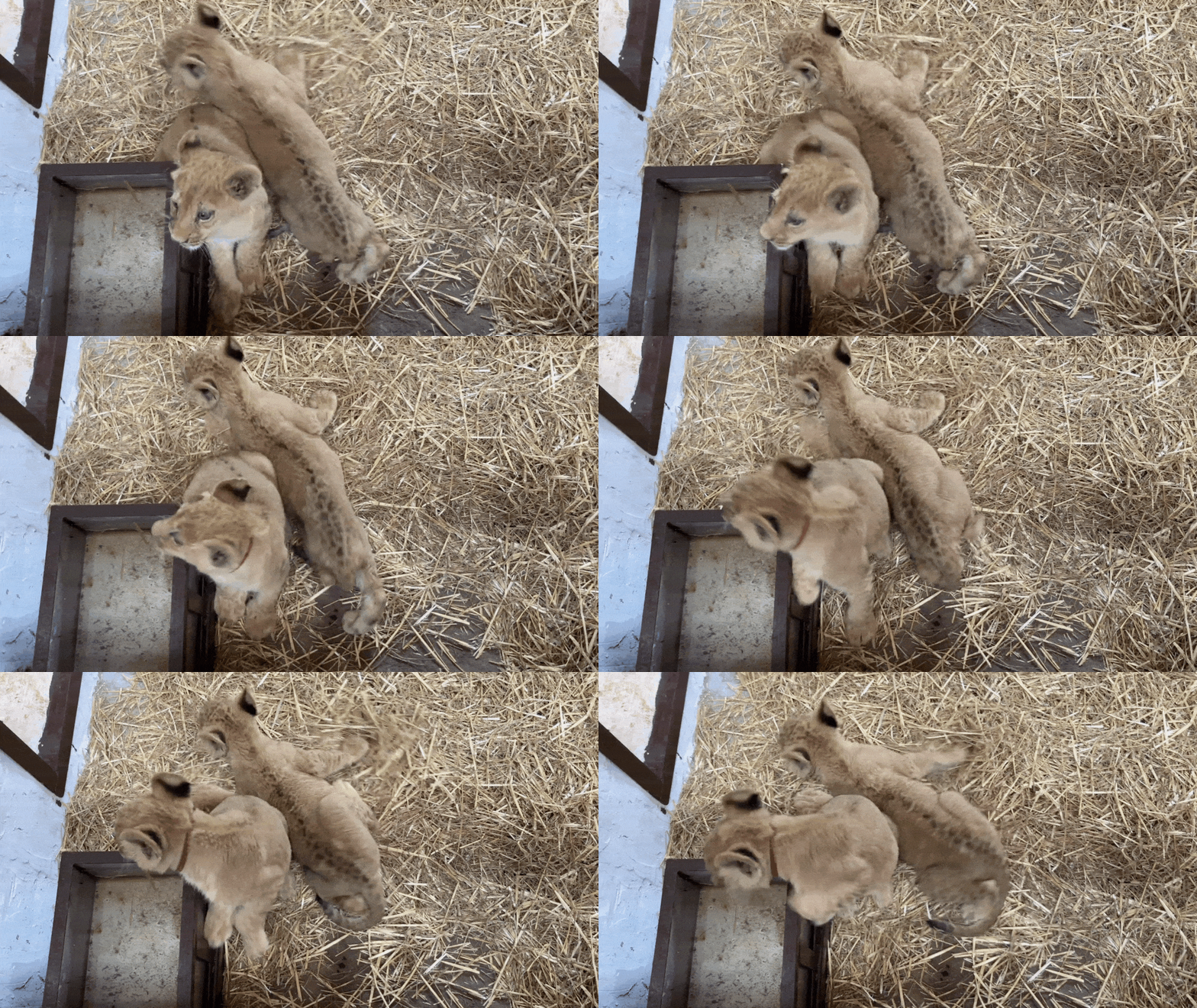
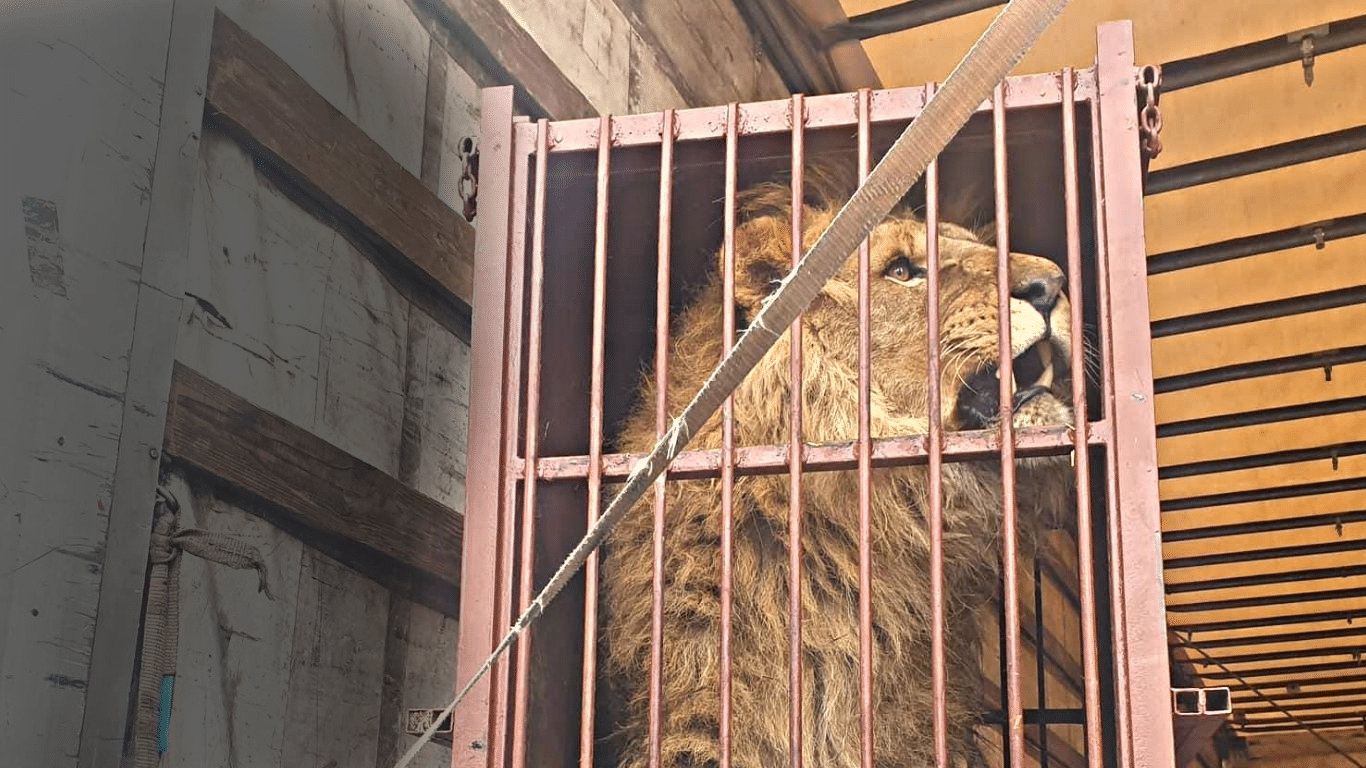
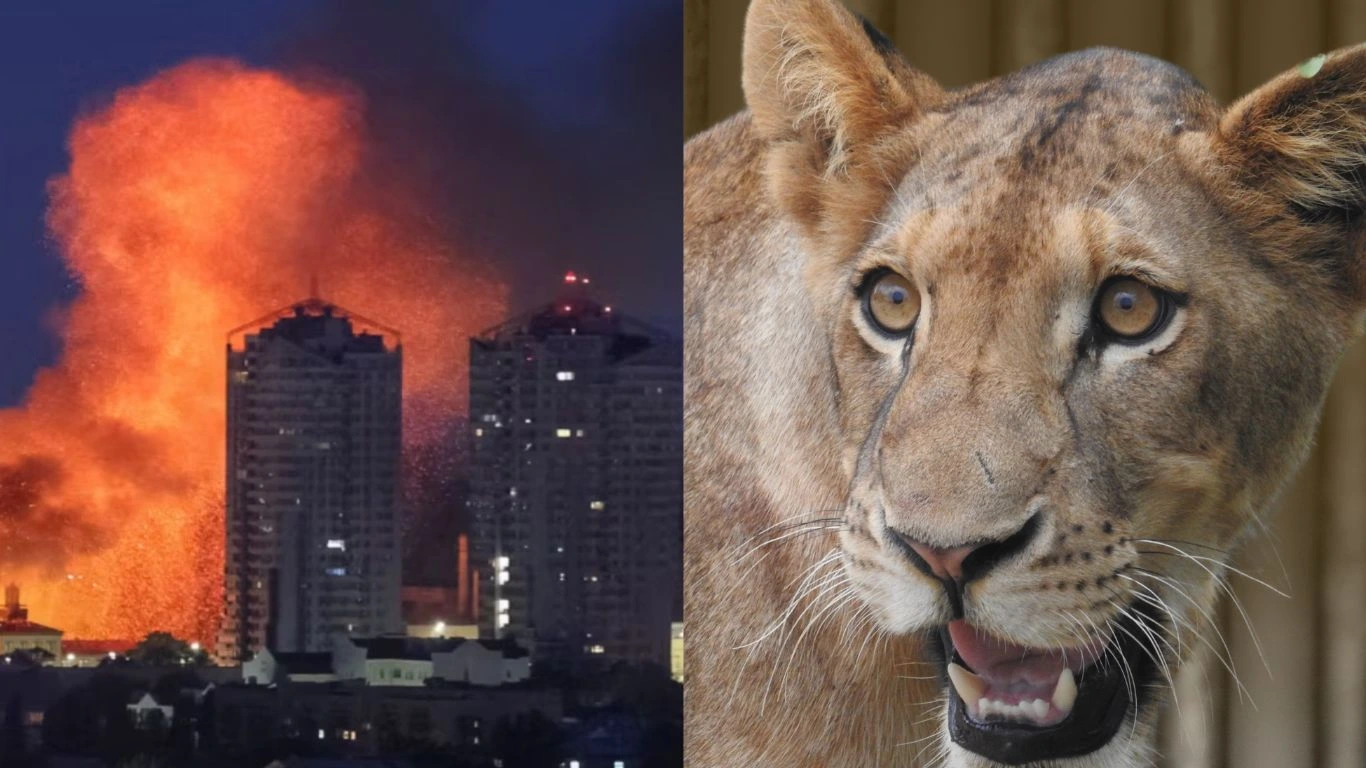
Right now, preparations are underway to evacuate three terrified lions from the war in Ukraine to a safe sanctuary in South Africa. After months of careful planning, we are finally ready to fly the animals – a lioness and two cubs rescued from the war – to safety in South Africa. Securing the relocation of these battle-scarred animals during a horrific war has been a very slow and complex process. Now, as bombs explode right outside their temporary shelter in Ukraine, we are racing to get the lions out before the worst happens. Rescued from the frontlines of the war in Ukraine, a lioness and two cubs have ONE CHANCE to escape the violence. WARC is a temporary shelter for big cats rescued in war-torn Ukraine, but lions can’t stay there forever. With your help, we will relocate Cleopatra, Zorya and Mira to the safety of a sanctuary in South Africa. Credit: WARC These animals have been through hell. Cleopatra the lioness was rescued from a private zoo in Ukraine after it ran out of funds during the war. Without our partner, the Wild Animal Rescue Center (WARC), she likely would have been left to fend for herself amidst the violence – and that’s exactly what happened to the two tiny lion cubs, Zorya and Mira. These helpless cubs were saved from the frontlines, both suffering from broken back legs and malnutrition. We don’t know where they came from or how they were injured; all we know is that they don’t belong in the Ukrainian war zone. The road to freedom for these three lions has been a long one. Ukraine is a no-fly zone, so it was necessary to plot a careful route on land through the war-torn country. For the safety of the animals and our team, we cannot divulge any further details. Now, with a lifetime of safe sanctuary waiting for them in South Africa, we are finally ready to send them home – and for that, we need your support. Recent missile strikes hit nearby Kyiv, shattering windows at WARC. The shock from the blast killed one vulnerable rescued animal and left others traumatized.  Credits: Fox News (left); WARC (right) Missiles are exploding all around the lions’ temporary sanctuary in Kyiv Oblast. We MUST evacuate them FAST! Every day we delay puts the animals at a greater risk – right now, missiles are landing so close to WARC’s sanctuary that its windows have shattered. Tragically, a young rescued deer recently died from the shock of the blasts. As the war creeps closer and closer to WARC’s shelter, time is rapidly running out for the animals! WARC has rescued countless big cats from war-torn Ukraine, but with the war escalating, animals and caregivers are at a greater risk than ever. Please help us get them out – fast. Credit: WARC We have a once-in-a-lifetime opportunity to relocate Cleopatra and the cubs to a safe sanctuary in South Africa – please, Friend, help us get them there. We have partnered with an established wildlife rescue center in South Africa, which is conducting the rescue and has pledged to give Cleopatra, Zoyra and Mira a permanent home at its magnificent, species-appropriate sanctuary. The animals’ transport permits have been approved, and plans are in place to evacuate the cats soon. But we need your help to fund their travel. We promised to do everything we could to find a home for Zorya and Mira last year — and now that home is finally within reach. Help us bring them HOME! Please help us transport Cleopatra, Zoyra and Mira to the safety of a sanctuary in South Africa. Credit: WARC Today you have the opportunity to change the course of three lives forever – and possibly even more. This is because Cleopatra will be joining a lonely male lion, Mufasa, who desperately desires a partner. Together, they will form their own small pride. This beautiful story is about to unfold in Africa – and together, we can write its happy ending. Please, donate as much as you possibly can today. Cleopatra, Zoyra and Mira deserve happiness, freedom and safety – and together, that is exactly what we will give them.
Read More »

Israel war emergency: Animals have no protection as bombs fall

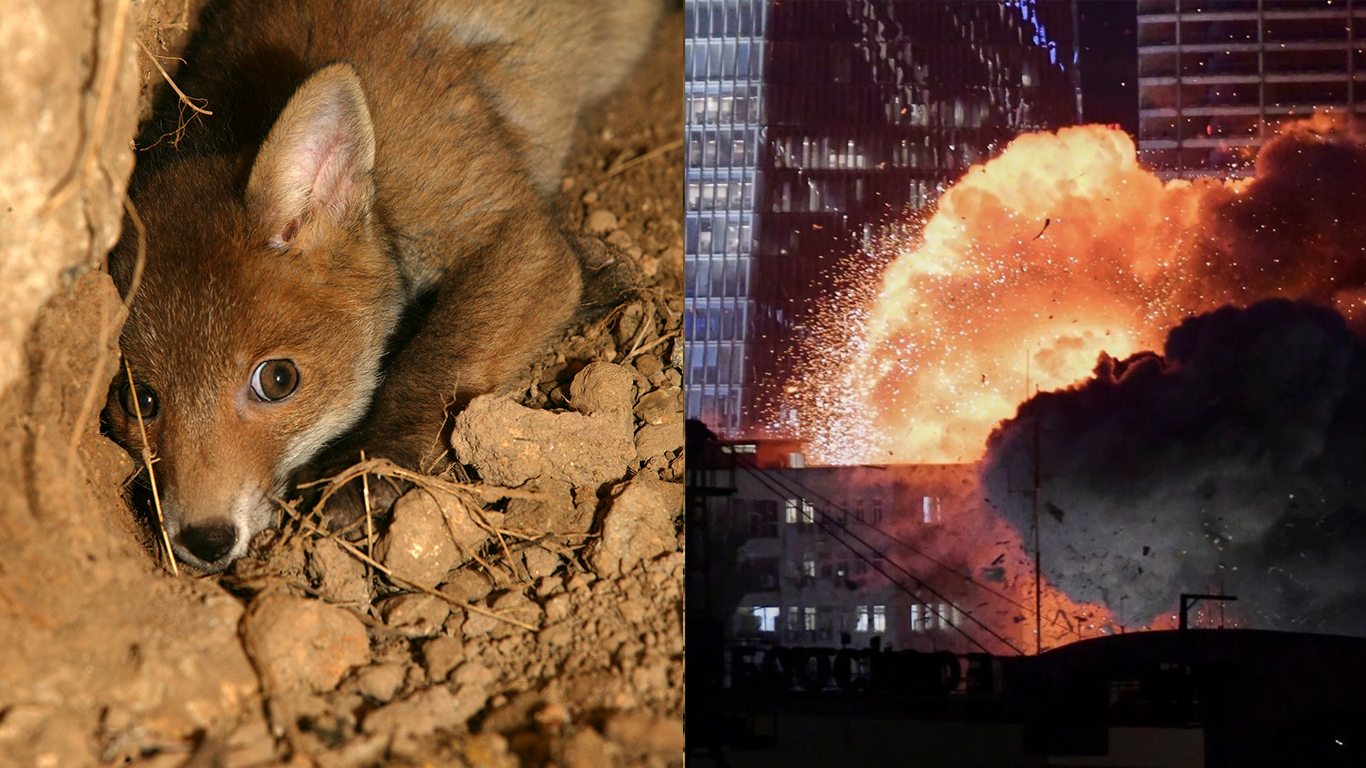
A deadly escalation in the bloody conflict in the Middle East is putting countless animal lives at risk. As Israel and Iran launch relentless attacks, animals are caught in the bloody crossfire. Wild animals are dying as missiles rain down around them, we have a way to protect them. With your help, we WILL. A rescued deer receives round-the-clock care at our partner sanctuary, but all rescued animals are vulnerable to missile strikes without a secure bomb shelter. Credit: TIBS Hundreds of missiles have been fired at Israel from Iran in the past week. The Iron Dome defense system that once kept Israel safe has been breached – now, cities are filled with the sound of warning alarms and sirens, urging people to take cover in bomb shelters. BUT – when the sirens go off, there is nowhere for the animals at our partner shelter to flee to.  Together, we can give them the safety they need to survive this horrific war. With the Iron Dome breached, a fortified bomb shelter is the ONLY way to protect animals rescued from war as missiles fall. Credit: TIBS Amid the chaos, destruction and terror, we are doing everything we can to help – but we must act fast. Our partner, The Israeli Bat Sanctuary (TIBS), was initially established to help bats in need. Over the years, it has expanded to help all kinds of wild animals, including foxes, porcupines, deer, jackals, mongooses, birds of prey, and any others needing life-saving assistance.  TIBS was the first animal rescue team on the scene after the October 7 attacks, rescuing 500 animals from suffering and death. Today, it is the only safe haven for wild animals outside Tel Aviv and Jerusalem, offering 24-hour rescue, rehabilitation and long-term care. But while the animals have been rescued from death, they are still not safe – not until we can install a bomb shelter to save them from the destruction raining from above. Wild animals are being forgotten as war rages on, like this baby jackal found malnourished and on death’s door. Credit: TIBS A few days ago, bombs fell just three miles (five kilometers) from the sanctuary. The next attack could land a direct hit – and we must act fast to protect the animals before this happens. This rescued porcupine is one of the many animals who are at risk without the protection of a bomb shelter. Credit: TIBS The closest thing TIBS currently has to a bomb shelter is an old walk-in fridge with flimsy polystyrene walls. Every time the sirens blare, the TIBS team moves animals into the old fridge, staying by their side throughout the chaos. If bombs land anywhere near this ineffective shelter, the animals – and the dedicated staff who refuse to leave their side – could be blown to pieces. There is a quick and effective solution that we can implement immediately: A fortified bomb shelter with eight-inch-thick (20cm) concrete walls, which can withstand a missile strike landing as close as six feet (2m) away. The bomb shelter is ready to be purchased and installed – all we need now are the funds. When warning sirens sound, animals are moved to a walk-in fridge offering little protection (L). The team urgently needs a fortified bomb shelter (R) to keep its animals safe. Credit: TIBS The sanctuary receives no government funding and survives solely on the support of volunteers and public donations. Now more than ever, they are financially stretched and cannot afford this crucial protection for their animals. We must act quickly to raise the funds needed to protect animals saved from war. Our partner has sworn to protect them no matter what – and with your help, we can help keep that promise. Please donate right away and help us give these animals the protection they deserve.

Read More »

Disaster strikes in the freezing winter – rescued lions and tigers need your help.

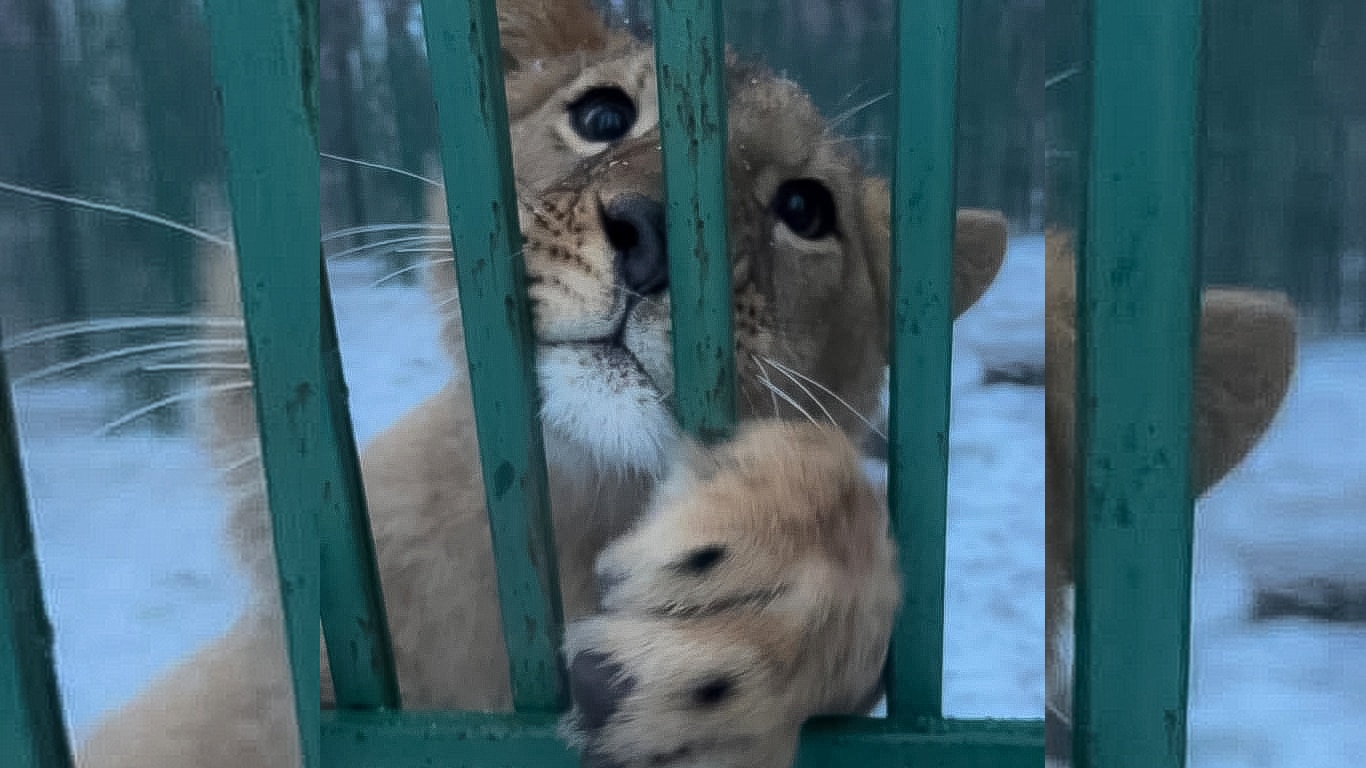
Battle-worn Ukraine is in the midst of a freezing winter, with temperatures dropping as low as 4°F (-20°C). For countless lions and tigers, many brought into the country illegally, these sub-zero temperatures are deadly. Abandoned lion cubs rescued from the cold need access to warmth to survive the Ukrainian winter. Credit: WARC Lions and tigers native to warm climates are battling to survive Ukraine’s freezing winter. These animals, native to the warm climates of Africa, India and Asia, are ill-equipped for Ukrainian weather, but at least when they were in zoos or private hands, they did not have to brave the winter months without warm shelter. Rescued by our partner, Tigrulya has kidney failure and severe hind leg injuries. Without a warm indoor enclosure, he will not survive. Credit: WARC But now, even that small mercy has disappeared. When war broke out, many of these big cats were abandoned as their owners fled – some left in their cages to starve to death, while others were tragically killed by their owners who saw no other option. These big cats cannot survive in freezing war-torn Ukraine without your help. Many of our partner’s rescues are struggling with illness and injuries. For these animals, exposure to the cold could be deadly. Credit: WARC Our partner has rescued lions and tigers with severe injuries and health complications – now they need warm shelter if they are to make it through the winter. Our partner, Wild Animal Rescue Center (WARC), has rescued dozens of these unfortunate animals abandoned during the war. Many of the big cats in WARC’s care are battling the foreign climate, as well as injuries, illness and disability. Abandoned in a zoo as bombs exploded around him, Simba the lion broke his nose on the bars of his cage. He is one of many big cats that need your help. Credit: WARC With below-freezing temperatures expected to last at least another month, and food and veterinary costs soaring, WARC fears they won’t be able to provide warmth for much longer. If they cannot pay their heating bills, their electricity will be cut off – a devastating tragedy for the lions, tigers and other animals who depend on them for survival. Credit: WARC We need to raise $10,000 (approximately £8,000) to cover critical heating expenses, before a brutal winter claims the lives of even more majestic big cats. A heated enclosure at our partner’s facility. Credit: WARC Please help in any way you can today.

Read More »

1,000 days of war means 1,000 days of animal suffering.

It has been over 1,000 days since war broke out in Ukraine – and every day has meant unbelievable suffering and abject terror for the wild animals abandoned as missiles strike and bullets fly. Credit: WARC Countless animals have died and countless more still wander the frontlines, miraculously escaping death as their homes are blown up and their families killed. Many of these wild animals were kept as “pets” before war broke out. Once the fighting began, they were either abandoned to die in their cages or released to fend for themselves. Despite being left to starve to death or be slaughtered by Russian soldiers, many animals have managed to survive, scavenging what food they can from amidst the rubble and destruction. For these terrified wild animals, every day on the frontline could mean death. We MUST keep up our search-and-rescue missions to save these forgotten animals – but we can’t do it without your help. Every week, our team risks their lives to save desperate wild animals from the war zone. As freezing winter sets in and enemy troops pour into Ukraine, we are fighting to save them all before it’s too late. Credit: WARC A bitter winter has Ukraine in an icy grip, leaving animals to freeze on top of ravenous hunger, debilitating injuries and constant terror. Our partner in Ukraine, Wild Animal Rescue Center (WARC), needs to conduct critical rescue missions for animals on the frontline, but snowy conditions are making it extremely difficult to continue their life-saving work. One of the most crucial needs is a set of specialized winter tires, to let its animal ambulance safely navigate the pot-holed, treacherously wet and icy roads. Getting to the animals is only half the battle. When our team finds them, many are so badly injured, they need major medical intervention. And with below-freezing temperatures coupled with the constant threat of attack, treating animals on the side of the road can be deadly. If we can get the snow tires and install an examination table in our partner’s animal ambulance, we will drastically improve the chances of survival for both the animals and our hard-working team. Credit: WARC Last but not least, we need to supply secure animal crates for transporting large animals like bears from the frontlines to the safety of the WARC sanctuary. If we can raise $4,300 (approximately £3,400), we can equip our partner’s animal ambulance with everything it needs to continue saving defenseless animals in Ukraine. We promised to help until the war is over, but we can only do it with your continued support. Credit: WARC Please, help us give these animals a chance at survival by donating as much as you possibly can right away.

Read More »

Lions and tigers abandoned on Ukraine war frontlines.

The war in Ukraine is a nightmare for countless lions, tigers and other wild animals. As people flee Russian advances, zoos and private owners abandon dangerous, captive wild animals who will be shot on site by soldiers. Our supporters already helped rescue two injured, infant lion cubs from the frontline. They will survive, thanks to you… …But so many more animals are desperate for your help. Credit: ASI/Dejan-Radic In Ukraine, it is legal for private citizens to keep wild animals, and before the war, anyone with a few thousand dollars could buy their choice of exotic pet.    Now, as bullets fly and missiles tear up the land around them, these animals are being abandoned by fleeing owners and caretakers.   They are petrified and starving, and they will die without help   Please don’t wait until it is too late for these poor animals.   Our partner in Ukraine, the Wild Animal Rescue Center (WARC), works around the clock to rescue animals in the war zone. Our team puts their lives at risk on every mission. Credit: WARC WARC responds within minutes of receiving calls for help, no matter the size or species of the animal.   For bears, lions, tigers, lynxes and so many others on the frontline, our partner team is there, providing life-saving medical care and temporary shelter for injured, terrified, emaciated animals.   The cost of supplies is rising but rescue missions and care must continue.   We must equip our rescue teams with everything they need to continue fighting to save animals who truly have no-one else to turn to. Image credit: ASI/Justine Haralambous We need YOUR help to continue this vital work.   Each mission costs up to $4,000 (roughly £3,050), depending on the logistics, species and dangers of the situation.    The costs don’t end there. Animals often need critical veterinary care once they are rescued, and they all need shelter and food until they can be safely relocated.   Can you imagine how terrifying it must be to try and save a wild animal as enemy soldiers rain fire all around you? Credit: WARC There is probably no more dangerous animal in the world than a frightened Bengal tiger.   Imagine how brave our team was to rescue this guy in a battlefield while a war goes on around them? And imagine how wonderful it is for the tiger that he was rescued and we and WARC are looking after him. Credit: ASI/Dejan Radic We have seen first hand the terrors of this war. The situation for animals is getting worse and so many wild animals have no chance of survival without help.   You can give them that help today.   Please, stand with us and make a difference for the abandoned wild animals of Ukraine. They are desperately hoping for your support now.

Read More »

Tiny lion cubs rescued in Ukraine urgently need treatment.

The terrible war in Ukraine is claiming animal lives by the thousands. Among the most tragic victims are lions and tigers abandoned as zoos collapse and private owners flee. Credit: ASI/Dejan Radic We have just rescued two tiny lion cubs from Ukraine’s deadly frontlines. Their legs are BROKEN. Please, help us care for them right away. Our team was in Ukraine last week when two tiny lion cubs were found wandering around the frontline with serious injuries to their back legs. We don’t know how they ended up there or how they were injured, but we do know that, frightened and alone, they only had each other until our partner, Wild Animal Rescue Center (WARC), came to their rescue. WARC founder Natalia Popova saved them from the violence and they are now at WARC, which provides medical treatment and temporary shelter for animals rescued from Donetsk and Luhansk in eastern Ukraine. Credit: ASI/Justine Haralambous Captive big cats are abandoned in their cages and left to die as their owners flee. All the big cats rescued by WARC were kept in captivity prior to the war, either in zoos or by private owners, and then abandoned during the explosions. We cannot begin to imagine their fear – and we do not want to think about how many have already perished, trapped in their cages as missiles rained down. We have promised to help the animals with whatever they need to survive. X-rays show that the leg bones of both cubs are cracked, but given time and proper nutrition, they can heal. Both cubs have severe cracks in the bones of their legs. Please help us cover the cost of their care until we can find them a permanent sanctuary to call home. With your support, we will help these infants get the treatment they need until they find a safe, permanent sanctuary. Credit: ASI/Dejan Radic The mental image of lion cubs wandering around the rubble of ruined cities, while Russian missiles rain down and automatic weapons spit death, is horrendous. Sadly, tragic situations like this are all too common in this awful war. These injured lion cubs are not the only big cats that need our help. An enormous tiger weighing at least half a ton was found on the frontline after escaping from a private estate in eastern Ukraine. WARC was called in and the animal, now named Tigarula, was rescued and taken into its care. Tigers need a lot of space to thrive, but sadly, due to a lack of funding, Tigarula is being kept in a cage that is barely large enough to accommodate his bulk. Tigers are among the most dangerous animals in the world, extraordinarily strong and natural born killers – but Tigarula is like a giant pussycat, rubbing up against the bars of his cage and seeking affection. Credit: ASI/Dejan Radic When we saw this majestic beast in a tiny cage, our hearts broke. We know that if you could see this exquisitely beautiful tiger locked up and lonely, you would want to help him. Can he count on you today? We have been asked to provide finance for a large tiger-proof space for Tigarula, until he can be relocated to a sanctuary. For his mental and physical health, this is truly urgent. The war has gone on for so long, people are forgetting its horror and have stopped helping. ASI depends on donations from kind-hearted people who have a flash of compassion for creatures like Tigarula, and any donation you are able to give will help get him out of a cage, out of the war, and to safety. Even a small donation will help provide him with better living conditions until he can be relocated to a permanent sanctuary. Our hearts are so often broken by what we see in our work, but the animals need us – and if we don’t help, who will? Your donation today will make a crucial difference for Tigarula and the other 32 wild animals at WARC. Incredibly, it is legal for people to keep lions and tigers as ‘pets’ in Ukraine; but of course, when the missiles start to fall, people flee and the animals are abandoned. Zoos are just as bad. They portray themselves as saviors of animals, but when trouble arrives, many zookeepers disappear, leaving the animals to fend for themselves. Big cats have no place in zoos, let alone private homes, and to its credit, Ukraine is working to ban this in future. But that law will come far too late for the terrified wild animals who have suddenly found themselves at the mercy of Russian bombs, missiles and soldiers. Credit: ASI/Dejan Radic One private estate that kept wild animals in Donetsk was captured by Russians. After it was recaptured by Ukrainian troops, they found that the occupiers had eaten some of the wild animals. There are 12 lions and three tigers at WARC. We have experience working with lions and some we met are clearly suffering from post traumatic stress disorder (PTSD), alternately cowering as far from humans as possible or launching angry, snarling attacks. We cannot blame them – they have only known humans to be the source of their terror and pain. A white tiger, abandoned in the war and temporarily at WARC, cowered at the back of a cage, fear written all over his face, snarling defiance. He is powerless to change his situation, but we exist to help animals like him, and will do everything in our power to do so. Credit: ASI/Justine Haralambous Any donation you make as a compassionate animal-lover will help a frightened white tiger, two broken lion cubs, a half-ton caged tiger, and 29 other wild animals caught in the war, far from their homes and with no-one else to turn to. Our team members are not soldiers. We are ordinary people who love animals. We were there when the missiles fell, and we were afraid for our lives. Can you imagine the terror animals feel when the buildings around them explode?

Read More »

UNPRECEDENTED RESCUE MISSION UNDERWAY – to save 6,000 Ukraine frightened and starving zoo animals! We must act fast!

As Russia’s war against Ukraine rages on, ASI is deeply concerned about the country’s wild animals. We are dismayed by the relentless anguish thousands of animals are enduring because of the violence and destruction. The war is having catastrophic consequences on Ukraine’s free wildlife and on the poor, unfortunate animals locked captive in zoos. A deer with deep burns that was rescued after shellings in the Kyiv region Right now, over 6,000 animals are suffering at the Feldman Ecopark in Kharkiv, Ukraine. Since the beginning of the invasion, Kharkiv has been subjected to heavy shelling and bombing. For well over a month now, the park’s animals have been exposed to the ear-splitting noises that have accompanied the countless explosions, gunshots, rockets and air-raid sirens. Their stress levels have soared – they are starving and terrified, and their cages are on the verge of collapse. A Russian shell landed amidst the animals Alexander Feldman, the owner of the Ecopark, has said that the animals’ cages will not remain intact if even one more shelling takes place – and that seems inevitable. The sad reality is that unless action is taken now… THESE ANIMALS WILL BE EUTHANIZED! 6,000 trapped and terrified animals desperately need your help to be evacuated! We have a plan, but we need your help to pull it off. ASI has partnered with UAnimals, an animal organization working to rescue animals from the chaos. Since the outbreak of war, UAnimals has financially supported animal shelters in Ukraine and delivered animal food to various shelters and Ecoparks. Evacuations are already underway; this poor pony collapsed from exhaustion and fear  We have agreed to join a massive rescue mission. UAnimals has already successfully evacuated kangaroos, lions, tigers, foxes, tapirs, ostriches, buffalo, lambs, alpacas, pelicans and camels, and has the skill set to do it. The costs involved are simply too much for UAnimals, so we agreed to ask our supporters to join in this last-ditch rescue mission to save 6,000 animals. Your donation is a way to practically help wild animals who are living in hell, with only this rescue attempt standing between them and death. Kangaroos at the back of a van were evacuated We promise to do everything we can to rescue as many as possible of these 6,000 traumatized animals. UAnimals is ready to head back into the warzone in Kharkiv to evacuate more animals from the Ecopark. There is a place for the animals to go: Wild Animal Rescue, a sanctuary near Kyiv, is ready and waiting to welcome them. But time is running out! WE MUST ACT FAST! Every day that passes is a day closer to thousands of innocent animals being euthanized, but without the funds to evacuate and relocate them, there’s little that can be done for them. We need your help to raise the funds needed to join a full-scale rescue mission. We MUST get the funds to UAnimals quickly so they can conduct as many rescue journeys as possible to save as many wild animals as they can. A wolf and foxes ready to be evacuated Whenever there is a threat to animals’ survival, ASI will do everything in its power to help. Despite our fundamental opposition to zoos, we will never ignore or abandon an animal in dire need. We must ask you, in this time of tremendous crisis, to help us save the animals of the Feldman Ecopark and to get them to a safe haven.

Read More »

Here’s the latest on besieged zoo animals in Ukraine’s war!

Over a month ago, Russia began a military invasion of Ukraine, causing devastation to the country’s wild animals. We are horrified by the suffering inflicted. It is having catastrophic consequences for Ukraine’s free wildlife and for the poor, unfortunate animals in zoos. These poor creatures now have war to add to the cruelty they suffer as caged captive animals. Zoo animals are starving as you read this! HELP US GET THEM FOOD! This is a representation, but we know from previous experience what will happen to Ukraine’s zoo animals ASI strongly disagrees with zoos that cage wild animals who should be free in their natural habitat. But we can’t stand by and watch innocent animals suffer, and zoo animals are starving in Ukraine right now. Because of the war, no help is coming from the Ukrainian government and so we partnered with the Ukrainian Nature Conservation Group (UNCG), an NGO made up of scientists and other experts, to help feed these creatures. This is a representation, but we know from previous experience what will happen to Ukraine’s zoo animals One of the more dire situations is at the Askania-Nova Biosphere Reserve in Kherson Oblast which has 3,898 animals, including ostriches, emus, rhinos, bison, wild horses, llama, zebras, antelopes and the world’s largest herd of critically endangered saigas antelopes. This is an area that has seen heavy fighting. The animals are running out of food and facing CATASTROPHE! UNCG had made a deal with local farmers to provide enough fodder. That deal has come to an end, but with your help, we can renew it and keep feeding the animals. Any donation you can make today will be of enormous value to hungry captive animals. IT GETS WORSE! Russian tanks destroyed zoo fences and shelled animal enclosures! The Mykolaiv Zoo is running out of money to feed giraffes, hippos, polar bears, elephants, tigers and the Amur leopard – the rarest subspecies of the big cat. The zoo has been hit multiple times by Russian shelling, which is “very stressful” for the animals, according to director Volodymyr Topchyi. Evacuation is not an option for these poor creatures right now, and we applaud the zoo’s brave staff who remain behind to care for them. UNCG has already managed to send some funds to the zoo. But with rockets flying overhead and air raid sirens wailing, the 4,000 trapped and hungry animals need our help with more funding. UNCG says that the zoo’s main needs are medicines and fresh meat for predators. The Berdyansk Zoo, located in a zone that is under Russian occupation, is in a similar situation with lions, wolves, alpacas, tigers, black bears, camels, black leopard, lemurs and emu urgently needing food. Once again, we have found a way to feed them. The Yelanetsky Steppe Reserve in Kalynivka, Mykolaiv Oblast, needs food for 28 species of mammals including bison, red fox, roe deer and wild boar, but the most urgent need there is to rebuild a huge fence that has been repeatedly breached by Russian tanks and other military equipment. If the animals flee, their fates are sealed; they will be mown down in the war. The grazing bison are incredibly important for the reserve’s ecosystem, because they protect it from being overgrown with invasive, alien plants. Thanks to your generosity, we were able to rush emergency funds to UNCG so that they may tackle this project immediately. Your donations have already been transferred to Yelanetsky, and they can now buy much-needed fodder and supplies to begin rebuilding the fence right away. UNCG informed us that this is an area that has recently been liberated from Russian troops. We hope this will be the first success story of many for Ukraine’s struggling reserves and zoos. ASI will always come to the aid of animals in crisis and despite our fundamental opposition to zoos, we must ask you, in this time of crisis to help us feed zoo animals in war torn Ukraine. Giraffes and lions, let alone polar bears, have no place there, and now a deadly war is raging around them to add to their suffering. We need your help to help them!

Read More »