Wildlife trade

Wildlife crime and poor legislation has a massive impact on the survival of animal species across the globe.

Illegal wildlife trade is a massive threat to the survival of endangered wild creatures

Wildlife trafficking is currently the fourth-largest illicit trade activity in the world, after drugs, arms and human trafficking, with an estimated annual value of $7 billion to $23 billion. Yet legislation is often weak and the laws that are in place are frequently ignored. To make things even worse, in some places, police do not act because of corruption.

Wildlife trafficking is dooming wild animals to extinction

The illegal trade is having such devastating effects that it is creating massive imbalances in ecosystems and causing irreversible biodiversity loss. In short, it is destroying our planet.

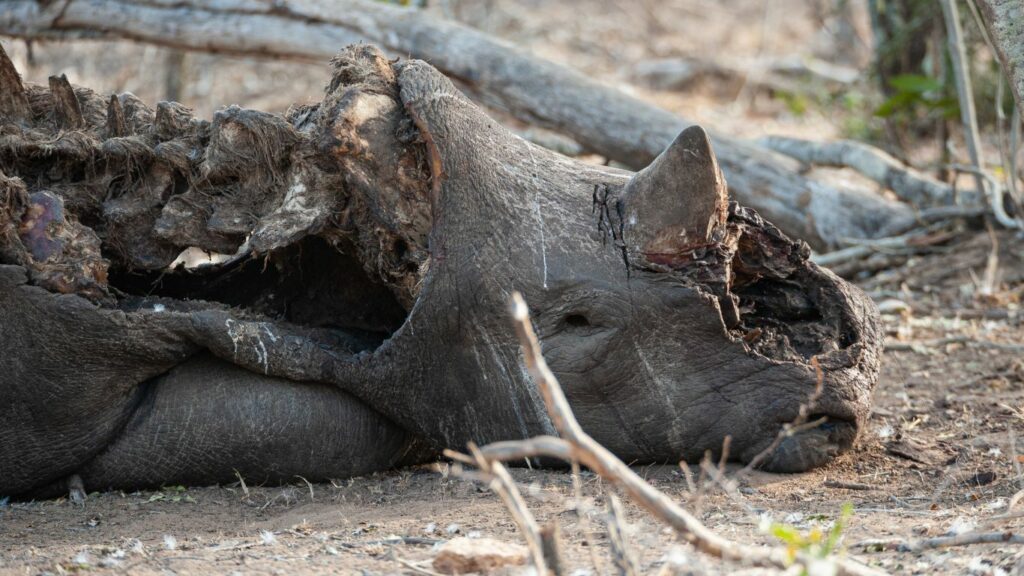
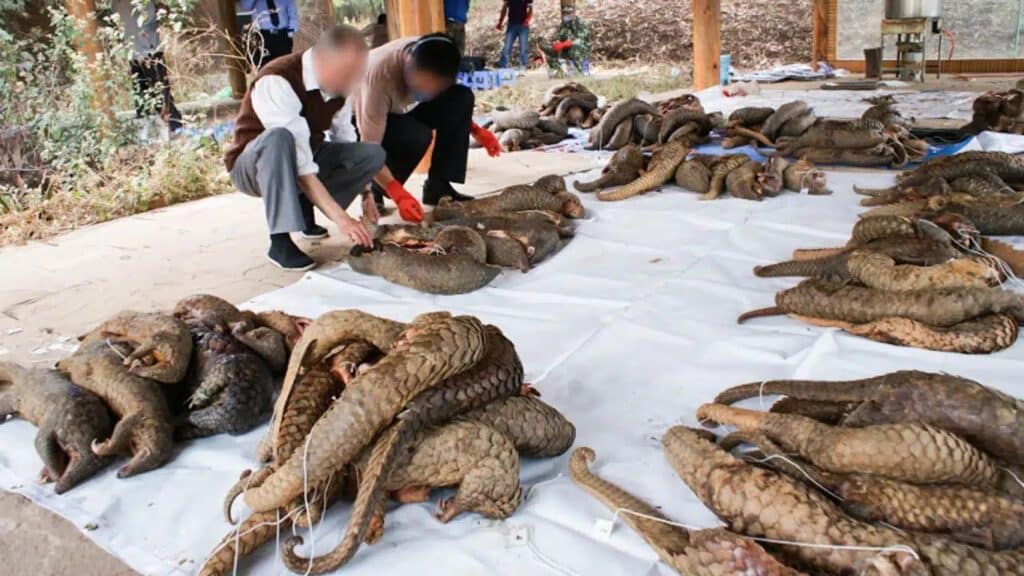
The statistics are staggering. More than 38 million animals are taken from the wilds of Brazil alone every year to sell on the illegal wildlife market. Millions of sharks are illegally killed year after year for shark fin soup; every day, an average of two rhinos are killed for their horns, and poachers wipe out an estimated 20,000 African elephants each year for illegal ivory trade. Pangolins are the world’s most trafficked mammal – poachers slaughter an estimated 2.7 million pangolins in Africa every year, with Asia’s insatiable demand for their scales and meat fast-tracking the species to extinction.

Rhino poaching is out of control in South Africa. ASI finances anti-poaching measures.

Lax wildlife legislation, poorly enforced regulations and commercial breeding of wild animals are destroying animal populations

Studies have shown that there is little to no conservation benefit to captive breeding programs of wild animals, and that legal trade only fuels the illegal wildlife trade. By creating legal wildlife markets, international efforts to reduce the demand for wildlife products is hindered, making these markets almost impossible to control or regulate. Big game and trophy hunting, and trading animal parts, is estimated to be worth $200 million annually, yet only 3% of hunting fees reach local communities.

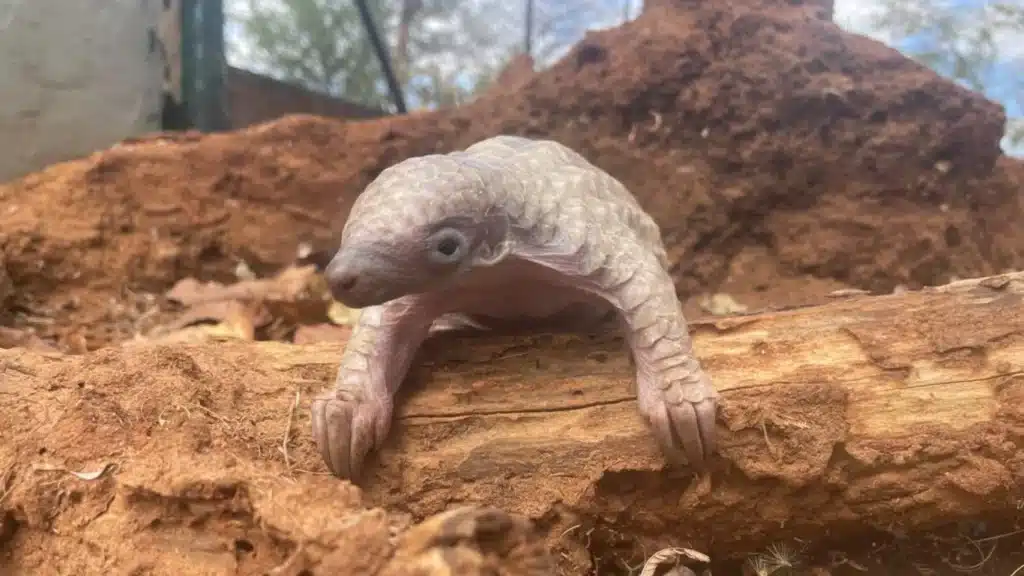
Critically endangered pangolins are being devastated by the illegal wildlife trade. Credit: WCRU/ZXZhang

What we do to help animals affected by wildlife crime

Tackling wildlife crime is a priority for ASI. We partner with organizations on the ground working to intercept poaching rings, expose bushmeat markets, rescue trafficked animals, and bring perpetrators to book. In Africa, Asia and Eastern Europe, we help fund critical anti-poaching and investigative teams, life-saving treatment for rescued animals, and veterinary hospitals and mobile clinics. We have also launched legal proceedings against those illegally holding wild animals.

Southern Africa

Care for Wild Rhino Sanctuary, Mpumalanga

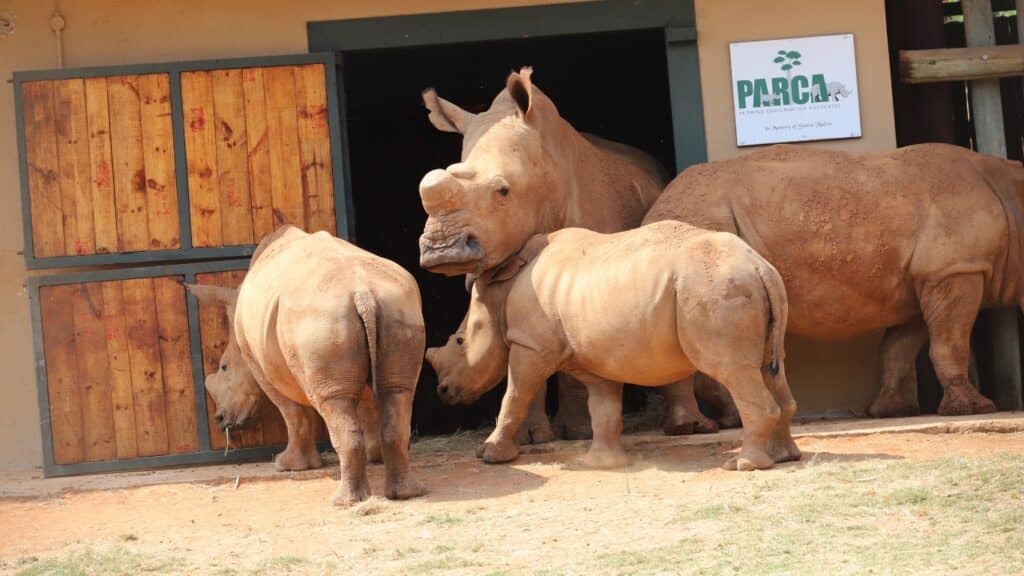
In South Africa, rhinos continue to face an ongoing threat from poaching, driven largely by the illegal demand for their horns. Every rhino lost leaves behind more than just an empty space in the wild – many calves are orphaned, traumatised and unable to survive on their own.

We work closely with the Care for Wild Rhino Sanctuary, which specialises in the rescue, rehabilitation and protection of rhinos who have lost their mothers to poaching or other tragic circumstances. Many of the calves that arrive at the sanctuary are just weeks or months old, frightened and severely dehydrated or injured.

Our support helps provide the specialised care these vulnerable animals need to survive and heal. This includes funding vital milk formula for growing calves, round-the-clock veterinary care, and advanced security measures to keep them safe from further threats.

Rehabilitating a rhino orphan is a long and complex journey. Over time, the calves are carefully guided through a rehabilitation process that helps them regain their strength, confidence and natural behaviours. The ultimate goal is to return them to protected wild areas where they can live freely and contribute to the future of their species.

Through our ongoing partnership with Care for Wild Rhino Sanctuary, and thanks to the compassion of our supporters, orphaned rhinos are given the chance to recover from unimaginable loss and grow into strong, independent animals once again.

Orphaned rhinos receive round-the-clock care and protection at our partner, Care for Wild. Credit: Care for Wild

Hoedspruit Elephant Rehabilitation and Development (HERD), Limpopo

In Africa, more than 50 elephants are killed every day for their tusks – and for every mother killed, a defenseless calf is left behind. Much like human children, elephant calves are incredibly reliant on their mothers, staying with them until they are 16, and orphaned and abandoned calves often die within days of being left on their own.

Our partner in South Africa works to rescue injured and abandoned elephant calves, giving them the love and care they need to thrive. One such calf is Khanyisa, a rare albino who was caught in a snare that tore into her cheeks, mouth and ear. With our donors’ support, we helped provide specialized milk formula for three months, aiding her on her road to recovery. 

Just a few months later, our partner found Phabeni wandering injured and alone, saving him in the nick of time. Fortunately, we were again able to raise the funds needed to help our partner provide the specialized care Phabeni needed. Tragically, Phabeni passed away later in 2024, but the other animals in HERD’s care continue to thrive.

Through our supporters’ kindness, we continue to support the rescued elephants in HERD’s care whenever possible.

Khanyisa, a rescued calf at HERD in Limpopo, takes a walk at the sanctuary with her sheep friends. Credit: HERD

Umoya Khulula Wildlife Rehabilitation Centre, Limpopo

IIn the face of impending extinction, every single pangolin life counts. Millions of pangolins – many of which are members of critically endangered subspecies – are mercilessly slaughtered every year, hunted for their scales, skin and flesh. Pangolins are notoriously difficult to rehabilitate, requiring intensive and expensive round-the-clock care.

Through the generosity of our supporters, we have helped fund the rehabilitation of several orphaned, injured and displaced wildlife taken in by Umoya Khulula, including vulnerable Temminck’s ground pangolins.

We have also helped to fund a critically important mobile clinic to respond swiftly to pangolins in peril. This clinic will dramatically shorten emergency response times, ensuring vulnerable pangolins in critical condition receive immediate, life-saving treatment following their rescue.

It will also be a crucial asset during pangolins’ soft release, giving them the best chance at a safe, successful rewilding.

This pangolin is on the road to recovery thanks to our partner and our supporters’ kind donations. Credit: Umoya Khulula

Addo Elephant National Park, South Africa

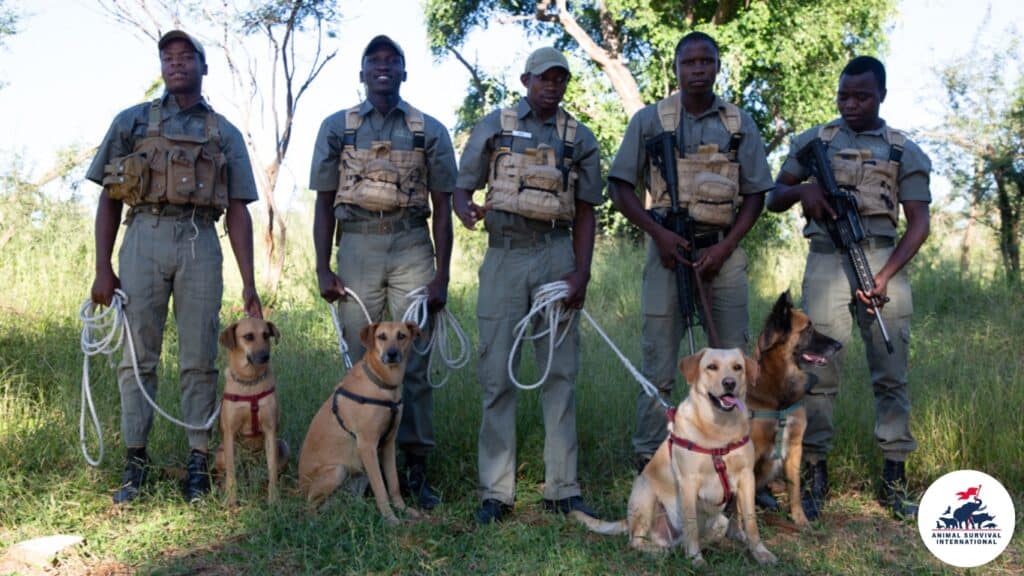
We work closely with the Addo Elephant National Park in South Africa’s Eastern Cape province. The park covers 630 square miles (1,640 square kilometers) of dense vegetation and is home to 600 endangered African savanna elephants. Africa’s elephant population is in the midst of a devastating poaching crisis, with more than 20,000 African elephants being killed each year for the illegal ivory trade. We actively support anti-poaching efforts in Addo by equipping teams on the ground with state-of-the-art equipment to better protect precious elephant populations.

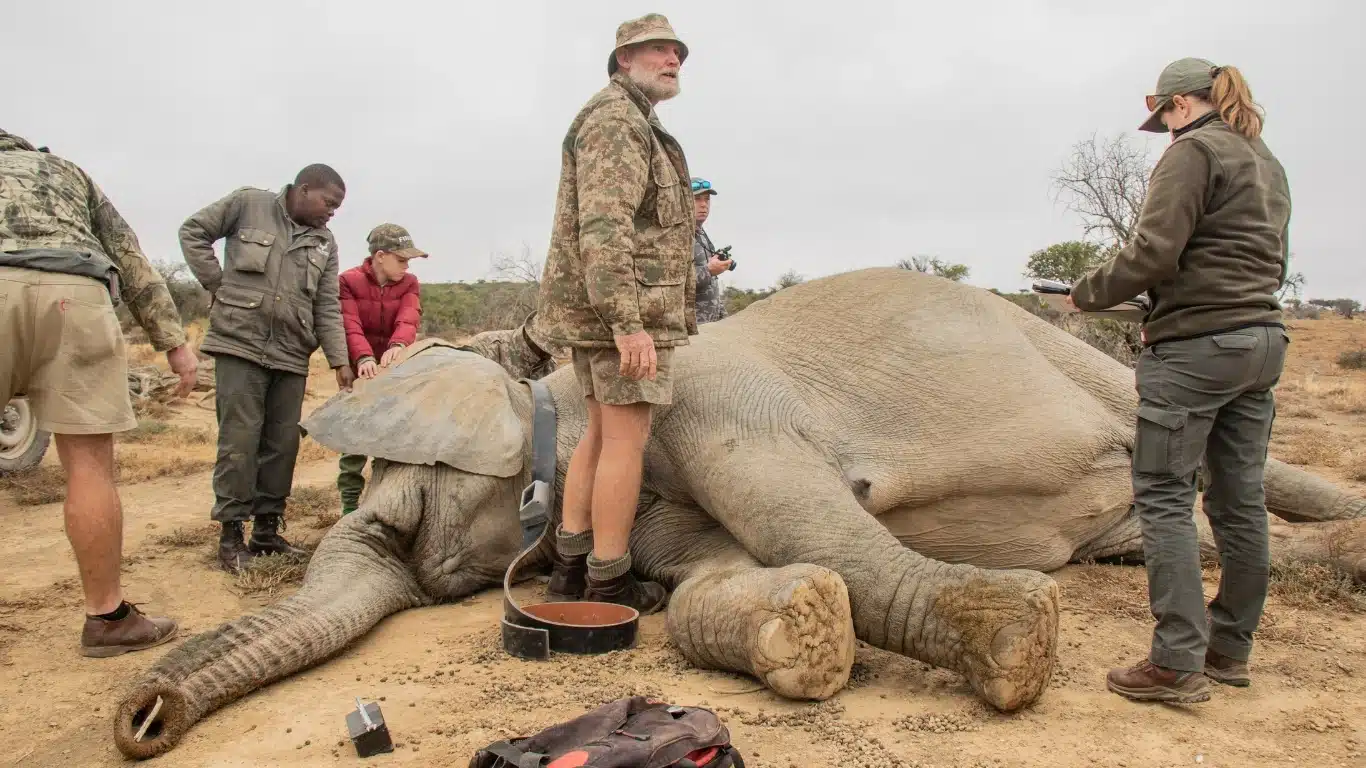
Recently, Addo alerted us to an elephant family living dangerously close to a poaching hotspot. During a two-day operation using emergency funds, we and a team of wildlife vets located, darted and fitted the elephant family with new tracking devices powered by artificial intelligence. The devices monitor the animals’ movement and vital signs and even learn their behavior. In the event of abnormal activity, an alert is generated in real-time via network towers placed at various points across the park. This shortens response time to a matter of minutes and has completely changed the way Addo’s anti-poaching unit tracks, monitors and protects endangered wildlife species.

Addo’s anti-poaching unit has already received multiple real-time alerts thanks to the new devices we provided, allowing them to save elephant lives.

This has been a successful project, but our work is far from over. We intend to continue strengthening our anti-poaching efforts at Addo by fitting more elephants with life-saving, AI-enabled tracking devices.

We have also provided tracking collars for lions, funded canine anti-poaching patrols, and provided surveillance equipment for the anti-poaching teams.

From time to time, we assist with urgent animal issues in the park, including providing veterinary care and relocations.

ASI and a team of wildlife vets located, darted and fitted the elephant family with new tracking devices powered by artificial intelligence. Credit: Zara King

Panthera Africa Big Cat Sanctuary, South Africa

Panthera Africa cares for rescued tigers, lions, leopards, caracals, servals and jackals that are emotionally, physically and/or genetically impaired and cannot be fully rehabilitated and released into the wild. Once at the sanctuary, they are given all the care they need for the rest of their lives, with no hands-on interaction, breeding or trades.

ASI helped to relocate Gabriel, a 13-year-old leopard, to Panthera. Gabriel had been hand-reared and had only known a life of captivity. ASI funded his relocation to the sanctuary, where he is now thriving in his new life. We also funded the delivery of 75 tonnes of sponsored gravel to Panthera after storms and flooding caused severe damage to the sanctuary.

Most recently, when summer wildfires destroyed the sanctuary and imperilled the lives of its animals, we provided funding for emergency relocations, life-saving veterinary care and critical, long-term treatment for animals injured in the fire.

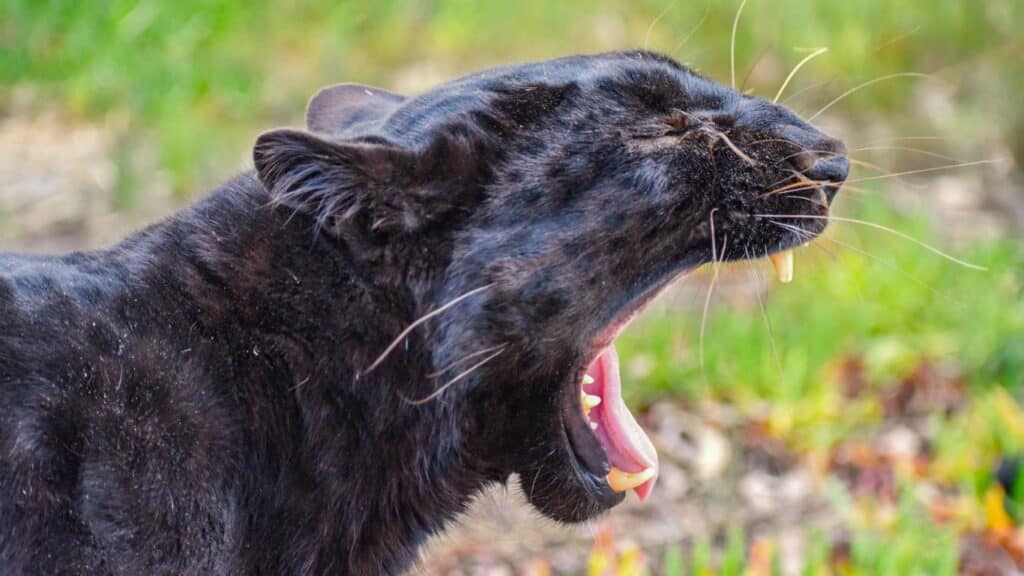
Gabriel, a 13-year-old rescued leopard, now thrives safely at Panthera Africa thanks to ASI’s support. Credit: Panthera

The Drakenstein Lion Park, South Africa

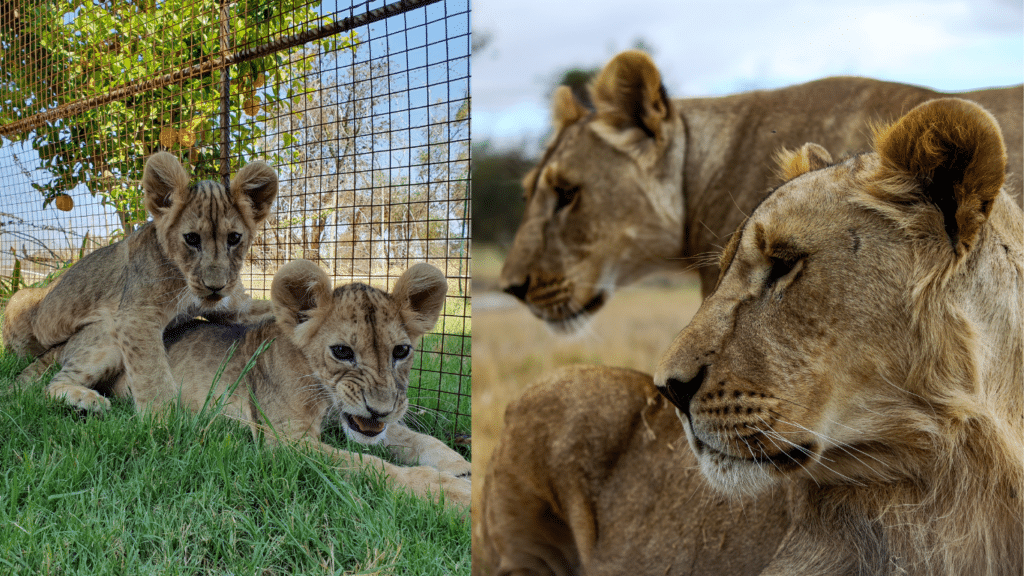
Lion cubs Issam and Kelly were just a few months old when they were rescued on the border of Lebanon and Syria, frail, sick and drenched in their own waste. Due to poor nutrition, lack of exercise and confinement in cramped cages for unknown lengths of time, both had severe developmental issues – especially Issam, who could barely support himself on his underdeveloped back legs.

Our partner in South Africa stepped in to give these cubs a permanent home and the care they will need for the rest of their lives. To ease the significant financial burden this placed on our partner, and to ensure that they could continue to rescue animals in distress, it contributes towards their long-term care and rehabilitation, helping to give the cubs the care they dearly needed.

Rescued as frail cubs on Lebanon’s border, Issam and Kelly now have a safe home in South Africa thanks to the support of ASI and our donors.

The Lions Foundation, South Africa

The Lions Foundation in Limpopo, South Africa, provides lifetime shelter and care to big cats rescued from circuses, private ownership, zoos and animal parks.

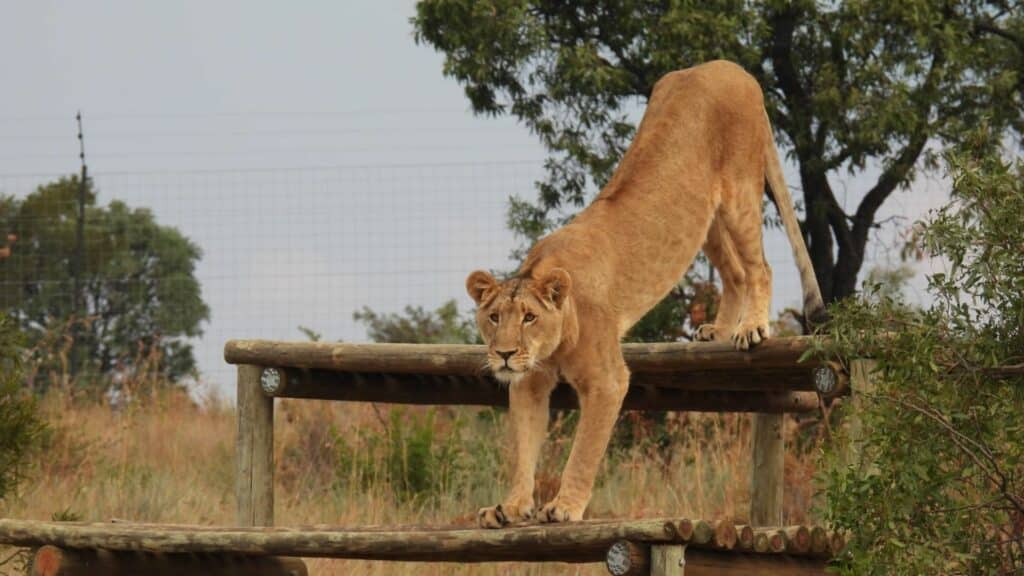
ASI contributed towards the relocation of two young lions from a Kuwaiti zoo to the Lions Foundation in 2022, after both were saved from the illegal pet trade in the Middle East. We also contributed to the costs of sterilization and food for some of the lions in their care. The big cats in Lions Foundations’ care never learned to survive in the wild, the sanctuary rehabilitates them to help them adjust to living in conditions that closely resemble their natural habitats.

A young lion at The Lions Foundation sanctuary in Limpopo, where rescued big cats are given lifelong care and a safe home. Credit: The Lions Foundation

FreeMe Wildlife, South Africa

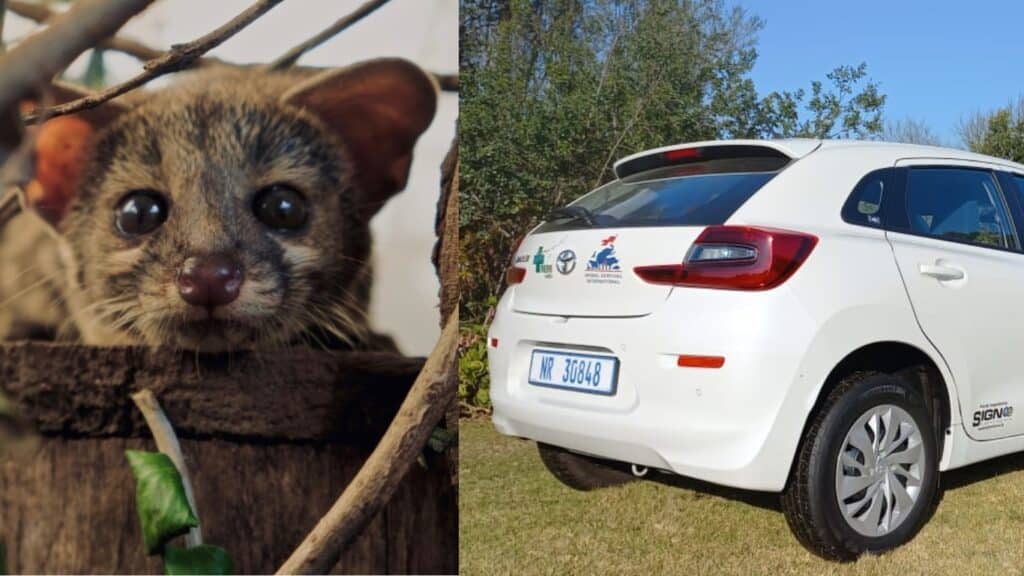
Our partner in KwaZulu-Natal, South Africa, FreeMe Wildlife (FMW), rescues, rehabilitates and releases wild animals affected by habitat loss, climate change and the illegal wildlife trade. The number of animals in need is constantly growing. 

Through the generosity of our supporters, we have been able to help build additional wildlife enclosures for the injured, orphaned and traumatized animals they care for, increasing their sanctuary capacity and giving countless rescues a second chance at life. 

We were also able to help when a rescue vehicle was destroyed in an accident. We covered the shortfall in funds needed to purchase a replacement.

Expanded enclosures and a new rescue vehicle, funded in part by ASI, are helping FreeMe Wildlife respond faster and care for more animals. Credit: FreeMe Wildlife (FMW)

Zimbabwe

Zambezi Conservation Unit (ZAMCON), Zimbabwe

The Zambezi Conservation Unit (ZAMCON) is an anti-poaching and patrol team that operates on multiple reserves and parks in the Zambezi area of Zimbabwe. In collaboration with Zimbabwe National Parks and researchers. It operates within a 200 square kilometer area along the Zambezi River, covering over 60km of riverfront.

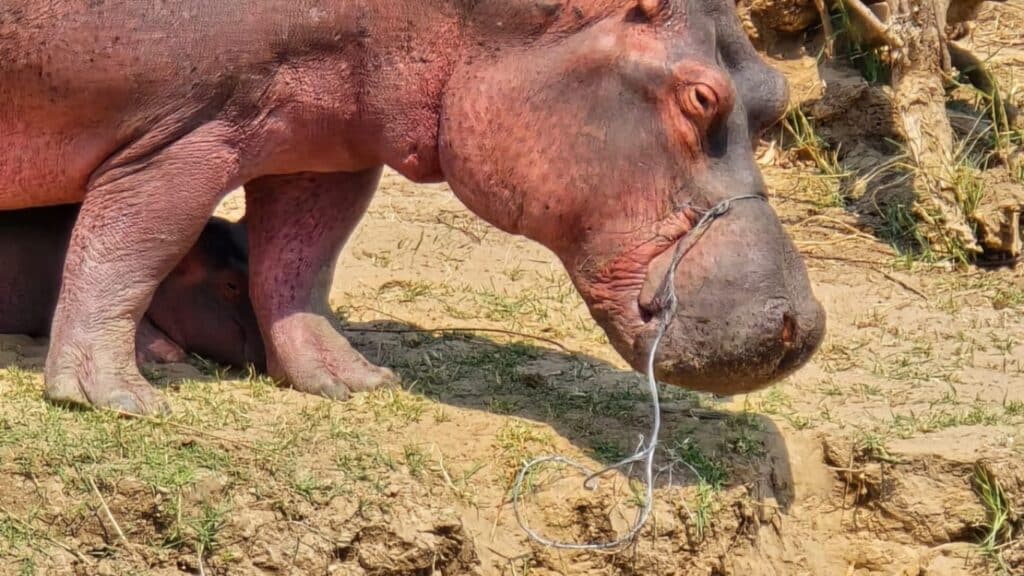
The sighting of a snared hippo cow and her calf – both of which disappeared into the bush and were unable to be found by the team by road or boat – highlighted the need for more advanced technology that would allow the ZAMCON patrol team to more easily locate, sight and monitor injured or at-risk animals. Thanks to our supporters, we were able to help ZAMCON purchase a high-tech drone, and they are now much better equipped to both stop poachers and more efficiently locate and help injured animals.

A hippo caught in a snare shows the challenges ZAMCON faces in protecting wildlife along the Zambezi River. Credit: Zambezi Conservation

Zambezi Anti-Poaching, Zimbabwe

In an age of climate change, Southern Africa’s weather is becoming increasingly unpredictable. Lengthy periods of drought are taking a huge toll on wild animals in many countries. In Zimbabwe, frequent period of drought along with shorter rainy seasons means the country’s annual rainful is simply not enough to meet wild animals’ needs. As a result, countless animals struggle to find water sources out in the wild, where they are not at risk of being poached by humans.

One of the few reliable water sources is the Zambezi River, which forms the natural border between Zimbabwe and Zambia. Unfortunately, poachers know that animals have few choice but to visit the river to drink, setting traps and lying in wait for thirsty animals as they approach the river.

To combat this crisis, we are working with a dedicated wildlife partner in Victoria Falls that assists the Zimbabwe Parks and Wildlife Management Authority with ranger deployments, anti-poaching efforts and sustainable water solutions. Together, we aim to support the installation of solar-powered boreholes in strategic locations to create safe watering holes. These boreholes not only provide much-needed water for wildlife, but also help keep animals away from dangerous poaching hotspots along the river.

Our goal is to install three solar-powered boreholes, each capable of providing water to at least 2,000 animals per day. With the border impossible to fully secure, these boreholes are a vital lifeline – giving wildlife safe access to water while reducing the risk of poaching.

An ASI team member overlooking the dry, arid landscape where wildlife struggle to find water away from poaching threats. Credit: ASI/Taryn Slabbert

Friends of Hwange, Zimbabwe

In Zimbabwe’s Hwange National Park and surrounds, snares are becoming increasingly common. Usually, poachers are looking to capture animals they can slaughter and sell as bushmeat, or those they can sell for their skin, scales or tusks. Our partner works tirelessly to remove as many snares as possible, but animals are frequently caught, requiring immediate rescue and medical attention.

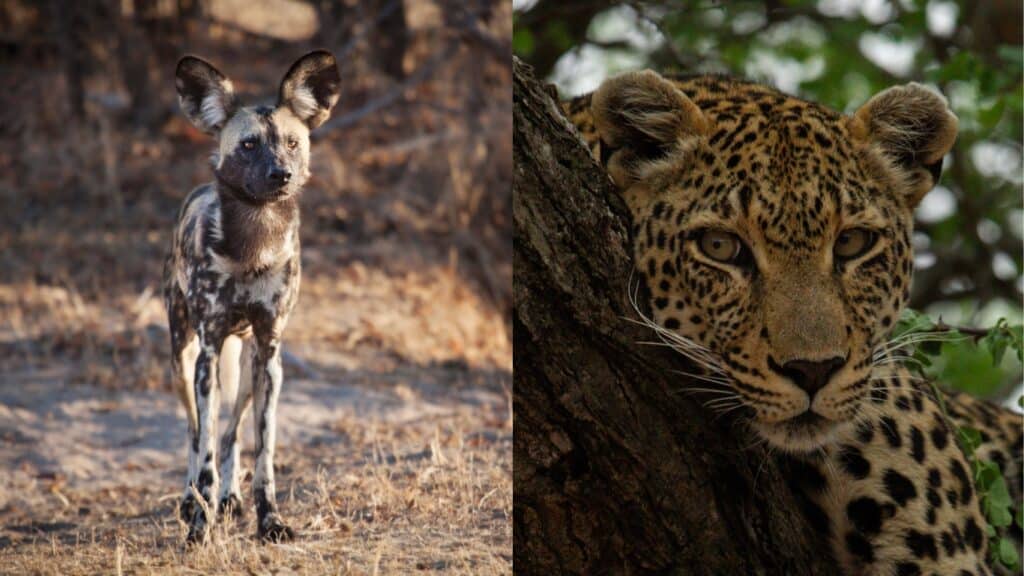
African painted dogs are one of the many victims of snares. Currently, there are only 7,000 painted dogs left worldwide, with 10% of them living in the Hwange area – so each and every life counts. Working with our partner, Friends of Hwange, we were able to help provide emergency medical care to painted dogs caught in snares, while supporting the team’s constant efforts to remove snares from the wild before they snag an unsuspecting animal.

Leopards are another common target for poachers, hunted for their skins to supply a brutal sector of the fashion industry. In just 50 years, an estimated one million leopards have been killed in Africa, and few are left in the wild.

Unfortunately, due to their secretive nature, leopards are hard to track. With Hwange standing as one of the few remaining strongholds for leopards, we helped our partners enact a collar and tracking program, assisting them in not only learning more about the reality facing leopards today, but to monitor and rescue those that get caught snares and other traps.

African painted dogs and leopards in Hwange National Park face rising threats from poachers and snares. Our partners teams work nonstop to rescue and protect them. Credit: iStock

Bumi Hills Anti-Poaching Unit (BHAPU), Zimbabwe

In Zimbabwe, we have a long-standing partnership with the Bumi Hills Anti-Poaching Unit (BHAPU), a small, private anti-poaching unit that protects the elephant and wildlife population in the Lake Kariba region. 

ASI has assisted with the purchase of a Land Cruiser and the refurbishment of its patrol boat, allowing BHAPU to monitor both land and water for poachers, as this area is a known poaching hotspot. We also help fund critical anti-poaching and surveillance equipment, snare sweeps and training to protect the dwindling elephant population, along with countless other species.

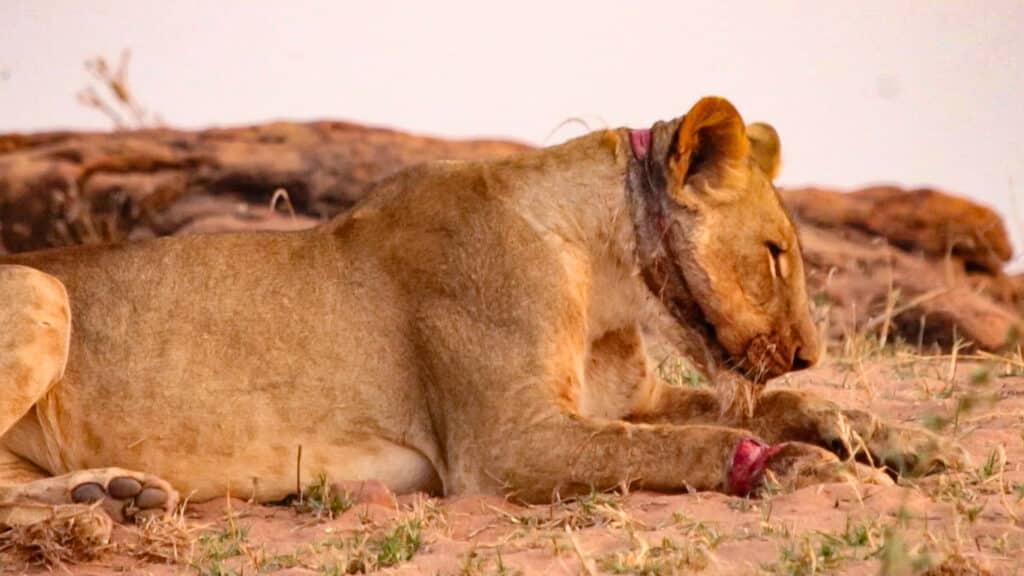
Najam, a young lioness caught in a deadly snare, sustained injuries to her mouth, neck and front paw. Image credit: Steve Edwards

Kariba Animal Welfare Fund Trust (KAWFT)

In Zimbabwe’s Lake Kariba region, as in areas and countries across the world, poachers use cruel, deadly snares to snag their prey. These crude traps act as nooses, tightening more and more each day, animals slowly succumb to the deepening injuries unless humans intervene.

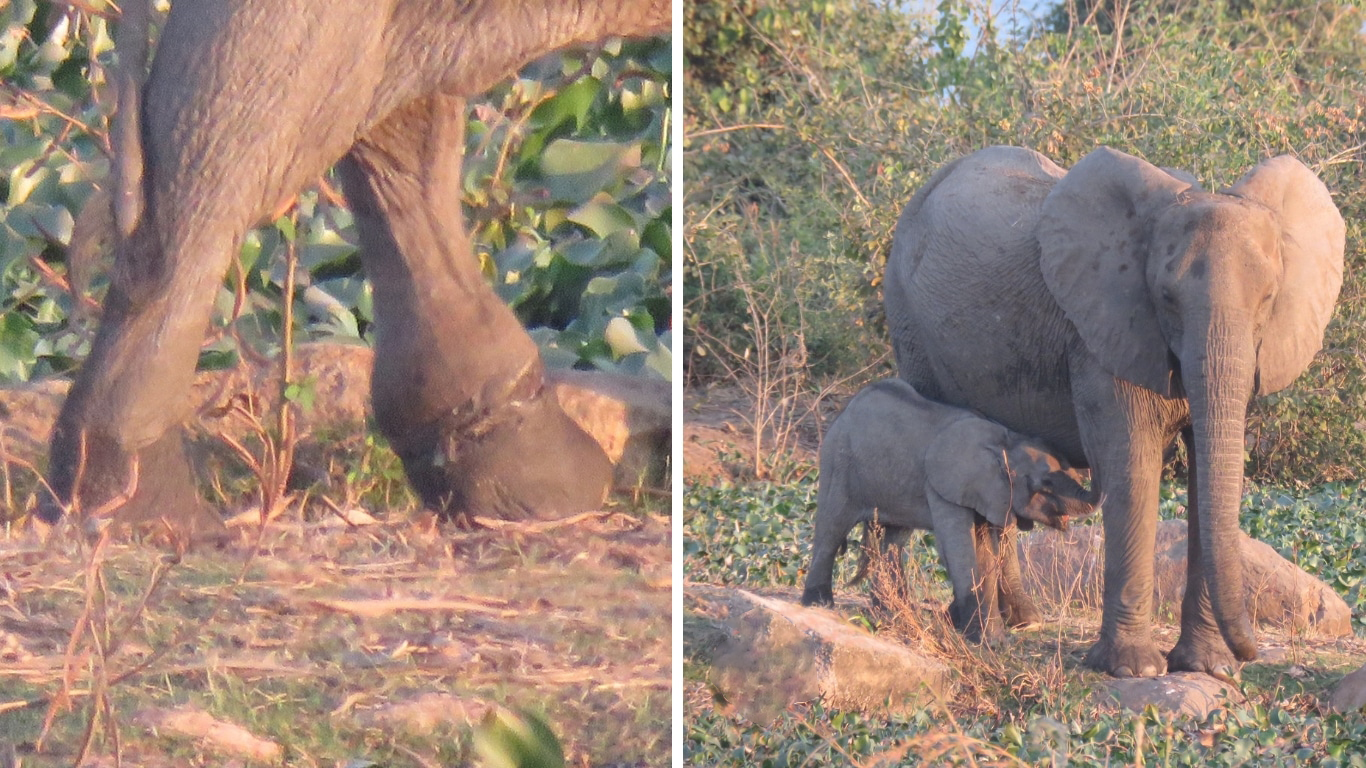
Our partner in the Lake Kariba area, Kariba Animal Welfare Fund Trust (KAWFT), monitors various herds of elephants, and when they spot one suffering from a snare injury, they leap into action. However, the only safe and effective way to rush aid to an elephant in the wild is by darting them from the air, requiring an expensive helicopter charter – something our partner doesn’t always have the funds for.

Through our supporters’ generosity, we have helped fund the de-snaring of several elephants and calves since beginning our partnership with KAWFT in 2023. The majority of these animals have gone on to live happy, healthy lives with their herds.

This young elephant calf was caught in a snare that tightened over time, making it difficult to keep up with its herd. Our support helped free her. Credit: KAWFT

Matetsi Anti-Poaching Unit (MAPU), Zimbabwe

Our partner, the Matetsi Anti-Poaching Unit (MAPU), has successfully stamped out poaching in the vast reserve they patrol in the Victoria Falls region.

However, the team noticed increased poaching in the conservancies surrounding the reserve. We supported their unit in two key ways: By replacing their crucial anti-poaching boat after it was destroyed by a crocodile, and by purchasing a drone equipped with infrared technology to effectively monitor the massive areas that border the reserve. Both of these tools have enhanced their anti-poaching efforts, helping ensure that even more animals can be protected.

The Matetsi Anti-Poaching Unit works tirelessly to protect wildlife and keep poachers out of the vast reserve it patrols in the Victoria Falls region. Credit: ASI/Taryn Slabbert

East Africa

Protect Paradise Seychelles 

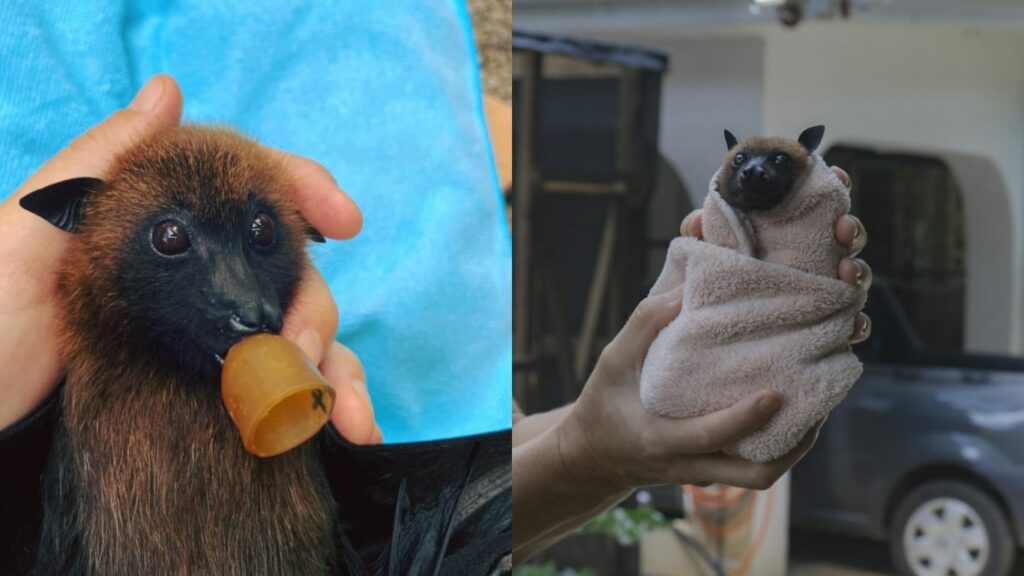
In the Seychelles, fragile, defenseless flying foxes are slaughtered in their thousands for ‘bat curry,’ a dish that is touted as a local ‘delicacy.’ Using crude fishing lines and hooks, harvesters rip these gentle creatures from the sky, and those that aren’t killed by traps are beaten and stabbed before being skinned and eaten. Beyond this constant violence, their habitats are constantly shrinking, and they frequently collide with powerlines, killing them or leaving them fatally injured. 

Our partner, Protect Paradise Seychelles, works to rescue injured and orphaned flying foxes and we have been a loyal supporter of their work. We raise funds for crucial veterinary equipment and help them cover the costs of rehabilitating and caring for rescued flying foxes, most of which are orphans.

Protect Paradise Seychelles provides care and shelter for flying foxes affected by injuries, poaching and habitat loss. Credit: Protect Paradise Seychelles

West Africa

Greenfingers Wildlife Conservation Initiative (GWCI), Nigeria

n Nigeria, a brutal ‘bushmeat’ trade sees hundreds of thousands of animals ripped from their natural environments, tortured in illegal markets, and eventually killed for their flesh and body parts. Amongst these are critically endangered animals like pangolins, and endangered animals such as lions, elephants and gorillas.

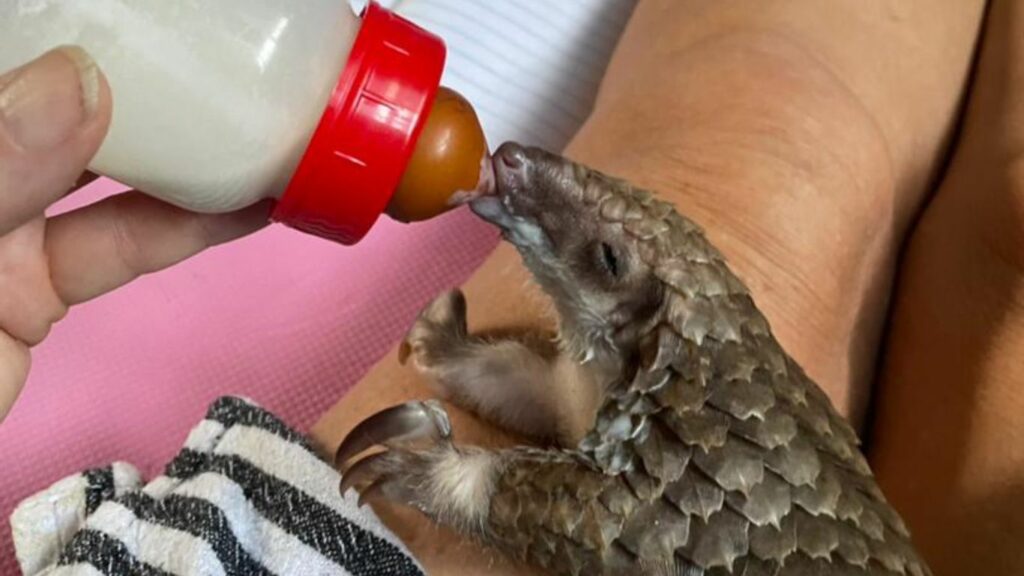
We work with Greenfingers Wildlife Conservation Initiative (GWCI) to help rescue these animals from meat markets and rehabilitate those they are able to save. Through our donors’ generosity, we have been able to fund critical milk formula and costly treatment for orphaned pangolins. We have also been able to help fund the organization’s pangolin nursery and intensive care unit – the first of its kind in the country. The clinic has already begun treating emergency cases, and we will share further updates once it is fully operational.

Rescued from the illegal bushmeat trade, this orphaned pangolin received vital care from our partner, and through our support. Credit: Pangolins International and Nigerian Partners.

Europe

Montenegro 

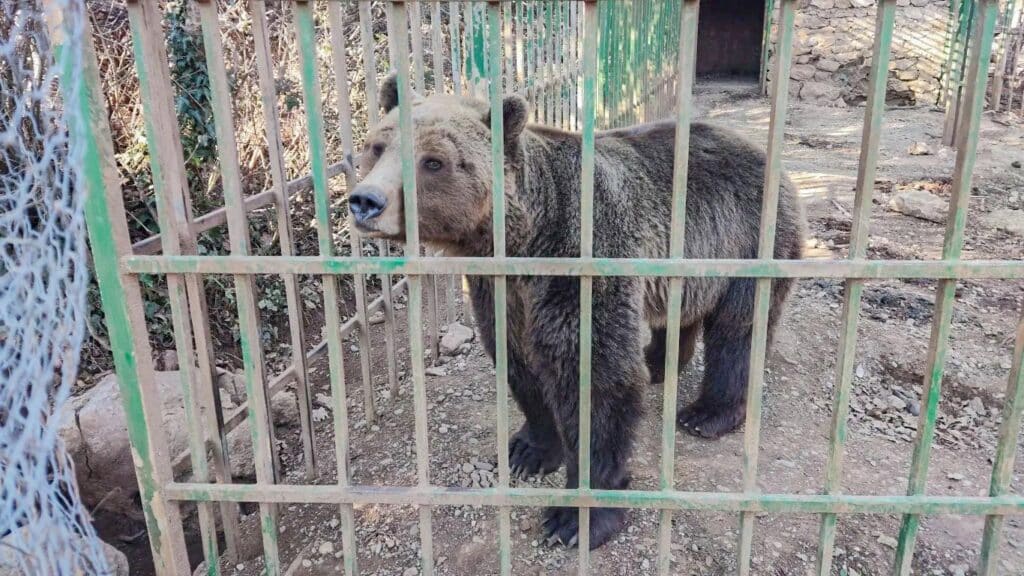
In the Balkan country of Montenegro, we have fought a long battle for better conditions for Ljubo, a brown bear who has spent his whole life in captivity.

When we first heard of Ljubo’s plight in 2022, he was living in a cramped cage, and was so stressed, he would bite his arms and the bars of his prison. He was used to make money for his keeper, who would charge tourists to throw fruit at Ljubo and take selfies with him.

With our supporters’ help, and together with our project partner Four Paws, we fought tirelessly for better conditions for the poor bear. We are pleased to report that Ljubo has been permanently moved to a larger, more appropriate enclosure, and we will continue to monitor his situation and overall well-being.

Ljubo in the cramped cage where he spent his entire life, before our lobbying saw him freed to a larger, species-appropriate enclosure. Credit: Vic Dobry

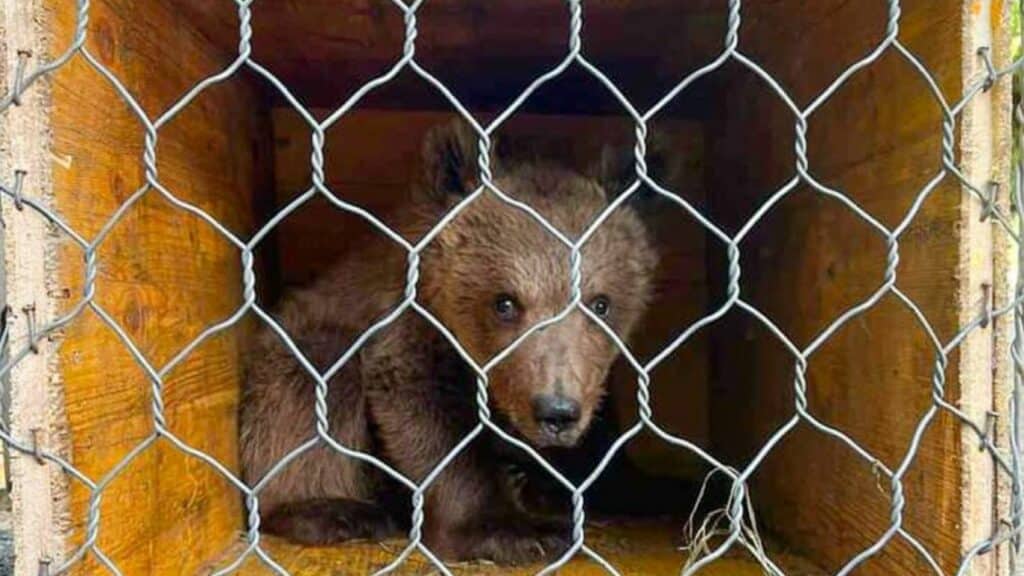
In August 2023, a bear cub mysteriously appeared at the same facility. Its ‘keeper’ states the cub appeared on his doorstep. Named Djuro, we fought for the cub as we had for Ljubo – but the young animal disappeared under mysterious circumstances in late 2024. All our efforts to locate him since have come to nothing.

Read our latest update here.

At the same facility that once held Ljubo, bear cub Djuro appeared in 2023, and mysteriously vanished in 2024.

Wild Animals Rescue Center (WARC), Ukraine

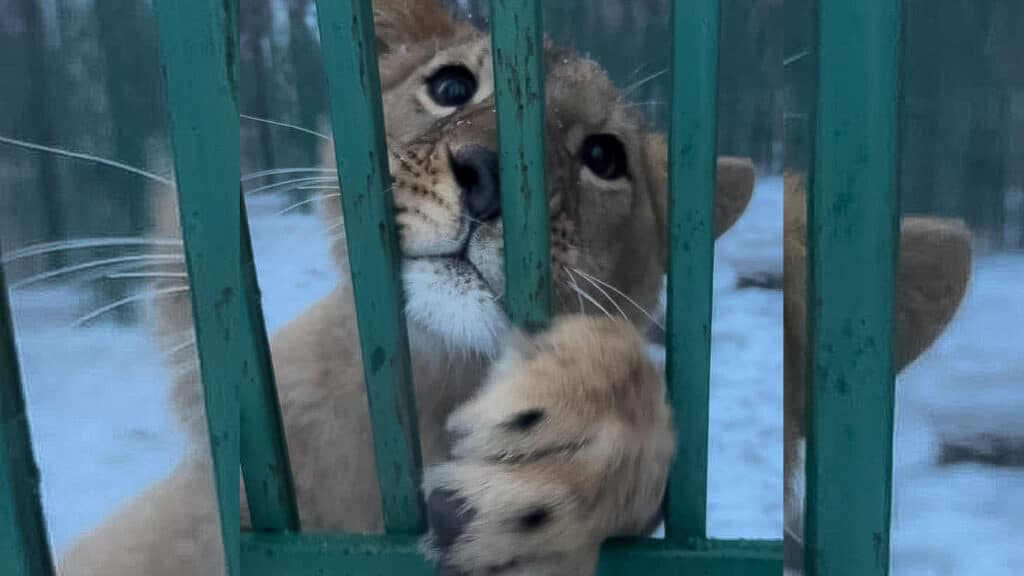
The Wild Animals Rescue Center (WARC) in Ukraine rescues wild animals such as lions and tigers from dangerous areas, with the help of the military. The team, led by Natalia Popova, initially started as an equestrian center but transformed into a transition shelter for wild animals displaced by the war.

WARC rescues animals of all types and sizes, from the smallest birds and rodents to larger creatures like lions, tigers and bears. Rescued animals are brought to the center, where they receive expert veterinary care and rehabilitation. Whenever possible, they are released back into the wild. For those who cannot be released, WARC provides lifelong care or relocates them to suitable sanctuaries, both within and outside Ukraine.

One of WARC’s biggest expenses is the funding of rescue missions over long distances in rugged terrain on war-damaged roads. ASI provides funding for specialized equipment to ensure these rescue missions can continue.

We have also helped provide critical funding during Ukraine’s icy winters, when temperatures drop as low as 4°F (-20°C) and animals struggle to keep warm, particularly with electricity in unreliable supply. We have funded heating solutions and most recently, paid for a generator for the shelter. This generator powers water pumps, heaters to keep animals warm and fridges and freezers for storing their food. It is vital during this time of war, when electricity supply is inconsistent and sometimes non-existent.

In late 2025, and together with our partner the LionWatch Project, we relocated three of WARC’s rescued lions to South Africa. Here, at the LionWatch Project, they will live safe, happy and peaceful lives, and we are tremendously grateful to Natalia and her team for caring for these animals under immensely challenging conditions.
A lion cub who was rescued from a war zone by our partner in Ukraine, Wild Animals Rescue Center (WARC). Credit: Wild Animals Rescue Center (WARC)

WildSide Exotic Rescue, Hertfordshire, United Kingdom

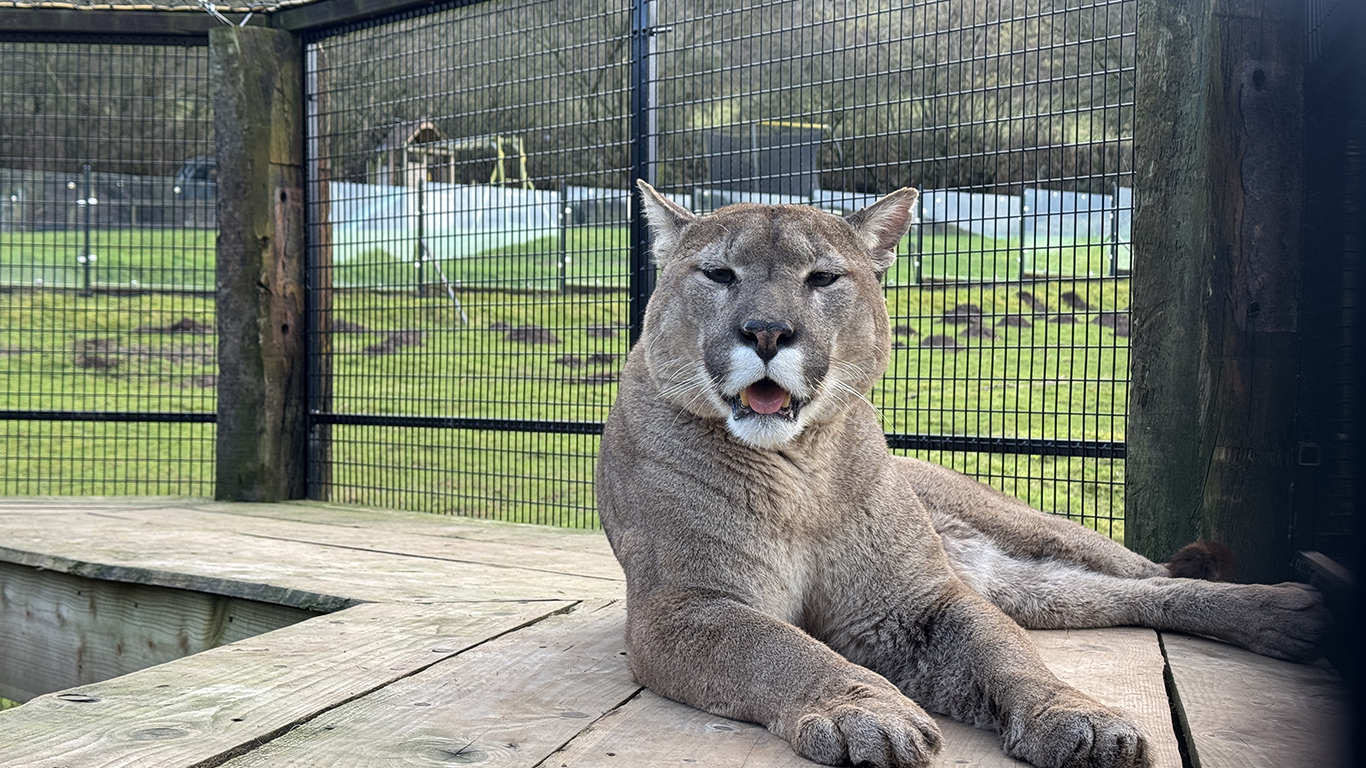
When police raided a cruel captive facility in Hertfordshire, UK, they found a shocking scene. Multiple big cats, including pumas, lynxes and bobcats, were being kept in terrible conditions, malnourished and neglected. Unless they found new homes fast, authorities were threatening to euthanize them. 

Our partner, WildSide Exotic Rescue, took in 12 big cats, despite having the space for only four. Tragically, one was too far gone to be saved, but the 11 survivors desperately needed medical care, special food and supplements – a cost our partner was struggling to meet. Through our supporters’ generosity, we were able to contribute a month’s worth of food and support for the animals.

Later, we contributed towards larger enclosures for some of the cats due to space constraints, and with our donors’ help, will continue to support WildSide Exotic Rescue whenever possible.

A lynx rescued from terrible conditions in Hertfordshire, now receiving lifelong care after being found malnourished and neglected. Credit: WildSide Exotic Rescue

National Anti-Snaring Campaign (NASC), United Kingdom

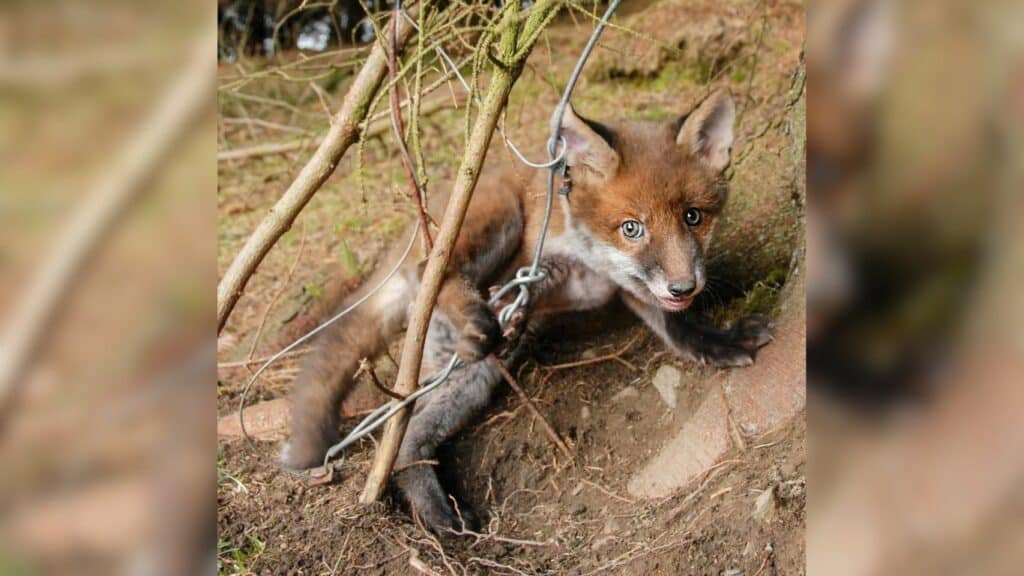
In the United Kingdom, legal snaring kills up to two million animals every year. Together with our partner, the National Anti-Snaring Campaign (NASC), we work to enact a complete ban on snaring.

In 2021, ASI funded a report which exposed the inhumanity and inadequate animal welfare standards associated with snaring. The report highlighted the high incidence of unintended captures, including many animals which were crucial to conservation efforts.

Sadly, the animals are up against the might of the UK government’s Department for Environment, Food and Rural Affairs (DEFRA), which has publicly stated that snares are “an effective and relatively humane form of control.”

ASI are working to put an end to this horror through a complete ban on snaring. Credit: One Kind

Asia

Wildlife Friends Foundation Trust (WFFT), Thailand

We have been supporting the work of our partner, Wildlife Friends Foundation Thailand (WFFT), helping to rescue and care for wild animals who have suffered years of cruelty and exploitation in Thailand’s wildlife tourism and captive breeding industries.

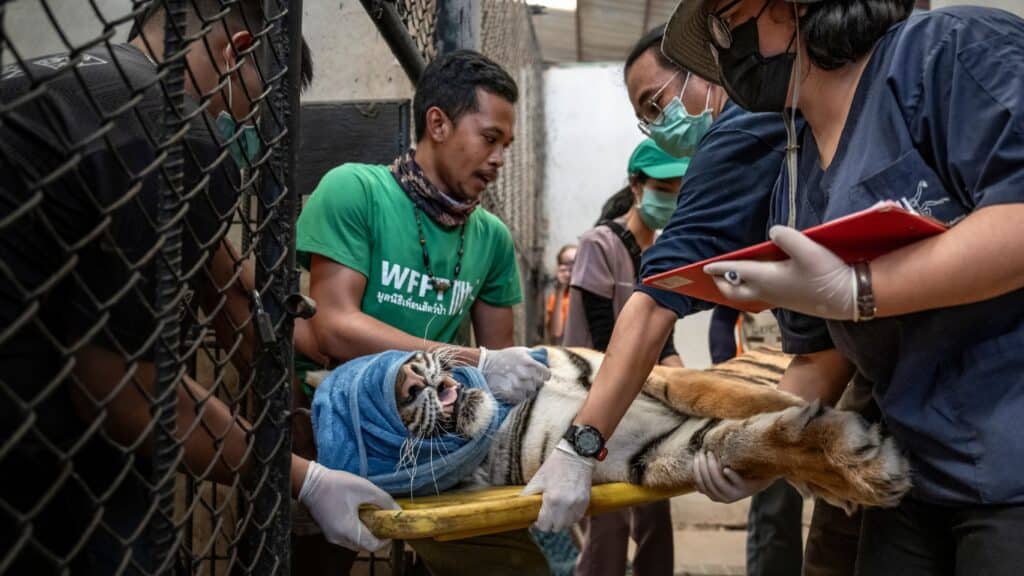
One of our most significant joint efforts has been helping relocate tigers and critically endangered Indochinese leopards from a notorious breeding facility in northern Thailand that was shut down by authorities. These big cats had spent years confined to cramped cages, deprived of proper nutrition and natural surroundings. With the help of our supporters, we helped fund major relocation operations to transport them to WFFT’s sanctuary in Phetchaburi, where they now live in spacious, naturalistic enclosures and receive expert lifelong care. 

But big cats are not the only animals rescued from suffering. Thailand’s elephant tourism industry has subjected countless elephants to decades of hard labour, carrying tourists on heavy seats strapped to their backs and enduring harsh treatment to force them into submission. At WFFT’s sanctuary, these gentle giants are finally given the chance to rest and recover.

Together with our supporters, we have helped contribute towards care, nutritious food and enclosures for some of the sanctuary’s very special elephant residents.

With our donors’ help, we will continue to support WFFT’s incredibly worthy work.

A rescued tiger being carefully transported to safety with our support. Credit: Amy Jones/WFFT

In Laos, wildlife faces immense pressure from poaching and the illegal wildlife trade. Endangered and critically endangered animals are hunted for their meat, skins and scales, many of which are sold for use in traditional medicines or trafficked across borders as part of a vast criminal network.

We work with Lao Conservation Trust for Wildlife (LCTW), which rescues, rehabilitates and releases animals that have been confiscated from traffickers or rescued from exploitation.

LCTW provides a vital lifeline for some of Asia’s most threatened species, including pangolins, primates and many other animals that arrive at the sanctuary injured, traumatised and in urgent need of care. Through our supporters’ help, we contributed towards LCTW’s large-scale shelter relocation in 2023 and 2024; provided funding towards the care and rehabilitation of vulnerable rescued animals, and most recently, funded a powerful anti-poaching drone to help the team strengthen its monitoring and patrols. This technology allows LCTW’s team to better survey surrounding areas, detect potential threats, and protect both the animals in their care and those living in nearby habitats.

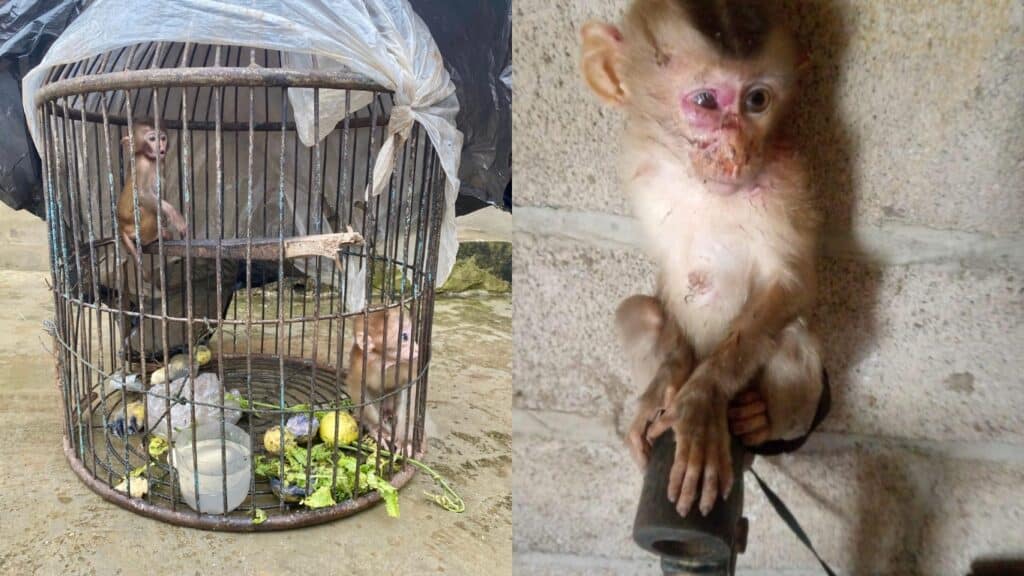
This monkey in Laos bears the scars of brutal abuse, a heartbreaking reality for many trafficked animals. Credit: Lao Conservation Trust for Wildlife

Wild Felid Advocacy Center of Washington, Washington 

Our partner sanctuary in the United States, Wild Felid Advocacy Center of Washington (WFACW), was dealt a devastating blow when a freak avian flu outbreak claimed the lives of 21 of their big cats. Six more were left in need of critical support. 

With the source of the outbreak believed to be contaminated food, the team was forced to destroy three tons of food for the animals to prevent possible further infections. This caused a massive financial crisis for the sanctuary, ASI ensured that the surviving cats got the nutrition they needed by donating funds to replace crucial food supplies.

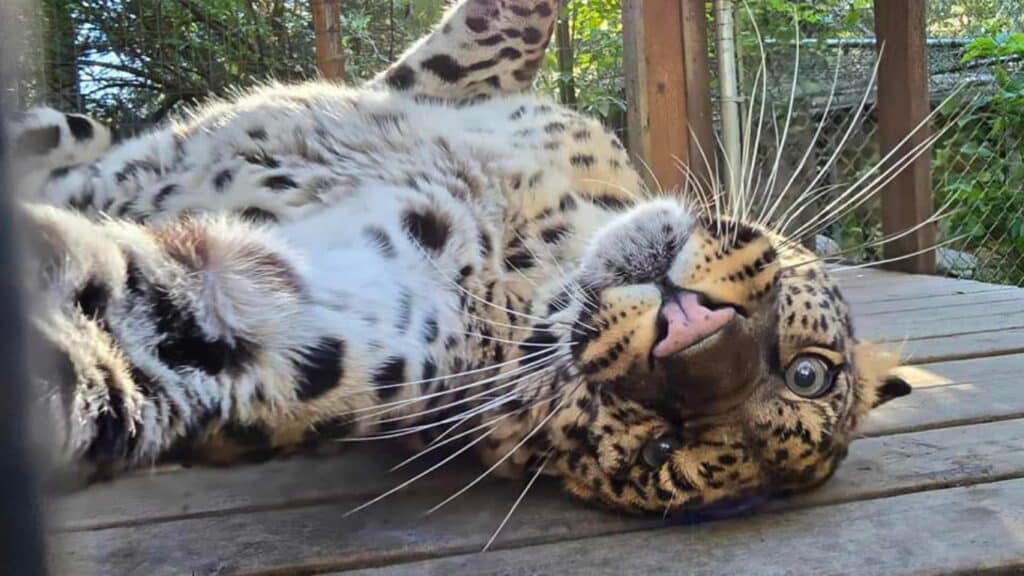
This big cat survived a devastating avian flu outbreak that claimed many others at the Wild Felid Advocacy Center of Washington (WFACW). Credit: WFACW

ONCA Wildlife Sanctuary, Bolivia

In Bolivia, jaguars are killed for their body parts, which are in high demand in Asia for use in unproven traditional ‘medicine.’ Their teeth are particularly sought-after, while their bodies are either left to rot or boiled down into a treacle-like ‘paste’ and sold. Body parts are even smuggled into prisons, where they are fashioned into goods for resale.

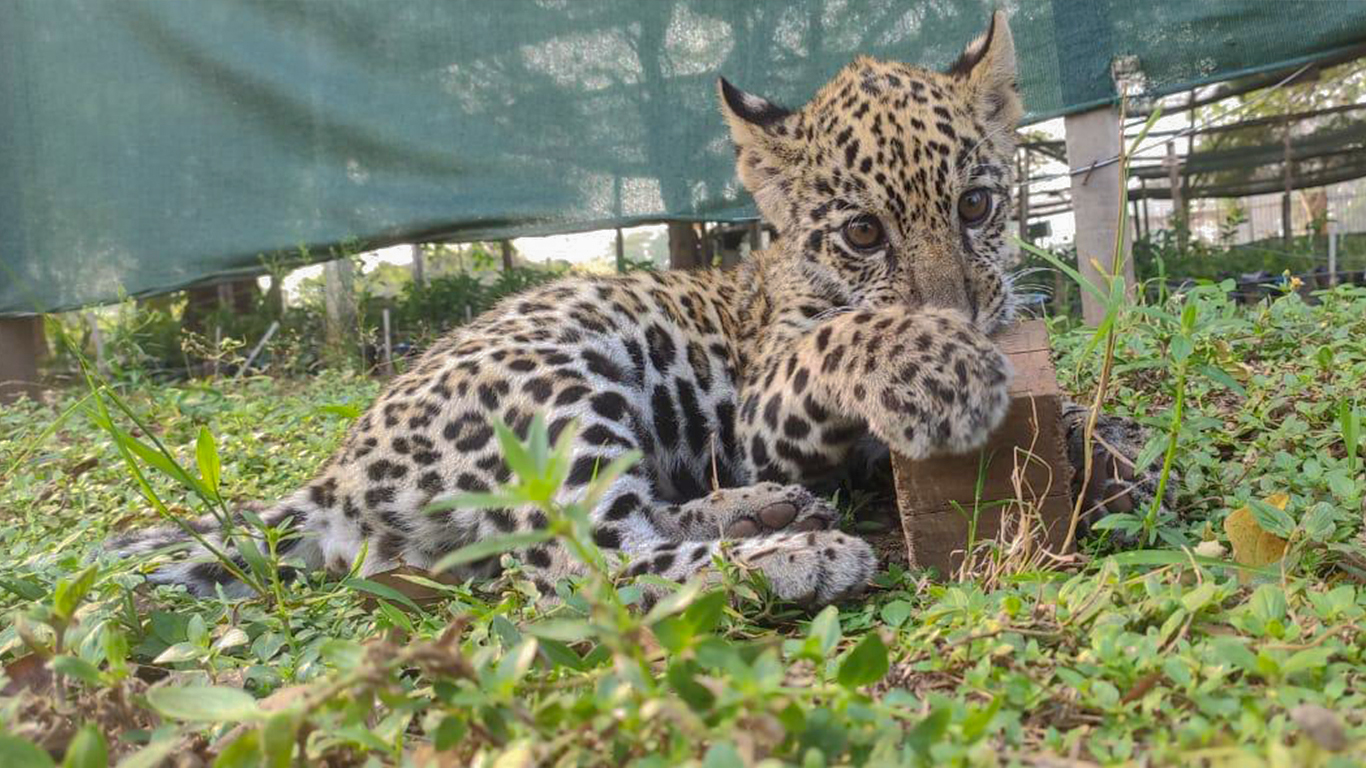
Jaguar cub Khali was just an infant when she was rescued by our partner, ONCA Wildlife Sanctuary. Her mother was likely killed by poachers; we suspect Khali was kept as a ‘pet’ until she became too wild, and was discarded in a dumpster in Santa Rosa del Tacuma.

The ONCA team has placed her in a rehabilitation program designed to prepare her for release into a protected wild area, where she can live the natural life she deserves. But to ensure she retains her natural instincts – crucial to her survival in the wild – Khali needed a large space to roam while the team looked for her new home. ASI contributed towards the construction of a spacious enclosure, helping Khali prepare for her life in the wild.

Khali the jaguar cub rescued after being abandoned after her mother was likely killed by poachers. Now she’s being cared for and ready to return to the wild. Credit: ONCA Wildlife Sanctuary

Globally

We work around the world to persuade governments to tighten and enforce legislation that stops poaching and prevents illegal wildlife trafficking. Through raising awareness and supporting projects on the ground, we hope to encourage understanding of the issues at stake, so solutions can be found, and wild animal populations can be restored.

Wildlife crime and poor legislation has a devastating impact on the survival of wildlife species across the globe.

Help us fight back before we lose any more precious species to poaching.