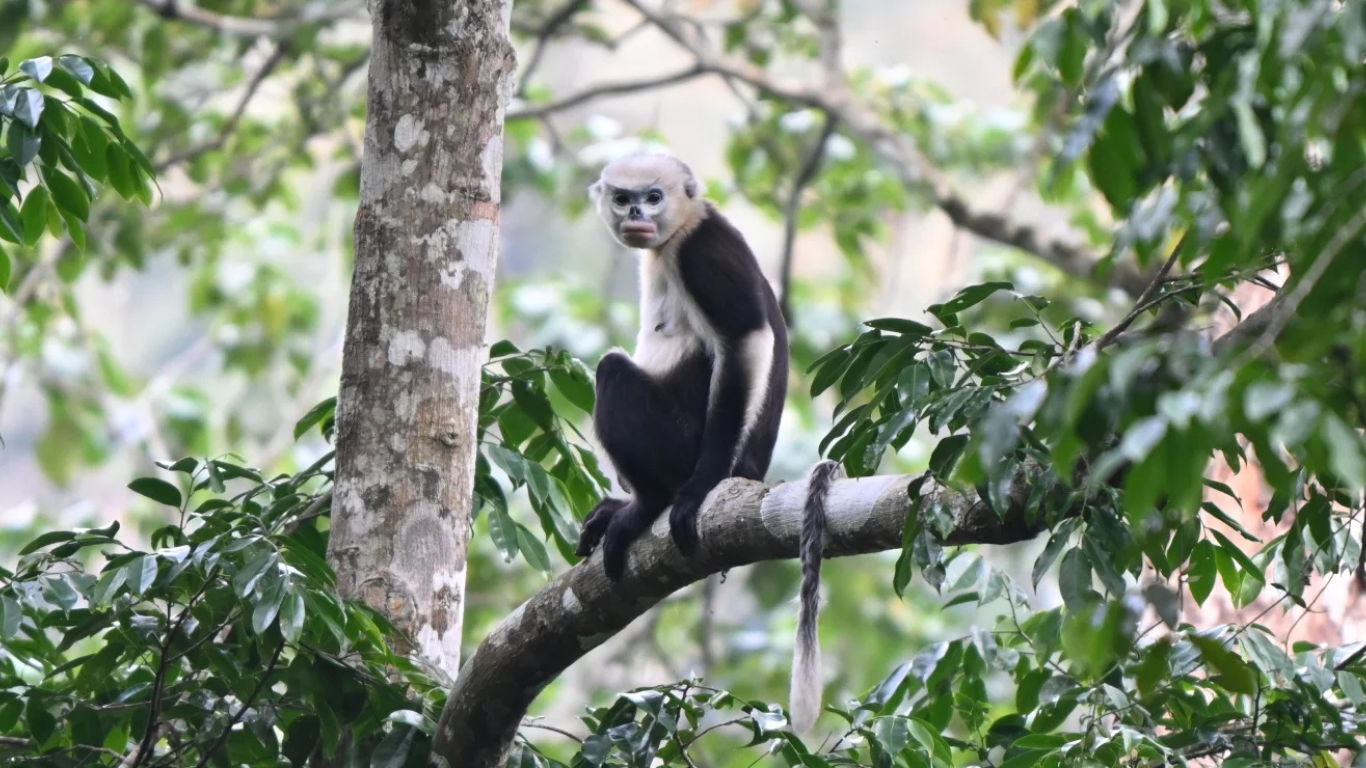
Between the branches of broad-leaf evergreens, a pair of blue-ringed eyes stare across the treetops of Khau Ca’s limestone forest.
It’s a rare glimpse of one of the world’s most endangered monkeys — and one that field conservationist Canh Xuan Chu relishes.
Tonkin snub-nosed monkeys are endemic to Vietnam, and only found in fragmented patches of forest in two of the country’s northernmost provinces, bordering China.
A population of just 50 was discovered in Khau Ca in 2002, adding to the handful of locations where the species was rediscovered in the late 1980s and 1990s, after being presumed extinct.
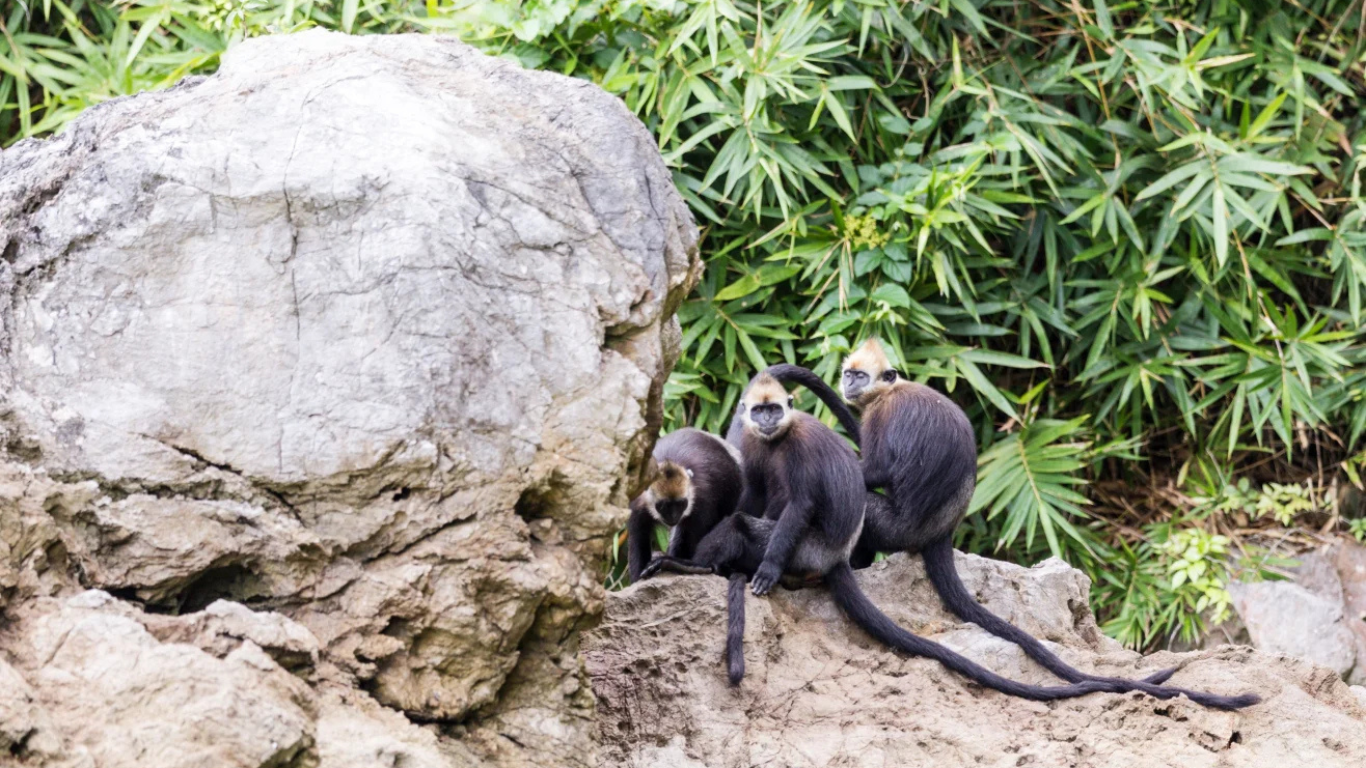 The Cat Ba langur, also called the golden-headed langur, is critically endangered with less than 100 remaining on Vietnam’s Cat Ba Island in the greater Ha Long Bay region. Throughout the 20th century, habitat loss and poaching for traditional medicine decimated its population, but conservation efforts on the island have seen the population grow over the past decade. Source: Tim Plowden/Shutterstock
Today, the monkeys have all but disappeared from these other habitats. But a new census from conservation non-profit Fauna & Flora International found that Khau Ca’s population has more than tripled since 2002, with 160 of the critically endangered monkeys — an estimated 80% of the entire species — now living in the reserve.
“It’s one of our most successful surveys,” says Chu, the project manager for Fauna & Flora’s Tonkin snub-nosed monkey program.
The survey’s findings are giving the fragile species a hope for survival — and could be a model for other forests in Vietnam to restore their populations of Tonkin snub-nosed monkeys.
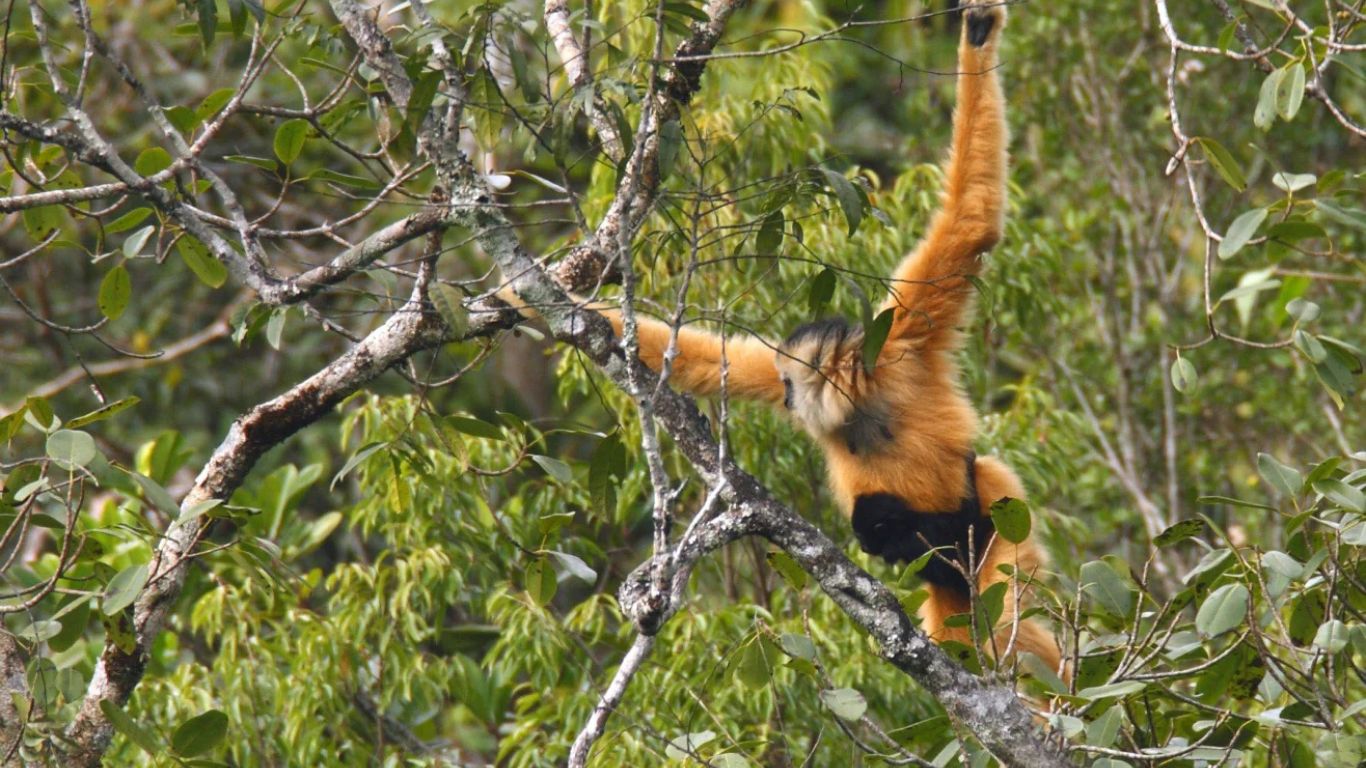 Cao vit gibbons have the longest arms of any primate, proportional to their body size, allowing them to swing through the treetops at speeds of up to 34 miles per hour. They were presumed extinct through much of the 20th century, until they were rediscovered in the limestone forests on the border between Vietnam and China in the early 2000s. It's one of the rarest primates in the world, with just 74 individuals counted during its last population count in 2021. Source: Editorial/Shutterstock
Despite their outlandish facial markings, these monkeys are shy and reserved, avoiding humans and often disappearing at any unusual sounds, says Chu.
It’s part of what makes them so difficult to count, a problem that goes back decades.
Hunted extensively for use in traditional medicine, and sometimes bushmeat, Tonkin’s snub-nosed monkeys were so rarely seen that by the 1980s, many thought they were extinct.
Shortly after discovering the population at Khau Ca, Fauna & Flora set up a conservation field station, and established community conservation teams to protect and patrol the forest, helping to remove snares and report signs of illegal deforestation or hunting.
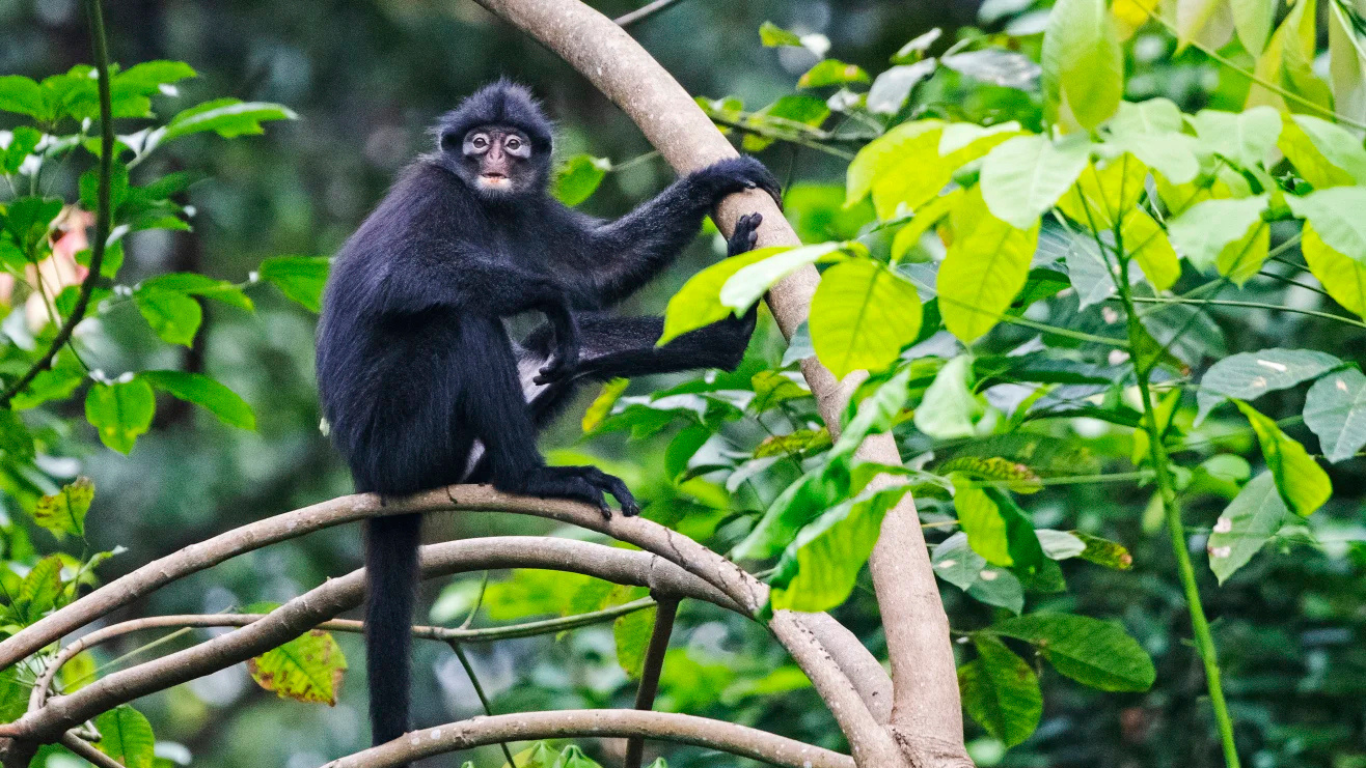 The critically endangered Raffles’ banded langur is found in Singapore and southern peninsular Malaysia, and its fragmented population is threatened by forest clearances for urban development, agriculture and mining. In Singapore, where only around 60 individuals remain, conservationists are trying to reconnect sections of forest with rope bridges over roads, and citizen scientists are helping to collect data to save their habitat. Source: Then Chih Wey/Xinhua News Agency/Getty Images
To support communities that would typically make their income from farming or foraging in the forest, the project also creates new income streams, like the patrol groups. Other conservation partners, like the New Nature Foundation and Denver Zoo, are also working to reduce demands on the forest, distributing fuel-efficient stoves that cut firewood needs by 50%.
Tran Van On, a member of Fauna & Flora’s community conservation team, has observed a “significant increase” in community awareness around the conservation of the Tonkin snub-nosed monkey.
“People are now not only more conscious about protecting this endemic species of Vietnam, but also more aware of the importance of safeguarding forest habitats and other wildlife species,” said On, in a written statement.