

Adapted from original article written by Wild Beim Wild Editorial Staff
Originally published by Wild Beim Wild, 30 November 2025
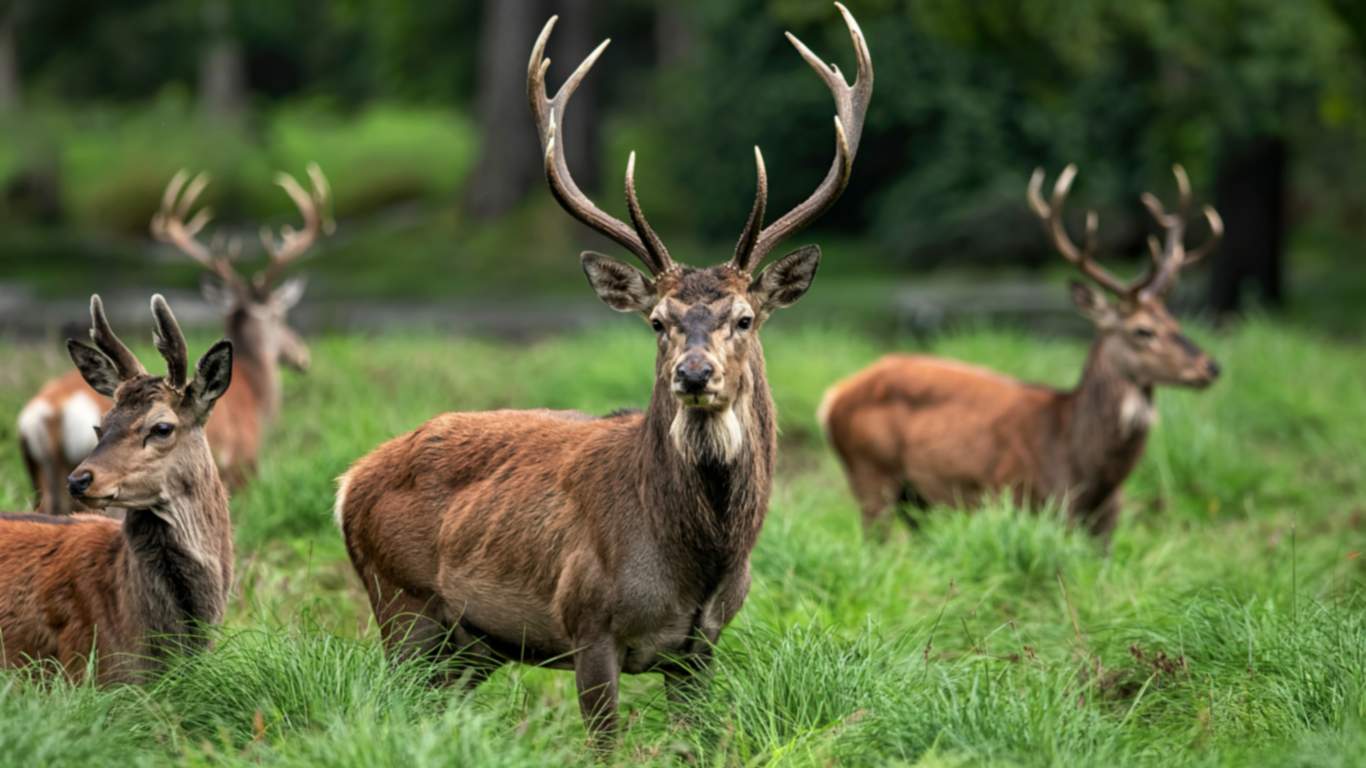
In North Frisia, amateur hunters are sounding the alarm. Large numbers of red deer from Denmark are crossing the border, easily scaling the 4-foot (1.2-meter) wild boar fence and appearing in the forests of Schleswig-Holstein. The list of complaints is familiar: more wildlife collisions, allegedly massive forest damage, and financial losses for forest owners. This is the summary of a recent article based on a report published by Norddeutscher Rundfunk (NDR) and circulated by various hunting-related websites.
What is striking in this portrayal is that red deer appear as a natural disaster that must be combated by humans through heroic hunting efforts.
What is almost completely ignored is that this very system of hobby hunting is what has created the problems in the first place.
The crux of the NDR story lies in a sentence that hunting-related platforms openly repeat: The problem isn't the red deer, but the hunting system in Denmark. Unlike in Germany, the country has no officially mandated culling quotas.
Instead, the following applies:
- The main targets of hunting are animals that yield trophies, namely deer with antlers.
- For wealthy customers, the shooting of red deer is apparently worth up to 5,000 euros (around $5,825 / £4,385) per animal.
- Forest owners can earn more from trophy hunting than from selling timber.
The biological consequence is obvious. If the focus is primarily on male animals and females are largely spared, the offspring population increases. Red deer hinds are the true driving force behind the population. Those who protect them while simultaneously creating attractive hunting conditions through baiting and feeding are orchestrating overpopulation.
According to the cited report, the red deer population in Denmark has grown from approximately 4,000 to more than 40,000 animals in about twenty years. This is not a natural phenomenon, but the result of a system geared towards maximum hunting yield.
North Frisia: Extermination, return, and now the next hysteria
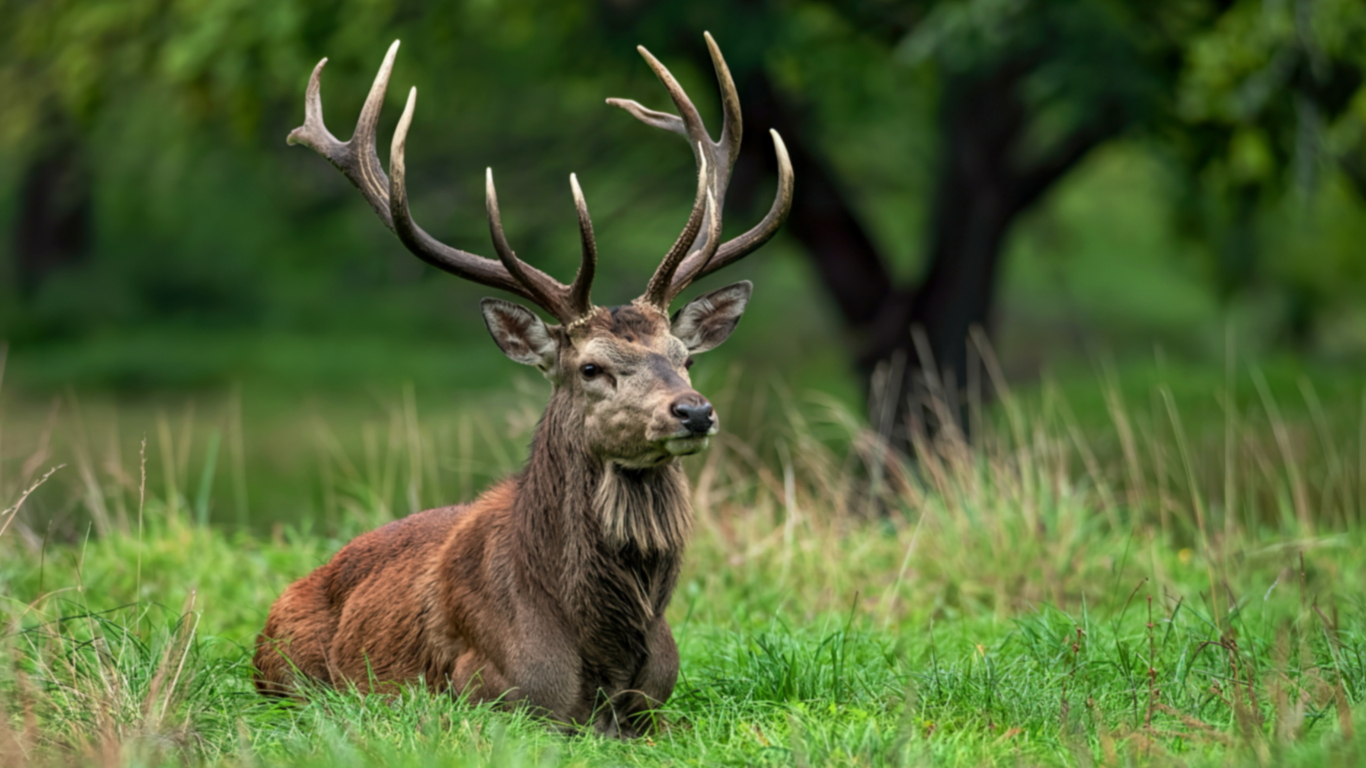
In North Frisia, Germany, there were practically no red deer left until 2004. Historically, red deer were largely eradicated in Schleswig-Holstein, as even hunting associations acknowledge.
Animals are migrating back in. Large herds cross the border at night, navigate the artificial wild boar fence, and seek out new habitats.
Instead of understanding this development as a belated correction of man-made degradation of the landscape, a threat scenario is once again being constructed. Foresters complain about bark browsing, and smaller forest areas are said to be 80 percent devalued.
This has been known for years:
- The greatest risks to the forest come from recreational hunting, climate stress, monocultures and industrial use.
- Damage from browsing by ungulates is also a factor, but is primarily a management problem for forestry and recreational hunting.
Those who have relied on spruce plantations and hunting-friendly structures for decades should not be surprised when wild animals use these unstable systems, making the damage wreaked on these ecosystems visible.
Red deer need migration corridors, not bullets
Red deer are a species accustomed to semi-open landscapes. Originally, they migrated over large distances between different seasonal habitats.
Today, this natural mobility is massively restricted:
- Highways, railway lines and canals fragment habitats.
- Settlements and intensive agriculture are taking away space from wild animals.
- Green bridges and wildlife corridors are the rare exception rather than the standard.
Schleswig-Holstein, Germany’s northernmost state, is a prime example of how much red deer suffer from this fragmentation. Genetic studies and reports from hunting associations document severe inbreeding problems: shortened lower jaws, malformations, and a depleted gene pool.
It is a bitter irony that the very associations that have been warning for years about inbreeding and genetic impoverishment nevertheless call for higher hunting quotas at every opportunity, while confining wild animals to small, managed hunting units.
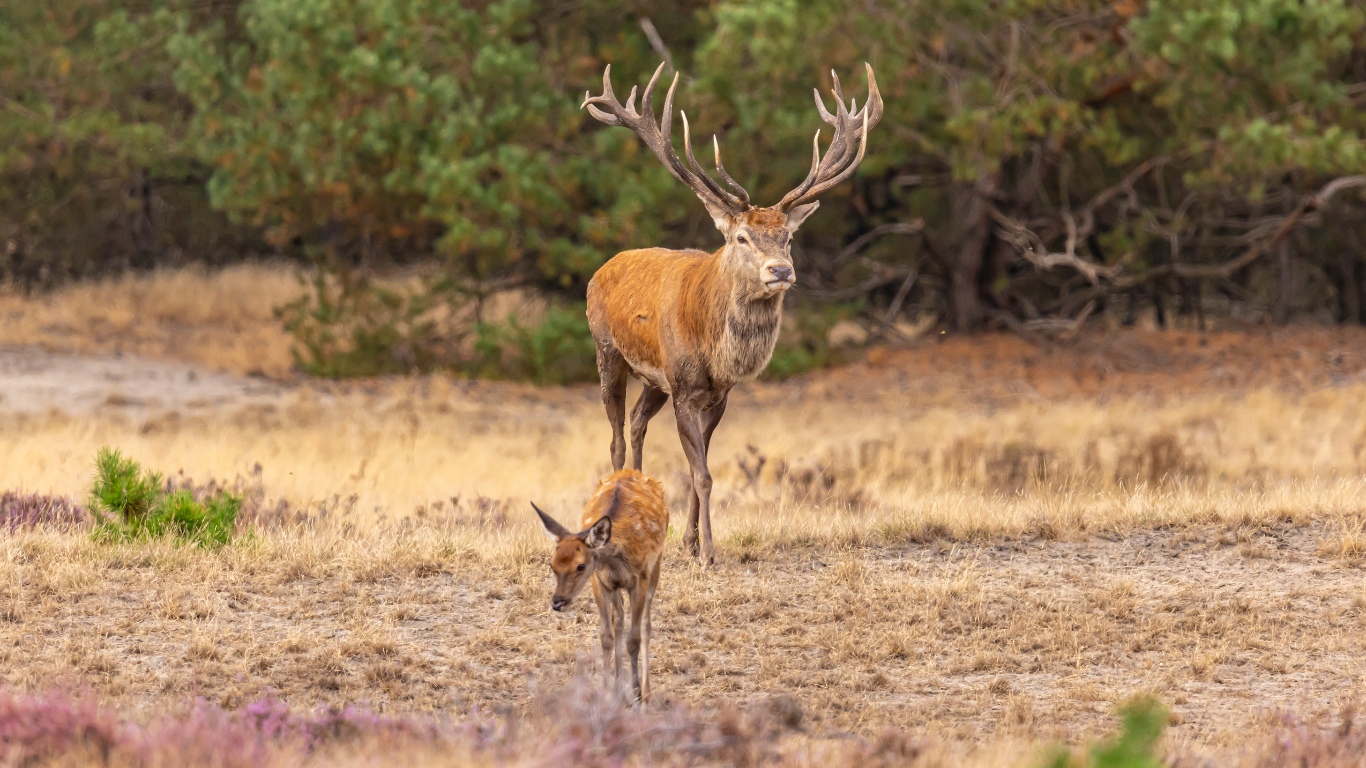
Political response: More shootdowns instead of less disruption
According to the widely circulated NDR report, a decree is planned in Schleswig-Holstein to regulate the management of migrating red deer, and is scheduled to take effect in April 2026. One goal is to intensify culling and clarify the legal situation.
At the same time, the plans contain a seemingly positive aspect:
- Immigrant deer from Denmark are intended to help improve the genetic diversity of German red deer populations.
- The aim is to protect middle-aged deer so that they can continue to migrate south to reproduce.
What sounds like foresight at first glance is, on closer inspection, yet another attempt to neatly categorize wild animals into a hunting management scheme. Individual animals are allowed to survive as free gene donors, while the vast majority continue to be declared "pests" and shot.
Forest damage as a constant pretext
When amateur hunters are portrayed in the media as "raising the alarm about red deer," the narrative usually conveys a picture in which stags and hinds bear the primary responsibility for forest problems. These same individuals conveniently omit that:
- The forest in northern Germany has been weakened by years of intensive forestry, clear-cutting, hobby hunting and monotonous stands.
- Extreme climatic events put additional pressure on trees.
- Stable, near-natural mixed forests with richly structured vegetation are significantly more resilient to browsing by wild animals than artificial timber plantations.
Red deer are more of a symptom than a cause in this system. Where species-rich, near-natural forests are lacking and hunting alters the animals' structures and behavior, damage becomes visible, which then serves as ammunition for even more hunting.
Shifting responsibility: The hunting industry as profiteer
The situation in Denmark, with its high-priced trophy hunting, is not an exotic anomaly, but rather a glimpse into where recreational hunting, primarily serving economic interests, can lead. The animals always pay the price.
- When the numbers rise, “damage” is complained about and higher culling quotas are demanded.
- In the end, recreational hunting presents itself as an indispensable force for maintaining order, "solving" problems it has created itself.
The current debate in North Frisia fits seamlessly into this pattern.
What a modern red deer policy would really need
Those who take red deer seriously as sentient wild animals come to completely different conclusions than those who are now sounding the alarm. Among other things, the following would be necessary:
- Cross-border protection instead of border fence logic: Joint red deer management concepts between Denmark and Germany that take migration patterns into account and define genuine wildlife resting zones, instead of treating animals as a "border problem.”
- Consistent regulation of trophy hunting: Restriction of hunting that focuses on maximum profit with trophy stags; and a mandatory orientation towards wildlife ecological criteria instead of customer expectations.
- Wildlife corridors, green bridges and large-scale quiet zones: Expansion of the wildlife crossings and connecting pathways already demanded by experts, so that red deer are not forced into genetic dead ends.
- Forest conversion instead of wildlife bashing: Ecological forest conversion with near-natural mixed stands, less clear-cutting, less hunting disturbances and a realistic view of the influence of climate and forestry.
- Transparent figures and independent research: Disclosure of hunting revenues, cull figures, and actual damage amounts. This includes independent monitoring of red deer, forest condition, and genetic diversity.
The red deer themselves are not the problem; the way we treat them is the problem
When amateur hunters on the Danish border "raise the alarm because of red deer," one thing becomes particularly clear: the hunting industry has learned to translate its own shortcomings into media-friendly crisis narratives. Instead of questioning the trophy-obsessed, economized hunting system, the animals are once again made scapegoats.
From an animal welfare perspective, it's clear: red deer are victims of a policy focused on fence lines, culling quotas, and trophy prices, not on the animals' needs. Anyone seeing the current images of migrating herds shouldn't immediately think about "damage," but rather about how little space our society still allocates to these wild animals.
A serious debate about red deer in the north would have to start precisely there. Not with the next alarmist cry from those who profit from recreational hunting, but with the question of how wild animals in a human-made landscape can finally be treated as what they are: fellow inhabitants, not nuisances.