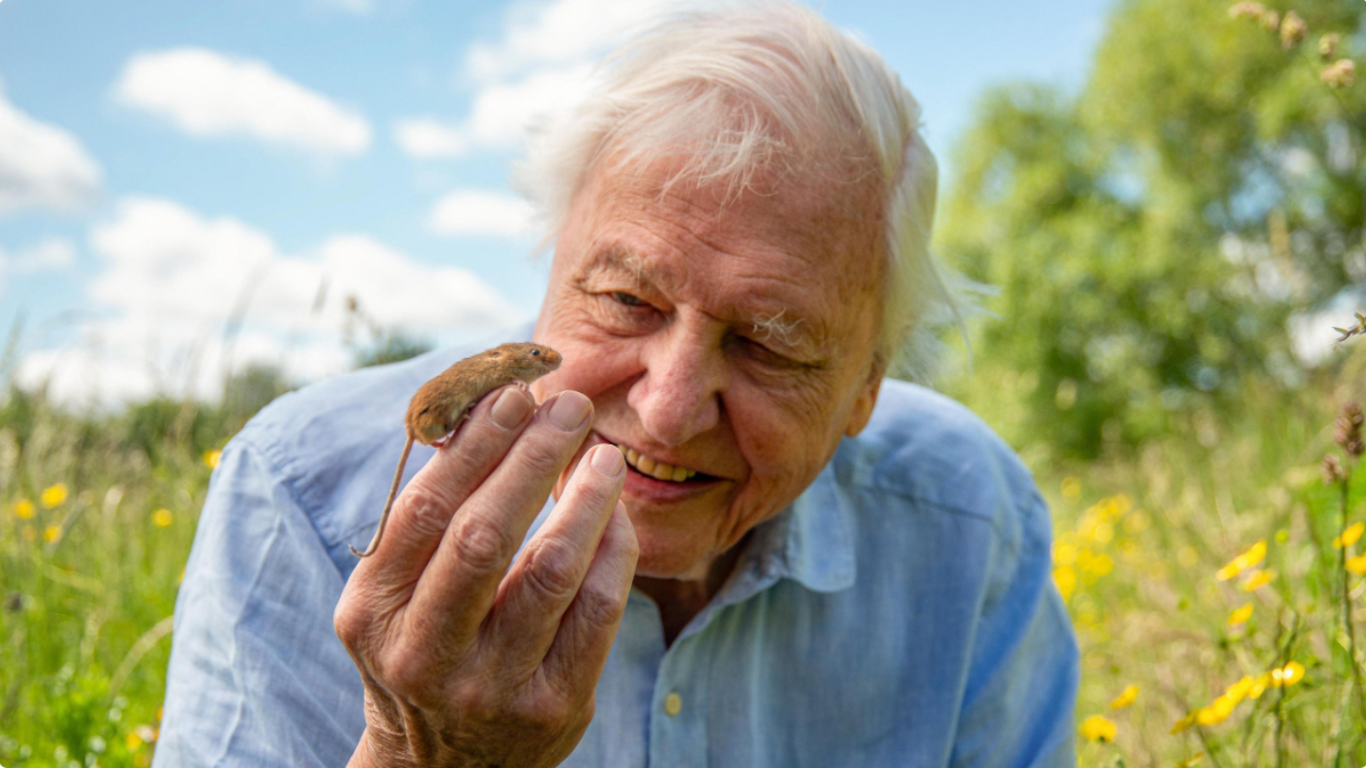
As his 100th birthday approaches, David Attenborough occupies an unusual place in public life: not a practicing scientist, not quite a conventional journalist, and no longer only a broadcaster. His voice, familiar from decades of natural history programming, has become one of the most recognizable ways the public hears about the state of the living world. That was not always the role he played.
When Attenborough began his career at the BBC in the 1950s, the task was more modest. Television was still finding its footing, and natural history programming largely meant showing audiences what they could not otherwise see. Early series such as Zoo Quest were shaped by that spirit. They were exploratory, sometimes improvised, and often framed around the thrill of encountering unfamiliar species. The tone was one of discovery. The unspoken assumption was that the natural world, vast and varied, would endure.
As his work evolved, so did the technology that made it possible. Color film, lightweight cameras and, later, digital imaging expanded what could be captured. Attenborough used those tools with unusual patience. His programs lingered on behavior as much as spectacle. Courtship rituals, feeding strategies, and migrations were given time to unfold. His programs did more than show animals; they asked viewers to notice how they lived.
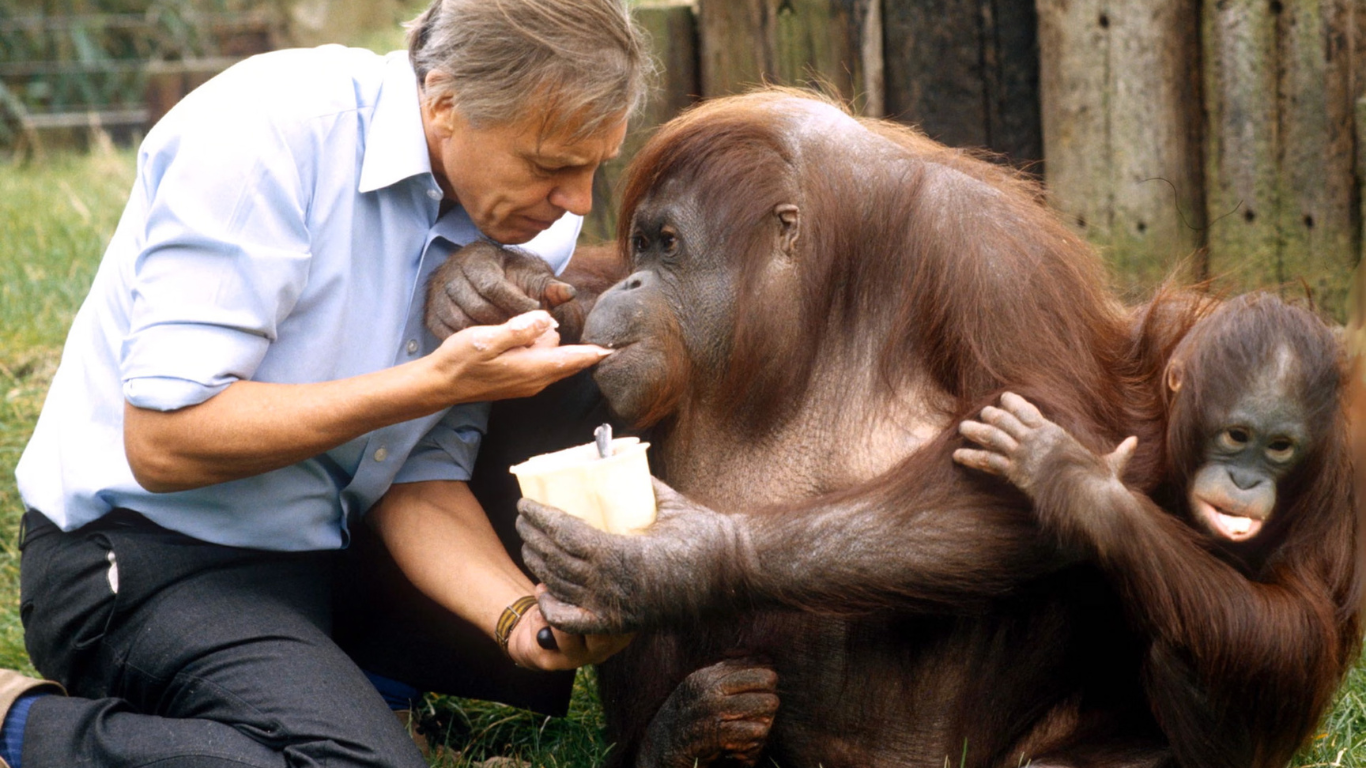 Attenborough in Borneo, 1982. Photo by Rex Features
This attention to detail became one of his signatures. It reflected a view that understanding begins with careful seeing. Attenborough rarely made himself the story. His narration was measured and often understated. The attention stayed on the animal, the habitat or the behavior unfolding on screen. The approach helped establish a standard for natural history filmmaking. It also shaped how audiences related to the material. Animals were not props for adventure. They were creatures with their own pressures, habits and place in a wider order.
For much of the late 20th century, that approach carried a sense of confidence. Series such as Life on Earth and The Living Planet presented ecosystems as intricate but resilient. There were acknowledgments of human impact, though they tended to sit at the margins. The prevailing mood was one of admiration. The natural world was portrayed as something to be appreciated, perhaps even cherished, but not yet as something being pushed toward dangerous limits.
That balance began to shift in the 2000s and early 2010s. Scientific consensus around climate change became firmer. Evidence of biodiversity loss accumulated. The changes were not abstract. They appeared in the very subjects Attenborough had spent decades documenting. Coral reefs bleached. Species once filmed in abundance became harder to find. Habitats fragmented.
His later work did not abandon the aesthetic that had defined his earlier films. The images remained carefully composed. The storytelling retained its discipline. Still, the framing grew more direct. In series such as Planet Earth II and A Life on Our Planet, the concluding segments took on a heavier purpose. The camera still showed the beauty of forests, oceans and grasslands. The narration made clearer that these systems were under strain.
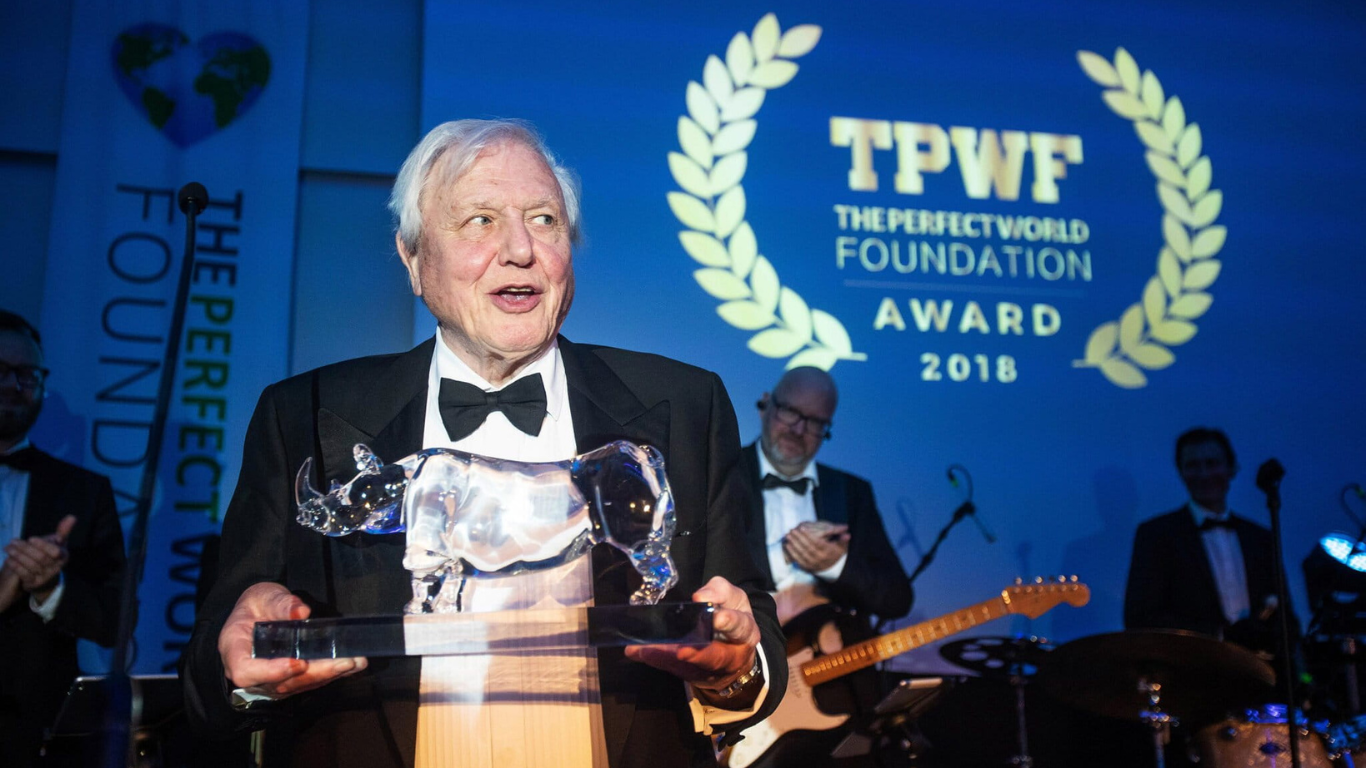 Sir David Attenborough accepting The Perfect World Foundation Award in 2018. Photo by Daniel Wilke
What changed was not only the tone, but the purpose. Attenborough began to speak more openly about consequences. The loss of species was no longer treated as a distant or specialized worry. It was linked to broader questions about stability, food systems and climate. The argument, when he chose to make it, was straightforward: understanding the natural world is not a matter of curiosity alone. It is tied to how societies will fare in the decades ahead.
He did not always speak in the language of advocacy. His instinct remained to show rather than to argue. Yet the cumulative effect of his later work is difficult to separate from a sense of warning. The authority comes less from rhetoric than from continuity. Few individuals have documented the same systems over such a long period. Fewer still have done so for so many people.
There is a restraint in how Attenborough presents these shifts. He avoids exaggeration. He also avoids offering simple resolutions. The closing passages of his recent films often point toward changes in energy use, land management and consumption. They are framed as possibilities rather than prescriptions. This has drawn criticism from those who would prefer a more forceful stance. It has also helped his work remain accessible to people who may not share the same politics.
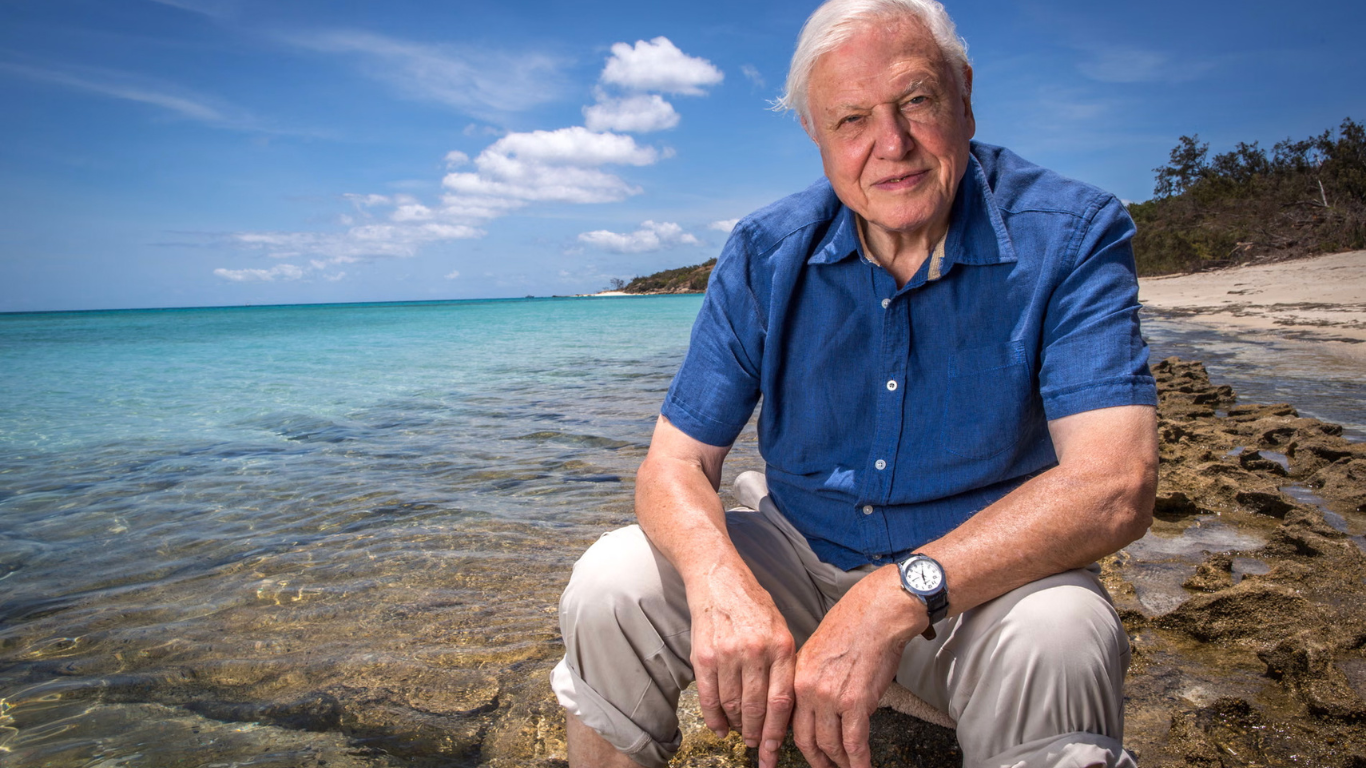 David Attenborough on Lizard Island, on the Great Barrier Reef. Photo by Freddie Claire/BBC/Atlantic Productions
The result is a body of work that has changed in emphasis without losing its core method. The early films asked viewers to look closely at the natural world. The later ones ask what follows from that attention. The link between the two is the idea that knowledge carries implications. To see clearly is, eventually, to confront the conditions that make such scenes possible.
As his 100th birthday approaches, it is tempting to treat Attenborough as a symbol. He has become one, in part because his career spans a period in which the relationship between people and the natural world has changed so sharply. Yet his influence is more practical than symbolic. He helped establish how nature is filmed, how it is narrated, and how it is brought into public conversation.
The arc of his work traces a change in how that conversation is conducted. What began as an effort to reveal the richness of life on Earth has come to include a more sober assessment of its trajectory. The continuity lies in the premise that understanding matters. Not as an end in itself, but as the beginning of responsibility.