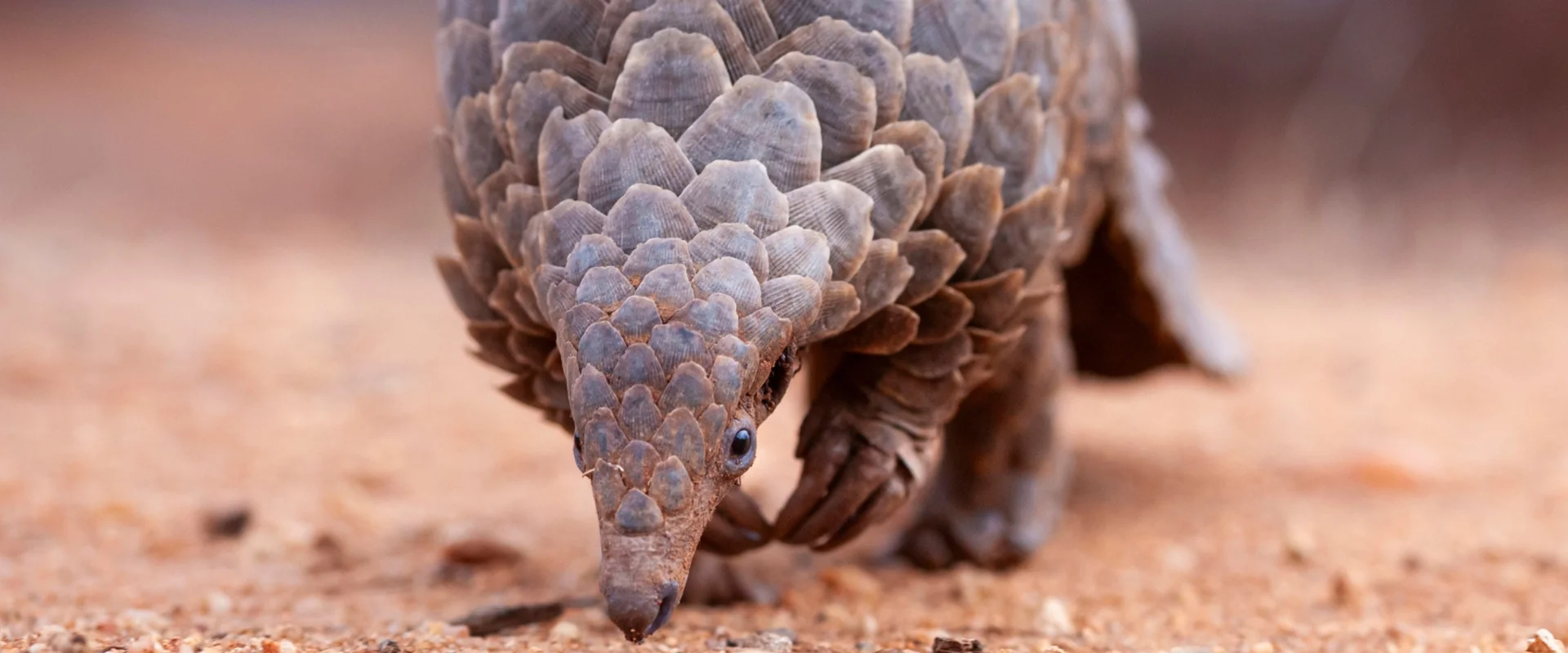


In South Africa’s Northern Cape, a pangolin named Fouross is fighting to survive.
Fouross was found limping through the bush with a swollen, badly wounded hind leg after becoming caught in a cruel wire snare set by poachers.
He is now in the care of our partner, the Kalahari Wildlife Project (KWP), a small, dedicated team working to save Temminck’s ground pangolins like Fouross from disappearing forever.
But his road to recovery is far from over.
Please help us give Fouross the specialist rehabilitation he needs to survive and heal – and equip KWP to save the next pangolin in crisis.
 Badly wounded by a poacher’s snare, Fouross was found limping through the bush. He’s now safe, recovering in the care of our partner. Source: Kalahari Wildlife Project
Pangolins are armoured against predators, but defenceless against poachers.
Pangolins are widely recognized as the most trafficked mammals on the planet.
Pangolins captured in southern Africa are trafficked for their scales, which are smuggled to Asia for use in traditional medicine. Millions have died, but poaching isn’t the only threat these small, gentle creatures face. Electric fences are another deadly danger.
When a pangolin touches a live wire, its instinct is to curl into a protective ball – sometimes around the wire itself. Each shock can tighten its grip, causing catastrophic injuries or death. KWP sees even more electrocution cases than poaching cases, with an estimated 1,200 pangolins dying on electric fences each year.
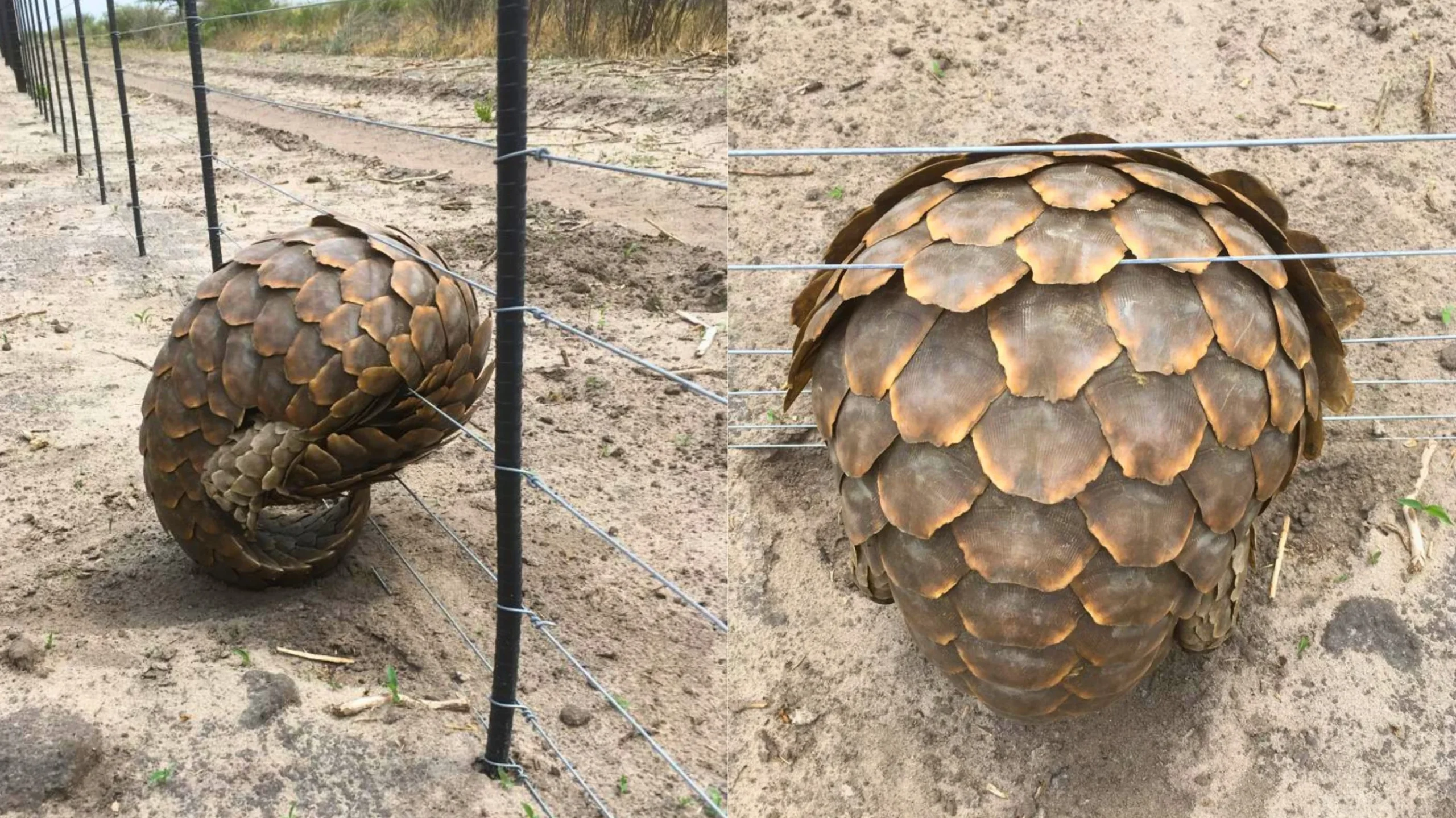 For pangolins, fencing can be just as deadly as poaching. Their instinct to curl into a protective ball, when caught against a fence, can trap them in place, often with fatal results. Source: Supplied
For injured pangolins, rehabilitation is a race against time.
Without proper rehabilitation, up to 70% of injured pangolins die. They are extraordinarily sensitive animals and need months of quiet, specialist care to recover from physical trauma and stress before they can be safely released into protected wild areas.
At KWP, rehabilitation for an injured pangolin takes six months on average.
Fouross is receiving pain medication and antibiotics, with strict monitoring and cage rest until his wounds heal. Over the coming months, KWP will continue his treatment until he is strong enough for a carefully managed soft release, giving him time to adjust before he must fend for himself.
The full cost of Fouross’s rehabilitation is $7,400 (£5,500) – including CT scans, veterinary treatment, medication, check-ups and two GPS trackers to monitor him after release.
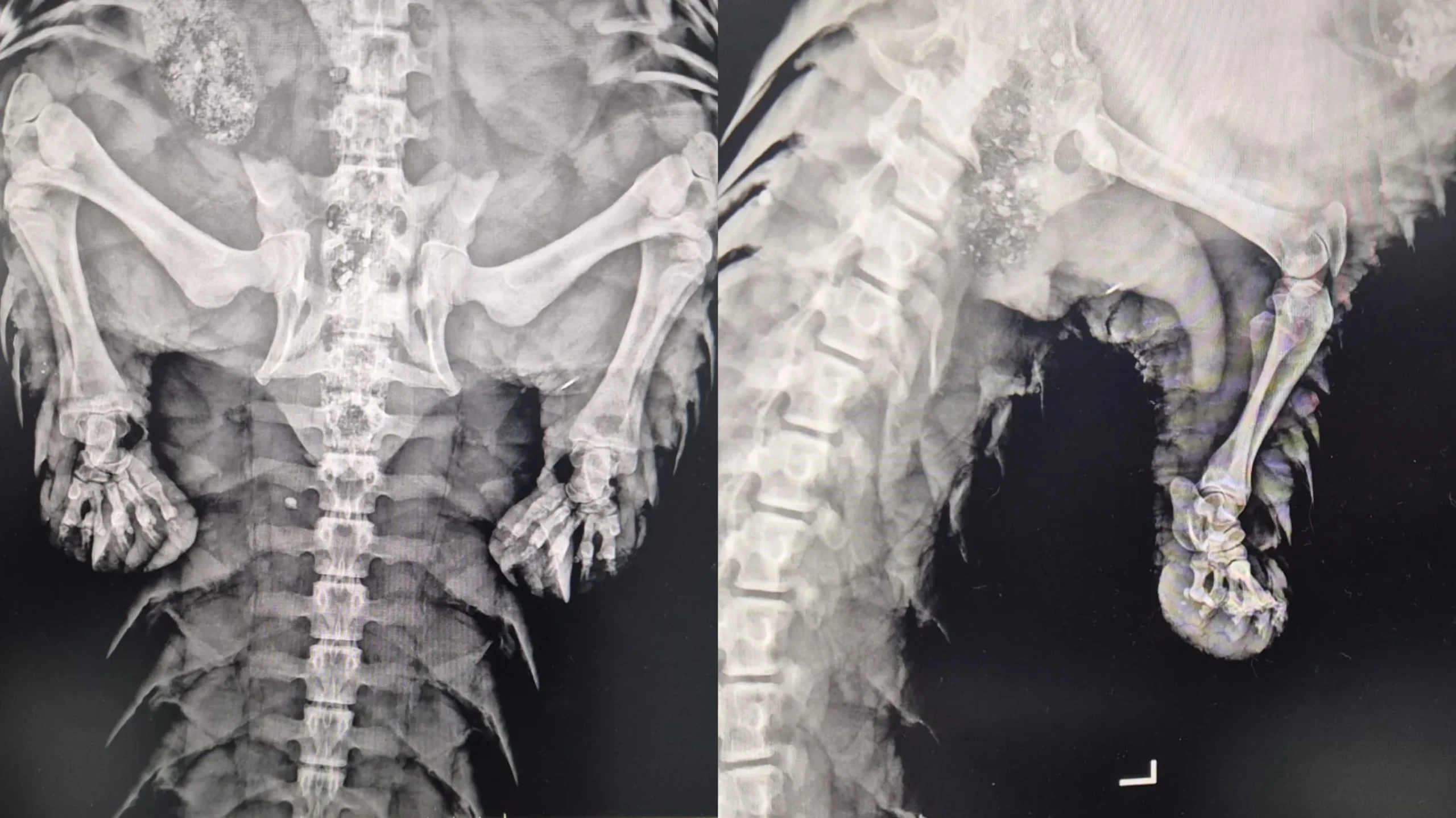 Our partner X-rayed Fouross’ hind leg to understand the full extent of his injuries. Source: Kalahari Wildlife Project
Will you help us raise the funds needed to give Fouross his second chance?
Your gift will help Fouross heal today – and help KWP reach the next vulnerable pangolin tomorrow.
Fouross is just one of the pangolins our partner is called upon to rescue.
With only three people and one vehicle covering the entire Northern Cape, KWP is stretched to its limits.
Please donate now to support Fouross’s rehabilitation and strike a blow for the survival of one of the world’s most abused creatures.