Conservationists warn the world can “no longer afford” to delay climate action to protect and restore our planet’s natural wonders.
Today (7 January), international nature charity Fauna & Flora has launched its 2026 Species to Watch list, highlighting some of the “weird and wonderful” creatures at risk of disappearing in the not-so-distant future.
Kirsitian Teleki, Fauna & Flora’s CEO, says the list offers an insight into the “key challenges” facing some of the world’s most vulnerable species, including habitat loss, deforestation, the illegal wildlife trade, and the climate crisis.
“It also shines a spotlight on the weird and wonderful plants and animals we are working to protect, and on the inspiring people and partners Fauna & Flora works with across the globe to deliver effective conservation action,” Teleki adds. “In challenging times, it stands as a beacon of hope.”
As we edge closer to 2030, a “guiding star” for many nature and climate goals, here are 10 species heading into the new year on the brink of extinction.
European eel
Once common throughout the continent, the European eel is on a slippery slope towards extinction. Over the past 25 years, its UK population alone has plummeted by a staggering 95 percent.
Experts point the blame at overfishing, driven by the once-popular jellied eel dish, as well as pollution, habitat fragmentation, and illegal trade.
They may not look cute, but experts warn these snake-like creatures play a “crucial role” in freshwater and coastal ecosystems, providing a high-energy food source for otters, bitterns, and other fish-eating creatures.
“Their disappearance would have dire consequences,” warns Fauna & Flora. “Having recently detected European eel during freshwater monitoring in Georgia—where they haven’t been recorded for some time—[we] will conduct further research into this enigmatic and critically endangered fish in 2026.”
Cao-vit gibbon
Named after its distinct call, the Cao-vit gibbon is the world’s second-rarest primate. Scientists feared the species had become extinct until its rediscovery back in 2002.
Today, around 74 remain. Fauna & Flora says the critically endangered gibbon is at “extreme risk from loss of genetic diversity, inbreeding, and unforeseen catastrophes.”
A 2026 census hopes to verify whether conservation efforts laid out by the organization have helped restore habitats and increase the population.
Psychedelic earth tiger (Indian rainbow tarantula)
Found solely in the tropical forests of the southern Western Ghats in Kerala, India, this groovy spider is awash with color and a metallic iridescence.
However, its striking appearance is fueling its demise—as demand from the illegal pet trade continues to harm the population. Habitat loss and degradation have also pushed the Indian rainbow tarantula towards extinction.
The Conservation Leadership Programme (CLP), a female-led team of spider experts, is now working to safeguard the species’ future through field surveys, community engagement, and awareness initiatives.
Credit: Mithun Das CLP by Fauna & Flora
Blackchin guitarfish
This “weird and wonderful” guitarfish looks like a mix between a shark and a ray. It’s instantly recognizable with its flattened nose, broad pectoral fins, and long-finned tail.
Native to the Mediterranean Sea and the eastern Atlantic, the blackchin guitarfish has become critically endangered as a result of overfishing, habitat destruction, and slow reproductive rates.
Fauna and Flora are currently working in the waters of Cabo Verde, aiming to halt its decline by strengthening networks of marine protected areas and reducing shark and ray mortality from fishing.
Temminck’s pangolin
This ground-dwelling animal is the only one of Africa’s four pangolin species found in relatively arid areas of East and Southern Africa, with sightings going as far north as Chad and Sudan.
The Temminck pangolin forages “very slowly and deliberately,” often walking on its back legs and using its short tail as a counterweight. It’s a fascinating display of adaptation, but like all pangolins, the species is threatened by the illegal trade market for its meat and scales.
Fauna & Flora is supporting the development of a crisis clinic in Mozambique to help the rehabilitation and re-release of rescued and injured pangolins.
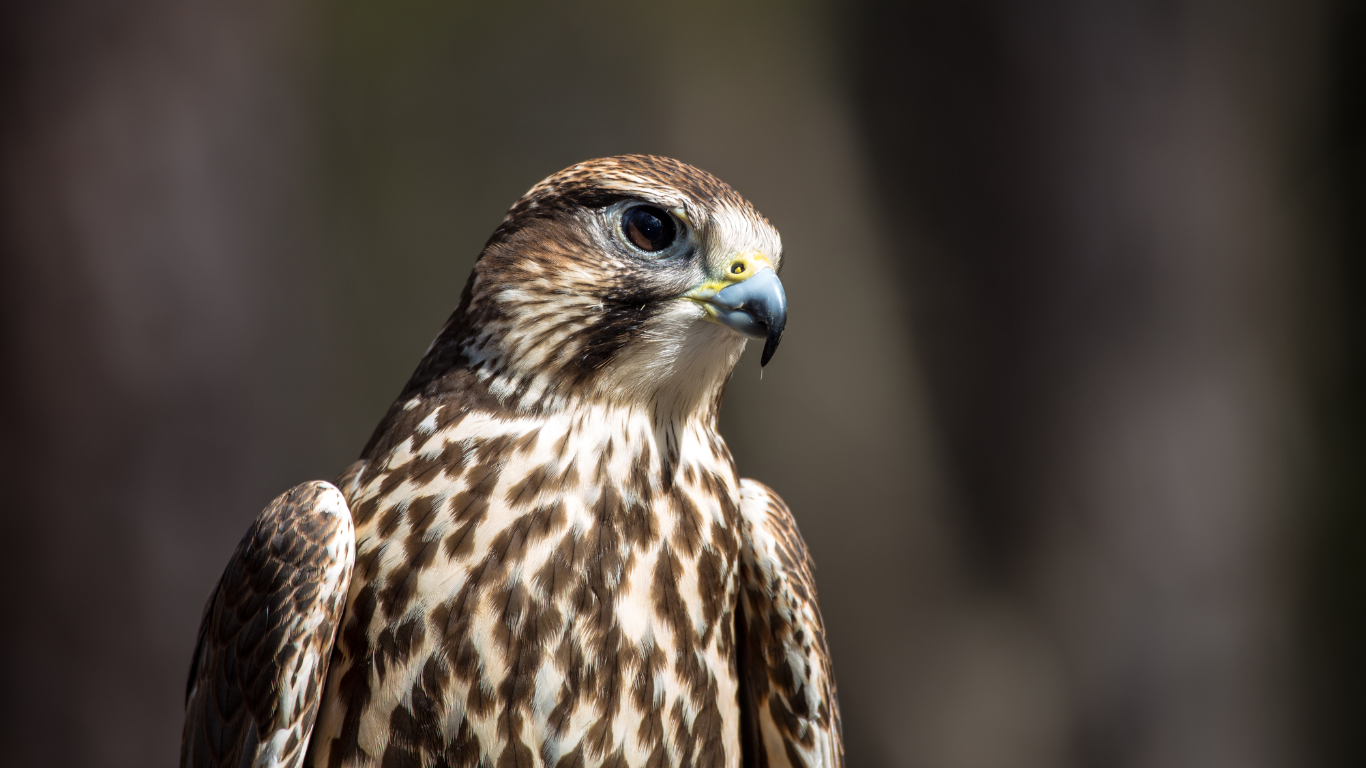
Saker falcon
Lightning-fast and powerful, the saker falcon has been highly prized by falconers for millennia, particularly in the Middle East.
However, its soaring popularity has seen the population plummet. Scientists predict there are fewer than 30,000 now left in the wild.
This year, Fauna & Flora will assess the impact of trade on the species in Central Asia by monitoring populations and gathering data on international trade chains. This evidence will be used to develop conservation strategies, community engagement and enforcement efforts.
Clouded leopard
Targeted for its striking markings, the clouded leopard has been pushed towards extinction due to the illegal wildlife trade. They’re trafficked alive as exotic pets, while their pelts are sold on the black market for decoration and luxury clothing.
It is thought that clouded leopards are even targeted for their teeth, claws and bones, which are passed off as tiger parts.
This year, Fauna & Flora is supporting community-led patrols to protect the threatened feline in Cambodia’s Virachey National Park.
Utila spiny-tailed iguana