

Orangutan seen treating wound with traditional medicine in first for wild animals

Article written by Vishwam Sankaran Originally published by Independent (May 3, 2024) Indonesian scientists document extraordinary case of Rakus, the Sumatran orangutan, who covers his facial wound with mesh made from chewed leaves An orangutan has been seen treating a wound using a plant with known pain-relieving properties, marking the first known instance of a wild animal deliberately tending to its injuries with medicine. Researchers in Indonesia documented a male Sumatran orangutan with a facial wound repeatedly applying sap from a plant with anti-inflammatory and pain-relieving properties that’s long been used in traditional medicine. The ape also covered its wound with a mesh made from the plant’s leaves, suggesting that treatment of wounds with medicine may have arisen from a common ancestor shared by humans and apes. Self-medication by ingesting plant parts is widely seen across animal species, but treatment of wounds with a specific biologically active substance has not been documented previously. In the course of routine observations in Indonesia’s Suaq Balimbing area, researchers noticed that a male orangutan named Rakus had sustained a facial wound, most likely during a fight with a neighbouring male. A few days later, they saw the injured orangutan ripping off leaves from the plant Akar Kuning (Fibraurea tinctoria), chewing on them, and repeatedly applying the resulting sap precisely to his wound for several minutes. Finally, he fully covered the wound with the chewed leaves. Akar Kuning is known for its pain-relieving properties and is widely used in traditional medicine to treat diseases like malaria. Researchers found plant compounds like furanoditerpenoids and protoberberine alkaloids, known for their antibacterial, anti-inflammatory, and other wound-healing properties. The orangutan’s wound didn’t show any sign of becoming infected, and after five days, it was already closed. “The behaviour of Rakus appeared to be intentional as he selectively treated his facial wound on his right flange, and no other body part, with the plant juice,” Isabelle Laumer, one of the study’s authors, said. “The behaviour was repeated several times.” The researchers suspect wound treatment by the orangutan using a medicinal plant may have emerged through individual innovation. “Orangutans at the site rarely eat the plant. However, individuals may accidentally touch their wounds while feeding on this plant and thus unintentionally apply the plant’s juice to their wounds,” said Caroline Schuppli, another author of the study. “As Fibraurea tinctoria has potent analgesic effects, individuals may feel an immediate pain release, causing them to repeat the behaviour several times,” Dr. Schuppli added. The behaviour is the first-ever report of active wound management with a biologically active substance in a great ape species, shedding light on the existence of self-medication in the closest relatives of humans. In the case of humans, wound treatment is first mentioned in a medical manuscript dating back to 2200 BC, describing the cleaning, plastering and bandaging of wounds with special substances. Since active wound treatment is also found in both African and Asian great apes, it is possible that a common underlying mechanism exists for the recognition and application of substances with medical or functional properties to wounds. This suggests that our last common ancestor may have already exhibited similar forms of ointment behavior.
Truffle Hunters in Italy Poison Competitors’ Dogs in War for ‘Black Gold’
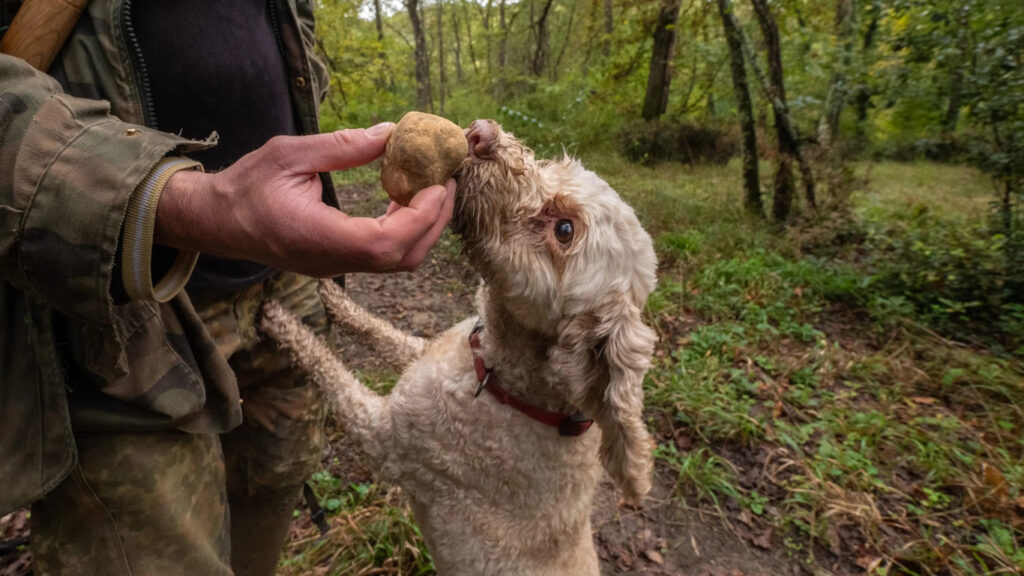
The quest for rare and valuable Italian truffles has taken an ugly turn, reports South Africa’s Business Insider. As trained sniffer dogs root around rolling hills for this so-called ‘black gold’, their owners keep an eagle eye out for a deadly threat: poison, intended for the dogs’ consumption. Treats laced with snail bait and strychnine are being laid by competitor truffle hunters as the hunt for the increasingly scarce fungi heats up. Italian truffles, valued at nearly $2,000 per pound (around £3,200 per kilogram), are in short supply as a result of climate change and challenges associated with foraging. As a result, increasingly desperate foragers are lacing hot dog pieces and bits of meat with deadly amounts of poison, with the aim of incapacitating or killing dogs trained to find truffles and prevent their owners from benefiting from the find. These highly skilled animals with massive earning potential for owners can cost up to $8,200 (around £6,600), and in some instances, they can uncover truffles worth upwards of $5,000 (over £4,000) per pound. “It’s all about getting rid of the competition,” said 57-year-old truffle hunter Saverio Dogliani, according to the Wall Street Journal. Saverio’s dog Floki has been poisoned twice. Every year, poisoned foods claim the lives of not only dogs but wildlife, including deer and foxes. They may also affect regular-owned dogs – animals simply out walking with their families. Such was the case for Martina Ercoli, whose Labrador Brando died earlier this month after ingesting a poisoned treat he found while out walking. According to a Facebook post of Ercoli’s, Italian police blamed it on the “war” between truffle hunters. Truffle hunter Antonio Morasca meanwhile told The New York Times that his dog, Thor, died recently after consuming a piece of poisoned sausage. “I took it out of his mouth, but he ran off — he loved to run off — and got another one in his mouth,” he told The New York Times. “He started trembling. We got him back to the town, and he started foaming. We made him eat salt to vomit, but the whites of his eyes had turned red. His legs stretched out, and he became rigid. He was dead before we got to the clinic. A half an hour.” It is now reported that Italy’s national police have dispatched poison-detecting dogs to Alba in the country’s Piedmont region in the hopes of eliminating the source of the poisonings. “It’s getting worse,” Agent Emanuele Gallo told The Wall Street Journal. “There is more competition, and unfortunately illicit means are being used more.” Locals, fed up with the risks to their beloved pets, have taken the hunt for the criminals into their own hands. One truffle hunter whose dog was nearly killed by poison over a decade ago has installed cameras on his truck and joined the informal group of truffle foragers hunting for those responsible. “When I catch him and see him in the piazza,” he told The New York Times. “I’ll break his little hands.” Banner image: Filippo Bellantoni
Rekambo Chimpanzees Seen Using Crushed Insects to Treat Open Wounds
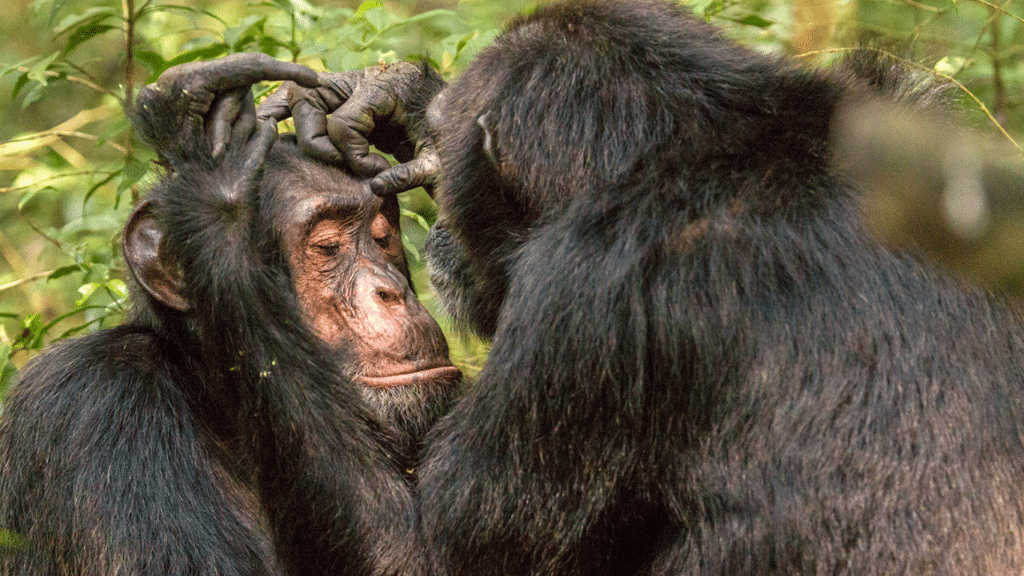
A group of wild chimpanzees has been observed treating wounds of their own and others by applying crushed insects to the injury site. According to a recent study published in the journal Current Biology, the chimpanzees caught an insect, immobilized it between their lips, placed it to an exposed surface of the wound and moved the insect on the surface using their fingertips or lips before removing it. Self-medication using natural substances and materials is not uncommon in animals. However, this practice is more often associated with the ingestion and anointing of plants. The transition to crushed insects is just one of the pioneering behaviors exhibited by the incredible Rekambo chimpanzee community. Found in Loango National Park in the West African nation of Gabon, these chimps are also the first animals (besides humans) to be seen treating the wounds of another individual. A German research team first observed this unique behavior in November 2019, when an adult female chimpanzee named Suzee tended to her offspring’s wounded foot. As of February 2021, the scientists have witnessed an additional 19 instances of the chimpanzees administering the same treatment to themselves, as well as two instances of one or more chimps treating another community member. This is a significant development in the ongoing scientific debate over prosocial behavioral tendencies in animals. Given that the helper chimps have nothing to gain from such an act, can we really continue to label empathy and the selfless tending to others’ pain as exclusively “human” traits? The type of insect being sourced and used by the chimpanzees as their very own “medicine” is currently unknown. Researchers will need to conduct further research so that the insects may be both identified and analyzed for potential anti-inflammatory properties. Banner image: People.com/Getty Images
cache
Our supporters’ donations in action in June
cache
Our supporters’ donations in action in June